Category: Associated Press

  • A bipartisan group of 13 attorneys general sues OneMain over hidden loan add-ons

    A bipartisan group of 13 attorneys general sues OneMain over hidden loan add-ons

    NEW YORK — A bipartisan group of 13 attorneys general sued the financial company OneMain Financial on Monday, alleging the company placed unwanted additional products and other hidden costs on its loans that led to higher costs for its borrowers.

    The lawsuit, filed in New York on Monday, says OneMain employees steered borrowers into purchasing credit insurance and other loan-related products while making deceptive claims about whether the products were required and how they could be canceled. The attorneys general say the conduct affected tens of thousands of borrowers and violated state consumer protection laws.

    The products include credit insurance, which claims to pay the loan if a consumer dies or becomes unemployed, as well as products like home and auto memberships that are similar to AAA. These companies are, in turn, owned by OneMain through a related company.

    These products increase the cost of the loan. The lawsuit alleges that OneMain does not check whether the consumer may already have a home or auto membership service through AAA as well.

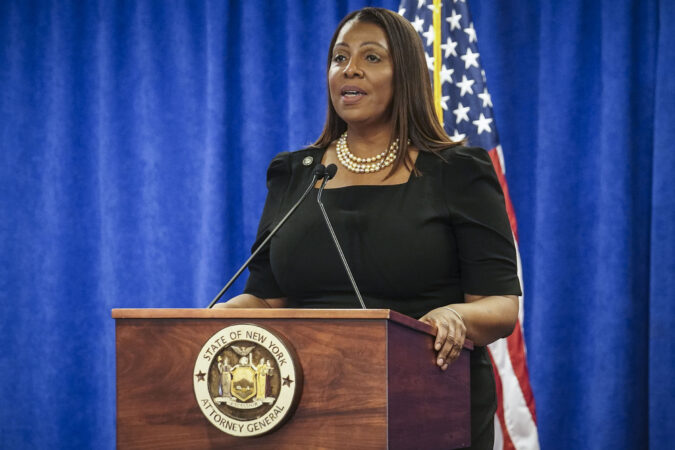
    “OneMain targets people who are already struggling financially, saddling them with hidden fees and misleading loans to trap them in even more debt,” New York State Attorney General Letitia James said in a statement.

    OneMain said the practices involved with the lawsuit were already reviewed with the Consumer Financial Protection Bureau in 2023. In that settlement, OneMain agreed to repay $10 million to consumers and pay $10 million in fines and penalties for allegedly selling add-on products to consumers.

    “The states’ allegations are simply untrue — their case is wrong on the facts and wrong on the law and attempts to re-litigate issues that were already reviewed by the Consumer Financial Protection Bureau and fully resolved. We will litigate this case vigorously and look forward to proving the truth in court.”

    OneMain, based in Evansville, Ind., is one of the largest U.S. non-bank installment lenders. It primarily offers loans to those with subprime credit scores, meaning much of its customers are already financially struggling when they come to OneMain.

    Along with New York, the other attorneys general joining the lawsuit include the states of Colorado, Nevada, Maryland, North Dakota, Oklahoma, Washington, Wisconsin, New Jersey, South Dakota, and New Hampshire, as well as the Commonwealths of Virginia and Pennsylvania.

  • Customs and Border Protection official says new process for tariff refunds could be ready in 45 days

    Customs and Border Protection official says new process for tariff refunds could be ready in 45 days

    NEW YORK — Government officials are getting closer to ironing out a refund process for the hundreds of thousands of companies that paid tariffs now deemed illegal.

    In a filing with the Court of International Trade on Friday, Brandon Lord, executive director of U.S. Customs and Border Protection’s trade policy and programs directorate, said the CBP is working on a new system that will simplify the process. He said it should be ready in 45 days and require “minimal submission from importers.”

    The filing comes after a judge on Wednesday ordered the government to start paying back all importers the illegal tariffs they paid — with interest. Judge Richard Eaton of the U.S. Court of International Trade wrote that “all importers of record’’ were “entitled to benefit” from the Supreme Court ruling that struck down sweeping double-digit import taxes President Donald Trump imposed last year under the 1977 International Emergency Economic Powers Act (IEEPA).

    Eaton would have to approve the process before it proceeds.

    In the filing, Lord said that as of March 4, over 330,000 importers have made a total of over 53 million entries with CBP and paid about $166 billion in tariffs that now have to be refunded.

    Lord estimated that under the current system, refunds would take more than 4.4 million man hours to complete, and it isn’t feasible to divert all employees to the refund process full time, because “CBP’s other functions and responsibilities would be severely disrupted and the agency would not be able to continue to adequately perform its mission, including its revenue protection mandate and its vital national security functions.”

    But he said the agency is confident they can develop and implement a new process that will streamline and consolidate refunds and interest payments. The system should be ready in 45 days, he said.

    “This new process will require minimal submission from importers,” he wrote. “It will also minimize errors by ensuring accurate IEEPA refund calculations through system validations and allowing for a review period for CBP to resolve any discrepancies with the importer and to confirm no other outstanding enforcement issues or no revenue is owed.”

    Lord also noted that as of Feb. 6 the CBP only issues refunds electronically, but most importers haven’t completed signing up for the electronic system. Of the 330,566 importers who paid tariffs, only 21,423 have completed the setup process to receive their refunds electronically.

    “Until importers complete the process to receive refunds electronically, the refunds will be rejected,” he said.

  • Maxx Crosby heading to Ravens, who send two first-round draft picks to Raiders, AP sources say

    Maxx Crosby heading to Ravens, who send two first-round draft picks to Raiders, AP sources say

    Five-time Pro Bowl edge rusher Maxx Crosby is heading to the Baltimore Ravens, two people with knowledge of the trade told The Associated Press on Friday night.

    Both people spoke on condition of anonymity because the deal can’t be announced until the NFL’s new year starts next week.

    The Las Vegas Raiders will receive two first-round picks from the Ravens, including the No. 14 overall pick in next month’s NFL draft, one of the people said.

    The 28-year-old Crosby had 10 sacks last season and has reached double digits four times in his seven seasons.

  • Former Democratic presidents remember the late Rev. Jesse Jackson during final public tribute

    Former Democratic presidents remember the late Rev. Jesse Jackson during final public tribute

    CHICAGO — From former presidents to an NBA Hall of Famer to prominent church pastors, stories of the Rev. Jesse Jackson Sr.’s influence on politics, corporate boardrooms, and picket lines loomed large Friday at a celebration honoring the late civil rights leader.

    Thousands of people gathered at a church on Chicago’s South Side to pay a final public tribute to Jackson.

    The celebration — with appearances by Grammy-winning gospel singers and Jennifer Hudson — felt at times like a church service and others like a political rally. Many, from former President Bill Clinton to the Rev. Al Sharpton, a civil rights leader and founder of the National Action Network, likened Jackson’s death to a call to action, from speaking out against justice to voting in the midterms.

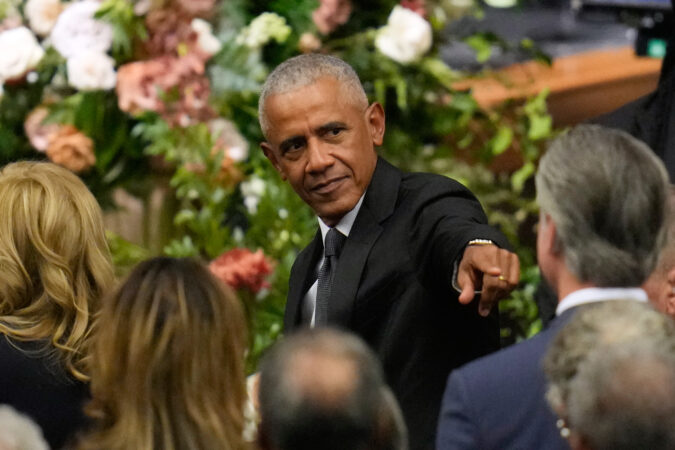
    Former President Barack Obama said Jackson’s presidential runs in the 1980s set the stage for other Black leaders, including his own successful 2009 presidency and re-election.

    “The message he sent to a 22-year-old child of a single mother with a funny name, an outsider, was that maybe there wasn’t any place or any room where we didn’t belong,” Obama said. “He paved the road for so many others to follow.”

    Obama, joined by Clinton and former Democratic president Joe Biden at a celebration of life for Jackson, received the loudest round of applause as the three entered the chamber.

    “We are living in a time when it can be hard to hope,” Obama said. “Each day we wake up to some new assault to our democratic institutions. Another setback to the idea of the rule of law, an offense to common decency. Every day you wake up to things you just didn’t think were possible.”

    “Each day we are told by folks in high office to fear each other,” said Obama, referring to the current Republican leadership in Washington.

    Clinton said Jackson made him a better president, while former Democratic Vice President Kamala Harris talked about Jackson’s inspiring 1980s presidential runs and showed off campaign memorabilia she had kept from them. Former President Joe Biden also spoke during the service.

    President Donald Trump, who praised Jackson on social media after he died and also shared photos of the two of them together, did not attend.

    Thousands attend Jackson memorial service

    The event honors the protégé of the Rev. Dr. Martin Luther King Jr. and two-time presidential candidate and follows memorial services that drew large crowds in Chicago and South Carolina, where Jackson was born. Friday’s celebration — at an influential Black church with a 10,000-seat arena — was expected to be the largest.

    Crowds of attendees waited in long lines outside the church as television screens played excerpts of some of Jackson’s most famous speeches. Inside, vendors sold pins with his 1984 presidential slogan and hoodies with his “I Am Somebody” mantra.

    Along with a slew of Illinois elected leaders, notable attendees included actor and producer Tyler Perry, California Gov. Gavin Newsom, and political activist and theologian Cornel West. Detroit Pistons great and Chicago native Isiah Thomas was one of the speakers.

    Marketing professional Chelsia Bryan said Friday that she decided to attend the memorial service because it was “a chance to be part of something historic.”

    “As a Black woman, knowing that someone pretty much gave their life, dedicated their life to make sure I can do the things that I can do now, he’s worth honoring,” Bryan said.

    Jackson Jr.: Everyone welcome

    Jackson died last month at age 84 after battling a rare neurological disorder that affected his mobility and ability to speak. Family members say he continued coming into the office until last year and communicated through hand signals. His final public appearances included the 2024 Democratic National Convention in Chicago.

    “Every single person in here has a Jesse Jackson story,” his eldest son, Jesse Jackson Jr., said Friday. “The time he shook your hand, the time he prayed for you, the time he held you up, the time he prayed the funeral for somebody you know … and he prayed you to a new course of existence.”

    Sitting in the crowd was 90-year-old Mary Lovett. She said Jackson’s advocacy inspired her many times, from when she moved from Mississippi to Chicago in the 1960s, taught elementary school and became a mom. She twice voted for Jackson during both of his presidential runs and appreciated how he always spoke up for underrepresented people. “He’s gone, but I hope his legacy lives,” she said. “I hope we can remember what he tried to teach us.”

    Jackson’s service was to the poor, underrepresented

    Jackson’s pursuits were countless, taking him to all corners of the globe: Advocating for the poor and underrepresented on issues including voting rights, healthcare, job opportunities, and education. He scored diplomatic victories with world leaders, and through Rainbow PUSH Coalition, he channeled cries for Black pride and self-determination into corporate boardrooms, pressuring executives to make America a more open and equitable society.

    Another son, Yusef Jackson, who runs the Rainbow PUSH Coalition, recalled how his father carried a well-worn Bible but also showed his faith by showing up to picket lines.

    “He lived a revolutionary Christian faith rooted in justice, nonviolence and the moral righteousness,” Yusef Jackson said Friday. “He was deeply involved in the political struggles of his time, but his gift was that he could rise above them. It’s not about the left wing or the right wing. It takes two wings to fly. For him, the goal was always the moral center.”

    Jackson’s services in Chicago and South Carolina drew civic leaders, school groups, and everyday people who said they were touched by Jackson’s work, from scholarship programs to advocating for inmates. Several states flew flags at half-staff in his honor.

    Services in Washington, D.C., were tabled after a request to allow Jackson to lie in honor in the United States Capitol rotunda was denied by House Speaker Mike Johnson, who said the space is typically reserved for select officials, including former presidents. Details on a future event have not been made public.

  • Trump administration’s embattled FDA vaccine chief is leaving for the second time

    Trump administration’s embattled FDA vaccine chief is leaving for the second time

    WASHINGTON — The Food and Drug Administration’s embattled vaccine chief, Vinay Prasad, is once again leaving the agency — the second time in less than a year that he’s departed after controversial decisions involving the review of vaccinations and specialty drugs for rare diseases.

    FDA Commissioner Marty Makary announced the news to FDA staff in an email late Friday, saying Prasad would depart at the end of April. Makary said Prasad would return to his academic job at the University of California, San Francisco.

    In July, Prasad was briefly forced from his job after running afoul of biotech executives, patient groups, and conservative allies of President Donald Trump. He was reinstated less than two weeks later with the backing of Health Secretary Robert F. Kennedy Jr. and Makary.

    Prasad’s latest ouster follows a string of high-profile controversies involving the FDA’s review of vaccines, gene therapies, and biotech drugs in which companies have criticized the agency for reversing itself, in some cases calling for new trials of products previously greenlighted by regulators.

    In the last month, Prasad has come under fire from pharmaceutical executives, investors, members of Congress, and other critics for multiple decisions at the agency.

    First, Prasad initially refused to allow the FDA to review a highly anticipated flu vaccine from drugmaker Moderna made with mRNA technology. The rejection of the application, highly unusual for the FDA, prompted Moderna to go public with Prasad’s decision and vow to formally challenge it.

    A week after the rejection became public, the FDA reversed course and said it would accept the shot for review after all, pending an additional study from Moderna.

    Then, in the past week, the FDA engaged in a highly unusual public fight with a small drug company developing an experimental treatment for Huntington’s disease, a fatal condition that affects about 40,000 people in the U.S.

    The company, UniQure, said Monday that the FDA was demanding a new trial of its gene therapy that would involve performing a sham surgery on some of the patients in the trial. The company’s gene therapy is injected directly into the brain during a surgical procedure.

    Company executives said the request for a sham-controlled trial contradicted previous FDA guidance and raised ethical concerns for patients.

    On Thursday, the FDA held a highly unusual news conference with reporters to criticize the company’s therapy and defend the agency’s request for an additional study.

    A senior FDA official, who requested anonymity to speak with reporters, called the company’s original study “stone cold negative.”

    “We have a failed product here,” he added.

    The FDA typically communicates in carefully vetted written statements when speaking about scientific disagreements, especially those involving experimental drugs that are still under the agency’s review.

    Prasad’s time as the FDA’s top vaccine and biotech regulator has been marked by a series of similar disputes with the companies the agency regulates.

    More than a half-dozen drugmakers studying therapies for rare or hard-to-treat diseases have received rejection letters or requests to run additional studies, adding years and potentially many millions of dollars to their development plans.

    A longtime academic and critic of the FDA’s standards for drug reviews, Prasad’s approach to regulation since arriving at the FDA last May has confounded many FDA observers and critics.

    On repeated occasions, Prasad joined Makary in announcing steps to make FDA drug reviews faster and easier for companies. But he also has imposed new warnings and study requirements for some biotech drugs and vaccines, particularly COVID shots that have long been a target for Kennedy, a longtime anti-vaccine activist before joining the Trump administration.

  • Evidence suggests the deadly blast at an Iranian school was likely a U.S. airstrike

    Evidence suggests the deadly blast at an Iranian school was likely a U.S. airstrike

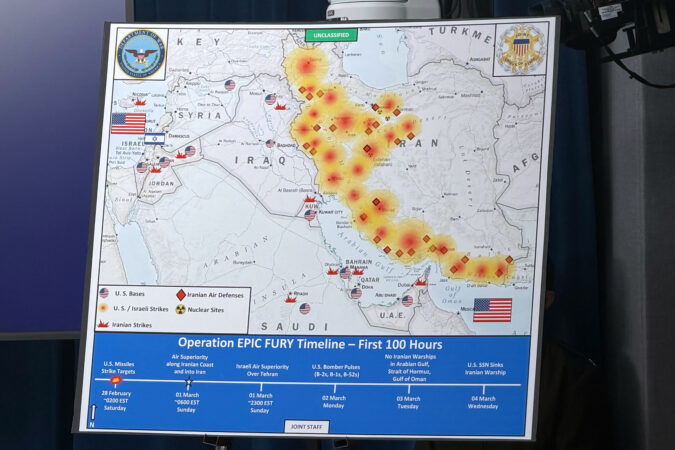
    JERUSALEM — Satellite images, expert analysis, a U.S. official and public information released by the U.S. and Israeli militaries suggest an explosion that killed scores of Iranian students at a school was likely caused by U.S. airstrikes that also hit an adjacent compound associated with the regime’s Revolutionary Guard.

    The Feb. 28 strike, which had the highest reported civilian death toll since the war began, has come under staunch criticism from the United Nations and human rights monitors. More than 165 people were killed, most of them of children, in the blast during school hours at Shajareh Tayyebeh Elementary School, according to Iranian state media.

    Satellite images taken Wednesday and reviewed by the the Associated Press show most of the school in the city of Minab, about 680 miles southeast of Tehran, reduced to rubble, a crescent shape punched into its roof. Experts say the tight pattern of the damage visible on the satellite photos is consistent with a targeted airstrike.

    Iran has blamed Israel and the United States for the blast. Neither country has accepted responsibility. Asked about the strike at the school at a Pentagon press briefing Wednesday, Defense Secretary Pete Hegseth said, “All I can say is that we’re investigating that. We, of course, never target civilian targets. But we’re taking a look and investigating that.”

    Several factors point to a U.S. strike.

    One is the launching of an assessment of the incident by the U.S. military. According to the Pentagon’s instructions on processes for mitigating civilian harm, an assessment is launched after a group of investigators make an initial determination that the U.S. military may bear culpability. A U.S. official told the AP that the strike was likely U.S. The official spoke anonymously because they were not authorized to comment publicly on the sensitive matter.

    Another is the location of the school — next to a base of the Revolutionary Guard in Hormozgan Province and close to a barracks for its naval brigade. The U.S. military has focused on naval targets and acknowledged strikes in the province, including one in the vicinity of the school.

    Israel, which has denied conducting the strike, has focused on areas of Iran closer to Israel and hasn’t reported conducting any strikes south of Isfahan, 500 miles away. The U.S. is operating warships in the Arabian Sea, including the USS Abraham Lincoln aircraft carrier, within range of the school.

    When asked by the AP about its findings, U.S. military Central Command spokesperson Capt. Tim Hawkins said, “It would be inappropriate to comment given the incident is under investigation.”

    White House press secretary Karoline Leavitt told reporters Friday that she had no updates on the investigation and did not directly answer a question about whether Trump was satisfied with the pace of the probe.

    “My assumption is that probably there were some activities recently there and they detected and tracked them, but … they weren’t aware or didn’t have an up-to-date database that a girls school was there and they bombed it,” said Farzin Nadimi, a senior fellow at the Washington Institute for Near East Policy who studies Iran’s military.

    Satellite images show damage

    The school is adjacent to a walled compound labeled on maps as the Seyyed Al-Shohada Cultural Complex of the Guard, which included a pharmacy, gym, and sports field.

    In addition to the school, satellite photos show that blasts struck at least five buildings in the Guard compound, leaving the area pocked with craters, charred holes in roofs, and piles of rubble. Historical satellite imagery shows the school building was not separated from the Guard compound until about a decade ago when a wall was built between them.

    Iranian online map applications show a living quarters for the Assef Brigades about 165 yards from the school, inside the Revolutionary Guard compound. The 16th Assef Coastal Missile Group is part of the Guard’s navy, Nadimi said. The 1st Naval District, which the Assef Brigades belong to, is responsible for the Strait of Hormuz, the narrow mouth of the Persian Gulf through which a fifth of all oil and natural gas traded passes. The strait has been a particular point of conflict in the war.

    In the aftermath of the strike, video from Iran’s state broadcaster verified by the AP using satellite imagery showed dozens of fresh graves dug at a nearby cemetery. Nadimi said it is likely the school taught daughters of Guard personnel.

    The strike has drawn wide condemnation from the secretary-general of the United Nations and international human rights groups. The criticism comes amid reports that airstrikes have also hit other schools in Iran.

    The London-based conflict monitoring organization Airwars is reviewing three other school strikes that caused casualties. In addition to those, in the last 48 hours the U.S.-based Human Rights Activists News Agency reported at least two more schools were struck.

    Targeting schools would be a clear violation of international laws governing armed conflict, said Elise Baker, a senior staff lawyer at the Atlantic Council, a Washington-based nonprofit think tank.

    “Strikes can only legally target military objectives and combatants, but the school was a civilian object and the students and teachers were civilians,” Baker said. “The school’s proximity to [Guard] facilities and the attendance of children of [Guard] members at the school does not change that conclusion: It was a civilian object.”

    Pattern of damage suggests targeted strike

    Three experts told the AP the satellite imagery and videos from the scene strongly suggested multiple munitions hit the compound. Complicating any assessment is the lack of images of bomb fragments from the blast. No independent agency has reached the site during the war to investigate, either.

    There are no craters or evidence of bombs hitting in the surrounding neighborhood, suggesting a great degree of accuracy, said Corey Scher, a researcher who uses satellite imagery and radar data to study landscape changes in armed conflict zones.

    “All the strikes are clustered within the walled-off compound,” Scher said. ”That’s one level of precision at the block level. And then most of the strikes are basically leading to direct hits on buildings. That’s another level of precision.”

    Scher said the school and the other buildings struck in the compound showed damage consistent with the use of air-to-surface munitions.

    “They didn’t explode in the air above the building,” he said. “It looks like the explosion happened at the time they hit the surface, whether it was the building or the ground.”

    Sean Moorhouse, a former British Army officer and explosive ordnance disposal expert, said the available satellite imagery was insufficient to determine exactly what type of munitions were used in the strike, but he said the visible damage was consistent with what would be expected with impacts from multiple 2,000-pound high-explosive warheads. He said the multiple precise impacts would undercut any suggestion that a malfunctioning Iranian missile hit the school.

    N.R. Jenzen-Jones, the director of Armament Research Services, said the school and Guard compound were targeted with “multiple simultaneous or near-simultaneous strikes.” He said in videos of the school taken immediately after the strike, smoke can be seen rising from the Guard compound. There were also impacts on multiple buildings visible in satellite images and media reports citing witnesses who said they heard multiple explosions.

    “If indeed it is confirmed that an American or Israeli strike hit the school, there are several potential points of failure in the targeting cycle,” Jenzen-Jones said. “We might be seeing an intelligence failure, likely rather early in the process, which misidentified the target or failed to update a targeting list following the building’s change in use.”

  • Florida Bar walks back statement on investigation into Halligan, now says there is none

    Florida Bar walks back statement on investigation into Halligan, now says there is none

    FORT LAUDERDALE, Fla. — The Florida Bar on Friday walked back what it said was an erroneous earlier statement its representatives had made indicating that it had an open investigation into Lindsey Halligan, a former top federal prosecutor in Virginia.

    A letter from a bar association representative to an advocacy group that had requested an inquiry into Halligan said that there was an “investigation pending” in response to the group’s complaint.

    Jennifer Krell Davis, a spokeswoman for the Florida Bar, also said Thursday that there was an “open file” but declined to comment further “as active Florida discipline cases are confidential.”

    On Friday, however, Davis issued a new statement saying, “The Florida Bar wrote a letter to the complainant erroneously stating that there is a pending Bar investigation of member Lindsay Halligan. There is no such pending Bar investigation of Lindsay Halligan.”

    She said the Florida Bar had received a complaint and was monitoring the “ongoing legal proceedings” but did not explain the discrepancy.

    Halligan, a former White House aide for President Donald Trump, pursued cases against the president’s opponents but ultimately left the job after her appointment was deemed unlawful.

    The Campaign for Accountability, a nonprofit watchdog that had sought the bar inquiry, published a letter on its website in which a representative of the Florida Bar confirmed that the organization had an investigation pending.

    A spokesperson for the Florida Bar had told the Associated Press on Thursday that there was an open file on Halligan but declined to comment further because disciplinary cases are confidential.

    On Friday, Michelle Kuppersmith, the executive director of CfA, said the Florida Bar had not directly told them that the Feb. 4 letter contained an erroneous mention of a pending investigation. She said it’s “hard to reconcile” the Bar’s latest statement.

    “If there is no longer an investigation into Halligan, the question is why not, given that three judges indicated she engaged in conduct that appears to violate ethics rules,” Kuppersmith said in a statement.

    Halligan did not immediately respond to several email requests for comment about the investigation.

    The complaint centers on Halligan’s brief but turbulent time as the acting U.S. attorney for the Eastern District of Virginia, historically one of the Justice Department’s most elite and prestigious prosecution offices.

    Halligan, who had served as one of Trump’s attorneys but had no prior experience as a federal prosecutor, was installed in September after the Trump administration effectively forced out her predecessor, Erik Siebert, amid pressure to bring charges against a pair of Trump’s political opponents: former FBI Director James Comey and New York Attorney General Letitia James.

    Halligan secured both indictments but ran into difficulty right away as lawyers for Comey raised questions about a series of what they said were irregularities in the grand jury presentation of the case, including legal and factual errors that tainted the process. A judge in November scolded Halligan for “fundamental misstatements of the law,” including what he said was her suggestion to the grand jury that Comey did not have a Fifth Amendment right to not testify in the case.

    A different judge subsequently dismissed both the Comey and James prosecutions after concluding that Halligan’s appointment by the Justice Department had been unlawful. Halligan left the position in January.

    The complaint rehashes that chronology and also suggests that Halligan may have violated rules of professional conduct by continuing to hold herself out in court filings as acting U.S. attorney for the district after a judge had ruled that she was serving in the position illegally.

    “In this way, Ms. Halligan appears to have issued false or misleading communications regarding herself and her services,” the complaint said.

  • Gulf allies complain U.S. didn’t notify them of Iran attacks and ignored their warnings, sources say

    Gulf allies complain U.S. didn’t notify them of Iran attacks and ignored their warnings, sources say

    CAIRO — The Trump administration is confronting mounting discontent from allies in the Persian Gulf who have complained they were not given adequate time to prepare for the torrent of Iranian drones and missiles bombarding their countries in retaliation for strikes launched by the U.S. and Israel.

    Officials from two Gulf countries said their governments were disappointed in the way the U.S. has handled the war, particularly the initial attack on Iran on Feb. 28. They said their countries were not given advance notice of the U.S.-Israeli attack and complained the U.S. had ignored their warnings that the war would have devastating consequences for the entire region.

    One of the officials said that Gulf countries were frustrated and even angry that the U.S. military has not defended them enough. He said there is belief in the region that the operation has focused on defending Israel and American troops, while leaving Gulf countries to protect themselves, and said that his country’s stock of interceptors was “rapidly depleting.”

    Like others in this story, the Gulf officials spoke on the condition of anonymity because they were discussing a confidential diplomatic matter.

    The governments of Bahrain, Kuwait, Oman, Qatar, Saudi Arabia, and the United Arab Emirates did not respond to requests for comment.

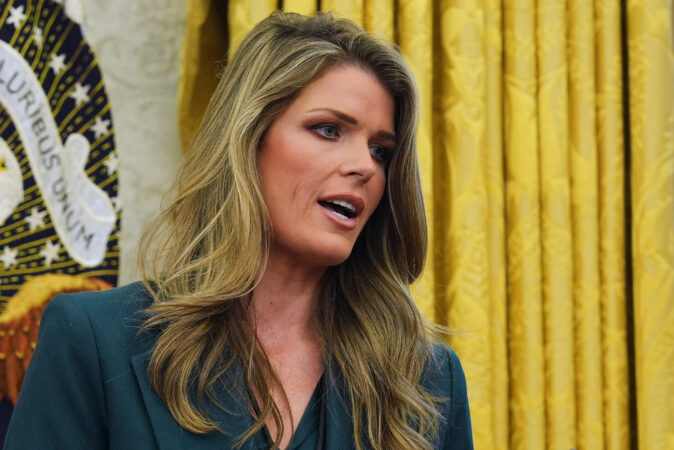
    White House spokeswoman Anna Kelly said in response: “Iran’s retaliatory ballistic missile attacks have decreased by 90% because Operation Epic Fury is crushing their ability to shoot these weapons or produce more. President Trump is in close contact with all of our regional partners, and the terrorist Iranian regime’s attacks on its neighbors prove how imperative it was that President Trump eliminate this threat to our country and our allies.”

    The Pentagon did not respond.

    Official reactions by the Gulf Arab countries have been muted, but public figures with close ties to their governments have been openly critical of the U.S., suggesting that Israeli Prime Minister Benjamin Netanyahu dragged President Donald Trump into a needless war.

    “This is Netanyahu’s war,” Prince Turki al-Faisal, the former Saudi intelligence chief, told CNN on Wednesday. “He somehow convinced the president [Trump] to support his views.”

    Pentagon officials conceded this week in closed-door briefings with lawmakers they are struggling to stop waves of drones launched by Iran, leaving some U.S. targets in the Gulf region, including troops, vulnerable.

    The Gulf countries have emerged as valuable targets for Iran, well within the range of Iran’s short-range missiles and filled with targets, including American troops, high-profile business and tourist locations and energy facilities, disrupting the world’s flow of oil.

    Since the start of the war, Iran has fired at least 380 missiles and over 1,480 drones targeting the five Arab Gulf countries, according to an AP tally based on official statements. At least 13 people have been killed in those countries, according to local officials.

    In addition, six U.S. soldiers were killed in Kuwait on Sunday when an Iranian drone strike hit an operations center in a civilian port, more than 10 miles from the main Army base. The husband of one of the slain soldiers, who was part of a supply and logistics unit based in Iowa, said the operations center was a shipping container-style building and had no defenses.

    In briefings for members of Congress on Tuesday, U.S. Defense Secretary Pete Hegseth and Gen. Dan Caine, chairman of the Joint Chiefs of Staff, told lawmakers that the U.S. will not be able to intercept many of the incoming UAVs, especially the Shaheds, according to three people familiar with the briefings.

    In one of the briefings, Caine and Hegseth did not offer any details when pressed by lawmakers why the U.S. did not seem prepared for Iran to launch waves of drones at U.S. targets in the region, according to one of the people.

    That person, a U.S. official who is familiar with the U.S. security posture in Gulf region, said that the U.S. did not have widespread capabilities throughout the Gulf region to effectively counter waves of the one-way drones coming to places outside conventional targets or bases outside of Iraq and Syria.

    Drone attacks this week at the embassy in Saudi Arabia caused a limited fire at the embassy in Riyadh, and another drone attack the United Arab Emirates sparked a small fire outside the U.S. consulate in Dubai.

    The U.S. and its allies in the Middle East on Thursday even sought help from Ukraine, which has expertise in countering Iran’s Shahed drones, according to Ukrainian President Volodymyr Zelensky. When asked about Zelensky’s comments, Trump told Reuters on Thursday, “Certainly, I’ll take, you know, any assistance from any country.”

    Bader Mousa Al-Saif, a Kuwait-based analyst with Chatham House, said the U.S. appeared to have underestimated the risk to its Gulf Arab allies, believing American troops and Israel would be the primary targets of Iranian retaliation.

    “I don’t think they saw that there would be as much exposure to the Gulf,” he said, saying the lack of a plan to protect the Gulf countries “speaks to U.S. short-sightedness.”

    The frustration in some of the Gulf nations is driven in part by the relative success that Israel has had knocking down drones and missiles compared to some of their neighbors, according to a person familiar with the sensitive diplomatic matter who was not authorized to comment publicly.

    Their air defense systems are hardly as robust as Israel’s, but according to the person, U.S. officials have been somewhat perplexed that the Gulf countries are still not showing an appetite for delivering a counteroffensive by launching missiles at Iranian targets.

    Elliott Abrams, who served as a special representative for Iran and Venezuela at the end of Trump’s first term, said that U.S. national security officials and their Gulf allies were aware that Iran had the capability to carry out significant strikes.

    “And the neighbors knew it and were afraid of it. But it was never clear that Iran would actually do it, because they have a lot to lose,” Abrams said. “These attacks will leave long-term enmity, and if they keep up, the Gulf Arabs may start attacking Iran.”

    Michael Ratney, a former U.S. ambassador to Saudi Arabia, said that while the Gulf countries have an interest in seeing Iran weakened, they also have key concerns about the ongoing war — including the economic damage and instability it is causing and its open-ended nature.

    Ratney, who is now a senior adviser in the Middle East program of the Center for Strategic and International Studies, said: “What comes next? The countries of the Gulf will have to bear the brunt of whatever that is.”

  • Supply chain disruptions from the Iran war could raise prices for drugs, electronics, and more

    Supply chain disruptions from the Iran war could raise prices for drugs, electronics, and more

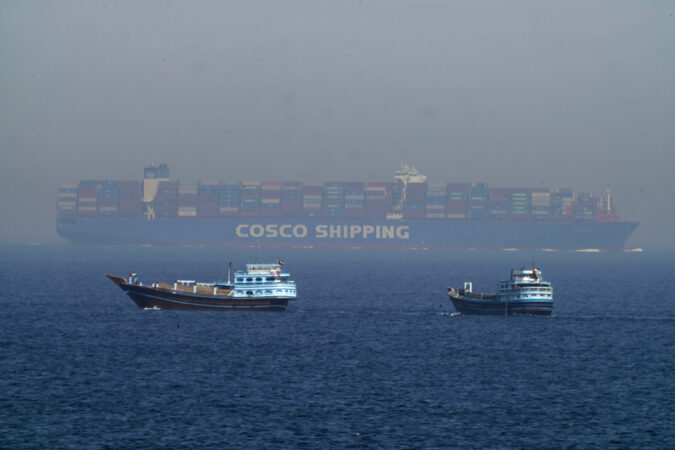
    NEW YORK — The Iran war has effectively halted oil tanker movement in the key Strait of Hormuz. But it’s also disrupting the wider global supply chain beyond oil, affecting everything from pharmaceuticals from India, semiconductors from Asia, and oil-derived products such as fertilizers that come from the Middle East.

    Cargo ships are stuck in the Gulf or making a much longer detour around the southern tip of Africa. Planes carrying air cargo out of the Middle East are grounded. And the longer the war drags on, the more likely that there will be shortages and price increases on a wide range of goods.

    “This is really causing some major impacts within the global supply chain,” said Patrick Penfield, professor of supply chain practice at Syracuse University. “As this conflict keeps progressing, you’ll start to see some shortages, you’ll see some major price increases.”

    Stalled at sea

    Clarksons Research, which tracks shipping data, estimates that about 3,200 ships, or about 4% of global ship tonnage, are idle inside the Persian Gulf, but that includes about 1,231 that likely only operate within the Gulf. About 500 ships, or 1% of global tonnage, are currently “waiting” outside the Gulf in ports off the coast of the United Arab Emirates and Oman, according to the firm.

    While those may seem like small percentages, they have a domino effect that will lead to congestion elsewhere, said Michael Goldman, general manager North America of CARU Containers.

    “The supply chain is kind of like a long train with many cars and each car represents, let’s say, a port in the world. Well, if one car gets derailed, it can very often have a domino effect to many other cars behind it or in front of it,” he said. “So although we only have a small number of ports affected by this military action, it can really have a big effect on the total supply chain.”

    On Tuesday, President Donald Trump pitched a plan aimed at getting oil and trade moving again through the Strait.

    Trump said on social media he ordered the U.S. International Development Finance Corp. to provide political risk insurance for tankers carrying oil and other goods through the Persian Gulf “at a very reasonable price.”

    Political risk insurance is a type of coverage intended to protect firms against financial losses caused by unstable political conditions, government actions, or violence. Marine insurers had been canceling or raising rates for insurance in the region.

    He said that, if necessary, the U.S. Navy would escort oil tankers through the Strait of Hormuz. The Navy has at least eight destroyers and three, smaller, littoral combat ships in the region. These ships have previously been used to escort merchant shipping in the region and in the Red Sea.

    Computer chips, pharmaceuticals, and other goods face delays

    A wide range of products are shipped through the Mideast region. Along with about 20% of the world’s oil that comes from the region, products made with natural gas such as petrochemical feedstock — used to make plastic and rubber — and nitrogen fertilizer come from the Middle East. Pharmaceuticals exported from India and semiconductors and batteries exported from Asia to the rest of the world are all shipped through the region and could face delays.

    Limited routes, higher costs

    In addition to constraints on the Strait of Hormuz, the instability has put a damper on transit in the Red Sea and the Suez Canal, which had just begun to see more transit after years of instability due to Houthi attacks on ships in the region. Shipping company Maersk had resumed transit in the Suez Canal and Red Sea but said Sunday that it was rerouting that traffic around the Cape of Good Hope in Africa, a move other companies have been making to avoid the volatile region.

    That journey adds 10 to 14 days to the trip and about $1 million extra in fuel per ship, Syracuse’ Penfield estimates.

    With higher fuel prices, longer routes, and higher risk in the region, shippers have begun adding fuel and “war risk” or “emergency conflict” surcharges to what they’re charging clients, leading to higher costs all around, he said.

    Air cargo under pressure

    Air cargo has also been constrained. Closed airspace and airports in countries including UAE, Qatar, Bahrain, Kuwait, Iraq, and Iran have stranded tens of thousands of people — and cargo.

    Each of the three major Middle Eastern airlines — Emirates, Qatar Airways, and Etihad Airways — operate fleets of cargo aircraft, and the airlines also transport goods in the belly of their passenger planes.

    The amount of goods that travels through the air typically accounts for less than 1% of all freight moving globally, but the products that do travel by air tend to be perishable or high-value goods like pharmaceuticals, electronics, and produce that together account for about 35% of the world trade value, Boeing estimated in its World Air Cargo Forecast.

    The longer these airports in the Middle East remain closed the greater the potential disruption to the economy if these sensitive shipments don’t arrive or have to be rerouted around the conflict. Even before the war in Iran began over the weekend, air freight and airlines were already contending with closed airspace over Ukraine and Russia.

    Flights through these Middle Eastern airport hubs are a key route for passengers and cargo from India. Henry Harteveldt, an airline industry analyst with Atmosphere Research Group, said it’s going to be hard to get to India now, and passengers may have to switch to different routes that fly west across Asia. Airlines may have to resort to longer flights, and in some case even add fuel stops on some routes.

    “Remember, there’s a lot of pharmaceutical products that are made in India and then exported to different countries around the world. If that’s disrupted, that has a huge, huge, huge impact,” Harteveldt said.

    Air cargo costs are expected to rise due to reduced capacity, increased demand, and surcharges.

    Maersk said in an operational update Tuesday that it expects air freight rates to rise due to capacity constraints.

    “Airlines are also introducing or reviewing the possibility of introducing war risk surcharges on shipments routed through or near the impacted regions,” Maersk said in a statement. “There may also be added costs linked to jet fuel which in turn can push up costs.”

    An industry that ‘runs on disruption’

    Despite the supply chain upheaval, however, Michael Goldman, general manager North America of CARU Containers, said the industry will adjust. Over the past few years it has faced other major disruptions like COVID supply shortages and other recent Mideast conflicts and has become more nimble.

    “The specific situation that’s happening is pretty unprecedented, so it’s very unique from that perspective,” he said. “[But] for the last few years the industry just kind of runs on disruption. So in terms of our industry having disruption, that is nothing new. That’s more of the same.”

  • Bernard LaFayette, Selma voting rights organizer, has died at 85

    Bernard LaFayette, Selma voting rights organizer, has died at 85

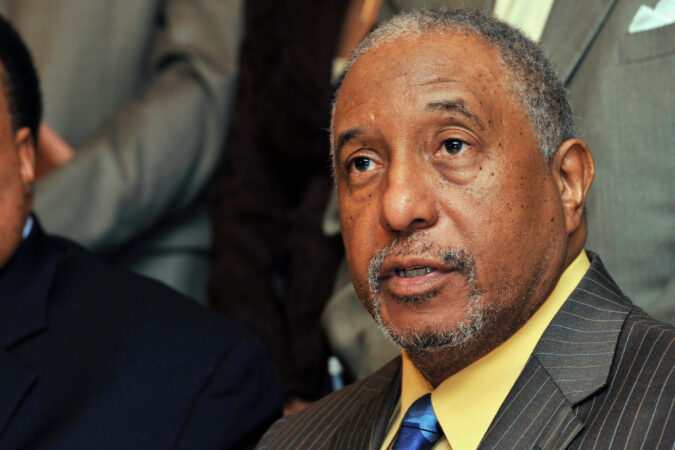
    NASHVILLE — Bernard LaFayette, the advance man who did the risky groundwork for the voter registration campaign in Selma, Ala., that culminated in the passage of the Voting Rights Act of 1965, has died.

    Bernard LaFayette, III, said his father died Thursday morning of a heart attack. He was 85.

    On March 7, 1965, the beating of future congressman John Lewis and voting rights marchers on Selma’s Edmund Pettus Bridge led the evening news, shocking the nation’s conscience and pushing Congress to act. But two years before “Bloody Sunday,” it was Mr. LaFayette who quietly set the stage for Selma and the advances in voting rights that would follow.

    Mr. LaFayette was one of a delegation of Nashville students who in 1960 had helped found the Student Nonviolent Coordinating Committee, which organized desegregation and voting rights campaigns across the South. SNCC crossed Selma off its map after some initial scouting determined “the white folks were too mean and the Black folks were too scared,” Mr. LaFayette said.

    But he insisted on trying anyway. Named director of the Alabama Voter Registration Campaign in 1963, Mr. LaFayette moved to the town and, with his former wife Colia Liddell, gradually built the leadership capacity of the local people, convincing them change was possible and creating momentum that could not be stopped. He described this work in a 2013 memoir, In Peace and Freedom: My Journey in Selma.

    The many dangers Mr. LaFayette faced included an assassination attempt on the same night Medgar Evers was murdered in Mississippi, in what the FBI said was a conspiracy to kill civil rights workers. Mr. LaFayette was beaten outside his home before his assailant pointed a gun at him. His calls for help brought out a neighbor with a rifle. Mr. LaFayette found himself standing between the two men, asking his neighbor not to shoot.

    Mr. LaFayette said he felt “an extraordinary sense of internal strength instead of fear” at that moment. Rather than fight back, he looked his attacker in the eyes. Nonviolence is a fight “to win that person over, a struggle of the human spirit,” he wrote.

    He also acknowledged that his neighbor’s gun may have been what saved his life.

    Mr. LaFayette was already working on a new project in Chicago by the time his work in Selma came to fruition in 1965. He had planned to join the Selma-to-Montgomery march on day two, so he missed Bloody Sunday when the march was stopped by tear gas and club-wielding state troopers before it even got out of Selma.

    “I felt helpless at a distance,” he wrote. “I was stricken with grief, concerned that so many people in my beloved community were hurt, possibly killed.”

    But he shifted quickly, rounding up people in Chicago and arranging transport to Alabama for a second attempt. They set off two weeks later on what had become a victory march: President Lyndon Johnson had introduced the Voting Rights Act to Congress.

    Inspired by his grandmother

    Mr. LaFayette grew up in Tampa, Fla., where he recalled trying to board a trolley with his grandmother when he was 7 years old. Black passengers had to pay at the front, then walk to the back to climb on. But the conductor began to pull away before they could board, and his grandmother fell. He was too little to help.

    “I felt like a sword cut me in half, and I vowed I would do something about this problem one day,” he wrote in his memoir.

    It was his grandmother who decided he was destined to become a preacher. She arranged for him to attend Nashville’s American Baptist Theological Seminary (now American Baptist College), where he roomed with Lewis, and both helped lead the nonviolent civil disobedience campaign that led to Nashville becoming the first major Southern city to desegregate its downtown accommodations.

    President Barack Obama spoke about the roommates in a eulogy after Lewis died in 2020, recalling how they integrated a Greyhound bus while riding home for Christmas break (Lewis to Troy, Ala., and LaFayette to Tampa, Fla.) just weeks after the Supreme Court banned segregation in interstate travel in 1960.

    The two sat up front and refused to move, angering the driver, who stormed off at every stop, all through the night.

    “Imagine the courage of these two people … to challenge an entire infrastructure of oppression,” Obama said. “Nobody was there to protect them. There were no camera crews to record events.”

    Mr. LaFayette has said they didn’t fully realize the impact of all this work at the time.

    “We lived through this, but this was our daily lives,” he told the Associated Press in a 2021 interview. “When you think about it, we weren’t trying to make history or trying to rewrite history. We were responding to the problems of the particular time.”

    Freedom Rides of 1961

    In 1961, Mr. LaFayette dropped out of college in the middle of final exams to join an official Freedom Ride, one of many that sought to force Southern authorities to comply with the court’s ruling. He was beaten in Montgomery, Ala., and arrested in Jackson, Miss., becoming one of more than 300 Freedom Riders sent to Parchman Prison.

    Mr. LaFayette later trained Black youth to become leaders in the Chicago Freedom Movement and helped organize tenant unions.

    “The tenant protections we have today are really a direct outcome of that work in Chicago,” said Mary Lou Finley, a professor emeritus at Antioch University Seattle who worked with Mr. LaFayette in Chicago in the 1960s.

    And when he learned that one of his secretaries had two children sickened by lead — a huge problem that was not well understood at the time — Mr. Lafayette organized high school students to screen toddlers for lead poisoning by collecting urine samples, and prodded Chicago to help develop the nation’s first mass screening for lead poisoning, Finley said.

    “Bernard has always worked quietly behind the scenes,” said Finley, who later collaborated with Mr. LaFayette on nonviolence training. “He has avoided the spotlight. In some ways, I think he felt like he could do more if he were doing it quietly.”

    Mr. LaFayette also worked alongside Andrew Young and the Southern Christian Leadership Conference to prepare for the Rev. Dr. Martin Luther King Jr.’s ill-fated Northern campaign. Several of King’s marches were attacked by white mobs, but Mr. LaFayette and Young challenged the notion that the Chicago movement was a failure.

    Young noted in a 2021 interview that in Chicago they were trying to organize a population 20 times larger than Birmingham’s, while pursuing a range of difficult issues, from neighborhood integration to the quality of schools and jobs. “In each one of those we made progress,” Young said.

    By 1968, Mr. LaFayette was the national coordinator of the King’s Poor People’s Campaign and was with King at the Lorraine Motel on the morning of his assassination. King’s last words to him were about the need to institutionalize and internationalize the nonviolence movement. Mr. LaFayette made this his life’s mission.

    After King died, Mr. LaFayette returned to American Baptist to complete his bachelor’s degree and then earned a master’s and doctorate from Harvard University. Mr. LaFayette later served as director of Peace and Justice in Latin America; chairperson of the Consortium on Peace Research, Education and Development; director of the Center for Nonviolence and Peace Studies at the University of Rhode Island; distinguished senior scholar-in-residence at the Candler School of Theology, Emory University, Atlanta; and minister of the Westminster Presbyterian Church in Tuskegee, Ala., among other positions.

    “Bernard did work in Latin America. He did nonviolence workshops in South Africa with the African National Congress. He went to Nigeria when the civil war was happening there,” Young said. “Bernard literally went everywhere he was invited as sort of a global prophet of nonviolence.”

    In his memoir, Mr. LaFayette wrote that the ever-present threat of death during those early years of organizing taught him that the value of life “lies not in longevity, but in what people do to give it significance.”