Category: Associated Press

  • House narrowly rejects Iran war powers resolution in early test of Trump’s strategy

    House narrowly rejects Iran war powers resolution in early test of Trump’s strategy

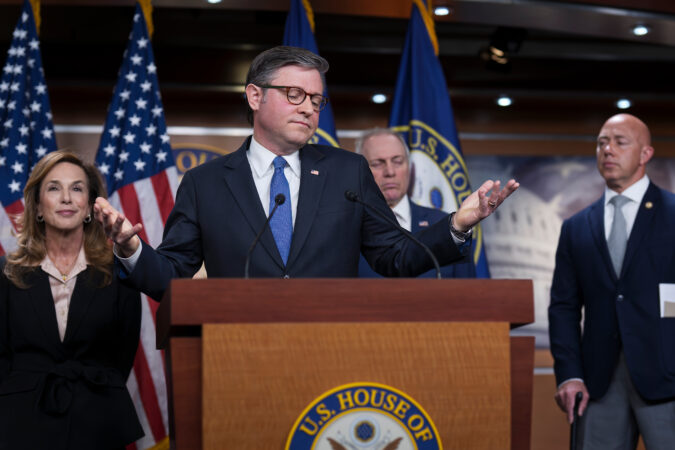
    WASHINGTON — The House narrowly rejected a war powers resolution Thursday to halt President Donald Trump’s attacks on Iran, an early sign of unease in Congress over the rapidly widening conflict that is reordering U.S. priorities at home and abroad.

    It’s the second vote in as many days, after the Senate defeated a similar measure along party lines. Lawmakers are confronting the sudden reality of representing wary Americans in wartime and all that entails — with lives lost, dollars spent, and alliances tested by a president’s unilateral decision to go to war with Iran.

    While the tally in the House, 212-219, was expected to be tight, the outcome provided a clarifying snapshot of political support for, and opposition to, the U.S.-Israel military operation and Trump’s rationale for bypassing Congress, which alone has the power to declare war. At the Capitol, the conflict has quickly carried echoes of the long wars in Afghanistan and Iraq, and many Sept. 11-era veterans now serve in Congress.

    “Donald Trump is not a king, and if he believes the war with Iran is in our national interest, then he must come to Congress and make the case,” said Rep. Gregory Meeks, the top Democrat on the House Foreign Affairs Committee.

    The House also approved a separate measure affirming that Iran is the largest state sponsor of terrorism.

    Republicans largely back Trump, and most Democrats oppose the war

    Trump’s Republican Party, which narrowly controls the House and Senate, largely sees the conflict with Iran not as the start of a new war, but the end of a government that has long menaced the West. The operation has killed Iran’s Supreme Leader Ayatollah Ali Khamenei, which some view as an opportunity for regime change, though others warn of a chaotic power vacuum.

    Republican Rep. Brian Mast of Florida, chairman of the House Foreign Affairs Committee, publicly thanked Trump for taking action against Iran, saying the president is using his own constitutional authority to defend the U.S. against the “imminent threat” the country posed.

    Mast, an Army veteran who worked as a bomb disposal expert in Afghanistan, said the war powers resolution was effectively asking “that the president do nothing.”

    For Democrats, Trump’s attack on Iran, influenced by Israeli Prime Minister Benjamin Netanyahu, is a war of choice that is testing the balance of powers in the Constitution.

    “The framers weren’t fooling around,” said Rep. Jamie Raskin (D., Md.), arguing that the Constitution is clear that only Congress can decide matters of war. “It’s up to us.”

    While views in Congress are largely falling along party lines, there are crossover coalitions. The war powers resolution, if signed into law, would have immediately halted Trump’s ability to conduct the war unless Congress approved the military action. The president would likely veto it.

    Trump officials provide shifting rationale for war

    After launching a surprise attack against Iran on Saturday, Trump has scrambled to win support for a conflict that Americans of all political persuasions were already wary of entering. Trump administration officials spent hours behind closed doors on Capitol Hill this week trying to reassure lawmakers that they have the situation under control.

    Six U.S. military members were killed over the weekend in a drone strike in Kuwait, and Trump has said more Americans could die. Thousands of Americans abroad have scrambled for flights, many lighting up phone lines at congressional offices as they sought help trying to flee the Middle East.

    Trump said Thursday he must be involved in choosing Iran’s new leader. Yet House Speaker Mike Johnson (R., La.) said this week that America has enough problems at home and is not about to be in the “nation-building business.”

    Defense Secretary Pete Hegseth said that the war could extend eight weeks, twice as long as the president first estimated. Trump has left open the possibility of sending U.S. troops into what has largely been a bombing campaign by air. More than 1,230 people in Iran have died.

    The administration said the goal is to destroy Iran’s ballistic missiles that it believes are shielding its nuclear program. It has also said Israel was ready to act, and American bases would face retaliation if the U.S. did not strike Iran first. On Wednesday, the U.S. said it torpedoed an Iranian warship near Sri Lanka.

    “This administration can’t even give us a straight answer of as to why we launched this preemptive war,” said Rep. Thomas Massie, the Republican from Kentucky, an outlier in his party.

    Massie and Rep. Ro Khanna (D., Calif.), who had teamed up to force the release the Jeffrey Epstein files, also pushed the war powers resolution to the floor, past objections from Johnson’s GOP leadership. Another Republican, Rep. Warren Davidson of Ohio, a former Army Ranger, was also expected to back the war powers resolution.

    Johnson has warned that it would be “dangerous” to limit the president’s authority while the U.S. military is already in conflict.

    “Congress must stand with the president to finally close, once and for all, this dark chapter of history,” Rep. Michael McCaul (R., Texas) said.

    Rep. Yassamin Ansari (D., Ariz.) said that as the daughter of Iranian immigrants who fled their homeland, she celebrates Khamenei’s death. But she warned that a democratic transition for the people of Iran never seems to a priority for Trump and his officials who briefed lawmakers.

    “War carries profound and deadly consequences for our troops, for the American people and for the entire world,” she said. “It’s the most serious decision that a nation can make and the American people deserve debate, transparency and accountability before that decision is made.”

    Other Democrats have proposed an alternative resolution that would allow the president to continue the war for 30 days before he must seek congressional approval. It is not expected yet for a vote.

    Senators sit in their desks for solemn vote

    In the Senate, Republican leaders have successfully, though narrowly, defeated a series of war powers resolutions pertaining to several other conflicts during Trump’s second term. This one, however, was different.

    Underscoring the gravity of the moment Wednesday, Democratic senators filled the chamber and sat at their desks as the voting got underway.

    Senate Democratic leader Chuck Schumer of New York said before the vote that every senator will pick a side. “Do you stand with the American people who are exhausted with forever wars in the Middle East or stand with Donald Trump and Pete Hegseth as they bumble us headfirst into another war?”

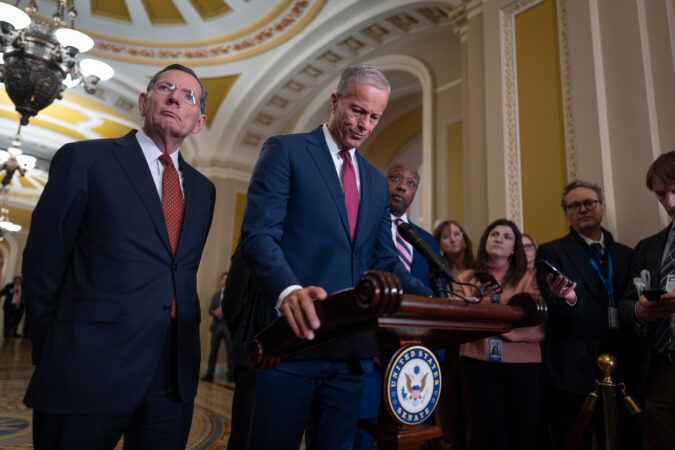
    Sen. John Barrasso, second in Senate Republican leadership, said “Democrats would rather obstruct Donald Trump than obliterate Iran’s national nuclear program.”

    The legislation failed on a 47-53 tally mostly along party lines, with Sen. Rand Paul (R., Ky.) in favor and Sen. John Fetterman (D., Pa.) against it.


  • Crews in Cuba rush to repair a damaged power plant to ease a blackout

    Crews in Cuba rush to repair a damaged power plant to ease a blackout

    HAVANA — Swaths of Cuba remained without power on Thursday nearly a day after a huge blackout hit the western part of the island in the latest outage blamed on a fragile electric grid and a lack of fuel.

    Crews worked overnight to repair a broken boiler at one of Cuba’s largest thermoelectric plants, but officials have warned that it could take three to four days for power to be fully restored.

    State media reported that nearly 660,000 customers in Havana, or 77%, had power, as well as 43 hospitals and 10 water supply stations. However, officials warned of low power generation and said some circuits that crews had reconnected were kicked offline again.

    Millions still remained without power, including Miguel Leyva, 65, who lives with his mother and brother, both of whom are ill.

    “I have no words to describe what I’m going through: the heat, the mosquitoes and no electricity. The food could spoil,” he said. “I’m aware of all the problems that exist, but listen, it’s been more than 24 hours now.”

    Cuba’s Ministry of Energy and Mines wrote on X that the electrical system is operating “in a limited capacity, prioritizing basic services, primarily health and water supply.”

    State media reported that two power plants are offline because of a lack of petroleum.

    Government officials said Wednesday afternoon that crews have located the crack in the boiler drum that led to the outage. They said it will take 12 hours to cool that area so crews can enter the furnace and start repairing it. Work already is underway to fix a pipe that also is damaged, officials added.

    Sonia Vázquez, 61, said the blackout didn’t stop her from selling coffee to passersby daily, saying she prepared it with gas at 5 a.m. under a rechargeable lamp.

    “I didn’t sleep last night. Too many mosquitoes,” said Vázquez, who lives with her grandson.

    Meanwhile, 57-year-old cafe owner José Ignacio Dorta, said that some of his frozen food has spoiled.

    “We’ve looked for ways to prevent further spoilage. We’re working on it. We hope nothing else will spoil,” he said.

    Cuba has long struggled with an aging electric grid and intermittent fuel supplies, but the crisis has deepened in recent months.

    Key oil shipments from Venezuela were halted after the United States attacked the South American country in early January. Then later that month, President Donald Trump warned that he would impose tariffs on any country that sells or supplies oil to Cuba.

    On Thursday, Trump suggested a deal may be imminent with Cuba but that he’s focusing on Iran in the meantime.

    Referring to a co-owner of Inter Miami being originally from Cuba, Trump said, “You’re gonna go back” and added, “That’s going to be a great day, right?”

    Without providing details, Trump said, “We’re going to celebrate that separately. I just want to wait a couple of weeks. I want him to wait a couple of weeks. But we’ll be together again soon, I suspect, celebrating what’s going on in Cuba.”

    He added of the island’s government, “They want to make a deal so badly. You have no idea.”

    Then, referring to Marco Rubio, the president said the secretary of state wants to work on Cuba but is cautious to do so during the war in Iran.

    “You’re next one’s going to be — we want to do that special — Cuba,” Trump said. “He’s waiting. But he says, “Let’s get this one finished first.’ We could do them all at the same time. But bad things happen. If you watch countries over the years, you do them all too fast, bad things happen.”

    Trump didn’t clarify his meaning, but the comments followed his from last week, when he raised that the prospect of a “friendly takeover” of Cuba might be possible without elaborating.

    Wednesday’s outage is the second one to hit western Cuba in three months.

    The outage in early December lasted nearly 12 hours. Officials said that a fault in a transmission line linking two power plants caused an overload and led to the collapse of the energy system’s western sector.

    Some of Cuba’s thermoelectric plants have been operating for more than three decades and receive little maintenance because of high costs. U.S. sanctions also have prevented the government from buying new equipment and specialized parts, officials say.

  • Trump says he’s replacing Homeland Security Secretary Noem with GOP Sen. Markwayne Mullin

    Trump says he’s replacing Homeland Security Secretary Noem with GOP Sen. Markwayne Mullin

    WASHINGTON — President Donald Trump on Thursday fired his embattled Homeland Security Secretary Kristi Noem, after mounting criticism over her leadership of the department, including the handling of the administration’s immigration crackdown and disaster response.

    Trump, who said he would nominate Oklahoma Republican Sen. Markwayne Mullin in her place, made the announcement on social media after Noem faced a two-day grilling on Capitol Hill this week from GOP members as well as Democrats.

    Noem’s departure marks a stunning turnaround for a close ally to the president who was tasked with steering his centerpiece policy of mass deportations. But she appeared to increasingly become a liability for Trump, with questions arising over her spending at her department and over her conduct in the aftermath of the shooting deaths of two protesters in Minneapolis earlier this year.

    Trump said Noem “has served us well, and has had numerous and spectacular results (especially on the Border!).” He said he was making her a “Special Envoy for The Shield of the Americas,” a new security initiative that he said would focus on the Western Hemisphere.

    Noem, who appeared at a law enforcement event in Nashville, moments after Trump’s announcement, did not address her ouster there. She read from prepared remarks and was not asked by attendees about the development.

    Later, in a social media post, she thanked Trump for the new appointment and touted her accomplishments as secretary.

    “We have made historic accomplishments at the Department of Homeland Security to make America safe again,” she wrote.

    White House press secretary Karoline Leavitt said the administration will work with the GOP-led Senate to get Mullin, whom she called “extraordinarily qualified,” confirmed to lead DHS “as soon as possible.”

    The administration’s immigration crackdown faced criticism, especially in Minnesota

    Noem is the first cabinet secretary to leave during Trump’s second term. Her tenure looked increasingly short-lived after hearings in Congress this week where she faced rare but blistering criticism from Republican lawmakers. One particular point of scrutiny was a $220 million ad campaign featuring Noem that encouraged people in the country illegally to leave voluntarily.

    Noem told lawmakers that Trump was aware of the campaign in advance, but Trump disputed that in an interview Thursday with Reuters, saying he did not sign off on the ad campaign.

    Noem has faced waves of criticism as she’s overseen Trump’s immigration crackdown, especially since the shooting deaths of the two protesters in Minneapolis at the hands of immigration enforcement officers. In the immediate aftermath of the deaths of Renee Good and Alex Pretti, Noem portrayed both of them as aggressors, contradicting widely viewed videos and descriptions of their deaths from bystanders. She declined to apologize for her description over two days of congressional testimony.

    The former South Dakota governor was also criticized over the way her department has spent billions of dollars allocated to it by Congress.

    Her department, DHS, has been at the center of a funding battle in Congress over immigration enforcement tactics and has been shut down for 20 days, although many of the employees are continuing to work, often without pay.

    Even before Noem’s appearance before key congressional committees this week, Republican lawmakers had been anticipating the secretary’s eventual ouster, particularly after her handling of the immigration enforcement crackdown in Minneapolis.

    As they tried to end the ongoing Homeland Security shutdown, Senate Republicans had noted privately to Democratic senators that Noem was likely on her way out and that that should prompt Democrats to move forward with agreeing to fund the department again, according to two people familiar with the discussions.

    Democrats did not see that as an actual concession by Republicans, considering Noem was becoming a political liability for the GOP, said the people, who spoke on condition of anonymity to discuss private negotiations.

    Aside from immigration, Noem also faced criticism — including from Republicans — over the pace of emergency funding approved through the Federal Emergency Management Agency and for the Trump administration’s response to disasters.

    Critics welcomed Noem’s departure. Minneapolis Mayor Jacob Frey wrote “good riddance” on social media, a sentiment echoed by Senate Democratic Leader Chuck Schumer.

    Some immigration activists questioned whether her departure would change the execution of an immigration agenda that they fundamentally disagree with.

    “This is not accountability, just a reshuffling of the enablers of the agenda of President Trump,” said Vanessa Cárdenas, executive director of America’s Voice, an advocacy group. She said Noem’s tenure was “marked by cruelty.”

    Gregory Bovino, a Border Patrol official who was elevated under Noem’s watch to lead immigration crackdowns in cities including Los Angeles, Chicago and Minneapolis, was one of the few who applauded Noem’s tenure.

    “She is the best Secretary I ever worked for, period. The others weren’t even close. Noem is the ultimate patriot,” Bovino told the Associated Press.

    Sen. Markwayne Mullin (center) arrives at Philadelphia International Airport to attend the NCAA Division 1 men’s wrestling championships at the Wells Fargo Center on March 22, 2025.

    DHS leadership changes come at a pivotal time

    Mullin would need to be confirmed by the Senate, but under a federal law governing executive branch vacancies, he would be allowed to serve as an acting Homeland Security secretary as long as his nomination is formally pending.

    Voting in the Senate just after Trump’s announcement, Mullin said he has “no idea” how quickly his nomination will move.

    “The president and I are good friends. So we look forward to working closer with the White House, and obviously I’m gonna be over there a lot more,” he said.

    Mullin would take over the third-largest department in government that has responsibility for carrying out Trump’s hard-line immigration agenda. And he would assume the role at a pivotal time for that agenda.

    Immigration enforcement during the first year of Trump’s administration was largely defined by high-profile, made-for-social-media operations with flashy names, often led by Bovino, who reported directly to Noem. Noem herself often went out on those operations, riding along with officers when they went out to make arrests.

    But those high-profile operations in places like Los Angeles, Chicago and Minneapolis often led to clashes with activists and protesters that were captured on video and drove opposition to the president’s immigration agenda.

    That culminated with the shooting deaths in Minneapolis after which Trump shuffled leadership of the operation. The number of officers there was drawn down shortly after.

  • Homeland Security funding bill falters again in Senate as Republicans warn of Iran risk

    Homeland Security funding bill falters again in Senate as Republicans warn of Iran risk

    WASHINGTON — Republicans invoked the war in Iran and the prospect of retaliatory terrorist attacks as they made another unsuccessful effort Thursday to pass a bill funding the Department of Homeland Security.

    Democrats are insisting on changes to immigration enforcement operations as part of the measure and blocked it from advancing. The procedural vote was 51-45, falling well short of the 60 that Republicans needed to proceed with the measure. While the House will also take up the bill Thursday, that outcome will be more about putting lawmakers on the record about where they stand.

    In the end, a bipartisan compromise will have to be reached to end a DHS shutdown that began Feb. 14.

    The funding bill first passed the House back in January, but it has gone nowhere in the Senate as Democrats seek new restraints on immigration enforcement tactics following the killing of ICU nurse Alex Pretti by Border Patrol officers in Minneapolis.

    Republicans have called on Democrats to reconsider their vote in the wake of the conflict in Iran.

    Sen. John Barrasso, the No. 2 Republican in the Senate, said Democrats would bear responsibility for the next cyberattack that is missed or the next “lone wolf terrorist” who attacks in the U.S.

    “Blood will be on their hands,” Barrasso said on the Senate floor. “Because we don’t have a functioning Department of Homeland Security that is funded with people on the ground in every position receiving their paychecks.”

    It did not appear the GOP’s strategy had changed the position of Democratic lawmakers, though. They said they are prepared to fund most of the agencies at the department, just not Immigration and Customs Enforcement or Customs and Border Protection.

    “It’s the same lousy, rotten bill that does not put any guardrails or constraints on ICE or CBP after federal agents shot American citizens in the street,” Rep. Jim McGovern (D., Mass.) said.

    Moments before the vote, senators were getting word that President Donald Trump had just fired DHS Secretary Kristi Noem. The news did not change Democrats’ resolve to force operational changes within the department through the spending bill.

    “Good riddance,” said Senate Democratic leader Chuck Schumer. “But the problems at ICE transcend any one individual.”

    Workers are beginning to miss part of their paychecks

    Following the longest federal shutdown in the country’s history last year, Congress has completed work on 11 of this year’s 12 appropriations bills. Only the bill for Homeland Security remains outstanding.

    Republicans said the timing couldn’t be worse for a Homeland Security shutdown. While a large majority of the department’s employees are considered essential and continue to work, many will not receive a full paycheck this week.

    “Like Democrats’ first shutdown a few months ago, this shutdown is causing a lot of financial stress, uncertainty, and pain for hardworking Americans,” Senate Majority Leader John Thune said. “It’s also making it harder for those working to keep America safe.”

    Republicans said the prospect of an increase in unscheduled absences by the Transportation Security Administration’s agents could lead to longer wait times at the nation’s airports. Meanwhile, the Cybersecurity and Infrastructure Security Agency has canceled various assessments to determine vulnerabilities to critical infrastructure. And training for first responders conducted through the Federal Emergency Management Agency was canceled.

    Democrats are seeking several changes at the department that include prohibiting ICE enforcement operations at sensitive locations like schools and churches, allowing independent investigations into alleged wrongdoing, requiring warrants to be signed by judges before federal agents can forcibly enter private homes or other nonpublic spaces without consent, and requiring agents to wear identification and remove their masks.

    Republicans note that the bill does include a bipartisan provision directing more resources for de-escalation training and $20 million to outfit immigration enforcement agents with body-worn cameras.

    Little to show from negotiations

    The White House and congressional Democrats don’t appear to have made significant progress in recent weeks in resolving their differences after trading several offers.

    “Look, we’re still far apart, but we’re negotiating and exchanging paper back and forth,” Schumer said.

    The size of the divide appeared significant during Thursday’s debate on the Senate floor.

    Alabama Sen. Katie Britt said that through their actions, Democrats were “still the party of open borders, they are still the party of defund the police, now actually more than ever.”

    She and other Republicans also cited last weekend’s mass shooting in Austin, Texas, as an example of the dangerous threat environment that’s facing Americans following the attack on Iran.

    “We know this couldn’t come at a more dangerous time.,” Britt said.

    Sen. Patty Murray, the top Democrat on the Senate Appropriations Committee, said that Democrats were simply working to make sure federal immigration officials follow the same standards as other law enforcement officers.

    “We are not asking for the moon. We are asking for basic steps to protect Americans’ constitutional rights and their safety,” Murray said.

  • GOP Rep. Tony Gonzales of Texas ends reelection bid after admitting to affair with aide

    GOP Rep. Tony Gonzales of Texas ends reelection bid after admitting to affair with aide

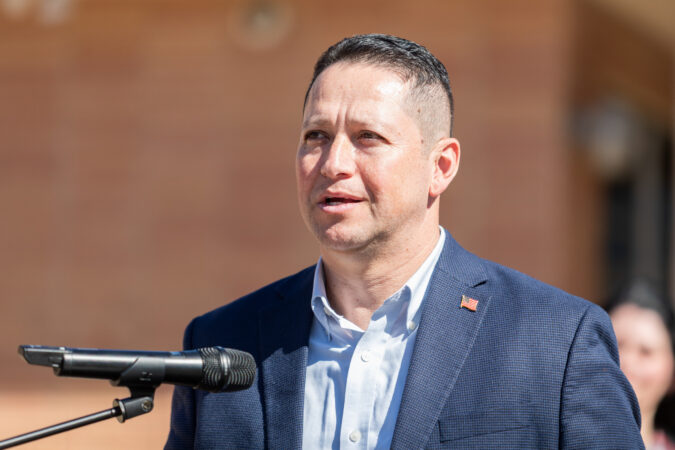
    WASHINGTON — Republican Rep. Tony Gonzales of Texas said late Thursday he was withdrawing from his reelection race, after having admitted an affair with a former staff member who later died by suicide, but he vowed to finish out his term in Congress.

    He had faced calls from GOP leadership to end his reelection bid, and from others in Congress to resign.

    “After deep reflection and with the support of my loving family, I have decided not to seek re-election,” Gonzales said in a statement posted late Thursday to X.

    The move is the latest in a quickly changing situation that stunned Capitol Hill and resulted in a House Ethics Committee investigation into his conduct. Gonzales’ decision to bow out of the race appears to clear the field. On Tuesday, he had been forced into a May runoff against Brandon Herrera, a gun manufacturer and YouTube gun-rights influencer who narrowly lost to him in the 2024 primary.

    House Speaker Mike Johnson and the GOP leadership earlier Thursday had called on Gonzales to withdraw from reelection after Gonzales, a day earlier, acknowledged a relationship that has upturned the political world in his home state and in Washington.

    “We have encouraged him to address these very serious allegations directly with his constituents and his colleagues,” said Johnson, Majority Leader Steve Scalise, Whip Tom Emmer, and GOP Conference Chairwoman Lisa McClain in a statement.

    “In the meantime, Leadership has asked Congressman Gonzales to withdraw from his race for reelection.”

    Johnson, R-La., has been under enormous pressure from his own GOP lawmakers to take action, and several Republicans have already called for Gonzales to step aside. Rep. Anna Paulina Luna, R-Fla., has introduced two resolutions to punish Gonzales. The first seeks to remove him from his assignments on the House Appropriations and Homeland Security committees, while the second seeks to censure him.

    House Democratic Leader Hakeem Jeffries of New York, meanwhile, said he would support expelling Gonzales from the House, a rare step that requires a two-thirds vote from the chamber.

    GOP leaders notably did not call for Gonzales to resign from office as they struggle to maintain their slim majority in the House, which they hold by only a handful of seats.

    Their move came after Gonzales, appearing on the “Joe Pags Show,” was asked whether he had a relationship with the aide, Regina Ann Santos-Aviles.

    Santos-Aviles, 35, died after setting herself on fire in the backyard of her home in Uvalde, Texas. The Bexar County Medical Examiner’s Office later ruled her death a suicide.

    “I made a mistake and I had a lapse in judgment, and there was a lack of faith, and I take full responsibility for those actions,” Gonzales said.

    The congressman, now in his third term, had said he would not step down in response to the allegations, telling reporters recently that there will be opportunities for all the details and facts to come out.

    Gonzales, a father of six, first won his seat in 2020 after retiring from a 20-year career in the Navy that included time in Iraq and Afghanistan.

    In the interview broadcast Wednesday, Gonzales said he had not spoken to Santos-Aviles since June 2024. She died in September 2025.

    “I had absolutely nothing to do with her tragic passing, and in fact, I was shocked just as much as everyone else,” Gonzales said.

    Gonzales went on to say he had reconciled with his wife, Angel, and has asked God to forgive him. He also said he looked forward to the Ethics Committee investigation.

    Johnson and GOP leadership urged that committee to “act expeditiously.”

    Under House ethics rules, lawmakers may not engage in a sexual relationship with any employee of the House under their supervision.

  • More than 20 states sue over new global tariffs Trump imposed after his stinging Supreme Court loss

    More than 20 states sue over new global tariffs Trump imposed after his stinging Supreme Court loss

    WASHINGTON — About two dozen states — including Pennsylvania and New Jersey — challenged President Donald Trump’s new global tariffs on Thursday, filing a lawsuit over import taxes he imposed after a stinging loss at the Supreme Court.

    The Democratic attorneys general and governors in the lawsuit argue that Trump is overstepping his power with planned 15% tariffs on much of the world.

    Trump has said the tariffs are essential to reduce America’s longstanding trade deficits. He imposed duties under Section 122 of the Trade Act of 1974 after the Supreme Court struck down tariffs he imposed last year under an emergency powers law.

    Section 122, which has never been invoked, allows the president to impose tariffs of up to 15%. They are limited to five months unless extended by Congress.

    The lawsuit is led by attorneys general from Oregon, Arizona, California, and New York.

    “The focus right now should be on paying people back, not doubling down on illegal tariffs,” said Oregon Attorney General Dan Rayfield. The suit comes a day after a judge ruled that companies who paid tariffs under Trump’s old framework should get refunds.

    The new suit argues that Trump can’t pivot to Section 122 because it was intended to be used only in specific, limited circumstances — not for sweeping import taxes. It also contends the tariffs will drive up costs for states, businesses and consumers.

    Many of those states also successfully sued over Trump’s tariffs imposed under a different law: the International Emergency Economic Powers Act (IEEPA).

    Four days after the Supreme Court struck down his sweeping IEEPA tariffs Feb. 20, Trump invoked Section 122 to slap 10% tariffs on foreign goods. Treasury Secretary Scott Bessant told CNBC on Wednesday that the administration would raise the levies to the 15% limit this week.

    The Democratic states and other critics say the president can’t use Section 122 as a replacement for the defunct tariffs to combat the trade deficit.

    The Section 122 provision is aimed at what it calls “fundamental international payments problems.’’ At issue is whether that wording covers trade deficits, the gap between what the U.S. sells other countries and what it buys from them.

    Section 122 arose from the financial crises that emerged in the 1960s and 1970s when the U.S. dollar was tied to gold. Other countries were dumping dollars in exchange for gold at a set rate, risking a collapse of the U.S. currency and chaos in financial markets. But the dollar is no longer linked to gold, so critics say Section 122 is obsolete.

    Awkwardly for Trump, his own Justice Department argued in a court filing last year that the president needed to invoke the emergency powers act because Section 122 did “not have any obvious application’’ in fighting trade deficits, which it called “conceptually distinct’’ from balance-of-payment issues.

    Still, some legal analysts say the Trump administration has a stronger case this time.

    “The legal reality is that courts will likely provide President Trump substantially more deference regarding Section 122 than they did to his previous tariffs under IEEPA,’’ Peter Harrell, visiting scholar at Georgetown University’s Institute of International Economic Law, wrote in a commentary Wednesday.

    The specialized Court of International Trade in New York, which will hear the states’ lawsuit, wrote last year in its own decision striking down the emergency-powers tariffs that Trump didn’t need them because Section 122 was available to combat trade deficits.

    Trump does have other legal authorities he can use to impose tariffs, and some have already survived court tests. Duties that Trump imposed on Chinese imports during his first term under Section 301 of the same 1974 trade act are still in place.

    Also joining the lawsuit are the attorneys general of Colorado, Connecticut, Delaware, Illinois, Maine, Maryland, Massachusetts, Michigan, Minnesota, Nevada, New Jersey, New Mexico, North Carolina, Rhode Island, Vermont, Virginia, Washington, Wisconsin, and the governors of Kentucky and Pennsylvania.

  • Bills to obtain wide receiver D.J. Moore in a trade with the Bears

    Bills to obtain wide receiver D.J. Moore in a trade with the Bears

    The Buffalo Bills agreed Thursday to acquire wide receiver D.J. Moore from the Chicago Bears, two people with knowledge of the trade told The Associated Press.

    Buffalo is sending a second-round pick in the draft this year to Chicago for Moore and a fifth-rounder, the people said. They spoke to the AP on condition of anonymity because the deal cannot become official until the start of the new league year Wednesday.

    Moore is coming off making 50 catches for 682 yards and six touchdowns last season as the Bears made the playoffs in Ben Johnson’s first year as coach. The soon-to-be 29-year-old joins the Bills under new coach Joe Brady after quarterback Josh Allen has thrown to a rotating cast of characters at receiver.

  • Quentin Grimes’ late free throws helps the Sixers beat the Jazz, 106-102

    Quentin Grimes’ late free throws helps the Sixers beat the Jazz, 106-102

    Quentin Grimes hit two tiebreaking free throws with 16.4 seconds remaining, Tyrese Maxey scored 25 points and the short-handed 76ers beat the Utah Jazz 106-102 on Wednesday night.

    Grimes finished with 16 points and Jabari Walker had 22 points for the Sixers, who were without Joel Embiid, VJ Edgecombe, and suspended Paul George.

    Keyonte George scored 30 points for the Jazz, who have lost seven in a row.

    Philadelphia, which entered in sixth place in the Eastern Conference playoff race, trailed 100-94 with 4 minutes, 51 seconds left after George hit a three. But Utah missed its next six field goals, and Philadelphia tied it at 100 on Adem Bona’s follow dunk with 1:50 left.

    Isaiah Collier’s layup 46 seconds later put the Jazz ahead by two points, but Grimes tied it on a drive with 46.8 seconds remaining. After George misfired on a long-range shot for Utah, Grimes converted both free throws after being fouled. Utah coach Will Hardy did not call timeout, and a wide-open look from long distance by Kyle Filipowski was off.

    Sixers’ Dom Barlow (left) attempts a layup past Utah Jazz’s Kyle Filipowski during the first half of Wednesday’s game.

    Embiid missed his third straight game with a strained right oblique. Edgecombe suffered a lower back contusion in Tuesday’s 131-91 loss to the Spurs.

    Jazz rookie Ace Bailey scored 12 points.

    Jaren Jackson Jr. (left knee injury recovery), Walker Kessler (left shoulder injury recovery), Lauri Markkanen (right hip impingement), Jusuf Nurkic (nose injury recovery) and Vince Williams Jr. (left knee injury management) were out for Utah.

    The Sixers travel to Atlanta on Saturday (6 p.m., NBCSP) to face the Hawks to begin a two-game road trip. After facing the Hawks, the Sixers will play in Cleveland on Monday (7 p.m., NBCSP).

  • House committee votes to subpoena Attorney General Bondi to answer questions over the Epstein files

    House committee votes to subpoena Attorney General Bondi to answer questions over the Epstein files

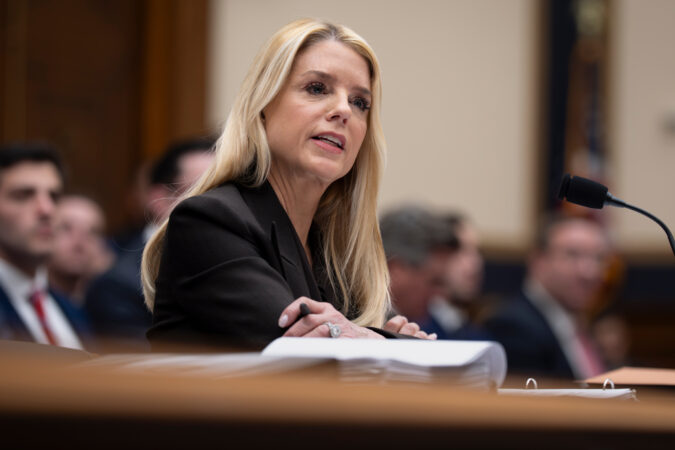
    WASHINGTON — The House Oversight Committee voted Wednesday to subpoena Attorney General Pam Bondi to answer questions over the Justice Department’s handling of files related to the Jeffrey Epstein sex trafficking investigation.

    Five Republicans joined Democrats to support the subpoena proposed by GOP Rep. Nancy Mace of South Carolina in a sign of continued frustration with the department’s review and release of a tranche of documents regarding the disgraced financier.

    The Justice Department had no immediate comment on the subpoena.

    Former President Bill Clinton and his wife, former Secretary of State Hillary Clinton, recently sat with lawmakers on the committee for their own depositions over the former Democratic president’s connections to Epstein from more than two decades ago.

  • The sea is higher than we thought and millions more are at risk, study finds

    The sea is higher than we thought and millions more are at risk, study finds

    Climate change’s rising seas may threaten tens of millions more people than scientists and government planners originally thought because of mistaken research assumptions on how high coastal waters already are, a new study said.

    Researchers studied hundreds of scientific studies and hazard assessments, calculating that about 90% of them underestimated baseline coastal water heights by an average of 1 foot, according to Wednesday’s study in the journal Nature. The problem arises far more frequently in the Global South, the Pacific, and Southeast Asia, and less in Europe and along the Atlantic coasts.

    The cause is a mismatch between the way sea and land altitudes are measured, said study coauthor Philip Minderhoud, a hydrogeology professor at Wageningen University and Research in the Netherlands. And he attributed that to a “methodological blind spot” between the different ways those two things are measured.

    Each way measures its own areas properly, he said. But where sea meets land, there are a lot of factors that often do not get accounted for when satellites and land-based models are used. Studies that calculate sea level rise impact usually “do not look at the actual measured sea level, so they used this zero-meter” figure as a starting point, said lead author Katharina Seeger of the University of Padua in Italy. In some places in the Indo-Pacific, the figure is close to 1 meter, or about 3 feet, Minderhoud said.

    One simple way to understand that is that many studies assume sea levels without waves or currents, when the reality at the water’s edge is of oceans constantly roiled by wind, tides, currents, changing temperatures, and things like El Niño, Minderhoud and Seeger said.

    Adjusting to a more accurate coastal height baseline means that if seas rise by a little more than 3 feet — as some studies suggest will happen by the end of the century — waters could inundate up to 37% more land and threaten 77 million to 132 million more people, the study said.

    That would trigger problems in planning and paying for the impacts of a warming world.

    People at risk

    “You have a lot of people here for whom the risk of extreme flooding is much higher than people thought,” said Anders Levermann, a climate scientist at the Potsdam Institute for Climate Impacts Research in Germany, who was not part of the study. Southeast Asia, where the study finds the biggest discrepancy, has the most people already threatened by sea level rise, he said.

    Minderhoud pointed to island nations in that region as an area where the reality of discrepancy hits home.

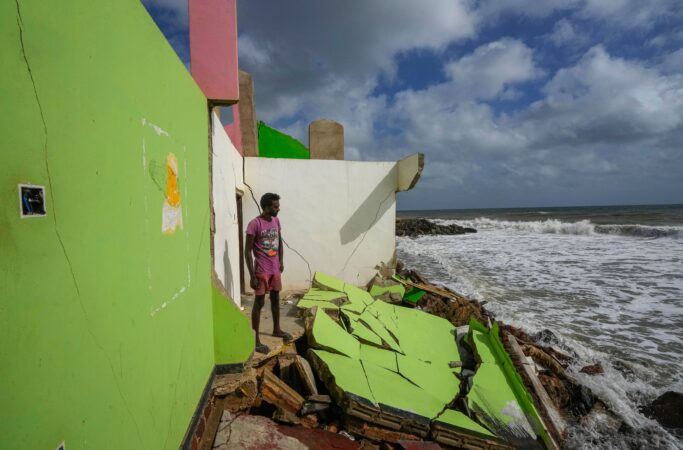
    For 17-year-old climate activist Vepaiamele Trief, the projections are not abstract. On her island home in the South Pacific archipelago of Vanuatu, the shoreline has visibly retreated within her short lifetime, with beaches eroded, coastal trees uprooted, and some homes now barely 3 feet from the sea at high tide. On her grandmother’s island of Ambae, a coastal road from the airport to her village has been rerouted inland because of encroaching water. Graves have been submerged and entire ways of life feel under threat.

    “These studies, they aren’t just words on a paper. They aren’t just numbers. They’re people’s actual livelihoods,” she said. “Put yourself in the shoes of our coastal communities — their lives are going to be completely overturned because of sea level rise and climate change.”

    Paying attention to the starting point

    This new study is pretty much about what is the truth on the ground.

    Calculations that may be correct for the seas overall or for the land are not quite right at that key intersection point of water and land, Seeger and Minderhoud said. That is especially true in the Pacific.

    “To understand how much higher a piece of land is than the water, you need to know the land elevation and the water elevation. And what this paper says the vast majority of studies have done is to just assume that zero in your land elevation data set is the level of the water — when, in fact, it’s not,” said sea level rise expert Ben Strauss, CEO of Climate Central. His 2019 study was one of the few the new paper said got it right.

    “It’s just the baseline that you start from that people are getting wrong,” said Strauss, who was not part of the research.

    Maybe not so bad, some scientists say

    Other outside scientists said that Minderhoud and Seeger may be making too much of the problem.

    “I think they’re exaggerating the implications for impact studies a bit — the problem is actually well understood, albeit addressed in a way that could probably be improved,” said Gonéri Le Cozannet, a scientist at the French geological survey. Most local planners know their coastal issues and plan accordingly, Rutgers University sea level expert Robert Kopp said.

    That’s true in Vietnam, in the high-impact area, Minderhoud said. Officials there have an accurate sense of elevation, he said.

    The findings come as a new UNESCO report warns of major gaps in understanding how much carbon the ocean absorbs. That report said that models differ by 10% to 20% in estimating the size of that carbon sink, raising questions about the accuracy of global climate projections that rely on them.

    Together, the studies suggest governments may be planning for coastal and climate risks with an incomplete picture of how the ocean is changing.

    “When the ocean comes closer, it takes away more than just the land we used to enjoy,” said Thompson Natuoivi, a climate advocate for Save the Children Vanuatu.

    “Sea level rise is not just changing our coastline, it’s changing our lives. We are not talking about the future — we’re talking about the right now.”