Category: Associated Press

  • Cuba’s president pushes for ‘urgent’ changes to island’s economic and social model

    Cuba’s president pushes for ‘urgent’ changes to island’s economic and social model

    HAVANA — Cuban President Miguel Díaz-Canel said Monday that his government should “immediately” focus on implementing urgent transformations to the island’s economic and social model as oil reserves in the Caribbean country dwindle.

    The comments made during a meeting of the Council of Ministers come as Cuba feels the squeeze of a recent oil blockade coupled with a halt in oil shipments from Venezuela after the U.S. attacked the South American country in January.

    “We must focus, immediately, on implementing the urgent, most necessary transformations that must be made to the economic and social model,” he was quoted as saying by state-owned media.

    Díaz-Canel said the push to transform Cuba’s economic and social model is tied to business and municipal autonomy and the resizing of the state apparatus, government, and institutions, among other things, according to state-owned media.

    He called on municipalities to manage issues including foreign direct investment; economic partnerships between the state and nonstate sectors; and investments with Cubans residing abroad, according to state-owned media.

    Prime Minister Manuel Marrero Cruz said Cuba’s priorities are focused on food production and changes to the island’s power grid as severe outages and interruptions in fuel supply persist.

    The minister of energy and mines, Vicente de la O Levy, was quoted by state media as saying that progress in developing a transition strategy by municipalities is still slow despite the distribution of solar panels to doctors, teachers, and children. He said municipalities need to have a sustainability strategy that relies on their own resources.

    Last month, Cuba implemented austere fuel-saving measures, including halting some public transportation and moving classes online.

    Last week, the U.S. Treasury Department slightly eased restrictions on the sale of Venezuelan oil to Cuba, but the island’s energy and economic crisis is expected to persist.

    In addition to its energy woes, Cuba is struggling with a sharp increase in U.S. sanctions that have stripped the island of nearly $8 billion in revenue from March 2024 to February 2025, a loss that is nearly 50% higher compared with the previous period, according to government statistics.

  • Rev. Jesse Jackson returns home to South Carolina to lie in state

    Rev. Jesse Jackson returns home to South Carolina to lie in state

    COLUMBIA, S.C. — After a long career of fighting for civil rights, the Rev. Jesse Jackson Sr. is visiting his home for one last time to lie in state at the South Carolina Capitol on Monday.

    The final full honors from the state where he was born is a far cry from his childhood in segregated Greenville, where in 1960 he couldn’t go inside the local library’s much better funded whites-only branch to check out a book he needed.

    Jackson led seven Black high school students into that segregated branch, where they sat down and read books and magazines until they were arrested. The branches closed, then quietly reopened for all.

    With that action, Jackson launched his career — and crusade — fighting for equality for all. He would catch the attention of the Rev. Martin Luther King Jr. and join the voting rights march King led from Selma to Montgomery, Ala.

    Jackson died Feb. 17 at age 84 after battling a rare neurological disorder that affected his mobility and ability to speak in his later years.

    His casket, draped in an American flag, arrived at the South Carolina Statehouse on a horse-drawn caisson on a chilly, cloudy morning. A special white-gloved Highway Patrol honor guard brought Jackson inside the Statehouse and to the second floor, where well over 100 people packed under the rotunda for a ceremony before the public would be invited in to pay their respects.

    “Today we’re here to celebrate a life well lived, a job well done,” said Democratic state Rep. Jermaine Johnson, who led the ceremony.

    The service began with a rousing version of the civil rights anthem “Lift Every Voice and Sing” that reverberated through the Statehouse — a building that was partially destroyed in 1865 during the Civil War started by South Carolina to keep slavery.

    The South Carolina services are part of two weeks of events. They began with Jackson’s body lying in repose and the public invited last week to his Rainbow PUSH Coalition’s Chicago headquarters.

    After South Carolina, Jackson will be returned to Chicago for a large celebration of life gathering at a megachurch and the final homegoing services at the headquarters of Rainbow PUSH. Plans for a service in Washington, D.C., to honor him have been postponed until a later date.

    Nationally, Jackson advocated for the poor and underrepresented for voting rights, job opportunities, education, and healthcare. He scored diplomatic victories with world leaders.

    Through his Rainbow PUSH Coalition, he channeled cries for Black pride and self-determination into corporate boardrooms, pressuring executives to make America a more open and equitable society. He stepped forward as the Civil Rights Movement’s torchbearer after King’s assassination, and would run for the Democratic presidential nomination in 1984 and 1988.

    Jackson continued to be active in his home state, pushing in 2003 for Greenville County to honor King by matching the federal holiday in his honor and in 2015 by advocating for removing the Confederate flag from South Carolina Statehouse grounds after nine Black worshipers were killed in a racist shooting at a Charleston church.

    Jackson is just the second Black man to lie in state at the South Carolina Capitol. State Sen. Clementa Pinckney was honored in 2015 after he was killed in the Charleston church shooting.

  • Macron says France will allow temporary deployment of nuclear-armed jets to European allies

    Macron says France will allow temporary deployment of nuclear-armed jets to European allies

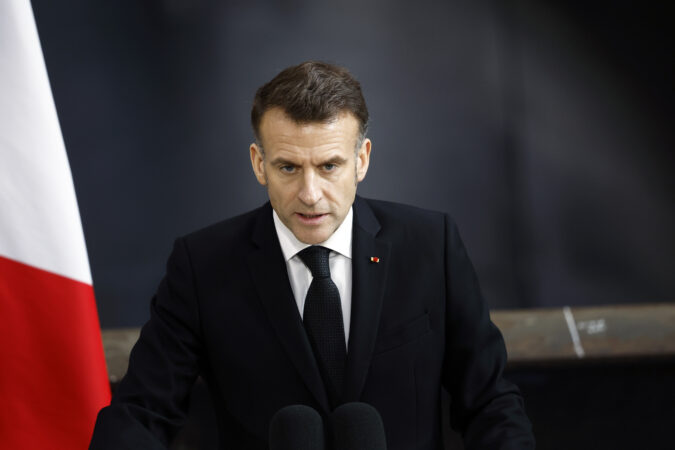
    L’ILE LONGUE, France — French President Emmanuel Macron announced Monday that France would for the first time allow the deployment of its nuclear-armed aircraft to allied countries in a new nuclear strategy aimed at strengthening Europe’s independence.

    Macron also announced the first increase in his country’s nuclear arsenal in decades during a speech outlining the strategy at a military base at L’Ile Longue in northwestern France that hosts the country’s ballistic missile submarines.

    “To be free, one needs to be feared,” Macron said.

    Macron said the new posture could “provide for the temporary deployment of elements of our strategic air forces to allied countries,” but said there would be no sharing of decision-making with any other nation regarding the use of the nuclear weapons.

    Talks about such arrangements have started with Britain, Germany, Poland, the Netherlands, Belgium, Greece, Sweden, and Denmark, Macron said.

    Macron’s long-planned speech, scheduled before the most recent outbreak of hostilities in Iran, was aimed at spelling out how French nuclear weapons fit into Europe’s security amid concerns raised on the continent by recurring tensions with U.S. President Donald Trump and Russia’s full-scale invasion of Ukraine.

    France also will allow partners to participate in deterrence exercises and allow allies’ non-nuclear forces to participate in France’s nuclear activities, said Macron, who is the commander-in-chief of the armed forces under the French constitution.

    European partners welcomed the new strategy of France, which has been the only nuclear power in the European Union since Britain’s exit from the bloc in 2020.

    In a joint statement, Macron and German Chancellor Friedrich Merz said the two countries would deepen integration in deterrence starting this year, “including German conventional participation in French nuclear exercises and joint visits to strategic sites.”

    In a letter to Dutch lawmakers, Defense Minister Dilan Yesilgöz-Zegerius and Foreign Minister Tom Berendsen said the Netherlands was in strategic talks with France on nuclear deterrence as “a supplement to, and not a replacement for, NATO’s collective defense and nuclear deterrence capabilities.”

    Polish Prime Minister Donald Tusk wrote on X that “we are arming up together with our friends so that our enemies will never dare to attack us.”

    Macron also announced that France will increase its number of nuclear warheads from the current level of below 300, but did not give a figure for the increase. It will be the first time France increases its nuclear arsenal since at least 1992.

    “I have decided to increase the numbers of warheads of our arsenal,” Macron said. “My responsibility is to ensure that our deterrence maintains — and will maintain in the future — its assured destructive power.”

    “If we had to use our arsenal, no state, however powerful, could shield itself from it, and no state, however vast, would recover from it,” Macron said.

    European leaders have voiced growing doubts about U.S. commitments to help defend Europe under the so-called nuclear umbrella, a policy long intended to ensure that allies — particularly NATO members — would be protected by American nuclear forces in the event of a threat.

    Macron said that recent changes in U.S. defense strategy amid the emergence of new threats have demonstrated a refocusing of American priorities and have encouraged Europe to take more direct responsibility for its own security. He said Europeans should take their destiny more firmly into their hands.

    Some European nations have already taken up an offer Macron made last year to discuss France’s nuclear deterrence and even associate European partners in nuclear exercises.

    Last month, Merz said he’d had “initial talks” with Macron on the issue and had publicly theorized about German Air Force planes possibly being used to carry French nuclear bombs. But Macron ruled out any such possibility in Monday’s speech.

    France and Britain also adopted a joint declaration in July that allows both nations’ nuclear forces, while independent, to be “coordinated.” The U.K., no longer an EU member but a NATO ally, is the only other country in Western Europe with a nuclear deterrent.

    Macron has consistently insisted any decision to use France’s nuclear weapons would remain only in the hands of the French president.

    Macron added that the evolution of France competitors’ defenses, the emergence of regional powers, the possibility of coordination among adversaries, and the risks linked to proliferation led him to the conclusion that it was essential for France to enhance its nuclear arsenal.

  • Sixers’ three-game win streak snapped after 114-98 loss to Celtics

    Sixers’ three-game win streak snapped after 114-98 loss to Celtics

    BOSTON — Neemias Queta scored a career-high 27 points and added 17 rebounds to help the Boston Celtics recover from a slow start and rally to beat the Philadelphia 76ers 114-98 on Sunday night.

    Jaylen Brown added 27 points, eight rebounds and eight assists, and Derrick White finished with 21 points and eight assists as the Celtics became the fourth team to reach 40 victories. They have won six of seven.

    It was the 11th double-double of the season for Queta, who also had three blocks. He has three double-doubles — with at least two blocks in each — over his last five games.

    Philadelphia cut what was a 16-point lead by Boston in the second half to 103-97 with just over four minutes to play. But Queta scored Boston’s next eight points to put the Celtics in front 111-98 and help close it out.

    Tyrese Maxey led the 76ers with 33 points and six assists. VJ Edgecombe added 23 points as Philadelphia’s three-game win streak was snapped.

    With Queta leading the way, the Celtics used a 15-6 run to erase a 10-point, first-quarter deficit and took a 62-50 lead into halftime.

    Baylor Scheierman, who played with a splint on the left thumb he fractured in Friday’s win over Brooklyn, gave a thumbs up after draining a corner 3-pointer at halftime buzzer off a feed from Brown.

    Queta carried the early offensive load for the Celtics with 16 points, 10 rebounds, two assists, a steal and a block in just under 14 minutes in the first half.

    Philadelphia led throughout the opening period and built as much as a 10-point edge while Boston shot just 30% from the field (8 for 26).

    But the Celtics recovered, outscoring the 76ers 36-22 in the second quarter and never trailed again.

  • Venezuela’s opposition leader Machado says she will return to the country in the coming weeks

    Venezuela’s opposition leader Machado says she will return to the country in the coming weeks

    CARACAS, Venezuela — Venezuelan opposition leader and winner of the 2025 Nobel Peace Prize María Corina Machado said on Sunday that she will return to Venezuela in the coming weeks and that elections will be held in the South American country.

    Machado did not set a date for her return but said that one of the objectives will be to prepare “for a new and gigantic electoral victory.”

    In a message shared on social media, the politician called on her supporters to “strengthen the unity of Venezuelans that began with the primaries,” a reference to the 2023 process in which she won the vote aimed at establishing a single candidate to compete at the polls against former President Nicolás Maduro.

    Acting President Delcy Rodríguez — in power since Maduro and his wife were captured in a U.S. military operation in January — has warned that Machado “will have to answer” if she returns to the country.

    U.S. Secretary of State Marco Rubio has said that change in Venezuela must go through phases of stabilization, economic recovery, and transition. He has not indicated that elections could be held in the short term.

    The 58-year-old politician, a key figure in the Venezuelan opposition, was awarded the Nobel Peace Prize last year for her fight for democratic transition in Venezuela.

    She controversially later presented her medal to U.S. President Donald Trump after the military intervention that deposed Maduro, who now faces drug-trafficking-related charges in U.S. courts. He has pleaded not guilty.

    After Maduro was declared the victor of the July 2024 elections, protests erupted that sparked widespread repression. The opposition claimed it had credible evidence that the real winner was Edmundo González, who replaced Machado after she was barred from participating.

  • Dubai’s image as a safe, tax-free haven is rocked by blasts from Iranian airstrikes

    Dubai’s image as a safe, tax-free haven is rocked by blasts from Iranian airstrikes

    The United Arab Emirates has sold itself to foreigners for years as a sunny, safe, tax-free oasis.

    That peaceful image was shattered Saturday as Iranian weaponry rained down on Dubai, setting fire to a five-star resort, threatening the world’s tallest building, and killing one person and injuring seven others at the airport in the capital city of Abu Dhabi.

    Iran has hit the UAE and several of its neighbors as it strikes back from the major attack by U.S. and Israeli forces, causing fear and chaos in a place that until Saturday was predictably calm.

    “This is Dubai’s ultimate nightmare, as its very essence depended on being a safe oasis in a troubled region,” Cinzia Bianco, an expert on the Persian Gulf at the European Council on Foreign Relations wrote on X. “There might be a way to be resilient, but there is no going back.”

    Officials tried to reassure residents and visitors that the country’s air defense system was among the best in the world, blasting down drones and missiles.

    “I know it’s a scary time for a lot of the residents,” Reem Al Hashimy, minister of state for international cooperation, told CNN. “We don’t hear these types of loud sounds. But at the same time, those are sounds of interception. And where there has been damage — that has been primarily debris.”

    Fallout from the attacks has undermined the Emirates’ efforts to de-escalate tensions with Iran despite longtime suspicions of its neighbor across the Gulf. The UAE closed its embassy in Tehran on Sunday.

    The oil-rich federation of seven sheikhdoms has relied on its image as a place of serenity to lure wealthy tourists, businesspeople, and future residents who want to live largely tax-free in luxury in the desert by the sea. Nearly 90% of the estimated 11 million residents are foreigners.

    Real estate firms sell glimmering high-rises and poolside villas to rich Europeans and Americans by promoting a welcoming climate and business-friendly policies, and touting it as one of the safest places on earth.

    Hundreds of drone and missile attacks later, though, that reputation has been rocked.

    “Last night was pretty surreal,” said British racehorse trainer Jamie Osborne, who was in Dubai for the Emirates Super Saturday. “You’re standing in the paddock watching missiles get shot through the sky.”

    The Ministry of Defense said Sunday that air defenses had dealt with 165 ballistic missiles, two cruise missiles, and more than 540 Iranian drones over two days.

    While officials said they intercepted all air attacks Saturday, debris from the knocked-down weapons sparked blazes at some of Dubai’s most iconic locations.

    Social media videos and photos showed a fire outside the Fairmont hotel on the prestigious human-made Palm Jumeirah island, flames licked at the facade of the famous Burj Al Arab hotel, and smoke rose into the sky near Burj Khalifa, the 2,723-foot skyscraper.

    There also was a fire at Dubai’s Jebel Ali Port, the city’s main sea terminal and a major shipping hub, and the Dubai International Airport was damaged and four employees were injured, according to the Dubai Media Office.

    Kristy Ellmer, who was on a business trip from New Hampshire, said she was staying away from the windows of her hotel but felt relatively safe despite the numerous blasts.

    “You hear a lot of explosions at times, you know, there’s hundreds of them,” she said. “It’s unsettling. We’re not used to hearing bombs, right, or missiles.”

    Louise Herrle, an American tourist whose flight home with her husband from Dubai was scrapped, said it was her third time trying to visit the area. Previous trips were canceled by the COVID-19 pandemic and the Hamas attack on Israel in October 2023.

    With their current Abu Dhabi and Dubai tour over, she is less likely to return to the Emirates or the region.

    “I would probably be inclined to avoid this part of the world when there’s increased tensions, it just explodes so quickly,” Herrle said.

    Maybe, she said, “the universe was trying to tell us something.”

  • Trump expects his Fed pick and AI to deliver a replay of the ’90s boom. Economists have doubts

    Trump expects his Fed pick and AI to deliver a replay of the ’90s boom. Economists have doubts

    WASHINGTON — President Donald Trump, his Treasury secretary, and his choice to lead the Federal Reserve believe they can coax the U.S. economy into partying like it’s 1999.

    They are putting their faith in artificial intelligence to duplicate what happened when another technology arrived in the 1990s: the internet. Back then, the American economy surged as businesses became more productive, unemployment tumbled, and inflation remained in check.

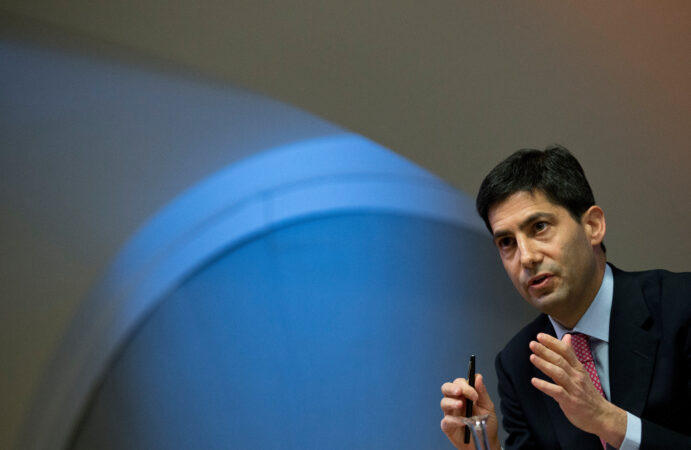
    Trump is confident that his nominee to become Fed chair, Kevin Warsh, can unleash an even greater economic bonanza by jettisoning what the president sees as the central bank’s hidebound reluctance to slash interest rates.

    Many economists are skeptical.

    The world looks a lot different today than it did when the Spice Girls ruled radio and Titanic dominated the box office. And the story the Trump team is telling — that a visionary Fed chair, Alan Greenspan, fueled the ‘90s boom by keeping interest rates low — is incomplete at best.

    “The administration is offering a rather distorted version of what actually happened in the 1990s,’’ economist Dario Perkins of TS Lombard said in a commentary.

    Nonetheless, the Trump administration believes history can repeat itself. All that’s been missing, in the president’s view, is a Fed chair with Greenspan’s foresight.

    AI’s influence over interest rates

    Trump has repeatedly attacked current Fed chief Jerome Powell, whose term as chair ends in May, for his reluctance to lower rates aggressively while inflation hovers above the central bank’s 2% target. Treasury Secretary Scott Bessent said on social media in January that the president sought to replace Powell with someone with “an open, Greenspan-like mind.”

    “Our nation can see productivity boom like we did in the ’90s when we are not encumbered by a Federal Reserve which throws the brakes on,’’ Bessent said.

    On Jan. 30, Trump said he was picking Warsh.

    In speeches and writings, Warsh has argued that AI-driven improvements in productivity could justify lower interest rates.

    These views align with Trump’s desires for Fed rate cuts but mark a break with Warsh’s own past as an inflation hawk. In the aftermath of the 2007-2009 Great Recession, Warsh — then a Fed governor — objected to some of the central bank’s efforts to help the struggling economy by pushing down rates even though unemployment exceeded 9%. Warsh warned then, wrongly, that inflation would soon accelerate.

    At issue now are gains in productivity and the possibility that AI will make them bigger — much bigger.

    To economists, productivity improvements are almost magical. When companies roll out new machines or technology, their workers can become more efficient and produce more stuff per hour. That allows firms to earn more and to raise employees’ pay without raising prices. In short: Surging productivity can drive economic growth without spurring inflation.

    Greenspan and the internet

    In the mid-1990s, Greenspan was contending with a strange set of economic circumstances: Wages were rising, but inflation wasn’t heating up.

    Big productivity gains might have explained things, but government data showed no sign of them. Other Fed policymakers worried that surging wages and tame inflation couldn’t coexist and that higher prices were coming. They wanted to raise interest rates.

    But Greenspan suspected the official productivity numbers were missing something. For one thing, they didn’t jibe with the amazing tales of efficiency improvements the Fed was hearing from companies investing in computers and turning to the internet.

    So he ordered his lieutenants to dig through decades of productivity numbers. The official statistics they assembled told an implausible story: Services firms — from retailers to legal practices — had supposedly seen productivity fall over the years, despite intense competitive pressure and massive investments in technology.

    Greenspan didn’t believe it. He persuaded his Fed colleagues that the government’s numbers were wrong and were understating productivity. They agreed in September 1996 to hold off on raising rates.

    The economy took flight.

    Tardily, productivity advances began to show up in the official data. Overall, American economic growth surpassed 4% every year from 1997 through 2000, something it would do again only once in the next quarter century. The unemployment rate plunged to 3.8% in April 2000, lowest in three decades. Inflation stayed in its cage, coming in below 2% — later the Fed’s official target — for 17 straight months in 1997-1999.

    History repeats itself … maybe?

    American productivity certainly looked strong in the second and third quarters of 2025, and some economists attribute the improvements to early adoption of AI; they see bigger gains and stronger economic growth ahead.

    Others aren’t so sure.

    Joe Brusuelas, chief economist at the consulting firm RSM, wrote that the 2025 productivity improvements “are not because of artificial intelligence’’ but reflect investments in automation that companies made when they couldn’t find enough workers during and after the COVID-19 pandemic. “Those investments are starting to pay off,’’ Brusuelas wrote.

    Economist Martin Baily, senior fellow emeritus at the Brookings Institution, believes it will take time for AI to have a big impact on the way companies do business and on the nation’s productivity.

    “Companies don’t change that fast,” said Baily, chairperson of President Bill Clinton’s Council of Economic Advisers. “It’s expensive to change. It’s risky to change. The managers don’t necessarily understand the new technology that well. So they have to learn how to use it. They have to train their staff. All that stuff takes a long time.’’

    A productivity boom can raise the economy’s speed limit — how fast it can grow without pushing prices higher. But it might not justify lower interest rates, Federal Reserve Gov. Michael Barr said in a speech earlier this month.

    Businesses will borrow to invest in AI, putting upward pressure on interest rates. Likewise, American workers and their families likely would save less and borrow more in anticipation of higher wages, the payoff for being more productive; that would put still more pressure on rates to rise.

    Bottom line, Barr said: “The AI boom is unlikely to be a reason for lowering policy rates.’’

    Even Greenspan’s Fed eventually came to the same conclusion, reversing course and starting to raise its benchmark rate in mid-1999, taking it from 4.75% to 6.5% in less than a year. (The rate Trump complains about now is around 3.6%.)

    “Warsh and Bessent talk only about the dovish 1995/96 version of Greenspan; they overlook the hawkish 1999/2000 variant,’’ Perkins wrote.

    Then and now

    Many of Warsh’s potential future colleagues on the Fed’s interest-rate setting committee see the late 1990s experience differently than he does, setting up what could be a clash at the central bank if the Senate confirms Warsh as chair.

    Austan Goolsbee, president of the Federal Reserve Bank of Chicago, said earlier this week that “the analogy to the late 90s is a little harder for me to understand.” Greenspan’s insight was that productivity gains meant the Fed could hold off on raising rates, not that it should slash them, Goolsbee noted.

    “It wasn’t, ‘Should we cut rates because productivity growth is higher?’” he said.

    The economic backdrop that awaits Warsh is also far less friendly than the one Greenspan enjoyed.

    Greenspan was avoiding rate hikes at a time when the usually profligate U.S. government was running rare budget surpluses and didn’t need to borrow so desperately. Now, after a series of spending hikes and tax cuts, deficits are piling up year after year, and the Congressional Budget Office expects federal debt to hit a historic high of 120% of America’s GDP by 2035.

    Nor was productivity the only thing controlling inflation in the 1990s. Countries were lowering tariffs and dismantling trade barriers. Immigration was surging.

    Now, thanks largely to Trump’s own policies, notably his sweeping taxes on imports and his crackdown on immigration, the world is much different. “Trade barriers are going up,’’ Perkins wrote. “Globalization has given way to de-globalization.’’

    “That benign era is clearly behind us,’’ said Michael Pearce, chief U.S. economist at Oxford Economics.


  • Trump’s Medicaid work mandates are meant to save money. But first states will have to spend millions

    Trump’s Medicaid work mandates are meant to save money. But first states will have to spend millions

    JEFFERSON CITY, Mo. — To receive Medicaid health coverage, some adults will soon have to show they are working, volunteering, or taking classes. But to gather that proof, many states first will have to spend millions of dollars improving their computer systems.

    Across the nation, states face an immense task and high costs to prepare for the Jan. 1 kickoff of new Medicaid eligibility mandates affecting millions of lower-income adults in the government-funded healthcare program.

    The first half of a $200 million federal allotment has already begun flowing to states to help implement the new requirements. But the tab for the needed technology improvements and additional staff is likely to exceed $1 billion, according to an Associated Press analysis of budget projections in more than 25 states. That extra cost will be borne by a mixture of federal and state tax dollars.

    The task is not as simple as pushing through a software update on your smartphone or personal computer. That’s because each state has its own system for managing Medicaid, often requiring experts to make customized changes.

    “Our current eligibility systems are pretty old, and the ability to change them is very, very difficult,” said Toi Wilde, chief information officer for the Missouri Department of Social Services.

    New requirements affect millions, but not all

    The big tax-cut law signed last year by Trump is financed, in part, by sweeping Medicaid changes intended to cut government spending. Two of the most prominent will apply in four-fifths of the states, affecting Medicaid enrollees ages 19 through 64, without young children, whose incomes are above the typical eligibility cutoff.

    Those Medicaid participants will have to work or do community service at least 80 hours a month, or enroll at least half-time as a student. They also will face eligibility reviews every six months, instead of annually, meaning they could lose coverage more quickly when their circumstances change.

    The two provisions together are projected to save the federal government $388 billion over the next decade, resulting in 6 million fewer people with health insurance, according to the Congressional Budget Office.

    But states first must update their online portals used by Medicaid participants, their aging computer systems used by state workers, and their methods of verifying information through various databases.

    Most will have to turn to private contractors to meet the time crunch. At least 10 companies have agreed to offer discounted services, according to the federal Centers for Medicare and Medicaid Services.

    Making those technology upgrades “is going to be a lift. It’s not something straightforward. It’s not easy,” said Jason Reilly, a partner at Guidehouse, a firm that is advising several states on the Medicaid requirements.

    Most states don’t currently collect employment or education information about Medicaid participants. So states are looking to tap into outside sources to verify job and school data. But there’s no database of community volunteers.

    And states are still waiting on federal rules — not due until June — to define some of the exceptions to the work requirements, such as how to determine who qualifies as “medically frail.”

    States face extra pressure to get it right because the federal government will start penalizing states with too many Medicaid payment errors in October 2029.

    States will be angling for extra federal money

    Congress guaranteed all states a share of the $200 million allotted for Medicaid work and eligibility changes. But states must apply for additional federal money. The federal government covers up to 90% of states’ costs to develop systems for determining Medicaid eligibility, 75% of costs to maintain those systems, and half of most other administrative costs.

    Missouri won early approval for the 90% federal funding rate. State lawmakers now are fast-tracking a $32 million appropriation needed to solicit bids for vendors to start upgrading technology platforms and improving a chatbot for Medicaid participants. Over the next year, the state’s social services agency expects to need about 120 additional workers — at a cost of $12.5 million — to handle the extra administrative workload.

    Other states also project large costs. Maryland expects to spend over $32 million in federal and state funds to implement the Medicaid changes, Kentucky more than $46 million, and Colorado over $51 million. Arizona estimates it could cost $65 million — and require 150 additional staff — to implement the new federal requirements.

    Some states surveyed by the AP reported even higher expected costs, though they didn’t always provide a breakdown for how much is due to new Medicaid mandates and how much pertains to Supplemental Nutrition Assistance Program changes also contained in Trump’s big law.

    Several states, including Arkansas, said they are still working on cost estimates for the Medicaid changes. Arkansas instituted a Medicaid work requirement in 2018-2019, and thousands of people were dropped from the rolls before a federal court ended it. Many of the technology changes required by the new federal mandates could be covered under an existing vendor contract and have “a minimal financial impact on our Medicaid budget,” the Arkansas Department of Human Services said in an email.

    Nebraska has said it plans to launch Medicaid work requirements in May, seven months ahead of the federal deadline. But the state has not detailed any associated costs and did not respond to inquiries from the AP.

    Georgia’s work requirement prompts concerns

    Georgia is currently the only state requiring some Medicaid recipients to work, after receiving special federal approval several years ago to expand coverage to some adults not otherwise eligible.

    The Georgia Pathways to Coverage program racked up more than $54 million of administrative costs from 2021 through the first part of 2025 — twice the amount of medical assistance paid out over that same period, according to the U.S. Government Accountability Office. Almost all of those costs came from technology changes to its eligibility and enrollment system.

    Some Medicaid analysts point to Georgia’s costs and Arkansas’ enrollment losses as reasons for caution as work requirements roll out in other states.

    “A huge amount of funding is going to go to vendors to construct these complicated red-tape systems that prevent people who need it from getting healthcare,” said Joan Alker, executive director of the Center for Children and Families at Georgetown University. “In my view, that is a big, big risk.”

  • Calls for peace and flashes of anger after U.S. and Israeli attacks kill Iran’s Khamenei

    Calls for peace and flashes of anger after U.S. and Israeli attacks kill Iran’s Khamenei

    BRUSSELS — Three close allies of the United States said Sunday they are ready to join forces to defend their interests in the Middle East and stop Iran’s retaliatory missile and drone strikes following the killing of Supreme Leader Ayatollah Ali Khamenei, as others around the world raised concerns that the conflict sparked by coordinated U.S.-Israel attacks could spread into a wider war.

    Britain, France, and Germany said they were prepared to work with the United States.

    “We will take steps to defend our interests and those of our allies in the region, potentially through enabling necessary and proportionate defensive action to destroy Iran’s capability to fire missiles and drones at their source,” their statement said. “We have agreed to work together with the US and allies in the region on this matter.”

    Massive explosions rocked the Iranian capital for a second day as Israel’s military said it was targeting the “heart” of Tehran. Iran pressed on, targeting Israel and U.S. military bases in Gulf states.

    Iranian officials hurried to plan a future after the death of Khamenei, who had no designated successor, as some Iranians who had long suffered from political repression celebrated.

    On streets around the world, there were protests in outrage or bursts of celebration.

    Allies will work with U.S. to defend interests

    The statement by British Prime Minister Keir Starmer, French President Emmanuel Macron, and German Chancellor Friedrich Merz said they are “appalled” by Iran’s “reckless” strikes on their allies, which threaten their service members and citizens in the region.

    A drone strike damaged a hangar at a French naval base at the port of Abu Dhabi, France’s defense minister said. British Defense Minister John Healey said Iranian missile and drone strikes came within a few hundred yards of a group of 300 British military personnel in Bahrain.

    Healey also said two missiles were fired in the direction of Cyprus, where the U.K. has bases, though a Cyprus government spokesperson said on social media those reports were not valid.

    Top diplomats from the 27 European Union nations were holding an emergency meeting to discuss the situation and next steps for the bloc.

    “The death of Ali Khamenei is a defining moment in Iran’s history. What comes next is uncertain,” EU foreign policy chief Kaja Kallas said. “But there is now an open path to a different Iran, one that its people may have greater freedom to shape.”

    Pope Leo XIV said he was “profoundly concerned” about the U.S. and Israeli strikes on Iran and urged both sides to “stop the spiral of violence before it becomes an irreparable abyss.”

    Iran is urged to ‘return to your senses’

    Perhaps cautious about upsetting already strained relations with U.S. President Donald Trump, many nations, including several in the Middle East, refrained from commenting directly or pointedly on the joint strikes but condemned Tehran’s retaliation.

    The 22-nation Arab League called the Iranian attacks “a blatant violation of the sovereignty of countries that advocate for peace and strive for stability.” That coalition of nations has historically condemned both Israel and Iran for actions it says risk destabilizing the region.

    “Return to your senses … and deal with your neighbors with reason and responsibility before the circle of isolation and escalation widens,” Anwar Gargash, an adviser to the United Arab Emirates’ president, told the Iranian theocracy.

    The UAE closed its embassy in Iran and announced the withdrawal of its diplomatic mission after Iranian strikes hit the country.

    Russia and China criticize the killing of Khamenei

    Russian leader Vladimir Putin blasted Khamenei’s killing, which he called “a cynical violation of all norms of human morality and international law.”

    “The blatant killing of the leader of a sovereign state and the incitement of regime change are unacceptable,” China’s Foreign Minister Wang Yi said in a phone call with his Russian counterpart Sergey Lavrov, according to China’s official Xinhua News Agency. “These actions violate international law and the basic norms governing international relations.”

    Wang said attacking a sovereign state without U.N. Security Council authorization undermines the foundation for peace established after World War II.

    Some protest and others celebrate

    At least 22 people were killed in clashes with police in northern Pakistan and in the southern port city of Karachi after hundreds of protesters stormed the U.S. Consulate there, authorities said.

    In Iraq, hundreds wore black and waved flags belonging to Iran-backed Iraqi militias and red flags that symbolize vengeance in the Shiite Muslim faith as they marched across Sadr City to decry the killing of Khamenei.

    Anger flashed at protests in Istanbul and among Shiite Muslims in India.

    Demonstrations were also held in cities including New York, Berlin, Paris, and Vienna by members of the Iranian diaspora and their supporters, celebrating the end of Khamenei’s rule. Some demonstrators waved flags of the Iranian monarchy, with Israeli and U.S. flags also on display.

  • White House official: Iran suggests it’s open to talks and Trump says he’s ‘eventually’ willing

    White House official: Iran suggests it’s open to talks and Trump says he’s ‘eventually’ willing

    WASHINGTON — A senior White House official said Sunday that Iran’s “new potential leadership” has suggested it is open to talks with the United States after American and Israeli forces launched a major attack against Tehran, killing the country’s supreme leader and other high-ranking officials.

    The official, who spoke on condition of anonymity to discuss internal administration deliberations, said President Donald Trump says he is “eventually” willing to talk but that for now the military operation “continues unabated.” The official did not say who the potential new Iranian leaders are or how they made their alleged willingness to talk known.

    Trump told the Atlantic on Sunday that he planned to speak with Iran’s new leadership.

    “They want to talk, and I have agreed to talk, so I will be talking to them,” he said, declining to comment on the timing.

    The potential future diplomatic opening comes as new details are emerging about the detailed planning that went into the U.S.-Israeli strikes and some of the targets that were hit in Iran.

    U.S. Central Command said that B-2 stealth bombers struck Iran’s ballistic missile facilities with 2,000-pound bombs. That mirrors the approach that the military took in June, when Trump agreed to deploy B-2 bombers to attack three key Iranian nuclear sites.

    Trump claimed in his State of the Union speech last week that Iran had been building ballistic missiles that could reach the U.S. homeland — a justification he repeated again Saturday as he announced that the bombardment of Iran was underway.

    Iran has not acknowledged that it is building or seeking to build intercontinental ballistic missiles. The U.S. Defense Intelligence Agency, however, said in an unclassified report last year that Iran could develop a militarily viable intercontinental ballistic missile by 2035 “should Tehran decide to pursue the capability.”

    Before the attacks, the CIA had for months tracked the movements of senior Iranian leaders, including Supreme Leader Ayatollah Ali Khamenei, according to a person familiar with the operation.

    The intelligence was shared with Israeli officials, and the timing of the strikes was adjusted in part because of that information about the Iranian leaders’ location, according to the person, who was not authorized to comment publicly and spoke on condition of anonymity.

    The intelligence sharing between U.S. and Israel reflects the preparation that went into the strikes, which continued for a second day Sunday after Khamenei’s killing threw the future of the Islamic Republic into uncertainty and raised the risk of escalating regional conflict.

    The New York Times earlier reported about the CIA’s efforts before the Israeli-U.S. strikes.

    Sen. Tom Cotton, chairperson of the Senate Intelligence Committee, declined to discuss details Sunday when asked on CBS’ Face the Nation about intelligence sharing with Israel. But he said tracking the movements of the supreme leader and the heads of other adversarial nations “is obviously one of the highest priorities of our intelligence community.”

    “Clearly, this operation is driven by intelligence collected by Israel and the United States that has once again proven that our nations have capabilities that no other nation on Earth has,” said Cotton (R., Ark.).

    The U.S. regularly shares intelligence with allies including Israel. Those partnerships, and the accuracy of the intelligence they yield, is often critical not only to the success of a military operation but also to the public’s support for it.

    Virginia Sen. Mark Warner, the senior Democrat on the committee, told the Associated Press that historically, “our working relationship with the Mossad and Israel is really strong.” Mossad is the Israeli spy agency.

    Warner said he has serious concerns about the justification for the strikes, Trump’s long-term plans for the conflict, and the risks that U.S. service members will face. The military announced Sunday that three American troops had been killed and five were seriously wounded in the Iran operation.

    “No tears will be shed over their leadership being eliminated but always the question is: OK, what next?” Warner said.