Category: Associated Press

  • Trump talks regime change in Iran after strikes, but history shows that could be very hard

    Trump talks regime change in Iran after strikes, but history shows that could be very hard

    Barely an hour after the first U.S. and Israeli missiles struck Iran, President Donald Trump made clear he hoped for regime change. “Now is the time to seize control of your destiny,” he told the Iranian people in a video. “This is the moment for action. Do not let it pass.”

    Doesn’t sound complicated. After all, with Iran’s fundamentally unpopular government weakened by fierce airstrikes, some of its top leaders dead or missing and Washington signaling support, how hard could it be to overthrow a repressive regime?

    Possibly very hard. So says history.

    Washington has a long, complicated past when it comes to regime change. There was Vietnam in the 1960s and 70s, and Panama in 1989. There was Nicaragua in the 1980s, Iraq and Afghanistan in the years after 9/11, and Venezuela just weeks ago.

    There was also Iran. In 1953, the CIA helped engineer a coup that toppled Iran’s democratically elected leader and gave near-absolute power to Shah Mohammad Reza Pahlavi. But as with the shah, who was overthrown in Iran’s 1979 Islamic Revolution after decades of increasingly unpopular rule, regime change rarely goes as planned.

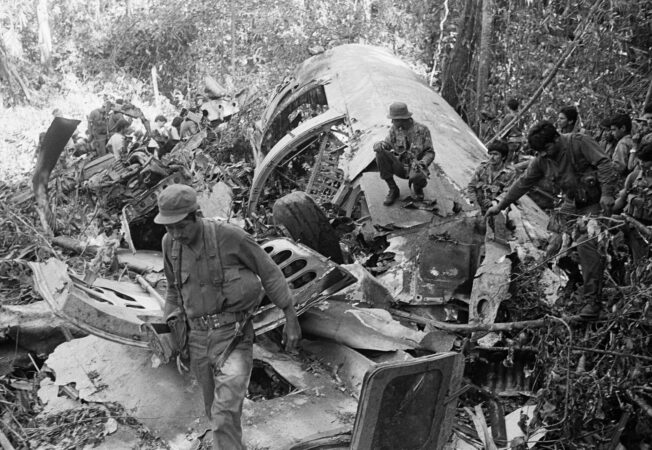
    Attempts to usher in U.S.-friendly governments often start with clear intentions, whether hope for democracy in Iraq or backing an anti-Communist leader in Congo at the Cold War’s height. But often those intentions stumble into a political quagmire where democratic dreams turn into civil war, once-compliant dictators become embarrassments, and American soldiers return home in body bags.

    That history has long been a Trump talking point. “We must abandon the failed policy of nation building and regime change,” he said in 2016.

    “In the end, the so-called ‘nation-builders’ wrecked far more nations than they built,” he said in a 2025 speech in Saudi Arabia, deriding U.S. efforts in Afghanistan and Iraq. The “interventionists were intervening in complex societies that they did not even understand.”

    Now, after Saturday’s actions, a key question emerges: Does today’s U.S. government understand what it’s getting into?

    It’s unclear what regime change would even mean

    Iran’s economy is in shambles and dissent remains strong even after a brutal January crackdown on protests left thousands of people dead and tens of thousands under arrest. Many of the nation’s key military proxies and allies — Hamas in Gaza, Hezbollah in Lebanon, the Assad government in Syria — have been weakened or eliminated. And early Sunday, Iranian state media confirmed that Israel and the United States had killed Supreme Leader Ayatollah Ali Khamenei.

    The United States hasn’t laid out a postwar vision and doesn’t necessarily even want a complete overthrow of the Iranian leadership. As in Venezuela, it may already have potential allies in the government willing to step into a power vacuum.

    “But there’s a lot that needs to happen between now and a possible scenario along these lines,” said Jonathan Schanzer, executive director at the Foundation for Defense of Democracies, a Washington think tank that is deeply critical of the Iranian government. “There needs to be a sense that there is no salvation for the regime as such, and that they will need to work with the United States.”

    In a country where the core leaders are deeply united by ideology and religion, that may be extremely difficult.

    “The question to my mind right now is have we been able to penetrate the ranks of the regime that are not true believers that are more pragmatic,” Schanzer said. “Because I don’t believe that the true believers will flip.”

    It’s simply too early to know if — or how much — the political winds are shifting in Tehran. The leaders who come next could turn out to be equally repressive or seen domestically as illegitimate U.S. stooges.

    “We’ll see whether elements of the regime start moving against each other,” said Phillips O’Brien, professor of strategic studies at the University of St. Andrews in Scotland. “Air power can damage a leadership,” he said. “But it can’t guarantee that you’ll bring in something new.”

    U.S. intervention in Latin America has a long history

    In Latin America, Washington’s history of intervention goes back a long way — to when President James Monroe claimed the hemisphere as part of the U.S. sphere of influence more than 200 years ago.

    If the Monroe Doctrine began as a way to keep European countries out of the region, by the 20th century it was justifying everything from coups in Central America to the failed Bay of Pigs invasion of Cuba in 1961. Very often, historians say, that intervention led to violence, bloodshed, and mass human rights violations. Therein, they say, lies a lesson.

    Direct U.S. involvement has rarely “resulted in long-term democratic stability,” said Christopher Sabatini, a senior fellow for Latin America at the London think tank Chatham House. He points to Guatemala, where U.S. intervention in the 1950s led to a civil war that didn’t end for 40 years and left more than 200,000 people dead.

    Or there’s Nicaragua, where backing of the Contra rebels against the Sandinista government in the 1980s contributed to a prolonged civil conflict that devastated the economy, caused tens of thousands of deaths and deepened political polarization.

    While large-scale, overt U.S. involvement in the region mostly petered out after the Cold War, Trump has rekindled the legacy.

    Since assuming office last year, Trump launched boat strikes against alleged drug traffickers in the Caribbean, ordered a naval blockade on Venezuelan oil exports, and got involved in electoral politics in Honduras and Argentina. Then, on Jan. 3, U.S. forces captured Venezuelan strongman leader Nicolás Maduro, flying him to the U.S. to face drug and weapons charges.

    What followed in Caracas may signal what the White House hopes will happen in Tehran. Many observers thought the U.S. would back María Corina Machado, who has long been the face of political resistance in Venezuela. Instead, Washington effectively sidelined her and has repeatedly shown a willingness to work with President Delcy Rodríguez, who had been Maduro’s second-in-command.

    “There are those who could claim that what we did in Venezuela is not regime change,” said Schanzer, at the Foundation for Defense of Democracies. “The regime is still in place. There’s just one person that’s missing.”
  • Shooter who killed 2, injured 14 at Texas bar wore Iranian flag shirt, official says

    Shooter who killed 2, injured 14 at Texas bar wore Iranian flag shirt, official says

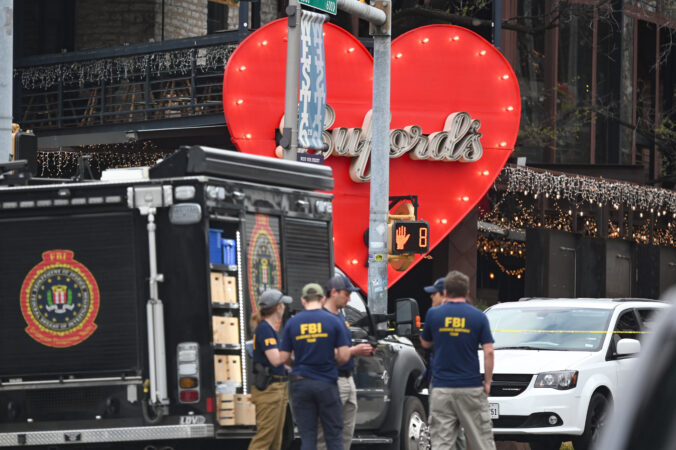
    AUSTIN, Texas — The gunman who killed two people at a bar in Texas early Sunday in a mass shooting being investigated by the FBI as a potential act of terrorism was wearing a sweatshirt that said “Property of Allah,” and another shirt with an Iranian flag design, a law enforcement official told the Associated Press.

    The shooting, which also left 14 wounded, erupted a day after the United States launched an attack on Iran with Israel that killed Ayatollah Ali Khamenei.

    The gunman was identified as 53-year-old Ndiaga Diagne, the Department of Homeland Security said in a statement.

    He first entered the U.S in 2000 on a B-2 tourist visa and became a lawful permanent resident six years later after marrying a U.S. citizen, according to DHS. He became a naturalized U.S. citizen in 2013, the department said. Diagne was originally from Senegal, according to multiple people briefed on the investigation who spoke on the condition of anonymity because they were not authorized to publicly discuss the investigation.

    Officers in Austin shot and killed the gunman, who used both a pistol and a rifle to carry out the attack, police said.

    The suspect drove past the bar several times before stopping and shooting a pistol out the window of his SUV at people on a patio and in front of the bar, according to Austin Police Chief Lisa Davis.

    The gunman then parked the vehicle, got out with a rifle and began shooting at people walking in the area before officers who rushed to the intersection shot him, Davis said. Three of those injured were in critical condition Sunday morning, police said.

    Authorities found “indicators” on the gunman and in his vehicle leading the FBI to look into the possibility of terrorism, said Alex Doran, the acting agent in charge of the FBI’s San Antonio office.

    “It’s still too early to make a determination on that,” Doran said Sunday morning.

    The White House said President Donald Trump had been briefed on the shooting.

    Texas Gov. Greg Abbott warned that the state would respond aggressively to anyone trying to “use the current conflict in the Middle East to threaten Texas.”

    “We will not be intimidated, and we will not be terrorized,” he said in a statement.

    The shooting happened outside Buford’s Backyard Beer Garden just before 2 a.m. along Sixth Street, a nightlife destination filled with bars and music clubs and only a few miles from the University of Texas.

    The school’s president said on social media that some of those impacted included “members of our Longhorn family.”

    “Our prayers are with the victims and all those impacted,” said university President Jim Davis.

    The entertainment district has a heavy police presence on weekends, and officers were able to confront the gunman within a minute of the first call for help, Davis said.

    Austin Mayor Kirk Watson praised the fast response by police and rescuers.

    “They definitely saved lives,” he said.

    One of the victims was found in the street between two parked cars. Inside the multistory bar, there were overturned tables and drinks left behind by fleeing customers.

    There have been at least two other high-profile shootings in Austin’s Sixth Street entertainment district within the past five years, including one in the summer of 2021 that left 14 people wounded. Although this weekend’s shooting doesn’t meet the definition of a mass killing, there have been five of those so far this year.

  • Iran vows revenge as war widens

    Iran vows revenge as war widens

    DUBAI, United Arab Emirates — The U.S. and Israel pounded targets across Iran on Sunday, dropping massive bombs on the country’s ballistic missile sites and wiping out warships as part of an intensifying military campaign following the killing of Supreme Leader Ayatollah Ali Khamenei.

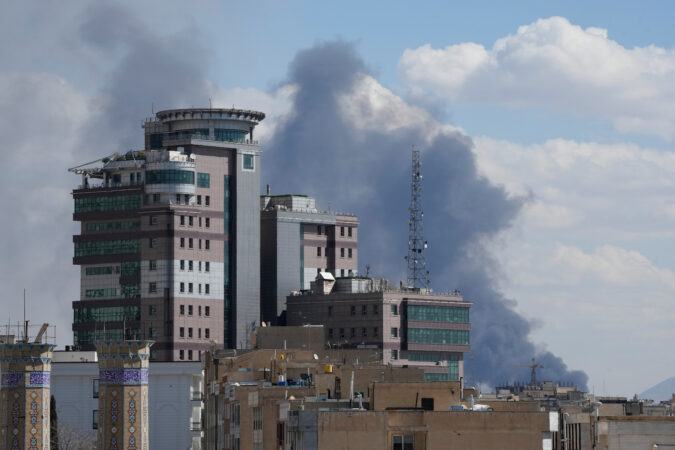
    Blasts rattled windows across the country and sent plumes of smoke high into the sky above Tehran. More than 200 people have been killed since the start of the strikes that killed Khamenei and other senior leaders, Iranian leaders have said.

    Iran vowed revenge, firing missiles at Israel and Gulf Arab states in a counteroffensive that the U.S. military said resulted in the deaths of three service members — the first known American casualties from the conflict. Israeli rescue services said strikes had hit several locations, including Jerusalem and a synagogue in the central town of Beit Shemesh, where nine people were killed and 28 wounded, bringing the overall death toll in the country to 11. Eleven people were still missing after the strike, police said.

    But the attacks on Iran showed no signs of relenting as the U.S. and Israel took aim at key military, political, and intelligence targets in what appeared to be a widening war that carried the potential for a prolonged conflict that could envelop the Middle East and destabilize it. The strikes, the second time in eight months that the U.S. and Israel had combined against Iran, represented a startling show of military might for an American president who swept into office on an “America First” platform and vowed to keep out of “forever wars.”

    U.S. President Donald Trump said the U.S. would “avenge” the deaths of the service members and that “there will likely be more” killed before the conflict ends.

    In a video he posted on social media, Trump called the three service members “true American patriots who have made the ultimate sacrifice for our nation, even as we continue the righteous mission for which they gave their lives.”

    He added: “Sadly, there will likely be more, before it ends. That’s the way it is. Likely be more.”

    Israel, which had pledged “nonstop” strikes, said it was increasing its attacks, with 100 fighter jets simultaneously striking targets in Tehran, Brig. Gen. Effie Defrin told reporters at a briefing. The targets included buildings belonging to Iran’s air force, its missile command, and its internal security force, which violently quashed anti-government protests in January.

    The U.S. military, meanwhile, said B-2 stealth bombers struck Iran’s ballistic missile facilities with 2,000-pound bombs. Trump said on social media that nine Iranian warships had been sunk and that the Iranian navy’s headquarters had been “largely destroyed.”

    Europe has mostly stayed out of the war and pressed for diplomacy, but in an indication that the conflict could draw in other nations, Britain, France, and Germany said Sunday they were ready to work with the U.S. to help stop Iran’s attacks.

    Prime Minister Keir Starmer said Britain would allow the United States to use its bases to strike Iranian missile sites. The U.K. maintains nearby bases on Cyprus and the Chagos Islands, a British archipelago in the Indian Ocean.

    In the 12-day war last June, Israeli and American strikes greatly weakened Iran’s air defenses, military leadership, and nuclear program. But the killing of Khamenei, who ruled Iran for more than three decades, creates a leadership vacuum, increasing the risk of regional instability.

    Trump, who a day earlier had encouraged Iranians to “take over” their government, signaled Sunday that he was open to dialogue with Iran’s new leadership.

    “They want to talk, and I have agreed to talk, so I will be talking to them,” he told the Atlantic.

    Streets of Tehran are largely deserted

    In Tehran, there was little sign that Iranians had heeded Trump’s call for an uprising against the government.

    The streets were largely deserted as people sheltered during heavy airstrikes, witnesses told the Associated Press, speaking anonymously for fear of retribution. The paramilitary Basij, which has played a central role in crushing protests, set up checkpoints across the city, they said.

    Two powerful explosions were heard in Tehran’s Niavaran neighborhood late Sunday.

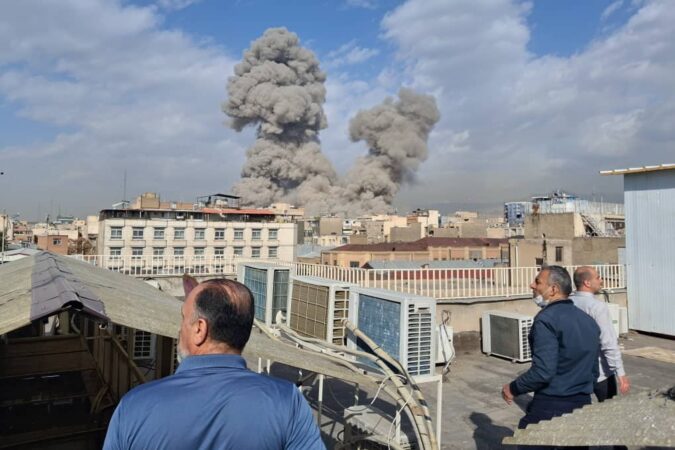
    An eyewitness in the city told AP that the windows of their apartment shook violently, and residents came out onto the streets fearing it was too dangerous to stay inside. The witness spoke on condition of anonymity for fear of reprisals. Video footage from Tehran showed plumes of smoke filling the skyline, and the official IRNA news agency reported that parts of the building of the Islamic Republic of Iran Broadcasting were struck Sunday.

    In southern Iran, at least 165 people were killed Saturday when a girls’ school was struck, and dozens more were wounded, IRNA reported. The Israeli military said it was not aware of strikes in the area. The U.S. military said it was looking into the reports.

    The U.S. military did not provide details about the three service members who were killed or about five others who were seriously wounded. It said several others suffered minor injuries and concussions.

    Iran says new leadership is in place

    As supreme leader, Khamenei had final say on all major policies since 1989. He led Iran’s clerical establishment and the Revolutionary Guard, the two main centers of power in the governing theocracy.

    The CIA had been tracking the movements of senior Iranian leaders, including Khamenei, for months, according to a person familiar with the operation who was not authorized to comment publicly and spoke on condition of anonymity. The intelligence was shared with Israeli officials, and the timing of the strikes was adjusted in part because of that information, the person said.

    Iranian President Masoud Pezeshkian said in a prerecorded message that a new leadership council had begun its work. The country’s foreign minister, Abbas Araghchi, said a new supreme leader would be chosen in “one or two days.”

    Iran vows revenge for Khamenei killing

    As word spread of Khamenei’s death, some in Tehran could be seen cheering from rooftops, witnesses said. Others mourned as a black flag was raised over the Imam Reza shrine in Mashhad.

    An Iranian medical professional in northern Iran said he and colleagues spent the early hours of Sunday celebrating Khamenei’s death indoors because armed security forces are still heavily deployed in his city.

    There were forces stopping and interrogating people celebrating in their cars, but there was no gunfire, said the doctor, who spoke on condition of anonymity for fear of reprisal.

    “It was one of the best nights, if not the best night of our lives,” the doctor said in a voice message from the city of Rasht. In fact, “it was actually my first time ever smoking a cigarette. It was a very, very nice time. We didn’t sleep at all. And we don’t even feel tired.”

    Araghchi, Iran’s foreign minister, blamed the U.S. and Israel for starting the war. He said he had spoken to his counterparts in the Gulf countries and urged them to pressure the U.S. and Israel to end it.

    “You have crossed our red line and must pay the price,” Iran’s parliamentary speaker, Mohammad Bagher Qalibaf, said in a televised address. “We will deliver such devastating blows that you yourselves will be driven to beg.”

    Trump warned against any retaliation.

    “THEY BETTER NOT DO THAT,” he said in a social media post. “IF THEY DO, WE WILL HIT THEM WITH A FORCE THAT HAS NEVER BEEN SEEN BEFORE!”

    Strikes planned for months, feared for weeks

    Tensions have escalated in recent weeks as the Trump administration built up the largest force of American warships and aircraft in the Middle East in decades. The president insisted he wanted a deal to constrain Iran’s nuclear program while the country struggled with growing dissent following nationwide protests.

    An Israeli military official described Saturday’s mission as the result of months of “extremely high coordination” with the U.S. The official, speaking on condition of anonymity to discuss a covert operation, said a variety of factors created a “golden opportunity” to take out much of Iran’s leadership. Those factors included weeks of training and monitoring the movements of senior figures, along with “real time intelligence” that the targets were gathered together.

    The results, the official said, were near-simultaneous strikes, within 60 seconds of one another, in three locations 1,000 miles from Israel that killed Khamenei and some 40 senior figures, including the head of the Revolutionary Guard and the country’s defense minister.

  • Hundreds of thousands of travelers stranded by flight disruptions after attack on Iran

    Hundreds of thousands of travelers stranded by flight disruptions after attack on Iran

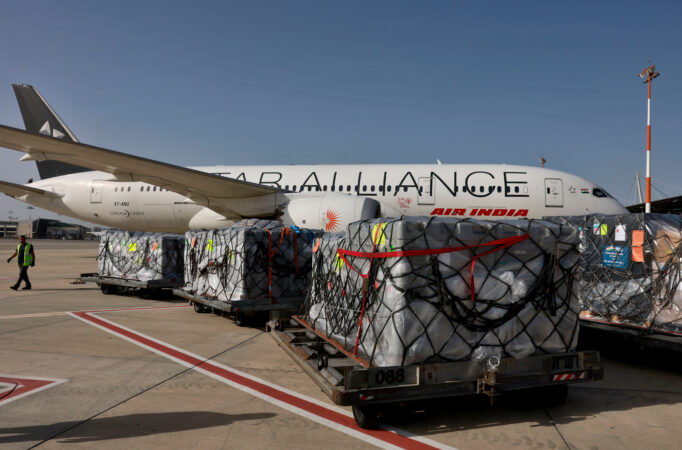
    LONDON — America and Israel’s attack on Iran disrupted flights across the Middle East and beyond Saturday as countries around the region closed their airspace and three of the key airports that connect Europe, Africa, and the West to Asia halted operations.

    Hundreds of thousands of travelers were either stranded or diverted to other airports after Israel, Qatar, Syria, Iran, Iraq, Kuwait, and Bahrain closed their airspace. There also was no flight activity over the United Arab Emirates, flight tracking website FlightRadar24 said, after the government there announced a “temporary and partial closure” of its airspace.

    That led to the closure of key hub airports in Dubai, Abu Dhabi, and Doha, and the cancellation of more than 1,800 flights by major Middle Eastern airlines. The three major airlines that operate at those airports — Emirates, Qatar Airways, and Etihad — typically have about 90,000 passengers per day crossing through those hubs and even more travelers headed to destinations in the Middle East, according to aviation analytics firm Cirium.

    Then later on Saturday officials at Dubai International Airport — the largest in the United Arab Emirates and one of the busiest in the world — said four people were injured as the Emirates condemned what it called a “blatant attack involving Iranian ballistic missiles.” Strikes were also reported at other commercial airports in the region, including Kuwait International.

    “For travelers, there’s no way to sugarcoat this,” said Henry Harteveldt, an airline industry analyst and president of Atmosphere Research Group. “You should prepare for delays or cancellations for the next few days as these attacks evolve and hopefully end.”

    Airlines that are crossing the Middle East will have to reroute flights around the conflict with many flights headed south over Saudi Arabia. That will add hours to those flights and consume additional fuel, adding to the costs airlines will have to absorb. So ticket prices could quickly start to increase if the conflict lingers.

    The added flights will also put pressure on air traffic controllers in Saudi Arabia who might have to slow traffic to make sure they can handle it safely. And the countries that closed their airspace will miss out on the overflight fees airlines pay for crossing overhead.

    But Mike McCormick, who used to oversee air traffic control for the Federal Aviation Administration before he retired and is now a professor at Embry-Riddle Aeronautical University, said over the next few days these countries might be able to reopen parts of their airspace once American and Israeli officials share with the airlines where military flights are operating and how capable Iran remains of firing missiles.

    “Those countries then will be able to go through and say, OK, we can reopen this portion of our space but we’ll keep this portion of our airspace closed,” McCormick said. “So I think what we’ll see in the next 24 to 36 hours how the use of airspace evolves as the kinetic activity gets more well defined and as the capability of Iran to actually shoot missiles and create additional risk is diminished due to the attacks.”

    But it is unclear how long the disruption to flight operations could last. For comparison, the Israeli and U.S. attack on Iran in June 2025 lasted 12 days.

    ‘No one knows’

    The situation was changing quickly and airlines urged passengers to check their flight status online before heading to the airport.

    Some airlines issued waivers to affected travelers that will allow them to rebook their flight plans without paying extra fees or higher fares.

    Jonathan Escott and his fiancé had arrived at the airport in Newcastle, England, on Saturday only to find out that his direct flight to Dubai on Emirates airline was canceled, leaving everyone on the flight stuck there.

    Escott left to go back to where he was staying with family, about an hour from the airport, but has no idea when he may be able to travel.

    “No one knows,” Escott said. “No one really knows what’s going on with the conflict, really. Not Emirates, Emirates don’t have a clue. No one has a clue.”

    At least 145 planes that were en route to cities like Tel Aviv and Dubai early Saturday were diverted to airports in cities like Athens, Istanbul, or Rome, according to FlightAware. Others turned around and returned to where they had taken off. One plane spent nearly 15 hours in the air after leaving Philadelphia and getting all the way to Spain before turning around and returning to where it started.

    Numerous airlines canceled international flights to Dubai through the weekend, as India’s civil aviation agency designated much of the Middle East — including skies above Jordan, Saudi Arabia, and Lebanon — as a high security risk zone at all altitudes.

    Air India canceled all flights to Mideast destinations. Turkish Airlines said flights to Lebanon, Syria, Iraq, Iran, and Jordan were suspended until Monday and flights to Qatar, Kuwait, Bahrain, the United Arab Emirates, and Oman were suspended.

    The airline said additional cancellations may be announced, and many other airlines were suspending flights into the region through the weekend.

    Travelers advised to be ‘very creative’

    U.S.-based Delta Air Lines and United Airlines suspended flights to Tel Aviv at least through the weekend. Dutch airline KLM had already announced earlier in the week that it was suspending flights to and from Tel Aviv.

    Airlines including Lufthansa, Air France, Transavia, and Pegasus canceled all flights to Lebanon, while American Airlines suspended flights from Philadelphia to Doha.

    Virgin Atlantic said it would avoid flying over Iraq, meaning flights to and from India, the Maldives, and Riyadh could take slightly longer. The airline already was not flying over Iran and said all flights would carry appropriate fuel in case they need to reroute on short notice.

    British Airways said flights to Tel Aviv and Bahrain will be suspended until next week, and flights to Amman, Jordan, were canceled Saturday.

    “Travelers should anticipate that there will be a lot of disruptions,” Harteveldt said. “To be honest, if you haven’t left home, chances are you won’t be leaving home if you’re supposed to travel to or through these destinations for at least several days, if not longer. And if you are returning home, you will have to be very creative about how you get home.”

  • War powers debate intensifies after Trump orders attack on Iran without approval by Congress

    War powers debate intensifies after Trump orders attack on Iran without approval by Congress

    WASHINGTON — Key members of Congress are demanding a swift vote on a war powers resolution that would restrain President Donald Trump’s military attack on Iran unless the administration wins their approval for what they warn is a potentially illegal campaign that risks pulling the United States into a deeper Middle East conflict.

    Both the House and Senate, where the president’s Republican Party has a slim majority, had already drafted such resolutions long before the strikes Saturday. Now they are ready to plunge into a rare war powers debate next week that will serve as a referendum on Trump’s decision to go it alone on military action without formal authorization from Congress.

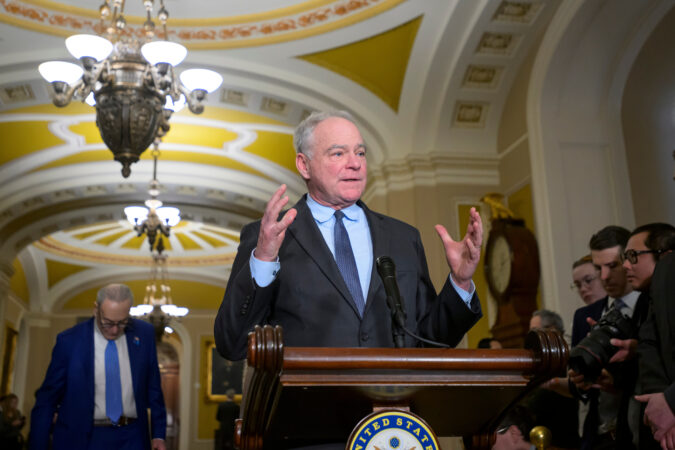
    “Has President Trump learned nothing from decades of U.S. meddling in Iran and forever wars in the Middle East?” said Sen. Tim Kaine (D., Va.), a leader in the bipartisan effort. He said the strikes on Iran were “a colossal mistake.”

    In the House, Reps. Ro Khanna (D., Calif.) and Thomas Massie (R., Ky.) are demanding Congress go on record with a public vote on their own bipartisan measure. “Congress must convene on Monday to vote,” Khanna said, “to stop this.”

    Massie blasted Trump’s own presidential campaign slogan and said: “This is not ‘America First.’”

    But most Republicans, particularly their leaders, welcomed Trump’s move against Iran. Many cited the longtime U.S. adversary’s nuclear programs and missile capabilities as requiring a military response.

    “Well done, Mr. President,” said Sen. Lindsey Graham (R., S.C.). “As I watch and monitor this historic operation, I’m in awe of President Trump’s determination to be a man of peace but at the end of the day, evil’s worst nightmare.”

    War powers debate tests Congress

    The administration’s decision to launch, with Israel, what appears to be an open-ended joint military operation aimed at changing the government in Tehran is testing the Constitution’s separation of powers in deep and dramatic ways. Nearly two months earlier, Trump ordered U.S. strikes that toppled Venezuelan leader Nicolás Maduro.

    While presidents have the authority as the commander in chief to conduct certain strategic military operations on their own, the Constitution vests Congress with the power to wage war. Before the Iraq War began in March 2003, Republican President George W. Bush made a monthslong push to secure congressional authorization. No such vote was attempted on Iran, and an earlier Senate effort to halt Trump’s actions after last summer’s strike on Iran failed.

    The congressional debate over war powers would mostly be symbolic. Even if a resolution were to pass the narrowly split Congress, Trump likely would veto it and Congress would not have the two-thirds majority needed to overturn that rejection. Congress has often failed to block other U.S. military actions, including in a Senate vote on Venezuela, but the roll calls stand as a public record.

    Republican leaders back Trump’s action

    The response by House Speaker Mike Johnson reflected the party’s long-standing views. Iran, he said, is facing “the severe consequences of its evil actions.”

    Johnson (R., La.) said the leaders of the House and Senate and the respective intelligence committees had been briefed in detail earlier in the week that military action “may become necessary” to protect U.S. troops and citizens in Iran. He said he received updates from Secretary of State Marco Rubio and will stay in “close contact” with Trump and the Defense Department “as this operation proceeds.”

    Senate Majority Leader John Thune (R., S.D.) commended Trump “for taking action to thwart these threats.”

    Thune said he looked forward to administration officials briefing all senators — a signal that lawmakers are seeking more answers to their questions about Trump’s plans ahead.

    Democrats warn strikes are illegal

    Many Democrats are calling the operation illegal, saying the Constitution gives Congress alone the power to declare war. To them, the administration has failed to lay out its rationale or plan for the military strikes, and the aftermath.

    Sen. Chris Van Hollen, who serves on the Senate Foreign Relations Committee, said the president has undertaken “illegal, regime-change war against Iran.”

    “This is not making us safer & only damages the US & our interests,” Van Hollen (D., Md.) said in a social media post. “The Senate must immediately vote on the War Powers Resolution to stop it.”

    House Democratic leader Hakeem Jeffries of New York said while Iran is a “bad actor and must be aggressively confronted” for its human rights abuses and the threat it poses to the U.S. and allies, the administration ”must seek authorization for the preemptive use of military force that constitutes an act of war.”

    New York Sen. Chuck Schumer, the Democratic leader, demanded that Congress be briefed immediately on the administration’s plans.

    “Iran must never be allowed to attain a nuclear weapon but the American people do not want another endless and costly war in the Middle East when there are so many problems at home,” he said.

  • Vatican removes salty white film coating Michelangelo’s ‘The Last Judgment’

    Vatican removes salty white film coating Michelangelo’s ‘The Last Judgment’

    VATICAN CITY — Michelangelo’s The Last Judgement is getting a facial, with restorers removing a chalky white film of salt that has accumulated over the Renaissance masterpiece since its last major renovation three decades ago.

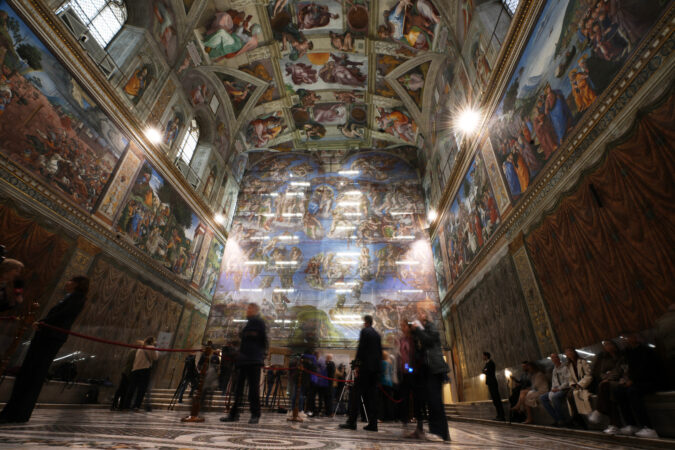
    The Vatican on Saturday gave the media a sneak peak to the cleaning operation, which is taking place on a floor-to-ceiling scaffolding that has obscured the imposing fresco of heaven and hell that dominates the front of the Sistine Chapel.

    The cleaning operation is expected to be completed by Easter, in the first week of April. The public can continue to visit in the meantime, but will have to settle for a reproduction of The Last Judgment superimposed on a screen that covers the scaffolding.

    Vatican Museum officials on Saturday described a simple but important cleaning operation to remove the white film of salt that has accumulated on the fresco thanks to the nearly 25,000 people who pass through the Vatican Museums each day.

    “This salt is created because, above all, when we sweat, we emit lactic acid, and unfortunately lactic acid reacts with the calcium carbonate present on the wall,” said Fabio Moresi, in charge of the scientific research team at the Vatican Museums that is overseeing the cleaning.

    Climate change also has a role to play, since the visitors who do come tend to sweat more, creating even more humidity that reacts with the fresco, he said.

    Vatican Museums chief Barbara Jatta described the film as a “cataract” that is easy enough to remove: Restorers dip sheets of Japanese rice paper into distilled water and apply them to the fresco, and carefully wipe away the salt film.

    Viewed up close on Saturday on the scaffolding, the difference between before and after is remarkable: Sections of the fresco that haven’t been cleaned look as if they are coated in a chalky dust; the cleaned sections show the vibrant colors and detail of the original. On the figure of Jesus, for example, at the center of the fresco, a privileged visitor can see how Michelangelo painted his hair and the wounds of his crucifixion.

    The Sistine Chapel is named after Pope Sixtus IV, an art patron who oversaw the construction of the main papal chapel in the 15th century.

    But it was a later pontiff, Pope Julius II, who commissioned Michelangelo to paint the famous ceiling, the Creation of Adam showing God’s outstretched hand, between 1508 and 1512. A later pontiff, Pope Clement VII, commissioned Michelangelo in 1533 to return to paint The Last Judgment.

    The other frescos of the Sistine Chapel, where Pope Leo XIV was elected in May, undergo yearly cleaning with restorers working at night on cherry-pickers that can be removed each morning before the public arrives.

    But such machines can’t access all of The Last Judgement because the fresco is located behind the altar, which is itself raised up on marble steps. That logistical impediment required the mounting of a fixed scaffolding to access the full fresco to clean it.

    The Sistine Chapel underwent a complete restoration between 1979 and 1999, when centuries of smoke, grime, and wax buildup was removed. The Vatican has left small patches of the pre-restored fresco intact to show the difference, which are now visible on the upper floors of the scaffolding and show a nearly blackened wall.

    Rather than radically reduce the number of visitors who can access the Sistine Chapel, the Vatican is studying ways to address humidity levels, through filtration systems and other technologies, so that the salty film doesn’t form again.

  • Israeli officials say Iran’s Supreme Leader Khameini has been killed

    Israeli officials say Iran’s Supreme Leader Khameini has been killed

    DUBAI, United Arab Emirates — Iranian Supreme Leader Ayatollah Ali Khamenei died following a major attack by Israel and the United States, Iranian state media confirmed early Sunday, throwing the future of the Islamic Republic into doubt and raising the risk of regional instability.

    President Donald Trump announced the death hours earlier, saying it gave Iranians their “greatest chance” to “take back” their country.

    Iranian state television and the state-run IRNA news agency did not report a cause of death for the 86-year-old.

    The death occurred after a joint U.S. and Israeli aerial bombardment that targeted Iranian military and governmental sites.

    The president also said “heavy and pinpoint bombing” was to continue “uninterrupted” through the week or longer.

    Trump in his post called Khamenei “one of the most evil people in history.”

    Trump said that Khamenei “was unable to avoid our Intelligence and Highly Sophisticated Tracking Systems and, working closely with Israel, there was not a thing he, or the other leaders that have been killed along with him, could do.”

    In a nationally televised address, Israeli Prime Minister Benjamin Netanyahu said there were “growing signs” that Khamenei had been killed when Israel struck his compound early Saturday.

    Shortly after the address, two Israeli officials said Israel had confirmed his death. The officials both spoke to the Associated Press on condition of anonymity pending a formal announcement and gave no further details.

    Khamenei succeeded Ayatollah Ruhollah Khomeini, the leader of the 1979 Islamic Revolution. He had the final say on all major policies, leading Iran’s clerical establishment and its paramilitary Revolutionary Guard — the two main centers of power in the country’s theocracy.

    As the attack on Iran unfolded, Trump urged the Iranian public to “seize control of your destiny” by rising up against the Islamic leadership. In a video announcing the “major combat operations,” Trump told Iranians, “When we are finished, take over your government. It will be yours to take. This will be probably your only chance for generations.”

    Iranian state media, citing the Red Crescent, on Saturday evening said at least 201 people had been killed and more than 700 injured. Iran retaliated by firing missiles and drones toward Israel and U.S. military bases in the region, and exchanges of fire continued into the night.

    Some of the first strikes on Iran appeared to hit near the offices of the 86-year-old Khamenei. Before Israeli officials confirmed the death, Iranian Foreign Minister Abbas Araghchi told NBC News that Khamenei and President Masoud Pezeshkian were alive “as far as I know.” He called the attack “unprovoked, illegal, and absolutely illegitimate.”

    The strikes during the holy fasting month of Ramadan opened a stunning new chapter in U.S. intervention in Iran, marking the second time in eight months that the Trump administration has attacked the Islamic Republic during talks over its nuclear program.

    About 12 hours after the attacks began, the U.S. military reported no U.S. casualties and minimal damage at U.S. bases despite “hundreds of Iranian missile and drone attacks.” It said targets in Iran included Revolutionary Guard command facilities, air defense capabilities, missile and drone launch sites, and military airfields.

    Various members of Iran’s leadership were targeted in the attack. Israel said it killed the commander of the Iranian Revolutionary Guard Corps and the country’s defense minister. The Israeli military also said its strikes killed the secretary of the Iranian Security Council, a close adviser to Khamenei.

    Israel said the strikes had targeted three locations in Tehran where intelligence had indicated that top Iranian officials were gathered. Neither Iran nor the U.S. commented on or confirmed Israel’s claims about the Iranian leadership.

    Even if Iran’s top leaders have been killed, regime change is not guaranteed.

    Democrats decried that Trump had taken action without congressional authorization. White House spokesperson Karoline Leavitt said the administration had briefed several Republican and Democratic leaders in Congress in advance.

    The U.N.’s nuclear watchdog said on X it was closely monitoring developments and had seen “no evidence of radiological impact.”

    Iran was in a “near-total internet blackout,” advocacy group NetBlocks said.

    Months of rising tensions

    Tensions have soared in recent weeks as American warships moved into the region. Trump said he wanted a deal to constrain Iran’s nuclear program, as the country struggles with growing dissent following nationwide protests.

    The trigger for Saturday’s strikes appeared to be the unsuccessful latest round of nuclear talks on Thursday. They also reflected dramatic changes that have left Iran’s leadership in its weakest position since the Islamic Revolution nearly half a century ago.

    Israeli and American strikes last June greatly weakened Iran’s air defenses, military leadership, and nuclear program. A regionwide conflict sparked by Hamas’ Oct. 7, 2023, attack on Israel has left Iran’s network of proxies across the Middle East greatly weakened. U.S. sanctions and global isolation have decimated Iran’s economy.

    Iran responded to the latest strikes by launching missiles and drones targeting Israel and strikes targeting U.S. military installations in Bahrain, Kuwait, and Qatar. Israel’s military said Iran fired “dozens” of missiles at Israel, with many intercepted. Emergency responder Magen David Adom noted 89 “lightly injured” people.

    At least three explosions were heard Saturday evening near the Intelligence Ministry building in northern Tehran, witnesses said, adding that air defense systems had begun operating there. Israel’s military said it had begun new strikes against missile launchers and aerial defense systems in central Iran.

    In southern Iran, at least 85 people were reported killed when a girls school was struck, and dozens more were wounded, the local governor told Iranian state TV.

    Capt. Tim Hawkins, a U.S. Central Command spokesperson, said he was “aware of reports” that a girls school was struck and they were looking into them.

    Iran’s state news agency IRNA said at least 15 people were killed in the southwest, quoting the governor of Lamerd, Ali Alizadeh, as saying a sports hall, two residential areas, and a hall near a school were hit.

    Flights across the Middle East were disrupted, and air defense fire thudded over Dubai, the United Arab Emirates’ commercial capital. Shrapnel from an Iranian missile attack on the UAE capital killed one person, state media said.

    Attack was coordinated between Israel and U.S.

    “Active and serious negotiations have yet again been undermined,” Oman’s Foreign Minister Badr al-Busaidi, a key mediator of the nuclear talks, said on X. “Neither the interests of the United States nor the cause of global peace are well served by this.”

    Israel said the operation has been planned for months with the United States. Air Force pilots were striking “hundreds of targets across Iran,” Israeli military chief of staff Lt. Gen. Eyal Zamir said in a statement.

    Targets in the Israeli campaign included Iran’s military, symbols of government, and intelligence targets, according to an official briefed on the operation, who spoke on condition of anonymity to discuss nonpublic information on the attack.

    Trump, in seeking to justify the military action, claimed Iran has continued to develop its nuclear program, despite his assertion last year the program had been “obliterated” by an earlier round of strikes.

    He acknowledged Saturday that there could be American casualties, saying “that often happens in war.” It was a notable statement from a U.S. leader who swept into office on an “America First” platform and vowed to keep out of “forever wars.”

    Trump also said he was aiming to “annihilate” the Iranian navy and destroy regional proxies supported by Tehran. He called on the paramilitary Iranian Revolutionary Guard to lay down arms, saying members would be given immunity or face “certain death” if they didn’t.

    Iran had said it hoped to avert a war, but maintained its right to enrich uranium. It did not want to discuss other issues such as its long-range missile program or support for armed groups like Hamas and Hezbollah.

    Iran has said it hasn’t enriched since June, but it has blocked international inspectors from visiting the sites the U.S. bombed. Satellite photos analyzed by the Associated Press have shown new activity at two of those sites, suggesting Iran is trying to assess and potentially recover material.

    Iran on Saturday requested an urgent session of the International Atomic Energy Agency’s Board of Governors about “these threats to safeguarded nuclear facilities,” according to a letter posted by the semiofficial Tasnim news agency.

    Trump had threatened military action but held off following Iran’s recent crackdown on protests spurred by economic grievances that evolved into a nationwide push against the ruling clerics.

    The Human Rights Activists News Agency says it confirmed more than 7,000 deaths in the crackdown and is investigating thousands more. The government has acknowledged more than 3,000 killed.

    Now, Iranians are likely to be wary about taking to the streets again because the Revolutionary Guard has demonstrated its ruthlessness, said Kamran Matin, an expert on Iran at the University of Sussex in southern England.

    Regional effects

    The strikes could rattle global markets, particularly if Iran makes the Strait of Hormuz unsafe for commercial traffic. A third of worldwide oil exports transported by sea passed through the strait in 2025.

    Saudi Arabia said Iran had targeted its capital and eastern region in an attack that was repelled. Bahrain said a missile attack targeted the U.S. Navy’s 5th Fleet headquarters in the island kingdom, and three buildings were damaged in the capital, Manama, and Muharraq city by drone strikes and debris from an intercepted missile.

    Kuwait’s civil aviation authority said a drone targeted the main international airport, injuring several employees. Kuwait’s state-run news agency said three troops were injured by shrapnel from strikes that hit Ali Al-Salem air base. Explosions could also be heard in Qatar. Jordan said it “dealt with” 49 drones and ballistic missiles.

  • European leaders call for resumption of U.S.-Iran negotiations

    European leaders call for resumption of U.S.-Iran negotiations

    BRUSSELS — How long will it last? Will it grow? What will it mean to us — and to global security overall? Those questions echoed across the Middle East and the planet Saturday as world leaders reacted warily to U.S. and Israeli strikes on Iran that sowed concerns of a broader conflict. The U.N. Security Council scheduled an emergency meeting.

    Perhaps cautious about upsetting already strained relations with U.S. President Donald Trump, many nations abstained from commenting directly or pointedly on the joint strikes but condemned Tehran’s retaliation. Similarly to Europeans, governments across the Middle East condemned Iran’s strikes on Arab neighbors while staying silent on the U.S. military action.

    Other countries were more explicit: Australia and Canada expressed open support for the U.S. strikes, while Russia and China responded with direct criticism.

    The U.S. and Israel launched a major attack on Iran on Saturday, and Trump called on the Iranian public to “seize control of your destiny” by rising up against the Islamic theocracy that has ruled the nation since 1979. Iran retaliated by firing missiles and drones toward Israel and U.S. military bases in the Middle East.

    Some leaders urge resumption of talks

    In a statement, British Prime Minister Keir Starmer, French President Emmanuel Macron, and German Chancellor Friedrich Merz called on the U.S. and Iran to resume talks and said they favored a negotiated settlement. They said their countries didn’t take part in the strikes on Iran but are in close contact with the U.S., Israel, and partners in the region.

    The three countries have led efforts to reach a negotiated solution over Iran’s nuclear program.

    “We condemn Iranian attacks on countries in the region in the strongest terms. Iran must refrain from indiscriminate military strikes. We call for a resumption of negotiations and urge the Iranian leadership to seek a negotiated solution. Ultimately, the Iranian people must be allowed to determine their future,” they said.

    Later, at an emergency security meeting, Macron said France was “neither warned nor involved” in the strikes. He called for intensified efforts for a negotiated solution, saying “no one can think that the questions of Iran’s nuclear program, ballistic activity, regional destabilization will be settled by strikes alone.”

    The 22-nation Arab League called the Iranian attacks “a blatant violation of the sovereignty of countries that advocate for peace and strive for stability.” That coalition of nations has historically condemned both Israel and Iran for actions it says risk destabilizing the region.

    Countries that maintain diplomatic ties with Israel — including Morocco, Jordan, and the United Arab Emirates — denounced Iranian strikes targeting U.S. military bases in the region including in Kuwait, Bahrain, Qatar, and the Emirates.

    Saudi Arabia said it “condemns and denounces in the strongest terms the treacherous Iranian aggression and the blatant violation of sovereignty.” Oman, which has been mediating the talks between Iran and the U.S., said in a statement that the U.S. action “constitutes a violation of the rules of international law and the principle of settling disputes through peaceful means, rather than through hostility and the shedding of blood.”

    Careful wording is (mostly) the order of the day

    Countries in Europe and the Middle East used careful wording, avoiding perceptions that they either support unilateral American action or are directly condemning the United States.

    Others were more blunt. Russia’s Foreign Ministry called the strikes “a pre-planned and unprovoked act of armed aggression against a sovereign and independent U.N. member state.” The ministry accused Washington and Tel Aviv of “hiding behind” concerns about Iran’s nuclear program while actually pursuing regime change.

    Similarly, China’s government said it was “highly concerned” about the U.S. and Israeli strikes on Iran and called for an immediate halt to the military action and a return to negotiations. “Iran’s sovereignty, security and territorial integrity should be respected,” a Chinese Foreign Ministry statement said.

    Meanwhile, Australian Prime Minister Anthony Albanese said his country supports the United States in its effort to stop Iran from obtaining an atomic bomb. He described Iran’s current leadership as a destabilizing force and noted two attacks on Australian soil that were blamed on Tehran. Last August, Australia cut off diplomatic relations with Iran and expelled its ambassador after accusing it of orchestrating two antisemitic attacks in the country.

    Despite recent tensions with the U.S., Canada too expressed its support for the military action. “The Islamic Republic of Iran is the principal source of instability and terror throughout the Middle East,” Prime Minister Mark Carney said.

    The United Nations chief condemned the U.S.-Israeli airstrikes on Iran and called for an immediate return to negotiations “to pull the region, and our world, back from the brink.”

    Secretary-General António Guterres told an emergency meeting of the U.N. Security Council on Saturday that everything must be done to prevent further escalation. “The alternative,” he warned, “is a potential wider conflict with grave consequences for civilians and regional stability.”

    Guterres also condemned Iran’s retaliatory attacks for violating the sovereignty and territorial integrity of Bahrain, Iraq, Jordan, Kuwait, Qatar, Saudi Arabia, and the United Arab Emirates.

    Israel’s U.N. Ambassador Danny Danon, speaking to reporters before the meeting, said it was “hypocrisy” to condemn the airstrikes. He said Iran is responsible for the actions of its proxies in the Middle East and for its nuclear and missile programs, and Israel and the U.S. acted “to prevent an irreversible and immediate threat.”

    Concerns expressed for ‘new, extensive’ war

    Palestinians in the occupied West Bank said they were largely unfazed as war erupted Saturday, barely pausing as booms echoed across the sky from Israel’s Iron Dome intercepting missiles overhead.

    Unlike Israel, Palestinian cities have no warning sirens or bomb shelters, despite the risk of falling debris or errant missiles. As people sheltered less than 10 miles away in Jerusalem, streets in Ramallah swarmed with shoppers browsing meat counters, vegetable stalls, and Ramadan sweets, some stopping to record the sounds of distant sirens and missile interceptions.

    But as Israel closed checkpoints to the movement of people and goods on Saturday, gas stations saw longer-than-usual lines as residents filled spare canisters in case of supply disruptions.

    Nervousness is perceptible across multiple countries as people fear a full-scale war engulfing the region. Norwegian Foreign Minister Espen Barth Eide told Norwegian broadcaster NRK that he was concerned the failure of negotiations between the U.S. and Iran meant a “new, extensive war in the Middle East.”

    The Nobel Peace Prize-winning International Campaign to Abolish Nuclear Weapons condemned the U.S. and Israeli strikes on Iran in harsher words. “These attacks are totally irresponsible and risk provoking further escalation as well as increasing the danger of nuclear proliferation and the use of nuclear weapons,” said its executive director, Melissa Parke.

    EU leaders issued a joint statement Saturday calling for restraint and engaging in regional diplomacy in hopes of “ensuring nuclear safety.”

    “We call on all parties to exercise maximum restraint, to protect civilians, and to fully respect international law,” the statement from European Commission President Ursula von der Leyen and European Council President António Costa said.

    The Arab League, too, appealed to all international parties “to work towards de-escalation as soon as possible, to spare the region the scourge of instability and violence, and to return to dialogue.”

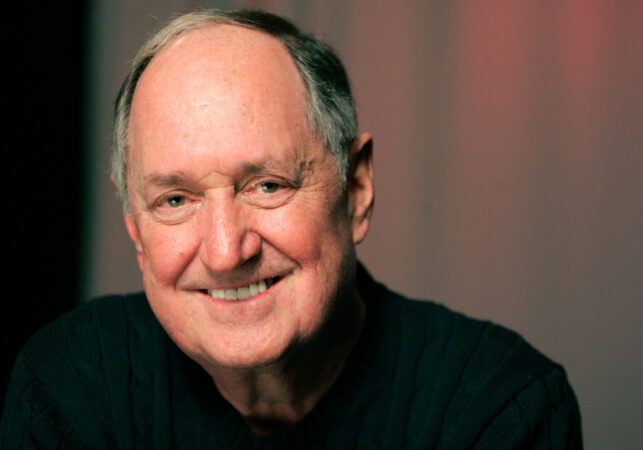
  • Neil Sedaka, the singer-songwriter behind dozens of hits of the 1960s and ’70s, has died at 86

    Neil Sedaka, the singer-songwriter behind dozens of hits of the 1960s and ’70s, has died at 86

    NEW YORK — Neil Sedaka, the hitmaking singer-songwriter whose boyish soprano and bright melodies made him a top act in the early years of rock and roll and led to a second run of success in the 1970s, has died.

    Mr. Sedaka, whose hits included “Breaking Up Is Hard to Do” and “Laughter in the Rain,” died Friday at age 86.

    “Our family is devastated by the sudden passing of our beloved husband, father and grandfather, Neil Sedaka,” his family said in a statement. “A true rock and roll legend, an inspiration to millions, but most importantly, at least to those of us who were lucky enough to know him, an incredible human being who will be deeply missed.”

    No other details of his death were immediately available.

    A key member of the Brill Building songwriting factory, Mr. Sedaka teamed with lyricist and boyhood neighbor Howard Greenfield on songs that reflected the teen innocence of the post-Elvis, pre-Beatles era of the late 1950 and early 1960s, including “Happy Birthday Sweet Sixteen,” “Calendar Girl,” and “Oh! Carol,” a lament for his high school sweetheart, Carole King.

    After a long dry spell, he reemerged with such smashes as “Laughter in the Rain” and “Bad Blood.” The Captain & Tennille’s cover of his “Love Will Keep Us Together” was a chart-topper in 1975.

    Short and dark-haired, with a big smile and high-pitched voice, he was a Juilliard-trained, Brooklyn-born son of a Jewish taxi driver who began performing as a teen and kept at it for decades.

    Mr. Sedaka still played dozens of concerts a year well into his 80s. He retained the enthusiasm and broad vocal range of his youth and never tired of the standards he had sung hundreds of times.

    “Past 70, Pavarotti told me the vocal cords are not what they used to be. I’m very fortunate that my voice has held,” he told the Associated Press in 2012. “It’s nice to be a legend, but it’s better to be a working legend.”

    Mr. Sedaka’s songs sold millions worldwide and have been covered by a range of performers, from Elvis Presley and Frank Sinatra to The 5th Dimension and Nickelback. Mr. Sedaka helped propel the career of Connie Francis with “Stupid Cupid” and “Where the Boys Are,” the latter for the soundtrack of the movie with the same name. The Captain & Tennille received a best-album Grammy thanks largely to “Love Will Keep Us Together” and included a nod to Mr. Sedaka at the end of the song, when Toni Tennille exclaimed “Sedaka’s back!”

    Growing up in Brooklyn, loving performing

    Mr. Sedaka grew up in Brooklyn’s Brighton Beach neighborhood, pampered by his grandparents, aunts, and mother in a two-bedroom apartment he shared with 11 relatives. He has a street there named in his honor, Neil Sedaka Way.

    But his music compensated for his unpopularity as a kid, he once recalled. His talent was recognized by a second-grade teacher who urged his homemaker mother, Eleanor, to buy him a piano. She went to work in a department store to pay for a secondhand upright and managed his career for years, as did his wife, Leba.

    Mr. Sedaka loved songwriting and never quit, but he craved performing.

    “Once a performer, always a performer. It’s that adrenaline rush. It’s like a natural high when you’re in front of an audience, and if you get that standing ovation, it’s infectious,” he told the AP.

    At 16, Mr. Sedaka was chosen by Arthur Rubenstein in a contest as the city’s best high school piano student and performed on a classical radio station as a prize. It was the same year he discovered rock and roll, when he performed a song, “Mr. Moon,” he had written with Greenfield, his classmate at Abraham Lincoln High School.

    “I sang it in the auditorium for a ballyhoo show and I remember there was a bit of a riot. The kids were jumping and screaming,” Mr. Sedaka said. “After that I was able to go into the sweet shop with the tough kids with the leather jackets.”

    After high school, and then Juilliard, Mr. Sedaka and Greenfield were signed to Don Kirshner’s Aldon Music, where they scored their first hit with Francis, “Stupid Cupid.”

    Sedaka churns out hits, until the Beatles

    In 1958, at age 19, Mr. Sedaka signed with RCA Victor Records and his first single, “The Diary,” enjoyed modest success. He began touring and promoting his songs through regular TV appearances on Dick Clark’s American Bandstand and Shindig!

    At the Brill Building, Mr. Sedaka and Greenfield were joined by other up-and-coming writers and lyricists including King, Neil Diamond, and Paul Simon.

    “Neil Sedaka was so talented, and he inspired me to follow my dream of being a songwriter,” King said on her Facebook page Friday. “With love and gratitude and condolences to his family.”

    Micky Dolenz of the Monkees also paid tribute to Mr. Sedaka, saying on Instagram that he was “one of those rare songwriters who could do it all.”

    From 1959 to 1962, Mr. Sedaka had 10 records in the Top 10, including “Calendar Girl,” “Oh! Carol,” “Happy Birthday Sweet Sixteen,” and “Next Door to an Angel.” But in the mid-1960s, the Brill Building sound, influenced by the doo-wop groups of the New York City streets, was pushed off the charts by the Beatles -led British Invasion and the psychedelic and protest music that followed. Mr. Sedaka would endure 13 years “in the wilderness,” as he described it to the AP.

    Sedaka’s unlikely comeback, with help from Elton John

    Mr. Sedaka was among the lucky, however, enjoying a renaissance that began in the mid-’70s thanks to the patronage of Elton John, whom he met at a party after Mr. Sedaka moved his wife and two kids to England to take advantage of his lingering popularity there. John signed him to his fledgling, U.S.-based Rocket Records label, providing him a chance at more hits with the album Sedaka’s Back.

    At Rocket, Mr. Sedaka and a new writing partner, Philip Cody, topped charts with “Bad Blood” and the joyous “Laughter in the Rain.” He also achieved a rare feat with “Breaking Up Is Hard to Do.” His original up-tempo version went No. 1 in 1962. He rerecorded it as a slow ballad in 1975 and that, too, went No. 1.

    He recorded five albums from 1972 to 1976. They included hits “Standing on the Inside,” “That’s Where the Music Takes Me,” and “Our Last Song Together,” about his breakup with Greenfield, with whom he began writing songs when Mr. Sedaka was only 13 and Greenfield 16.

    He was inducted into the Songwriters Hall of Fame, but the Rock & Roll Hall of Fame eluded him despite a fan petition drive.

    Mr. Sedaka married wife Leba in 1962. They had two children. Daughter Dara recorded a duet with dad in 1980, “Should’ve Never Let You Go.” It was a hit, but she never joined him in the music business. Son Marc is a film and television writer.

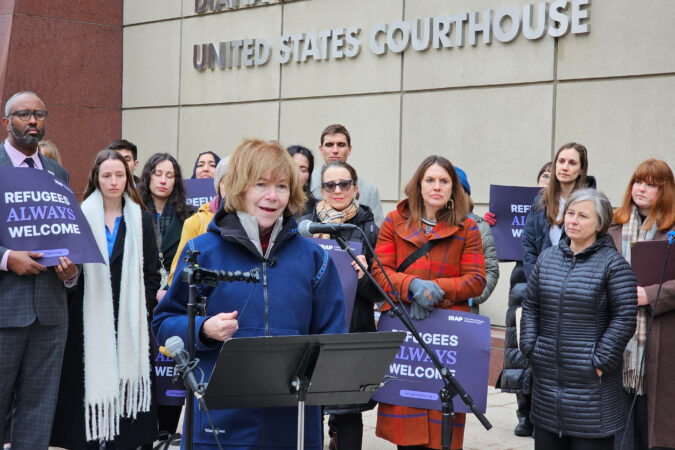
  • Federal judge extends order protecting refugees in Minnesota from being arrested and deported

    Federal judge extends order protecting refugees in Minnesota from being arrested and deported

    MINNEAPOLIS — A federal judge on Friday extended an order protecting refugees in Minnesota who are lawfully in the U.S. from being arrested and deported, saying a Trump administration policy turns the “American Dream into a dystopian nightmare.”

    U.S. District Judge John Tunheim granted a motion by advocates for refugees to convert a temporary restraining order that he issued in January into a more permanent preliminary injunction while the case develops further.

    The order applies only in Minnesota. But the implications of a new national policy on refugees that the Department of Homeland Security announced Feb. 18 were a major part of the discussion at a hearing held by the judge the next day.

    “Minnesota refugees can now live their lives without fear that their own government will snatch them off the street and imprison them far from loved ones,” Kimberly Grano, an attorney with the International Refugee Assistance Project, told the Associated Press.

    The Trump administration asserts it has the right to arrest potentially tens of thousands of refugees across the U.S. who entered the country legally but don’t yet have green cards. A new Homeland Security memo interprets immigration law to say that refugees applying for green cards must return to federal custody one year after they were admitted to the U.S. so that their applications can be reviewed.

    The judge, however, expressed disbelief in a 66-page opinion.

    “This Court will not allow federal authorities to use a new and erroneous statutory interpretation to terrorize refugees who immigrated to this country under the promise that they would be welcomed and allowed to live in peace, far from the persecution they fled,” Tunheim said.

    He said the U.S. decades ago promised refugees fleeing persecution that they could build a new life after rigorous background checks.

    “We promised them the hope that one day they could achieve the American Dream,” Tunheim said. “The Government’s new policy breaks that promise — without congressional authorization — and raises serious constitutional concerns. The new policy turns the refugees’ American Dream into a dystopian nightmare.”

    Homeland Security and U.S. Citizenship and Immigration Services did not immediately return a request for comment Friday.

    Justice Department attorney Brantley Mayers said during a court hearing last week that the government should have the right to arrest refugees one year after entering the U.S., but he also indicated that would not always happen.

    The judge noted that one refugee in the case, identified as D. Doe, was arrested in January after being told that someone had struck his car.

    “He was immediately flown to Texas, where he was interrogated about his refugee status. He was kept in ‘shackles and handcuffs’ for sixteen hours. D. Doe was ultimately released on the streets of Texas, left to find his way back to Minnesota,” Tunheim said.