Category: Associated Press

  • Anthropic CEO says AI company ‘cannot in good conscience accede’ to Pentagon’s demands

    Anthropic CEO says AI company ‘cannot in good conscience accede’ to Pentagon’s demands

    WASHINGTON — Anthropic CEO Dario Amodei said Thursday the artificial intelligence company “cannot in good conscience accede” to the Pentagon’s demands to allow wider use of its technology.

    The maker of the AI chatbot Claude said in a statement that it’s not walking away from negotiations, but that new contract language received from the Defense Department “made virtually no progress on preventing Claude’s use for mass surveillance of Americans or in fully autonomous weapons.”

    The Pentagon’s top spokesman has reiterated that the military wants to use Anthropic’s artificial intelligence technology in legal ways and will not let the company dictate any limits ahead of a Friday deadline to agree to its demands.

    Sean Parnell said Thursday on social media that the Pentagon “has no interest in using AI to conduct mass surveillance of Americans (which is illegal) nor do we want to use AI to develop autonomous weapons that operate without human involvement.”

    Anthropic’s policies prevent its models, such as its chatbot Claude, from being used for those purposes. It’s the last of its peers — the Pentagon also has contracts with Google, OpenAI, and Elon Musk’s xAI — to not supply its technology to a new U.S. military internal network.

    Parnell said the Pentagon wants to “use Anthropic’s model for all lawful purposes” but didn’t offer details on what that entailed. He said opening up use of the technology would prevent the company from “jeopardizing critical military operations.”

    “We will not let ANY company dictate the terms regarding how we make operational decisions,” he said.

    During a meeting on Tuesday between Defense Secretary Pete Hegseth and Amodei, military officials warned that they could cancel Anthropic’s contract, designate the company as a supply chain risk, or invoke a Cold War-era law called the Defense Production Act to give the military more sweeping authority to use its products, even if the company doesn’t approve.

    Amodei said Thursday that “those latter two threats are inherently contradictory: one labels us a security risk; the other labels Claude as essential to national security.”

    Parnell left out the threatened use of the Defense Production Act in the Thursday post on X and said Anthropic has “until 5:01 PM ET on Friday to decide.”

    “Otherwise, we will terminate our partnership with Anthropic and deem them a supply chain risk,” he wrote.

    The talks that escalated this week began months ago. Amodei said that given “the substantial value that Anthropic’s technology provides to our armed forces, we hope they reconsider.” But if they don’t, he said Anthropic “will work to enable a smooth transition to another provider.”

    Sen. Thom Tillis, a North Carolina Republican who is not seeking reelection, said Thursday that the Pentagon has been handling the matter unprofessionally while Anthropic is “trying to do their best to help us from ourselves.”

    “Why in the hell are we having this discussion in public?” Tillis told reporters. “This is not the way you deal with a strategic vendor that has contracts.”

    He added, “When a company is resisting a market opportunity for fear of negative consequences, you should listen to them and then behind closed doors figure out what they’re really trying to solve.”

    Sen. Mark Warner of Virginia, the ranking Democrat on the Senate Intelligence Committee, said he was “deeply disturbed” by reports that the Pentagon is “working to bully a leading U.S. company.”

    “Unfortunately, this is further indication that the Department of Defense seeks to completely ignore AI governance,” Warner said in a statement. It ”further underscores the need for Congress to enact strong, binding AI governance mechanisms for national security contexts.”

    As Pentagon officials say they always will follow the law with their use of AI models, Hegseth told Fox News last February, weeks after becoming defense secretary, that “ultimately, we want lawyers who give sound constitutional advice and don’t exist to attempt to be roadblocks to anything.”


  • Judge rejects request to block Trump White House from building its $400 million ballroom project

    Judge rejects request to block Trump White House from building its $400 million ballroom project

    WASHINGTON — A federal judge on Thursday rejected a preservationist group’s request to block the Trump administration from continuing construction of a $400 million ballroom where it demolished the East Wing of the White House.

    U.S. District Judge Richard Leon ruled that the National Trust for Historic Preservation was unlikely to succeed on the merits of its bid to temporarily halt President Donald Trump’s project. He said the privately funded group based its challenge on a “ragtag group of theories” under the Administrative Procedure Act and the Constitution, and would have a better chance of success if it amended the lawsuit.

    “Unfortunately, because both sides initially focused on the President’s constitutional authority to destruct and construct the East Wing of the White House, Plaintiff didn’t bring the necessary cause of action to test the statutory authority the President claims is the basis to do this construction project without the blessing of Congress and with private funds,” the judge wrote.

    The preservationists sought an order pausing the ballroom project until it undergoes multiple independent reviews and wins approval from Congress.

    Trump used his social media account to hail the ruling as “Great news for America.” The Republican president said the project was ahead of schedule and under budget and “will stand long into the future as a symbol to the Greatness of America.”

    Carol Quillen, president and CEO of the National Trust for Historic Preservation said the group was “disappointed” that no injunction was issued but “pleased that Judge Leon ruled that the National Trust has standing to bring this lawsuit, as we have asserted from the start.”

    “We are also pleased that he encouraged us to amend our complaint — specifically, to assert that the president has acted beyond his statutory authority — and we plan to do so promptly,” Quillen said in a statement. “The judge indicated he will rule expeditiously once we do so, and we will await his decision.”

    The White House announced the ballroom project over the summer. By late October, the Republican president had demolished the East Wing to make way for a ballroom that he said will fit 999 people. The White House said private donations, including from Trump himself, would pay for the planned construction of a 90,000-square-foot ballroom.

    Trump proceeded with the project before seeking input from a pair of federal review panels, the National Capital Planning Commission and the Commission of Fine Arts. Trump has stocked both commission with allies.

    The arts panel approved the project at a meeting last week. The planning commission is set to discuss it further at a March 5 meeting.

    During a preliminary hearing in December, Leon warned the administration to refrain from making decisions on underground work, such as the routing of plumbing and gas lines, that would dictate the scope of future ballroom construction above ground.

    The group challenging the project argued that Trump could be emboldened to go further — and possibly demolish the White House’s West Wing or Executive Mansion — if the court did not intervene.

    “The losers will be (the) American public, who will be left with a massive ballroom that not only overwhelms what is perhaps the nation’s most historically important building, but will have been built in violation of an astonishingly wide range of laws,” plaintiffs’ attorneys wrote.

    The administration said in a court filing that above-ground construction on the ballroom would not begin until April. In the meantime, government lawyers argued, the preservationist group’s challenge was premature because the building plans were not final.

    The administration also argued that other presidents did not need congressional approval for previous White House renovation projects, large and small.

    “Many of those projects were highly controversial in their time yet have since become accepted — even beloved — parts of the White House,” government lawyers wrote.

    Leon, who was nominated to the bench by Republican President George W. Bush, said the White House office behind the project is not an agency covered under the jurisdiction of the Administrative Procedure Act. The judge also said the preservationists, who argued that the ballroom usurped the authority of Congress, did not have the basis to invoke the power of the courts.

    As a result, “I cannot reach the merits of the National Trust’s novel and weighty statutory arguments” at this time, Leon said.

  • Warner Bros. deems Paramount’s takeover bid superior to Netflix deal

    Warner Bros. deems Paramount’s takeover bid superior to Netflix deal

    NEW YORK — Warner Bros. Discovery has determined that Paramount’s latest takeover offer is superior to the streaming and studio agreement it struck with Netflix, marking a stark shift in momentum in the fight for the storied Hollywood giant.

    Warner Bros. Discovery, the owner of HBO Max, DC Studios, and such popular titles as Harry Potter, had backed Netflix’s proposal for months. But after Skydance-owned Paramount upped its rival bid for the entire company to $31 per share, in addition to other revisions, Warner’s board on Thursday said that the offer “constitutes a ‘company superior proposal.’”

    Netflix declined to raise its offer for Warner Bros., saying the deal was “no longer financially attractive.” Netflix had raised its bid to $27.75 per share.

    Warner Bros. on Thursday maintained that Netflix’s bid remained on the table. The board said it had “not withdrawn or modified” its previous recommendation in favor of that transaction.

    Paramount CEO David Ellison applauded the news — noting in a statement that the company was “pleased WBD’s Board has unanimously affirmed the superior value of our offer.”

    A buyout of all or parts of Warner’s business would vastly reshape Hollywood and the wider media landscape. And the takeover fight was complicated because Netflix and Paramount wanted different things. Unlike the streaming giant, Paramount wants all of Warner’s operations, including networks like CNN and Discovery.

    That would put CNN under the same roof as Paramount’s CBS — which has seen significant editorial shifts, notably with the installation of Free Press founder Bari Weiss at CBS News, under the recent Skydance ownership deal. And if Paramount’s acqusition of Warner proceeds, many expect the reach of those changes to only grow.

    A Paramount-Warner combo would also combine two of Hollywood’s five legacy studios that remain today, in addition to their theatrical channels. Beyond , Warner movies like Superman, Barbie, and One Battle After Another — as well as hit TV series like The White Lotus and Succession — would join Paramount’s content library.

    Today, Paramount’s lineup of titles include Top Gun, Titantic, and The Godfather. And beyond CBS, it owns networks like MTV and Nickelodeon, as well as the Paramount+ streaming service.

    Executives at Paramount — and Netflix, in its separate bid for Warner — have argued that merging will be good for consumers and the wider industry. But lawmakers and entertainment trade groups have sounded the alarm about the prospect of either deal — warning that a buyout of all or parts of Warner’s business would only further consolidate power in an industry already run by just a few major players.

    Critics say that could result in job losses, less diversity in filmmaking, and potentially more headaches for consumers who are facing rising costs of streaming subscriptions as is.

    Combined, that raises tremendous antitrust concerns — and a Warner sale could come down to who gets the regulatory green light. The U.S. Department of Justice has already initiated reviews, and other countries are expected to do so, too.

    The companies have spent the last couple of months in a heated, public back and forth over whose deal has a better regulatory path — and offers more value for Warner shareholders.

    Beyond increasing its proposed purchase price for Warner, the company also agreed to a regulatory termination fee of $7 billion. And Paramount pledged to move up a previously-promised “ticking fee.”

    The company initially said it would pay 25 cents per share for every quarter the deal drags on past the end of the year. Now it has agreed to pay that amount if the deal doesn’t go through by the end of September, Warner said.

    But Paramount is taking on billions of dollars in debt to finance its offer. And David Ellison’s father, Oracle founder Larry Ellison, is heavily backing the bid for his son’s company. Foreign soverign wealth funds have also provided equity for the offer, drawing scrunity.

    The Ellisons also have a close relationship with President Donald Trump — bringing more politics into question. Trump previously made unprecedented suggestions about his involvement in seeing a deal through, before walking back those statements and maintaining that regulatory approval will be up to the Justice Department.

    The push to acquire Warner also arrives just months after Skydance closed its own buyout of Paramount — in a contentious merger approved just weeks after the company agreed to pay the president $16 million to settle a lawsuit over editing at CBS’ 60 Minutes program.

    Still, Trump has continued to publicly lash out at Paramount and 60 Minutes since.

  • The IRS broke the law by disclosing confidential information to ICE 42,695 times, judge says

    The IRS broke the law by disclosing confidential information to ICE 42,695 times, judge says

    WASHINGTON — A federal judge ruled on Thursday that the IRS broke the law by disclosing confidential taxpayer information “approximately 42,695 times” to Immigration and Customs Enforcement.

    U.S. District Judge Colleen Kollar-Kotelly found that the IRS had erroneously shared taxpayer data of thousands of people with the Department of Homeland Security as part of the agencies’ controversial agreement to share information on immigrants for the purpose of identifying and deporting people illegally in the United States.

    Her finding was based off a declaration filed earlier this month by Dottie Romo, IRS’ chief risk and control officer, which revealed that the IRS had provided DHS with information on 47,000 of the 1.28 million people that ICE requested — and that, in most of those cases, gave ICE additional address information in violation of privacy rules created to protect taxpayer data.

    Kollar-Kotelly, an appointee of Bill Clinton in 1997, said in her Thursday decision that the agency violated IRS Code 6103, one of the strictest confidentiality laws in federal statute, “approximately 42,695 times by disclosing last known taxpayer addresses to ICE.”

    She called the Romo declaration “a significant development in this case.”

    “The IRS not only failed to ensure that ICE’s request for confidential taxpayer address information met the statutory requirements, but this failure led the IRS to disclose confidential taxpayer addresses to ICE in situations where ICE’s request for that information was patently deficient,” she wrote.

    The government is appealing the case, but the Thursday ruling is significant because Romo’s declaration supports the decision on appeal.

    Nina Olson, founder of the Center for Taxpayer Rights, which has sued the government over the disclosure, says “this confirms what we’ve been saying all along: that the IRS has an unlawful policy that violates the Internal Revenue Code’s protections by releasing these addresses in a way that violates the law’s requirements.”

    Representatives from the IRS and Treasury Department did not respond to Associated Press requests for comment.

    A data-sharing agreement signed last April by Treasury Secretary Scott Bessent and Homeland Security Secretary Kristi Noem allows ICE to submit names and addresses of immigrants inside the U.S. illegally to the IRS for cross-verification against tax records. The deal led the then-acting commissioner of the IRS to resign.

    There are several ongoing cases that challenge the IRS-DHS agreement.

    Earlier this week, a three-judge panel for the U.S. Court of Appeals for the D.C. Circuit declined to issue a preliminary injunction for the immigrants’ rights group, Centro de Trabajadores Unidos, and other nonprofits that are suing the federal government to stop implementation of the agreement.

    In declining the preliminary injunction request, Judge Harry T. Edwards wrote that the nonprofit groups “are unlikely to succeed on the merits of their claim,” since the information the agencies are sharing isn’t covered by the IRS privacy statute.

    Still, two separate court orders have blocked the agencies from massive transfers of taxpayer information and blocked ICE from acting upon any IRS data in its possession. Those preliminary injunctions are still in place.

  • Ukraine says Russia launched a major aerial attack before Kyiv’s talks with U.S.

    Ukraine says Russia launched a major aerial attack before Kyiv’s talks with U.S.

    KYIV, Ukraine — A heavy Russian drone bombardment of Ukraine’s southern city of Odesa killed at least three people and wounded 23, including two children and a pregnant woman, officials said Tuesday, as Ukrainian President Volodymyr Zelensky called for speedier U.S. efforts to end Russia’s almost 4-year-old invasion of his country.

    The Odesa attack involved more than 50 drones, some of them models recently upgraded by Russia to improve their range and strike power, according to Ukrainian authorities.

    The drones targeted the power grid, which Russia has repeatedly bombarded during the coldest winter in years, and also hit five apartment blocks, officials said. Emergency crews retrieved the bodies of two men, aged 90 and 52, and a woman from the rubble, authorities said.

    “The rescue operation will continue until the fate of all people who may be under the rubble is clarified,” Zelensky said on the Telegram messaging app, adding that an informal Protestant place of worship was also damaged.

    “Each such Russian strike undermines diplomacy, which is still ongoing, and hits, in particular, the efforts of partners who are helping to end this war,” he said.

    In Ukraine’s northeast Kharkiv region, a passenger train carrying over 200 people was hit by three drones later Tuesday, in what the head of the regional administration Oleh Syniehubov labeled “terrorism.” Four people were killed and another four reported missing.

    A diplomatic push by the Trump administration to end the war has made progress, according to officials, but has delivered no breakthrough on the key issue of what happens to Russian-occupied Ukrainian land and other territory that Moscow is demanding.

    Analysts says that Russian President Vladimir Putin is in no rush to find a settlement, despite his army’s difficulties on the roughly 600-mile front line. He believes that time is on his side, that Western support for Kyiv will fade and that Ukraine’s resistance will eventually break under pressure, according to analysts.

    To replenish its forces and keep up the pressure on Kyiv, Moscow is offering cash bonuses, freeing convicts from prison and luring foreigners to its army.

    An Associated Press investigation found that unwitting Bangladeshi workers were enticed to Russia under the false promise of civilian work before being thrown into combat in Ukraine.

    Zelensky said late Monday the next round of talks with the United States and Russia is penciled in for Feb. 1. but that “it would be good if this meeting could be accelerated.”

    He also urged that, in the meantime, additional sanctions be imposed on Russia to compel the Kremlin to make compromises.

    Russia fired 165 drones at Ukraine overnight, with 24 of them that got through air defenses hitting targets in seven regions, according to Ukraine’s air force.

    In recent weeks, the relentless barrages have damaged some of Ukraine’s protected world heritage sites in Odesa, the western city of Lviv and the capital, Kyiv, UNESCO said Tuesday.

    They have also knocked out power to hundreds of thousands of civilians. More than 900 apartment blocks remained without heating Tuesday in several districts of Kyiv, Zelensky said. Kyiv, a city of about 3 million people, is dominated by tower blocks, many from the Soviet era.

    Russia has been improving its drone technology and tactics, striking Ukraine with increasing success.

    The Ukrainian Defense Ministry’s main intelligence directorate said earlier this month that Russia had deployed the new jet-powered “Geran-5” strike drone against Ukraine for the first time. The Geran is a Russian variant of the Iranian-designed Shahed.

    According to the directorate, the drone can carry a 200-pound warhead and has a range of nearly 600 miles.

    In response, Ukraine has significantly expanded production of interceptor drones, as well as developing its own long-range drones.

    The Russian Defense Ministry said Tuesday that its air defenses shot down 19 Ukrainian drones overnight over several Russian regions.

  • Penguin Press founder Ann Godoff, a powerhouse editor of bestsellers and prizewinners, dies at 76

    Penguin Press founder Ann Godoff, a powerhouse editor of bestsellers and prizewinners, dies at 76

    NEW YORK — Ann Godoff, a leading book publisher for more than 30 years with an eye for timely and timeless works from Alexander Hamilton and Midnight in the Garden of Good and Evil to current bestsellers by Gisèle Pelicot and California Gov. Gavin Newsom, has died. She was 76.

    Ms. Godoff died of cancer Tuesday in Albany, N.Y., according to a statement from Penguin Press, which she had founded in 2003.

    “Ann’s impact on American book culture over the past four decades is incalculable,” Penguin Press publisher Scott Moyers said in a statement. “An editor of immense range in fiction, nonfiction, and poetry, Ann shepherded into print innumerable New York Times bestsellers, multiple winners of every major award, and works that have appeared on all manner of best books lists — of the year, the decade, and the century.”

    A onetime NYU film student who studied under then-faculty member Martin Scorsese, sold cars and assisted on Dr. Joyce Brothers’ television show, Ms. Godoff was a late bloomer who didn’t begin her publishing career until her early 30s and soon revealed uncommon gifts for spotting and cultivating talent. As a rising editor at Random House in the 1990s, she published such debut phenomena as John Berendt’s Midnight in the Garden of Good and Evil and Caleb Carr’s The Alienist.

    She also worked with Salman Rushdie, E.L. Doctorow, and Arundhati Roy and had lasting relationships with Michael Pollan and Ron Chernow, whose books with Ms. Godoff have included a Pulitzer Prize-winning biography of George Washington and the Hamilton biography that was the basis for the prizewinning stage musical.

    “Ann supervised me with a rather light touch and never got lost in the details,” Chernow wrote in an email to the Associated Press.

    “She was no less gifted in fashioning a design for the book — everything from the cover art to the paper stock — with a look fully consistent with my portrait of the character,” he added. “Everything was of a piece and that was carried straight through to the marketing and publicity. I always felt myself in the most capable hands.”

    Ms. Godoff was eventually promoted to president and editor-in-chief of Random House, and her stature was so high that when she was forced out in 2003 amid corporate restructuring, her departure set off debates — evergreen in the industry — over the feared decline of literary publishing.

    But Penguin soon signed her up to lead the new Penguin Press imprint. Chernow, Pollan, and other authors moved there with her, and she continued to publish bestsellers and critical favorites, including such Pulitzer Prize winners as Steve Coll’s Ghost Wars and John Lewis Gaddis’ George F. Kennan.

    When Random House and Penguin merged into Penguin Random House in 2013, Ms. Godoff was under the same roof as her old company. Right up to the time of her death, she was shaping the public conversation. Pelicot’s A Hymn to Life recounts her horrifying marriage and how she came to be a leading voice against sexual violence, while Newsom’s Young Man in a Hurry is widely seen as a building block for a 2028 presidential run.

    Ms. Godoff was born in 1949 in New York City, grew up in New York and California, and graduated from Bennington College. She started out at Simon & Schuster in the early 1980s as an assistant to Alice Mayhew, the renowned editor of Bob Woodward and Doris Kearns Goodwin among others. After serving as editor-in-chief at Atlantic Monthly Press, Ms. Godoff joined Random House in 1991.

    Her marriage to Malcolm Drummond ended in divorce in 2012 after a long separation. The same year, Godoff married her partner, the writer-photographer Annik LaFarge. Besides LaFarge, her survivors include her brother, Peter Godoff.

    Ms. Godoff was never the outsized personality of such Random House predecessors as Bennett Cerf and Harold Evans. She was regarded by many as serious, hard-working and committed, known for saying “The book will abide.” But she was competitive, and she didn’t mind making news. She paid a reported $8 million for Cold Mountain author Charles Frazier’s next novel, a sum many found excessive at the time, and a comparable amount for a memoir by former Federal Reverse Chairman Alan Greenspan.

    Bestselling author Roger Lowenstein, whose seven books have all been published by Ms. Godoff, wrote in an email to the AP that she was an exacting but precise editor. He remembered a “blistering memo” from her while shaping the manuscript for Ways and Means: Lincoln and His Cabinet and the Financing of the Civil War, a prizewinning history published in 2022. His final draft was 90 pages shorter and he couldn’t think of a “single word” that he regretted being cut.

    “She generally reserved her praise, at least in my case, until the end of the process, often in letters that arrived unexpected in the mail,” he wrote. “Nothing was ever sweeter, because one worked so hard to get there, and because you knew that she meant it.”

  • FedEx joins other U.S. companies in seeking a refund after Trump tariffs are ruled illegal

    FedEx joins other U.S. companies in seeking a refund after Trump tariffs are ruled illegal

    FedEx is suing the U.S. government, the latest company to request a refund on what it paid for tariffs set by President Donald Trump last year after the Supreme Court ruled that the tariffs are illegal.

    More than 1,000 companies have filed suit in the U.S. Court of International Trade in efforts to recoup costs from the illegal tariffs, including large U.S. corporations such as Costco and Revlon. Most of the lawsuits were already in process ahead of the Supreme Court decision Friday.

    FedEx said in a filing with the U.S. Court of International Trade that they have “suffered injury” from having to pay the tariffs and that the relief they’re seeking from the court would redress those injuries.

    Tim Meyer, a law professor at Duke University, said each case is likely to have to be tried individually.

    “We’re going to have to wait and see how the government decides to handle the refund claims,” he said. “And then if the government chooses not to set up a process for the refunds, ultimately the Court of International Trade is going to have to adjudicate over a thousand cases.”

    The National Retail Federation said in a statement on Friday that the Supreme Court’s ruling provided certainty for U.S. businesses and manufacturers.

    “We urge the lower court to ensure a seamless process to refund the tariffs to U.S. importers,” it said. “The refunds will serve as an economic boost and allow companies to reinvest in their operations, their employees and their customers.”

    The Supreme Court struck down Trump’s far-reaching global tariffs on Friday. Trump said he was “absolutely ashamed” of some justices who ruled 6-3 against him, calling them “disloyal to our Constitution” and “lapdogs.” At one point he even raised the specter of foreign influence without citing any evidence.

    The court’s ruling found tariffs that Trump imposed under an emergency powers law were unconstitutional, including the sweeping “reciprocal” tariffs he levied on nearly every other country.

    The Treasury had collected more than $133 billion from the import taxes the president has imposed under the emergency powers law as of December, federal data shows. The impact over the next decade has been estimated at some $3 trillion. A study by the Federal Reserve Bank of New York found U.S. businesses and consumers are paying nearly 90% of the tariffs that Trump has imposed.

    Trump has vowed to collect tariffs through other means. He reached for a stopgap option immediately after his defeat Friday at the Supreme Court: Section 122 of the Trade Act of 1974 allows the president to impose tariffs of up to 15% for up to 150 days. But any extension beyond 150 days must be approved by a Congress likely to balk at passing a tax increase as November’s midterm elections loom.

  • Justice Department says it’s reviewing whether any Epstein-related records were mistakenly withheld

    Justice Department says it’s reviewing whether any Epstein-related records were mistakenly withheld

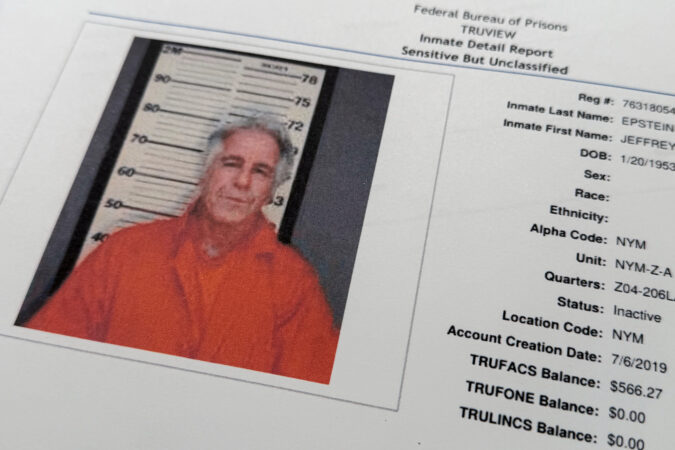
    WASHINGTON — The Justice Department said Wednesday that it was looking into whether it improperly withheld documents from the Jeffrey Epstein files after several news organizations reported that some records involving uncorroborated accusations made by a woman against President Donald Trump were not among those released to the public.

    The announcement followed news reports saying that a massive tranche of records released by the Justice Department did not include several summaries of interviews that the FBI conducted with an unidentified woman who came forward after Epstein’s 2019 arrest and claimed to have been sexually assaulted by both Trump and Epstein when she was a minor in the 1980s.

    “Several individuals and news outlets have recently flagged files related to documents produced to Ghislaine Maxwell in discovery of her criminal case that they claim appear to be missing,” the Justice Department said in a post on X. “As with all documents that have been flagged by the public, the Department is currently reviewing files within that category of the production.” Maxwell, Epstein’s longtime confidant, is serving a 20-year prison sentence on a sex trafficking conviction.

    It said that if any document is found to have been improperly withheld and is responsive to the federally enacted law mandating the files’ release, “the Department will of course publish it, consistent with the law.”

    At issue is a series of interviews said to have been conducted in 2019 with a woman who made an allegation against Trump, who has consistently denied any wrongdoing in connection with Epstein. News reports from recent days say the accuser was interviewed four times but a summary of only one of those interviews was included in the publicly released files.

    The missing records were earlier reported by the journalist Roger Sollenberger on Substack and NPR, and have since been documented by other news organizations, including the New York Times, MS Now, and CNN.

    Rep. Robert Garcia, the top Democrat on the House Oversight Committee, said in a statement that his panel would investigate the withheld records. He said he had reviewed unredacted evidence logs and “can confirm that the DOJ appears to have illegally withheld FBI interviews” with the accuser.

    The Justice Department last month said it was releasing more than 3 million pages of records related to Epstein, who took his own life in a New York jail cell in 2019 while awaiting trial on sex trafficking charges. The department said at the time that, though it was attempting to be transparent, it was also entitled to withhold records that exposed potential abuse victims, were duplicates or protected by legal privileges, or related to an ongoing criminal investigation.

    “Some of the documents contain untrue and sensationalist claims against President Trump that were submitted to the FBI right before the 2020 election. To be clear, the claims are unfounded and false, and if they have a shred of credibility, they certainly would have been weaponized against President Trump already,” the department said in a statement last month as it released the records.

    The redaction process was quickly revealed to have been flawed, with the department withdrawing some materials identified by victims or their lawyers, along with a “substantial number” of documents identified independently by the government.

    Lawyers for Epstein accusers told a New York judge last month that the lives of nearly 100 victims had been “turned upside down” by sloppy redactions in the government’s latest release of records. The exposed materials include nude photos showing the faces of potential victims as well as names, email addresses, and other identifying information that was either unredacted or not fully obscured.

    Other uncorroborated claims against Trump and other public figures were included in the publicly available files. The department did not say in its social media post Wednesday why records related to this specific accusation might have been withheld.

  • Vance says administration is pausing some Medicaid funding to Minnesota because of fraud concerns

    Vance says administration is pausing some Medicaid funding to Minnesota because of fraud concerns

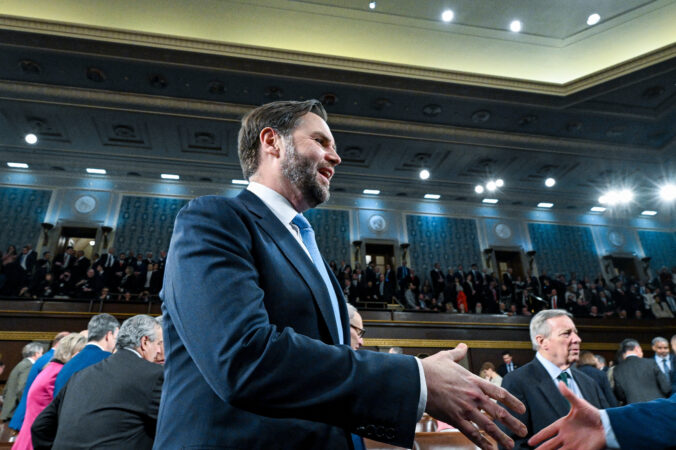
    WASHINGTON — Vice President JD Vance announced Wednesday that the Trump administration would “temporarily halt” some Medicaid funding to the state of Minnesota over fraud concerns, as part of what he described as an aggressive crackdown on misuse of public funds.

    Vance, who made the announcement with Mehmet Oz, the administrator for the Centers for Medicare and Medicaid Services, said the administration was taking the action “in order to ensure that the state of Minnesota takes its obligations seriously to be good stewards of the American people’s tax money.”

    Oz, who referred to people committing fraud as “self-serving scoundrels,” said the federal government would hold off on paying $259.5 million to Minnesota in funding for Medicaid, the healthcare safety net for low-income Americans.

    “This is not a problem with the people of Minnesota, it’s a problem with the leadership of Minnesota and other states who do not take Medicaid preservation seriously,” Oz said.

    Wednesday’s move is part of a larger Trump administration effort to spotlight fraud around the country. That effort comes after allegations of fraud involving daycare centers run by Somali residents in Minneapolis prompted a massive immigration crackdown in the Midwestern city, resulting in widespread protests. President Donald Trump, in his State of the Union address on Tuesday, announced Vance would spearhead a national “war on fraud.”

    Trump also recently nominated Colin McDonald to serve as the first assistant attorney general in charge of a Justice Department division dedicated to rooting out fraud.

    Oz said the administration was simultaneously notifying Minnesota’s Democratic Gov. Tim Walz as he was making the announcement publicly. Messages sent to spokespeople for Walz, former Vice President Kamala Harris’ 2024 running mate, were not immediately returned.

    “We will give them the money, but we’re going to hold it and only release it after they propose and act on a comprehensive corrective action plan to solve the problem,” Oz said.

    He said Walz would have 60 days to respond and advised healthcare providers and Medicaid beneficiaries who were concerned to contact Walz’s office.

    A spokesperson for Minnesota Attorney General Keith Ellison, whose office investigates Medicaid fraud, referred questions to the state Department of Human Services, which administers Medicaid in the state, A department spokesperson said the agency was preparing a statement.

    Earlier Wednesday, Ellison held a news conference to promote legislation that would give his office more staff and new legal tools to combat Medicaid fraud.

    Oz said the Centers for Medicare and Medicaid Services were also taking action to crack down on fraud in Medicare, the healthcare system relied upon by millions of older adults.

    He said CMS for six months would block any new Medicare enrollments for suppliers of durable medical equipment, prosthetics, orthotics or other supplies used to treat chronic conditions or assist in injury recovery.

    The Office of the Inspector General for the U.S. Department of Health and Human Services found last year that Medicare improperly paid suppliers nearly $23 million for durable medical equipment from 2018 through 2024. But it found that most of that was before January 2020, when changes to the system were implemented.

    Oz also announced a new crowdsourcing effort he said would help “crush fraud” by soliciting Americans’ tips and suggestions.

    “All of us are smarter than any one of us,” he said.

    In a news release accompanying the announcement, CMS said the funding being paused in Minnesota included some $244 million in unsupported or potentially fraudulent Medicaid claims and about $15 million in claims involving “individuals lacking a satisfactory immigration status.”

    Immigrants who are not living in the U.S. legally, as well as some lawfully present immigrants, are not allowed to enroll in the Medicaid program that provides nearly-free coverage for health services.

    CMS said in the release that if Minnesota fails to satisfy its requirements, it may defer up to $1 billion in federal funds to the state over the next year.

    A CMS spokesperson didn’t immediately respond to an inquiry about what the agency will require from Minnesota in order to restart the deferred funding.

    The administration has threatened to cut off funding for various programs for some Democratic-run states over fraud concerns over the last few months.

    One judge blocked those actions and required that payments flowing to Minnesota and four other states — California, Colorado, Illinois and New York — for a variety of social service programs. The government had said that there was “reason to believe” that those states were granting benefits to people in the country illegally. It did not initially explain where that information came from, but a government lawyer told the judge it was largely in reaction to news reports about possible fraud.

    Another judge said she would not let it cut off funding for administrative costs for 22 states that have refused to hand over information about applicants and recipients of food aid through the Supplemental Nutritional Assistance Program.

    The latest action was prompted in part by a series of fraud cases, including a nonprofit called Feeding Our Future accused of stealing pandemic aid meant for school meals. Prosecutors have put the losses from that case at $300 million.

    Since then, Trump has targeted the Somali diaspora in Minnesota with immigration enforcement actions and has made a series of disparaging comments about the community. During his State of the Union address on Tuesday, Trump said “pirates” have “ransacked Minnesota.”

    Federal agencies have also been enlisted to assist in targeting fraud in Minnesota.

    Last December, the U.S. Treasury Department issued an order requiring money wire services that people use to send money to Somalia to submit additional verification to the Treasury.

    The Center for Medicare and Medicaid Services told Minnesota in January that it intended to freeze parts of payments for some Medicaid programs that were deemed high-risk. The state said that those cuts would add up to more than $2 billion annually if they lasted and made an administrative appeal.

  • Penguins place Sidney Crosby on injured reserve after he got hurt at the Olympics

    Penguins place Sidney Crosby on injured reserve after he got hurt at the Olympics

    PITTSBURGH — The Pittsburgh Penguins will have to start their playoff push without Sidney Crosby.

    The club placed its longtime captain on injured reserve Wednesday. The move comes after Crosby suffered a lower-body injury during the Olympic hockey tournament at the Milan Cortina Games.

    The 38-year-old three-time Stanley Cup winner went down in the second period of Canada’s quarterfinal win over Czechia. The Canadians held out hope Crosby would be able to return, but he sat out a semifinal win over Finland and a loss to the United States in the gold medal game.

    Crosby, who is expected to miss at least four weeks, does not regret his decision to play in Milan.

    “It’s the Olympics and it’s an amazing experience just as an athlete, not just as a hockey player,” he said, later adding, “Obviously injuries are part of the game.”

    Crosby did not have an issue with the hit he absorbed from Czechia defenseman Radko Gudas.

    “He was trying to be physical and play hard as any defenseman would and it just went the wrong way as far as on my end of it,” he said.

    Crosby credited the medical staff in Italy with helping him have a shot at playing in the gold medal game. He believes he came “a lot closer” than he thought he would to suiting up for Team Canada in the final.

    Asked if he considered playing in a limited capacity, such as being relegated to strictly the power play, Crosby shook his head.

    “If you can’t go out there and do a job and be relied upon … then you can’t force it and that’s really what it came down to,” he said.

    The injury comes with the surprising Penguins in second place in the Metropolitan Division. Pittsburgh is looking to return to the postseason for the first time since 2022.

    Crosby has been his usually productive self this season. He leads the Penguins in goals (27), assists (32) and points (59) and is on pace to extend his NHL record of averaging at least a point a game to 21 years and counting.

    “Obviously, I want to be back out there as soon as possible,” he said. “Just have to figure out what that looks like and how that’s going to be and be at my best when I come back.”

    Pittsburgh opens the post-Olympic break at home against New Jersey on Thursday. The matchup with the Devils is the first of 13 games in a 24-day stretch for the Penguins.

    “All year we’ve had injuries [and] guys have stepped up,” he said. “To get to where we’re at at this point, it’s because of our team play.”