Category: Associated Press

  • Supreme Court ruling against Trump’s tariffs is unlikely to end to trade policy chaos

    Supreme Court ruling against Trump’s tariffs is unlikely to end to trade policy chaos

    WASHINGTON — The Supreme Court’s stunning rebuke of President Donald Trump’s most sweeping tariffs means he can’t conjure up new import taxes on a whim anymore.

    But the justices’ ruling on Friday is nonetheless unlikely to ease the uncertainty over Trump’s trade policy that has paralyzed businesses over the past year. “It’s only gotten more complicated for everybody,” said trade lawyer Ryan Majerus, partner at King & Spalding and a former U.S. trade official.

    Vexing questions remain: How will the president use other laws to reconstruct the tariffs the Supreme Court knocked down, and will those attempts withstand legal challenges? What does the decision mean for the trade deals Trump strong-armed other countries into accepting, using his now-defunct tariffs as leverage? Can importers collect refunds for the tariffs they paid last year, and if so, how?

    Then there’s Trump’s own unpredictability. Even though he had weeks to prepare for an unfavorable Supreme Court ruling, his response was still chaotic: On Friday, he said he’d use other legal authority to impose 10% levies on imports from other countries. Saturday, he ratcheted it up to 15%.

    Normally, lower tariffs arising from the Supreme Court’s decision might be expected to give the economy a little lift. But “any benefit you would get from that is more than offset to a modest negative from the uncertainty front,” said Mike Skordeles, head of U.S. economics at Truist, a bank.

    Trump looks for new import taxes

    Gone for good are the sweeping tariffs Trump justified under the 1977 International Emergency Economic Powers Act (IEEPA), mainly to combat America’s persistent trade deficits. But that doesn’t mean the president can’t invoke other laws to rebuild much of his tariff wall around the U.S. economy.

    “Tariff revenues will be unchanged this year and will be unchanged in the future,” Treasury Secretary Scott Bessent said in a Fox News interview Sunday.

    Trump reached for a stop-gap option immediately after his defeat Friday at the Supreme Court: Section 122 of the Trade Act of 1974 allows the president to impose tariffs of up to 15% for up to 150 days. But any extension beyond 150 days must be approved by a Congress likely to balk at passing a tax increase as November’s midterm elections loom.

    Section 122 has never been invoked before, and some critics say the president can’t use it as a stand-in for the IEEPA tariffs to combat the trade deficit.

    Bryan Riley of National Taxpayers Union, for example, argues that Section 122 is meant to give the president a tool to fight what it calls “fundamental international payments problems,’’ not the trade deficit.

    The provision arose from the financial crises that emerged in the 1960s and 1970s when the U.S. dollar was tied to gold. Other countries were dumping dollars in exchange for gold at a set rate, putting alarming downward pressure on the dollar. But the U.S. currency is no longer linked to gold, so Section 122 has been “effectively rendered obsolete,’’ Riley wrote in a commentary.

    “Given the amount of money at issue for U.S. businesses, it is not hard to imagine a new wave of litigation attacking Section 122, and again seeking refunds of Section 122 duties collected,” said trade lawyer Dave Townsend, a partner at Dorsey & Whitney.

    A sturdier alternative is Section 301 of the same 1974 trade act, which gives the United States a handy cudgel with which to smack countries it accuses of engaging in “unjustifiable,” “unreasonable” or “discriminatory” trade practices. In a statement Friday, in fact, U.S. Trade Representative Jamieson Greer said the administration was launching a series of 301 investigations after the loss at the Supreme Court.

    Trump invoked Section 301 in his first term to impose sweeping tariffs on Chinese imports in a dispute over the sharp-elbowed tactics that Beijing was using to challenge America’s technological dominance. Those tariffs were upheld in court and kept by the Biden administration.

    “We’re eight years in, and those China tariffs are still here,” King & Spalding’s Majerus said. “They’re sticky tariffs.’’

    Confusion surrounds Trump’s trade deals

    The Supreme Court’s decision also raises questions about the lopsided trade agreements Trump negotiated last year, using the threat of potentially unlimited IEEPA tariffs to squeeze concessions out of U.S. trading partners from the European Union to Japan.

    Will countries try to back out of their commitments, now that the IEEPA tariff threat is gone?

    The European Union’s trade deal with Trump is already on hold amid confusion following the Supreme Court’s ruling — and Trump’s decision to respond to it with the 15% Section 122 global tariff.

    European lawmakers on Monday delayed a vote on ratifying the pact to seek clarification. They are worried that Trump’s new import tax will stack on top of the “most favored nation’’ tariffs the United States charges under pre-existing World Trade Organization rules — and lift U.S. tariffs on EU imports above the 15% the Europeans had agreed to last year.

    “A deal is a deal,” said commission spokesman Olof Gill. “So now we are simply saying to the US, it is up to you to clearly show to us what path you are taking to honor the agreement.”

    Then there’s the United Kingdom, which had reached a deal with Trump last year for 10% tariffs on its exports to the United States. Will they really go to 15%?

    Still, trade analysts largely expect U.S. trade partners to stick by the deals they reached with Trump last year. For one thing, the United States could wallop them with hefty Section 301 tariffs, which are potentially unlimited, for violating trade agreements.

    “They’re going to pretty leery of rocking the boat on their deals,” Majerus said. “Violations of trade agreements can be a basis for taking 301 action. So you could see Section 301 become an enforcement mechanism’’ for the United States.

    “We are confident that all trade agreements negotiated by President Trump will remain in effect,’’ U.S. Trade Representative Greer said in his statement.

    A messy refund process

    In its ruling, the Supreme Court didn’t bother to say what would happen to all the money collected from the IEEPA tariffs, $133 billion as of mid-December. It left the messy issue of refunds to importers — but likely not to consumers — to lower courts and the Customs and Border Protection agency, which collects import taxes. But they’re likely to be overwhelmed — hundreds of companies are already lined up to get their money back — and the refunds could take months or years to be paid.

    “The whole thing’s going to be a mess,’’ Majerus said.

    It’s possible that Congress will order Customs to take an “easy ‘one-click’ approach to refunds,’’ wrote strategists Thierry Wizman and Gareth Berry at the investment bank Macquarie. Otherwise, they warned, the Trump administration could “make the refund process as burdensome as possible, requiring every importer to file stacks of paperwork, if not file a lawsuit, to get its money back. That would be costly for businesses.”


  • Milan Cortina Olympics were the most-watched Winter Games since 2014 with 96% more viewers than Beijing

    Milan Cortina Olympics were the most-watched Winter Games since 2014 with 96% more viewers than Beijing

    The Milan Cortina Olympics averaged 23.5 million viewers in the United States, making them the most-watched Winter Games since 2014 with a 96% larger audience than the Beijing Games four years ago.

    NBCUniversal said the average includes combined audiences on NBC, Peacock, CNBC, USA Network and other digital platforms. It covered the live afternoon (2-5 p.m. EST) and prime-time (8-11 p.m. EST/PST) windows.

    The figures are based on Nielsen’s Big Data + Panel ratings (through Feb. 19), Nielsen’s early figures for the final three days (Feb. 20-22) and digital data from Adobe Analytics.

    Viewership numbers for the United States’ 2-1 overtime victory over Canada in men’s hockey on Sunday morning were not expected until Tuesday. The Canadian Broadcasting Corporation said on Monday that 8.7 million were watching in Canada when Jack Hughes scored the golden goal in overtime. The celebration that followed included American players carrying the jersey (and eventually the children) of late South Jersey hockey star Johnny Gaudreau, who was killed along with his brother by an alleged drunk driver while biking near their family home in Salem County.

    “I feel in so many ways that these Winter Olympics exceeded our expectations. We were reminded that the Olympics are the most exciting, unpredictable and biggest stage in sports,” said Molly Solomon, the executive producer of NBC’s Olympics coverage. “And what I think came together in Italy was that the settings were stunningly beautiful, the access we had to the athletes and their lives was unprecedented. And then you take the technology, the first-person view drones, the audio, and it took the audience inside the stories in fresh, meaningful ways.

    “And Team USA, I mean, the results, you’ve seen the numbers for the medals and things. America wants to see how their team’s performing, and it’s the best performance in an overseas Olympics. Everything lived up to the billing, and some of the superstars had riveting, dramatic performances. Not all of them gold, but that’s the Olympics, right?”

    Dylan Larkin (21) holds Johnny, the son of the Johnny Gaudreau while posing with teammates after Team USA beat Canada in overtime to claim its first men’s hockey gold medal since 1980.

    NBC broadcast the Super Bowl, the Olympics, and the NBA All-Star Game in February, the first time a network had all three in one month. It also premiered “Sunday Night Basketball” on Feb. 1.

    According to Nielsen, 215.6 million U.S. viewers tuned in for at least one of those events. Audience reach numbers have been higher under Nielsen’s new rating system since the minimum viewing requirement was reduced from 5 to 3 minutes.

    Super Bowl 60 averaged 125.6 million viewers across NBC, Peacock, and Telemundo, the second-most-watched program in U.S. history. The All-Star Game had its highest audience in 15 years, averaging 8.8 million, and the Lakers-Knicks game on Feb. 1 averaged 4.5 million.

    “I have to say it’s probably better than we expected. This doesn’t happen through luck or happenstance. This happens through just really good planning and then execution across the month. So really happy overall and I don’t think it could have gone better, honestly,” NBC Sports President Rick Cordella said.

  • Former ICE instructor says agency has slashed training for new officers

    Former ICE instructor says agency has slashed training for new officers

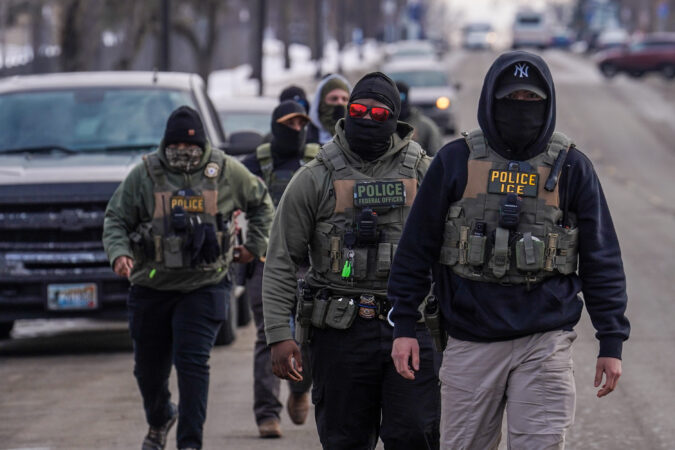
    A former instructor for U.S. Immigration and Customs Enforcement on Monday accused the agency of dramatically slashing training standards for new officers and lying to Congress about it as the Trump administration seeks to rapidly expand its mass deportation operation.

    Ryan Schwank, who resigned from his job at an ICE academy in Georgia last week, told congressional Democrats at a hearing that the agency eliminated 240 hours of “vital classes” from a mandatory 580-hour training program, including instruction about the legal boundaries for the use of force, how to safely handle firearms, and the proper way to detain and arrest immigrants.

    “Law enforcement is a deadly serious biz. It is not a place for shortcuts,” Schwank said. “Deficient training can and will get people killed. … ICE is lying to Congress and the American people about the steps it is taking to ensure that 12,000 officers can faithfully uphold the Constitution and perform their jobs.”

    Ahead of the hearing, Schwank provided a joint panel of House and Senate Democrats copies of internal ICE documents that he said shows the extent of the cuts.

    Schwank’s testimony comes two weeks after acting ICE director Todd M. Lyons testified in front of separate House and Senate committees amid growing public outrage over the aggressive tactics of ICE and other federal immigration officers. Two U.S. citizens were fatally shot by federal officers in Minneapolis last month.

    During his testimony in the House on Feb. 10, Lyons responded to questions about the agency’s training program by saying it has not reduced the “meat of the training” but has sought to reduce the time it takes to get officers into the field. He said training used to take place five days a week for eight hours a day but has been changed to six days a week for 12 hours per day.

    In a statement Monday, the Department of Homeland Security said ICE recruits receive 56 days of training before beginning their assignments, along with an average of 28 additional days of “on-the-job-training.” DHS said recruits are receiving the same total hours of training as they always have.

    “No training hours have been cut. Our officers receive extensive firearm training, are taught de-escalation tactics, and receive Fourth and Fifth Amendment comprehensive instruction,” said Lauren Bis, a spokesperson for the department.

    Schwank said that among the classes eliminated were 16 hours of firearms training. He also said that a two-hour class on the rights of protesters was shortened into 10 minutes of discussion during a lecture on “the concept of seizure.”

    Schwank was separately asked to review an internal memo, signed by Lyons, that said ICE officers are authorized to use administrative warrants, approved by senior ICE officials, to enter private residences. That marked a shift from the federal government’s long-standing position that officers must obtain judicial warrants signed by federal judges.

    Schwank said he was instructed to train the recruits on the policy but was told he could not talk about the information publicly or even take notes after reading the memo. The Washington Post and other news outlets reported on the memo last month.

    “ICE is teaching cadets to violate the Constitution and attempting to cloak it in secrecy by demanding I lie about it,” he said.

  • Armed man shot and killed at Mar-a-Lago was never interested in politics or guns, cousin says

    Armed man shot and killed at Mar-a-Lago was never interested in politics or guns, cousin says

    CAMERON, N.C. — The 21-year-old North Carolina man who entered a gate at President Donald Trump’s Mar-a-Lago resort with a shotgun before he was shot and killed worked as a golf course groundskeeper and liked to sketch.

    Austin Tucker Martin rarely, if ever, talked about politics, seemed afraid of guns, and came from a family of Trump supporters, according to Braeden Fields, a cousin who said the two grew up together.

    “I wouldn’t believe he would do something like this. It’s mind-blowing,” Fields said. “He wouldn’t even hurt an ant. He doesn’t even know how to use a gun.”

    Martin walked up to the secure perimeter at Mar-a-Lago early Sunday and went through a gate when it opened for employees to leave, a U.S. Secret Service spokesperson said Monday. Martin dropped a gas can and raised a shotgun at two Secret Service agents and a Palm Beach County sheriff’s deputy, who then opened fire “to neutralize the threat,” said Sheriff Ric Bradshaw.

    Trump, who often spends weekends at the Palm Beach, Fla., resort, was at the White House at the time.

    Investigators have not identified a motive. Trump faced two assassination attempts during the 2024 campaign, including one just a few miles from Mar-a-Lago when a man was spotted aiming a rifle through shrubbery while Trump was golfing.

    Following Sunday’s incident, Secret Service spokesperson Anthony Guglielmi said investigators believe Martin bought his shotgun while driving to Florida. Authorities said his family had recently reported him missing.

    Martin was from central North Carolina, where guns and hunting are a part of life, his cousin said. But whenever they’d go hunting or target shooting, Martin would never pick up a gun, Fields told the Associated Press on Sunday.

    He lived with his mother in a modest modular house down a rutted sandy road near the town of Cameron. No one answered the door Monday, and the large police presence from the day before was gone.

    Martin’s sister was just 21 when she was killed in a car accident in 2023, and he has an older brother who’s in the military, Fields said.

    For the past three years, Martin worked as a groundskeeper at Pine Needles Lodge & Golf Club.

    “It’s tragic. I feel for his family,” said Kelly Miller, president of the course in nearby Southern Pines. “It’s just unfortunate what transpired. It was totally unexpected.”

    Martin last year started a business to sell pen drawings he made, according to state records. A website matching the company name features illustrations of golf courses, buildings, and ancient Roman architecture.

    Politics didn’t seem to be among his interests, his cousin said

    “We are big Trump supporters, all of us. Everybody,” Fields said, but his cousin was “real quiet, never really talked about anything.”

  • Police in Britain arrest former ambassador Mandelson in probe into Epstein ties

    Police in Britain arrest former ambassador Mandelson in probe into Epstein ties

    LONDON — British police on Monday arrested Peter Mandelson, a former U.K. ambassador to the United States, in a misconduct probe stemming from his ties to the late Jeffrey Epstein. It came days after a friendship with Epstein landed the former Prince Andrew in police custody.

    Both men are suspected of improperly passing U.K. government information to the disgraced U.S. financier, and the high-profile British arrests are some of the most dramatic fallout from the trove of more than 3 million pages of Epstein-related documents released last month by the U.S. Justice Department.

    London’s Metropolitan Police force said “officers have arrested a 72-year-old man on suspicion of misconduct in public office” at an address in north London. He was taken to a police station for questioning.

    The man was not named, in keeping with British police practice, but the suspect in the case previously was identified as the former diplomat, who is 72. Mandelson was filmed being led from his London home to a car by plainclothes officers on Monday afternoon.

    Under U.K. law, police can hold a suspect without charge for up to 24 hours. This can be extended to a maximum of 96 hours. Mandelson could be charged, released unconditionally, or released while investigations continue.

    Claims of leaked government information

    Police are investigating Mandelson over claims he passed sensitive government information to Epstein a decade and a half ago. He does not face allegations of sexual misconduct.

    His arrest came four days after Andrew Mountbatten-Windsor, the former Prince Andrew, was arrested in a separate case on suspicion of a similar offense related to his friendship with Epstein. Andrew was released after 11 hours in custody while the police investigation continues.

    Mandelson served in senior government roles under previous Labour governments and was U.K. ambassador to Washington until Prime Minister Keir Starmer fired him in September after emails were published showing that he maintained a friendship with Epstein after the financier’s 2008 conviction for sex offenses involving a minor.

    The files released in January contained more explosive revelations about Mandelson’s ties to Epstein, whom he once called “my best pal.”

    Messages suggest that Mandelson passed on sensitive — and potentially market-moving — government information to Epstein in 2009, when Mandelson was a senior minister in the British government. That includes an internal government report discussing ways the U.K. could raise money after the 2008 global financial crisis, including by selling off government assets. Mandelson also appears to have told Epstein he would lobby other members of the government to reduce a tax on bankers’ bonuses.

    British police launched a criminal probe earlier this month and searched Mandelson’s two houses in London and western England.

    The decision to appoint Mandelson nearly cost Starmer his job earlier this month, as questions swirled around his judgment about someone who has flirted with controversy during a decades-long political career.

    Though he acknowledged he made a mistake and apologized to victims of Epstein, Starmer’s position remains precarious. His future may rest on the release of files connected to Mandelson’s appointment. The government has pledged to begin releasing those documents in early March, though the timeline may be complicated by his arrest.

    Mandelson a contentious figure

    Mandelson has been a major, if contentious, figure in the center-left Labour Party for decades. He is a skilled — critics say ruthless — political operator whose mastery of political intrigue earned him the nickname “Prince of Darkness.”

    The grandson of former Labour Cabinet minister Herbert Morrison, he was an architect of the party’s return to power in 1997 as centrist, modernizing “New Labour” under Prime Minister Tony Blair.

    Mandelson served in senior government posts under Blair between 1997 and 2001, and under Prime Minister Gordon Brown from 2008 to 2010. In between, he was the European Union’s trade commissioner. Brown has been particularly angered by the revelations and has been helping police with their inquiries.

    Mandelson twice had to resign from government during the Blair administration over allegations of financial or ethical impropriety, acknowledging mistakes but denying wrongdoing.

    He later returned to government and was back on the political front line when Starmer named him ambassador to Washington at the start of U.S. President Donald Trump’s second term. Mandelson’s trade expertise and comfort around the ultra-rich were considered major assets. He helped secure a trade deal in May that spared Britain some of the tariffs Trump has imposed on countries around the world.

    The status of the deal is now up in the air after Trump announced a new set of global tariffs in the wake of a U.S. Supreme Court decision quashing his previous import tax order.

    Earlier this month Mandelson resigned from the House of Lords, Parliament’s upper chamber, to which he was appointed for life in 2008. But he still has the title — Lord Mandelson — that went with it.

  • France moves to bar U.S. Ambassador Charles Kushner from direct government access

    France moves to bar U.S. Ambassador Charles Kushner from direct government access

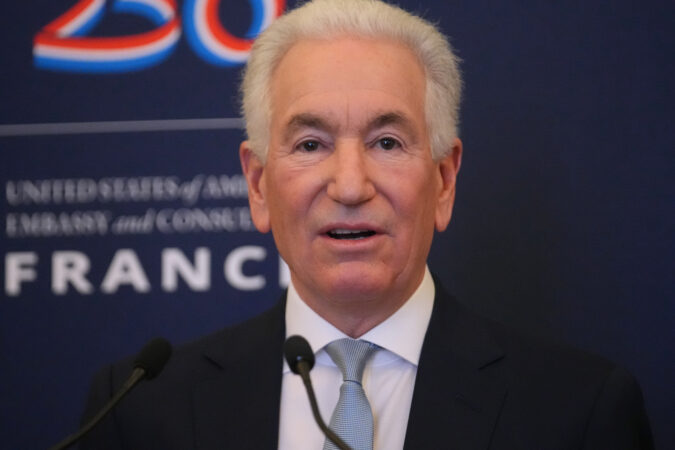
    PARIS — France’s top diplomat Monday requested that U.S. Ambassador Charles Kushner no longer be allowed direct access to members of the French government after he skipped a meeting to discuss comments by the Trump administration over the beating death of a far-right activist.

    French authorities had summoned Kushner to the Quai d’Orsay, which houses the Foreign Affairs Ministry, on Monday evening but he did not show up, according to diplomatic sources.

    Jean-Noel Barrot, the foreign affairs minister, moved to restrict Kushner’s access “in light of this apparent misunderstanding of the basic expectations of the mission of an ambassador, who has the honor of representing his country.”

    The ministry, however, left the door open for reconciliation.

    “It remains, of course, possible for Ambassador Charles Kushner to carry out his duties and present himself at the Quai d’Orsay, so that we may hold the diplomatic discussions needed to smooth over the irritants that can inevitably arise in a friendship spanning 250 years,” it said.

    Kushner, who is the father of President Donald Trump’s son-in-law and special envoy Jared Kushner, had been summoned following a statement by the State Department’s Counterterrorism Bureau. It posted on X that “reports, corroborated by the French Minister of the Interior, that Quentin Deranque was killed by left-wing militants, should concern us all.” The U.S. Embassy had posted that statement on social media.

    Deranque, a far-right activist, died of brain injuries this month from a beating in the French city of Lyon. He was attacked during a fight on the margins of a student meeting where a far-left lawmaker was a keynote speaker.

    His killing highlighted a climate of deep political tension ahead of next year’s presidential vote.

    “We reject any instrumentalization of this tragedy, which has plunged a French family into mourning, for political ends,” Barrot said over the weekend. “We have no lessons to learn, particularly on the issue of violence, from the international reactionary movement.”

    The State Department said in its post that “violent radical leftism is on the rise and its role in Quentin Deranque’s death demonstrates the threat it poses to public safety. We will continue to monitor the situation and expect to see the perpetrators of violence brought to justice.”

    Kushner was summoned in August over his letter to French President Emmanuel Macron alleging the country did not do enough to combat antisemitism. France’s foreign officials met with a representative of the U.S. ambassador since the diplomat did not show up for that meeting.

  • How Trump will use his State of the Union address to sell skeptical midterm voters on his plans

    How Trump will use his State of the Union address to sell skeptical midterm voters on his plans

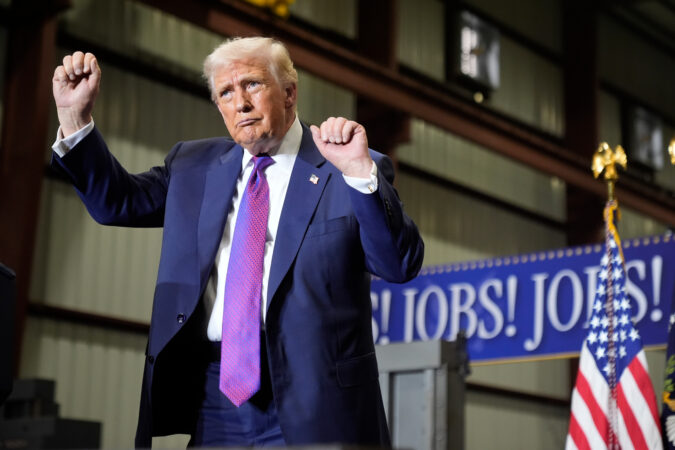
    WASHINGTON — President Donald Trump’s State of the Union address on Tuesday is likely to be a test run of the message Republicans will give to voters in November’s elections for control of the House and the Senate.

    The president and his party appear vulnerable, with polls showing much of America distrusts how Trump has managed the government in his first year back in office. In addition, the Supreme Court last week struck down one of the chief levers of his economic and foreign policy by ruling he lacked the power to impose many of his sweeping tariffs.

    Though Trump is expected to focus on domestic issues, his intensifying threats about launching military strikes on Iran over its nuclear program cast a shadow over the address.

    Here are a few things to watch as Trump tries to make his case:

    Economy, immigration are no longer strengths for Trump

    Trump swept back into the White House on promises to bring down prices and restore order to immigration in America. But on both issues, public sentiment has turned against him.

    Only 39% of U.S. adults approve of his economic leadership and just 38% support him on immigration, according to the latest Associated Press-NORC Center for Public Affairs Research survey. Those low numbers show the country is still fretting about the costs of groceries, housing, and utilities, a problem compounded by Trump’s whipsawing use of tariffs. They also show how the public was disturbed by videos of violent clashes with protesters, including two U.S. citizens killed by federal agents.

    Since his party passed a massive tax cut bill last year, Trump has yet to unveil major new policy ideas on the economy. In recent speeches, he has largely offered the public reruns about his tax cuts, plans to reduce mortgage rates, and a new government website for buying prescription drugs.

    The Supreme Court ruling against many of Trump’s far-reaching global tariffs on Friday and the president vowing to use other means to forge ahead with import taxes will only prolong the economic turmoil over trade and prices.

    “I think it makes it even more important that the speech really focus on the economy,” said Alex Conant, a Republican strategist.

    Conant said between the tariff ruling and a Commerce Department report on Friday that showed U.S. economic growth slowed in the final three months of last year, “the president needs to bolster his economic message.”

    Blame everything on Biden

    The administration is trying to make the case that despite Trump’s rewiring of global trade and tax cuts, the economy is still struggling because of choices made in 2021 and 2022 by his Democratic predecessor Joe Biden. But Trump is also seeking to take credit for positive signs in the current economy, such as recent stock market gains.

    “Watch the State of the Union. We’re going to be talking about the economy. We inherited a mess,” Trump said at the White House on Wednesday.

    Of course, Trump made the same kind of argument in his address to a joint session of Congress last year, invoking the Biden name 13 times.

    Trump’s focus on foreign policy has yet to resonate politically

    Despite Trump’s America First credo, his aggressive approach abroad over the past year has sparked concerns among some of his supporters about whether he should spend more time focusing on voters at home.

    Trump, who’s made it clear he covets a Nobel Peace Prize, is likely to use the speech to remind Americans of his attempts to try to broker peace accords in global conflicts.

    But in many respects, the president hasn’t been extending olive branches. Within the past year, his administration has launched strikes in Yemen, Nigeria, and Iran, along with an ongoing campaign of lethal military strikes on alleged drug-trafficking vessels near South America. Trump also shocked the world in January with a surprise raid to capture Venezuela’s then-leader, Nicolás Maduro, and floated the idea of using force to seize Greenland.

    In recent weeks, as he pressures Iran, Trump has bolstered the U.S. military’s presence in the Middle East. But he has yet to make a clear case to voters about what his actions overseas mean for their lives.

    He might even minimize foreign policy in his State of the Union despite his belief that it’s been a major success.

    “For as much as foreign policy has dominated his last year in office, this speech will mostly focus on the economy,” Conant predicted.

    Vice President JD Vance offered a similar prediction, saying in an interview Saturday on Fox News Channel that in the speech, “You’re going to hear a lot about the importance of bringing jobs back into our country, of reshoring manufacturing, of all these great factories that are being built.”

    He said Trump would also speak about lowering energy costs.

    Trump has made the State of the Union his own

    The State of the Union used to be about recapping accomplishments and seeking to unite the country, but it increasingly reflects divisions in society.

    “What you’re going to expect is some version of a campaign speech in which the Democrats are the villains, the Republicans he likes are the heroes, and he is the savior not only of the nation but of the globe,” said Kathleen Hall Jamieson, a communications professor at the University of Pennsylvania.

    Trump supporters might cherish the moment in 2020 when the president midspeech reunited a military family. He also bestowed the Presidential Medal of Freedom on Rush Limbaugh, the conservative radio host and author who died in 2021. But that moment turned off Democrats who saw Limbaugh as a destructive figure in political media.

    Reaction in the room could matter

    Trump is delivering the speech, but his audience sitting in the House chamber has a big role, too. When Trump delivered his 2020 State of the Union, then-House Speaker Nancy Pelosi theatrically ripped up a copy of the speech afterward, overshadowing much of what Trump said.

    House Democratic leader Hakeem Jeffries of New York has said in a letter to colleagues “it is important to have a strong, determined and dignified Democratic presence in the chamber,” indicating some members might choose not to attend in protest to Trump. But there’s also the possibility of Democrats razzing Trump as Rep. Al Green (D., Texas) did in 2025, leading him to be removed from the chamber.

    If Trump in his speech lays out a fuller case for why he’s using other mechanisms in federal law to continue his tariffs, Conant said it’ll be interesting to see the reaction from lawmakers.

    “I think that any House Republicans that don’t applaud his tariffs are going to be featured prominently on the telecast,” he said.

    State of the Unions have short shelf lives

    While some presidential phrases endure, much of the rhetoric in State of the Unions is forgettable. And with Trump — who’s known for veering off-script — there’s a good chance a stray comment or a social media post could step on his message.

    Matt Latimer, a former Republican speechwriter for then-President George W. Bush, noted in an email that people hear the president talk all of the time, so the State of the Union has lost much of its luster.

    A State of the Union “only matters in moments when the country is undergoing a great trauma — a war, an attack, a global crisis — and a president and Congress want to speak in a (mostly) united voice to the country,” he said. “That’s not what we are experiencing now.”

  • Panama orders occupation of 2 key canal ports after Supreme Court ruling

    Panama orders occupation of 2 key canal ports after Supreme Court ruling

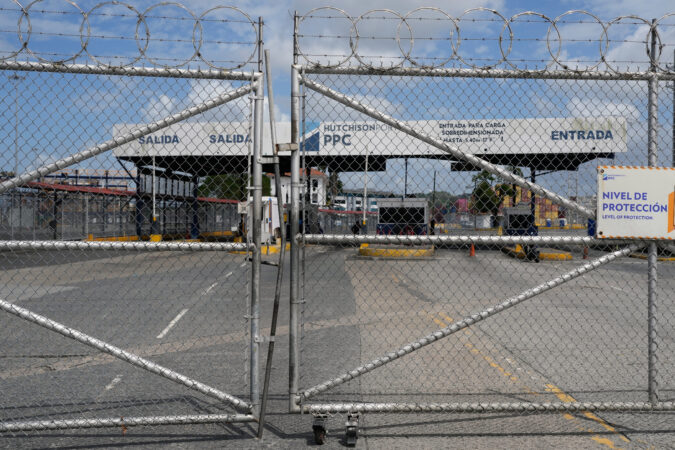
    PANAMA CITY — The Panamanian government on Monday issued a decree ordering the occupation of two ports at the entrances of the Panama Canal, a move triggered by a final Supreme Court ruling that declared the operating concession held by Hong Kong-based company CK Hutchison unconstitutional.

    The decree authorizes the Panama Maritime Authority to occupy the ports for “reasons of urgent social interest.” The occupation includes all movable property within or outside the Balboa and Cristóbal terminals, specifically covering cranes, vehicles, computer systems, and software.

    The saga surrounding the two Panamanian ports is part of a broader rivalry between the United States and China, in which the Central American country became caught in the middle after U.S. President Donald Trump accused China last year of “running the Panama Canal.”

    CK Hutchison was slated to sell the two ports to a consortium that includes U.S. investment firm BlackRock, but this prompted swift intervention from the Chinese government, which halted the deal.

    In January, Panama’s Supreme Court struck down the law approving the concession contract for Panama Ports Company, or PPC, a subsidiary of CK Hutchison. The ruling also invalidated an extension granted in 2021, stripping the port operations of any legal basis.

    PPC has operated these terminals since 1997, when the state awarded it the concession to manage the ports located at the Pacific and Atlantic entrances to the Panama Canal.

    Panama’s government announced days ago that it will guarantee the continuity of port operations and job stability, and that APM Terminals, a subsidiary of the Danish group A.P. Moller-Maersk, would temporarily assume the administration of the terminals while a new contract is awarded.

    Meanwhile, CK Hutchison Holdings started arbitration proceedings against Panama under the rules of the International Chamber of Commerce. It’s unclear what the impact of the proceedings would be and how long they could take. It also threatened to sue APM Terminals, if it operates the concession. The Danish group responded that it’s not a party to the legal proceedings.

    A PPC spokesperson told local media last week that the company was seeking an agreement with the Panamanian government to continue operating.

  • State Department orders nonessential U.S. diplomats to leave Lebanon as tensions with Iran soar

    State Department orders nonessential U.S. diplomats to leave Lebanon as tensions with Iran soar

    WASHINGTON — The United States has ordered nonessential diplomats and their family members at the U.S. Embassy in Beirut to leave Lebanon, the State Department said Monday, as tensions over Iran rise with the threat of a potentially imminent military strike.

    The department said in an updated travel alert for U.S. citizens in Lebanon that it “ordered the departure of non-emergency U.S. government personnel and family members of government personnel due to the security situation in Beirut.”

    The alert, which was formally released several hours after word began to circulate about the move, said U.S. personnel remaining in Lebanon would have their in-country travel restricted.

    A department official said earlier that a continuous assessment of the regional security environment determined it was “prudent” to draw down the U.S. Embassy Beirut’s footprint so that only essential personnel remain at their posts.

    The official, who spoke on the condition of anonymity before the move was formally announced, said that it is a temporary measure and that the embassy will remain operational.

    Lebanon has been the site of numerous Iran-related retaliatory attacks against U.S. facilities, interests, and personnel for decades given Tehran’s support for and influence with the Hezbollah militant group, which is held responsible for the deadly bombings of the Marine barracks in Beirut in 1983 and an embassy annex in 1984.

    As such, changes in the staffing status of the embassy in Beirut have often been seen as a bellwether for potential U.S. or Israeli military action in the region, particularly against Iran. A similar ordered departure was imposed for Beirut and other embassies in the region, including in Iraq, shortly before President Donald Trump ordered military strikes against Iranian nuclear facilities last June.

    It was unclear if other American embassies in the Middle East would implement similar orders.

    Tensions have escalated between the U.S. and Iran as Trump has built up the largest military presence in the Middle East in decades and repeatedly threatened action if Tehran does not negotiate a deal to constrain its nuclear program. A second aircraft carrier is heading to the region to join a surge of other American warships and aircraft, offering the Republican president several options for a potential strike even as talks may continue.

    Oman’s foreign minister, Badr al-Busaidi, said the U.S. and Iran plan to hold their next round of nuclear talks Thursday in Geneva. A U.S. official, who was not authorized to comment publicly and spoke on the condition of anonymity, confirmed the meeting.

    Iran’s top diplomat, Abbas Araghchi, told CBS on Sunday that he expected to meet U.S. envoy Steve Witkoff then and said a “good chance” remained for a diplomatic solution on the nuclear issue.

    Araghchi has said a proposed deal would be ready to share within days, and he told CBS that Iran was still working on it.

    Asked Friday whether the U.S. could take limited military action as the countries negotiate, Trump said, “I guess I can say I am considering that.” He also told reporters later that Iran “better negotiate a fair deal.”

    Indirect talks between the longtime adversaries in recent weeks have made little visible progress. Beyond the nuclear program, Iran has refused to discuss wider U.S. and Israeli demands that it scale back its missile program and sever ties to armed groups.

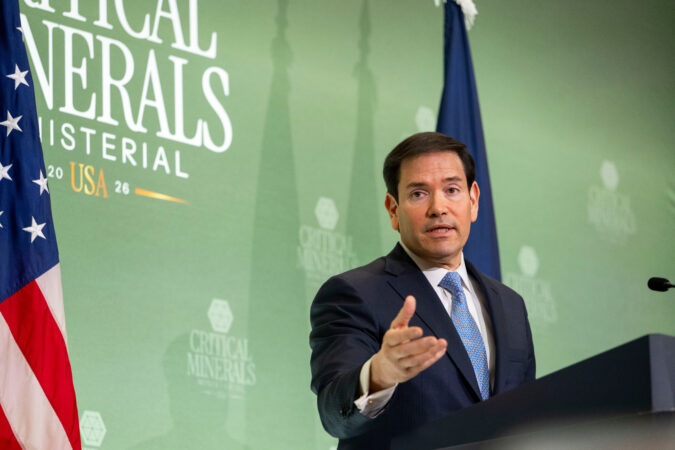
    A second State Department official, also speaking on the condition of anonymity to discuss plans that had not been formally announced, said Secretary of State Marco Rubio may delay his intended visit to Israel this weekend.

  • 4 years into Russia’s full-scale invasion of Ukraine, a look at the war by the numbers

    4 years into Russia’s full-scale invasion of Ukraine, a look at the war by the numbers

    Russia’s invasion of Ukraine four years ago launched Europe’s biggest conflict since World War II, causing immense suffering for civilians and harrowing ordeals for soldiers while rewriting the post-Cold War security order.

    The fighting entered its fifth year Tuesday, and it shows no signs of stopping anytime soon.

    The U.S. has brokered talks with delegations from Moscow and Kyiv as part of the Trump administration’s yearlong push for peace. But reconciling key differences, such as the future of Russian-occupied Ukrainian land and postwar security for Ukraine, has thwarted progress.

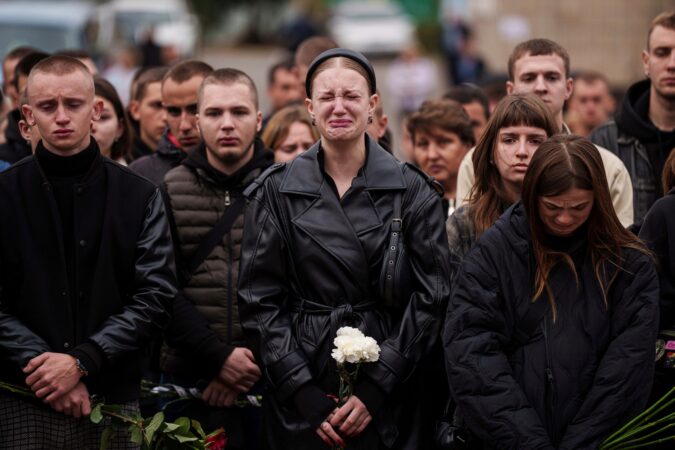
    Meanwhile, thousands of each countries’ troops have died on the battlefield, and Ukrainian civilians have been battered by Russian aerial strikes that have brought years of power outages and water cuts.

    Here’s a look at the conflict, by the numbers, since the full-scale invasion on Feb. 24, 2022.

    1.8 million

    The upper end of the estimated number of soldiers killed, wounded, or missing on both sides, according to a report last month by the Center for Strategic and International Studies, a think tank.

    It estimated that Russia has suffered 1.2 million casualties, including up to 325,000 troop deaths, between February 2022 and December 2025 — what it said was the largest number of troop deaths for any major power in any conflict since World War II.

    Russia has not released figures on battlefield deaths since January 2023, when it said more than 80 soldiers were killed in a Ukrainian strike, bringing the total military deaths Moscow has confirmed to just over 6,000.

    CSIS estimated that Ukraine has seen 500,000 to 600,000 military casualties, including up to 140,000 deaths.

    Ukrainian President Volodymyr Zelensky said earlier this month that 55,000 Ukrainian troops have died in the war. Many are missing, he said.

    Neither Moscow nor Kyiv gives timely data on military losses. Independent verification is not possible.

    14,999

    The U.N. Human Rights Monitoring Mission’s count for civilian deaths in Ukraine since Russia’s all-out invasion, though it says that is likely an underestimate. More than 40,600 civilians were injured over the same period, it said in a December report.

    The war has killed at least 763 children, according to the U.N.

    Last year was the deadliest for civilians in Ukraine since 2022. The conflict killed 2,514 civilians and injured 12,142 in the country in 2025 — a 31% increase in civilian casualties over 2024, it said.

    19.4%

    The percentage of Ukrainian land occupied by Russia, according to the Institute for the Study of War.

    Over the past year, Russia has gained just 0.79% of Ukraine’s territory in the grinding war of attrition, the Washington-based think tank said in calculations provided earlier this month to the Associated Press, underscoring the little progress Moscow’s forces have made despite huge costs in troops and armor.

    Before Russia’s all-out invasion, it controlled nearly 7% of Ukraine, including Crimea and parts of the Donetsk and Luhansk regions in the east, as Moscow-backed separatists fought the Ukrainian army, according to Ukrainian officials and Western analysts.

    13%

    The percentage drop in foreign military aid to Kyiv last year compared with the annual average between 2022 and 2024, according to Germany’s Kiel Institute, which tracks assistance to Kyiv.

    U.S. President Donald Trump stopped sending American weapons paid for by the U.S. to Ukraine after he took office just over a year ago. European countries, striving to make up the difference, increased their military aid last year by 67% compared with the 2022-2024 period, the institute said in a report this month.

    Foreign humanitarian and financial aid to Ukraine fell by 5% last year in comparison with the average in the previous three years, it said.

    5.9 million

    The number of Ukrainian civilians who have left their country.

    Some 5.3 million of those people have found refuge in Europe, according to a report this month from the U.N. office in Ukraine.

    Additionally, around 3.7 million Ukrainians forced out of their homes have moved elsewhere within the country, the U.N. said in December.

    Ukraine’s prewar population was more than 40 million.

    2,881

    The number of Russian attacks that affected the provision of medical care in Ukraine since the full-scale invasion, according to a report from the World Health Organization on Monday.

    There was a nearly 20% increase in such attacks last year compared with 2024, the U.N. agency said.

    A report earlier in the month from the WHO documented at least 2,347 strikes on healthcare facilities, in addition to others that damaged vehicles and the storage of medical supplies.