Category: Associated Press

  • Israel returns Palestinian bodies, marking last exchange between Israel and Hamas

    Israel returns Palestinian bodies, marking last exchange between Israel and Hamas

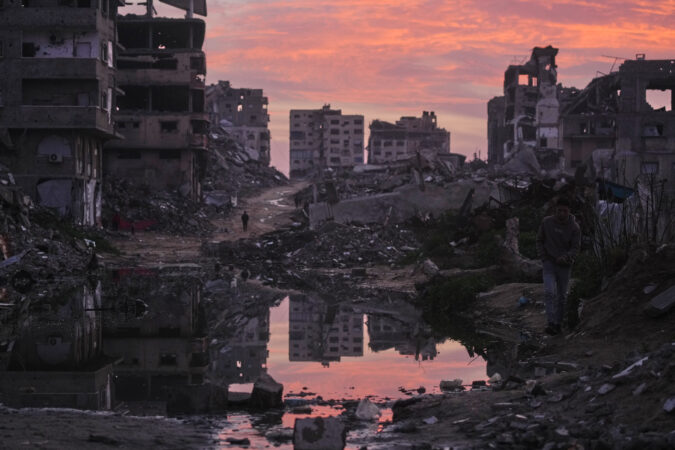
    DEIR AL-BALAH, Gaza Strip — Israel turned over the bodies of 15 Palestinians on Thursday, just days after recovering the remains of the last Israeli hostage, a Gaza Health Ministry official said.

    It marks the last hostage-detainee exchange between Israel and Hamas carried out as part of the first phase of the U.S.-brokered ceasefire reached in October.

    The Red Cross said that it helped facilitate the return of the bodies. They were taken to Shifa Hospital in Gaza City, health ministry spokeperson Zaher al-Wahidi said.

    The return of all remaining hostages, living or dead, had been a key part of the first phase in the ceasefire that paused the war.

    Israel agreed to return 15 Palestinian bodies for each hostage recovered, according to the ceasefire terms. It’s unclear if the bodies released Thursday were of Palestinian detainees who died in Israeli custody or bodies taken from Gaza by Israeli troops during the war.

    Israel has released roughly 2,000 Palestinian prisoners under the ceasefire deal, many of whom were seized by Israeli troops during the more than two-year war and held without being charged. It also has released the bodies of 360 Palestinians back to Gaza, where officials have struggled to identify them.

    The Gaza health ministry, part of the Hamas-run government, has posted photos of the deceased for families to identify. Of the bodies handed back by Israel, about 100 have been identified by families, al-Wahidi said.

    On Monday, Israel announced that it found and identified the remains of the last Israeli hostage, police officer Ran Gvili, following an extensive search at a cemetery in northern Gaza.

    The attack by Hamas-led militants on Israel on Oct. 7, 2023, which launched the war, killed about 1,200 people and saw 251 taken hostage. Gvili, a 24-year-old police officer known affectionately as “Rani,” was killed while fighting Hamas militants.

    The return of his body closed a painful chapter for the country and cleared the way for the next and more challenging phase of the ceasefire, which calls for deploying an international security force, disarming Hamas, pulling back Israeli soldiers and rebuilding Gaza.

    Deaths continue in Gaza

    While U.S. envoy Steve Witkoff announced the launch of the second phase of the ceasefire deal earlier this month, Israeli fire and strikes continue to kill Palestinians across Gaza almost daily.

    Israeli fire killed two Palestinians on Thursday in southern Gaza’s Khan Younis area, according to Nasser hospital, where the bodies were taken. Health officials said that the two men were killed in areas that aren’t Israeli-controlled.

    Another Israeli strike in central Gaza killed one Palestinian and wounded others, according to Al-Aqsa martyrs hospital, where the casualties were taken.

    Israel’s military said that it carried out a “precise strike” on Thursday that targeted a suspect planning to attack its troops in the southern Gaza Strip.

    The Gaza Health Ministry said that 492 Palestinians have been killed since the ceasefire. The ministry doesn’t distinguish between civilians and combatants in its figures. The ministry maintains detailed casualty records that are seen as generally reliable by U.N. agencies and independent experts.

    The Israeli military has said that some of those killed in recent months were along the ceasefire line that splits Israeli-held areas and most of Gaza’s Palestinian population, and that it has targeted those posing a threat to its troops.

    Rafah border crossing

    For Palestinians separated from their families by the war and the tens of thousands of people outside Gaza seeking to return home, the reopening of the Rafah crossing along the border with Egypt can’t come soon enough.

    The crossing is expected to reopen soon, Israeli officials have said, but how many people will be allowed to enter and leave Gaza remains unclear.

    Preparations are underway to allow the departure of a limited number of medical evacuees who were wounded in the war and need to travel abroad for medical care.

    But Israeli Prime Minister Benjamin Netanyahu has said that crossing won’t be open to goods for now. The crossing, Gaza’s main gateway to the outside world, has been largely closed since May 2024.
  • EU lists Iran’s paramilitary Revolutionary Guard as terrorist organization over protest crackdown

    EU lists Iran’s paramilitary Revolutionary Guard as terrorist organization over protest crackdown

    BRUSSELS — The European Union agreed Thursday to list Iran’s paramilitary Revolutionary Guard as a terrorist organization over Tehran’s bloody crackdown on nationwide protests, the bloc’s top diplomat said, in a largely symbolic move that adds to international pressures on the Islamic Republic.

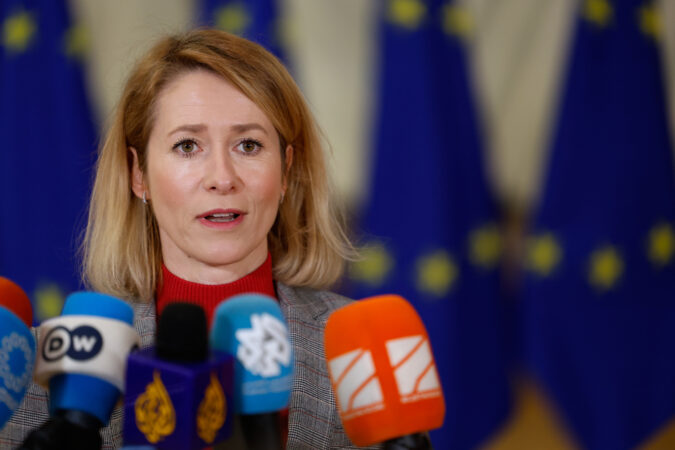
    The EU’s foreign policy chief, Kaja Kallas, said foreign ministers in the 27-nation bloc unanimously agreed on the designation, which she said will put the regime “on the same footing” with al-Qaeda, Hamas and the Islamic State group.

    “Those who operate through terror must be treated as terrorists,” Kallas said.

    Meanwhile, Iran faces the threat of military action from President Donald Trump in response to the killing of peaceful demonstrators and over possible mass executions. The American military has moved the USS Abraham Lincoln and several guided-missile destroyers into the Mideast. It remains unclear whether Trump will decide to use force.

    Activists say the crackdown has killed at least 6,443 people. “Any regime that kills thousands of its own people is working toward its own demise,” Kallas said.

    For its part, Iran has said it could launch a preemptive strike or broadly target the Mideast, including American military bases in the region and Israel.

    Iran issued a warning to ships at sea Thursday that it planned to run a drill next week that would include live firing in the Strait of Hormuz, potentially disrupting traffic through a waterway that sees 20% of all the world’s oil pass through it.

    Other countries, including the U.S. and Canada, have designated the Guard as a terrorist organization.

    Terrorist group label a ‘symbolic act’

    Iranian Foreign Minister Abbas Araghchi dismissed the designation as a “PR stunt” and said Europe would be affected if energy prices surge as a result of the sanctions.

    “Several countries are presently attempting to avert the eruption of all-out war in our region. None of them are European,” he wrote on X.

    France originally objected to listing the Revolutionary Guard as a terrorist organization over fears it would endanger French citizens detained in Iran, as well as diplomatic missions, but the country reversed course. French Foreign Minister Jean-Noël Barrot told the Foreign Affairs Council on Thursday in Brussels that France supports more sanctions on Iran and the listing “because there can be no impunity for the crimes committed.”

    “In Iran, the unbearable repression that has engulfed the peaceful revolt of the Iranian people cannot go unanswered,” he said.

    Edouard Gergondet, an lawyer focused on sanctions with the firm Mayer Brown, said the Revolutionary Guard will be notified of the listing and given the opportunity to comment before the measure is formally adopted.

    Kristina Kausch, a deputy director at the German Marshall Fund, said the listing is “a symbolic act” showing that for the EU “the dialogue path hasn’t led anywhere, and now it’s about isolation and containment as a priority.”

    “The designation of a state military arm, of an official pillar of the Iranian state, as a terrorist organization, is one step short of cutting diplomatic ties,” she said.

    The EU on Thursday also sanctioned 15 top officials and six organizations in Iran, including those involved in monitoring online content, as the country remains gripped by a three-week internet blackout by authorities.

    The sanctions mean that affected officials and organizations will have their assets frozen and their travel to Europe banned, according to Barrot.

    The Revolutionary Guard holds vast business interest across Iran, and sanctions could allow its assets in Europe to be seized.

    Iran already struggles under the weight of multiple international sanctions from countries including the U.S. and Britain.

    Iran’s rial currency fell to a record low of 1.6 million to $1 on Thursday. Economic woes sparked the protests, which broadened into a challenge to the theocracy before the crackdown.

    Guard emerged from 1979 revolution

    The Guard emerged from Iran’s 1979 Islamic Revolution as a force meant to protect its Shiite cleric-overseen government and was later enshrined in its constitution. It operated in parallel with the country’s regular armed forces, growing in prominence and power during a long and ruinous war with Iraq in the 1980s. Though it faced possible disbandment after the war, Supreme Leader Ayatollah Ali Khamenei granted it powers to expand into private enterprise, allowing it to thrive.

    The Guard’s Basij force likely was key in putting down the demonstrations, starting in earnest from Jan. 8, when authorities cut off the internet and international telephone calls for the nation of 85 million people. Videos that have come out of Iran via Starlink satellite dishes and other means show men likely belonging to its forces shooting and beating protesters.

    Iranian men once reaching the age of 18 are required to do up to two years of military service, and many find themselves conscripted into the Guard despite their own politics.

    Strait of Hormuz drill planned

    In other developments, a notice to mariners sent Thursday by radio warned that Iran planned to conduct “naval shooting” in the Strait of Hormuz on Sunday and Monday. Two Pakistani security officials, speaking on condition of anonymity because they were not authorized to talk to journalists, also confirmed the warning had been sent.

    Iran did not immediately acknowledge the drill. The hard-line Keyhan newspaper raised the specter of Tehran attempting to close the strait by force.

    “Today, Iran and its allies have their finger on a trigger that, at the first enemy mistake, will sever the world’s energy artery in the Strait of Hormuz and bury the hollow prestige of billion-dollar Yankee warships in the depths of the Persian Gulf,” the newspaper said.

    Such a move would likely invite U.S. military intervention. American military officials did not immediately respond to a request for comment.

    Elsewhere, Iranian opposition leader Mir Hossein Mousavi, whose Green Movement rose to challenge Iran’s disputed 2009 presidential election, again called for a constitutional referendum to change the country’s government. A previous call failed to take hold.

    WHO says doctors detained, health services attacked

    In other developments, at least five doctors have been detained and multiple health workers assaulted while treating injured patients in Iran since the protests began, the World Health Organization said Thursday.

    The statement from WHO offered some of the first information to emerge about the country’s medical system as journalists and human rights organizations struggle to assess the toll of the crackdown.

    WHO Director General Tedros Adhanom Ghebreyesus wrote on X that a hospital in the western city of Ilam came under attack, and authorities deployed tear gas inside a hospital in Tehran. At least 50 paramedics were hurt at 10 emergency medical posts and over 200 ambulances were damaged, he said.

    The U.S.-based Human Rights Activists News Agency reported that the violence in Iran has killed at least 6,443 people in recent weeks, with many more feared dead. Its count included at least 6,058 protesters, 214 government-affiliated forces, 117 children and 54 civilians who were not demonstrating. More than 47,208 have been arrested, it added.

    The group verifies each death and arrest with a network of activists on the ground, and it has been accurate in multiple rounds of previous unrest in Iran. The communication cutoff imposed by Iranian authorities has slowed the full scale of the crackdown from being revealed, and The Associated Press has been unable to independently assess the death toll.

    Iran’s government as of Jan. 21 put the death toll at a far lower 3,117, saying 2,427 were civilians and security forces and labeled the rest “terrorists.” In the past, Iran’s theocracy has undercounted or not reported fatalities from unrest.

    That death toll exceeds that of any other round of protest or unrest in Iran in decades and recalls the chaos surrounding the 1979 Islamic Revolution.

  • Trump’s wide ambitions for Board of Peace sparks new support for the United Nations

    Trump’s wide ambitions for Board of Peace sparks new support for the United Nations

    UNITED NATIONS — President Donald Trump’s latest attempt to sidestep the United Nations through his new Board of Peace appears to have inadvertently backfired after major world powers rejected U.S. aspirations for it to have a larger international mandate beyond the Gaza ceasefire and recommitted their support for the over 80-year-old global institution.

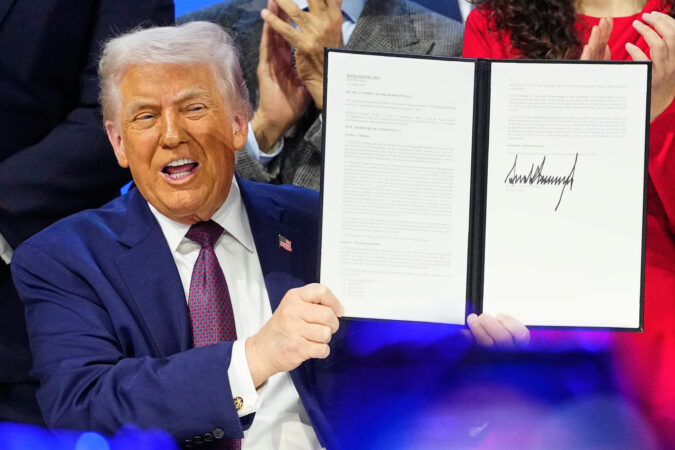
    The board to be chaired by Trump was originally envisioned as a small group of world leaders overseeing his plan for Gaza’s future. But the Republican president’s ambitions have expanded to envisioning the board as a mediator of worldwide conflicts, a not very subtle attempt to eclipse the Security Council, which is charged with ensuring international peace and security.

    The board’s charter also caused some dismay by stating Trump will lead it until he resigns, with veto power over its actions and membership.

    Secretary of State Marco Rubio tried to ease concerns by saying the board’s focus right now is only on the next phases of the Gaza ceasefire plan.

    “This is not a replacement for the U.N., but the U.N. has served very little purpose in the case of Gaza other than the food assistance,” Rubio said at a congressional hearing Wednesday.

    But Trump’s promotion of a broadened mandate and his floating of an idea that the Board of Peace “might” replace the U.N. have put off major players and been dismissed by U.N. officials.

    “In my opinion, the basic responsibility for international peace and security lies with U.N., lies with the Security Council,” Secretary General Antonio Guterres said Thursday. “Only the Security Council can adopt decisions binding on all, and no other body or other coalition can legally be required to have all member states to comply with decisions on peace and security.”

    In Security Council statements, public speeches and behind closed doors, U.S. allies and adversaries have dismissed Trump’s latest plan to overturn the post-World War II international order with what he describes as a “bold new approach to resolving global conflict.”

    “The U.S. rollout of the much broader Board of Peace charter turned the whole exercise into a liability,” according to the International Crisis Group’s Richard Gowan, a U.N. watcher and program director. “Countries that wanted to sign on to help Gaza saw the board turning into a Trump fan club. That was not appealing.”

    “If Trump had kept the focus of the board solely on Gaza, more states, including some more Europeans, would have signed up,” he said.

    Key Security Council members haven’t signed on

    The four other veto-wielding members of the Security Council — China, France, Russia, and the United Kingdom — have refused or have not indicated whether they would join Trump’s board, as have economic powers such as Japan and Germany.

    Letters sent this month inviting various world leaders to be “founding members” of the Board of Peace coincided with Trump’s vow to take over Greenland, a semiautonomous territory of NATO ally Denmark, and punish some European countries that resisted. That was met with stark rebuttal from Canada, Denmark and others, who said Trump’s demand threatened to upend an alliance that has been among the West’s most unshakeable.

    Shortly after, Trump pulled a dramatic reversal on Greenland, saying he had agreed with the NATO secretary-general on a “framework of a future deal” on Arctic security.

    Amid the diplomatic chaos, British Prime Minister Keir Starmer, who at the time had not responded to Trump’s Board of Peace invitation, met with Guterres in London and reiterated “the UK’s enduring support for the UN and the international rules-based system,” according to a statement.

    Starmer emphasized the U.N.’s “pivotal role in tackling global problems which shape lives in the UK and all over the world.” The United Kingdom later declined to join the board.

    France, Spain, and Slovenia declined Trump’s offer by mentioning its overlapping and potentially conflicting agenda with the U.N.

    French President Emmanuel Macron said last week that the board goes beyond “the framework of Gaza and raises serious questions, in particular with respect to the principles and structure of the United Nations, which cannot be called into question.”

    Spain would not join because the board excluded the Palestinian Authority and because the body was “outside the framework of the United Nations,” Prime Minister Pedro Sánchez said.

    Some countries are urging a stronger U.N.

    America’s adversaries also have shunned the board.

    “No single country should dictate terms based on its power, and a winner-takes-all approach is unacceptable,” China’s U.N. ambassador, Fu Cong, said at a Security Council meeting Monday.

    He called for the United Nations to be strengthened, not weakened, and said the Security Council’s status and role “are irreplaceable.”

    In a clear reference to the Board of Peace, Fu said, “We shall not cherry-pick our commitments to the organization, nor shall we bypass the U.N. and create alternative mechanisms.”

    So far, about 26 of some 60 invited countries have joined the board, and about nine European countries have declined. India did not attend Trump’s signing ceremony at the World Economic Forum meeting in Davos, Switzerland, last week but is reportedly still deciding what to do. Trump revoked Canadian Prime Minister Mark Carney’s invitation.

    “It’s hardly surprising that very few governments want to join Trump’s wannabe-U.N., which so far looks more like a pay-to-play club of human rights abusers and war crimes suspects than a serious international organization,” said Louis Charbonneau, U.N. director for Human Rights Watch. “Instead of handing Trump $1 billion checks to join his Board of Peace, governments should work on strengthening the U.N.”

    Eight Muslim nations that agreed to join the board issued a joint statement that supported its mission in Gaza and advancement of Palestinian statehood. Turkey, Saudi Arabia, Egypt, Jordan, Indonesia, Pakistan, Qatar and the United Arab Emirates made no mention of Trump’s global peacemaking plan.

    The Crisis Group’s Gowan said their focus could be a way to “get a foothold in discussions of Gaza” at the start, as Trump’s ceasefire plan has already faced several setbacks.

    “I remain unconvinced that this is a real long-term threat to the U.N.,” Gowan said.

  • Trump’s border czar suggests a possible drawdown in Minnesota but only after ‘cooperation’

    Trump’s border czar suggests a possible drawdown in Minnesota but only after ‘cooperation’

    MINNEAPOLIS — The number of immigration enforcement officers in Minnesota could be reduced, but only if state and local officials cooperate, President Donald Trump’s border czar said Thursday, noting he has “zero tolerance” for protesters who assault federal officers or impede the ongoing operation in the Twin Cities.

    Tom Homan addressed reporters for the first time since the president sent him to Minneapolis following last weekend’s fatal shooting of protester Alex Pretti.

    The news conference comes after President Donald Trump seemed to signal a willingness to ease tensions in the Minneapolis and St. Paul area after Saturday’s deadly shooting, the second this month. But Homan also emphasized that the administration isn’t backing away from its crackdown on illegal immigration.

    Vowing to stay until the “problem’s gone,” he seemed to acknowledge missteps while warning protesters they could face consequences if they interfere with federal officers.

    “I do not want to hear that everything that’s been done here has been perfect. Nothing’s ever perfect,” Homan said.

    He added later: “But threatening law enforcement officers, engaging and impeding, and obstruction, and assault is never OK, and there will be zero tolerance.”

    Homan also hinted at the prospect of drawing down many of the roughly 3,000 federal officers taking part in the operation, but he seemed to tie that to cooperation from state and local leaders and a reduction in what he cast as interference from protesters.

    “When the violence decreases, we can draw down the resources,” he said. “The drawdown is going to happen based on these agreements. But the drawdown can happen even more if the hateful rhetoric and the impediment and interference will stop.”

    He also said he would oversee internal changes in federal immigration law enforcement, but he gave few specifics.

    “The mission is going to improve because of the changes we’re making internally,” he said. “No agency organization is perfect. And President Trump and I, along with others in the administration, have recognized that certain improvements could and should be made.”

    Despite Trump softening his harsh rhetoric about Minnesota officials — he said this week they were on a “similar wavelength” — there was little sign on the ground Wednesday of any big changes in the crackdown.

    Pretti, 37, was fatally shot Saturday in a scuffle with the Border Patrol. Earlier this month, 37-year-old Renee Good was shot in her vehicle by an Immigration and Customs Enforcement officer.

    On Thursday, Homan doubled down on the need for jails to alert ICE to inmates who can be deported, and that transferring such inmates to the agency while they’re still in jail is safer because it would mean fewer officers having to be out on the streets looking for immigrants in the country illegally. ICE has historically relied on cooperation from local and state jails to notify the agency about such inmates.

    “Give us access to illegal aliens, public safety threats in the safety and security of a jail,” he said.

    Homan acknowledged that immigration enforcement operations in Minnesota haven’t been perfect, but he was also adamant that the administration isn’t surrendering its mission.

    He also seemed to suggest a renewed focus on what ICE calls “targeted operations” designed to focus its efforts on apprehending immigrants who have committed crimes. He said the agency would conduct “targeted strategic enforcement operations” prioritizing “public safety threats.”

    Homan’s arrival in Minnesota followed the departure of the Trump administration’s on-the-ground leader of the operation, Greg Bovino. Homan didn’t give a specific timeline for how long he would stay in Minnesota.

    “I’m staying until the problem’s gone,” he said, adding that he has met elected officials and law enforcement leaders across the city and state, seeking to find common ground and suggested that he’s made some progress.

    Operation Metro Surge began in December with scattered arrests, as Trump repeatedly disparaged the state’s large Somali community. But the operation ramped up dramatically after a right-wing influencer’s January report on Minnesota’s sprawling human services fraud scandal, which centers around the Somali community.

    Federal officials announced thousands of immigration agents were being deployed, with FBI Director Kash Patel saying they would “dismantle large-scale fraud schemes exploiting federal programs.”

    But talk of the scandals was almost immediately forgotten, with federal authorities instead focusing on immigrants in the country illegally and so-called sanctuary agreements that limit cooperation between local law enforcement agencies and jails with immigration authorities.

  • A former Illinois deputy is sentenced to 20 years in prison for killing Sonya Massey

    A former Illinois deputy is sentenced to 20 years in prison for killing Sonya Massey

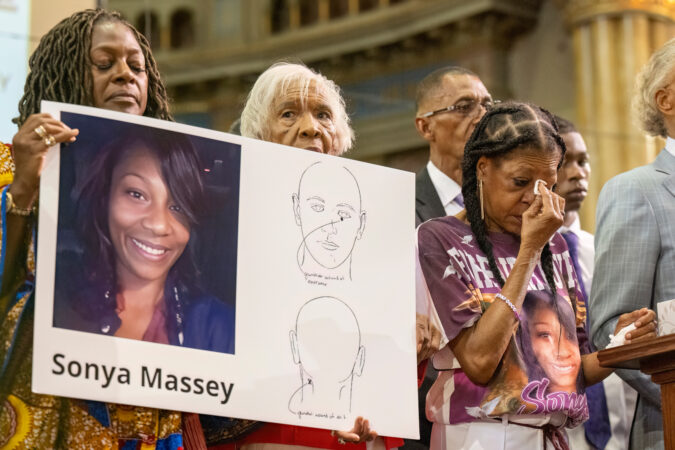
    SPRINGFIELD, Ill. — A former Illinois sheriff’s deputy was sentenced Thursday to 20 years in prison for fatally shooting Sonya Massey, who had dialed 911 to report a possible prowler outside her Springfield home.

    Sean Grayson, 31, was convicted in October. Grayson, who is white, received the maximum possible sentence. He has been incarcerated since he was charged in the killing.

    He apologized during the sentencing, saying he wished he could bring Massey back and spare her family the pain he caused.

    “I made a lot of mistakes that night. There were points when I should’ve acted, and I didn’t. I froze,” he said. “I made terrible decisions that night. I’m sorry.”

    But Massey’s parents and two children — who lobbied for the maximum sentence — said their lives had changed dramatically since the killing. Her two children said they had to grow up without a mother, while Massey’s mother said she lived in fear. They asked the judge to carry out justice in her name.

    “Today, I’m afraid to call the police in fear that I might end up like Sonya,” her mother Donna Massey said.

    When the judge read the sentence, the family reacted with a loud cheer: “Yes!” The judge admonished them.

    After the hearing, Massey’s relatives thanked the public for the support and listening to their stories about Massey.

    “Twenty years is not enough,” her daughter Summer told reporters.

    In the early morning hours of July 6, 2024, Massey — who struggled with mental health issues — summoned emergency responders because she feared there was a prowler outside her Springfield home.

    According to body camera footage, Grayson and sheriff’s Deputy Dawson Farley, who was not charged, searched Massey’s yard before meeting her at her door. Massey appeared confused and repeatedly said, “Please, God.”

    The deputies entered her house, Grayson noticed the pot on the stove and ordered Farley to move it. Instead, Massey went to the stove, retrieved the pot and teased Grayson for moving away from “the hot, steaming water.”

    From this moment, the exchange quickly escalated.

    Massey said: “I rebuke you in the name of Jesus.”

    Grayson drew his sidearm and yelled at her to drop the pan. She set the pot down and ducked behind a counter. But she appeared to pick it up again.

    That’s when Grayson opened fire on the 36-year-old single mother, shooting her in the face. He testified that he feared Massey would scald him.

    Grayson was charged with three counts of first-degree murder, which could have led to a life sentence, but a jury convicted him of the lesser charge. Illinois allows for a second-degree murder conviction if evidence shows the defendant honestly thought he was in danger, even if that fear was unreasonable.

    Massey’s family was outraged by the jury’s decision.

    “The justice system did exactly what it’s designed to do today. It’s not meant for us,” her cousin Sontae Massey said after the verdict.

    Massey’s killing raised new questions about U.S. law enforcement shootings of Black people in their homes. Civil rights attorney Ben Crump negotiated a $10 million settlement with Sangamon County for Massey’s relatives.

    The case also generated a U.S. Justice Department inquiry that was settled when the county agreed to implement more de-escalation training; collect more use-of-force data; and forced the sheriff who hired Grayson to retire. The case also prompted a change in Illinois law requiring fuller transparency on the backgrounds of candidates for law enforcement jobs.

    Grayson’s attorneys had filed a motion for a new trial, which Judge Ryan Cadigan dismissed at the start of the sentencing.

  • Trump signals interest in easing tensions, but Minneapolis sees little change on the streets

    Trump signals interest in easing tensions, but Minneapolis sees little change on the streets

    MINNEAPOLIS — President Donald Trump seemed to signal a willingness to ease tensions in Minneapolis after a second deadly shooting by federal immigration agents, but there was little evidence Wednesday of any significant changes following weeks of harsh rhetoric and clashes with protesters.

    The strain was evident when Trump made a leadership change by sending his top border adviser to Minnesota to take charge of the immigration crackdown. That was followed by seemingly conciliatory remarks about the Democratic governor and mayor.

    Trump said he and Gov. Tim Walz, whom he criticized for weeks, were on “a similar wavelength” following a phone call. After a conversation with Mayor Jacob Frey, the president praised the discussion and declared that “lots of progress is being made.”

    But on city streets, there were few signs of a shift. Immigration enforcement operations and confrontations with activists continued Wednesday in Minneapolis and St. Paul.

    A group of protesters blew whistles and pointed out federal officers in a vehicle on a north Minneapolis street. When the officers’ vehicle moved, a small convoy of activists followed in their cars for a few blocks until the officers stopped again.

    When Associated Press journalists got out of their car to document the encounter, officers with the federal Bureau of Prisons pushed one of them, threatened them with arrest and told them to get back in their car despite the reporters’ identifying themselves as journalists. Officers from multiple federal agencies have been involved in the enforcement operations.

    From their car, the AP journalists saw at least one person being pepper sprayed and one detained, though it was unclear if that person was the target of the operation or a protester. Agents also broke car windows.

    Attorney General Pam Bondi, who is visiting Minnesota, said 16 people were arrested Wednesday on charges of assaulting, resisting or impeding law enforcement in the state. She said more arrests were expected.

    “NOTHING will stop President Trump and this Department of Justice from enforcing the law,” Bondi said in a social media post.

    Messages seeking comment were left with Immigration and Customs Enforcement and the Border Patrol.

    Woman tells agents knocking on door: ‘They’re good neighbors’

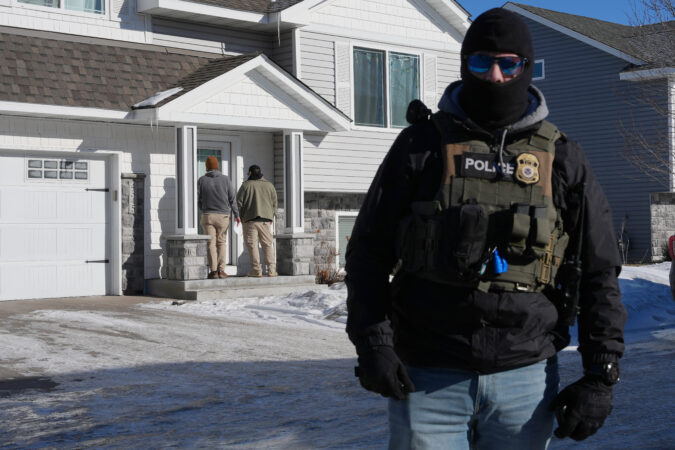
    On Wednesday afternoon in the Minneapolis suburb of Brooklyn Center, half a dozen agents went to a house in a small residential neighborhood.

    One agent knocked on the door of the home repeatedly. Another told the AP they were seeking a man who had been twice deported and was convicted of domestic abuse. The agent said the man had run into the home and the agents lacked a judicial warrant to get inside.

    Some federal immigration officers are asserting sweeping power to forcibly enter people’s homes without a judge’s warrant and instead are using a more narrow administrative warrant to arrest migrants considered illegally present or otherwise deportable. The key difference is whether agents can forcibly enter a private property to make an arrest, as they were captured on video doing in Minneapolis earlier this month.

    A handful of activists blew whistles at the agents in Brooklyn Center. One agent said: “They’d rather call the police on us than to help us. Go figure.”

    As the agents were preparing to leave, a woman called out to them saying, “You need to know they’re good neighbors.”

    Kari Rod told the AP that she didn’t know these neighbors well, but they had come to her garage sale, kept their yard clean, and waved hello when she drove by. She didn’t believe enforcement agents to be speaking the truth about whom they arrest, including another neighbor whom she said was deported to Laos last summer.

    “I don’t trust a single thing they said about who they are,” Rod said. “From my interactions, I know them way better than anyone else does, any one of those federal agents.”

    Immigrants are ‘still very worried’

    Many immigrant families are still fearful of leaving their homes, and Latino businesses are still closed, said Daniel Hernandez, who owns the Minneapolis grocery store Colonial Market. He also runs a popular Facebook page geared toward informing the Hispanic community in the Twin Cities.

    While Colonial Market is open, all but one of the dozen immigrant-run businesses that rented space inside to sell clothes, jewelry, and toys have closed since late December, and none has plans to reopen, Hernandez said.

    “The reality is the community is still very worried and afraid,” Hernandez said.

    Hernandez referenced Border Patrol commander Gregory Bovino, who helped lead the administration’s crackdown in the Twin Cities and who has reportedly been assigned elsewhere.

    Bovino “was removed, but the tactics so far are still the same,” Hernandez said. “Nobody now is trusting the government with those changes.”

    The federal enforcement extended to the city’s Ecuadoran consulate, where a federal law enforcement officer tried to enter before being blocked by employees.

    Judge warns ICE about not complying with federal orders

    In Minnesota federal court, the issue of ICE not complying with court orders came to the fore as Chief Judge Patrick Schiltz said the agency had violated 96 court orders in 74 cases since Jan. 1.

    “This list should give pause to anyone — no matter his or her political beliefs — who cares about the rule of law,” he wrote. “ICE has likely violated more court orders in January 2026 than some federal agencies have violated in their entire existence.”

    Schiltz earlier this week ordered ICE’s acting director to personally appear in his courtroom Friday after the agency failed to obey an order to release an Ecuadorian man from detention in Texas. The judge canceled the order after the agency freed the man.

    The judge, who was appointed by President George W. Bush, warned ICE that future noncompliance may result in future orders requiring the personal appearances of Acting Director Todd Lyons or other government officials.

    ICE didn’t immediately respond to an email seeking comment.

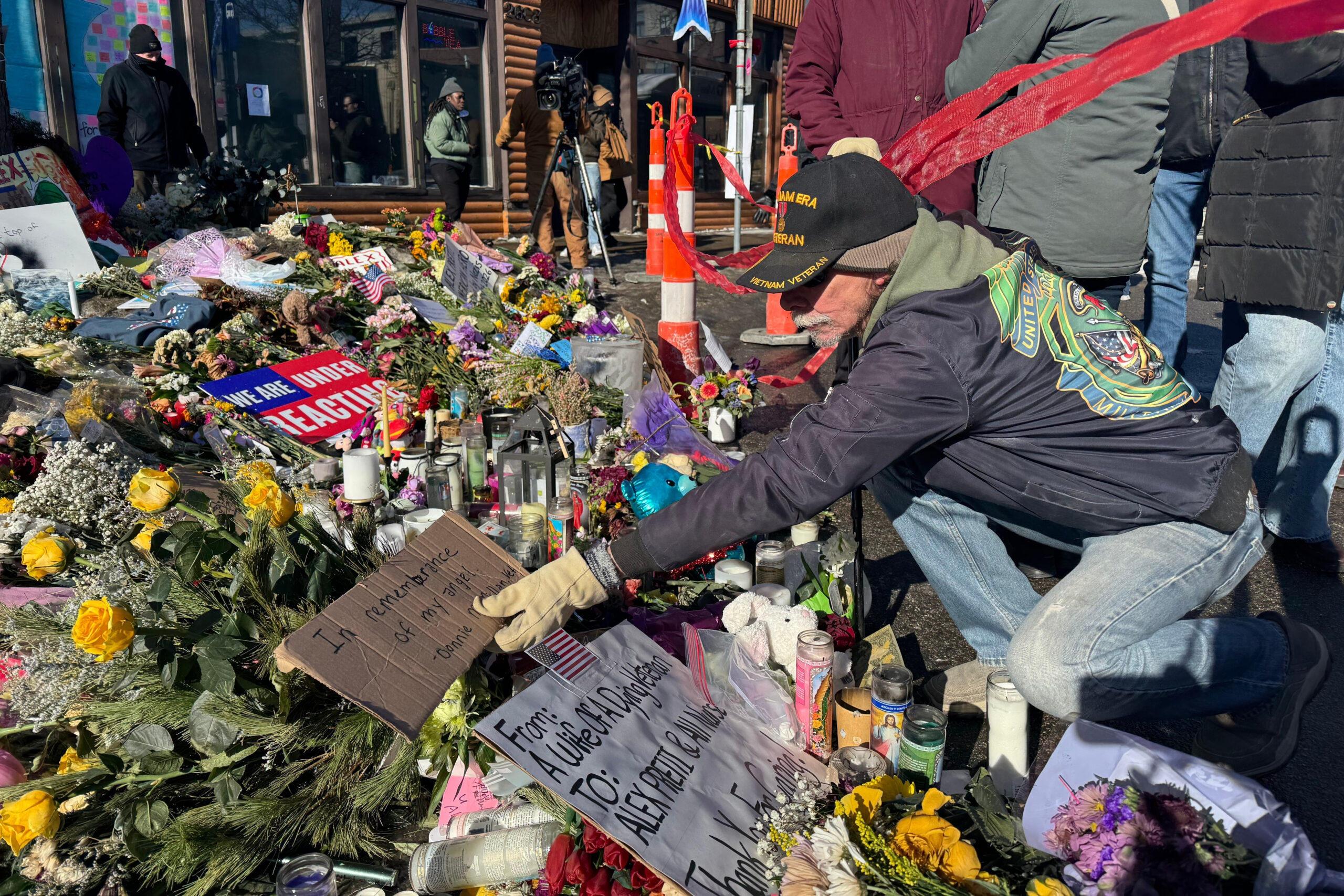
    Vietnam War veteran Donnie McMillan places a sign that says “In remembrance of my angel” at a memorial set up at the location where VA nurse Alex Pretti was shot by federal agents in Minneapolis.

    Veteran visits sidewalk memorial

    Elsewhere on Wednesday, Donnie McMillan placed a cardboard sign reading “In remembrance of my angel” at the makeshift memorial where Alex Pretti was shot.

    The Vietnam veteran knelt to pay his respects and saluted to honor the nurse whom he said he remembered seeing during his frequent visits to the VA hospital where Pretti worked.

    “I feel like I’ve lost an angel right here,” McMillan, 71, said, pointing to the growing sidewalk memorial covered in flowers, candles, and signs.

    “This is not the way we should operate,” McMillan said. “I respect everybody, but I respect my angel more, and now he’s no longer with us.”

    Also Wednesday, the Department of Homeland Security said two federal agents involved in Pretti’s death have been on leave since Saturday, when the shooting happened.

    U.S. Rep. Ilhan Omar, a Democrat, spoke to journalists one day after a man attacked her during a town-hall meeting by squirting a strong-smelling substance on her as she denounced the Trump administration.

    “What is unfolding in our state is not accidental. It is part of a coordinated effort to target Black and brown, immigrant and Muslim communities through fear, racial profiling, and intimidation,” Omar said. ”This administration’s immigration agenda is not about law enforcement — it is about making people feel they do not belong.”

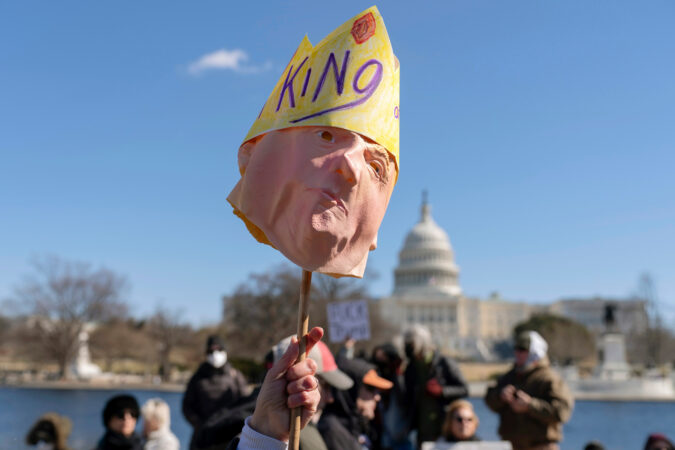
  • More ‘No Kings’ protests planned for March 28 as outrage spreads over Minneapolis deaths

    More ‘No Kings’ protests planned for March 28 as outrage spreads over Minneapolis deaths

    A third round of “No Kings” protests is coming this spring, with organizers saying they are planning their largest demonstrations yet across the United States to oppose what they describe as authoritarianism under President Donald Trump.

    Previous rallies have drawn millions of people, and organizers said they expect even greater numbers on March 28 in the wake of Trump’s immigration crackdown in Minneapolis, where violent clashes have led to the death of two people.

    “We expect this to be the largest protest in American history,” Ezra Levin, co-executive director of the nonprofit Indivisible, told the Associated Press ahead of Wednesday’s announcement. He predicted that as many as 9 million people will turn out.

    “No Kings” protests, which are organized by a constellation of groups around the country, have been a focal point for outrage over Trump’s attempts to consolidate and expand his power.

    “This is in large part a response to a combination of the heinous attacks on our democracy and communities coming from the regime, and a sense that nobody’s coming to save us,” Levin said.

    Last year, Trump said he felt attendees were “not representative of the people of our country,” and he insisted that “I’m not a king.”

    ‘No Kings’ shifts focus after Minneapolis deaths

    The latest round of protests had been in the works before the crackdown in Minneapolis. However, the killing of two people by federal agents in recent weeks has refocused plans.

    Levin said they want to show “support for Minnesota and immigrant communities all over” and oppose “the secret police force that is murdering Americans and infringing on their basic constitutional rights.”

    “And what we know is, the only way to defend those rights is to exercise them, and you do that in nonviolent but forceful ways, and that’s what I expect to see in ‘No Kings’ three,” Levin said.

    Trump has broadly defended his aggressive deportation campaign and blamed local officials for refusing to cooperate. However, he’s more recently signaled a shift in response to bipartisan concern over the killing of Alex Pretti in Minneapolis on Saturday.

    Previous ‘No Kings’ protests have drawn millions across the U.S.

    In June, the first “No Kings” rallies were organized in nearly 2,000 locations nationwide, including cities, towns and community spaces. Those protests followed unrest over federal immigration raids and Trump’s deployment of the National Guard and Marines to Los Angeles, where tensions escalated with protesters blocking a freeway and setting vehicles on fire.

    They were organized also in large part to protest a military parade in the nation’s capital that marked the Army’s 250th anniversary and coincided with Trump’s birthday. “No Kings” organizers at the time called the parade a “coronation” that was symbolic of what they characterized as Trump’s growing authoritarian overreach.

    In response, some conservative politicians condemned the protests as “Hate America” rallies.

    During a second round of protests in October, organizers said demonstrations were held in about 2,700 cities and towns across the country. At the time, Levin pointed to Trump’s sweeping immigration crackdown, his unprecedented promises to use federal power to influence midterm elections, restrictions on press freedom and retribution against political opponents, steps he said cumulatively represented a direct threat to constitutionally protected rights.

    On social media, both Trump and the official White House account mocked the protests, posting computer-generated images of the president wearing a crown.

    The big protest days are headline-grabbing moments, but Levin said groups like his are determined to keep up steady trainings and intermediate-level organizing in hopes of growing sustainable resistance to the Trump administration’s actions.

    “This isn’t about Democrats versus Republicans. This is about do we have a democracy at all, and what are we going to tell our kids and our grandkids about what we did in this moment?” Levin said. ”I think that demands the kind of persistent engagement. ”

  • Search warrant FBI served at elections office near Atlanta seeks records tied to the 2020 elections

    Search warrant FBI served at elections office near Atlanta seeks records tied to the 2020 elections

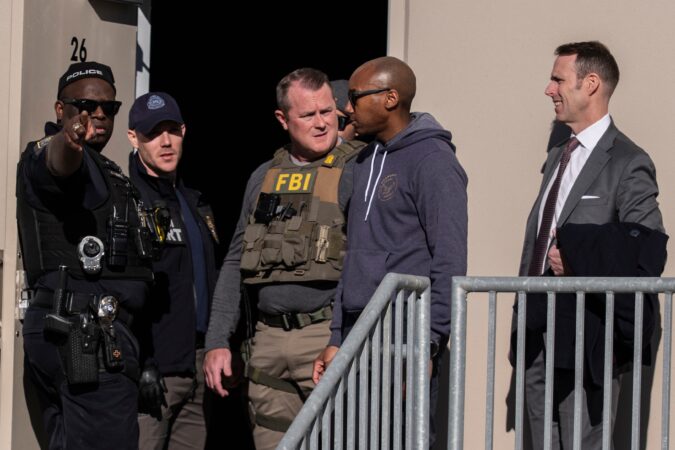
    ATLANTA — The FBI on Wednesday searched the election office of a Georgia county that has been central to right-wing conspiracy theories over President Donald Trump’s 2020 election loss, acting just one week after the Republican leader predicted prosecutions over a contest he has baselessly insisted was tainted by widespread fraud.

    The search at Fulton County’s main election facility in Union City sought records related to the 2020 election, county spokesperson Jessica Corbitt-Dominguez said. It appeared to be the most public step by law enforcement to pursue Trump’s claims of a stolen election, grievances rejected time and again by courts and state and federal officials, who found no evidence of fraud that would have altered the outcome.

    It also unfolds against the backdrop of FBI and Justice Department efforts to investigate perceived political enemies of Trump, including former FBI Director James Comey and New York Attorney General Letitia James.

    Trump has for years focused on Fulton, Georgia’s most populous county and a Democratic stronghold, as a key example of what he claims went wrong in the 2020 election. His pressure campaign there culminated in a sweeping state indictment accusing him and 18 others of illegally trying to overturn the vote.

    An FBI spokesperson said agents were “executing a court authorized law enforcement action” at the county’s main election office in Union City, just south of Atlanta. The spokesperson declined to provide any further information, citing an ongoing matter.

    Corbitt-Dominguez said a warrant “sought a number of records related to 2020 elections,” but declined to comment further because the search was still underway.

    The Justice Department had no immediate comment.

    Trump has long insisted that the 2020 election was stolen even though judges across the country and his own attorney general said they found no evidence of widespread fault that tipped the contest in Democrat Joe Biden’s favor.

    The president has made Georgia, one of the battleground states he lost in 2020, a central target for his complaints about the election and memorably pushed its secretary of state to help “find” enough votes to overturn the contest.

    Last week, in reference to the 2020 election, he asserted that “people will soon be prosecuted for what they did.” It was not clear what in particular he was referring to.

    Fulton County District Attorney Fani Willis in August 2023 obtained an indictment against Trump and 18 others, accusing them of participating in a wide-ranging scheme to illegally try to overturn the results of the 2020 presidential election. That case was dismissed in November after courts barred Willis and her office from pursuing it because of an “appearance of impropriety” stemming from a romantic relationship she had with a prosecutor she had hired to lead the case.

    The FBI last week moved to replace its top agent in Atlanta, Paul W. Brown, according to people familiar with the matter who spoke on condition of anonymity to discuss a nonpublic personnel decision. It was not immediately clear why the move, which was not publicized by the FBI, was made.

    The Department of Justice last month sued the clerk of the Fulton County superior and magistrate courts in federal court seeking access to documents from the 2020 election in the county. The lawsuit said the department sent a letter to the clerk, Che Alexander, but that she had failed to produce the requested documents.

    Alexander has filed a motion to dismiss the suit. The Justice Department complaint says that the purpose of its request was “ascertaining Georgia’s compliance with various federal election laws.” It also says the attorney general is trying to help the State Election Board with its “transparency efforts under Georgia law.”

    A three-person conservative majority on the State Election Board has repeatedly sought to reopen a case alleging wrongdoing by Fulton County during the 2020 election. It passed a resolution in July seeking assistance from the U.S. attorney general to access voting materials.

    The state board sent subpoenas to the county board for various election documents last year and again on Oct. 6. The October subpoena requested “all used and void ballots, stubs of all ballots, signature envelopes, and corresponding envelope digital files from the 2020 General Election in Fulton County.” A fight over the state board’s efforts to enforce the 2024 subpoena is currently tied up in court.

    The Justice Department sent a letter to the county election board Oct. 30 citing the federal Civil Rights Act and asking for all records responsive to the October subpoena from the State Election Board. Lawyers for the county election board responded about two weeks later, saying that the records are held by the county court clerk. They also attached a letter the clerk sent to the State Election Board saying that the records are under seal in accordance with state law and can’t be released without a court order.

    The Justice Department said it then sent a letter to Alexander, the clerk, on Nov. 21 requesting the documents and that she failed to respond.

    The department is asking a judge to declare that the clerk’s “refusal to provide the election records upon a demand by the Attorney General” violates the Civil Rights Act. It is also asking the judge to order Alexander to produce the requested records within five days of a court order.

    The State Election Board in May 2024 heard a case that alleged documentation was missing for thousands of votes in the recount of the presidential contest in the 2020 election. After a presentation by a lawyer and an investigator for the secretary of state’s office, a response from the county and a lengthy discussion among the board members, the board voted to issue a letter of reprimand to the county.

    Shortly after that vote, there was a shift in power on the board, and the newly cemented conservative majority sought to reopen the case. The lone Democrat on the board and the chair have repeatedly objected, arguing the case is closed and citing multiple reviews that have found that while the county’s 2020 elections were sloppy and poorly managed there was no evidence of intentional wrongdoing.

  • Ten people die in NYC’s frigid cold, raising questions about the city’s preparedness

    Ten people die in NYC’s frigid cold, raising questions about the city’s preparedness

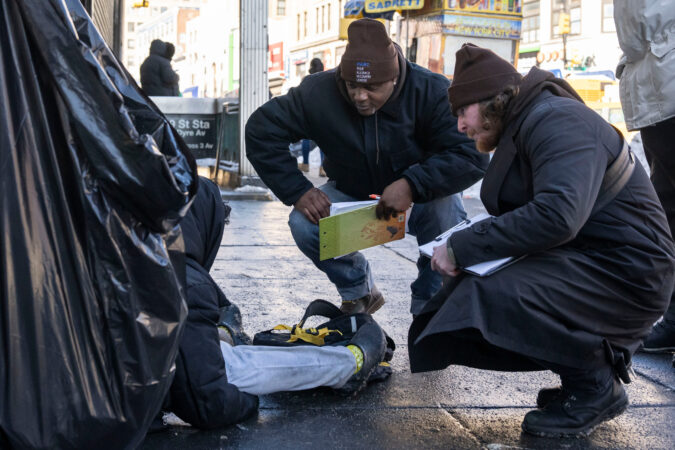
    NEW YORK — One man was discovered under a layer of snow on a park bench in Queens. Another was found just steps from a Manhattan hospital. Yet another was pronounced dead on the ground beneath an elevated train line in the Bronx.

    Each is among a growing number of people — at least 10, as of Tuesday — who died after being exposed to the bitter cold that has persisted in New York City since late last Friday.

    Their causes of death are still under investigation, but some showed signs of having succumbed to hypothermia. Officials said several victims were believed to have been living on the streets. At least six of the fatalities came early Saturday, as the temperature in the city fell to 9 degrees.

    With the frigid weather expected to continue, Mayor Zohran Mamdani said the city was adding homeless outreach workers, opening new warming centers, and instructing hospitals to limit discharges “to ensure that people who have nowhere to go are kept indoors.”

    But the rising death toll has also prompted questions about whether Mamdani’s nascent administration could have done more to protect the city’s most vulnerable residents ahead of the Arctic blast and the snowstorm that hit early Sunday.

    One of the victims, a 52-year-old man living in Queens, was found Sunday morning with discharge papers in his pocket showing he had been released from Elmhurst Hospital, a city-run facility, on Friday, according to State Senator Jessica Ramos.

    By the time of his release, the city had already activated its Code Blue protocols, a set of extreme weather policies that include precautions meant to ensure homeless patients are not released back onto the street.

    It was not immediately clear if the man, who is originally from Ecuador, had been living outside at the time of his death. Inquiries to City Hall, the Department of Homeless Services, and the city’s public hospital system were not returned.

    The city has yet to release the names of any of those who died during the storm.

    Studies have shown that around 15 people suffer from cold-related deaths in New York City each year. But homeless advocates said they could not remember another storm in recent memory that resulted in so many deaths outside in such a brief period.

    “The fact that this many people have passed away shows the city needs to do a much better job of making people feel safe when they come inside,” said David Giffen, the executive director of the Coalition for the Homeless. “It’s not that most of the people on the streets are unaware of the shelter system, but that they’ve had experiences there that make them not want to return.”

    In the lead-up to the storm, city-contracted outreach teams fanned out across the five boroughs, attempting to coax residents to accept placements in shelters, transitional housing or even heated buses. Mamdani and his deputies have repeatedly urged New Yorkers to look out for those in need of help.

    “Extreme weather is not a personal failure, but it is a public responsibility,” Mamdani said on Tuesday. “We are mobilizing every resource at our disposal to ensure that New Yorkers are brought indoors during this potentially lethal weather event.”

    The city’s social services commissioner, Molly Wasow Park, said at least 200 people have voluntarily accepted shelter since the storm began. She said the city has also moved to involuntarily hospitalize a handful of people, including those who were wet, inappropriately dressed or “unable to acknowledge that there are real dangers.”

    Ramos said the man discovered on the park bench was wearing only a thin jacket. His body appeared to be frozen when it was found by police under a layer of snow on Sunday morning.

    “It’s devastating to know the government could have done more and didn’t,” she said. “There are real questions here that demand answers.”

  • Huge landslide leaves Sicilian homes teetering on cliff edge as 1,500 people are evacuated

    Huge landslide leaves Sicilian homes teetering on cliff edge as 1,500 people are evacuated

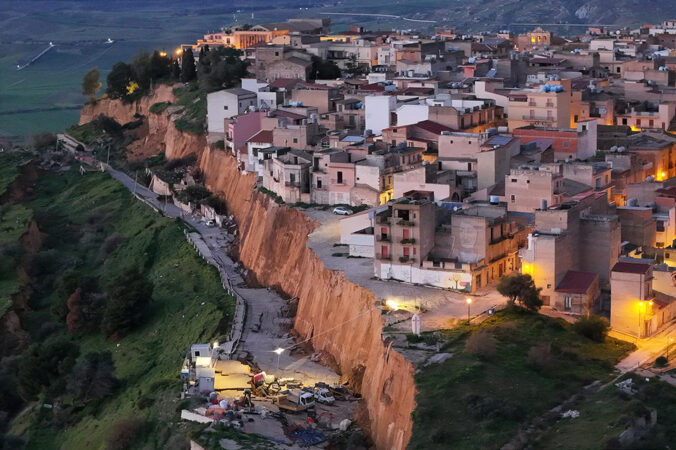
    ROME — Italian Premier Giorgia Meloni visited a southern town in Sicily on Wednesday that has been left teetering on the edge of a cliff after days of heavy rains from a cyclone triggered a huge landslide that brought down properties and forced the evacuation of over 1,500 people.

    The landslide in Niscemi, a town in the southwest of the island, spanned 2.5 miles. Images showed cars and structures that had fallen 20 yards off the newly formed cliff, while many other homes remain perched perilously on the cliff edge.

    Civil protection crews have created a 150-meter wide “no go zone” in the town, which is just inland from the coastal city of Gela.

    “The entire hill is collapsing onto the plain of Gela,” civil protection chief Fabio Ciciliano said. “To be honest, there are houses located on the edge of the landslide that obviously can no longer be inhabited, so we need to work with the mayor to find a permanent relocation for these families.”

    Authorities have warned that residents with homes in the area will have to find long-term alternatives to moving back since the water-soaked ground was still shifting and too unstable to live.

    The federal government included Niscemi in a state of emergency declaration on Monday for three southern regions hard hit by Cyclone Harry and set aside an initial 100 million euros ($120 million) to be divided among them. Sicilian regional officials estimated on Wednesday the overall damage to Sicily stood at 2 billion euros.

    Meloni took a helicopter tour of the landslide area and met with local, regional, and civil protection officials at the town hall. She vowed that the initial emergency funding was just the first step in addressing the immediate financial needs of displaced residents and that more was coming.

    In a statement, her office said the government was committed to helping residents find alternative housing and to restoring road access, utilities and school activities in town.

    “The situation is complicated by the fact that, as long as the landslide remains active, it is impossible to identify the exact area to be treated and therefore to establish the methods of intervention,” it said.

    Niscemi was built on a hill on layers of sand and clay that become particularly permeable in heavy rain and have shifted before, most recently in a major 1997 landslide that forced the evacuation of 400 people, geologists say.

    “Today, the situation is repeating itself with even more significant characteristics: the landslide front extends for about 4 kilometers and directly affects the houses facing the slope,” warned Giovanna Pappalardo, professor of applied geology at the island’s University of Catania.

    The latest landslide, which began on Sunday with Cyclone Harry thrashing southern Italy, has revived political mud-slinging about why construction was allowed on land which, because of its geological makeup, had a known high risk of landslides.

    Renato Schifani, the center-right regional president of Sicily, acknowledged such questions were legitimate. But he noted he had only been in office for a few years and said the main issue was an institutional response to help residents immediately affected.

    Elly Schlein, the opposition center-left Democratic Party leader, called on the government to reallocate 1 billion euros approved for its controversial bridge from Sicily to the Italian mainland and direct it toward storm-hit regions, since the bridge project is currently tied up in court challenges.