Category: Associated Press

  • Rubio defends Trump on Venezuela while trying to allay fears about Greenland and NATO

    Rubio defends Trump on Venezuela while trying to allay fears about Greenland and NATO

    WASHINGTON — Secretary of State Marco Rubio gave a full-throated defense Wednesday of President Donald Trump’s military operation to capture then-Venezuelan President Nicolás Maduro, while explaining to U.S. lawmakers the administration’s approach to Greenland, NATO, Iran, and China.

    As Republican and Democratic members of the Senate Foreign Relations Committee offered starkly different readings of the administration’s foreign policy, Rubio addressed Trump’s intentions and his often bellicose rhetoric that has alarmed U.S. allies in Europe and elsewhere, including demands to take over Greenland.

    In the first public hearing since the Jan. 3 raid to depose Maduro, Rubio said Trump had acted to take out a major U.S. national security threat in the Western Hemisphere. Trump’s top diplomat said America was safer and more secure as a result and that the administration would work with interim authorities to stabilize the South American country.

    “We’re not going to have this thing turn around overnight, but I think we’re making good and decent progress,” Rubio said. “We are certainly better off today in Venezuela than we were four weeks ago, and I think and hope and expect that we’ll be better off in three months and six months and nine months than we would have been had Maduro still been there.”

    The former Florida senator said Venezuela’s current leaders are cooperating and would soon begin to see benefits. But he backed away from remarks prepared for the hearing that Washington would not hesitate to take further military action should those leaders not fully accept Trump’s demands.

    “I can tell you right now with full certainty, we are not postured to nor do we intend or expect to have to take any military action in Venezuela at any time,” Rubio said. “I think it would require the emergence of an imminent threat of the kind that we do not anticipate at this time.”

    He said Venezuela soon will be allowed to sell oil that is now subject to U.S. sanctions, and the revenue would be set aside to pay for basic government services such as policing and healthealthcare proceeds will be deposited in a U.S. Treasury-controlled account and released after the U.S. approves monthly budgets to be submitted by Venezuela, he said.

    Pushback against skepticism from Democrats

    Republican senators, with few exceptions, praised the operation in Venezuela. Among Democrats, there was deep skepticism.

    They questioned Trump’s policies in Venezuela and their potential for encouraging moves by China against Taiwan and Russia even more so in Ukraine, as well as his threats to take Greenland from NATO ally Denmark and his insults about the alliance’s contributions to U.S. security.

    Rubio played them all down.

    He said the uproar over Greenland within NATO is calming and that talks are underway about how to deal with Trump’s demands. The Republican president insists the U.S. needs Greenland to counter threats from Russia and China, but he recently backed away from a pledge to impose tariffs on several European countries that sent troops to the semiautonomous Danish territory in a show of solidarity.

    “I think we’re going to get something positive done,” Rubio said.

    Rubio dismissed criticism that Trump was undermining the alliance, while repeating the long-running American complaint that member nations need to boost their defense budgets.

    “NATO needs to be reimagined,” Rubio said. “I just think this president complains about it louder than other presidents.”

    He said China’s stated goal to reunify Taiwan with the mainland would not be affected by any other world event, including the Maduro operation.

    “The situation on Taiwan is a legacy project” that Chinese President Xi Jinping has made ”very clear that that’s what he intends to do and that’s going to be irrespective anything that happens in the world,” Rubio said.

    As Trump once more threatens Iran with military action, Rubio said there was no current plan to attack. Asked about the potential for a change of government in Tehran, Rubio said that would require “a lot of careful thinking” because it would be “far more complex” than ousting Maduro.

    He noted that the increased military presence in the Middle East — an aircraft carrier and accompanying warships arrived this week — is “to defend against what could be an Iranian threat against our personnel.”

    More details about the raid in Caracas

    The Republican committee chairman, Idaho Sen. Jim Risch, offered new details on the operation in the Venezuelan capital, saying it involved “only about 200 troops” and a “firefight that lasted less than 27 minutes.”

    “This military action was incredibly brief, targeted and successful,” Risch said, adding that the U.S. and other nations may have to assist Venezuela when it seeks to restore democratic elections.

    ”Venezuela may require U.S. and international oversight to ensure these elections are indeed free and fair,” he said.

    Sen. Jeanne Shaheen of New Hampshire, the committee’s top Democrat, questioned whether that operation was worth it, considering most of Maduro’s top aides and lieutenants still run the Venezuela and the economic situation there remains bleak.

    “We’ve traded one dictator for another, so it’s no wonder that so many of my constituents are asking, why is the president spending so much time focused on Venezuela instead of the cost of living and their kitchen table economic concerns?” she asked. “From Venezuela to Europe, the United States is spending more, risking more and achieving less.”

    Call for eventual democratic elections in Venezuela

    Rubio delivered his strongest statement yet of support for democracy in Venezuela, while concerns persist that the administration’s stabilization efforts are narrowly focused on oil and U.S. national security interests.

    “What’s the end state? We want a Venezuela that has legitimate democratic elections,” said Rubio, who met Venezuelan opposition leader María Corina Machado at the State Department after the hearing.

    Machado reiterated her intention to return to Venezuela. “Dear Venezuelans, we are moving forward with firm steps,” she posted on X. “I will return to Venezuela very soon to work together on the transition and the building of an exceptional country.”

    Before that, Rubio faced tough questioning from Sen. Cory Booker (D., N.J.) about cooperating with interim leaders who had been part of Maduro’s authoritarian government. Maduro’s vice president, Delcy Rodríguez, is now the acting president.

    The U.S. has said its demands for Rodriguez include opening Venezuela’s energy sector to U.S. companies, providing preferential access to production, using oil revenue to purchase American goods, and ending subsidized oil exports to Cuba.

    Neither Rodríguez nor her government’s press office immediately commented on Rubio’s remarks. She said Tuesday that her government and the U.S. “have established respectful and courteous channels of communication.” So far, she has appeared to acquiesce to Trump’s demands and to release prisoners jailed by the government under Maduro and his predecessor, Hugo Chávez.

    In a key step to the restoration of diplomatic relations, the State Department said it intends to begin sending additional diplomatic and support personnel to Caracas to prepare for the possible reopening of the U.S. Embassy, which shuttered in 2019.

    Fully normalizing ties, however, would require the U.S. to revoke its decision recognizing the Venezuelan parliament elected in 2015 as the country’s legitimate government.


  • Homeland Security Secretary Kristi Noem faces rising calls for her firing or impeachment

    Homeland Security Secretary Kristi Noem faces rising calls for her firing or impeachment

    WASHINGTON — A groundswell of voices have come to the same conclusion: Kristi Noem must go.

    From Democratic Party leaders to the nation’s leading advocacy organizations to even the most centrist lawmakers in Congress, the calls are mounting for the Homeland Security secretary to step aside after the shooting deaths in Minneapolis of two people who protested deportation policy. At a defining moment in her tenure, few Republicans are rising to Noem’s defense.

    “The country is disgusted by what the Department of Homeland Security has done,” top House Democratic Reps. Hakeem Jeffries of New York, Katherine Clark of Massachusetts, and Pete Aguilar of California said in a joint statement.

    “Kristi Noem should be fired immediately,” the Democrats said, “or we will commence impeachment proceedings in the House of Representatives.”

    Republicans and Democrats call for Noem to step down

    What started as sharp criticism of the Homeland Security secretary, and a longshot move by Democratic lawmakers signing onto impeachment legislation in the Republican-controlled House, has morphed into an inflection point for Noem, who has been the high-profile face of the Trump administration’s immigration enforcement regime.

    Noem’s brash leadership style and remarks in the aftermath of the shooting deaths of Alex Pretti and Renee Good — in which she suggested Pretti “attacked” officers and portrayed the events leading up to Good’s shooting an “act of domestic terrorism” — have been seen as doing irreparable damage, as events on the ground disputed her account. Her alliance with Border Patrol chief Greg Bovino, who was recalled from the Minnesota operation Monday as border czar Tom Homan took the lead, has left her isolated on Capitol Hill.

    “What she’s done in Minnesota should be disqualifying. She should be out of a job,” Sen. Thom Tillis (R., N.C.) said.

    “I think the President needs to look at who he has in place as a secretary of Homeland Security,” Sen. Lisa Murkowski (R., Alaska) said. ”It probably is time for her to step down.”

    Trump stands by Noem and praises her work

    President Donald Trump defended Noem on Wednesday at multiple junctures, strongly indicating her job does not appear to be in immediate jeopardy.

    Asked by reporters as he left the White House on Tuesday for a trip to Iowa whether Noem is going to step down, Trump had a one-word answer: “No.”

    Pressed later during an interview on Fox News if he had confidence in Noem, the president said, “I do.”

    “Who closed up the border? She did,” Trump said, “with Tom Homan, with the whole group. I mean, they’ve closed up the border. The border is a tremendous success.”

    As Democrats in Congress threaten to shut down the government as they demand restrictions on Trump’s mass deportation agenda, Noem’s future at the department faces serious questions and concerns.

    The Republican leadership of the House and Senate committees that oversee Homeland Security have demanded that department officials appear before their panels to answer for the operations that have stunned the nation with their sheer force — including images of children, including a 5-year-old, being plucked from families.

    “Obviously this is an inflection point and an opportunity to evaluate and to really assess the policies and procedures and how they are being implemented and put into practice,” said Senate Majority Leader John Thune, a Republican from South Dakota, where Noem had been the state’s House representative and governor before joining the administration.

    Asked about his own confidence in Noem’s leadership, Thune said, “That’s the president’s judgment call to make.”

    Senate Democratic Leader Chuck Schumer called Noem a “liar” and said she must be fired.

    The fight over funding

    Assistant Secretary Tricia McLaughlin said in a statement that DHS enforces the laws from Congress, and if lawmakers don’t like those laws, they should change them.

    “Too many politicians would rather defend criminals and attack the men and women who are enforcing our laws,” McLaughlin said. “It’s time they focus on protecting the American people, the work this Department is doing every day under Secretary Noem’s leadership.”

    The ability of Congress to restrict Homeland Security funding is limited, in large part because the GOP majority already essentially doubled department funding under Trump’s big tax breaks and spending cuts law.

    Instead, Democrats are seeking to impose restraints on Border Patrol and U.S. Immigration and Customs Enforcement operations as part of a routine annual funding package for Homeland, Defense, Health, and other departments. Without action this week, those agencies would head toward a shutdown.

    To be sure, Homeland Security still has strong defenders in the Congress.

    The conservative House Freedom Caucus said Tuesday in a letter to Trump that he should invoke the Insurrection Act, if needed, to quell protests. The group said it would be “ready to take all steps necessary” to keep funds flowing for Trump’s immigration enforcement and removal operations.

    On the job for a year, Noem has clashed at times with lawmakers on Capitol Hill, as Republicans and Democrats have sought greater oversight and accounting of the department’s spending and operations.

    Noem has kept a low profile since the Saturday news conference following Pretti’s death, though she appeared Sunday on Fox News. She doubled down in that interview on criticism of Minnesota officials, but also expressed compassion for Pretti’s family.

    “It grieves me to think about what his family is going through but it also grieves me what’s happening to these law enforcement officers every day out in the streets with the violence they face,” she said.

    Once rare, impeachments now more common

    Impeachment, once a far-flung tool brandished against administration officials, has become increasingly commonplace.

    Two years ago, the Republican-led House impeached another Homeland Security secretary, Alejandro Mayorkas, in protest over the then-Biden administration’s border security and immigration policies that allowed millions of immigrants and asylum seekers to enter the U.S. The Senate dismissed the charges.

    On Tuesday, Maryland Rep. Jamie Raskin, the top Democrat on the House Judiciary Committee, said if the Republican chairman of the panel, Rep. Jim Jordan of Ohio, does not launch an impeachment probe, he would.

    Raskin said he would work with the top Democrats on the Homeland Security and Oversight committees to immediately launch an impeachment inquiry related to the Minnesota deaths and other “lawlessness and corruption that may involve treason, bribery or other high crimes and misdemeanors.”

    More than 160 House Democrats have signed on to an impeachment resolution from Rep. Robin Kelly (D., Ill.).

  • Report: Bill Belichick snubbed by Pro Football Hall of Fame in first year of eligibility

    Report: Bill Belichick snubbed by Pro Football Hall of Fame in first year of eligibility

    Six-time Super Bowl champion head coach Bill Belichick didn’t get voted into the Pro Football Hall of Fame in his first year of eligibility, according to a report from ESPN.

    Citing four unidentified sources, ESPN reported Tuesday that Belichick didn’t receive the necessary 40 votes from the 50-person panel of media members and other Hall of Famers. ESPN said Belichick received a call from the Hall of Fame last Friday with the news.

    The Hall of Fame declined to comment before its class of 2026 is announced at NFL Honors in San Francisco on Feb. 5.

    The report of Belichick’s snub was met with significant criticism, including from Kansas City Chiefs quarterback Patrick Mahomes, who posted on social media: “Insane … don’t even understand how this could be possible.”

    Belichick was hired by New England in 2000 and led the franchise to six Super Bowl wins and three other appearances in the title game during an 18-year span from 2001-18. Belichick’s 333 wins in the regular season and playoffs with New England and Cleveland are the second most to Don Shula’s 347. He won AP NFL Coach of the Year three times.

    Belichick also was one of the game’s top defensive assistants before taking over in New England, winning two earlier Super Bowls as defensive coordinator for the New York Giants.

    Belichick’s career did have blemishes. He was implicated in a sign-stealing scandal dubbed “Spygate” in the 2007 season and was fined $500,000 after the team was caught filming defensive signals from the New York Jets during a game.

    Belichick’s tenure in New England ended following the 2023 season. He just finished his first year coaching in college at North Carolina.

    Belichick was one of five finalists among coaches, contributors and senior players who last appeared in a game in 2000 or earlier. Patriots owner Robert Kraft was the contributor finalist, with Roger Craig, Ken Anderson and L.C. Greenwood the players.

    Between one and three of those finalists will be inducted into the Hall along with between three and five modern-era players from a group of 15 finalists.

  • Amazon cuts about 16,000 corporate jobs in the latest round of layoffs

    Amazon cuts about 16,000 corporate jobs in the latest round of layoffs

    Amazon is slashing about 16,000 corporate jobs in the second round of mass layoffs for the ecommerce company in three months.

    The tech giant has said it plans to use generative artificial intelligence to replace corporate workers. It has also been reducing a workforce that swelled during the pandemic.

    Beth Galetti, a senior vice president at Amazon, said in a blog post Wednesday that the company has been “reducing layers, increasing ownership, and removing bureaucracy.”

    The company did not say what business units would be impacted, or where the job cuts would occur.

    The latest reductions follow a round of job cuts in October, when Amazon said it was laying off 14,000 workers. While some Amazon units completed those “organizational changes” in October, others did not finish until now, Galetti said.

    She said U.S.-based staff would be given 90 days to look for a new role internally. Those who are unsuccessful or don’t want a new job will be offered severance pay, outplacement services and health insurance benefits, she said.

    “While we’re making these changes, we’ll also continue hiring and investing in strategic areas and functions that are critical to our future,” Galetti said.

    CEO Andy Jassy, who has aggressively cut costs since succeeding founder Jeff Bezos in 2021, said in June that he anticipated generative AI would reduce Amazon’s corporate workforce in the next few years.

    The layoffs announced Wednesday are Amazon’s biggest since 2023, when the company cut 27,000 jobs.

    Meanwhile, Amazon and other Big Tech and retail companies have cut thousands of jobs to bring spending back in line following the COVID-19 pandemic. Amazon’s workforce doubled as millions stayed home and boosted online spending.

    The job cuts have not arrived with a company on shaky financial ground.

    In its most recent quarter, Amazon’s profits jumped nearly 40% to about $21 billion and revenue soared to more than $180 billion.

    Late last year after layoffs, Jassy said job cuts weren’t driven by company finances or AI.

    “It’s culture,” he said in October. “And if you grow as fast as we did for several years, the size of businesses, the number of people, the number of locations, the types of businesses you’re in, you end up with a lot more people than what you had before, and you end up with a lot more layers.”

    Hiring has stagnated in the U.S. and in December, the country added a meager 50,000 jobs, nearly unchanged from a downwardly revised figure of 56,000 in November.

    Labor data points to a reluctance by businesses to add workers even as economic growth has picked up. Many companies hired aggressively after the pandemic and no longer need to fill more jobs. Others have held back due to widespread uncertainty caused by President Donald Trump’s shifting tariff policies, elevated inflation, and the spread of artificial intelligence, which could alter or even replace some jobs.

    While economists have described the labor situation in the U.S as a “no hire-no fire” environment, some companies have said they are cutting back on jobs, even this week.

    On Tuesday, UPS said it planned to cut up to 30,000 operational jobs through attrition and buyouts this year as the package delivery company reduces the number of shipments from what was its largest customer, Amazon.

    That followed 34,000 job cuts in October at UPS and the closing of daily operations at 93 leased and owned buildings during the first nine months of last year.

    Also on Tuesday, Pinterest said it plans to lay off under 15% of its workforce, as part of broader restructuring that arrives as the image-sharing platform pivots more of its money to artificial intelligence.

    Shares of Amazon Inc., based in Seattle, rose slightly before the opening bell Wednesday.

  • What travelers can expect as Southwest Airlines introduces assigned seats

    What travelers can expect as Southwest Airlines introduces assigned seats

    Southwest Airlines passengers made their final boarding-time scrambles for seats on Monday as the carrier prepared to end the open-seating system that distinguished it from other airlines for more than a half‑century.

    Starting Tuesday, customers on Southwest flights will have assigned seats and the option of paying more to get their preferred seat closer to the front of a plane or seats with extra legroom. The airline began selling tickets shaped by the new policy in July.

    Here’s what travelers can expect as Southwest does away with another of its signature features and becomes more like other airlines:

    Goodbye, A/B/C groups

    Under the open-seat system, Southwest customers could check in starting exactly 24 hours before departure to secure places in boarding lines at departure gates.

    Early check-ins were placed in the coveted “A” boarding group, essentially guaranteeing they would find an open window or aisle seat. Others landed in “B” or “C,” the likelihood of only middle seats being available rising the longer they waited to check in.

    The Dallas-based airline’s unusual seating process began as a way to get passengers on planes quickly and thereby reduce the time that aircraft and crews spent on the ground not making money. It helped Southwest operate more efficiently and to squeeze a few more flights into the daily schedule; the system also was a key reason Southwest remained profitable every year until the coronavirus pandemic.

    The open-seating arrangement became less democratic over time, however, as Southwest also had starting allowing passengers to pay extra for spots near the front of the line.

    Hello, assigned seating

    An eight‑group boarding structure is replacing the find-your-own-seat scrum. Instead of numbered metal columns at departure gates, passengers will file through two alternating lanes once it’s time for their group to board.

    The airline said its gate areas will be converted in phases starting Monday night, a process that could take about two months to complete. Columns that remain standing past Tuesday will have their numbers removed or covered in the meantime.

    Southwest is selling tickets at fares with different seating choices, including standard seats assigned at check‑in or paid preferred and extra‑legroom seats selected at booking. For certain flights, passengers also will have the option of paying for priority boarding beginning 24 hours before departure.

    How it will work

    Newly designed boarding passes will show seat assignments and boarding groups, according to Southwest. A reservation made for nine or fewer people, including families, will assign those passengers to the same boarding group.

    Southwest says the boarding groups are based on seat location, fare class, loyalty tier status, and the airline’s credit card rewards benefits. Passengers who purchase seats with extra legroom will be placed in groups 1-2. Customers with premium fares and the airline’s “most loyal travelers” will also have access to preferential seats and earlier boarding, the carrier said, while those with basic fares will likely be placed in groups 6-8.

    Other changes

    With the switch to assigned seating also comes a revision of the airline’s policy for customers who need extra room. Under the new rule — also effective Tuesday — travelers who do not fit within a single seat’s armrests will be required to purchase an additional seat in advance.

    That represents a change from the airline’s previous policy that allowed passengers the choice to purchase a fully refundable extra seat before arriving at the airport, or request a free one at the gate. Under the updated policy, refunds are still possible but no longer guaranteed and depend on seat availability and fare class.

    In May 2025, Southwest also ended its decades‑old “bags fly free” policy, replacing it with baggage fees for most travelers.

    The changes mark one of the biggest transformations in the airline’s history, as it alters its longstanding customer perks to bring it more in line with the practices of other larger U.S. carriers.

    Why all the change?

    The shift comes amid pressure from investors to increase profitability.

    “We have tremendous opportunity to meet current and future customer needs, attract new customer segments we don’t compete for today, and return to the levels of profitability that both we and our shareholders expect,” Southwest CEO Robert Jordan said last year.

    When the Texas-based airline first announced plans in 2024 to switch to assigned seating, it said studies on seating options showed that customer preferences had changed over the years, with the vast majority of travelers saying they now want to know where they are sitting before they get to the airport.

    Jordan said at the time that open seating was the top reason surveyed travelers cited for choosing another airline over Southwest.

  • Sleep-tracking devices have limits. Experts want users to know what they are

    Sleep-tracking devices have limits. Experts want users to know what they are

    Your watch says you had three hours of deep sleep. Should you believe it?

    Millions of people rely on phone apps and wearable devices like rings, smartwatches, and sensors to monitor how well they’re sleeping, but these trackers don’t necessarily measure sleep directly. Instead, they infer states of slumber from signals like heart rate and movement, raising questions about how reliable the information is and how seriously it should be taken.

    The U.S. sleep-tracking devices market generated about $5 billion in 2023 and is expected to double in revenue by 2030, according to market research firm Grand View Research. As the devices continue to gain popularity, experts say it is important to understand what the devices can and cannot tell you, and how their data should be used.

    Here’s a look at the technology — and why one expert thinks its full potential has yet to be realized.

    What your sleep tracker actually measures

    Whether it’s an Apple Watch, a Fitbit, an Oura Ring or one of innumerable other competitors, health and fitness trackers largely take the same basic approach by recording the wearer’s movements and heart rate while at rest, according to Daniel Forger, a University of Michigan math professor who researches the science behind sleep wearables.

    The algorithms used by major brands have become highly accurate for determining when someone is asleep, Forger said. The devices are also somewhat helpful for estimating sleep stages, though an in-lab study would be more precise, he said.

    “If you really want to know definitively how much non-REM sleep you’re having vs. REM sleep, that’s where the in-lab studies really excel,” Forger said.

    The sleep numbers that matter most — and the ones that don’t

    Dr. Chantale Branson, a neurologist and professor at the Morehouse School of Medicine, said she frequently has patients showing up with sleep scores from fitness trackers in hand, sometimes fixated on granular details such as how much REM sleep they got on a certain night.

    Branson says those patients are taking the wrong approach: the devices help highlight trends over time but should not be viewed as a definitive measure of one’s sleep health. Nor should any single night’s data be seen as significant.

    “We would have believed them with or without the device and worked on trying to figure out why they can’t sleep — and that is what the wearables do not do,” she said.

    Branson said she thinks people who check their sleep statistics every morning would be better served by spending their efforts on “sleep hygiene,” including by creating a relaxing bedtime routine, avoiding screens before bed, and making sure their sleep environment is comfortable. She advises those concerned about their sleep to consult a clinician before spending money on a wearable.

    Forger takes a more favorable view toward the devices, which he says help keep the overlooked importance of sleep front of mind. He recommends them even for people without significant sleep issues, saying they can offer insights that help users fine-tune their routines and feel more alert during the day.

    “Seeing if your biological clock is in sync is a huge benefit because even if you’re giving yourself the right amount of time, if you’re sleeping at the wrong times, the sleep won’t be as efficient,” Forger said.

    How sleep data can drive better habits

    Kate Stoye, an Atlanta-area middle school teacher, bought an Oura Ring last summer, having heard positive things from friends who used it as a fertility tracker: “It’s so accurate,” she said. Stoye found the ring to be just as helpful with tracking her sleep. After noticing that the few nights she drank alcohol coincided with poorer sleep quality, she decided to give up alcohol.

    “I don’t see much reason to drink if I know that it’s going to affect how I feel,” said Stoye, who always wears her device except when she is playing tennis or needs to charge it.

    Another trend she says she detected in the ring’s data: the importance of not eating too late if she wants to get good rest.

    “I always struggle with going to bed, and it’s often because I eat late at night,” Stoye said. “I know that about myself, and it knows it too.”

    When sleep tracking becomes a problem

    Mai Barreneche, who works in advertising in New York City, used to wear her Oura Ring constantly. She said it helped her develop good sleep habits and encouraged her to maintain a daily morning exercise regimen. But as a metric-driven person, she became “obsessed” enough with her nightly sleep scores that it began to cause her anxiety — a modern condition that researchers have dubbed “orthosomnia.”

    “I remember I would go to bed thinking about the score I was going to get in the morning,” Barreneche said.

    Barreneche decided not to wear her ring on a beach vacation a few years ago, and when she returned home, she never put it back on. She said she has maintained the good habits the device pointed her toward, but no longer wants the stress of monitoring her nightly scores.

    Branson, of the Morehouse School of Medicine, said she’s observed similar score-induced anxiety as a recurring issue for some patients, particularly those who set goals to achieve a certain amount of REM sleep or who shared their nightly scores with friends using the same device. Comparing sleep types and stages is ill-advised since individual needs vary by age, genetics, and other factors, she said.

    “These devices are supposed to help you,” Branson said. ”And if you feel anxious or worried or frustrated about it, then it’s not helpful, and you should really talk to a professional.”

    The future of wearables

    Forger thinks the promise of wearables has been underestimated, with emerging research suggesting the devices could one day be designed to help detect infections before symptoms appear and to flag sleep pattern changes that may signal the onset of depression or an increased risk of relapse.

    “The body is making these really interesting and really important decisions that we’re not aware of to keep us healthy and active and alert at the right times of day,” he said. “If you have an infection, that rhythm very quickly starts to disappear because the body goes into overdrive to start fighting the infection. Those are the kind of things we can pick up.”

    The technology could be particularly useful in low-resource communities, where wearables could help health issues to be identified more quickly and monitored remotely without requiring access to doctors or specialized clinics, according to Forger.

    “There’s this really important story that’s about to come out: About just how understanding sleep rhythms and sleep architecture is going to generally improve our lives,” he said.

  • Russia offers cash bonuses, frees prisoners, and lures foreigners to replenish its troops in Ukraine

    Russia offers cash bonuses, frees prisoners, and lures foreigners to replenish its troops in Ukraine

    For average wage earners in Russia, it’s a big payday. For criminals seeking to escape the harsh conditions and abuse in prison, it’s a chance at freedom. For immigrants hoping for a better life, it’s a simplified path to citizenship.

    All they have to do is sign a contract to fight in Ukraine.

    As Russia seeks to replenish its forces in nearly four years of war — and avoid an unpopular nationwide mobilization — it’s pulling out all the stops to find new troops to send into the battlefield.

    Some come from abroad to fight in what has become a bloody war of attrition. After signing a mutual defense treaty with Moscow in 2024, North Korea sent thousands of soldiers to help Russia defend its Kursk region from a Ukrainian incursion.

    Men from South Asian countries, including India, Nepal, and Bangladesh, complain of being duped into signing up to fight by recruiters promising jobs. Officials in Kenya, South Africa, and Iraq say the same has happened to citizens from their countries.

    Russian numbers in Ukraine

    President Vladimir Putin told his annual news conference in December that 700,000 Russian troops are fighting in Ukraine. He gave the same number in 2024, and a slightly lower figure — 617,000 — in December 2023. It’s unclear if those numbers are accurate.

    Still hidden are the numbers of military casualties, with Moscow having released limited official figures. The British Defense Ministry said last summer that more than 1 million Russian troops may have been killed or wounded.

    Independent Russian news site Mediazona, together with the BBC and a team of volunteers, scoured news reports, social media and government websites, and collected the names of over 160,000 troops killed. More than 550 of those were foreigners from over two dozen countries.

    How Russia gets new soldiers

    Unlike Ukraine, where martial law and nationwide mobilization has been in place since the start of Russia’s full-scale invasion in February 2022, Putin has resisted ordering a broad call-up.

    When a limited mobilization of 300,000 men was tried later that year, tens of thousands of people fled abroad. The effort stopped after a few weeks when the target was met, but a Putin decree left the door open for another call-up. It also made all military contracts effectively open-ended and barred soldiers from quitting service or being discharged, unless they reached certain age limits or were incapacitated by injuries.

    Since then, Moscow has largely relied on what it describes as voluntary enlistment.

    The flow of voluntary enlistees signing military contracts has remained strong, topping 400,000 last year, Putin said in December. It was not possible to independently verify the claim. Similar numbers were announced in 2024 and 2023.

    Activists say these contracts often stipulate a fixed term of service, such as one year, leading some potential enlistees to believe the commitment is temporary. But contracts are automatically extended indefinitely, they say.

    The incentives

    The government offers high pay and extensive benefits to enlistees. Regional authorities offer various enlistment bonuses, sometimes amounting to tens of thousands of dollars.

    In the Khanty-Mansi region of central Russia, for example, an enlistee would get about $50,000 in various bonuses, according to the local government. That’s more than twice the average annual income in the region, where monthly salaries in the first 10 months of 2025 were reported to be just over $1,600.

    There also are tax breaks, debt relief, and other perks.

    Despite Kremlin claims of relying on voluntary enlistment, media reports and rights groups say conscripts — men aged 18-30 performing fixed-term mandatory military service and exempted from being sent to Ukraine — are often coerced by superiors into signing contracts that send them into battle.

    Recruitment also extends to prisoners and those in pretrial detention centers, a practice led early in the war by the late mercenary chief Yevgeny Prigozhin and adopted by the Defense Ministry. Laws now allow recruitment of both convicts and suspects in criminal cases.

    Targeting foreigners

    Foreigners also are recruiting targets, both inside Russia and abroad.

    Laws were adopted offering accelerated Russian citizenship for enlistees. Russian media and activists also report that raids in areas where migrants typically live or work lead to them being pressuring into military service, with new citizens sent to enlistment offices to determine if they’re eligible for mandatory service.

    In November, Putin decreed that military service was mandatory for certain foreigners seeking permanent residency.

    Some reportedly are lured to Russia by trafficking rings promising jobs, then duping them into signing military contracts. Cuban authorities in 2023 identified and sought to dismantle one such ring operating from Russia.

    Nepal’s Foreign Minister Narayan Prakash Saud told the Associated Press in 2024 that his country asked Russia to return hundreds of Nepali nationals who were recruited to fight in Ukraine, as well as to repatriate the remains of those killed in the war. Nepal has since barred citizens from traveling to Russia or Ukraine for work, citing recruitment efforts.

    Also in 2024, India’s federal investigation agency said it broke up a network that lured at least 35 of its citizens to Russia under the pretext of employment. The men were trained for combat and deployed to Ukraine against their will, with some “grievously injured,” the agency said.

    When Putin hosted Indian Prime Minister Narendra Modi for talks in 2024, New Delhi said its nationals who were “misled” into joining the Russian army would be discharged.

    Iraqi officials say about 5,000 of its citizens have joined the Russian military along with an unspecified number who are fighting alongside Ukrainian forces. Officials in Baghdad cracked down on such recruiting networks, with one man convicted last year of human trafficking and sentenced to life in prison.

    An unknown number of Iraqis have been killed or gone missing while fighting in Ukraine. Some families have reported that relatives were lured to Russia under false pretenses and forced to enlist; in other cases, Iraqis have joined voluntarily for the salary and Russian citizenship.

    Foreigners duped into fighting are especially vulnerable because they don’t speak Russian, have no military experience and are deemed “dispensable, to put it bluntly,” by military commanders, said Anton Gorbatsevich of the activist group Idite Lesom, or “Get Lost,” which helps men desert from the army.

    A drain on a slowing economy

    This month, a Ukrainian agency for the treatment of prisoners of war said over 18,000 foreign nationals had fought or are fighting on the Russian side. Almost 3,400 have been killed, and hundreds of citizens of 40 countries are held in Ukraine as POWs.

    If true, that represents a fraction of the 700,000 troops that Putin said are fighting for Russia in Ukraine.

    Using foreigners is only one way to meet the constant demand, said Artyom Klyga, head of the legal department at the Movement of Conscientious Objectors, noting Russian recruitment efforts appear to be stable. Most of those seeking help from the group, which assists men in avoiding military service, are Russian citizens, he said.

    Kateryna Stepanenko, a Russia researcher at the Washington-based Institute for the Study of War, said the Kremlin has gotten more “creative” in the last two years with attracting enlistees, including foreigners.

    But recruitment efforts are becoming “extremely expensive” for Russia, which faces a slowing economy, she added.

  • Man arrested after spraying unknown substance on Rep. Ilhan Omar at Minneapolis town hall

    Man arrested after spraying unknown substance on Rep. Ilhan Omar at Minneapolis town hall

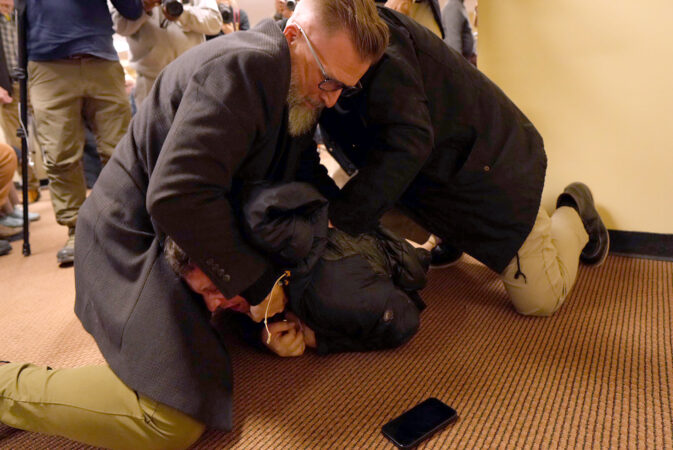
    MINNEAPOLIS — A man sprayed an unknown substance on Democratic U.S. Rep. Ilhan Omar and was tackled to the ground Tuesday during a town hall in Minneapolis, where tensions over federal immigration enforcement have come to a head after agents fatally shot an intensive care nurse and a mother of three this month.

    The audience cheered as the man was pinned down and his arms were tied behind his back. In video of the incident, someone in the crowd can be heard saying, “Oh my god, he sprayed something on her.”

    Just before that Omar had called for the abolishment of U.S. Immigration and Customs Enforcement and for Homeland Security Secretary Kristi Noem to resign or face impeachment. Calls are mounting on Capitol Hill for Noem to step down after the shooting deaths in Minneapolis of two people who protested deportations. Few Republicans have risen to her defense.

    “ICE cannot be reformed,” Omar said, seconds before the attack.

    Minneapolis police said officers saw the man use a syringe to spray an unknown liquid at Omar. They immediately arrested him and booked him at the county jail for third-degree assault, spokesperson Trevor Folke said. Forensic scientists responded to the scene.

    Police identified the man as 55-year-old Anthony Kazmierczak. It was not immediately clear if Kazmierczak had an attorney. The county public defenders’ office could not immediately be reached.

    Omar continued speaking for about 25 more minutes after the man was ushered out by security, saying she would not be intimidated.

    There was a strong, vinegarlike smell after the man pushed on the syringe, according to an Associated Press journalist who was there. Photos of the device, which fell to the ground when he was tackled, showed what appeared to be a light-brown liquid inside. There was no immediate word from officials on what it was.

    Minneapolis Council Member LaTrisha Vetaw said some of the substance also came into contact with her and state Sen. Bobby Joe Champion. She called it a deeply unsettling experience.

    No one in the crowd of about 100 people had a noticeable physical reaction to the substance.

    Omar says she is OK and ‘a survivor’

    Walking out afterward, Omar said she felt a little flustered but was not hurt. She was going to be screened by a medical team.

    She later posted on the social platform X: “I’m ok. I’m a survivor so this small agitator isn’t going to intimidate me from doing my work. I don’t let bullies win.”

    The White House did not immediately respond to a message seeking comment Tuesday night.

    President Donald Trump has frequently criticized the congresswoman and has stepped up verbal attacks on her in recent months as he turned his focus on Minneapolis. During a Cabinet meeting in December, he referred to her as “garbage.”

    Hours earlier on Tuesday, the president criticized Omar as he spoke to a crowd in Iowa, saying his administration would only let in immigrants who “can show that they love our country.”

    “They have to be proud, not like Ilhan Omar,” he said, drawing loud boos at the mention of her name.

    He added: “She comes from a country that’s a disaster. So probably, it’s considered, I think — it’s not even a country.”

    Omar is a U.S. citizen who fled her birthplace, Somalia, with her family at age 8 as a civil war tore apart the country.

    The Minneapolis-St. Paul area is home to about 84,000 people of Somali descent — nearly a third of Somalis living in the U.S.

    Officials condemn the attack

    Democratic Minnesota Gov. Tim Walz expressed gratitude that Omar was safe, adding in a post on X: “Our state has been shattered by political violence in the last year. The cruel, inflammatory, dehumanizing rhetoric by our nation’s leaders needs to stop immediately.”

    U.S. Rep. Nancy Mace, a South Carolina Republican, also denounced the assault.

    “I am deeply disturbed to learn that Rep. Ilhan Omar was attacked at a town hall today” Mace said. “Regardless of how vehemently I disagree with her rhetoric — and I do — no elected official should face physical attacks. This is not who we are.”

    Minneapolis Mayor Jacob Frey, a Democrat, called the attack “unacceptable.” He said he was relieved that Omar “is OK” and thanked police for their quick response, concluding: “This kind of behavior will not be tolerated in our city.”

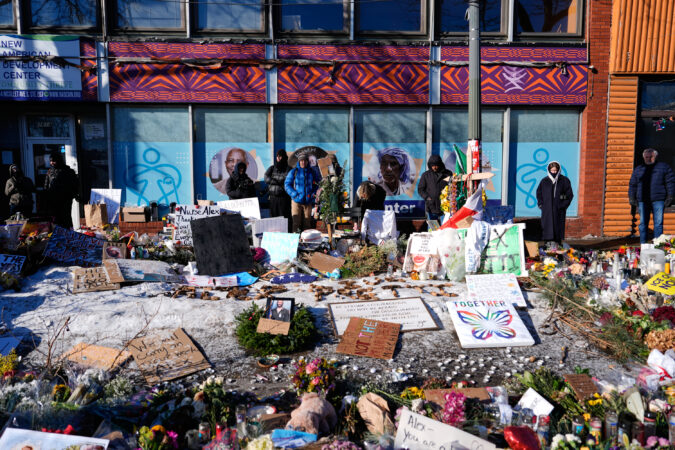
    The city has been reeling from the fatal shootings of two residents by federal immigration agents this month during Trump’s massive immigration enforcement surge. Intensive care unit nurse Alex Pretti was killed Saturday, less than three weeks after Renee Good was fatally shot behind the wheel of her vehicle.

    Lawmakers face rising threats

    The attack came days after a man was arrested in Utah for allegedly punching U.S. Rep. Maxwell Frost, a Democrat from Florida, in the face during the Sundance Film Festival and saying Trump was going to deport him.

    Threats against members of Congress have increased in recent years, peaking in 2021 in the aftermath of that year’s Jan. 6 attack on the U.S. Capitol, before dipping slightly only to climb again, according to the most recent figures from the U.S. Capitol Police.

    Lawmakers have discussed the impact on their ability to hold town halls and public events, with some even citing the threat environment in their decisions not to seek reelection.

    Following the assault on Omar, U.S. Capitol Police said in a statement that the agency was “working with our federal partners to see this man faces the most serious charges possible to deter this kind of violence in our society.”

    It also released updated numbers detailing threats to members of Congress: 14,938 “concerning statements, behaviors, and communications directed against lawmakers, their families, staff and the Capitol Complex” in 2025.

    That is a sharp increase from 2024, when the number of cases was 9,474, according to USCP. It is the third year in a row that the number of threats has increased.

    Capitol Police have beefed up security measures across all fronts since Jan. 6, 2021, and the department has seen increased reporting after a new center was launched two years ago to process reports of threats.

  • 2 federal officers fired shots during encounter that killed Alex Pretti, DHS tells Congress

    2 federal officers fired shots during encounter that killed Alex Pretti, DHS tells Congress

    WASHINGTON — Two federal officers fired shots during an encounter that killed ICU nurse Alex Pretti in Minneapolis, a Customs and Border Protection official told Congress in a notice sent Tuesday.

    The notice said one Border Patrol officer fired his Glock and a CBP officer fired his, according to a notification to Congress obtained by The Associated Press.

    Investigators from CBP’s Office of Professional Responsibility conducted the analysis based on a review of body-worn camera footage and agency documentation, the notice said. The agency is required to report in-custody and certain other deaths involving its agents and officers to Congress.

    A Customs and Border Protection official said in the notice that officers tried to take Pretti into custody and he resisted, leading to a struggle. During the struggle, a Border Patrol agent yelled, “He’s got a gun!” multiple times, the official said.

  • Judge issues temporary order barring removal of boy, 5, and father who were detained in Minnesota

    Judge issues temporary order barring removal of boy, 5, and father who were detained in Minnesota

    A federal judge has issued a temporary order prohibiting the removal of a 5-year-old Ecuadoran boy and his father who were detained last week in Minnesota in an incident that further inflamed divisions on immigration under the Trump administration.

    U.S. Judge Fred Biery ruled Monday that any removal or transfer of 5-year-old Liam Conejo Ramos and his father, Adrian Alexander Conejo Arias, is on hold while a court case proceeds.

    A petition seeking their release was filed Saturday as dozens of immigrant families protested behind the fences of the family detention facility where the father and son are detained in Dilley, Texas, near San Antonio.

    A photo of the boy wearing a beanie and a Spiderman backpack has circulated widely on social media, sparking strong reactions.

    “He has become emblematic of the monstrosity of the ICE system and the detention system,” U.S. Rep. Joaquin Castro said in a Facebook video. He used the post to announce that he and fellow Texas Democratic, U.S. Rep. Jasmine Crockett, would visit the father and son on Wednesday at the Dilley Detention Center.

    Castro added that it was “inhumane to be keeping young kids like that in that place.” Advocates say conditions inside the center include constant illness and insufficient medical access.

    The boy and his father were taken into custody last week outside their home in Minnesota. Neighbors and school officials say that federal immigration officers used the preschooler as “bait” by telling him to knock on the door to his house so that his mother would answer.

    The Department of Homeland Security has called that description of events an “abject lie.” It said the father fled on foot and left the boy in a running vehicle in their driveway.

    Ramos’ attorney, Jennifer Scarborough, didn’t immediately respond to phone or email messages from The Associated Press seeking comment. The Department of Homeland Security sent a response only reiterating their version of events, insisting they did not arrest or target the child. Their statement did not address the judge’s court order.

    Federal officials have said the father was in the U.S. illegally, without offering details. Stephen Miller, the White House deputy chief of staff, said the man entered the country in December 2024.

    The family’s attorney said he had a pending asylum claim allowing him to stay in the country.

    An online court summary shows the case was filed on Dec. 17, 2024, and is assigned to the immigration court inside the Dilley detention center.

    The child’s immigration status may be a critical factor, and it is unclear if the 5-year-old was legally in the United States. If he wasn’t, he may be subject to deportation with one or both parents.