Category: Associated Press

  • Judge finds Virginia Democrats’ redistricting resolution illegal

    Judge finds Virginia Democrats’ redistricting resolution illegal

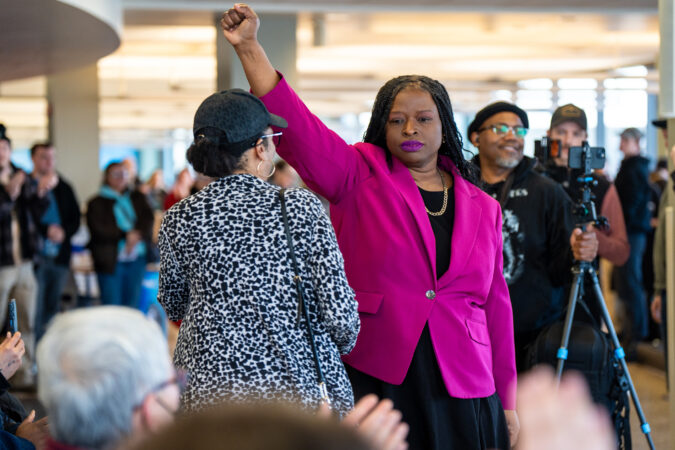
    RICHMOND, Va. — A Virginia judge ruled Tuesday that a proposed constitutional amendment letting Democrats redraw the state’s Congressional maps was illegal, setting back the party’s efforts to pick up seats in the U.S. House in November.

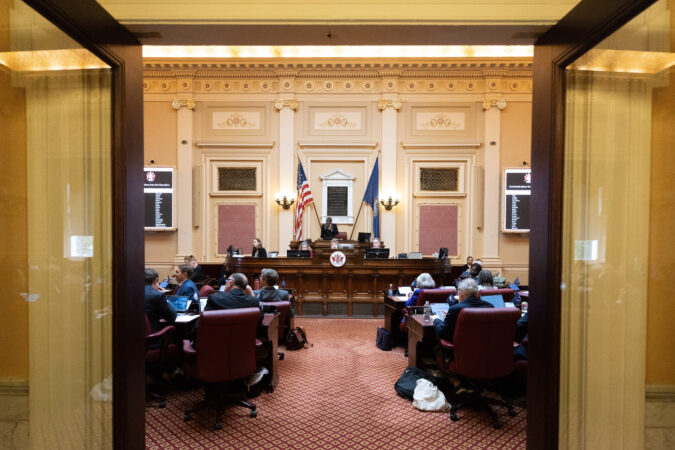
    Tazewell Circuit Court Judge Jack Hurley Jr. struck down the legislature’s actions on three grounds, including finding that lawmakers failed to follow their own rules for adding the redistricting amendment to a special session.

    His order also said Democrats failed to approve the amendment before the public began voting in last year’s general election and failed to publish the amendment three months before the election, as required by law.

    As a result, he said, the amendment was invalid and void.

    Virginia House Speaker Don Scott, who was listed in Republicans’ lawsuit over the resolution, said Democrats would appeal the ruling.

    “Nothing that happened today will dissuade us from continuing to move forward and put this matter directly to the voters,” Scott said in a joint statement with other state Democratic leaders.

    Virginians for Fair Elections, a campaign that supports the redistricting resolution, accused conservatives of filing their lawsuit in a known GOP-friendly jurisdiction, saying, “Republicans court-shopped for a ruling because litigation and misinformation are the only tools they have left.”

    President Donald Trump launched an unusual mid-decade redistricting battle last summer when he urged Republican officials in Texas to redraw districts to help the GOP win more seats, hoping to hold on to a narrow House majority in the face of political headwinds that typically favor the party out of power in midterms.

    So far that battle has resulted in nine more seats that Republicans believe they can win in Texas, Missouri, North Carolina and Ohio, and six that Democrats think they can win in California and Utah. Democrats hope to fully or partially make up that three-seat margin in Virginia.

    As in Virginia, redistricting is still being litigated in several states, and there is no guarantee that the parties will win the seats they have redrawn.

    Other states still could join the fray: Democratic Maryland Gov. Wes Moore is pushing for revised districts that could help Democrats win all eight of the state’s U.S. House seats, up from the seven they currently hold, and Republican Florida Gov. Ron DeSantis plans to call a special session on redistricting in April.

    Hurley’s ruling comes after lawmakers said they would unveil their proposed new House districts to voters by the end of this week.

    The state is currently represented in the House by six Democrats and five Republicans from districts whose boundaries were imposed by a court after a bipartisan redistricting commission failed to agree on a map after the 2020 census.

    Because the commission was established by a voter-approved constitutional amendment, lawmakers have to revise the constitution in order to be able to redraw maps this year. That requires the pass a resolution in two separate legislative sessions, with a state election sandwiched in between.

    Virginians would have to vote in favor in a referendum.

  • Trump visits Iowa trying to focus on affordability during fallout over nurse’s Minneapolis shooting

    Trump visits Iowa trying to focus on affordability during fallout over nurse’s Minneapolis shooting

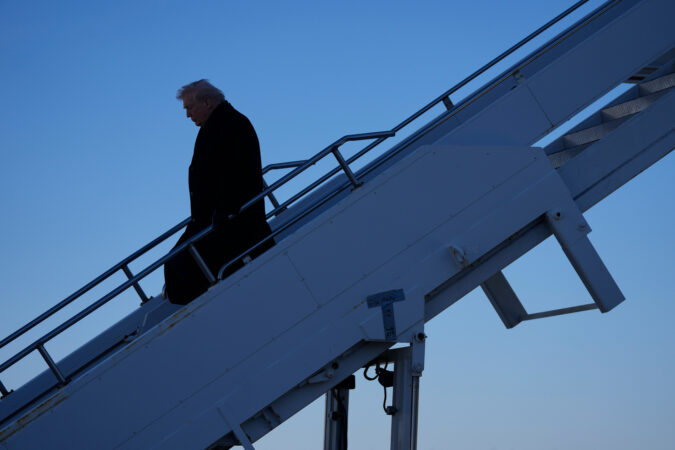
    CLIVE, Iowa — President Donald Trump arrived in Iowa on Tuesday as part of the White House’s midterm-year pivot toward affordability, even as his administration remains mired in the fallout in Minneapolis over a second fatal shooting by federal immigration officers this month.

    The Republican president first made a stop at a local restaurant, where he met some locals and sat for an interview with Fox News Channel — in which he said he was attempting to “de-escalate a little bit” in Minnesota. Afterwards, he was scheduled to deliver a speech on affordability at the Horizon Events Center in Clive, a suburb of Des Moines.

    The trip is expected to also highlight energy policy, White House chief of staff Susie Wiles said last week. It’s part of the White House’s strategy to have Trump travel out of Washington once a week ahead of the midterm elections to focus on affordability issues facing everyday Americans — an effort that keeps getting diverted by crisis.

    The latest comes as the Trump administration is grappling with the weekend shooting death of Alex Pretti, an ICU nurse killed by federal agents in the neighboring state of Minnesota. Pretti had participated in protests following the Jan. 7 killing of Renee Good by an Immigration and Customs Enforcement officer. Even as some top administration officials moved quickly to malign Pretti, Trump said he was waiting until an investigation into the shooting was complete.

    Trump calls Pretti killing ‘sad situation’

    As Trump left the White House on Tuesday to head to Iowa, he was repeatedly questioned by reporters about Pretti’s killing. Trump disputed language used by his own deputy chief of staff, Stephen Miller, who on social media described Pretti as an “assassin” who “tried to murder federal agents.” Vice President JD Vance shared the post.

    Trump, when asked Tuesday if he believed Pretti was an assassin, said, “No.”

    When asked if he thought Pretti’s killing was justified, Trump called it “a very sad situation” and said a “big investigation” was underway.

    “I’m going to be watching over it, and I want a very honorable and honest investigation. I have to see it myself,” he said.

    He also said Homeland Security Secretary Kristi Noem, who was quick to cast Pretti as a violent instigator, would not be resigning.

    Later, as he greeted diners at an Iowa restaurant, Trump weighed in further with comments that were likely to exacerbate frustration among some of his backers who are also strong Second Amendment proponents.

    “He certainly shouldn’t have been carrying a gun,” Trump said of Pretti.

    He called it a “very, very unfortunate incident but said, ”I don’t like that he had a gun. I don’t like that he had two fully loaded magazines. That’s a lot of bad stuff.”

    Republicans want to switch the subject to affordability

    Trump was last in Iowa ahead of the July 4 holiday to kick off the United States’ upcoming 250th anniversary, which morphed largely into a celebration of his major spending and tax cut package hours after Congress had approved it.

    Republicans are hoping that Trump’s visit to the state on Tuesday draws focus back to that tax bill, which will be a key part of their pitch as they ask voters to keep them in power in November.

    “I invited President Trump back to Iowa to highlight the real progress we’ve made: delivering tax relief for working families, securing the border, and growing our economy,” Rep. Zach Nunn, R-Iowa, said in a statement in advance of his trip. “Now we’ve got to keep that momentum going and pass my affordable housing bill, deliver for Iowa’s energy producers, and bring down costs for working families.”

    Trump’s affordability tour has taken him to Michigan, Pennsylvania and North Carolina as the White House tries to marshal the president’s political power to appeal to voters in key swing states.

    But Trump’s penchant for going off-script has sometimes taken the focus off cost-of-living issues and his administration’s plans for how to combat it. In Mount Pocono, Pennsylvania, Trump insisted that inflation was no longer a problem and that Democrats were using the term affordability as a “hoax” to hurt him. At that event, Trump also griped that immigrants arriving to the U.S. from “filthy” countries got more attention than his pledges to fight inflation.

    Competitive races in Iowa

    Although it was a swing state just a little more than a decade ago, Iowa in recent years has been reliably Republican in national and statewide elections. Trump won Iowa by 13 percentage points in 2024 against Democrat Kamala Harris.

    Still, two of Iowa’s four congressional districts have been among the most competitive in the country and are expected to be again in this year’s midterm elections. Trump already has endorsed Republican Reps. Nunn and Mariannette Miller-Meeks. Democrats, who landed three of Iowa’s four House seats in the 2018 midterm elections during Trump’s first term, see a prime opportunity to unseat Iowa incumbents.

    This election will be the first since 1968 with open seats for both governor and U.S. senator at the top of the ticket after Republican Gov. Kim Reynolds and Republican U.S. Sen. Joni Ernst opted out of reelection bids. The political shake-ups have rippled throughout the state, with Republican Reps. Randy Feenstra and Ashley Hinson seeking new offices for governor and for U.S. senator, respectively.

    Democrats hope Rob Sand, the lone Democrat in statewide office who is running for governor, will make the entire state more competitive with his appeal to moderate and conservative voters and his $13 million in cash on hand.

  • Families of 2 men killed in boat strike sue Trump administration over attack they call ‘unlawful’

    Families of 2 men killed in boat strike sue Trump administration over attack they call ‘unlawful’

    WASHINGTON — Families of two Trinidadian nationals killed in a Trump administration boat strike last October sued the federal government on Tuesday, calling the attack a war crime and part of an “unprecedented and manifestly unlawful U.S. military campaign.”

    The lawsuit is thought to be the first wrongful death case arising from the three dozen strikes that the administration has launched since September on boats in the Caribbean Sea and eastern Pacific Ocean. The complaint will test the legal justification of the Trump administration attacks; government officials have defended them as necessary to stem the flow of drugs into the United States, but many legal experts say they amount to a brazen violation of the laws of armed conflict.

    The complaint echoes many of the frequently articulated concerns about the boat strikes, noting for instance that they have been carried out without congressional authorization and at a time when there is no military conflict between the United States and drug cartels that under the laws of war could justify the lethal attacks.

    “These premeditated and intentional killings lack any plausible legal justification. Thus, they were simply murders, ordered by individuals at the highest levels of government and obeyed by military officers in the chain of command,” the lawsuit says.

    White House Deputy Press Secretary Anna Kelly said in a statement that the Oct. 14 strike “was conducted against designated narcoterrorists bringing deadly poison to our shores.”

    “President Trump used his lawful authority to take decisive action against the scourge of illicit narcotics that has resulted in the needless deaths of innocent Americans,” Kelly stated.

    The lawsuit was filed by the mother of Chad Joseph and the sister of Rishi Samaroo, two Trinidadian nationals who were among six people killed in the Oct. 14 missile strike on a boat traveling from Venezuela to Trinidad. The men were not members of any drug cartel, the lawsuit says, but had instead been fishing in the waters off the Venezuelan coast and were returning to their homes in Trinidad and Tobago.

    The two had caught a ride home to Las Cuervas, a fishing community where they were from, on a small boat targeted in a strike announced on Truth Social by President Donald Trump. All six people aboard the boat were killed.

    “These killings were wrongful because they took place outside of armed conflict and in circumstances in which Mr. Joseph and Mr. Samaroo were not engaged in activities that presented a concrete, specific, and imminent threat of death or serious physical injury, and where there were means other than lethal force that could have reasonably been employed to neutralize any such threat,” the lawsuit says.

    The lawsuit is the first to challenge the legality of the boat strikes in court, according to Jen Nessel, a spokesperson for the Center for Constitutional Rights, which filed the lawsuit in federal court in Massachusetts on behalf of the families, along with the ACLU and others.

    Nessel said in an email that the center also has a Freedom of Information Act lawsuit seeking the release of the legal justification for the strikes.

    Jeffrey Stein, an American Civil Liberties Union attorney, told reporters over Zoom that the lawsuit seeks compensatory and punitive damages that can be determined after a trial.

    “We don’t think that it’s something that we could put a precise dollar amount on,” Stein said. “But we’re seeking damages that can go some way toward bringing justice for these really heinous abuses of power.”

    The lawsuit also aims to prevent more boat strikes, Stein said, with the hope that a U.S. court rejects the Trump administration’s “frankly absurd claims about its authority to engage in these illegal strikes.”

    The lawsuit was filed in federal court in Massachusetts. It cites the Death on the High Seas Act, which the lawyers say permits wrongful death cases in situations like this, as well as the Alien Tort Statute, which permits foreign nationals to sue in federal court for alleged human rights violations.

    The death toll from the boat strikes is now up to at least 126 people, with the inclusion of those presumed dead after being lost at sea, the U.S. military confirmed Monday. The figure includes 116 people who were killed immediately in at least 36 attacks carried out since early September, with 10 others believed dead because searchers did not locate them following a strike.

  • Man wounded after exchanging gunfire with Border Patrol agents near US-Mexico border

    Man wounded after exchanging gunfire with Border Patrol agents near US-Mexico border

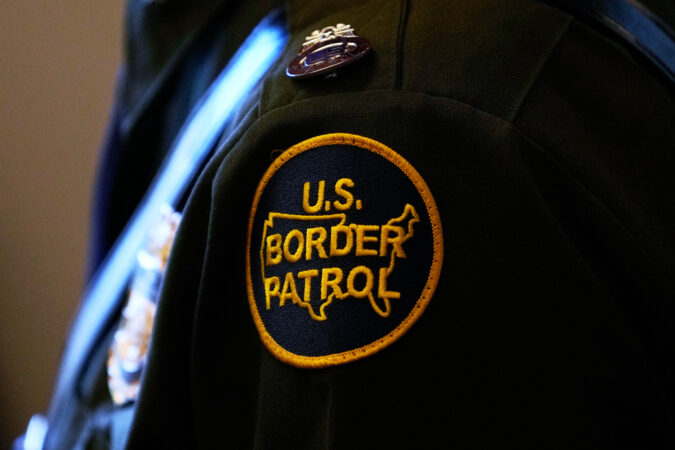
    ARIVACA, Ariz. — A man who authorities say was involved in a smuggling operation was shot Tuesday in an exchange of gunfire with the U.S. Border Patrol and after firing at a federal helicopter near the U.S.-Mexico border, authorities said.

    Federal agents were attempting to apprehend the 34-year-old Arizona man near Arivaca, Ariz., when he shot at a Border Patrol helicopter and at agents, the FBI said. Agents returned fire, striking the man and wounding him, the FBI said.

    The man was transported to a hospital and was recovering from surgery Tuesday evening, authorities said.

    The Pima County Sheriff’s Department said the FBI asked it to lead a use-of-force investigation of the Border Patrol. It noted that such investigations are standard when a federal agency is involved in a shooting in the county.

    FBI special agent Heith Janke said suspect Patrick Gary Schlegel has a criminal history that includes a 2025 warrant for escape stemming from a smuggling conviction.

    Hagle was in federal custody and is expected to be charged with a criminal complaint, Janke said.

    Arivaca is a community about 10 miles from the border. The area is a common path for drug smugglers and migrants who illegally cross the border, so agents regularly patrol there.

    The Santa Rita Fire District said it responded to the shooting and the person who was wounded was in custody.

    “Patient care was transferred to a local medical helicopter for rapid transport to a regional trauma center,” the fire district said.

    One level-one trauma center hospital in Tucson declined to release information, and the AP was waiting on a response from another.

    The shooting comes in a month that has seen three shootings — two fatal — by immigration officers involved in the massive Department of Homeland Security enforcement operation in Minnesota.

    While there were numerous videos of those shootings taken by residents monitoring the enforcement operations in the Minneapolis area, the latest shooting in Arizona happened in a community of about 500 people apparently without any bystander video of the incident.

    The sheriff department said its involvement in the investigation was the result of “long standing relationships” built over time in the border area to promote transparency.

    Sheriff Chris Nanos, a Democrat, has previously said his agency will not enforce federal immigration law amid President Donald Trump’s crackdown and that he will use his limited resources to focus on local crime and other public safety issues.

    U.S. Customs and Border Protection did not immediately respond to emails and telephone calls seeking more information.

    Border Patrol agents fired weapons in eight incidents during the 12-month period through September 2025, 14 times during the year before that and 13 times the year before that.

  • TikTok settles as social media giants face landmark trial over youth addiction claims

    TikTok settles as social media giants face landmark trial over youth addiction claims

    LOS ANGELES — TikTok agreed to settle a landmark social media addiction lawsuit just before the trial kicked off, the plaintiff’s attorneys confirmed.

    The social video platform was one of three companies — along with Meta’s Instagram and Google’s YouTube — facing claims that their platforms deliberately addict and harm children. A fourth company named in the lawsuit, Snapchat parent company Snap Inc., settled the case last week for an undisclosed sum.

    Details of the settlement with TikTok were not disclosed, and the company did not immediately respond to a request for comment.

    At the core of the case is a 19-year-old identified only by the initials “KGM,” whose case could determine how thousands of other, similar lawsuits against social media companies will play out. She and two other plaintiffs have been selected for bellwether trials — essentially test cases for both sides to see how their arguments play out before a jury and what damages, if any, may be awarded, said Clay Calvert, a nonresident senior fellow of technology policy studies at the American Enterprise Institute.

    A lawyer for the plaintiff said in a statement Tuesday that TikTok remains a defendant in the other personal injury cases, and that the trial will proceed as scheduled against Meta and YouTube.

    Jury selection starts this week in the Los Angeles County Superior Court. It’s the first time the companies will argue their case before a jury, and the outcome could have profound effects on their businesses and how they will handle children using their platforms. The selection process is expected to take at least a few days, with 75 potential jurors questioned each day through at least Thursday. A fourth company named in the lawsuit, Snapchat parent company Snap Inc., settled the case last week for an undisclosed sum.

    KGM claims that her use of social media from an early age addicted her to the technology and exacerbated depression and suicidal thoughts. Importantly, the lawsuit claims that this was done through deliberate design choices made by companies that sought to make their platforms more addictive to children to boost profits. This argument, if successful, could sidestep the companies’ First Amendment shield and Section 230, which protects tech companies from liability for material posted on their platforms.

    “Borrowing heavily from the behavioral and neurobiological techniques used by slot machines and exploited by the cigarette industry, Defendants deliberately embedded in their products an array of design features aimed at maximizing youth engagement to drive advertising revenue,” the lawsuit says.

    Executives, including Meta CEO Mark Zuckerberg, are expected to testify at the trial, which will last six to eight weeks. Experts have drawn similarities to the Big Tobacco trials that led to a 1998 settlement requiring cigarette companies to pay billions in healthcare costs and restrict marketing targeting minors.

    “Plaintiffs are not merely the collateral damage of Defendants’ products,” the lawsuit says. “They are the direct victims of the intentional product design choices made by each Defendant. They are the intended targets of the harmful features that pushed them into self-destructive feedback loops.”

    The tech companies dispute the claims that their products deliberately harm children, citing a bevy of safeguards they have added over the years and arguing that they are not liable for content posted on their sites by third parties.

    “Recently, a number of lawsuits have attempted to place the blame for teen mental health struggles squarely on social media companies,” Meta said in a recent blog post. “But this oversimplifies a serious issue. Clinicians and researchers find that mental health is a deeply complex and multifaceted issue, and trends regarding teens’ well-being aren’t clear-cut or universal. Narrowing the challenges faced by teens to a single factor ignores the scientific research and the many stressors impacting young people today, like academic pressure, school safety, socio-economic challenges, and substance abuse.”

    A Meta spokesperson said in a statement Monday the company strongly disagrees with the allegations outlined in the lawsuit and that it’s “confident the evidence will show our longstanding commitment to supporting young people.”

    José Castañeda, a Google Spokesperson, said Monday that the allegations against YouTube are “simply not true.” In a statement, he said “Providing young people with a safer, healthier experience has always been core to our work.”

    TikTok did not immediately respond to a request for comment Monday.

    The case will be the first in a slew of cases beginning this year that seek to hold social media companies responsible for harming children’s mental well-being. A federal bellwether trial beginning in June in Oakland, Calif., will be the first to represent school districts that have sued social media platforms over harms to children.

    In addition, more than 40 state attorneys general have filed lawsuits against Meta, claiming it is harming young people and contributing to the youth mental health crisis by deliberately designing features on Instagram and Facebook that addict children to its platforms. The majority of cases filed their lawsuits in federal court, but some sued in their respective states.

    TikTok also faces similar lawsuits in more than a dozen states.

  • US sending ICE unit to Winter Olympics for security, prompting concern and confusion in Italy

    US sending ICE unit to Winter Olympics for security, prompting concern and confusion in Italy

    MILAN — News that a unit of U.S. Immigration and Customs Enforcement would be present during the upcoming Winter Games has set off concern and confusion in Italy, where people have expressed outrage at the inclusion of an agency that has dominated headlines for leading the Trump administration’s immigration crackdown.

    Homeland Security Investigations, a unit within ICE that focuses on cross-border crimes, frequently sends its officers to overseas events like the Olympics to assist with security. HSI officers are separate from the ICE arm at the forefront of the immigration crackdown known as Enforcement and Removal Operations, and there was no indication ERO officers were being sent to Italy.

    That distinction, however, wasn’t immediately clear to local media on Tuesday morning.

    Italy reacts to U.S. security deployment

    The reaction among some in Italy reflects not only a worsening perception abroad of the administration’s tactics on immigration but also underscores a broader rift between the U.S. under President Donald Trump and its international allies.

    Vague reports that ICE would be deployed in some capacity surfaced over the weekend, resulting in a series of online petitions gathering support of people opposed to the presence of ICE at the Games. They followed a RAI news report that aired Sunday showing an Italian news crew being threatened in Minneapolis by ICE agents. Trump’s immigration crackdown has in recent weeks intensified in Minneapolis, leading to the fatal shootings of two U.S. citizens at the hands of federal immigration officers.

    Milan Mayor Giuseppe Sala said that ICE would not be welcome in his city, which is hosting the Feb. 6 opening ceremony to be attended by U.S. Vice President JD Vance, as well as most ice sports.

    “This is a militia that kills, a militia that enters into the homes of people, signing their own permission slips. It is clear they are not welcome in Milan, without a doubt,” Sala told RTL Radio 102.

    ICE units breakdown

    Immigration and Customs Enforcement is broken into various arms. Enforcement and Removal Operations is the part of the agency that is tasked with monitoring, arresting, and removing foreigners who no longer have the right to be in the U.S. They’re the officers most directly tasked with carrying out Trump’s mass deportation agenda.

    Another arm of ICE is Homeland Security Investigations. Agents from HSI conduct investigations into anything that has a cross-border nexus from human smuggling to fentanyl trafficking to smuggling of cultural artifacts. Agents from HSI are stationed in embassies around the world to facilitate their investigations and build relations with local law enforcement in those countries.

    The ICE agents deployed to Italy for the Games will have a different role from the one seen in immigration crackdowns in the U.S., officials have stressed.

    “Obviously, ICE does not conduct immigration enforcement operations in foreign countries,″ the Department of Homeland Security said in a statement Tuesday.

    “At the Olympics, ICE’s Homeland Security Investigations is supporting the U.S. Department of State’s Diplomatic Security Service and host nation to vet and mitigate risks from transnational criminal organizations. All security operations remain under Italian authority.”

    A U.S official speaking on condition of anonymity to discuss security measures said the general public likely wouldn’t even see or be aware of the HSI agents on the ground during the Olympics. The official said HSI agents would be working behind the scenes, mainly in offices or the U.S. consulate in Milan, as they have done during previous international events.

    For years HSI distanced itself from anything having to do with deportations or immigration enforcement. At one point they got new branding and email addresses to set themselves apart because agents working in parts of the country with strong political opposition to immigration enforcement wouldn’t get their emails answered because they had an ICE.gov address.

    Under the Trump administration, however, HSI agents have been working closer with ICE’s other arm — the deportation officers — to focus more on immigration issues. They’ve been going out on operations with deportation officers and focusing more on immigration fraud cases.

    Reaction underscores fraught ties

    The International Olympic Committee said in a statement that security “is the responsibility of the authorities of the host country, who work closely with the participating delegations.”

    The reaction in Italy highlights increasingly fraught relations between Trump and the U.S.’ traditional allies in Europe, which have been tested during the president’s second term over his threats to take over Greenland.

    Foreign Minister Antonio Tajani told reporters Tuesday that the ICE agents deployed for the Games will not be “those with machine guns and faces covered. They will be functionaries who belong to the anti-terrorism department.″

    Interior Minister Matteo Piantedosi met in his office with U.S. Ambassador Tilman Fertitta in the late morning for a conversation that was described as cordial. The Interior Minister is Italy’s top law enforcement officials, charged with security for the Games, which is coordinated with regional prefects.

    Asked about the potential deployment over the weekend, he gave a diplomatic shrug: “I don’t see what the problem would be,″ the news agency ANSA quoted him as saying.

    Cortina Mayor Gianluca Lorenzi told the Associated Press that the municipal administrations defers to the prefecture and Italian law enforcement on matters of delegation security — which he assumes are in line with Italian guidelines.

    ———

    Barry reported from Milan. Associated Press writers Rebecca Santana and Matthew Lee contributed from Washington and Graham Dunbar from Crans-Montana, Switzerland.

  • World pauses to commemorate International Holocaust Remembrance Day

    World pauses to commemorate International Holocaust Remembrance Day

    WARSAW, Poland — Holocaust survivors, politicians, and regular people commemorated International Holocaust Remembrance Day on Tuesday, gathering at somber events across Europe and beyond to reflect on Nazi Germany’s killing of millions of people.

    International Holocaust Remembrance Day is observed across each year on Jan. 27, the anniversary of the liberation of Auschwitz-Birkenau, the most notorious of the Nazi German death camps. The U.N. General Assembly adopted a resolution in 2005 establishing the day as an annual commemoration.

    “The attempt, carried out by Nazi Germany, to erase the Jews from the face of Europe encapsulates, in an emblematic way, all the evil that human beings are capable of committing when they allow themselves to be infected — out of superficiality, indifference, cowardice, or self-interest — by the virus of hatred, racism, and oppression,” Italian President Sergio Mattarella said in a gathering with survivors in Rome.

    At Auschwitz, located in an area of southern Poland which was under German occupation during World War II, Polish President Karol Nawrocki joined survivors for a remembrance ceremony that ended with Jewish and Christian clergy reciting prayers.

    Bernard Offen, a 96-year-old survivor told participants that in today’s world he sees “signs I know too well.”

    “I see hatred resurgent. I see violence beginning to be justified once again,” Offen said. “I see people who believe their anger is more valuable than another human life. I say this because I am an old man who has seen where indifference leads to. And I say this because I believe that — I truly believe — that we can choose differently.”

    Nazi German forces killed some 1.1 million people at Auschwitz, most of them Jews, but also Poles, Roma, and others. The camp was liberated by the Soviet army on Jan. 27, 1945. In all, 6 million Jews were killed in the Holocaust — in ghettos, concentration camps, and shot at close range in the fields and forests of Eastern Europe.

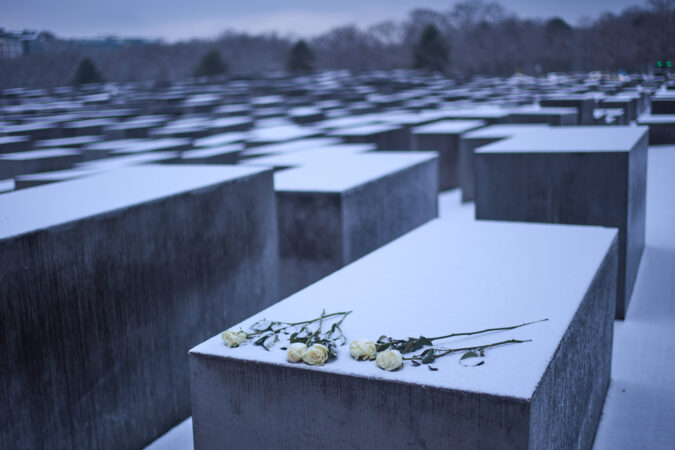
    In the heart of Berlin, candles burned at the Memorial to the Murdered Jews of Europe, a field of 2,700 gray concrete slabs which honors the 6 million victims and stands as a powerful symbol of Germany’s remorse.

    Other countries are still struggling to come to terms with the complicity of their ancestors. Mattarella condemned the complicity of ordinary Italians in the fascist-era racial laws, which persecuted Italy’s Jewish community, and deportation of its Jews.

    As in recent years, Russia representatives were not invited to the observances at Auschwitz due to the country’s invasion of Ukraine.

    ‘Become my witness’

    Pavel Jelinek, a 90-year-old survivor from the city of Liberec — a Czech city with a prewar Jewish population of 1,350 — told those gathered in the upper house of the Czech Parliament that he was now the last living of the 37 Jews who returned to the city after the war.

    There are an estimated 196,600 Jewish Holocaust survivors still alive globally, down from 220,000 a year ago, according to the New York-based Conference on Jewish Material Claims Against Germany. Their median age is 87, and nearly all — some 97% — are “child survivors” who were born 1928 and later, the group said.

    Though the world’s community of survivors is shrinking, some are still telling their stories for the first time after all these years.

    In Britain, King Charles and Queen Camilla held a reception for survivors. A Holocaust survivor also addressed the British Cabinet in what Prime Minister Keir Starmer described as a first. Government members wiped away tears as 95-year-old Mala Tribich described how Germany’s invasion of Poland in 1939 destroyed her childhood.

    She recalled being forced into hard labor at the age of 12 as the first Nazi ghetto was established in her hometown of Piotrkow Trybunalski, and spoke of the hunger, disease and suffering there. The Nazis killed her mother, father, and sister. She was sent to Ravensbrück and then to Bergen-Belsen, where she was liberated by the British Army in April 1945.

    She urged the Cabinet members to fight antisemitism — and to remember.

    “Soon, there will be no eyewitnesses left,” she told them. “That is why I ask you today not just to listen, but to become my witness.”

    ‘Unity that saves lives is needed’

    Many leaders also reflected on the upheaval in today’s world.

    Kaja Kallas, the European Union’s foreign policy chief, warned about rising antisemitism and new threats. She noted that AI-generated content is now being used “to blur the line between fact and fiction, distort historical truth, and undermine our collective memory.”

    Ukraine’s President Volodymyr Zelensky, whose country has been under attack from Russia for four years, said that just as the world united to defeat the Nazis in 1945, it “must act the same way now.”

    “Whenever hatred and war threaten nations, unity that saves lives is needed,” Zelensky said.

  • Minneapolis shooting scrambles Second Amendment politics for Trump

    Minneapolis shooting scrambles Second Amendment politics for Trump

    Prominent Republicans and gun rights advocates helped elicit a White House turnabout this week after bristling over the administration’s characterization of Alex Pretti, the second person killed this month by a federal officer in Minneapolis, as responsible for his own death because he lawfully possessed a weapon.

    The death produced no clear shifts in U.S. gun politics or policies, even as President Donald Trump shuffles the lieutenants in charge of his militarized immigration crackdown. But important voices in Trump’s coalition have called for a thorough investigation of Pretti’s death while also criticizing inconsistencies in some Republicans’ Second Amendment stances.

    If the dynamic persists, it could give Republicans problems as Trump heads into a midterm election year with voters already growing skeptical of his overall immigration approach. The concern is acute enough that Trump’s top spokeswoman sought Monday to reassert his brand as a staunch gun rights supporter.

    “The president supports the Second Amendment rights of law-abiding American citizens, absolutely,” White House press secretary Karoline Leavitt told reporters.

    Leavitt qualified that “when you are bearing arms and confronted by law enforcement, you are raising … the risk of force being used against you.”

    Videos contradict early statements from administration

    That still marked a retreat from the administration’s previous messages about the shooting of Pretti. It came the same day the president dispatched border czar Tom Homan to Minnesota, seemingly elevating him over Homeland Security Secretary Kristi Noem and Border Patrol chief Greg Bovino, who had been in charge in Minneapolis.

    Within hours of Pretti’s death on Saturday, Bovino suggested Pretti “wanted to … massacre law enforcement,” and Noem said Pretti was “brandishing” a weapon and acted “violently” toward officers.

    “I don’t know of any peaceful protester that shows up with a gun and ammunition rather than a sign,” Noem said.

    White House deputy chief of staff Stephen Miller, an architect of Trump’s mass deportation effort, went further on X, declaring Pretti “an assassin.”

    Bystander videos contradicted each claim, instead showing Pretti holding a cellphone and helping a woman who had been pepper sprayed by a federal officer. Within seconds, Pretti was sprayed, too, and taken to the ground by multiple officers. No video disclosed thus far has shown him unholstering his concealed weapon -– which he had a Minnesota permit to carry. It appeared that one officer took Pretti’s gun and walked away with it just before shots began.

    As multiple videos went viral online and on television, Vice President JD Vance reposted Miller’s assessment, while Trump shared an alleged photo of “the gunman’s gun, loaded (with two additional full magazines!).”

    On Tuesday, Trump was asked if he agreed with Miller’s comment describing Pretti as an “assassin” and answered “no.” But he added that protesters “can’t have guns” and said he wants the death investigated.

    “You can’t walk in with guns, you just can’t,” Trump told reporters on the White House lawn before departing for a trip to Iowa.

    Swift reactions from gun rights advocates

    The National Rifle Association, which has backed Trump three times, released a statement that began by casting blame on Minnesota Democrats it accused of stoking protests. But the group lashed out after a federal prosecutor in California said on X that, “If you approach law enforcement with a gun, there is a high likelihood they will be legally justified in shooting you.”

    That analysis, the NRA said, is “dangerous and wrong.”

    FBI Director Kash Patel magnified the blowback Sunday on Fox News’ “Sunday Morning Futures With Maria Bartiromo.” No one, Patel said, can “bring a firearm, loaded, with multiple magazines to any sort of protest that you want. It’s that simple.”

    Erich Pratt, vice president of Gun Owners of America, was incredulous.

    “I have attended protest rallies while armed, and no one got injured,” he said on CNN.

    Conservative officials around the country made the same connection between the First and Second amendments.

    “Showing up at a protest is very American. Showing up with a weapon is very American,” state Rep. Jeremy Faison, who leads the GOP caucus in Tennessee, said on X.

    Trump’s first-term vice president, Mike Pence, called for “full and transparent investigation of this officer involved shooting.”

    A different response from the past

    Liberals, conservatives and nonpartisan experts noted how the administration’s response differed from past conservative positions involving protests and weapons.

    Multiple Trump supporters were found to have weapons during the Jan. 6, 2021, attack on the U.S. Capitol. Trump issued blanket pardons to all of them.

    Republicans were critical in 2020 when Mark and Patricia McCloskey had to pay fines after pointing guns at protesters who marched through their St. Louis neighborhood after the police killing of George Floyd in Minneapolis. And then there’s Kyle Rittenhouse, a counter-protester acquitted after fatally shooting two men and injuring another in Kenosha, Wisconsin, during the post-Floyd protests.

    “You remember Kyle Rittenhouse and how he was made a hero on the right,” Trey Gowdy, a Republican former congressman and attorney for Trump during one of his first-term impeachments. “Alex Pretti’s firearm was being lawfully carried. … He never brandished it.”

    Adam Winkler, a UCLA law professor who has studied the history of the gun debate, said the fallout “shows how tribal we’ve become.” Republicans spent years talking about the Second Amendment as a means to fight government tyranny, he said.

    “The moment someone who’s thought to be from the left, they abandon that principled stance,” Winkler said.

    Meanwhile, Democrats who have criticized open and concealed carry laws for years, Winkler added, are not amplifying that position after Pretti’s death.

    Uncertain effects in an election year

    The blowback against the administration from core Trump supporters comes as Republicans are trying to protect their threadbare majority in the U.S. House and face several competitive Senate races.

    Perhaps reflecting the stakes, GOP staff and campaign aides were reticent Monday to talk about the issue at all.

    The House Republican campaign chairman, Rep. Richard Hudson of North Carolina, is sponsoring the GOP’s most significant gun legislation of this congressional term, a proposal to make state concealed-carry permits reciprocal across all states.

    The bill cleared the House Judiciary Committee last fall. Asked Monday whether Pretti’s death and the Minneapolis protests might affect debate, an aide to Speaker Mike Johnson did not offer any update on the bill’s prospects.

    Gun rights advocates have notched many legislative victories in Republican-controlled statehouses in recent decades, from rolling back gun-free zones around schools and churches to expanding gun possession rights in schools, on university campuses and in other public spaces.

    William Sack, legal director of the Second Amendment Foundation, said he was surprised and disappointed by the administration’s initial statements following the Pretti shooting. Trump’s vacillating, he said, is “very likely to cost them dearly with the core of a constituency they count on.”
  • Trump’s use of AI images pushes new boundaries, further eroding public trust, experts say

    Trump’s use of AI images pushes new boundaries, further eroding public trust, experts say

    LOS ANGELES — The Trump administration has not shied away from sharing AI-generated imagery online, embracing cartoonlike visuals and memes and promoting them on official White House channels.

    But an edited — and realistic — image of civil rights attorney Nekima Levy Armstrong in tears after being arrested is raising new alarms about how the administration is blurring the lines between what is real and what is fake.

    Homeland Security Secretary Kristi Noem’s account posted the original image from Levy Armstrong’s arrest before the official White House account posted an altered image that showed her crying. The doctored picture is part of a deluge of AI-edited imagery that has been shared across the political spectrum since the fatal shootings of Renee Good and Alex Pretti by U.S. Border Patrol officers in Minneapolis

    However, the White House’s use of artificial intelligence has troubled misinformation experts who fear the spreading of AI-generated or edited images erodes public perception of the truth and sows distrust.

    In response to criticism of the edited image of Levy Armstrong, White House officials doubled down on the post, with deputy communications director Kaelan Dorr writing on X that the “memes will continue.” White House Deputy Press Secretary Abigail Jackson also shared a post mocking the criticism.

    David Rand, a professor of information science at Cornell University, says calling the altered image a meme “certainly seems like an attempt to cast it as a joke or humorous post, like their prior cartoons. This presumably aims to shield them from criticism for posting manipulated media.” He said the purpose of sharing the altered arrest image seems “much more ambiguous” than the cartoonish images the administration has shared in the past.

    Memes have always carried layered messages that are funny or informative to people who understand them, but indecipherable to outsiders. AI-enhanced or edited imagery is just the latest tool the White House uses to engage the segment of Trump’s base that spends a lot of time online, said Zach Henry, a Republican communications consultant who founded Total Virality, an influencer marketing firm.

    “People who are terminally online will see it and instantly recognize it as a meme,” he said. “Your grandparents may see it and not understand the meme, but because it looks real, it leads them to ask their kids or grandkids about it.”

    All the better if it prompts a fierce reaction, which helps it go viral, said Henry, who generally praised the work of the White House’s social media team.

    The creation and dissemination of altered images, especially when they are shared by credible sources, “crystallizes an idea of what’s happening, instead of showing what is actually happening,” said Michael A. Spikes, a professor at Northwestern University and news media literacy researcher.

    “The government should be a place where you can trust the information, where you can say it’s accurate, because they have a responsibility to do so,” he said. ”By sharing this kind of content, and creating this kind of content … it is eroding the trust — even though I’m always kind of skeptical of the term trust — but the trust we should have in our federal government to give us accurate, verified information. It’s a real loss, and it really worries me a lot.”

    Spikes said he already sees the “institutional crises” around distrust in news organizations and higher education, and feels this behavior from official channels inflames those issues.

    Ramesh Srinivasan, a professor at UCLA and the host of the Utopias podcast, said many people are now questioning where they can turn to for “trustable information.” “AI systems are only going to exacerbate, amplify and accelerate these problems of an absence of trust, an absence of even understanding what might be considered reality or truth or evidence,” he said.

    Srinivasan said he feels the White House and other officials sharing AI-generated content not only invites everyday people to continue to post similar content but also grants permission to others who are in positions of credibility and power, like policymakers, to share unlabeled synthetic content. He added that given that social media platforms tend to “algorithmically privilege” extreme and conspiratorial content — which AI generation tools can create with ease — “we’ve got a big, big set of challenges on our hands.”

    An influx of AI-generated videos related to Immigration and Customs Enforcement action, protests and interactions with citizens has already been proliferating on social media. After Renee Good was shot by an ICE officer while she was in her car, several AI-generated videos began circulating of women driving away from ICE officers who told them to stop. There are also many fabricated videos circulating of immigration raids and of people confronting ICE officers, often yelling at them or throwing food in their faces.

    Jeremy Carrasco, a content creator who specializes in media literacy and debunking viral AI videos, said the bulk of these videos are likely coming from accounts that are “engagement farming,” or looking to capitalize on clicks by generating content with popular keywords and search terms like ICE. But he also said the videos are getting views from people who oppose ICE and DHS and could be watching them as “fan fiction,” or engaging in “wishful thinking,” hoping that they’re seeing real pushback against the organizations and their officers.

    Still, Carrasco also believes that most viewers can’t tell if what they’re watching is fake, and questions whether they would know “what’s real or not when it actually matters, like when the stakes are a lot higher.”

    Even when there are blatant signs of AI generation, like street signs with gibberish on them or other obvious errors, only in the “best-case scenario” would a viewer be savvy enough or be paying enough attention to register the use of AI.

    This issue is, of course, not limited to news surrounding immigration enforcement and protests. Fabricated and misrepresented images following the capture of deposed Venezuelan leader Nicolás Maduro exploded online earlier this month. Experts, including Carrasco, think the spread of AI-generated political content will only become more commonplace.

    Carrasco believes that the widespread implementation of a watermarking system that embeds information about the origin of a piece of media into its metadata layer could be a step toward a solution. The Coalition for Content Provenance and Authenticity has developed such a system, but Carrasco doesn’t think that will become extensively adopted for at least another year.

    “It’s going to be an issue forever now,” he said. I don’t think people understand how bad this is.”

  • Activists say Iran’s crackdown has killed at least 6,159 people

    Activists say Iran’s crackdown has killed at least 6,159 people

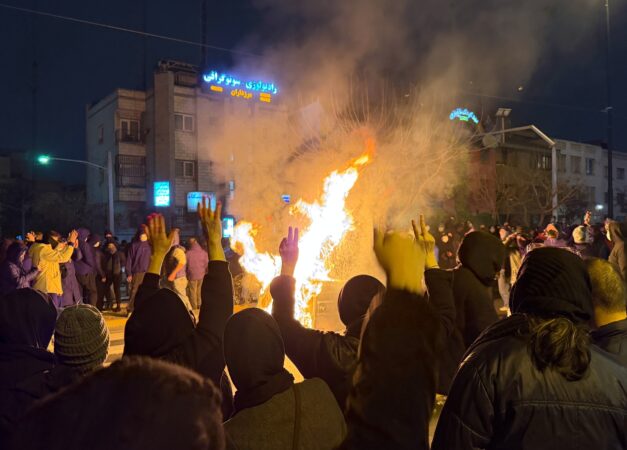
    DUBAI, United Arab Emirates — Iran’s bloody crackdown on nationwide protests has killed at least 6,159 people while many others still are feared dead, activists said Tuesday, as a U.S. aircraft carrier group arrived in the Middle East to lead any American military response to the crisis. Iran’s currency, the rial, meanwhile fell to a record low of 1.5 million to $1.

    The arrival of the USS Abraham Lincoln aircraft carrier and guided missile destroyers accompanying it provide the U.S. the ability to strike Iran, particularly as Gulf Arab states have signaled they want to stay out of any attack despite hosting American military personnel.

    Two Iranian-backed militias in the Mideast have signaled their willingness to launch new attacks, likely trying to back Iran after U.S. President Donald Trump threatened military action over the killing of peaceful protesters or Tehran launching mass executions in the wake of the demonstrations.

    Iran has repeatedly threatened to drag the entire Mideast into a war, though its air defenses and military are still reeling after the June war launched by Israel against the country. But the pressure on its economy may spark new unrest as everyday goods slowly go out of reach of its people — particularly if Trump chooses to attack.

    Ambrey, a private security firm, issued a notice Tuesday saying it assessed that the U.S. “has positioned sufficient military capability to conduct kinetic operations against Iran while maintaining the ability to defend itself and regional allies from reciprocal action.”

    “Supporting or avenging Iranian protesters in punitive strikes is assessed as insufficient justification for sustained military conflict,” Ambrey wrote. “However, alternative objectives, such as the degradation of Iranian military capabilities, may increase the likelihood of limited U.S. intervention.”

    Activists offer new death toll

    Tuesday’s new figures came from the U.S.-based Human Rights Activists News Agency, which has been accurate in multiple rounds of unrest in Iran. The group verifies each death with a network of activists on the ground in Iran.

    It said the 6,159 dead included at least 5,804 protesters, 214 government-affiliated forces, 92 children and 49 civilians who weren’t demonstrating. The crackdown has seen over 41,800 arrests, it added.

    The Associated Press has been unable to independently assess the death toll given authorities cutting off the internet and disrupting calls into the Islamic Republic.

    Iran’s government has put the death toll at a far lower 3,117, saying 2,427 were civilians and security forces, and labeled the rest “terrorists.” In the past, Iran’s theocracy has undercounted or not reported fatalities from unrest.

    That death toll exceeds that of any other round of protest or unrest there in decades, and recalls the chaos surrounding Iran’s 1979 Islamic Revolution.

    The protests in Iran began on Dec. 28, sparked by the fall of the Iranian currency, the rial, and quickly spread across the country. They were met by a violent crackdown by Iran’s theocracy, the scale of which is only starting to become clear as the country has faced more than two weeks of internet blackout — the most comprehensive in its history.

    Iran’s U.N. ambassador told a U.N. Security Council meeting late Monday that Trump’s repeated threats to use military force against the country “are neither ambiguous nor misinterpreted.” Amir Saeid Iravani also repeated allegations that the U.S. leader incited violence by “armed terrorist groups” supported by the United States and Israel, but gave no evidence to support his claims.

    Iranian state media has tried to accuse forces abroad for the protests as the theocracy remains broadly unable to address the country’s ailing economy, which is still squeezed by international sanctions, particularly over its nuclear program.

    On Tuesday, exchange shops offered the record-low rial-to-dollar rate in Tehran. Traders declined to speak publicly on the matter, with several responding angrily to the situation.

    Already, Iran has vastly limited its subsidized currency rates to cut down on corruption. It also has offered the equivalent of $7 a month to most people in the country to cover rising costs. However, Iran’s people have seen the rial fall from a rate of 32,000 to $1 just a decade ago — which has devoured the value of their savings.

    Some Iranian-backed militias suggest willingness to fight

    Iran projected its power across the Mideast through the “Axis of Resistance,” a network of proxy militant groups in Gaza, Lebanon, Yemen, Syria and Iraq, and other places. It was also seen as a defensive buffer, intended to keep conflict away from Iranian borders. But it has collapsed after Israel targeted Hamas, Hezbollah in Lebanon and others during the Gaza war. Meanwhile, rebels in 2024 overthrew Syria’s Bashar Assad after a yearslong, bloody war in which Iran backed his rule.

    Yemen’s Houthi rebels, backed by Iran, have repeatedly warned they could resume fire if needed on shipping in the Red Sea, releasing old footage of a previous attack Monday. Ahmad “Abu Hussein” al-Hamidawi, the leader of Iraq’s Kataib Hezbollah militia, warned “the enemies that the war on the (Islamic) Republic will not be a picnic; rather, you will taste the bitterest forms of death, and nothing will remain of you in our region.”

    The Lebanese militant group Hezbollah, one of Iran’s staunchest allies, refused to say how it planned to react in the case of a possible attack.

    “During the past two months, several parties have asked me a clear and frank question: If Israel and America go to war against Iran, will Hezbollah intervene or not?” Hezbollah leader Sheikh Naim Kassem said in a video address.

    He said the group is preparing for “possible aggression and is determined to defend” against it. But as to how it would act, he said, “these details will be determined by the battle and we will determine them according to the interests that are present.”