Category: Associated Press

  • William Foege, 89, leader in smallpox eradication

    William Foege, 89, leader in smallpox eradication

    ATLANTA — William Foege, a leader of one of humanity’s greatest public health victories — the global eradication of smallpox — has died.

    Dr. Foege died Saturday in Atlanta at the age of 89, according to the Task Force for Global Health, which he co-founded.

    The 6-foot-7 inch Dr. Foege literally stood out in the field of public health. A whip-smart medical doctor with a calm demeanor, he had a canny knack for beating back infectious diseases.

    He was director of the U.S. Centers for Disease Control and Prevention in the late 1970s and early 1980s, and later held other key leadership roles in campaigns against international health problems.

    But his greatest achievement came before all that, with his work on smallpox, one of the most lethal diseases in human history. For centuries, it killed about one-third of the people it infected and left most survivors with deep scars on their faces from the pus-filled lesions.

    Smallpox vaccination campaigns were well established by the time Dr. Foege was a young doctor. Indeed, it was no longer seen in the United States. But infections were still occurring elsewhere, and efforts to stamp them out were stalling.

    Working as a medical missionary in Nigeria in the 1960s, Dr. Foege and his colleagues developed a “ring containment” strategy, in which a smallpox outbreak was contained by identifying each smallpox case and vaccinating everyone who the patients might come into contact with.

    The method relied heavily on quick detective work and was born out of necessity. There simply wasn’t enough vaccine available to immunize everyone, Dr. Foege wrote in House on Fire, his 2011 book about the smallpox eradication effort.

    It worked, and became pivotal in helping rid the world of smallpox for good. The last naturally occurring case was seen in Somalia in 1977. In 1980, the World Health Organization declared smallpox eradicated from the Earth.

    “If you look at the simple metric of who has saved the most lives, he is right up there with the pantheon. Smallpox eradication has prevented hundreds of millions of deaths,” said former CDC director Tom Frieden, who consulted with Dr. Foege regularly.

    Dr. Foege was born March 12, 1936. His father was a Lutheran minister, but he became interested in medicine at 13 while working at a drugstore in Colville, Wash.

    He got his medical degree from the University of Washington in 1961 and a master’s in public health from Harvard in 1965.

    He was director of the Atlanta-based CDC from 1977 to 1983, then held other international public health leadership roles, including stints as executive director at the Carter Center and senior fellow at the Bill and Melinda Gates Foundation.

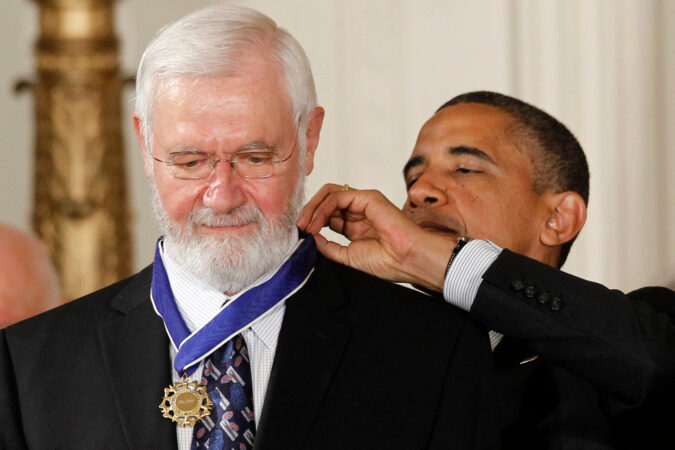
    In 2012, President Barack Obama presented Dr. Foege with the Medal of Freedom, the nation’s highest civilian honor. In 2016, while awarding Dr. Foege an honorary degree, Duke University President Richard Brodhead called him “the Father of Global Health.”

    “Bill Foege had an unflagging commitment to improving the health of people across the world, through powerful, purpose-driven coalitions applying the best science available,” Task Force for Global Health CEO Patrick O’Carroll said in a statement. “We try to honor that commitment in every one of our programs, every day.”

  • Israel launches ‘large scale operation’ to locate last hostage in Gaza

    Israel launches ‘large scale operation’ to locate last hostage in Gaza

    NAHARIYA, Israel — Israel said Sunday its military was conducting a “large-scale operation” to locate the last hostage in Gaza, as Washington and other mediators pressure Israel and Hamas to move into the next phase of their ceasefire.

    The statement came as Israel’s cabinet met to discuss the possibility of opening Gaza’s key Rafah border crossing with Egypt, and a day after top U.S. envoys met with Prime Minister Benjamin Netanyahu about next steps.

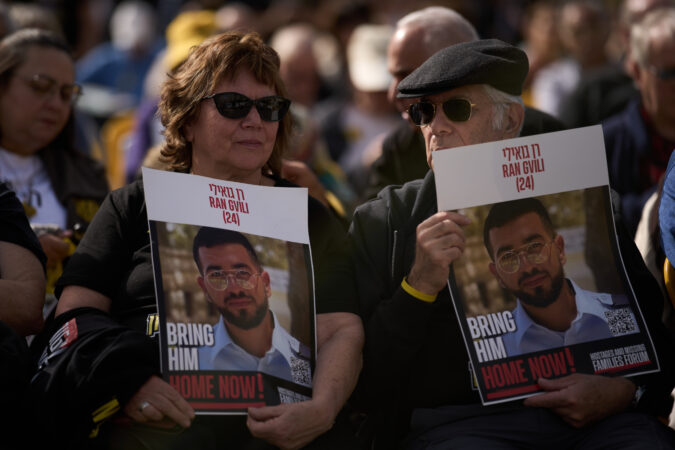
    The return of the body of the remaining hostage, Ran Gvili, has been widely seen as removing the remaining obstacle to moving ahead with opening the Rafah crossing, which would signal the ceasefire’s second phase.

    The return of all remaining hostages, alive or dead, has been a central part of the first phase of the ceasefire that took effect on Oct. 10. Before Sunday, the previous hostage was recovered in early December.

    While Israel has carried out search efforts before for Gvili, more detail than usual was released about this one. Israel’s military said it was searching a cemetery in northern Gaza near the Yellow Line, which marks off Israeli-controlled parts of the territory.

    Separately, an Israeli military official said Gvili may have been buried in the Shujaiyya–Daraj Tuffah area, and that rabbis and dental experts were on the ground with specialized search teams. The official spoke on condition of anonymity because they were discussing an operation still underway.

    Gvili’s family has urged Netanyahu’s government not to enter the ceasefire’s second phase until his remains are returned.

    But pressure has been building, and the Trump administration has already declared in recent days that the second phase is underway.

    Israel has repeatedly accused Hamas of dragging its feet in the recovery of the final hostage. Hamas in a statement Sunday said it had provided all the information it had about Gvili’s remains, and accused Israel of obstructing efforts to search for them in areas of Gaza under Israeli military control.

  • Getting to ‘no’: Europe’s leaders find a way to speak with one voice against Trump

    Getting to ‘no’: Europe’s leaders find a way to speak with one voice against Trump

    LONDON — No more fawning praise. No more polite workarounds and old-style diplomacy. And no one is calling Donald Trump “daddy” now.

    European leaders who scrambled for a year to figure out how to deal with an emboldened American president in his second term edged closer to saying “no,” or something diplomatically like it, to his disregard for international law and his demands for their territory. Trump’s vow to take over Greenland, and punish any country that resists, seems to have been the crucible.

    “Red lines” were deemed to have been crossed this year when Trump abruptly revived his demand that the United States “absolutely” must rule Greenland, the semiautonomous region that is part of NATO ally Denmark. That pushed even the most mild-mannered diplomats to issue sharp warnings against Trump, whom they had flattered with royal treatment and fawning praise.

    “Britain will not yield” its support for Greenland’s sovereignty, British Prime Minister Keir Starmer said. Several of the continent’s leaders said “Europe will not be blackmailed” over Greenland.

    “Threats have no place among allies,” said Norwegian Prime Minister Jonas Gahr Støre.

    The tough diplomatic talk around the showdown last week in Davos, Switzerland, was not the only factor pressuring Trump. U.S. congressional elections are approaching in November amid a sinking stock market and wilting approval ratings. European leaders also are not the first to stand in Trump’s way during his second term — see Federal Reserve Chair Jerome Powell.

    But the dramatic turnabout among Europe’s elite, from “appeasing” Trump to defying him, offers clues in the ongoing effort among some nations of how to say “no” to a president who hates hearing it and is known to retaliate.

    “We want a piece of ice for world protection, and they won’t give it,” Trump told his audience at the World Economic Forum. “You can say yes, and we will be very appreciative. Or you can say no, and we will remember.”

    Lesson 1: Speak as one

    In recent days, Europe offered abundant refusals to go along with Trump, from his Greenland demand and joining his new Board of Peace and even to what Canada’s Mark Carney called the “fiction” that the alliance functions for the benefit of any country more than the most powerful. The moment marked a unity among European leaders that they had struggled to achieve for a year.

    “When Europe is not divided, when we stand together and when we are clear and strong also in our willingness to stand up for ourselves, then the results will show,” Danish Prime Minister Mette Frederiksen said. “I think we have learned something.”

    Federiksen herself exemplified the learning curve. A year ago, she and other leaders were on their heels and mostly responding to the Trump administration. She found it necessary to tell reporters in February 2025, “We are not a bad ally,” after Vice President JD Vance had said Denmark was “not being a good ally.”

    Trump is transactional. He has little use for diplomacy and no “need (for) international law,” he told the New York Times this month. Therein lay the disconnect between typically collaborative European leaders and the Republican president when he blazed back into the White House saying he wanted the U.S. to take over Greenland, Panama, and perhaps even Canada.

    “In Trump’s first term, Europe didn’t know what to expect and tried to deal with him by using the old rules of diplomacy, with the expectation that, if they kept talking to him in measured terms, that he would change his behavior and move into the club,” said Mark Shanahan, associate professor of political engagement at the University of Surrey.

    “It’s very hard for other leaders who deal with each other through the niceties of a rules-based system and diplomatic conversation,” Shanahan said. ”It is hard for them to change.”

    Five months after Trump’s inauguration last year, with his Greenland threat in the air, European leaders had gotten their heads around Trump management enough to pull off a meeting of NATO nations in the Netherlands. NATO members agreed to contribute more and widely gave Trump credit for forcing them to modernize.

    Secretary-General Mark Rutte, known as the coalition’s “Trump whisperer,” likened the president’s role quieting the Iran-Israel war to a “daddy” intervening in a schoolyard brawl.

    Lesson 2: Consider saying no — and make choices accordingly

    Traditional diplomacy exists to preserve possibilities of working together. That often means avoiding saying a flat “no” if possible. But Trump’s Greenland gambit was so stark a threat from one NATO member to another that Greenland’s prime minister actually said the word.

    “Enough,” Jens-Frederik Nielsen said in a statement shortly after Trump’s remarks Jan. 5. “No more pressure. No more hints. No more fantasies about annexation.”

    That played a part in setting the tone. Denmark’s leader said any such invasion of Greenland would mark the end of NATO and urged alliance members to take the threat seriously.

    They did, issuing statement after statement rejecting the renewed threat. Trump responded last weekend from his golf course in Florida with a threat to charge a 10% import tax within a month on goods from eight European nations — Denmark, Norway, Sweden, France, Germany, the United Kingdom, the Netherlands, and Finland. The rate, he wrote, would climb to 25% on June 1 if no deal was in place for “the Complete and Total purchase of Greenland” by the United States.

    Lesson 3: Reject Trump’s big-power paradigm

    Trump’s fighting words lit a fire among leaders arriving in Davos. But they seemed to recognize, too, that the wider Trump world left him vulnerable.

    “Trump was in a fairly weak position because he has a lot of other looming problems going on,” domestically, including an upcoming U.S. Supreme Court decision on his tariffs and a backlash to immigration raids in Minnesota, said Duncan Snidal, professor emeritus of international relations at Oxford University and the University of Chicago.

    Canada’s Carney said no by reframing the question not as being about Greenland, but about whether it was time for European countries to build power together against a “bully” — and his answer was yes.

    Without naming the U.S. or Trump, Carney spoke bluntly: Europe, he said, should reject the big power’s “coercion” and “exploitation.” It was time to accept, he said, that a “rupture” in the alliance, not a transition, had occurred.

    Unsaid, Snidel pointed out, was that the rupture was very new, and though it might be difficult to repair in the future, doing so under adjusted rules remains in U.S. and European interests beyond Trump’s presidency. “It’s too good a deal for all of them not to,” Snidel said.

    Lesson 4: Exercise caution

    Before Trump stepped away from the podium in Davos, he had begun to back down.

    He canceled his threat to use “force” to take over Greenland. Not long after, he reversed himself fully, announcing “the framework” for a deal that would make his tariff threat unnecessary.

    Trump told Fox Business that “we’re going to have total access to Greenland,” under the “framework,” without divulging what that might mean.

    Frederiksen hit the warning button again. In a statement, she said, “We cannot negotiate on our sovereignty.”

    In other words: “No.”

  • Iran unveils mural warning of retaliation if US conducts a military strike

    Iran unveils mural warning of retaliation if US conducts a military strike

    DUBAI, United Arab Emirates — Iranian authorities unveiled a new mural on a giant billboard in a central Tehran square on Sunday with a direct warning to the United States to not attempt a military strike on the country, as U.S. warships head to the region.

    The image shows a bird’s-eye view of an aircraft carrier with damaged and exploding fighter planes on its flight deck. The deck is strewn with bodies and streaked with blood that trails into the water behind the ship to form a pattern reminiscent of the stripes of the American flag. A slogan is emblazoned across one corner: “If you sow the wind, you will reap the whirlwind.”

    The unveiling of the mural in Enghelab Square comes as the USS Abraham Lincoln aircraft carrier and accompanying warships move toward the region. U.S. President Donald Trump has said the ships are being moved “just in case” he decides to take action.

    “We have a massive fleet heading in that direction and maybe we won’t have to use it,” Trump said Thursday.

    Enghelab Square is used for gatherings called by the state and authorities change its mural based on national occasions. On Saturday, the commander of Iran’s paramilitary Revolutionary Guard warned that his force is “more ready than ever, finger on the trigger.”

    Tension between the U.S. and Iran has spiked in the wake of a brutal crackdown on nationwide protests that saw thousands of people killed and tens of thousands arrested. Trump had threatened military action if Iran continued to kill peaceful protesters or carried out mass executions of those detained.

    There have been no further protests for days and Trump claimed recently that Tehran had halted the planned execution of about 800 arrested protesters — a claim Iran’s top prosecutor called “completely false.”

    But Trump has indicated he is keeping his options open, saying on Thursday that any military action would make last June’s U.S. strikes on Iranian nuclear sites “look like peanuts.”

    U.S. Central Command said on social media that its Air Force F-15E Strike Eagle now has a presence in the Middle East, noting the fighter jet “enhances combat readiness and promotes regional security and stability.”

    Similarly, the U.K. Ministry of Defense said Thursday that it deployed its Typhoon fighter jets to Qatar “in a defensive capacity.”

    The protests in Iran began on Dec. 28, sparked by the fall of the Iranian currency, the rial, and quickly spread across the country. They were met by a violent crackdown by Iran’s theocracy, which does not tolerate dissent.

    The death toll reported by activists has continued to rise since the end of the demonstrations, as information trickles out despite a more than two-week internet blackout — the most comprehensive in Iran’s history.

    The U.S.-based Human Rights Activists News Agency on Sunday put the death toll at 5,529, with the number expected to increase. It says more than 41,200 people have been arrested.

    The group’s figures have been accurate in previous unrest and rely on a network of activists in Iran to verify deaths. That death toll exceeds that of any other round of protest or unrest there in decades, and recalls the chaos surrounding Iran’s 1979 Islamic Revolution. The Associated Press has not been able to independently verify the toll.

    Iran’s government has put the death toll at a far lower 3,117, saying 2,427 were civilians and security forces, and labeled the rest “terrorists.” In the past, Iran’s theocracy has undercounted or not reported fatalities from unrest.

  • U.S. security agreement for Ukraine is ’100% ready’ to be signed, Zelensky says

    U.S. security agreement for Ukraine is ’100% ready’ to be signed, Zelensky says

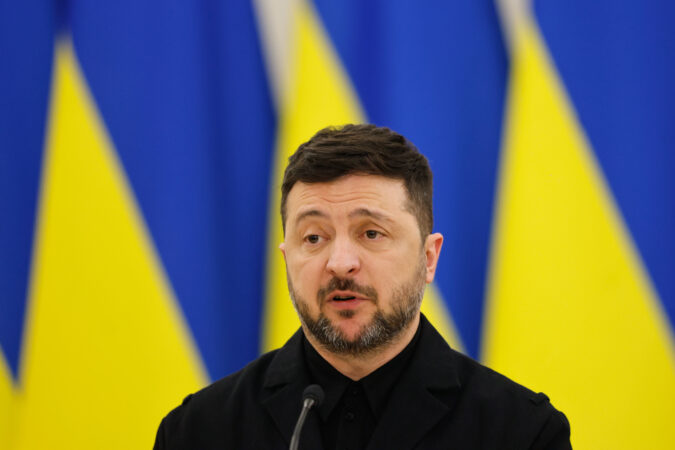
    President Volodymyr Zelensky said Sunday that a U.S. security guarantees document for Ukraine is “100% ready” after two days of talks involving representatives from Ukraine, the U.S., and Russia.

    Speaking to journalists in Vilnius during a visit to Lithuania, Zelensky said Ukraine is waiting for its partners to set a signing date, after which the document would go to the U.S. Congress and Ukrainian parliament for ratification.

    Zelensky also emphasized Ukraine’s push for European Union membership by 2027, calling it an “economic security guarantee.”

    The Ukrainian leader described the talks in Abu Dhabi, the capital of the United Arab Emirates, as likely the first trilateral format in “quite a long while” that included not only diplomats but military representatives from all three sides. The talks, which began on Friday and continued Saturday, were the latest aiming to end Russia’s nearly four-year full-scale invasion.

    Zelensky acknowledged fundamental differences between Ukrainian and Russian positions, reaffirming territorial issues as a major sticking point.

    “Our position regarding our territory — Ukraine’s territorial integrity — must be respected,” he said.

    Russian President Vladimir Putin discussed a Ukraine settlement with U.S. President Donald Trump’s envoys Steve Witkoff and Jared Kushner during marathon talks late Thursday. The Kremlin insisted that to reach a peace deal, Kyiv must withdraw its troops from the areas in the east that Russia illegally annexed but has not fully captured.

    Zelensky said the U.S. is trying to find a compromise, but that “all sides must be ready for compromise.”

    Negotiators will return to the UAE on Feb. 1 for the next round of talks, according to a U.S. official. The recent talks covered a broad range of military and economic matters and included the possibility of a ceasefire before a deal, the official said. There was not yet an agreement on a final framework for oversight and operation of Ukraine’s Zaporizhzhia Nuclear Power Plant, which is occupied by Russia and is the largest in Europe.

  • France detains captain of suspected Russian ‘shadow fleet’ tanker seized in Mediterranean

    France detains captain of suspected Russian ‘shadow fleet’ tanker seized in Mediterranean

    PARIS — The captain of a tanker intercepted in the Mediterranean Sea by the French navy on suspicion of shipping oil in violation of sanctions against Russia was being held in custody on Sunday for questioning.

    The ship’s Indian captain, 58, was handed to judicial authorities following the diversion of the oil tanker, Grinch, and its arrival at anchorage in the Gulf of Fos-sur-Mer, the Marseille prosecutor’s office said in a statement.

    The investigation is being conducted by the Maritime Gendarmerie’s Investigation Unit in Toulon, jointly with the Marseille Ship Safety Centre, on charges of failure to fly a valid flag, according to the statement, which added that the crew, also of Indian nationality, was being kept on board.

    “The purpose of the investigation is to verify the validity of the flag flown by the tanker and the documents required for its navigation,” the statement said.

    The Grinch came from Murmansk in northwestern Russia and is suspected of being part of the sanctioned Russian “shadow fleet.” A video provided by the French military showed members of the navy boarding the ship from a helicopter earlier this week.

    Russia is believed to be using a fleet of over 400 ships to evade sanctions over its war on Ukraine. France and other countries have vowed to crack down.

    The fleet comprises aging vessels and tankers owned by nontransparent entities with addresses in nonsanctioning countries, and sailing under flags from such countries.

    Last September, French naval forces boarded another oil tanker off the French Atlantic coast that President Emmanuel Macron also linked to the shadow fleet. Putin denounced that interception as an act of piracy.

    That tanker’s captain will go on trial in February over the crew’s alleged refusal to cooperate, according to French judicial authorities.

  • How Americans are using AI at work, according to a new Gallup poll

    How Americans are using AI at work, according to a new Gallup poll

    American workers adopted artificial intelligence into their work lives at a remarkable pace over the past few years, according to a new poll.

    Some 12% of employed adults say they use AI daily in their job, according to a Gallup Workforce survey conducted this fall of more than 22,000 U.S. workers.

    The survey found roughly one-quarter say they use AI at least frequently, which is defined as at least a few times a week, and nearly half say they use it at least a few times a year. That compares with 21% who were using AI at least occasionally in 2023, when Gallup began asking the question, and points to the impact of the widespread commercial boom that ChatGPT sparked for generative AI tools that can write emails and computer code, summarize long documents, create images, or help answer questions.

    Home Depot store associate Gene Walinski is one of the employees embracing AI at work. The 70-year-old turns to an AI assistant on his personal phone roughly every hour on his shift so he can better answer questions about supplies that he is not “100% familiar with” at the store’s electrical department in New Smyrna Beach, Fla.

    “I think my job would suffer if I couldn’t because there would be a lot of shrugged shoulders and ‘I don’t know’ and customers don’t want to hear that,” Walinski said.

    AI at work for many in technology, finance, education

    While frequent AI use is on the rise with many employees, AI adoption remains higher among those working in technology-related fields.

    About 6 in 10 technology workers say they use AI frequently, and about 3 in 10 do so daily.

    The share of Americans working in the technology sector who say they use AI daily or regularly has grown significantly since 2023, but there are indications that AI adoption could be starting to plateau after an explosive increase between 2024 and 2025.

    In finance, another sector with high AI adoption, 28-year-old investment banker Andrea Tanzi said he uses AI tools every day to synthesize documents and data sets that would otherwise take him several hours to review.

    Tanzi, who works for Bank of America in New York, said he also makes uses of the bank’s internal AI chatbot, Erica, to help with administrative tasks.

    In addition, majorities of those working in professional services, at colleges or universities or in K-12 education, say they use AI at least a few times a year.

    Joyce Hatzidakis, 60, a high school art teacher in Riverside, Calif., started experimenting with AI chatbots to help “clean up” her communications with parents.

    “I can scribble out a note and not worry about what I say and then tell it what tone I want,” she said. “And then, when I reread it, if it’s not quite right, I can have it edited again. I’m definitely getting less parent complaints.”

    Another Gallup Workforce survey from last year found that about 6 in 10 employees using AI are relying on chatbots or virtual assistance when they turn to AI tools. About 4 in 10 AI users at work reported using AI to consolidate information or data, to generate ideas, or to learn new things.

    Hatzidakis started with ChatGPT and then switched to Google’s Gemini when the school district made that its official tool. She has even used it to help with recommendation letters because “there’s only so many ways to say a kid is really creative.”

    Benefits and drawbacks of AI adoption

    The AI industry and the U.S. government are heavily promoting AI adoption in workplaces and schools. More people and organizations will need to buy these tools in order to justify the huge amounts of investment into building and running energy-hungry AI computing systems. But not all economists agree on how much they will boost productivity or affect employment prospects.

    “Most of the workers that are most highly exposed to AI, who are most likely to have it disrupt their workflows, for good or for bad, have these characteristics that make them pretty adaptable,” said Sam Manning, a fellow at the Centre for the Governance of AI and co-author of new papers on AI job effects for the Brookings Institution and the National Bureau of Economic Research.

    Workers in those mostly computer-based jobs that involve a lot of AI usage “usually have higher levels of education, wider ranges of skill sets that can be applied to different jobs, and they also have higher savings, which is helpful for weathering an income shock if you lose your job,” Manning said.

    On the other hand, Manning’s research has identified some 6.1 million workers in the United States who are both heavily exposed to AI and less equipped to adapt. Many are in administrative and clerical work, about 86% are women, and they are older and concentrated in smaller cities, such as university towns or state capitals, with fewer options to shift careers.

    “If their skills are automated, they have less transferable skills to other jobs and they have a lower savings, if any savings,” Manning said. ”An income shock could be much more harmful or difficult to manage.”

    Few workers are concerned about AI replacing them

    A separate Gallup Workforce survey from 2025 found that even as AI use is increasing, few employees said it was “very” or “somewhat” likely that new technology, automation, robots, or AI will eliminate their job within the next five years. Half said it was “not at all likely,” but that has decreased from about 6 in 10 in 2023.

    Not worried about losing his job is the Rev. Michael Bingham, pastor of the Faith Community Methodist Church in Jacksonville, Fla.

    A chatbot fed him “gibberish” when he asked about the medieval theologian Anselm of Canterbury, and Bingham said he would never ask a “soulless” machine to help write his sermons, relying instead on “the power of God” to help guide him through ideas.

    “You don’t want a machine, you want a human being, to hold your hand if you’re dying,” Bingham said. “And you want to know that your loved one was able to hold the hand of a loving human being who cared for them.”

    Reported AI usage is less common in service-based sectors, such as retail, healthcare, or manufacturing.

    Home Depot did not ask Walinski to use AI when he got a job at the store last year, after a decades-long career in the car business. But the home improvement giant also did not try to stop him and he is “not at all worried” that AI will replace him.

    “The human interface part is really what a store like mine works on,” Walinski said. “It’s all about the people.”

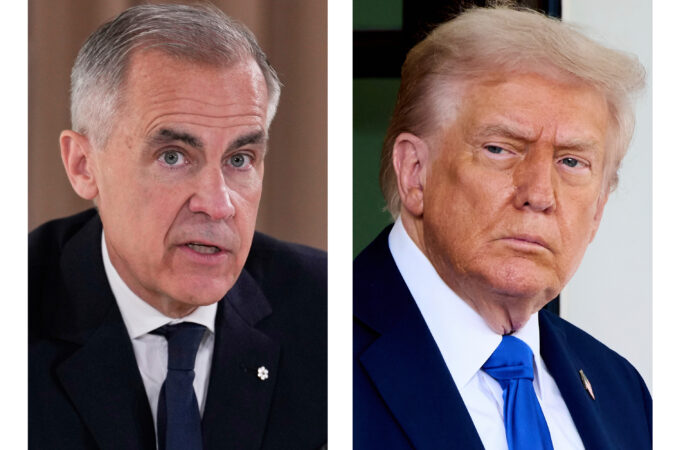
  • Carney says Canada has no plans to pursue free trade agreement with China as Trump threatens tariffs

    Carney says Canada has no plans to pursue free trade agreement with China as Trump threatens tariffs

    TORONTO — Canadian Prime Minister Mark Carney said Sunday his country has no intention of pursuing a free trade deal with China. He was responding to U.S. President Donald Trump’s threat to impose a 100% tariff on goods imported from Canada if America’s northern neighbor went ahead with a trade deal with Beijing.

    Carney said his recent agreement with China merely cuts tariffs on a few sectors that were recently hit with the taxes.

    Trump claims otherwise, posting, “China is successfully and completely taking over the once Great Country of Canada. So sad to see it happen. I only hope they leave Ice Hockey alone! President DJT”

    The prime minister said under the free trade agreement with the U.S. and Mexico there are commitments not to pursue free trade agreements with nonmarket economies without prior notification.

    “We have no intention of doing that with China or any other nonmarket economy,” Carney said. “What we have done with China is to rectify some issues that developed in the last couple of years.”

    In 2024, Canada mirrored the United States by putting a 100% tariff on electric vehicles from Beijing and a 25% tariff on steel and aluminum. China had responded by imposing 100% import taxes on Canadian canola oil and meal and 25% on pork and seafood.

    Breaking with the United States this month during a visit to China, Carney cut its 100% tariff on Chinese electric cars in return for lower tariffs on those Canadian products.

    Carney has said there would be an initial annual cap of 49,000 vehicles on Chinese EV exports coming into Canada at a tariff rate of 6.1%, growing to about 70,000 over five years. He noted there was no cap before 2024. He also has said the initial cap on Chinese EV imports was about 3% of the 1.8 million vehicles sold in Canada annually and that, in exchange, China is expected to begin investing in the Canadian auto industry within three years.

    Trump posted a video Sunday in which the chief executive of the Canadian Vehicle Manufacturers’ Association warns there will be no Canadian auto industry without U.S. access, while noting the Canadian market alone is too small to justify large scale manufacturing from China.

    “A MUST WATCH. Canada is systematically destroying itself. The China deal is a disaster for them. Will go down as one of the worst deals, of any kind, in history. All their businesses are moving to the USA. I want to see Canada SURVIVE AND THRIVE! President DJT,” Trump posted on social media.

    Trump’s post on Saturday said that if Carney “thinks he is going to make Canada a ‘Drop Off Port’ for China to send goods and products into the United States, he is sorely mistaken.”

    “We can’t let Canada become an opening that the Chinese pour their cheap goods into the U.S,” U.S. Treasury Secretary Scott Bessent said on ABC’s This Week.

    “We have a (United States–Mexico–Canada Agreement), but based off — based on that, which is going to be renegotiated this summer, and I’m not sure what Prime Minister Carney is doing here, other than trying to virtue-signal to his globalist friends at Davos.”

    Trump’s threat came amid an escalating war of words with Carney as the Republican president’s push to acquire Greenland strained the NATO alliance.

    Carney has emerged as a leader of a movement for countries to find ways to link up and counter the U.S. under Trump. Speaking in Davos before Trump, Carney said, “Middle powers must act together because if you are not at the table, you are on the menu” and he warned about coercion by great powers — without mentioning Trump’s name. The prime minister received widespread praise and attention for his remarks, upstaging Trump at the World Economic Forum.

    Trump’s push to acquire Greenland has come after he has repeatedly needled Canada over its sovereignty and suggested it also be absorbed into the United States as a 51st state. He posted an altered image on social media this week showing a map of the United States that included Canada, Venezuela, Greenland and Cuba as part of its territory.

  • Massive winter storm across the U.S. brings ice, frigid temperatures, and widespread power outages

    Massive winter storm across the U.S. brings ice, frigid temperatures, and widespread power outages

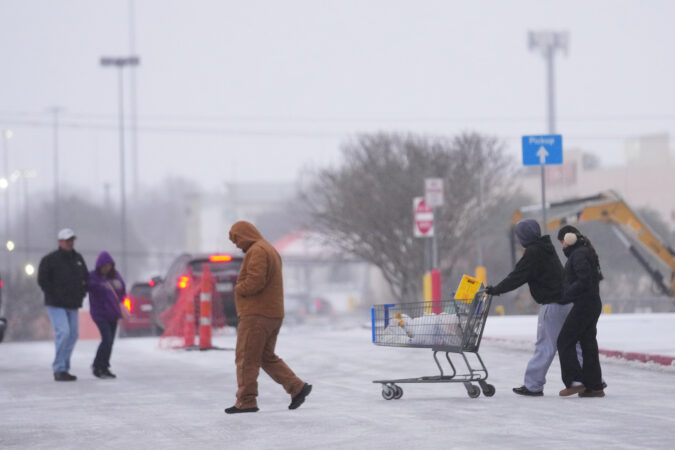
    A massive winter storm dumped sleet, freezing rain, and snow across much of the U.S. on Sunday, bringing subzero temperatures and paralyzing air and road traffic. Power lines were draped in ice, and hundreds of thousands of people in the Southeast were left without electricity.

    The ice and snowfall were expected to continue into Monday in much of the country, followed by very low temperatures, which could cause “dangerous travel and infrastructure impacts” to linger for several days, the National Weather Service said.

    Heavy snow was forecast from the Ohio Valley to the Northeast, while “catastrophic ice accumulation” threatened from the Lower Mississippi Valley to the Mid-Atlantic and Southeast.

    “It is a unique storm in the sense that it is so widespread,” weather service meteorologist Allison Santorelli said in a phone interview. “It was affecting areas all the way from New Mexico, Texas, all the way into New England, so we’re talking like a 2,000-mile spread.”

    President Donald Trump had approved emergency declarations for at least a dozen states by Saturday, with more expected to come. The Federal Emergency Management Agency prepositioned commodities, staff, and search and rescue teams in numerous states, Homeland Security Secretary Kristi Noem said.

    New York Gov. Kathy Hochul said the state was bracing for the longest cold stretch and highest snow totals it has seen in years. Communities near the Canadian border have already seen record-breaking subzero temperatures, with Watertown registering minus 34 degrees Fahrenheit and Copenhagen minus 49 F, she said.

    “An Arctic siege has taken over our state,” Hochul said. “It is brutal, it is bone chilling, and it is dangerous.”

    Storm knocks out power and snarls flights

    As of Sunday morning, about 213 million people were under some sort of winter weather warning, Santorelli said. The number of customers without power topped 900,000, according to poweroutage.us, and the number was rising.

    Tennessee was hardest hit with nearly 325,000 customers out, and Texas, Louisiana, and Mississippi all had more than 100,000 customers in the dark. Tens of thousands of homes and businesses were without power in Kentucky, Georgia, Alabama, and West Virginia.

    Some 11,000 flights had already been canceled Sunday and more than 13,000 have been delayed, according to the flight tracker flightaware.com. Airports in Philadelphia, Washington, Baltimore, North Carolina, New York, and New Jersey were hit especially hard.

    At Philadelphia International Airport, inside displays registered scores of canceled flights and few vehicles could be seen arriving Sunday morning. At Reagan National in Washington, virtually all flights were canceled.

    Bitter cold makes things worse

    Even once the ice and snow stop falling, the danger will continue, Santorelli warned.

    “Behind the storm it’s just going to get bitterly cold across basically the entirety of the eastern two-thirds of the nation, east of the Rockies,” she said. That means the ice and snow won’t melt as fast, which could hinder some efforts to restore power and other infrastructure.

    Along the Gulf Coast, temperatures were balmy Sunday, hitting the high 60s and low 70s, but thermometers were expected to drop into the high 20s and low 30s there by Monday morning. The National Weather Service warned of damaging winds and a slight risk of severe storms and possibly even a brief tornado.

    In New York City, Mayor Zohran Mamdani said at least five people died as temperatures plunged Saturday before the snows arrived in earnest.

    “While it’s still too early to determine the causes of death, it is a reminder that every year New Yorkers succumb to the cold,” he wrote on X.

    The Democrat also announced that Monday would be a remote learning day for students in the nation’s largest school system. Other officials across the affected areas also announced that school would be canceled or held remotely Monday.

    Coping with the storm

    In Corinth, Miss., where power outages were widespread, Caterpillar told employees at its remanufacturing site to stay home Monday and Tuesday.

    “May God have mercy on Corinth, MS! … The sound of the trees snapping, exploding & falling through the night have been unnerving to say the least,” resident Kathy Ragan said on Facebook.

    University of Georgia sophomore Eden England said there was a thin layer of ice on the ground of the campus in Athens and a mist fell as she walked with friends from the campus dining hall to her residence hall.

    “It is definitely a little deserted but plenty of people chose to stay on campus,” England said.

    Recovery could take a while

    Nashville and the surrounding area saw ice accumulations of half an inch or more, with icicles hanging from power lines and overburdened tree limbs crashing to the ground.

    In Oxford, Miss., police on Sunday morning used social media to tell residents to stay home as the danger of being outside was too great. Local utility crews were also pulled from their jobs during the overnight hours.

    “Due to life-threatening conditions, Oxford Utilities has made the difficult decision to pull our crews off the road for the night,” the utility company posted on Facebook early Sunday. “Trees are actively snapping and falling around our linemen while they are in the bucket trucks.”

    Tippah Electric Power in Mississippi said there was “catastrophic damage” and that it could be “weeks instead of days” to restore everyone.

    The Tennessee Valley Authority provides power to some utilities across the region, and spokesperson Scott Brooks said the bulk power system remains stable but overnight icing had caused power interruptions in north Mississippi, north Alabama, southern middle Tennessee, and the Knoxville, Tenn., area.

    Icy roads made travel dangerous in north Georgia, where the Cherokee County Sheriff’s office posted on Facebook, “You know it’s bad when Waffle House is closed!!!” along with a photo of a shuttered restaurant. Whether the chain’s restaurants are open — known as the Waffle House Index — has become an informal way to gauge the severity of weather disasters across the South.

  • Federal, state officials both claim high moral ground after Minneapolis shooting

    Federal, state officials both claim high moral ground after Minneapolis shooting

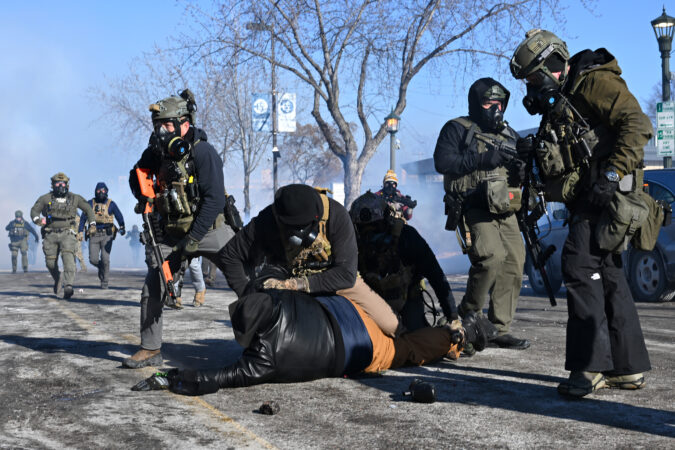
    MINNEAPOLIS — In dueling news conferences, federal and state officials offered starkly different messages Sunday about the immigration crackdown that has swept across Minneapolis and surrounding cities, with both claiming the moral high ground in the wake of another shooting death by federal agents.

    “Which side do you want to be on?” Gov. Tim Walz asked the public. “The side of an all-powerful federal government that could kill, injure, menace, and kidnap its citizens off the streets, or on the side of a nurse at the VA hospital who died bearing witness to such government,” a reference to the shooting of Alex Pretti on Saturday in Minneapolis.

    At the same time, in a federal office building about 20 miles away, Border Patrol Commander Gregory Bovino, the public face of the crackdown, again turned blame for the shooting to Pretti.

    “When someone makes the choice to come into an active law enforcement scene, interfere, obstruct, delay, or assault law enforcement officer and — and they bring a weapon to do that. That is a choice that that individual made,” he told reporters.

    The competing comments emerged as local leaders and Democrats across the country demanded federal immigration officers leave Minnesota after Pretti’s shooting, which set off clashes with protesters in a city already shaken by another shooting death weeks earlier.

    Video contradicts administration statements

    Video shot by bystanders and reviewed by the Associated Press appears to contradict statements by President Donald Trump’s administration, which said agents fired “defensively” against Pretti, a 37-year-old intensive care nurse, as he approached them.

    Pretti can be seen with only a phone in his hand as he steps between an immigration agent and a woman on the street. No footage appears to show him with a weapon. During the scuffle, agents appear to disarm him after discovering that he was carrying a 9 mm semiautomatic handgun, and then the agents opened fire several times. Pretti was licensed to carry a concealed weapon.

    In the hours after the shooting, Homeland Security Secretary Kristi Noem said Pretti attacked officers, and Bovino said he wanted to “massacre law enforcement.”

    Bovino was more restrained Sunday, saying he would not speculate about the shooting and that he planned to wait for the investigation.

    Relatives say they are heartbroken

    Pretti’s family said they were “heartbroken but also very angry” at authorities. Relatives were furious at federal officials’ description of the shooting.

    “The sickening lies told about our son by the administration are reprehensible and disgusting. Alex is clearly not holding a gun when attacked by Trump’s murdering and cowardly ICE thugs. He has his phone in his right hand, and his empty left hand is raised above his head while trying to protect the woman ICE just pushed down all while being pepper sprayed,” the family statement said. “Please get the truth out about our son.”

    Pretti was shot just over a mile from where an ICE officer killed 37-year-old Renee Good on Jan. 7, sparking widespread protests.

    A federal judge has already issued an order blocking the Trump administration from “destroying or altering evidence” related to the shooting, after state and county officials sued.

    Minnesota Attorney General Keith Ellison said the lawsuit filed Saturday is meant to preserve evidence collected by federal officials that state authorities have not yet been able to inspect. A court hearing is scheduled for Monday in federal court in St. Paul.

    “A full, impartial, and transparent investigation into his fatal shooting at the hands of DHS agents is nonnegotiable,” Ellison said in a statement.

    Drew Evans, superintendent of the state’s Bureau of Criminal Apprehension, which investigates police shootings, told reporters Saturday that federal officers blocked his agency from the scene of the shooting even after it obtained a signed judicial warrant. On Sunday morning, bureau officers were working at the scene.

    Assistant Homeland Security Secretary Tricia McLaughlin dismissed the lawsuit, saying claims that the federal government would destroy evidence are “a ridiculous attempt to divide the American people and distract from the fact that our law enforcement officers were attacked — and their lives were threatened.”

    The Minnesota National Guard temporarily assisted local police at Walz’s direction, officials said, with troops sent to the shooting site and a federal building where officers have squared off daily with demonstrators.

    But Minneapolis Police Chief Brian O’Hara said Sunday morning on CBS’ Face the Nation that “it’s back to just the Minneapolis police responding to calls.”

    No evidence that Pretti brandished gun

    O’Hara said he had seen no evidence that Pretti brandished the pistol, and that the crackdown was exhausting his department.

    “This is taking an enormous toll, trying to manage all this chaos on top of having to be the police department for a major city. It’s too much,” he said.

    Rep. Alexandria Ocasio-Cortez of New York was among several Democratic lawmakers demanding that federal immigration authorities leave Minnesota.

    In a statement, former President Barack Obama called Pretti’s death a “heartbreaking tragedy” and warned that “many of our core values as a nation are increasingly under assault.”

    He urged the White House to work with city and state officials.

    “This has to stop,” Obama said.

    Federal officials have repeatedly questioned why Pretti was armed during the confrontation. But gun rights groups noted that it’s legal to carry firearms during protests.

    “Every peaceable Minnesotan has the right to keep and bear arms — including while attending protests, acting as observers, or exercising their First Amendment rights,” the Minnesota Gun Owners Caucus said in a statement. “These rights do not disappear when someone is lawfully armed.”

    Minnesota businesses issue letter urging cooperation

    More than 60 CEOs of Minnesota-based companies including Target, Best Buy, and UnitedHealth signed an open letter posted on the Minnesota Chamber of Commerce website on Sunday calling for state, local, and federal officials to work together, as businesses grapple with how to address tensions in the state and across the country following two fatal shootings by federal agents amid a massive immigration enforcement operation that has spurred protests.

    “With yesterday’s tragic news, we are calling for an immediate deescalation of tensions and for state, local and federal officials to work together to find real solutions,” the open letter reads.

    CEOs that signed the letter included 3M CEO William Brown, Best Buy CEO Corie Barry, General Mills CEO Jeff Harmening, Target incoming CEO Michael Fiddelke, UnitedHealth Group CEO Stephen Helmsley, and others.

    Before the letter, most of the biggest Minnesota-based companies had not issued any public statements about the enforcement surge and unrest.

    But the issue has become more difficult to avoid. Over the past two weeks protesters have targeted some businesses they see not taking a strong enough stand against federal law enforcement activity, including Minneapolis-based Target. Earlier in January a Minnesota hotel that wouldn’t allow federal immigration agents to stay there apologized and said the refusal violated its own policies after a furor online.

    Meanwhile, the state of Minnesota and the Twin Cities cited devastating economic impacts in a lawsuit filed this month imploring a federal judge to halt the immigration operations. The lawsuit asserted that some businesses have reported sales drops up to 80%.

    “In this difficult moment for our community, we call for peace and focused cooperation among local, state and federal leaders to achieve a swift and durable solution that enables families, businesses, our employees, and communities across Minnesota to resume our work to build a bright and prosperous future,” the letter reads.