Category: Associated Press

  • Trump’s Board of Peace is dividing countries in Europe and the Middle East

    Trump’s Board of Peace is dividing countries in Europe and the Middle East

    JERUSALEM — Divisions emerged Wednesday over President Donald Trump’s Board of Peace as its ambitions have grown beyond Gaza, with some Western European countries declining to join, others remaining noncommittal and a group of Muslim countries agreeing to sign on.

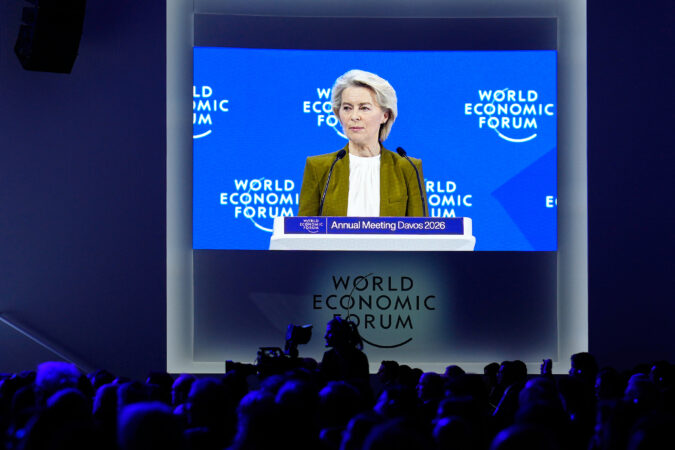
    The developments underscored European concerns over the expanded and divisive scope of the project — which some say may seek to rival the U.N. Security Council’s role in mediating global conflicts. Trump is looking to form the board officially this week on the sidelines of the World Economic Forum meeting in Davos, Switzerland.

    Norway and Sweden said they won’t accept their invitations, after France also said no, while a bloc of Muslim-majority nations — Egypt, Indonesia, Jordan, Pakistan, Qatar, Saudi Arabia and the United Arab Emirates — said in a joint statement that their leaders would join.

    It was not immediately clear how many countries would accept. A White House official said about 30 countries were expected to join, and about 50 had been invited. Two other U.S. officials, who similiarly spoke on condition of anonymity to describe internal plans not yet made public, said roughly 60 countries had been invited but only 18 had so far confirmed their participation.

    Trump was sunny about the prospects ahead of an event Thursday tied to the board, saying of the countries that were invited that “some need parliamentary approval but for the most part, everybody wants to be on.”

    Chaired by Trump, the board was originally conceived as a small group of world leaders overseeing the Gaza ceasefire plan. But the Trump administration’s ambitions have since expanded into a more sprawling concept, with Trump hinting at the board’s role as mediator for other global conflicts.

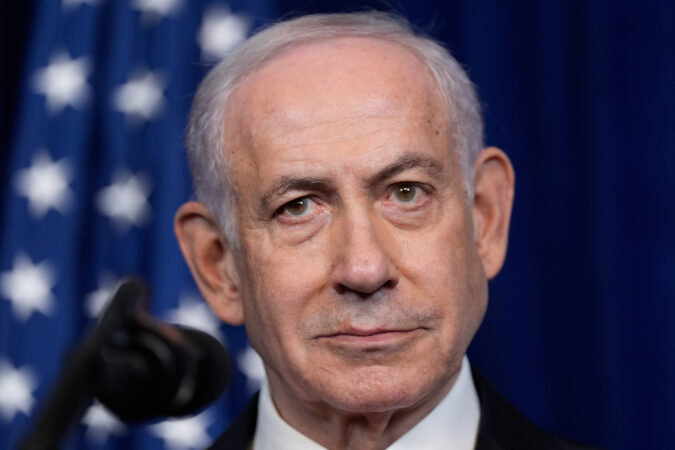
    Israel’s Prime Minister Benjamin Netanyahu said he’s agreed to join the board — a departure from an earlier stance when his office criticized the makeup of another committee tasked with overseeing Gaza.

    Norway and Sweden say no, following in France’s footsteps

    Norway’s state secretary, Kristoffer Thoner, said the Scandinavian country would not join the board because it “raises a number of questions that requires further dialogue with the United States.”

    Swedish Prime Minister Ulf Kristersson said on the sidelines of Davos that his country wouldn’t sign up for the board as the text currently stands, Swedish news agency TT reported, though the country hasn’t formally responded.

    Slovenian Prime Minister Robert Golob said “the time has not yet come to accept the invitation,” according to the STA news agency. The main concern is the board’s mandate is too broad and could seriously undermine international order based on the U.N. Charter, Golob said.

    France declined the invitation earlier in the week. French Foreign Minister Jean-Noel Barrot said, “Yes to implementing the peace plan presented by the president of the United States, which we wholeheartedly support, but no to creating an organization as it has been presented, which would replace the United Nations.”

    The United Kingdom, the European Union’s executive arm, Canada, Russia, Ukraine and China also have not yet indicated their response to Trump’s invitations.

    Several in the Middle East and beyond say they will join

    Parties key to the Gaza ceasefire — Egypt and Israel — have said they would join the board, as have Argentina, Armenia, Azerbaijan, Bahrain, Belarus, Hungary, Kazakhstan, Kosovo, Morocco, Uzbekistan and Vietnam.

    Netanyahu’s decision was significant because his office had previously said the composition of a Gaza executive committee — which includes Turkey, Israel’s key regional rival, and will work with those governing the territory day to day — was not coordinated with the Israeli government and ran “contrary to its policy,” without clarifying its objections.

    The move could now put Netanyahu in conflict with some of the far-right allies in his coalition, such as Israel’s Finance Minister Bezalel Smotrich, who has criticized the board and called for Israel to take unilateral responsibility for Gaza’s future.

    Many questions remain about the board. When asked by a reporter on Tuesday if the board would replace the U.N., Trump said: “It might.”

    White House names some officials to oversight boards

    The White House said an executive board will work to carry out the vision of the Board of Peace.

    The executive board’s members include U.S. Secretary of State Marco Rubio, Trump envoy Steve Witkoff, Trump’s son-in-law Jared Kushner, former British Prime Minister Tony Blair, Apollo Global Management CEO Marc Rowan, World Bank President Ajay Banga, and Trump’s deputy national security adviser Robert Gabriel.

    Rowan is a co-founder Apollo Global Management, a U.S. asset-management firm. The billionaire businessman is also a philanthropist who has supported projects in Israel, the U.S. Jewish community, and the University of Pennsylvania, where he and Trump both studied.

    Nickolay Mladenov, a former Bulgarian politician and U.N. Mideast envoy, is to serve as the executive board’s representative overseeing day-to-day matters.
  • Russia watches U.S.-European tensions over Greenland with some glee, gloating and wariness

    Russia watches U.S.-European tensions over Greenland with some glee, gloating and wariness

    As tensions simmered between the United States and Europe this week over President Donald Trump’s push to acquire Greenland, Russian officials, state-backed media and pro-Kremlin bloggers responded with a mixture of glee, gloating and wariness.

    Some touted Trump’s move as historic, while others said it weakens the European Union and NATO — something that Moscow would seem to welcome — and that it takes some of the West’s attention away from Russia’s war in Ukraine.

    There was wariness, too, with commentators noting the possible acquisition of the self-governed, mineral-rich island by the U.S. from Denmark held security and economic concerns for Russia, which has sought to assert its influence over wide areas of the Arctic and has moved to boost its military presence in the region, home to its Northern Fleet and a site where the Soviet Union tested nuclear weapons.

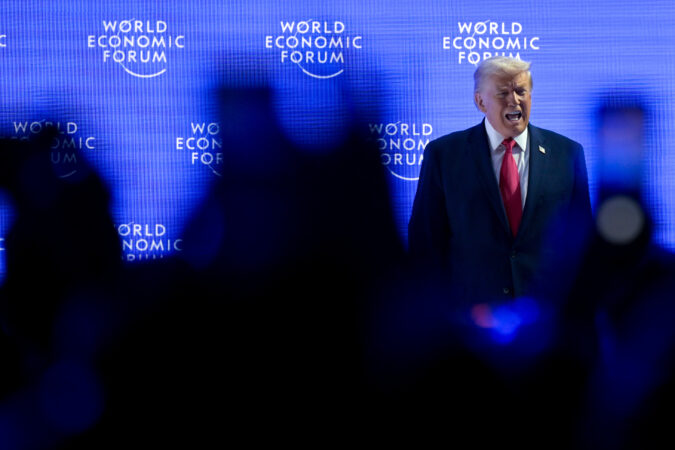
    In a speech at the World Economic Forum in Davos, Switzerland, on Wednesday, Trump insisted he wants to “get Greenland,” but said he would not use force to do so while repeatedly deriding European allies and vowing that NATO should not try to block U.S. expansionism.

    Making ‘world history’

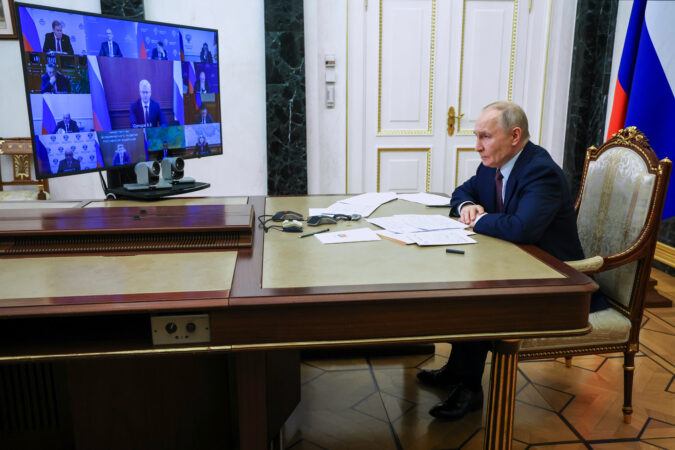
    The Kremlin has neither criticized nor supported Trump on the issue, but pointed out the far-reaching impact if the U.S. took Greenland from Denmark. Such measured praise appears in line with Moscow’s public rhetoric toward the current U.S. administration, as Russia tries to win concessions in the Trump-led effort to end its nearly four-year war in Ukraine and revive relations with Washington that had plunged to Cold War lows.

    “Regardless of whether it’s good or bad and whether it complies with international law or not, there are international experts who believe that if Trump takes control of Greenland he will go down in history, and not only the U.S. history but world history,” Kremlin spokesman Dmitry Peskov said Monday.

    “Without discussing whether it’s good or bad, it’s hard not to agree with these experts,” he added.

    President Vladimir Putin said last year that Trump’s push for control over Greenland wasn’t surprising, given longtime U.S. interest in the territory. Putin noted that the United States first considered plans to win control over Greenland in the 19th century, and then offered to buy it from Denmark after World War II.

    “It’s obvious that the United States will continue to systematically advance its geostrategic, military-political and economic interests in the Arctic,” Putin said.

    The government newspaper Rossiyskaya Gazeta on Sunday compared it to “such ‘planetary’ events as Abraham Lincoln’s abolition of slavery … or the territorial conquests of the Napoleonic Wars.”

    “If Trump secures the annexation of Greenland by July 4, 2026, when America celebrates the 250th anniversary of the Declaration of Independence, he will undoubtedly join the ranks of historical figures who affirmed the greatness of the United States,” the newspaper noted.

    A statement that appeared favorable to Trump came from Foreign Minister Sergey Lavrov, who said at a news conference Tuesday that Denmark’s control over Greenland was a vestige of the colonial past

    “In principle, Greenland isn’t a natural part of Denmark,” he said.

    Lavrov also drew parallels between Trump’s bid for Greenland and Putin’s annexation of Ukraine’s Crimean Peninsula. The 2014 illegal seizure of the peninsula is not recognized by most of the world.

    “Crimea isn’t less important for the security of the Russian Federation than Greenland is for the United States,” he said.

    A blow for longtime allies

    Others focused on the potential rift between the U.S. and its European allies in NATO, a bloc that has held firm since the dawn of the Cold War and that Russia has long viewed as an adversary.

    “Transatlantic unity is over. Leftist, globalist EU/UK elites failed,” wrote Kirill Dmitriev, a presidential envoy involved in talks with the U.S. on ending the war in Ukraine, in a post Saturday on X.

    Lavrov echoed his sentiment, saying Trump’s bid for Greenland heralds a “deep crisis” for NATO and raises questions about the alliance’s preservation as a single military-political bloc.

    In a series of columns this week, Russian state news agency RIA Novosti touted Trump’s push for Greenland as “opening the door to world history before our very eyes” and mocked European countries for sending small military contingents to Greenland in a show of support for Denmark.

    “Europeans can only watch this in impotent rage — they have neither economic nor military leverage against Washington,” one column said.

    Another column said it was “amusing and didactical” that the World Economic Forum once “was at the pinnacle of power and might, a place everyone aspired to, and today they’re burying ‘Atlantic solidarity’ here.”

    Pushing aside the war in Ukraine

    Russian state and pro-Kremlin media also argued Greenland was diverting attention from Ukrainian President Volodymyr Zelensky’s effort to negotiate a favorable peace settlement to end Russia’s invasion of his country, painting it as a positive for Moscow.

    “The world seemed to have forgotten about Ukraine and Zelensky. And in this silence, U.S. negotiators (Steve) Witkoff and (Jared) Kushner were preparing to travel to Moscow,” the pro-Kremlin tabloid Moskovsky Komsomolets said Sunday.

    RIA Novosti echoed that Wednesday in a column titled “Greenland knocked out Zelensky,” that “this uproar stirred up by Donald Trump has knocked Zelensky out cold,” and that “Ukraine’s importance will never return to its previous levels.”

    But Trump said in Davos that he would meet with Zelensky on Thursday. “I want to stop it,” Trump said of the fighting. “It’s a horrible war.”

    Seeking Arctic supremacy

    Dmitry Medvedev, Russia’s former president who is deputy chairman of the Security Council, drew parallels between Trump’s bid for Greenland and Putin’s seizure of territory in Ukraine – but said the American’s actions were “completely different.”

    Greenland “was never directly connected to the States, even though they tried to acquire it several times,” Medvedev said, questioning what price Trump “is willing to pay to achieve this goal” and whether he is up to the task of “eliminating NATO”.

    Popular pro-Kremlin military blogger and correspondent Aleksander Kots said in a recent Telegram post that by taking Greenland, Trump “wants to seize the Russian Arctic” and get to the natural resources that Moscow covets there.

    The Moskovsky Komsomolets tabloid on Sunday called Trump’s bid for Greenland a “turning point,” arguing that the Arctic “turns from a zone of cooperation into a zone of confrontation.”

    “The Northern Fleet will be under threat. The economic projects will face hurdles. The nuclear deterrence will lose effectiveness. Russia will end up in strategic isolation,” the article said. “Greenland is not just Trump’s coveted 2 million square kilometer island. It is an icy noose around Russia’s throat. And Trump has already begun to tighten it.”

    These concerns stand somewhat in contrast with the Kremlin publicly touting the prospects of cooperating with Washington in the Arctic. Putin has said, however, that Russia is worried about NATO’s activities in the polar region and will respond by strengthening its military capability there.

  • Iranian state TV issues first official death toll from recent protests, saying 3,117 were killed

    Iranian state TV issues first official death toll from recent protests, saying 3,117 were killed

    DUBAI, United Arab Emirates — Iranian state TV on Wednesday issued the first official death toll from recent protests, saying 3,117 people were killed, while the foreign minister issued the most direct threat yet against the United States after Tehran’s bloody crackdown, warning the Islamic Republic will be “firing back with everything we have if we come under renewed attack.”

    State television carried statements by the Interior Ministry and the Martyrs Foundation, an official body providing services to families of those killed in wars, stating the toll and saying 2,427 of the dead in the demonstrations that began Dec. 28 were civilians and security forces. It did not elaborate on the rest.

    The U.S.-based Human Rights Activists News Agency said the death toll was at least 4,560. The agency has been accurate throughout the years on demonstrations and unrest in Iran, relying on a network of activists inside the country that confirms all reported fatalities. The Associated Press has been unable to independently assess the death toll.

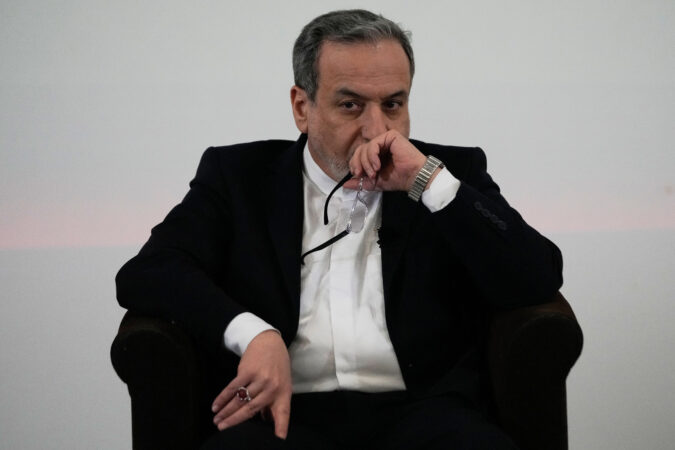
    The comments by Foreign Minister Abbas Araghchi, who saw his invitation to the World Economic Forum in Davos rescinded over the killings, came as a U.S. aircraft carrier group moved west toward the Middle East from Asia. U.S. fighter jets and other equipment appeared to be moving in the Mideast after a major U.S. military deployment in the Caribbean saw troops seize Venezuela’s Nicolás Maduro.

    Araghchi makes threat in column

    Araghchi made the threat in an opinion article published by The Wall Street Journal. The foreign minister contended “the violent phase of the unrest lasted less than 72 hours” and sought again to blame armed demonstrators for the violence. Videos that made it out of Iran despite an internet shutdown appear to show security forces repeatedly using live fire to target apparently unarmed protesters, something unaddressed by Araghchi.

    “Unlike the restraint Iran showed in June 2025, our powerful armed forces have no qualms about firing back with everything we have if we come under renewed attack,” Araghchi wrote, referring to the 12-day war launched by Israel on Iran in June. “This isn’t a threat, but a reality I feel I need to convey explicitly, because as a diplomat and a veteran, I abhor war.”

    He added: “An all-out confrontation will certainly be ferocious and drag on far, far longer than the fantasy timelines that Israel and its proxies are trying to peddle to the White House. It will certainly engulf the wider region and have an impact on ordinary people around the globe.”

    Araghchi’s comments likely refer to Iran’s short- and medium-range missiles. The Islamic Republic relied on ballistic missiles to target Israel in the war and left its stockpile of the shorter-range missiles unused, something that could be fired to target U.S. bases and interests in the Persian Gulf. Already, there have been some restrictions on U.S. diplomats traveling to bases in Kuwait and Qatar.

    Mideast nations, particularly diplomats from Gulf Arab countries, had lobbied U.S. President Donald Trump not to attack Iran after he threatened to act in response to the killing of demonstrators. Last week, Iran shut its airspace, likely in anticipation of a strike.

    The USS Abraham Lincoln, which had been in the South China Sea in recent days, had passed through the Strait of Malacca, a key waterway connecting the sea and Indian Ocean, by Tuesday, ship-tracking data showed.

    A U.S. Navy official, speaking on condition of anonymity, said the aircraft carrier and three accompanying destroyers were heading west.

    While naval and other defense officials stopped short of saying the carrier strike group was headed to the Middle East, its current heading and location in the Indian Ocean means it is only days away from moving into the region. Meanwhile, U.S. military images released in recent days showed F-15E Strike Eagles arriving in the Mideast and forces in the region moving a HIMARS missile system, the type used with great success by Ukraine after Russia’s full-scale invasion in the country in 2022.

    Protest death toll rises

    The death toll exceeds that of any other round of protest or unrest in Iran in decades, and recalls the chaos surrounding the 1979 revolution that brought the Islamic Republic into being. Although there have been no protests for days, there are fears the toll could increase significantly as information gradually emerges from a country still under a government-imposed shutdown of the internet since Jan. 8.

    The first indication from authorities of the extent of casualties came Saturday from Iran’s Supreme Leader Ayatollah Ali Khamenei, who said the protests had left “several thousand” people dead and blamed the United States. The protests began over economic pressures but quickly broadened to take on the theocracy.

    The Interior Ministry statement Wednesday asserted that “terrorists used live ammunition that led to the deaths of 2,427 people and security forces.”

    The Martyrs Foundation said Iran would pursue what it called “terrorists” who it claimed were tied to Israel and “supported, equipped and armed” by the U.S.

    Nearly 26,500 people have been arrested, according to the Human Rights Activists News Agency. Comments from officials have led to fears of some of those detained being put to death in Iran, one of the world’s top executioners.

    That and the killing of peaceful protesters have been two red lines laid down by Trump in the tensions.

    Kurdish exiles claim Iranian attack in Iraq

    The National Army of Kurdistan, the armed wing of the Kurdistan Freedom Party, or PAK, claimed Iran launched an attack against one of its bases near Irbil, some 200 miles north of Baghdad. It said one fighter had been killed, and released mobile phone footage of a fire in the predawn darkness.

    Iran did not immediately acknowledge the attack, which would be the first foreign operation Tehran has launched since the protests started.

    A handful of Iranian Kurdish dissident or separatist groups — some with armed wings — have long found a safe haven in northern Iraq’s semiautonomous Kurdish region, where their presence has been a point of friction between the central government in Baghdad and Tehran. The PAK has claimed it launched attacks in Iran as a crackdown on the demonstrations took place, something reported by semiofficial Iranian news agencies as well.

  • House Republicans take first step to hold the Clintons in contempt of Congress in Epstein probe

    House Republicans take first step to hold the Clintons in contempt of Congress in Epstein probe

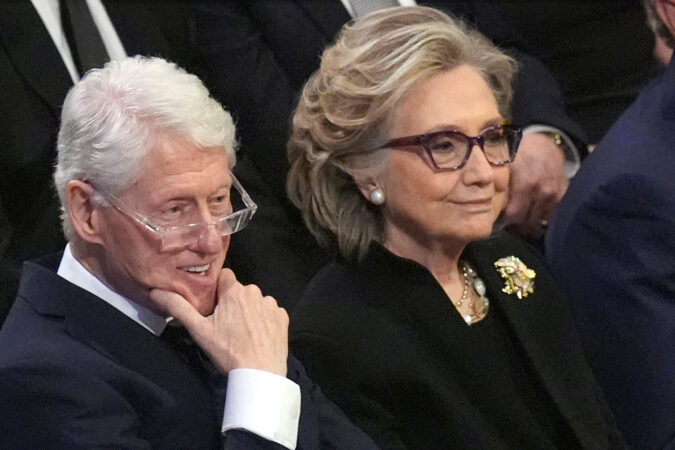
    WASHINGTON — House Republicans advanced a resolution Wednesday to hold former President Bill Clinton and former Secretary of State Hillary Clinton in contempt of Congress over the Jeffrey Epstein investigation, opening the prospect of the House using one of its most powerful punishments against a former president for the first time.

    The Republican-controlled House Oversight Committee approved the contempt of Congress charges, setting up a potential vote in the House. It was an initial step toward a criminal prosecution by the Department of Justice that, if successful, could send the Clintons to prison in a dispute over compelling them to testify before the House Oversight Committee.

    Rep. James Comer, the chairman, said at the start of the committee’s hearing that Clintons had responded not with “cooperation but defiance.”

    “Subpoenas are not mere suggestions, they carry the force of law and require compliance,” said Comer (R., Ky.).

    The Clintons argue that the subpoenas are invalid. Bill Clinton, President Donald Trump and many others connected to Epstein have not been accused of wrongdoing. Yet lawmakers are wrestling over who receives the most scrutiny.

    Nonetheless, there were signs of a potential thaw as the Clintons, both Democrats, appeared to be searching for an off-ramp to testify. In addition, passage of contempt charges through the full House was far from guaranteed, requiring a majority vote — something Republicans increasingly struggle to achieve.

    The repercussions of contempt charges loomed large, given the possibility of a substantial fine and even incarceration.

    While the charges have historically been used only as a last resort, lawmakers in recent years have been more willing to reach for the option. Comer initiated the contempt proceedings after the Clintons refused for months to fulfill a committee subpoena for their testimony in its Epstein investigation.

    The clash was the latest turn in the Epstein saga as Congress investigates how he was able to sexually abuse dozens of teenage girls for years. Epstein killed himself in 2019 in a New York jail cell while awaiting trial. The public release of case files has shown details of the connections between Epstein and both Bill Clinton and Trump, among many other high-powered men.

    Comer rejected an offer Tuesday from a lawyer for the Clintons to have Comer and the top Democrat on the committee, Rep. Robert Garcia of California, interview Bill Clinton in New York, along with staff.

    How the Clintons have responded

    The Clintons released a letter last week criticizing Comer for seeking their testimony at a time when the Justice Department is running a month behind a congressionally mandated deadline to release its complete case files on Epstein.

    Behind the scenes, however, longtime Clinton lawyer David Kendall has tried to negotiate an agreement. Kendall raised the prospect of having the Clintons testify on Christmas and Christmas Eve, according to the committee’s account of the negotiations.

    The Clintons, who contend the subpoenas are invalid because they do not serve any legislative purpose, also say they did not know about Epstein’s abuse. They have offered the committee written declarations about their interactions with Epstein.

    “We have tried to give you the little information we have. We’ve done so because Mr. Epstein’s crimes were horrific,” the Clintons wrote Comer last week.

    How contempt proceedings have been used

    Contempt of Congress proceedings are rare, used when lawmakers are trying to force testimony for high-profile investigations, such as the infamous inquiry during the 1940s into alleged Communist sympathizers in Hollywood or the impeachment proceedings of President Richard Nixon.

    Most recently, Trump’s advisers Peter Navarro and Steve Bannon were convicted of contempt charges for defying subpoenas from a House panel investigating the Jan. 6, 2021, riot by a mob of the Republican president’s supporters at the Capitol. Both Navarro and Bannon spent months in prison.

    The Jan. 6 committee also subpoenaed Trump in its inquiry. Trump’s lawyers resisted the subpoena, citing decades of legal precedent they said shielded ex-presidents from being ordered to appear before Congress. The committee ultimately withdrew its subpoena.

    No former president has ever been successfully forced to appear before Congress, although some have voluntarily appeared.

    The Democrats’ response

    Democrats have largely been focused on advancing the investigation into Epstein rather than mounting an all-out defense of the Clintons, who led their party for decades. They have said Bill Clinton should inform the committee if he has any pertinent information about Epstein’s abuses.

    A wealthy financier, Epstein donated to Bill Clinton’s 1992 presidential campaign and Hillary Clinton’s joint fundraising committee ahead of her 2000 Senate campaign in New York.

    “No president or former president is above the law,” Garcia said at the committee hearing.

    Democrats spent the hearing criticizing Comer for focusing on the Clintons when the Justice Department is behind schedule on releasing the Epstein files. Comer has also allowed several former attorneys general to provide the committee with written statements attesting to their limited knowledge of the case.

    The committee had also subpoenaed Ghislaine Maxwell, Epstein’s longtime confidant who is serving a lengthy prison sentence for a conviction on sex trafficking charges.

    “It’s interesting that it’s this subpoena only that Republicans and the chairman have been obsessed about putting all their energy behind,” Garcia said.

    Comer said the committee will interview Maxwell next month. Attorney General Pam Bondi will also appear before the House Judiciary Committee in February.

    Democrats embraced the call for full transparency on Epstein after Trump’s return to the White House, particularly after Bondi stumbled on her promise to release the entirety of the unredacted Epstein files to the public. The backlash scrambled traditional ideological lines, leading Republicans to side with Democrats demanding further investigation.

    The pressure eventually resulted in a bipartisan subpoena from the committee that ordered the Justice Department and Epstein estate to release files related to Epstein. Republicans quickly moved to include the Clintons in the subpoena.

    Comer has indicated that he will insist that the subpoena be fulfilled by nothing less than a transcribed deposition of Bill Clinton.

    “You have to have a transcript in an investigation,” he said. “So no transcript, no deal.”

  • Israeli fire kills 11 Palestinians in Gaza, including 2 children, local hospital officials say

    Israeli fire kills 11 Palestinians in Gaza, including 2 children, local hospital officials say

    CAIRO — Israeli forces on Wednesday killed at least 11 Palestinians in Gaza, including two 13-year-old boys, three journalists and a woman, hospitals in the war-battered enclave said.

    It was one of the deadliest days in Gaza since the ceasefire between Hamas and Israel took effect in October and comes at a time when the U.S. is trying to push the deal forward and implement its challenging second phase.

    Among the dead were three Palestinian journalists who were killed while filming near a displacement camp in central Gaza, a camp official said. The Israeli military said the strike came after it spotted suspects who were operating a drone that posed a threat to its troops.

    The two boys were killed in separate incidents. In one strike, a 13-year-old, his father, and a 22-year old man were hit by Israeli drones on the eastern side of the central Bureij refugee camp, according to officials from Al-Aqsa Martyrs Hospital in the central town of Deir al-Balah, which received the bodies.

    It wasn’t immediately clear whether the three had crossed into Israeli-controlled areas.

    A mounting death toll

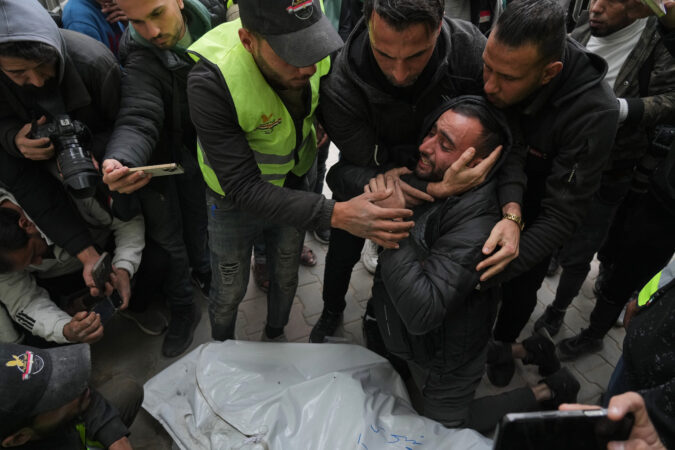
    The other 13-year-old who died was shot by troops in the eastern town of Bani Suheila, the Nasser hospital said after receiving the body. In a video circulated online, the father of Moatsem al-Sharafy is seen weeping over his body on a hospital bed.

    The boy’s mother, Safaa al-Sharafy, told The Associated Press that he left to gather firewood so she could cook.

    “He went out in the morning, hungry,” she said, tears running down her cheeks. “He told me he’d go quickly and come back.”

    Later Wednesday, an Israeli strike hit a vehicle carrying the three Palestinian journalists who were filming a newly established displacement camp managed by an Egyptian government committee, said Mohammed Mansour, the committee’s spokesperson.

    Mansour said the journalists were documenting the committee’s work at the camp in the Netzarim area in central Gaza. He said the strike occurred about 3 miles from the Israeli-controlled area.

    He said the vehicle was known to the Israeli military as belonging to the Egyptian committee. Video footage showed the charred, bombed-out vehicle by the roadside, smoke still rising from the wreckage.

    One of the journalists killed, Abdul Raouf Shaat, was a regular contributor to Agence France-Presse, but he was not on assignment for the news agency at the time of the strike, it said.

    “Abdul was much loved by the AFP team covering Gaza. They remember him as a kind-hearted colleague,” the news agency said in a statement that called him a “deeply committed journalist” and demanded a full investigation into his death.

    According to the Committee to Protect Journalists, more than 200 Palestinian journalists and media workers have been killed in Gaza since the war began in 2023, including visual journalist Mariam Dagga, who worked for the AP and other news organizations.

    Nearly five months after the strikes on a hospital that killed Dagga and four other journalists, the Israeli military says it is continuing to investigate.

    Aside from rare guided tours, Israel has barred international journalists from covering the war. News organizations rely largely on Palestinian journalists in Gaza — as well as residents — to show what is happening.

    Nasser Hospital officials also said Wednesday they received the body of a Palestinian woman shot by Israeli troops in the Muwasi area of the southern city of Khan Younis, which is not controlled by the military.

    In a separate attack, three brothers were killed in a tank shelling in the Bureij camp, according to Al-Aqsa Martyrs hospital, where the bodies were taken.

    More than 470 Palestinians have been killed by Israeli fire, according to the strip’s health ministry. At least 77 have been killed by Israeli gunfire near a ceasefire line that splits the territory between Israeli-held areas and most of Gaza’s Palestinian population, the ministry says.

    The ministry, which is part of the Hamas-led government, maintains detailed casualty records that are seen as generally reliable by U.N. agencies and independent experts.

    A mother’s plea

    The first phase of the October ceasefire that paused two years of war between Israel and Hamas militants focused on the return of all remaining hostages in exchange for the release of hundreds of Palestinian detainees and a partial withdrawal of Israeli forces in Gaza.

    The bodies of all but one hostage have been returned to Israel. Ran Gvili, a 24-year-old police officer known as Rani, was killed while fighting Hamas militants during the Oct. 7, 2023, attack that started the war. His relatives on Wednesday called again on the government and U.S. President Donald Trump to ensure the release of his remains.

    “We need to continue to amplify Rani’s voice, explain about him, talk about him, and explain to the world that we, the people of Israel, will not give up on anyone,” his mother, Talik Gvili, said. She told the AP the family still doesn’t “really know where he is.”

    Hamas said Wednesday it has provided “all information” it has on Gvili’s body to the ceasefire mediators, and accused Israel of obstructing search efforts in areas it controls in the Gaza Strip.

    The ceasefire also allowed a surge in humanitarian aid into Gaza, mainly food. But residents say shortages of blankets and warm clothes remain, and there is little wood for fires. There’s been no central electricity in Gaza since the first few days of the war.

    More than 100 children have died since the start of the ceasefire — including two infants who died from hypothermia in recent days.

    Israel targets more sites in Lebanon

    Israel’s air force carried out strikes Wednesday on sites in three villages in southern Lebanon that it said were part of the militant Hezbollah group’s infrastructure, including weapons storage facilities.

    The strikes came after the Israeli military issued warnings to evacuate the areas, including in the southern village of Qennarit, just south of the port city of Sidon.

    Drone strikes also hit cars in the villages of Bazouriyeh and Zahrani, killing two people, according to state-run National News Agency.

    The strikes were the latest in near-daily Israeli military action since a ceasefire more than a year ago ended the 14-month Israel-Hezbollah war. The agreement included a Lebanese pledge to disarm militant groups, which Israel says has not been fulfilled.

  • Trump in Davos says NATO should allow the U.S. to take Greenland but he won’t use force

    Trump in Davos says NATO should allow the U.S. to take Greenland but he won’t use force

    DAVOS, Switzerland — President Donald Trump insisted Wednesday that he wants to “get Greenland, including right, title and ownership,” but said he would not use force to do so while repeatedly deriding European allies and vowing that NATO should not try to block U.S. expansionism.

    In an extraordinary speech at the World Economic Forum, the president said he was asking for territory that was “cold and poorly located.” He said the U.S. had effectively saved Europe during World War II and even declared of NATO: “It’s a very small ask compared to what we have given them for many, many decades.”

    The implications of his remarks were nonetheless enormous, potentially rupturing an alliance that has held firm since the dawn of the Cold War and seemed among the globe’s most unshakable pacts.

    NATO was founded by leading European nations, the U.S. and Canada. Its other members have been steadfast in saying Greenland is not for sale and cannot be wrested from Denmark. That means the Davos meeting could be just the beginning of a larger standoff that may eventually reshape geopolitics worldwide.

    A Danish government official told The Associated Press after Trump’s speech that Copenhagen is ready to discuss U.S. security concerns in the Arctic. But the official, who was not authorized to comment publicly and spoke on condition of anonymity, underscored the government’s position that “red lines”— namely Denmark’s sovereignty — must be respected.

    Trump urged Denmark and the rest of NATO to stand aside, adding an ominous warning.

    “We want a piece of ice for world protection, and they won’t give it,” Trump said. “You can say yes, and we will be very appreciative. Or you can say no, and we will remember.”

    Despite that, he also acknowledged: “We probably won’t get anything unless I decide to use excessive strength and force where we would be frankly unstoppable. But I won’t do that, OK?”

    “I don’t have to use force,” he said. “I don’t want to use force. I won’t use force.”

    Instead, he called for opening “immediate negotiations” for the U.S. to acquire Greenland.

    “This enormous unsecured island is actually part of North America,” Trump said. “That’s our territory.”

    Trump suggests Europe is fizzling while U.S. booms

    The president has spent weeks saying that the U.S. will get control of Greenland no matter what it takes, arguing that Washington should be in charge there to counter threats in the surrounding Arctic sea by Russia and China. His Davos remarks articulated what that push for control might entail more clearly than before, however.

    Danish Foreign Minister Lars Løkke Rasmussen said he was encouraged by Trump’s comment about not using U.S. military force but called other parts of the speech “a way of thinking about territorial integrity that does not match the institutions we have.”

    “Greenland is part of NATO. Denmark is part of NATO, and we can exercise our sovereignty in Greenland,” Løkke Rasmussen said.

    In his remarks, Trump also argued that the U.S. is booming and its economy is strong, in sharp contrast to Europe.

    “I want to see Europe go good, but it’s not heading in the right direction,” said Trump, who also noted, “We want strong allies, not seriously weakened ones.” He said of European economies, “You all follow us down, and you follow us up.”

    Trump turned the Davos gathering upside-down even before he got there.

    His arrival was delayed after a minor electrical problem on Air Force One forced a return to Washington to switch aircraft. As Trump’s motorcade headed down a narrow road to the speech site, onlookers — including some skiers — lined the route. Some made obscene gestures, and one held up a paper cursing the president.

    Billionaires and top executives nonetheless sought seats inside the forum’s Congress Hall, which had a capacity of around 1,000, for Trump’s keynote address. When he began, it was standing room only. Attendees used headsets to listen in six languages besides English, and the reaction was mostly polite applause.

    More than 60 other heads of state are attending the forum. After the speech, Trump met with the leaders of Poland, Belgium and Egypt and again repeated that the U.S. would not be invading Greenland.

    “Military is not on the table. I don’t think it will be necessary,” Trump said, suggesting that the parties involved would use better judgment.

    Tariff threat looms large

    Potentially deepening the crisis are Trump’s threats to impose steep U.S. import taxes on Denmark and seven other allies unless they negotiate a transfer of the semi-autonomous territory — some European say they won’t do.

    Trump said the tariffs would start at 10% next month and climb to 25% in June.

    The president in a text message that circulated among European officials this week linked his aggressive stance on Greenland to last year’s decision not to award him the Nobel Peace Prize. In the message, he told Norway’s prime minister, Jonas Gahr Støre, that he no longer felt “an obligation to think purely of Peace.”

    Even before his speech, Trump’s Greenland ambitions were rankling Europe.

    British Prime Minister Keir Starmer vowed during his weekly questioning in the House of Commons, “Britain will not yield on our principles and values about the future of Greenland under threats of tariffs, and that is my clear position.”

    French President Emmanuel Macron, in his address to the forum, urged rejecting acceptance of “the law of the strongest.” European Commission President Ursula von der Leyen warned that should Trump move forward with the tariffs, the bloc’s response “will be unflinching, united and proportional.”

    The U.S. stock market, meanwhile, recovered on Wednesday from its worst day since October, as Trump’s talk of Greenland-related tariffs spooked investors.

    Trump’s housing plan overshadowed

    The White House had insisted Trump would focus his Davos address on how to lower housing prices in the U.S. That was part of a larger effort to bring down the cost of living, which continues to rise and threatens to become a major liability for the White House and Republicans ahead of November’s midterm elections.

    Greenland instead carried the day, with Trump lashing at Denmark for being “ungrateful” for the U.S. protection of the Arctic island during the World War II. He also mistakenly referred to Iceland, mixing up that country with Greenland four times during his speech and for the fifth time since Tuesday.

    When he finally did mention housing in his speech, Trump suggested he did not support a measure to encourage affordability. He said bringing down rising home prices hurts property values and makes homeowners who once felt wealthy because of the equity in their houses feel poorer.

    Meanwhile, experts and economists are warning that Trump’s Greenland tariff threat could disrupt the U.S. economy if it blows up the trade truce reached last summer between the U.S. and the EU.

    Promoting the ‘Board of Peace’

    On Thursday, Trump plans to attend an event focused on the “Board of Peace,” meant to oversee a U.S.-brokered ceasefire in the Israel-Hamas war in Gaza. It could possibly take on a broader mandate, potentially rivaling the United Nations. Some European nations have so far been non-committal about participating.

    “You know, the United Nations should be doing this,” Trump said Wednesday of his efforts to halt the fighting in Gaza and other conflicts around the world.

  • Mets acquire CF Luis Robert Jr. in a trade with the White Sox

    Mets acquire CF Luis Robert Jr. in a trade with the White Sox

    CHICAGO (AP) — The New York Mets acquired Luis Robert Jr. in a trade with the Chicago White Sox on Tuesday, filling a hole in center field.

    New York sent infielder Luisangel Acuña and minor league pitcher Truman Pauley to Chicago for Robert, who has struggled with injuries and inconsistency since a stellar 2023 season.

    The Mets had been looking for outfield help since they traded Brandon Nimmo to the Texas Rangers for second baseman Marcus Semien. They were in the mix for Kyle Tucker before he signed with the Los Angeles Dodgers.

    The trade was announced after New York finalized a $126 million, three-year contract with Bo Bichette, a two-time All-Star shortstop who is moving to third base with the Mets.

    Robert hit a career-low .223 with 14 homers, 53 RBIs, and a career-best 33 steals in 110 games last year. Despite the shaky performance, the White Sox picked up his $20 million option for 2026.

    Robert’s contract also has a $20 million club option for 2027 with a $2 million buyout.

  • Air Force One returns to Washington area due to minor electrical issue, White House says

    Air Force One returns to Washington area due to minor electrical issue, White House says

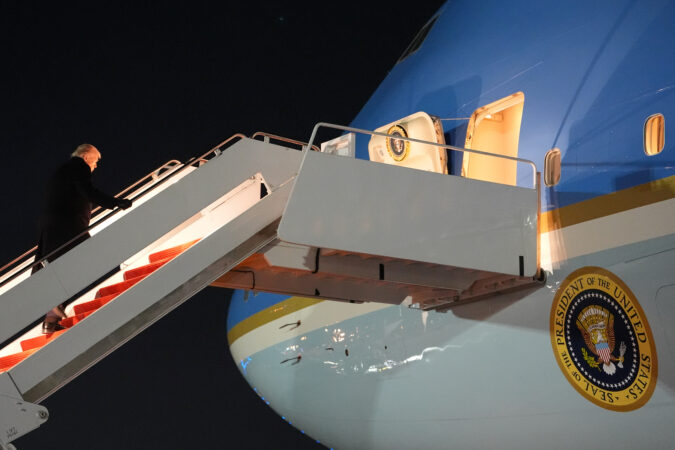
    WASHINGTON — President Donald Trump’s plane, Air Force One, returned to Joint Base Andrews about an hour after departing for Switzerland on Tuesday evening.

    White House press secretary Karoline Leavitt said the decision to return was made after takeoff when the crew aboard Air Force One identified “a minor electrical issue” and, out of an abundance of caution, decided to turn around.

    A reporter on board said the lights in the press cabin of the aircraft went out briefly after takeoff, but no explanation was immediately offered. About half an hour into the flight reporters were told the plane would be turning around.

    Trump will board another aircraft and continue on with his trip to the World Economic Forum in Davos.

    The two planes currently used as Air Force One have been flying for nearly four decades. Boeing has been working on replacements, but the program has faced a series of delays. The planes are heavily modified with survivability capabilities for the president for a range of contingencies, including radiation shielding and antimissile technology. They also include a variety of communications systems to allow the president to remain in contact with the military and issue orders from anywhere in the world.

    Last year, the ruling family of Qatar gifted Trump a luxury Boeing 747-8 jumbo jet to be added into the Air Force One fleet, a move that faced great scrutiny. That plane is currently being retrofitted to meet security requirements.

    Leavitt joked to reporters on Air Force One Tuesday night that a Qatari jet was sounding “much better” right now.

    Last February, an Air Force plane carrying Secretary of State Marco Rubio to Germany had to return to Washington because of a mechanical issue. In October, a military plane carrying Defense Secretary Pete Hegseth had to make an emergency landing in United Kingdom due to a crack in the windshield.

  • 76ers fall to Suns, 116-110, despite 25 points from VJ Edgecombe

    76ers fall to Suns, 116-110, despite 25 points from VJ Edgecombe

    PHILADELPHIA (AP) — Devin Booker scored 27 points and Jalen Green added 12 points in his return to the lineup as the Phoenix Suns beat the 76ers 116-110 on Tuesday night in a matchup of teams playing the second game of a back-to-back.

    Grayson Allen and Jordan Goodwin scored 16 points apiece, and former Villanova star Collin Gillespie and Oso Ighodaro each added 12 as the Suns won their third straight game and for the 12th time in 16 games.

    Rookie VJ Edgecombe led the 76ers with 25 points. Kelly Oubre Jr. finished with 21 points, and Tyrese Maxey added 20. Andre Drummond finished with eight points and 15 rebounds for the Sixers, who lost for the fourth time in six games.

    Philadelphia was without Joel Embiid (right ankle injury management) and Paul George (left knee injury management).

    Green played in just his third game of the season, and his first since Nov. 8, because of a right hamstring injury. He is in his first season with the Suns, arriving in the offseason as part of the trade in which Kevin Durant was sent to the Houston Rockets.

    Green came off the bench to score seven points in nine minutes in the first half, and went on to shoot 4 for 11 from the field, including 2 for 4 from distance, in 20 minutes, with three assists and two rebounds.

    The Suns, coming off a win over Brooklyn on Monday, got 13 points from Booker, 10 from Ighodaro, and were perfect on 13 shots from the free-throw line on the way to a 57-53 lead at the break.

    The Sixers, who beat Indiana on Monday, opened the second half with a 13-2 run for a 66-59 lead. The Suns tied it at 68 and built a 97-84 lead by the end of the third period. Phoenix extended its lead to 103-86 with 9 minutes, 37 seconds left in the fourth after Sixers coach Nick Nurse received a technical foul for contesting a call. Philadelphia chipped away down the stretch, but never really threatened.

    Up next

    The Sixers host Houston on Thursday (7 p.m., NBCSP) in the fifth game of a six-game homestand.

  • Trump’s Greenland threats spark outrage and defiance from EU, testing longtime NATO alliances

    Trump’s Greenland threats spark outrage and defiance from EU, testing longtime NATO alliances

    WASHINGTON — President Donald Trump‘s pledge to provoke a sweeping tariff fight with Europe to get his way in taking control of Greenland has left many of America’s closest allies warning of a rupture with Washington capable of shattering the NATO alliance that had once seemed unshakable.

    The European Union’s top official on Tuesday called Trump’s planned new tariffs over Greenland a “mistake” and questioned Trump’s trustworthiness. French President Emmanuel Macron said the EU could retaliate by deploying one of its most powerful economic tools, known colloquially as a trade “bazooka.”

    The rising tensions concerning Greenland, and threats of a deepening trade war between the U.S. and Europe, caused global investors to shudder Tuesday, as stocks on Wall Street slumped.

    Trump prides himself on ratcheting up pressure to try to negotiate through a position of strength. He was leaving Tuesday — the anniversary of his inauguration — for the World Economic Forum in Davos, Switzerland, a venue that offers Trump the chance to defuse tensions as quickly as he stirred them up.

    But European leaders — digging in and vowing to defend Denmark and its control over semiautonomous Greenland — may be seeking just as hard to meet an extraordinary moment with a show of their fierce resolve.

    That could hurt the chances of Trump finding a quick way to turn around the crisis. Greenland’s leader insisted on respect for its territorial integrity and said recognition of international law is “not a game.”

    ‘We will work something out’

    Trump made an unusual appearance in the White House briefing room and spoke at length while stocks fell. Asked how far he’d be willing to go to acquire Greenland, Trump said only, “You’ll find out.” He also mistakenly referred to Greenland as Iceland at one point.

    Still, the president predicted there could be a deal in the making with allies. “I think that we will work something out where NATO is going to be very happy, and where we’re going to be very happy,” he said, without providing specifics.

    Trump said he’d been encouraged that NATO had increased military spending, but he also belittled the alliance, saying other members may not protect Washington’s interests. The president suggested NATO members expect the U.S. to come to their rescue but “I just really do question whether or not they’ll come to ours.”

    European Commission President Ursula von der Leyen pushed back against Trump’s announcement that, starting February, a 10% import tax will be imposed on goods from eight European nations that have rallied around Denmark. Greenland is a semiautonomous territory of Denmark, a NATO member.

    “The European Union and the United States have agreed to a trade deal last July,” von der Leyen said in Davos. “And in politics as in business — a deal is a deal. And when friends shake hands, it must mean something.”

    “We consider the people of the United States not just our allies, but our friends. And plunging us into a downward spiral would only aid the very adversaries we are both so committed to keeping out of the strategic landscape,” she added.

    She vowed that the EU’s response “will be unflinching, united and proportional.”

    Taking firmer stances defied the approach that many European leaders have offered since Trump returned to office. It had mostly entailed saying nice things about the president to try to stay in his good graces, while working furiously through other avenues to find compromise.

    Trump says the U.S. needs Greenland to deter possible threats from China and Russia. But his continued insistence in recent weeks that anything short of the U.S. owning Greenland is unacceptable is testing the limits of the softer strategy.

    Danish Prime Minister Mette Frederiksen said “the worst may still be ahead of us.” Speaking to parliament, she said “we have never sought conflict. We have consistently sought cooperation.”

    ‘Not a game’

    Greenland’s Prime Minister Jens-Frederik Nielsen said at a news conference in the island’s capital, Nuuk, that “we need to have respect for international law and territorial integrity.” He said those principles should unite Western democratic countries, and said he was grateful for support from EU allies.

    “International law, it’s not a game,” he said. “We have been a close and loyal ally to the United States, to NATO, through many, many, many years. We can do lots more in that framework. We are willing to cooperate much more, but of course in mutual respect, and if we cannot see that, it will be very difficult to have a good and reliable partnership.”

    Trump’s threats have sparked outrage and a flurry of diplomatic activity across Europe, as leaders consider possible countermeasures, including retaliatory tariffs and the first-ever use of the European Union’s anti-coercion instrument.

    Unofficially known as the “trade bazooka,” the anti-coercion instrument could sanction individuals or institutions found to be putting undue pressure on the EU. The EU has two other major economic tools it could use to pressure Washington: new tariffs, or a suspension of the U.S.-EU trade deal.

    Macron warned in Davos that the additional tariffs could force the EU to use its anti-coercion mechanism for the first time against the United States.

    “Can you imagine that?” he said, arguing that allied countries should be focusing instead on bringing peace to Ukraine. “This is crazy.”

    In general, he said, the mechanism “is a powerful instrument and we should not hesitate to deploy it in today’s tough environment.”

    Trump earlier posted a text message from Macron in which the French president suggested a meeting of members of the Group of Seven industrialized democracies in Paris after the Davos gathering. An official close to Macron, who spoke anonymously in line with the French presidency’s customary practices, confirmed the message shared by Trump is genuine.

    In his latest threat of tariffs, Trump indicated that the import taxes would be retaliation for last week’s deployment of symbolic numbers of troops from the European countries to Greenland — though he also suggested that he was using the tariffs as leverage to negotiate with Denmark.

    ‘In the midst of a rupture’

    Canadian Prime Minister Mark Carney, whose country is a founding NATO member, warned of global fissures beyond Greenland, suggesting it was an “illusion” and “fiction” that there remains a rules-based international order.

    “Let me be direct: We are in the midst of a rupture, not a transition,” Carney said during a speech in Davos.

    Belgian Prime Minister Bart De Wever said at Davos that Europe cannot be a “miserable slave’ to Trump.”

    Others encouraged NATO leaders to stand up to Trump. Speaking on the sidelines of Davos, California Gov. Gavin Newsom slammed Europe’s response to Trump’s tariff threats as “pathetic” and “embarrassing,” and urged continental leaders to unite and stand up to the United States.

    “It’s time to stand tall and firm, have a backbone,” Newsom, a Democrat, told reporters.

    Greenland’s European backers have also looked at establishing a more permanent military presence to help guarantee security in the Arctic region, a key demand of the United States, Swedish Defense Minister Pål Jonson said.

    In Moscow, meanwhile, Russian Foreign Minister Sergey Lavrov strongly denied any intention by Russia and China to threaten Greenland, while also describing Greenland as a “colonial gain” for Denmark.

    Trump was asked Tuesday what would happen to his tariff threats related to Greenland if the Supreme Court rules against his ability to impose import tariffs as part of a case it is considering.

    “Well, I’ll have to use something else,” Trump said. “We have other alternatives.” He didn’t respond when asked about using force.