Category: Associated Press

  • Some personnel at key U.S. base in Qatar advised to evacuate as Iran official brings up earlier attack

    Some personnel at key U.S. base in Qatar advised to evacuate as Iran official brings up earlier attack

    WASHINGTON — Some personnel at a key U.S. military base in Qatar were advised to evacuate by Wednesday evening, according to a U.S. official and the Gulf country, as President Donald Trump has warned of possible action after a deadly crackdown on protesters in Iran.

    The decision came as a senior official in Tehran brought up the country’s retaliatory attack in June at Al Udeid Air Base outside Doha, Qatar.

    The U.S. official, who spoke on the condition of anonymity to discuss sensitive plans, described the move at the base as precautionary and said such measures also were being taken across the region. The official, citing the need for operational security, would not go into further detail, including whether the evacuation was optional or mandatory, whether it affected troops or civilian personnel, or how many people were advised to leave.

    The U.S. Embassy in Qatar issued a notice early Thursday saying it had “advised its personnel to exercise increased caution and limit non-essential travel” to Al Udeid Air Base. “We recommend U.S. citizens in Qatar do the same,” it added. In Kuwait, the U.S. embassy ordered a “temporary halt” to its personnel going to multiple military bases in the small Gulf Arab country amid heightened tensions. Kuwait is home to U.S. Army Central, the service’s Mideast command.

    The anti-government demonstrations in nearby Iran began in late December, and Trump has said he is willing to conduct military operations against Iran if the Tehran government continues to kill and arrest protesters.

    A day after Trump said that he believes the killing is “significant ” and that his administration would “act accordingly,” the president told reporters that he had been told that targeting protesters and plans for executions in Iran have stopped, without providing many details.

    The vague statements made it unclear as of Wednesday night what U.S. action, if any, would take place against Iran.

    Qatar notes ‘regional tensions’

    Qatar said the measures at Al Udeid were being “undertaken in response to the current regional tensions.”

    “The State of Qatar continues to implement all necessary measures to safeguard the security and safety of its citizens and residents as a top priority, including actions related to the protection of critical infrastructure and military facilities,” Qatar’s international media office said on the social platform X.

    The base, which hosts thousands of American service members, was targeted by Iran in June in retaliation for U.S. strikes on its nuclear facilities.

    Ali Shamkhani, an adviser to Supreme Leader Ayatollah Ali Khamenei, wrote on X that “the #US President, who repeatedly talks about the futile aggression against #Iran’s nuclear facilities, would do well to also mention the destruction of the US base in #Al-Udeid by Iranian missiles.”

    “It would certainly help create a real understanding of Iran’s will and ability to respond to any aggression,” he added.

    The U.S. military maintains a variety of troops in the region, including at Al Udeid, but the Trump administration shifted some resources from the Middle East to the Caribbean Sea as part of a pressure campaign on former Venezuelan President Nicolás Maduro.

    The world’s largest aircraft carrier, the USS Gerald R. Ford, was ordered in October to sail from the Mediterranean Sea to the Caribbean along with several destroyers. The carrier USS Nimitz, which helped conduct the June strikes on Iran’s nuclear program, also departed the region in October.

    The Navy had five small ships — two destroyers and three littoral combat ships — in the waters off Iran as of Tuesday.

    Iranian and Qatari officials stay in touch

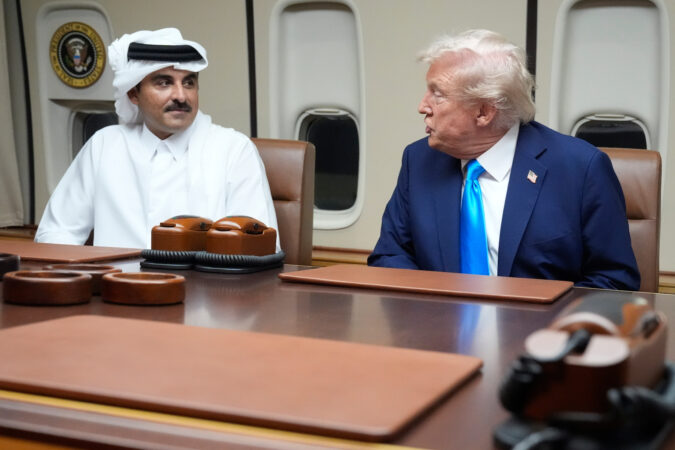
    Ali Larijani, secretary of Iran’s Supreme National Security Council, had a phone call Tuesday with Sheikh Mohammed bin Abdulrahman Al Thani, Qatar’s prime minister.

    In a statement on X, Al Thani said he “reaffirmed the State of Qatar’s backing of all de-escalation efforts, as well as peaceful solutions to enhance security and stability in the region.”

    Iran’s decision in June to retaliate against U.S. strikes by targeting the sprawling desert base created a rare tension between the two maritime neighbors, with Qatari officials saying it caught them by surprise.

    No American or Qatari personnel was harmed, the U.S. military’s Central Command said at the time, noting that they worked together to defend the base. A Qatari military officer said one of 19 missiles fired by Iran was not intercepted and hit the base, but Trump said in a social media post at the time that “hardly any damage was done.”

    The Gulf state has been caught in the crossfire of other regional tensions, including an Israeli strike in September on the headquarters of Hamas’ political leadership in Doha while the group’s top figures had been gathered to consider a U.S. proposal for a ceasefire in the Gaza Strip.

    The Pentagon declined to comment on questions about the changes at Al Udeid. The State Department had no immediate comment on the potential for any security alerts to be issued for American diplomats or other civilians in Qatar.

    In June, the embassy had issued a brief shelter-in-place advisory to U.S. citizens in Doha but stopped short of evacuating diplomats or advising Americans to leave the country.

  • FBI searches a Washington Post reporter’s home as part of a classified documents investigation

    FBI searches a Washington Post reporter’s home as part of a classified documents investigation

    FBI agents searched a Washington Post reporter’s home on Wednesday as part of a leak investigation into a Pentagon contractor accused of taking home classified information, the Justice Department said.

    Hannah Natanson, who has been covering President Donald Trump’s transformation of the federal government, had a phone, two laptops and a Garmin watch seized in the search of her Virginia home, the Post reported. Natanson has reported extensively on the federal workforce and recently published a piece describing how she gained hundreds of new sources — leading one colleague to call her “the federal government whisperer.”

    While classified documents investigations aren’t unusual, the search of a reporter’s home marks an escalation in the government’s efforts to crack down on leaks. The Post was told that Natanson and the newspaper are not targets of the probe, executive editor Matt Murray said in an email to colleagues.

    “Nonetheless, this extraordinary, aggressive action is deeply concerning and raises profound questions and concern around the constitutional protections for our work,” Murray wrote. “The Washington Post has a long history of zealous support for robust press freedoms. The entire institution stands by those freedoms and our work.”

    Attorney General Pam Bondi said that the search was done at the request of the Defense Department and that the journalist was “obtaining and reporting classified and illegally leaked information from a Pentagon contractor.”

    “Leaking classified information puts America’s national security and the safety of our military heroes in serious jeopardy,” White House press secretary Karoline Leavitt said in a post on X. “President Trump has zero tolerance for it and will continue to aggressively crack down on these illegal acts moving forward.”

    The warrant says the search was related to an investigation into a system engineer and information technology specialist for a government contractor in Maryland who authorities allege took home classified materials, the Post reported. The worker, Aurelio Perez-Lugones, was charged earlier this month with unlawful retention of national defense information, according to court papers. He has not been charged with sharing classified information, and he has not been accused in court papers with leaking.

    Perez-Lugones, who held a top secret security clearance, is accused of printing classified and sensitive reports at work. In a search of his Maryland home and car this month, authorities found documents marked “SECRET,” including one in a lunchbox, according to court papers.

    An FBI spokesperson declined to comment on Wednesday. The Washington Post said Wednesday that it was monitoring and reviewing the situation. An email seeking comment was sent to lawyers for Perez-Lugones, who is expected to appear in court on Thursday for a detention hearing.

    First Amendment groups expressed alarm at the search, saying it could chill investigative journalism that holds government officials to account.

    “Physical searches of reporters’ devices, homes, and belongings are some of the most invasive investigative steps law enforcement can take,” Reporters Committee for Freedom of the Press president Bruce Brown said. “While we won’t know the government’s arguments about overcoming these very steep hurdles until the affidavit is made public, this is a tremendous escalation in the administration’s intrusions into the independence of the press.”

    The Justice Department over the years has developed, and revised, internal policies governing how it will respond to news media leaks.

    In April, Bondi rescinded a policy from President Joe Biden’s Democratic administration that protected journalists from having their phone records secretly seized during leak investigations — a practice long decried by news organizations and press freedom groups.

    The moves again gave prosecutors the authority to use subpoenas, court orders and search warrants to hunt for government officials who make “unauthorized disclosures” to journalists. A memo she issued said members of the press are “presumptively entitled to advance notice of such investigative activities,” and subpoenas are to be “narrowly drawn.” Warrants must also include “protocols designed to limit the scope of intrusion into potentially protected materials or newsgathering activities,” the memo states.

    The aggressive posture with regard to The Washington Post stands in contrast to the Justice Department’s approach to the disclosure of sensitive military information via a Signal chat last spring involving senior Trump administration officials. A reporter was mistakenly added to that chat. Bondi indicated publicly at the time that she was disinclined to open an investigation, saying she was confident that the episode had been a mistake.

    Bondi also repeated Trump administration talking points that the highly sensitive information in the chat was not classified, though current and former U.S. officials have said the posting of the launch times of aircraft and the times that bombs would be released before those pilots were even in the air would have been classified.

  • Danish official says there’s a ‘fundamental disagreement’ with Trump over Greenland

    Danish official says there’s a ‘fundamental disagreement’ with Trump over Greenland

    WASHINGTON — Disagreement” over Greenland remains with President Donald Trump after holding highly anticipated White House talks with Vice President JD Vance and Secretary of State Marco Rubio.

    The two sides, however, agreed to create a working group to discuss ways to work through differences as Trump continues to call for a U.S. takeover of the semiautonomous territory of NATO ally Denmark.

    “The group, in our view, should focus on how to address the American security concerns, while at the same time respecting the red lines of the Kingdom of Denmark,” Danish Foreign Minister Lars Løkke Rasmussen told reporters after joining Greenland’s foreign minister, Vivian Motzfeldt, for the talks. He added that it remains “clear that the president has this wish of conquering over Greenland.”

    Trump is trying to make the case that NATO should help the U.S. acquire the world’s largest island and says anything less than it being under American control is unacceptable.

    Denmark, meanwhile, announced plans to boost the country’s military presence in the Arctic and North Atlantic as Trump tries to justify his calls for a U.S. takeover of the vast territory by repeatedly claiming that China and Russia have their designs on Greenland, which holds vast untapped reserves of critical minerals.

    The president, who did not take part in Wednesday’s meeting, told reporters he remained committed to acquiring the territory.

    “We need Greenland for national security,” Trump said. “We’ll see how it all works out. I think something will work out.”

    Trump named Louisiana Gov. Jeff Landry as a special envoy to Greenland last month. Landry did not attend Wednesday’s meeting, but was scheduled to travel to Washington on Thursday and Friday for meetings that include the topic of Greenland, his spokesperson said.

    Landry, following Trump’s latest comments, posted on X that Trump was “absolutely right” about acquiring Greenland and the territory “is a critical component of our nation’s national security portfolio.”

    Before the meeting, Trump took to social media to make the case that “NATO should be leading the way” for the U.S. to acquire the territory. NATO Secretary General Mark Rutte has sought to keep an arms-length away from the dispute between the most important power and the other members of the 32-country alliance unnerved by the aggressive tack Trump has taken toward Denmark.

    Both Løkke Rasmussen and Motzfeldt offered measured hope that the talks were beginning a conversation that would lead to Trump dropping his demand and create a path for tighter cooperation with the U.S.

    “We have shown where our limits are and from there, I think that it will be very good to look forward,” Motzfeldt said.

    Denmark bolstering presence in Arctic

    In Copenhagen, Danish Defense Minister Troels Lund Poulsen announced a stepped-up military presence in the Arctic “in close cooperation with our allies,” a necessity in a security environment in which “no one can predict what will happen tomorrow.”

    Several of the country’s allies, including Germany, France, Norway and Sweden, announced they were arriving in Greenland along with Danish personnel to take part in joint exercises or map out further military cooperation in the Arctic.

    NATO is also looking at how members can collectively bolster the alliance’s presence in the Arctic, said a NATO official who was not authorized to comment publicly and spoke on condition of anonymity.

    Greenlanders want the US to back off

    Greenland is strategically important because, as climate change causes the ice to melt, it opens up the possibility of shorter trade routes to Asia. That also could make it easier to extract and transport untapped deposits of critical minerals which are needed for computers and phones.

    Trump says Greenland is also “vital” to the United States’ Golden Dome missile defense program. He also has said Russia and China pose a threat in the region.

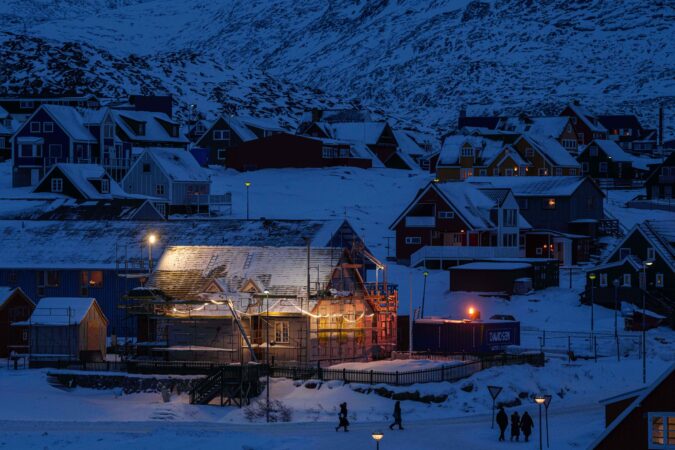
    But experts and Greenlanders question that claim, and it has become a hot topic on the snow-covered main street in Greenland’s capital, where international journalists and camera crews have descended as Trump continues his takeover talk.

    In interviews, Greenlanders said the outcome of the Washington talks didn’t exactly evince confidence that Trump can be persuaded.

    “Trump is unpredictable,” said Geng Lastein, who immigrated to Greenland 18 years ago from the Philippines.

    Maya Martinsen, 21, said she doesn’t buy Trump’s arguments that Greenland needs to be controlled by the U.S. for the sake maintaining a security edge in Arctic over China and Russia. Instead, Martinsen said, Trump is after the plentiful “oils and minerals that we have that are untouched.”

    Greenland “has beautiful nature and lovely people,” Martinsen added. ”It’s just home to me. I think the Americans just see some kind of business trade.”

    Denmark has said the U.S., which already has a military presence, can boost its bases on Greenland. The U.S. is party to a 1951 treaty that gives it broad rights to set up military bases there with the consent of Denmark and Greenland.

    Bipartisan concern from U.S. senators

    Løkke Rasmussen and Motzfeldt also met with a bipartisan group senators from the Arctic Caucus. The senators said they were concerned Trump’s push to acquire Greenland could upend NATO and play into the hands of Russian President Vladimir Putin.

    Republican Sen. Lisa Murkowski of Alaska, who has introduced legislation to try to block any U.S. action in Greenland, said it was “stunning” to her that they were even discussing the matter. “We are operating in times where we are having conversations about things that we never even thought possible,” Murkowski said.

    Sen. Angus King, I-Maine, said it is “nonsense” to say that the U.S. needs to control Greenland to protect national security. The officials were “very open to additional national security assets in Greenland in order to meet whatever risks there are.”

    A bipartisan delegation of U.S. lawmakers plans to show their solidarity by traveling to Copenhagen this week.

  • Donovan Mitchell scores 35 as Cavs blow out the Sixers, 133-107

    Donovan Mitchell scores 35 as Cavs blow out the Sixers, 133-107

    Donovan Mitchell had 35 points and nine assists, Darius Garland scored 20 points before leaving with an injured foot and the Cleveland Cavaliers beat the 76ers 133-107 on Wednesday night.

    Garland was ruled out for the game late in the third quarter when he hurt his right foot diving for a loose ball. Garland already had surgery in June on the injured left big toe that hampered him during Cleveland’s exit from the playoffs last season.

    The All-Star guard averaged 17.9 points after a slow start this season as he recovered from surgery. Garland continued his recent hot streak and shot 8-for-13 against the Sixers.

    Joel Embiid scored 20 points and hit a three-pointer that helped him reach 13,000 career points, the seventh player in team history to hit that mark.

    Paul George had 17 points for the Sixers in the opener of a two-game series.

    Sixers fans booed the team off the court in the third quarter headed into a timeout and trailing 75-53.

    Sixers center Joel Embiid (center) scored his 13,000th point against the Cavaliers on Wednesday night.

    Tyrese Maxey and Quintin Grimes hit a pair of threes during a 10-0 run and Embiid — who just earlier landed his 7-foot-2 frame on two rows of unsuspecting fans when he dove for a loose ball — buried a three of his own that made it 79-66.

    The good times were short-lived, and fans headed for the exits as the Cavs stretched the lead to 22 midway through the fourth.

    Sixers forward Dominick Barlow needed help up from the court and into the locker room after his legs gave out on him and he landed hard on his back and head on a driving layup attempt. He suffered a back contusion.

    De’Andre Hunter hit early threes that stretched Cleveland’s lead to 30-14 and 60-47 headed into halftime. Hunter and Evan Mobley both scored 17 points. Mobley grabbed 13 rebounds.

    The teams play again Friday at Xfinity Mobile Arena (7 p.m., ESPN).

  • Trump administration slashes funding for substance abuse and mental health programs nationwide

    Trump administration slashes funding for substance abuse and mental health programs nationwide

    NEW YORK — The Trump administration has made abrupt and sweeping cuts to substance abuse and mental health programs across the country in a move that advocates said will jeopardize the lives of some of the country’s most vulnerable.

    The Substance Abuse and Mental Health Services Administration on Tuesday night canceled some 2,000 grants representing nearly $2 billion in funding, according to an administration official with knowledge of the cuts who was not authorized to discuss them publicly.

    The move pulls back funding for a wide swath of discretionary grants and represents about a quarter of SAMHSA’s overall budget. It builds on other, wide-ranging cuts that have been made at the Department of Health and Human Services, including the elimination of thousands of jobs and the freezing or canceling of billions of dollars for scientific research.

    The latest funding cuts immediately jeopardize programs that give direct mental health services, opioid treatment, drug prevention resources, peer support and more to communities affected by addiction, mental illness and homelessness.

    “Without that funding, people are going to lose access to lifesaving services,” said Yngvild Olsen, former director of SAMHSA’s Center for Substance Abuse Treatment and a national adviser at Manatt Health. “Providers are going to really need to look at potentially laying off staff and not being able to continue.”

    Funding tied to agency’s priorities

    SAMHSA, a sub-agency of HHS, notified grant recipients that their funding would be canceled effective immediately in emailed letters on Tuesday evening, according to several copies received by organizations and reviewed by The Associated Press.

    The letters, signed by SAMHSA Principal Deputy Assistant Secretary Christopher Carroll, justified the terminations using a regulation that says the agency may terminate any federal award that “no longer effectuates the program goals or agency priorities.”

    Grant recipients who were notified of the cancellations said they were confused by that explanation and didn’t get any further detail about why the agency felt their work didn’t match up with SAMHSA’s priorities.

    “The goal of our grants is entirely in line with the priorities listed in that letter,” said Jamie Ross, CEO of the Las Vegas-based PACT Coalition, a community organization focused on substance use issues that lost funding from three grants totaling $560,000.

    HHS didn’t respond to a request for comment on the funding cancellations, which were first reported by NPR. Two sources within SAMHSA who were not authorized to speak to media said staff weren’t widely notified of the agency’s action.

    Programs at risk after funding is slashed

    Organizations reeling from the news on Wednesday told the AP they had already been forced to cut staff and cancel trainings. In the long term, many were considering whether they could keep programs alive by shuffling them to different funding sources or whether they’d need to stop the services altogether.

    Robert Franks, CEO of the Boston-based mental health provider the Baker Center for Children and Families, which lost two federal grants totaling $1 million, said the loss of funding will force his organization to lay off staff and put care in jeopardy for some 600 families receiving it. One of the canceled grants had been awarded through the National Child Traumatic Stress Initiative, a more than 20-year-old program supporting specialized care for children who have been through traumatic events ranging from sexual abuse to school violence.

    Franks said his organization’s work directly advances SAMHSA’s goals to address mental illness. He said trauma care provided to children through his organization helps people from all walks of life and reduces burdens on other parts of society.

    “The reality is these programs are probably our most effective tool in addressing the issues that they identify as being critical to them,” he said. “Honestly, I don’t understand it.”

    The National Association of County Behavioral Health and Developmental Disability Directors, a group that represents local organizations that deliver safety net services, sent a letter to its members on Wednesday noting that many of its partners estimated the funding pullbacks were focused on grants classified as Programs of Regional and National Significance. They also said the grants totaled around 2,000 and likely amounted to some $2 billion.

    The group said it believed certain block grants, 988 suicide and crisis lifeline funding and Certified Community Behavioral Health Clinics were spared from the cuts.

    For Honesty Liller, CEO of the peer support organization the McShin Foundation in Richmond, Va., the loss of about $1.4 million in funding is personal. She said the foundation she leads saved her life 18 years ago when she was struggling with a heroin addiction.

    The terminated grant has already forced Liller to lay off five staff members. It will mean fewer peers are available to go into local jails and visit incarcerated people who are recovering from substance abuse disorder.

    “They need hope dealers like us, they need people that have lived experience in recovery and they need this funding,” Liller said. “I’ve just never felt so gut punched.”

  • Gaza is entering the second phase of the ceasefire plan Trump helped broker, U.S. says

    Gaza is entering the second phase of the ceasefire plan Trump helped broker, U.S. says

    WASHINGTON — The United States said Wednesday that it is moving into the next phase of a Gaza ceasefire plan that involves disarming Hamas, rebuilding the war-ravaged territory and establishing the group of Palestinian experts that will administer daily affairs in Gaza under American supervision.

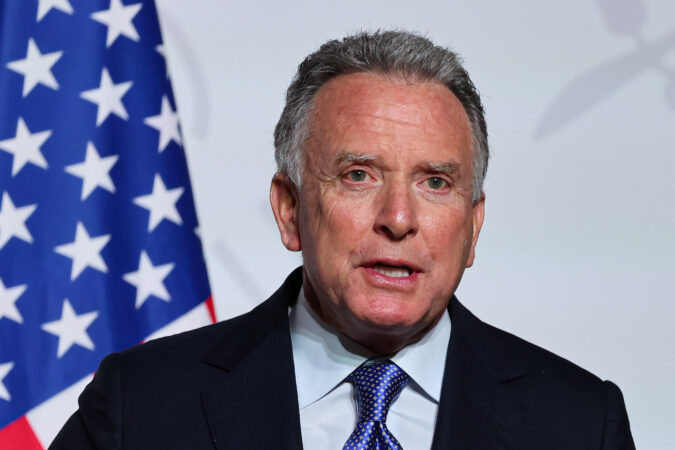
    President Donald Trump’s envoy Steve Witkoff said in a post on X that the deal that the Republican president helped broker was entering its second phase following two years of war between Israel and Hamas, including the establishment of a technocratic government in Gaza.

    While Wednesday’s announcement indicates a key step forward, a new government in Gaza and the ceasefire agreement face a number of huge challenges — including the deployment of an international security force to supervise the deal and the difficult process of disarming Hamas.

    Witkoff did not offer any details about who would serve on the new transitional Palestinian administration that would govern Gaza. The White House did not immediately offer any more information, either.

    The other mediators of the ceasefire deal — Egypt, Turkey and Qatar — welcomed the establishment of the Palestinian technocratic committee and said it would be led by Ali Shaath, a former deputy minister in the Palestinian Authority.

    In a joint statement, the three countries called it an “important development … aimed at consolidating stability and improving the humanitarian situation in the Gaza Strip.”

    Shaath is a Gaza native who served as a deputy minister for transportation with the internationally recognized Palestinian Authority. Shaath, an engineer, is an expert in economic development and reconstruction, according to his biography on the Palestine Economic Policy Research Institute’s website.

    Witkoff said the U.S. expects Hamas to immediately return the final Israeli hostage as part of its obligations under the deal, noting that “failure to do so will bring serious consequences.”

    A Hamas spokesperson, Hazem Qassem, told Al-Jazeera Live on Wednesday that Witkoff’s announcement is an important and positive development, adding that the group is ready to hand over the administration of Gaza to the independent technocratic committee and facilitate its work.

    “Hamas is ready to engage in internal Palestinian approaches to discuss the issue of the resistance weapons,” said Qassem in the statements that he shared on his Telegram channel.

    The last hostage, Ran Gvili, was a 24-year-old police officer who was killed while fighting Hamas militants during the Oct. 7, 2023, attack that started the war in Gaza.

    Israeli Prime Minister Benjamin Netanyahu spoke Wednesday evening to Gvili’s parents, Tali and Itzik Gvili, and told them that the return of their son’s remains a top priority, his office said in a statement.

    “The declarative move to establish a technocratic committee will not affect efforts to return Ran to Israel’s grave,” the statement said.

    The statement added that Israel will act on any information the mediators receive and said Hamas is required under the ceasefire agreement to do all it can to return each and every hostage.

    The ceasefire reached under Trump’s 20-point plan took effect in October and stopped much of the fighting. Under the first phase of the three-phase deal, Hamas released all but one hostage it was holding in exchange for hundreds of Palestinians who were held by Israel.

    Appointees to a technocratic committee that Witkoff said would be established under the second phase are part of a broader plan to end Hamas’ 18-year rule of Gaza. The appointees will run day-to-day affairs in Gaza, under the oversight of a Trump-led “Board of Peace,” whose members have also not yet been named.

    The technocratic committee will be tasked with providing public services to the more than 2 million Palestinians in Gaza, but it faces towering challenges and unanswered questions, including about its operations and financing.

    The United Nations has estimated that reconstruction will cost more than $50 billion. The process is expected to take years, and little money has been pledged so far.

    There also is the more immediate challenge of figuring out how to take over basic services after nearly two decades of Hamas-led rule in Gaza and repeated rounds of conflict with Israel.

  • U.S. apologizes for deporting a college student flying home for Thanksgiving surprise

    U.S. apologizes for deporting a college student flying home for Thanksgiving surprise

    BOSTON — The Trump administration apologized in court for a “mistake” in the deportation of a Massachusetts college student who was detained trying to fly home to surprise her family for Thanksgiving, but still argued the error should not affect her case.

    Any Lucia Lopez Belloza, 19, a Babson College freshman, was detained at Boston’s airport on Nov. 20 and flown to Honduras two days later. Her removal came despite an emergency court order on Nov. 21 directing the government to keep her in Massachusetts or elsewhere in the United States for at least 72 hours.

    Lopez Belloza, whose family emigrated from Honduras to the U.S. in 2014, is currently staying with grandparents and studying remotely. She is not detained and was recently visiting an aunt in El Salvador.

    Her case is the latest involving a deportation carried out despite a court order. Kilmar Abrego Garcia was deported to El Salvador despite a ruling that should have prevented it. The Trump administration initially fought efforts to bring him back to the U.S. but eventually complied after the U.S. Supreme Court weighed in. And last June, a Guatemalan man identified as O.C.G. was returned to the U.S. after a judge found his removal from Mexico likely “lacked any semblance of due process.”

    At a federal court hearing Tuesday in Boston, the government argued the court lacks jurisdiction because lawyers for Lopez Belloza filed their action several hours after she arrived in Texas while en route out of the country. But the government also acknowledged it violated the judge’s order.

    In court filings and in open court, government lawyers said an Immigration and Customs Enforcement deportation officer mistakenly believed the order no longer applied because Lopez Belloza had already left Massachusetts. The officer failed to activate a system that alerts other ICE officers that a case is subject to judicial review and that removal should be halted.

    “On behalf of the government, we want to sincerely apologize,” Assistant U.S. Attorney Mark Sauter told the judge, saying the employee understands “he made a mistake.” The violation, Sauter added, was “an inadvertent mistake by one individual, not a willful act of violating a court order.”

    In a declaration filed with the court Jan. 2, the ICE officer also admitted he did not notify ICE’s enforcement office in Port Isabel, Texas, that the removal mission needed to be canceled. He said he believed the judge’s order did not apply once Lopez Belloza was no longer in the state.

    The government maintains her deportation was lawful because an immigration judge ordered the removal of Lopez Belloza and her mother in 2016, and the Board of Immigration Appeals dismissed their appeal in 2017. Prosecutors said she could have pursued additional appeals or sought a stay of removal.

    Her lawyer, Todd Pomerleau, countered that she was deported in clear violation of the Nov. 21 order and said the government’s actions deprived her of due process. “I was hoping the government would show some leniency and bring her back,” he said. “They violated a court order.”

    U.S. District Judge Richard Stearns said he appreciated the government acknowledging the error, calling it a “tragic” bureaucratic mistake. But appeared to rule out holding the government in contempt, noting the violation did not appear intentional. He also questioned whether he has jurisdiction over the case, appearing to side with the government in concluding the court order had been filed several hours after she had been sent to Texas.

    “It might not be anybody’s fault, but she was the victim of it,” Stearns said, adding at one point that Lopez Belloza could explore applying for a student visa.

    Pomerleau said one possible resolution would be allowing Lopez Belloza to return to finish her studies while he works to reopen the underlying removal order.

  • Danish official says there’s a “fundamental disagreement” with Trump over Greenland

    Danish official says there’s a “fundamental disagreement” with Trump over Greenland

    WASHINGTON — A top Danish official said Wednesday that a “fundamental disagreement” over Greenland remains with President Donald Trump after talks in Washington with Vice President JD Vance and Secretary of State Marco Rubio.

    The two sides, however, agreed to create a working group to discuss ways to work through differences as Trump continues to call for a U.S. takeover of the Denmark’s Arctic territory of Greenland.

    “The group, in our view, should focus on how to address the American security concerns, while at the same time respecting the red lines of the Kingdom of Denmark,” Danish Foreign Minister Lars Løkke Rasmussen told reporters after joining Greenland’s foreign minister, Vivian Motzfeldt, for the talks.

    Trump is trying to make the case that NATO should help the U.S. acquire the world’s largest island and says anything less than it being under American control is unacceptable.

    Denmark has announced plans to boost the country’s military presence in the Arctic and North Atlantic as Trump tries to justify his calls for a U.S. takeover of the vast territory by repeatedly claiming that China and Russia have their designs on Greenland.

    Vance and Rubio met with Løkke Rasmussen and Greenlandic Foreign Minister Vivian Motzfeldt for roughly an hour to discuss Greenland, a semiautonomous territory of NATO ally Denmark.

    But a few hours before the officials sat down, Trump reiterated on his social media site that the U.S. “needs Greenland for the purpose of National Security.” He added that “NATO should be leading the way for us to get it” and that otherwise Russia or China would — “AND THAT IS NOT GOING TO HAPPEN!”

    “NATO becomes far more formidable and effective with Greenland in the hands of the UNITED STATES,” Trump wrote. “Anything less than that is unacceptable.”

    Løkke Rasmussen told reporters that it remains “clear that the president has this wish of conquering over Greenland.”

    “And we made it very, very clear that this is not in the interest of the kingdom,” he said after the meeting, citing a “fundamental disagreement” with the Trump administration but willing to keep talking.

    Both Løkke Rasmussen and Motzfeldt offered measured hope that the talks were beginning a conversation that would lead to Trump dropping his demand of acquiring the territory and create a path for tighter cooperation with the U.S.

    “We have shown where our limits are and from there, I think that it will be very good to look forward,” Motzfeldt said.

    Denmark bolstering presence in Arctic

    In Copenhagen, Danish Defense Minister Troels Lund Poulsen announced an increase in Denmark’s “military presence and exercise activity” in the Arctic and the North Atlantic, “in close cooperation with our allies”.

    Poulsen said at a news conference the stepped-up military presence was necessary in a security environment in which “no one can predict what will happen tomorrow.”

    “This means that from today and in the coming time there will be an increased military presence in and around Greenland of aircraft, ships and soldiers, including from other NATO allies,” Poulsen said.

    Other NATO allies were arriving in Greenland along with Danish personnel, he said. Poulsen declined to name the other countries contributing to increased Arctic presence, saying that it is up to the allies to announce their own participation.

    Earlier, Swedish Prime Minister Ulf Kristersson wrote on X that “some officers from the Swedish Armed Forces are arriving in Greenland today” as part of a group from several allied countries. “Together, they will prepare events within the framework of the Danish exercise Operation Arctic Endurance,” Kristersson said. Two Norwegian military personnel also will be sent to Greenland to map out further cooperation with allies, the country’s Defense Minister Tore O. Sandvik told newspaper VG.

    Greenlanders want the U.S. to back off

    Greenland’s prime minister, Jens-Frederik Nielsen, said Tuesday that “if we have to choose between the United States and Denmark here and now, we choose Denmark. We choose NATO. We choose the Kingdom of Denmark. We choose the EU.”

    Asked about those comments, Trump replied: “I disagree with him. I don’t know who he is. I don’t know anything about him. But, that’s going to be a big problem for him.”

    Greenland is strategically important because, as climate change causes the ice to melt, it opens up the possibility of shorter trade routes to Asia. That also could make it easier to extract and transport untapped deposits of critical minerals which are needed for computers and phones.

    Trump says Greenland is also “vital” to the United States’ Golden Dome missile defense program. He also has said he wants the island to expand America’s security and has repeatedly cited what he says is the threat from Russian and Chinese ships as a reason to control it.

    But experts and Greenlanders question that claim.

    “The only Chinese I see is when I go to the fast food market,” heating engineer Lars Vintner said. He said he frequently goes sailing and hunting and has never seen Russian or Chinese ships.

    His friend, Hans Nørgaard, agreed, adding “what has come out of the mouth of Donald Trump about all these ships is just fantasy.”

    Denmark has said the U.S, which already has a military presence, can boost its bases on Greenland. The U.S. is party to a 1951 treaty that gives it broad rights to set up military bases there with the consent of Denmark and Greenland.

    For that reason, “security is just a cover,” Vintner said, suggesting Trump actually wants to own the island to make money from its untapped natural resources.

    Mikaelsen, the student, said Greenlanders benefit from being part of Denmark, which provides free health care, education and payments during study, and “I don’t want the U.S. to take that away from us.”

    Løkke Rasmussen and Motzfeldt, along with Denmark’s ambassador to the U.S., met Wednesday with senators from the Arctic Caucus, a bipartisan delegation of U.S. lawmakers is also heading to Copenhagen this week to see Danish and Greenlandic officials.

  • Wall Street CEOs warn Trump: Stop attacking the Fed and credit card industry

    Wall Street CEOs warn Trump: Stop attacking the Fed and credit card industry

    NEW YORK — Up until this week, Wall Street has generally benefited from the Trump administration’s policies and has been supportive of the president. That relationship has suddenly soured.

    When President Donald Trump signed the One Big Beautiful Bill into law in July, it pushed another significant round of tax cuts and also cut the budget of the Consumer Financial Protection Bureau, at times the banking industry’s nemesis, by nearly half. Trump’s bank regulators have also been pushing a deregulatory agenda that both banks and large corporations have embraced.

    But now the president has proposed a one-year, 10% cap on the interest rate on credit cards, a lucrative business for many financial institutions, and his Department of Justice has launched an investigation into Federal Reserve Chair Jerome Powell that many say threatens the institution that is supposed to set interest rates free of political interference.

    Bank CEOs warned the White House on Tuesday that Trump’s actions will do more harm than good to the American economy.

    BNY CEO Robin Vince told reporters that going after the Fed’s independence “doesn’t seem, to us, to be accomplishing the administration’s primary objectives for things like affordability, reducing the cost of borrowing, reducing the cost of mortgages, reducing the cost of everyday living for Americans.”

    “Let’s not shake the foundation of the bond market and potentially do something that could cause interest rates to actually get pushed up, because somehow there’s lack of confidence in the Fed’s independence,” Vince added.

    The Federal Reserve’s independence is sacrosanct among the big banks. While banks may have wanted Powell and other Fed policymakers to move interest rates one way or another more quickly, they have generally understood why Powell has done what he’s done.

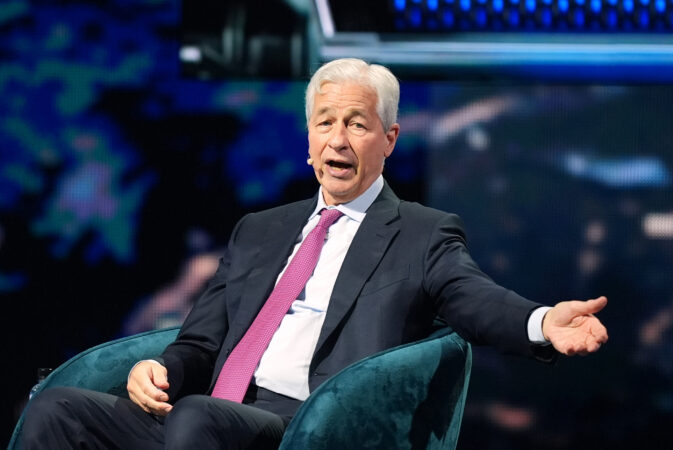
    “I don’t agree with everything the Fed has done. I do have enormous respect for Jay Powell, the man,” JPMorgan Chase CEO Jamie Dimon told reporters Tuesday.

    Dimon’s message did not seem to resonate with President Trump, who told journalists that Dimon is wrong in saying it’s not a great idea to chip away at the Federal Reserve’s independence by going after Powell.

    “Yeah, I think it’s fine what I’m doing,” Trump said Tuesday in response to a reporter’s question at Joint Base Andrews after returning from a day trip to Michigan. He called Powell “a bad Fed person” who has “done a bad job.”

    Along with the attacks on the Fed, President Trump is going after the credit card industry. With “affordability” likely to be a key issue in this year’s midterm elections, Trump wants to lower costs for consumers and says he wants a 10% cap on credit card interest rates in place by Jan. 20. Whether he hopes to accomplish this by bullying the credit card industry into just capping interest rates voluntarily, or through some sort of executive action, is unclear.

    The average interest rate on credit cards is between 19.65% and 21.5%, according to the Federal Reserve and other industry tracking sources. A cap of 10% would likely cost banks roughly $100 billion in lost revenue per year, researchers at Vanderbilt University found. Shares of credit card companies like American Express, JPMorgan, Citigroup, Capital One, and others fell sharply Monday as investors worried about the potential hit to profits these banks may face if an interest rate cap were implemented.

    In a call with reporters, JPMorgan’s chief financial officer, Jeffrey Barnum, indicated the industry was willing to fight with all resources at its disposal to stop the Trump administration from capping those rates.

    “Our belief is that actions like this will have the exact opposite consequence to what the administration wants in terms of helping consumers,” Barnum said. “Instead of lowering the price of credit, it will simply reduce the supply of credit, and that will be bad for everyone: consumers, the broader economy, and yes, for us, also.”

    Trump seemed to double down on his attacks on the credit card industry overnight. In a post on his social media platform Truth Social, he said he endorsed a bill introduced by Sen. Roger Marshall (R., Kansas) that would likely cut into the revenue banks earn from merchants whenever they accept a credit card at point-of-sale.

    “Everyone should support great Republican Senator Roger Marshall’s Credit Card Competition Act, in order to stop the out of control Swipe Fee ripoff,” Trump wrote.

    The comments from Wall Street are coming as the major banks report their quarterly results. JPMorgan, the nation’s largest consumer and investment bank, and The Bank of New York Mellon Corp., one of the world’s largest custodial banks, both reported their results Tuesday with Citigroup, Bank of America, Wells Fargo, and others to report later this week.

  • Family budgets are stretched, and bargain grocer Aldi seizes the moment in a rapid expansion

    Family budgets are stretched, and bargain grocer Aldi seizes the moment in a rapid expansion

    The discount grocery chain Aldi is expanding rapidly and plans to open more than 180 U.S. stores this year as more Americans skip nights out at restaurants and cook at home due to anxiety over the nation’s economy.

    The chain, with U.S. operations based outside of Chicago, went on an expansion tear soon after inflation began to spike in 2021 and opened a record number of new stores last year.

    Food inflation has slowed, but it was still up 2.4% last year, according to U.S. data, and has soared about 25% since the pandemic. On Tuesday, the U.S. Labor Department said that grocery prices jumped 0.7% in December from the previous month, and that price hikes accelerated faster in 2025 than they had in the previous two years.

    Last month beef and veal prices climbed 1% from November, and are up 16.4% from last year. Coffee prices increased 1.9% in a month and are up almost 20% over a year. Egg prices dropped 8.2% in December, continuing to fall after surging last year after a bird flu outbreak.

    The vast majority of U.S. adults say they’ve noticed higher than usual prices for groceries and electricity in recent months, according to a survey from the Associated Press-NORC Center for Public Affairs Research.

    Aldi has sought to snap up market share as more families trade down, meaning they are changing where they shop to cut costs.

    Americans are dropping trusted name brands for cheaper store-brands and swapping out the places they’ve shopped for years in favor of discount or thrift stores. It’s been a boon for national bargain stores chains such as Dollar General and Dollar Tree.

    That shift had begun before President Donald Trump’s trade war began, but appears to have accelerated over the past year.

    Aldi said in 2024 that it planned to open 800 new stores by 2028 as inflation worries spread. It announced plans to open a record 225 locations last year in the U.S.

    Aldi said Tuesday that it will add new distribution centers in Florida, Arizona, and Colorado, and is still committed to investing $9 billion in the U.S. through 2028. The company is also looking to open more than 50 stores in Colorado within the next five years and plans to double its Las Vegas store count by 2030.

    The expansion will give Aldi almost 2,800 stores by the end of the year, which gets its closer to its goal of 3,200 stores by 2028.

    Traditional grocers are under pressure from bargain chains, massive retailers like Walmart, and also relatively new players like Amazon.com. In December, Amazon said same-day perishable grocery delivery had been expanded to more than 2,300 cities and towns, and the online giant said it has more expansion plans for this year.