Category: Associated Press

  • Cuba’s president says no current talks with U.S. following Trump’s threats

    Cuba’s president says no current talks with U.S. following Trump’s threats

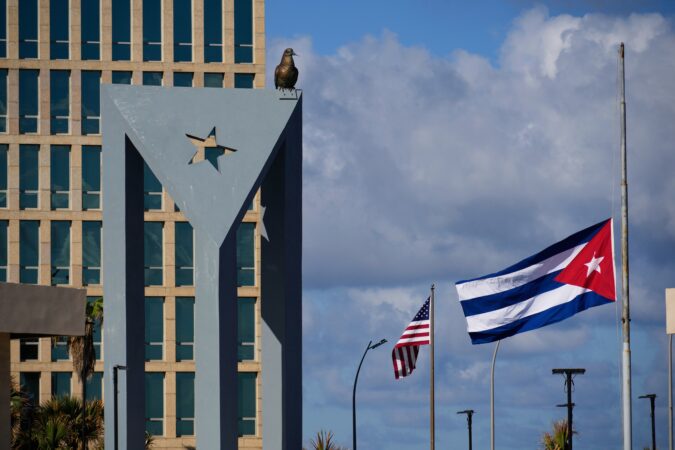
    HAVANA — Cuban President Miguel Díaz-Canel said Monday that his administration is not in talks with the U.S. government, a day after President Donald Trump threatened the Caribbean island in the wake of the U.S. attack on Venezuela.

    Díaz-Canel posted a flurry of brief statements on X after Trump suggested that Cuba “make a deal, BEFORE IT IS TOO LATE.” He did not say what kind of deal.

    Díaz-Canel wrote that for “relations between the U.S. and Cuba to progress, they must be based on international law rather than hostility, threats, and economic coercion.”

    He added: “We have always been willing to hold a serious and responsible dialogue with the various US governments, including the current one, on the basis of sovereign equality, mutual respect, principles of International Law, and mutual benefit without interference in internal affairs and with full respect for our independence.”

    His statements were reposted by Cuban Foreign Minister Bruno Rodríguez on X.

    A key lifeline severed

    On Sunday, Trump wrote that Cuba would no longer live off oil and money from Venezuela, which the U.S. attacked on Jan. 3 in a stunning operation that killed 32 Cuban officers and led to the arrest of President Nicolás Maduro.

    Cuba was receiving an estimated 35,000 barrels a day from Venezuela before the U.S. attacked, along with some 5,500 barrels daily from Mexico and roughly 7,500 from Russia, according to Jorge Piñón of the Energy Institute at the University of Texas at Austin, who tracks the shipments.

    On Monday, Mexican President Claudia Sheinbaum once again declined to provide data on current oil shipments or say whether such shipments would increase when Venezuelan supplies end. She insisted that the aid “has been ongoing for a long time; it’s not new.”

    Sheinbaum said Mexico’s fuel supply to Cuba is not a concern for her country because “there is enough oil” — even though production of state-owned oil company Petróleos Mexicanos is steadily declining. She reiterated that her government is willing to facilitate dialogue between the U.S. and Cuba if both agree.

    Even with oil shipments from Venezuela, widespread blackouts have persisted across Cuba given fuel shortages and a crumbling electric grid. Experts worry a lack of petroleum would only deepen the island’s multiple crises that stem from an economic paralysis during the COVID-19 pandemic and a radical increase in U.S. sanctions following the first Trump administration, which aim to force a change in Cuba’s political model.

    The communist government has said U.S. sanctions cost the country more than $7.5 billion between March 2024 and February 2025, a staggering sum for an island whose tourism revenue reached some $3 billion annually at its peak in the previous decade.

    The crisis also has triggered a large wave of migration primarily to the United States, where Cubans enjoyed immigration privileges as exiles. Those privileges were curtailed before Trump closed U.S. borders.

    ‘They didn’t even bring Cuban coffee’

    The situation between the U.S. and Cuba is “very sad and concerning,” said Andy S. Gómez, retired dean of the School of International Studies and senior fellow in Cuban Studies at the University of Miami.

    He said he sees Díaz-Canel’s latest comments “as a way to try and buy a little bit of time for the inner circle to decide what steps it’s going to take.”

    Gómez said he doesn’t visualize Cuba reaching out to U.S. officials right now.

    “They had every opportunity when President (Barack) Obama opened up U.S. diplomatic relations, and yet they didn’t even bring Cuban coffee to the table,” Gómez said. “Of course, these are desperate times for Cuba.”

    Michael Galant, senior research and outreach associate at the Center for Economic and Policy Research in Washington, D.C., said he believes Cuba might be willing to negotiate.

    “Cuba has been interested in finding ways to ease sanctions,” he said. “It’s not that Cuba is uncooperative.”

    Galant said topics for discussion could include migration and security, adding that he believes Trump is not in a hurry.

    “Trump is hoping to deepen the economic crisis on the island, and there are few costs to Trump to try and wait that out,” he said. “I don’t think it’s likely that there will be any dramatic action in the coming days because there is no rush to come to the table.”

    Cuba’s president stressed on X that “there are no talks with the U.S. government, except for technical contacts in the area of ​​migration.”

    As tensions remained heightened, life went on as usual for many Cubans, although some were more concerned than others.

    Oreidy Guzmán, a 32- year-old food delivery person, said he doesn’t want anything bad to happen to Cubans, “but if something has to happen, the people deserve change.”

    Meanwhile, 37-year-old homemaker Meilyn Gómez said that while she doesn’t believe the U.S. would invade Cuba, she was preparing for any possible outcome under Trump: “He’ll find entertainment anywhere.”

    The current situation is dominating chatter among Cubans on the island and beyond.

    “Cuban people talk and talk,” said 57-year-old bartender Rubén Benítez, “but to be honest, eleven, eight or nine million will take to the streets to defend what little we have left.”
  • Judge is asked for emergency hearing after Congress members blocked from ICE facility in Minneapolis

    Judge is asked for emergency hearing after Congress members blocked from ICE facility in Minneapolis

    WASHINGTON — The Trump administration secretly reimposed a policy limiting Congress members’ access to immigration detention facilities a day after a federal immigration officer fatally shot a woman in Minneapolis, attorneys for several congressional Democrats said Monday in asking a federal judge to intervene.

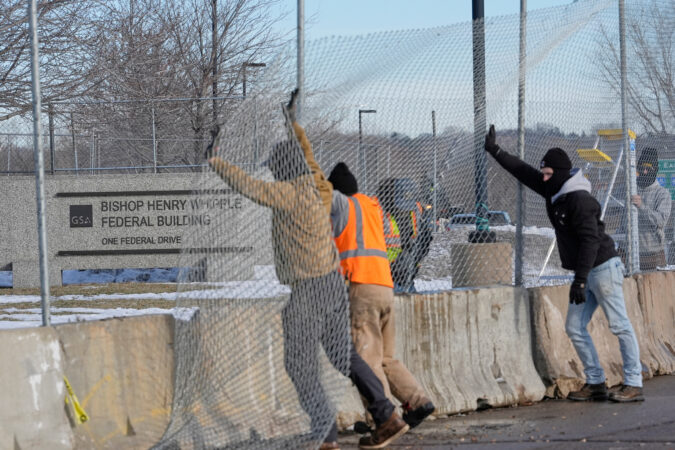
    Three Democratic members of Congress from Minnesota were blocked from visiting an Immigration and Customs Enforcement facility near Minneapolis on Saturday, three days after an ICE officer shot and killed U.S. citizen Renee Good in the city.

    Last month, U.S. District Judge Jia Cobb in Washington, D.C., temporarily blocked ICE from enforcing policies limiting Congress members’ access to immigration detention facilities. In a court filing on Monday, plaintiffs’ lawyers asked Cobb to hold an emergency hearing and decide if the duplicate notice policy violates her order.

    Cobb ruled on Dec. 17 that it is likely illegal for ICE to demand a week’s notice from members of Congress seeking to visit and observe conditions in ICE facilities. The judge said the seven-day notice requirement likely exceeds the Department of Homeland Security’s statutory authority.

    The attorneys asking Cobb for an emergency hearing say the matter is urgent because members of Congress are negotiating funding for DHS and ICE for the next fiscal year with DHS’ annual appropriations due to expire on Jan. 30.

    “This is a critical moment for oversight, and members of Congress must be able to conduct oversight at ICE detention facilities, without notice, to obtain urgent and essential information for ongoing funding negotiations,” the lawyers wrote.

    Cobb didn’t immediately rule on the plaintiffs’ hearing request. Government attorneys also didn’t immediately respond in writing to it.

    On Saturday, U.S. Reps. Ilhan Omar, Kelly Morrison, and Angie Craig attempted to tour the ICE facility in the Minneapolis federal building. They initially were allowed to enter but then told they had to leave about 10 minutes later.

    Officials who turned them away cited a newly imposed seven-day-notice policy for congressional oversight visits. Last Thursday, a day after Good’s death, U.S. Department of Homeland Security Secretary Kristi Noem secretly signed a new memorandum reinstating the same seven-day notice requirement, according to the plaintiffs’ lawyers.

    Cobb, who was nominated to the bench by Democratic President Joe Biden, ruled last month in favor of 12 other members of Congress who sued to challenge ICE’s amended visitor policies after they were denied entry to detention facilities. Their lawsuit accused Republican President Donald Trump’s administration of obstructing congressional oversight of the centers during its nationwide surge in immigration enforcement operations.

    Government attorneys had argued that the plaintiffs didn’t have legal standing to bring their claims. They also said it’s merely speculative for the legislators to be concerned that conditions in ICE facilities change over the course of a week. But the judge rejected those arguments.

    “The changing conditions within ICE facilities means that it is likely impossible for a Member of Congress to reconstruct the conditions at a facility on the day that they initially sought to enter,” Cobb wrote.

    A law bars DHS from using appropriated general funds to prevent members of Congress from entering DHS facilities for oversight purposes. Plaintiffs’ attorneys from the Democracy Forward Foundation said the administration hasn’t shown that none of those funds are being used to implement the latest notice policy.

  • Thousands of nurses go on strike at several major New York City hospitals

    Thousands of nurses go on strike at several major New York City hospitals

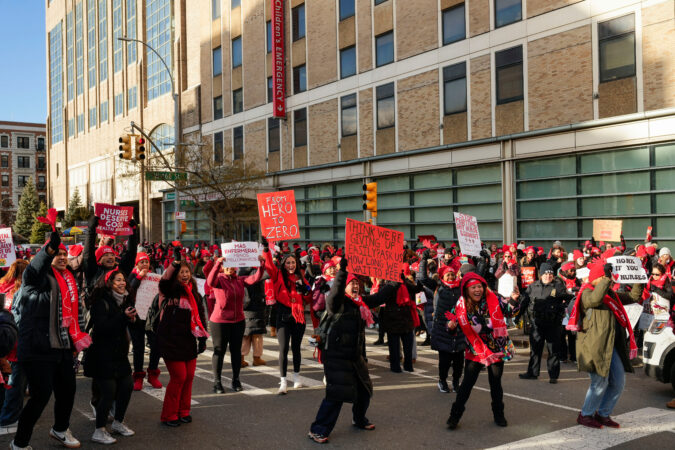
    NEW YORK — Thousands of nurses in three hospital systems in New York City went on strike Monday after negotiations through the weekend failed to yield breakthroughs in their contract disputes.

    “Nurses on strike! … Fair contract now!” they shouted on a picket line outside NewYork-Presbyterian Hospital’s campus in Upper Manhattan. Others picketed at hospitals in the Mount Sinai and Montefiore systems, where a 2023 nursing strike fed off pandemic-era frustrations and led to a deal to boost staffing and pay.

    “And now, it’s how they’re treating us: They don’t want to give us a fair contract, and they don’t want to give us safe staffing, and now they’re trying to roll back on our benefits,” emergency department nurse Tristan Castillo said as she picketed Monday outside Mount Sinai West.

    About 15,000 nurses are involved in the strike, according to their union, the New York State Nurses Association. The hospitals remained open, hiring droves of temporary nurses to try to fill the labor gap.

    The strike involves private, nonprofit hospitals, not city-run ones. But the strike, which the union casts as lifesaving essential workers fighting hospital executives who make millions of dollars a year, could be a significant early test of Mayor Zohran Mamdani’s new administration.

    The democratic socialist campaigned on a pro-worker platform and struck a similar note while visiting nurses on the NewYork-Presbyterian picket line Monday.

    “These executives are not having difficulty making ends meet,” said Mamdani, who extolled nurses’ work and said they were seeking “dignity, respect, and the fair pay and treatment that they deserve. They should settle for nothing less.”

    Some other Democratic city and state politicians also visited striking nurses, while Gov. Kathy Hochul sent state health officials to the hospitals to keep watch over patient care. She called in a statement for the sides to negotiate a deal that “recognizes the essential work nurses do.”

    The strike, which comes during a severe flu season, could potentially force the hospitals to transfer patients, cancel procedures, or divert ambulances. It could also put a strain on city hospitals not involved in the contract dispute, as patients avoid the medical centers hit by the strike.

    The nurses’ demands vary by hospital, but the major issues include staffing levels and workplace safety. The union says hospitals have given nurses unmanageable workloads.

    Nurses also want better security measures in the workplace, citing incidents such as an episode last week when a man with a sharp object barricaded himself in a Brooklyn hospital room and was then killed by police.

    The union also wants limitations on hospitals’ use of artificial intelligence.

    The hospitals say that they’ve been working to improve staffing levels but say that the union’s demands overall are too costly.

    After the nurses gave notice Jan. 2 of the looming strike, the hospitals hired temporary nurses, vowed to “do whatever is necessary to minimize disruptions,” and said they were prepared to deliver care no matter how long the strike lasts. Mount Sinai said in a statement Monday it had lined up 1,400 temporary nurses.

    Mount Sinai said the union was making “extreme economic demands.” Montefiore spokesperson Joe Solmonese said the union was pressing “$3.6 billion in reckless demands,” including exorbitant raises. The union hasn’t publicly disclosed its salary proposal.

    NewYork-Presbyterian accused the union of staging a strike to “create disruption.”

    “We’re ready to keep negotiating a fair and reasonable contract that reflects our respect for our nurses and the critical role they play, and also recognizes the challenging realities of today’s healthcare environment,” the hospital said.

    Each medical center is negotiating with the union independently. Several other private hospitals in and near New York City reached deals in recent days to avert a possible strike.

    The three-day strike in 2023 resulted in a deal raising pay 19% over three years at Mount Sinai and Montefiore. The pact also included staffing improvements, though the union and hospitals now disagree about how much progress has been made, or whether the hospitals are retreating from staffing guarantees.

    The sides also dispute whether the hospitals are trying to reduce health benefits. Mount Sinai, for instance, says its proposals would cut costs without changing coverage.

  • The Trevor Project receives $45M from MacKenzie Scott after difficult years and federal funding cuts

    The Trevor Project receives $45M from MacKenzie Scott after difficult years and federal funding cuts

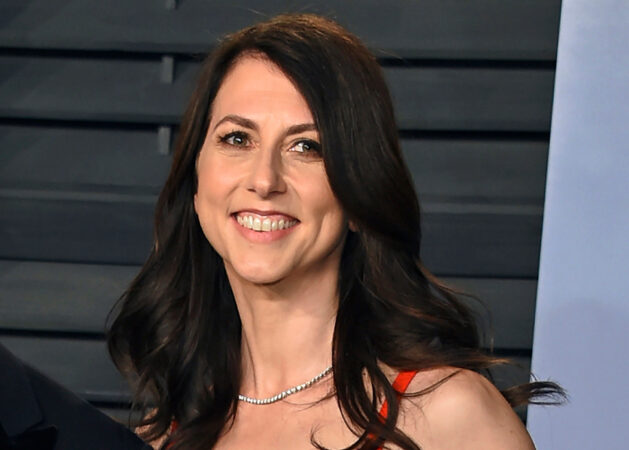
    The Trevor Project, known for its hotline for LGBTQ+ youth, received $45 million from billionaire and author MacKenzie Scott at the end of 2025, the organization said Monday.

    The gift is the largest in the organization’s history but also a major boon following years of management turmoil, layoffs, and the loss of significant federal funding over the summer.

    “I literally could not believe it and it took some time. I actually gasped,” said Jaymes Black, CEO of the Trevor Project, when they were notified of Scott’s gift.

    Scott, whose fortune largely comes from her ex-husband, Amazon founder Jeff Bezos, gave more than $7 billion to nonprofits in 2025, but this gift to the Trevor Project was not included among the donations she disclosed on her website in December. Scott previously gave the Trevor Project $6 million in 2020.

    In July, the Trump administration stopped providing specific support for gay, trans, and gender nonconforming young people who called the 988 National Suicide & Crisis Lifeline. The Trevor Project was one of the organizations staffing that option and lost $25 million in funding, the nonprofit said.

    The Trevor Project continues to run an independent hotline for LGBTQ+ young people that Black said reaches about 250,000 young people annually, but they served another 250,000 callers through the 988 Press 3 option, which was tailored for LGBTQ+ young people.

    The U.S. Department of Health and Human Services’ Substance Abuse and Mental Health Services Administration (SAMHSA) reported more than 1.5 million contacts were routed through the service between September 2022 and July 2025.

    The Trevor Project has gone through years of internal turmoil after exploding in size from an organization with an annual budget around $4 million in 2016 to over $83 million in 2023, according to its public tax returns. The nonprofit’s board removed its CEO in 2022 and has gone through a series of layoffs, including one in July. Black said the project’s 2026 budget was $47 million.

    “We are a smaller organization than we were before,” Black said. “And we will continue to be really intentional and really mindful around growth and what growth really means for the organization.”

    After it lost the 988 funding, the Trevor Project launched an emergency fundraiser that brought in $20 million to date, Black said, which they also hope Scott saw as proof that the organization was determined to stick around and make it through this period.

    “MacKenzie Scott’s folks were clear, like this gift was made for long-term impact,” Black said, adding that they would take their time deciding how to use the funds.

    Thad Calabrese, a professor at New York University who researches nonprofit financial management, said it’s not at all uncommon for nonprofits that grow very quickly to run into financial problems. But he also said the cuts and general instability in especially federal funding for nonprofits has upended many organizations’ business models.

    “Academic research has often viewed public funding as very stable, as a signal to donors that you’ve arrived as an organization, but the reality is you are now also open to changing political fortunes,” he said.

    He said research is also unclear about whether diversifying an organization’s revenue streams is always a better financial strategy.

    “You’re less dependent upon a few funders, but on the other hand, if you have a lot of different revenue streams, do you have the management capacity for that?” Calabrese asked, speaking generally and not commenting specifically on the Trevor Project.

    Scott has distinguished herself among the biggest individual donors by giving large, unrestricted gifts to nonprofits, often with a focus on equity or social justice. With the exception of an open call in 2023, she does not ask for project proposals nor accept applications.

    Despite the size of her gifts, which now often exceed the recipient organization’s annual budget, research from the Center for Effective Philanthropy has found that concerns about nonprofits misusing Scott’s funds or growing unsustainably have largely not been born out. That may be because Scott’s team, the members of which are largely unknown, conducts extensive research on organizations before making grants.

    In an essay announcing her 2025 gifts, Scott said, “The potential of peaceful, non-transactional contribution has long been underestimated, often on the basis that it is not financially self-sustaining, or that some of its benefits are hard to track. But what if these imagined liabilities are actually assets? … What if the fact that some of our organizations are vulnerable can itself be a powerful engine for our generosity?”

    Black called Scott’s second gift “a powerful validation” of the Trevor Project’s mission and impact, saying, “We’re calling this our turnaround story.”

  • Long story short: ‘Joe Dirt’ tribute takes top prize in mullet contest

    Long story short: ‘Joe Dirt’ tribute takes top prize in mullet contest

    HARRISBURG — A packed crowd celebrated the much-maligned but enduring mullet hairstyle Monday in a contest at the Pennsylvania Farm Show in Harrisburg.

    The short-in-the-front, long-in-the-back coiffure, once the province of Canadian hockey players and hair metal bands, attracted about 150 competitors and more than a thousand spectators for the day’s “mane” attraction.

    The top award, in the form of the rear bumper of a Corvette, went to 10-year-old Drew Fleschut of Dallas, Luzerne County — who wore a red-and-black shirt in an homage to movie character Joe Dirt and carried Joe’s trademark mop.

    Contestants were evaluated for the style of their cut, any props or accessories, their presentation and their overall sense of commitment, said judge Brittany Goldberg.

    “This is for fun,” said Goldberg, owner of Heavy Metal Hair Salon in Philadelphia. “It’s about the camaraderie and everyone having a laugh and a good time.”

    Ben Barley, a 7-year-old first grader from Red Lion, Pa., waits with his father, Robert Barley, for the start of a mullet judging contest at the Pennsylvania Farm Show in Harrisburg on Monday.

    There were magic tricks, customized T-shirts, and even a “skullet” — a mullet sported by a balding man. One kid didn’t want to leave the stage. Another took the occasion to pick his nose. Some danced the worm, some dabbed, and a few ripped off their shirts, pro-wrestling style.

    Brittni Williamson of Harvey’s Lake brought along her 3-year-old son Mason, who ended up with a mullet when the hair on the back of his head grew more quickly than the rest of his hair when he was a baby.

    “We just clean it up in the front and keep the party going,” Williamson said. Mason didn’t win, but he did get to accomplish his New Year’s resolution by feeding a cow.

    Ben Barley, 7, of Red Lion arrived at the event wearing a T-shirt featuring his name and the words “MULLET LIFE 6-7,” a nod to both his hairstyle and the bafflingly popular youth catchphrase. He said he’d been working on his mullet for two years.

    Kyle Wertman said he was inspired to go with a mullet while watching old professional wrestling footage of Hacksaw Jim Duggan. He gets a lot of comments about it in his hometown of Murrysville.

    “They like to fluff the curls in the back, ‘Look at this thing, it’s got a mind of its own,’” said Wertman, 43, who works in sales and service of industrial air compressors.

    It’s taken Lancaster resident Brayden Shaner, 14, about four years to grow his mullet, which was good enough for third-place in the teenager category.

    “I like it because it’s different,” he said. “You don’t see, walking through the grocery store, people with a mullet. I think the girls like it.”

    Though mullets likely have been around longer than there have been barbers, the Oxford English Dictionary cites hip-hop legends the Beastie Boys for helping popularize the term mullet with the song “Mullet Head” on their 1994 recording, Ill Communication. As the venerable dictionary notes, it’s a term that is slang, humorous “and frequently derogatory.”

    The contest, in its third year, is one of the few at the Pennsylvania Farm Show open to people who live outside the state.

    Meredith Nelson smiles at her son, “Mikey Mullet,” an 8-year old-contestant from South Jersey in Monday’s hairstyle contest at the Pennsylvania Farm Show.
  • Federal Reserve Chair Powell says DOJ has subpoenaed central bank, threatens criminal indictment

    Federal Reserve Chair Powell says DOJ has subpoenaed central bank, threatens criminal indictment

    WASHINGTON — Federal Reserve Chair Jerome Powell said Sunday the Department of Justice has served the central bank with subpoenas and threatened it with a criminal indictment over his testimony this summer about the Fed’s building renovations.

    The move represents an unprecedented escalation in President Donald Trump’s battle with the Fed, an independent agency he has repeatedly attacked for not cutting its key interest rate as sharply as he prefers. The renewed fight will likely rattle financial markets Monday and could over time escalate borrowing costs for mortgages and other loans.

    The subpoenas relate to Powell’s testimony before the Senate Banking Committee in June, the Fed chair said, regarding the Fed’s $2.5 billion renovation of two office buildings, a project that Trump has criticized as excessive.

    Powell on Sunday cast off what has up to this point been a restrained approach to Trump’s criticisms and personal insults, which he has mostly ignored. Instead, Powell issued a video statement in which he bluntly characterized the threat of criminal charges as simple “pretexts” to undermine the Fed’s independence when it comes to setting interest rates.

    “The threat of criminal charges is a consequence of the Federal Reserve setting interest rates based on our best assessment of what will serve the public, rather than following the preferences of the President,” Powell said. “This is about whether the Fed will be able to continue to set interest rates based on evidence and economic conditions — or whether instead monetary policy will be directed by political pressure or intimidation.”

    It’s a sharp departure from the Fed’s understated response to Trump this year. The central bank has attempted to placate the administration by dialing back some policies, such as efforts to consider the impact of climate change on the banking system, that the administration clearly opposed.

    The renewed attacks on the Fed’s independence, and Powell’s full-throated defense, reignite what had appeared to be a dormant battle between Trump and the chair he appointed in 2017. The subpoenas will renew fears that the Fed’s independence from day-to-day politics will be compromised, which could undermine global investors’ confidence in U.S. Treasury securities.

    “We expect the dollar, bonds and stocks to all fall in Monday trading in a sell-America trade similar to that in April last year at the peak of the tariff shock and earlier threat to Powell’s position as Fed chair,” Krishna Guha, an analyst at Evercore ISI, an investment bank, wrote in a note to clients.

    “We are stunned by this deeply disturbing development which came out of the blue after a period in which tensions between Trump and the Fed seemed to be contained,” Guha added.

    In a brief interview with NBC News Sunday, Trump insisted he didn’t know about the investigation into Powell. When asked if the investigation is intended to pressure Powell on rates, Trump said, “No. I wouldn’t even think of doing it that way.”

    Powell’s term as chair ends in May, and Trump administration officials have signaled that he could name a potential replacement this month. Trump has also sought to fire Fed governor Lisa Cook, an unprecedented step, though she has sued to keep her job and courts have ruled she can remain in her seat while the case plays out. The Supreme Court will hear arguments in that case Jan. 21.

    At the Senate Banking Committee hearing in June, Chairman Tim Scott, a Republican from South Carolina, said the Fed’s building renovation included “rooftop terraces, custom elevators that open into VIP dining rooms, white marble finishes, and even a private art collection.”

    Powell disputed those details in his testimony, saying “there’s no new marble. … there are no special elevators” and added that some of the controversial items are “not in the current plan.” In July, Russell Vought, director of the Office of Management and Budget, said in a letter to Powell that his testimony about changes to the building plans “raises serious questions about the project’s compliance” with previous plans approved by a planning commission.

    Still, later that month, Trump visited the building site and, while standing next to Powell, overstated the cost of the renovation. Later that day, Trump, speaking to reporters, downplayed any concerns with the renovation. He said, “they have to get it done” and added, “Look, there’s always Monday morning quarterbacks. I don’t want to be that. I want to help them get it finished.”

    When asked if it was a firing offense, Trump said, “I don’t want to put that in this category.”

    The Justice Department in a statement Sunday said it can’t comment on any particular case, but added that Attorney General Pam Bondi “has instructed her US Attorneys to prioritize investigating any abuse of tax payer dollars.”

    Timothy Lauer, a spokesperson for U.S. Attorney Jeanine Pirro’s office, said they don’t comment on ongoing investigations.

    With the subpoenas, Powell becomes the latest perceived adversary of the president to face a criminal investigation by the Trump administration’s Justice Department. Trump himself has urged prosecutions of his political opponents, obliterating institutional guardrails for a Justice Department that for generations has taken care to make investigative and prosecutorial decisions independent of the White House.

    The potential indictment has already drawn concern from one Republican senator, who said he’ll oppose any future nominee to the central bank, including any replacement for Powell, until “this legal matter is fully resolved.”

    “If there were any remaining doubt whether advisers within the Trump administration are actively pushing to end the independence of the Federal Reserve, there should now be none,” said North Carolina Sen. Thom Tillis, who sits on the Banking Committee, which oversees Fed nominations. “It is now the independence and credibility of the Department of Justice that are in question.”

  • Death toll from protests in Iran hits at least 544, activists say, as Trump says Iran wants to talk

    Death toll from protests in Iran hits at least 544, activists say, as Trump says Iran wants to talk

    DUBAI, United Arab Emirates — President Donald Trump said Sunday that Iran proposed negotiations after his threat to strike the Islamic Republic over its bloody crackdown targeting demonstrators there, a move coming as activists said the death toll in protests rose to at least 544.

    Trump and his national security team have been weighing a range of potential responses against Iran including cyberattacks and direct strikes by the U.S. or Israel, according to two people familiar with internal White House discussions who were not authorized to comment publicly and spoke on condition of anonymity.

    “The military is looking at it, and we’re looking at some very strong options,” Trump told reporters on Air Force One on Sunday night. Asked about Iran’s threats of retaliation, he said: “If they do that, we will hit them at levels that they’ve never been hit before.”

    Trump said that his administration was in talks to set up a meeting with Tehran, but cautioned that he may have to act first as reports of the death toll in Iran mount and the government continues to arrest protesters.

    “I think they’re tired of being beat up by the United States,” Trump said. “Iran wants to negotiate.”

    He added: “The meeting is being set up, but we may have to act because of what’s happening before the meeting. But a meeting is being set up. Iran called, they want to negotiate.”

    There was no immediate acknowledgment from Iran of the offering for a meeting. The massive ongoing U.S. military deployment to the Caribbean is a factor that the Pentagon and Trump’s national security planners must consider. Tehran also warned that the U.S. military and Israel would be “legitimate targets” if America uses force to protect demonstrators. Trump meanwhile said the Islamic Republic reached out and proposed negotiations.

    More than 10,600 people also have been detained over the two weeks of protests, said the U.S.-based Human Rights Activists News Agency, which has been accurate in previous unrest in recent years and gave the death toll. It relies on supporters in Iran cross-checking information. It said 496 of the dead were protesters and 48 were with security forces.

    With the internet down in Iran and phone lines cut off, gauging the demonstrations from abroad has grown more difficult. The Associated Press has been unable to independently assess the toll. Iran’s government has not offered overall casualty figures.

    Those abroad fear the information blackout is emboldening hard-liners within Iran’s security services to launch a bloody crackdown. Protesters flooded the streets in the country’s capital and its second-largest city on Saturday night into Sunday morning. Online videos purported to show more demonstrations Sunday night into Monday, with a Tehran official acknowledging them in state media.

    Defiance in parliament

    The threat to strike the U.S. military and Israel came during a parliamentary speech by Mohammad Baagher Qalibaf, the hard-liner speaker of the body who has run for the presidency in the past.

    He directly threatened Israel, calling it “the occupied territory.”

    “In the event of an attack on Iran, both the occupied territory and all American military centers, bases and ships in the region will be our legitimate targets,” Qalibaf said. “We do not consider ourselves limited to reacting after the action and will act based on any objective signs of a threat.”

    Lawmakers rushed the dais in parliament, shouting: “Death to America!”

    It remains unclear how serious Iran is about launching a strike, particularly after its air defenses were destroyed during the 12-day war in June with Israel. Any decision to go to war would rest with Iran’s 86-year-old Supreme Leader Ayatollah Ali Khamenei.

    The U.S. military has said in the Mideast it is “postured with forces that span the full range of combat capability to defend our forces, our partners and allies and U.S. interests.” Iran targeted U.S. forces at Al Udeid Air Base in Qatar in June, while the U.S. Navy’s Mideast-based 5th Fleet is stationed in the island kingdom of Bahrain.

    Israel, meanwhile, is “watching closely” the situation between the U.S. and Iran, said an Israeli official, who spoke on condition of anonymity due to not being authorized to speak to journalists. Israeli Prime Minister Benjamin Netanyahu spoke with U.S. Secretary of State Marco Rubio overnight on topics including Iran, the official added.

    “The people of Israel, the entire world, are in awe of the tremendous heroism of the citizens of Iran,” said Netanyahu, a longtime Iran hawk.

    At the Vatican, Pope Leo XIV mentioned Iran as a place “where ongoing tensions continue to claim many lives,” adding that “I hope and pray that dialogue and peace may be patiently nurtured in pursuit of the common good of the whole of society.”

    Demonstrations were held in some international capitals in support of the protesters. A spokesperson said United Nations Secretary-General António Guterres was “shocked” by reports of violence against protesters resulting in “scores of deaths” and called on Iranian authorities to use maximum restraint and restore communications.

    Protests in Tehran and Mashhad

    Online videos sent out of Iran, likely using Starlink satellite transmitters, purportedly showed demonstrators gathering in northern Tehran’s Punak neighborhood. There, it appeared authorities shut off streets, with protesters waving their lit mobile phones. Others banged metal while fireworks went off.

    In Mashhad, Iran’s second-largest city some 450 miles northeast of Tehran, footage purported to show protesters confronting security forces. Protests also appeared to happen in Kerman, 500 miles southeast of Tehran.

    Iranian state television on Sunday morning had correspondents appear on the streets in several cities to show calm areas, with a date stamp shown on screen. Tehran and Mashhad were not included.

    The demonstrations began Dec. 28 over the collapse of the Iranian rial currency, which trades at over 1.4 million to $1, as the country’s economy is squeezed by international sanctions in part levied over its nuclear program. The protests intensified and grew into calls directly challenging Iran’s theocracy.

  • Scottie Barnes hits tiebreaking free throw in final second of OT as Raptors beat Sixers, 116-115

    Scottie Barnes hits tiebreaking free throw in final second of OT as Raptors beat Sixers, 116-115

    TORONTO — Scottie Barnes hit a tiebreaking free throw with 0.8 seconds remaining in overtime and the Toronto Raptors beat the 76ers 116-115 on Sunday night in the first of back-to-back meetings between short-handed teams.

    Barnes made the first of two from the line and intentionally missed the second as Toronto won its third straight home meeting with the Sixers. He finished 10 for 12 at the line.

    Barnes scored 31 points, Jamal Shead added a career-high 22, and Immanuel Quickley had 20 as Toronto won its third straight at home. Collin Murray-Boyles had 17 points and matched his career-high with 15 rebounds.

    Tyrese Maxey scored 38 points for the Sixers and VJ Edgecombe had 17. Kelly Oubre Jr., Dominick Barlow and Quentin Grimes each scored 13 points but Philadelphia lost for the second time in seven games.

    Sixers guard Tyrese Maxey (right) scored a game-high 38 points.

    Joel Embiid (left knee and left groin) and Paul George (left knee) both sat out on the first night of this back-to-back.

    Barnes returned after sitting out Friday’s loss at Boston because of a sore right knee but RJ Barrett was inactive because of a sprained left ankle. Brandon Ingram (right thumb) missed his second straight game and Jakob Poeltl (lower back) missed his 10th straight. There is no timetable for Poeltl’s return.

    Ja’Kobe Walter started for the Raptors but exited four minutes into the first quarter because of a sore right hip.

    Philadelphia had 22 turnovers, one shy of matching a season-high. The Sixers’ 11 assists were a season-low.

    Toronto finished 5 for 32 from three-point range, its worst shooting percentage from distance this season.

    Up next

    The 76ers and Raptors play in Toronto again on Monday night (7:30 p.m., NBCSP).

  • Erich von Däniken, Swiss writer who spawned alien archaeology, has died at 90

    Erich von Däniken, Swiss writer who spawned alien archaeology, has died at 90

    BERLIN — Erich von Däniken, the Swiss author whose best-selling books about the extraterrestrial origins of ancient civilizations brought him fame among paranormal enthusiasts and scorn from the scientific community, has died. He was 90.

    Von Däniken’s representatives announced on his website on Sunday that he had died the previous day in a hospital in central Switzerland.

    Von Däniken rose to prominence in 1968 with the publication of his first book Chariots of the Gods, in which he claimed that the Mayans and ancient Egyptians were visited by alien astronauts and instructed in advanced technology that allowed them to build giant pyramids.

    The book fueled a growing interest in unexplained phenomena at a time when thanks to conventional science humankind was about to take its first steps on the Moon.

    Chariots of the Gods was followed by more than two dozen similar books, spawning a literary niche in which fact and fantasy were mixed together against all historical and scientific evidence.

    Public broadcaster SRF reported that altogether almost 70 million copies of his books were sold in more than 30 languages, making him one of the most widely read Swiss authors.

    While von Däniken managed to shrug off his many critics, the former hotel waiter had a troubled relationship with money throughout his life and frequently came close to financial ruin.

    Born in 1935, the son of a clothing manufacturer in the northern Swiss town of Schaffhausen, von Däniken is said to have rebelled against his father’s strict Catholicism and the priests who instructed him at boarding school by developing his own alternatives to the biblical account of the origins of life.

    After leaving school in 1954, von Däniken worked as a waiter and barkeeper for several years, during which he was repeatedly accused of fraud and served a couple of short stints in prison.

    In 1964, he was appointed manager of a hotel in the exclusive resort town of Davos and began writing his first book. Its publication and rapid commercial success were quickly followed by accusations of tax dodging and financial impropriety, for which he again spent time behind bars.

    By the time he left prison, Chariots of the Gods was earning von Däniken a fortune and a second book, Gods from Outer Space, was ready for publication, allowing him to commit himself to his paranormal passion and travel the world in search of new mysteries to uncover.

    Throughout the 1970s von Däniken undertook countless field trips to Egypt, India, and above all Latin America, whose ancient cultures held a particular fascination for the amateur archaeologist.

    He lectured widely and set up societies devoted to promoting his theories, later pioneering the use of video and multimedia to reach out to ever-larger audiences hungry for a different account of history.

    No amount of criticism dissuaded him and his fans from believing that Earth has been visited repeatedly by beings from outer space, and will be again in the future.

    In 1991 von Däniken gained the damning accolade of being the first recipient of the “Ig Nobel” prize for literature — for raising the public awareness of science through questionable experiments or claims.

    Even when confronted with fabricated evidence in a British television documentary — supposedly ancient pots were shown to be almost new — von Däniken insisted that, minor discrepancies aside, his theories were essentially sound.

    In 1985 von Däniken wrote Neue Erinnerungen an die ZukunftNew Memories of the Future — ostensibly to address his many critics: “I have admitted (my mistakes), but not one of the foundations of my theories has yet been brought down.”

    Although his popularity was waning in the English-speaking world by the 1980s, von Däniken’s books and films influenced a wave of semi-serious archaeological documentaries and numerous popular television shows, including The X-Files, which featured two FBI agents tasked with solving paranormal mysteries.

    His last major venture, a theme park based on his books, failed after just a few years due to lack of interest. The Mystery Park still stands, its human-made pyramids and otherworldly domes rotting as tourists prefer to explore the charms of the nearby town of Interlaken and the imposing Swiss Alps that surround it.

    Erich von Däniken is survived by his wife of 65 years, Elisabeth Skaja, daughter Cornelia, and two grandchildren.

  • Retouched images of Netanyahu’s wife, distributed by the state, ignite a fiery ethics debate

    Retouched images of Netanyahu’s wife, distributed by the state, ignite a fiery ethics debate

    JERUSALEM — The photos seemed destined for posterity in Israel’s state archives.

    In the snapshots, Prime Minister Benjamin Netanyahu is joined by his wife, Sara, as well as U.S. Ambassador Mike Huckabee and a group of Israeli soldiers, as they light Hannukah candles at Western Wall, the holiest site where Jews pray. The leaders exchange triumphant looks.

    But something is off.

    Sara Netanyahu’s skin is poreless, her eyes overly defined and her hair perfectly coiffed — a look officials acknowledge is the result of heavy retouching.

    Critics say the issue isn’t the use of photo-editing software, which is common on the social media accounts of celebrities and public figures. They say it’s the circulation of the images in official government announcements, which distorts reality, violates ethical codes, and risks compromising official archiving and record-keeping efforts.

    “All the pictures to this day in the archives in Israel are authentic pictures of reality as it was captured by the lenses of photographers’ cameras since the establishment of the state,” said Shabi Gatenio, the veteran political journalist who broke the story in the Seventh Eye, an Israeli site that covers local media. “These images, if entered into the database, will forever infect it with a virtual reality that never existed.”

    Since the manipulation of images was revealed, the government has taken the unprecedented step of crediting Sara Netanyahu in its releases that include manipulated images. And it’s not clear if the official archive will include images of her taken during the second half of last year, when Gatenio said the editing appears to have begun.

    Mrs. Netanyahu’s personal spokesperson did not respond to a request for comment.

    Nitzan Chen, director of the Government Press Office, told the Associated Press that images of the prime minister are never manipulated and that his office would not upload any retouched photos to the official archive.

    Personal Photoshop habit enters political realm

    Sara Netanyahu, 67, has long used photo-editing software on her images. Her social media account is filled with images in which her face appears heavily retouched.

    But the topic raised eyebrows since her Photoshop habit entered the public record.

    Gatenio said he first noticed this last July, when the couple visited President Donald Trump in Washington, D.C., and again in September, as Sara Netanyahu joined her husband on the tarmac ahead of a trip to New York for the U.N. General Assembly.

    At the time, the prime minister’s office released a video of the send-off along with a photo, credited to Avi Ohayon, an official government photographer.

    Comparing the photo to the raw video, Hany Farid, a digital forensics expert at the University of California, Berkeley, said the image had been post-processed, bearing local manipulations to smooth her skin and remove wrinkles.

    Since then, photos showing Mrs. Netanyahu meeting with Vice President JD Vance and his wife, Usha, in Washington also appear to have been retouched, Farid said.

    “There’s been some Photoshop editing to — let’s call it — ‘beautify,’ lighten, smooth the face,” Farid said.

    “Is it nefarious? No. Is it a problem? Yes. This is about something bigger than, ‘she Photoshopped her face to make herself look younger.’ This is about trust. Why should I trust any official photo coming out of that administration?”

    Chen, the head of the Government Press Office, said office lawyers are trying to determine how to handle and properly identify photos “processed by people other than GPO photographers.”

    He said the Justice Ministry is also examining the “criteria, limitations, and possibilities” of the edited images, though he stressed there is nothing illegal about touching up photos. The issue, he said, is being transparent when such changes are made.

    For now, the Prime Minister’s Office has decided to add Sara Netanyahu’s name to press releases that include retouched images. Since November, press releases showing photos of her smiling next to Trump and the family of the last hostage in Gaza in Washington, visiting a Miami synagogue, and attending a funeral for an Israeli mayor have included this label.

    At least one outlet, the Times of Israel, has said it will no longer carry official state photos that appear to have been manipulated. The Associated Press does not publish images that appear to have been retouched or digitally manipulated.

    A broader phenomenon

    Chen said the prime minister is never edited: “No Photoshop, no corrections, no color. Nothing.”

    While his face may not be retouched, the prime minister’s official Instagram account tells another story.

    The page has posted a bevy of content that appears to be AI-edited or generated, including a picture of the couple with Trump and first lady Melania Trump celebrating the new year in Washington.

    The photo raised suspicions in Israel because it shows Sara Netanyahu wearing a black dress absent from other photos of the event, where she wore a dark red frock. Appearing in the sky above the couples are brightly colored fireworks and American and Israeli flags that Farid said were “almost certainly” generated by AI.

    It is now marked with a tag on Instagram indicating that it may have been altered or generated using AI. It is not clear when the tag was added nor by whom.

    Netanyahu is not alone. Many world figures, including Trump, frequently use AI-generated image manipulation in their public output.

    Tehilla Shwartz Altshuler, who runs the Democracy in the Digital Age Program at the Israel Democracy Institute, a Jerusalem think tank, called it “part of the populist playbook” and said there was “no question” that Netanyahu was emulating how Trump uses the technology.

    Netanyahu’s official Instagram has posted video of Trump and Netanyahu in a B-2 bomber that appears entirely AI-generated. It is captioned “on our victory lap,” referencing the joint Israel-U.S. attacks on Iran last year.

    “This is exactly what Netanyahu and his surrounding circle have tried to do for many years,” she said. “Presenting himself as a superhero, his wife as a supermodel, their family as a super loyal family. Even when it wasn’t the case, even at the expense of actual political work, administrative work, and social work.”

    She said Israel has reached a critical point in official government record-keeping and communications.

    “The question of archiving the truth, archiving history, will be one of the questions of our time.”