Category: Associated Press

  • Former Phillies outfielder Max Kepler suspended 80 games by MLB following positive drug test

    Former Phillies outfielder Max Kepler suspended 80 games by MLB following positive drug test

    NEW YORK — Free agent and recent Phillies outfielder Max Kepler was suspended for 80 games on Friday following a positive test for a banned performance-enhancing substance in violation of Major League Baseball’s drug program.

    Kepler tested positive for Epitrenbolone, a substance that led to a suspension in 2018 for boxer Manuel Charr. The U.S. Anti-Doping Agency announced the following year that a positive test for the substance caused it to disqualify 90-year-old cyclist Carl Grove from a world record he had set at the 2018 Masters Track National Championship.

    Epitrenbolone is a metabolite of Trenbolone, which is contained in some products used in body-building stores and had been used in products to promote cattle growth. Kepler is the first player suspended by MLB for the substance since public announcements of the penalty details began in 2005.

    Phillies left fielder Max Kepler catches Dodgers Tommy Edman line drive during the second inning of Game 4 of baseball’s NLDS against the Los Angeles Dodgers Thursday, Oct. 9, 2025, in Los Angeles.

    There was no immediate comment from the players’ association or his agency.

    Kepler accepted the suspension without contesting the discipline in a grievance, a person familiar with the process told The Associated Press. The person spoke on condition of anonymity because that detail was not announced.

    Kepler, who turns 33 next month, is an 11-year major league veteran who spent last season with the Phillies after playing his first 10 seasons with the Minnesota Twins. He became a free agent after the World Series.

    Fourteen players were suspended last year for positive tests, including two under the major league program. Atlanta Braves outfielder Jurickson Profar was banned for 80 games on March 31 and Phillies closer José Alvarado for 80 games on May 25.

    Even if Kepler doesn’t have a contract by opening day in March, MLB and the union usually allow a suspended free agent to serve his penalty as long as he is attempting to reach a deal with teams.

    Kepler hit .216 with 18 homers and 52 RBIs last year after agreeing to a $10 million, one-year contract. He was slowed in 2024 by left patellar tendinitis and had core surgery after the season to repair a sports hernia.

    Kepler grew up in Germany and signed with the Twins at age 16 in 2009. He has a .235 average with 179 homers and 560 RBIs in his big league career.

  • US and Venezuela take initial steps toward restoring relations after Maduro’s ouster

    US and Venezuela take initial steps toward restoring relations after Maduro’s ouster

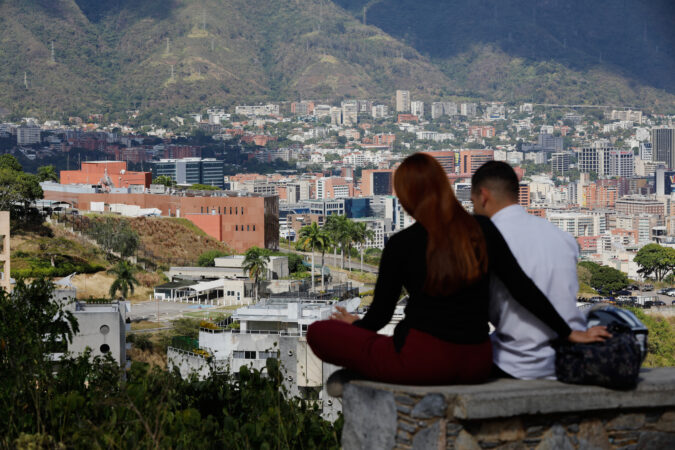
    GUATIRE, Venezuela — The United States and Venezuela said Friday they were exploring the possibility of restoring diplomatic relations, as a Trump administration delegation visited the South American nation.

    The visit marks a major step toward warming icy relations between the historically adversarial governments. U.S. military forces captured former President Nicolás Maduro last weekend in Caracas and took him to New York to face federal charges of drug-trafficking.

    The small team of U.S. diplomats and a security detail traveled to Venezuela to make a preliminary assessment about the potential reopening of the U.S. Embassy in Caracas, the State Department said in a statement.

    Venezuela’s government on Friday said it plans to send a delegation to the U.S. but it did not say when. Any delegation traveling to the U.S. will likely require sanctions to be waived by the Treasury Department.

    In a statement, the government of acting Venezuelan President Delcy Rodríguez said it “has decided to initiate an exploratory process of a diplomatic nature with the Government of the United States of America, aimed at the re-establishment of diplomatic missions in both countries.”

    President Donald Trump has placed pressure on Rodriguez and other former Maduro loyalists now in power to advance his vision for the future of the nation — a major aspect of which would be reinvigorating the role of U.S. oil companies in a country with the worlds’ largest proven reserves of crude oil.

    The U.S. and Venezuela cut off ties in 2019, after the first Trump administration said opposition leader Juan Guaidó was the rightful president of Venezuela, spiking tensions. Despite the assertions, Maduro maintained his firm grip on power.

    The Trump administration shuttered the embassy in Caracas and moved diplomats to nearby Bogotá, Colombia. U.S. officials have traveled to Caracas a handful of times since then. The latest visit came last February when Trump’s envoy for special missions, Richard Grenell met with Maduro. The visit resulted in six detained Americans being freed by the government.

  • Trump meets with oil executives at the White House on Friday, seeking investments in Venezuela

    Trump meets with oil executives at the White House on Friday, seeking investments in Venezuela

    WASHINGTON — President Donald Trump met with oil executives at the White House on Friday in hopes of securing $100 billion in investments to revive Venezuela’s ability to fully tap into its expansive reserves of petroleum — a plan that rides on their comfort in making commitments in a country plagued by instability, inflation and uncertainty.

    Since the U.S. military raid to capture former Venezuelan leader Nicolás Maduro on Saturday, Trump has quickly pivoted to portraying the move as a newfound economic opportunity for the U.S., seizing tankers carrying Venezuelan oil, saying the U.S. is taking over the sales of 30 million to 50 million barrels of previously sanctioned Venezuelan oil and will be controlling sales worldwide indefinitely.

    On Friday, U.S. forces seized their fifth tanker over the past month that has been linked to Venezuelan oil. The action reflected the determination of the U.S. to fully control the exporting, refining and production of Venezuelan petroleum, a sign of the Trump administration’s plans for ongoing involvement in the sector as it seeks commitments from private companies.

    It’s all part of a broader push by Trump to keep gasoline prices low. At a time when many Americans are concerned about affordability, the incursion in Venezuela melds Trump’s assertive use of presidential powers with an optical spectacle meant to convince Americans that he can bring down energy prices.

    “At least 100 Billion Dollars will be invested by BIG OIL, all of whom I will be meeting with today at The White House,” Trump said Friday in a pre-dawn social media post.

    Trump met with executives from 17 oil companies, according to the White House. Among the companies attending are Chevron, which still operates in Venezuela, and ExxonMobil and ConocoPhillips, which both had oil projects in the country that were lost as part of a 2007 nationalization of private businesses under Maduro’s predecessor, Hugo Chávez.

    The president is meeting with a wide swath of domestic and international companies with interests ranging from construction to the commodity markets. Other companies slated to be at the meeting include Halliburton, Valero, Marathon, Shell, Singapore-based Trafigura, Italy-based Eni, and Spain-based Repsol.

    Large U.S. oil companies have so far largely refrained from affirming investments in Venezuela as contracts and guarantees need to be in place. Trump has suggested on social media that America would help to backstop any investments.

    Venezuela’s oil production has slumped below one million barrels a day. Part of Trump’s challenge to turn that around will be to convince oil companies that his administration has a stable relationship with Venezuela’s interim President Delcy Rodríguez, as well as protections for companies entering the market.

    Secretary of State Marco Rubio, Energy Secretary Chris Wright and Interior Secretary Doug Burgum are slated to attend the oil executives meeting, according to the White House.

    Meanwhile, the United States and Venezuelan governments said Friday they were exploring the possibility of restoring diplomatic relations between the two countries, and that a delegation from the Trump administration arrived to the South American nation on Friday.

    The small team of U.S. diplomats and diplomatic security officials traveled to Venezuela to make a preliminary assessment about the potential re-opening of the U.S. Embassy in Caracas, the State Department said in a statement.

    Trump also announced on Friday he’d meet with President Gustavo Petro in early February, but called on the Colombian leader to make quick progress on stemming flow of cocaine into the U.S.

    Trump, following the ouster of Maduro, had made vague threats to take similar action against Petro. Trump abruptly changed his tone Wednesday about his Colombian counterpart after a friendly phone call in which he invited Petro to visit the White House.

  • Swiss bar owner put in pre-trial detention over the fatal fire at an Alpine resort

    Swiss bar owner put in pre-trial detention over the fatal fire at an Alpine resort

    MARTIGNY, Switzerland — Switzerland held a national day of mourning on Friday for the 40 people who died in an Alpine bar fire during a New Year’s Eve celebration, as prosecutors requested one of the managers to be placed in pretrial detention.

    Valais region’s chief prosecutor Beatrice Pilloud said in a statement the detention of the man was needed to avoid a “risk of flight.” The man’s wife and co-manager will remain free under judicial supervision, the statement said.

    A Swiss business register lists French couple Jacques and Jessica Moretti as the owners of Le Constellation bar, in the Alpine resort of Crans-Montana, where a fire broke out less than two hours after midnight on Jan. 1. As well as the fatalities, 116 people were injured, many of them seriously.

    Local media reported that Moretti was being held in custody pending the court’s decision after the couple were questioned by prosecutors in Sion on Friday morning.

    Swiss authorities have opened a criminal investigation into the owners, who are suspected of involuntary homicide, involuntary bodily harm, and involuntarily causing a fire.

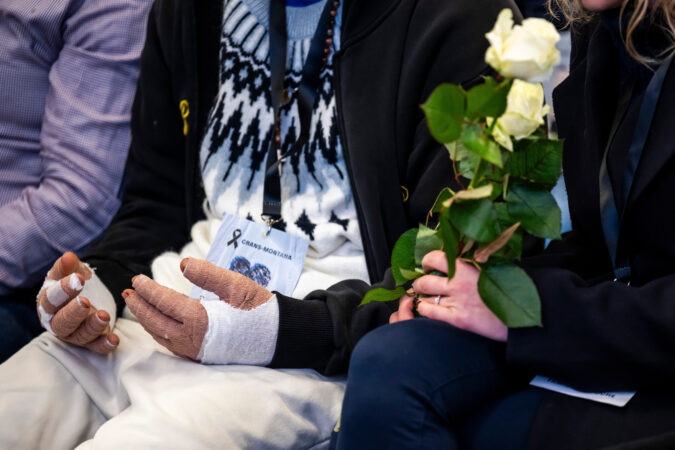
    A memorial service and a minute’s silence marked Friday’s national homage, while church bells across Switzerland rang out for five minutes, beginning at 2 p.m. Across the country, people gathered to light candles, put down flowers for the victims and followed the national ceremony that was livestreamed on public television.

    Speaking at the memorial ceremony in Martigny, Swiss President Guy Parmelin said that “the memory of that terrible night illuminates the faces of the 156 victims, their happy days, their carefree spirit.”

    He added: “Our country is appalled by this tragedy. It bows before the memory of those who are no longer with us. It stands by the bedside of those who are about to embark on a long road to recovery.”

    Investigators have said they believe sparkling candles atop Champagne bottles ignited the fire when they came too close to the ceiling. Authorities are looking into whether soundproofing material on the ceiling conformed with regulations and whether the candles were permitted for use in the bar. Fire safety inspections hadn’t been carried out since 2019.

    The severity of burns made it difficult to identify some victims, requiring families to supply authorities with DNA samples. Police have said many of the victims were in their teens to mid-20s.

    An autopsy has been ordered for five of the six Italian victims and has been delegated to the prosecutors’ offices in Milan, Bologna, and Genoa, where the bodies of the victims have been returned.

    “What happened is not a disaster: It’s the result of too many people who didn’t do their job or who thought they were making easy money,” Italian Premier Giorgia Meloni said during a press conference on Friday. “Those responsible must be identified and prosecuted.”

    Meloni said the State Attorney General’s Office has contacted the Swiss Attorney General to follow the investigation. She also confirmed that the Rome Prosecutor’s Office has started a separate probe.

    “The families have my word that they will not be left alone while they seek justice,” she added.

    The Paris prosecutor’s office Monday announced that it was opening a probe to assist the Swiss investigation and make it easier for families of French victims to communicate with Swiss investigators. Nine French citizens were killed, the youngest of them aged 14, and 23 others were injured.

  • Hennepin County prosecutor calls on the public to share Renee Good shooting evidence with her office

    Hennepin County prosecutor calls on the public to share Renee Good shooting evidence with her office

    MINNEAPOLIS — Hennepin County Attorney Mary Moriarty on Friday called on members of the public to send any video or other evidence in the fatal shooting of Renee Good directly to her office, challenging the Trump administration’s decision to leave the investigation solely to the FBI.

    Moriarty said that although her office has collaborated effectively with the FBI in past cases, she is concerned by the Trump administration’s decision to bar state and local agencies from playing any role in the investigation into Wednesday’s killing of Good by an Immigration and Customs Enforcement officer in Minneapolis. Specifically, she said she’s worried the FBI won’t share evidence with state investigators.

    “We do have jurisdiction to make this decision with what happened in this case,” she said at a news conference. “It does not matter that it was a federal law enforcement agent.”

    Moriarty said her office would post a link for the public to submit footage of the shooting, even though she acknowledged that she wasn’t sure what legal outcome submissions might produce.

    She also said that despite the Trump administration’s insistence that the officer who shot Good has complete legal immunity, that isn’t the case.

    A grieving wife speaks

    The prosecutor’s announcement came as Minneapolis braced for another day of protests over Good’s killing and a day after federal immigration officers shot and wounded two people in Portland, Ore.

    Good’s wife, Becca Good, released a statement to Minnesota Public Radio on Friday, saying “kindness radiated out of her.”

    “On Wednesday, January 7th, we stopped to support our neighbors. We had whistles. They had guns,” Becca Good said.

    “I am now left to raise our son and to continue teaching him, as Renee believed, that there are people building a better world for him,” she wrote. “That the people who did this had fear and anger in their hearts, and we need to show them a better way.”

    The reaction to the Good’s shooting was immediate in the city where police killed George Floyd in 2020, with hundreds of people turning up to the scene to vent their outrage at the ICE officers and the school district canceling classes for the rest of the week as a precaution.

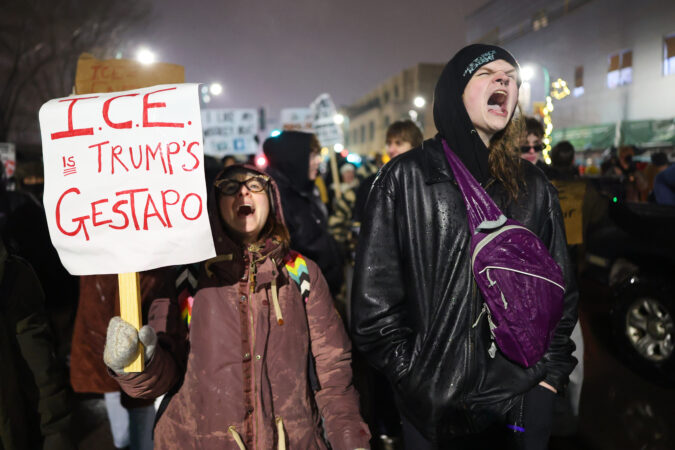
    On Thursday night, hundreds marched in freezing rain down one of Minneapolis’ major thoroughfares, chanting “ICE out now!” and holding signs saying, “Killer ice off our streets.” The day began with a charged demonstration outside of a federal facility that is serving as a hub for the immigration crackdown that began Tuesday in the Twin Cities of Minneapolis and St. Paul. Authorities erected barricades outside the facility Friday.

    City workers, meanwhile, removed barricades made of old Christmas trees and other debris that had been blocking the streets near the scene of Good’s shooting. Officials said they would leave up a makeshift shrine to the 37-year-old mother of three.

    Shootings in Portland

    The shootings in Portland took place outside a hospital Thursday afternoon. A man and woman, identified by the Department of Homeland Security as Venezuela nationals Luis David Nico Moncada and Yorlenys Betzabeth Zambrano-Contreras, were shot inside a vehicle, and their conditions were not immediately known. The FBI and the Oregon Department of Justice were investigating.

    Portland Mayor Keith Wilson and the city council called on ICE to end all operations in the city until a full investigation is completed. Hundreds protested Thursday night at a local ICE building. Early Friday, Portland police reported that officers had arrested several protesters after asking the to move from the street to the sidewalk, to allow traffic to flow.

    Just as it did following Good’s shooting, DHS defended the actions of the officers in Portland, saying it occurred after a Venezuelan man with alleged gang ties and who was involved in a recent shooting tried to “weaponize” his vehicle to hit the officers. It wasn’t immediately clear if the shootings were captured on video, as Good’s was.

    The biggest crackdown yet

    The Minneapolis shooting happened on the second day of the immigration crackdown in the Twin Cities, which Homeland Security said is the biggest immigration enforcement operation ever. More than 2,000 officers are taking part and Noem said they have made more than 1,500 arrests.

    The government is also shifting immigration officers to Minneapolis from sweeps in Louisiana, according to documents obtained by The Associated Press. This represents a pivot, as the Louisiana crackdown that began in December had been expected to last into February.

    Good’s death — at least the fifth tied to immigration sweeps since Trump took office — has resonated far beyond Minneapolis, as protests happening in other places, including Texas, California, Detroit and Missouri.

    In Washington, D.C., on Thursday, a woman held a sign that said, “Stop Trump’s Gestapo,” as hundreds of people marched to the White House. Protesters in Pflugerville, Texas, north of Austin, banged on the walls of an ICE facility. And a man in Los Angeles burned an American flag in front of federal detention center.

    A deadly encounter seen from multiple angles

    Homeland Security Secretary Kristi Noem, President Donald Trump and others in his administration have repeatedly characterized the Minneapolis shooting as an act of self-defense and cast Good as a villain, suggesting she used her vehicle as a weapon to attack the officer who shot her.

    But state and local officials and protesters rejected that characterization, with Minneapolis Mayor Jacob Frey saying videos show the self-defense argument is “garbage.”

    Several bystanders captured footage of Good’s killing, which happened in a neighborhood south of downtown.

    The recordings show an officer approaching an SUV stopped across the middle of the road, demanding the driver open the door and grabbing the handle. The Honda Pilot begins to pull forward and a different ICE officer standing in front of it pulls his weapon and immediately fires at least two shots at close range, jumping back as the vehicle moves toward him.

    It is not clear from the videos if the vehicle makes contact with the officer, and there is no indication of whether the woman had interactions with agents earlier. After the shooting, the SUV speeds into two cars parked on a curb before crashing to a stop.

    Officer identified in records

    The federal agent who fatally shot Good is an Iraq War veteran who has served for nearly two decades in the Border Patrol and ICE, according to records obtained by AP.

    Noem has not publicly named him, but a Homeland Security spokesperson said her description of his injuries last summer refers to an incident in Bloomington, Minn., in which court documents identify him as Jonathan Ross.

    Ross got his arm stuck in the window of a vehicle whose driver was fleeing arrest on an immigration violation. Ross was dragged and fired his Taser. A jury found the driver guilty of assaulting a federal officer with a dangerous weapon.

    Attempts to reach Ross, 43, at phone numbers and email addresses associated with him were not successful.


  • Iran supreme leader signals upcoming crackdown on protesters ‘ruining their own streets’ for Trump

    Iran supreme leader signals upcoming crackdown on protesters ‘ruining their own streets’ for Trump

    DUBAI, United Arab Emirates — Iran signaled Friday that security forces would crack down on protesters, directly challenging U.S. President Donald Trump’s pledge to support those peacefully demonstrating as the death toll rose to at least 62.

    Supreme Leader Ayatollah Ali Khamenei dismissed Trump as having hands “stained with the blood of Iranians” as supporters shouted “Death to America!” in footage aired by Iranian state television. State media later repeatedly referred to demonstrators as “terrorists,” setting the stage for a violent crackdown like those that followed other nationwide protests in recent years.

    Protesters are “ruining their own streets … in order to please the president of the United States,” the 86-year-old Khamenei said to a crowd at his compound in Tehran. “Because he said that he would come to their aid. He should pay attention to the state of his own country instead.”

    Iran’s judiciary chief Gholamhossein Mohseni-Ejei separately vowed that punishment for protesters “will be decisive, maximum, and without any legal leniency.”

    There was no immediate response from Washington, though Trump has repeated his pledge to strike Iran if protesters are killed, a threat that’s taken on greater significance after the U.S. military raid that seized Venezuela’s Nicolás Maduro.

    Internet cut off

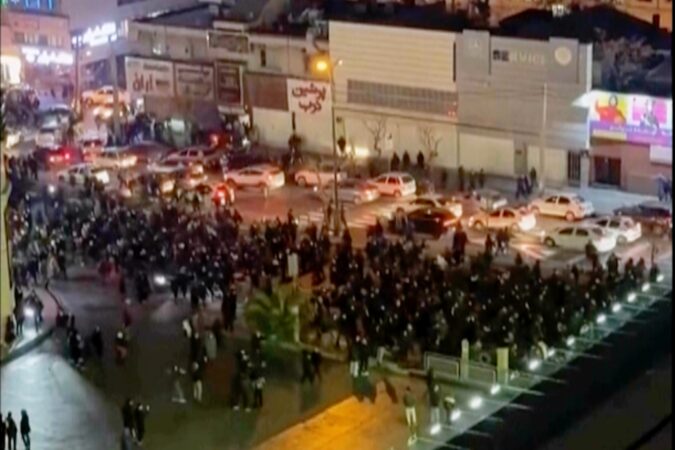
    Despite Iran’s theocracy cutting off the nation from the internet and international telephone calls, short online videos shared by activists purported to show protesters chanting against Iran’s government around bonfires as debris littered the streets in the capital, Tehran, and other areas into Friday morning.

    Iranian state media alleged “terrorist agents” of the U.S. and Israel set fires and sparked violence. It also said there were “casualties,” without elaborating.

    The full scope of the demonstrations couldn’t be immediately determined due to the communications blackout, though it represented yet another escalation in protests that began over Iran’s ailing economy and that has morphed into the most significant challenge to the government in several years. The protests have intensified steadily since beginning Dec. 28.

    The protests also represented the first test of whether the Iranian public could be swayed by Crown Prince Reza Pahlavi, whose fatally ill father fled Iran just before the country’s 1979 Islamic Revolution. Pahlavi, who called for the protests Thursday night, similarly has called for demonstrations at 8 p.m. Friday.

    Demonstrations have included cries in support of the shah, something that could bring a death sentence in the past but now underlines the anger fueling the protests that began over Iran’s ailing economy.

    So far, violence around the demonstrations has killed at least 62 people while more than 2,300 others have been detained, said the U.S.-based Human Rights Activists News Agency.

    “What turned the tide of the protests was former Crown Prince Reza Pahlavi’s calls for Iranians to take to the streets at 8 p.m. on Thursday and Friday,” said Holly Dagres, a senior fellow at the Washington Institute for Near East Policy. “Per social media posts, it became clear that Iranians had delivered and were taking the call seriously to protest in order to oust the Islamic Republic.”

    “This is exactly why the internet was shut down: to prevent the world from seeing the protests. Unfortunately, it also likely provided cover for security forces to kill protesters.”

    Thursday night protests preceded internet shutdown

    When the clock struck 8 p.m. Thursday, neighborhoods across Tehran erupted in chanting, witnesses said. The chants included “Death to the dictator!” and “Death to the Islamic Republic!” Others praised the shah, shouting: “This is the last battle! Pahlavi will return!” Thousands could be seen on the streets before all communication to Iran cut out.

    On Friday, Pahlavi called on Trump to help the protesters, saying Khamenei “wants to use this blackout to murder these young heroes.”

    “You have proven and I know you are a man of peace and a man of your word,” he said in a statement. “Please be prepared to intervene to help the people of Iran.”

    The White House did not immediately respond to a request for comment on Pahlavi’s appeal to Trump.

    Pahlavi had said he would offer further plans depending on the response to his call. His support of and from Israel has drawn criticism in the past — particularly after the 12-day war Israel waged on Iran in June. Demonstrators have shouted in support of the shah in some demonstrations, but it isn’t clear whether that’s support for Pahlavi himself or a desire to return to a time before the 1979 Islamic Revolution.

    The internet cut also appears to have taken Iran’s state-run and semiofficial news agencies offline. The state TV acknowledgment at 8 a.m. Friday represented the first official word about the demonstrations.

    State TV claimed the protests were violent and caused casualties, but did not offer nationwide figures. It said the protests saw “people’s private cars, motorcycles, public places such as the metro, fire trucks, and buses set on fire.” State TV later reported that violence overnight killed six people in Hamedan, some 175 miles southwest of Tehran, and two security force members in Qom, 75 miles south of the capital.

    The European Union and Germany condemned the violence targeting demonstrators as new protests were reported in Zahedan in Iran’s restive southwestern Sistan and Baluchestan province.

    Trump renews threat over protester deaths

    Iran has faced rounds of nationwide protests in recent years. As sanctions tightened and Iran struggled after the 12-day war, its rial currency collapsed in December, reaching 1.4 million to $1. Protests began soon after, with demonstrators chanting against Iran’s theocracy.

    It remains unclear why Iranian officials have yet to crack down harder on the demonstrators. Trump warned last week that if Tehran “violently kills peaceful protesters,” America “will come to their rescue.”

    In an interview with talk show host Hugh Hewitt aired Thursday, Trump reiterated his pledge.

    Iran has “been told very strongly, even more strongly than I’m speaking to you right now, that if they do that, they’re going to have to pay hell,” Trump said.

    He demurred when asked if he’d meet with Pahlavi.

    “I’m not sure that it would be appropriate at this point to do that as president,” Trump said. “I think that we should let everybody go out there, and we see who emerges.”

    Speaking in an interview with Sean Hannity aired Thursday night on Fox News, Trump went as far as to suggest Khamenei may want to leave Iran.

    “He’s looking to go someplace,” Trump said. “It’s getting very bad.”

  • Federal officers are leaving Louisiana immigration crackdown for Minneapolis, documents show

    Federal officers are leaving Louisiana immigration crackdown for Minneapolis, documents show

    NEW ORLEANS — Federal immigration officers are pulling out of a Louisiana crackdown and heading to Minneapolis in an abrupt pivot from an operation that drew protests around New Orleans and aimed to make thousands of arrests, according to documents obtained by The Associated Press.

    The shift appeared to signal a wind-down of the Louisiana deployment that was dubbed “Catahoula Crunch” and began in December with the arrival of more than 200 officers. The operation had been expected to last into February and swiftly raised fears in immigrant communities.

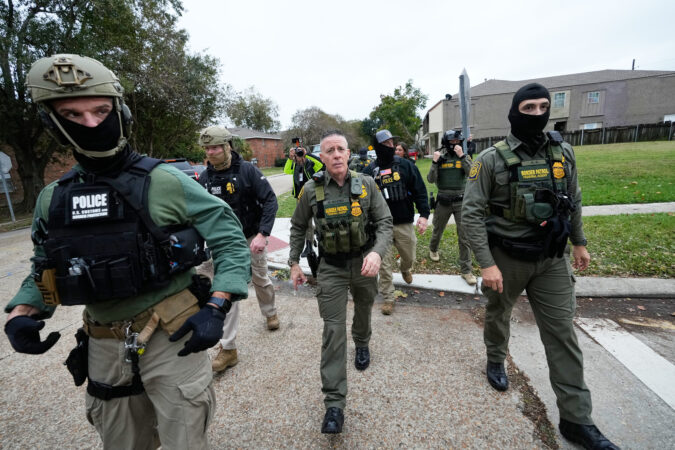
    The Trump administration has been surging thousands of federal officers to Minnesota under a sweeping new crackdown tied in part to allegations of fraud involving Somali residents. More than 2,000 officers are taking part in what the Department of Homeland Security has called the biggest immigration enforcement operation ever.

    The officers in Minneapolis have been met with demonstrations and anger after an ICE officer fatally shot a woman on Wednesday.

    Documents obtained by the AP indicated that federal officers stationed in Louisiana were continuing to depart for Minneapolis late this week.

    “For the safety of our law enforcement, we do not disclose operational details while they are underway,” DHS said Friday in response to questions about whether the Louisiana deployment was ending in order to send officers to Minnesota.

    In December, DHS deployed more than 200 federal officers to New Orleans to carry out a monthslong sweep in and around the city under Border Patrol Cmdr. Gregory Bovino, who was also the face of aggressive operations in Chicago, Los Angeles, and Charlotte, North Carolina. Bovino has been seen in Minneapolis this past week.

    “Catahoula Crunch” began with a target of 5,000 arrests, the AP first reported. The operation had resulted in about 370 arrests as of Dec. 18, according to DHS.

    The operation heavily targeted the Hispanic enclave of Kenner just outside New Orleans, leading immigrant-run businesses to close down to protect customers and out of a fear of harassment.

    Documents previously reviewed by AP showed the majority of people arrested in the Louisiana crackdown’s first days lacked criminal records and that authorities tracked online criticism and protests against the deployment.

    Republican Louisiana Gov. Jeff Landry welcomed the crackdown. But New Orleans’ Democratic leaders called the 5,000-arrest target unrealistic and criticized videos that showed agents arresting or trying to detain residents, including a clip of a U.S. citizen being chased down the street by masked men near her house.

    New Orleans’ Democratic leaders have been more welcoming of a National Guard deployment that President Donald Trump authorized after Landry asked for help fighting crime. The troops arrived just before the New Year’s Day anniversary of a truck attack on Bourbon Street that killed 14 people.

  • Protests erupt over federal immigration enforcement operations after shootings in Minneapolis and Portland

    Protests erupt over federal immigration enforcement operations after shootings in Minneapolis and Portland

    MINNEAPOLIS — As anger and outrage spilled out onto Minneapolis’ streets over the fatal shooting of a woman by an Immigration and Customs Enforcement officer, a new shooting by federal officers in Oregon left two people wounded, sparked additional protests and elicited more scrutiny of enforcement operations across the U.S.

    Hundreds of people protesting the shooting of Renee Good marched in freezing rain Thursday night down one of Minneapolis’ major thoroughfares, chanting “ICE out now” and holding signs saying, “killer ice off our streets.” Protesters earlier vented their outrage outside a federal facility that is serving as a hub for the administration’s latest immigration crackdown on a major city.

    Early Friday, city crews removed makeshift barricades made from debris including garbage cans and Christmas trees that blocked streets in the area of Wednesday’s shooting to keep streets open, but Minneapolis officials said they would not remove the memorial the community created there. An estimated 15 tons (13.6 metric tonnes) of debris including metal and tires were removed, officials said.

    The shooting in Portland, Oregon, took place outside a hospital Thursday afternoon. A man and woman were shot inside a vehicle, and their conditions were not immediately known. The FBI and the Oregon Department of Justice were investigating.

    Portland Mayor Keith Wilson and the city council called on ICE to end all operations in the city until a full investigation is completed. Hundreds protested Thursday night at the ICE building. Early Friday, Portland police reported that a handful of arrests were made after officers asked protesters to move to the sidewalk, as traffic remained open in the area.

    Just as it did following Wednesday’s shooting in Minneapolis shooting, the Department of Homeland Security defended the actions of the officers in Portland, saying it occurred after a Venezuelan man with alleged gang ties and who was involved in a recent shooting tried to “weaponize” his vehicle to hit the officers. It was not yet clear if witness video corroborates that account.

    Homeland Security Secretary Kristi Noem, President Donald Trump and others in his administration have repeatedly characterized the Minneapolis shooting as an act of self-defense and cast Good as a villain, suggesting she used her vehicle as a weapon to attack the officer who shot her.

    Vice President JD Vance said the shooting was justified and Good, a 37-year-old mother of three, was a “victim of left-wing ideology.”

    “I can believe that her death is a tragedy while also recognizing that it is a tragedy of her own making,” Vance said, noting that the officer who killed her was injured while making an arrest last June.

    But state and local officials and protesters rejected that characterization, with Minneapolis Mayor Jacob Frey saying video recordings show the self-defense argument is “garbage.”

    An immigration crackdown quickly turns deadly

    The Minneapolis shooting happened on the second day of the Trump administration’s immigration crackdown on the Twin Cities of Minneapolis and St. Paul, which Homeland Security said is the biggest immigration enforcement operation ever. More than 2,000 officers are taking part and Noem said they have made more than 1,500 arrests.

    It provoked an immediate response in the city where police killed George Floyd in 2020, with hundreds of people turning up to the scene to vent their outrage at the ICE officers and the school district canceling classes for the rest of the week as a precaution.

    Good’s death — at least the fifth tied to immigration sweeps since Trump took office — has resonated far beyond Minneapolis, as protests took place or were expected this week in many large U.S. cities.

    Who will investigate?

    The Minnesota agency that investigates officer-involved shootings said Thursday that it was informed that the FBI and U.S. Justice Department would not work with the it, effectively ending any role for the state to determine if crimes were committed. Noem said the state has no jurisdiction.

    “Without complete access to the evidence, witnesses and information collected, we cannot meet the investigative standards that Minnesota law and the public demands,” said Drew Evans, head of the Minnesota Bureau of Criminal Apprehension.

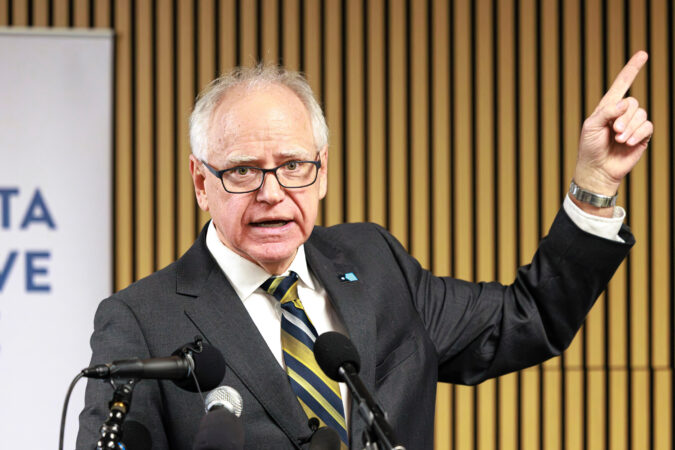
    Minnesota Gov. Tim Walz demanded that the state be allowed to take part, repeatedly emphasizing that it would be “very difficult for Minnesotans” to accept that an investigation excluding the state could be fair.

    Deadly encounter seen from multiple angles

    Several bystanders captured video of Good’s killing, which happened in a neighborhood south of downtown.

    The recordings show an officer approaching an SUV stopped across the middle of the road, demanding the driver open the door and grabbing the handle. The Honda Pilot begins to pull forward and a different ICE officer standing in front of it pulls his weapon and immediately fires at least two shots at close range, jumping back as the vehicle moves toward him.

    It is not clear from the videos if the vehicle makes contact with the officer, and there is no indication of whether the woman had interactions with agents earlier. After the shooting, the SUV speeds into two cars parked on a curb before crashing to a stop.

    Officer identified in records

    The federal agent who fatally shot Good is an Iraq War veteran who has served for nearly two decades in the Border Patrol and ICE, according to records obtained by AP.

    Noem has not publicly named him, but a Homeland Security spokesperson said her description of his injuries last summer refers to an incident in Bloomington, Minnesota, in which court documents identify him as Jonathan Ross.

    Ross got his arm stuck in the window of a vehicle whose driver was fleeing arrest on an immigration violation. Ross was dragged and fired his Taser. A jury found the driver guilty of assaulting a federal officer with a dangerous weapon.

    Attempts to reach Ross, 43, at phone numbers and email addresses associated with him were not successful.
  • ICE shooting reinforces Minnesota’s grim role as Trump’s target

    ICE shooting reinforces Minnesota’s grim role as Trump’s target

    MINNEAPOLIS — Federal officers have encountered opposition in nearly all of the cities targeted by President Donald Trump’s immigration enforcement campaign. But it was in Minnesota — a state in daily conflict with the Trump administration this year — that a 37-year-old woman was shot and killed by an immigration officer.

    Trump has focused on several blue states in the divide-and-conquer campaign that has characterized his second term, and now he has turned to Minnesota, where the killing of George Floyd and the protests it sparked stained his first presidency.

    Trump last month called the state’s Somali population “garbage” in the wake of a massive federal investigation into COVID-19 and medical aid fraud tied to organizations serving Somali immigrants, among others. The fraud cases led Minnesota’s Democratic governor, Tim Walz — former Vice President Kamala Harris’ 2024 running mate — to announce this week he will not run for reelection.

    In June, a Democratic state lawmaker and her husband were assassinated by a Trump supporter, although conservatives insist the gunman was actually a leftist working at Walz’s behest. On Sunday, the victims’ family begged Trump to take down a social media post echoing those conspiracy theories.

    Memories of the chaos that followed the killing of George Floyd

    Amid that mounting tension, the Trump administration announced Tuesday that it was sending more than 2,000 federal officers to the Twin Cities of Minneapolis and St. Paul in what it claimed would be the biggest immigration enforcement operation in history.

    The Immigration and Customs Enforcement officer who killed Renee Good during a protest Wednesday against the immigration raids opened fire just blocks from where, in 2020, a Minneapolis police officer killed George Floyd. The parallels were painful and frightening for many in the area, including Stephanie Abel, a 56-year-old Minneapolis nurse, who is keeping her gas tank full and cash handy in memory of the chaos that followed that slaying.

    “I thought the federal government would realize that now is not the time to be toying with people,” Abel said. “What are they going to try to do to get Minneapolis to ignite?”

    Floyd’s death sparked the biggest protests of Trump’s first term. The president, who is still publicly bitter about the unrest, contends it should have been met with a stronger show of force.

    That’s the approach Trump has adopted in his second term, trying to cow blue states by surging military and immigration agents into their cities and insisting that anyone who doesn’t comply with federal demands will face severe consequences.

    Immigration operations that started last summer in liberal strongholds such as Chicago,Los Angeles and Portland also generated large protests. Good is at least the fifth person killed during ICE enforcement efforts.

    On Thursday, Vice President JD Vance said Good’s death was “a tragedy of her own making,” blamed “leftist ideology” and said the media had encouraged protests against Trump’s immigration crackdown. Vance spoke at the White House to announce a new assistant attorney general position to prosecute the abuse of government assistance programs that will focus on Minnesota.

    Federal investigators have Somalis in their sights

    The Twin Cities operation is intertwined with a conservative effort to make Minnesota the poster child for government fraud. Though prosecutions for the fraudulent use of hundreds of millions of dollars of federal COVID-19 and health aid by social service groups began in the Biden administration, Trump and conservatives have seized on the scandal in recent weeks.

    In November, Trump called Minnesota “a hub of fraudulent money laundering activity” after a report by a conservative news site, City Journal, claimed federal money was fraudulently flowing to the militant group al-Shabab. There has been little, if any, evidence, proving such a link. Nevertheless, the president said he would end Temporary Protected Status for Somalis in Minnesota.

    The allegations got a new charge late last month when conservative influencer Nick Shirley posted an unconfirmed video claiming that day care centers in Minneapolis run by Somalis had fraudulently collected over $100 million in government aid.

    Jamal Osman, a Somali immigrant and Minneapolis city councilman who lives just a few blocks from the location of the ICE shooting, said he and other prominent Somalis in the area have been swamped with angry calls and messages since Trump made his statements. The vitriol, he said, mainly comes from out of state.

    “We have whole groups of people who’ve never been to Minnesota,” Osman said in an interview. “Minnesota is probably one of the nicest places to live. It’s a beautiful area with very nice people and we blended in, it’s all very nice. We don’t really see bad things happening here normally.”

    The Trump administration on Tuesday said is withholding funding for programs that support needy families with children, including day care funding, in five Democratic-led states over concerns about fraud. Joining Minnesota on the list were California, Colorado, Illinois and New York.

    ‘Leave our state alone’

    Minnesota’s place on a list of targeted blue states is not unexpected.

    Under Walz, Minnesota has become something of a beacon for liberals as an example of a state that expanded the public safety net even as the nation swung to the right. Since Trump’s first election, the state has seen large increases in education spending, free school breakfasts and lunches, and improved protection of abortion rights.

    Trump lost Minnesota by only 4 percentage points in 2024, making it significantly less liberal than California and New York. Still, it has been reliably Democratic throughout the Trump years, a rarity in the swingy upper Midwest.

    The state’s political tilt reflects the size of the Twin Cities metro area and its robust population of college-educated liberals, which overwhelm the state’s more conservative rural reaches.

    It’s the sort of cleavage that has defined national politics during Trump’s years in office.

    “Minnesota is a microcosm of a lot of the tensions we have in our society,” said David Schultz, a political scientist at Hamline University in St. Paul. “We’re a country that’s hugely polarized, Democrats-Republicans, urban-rural.”

    On Thursday, Minnesota was an ominous indicator of the damage those divisions can inflict. Minneapolis schools remained closed after immigration agents clashed with high school students at one campus on Wednesday. The state’s National Guard remained on standby at Walz’s directive.

    Walz begged Trump to ease up, saying Minnesota’s residents are “exhausted” by the president’s “relentless assault on Minnesota.”

    “So please, just give us a break,” Walz said during a news conference Thursday. “And if it’s me, you’re already getting what you want, but leave my people alone. Leave our state alone.”

  • Somalia denies U.S. allegation that it destroyed food aid warehouse

    Somalia denies U.S. allegation that it destroyed food aid warehouse

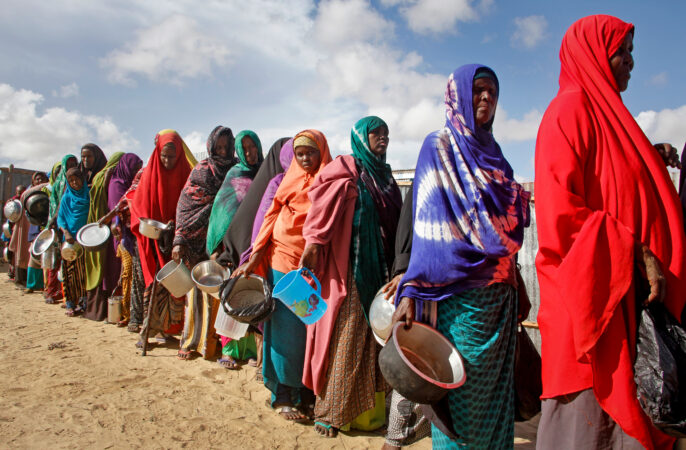
    MOGADISHU, Somalia — Somalia’s government on Thursday denied an allegation by the U.S. government that authorities in Mogadishu destroyed an American-funded warehouse belonging to the World Food Program and seized food aid earmarked for impoverished civilians.

    The U.S. State Department said Wednesday that it has suspended all assistance from Washington to Somalia’s federal government over the allegations, saying the Trump administration has “a zero-tolerance policy for waste, theft and diversion of life-saving assistance.”

    A senior U.S. State Department official said authorities at the Mogadishu port demolished the warehouse of the World Food Program, a Rome-based U.N. agency, at the direction of President Hassan Sheikh Mohamud “with no prior notification or coordination with international donor countries, including the United States.” The official spoke on condition of anonymity to discuss private reporting from American diplomats in the region.

    Somalia’s foreign ministry said that the food in question wasn’t destroyed and that “the commodities referenced in recent reports remain under the custody and control of the World Food Program, including assistance provided by the United States.”

    The foreign ministry said expansion and repurposing works at the Mogadishu port are underway as part of broader developments, but ongoing activities there have not affected the custody and distribution of humanitarian assistance.

    Somalia “remains fully committed to humanitarian principles, transparency, and accountability, and values its partnership with the United States and all international donors,” it said. It gave no other details.

    The WFP told The Associated Press in a statement that its warehouse in Mogadishu port had been demolished by port authorities. The organization said the warehouse contained 75 metric tones of specialized foods intended for the treatment of malnourished pregnant and breastfeeding women and girls and young children.

    In a later update, the WFP said it had “retrieved 75 metric tons of nutritional commodities” without explaining further details on how the material was retried.

    The U.S. State Department said: “We’re glad to hear reports that certain commodities have been recovered and continue our investigation into diversion and misuse of assistance in Somalia. We’ve urged the Federal Government of Somalia to promptly follow through on their commitment to provide an account of the incident.”

    Located in the Horn of Africa, Somalia is one of the world’s poorest nations and has been beset by chronic strife and insecurity exacerbated by multiple natural disasters, including severe droughts, for decades.

    The U.S. provided $770 million in assistance for projects in Somalia during the last year of Democratic President Joe Biden’s administration, but only a fraction of that went directly to the government.

    The U.S. suspension comes as the Trump administration has ratcheted up criticism of Somali refugees and migrants in the United States, including over fraud allegations involving child care centers in Minnesota. It has slapped significant restrictions on Somalis wanting to come to the U.S. and made it difficult for those already in the United States to stay.

    It wasn’t immediately clear how much assistance would be affected by the suspension because the Trump administration has slashed foreign aid expenditures, dismantled the U.S. Agency for International Development and not released new country-by-country data.

    South Sudan, another African country facing conflict and food shortage, is also heavily affected by U.S. aid restrictions. On Thursday, the U.S. suspended foreign assistance to a county in South Sudan’s Jonglei state, and similar assistance to Western Bahr el-Ghazal state was under review, the U.S. Embassy in South Sudan said in a statement.

    That statement charged that South Sudanese officials “take advantage of the United States instead of working in partnership with us to help the South Sudanese people.”

    The U.S. measures “follow continued abuse, exploitation, and theft directed against U.S. foreign assistance by South Sudanese officials at national, state, and county levels,” it said.

    There was no immediate comment from South Sudan’s government.