Category: Associated Press

  • Conservative candidate Keiko Fujimori wins Peru’s presidential election in a runoff

    Conservative candidate Keiko Fujimori wins Peru’s presidential election in a runoff

    LIMA, Peru — Conservative politician Keiko Fujimori on Friday was declared the winner of the presidential runoff election in Peru, which was dominated by people’s concerns over surging crime.

    Fujimori, 51, the daughter of a disgraced former president, was running for the presidency for the fourth time. She will be Peru’s ninth president in 10 years when she takes office later this month.

    The election win was certified Friday by the country’s top election authority. Figures released by election officials earlier in the week showed that with 100% of ballots tallied, Fujimori received 9,223,000 votes, or 50.135% of the total, while nationalist congressman Roberto Sánchez earned over 9,173,000 votes, or 49.865%.

    Fujimori and Sánchez made it to the June 7 runoff election after defeating 33 other candidates in an April vote.

    Voters were primarily concerned with increasing levels of crime, especially extortion by violent organized crime gangs, and Fujimori pledged to combat crime with an iron fist.

    The winner is the daughter of the late Alberto Fujimori, the former president whose government in the 1990s defeated the Shining Path extremist rebel group but also took an authoritarian turn. He was convicted in 2009 of human rights abuses in the fight against the rebels, and later of corruption charges.

  • Belgian diamond group that won tariff relief gifts Trump a lavishly encrusted ring

    Belgian diamond group that won tariff relief gifts Trump a lavishly encrusted ring

    BRUSSELS — Dozens of diamonds spell out two giant letter T’s next to the Stars and Stripes and “1776” and “2026.” Dozens more frame the numbers 45 and 47 in the shape of Superman’s logo. A diamond-winged eagle carries a ruby shield and clutches an olive branch of emeralds, below a radiant “250” and atop the phrase “250 YEARS USA” etched in 18-karat gold.

    All told, 321 diamonds, 56 sapphires, 13 emeralds and six rubies encrust the watch-sized gold ring presented this week to Bill White, the U.S. ambassador to Belgium, to give to President Donald Trump.

    “A very special thank you to my friends from Antwerp for the magnificent Freedom 250 ring,” Trump said in a prerecorded video message during an event marking America’s 250th birthday in Brussels.

    Isidore Mörsel, president of the Antwerp World Diamond Center, or AWDC, gifted the ring on behalf of the centuries-old diamond community in the Belgian port city, a central node in the worldwide trade of the precious stones that found itself struggling last year under the weight of Trump’s sweeping trade war.

    “May this ring serve as a lasting reminder that true partnership like the finest natural diamonds are formed under pressure, endure the test of time, and shine brightest when built on trust,” Mörsel said. The ring’s interior is engraved with the phrase “Crafted in Antwerp for Donald John Trump.”

    In dollar terms, the ring’s value pales beside gifts like the $400 million plane donated by Qatar that Trump ordered converted into a new Air Force One. But it’s a glitzy window into the role that ostentatious – and almost always gilded — gifts are playing for those seeking to curry favor with the U.S. president.

    A White House official, speaking on the condition of anonymity to discuss the matter, said Thursday that the ring has not been presented to Trump yet.

    Ring is latest in Trump’s break with White House custom

    The gift comes months after Belgium’s diamond industry won the removal of U.S. tariffs on diamond imports. In September, AWDC said it had “succeeded in securing a zero percent import tariff” on Antwerp’s annual export of more than $2 billion of polished diamonds to the U.S. A spokesperson for the group said on Thursday that the AWDC provided “input” to the European Commission as it negotiated with Trump on a broad deal on tariffs in 2025, but did not itself lobby the administration.

    U.S. presidents have considerable discretion to accept gifts from domestic and foreign sources and may determine themselves whether a gift was meant for them personally or the nation. The exception is those from foreign governments, which are prohibited by the foreign emoluments clause of the Constitution without congressional assent, though presidents could use personal funds to reimburse the Treasury for the full value of an official gift if they wish to retain it.

    Personal gifts are also supposed to be registered on the president’s annual financial disclosure. Trump’s 2025 disclosure, released this week, revealed a $250,000 gift of a sculpture depicting his triumphal gesture after surviving a 2024 assassination attempt at a campaign rally in Butler, Pa., and tickets to 10 sporting events, including 10 to the upcoming World Cup final in New Jersey from FIFA’s Gianni Infantino, valued at a collective $15,000.

    Four U.S. ethics experts told the Associated Press that Trump has broken with decades-old custom in the White House to avoid accepting such gifts.

    Ring’s value estimated at $25,000-$35,000

    To forge the ring, the AWDC turned to David Gotlib, an Antwerp-based high-end jeweler whose cufflinks can sell for more than 15,000 euros ($17,000).

    Neither AWDC nor Gotlib would provide a valuation of the ring, but two independent jewelers told AP they estimated the value between $25,000 and $35,000.

    Paris- and London-based jewelry consultant Alexander Levinson calculated the cost at $25,928, while David Saad, a third-generation luxury jeweler in Canada, priced the ring between $33,000 and $35,000. Both said half the cost was in materials, half in labor.

    After the ring was presented on a star-spangled stage in Brussels, musician Alexis Wilkins, the girlfriend of FBI Director Kash Patel, sang the U.S. national anthem to more than 8,000 people drinking Budweiser and bourbon from Tennessee and Kentucky.

    White said he raised more than $5.5 million for the 250th anniversary event from corporate sponsors like defense industry titans Lockheed Martin and Northrop Grumman and tech firms like Intel, Google, and Meta, as well as the European chocolate companies Leonidas and Ferrero. AWDC said it contributed funds, too.

    “The media was asking, ‘Why does it have to be so big?’” White said of the event. “Because we are the United States of America!”

    Meanwhile, the fate of the ring is not currently clear.

    On Wednesday, White posted a photo online of himself wearing the ring and giving a thumbs-up. The post has since been deleted.

  • Venezuelan earthquake survivors search for missing pets in an unexpected place: McDonald’s

    Venezuelan earthquake survivors search for missing pets in an unexpected place: McDonald’s

    CARABALLEDA, Venezuela — Hope came in the strangest of places: a Venezuela McDonald’s.

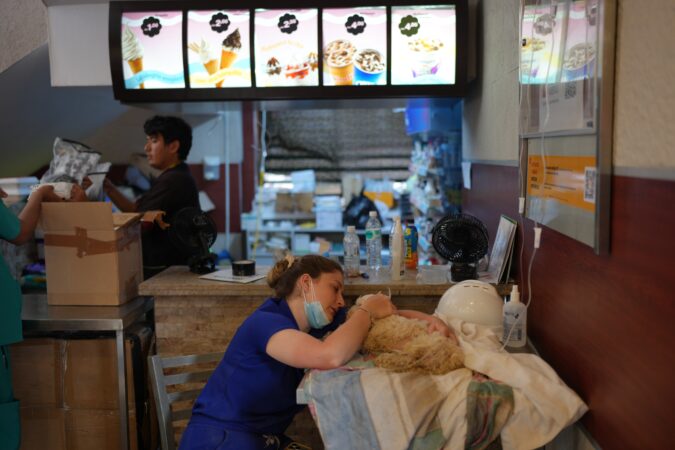
    Gabriela Alves found herself embracing her 6-year-old dog Buddy on Thursday in the fast-food outlet after a week of searching for the white pup that went missing when two earthquakes devastated the South American nation on June 24.

    The restaurant, next to the ruins of collapsed state housing complexes, has become a de facto hospital for earthquake victims, as well as a center for locating and treating missing pets in the seaside city of Caraballeda, which was devastated by the natural disaster. Neighbors call it “Hospital McDonald’s.”

    “This is a miracle,” Alves said, arms wrapped around the dog with an IV in one of his legs on a table next to restaurant workers selling soft-serve ice cream. “We’ve lost everything material, but at least we’re both alive.”

    The makeshift hospital was born one day after the back-to-back earthquakes killed at least than 2,295 people and wounded 11,000, according to Venezuelan officials. Many more families were left scrambling to find their missing loved ones, including cats and dogs lost in the rubble.

    Angel Matute and 70 other veterinarians, students, doctors, and civilian volunteers traveled from the western city of Barquisimeto. The team was looking for a place to sleep, store equipment, and shelter from heavy tropical rain when they found one of the only operational facilities within the chaos. The Golden Arches.

    They set up shop in the restaurant, which still had running air-conditioning, and began distributing medical supplies and treating human patients while also becoming a place for treating injured pets and seeking dogs and cats that were still missing.

    “For us, a pet is one more human life,” said Matute, who coordinates rescue efforts in the McDonald’s where the volunteers also sleep. “There are animals that are more human than humans themselves.”

    Matute was among dozens of bustling volunteers on Thursday treating dogs and cats alongside search teams ordering hamburgers and french fries. His group, which has rescued 140 animals and treated 60 more, plans to continue reuniting owners with missing pets until their assistance is no longer needed.

    Alves turned to Hospital McDonald’s when she was desperately searching for her beloved dog.

    Alves was at a family member’s house when the quakes shook northern Venezuela. Hours later, she jumped on her motorcycle and frantically rushed to her home to save Buddy, but all she found were ruins.

    The 36-year-old Venezuelan said she heard the McDonald’s had become a place to look for lost pets and began making daily laps. She would swing by the restaurant to check if the volunteers had found any white dogs before returning home to yell, “Buddy, Buddy,” hoping to hear a bark. For more than a week, she was met with silence.

    “We’re all living one day at a time,” she said Thursday. “Today, I returned and I truly can tell you I had lost all hope.”

    She persisted, though, and picked through the ruins, pulling clothes from her mother’s room, the only area of the home still accessible. Then she heard a distant bark, looked down and saw Buddy’s white ear through a crack in the concrete.

    Alves screamed for help and nearby rescuers ran to her. They broke a hole in the wall and pulled the dust-covered dog from the debris. Alves sobbed as she cradled Buddy, swaddled in a pink blanket and licking her arm. Hours later, veterinarians at Hospital McDonald’s checked Buddy for injuries after eight days trapped in the rubble.

    “Right now, with all the tragedy of the earthquake, it’s one positive thing in all the bad,” Alves said, still embracing her dog. “He’s like my doggie Band-Aid.”

  • The Supreme Court tackled race, history, and the law in fraught and reflective major rulings

    The Supreme Court tackled race, history, and the law in fraught and reflective major rulings

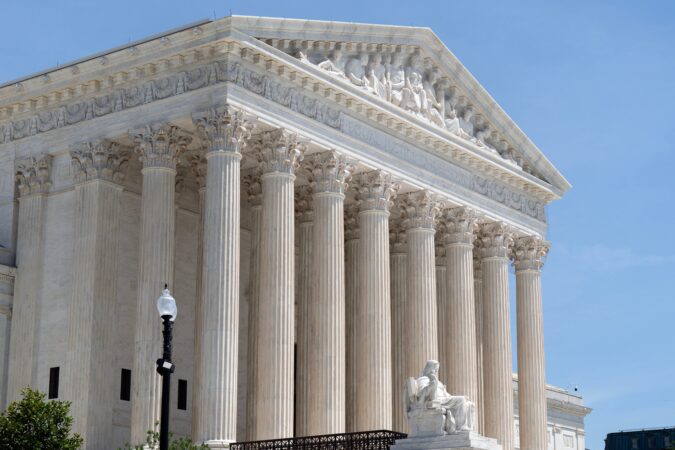
    WASHINGTON — The Supreme Court just wrapped up a term that yielded significant rulings in cases involving race and discrimination that could have lasting effects on U.S. politics and society.

    Justices were at times bitterly divided — and critical of one another — in rulings that winnowed key provisions of a landmark voting rights law, allowed the government to revoke protections for some immigrants, and even challenged the historic understanding of birthright citizenship for the children of immigrants.

    The decisions come at a moment when long-standing debates over race and identity have turned toward immigration, increasing racial diversity, and the fairness of policies meant to prevent and redress discrimination.

    “This term, we saw a Supreme Court that is moving quickly to eradicate legal protections in ways that will leave vulnerable communities exposed to the harsh winds of discrimination and hatred that we continue to see across the country today,” Kristen Clarke, general counsel for the NAACP and the former head of the Justice Department’s civil rights division during the Biden administration, told the Associated Press.

    Here is a breakdown of the latest decisions involving race and what they may mean going forward:

    The temporary protected status case

    The court allowed the government to end deportation protections for Haitians and Syrians in the U.S. who have fled violence and natural disaster. President Donald Trump’s administration revoked the temporary protected status last year.

    With the president’s more than decadelong track record of denigrating developing nations and immigrants who come to the U.S. from Africa, Asia, Latin America, and the Middle East, attorneys for some affected migrants contended that the government could not cancel the designations, in part because Trump’s comments about immigrants were racist.

    “The true reason for the termination is the president’s racial animus towards non-white immigrants and bare dislike of Haitians in particular,” Geoffrey Pipoly, an attorney for the Haitian nationals in the case, said during April oral arguments in the case, Mullin v. Doe. The attorneys noted that, during his second presidential campaign, Trump claimed immigrants “are poisoning the blood of our country” and suggested in another instance that migrants have “bad genes.”

    Federal authorities denied prejudice played a role in the decision and argued that TPS was supposed to end but has lasted more than a decade in some cases.

    In writing for the 6-3 conservative majority, Justice Samuel Alito said none of the cited statements was “overtly racial,” reasoning that any of Trump’s actions could have been taken without racial animus and attributing his anti-immigrant comments to “political discourse.”

    That’s not how the court’s liberal minority saw the situation.

    “The references — of filth, disease, and primitiveness — are shot through with racial stereotypes and tropes. It is hard to imagine the statements being made today of any White community,” Justice Elena Kagan wrote in her dissent.

    The birthright citizenship case

    In one of the highest-profile cases of the term, the court reaffirmed that the 14th Amendment to the U.S. Constitution means all people born in the U.S. are citizens.

    On his first day in office last year, Trump signed an executive order seeking to restrict birthright citizenship to the children of U.S. citizens, a move that civil rights groups challenged as unconstitutional and racist.

    In his majority opinion, Chief Justice John Roberts traced the arc of birthright citizenship — a principle that all people born on U.S. soil are citizens — from its origins in English common law to its codification in the 14th Amendment.

    Roberts noted that race and citizenship had been fiercely debated in courts, speeches, Congress, and battlefields because of Black Americans’ fight for freedom from slavery.

    Freed Black Americans did not receive citizenship as a “reward,” Roberts wrote, but because “the Amendment recognized their rightful claim to birthright citizenship simply and solely by virtue of their having been born on American soil.”

    The 6-3 ruling was a blow to the Trump administration, which has made restricting immigration its central goal.

    “The clause does not extend citizenship to the children of temporary visa holders or illegal aliens,” U.S. Solicitor General John Sauer argued before the court in April.

    Justice Clarence Thomas agreed and wrote in his dissent that African descendants of enslaved people in the U.S. are a unique case separate from the children of tourists or people in the country illegally.

    “Blacks were entitled to citizenship because they were Americans. They had no other homeland, owed no allegiance to any foreign power, and were subject to no other authority,” Thomas wrote.

    In a stark move, liberal Justices Ketanji Brown Jackson and Sonia Sotomayor directly criticized Thomas’ claim in a joint opinion.

    “The Reconstruction Amendments were an anticaste, antisubordination reset for the Nation, not a mere spot treatment for the dark stain of slavery,” they wrote.

    The voting rights case

    The Supreme Court handed down a decision in April that gutted a key provision of the Voting Rights Act meant to remedy efforts to disenfranchise minority voters. Among the methods the law permitted to stop voting discrimination in states was the creation of majority-minority congressional districts.

    In the majority opinion, Alito found that because race and partisan voting behavior were so intertwined, it was unfair to conclude that a partisan gerrymander of a state’s congressional districts could be racist, given there may be other reasons for the map’s results.

    Alito reasoned that “in a state where both parties have substantial support and where race is often correlated with party preference,” partisan actors can “easily exploit” laws meant to protect minority political participation for disingenuous reasons.

    The liberal justices balked at the logic and criticized the conservative majority for harming minority representation in politics and culture. They believed that the law’s provisions were still necessary to prevent discrimination by states and worried about the fallout from its removal.

    “The consequences are likely to be far-reaching and grave,” Kagan wrote in her dissent. “Today’s decision renders Section 2 all but a dead letter. In the states where that law continues to matter — the states still marked by residential segregation and racially polarized voting — minority voters can now be cracked out of the electoral process.”

    The decision has had profound impact on the political landscape, with nearly a dozen Southern states immediately taking steps to redistrict and eliminate majority-Black districts.

  • Trump administration proposes a rule it says could save Medicare patients $1.1 billion on drugs

    Trump administration proposes a rule it says could save Medicare patients $1.1 billion on drugs

    WASHINGTON — The Trump administration proposed a new rule on Thursday to keep hospitals from charging markups on discounted drugs for Medicare patients and says that could save consumers $1.1 billion next year, according to estimates obtained by the Associated Press.

    The rule would apply to hospitals that serve low-income patients under what is known as the 340B program, which lets hospitals buy outpatient prescription drugs at discounted prices. But in many cases, hospitals can bill insurers at rates that exceed those costs, allowing hospitals to keep the difference and resulting in higher costs to patients.

    Under the proposed rule, the Centers for Medicare & Medicaid Services would change the formula for what hospitals participating in the program can get reimbursed, in an effort to cut costs for patients.

    The Republican administration has sought to show during an election year that it is tackling the challenges of affordability for U.S. families at a time when rising healthcare costs are driving financial strains for households and the government alike. While the administration has taken several steps it says will save money on medical treatment, it is unclear how much savings might ultimately materialize based on the complexity of the country’s healthcare system.

    The American Hospital Association said the proposed rule would compound the financial pressures its members face.

    “These proposals will undermine the ability of hospitals to maintain essential services and protect affordable access to care for those who depend on the 340B program,” said Ashley Thompson, the group’s senior vice president for public policy analysis and development.

    There is the risk that hospital systems could see their revenues decrease, which could have consequences in the communities they serve. The 340B program was initially designed as a way for healthcare providers to stretch scarce federal resources to better serve more patients. But it has long been at the center of a lobbying battle between hospitals and pharmaceutical companies, with each side attempting to enlist lawmakers in maintaining or changing the benefit.

    The agency estimates that the average older adult with Medicare Part B coverage who is administered one of these drugs would save $800 a year in co-payments. That would work out to a total savings of $1.1 billion for everyone with that coverage.

    The savings over 10 years could total about $20 billion, according to a White House official who requested anonymity to discuss the rule before the official announcement. The official said the proposed rule was not previewed for hospital groups before the release.

    In a policy draft of the rule, the administration gave a specific example of how the current system works for the prostate cancer drug Lupron Depot. Hospitals under the 340B program can acquire a dose for roughly $700, but they can receive about $4,000 in Medicare reimbursement for administering it and an additional $1,000 from the patient co-payment.

    The proposed rule would cut by roughly 40% that amount that hospitals in the discounted drug program could be paid through Medicare programs. If approved, the rule would go into effect at the start of next year.

    In 2018 during President Donald Trump’s first term, his administration tried to enact this same type of rule to reduce Medicare payments to hospitals. But the Supreme Court ruled in 2022 that the government could not provide a separate reimbursement plan for 340B hospitals.

    The president signed an executive order in April 2025 to survey how much hospitals spend to buy drugs. The result of that survey led to the proposed rule, which would cap Medicare reimbursement for participating hospitals at the average sales prices, minus 33.4%. The reason that the average reimbursement rate would be cut is because the hospitals acquired the drugs at discounted prices.

  • Trump and Republicans return to communist attacks against Democrats ahead of the midterm elections

    Trump and Republicans return to communist attacks against Democrats ahead of the midterm elections

    WASHINGTON — President Donald Trump and his fellow Republicans are reviving a line of attack against Democrats heading into the midterm elections: They’re communists.

    In just the past week, Trump has issued dark warnings that members of the Democratic Party’s ascendant left are communists who want to “completely destroy the traditional American way of life” and even engage in assassinations. Vice President JD Vance has similarly called out communism as a political shift that is “something we haven’t seen in the U.S.” House Speaker Mike Johnson has decried “radical candidates” who are “self-described, self-identifying Marxists.”

    The GOP’s ideological focus conflates democratic socialism, which often centers on securing universal healthcare, higher taxes on the wealthy, and stricter corporate regulation, with communism, under which private ownership is largely eliminated. It has been building since Zohran Mamdani, a democratic socialist, won the Democratic nomination for New York City mayor last year.

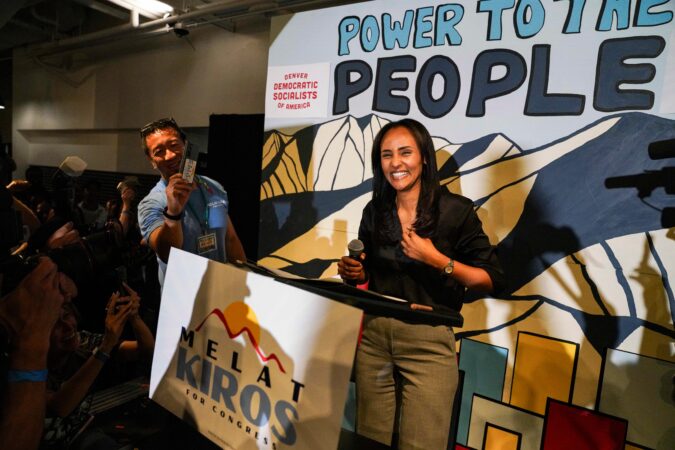
    But it’s kicked into a higher gear recently after democratic socialists won several New York City congressional primaries last week. The primary victory on Tuesday by another democratic socialist, Melat Kiros, for a Denver congressional seat suggested the trend may extend beyond Manhattan liberalism.

    “The Democrats are making this easy for us,” Rep. Richard Hudson, the North Carolina Republican who leads the House GOP’s strategy and fundraising arm, said in an interview. “They’re nominating extreme liberals, leftists who are out of touch even with mainstream Democrats.”

    Republicans are holding onto slim majorities

    The messaging effort comes as Republicans scramble to hold onto threadbare congressional majorities in the November midterms. It risks overlooking public frustration, particularly among younger voters, with unfettered capitalism at a time of growing income inequality and rising costs.

    But it also gives Republicans a much-needed opportunity to shift the conversation back to territory that is more comfortable for them after their party has spent much of the year on defense over the fallout from Trump’s decision to launch a war against Iran, which contributed to widespread price spikes.

    Ralph Reed, the longtime conservative activist who hosted Trump last week at a Faith and Freedom Coalition conference, acknowledged that Republicans are facing steep headwinds this year. But the recent string of wins by democratic socialists, he said, allows Republicans to present a contrast between “common sense and crazy.”

    Democrats uncertain over the party’s direction

    The renewed push could tug at tensions among Democrats who are largely united in their loathing of Trump but are divided over the party’s direction. This year’s primaries are shaping up as a referendum between centrists who are eager to course correct from what they see as progressive overreach earlier in the decade and a left wing pushing for even more sweeping change.

    “A lot of this anger has been boiling under the surface,” said Joseph Geevarghese, executive director of Our Revolution, which was founded by U.S. Sen. Bernie Sanders, a Vermont independent who caucuses with Democrats. “It’s coming to the fore in this moment in a very powerful way.”

    But Rep. Josh Gottheimer, a centrist New Jersey Democrat, called the victories in Colorado and New York “aberrations.”

    “We’ve got to fight like hell to keep our party from being hijacked by socialists,” he said. “Most of them are bomb throwers, not problem solvers.”

    Nevada Attorney General Aaron Ford easily dispatched a more progressive rival earlier this year in his Democratic bid for governor in a state Trump carried in 2024. As he eyes a general election challenge to Republican Gov. Joe Lombardo, he insisted candidates like those who won in New York don’t represent all Democrats.

    He said the Democratic Socialists of America “is not the face of our party.”

    Rep. Suzan DelBene, a Washington Democrat who chairs the House Democratic campaign committee, said in a statement that Republicans were “resorting to desperate attacks that aren’t actually about the pocketbook issues.”

    Trump risks overreaching with communism argument

    Trump and fellow Republicans risk missing the mark when the public’s embrace of capitalism might not be as strong as it was decades ago.

    About half of U.S. adults, 54%, have a positive view of capitalism, according to an August poll from Gallup, a slight decline from 61% in 2010. Democrats have driven some of the shift, but favorable opinions of capitalism have fallen among independents as well.

    Only 42% of Democrats viewed capitalism favorably, while 66% had a positive view of socialism. The poll found that both younger and older Democrats have warmed slightly on socialism since 2010, but Democrats under age 50 are much less likely to view capitalism favorably. Democrats age 50 or older didn’t shift meaningfully.

    “Young voters, who I would argue are driving a lot of the electoral energy that we’re seeing, came of age politically in a post-Soviet world,” Geevarghese said. “The attacks don’t land in the same way when Donald Trump was politically of age.”

    Hudson, who is running the House GOP campaign committee, acknowledged the communism line might not resonate in the same way with all voters, particularly younger people. That’s why, he said, it’s important for Republicans to tailor their message to the needs of individual districts.

    “I’ve never run cookie-cutter campaigns where we just say one thing over and over everywhere,” he said.

    Still, the argument was high on Trump’s mind again on Wednesday as he visited the newly built Theodore Roosevelt Presidential Library in North Dakota. He called the former president a “ferocious opponent of a thing called communism.”

    “It’s the biggest threat to our country, including World War I, World War II, Pearl Harbor, September 11,” he said. “It’s a bigger threat, potentially a bigger threat than that, because it’s like a cancer that spreads, and you better stop it fast.”

    Beverly Gage, a history professor at Yale University who has written on the rise and fall of Sen. Joe McCarthy, said earlier eras of anti-communism politics took hold because there was a large and active Communist Party in the U.S. and the Soviet Union was the country’s primary foe. But she said Trump’s focus on the issue is notable given his ties to Roy Cohn, a onetime confidant of Trump who earlier worked for McCarthy.

    “It’s not very many steps to get from McCarthy to Roy Cohn to Donald Trump,” she said.

    California Gov. Gavin Newsom, a potential Democratic presidential candidate, shrugged off Trump’s communism focus as “bunk.” In an interview, he said the direction of the party isn’t all that different from the dynamics he’s navigated for decades in California politics.

    “I governed in an environment where the DSA was otherwise known as progressives,” he said. “This dialectic is so deeply familiar to me, and I don’t over read any of it.”

  • Shark attack on Alabama teen inspires the start of a national alert system

    Shark attack on Alabama teen inspires the start of a national alert system

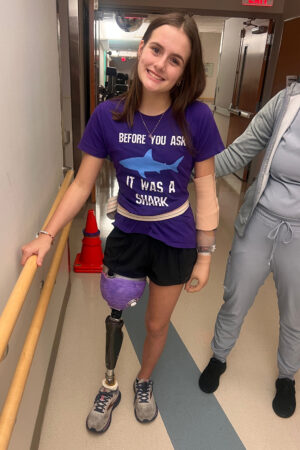
    Lulu Gribbin was 15 when she survived a shark attack off the coast of Florida. She lost her left hand, part of her right leg and almost her life.

    What she didn’t know when she entered the water on that day in 2024 was that another woman had been bitten by a shark 90 minutes earlier and just 3 miles down the beach. Had she known about the earlier attack, there is no way she would have been swimming, she said.

    Gribbin’s story has inspired new federal legislation to authorize emergency alerts to mobile phones to warn beachgoers when a shark has bitten someone in the area.

    President Donald Trump last week signed Lulu’s Law, which requires the Federal Communications Commission to allow the emergency messages. The legislation, which Gribbin advocated for, authorizes the warnings by classifying a shark attack as an event for which an emergency alert can be issued. It is up to states to implement the warnings. Gribbin’s home state of Alabama approved such a warning system last year.

    “It’s really just common-sense legislation. It says that whenever there has been a shark attack in a certain area where you are near, it will send an alert to your phone, exactly like how an Amber Alert system works when a child is abducted,” she said.

    Gribbin said she hopes the alert system will help prevent attacks like hers. “I definitely see this law working in the future and I’m really excited to hopefully save lives,” she said.

    A fight to survive

    Gribbin was one of three people bitten by a shark on June 7, 2024, off the Florida Panhandle.

    She was on a mother-daughter trip to the Florida Panhandle. Gribbin said she and her friend had been diving for sand dollars.

    “All of the sudden my best friend yelled, ‘Shark!’ and so we all started swimming for our lives,” Gribbin recalled. She said she remembered that sharks are attracted to frantic splashing and yelled for everyone to be calm. Gribbin, who was closest to the shark, was bitten.

    “The shark bit off my hand first, and I raised my arm out of the water, and there was just flesh and bone there,” Gribbin said. The shark then latched onto her leg. A man punched the shark off her and strangers on the beach rushed to help. She was flown by helicopter to a nearby hospital.

    Doctors were able to save the teen’s life but had to amputate part of her right leg.

    Choosing positivity throughout her recovery

    In the hospital, Gribbin made a deliberate decision to choose joy and to never give up.

    She initially struggled, knowing “that I only have two regular limbs, and that my life would be completely different.”

    “I would cry, and I would ask my mom, ‘Why is it happening to me?’ And on that day, we put a Bible verse on my bedside table that said, ‘With God, all things are possible.’ And then she told me that what you look like doesn’t define you, it’s who you are on the inside. And so, I think that stuck with me throughout my whole recovery the past two years.

    “It doesn’t matter what I look like, as long as I’m spreading positivity and inspiring others to stay strong and to never give up,” she said.

    Gribbin was fitted with prosthetic limbs, quickly regained her ability to walk, returned to sports, and got her driver’s license. She has gone back in the water and learned to surf, meeting Bethany Hamilton, a professional surfer who lost her arm in a shark attack.

    U.S. Sen. Katie Britt, the Alabama Republican who sponsored the legislation, said the fact that Gribbin was bitten soon after an attack on another woman prompted discussions about what could have been done differently. That led to the idea of an alert. She contacted Gribbin’s parents who had thought about the same possibility.

    “If there had been any type of alert that was given, that there’s no way that Lulu would have been in the water. And so we talked about how a simple change could have made a huge impact,” Britt said.

    Shark bites remain rare

    While sharks are commonly found in the waters off the United States, shark bites are rare, said Gavin Naylor, director of the Florida Museum of Natural History’s shark research program.

    There are between 60 to 80 known unprovoked bites worldwide each year, he said. It’s extremely rare that two or more people are bitten in close proximity. He said in a database of known shark bites, called the International Shark Attack File, there have only been a few instances of multiple bites in a single day.

    “If somebody is bitten by a shark, and then an alert goes out, the probability that another person’s going to be bitten by a shark within, let’s say, two or three hours is incredibly small,” Naylor said.

    When that happens, he said it’s likely because of environmental conditions such as sharks following schools of bait fish closer to the shore. Murky water conditions can also be a factor because they increase the chance that a shark will mistake a person for a fish or seal.

    In the area where Gribbin was bitten, there are about 20 to 30 bull sharks 1,312 feet offshore at any time, Naylor said. Great white sharks have been spotted more frequently in the chilly waters of New England and Atlantic Canada, according to conservation groups. A smartphone app called Sharktivity also allows shark spotters to report their sightings.

    The sightings might unnerve people, but Naylor said it’s important to remember that shark attacks are rare.

    “If sharks wanted to eat people, we’d have about 10,000 bites a day. The fact that we have so few is basically testament to the fact that the sharks are doing their level best to avoid people, not to target them,” Naylor said.

    Britt said she believes parents and others on the beach will want the information. “I know as a parent, I want every tool in my toolbox to be able to keep my child safe,” Britt said.

    Another survivor praises the alert system

    Braxton Rocha, who was bitten by a large tiger shark off the north shore of the Big Island of Hawaii, said he liked the idea of an alert system. He thinks it is information that people, particularly tourists to the island, will want to know.

    Rocha was spearfishing in 2015 when he saw the large shark. “Looked like a bus or submarine. She was the biggest thing I’d seen in the ocean at that time,” Rocha said. He started making his way to shore. When he looked back to check where the shark was, the animal was right in front of him. He tried to push the shark away, but the animal was too big and powerful. It latched onto his leg. Rocha punched it in the nose and the shark let go and swam away.

    “Everything happened so fast. It was almost like being struck by lightning. I was still kind of out of it. I looked down and see giant clouds of blood just bursting out of my leg,” he said.

    It took nearly 100 staples to repair the gaping wound on his leg. But the experience did not dampen Rocha’s enthusiasm for the ocean and wildlife. “I’ve always loved sharks,” Rocha said.


  • Caitlin Clark voted a starter in her third straight WNBA All-Star Game

    Caitlin Clark voted a starter in her third straight WNBA All-Star Game

    NEW YORK — Caitlin Clark was voted to start her third straight All-Star Game and will be joined by Indiana Fever teammates Kelsey Mitchell and Aliyah Boston, the WNBA announced Thursday.

    It’s the second time in four years that three players from the same team were chosen to start the game, with Las Vegas doing so in 2023. Clark couldn’t play in last year’s game that the Fever hosted because she was injured right before the All-Star break.

    Dallas’ Paige Bueckers and Minnesota rookie Olivia Miles will join Clark and her teammates as backcourt starters. It’s the fourth consecutive year that a rookie was chosen as an All-Star starter. Bueckers played last season.

    A’ja Wilson, Breanna Stewart, Jessica Shepard, Natasha Howard, and Gabby Williams were selected for the frontcourt for the game that will be played July 25 in Chicago. It will be Wilson’s and Stewart’s eighth All-Star appearance while Shepard will be making her first.

    “It’s an honor to be an All-Star, even though I’ve had a few of them,” Stewart said. “Each one is really special, and I’m not taking it lightly.”

    Williams played in her first All-Star Game last season. Howard will play in her third.

    Starters were chosen by a mix of fan, player, and media votes. The fan vote counted for 50% while media and player votes were 25% each. Each player’s score was calculated by averaging their weighted rank from all three areas.

    The league’s head coaches will select the 12 reserves for the team, and they’ll be announced Tuesday. The 15 head coaches will vote for three guards, five frontcourt players, and four players at either position regardless of conference. Coaches can’t vote for their own players.

    New this year, WNBA greats Cynthia Cooper and Teresa Weatherspoon will serve as honorary general managers and select the two teams from the pool of All-Stars. Previously, the top two fan vote-getters would serve as captains and select the squads.

    Bueckers, Clark, and Boston were the top three vote-getters among fans. All three received more than 1 million votes.

  • Taylor Swift and Travis Kelce donate $26M to charities ahead of wedding

    Taylor Swift and Travis Kelce donate $26M to charities ahead of wedding

    Taylor Swift and Travis Kelce have donated $26 million to charities this week ahead of their Friday wedding at Madison Square Garden.

    The donations were spread out across 20 local and national charities, according to Swift’s publicist, with many located in areas where the couple has deep ties. The announcement did not include any mention of Swift and Kelce’s wedding, but a law enforcement official briefed on security plans has told AP that the wedding will be held today, after a smaller rehearsal dinner Thursday night.

    Nine of the selected organizations are based in New York, ranging from the Food Bank For NYC, City Harvest, to Musical Mentors, a nonprofit that connects music teachers with students in need.

    Just how much each charity received was not disclosed.

    Other charities reflected where Swift and Kelce have also called home, including the Rhode Island Community Food Bank — where Swift owns an estate in Watch Hill — and the Children’s Mercy Hospital in Kansas City, Mo. — where Kelce plays tight end for the Kansas City Chiefs.

    A handful of national groups also received money: Dolly Parton’s Imagination Library, a book giveaway program spearheaded by the music legend; the American Society for the Prevention of Cruelty to Animals; and Feeding America.

    The large donations ahead of Swift and Kelce’s wedding are reminiscent of charitable gifts the couple has given in the past. Swift, a billionaire, gave millions to food banks ahead of her Eras Tour stops, while Kelce has been recognized by the Chiefs for winning “charity challenges” and operating his own nonprofit.

    Swift and Kelce have been in a relationship since 2023, enthralling millions around the world. Their relationship have been documented in countless shots of Swift celebrating at Chiefs games and fan videos of Kelce dancing along at Swift’s Eras concert tour as it traveled the globe. In 2025, they announced their engagement with the caption “Your English teacher and your gym teacher are getting married” but have remained mum on wedding details.

    Yet buzz has remained high around New York’s MSG, with multiple trucks and crews going in and out delivering materials for what is expected to be an elaborate event.

  • Venezuelan security guard pulled alive from building basement 8 days after twin quakes

    Venezuelan security guard pulled alive from building basement 8 days after twin quakes

    CATIA LA MAR, Venezuela — Rescuers pulled a 43-year-old security guard alive from a collapsed basement early Thursday, ending a grueling dayslong operation that became a symbol of hope after the devastation of twin earthquakes that struck Venezuela eight days earlier.

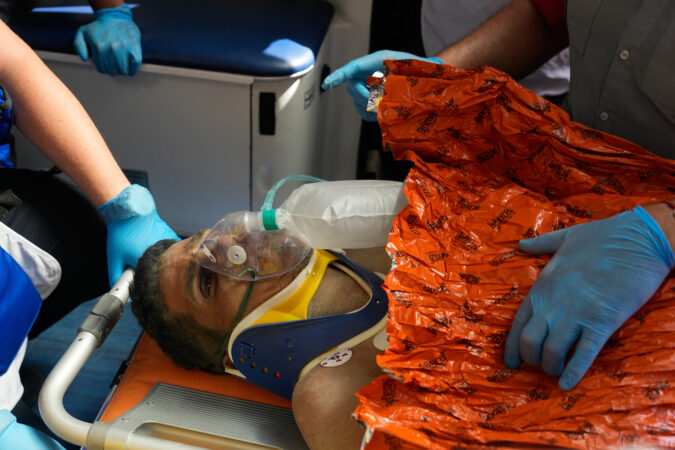
    Hernán Alberto Gil Flores emerged to safety atop a stretcher surrounded by helmet-clad rescue workers after being trapped since June 24 under rubble in the basement of the Galerías Playa Grande shopping center in the coastal town in La Guaira.

    Rescuers, who initially made contact with him over the weekend, worked for more than 100 hours to free him — navigating a highly unstable structure, torrential rain, and persistent aftershocks to tunnel down to the survivor.

    Teams carrying flags from around the world cheered as rescuers carried Gil Flores, wearing an oxygen mask and covered in an orange tarp, through throngs of people to an ambulance.

    One Chilean rescuer carrying his stretcher pumped his fist in joy. A group of men in red Costa Rican Red Cross uniforms embraced and laughed in relief. Others broke out into applause.

    “When we found him, he asked us not to tell his wife that he was alive, just in case he wouldn’t make it,” Costa Rican Red Cross rescuer Minyar Collado told the Associated Press, but she added “We were never going to leave him here.”

    The rescue was considered a small miracle cutting through a week of tragedy. By supplying Gil Flores with food and water while they excavated the concrete, rescue teams were able to keep him alive far longer than the 48- to 72-hour threshold most operations give to find survivors in disasters.

    Gil Flores, who worked as a night-shift security guard at the complex, was inside his small security cabin when the first violent tremor struck. While the surrounding concrete structure collapsed around him, his cabin held ground, shielding him from crushing debris and creating a vital pocket of air.

    A specialized team from the Costa Rican Red Cross first detected signs of life and established contact with him Sunday.

    His wife, Gusbimar González, told the AP that she grappled with despair for days before hearing that rescuers made contact.

    “When I learned he was alive, I saw a ray of light in the darkness,” she said. The couple has two children, ages 8 and 10.

    The operation was coordinated by an urban search and rescue team of Chilean firefighters, who worked around the clock with specialized teams from the United States, Portugal, Mexico, Costa Rica, El Salvador, and Venezuela.

    Acting Venezuelan President Delcy Rodríguez celebrated the rescue on social media at a time that her government has come under fire for what many Venezuelans say has been an inadequate crisis response.

    “We celebrate the greatness of humanity, when it is united for a single purpose: to save another. Thank you to our rescuers and to the support of the international rescuers,” she wrote on a post on X.

    Teams used a telescopic camera to help maintain constant contact with Gil Flores, passing water and liquid nutrients through a narrow shaft to keep him hydrated during the final three days of the rescue.

    María Paz Campos, a veteran firefighter from Chile, talked him through the entire operation and kept him calm during the final excruciating hours Thursday.

    In a video published by Chilean firefighters in the hours before the rescue, Gil Flores is seen drawing, seemingly to pass the time. Campos then gently tells him to look at the camera and to wear protective goggles.

    “I need you to keep the goggles on, for the small particles that are falling, to avoid them getting into your eye,” Campos told the Venezuelan survivor.

    The collapse of the building was triggered by two back-to-back earthquakes on June 24 that registered magnitudes of 7.2 and 7.5, respectively. The shallow, violent tremors damaged or destroyed tens of thousands of buildings across northern Venezuela, killing more than 2,200 people, injuring over 11,000 and leaving La Guaira state as the hardest-hit region in the country.