Category: Associated Press

  • Hegseth censures Kelly after Democrats’ video warning about following unlawful orders

    Hegseth censures Kelly after Democrats’ video warning about following unlawful orders

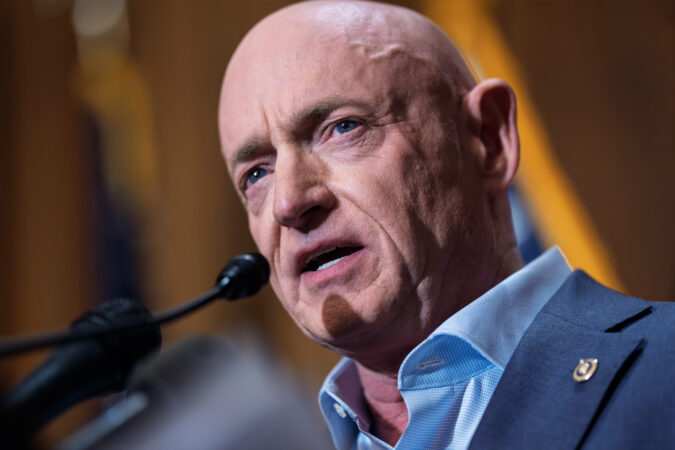
    WASHINGTON — Defense Secretary Pete Hegseth on Monday announced that he is issuing a letter of censure to Democratic Sen. Mark Kelly of Arizona over the lawmaker’s participation in a video that called on troops to resist unlawful orders.

    Hegseth said that the censure was “a necessary process step” to proceedings that could result in a demotion from Kelly’s retired rank of captain in the U.S. Navy. Kelly’s office had no immediate comment.

    The move comes more than a month after Kelly participated in a video with five other Democratic lawmakers in which they called on troops to defy “illegal orders.” President Donald Trump accused the lawmakers of sedition “punishable by DEATH” in a social media post days later. Senate Democratic leader Chuck Schumer of New York called Hegseth’s action against Kelly “a despicable act of political retribution.”

    “Mark Kelly is a hero and a patriot committed to serving the American people,” Schumer said on social media. “Pete Hegseth is a lap dog committed to serving one man – Donald Trump.”

    In November, Kelly and the other lawmakers — all veterans of the armed services and intelligence community — called on U.S. military members to uphold the Constitution and defy “illegal orders.”

    The 90-second video was first posted from Sen. Elissa Slotkin’s X account. In it, the six lawmakers — Slotkin, Kelly and Reps. Jason Crow, Chris Deluzio, Maggie Goodlander and Chrissy Houlahan — speak directly to U.S. service members, whom Slotkin acknowledges are “under enormous stress and pressure right now.”

    The Pentagon announced that it began an investigation of Kelly late in November while citing a federal law that allows retired service members to be recalled to active duty on orders of the defense secretary for possible court martial or other measures.

    While all six lawmakers served in the military or the intelligence community, Hegseth made clear in previous remarks that Kelly was the only one facing investigation because he is the only one of the lawmakers who formally retired from the military and is still under the Pentagon’s jurisdiction.

    Kelly said that the investigation was part of an effort to silence dissent within the military.

    “This is just about sending a message to retired service members, active duty service members, government employees — do not speak out against this president or there will be consequences,” Kelly told reporters in mid-December.

    In his post Monday, Hegseth charged that Kelly’s remarks in the video and afterward violated the Uniform Code of Military Justice provisions against conduct unbecoming an officer and violating good order and discipline.

    Kelly, along with some of the other Democrats in the initial video, have also sent out fundraising messages based off the Republican president’s reaction to their comments, efforts that have gone toward filling their own campaign coffers and further elevating their national-level profiles.

    In recent months, Kelly — whose name has frequently been mentioned as a potential 2028 Democratic presidential contender — has made several trips to South Carolina, traditionally an early primary state that kicked off its party’s nominating calendar in 2024. Appearing with his wife, former Rep. Gabby Giffords, at events calling for stricter gun control measures, Kelly met during those trips with local lawmakers, stakeholders whose early support can be critical as national-level hopefuls attempt to make inroads in the critical state.

    Hegseth said Monday that “Captain Kelly’s status as a sitting United States Senator does not exempt him from accountability, and further violations could result in further action.”

    Todd Huntley, a retired Navy captain and judge advocate general, said that this is a “novel” situation that raises legal questions.

    One issue, according to Huntley, is whether Kelly’s comments fall under the constitutional protections of the speech or debate clause.

    The clause is intended to protect members of Congress from questioning about official legislative acts, and a 1968 Supreme Court decision wrote that the provision’s intent was “to prevent legislative intimidation by and accountability to the other branches of government.”

    Huntley also said that while the type of process Hegseth is using here, known as a retirement grade determination, is fairly routine, “as far as I know, they’ve always been based on conduct during the individual’s active duty service, even if it only came to light after retirement.”

    “So, I don’t know if conduct totally after retirement would fit the requirement for such a determination,” he added.

    According to Hegseth, Kelly now has 30 days to submit a response to the proceedings that will decide if he is demoted. The decision will be made within 45 days, Hegseth’s post added.
  • A man who broke windows at JD Vance’s home in Ohio has been detained, the Secret Service said

    A man who broke windows at JD Vance’s home in Ohio has been detained, the Secret Service said

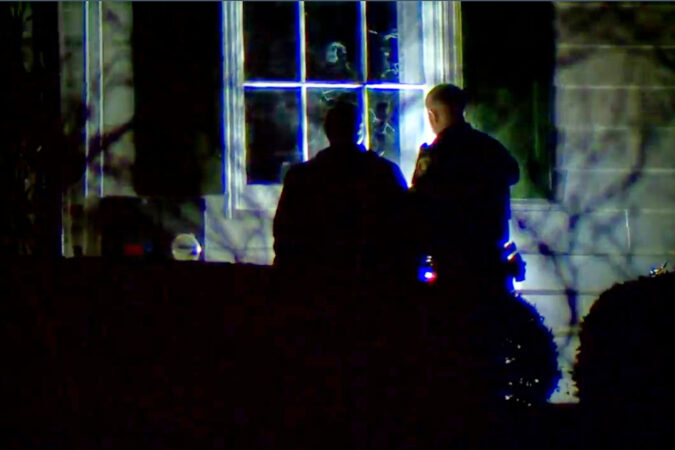
    A man who broke windows at Vice President JD Vance’s Ohio home and caused other property damage was detained early Monday, the U.S. Secret Service said.

    The man was detained shortly after midnight by Secret Service agents assigned to Vance’s home, east of downtown Cincinnati, agency spokesperson Anthony Guglielmi said in a statement emailed to The Associated Press. He has not been named.

    The Secret Service heard a loud noise at the home around midnight and found a person who had broken a window with a hammer and was trying to get into the house, according to two law enforcement officials who were not publicly authorized to discuss the investigation into what happened and spoke on the condition of anonymity. The man had also vandalized a Secret Service vehicle on his way up the home’s driveway, one of the officials said.

    The home, in the Walnut Hills neighborhood, on hills overlooking the city, was unoccupied at the time, and Vance and his family were not in Ohio, Guglielmi said.

    The Secret Service is coordinating with the Cincinnati Police Department and the U.S. attorney’s office as charging decisions are reviewed, he said.

    Vance, a Republican, was a U.S. senator representing Ohio before becoming vice president. His office said his family was already back in Washington and directed questions to the Secret Service.

    Walnut Hills is one of the city’s oldest neighborhoods and is home to historic sites, including the Harriet Beecher Stowe House.

  • Tim Walz, Democrats’ 2024 candidate for vice president, ends his bid for a third term as Minnesota governor

    Tim Walz, Democrats’ 2024 candidate for vice president, ends his bid for a third term as Minnesota governor

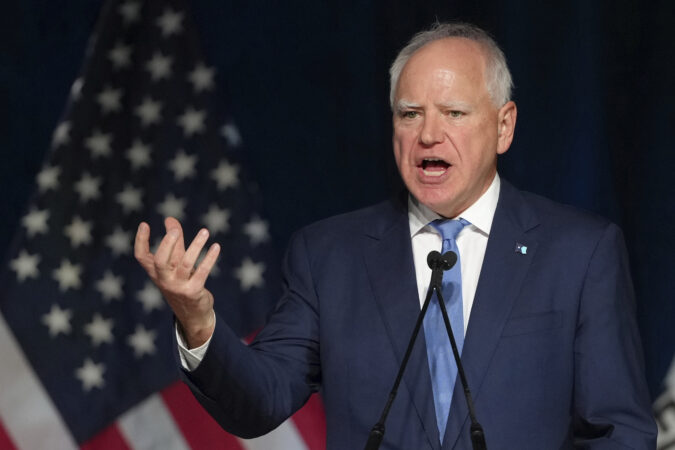
    ST PAUL, Minn. — Minnesota Gov. Tim Walz, Democrats’ 2024 candidate for vice president, is ending his bid for a third term as governor amid President Donald Trump’s relentless focus on a fraud investigation into child care programs in the state.

    Less than four months after announcing his reelection campaign, Walz said Monday that he could no longer devote the energy necessary to win another term, even as he expressed confidence that he could win.

    Walz said in a statement Monday that he “can’t give a political campaign my all” after what he described as an “extraordinarily difficult year for our state.”

    “Donald Trump and his allies – in Washington, in St. Paul, and online – want to make our state a colder, meaner place,” Walz said, referring to the Trump administration withholding funds for the programs. “They want to poison our people against each other by attacking our neighbors. And, ultimately, they want to take away much of what makes Minnesota the best place in America to raise a family.”

    Democratic Sen. Amy Klobuchar of Minnesota is considering running for governor, according to a person close to her. The person, who wasn’t authorized to speak publicly and spoke on the condition of anonymity, said Klobuchar has not made a final decision.

    Around a dozen Republicans are already in the race. They include MyPillow founder and chief executive Mike Lindell, an election denier who is close to Trump. They also include Minnesota House Speaker Lisa Demuth, of Cold Spring; Dr. Scott Jensen, a former state senator from Chaska who was the party’s 2022 candidate; state Rep. Kristin Robbins, of Maple Grove; defense lawyer and former federal prosecutor Chris Madel; former executive Kendall Qualls; and former Minnesota GOP Chair David Hann.

    Walz is a military veteran and union supporter who helped enact an ambitious Democratic agenda for his state, including sweeping protections for abortion rights and generous aid to families.

    Vice President Kamala Harris picked Walz as her running mate after his attack line against Trump and his running mate, then-Ohio Sen. JD Vance — “These guys are just weird” — spread widely.

    Walz had been building up his national profile since his and Harris’ defeat in November. He was a sharp critic of Trump as he toured early caucus and primary states. In May, he called on Democrats in South Carolina to stand up to the Republican president, saying, “Maybe it’s time for us to be a little meaner.”

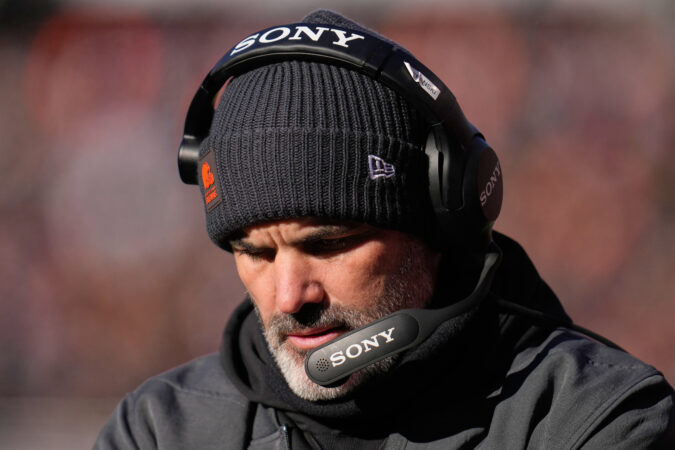
  • Cleveland Browns fire head coach Kevin Stefanski after six seasons

    Cleveland Browns fire head coach Kevin Stefanski after six seasons

    BEREA, Ohio — The Cleveland Browns have fired coach Kevin Stefanski after six seasons.

    Stefanski, a Wayne native who played quarterback at St. Joseph’s Prep and got his start coaching at his alma mater, Penn, is the fourth NFL coach fired this season. He joins Tennessee’s Brian Callahan, the New York Giants’ Brian Daboll and Atlanta’s Raheem Morris.

    The Browns won their final two games to finish 5-12, including a 20-18 victory over the Cincinnati Bengals on Sunday.

    The 43-year-old Stefanski is a two-time AP NFL Coach of the Year. He led Cleveland to playoff appearances in 2020 and 2023. The Browns’ 48-37 victory over Pittsburgh in an AFC wild-card round game was the franchise’s first since 1993.

    Ironically, Stefanski was not on the Browns’ sideline for that game after he tested positive for COVID-19. He watched the game from the basement at his house.

    Stefanski is the sixth coach fired since owners Jimmy and Dee Haslam bought the franchise in 2012. The five coaches hired by the Haslams have a 73-139-1 regular-season record since 2013, the second-worst mark in the NFL.

  • Maduro appears in court, says ‘I was captured’

    Maduro appears in court, says ‘I was captured’

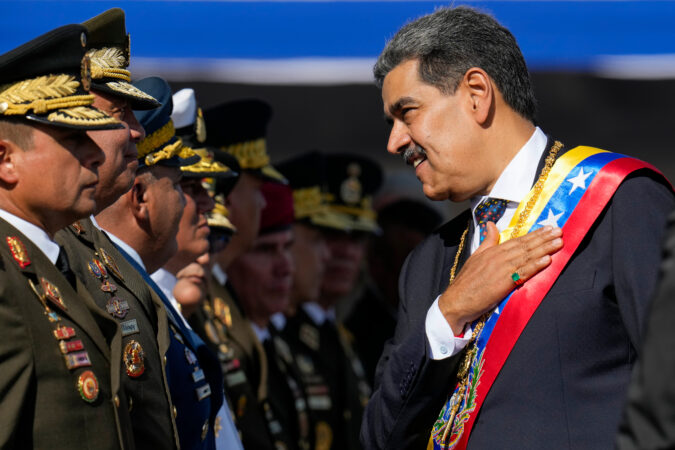
    NEW YORK — Deposed Venezuelan leader Nicolas Maduro declared himself “innocent” and a “decent man” as he pleaded not guilty to federal drug trafficking charges in a U.S. courtroom on Monday.

    “I’m innocent. I am not guilty. I am a decent man, the president of my country,” Maduro told a judge.

    Maduro was making his first appearance in an American courtroom Monday on the narco-terrorism charges the Trump administration used to justify capturing him and bringing him to New York.

    Maduro, wearing a blue jail uniform, and his wife were led into court around noon for a brief, but required, legal proceeding that will likely kick off a prolonged legal fight over whether he can be put on trial in the U.S. Both put on headsets to hear the English-language proceeding as it was translated into Spanish.

    The couple were transported under armed guard early Monday from the Brooklyn jail where they’ve been detained to a Manhattan courthouse.

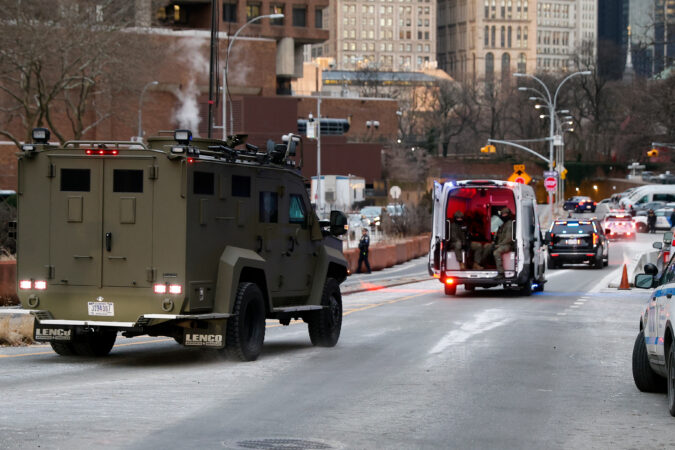
    The trip was swift. A motorcade carrying Maduro left the jail around 7:15 a.m. and made its way to a nearby athletic field, where Maduro slowly made his way to a waiting helicopter. The chopper flew across New York harbor and landed at a Manhattan heliport, where Maduro, limping, was loaded into an armored vehicle.

    A few minutes later, the law enforcement caravan was inside a garage at the courthouse complex, just around the corner from the one where Donald Trump was convicted in 2024 of falsifying business records. Across the street from the courthouse, the police separated a small but growing group of protesters from about a dozen pro-intervention demonstrators, including one man who pulled a Venezuelan flag away from those protesting the U.S. action.

    As a criminal defendant in the U.S. legal system, Maduro will have the same rights as any other person accused of a crime — including the right to a trial by a jury of regular New Yorkers. But he’ll also be nearly — but not quite — unique.

    Maduro’s lawyers are expected to contest the legality of his arrest, arguing that he is immune from prosecution as a sovereign head of state.

    Panamanian strongman Manuel Noriega unsuccessfully tried the same defense after the U.S. captured him in a similar military invasion in 1990. But the U.S. doesn’t recognize Maduro as Venezuela’s legitimate head of state — particularly after a much-disputed 2024 reelection.

    Venezuela’s new interim president, Delcy Rodríguez, has demanded that the U.S. return Maduro, who long denied any involvement in drug trafficking — although late Sunday she also struck a more conciliatory tone in a social media post, inviting collaboration with President Trump and “respectful relations” with the U.S.

    Before his capture, Maduro and his allies claimed U.S. hostility was motivated by lust for Venezuela’s rich oil and mineral resources.

    The U.S. seized Maduro and his wife in a military operation Saturday, capturing them in their home on a military base. Trump said the U.S. would “run” Venezuela temporarily, but Secretary of State Marco Rubio said Sunday that it would not govern the country day to day other than enforcing an existing ” oil quarantine.”

    Trump suggested Sunday that he wants to extend American power farther in the Western Hemisphere.

    Speaking aboard Air Force One, he called Colombia’s president, Gustavo Petro, “a sick man who likes making cocaine and selling it to the United States. And he’s not going to be doing it very long.”

    He called on Venezuela’s Rodriguez to provide “total access” to her country, or else face consequences.

    Trump has suggested that removing Maduro would enable more oil to flow out of Venezuela, but oil prices rose a bit more than 1% in Monday morning trading to roughly $58 a barrel. There are uncertainties about how fast oil production can be ramped up in Venezuela after years of neglect and needed investments, as well as questions about governance and oversight of the sector.

    A 25-page indictment made public Saturday accuses Maduro and others of working with drug cartels to facilitate the shipment of thousands of tons of cocaine into the U.S. They could face life in prison if convicted.

    Maduro has retained Barry J. Pollack, a Washington, D.C.-based lawyer known for securing WikiLeaks founder Julian Assange’s release from prison and winning an acquittal for former Enron accountant Michael Krautz.

    Pollack, a partner at the law firm Harris, St. Laurent & Wechsler, negotiated Assange’s 2024 plea agreement — allowing him to go free immediately after he pleaded guilty to an Espionage Act charge for obtaining and publishing U.S. military secrets.

    Krautz, acquitted of federal fraud charges in 2006 after a hung jury the year before, was one of the only Enron executives whose case ended in a not-guilty verdict. Nearly two dozen other executives were convicted of wrongdoing in connection with the energy trading giant’s collapse.

    Maduro and his wife, Cilia Flores, have been under U.S. sanctions for years, making it illegal for any American to take money from them without first securing a license from the Treasury Department.

    While the indictment against Maduro says Venezuelan officials worked directly with the Tren de Aragua gang, a U.S. intelligence assessment published in April, drawing on input from the intelligence community’s 18 agencies, found no coordination between Tren de Aragua and the Venezuelan government.

    Maduro, his wife, and his son — who remains free — are charged along with Venezuela’s interior and justice minister, a former interior and justice minister, and Hector Rusthenford Guerrero Flores, an alleged Tren de Aragua leader who has been criminally charged in another case and remains at large.

    Among other things, the indictment accuses Maduro and his wife of ordering kidnappings, beatings, and murders of those who owed them drug money or undermined their drug trafficking operation. That included a local drug boss’ killing in Caracas, the indictment said.

    Maduro’s wife is also accused of accepting hundreds of thousands of dollars in bribes in 2007 to arrange a meeting between “a large-scale drug trafficker” and the director of Venezuela’s National Anti-Drug Office, resulting in additional monthly bribes, with some of the money going to Maduro’s wife, according to the indictment.

  • Maduro’s case will revive a legal debate over immunity for foreign leaders tested in Noriega trial

    Maduro’s case will revive a legal debate over immunity for foreign leaders tested in Noriega trial

    MIAMI — When deposed Venezuelan leader Nicolás Maduro makes his first appearance in a New York courtroom Monday to face U.S. drug charges, he will likely follow the path taken by another Latin American strongman toppled by U.S. forces: Panama’s Manuel Noriega.

    Maduro was captured Saturday, 36 years to the day after Noriega was removed by American forces. And as was the case with the Panamanian leader, lawyers for Maduro are expected to contest the legality of his arrest, arguing that he is immune from prosecution as a sovereign head of foreign state, which is a bedrock principle of international and U.S. law.

    It’s an argument that is unlikely to succeed and was largely settled as a matter of law in Noriega’s trial, legal experts said. Although Trump’s ordering of the operation in Venezuela raises constitutional concerns because it wasn’t authorized by Congress, now that Maduro is in the U.S., courts will likely bless his prosecution because, as was the case with Noriega, the U.S. doesn’t recognize him as Venezuela’s legitimate leader.

    “There’s no claim to sovereign immunity if we don’t recognize him as head of state,” said Dick Gregorie, a retired federal prosecutor who indicted Noriega and later went on to investigate corruption inside Maduro’s government. “Several U.S. administrations, both Republican and Democrat, have called his election fraudulent and withheld U.S. recognition. Sadly, for Maduro, it means he’s stuck with it.”

    Noriega died in 2017 after nearly three decades in prison, first in the U.S., then France, and finally Panama. In his first trial, his lawyers argued that his arrest as a result of a U.S. invasion was so “shocking to the conscience” that it rendered the government’s case an illegal violation of his due process rights.

    Justice Department opinion allows ‘forcible abductions’ abroad

    In ordering Noriega’s removal, the White House relied on a 1989 legal opinion by then-Assistant Attorney General Bill Barr, issued six months before the invasion. That opinion said the U.N. Charter’s prohibition on the use of force in international relations does not bar the U.S. from carrying out “forcible abductions” abroad to enforce domestic laws.

    Supreme Court decisions dating to the 1800s also have upheld America’s jurisdiction to prosecute foreigners regardless of whether their presence in the United States was lawfully secured.

    Barr’s opinion is likely to feature in Maduro’s prosecution as well, experts said.

    Drawing parallels to the Noriega case, Barr on Sunday pushed aside criticisms that the U.S. was pursuing a change of government in Venezuela instead of enforcing domestic laws. As attorney general during the first Trump administration, Barr oversaw Maduro’s indictment.

    “Going after them and dismantling them inherently involves regime change,” Barr said in a Fox News Sunday interview. “The object here is not just to get Maduro. We indicted a whole slew of his lieutenants. It’s to clean that place out of this criminal organization.”

    Key differences between Noriega and Maduro

    There are differences between the two cases.

    Noriega never held the title of president during his six-year de facto rule, leaving a string of puppets to fill that role. By contrast, Maduro claims to have won a popular mandate three times. Although the results of his 2024 reelection are disputed, a number of governments — China, Russia, and Egypt among them — recognized his victory.

    “Before you ever get to guilt or innocence, there are serious questions about whether a U.S. court can proceed at all,” said David Oscar Markus, a defense lawyer in Miami who has handled several high-profile criminal cases, including some involving Venezuela. ”Maduro has a much stronger sovereign immunity defense than did Noriega, who was not actually the sitting president of Panama at the time.”

    For U.S. courts, however, the only opinion that matters is that of the State Department, which considers Maduro a fugitive and has for months been offering a $50 million reward for his arrest.

    The first Trump administration closed the U.S. Embassy in Caracas, the capital of Venezuela, and broke diplomatic relations with Maduro’s government in 2019 after he cruised to reelection by outlawing most rival candidates. The administration then recognized the opposition head of the National Assembly as the country’s legitimate leader.

    The Biden administration mostly stuck to that policy, allowing an opposition-appointed board to run Citgo, a subsidiary of Venezuela’s state-owned oil company, even as the U.S. engaged in direct talks with Maduro’s government that were aimed at paving the way for free elections.

    “Courts are so deferential to the executive in matters of foreign policy that I find it difficult for the judiciary to engage in this sort of hairsplitting,” said Clark Neily, a senior vice president for criminal justice at the Cato Institute in Washington.

    U.S. sanctions are a hurdle for Maduro’s defense

    Another challenge that Maduro faces is hiring a lawyer. He and his wife, Cilia Flores, who also was captured, have been under U.S. sanctions for years, making it illegal for any American to take money from them without first securing a license from the Treasury Department.

    The government in Caracas now led by Maduro’s vice president, Delcy Rodríguez, may want to foot the bill, but it is similarly restricted from doing business in the United States.

    The U.S. has indicted other foreign leaders on corruption and drug trafficking charges while in office. Among the most noteworthy is Juan Orlando Hernández, former president of Honduras, who was convicted in 2024 for drug trafficking and weapons charges and sentenced to 45 years in prison.

    Trump pardoned Hernández in November, a move that drew criticism from even some Republicans who viewed it as undercutting the White House’s aggressive counternarcotics strategy centered against Maduro.

    The U.S. had requested Hernández’s extradition from Honduras a few weeks after he left office. After the arrest of Noriega, who had been a CIA asset before becoming a drug-running dictator, the Justice Department implemented a new policy requiring the attorney general to personally sign off on charging of any sitting foreign president, due to its implications for U.S. foreign policy.

    Maduro may have a slightly stronger argument that he is entitled to a more limited form of immunity for official acts he undertook as at least a de facto leader, since that question would not turn on whether he is a head of state recognized by the U.S.

    But even that defense faces significant challenges, said Curtis Bradley, a University of Chicago Law School professor who previously served as a counselor of international law at the State Department.

    The indictment accuses Maduro and five other co-defendants, including Flores and his lawmaker son, of facilitating the shipment of thousands of tons of cocaine into the U.S. by providing law enforcement cover, logistical support, and partnering with “some of the most violent and prolific drug traffickers and narco-terrorists in the world.”

    “The government will argue that running a big narcotrafficking operation … should not count as an official act,” Bradley said.

  • International aid groups grapple with what Israel’s ban will mean for their work in Gaza

    International aid groups grapple with what Israel’s ban will mean for their work in Gaza

    TEL AVIV — Israel’s decision to revoke the licenses of more than three dozen humanitarian organizations last week has aid groups scrambling to grapple with what this means for their operations in Gaza and their ability to help tens of thousands of struggling Palestinians.

    The 37 groups represent some of the most prominent of the more than 100 independent nongovernmental organizations working in Gaza, alongside United Nations agencies. Those banned include Doctors Without Borders, the Norwegian Refugee Council, Oxfam, and Medical Aid for Palestinians.

    The groups do everything from providing tents and water to supporting clinics and medical facilities. The overall impact, however, remains unclear.

    The most immediate impact of the license revocation is that Israel will no longer allow the groups to bring supplies into the Gaza Strip or send international staffers into the territory. Israel says all suspended groups have to halt their operations by March 1.

    Some groups have already been barred from bringing in aid. The Norwegian Refugee Council, for example, said it has not been allowed to bring in supplies in 10 months, leaving it distributing tents and aid brought in by other groups.

    Israel says the banned groups make up only a small part of aid operations in Gaza.

    But aid officials say they fulfill crucial specific functions. In a joint statement Tuesday, the U.N. and leading NGOs said the organizations that are still licensed by Israel “are nowhere near the number required just to meet immediate and basic needs” in Gaza.

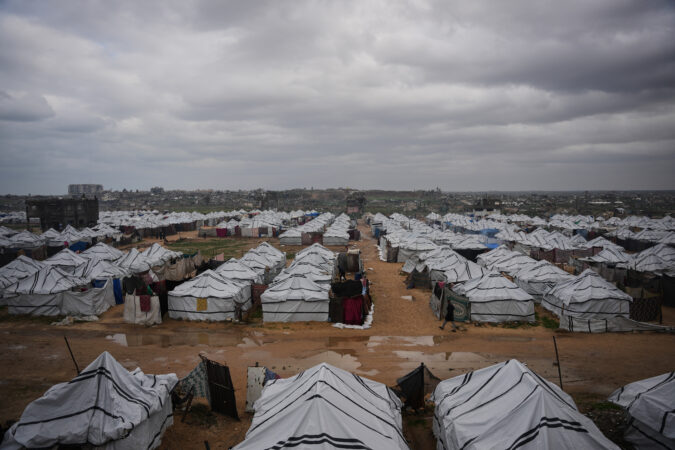
    The ban further strains aid operations even as Gaza’s over 2 million Palestinians still face a humanitarian crisis more than 12 weeks into a ceasefire. The U.N. says that although famine has been staved off, more than a quarter of families still eat only one meal a day and food prices remain out of reach for many; more than 1 million people need better tents as winter storms lash the territory.

    Why were their licenses revoked?

    Earlier this year, Israel introduced strict new registration requirements for aid agencies working in Gaza. Most notably, it required groups to provide the names and personal details of local and international staff and said it would ban groups for a long list of criticisms of Israel.

    The registration process is overseen by Israel’s Ministry for Diaspora Affairs and Combating Antisemitism, led by a far-right member of the ruling Likud party.

    Israel says the rules aim to prevent Hamas and other militants from infiltrating the groups, something it has said was happening throughout the 2-year-old war. The U.N., which leads the massive aid program in Gaza, and independent groups deny the allegations and Israeli claims of major diversion of aid supplies by Hamas.

    Aid organizations say they did not comply, in part, because they feared that handing over staff information could endanger them. More than 500 aid workers have been killed in Gaza during the war, according to the United Nations.

    Israel denies targeting aid workers. But the groups say Israel has been vague about how it would use the data.

    “Demanding staff lists as a condition for access to territory is an outrageous overreach,” Doctors Without Borders, known by its French acronym MSF, said Friday. It said Israeli officials had refused its attempts to find alternatives.

    A December report on MSF issued by an Israeli government team recommended rejection of the group’s license. It pointed primarily to statements by the group criticizing Israel, including referring to its campaign in Gaza as genocide and calling its monthslong ban on food entering the territory earlier this year as “a starvation tactic.” It said the statements violated neutrality and constituted “delegitimization of Israel.”

    The report also repeated claims that an MSF employee killed in by an Israeli airstrike in 2024 was an operative with the Islamic Jihad militant group. That, it said, suggested MSF “maintains connections with a terrorist group.”

    MSF on Friday denied the allegations, saying it would “never knowingly employ anyone involved in military activities.” It said that its statements cited by Israel simply described the destruction its teams witnessed in Gaza.

    “The fault lies with those committing these atrocities, not with those who speak of them,” it said.

    Aid groups have a week from Dec. 31 to appeal the process.

    Medical services could see biggest impact

    Independent NGOs play a major role in propping up Gaza’s health sector, devastated by two years of Israeli bombardment and restrictions on supplies.

    MSF said Israel’s decision would have a catastrophic impact on its work in Gaza, where it provides funding and international staff for six hospitals as well as running two field hospitals and eight primary health centers, clinics, and medical points. It also runs two of Gaza’s five stabilization centers helping children with severe malnutrition.

    Its teams treated 100,000 trauma cases, performed surgeries on 10,000 patients, and handled a third of Gaza’s births, the group says. It has 60 international staffers in the West Bank and Gaza and more than 1,200 local staff — most medical professionals.

    Since the ceasefire began in early October, MSF has brought in about 7% of the 2,239 tons of medical supplies that Israel has allowed into Gaza, according to a U.N. tracking dashboard. That makes it the largest provider of medical supplies after U.N. agencies and the Red Cross, according to the dashboard.

    Medecins du Monde, another group whose license is being halted, runs another four primary health clinics.

    Overburdened Palestinian staff

    Aid groups say the most immediate impact will likely be the inability to send international staff into Gaza.

    Foreign staff provide key technical expertise and emotional support for their Palestinian colleagues.

    “Having international presence in Gaza is a morale booster for our staff who are already feeling isolated,” said Shaina Low, communications adviser for the Norwegian Refugee Council, which is one of the main NGOs providing shelter supplies and fresh water to displaced people.

    NRC has roughly 30 international staff who rotate in and out of Gaza working alongside some 70 Palestinians.

    While any operations by the 37 groups in the West Bank will likely remain open, those with offices in east Jerusalem, which Israel considers its territory, might have to close.

    Halt on supplies

    Many of the 37 groups already had been blocked from bringing supplies into Gaza since March, said Bushra Khalidi, Oxfam’s policy lead for Israel and the occupied Palestinian territories.

    What changes with the formal license revocation is “that these practices are now formalized, giving Israel full impunity to restrict operations and shut out organizations it disagrees with,” she said.

    Some of the groups have turned to buying supplies within Gaza rather than bringing them in, but that is slower and more expensive, she said. Other groups dug into reserve stocks, pared down distribution, and had to work with broken or heavily repaired equipment because they couldn’t bring in new ones.

    Amed Khan, an American humanitarian philanthropist who has been privately donating medicine and emergency nutrition for children to Gaza, said the impact extends beyond the aid groups.

    He relies on NGOs to receive and distribute the supplies, but the fewer groups that Israel approves, the harder it is to find one.

    “It’s death by bureaucracy,” he said.

  • North Korea launches ballistic missiles toward sea ahead of South Korean leader’s visit to China

    North Korea launches ballistic missiles toward sea ahead of South Korean leader’s visit to China

    SEOUL, South Korea — North Korea launched multiple ballistic missiles toward its eastern waters Sunday, its neighbors said, just hours before South Korea’s president left for China for talks expected to cover North Korea’s nuclear program.

    South Korea’s Joint Chiefs of Staff said in a statement it detected several ballistic missile launches from North Korea’s capital region around 7:50 a.m. It said the missiles flew about 560 miles and that South Korea and U.S. authorities were analyzing details of the launches.

    South Korea’s Defense Ministry noted the launches violated U.N. Security Council resolutions that ban any ballistic activities by North Korea. It urged North Korea to cease provocative actions immediately and respond to South Korea’s push to restart talks and restore peace on the Korean Peninsula.

    Japanese Defense Minister Shinjiro Koizumi said that at least two missile launches by North Korea have been confirmed. “They are a serious problem, threatening the peace and security of our nation, the region, and the world,” Koizumi told reporters.

    The U.S. military said in a statement on social media that the missile launches did not “pose an immediate threat to U.S. personnel or territory, or to our allies.”

    “The United States remains committed to the defense of the U.S. homeland and our allies in the region,” the military said.

    North Korea ramps up weapons display

    The launches were the latest weapons demonstration by North Korea in recent weeks. Experts say North Korea is aiming to show off or review its achievements in the defense sector ahead of its upcoming ruling party congress, the first of its kind in five years. Observers are watching the Workers Party congress to see whether North Korea will set a new policy on the U.S. and resume long-stalled talks between the two countries.

    North Korea has been focusing on testing activities to enlarge its nuclear arsenal since its leader Kim Jong Un’s summitry with U.S. President Donald Trump fell apart in 2019. Kim has also boosted his diplomatic credentials by aligning with Russia over its war in Ukraine and tightening relations with China. Observers say Kim would believe his leverage has sharply increased to wrest concessions from Trump if they sit down for talks again.

    North Korea hasn’t announced when it will hold the congress, but South Korea’s spy service said it will likely occur in January or February.

    Launches comes before South Korean leader’s trip

    Sunday’s launches also came hours before South Korean President Lee Jae Myung departed for China for a summit with President Xi Jinping. During the four-day trip, Lee’s office said, he would request China, North Korea’s major ally and biggest trading partner, to take “a constructive role” in efforts to promote peace on the Korean Peninsula.

    South Korea and the U.S. have long asked China to exercise its influence on North Korea to persuade it to return to talks or give up its nuclear program. But there are questions on how much leverage China has on its socialist neighbor. China, together with Russia, has also repeatedly blocked the U.S.‘s and others’ attempts to toughen economic sanctions on North Korea in recent years.

    Later Sunday, South Korea convened an emergency national security council meeting to discuss the North Korean missile launches. The council reported details of the launches and unspecified South Korean steps to Lee, according to the presidential office.

    North Korea condemns U.S. operation in Venezuela

    The launches followed Saturday’s dramatic U.S. military operation that ousted Venezuelan leader Nicolás Maduro from power and brought him to the U.S. to face narco-terrorism conspiracy charges. It represented America’s most assertive action to achieve regime change in a country since the nation’s 2003 invasion of Iraq.

    North Korea’s Foreign Ministry on Sunday slammed the U.S. operation, saying it again shows “the rogue and brutal nature of the U.S.” A ministry statement said it denounces the U.S. act as “the most serious form of encroachment of sovereignty.”

    “Kim Jong Un may feel vindicated about his efforts to build a nuclear deterrent, as he likely did after Trump’s strikes on Iran,” said Leif-Eric Easley, professor of international studies at Ewha Womans University in Seoul. “However, leaders of hostile regimes will probably live with greater paranoia after seeing how quickly Maduro was extracted from his country to stand trial in the United States.”

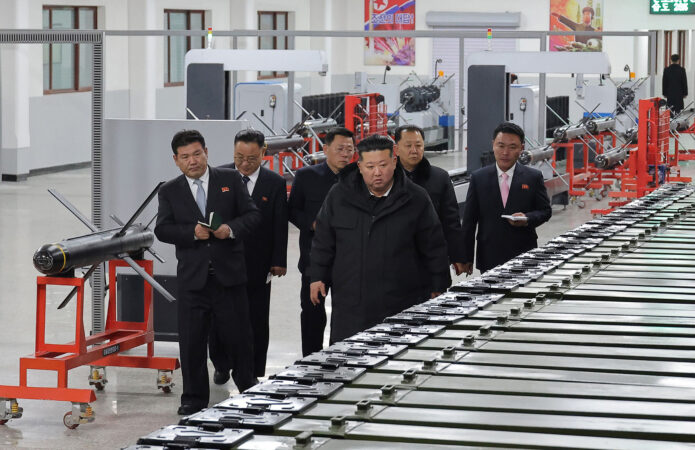
    The official Korean Central News Agency said Sunday Kim visited a weapons factory on Saturday to review multipurpose precision guided weapons produced there. KCNA cited Kim as ordering officials to expand the current production capacity by about 2.5 times.

    Last Sunday, North Korea test-fired what it called long-range strategic cruise missiles. On Dec. 25, North Korea released photos showing apparent progress in the construction of its first nuclear-powered submarine.

  • Venezuelans remain shell-shocked a day after U.S. captured Maduro

    Venezuelans remain shell-shocked a day after U.S. captured Maduro

    CARACAS, Venezuela — Venezuelans on Sunday remained shell-shocked a day after President Nicolás Maduro was deposed and captured in a U.S. military operation, with an uncertain future ahead in the South American nation.

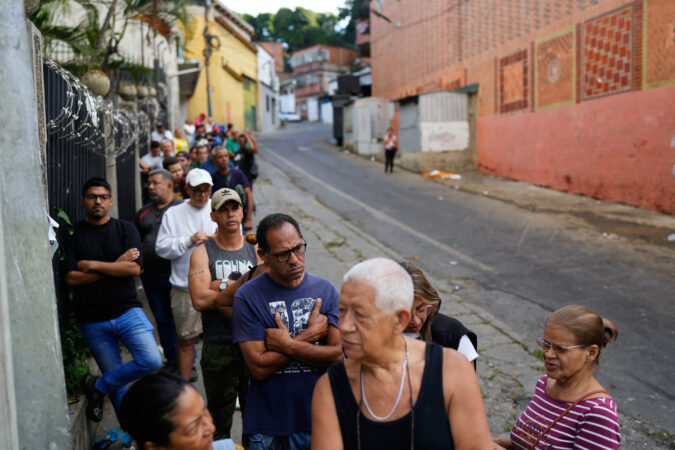
    A tense calm settled over the capital, Caracas, which was unusually quiet. Many stores, gas stations, and churches remained closed and people patiently lined up outside others, staring at their phones or into the distance.

    “People are still shaken,” said 77-year-old David Leal, who arrived to work as a parking attendant but realized he likely would not have customers. He pointed to the deserted street.

    While Maduro was in custody in New York, the officials who had surrounded him remained in power and demanded his release. Venezuela’s presidential palace was guarded by armed civilians and members of the military.

    U.S. President Donald Trump on Saturday asserted that his administration would “run” Venezuela with the help of Delcy Rodríguez, Maduro’s vice president and now the interim president after a high court’s order.

    But Secretary of State Marco Rubio on Sunday appeared to back off Trump’s assertion. In interviews with CBS and ABC, he insisted instead that Washington will use control of Venezuela’s oil industry to force policy changes. He said the government currently in place was illegitimate but a step toward where the U.S. wanted Venezuela to be.

    “We want to see Venezuela transition to be a place completely different than what it looks like today. But obviously, we don’t have the expectation that’s going to happen in the next 15 hours,” Rubio said. “There has to be a little realism here.”

    While Venezuelans in the U.S. and Latin America broke out in celebration or protest, there were no signs of celebration within the country. A number of government supporters rallied over the weekend, some burning U.S. flags and holding signs reading “gringo go home”.

    In a low-income neighborhood in eastern Caracas, construction worker Daniel Medalla sat on the steps outside a Catholic church and told a few parishioners that there would be no morning Mass.

    Medalla said he believed the streets remained mostly empty because people fear government repression if they dare celebrate.

    “We were longing for it,” Medalla, 66, said of Maduro’s exit.

    There are fresh memories of a government crackdown during 2024’s fraught elections, which Maduro was widely accused of stealing. Street protests left 28 people dead, 220 injured and at least 2,000 detained, according to official figures.

    In the coastal state of La Guaira, families with houses damaged in blasts during the overnight operation that captured Maduro and his wife were cleaning up debris.

    Wilman González, who was left with a black eye from a blast, picked through rubble on his floors, surrounded by broken furniture. One part of his apartment building was almost entirely blown off, leaving walls gaping.

    A number of people were killed by the U.S. strikes, though Venezuelan officials did not confirm how many.

    Among those killed was González’s aunt.

    “This is it, what we are left with: ruins,” he said.

    González spoke with anger at the wreckage but also at the compounding economic and political crises that Venezuela has endured for decades.

    “We are civilians, we are not with the government or anyone else,” he said.

  • Gunmen kill at least 30 villagers and abduct others during raid in northern Nigeria

    Gunmen kill at least 30 villagers and abduct others during raid in northern Nigeria

    MINNA, Nigeria — At least 30 villagers have been killed and several others are missing after gunmen raided a village in northern Nigeria’s Niger state, police said Sunday, the latest in a cycle of deadly violence in the conflict-hit region.

    The gunmen stormed the Kasuwan-Daji village in the Borgu local government area on Saturday evening and opened fire on residents. They also razed the local market and several houses, state police spokesperson Wasiu Abiodun said in a statement.

    At least two residents put the death toll at 37 and said it could be much higher as some people remained missing as of Sunday. Locals also said the security forces are yet to arrive in the area, contradicting a police claim that they have deployed officers to search for those kidnapped.

    Stephen Kabirat, a spokesperson for the Catholic Church of Kontagora Diocese where the attack happened, told local media that the gunmen killed more than 40 people and abducted several others, including children.

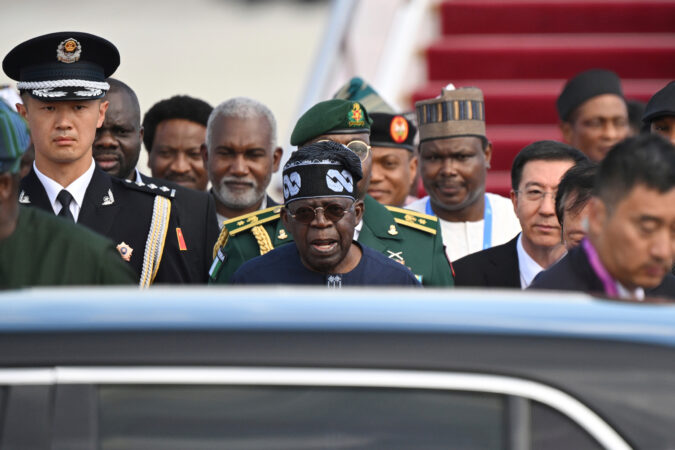
    Nigeria’s President Bola Tinubu condemned the attack and said he has directed security officials to hunt down the gunmen and rescue the hostages.

    “These terrorists have tested the resolve of our country and its people,” Tinubu said in a statement. “They must face the full consequences of their criminal actions. No matter who they are or what their intent is, they must be hunted down. In addition, those who aid, abet, or enable them will also be brought to justice.”

    The gunmen had been lurking around nearby communities for about a week before the attack, according to one resident who asked not to be named for fear of his safety. Now survivors are too afraid to go recover the bodies.

    “The bodies are there (in Kasuwan-Daji village). If we don’t see any security, how can we go there?” the resident said, adding that the attack lasted for up to three hours.

    Such attacks are common in Nigeria, Africa’s most populous country, where dozens of rogue gangs seeking control often target remote communities with limited security and government presence.

    The attack on Kasuwan-Daji village happened near the Papiri community, where more than 300 schoolchildren and their teachers were kidnapped from a Catholic school in November.

    The attackers who raided Kasuwan-Daji arrived from the National Park Forest along Kabe district, according to the police, pointing to a usual trend where abandoned expansive forest reserves act as hideouts for armed gangs.