Category: Associated Press

  • From bus driver to president: Venezuela’s Maduro never escaped his predecessor’s shadow

    From bus driver to president: Venezuela’s Maduro never escaped his predecessor’s shadow

    CARACAS, Venezuela — Nicolás Maduro, who rose from unionized bus driver to Venezuelan president and oversaw his country’s democratic undoing and economic collapse, was captured Saturday during an attack by U.S. forces on his capital.

    U.S. President Donald Trump, in an early morning social media post, announced Maduro’s capture. Venezuela’s vice president, Delcy Rodríguez, later announced that the whereabouts of Maduro and his wife, Cilia Flores, remained unknown. Trump’s attorney general, Pam Bondi, said Maduro and Flores, would face charges after an indictment in New York.

    Maduro’s fall was the culmination of months of stepped-up U.S. pressure on various fronts.

    He had spent the last months of his presidency fueling speculation over the intentions of the U.S. government to attack and invade Venezuela with the goal of ending the self-proclaimed socialist revolution that his late mentor and predecessor, Hugo Chávez, ushered in 1999. Maduro, like Chávez, cast the United States as Venezuela’s biggest threat, railing against Democratic and Republic administrations for any efforts to restore democratic norms.

    Maduro’s political career began 40 years ago. In 1986, he traveled to Cuba to receive a year of ideological instruction, his only formal education after high school. Upon his return, he worked as a bus driver for the Caracas subway system, where he quickly became a union leader. Venezuela’s intelligence agencies in the 1990s identified him as a leftist radical with close ties to the Cuban government.

    Maduro eventually left his driver job and joined the political movement that Chávez organized after receiving a presidential pardon in 1994 for leading a failed and bloody military coup years earlier. After Chávez took office, the former youth baseball player rose through the ranks of the ruling party, spending his first six years as a lawmaker before becoming president of the National Assembly. He then served six years as foreign minister and a couple months as vice president.

    Appointed the political heir to Chávez

    Chávez used his last address to the nation before his death in 2013 to anoint Maduro as his successor, asking his supporters to vote for the then-foreign affairs minister should he die. The choice stunned supporters and detractors alike. But Chávez’s enormous electoral capital delivered Maduro a razor-thin victory that year, giving him his first six-year term, though he would never enjoy the devotion that voters professed for Chávez.

    Maduro married Flores, his partner of nearly two decades, in July 2013, shortly after he became president. He called her the “first combatant,” instead of first lady, and considered her a crucial adviser.

    Maduro’s entire presidency was marked by a complex social, political and economic crisis that pushed millions into poverty, drove more than 7.7 million Venezuelans to migrate and put thousands of real or perceived government opponents in prison, where many were tortured, some at his direction. Maduro complemented the repressive apparatus by purging institutions of anyone who dared dissent.

    Venezuela’s crisis took hold during Maduro’s first year in office. The political opposition, including the now-Nobel Peace Prize winner María Corina Machado, called for street protests in Caracas and other cities. The demonstrations evidenced Maduro’s iron fist as security forces pushed back protests, which ended with 43 deaths and dozens of arrests.

    Maduro’s United Socialist Party of Venezuela would go on to lose control of the National Assembly for the first time in 16 years in the 2015 election. Maduro moved to neutralize the opposition-controlled legislature by establishing a pro-government Constituent Assembly in 2017, leading to months of protests violently suppressed by security forces and the military.

    More than 100 people were killed and thousands were injured in the demonstrations. Hundreds were arrested, causing the International Criminal Court to open an investigation against Maduro and members of his government for crimes against humanity. The investigation was still ongoing in 2025.

    In 2018, Maduro survived an assassination attempt when drones rigged with explosives detonated near him as he delivered a speech during a nationally televised military parade.

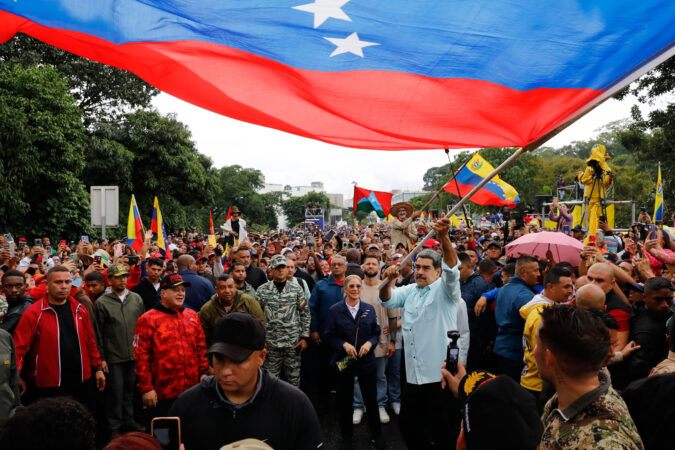
    President Nicolas Maduro acknowledges supporters alongside first lady Cilia Flores during his closing election campaign rally in Caracas, Venezuela, on July 25, 2024.

    Bedeviled by economic problems

    Maduro was unable to stop the economic free fall. Inflation and severe shortages of food and medicines affected Venezuelans nationwide. Entire families starved and began migrating on foot to neighboring countries. Those who remained lined up for hours to buy rice, beans and other basics. Some fought on the streets over flour.

    Ruling party loyalists moved the December 2018 presidential election to May and blocked opposition parties from the ballot. Some opposition politicians were imprisoned; others fled into exile. Maduro ran virtually unopposed and was declared winner, but dozens of countries did not recognize him.

    Months after the election, he drew the fury after social media videos showed him feasting on a steak prepared by a celebrity chef at a restaurant in Turkey while millions in his country were going hungry.

    Under Maduro’s watch, Venezuela’s economy shrank 71% between 2012 and 2020, while inflation topped 130,000%. Its oil production, the beating heart of the country, dropped to less than 400,000 barrels a day, a figure once unthinkable.

    The first Trump administration imposed economic sanctions against Maduro, his allies, and state-owned companies to try to force a government change. The measures included freezing all Venezuelan government assets in the U.S. and prohibiting American citizens and international partners from doing business with Venezuelan government entities, including the state-owned oil company.

    Out of options, Maduro began implementing a series of economic measures in 2021 that eventually ended Venezuela’s hyperinflation cycle. He paired the economic changes with concessions to the U.S.-backed political opposition with which it restarted negotiations for what many had hoped would be a free and democratic presidential election in 2024.

    Maduro used the negotiations to gain concessions from the U.S. government, including the pardon and prison release of one of his closest allies and the sanctions license that allowed oil giant Chevron to restart pumping and exporting Venezuelan oil. The license became his government’s financial lifeline.

    Losing support in many places

    Negotiations led by Norwegian diplomats did not solve key political differences between the ruling party and the opposition.

    In 2023, the government banned Machado, Maduro’s strongest opponent, from running for office. In early 2024, it intensified its repressive efforts, detaining opposition leaders and human rights defenders. The government also forced key members of Machado’s campaign to seek asylum at a diplomatic compound in Caracas, where they remained for more than a year to avoid arrest.

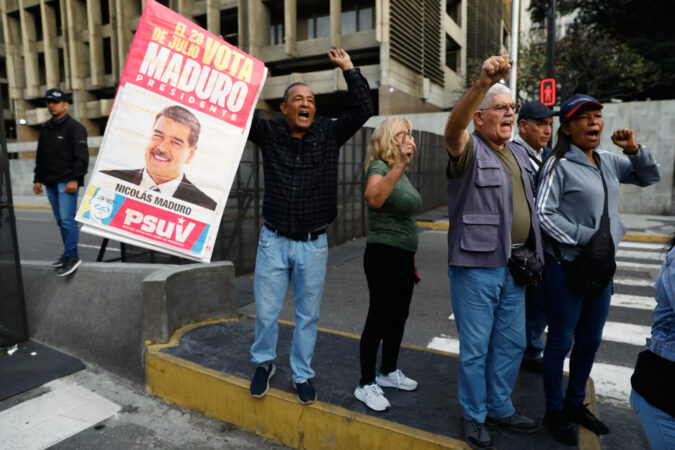
    Hours after polls closed in the 2024 election, the National Electoral Council declared Maduro the winner. But unlike previous elections, it did not provide detailed vote counts. The opposition, however, collected and published tally sheets from more than 80% of electronic voting machines used in the election. The records showed Edmundo González defeated Maduro by a more than 2-to-1 margin.

    Protests erupted. Some demonstrators toppled statues of Chávez. The government again responded with full force and detained more than 2,000 people World leaders rejected the official results, but the National Assembly sworn in Maduro for a third term in January 2025.

    Trump’s return to the White House that same month proved to be a sobering moment for Maduro. Trump quickly pushed Maduro to accept regular deportation flights for the first time in years. By the summer, Trump had built up a military force in the Caribbean that put Venezuela’s government on high alert and started taking steps to address what it called narco-terrorism.

    For Maduro, that was the beginning of the end.
  • A timeline of the US military’s buildup and strikes against Venezuela leading to Maduro’s capture

    A timeline of the US military’s buildup and strikes against Venezuela leading to Maduro’s capture

    WASHINGTON — President Donald Trump had long threatened that he could order military strikes on targets on Venezuelan territory after months of attacks on boats accused of carrying drugs from the South American country. President Nicolás Maduro of Venezuela said the U.S. military operations were a thinly veiled effort to oust him from power.

    On Saturday, the U.S. conducted a “large-scale strike” against Venezuela and said that Maduro and his wife, Cilia Flores, had been captured and flown out of the country. Trump announced the operation on social media hours after the attack. The Venezuelan government called it an “imperialist attack” and urged citizens to take to the streets.

    Attorney General Pam Bondi said Maduro and Flores, would face charges after an indictment in New York.

    Before the escalation, there had been 35 known strikes against alleged drug smuggling boats in South American waters since early September that killed at least 115 people, according to announcements from the Republican administration.

    The U.S. had sent a fleet of warships to the region, the largest buildup of forces in generations.

    The White House said Washington was in “armed conflict” with drug cartels to halt the flow of narcotics into the United States, while U.S. officials alleged that Maduro supported the international drug trade.

    Here is a timeline of the U.S. military actions and related developments:

    Jan. 20, 2025

    Trump signs an executive order that paved the way for criminal organizations and drug cartels to be named “foreign terrorist organizations.” They included Tren de Aragua, a Venezuelan street gang.

    U.S. intelligence agencies have disputed Trump’s central claim that Maduro’s administration was working with Tren de Aragua and orchestrating drug trafficking and illegal immigration into the U.S.

    Feb. 20

    The Trump administration formally designated eight Latin American crime organizations as foreign terrorist organizations.

    The label is normally reserved for groups such as a-Qaida or the Islamic State that use violence for political ends, and not for profit-focused crime rings.

    Aug. 19

    The U.S. military deployed three guided-missile destroyers to the waters off Venezuela.

    The naval force in the Caribbean grew within weeks to include three amphibious assault ships and other vessels, carrying about 6,000 sailors and Marines and a variety of aircraft.

    The U.S. sent F-35 fighter jets to Puerto Rico in September, while a Navy submarine carrying cruise missiles operated off South America.

    Sept. 2

    The U.S. carried out its first strike against what Trump said was a drug-carrying vessel that departed from Venezuela and was operated by Tren de Aragua.

    Trump said all 11 people on the boat were killed. He posted a short video clip of a small vessel appearing to explode in flames.

    Sept. 10

    In a letter to the White House, Democratic senators said the administration had provided “no legitimate legal justification” for the strike.

    Sen. Jack Reed of Rhode Island, the top Democrat on the Senate Armed Services Committee, said the U.S. military was not “empowered to hunt down suspected criminals and kill them without trial.”

    Sept. 15

    The U.S. military carried out its second strike against an alleged drug boat, killing three people.

    Asked what proof the U.S. had that the vessel was carrying drugs, Trump told reporters that big bags of cocaine and fentanyl were spattered all over the ocean. Images of what Trump described were not released by the military or the White House.

    Sept. 19

    Trump said the U.S. military carried out its third fatal strike against an alleged drug-smuggling vessel. Several senators and human rights groups continued to question the legality of the strikes, describing them as a potential overreach of executive authority.

    Oct. 2

    Trump declared drug cartels to be unlawful combatants and said the U.S. was now in an “armed conflict” with them, according to an administration memo obtained by The Associated Press.

    The memo appeared to represent an extraordinary assertion of presidential war powers and drew criticism from some lawmakers, including Republican Sen. Rand Paul of Kentucky.

    Oct. 3

    Defense Secretary Pete Hegseth said he ordered a fourth strike on a small boat he accused of carrying drugs.

    Oct. 8

    Senate Republicans voted down legislation that would have required the president to seek authorization from Congress before further military strikes.

    Oct. 14

    Trump announced the fifth strike against a small boat accused of carrying drugs, saying it killed six people.

    Oct. 15

    Trump confirmed he has authorized the CIA to conduct covert operations inside Venezuela and said he was weighing carrying out land operations in the country.

    He declined to say whether the CIA has authority to take action against Maduro.

    Oct. 16

    The Navy admiral who oversaw military operations in the region said he will retire in December.

    Adm. Alvin Holsey became leader of U.S. Southern Command only the previous November, overseeing an area that encompasses the Caribbean and waters off South America. Such postings typically last three years to four years.

    Oct. 16

    Trump said the U.S. struck a sixth suspected drug-carrying vessel in the Caribbean, killing two people and leaving two survivors who were on the semisubmersible craft.

    The president later said the survivors would be sent to Ecuador and Colombia, their home countries, “for detention and prosecution.” Repatriation avoided questions about what their legal status would have been in the U.S. justice system.

    Oct. 17

    The U.S. military attacked a seventh vessel that Hegseth said was carrying “substantial amounts of narcotics” and associated with a Colombian rebel group, the National Liberation Army, or ELN. Three people are killed.

    Oct. 20

    Washington Rep. Adam Smith, top Democrat on the House Armed Services Committee, called for a hearing on the boat strikes.

    “Never before in my over 20 years on the committee can I recall seeing a combatant commander leave their post this early and amid such turmoil,” Smith said in a statement of Holsey’s impending departure. “I have also never seen such a staggering lack of transparency on behalf of an Administration and the Department to meaningfully inform Congress on the use of lethal military force.”

    Oct. 21

    Hegseth said the U.S. military launched its eighth strike against an alleged drug-carrying vessel, killing two people in the eastern Pacific.

    The attack was an expansion of the military’s targeting area to the waters off South America where much of the cocaine from the world’s largest producers is smuggled.

    Oct. 22

    Hegseth announced the ninth strike, another in the eastern Pacific, saying three men are killed.

    Oct. 24

    Hegseth ordered the U.S. military’s most advanced aircraft carrier, the USS Gerald R. Ford, to the region in a significant escalation of military firepower.

    Oct. 24

    Hegseth said the military conducted the 10th strike on a suspected drug-running boat, leaving six people dead.

    Oct. 27

    Hegseth said three more strikes were carried out in the eastern Pacific, killing 14 people and leaving one survivor.

    Hegseth said Mexican authorities “assumed responsibility for coordinating the rescue” of the sole survivor, who was presumed dead after Mexico suspended its search.

    Oct. 29

    Hegseth said the U.S. military carried out another strike on a boat he said was carrying drugs in the eastern Pacific, killing all four people aboard in the 14th attack.

    Oct. 29

    Virginia Sen. Mark Warner, the ranking Democrat on the Senate Intelligence Committee, said the administration briefed Republicans, but not Democrats, on the boat strikes.

    The Senate at the time was facing a potential vote on a war powers resolution that would have prohibited strikes in or near Venezuela without congressional approval.

    Oct. 31

    U.N. human rights chief Volker Türk called for an investigation into the strikes, in what appeared to be the first such condemnation of its kind from a U.N. organization.

    Ravina Shamdasani, a spokeswoman for Türk’s office, relayed his message at a briefing: “The U.S. must halt such attacks and take all measures necessary to prevent the extrajudicial killing of people aboard these boats.”

    Nov. 1

    Hegseth announced the 15th known strike, saying three people were killed.

    Nov. 4

    In the 16th known strike, Hegseth posted on social media that two people were killed aboard a vessel in the eastern Pacific.

    Nov. 6

    Hegseth announced the 17th known strike, which killed three people.

    Senate Republicans voted to reject legislation that would have limited Trump’s ability to order an attack on Venezuelan soil without congressional authorization. Lawmakers from both parties had demanded more information on the strikes, but Republicans appeared more willing to give Trump leeway to continue his buildup of naval forces.

    Nov. 9

    The U.S. military struck two vessels in the eastern Pacific, killing six people, according to an announcement from Hegseth the following day.

    Nov. 10

    The 20th known strike on a boat accused of transporting drugs killed four people in the Caribbean, according to a social media post from the U.S. military’s Southern Command.

    Nov. 11

    Venezuela’s government launched what it said was a “massive” mobilization of troops and volunteers for two days of exercises prompted by the U.S. military buildup.

    Defense Minister Vladimir Padrino López asserted that Venezuela’s military was “stronger than ever in its unity, morale and equipment.”

    Nov. 15

    Three people were killed after the U.S. military conducted its 21st strike on an alleged drug-smuggling boat in the eastern Pacific, according to a post from Southern Command a day later.

    Nov. 16

    The Ford arrived in the Caribbean, a major moment in the Trump administration’s show of force.

    The aircraft carrier’s arrival brought the total number of troops in the region to around 12,000 on nearly a dozen Navy ships in what Hegseth said was “Operation Southern Spear.”

    Nov. 16

    Trump said the U.S. ” may be having some discussions ” with Maduro and “Venezuela would like to talk,” without offering details.

    “I’ll talk to anybody,” Trump said. “We’ll see what happens.”

    Dec. 4

    Adm. Frank “Mitch” Bradley appeared for closed-door classified briefings at the Capitol as lawmakers began investigating the strikes. The investigation started after reports that Bradley ordered a follow-on attack that killed the survivors of the first strike on Sept. 2 to comply with Hegseth’s demands.

    Sen. Tom Cotton, R-Ark., later told reporters that “Bradley was very clear that he was given no such order, to give no quarter or to kill them all.”

    Democrats said they found the video of the entire attack disturbing.

    Smith said the survivors were “basically two shirtless people clinging to the bow of a capsized and inoperable boat, drifting in the water — until the missiles come and kill them.”

    Dec. 4

    Four people were killed in the 22nd strike on an alleged drug-smuggling boat in the eastern Pacific, according to a post from Southern Command.

    Dec. 10

    The U.S. seized an oil tanker off the coast of Venezuela after the ship left that country with about 2 million barrels of heavy crude.

    Attorney General Pam Bondi said the tanker was involved in “an illicit oil shipping network supporting foreign terrorist organizations.” Venezuela’s government said the seizure was “a blatant theft and an act of international piracy.”

    Dec. 15

    The U.S. military struck three alleged drug-smuggling boats, killing eight people, in the eastern Pacific Ocean, Southern Command announced.

    Dec. 16

    Hegseth said the Pentagon will not publicly release unedited video of the Sept. 2 strike that killed two survivors, even as questions mounted in Congress about the attack and the overall campaign near Venezuela.

    Dec. 16

    Trump said he was ordering a blockade of all “sanctioned oil tankers” going into and out of Venezuela, a move that seemed designed to put a tighter chokehold on the South American country’s oil-dependent economy.

    Trump alleged that Venezuela was using oil to fund drug trafficking, terrorism and other crimes. He pledged to continue the military buildup until Venezuela returned to the U.S. oil, land and assets, though it was unclear why Trump felt the U.S. had a claim.

    Dec. 17

    The U.S. military said it attacked a boat accused of smuggling drugs in the eastern Pacific Ocean, killing four people.

    House Republicans rejected a pair of Democratic-backed resolutions that would have put a check on Trump’s power to use military force against drug cartels and Venezuela. They were the first votes in the House after Senate Republicans previously voted down similar war powers resolutions.

    Dec. 18

    The U.S. military said it conducted two more strikes against boats that were allegedly smuggling drugs in the eastern Pacific, killing five people.

    Dec. 20

    Homeland Security Secretary Kristi Noem said the U.S. Coast Guard, with help from the Defense Department, stopped a second oil tanker off the coast of Venezuela.

    Dec. 22

    Trump confirmed that the U.S. Coast Guard was chasing another oil tanker that the administration described as part of the “dark fleet.”

    The U.S. military said it attacked a boat accused of smuggling drugs in the eastern Pacific Ocean, killing four people.

    Dec. 29

    Trump told reporters that the U.S. struck a facility where boats accused of carrying drugs “load up.” He declined to say whether the U.S. military or the CIA carried out the strike on the dock or where it occurred. He did not confirm it happened in Venezuela.

    The U.S. military said it attacked a boat accused of smuggling drugs in the eastern Pacific Ocean, killing two people.

    Dec. 30

    The CIA was behind the drone strike at a docking area believed to have been used by Venezuelan drug cartels, according to two people familiar with details of the classified operation who requested anonymity to discuss it.

    It was the first known direct operation on Venezuelan soil since the U.S. began strikes in September. Venezuelan officials have not acknowledged the strike.

    Dec. 30

    The U.S. military struck three more boats that were allegedly smuggling drugs, killing three people in the first boat while people from the other two boats jumped overboard and may have survived, Southern Command announced the following day.

    Dec. 31

    The U.S. imposed sanctions on four companies operating in Venezuela’s oil sector and designated four additional oil tankers as blocked property and part of the larger shadow fleet that was evading U.S. sanctions on Venezuela.

    Dec. 31

    The U.S. military said it attacked two more boats, killing five people who were allegedly smuggling drugs along known trafficking routes.

    Jan. 1, 2026

    Maduro, in an interview on state television that aired on New Year’s Day, said Venezuela was open to negotiating an agreement with the United States to combat drug trafficking. He declined to comment on the CIA-led strike and reiterated that the U.S. wanted to force a government change in Venezuela and gain access to its vast oil reserves.

    Jan. 3

    The U.S. conducted a “large-scale strike” across Caracas, the capital of Venezuela, captured Maduro and Flores and flew them out of the country. Maduro and Flores would face charges after an indictment in New York, according to Attorney General Pam Bondi.

    Maduro was indicted in 2020 on “narco-terrorism” conspiracy charges, but it was not previously known that Flores had been.

    ___

    Garcia Cano reported from Caracas, Venezuela.

  • Tesla loses title of world’s biggest electric vehicle maker as sales fall for second year in a row

    Tesla loses title of world’s biggest electric vehicle maker as sales fall for second year in a row

    NEW YORK — Tesla lost its crown as the world’s best-selling electric vehicle maker on Friday as a customer revolt over Elon Musk’s right-wing politics, expiring U.S. tax breaks for buyers, and stiff overseas competition pushed sales down for a second year in a row.

    Tesla said that it delivered 1.64 million vehicles in 2025, down 9% from a year earlier.

    Chinese rival BYD, which sold 2.26 million vehicles last year, is now the biggest EV maker.

    It’s a stunning reversal for a car company whose rise once seemed unstoppable as it overtook traditional automakers with far more resources and helped make Musk the world’s richest man.

    For the fourth quarter, sales totaled 418,227, falling short of even the much reduced 440,000 target that analysts recently polled by FactSet had expected. Sales were hit hard by the expiration of a $7,500 tax credit for electric vehicle purchases that was phased out by the Trump administration at the end of September.

    Tesla stock closed down nearly 3% on Friday.

    Even with multiple issues buffeting the company, investors are betting that Tesla CEO Musk can deliver on his ambitions to make Tesla a leader in robotaxi services and get consumers to embrace humanoid robots that can perform basic tasks in homes and offices. Reflecting that optimism, the stock finished 2025 with a gain of approximately 11%.

    The latest quarter was the first with sales of stripped-down versions of the Model Y and Model 3 that Musk unveiled in early October as part of an effort to revive sales. The new Model Y costs just under $40,000 while customers can buy the cheaper Model 3 for under $37,000. Those versions are expected to help Tesla compete with Chinese models in Europe and Asia.

    For fourth-quarter earnings coming out in late January, analysts are expecting the company to post a 3% drop in sales and a nearly 40% drop in earnings per share, according to FactSet. Analysts expect the downward trend in sales and profits to eventually reverse itself as 2026 rolls along.

    Investors have largely shrugged off the falling numbers, choosing to focus on Musk’s pivot to different parts of business. He has been saying the future of the company lies with its driverless robotaxis service, its energy storage business, and building robots for the home and factory — and much less with car sales.

    Tesla started rolling out its robotaxi service in Austin earlier this year, first with safety monitors in the cars to take over in case of trouble, then testing without them. The company hopes to roll out the service in several cities this year.

    To do that successfully, it needs to take on rival Waymo, which has been operating autonomous taxis for years and has far more customers. It also will also have to contend with regulatory challenges. The company is under several federal safety investigations and other probes. In California, Tesla is at risk of temporarily losing its license to sell cars in the state after a judge there ruled it had misled customers about their safety.

    “Regulatory is going to be a big issue,” said Wedbush Securities analyst Dan Ives, a well-known bull on the stock. “We’re dealing with people’s lives.”

    Still, Ives said he expects Tesla’s autonomous offerings will soon overcome any setbacks.

    Musk has said he hopes software updates to his cars will enable hundreds of thousands of Tesla vehicles to operate autonomously with zero human intervention by the end of this year. The company is also planning to begin production of its AI-powered Cybercab with no steering wheel or pedals in 2026.

    To keep Musk focused on the company, Tesla’s directors awarded Musk a potentially enormous new pay package that shareholders backed at the annual meeting in November.

    Musk scored another huge windfall two weeks ago when the Delaware Supreme Court reversed a decision that deprived him of a $55 billion pay package that Tesla doled out in 2018.

    Musk could become the world’s first trillionaire later this year when he sells shares of his rocket company SpaceX to the public for the first time in what analysts expect would be a blockbuster initial public offering.

  • Diane Crump, the first female jockey to ride in the Kentucky Derby, dies at 77

    Diane Crump, the first female jockey to ride in the Kentucky Derby, dies at 77

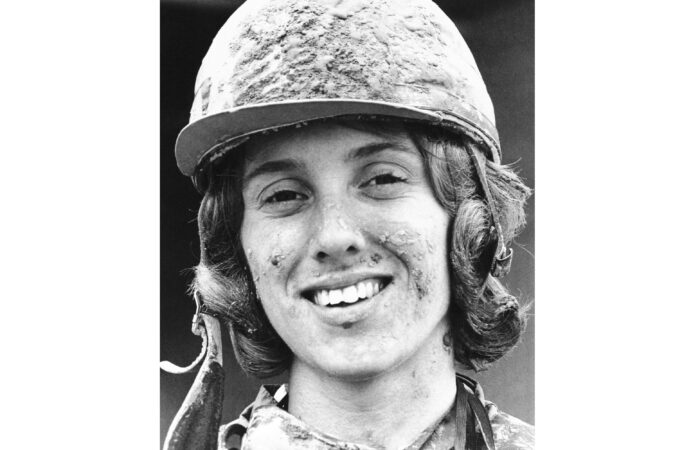
    WASHINGTON (AP) — Diane Crump, who in 1969 became the first woman to ride professionally in a horse race and a year later became the first female jockey in the Kentucky Derby, has died. She was 77.

    Crump was diagnosed in October with an aggressive form of brain cancer and died Thursday night in hospice care in Winchester, Virginia, her daughter, Della Payne, told The Associated Press.

    Crump went on to win 228 races before riding her last race in 1998, a month shy of her 50th birthday and nearly 30 years after her trailblazing ride at Hialeah Park in Florida on Feb. 7, 1969.

    Crump was among several women to fight successfully at the time to be granted a jockey license, but they still needed a trainer willing to put them in a race and then for the race to run. Others were thwarted when male jockeys boycotted or threatened to boycott if a woman was riding.

    Photographs of Crump’s walk to the saddling area at Hialeah show her protected by security guards as a crowd pressed in on all sides. Six of the original 12 jockeys in the race had refused to ride, Mark Shrager wrote in his biography, “Diane Crump: A Horse Racing Pioneer’s Life in the Saddle.” Among them were future legends Angel Cordero Jr., Jorge Velasquez and Ron Turcotte, who four years later would ride Secretariat to win the Triple Crown.

    But other jockeys stepped up, and as the 12 horses made their way onto the track, the bugler skipped the traditional call to the post and instead played “Smile for Me, My Diane.” Crump, on a 50-1 longshot called Bridle ’n Bit, finished 10th, but the barrier had been broken. A month later, Bridle ’n Bit gave Crump her first victory at Gulfstream Park.

    She again made history in 1970 by becoming the first woman to ride in the Kentucky Derby. She won the first race that day at Churchill Downs, but again her mount for the history-making race was outclassed. She finished 15th out of 17 on Fathom.

    It would be 14 more years before another female jockey would ride in the Derby, with only four more to follow in the decades since.

    The president of Churchill Downs Racetrack, Mike Anderson, said in a statement on Friday that Crump “will be forever respected and fondly remembered in horse racing lore.”

    He noted that Crump, who had been riding since age 5 and galloping young Thoroughbreds since she was a teenager, “was an iconic trailblazer who admirably fulfilled her childhood dreams.”

    Chris Goodlett, of the Kentucky Derby Museum, said “Diane Crump’s name stands for courage, grit, and progress.” He added: “Her determination in the face of overwhelming odds opened doors for generations of female jockeys and inspired countless others far beyond racing.”

    After retiring from racing, Crump settled in Virginia and started a business helping people buy and sell horses.

    In later years, she took her therapy dogs, all Dachshunds, to visit patients in hospitals and other medical clinics. Some with chronic illnesses she visited regularly for years.

    Payne said when her mother went into assisted living a month ago, she was already “quasi-famous” in the medical center because of how much time she had spent there, and a “steady stream” of doctors and nurses came to see her. One of the last people to visit her was the man who mowed her lawn.

    Her daughter said Crump would never take “no” for an answer, whether it was becoming a jockey or helping someone in need.

    “I wouldn’t say she was as competitive as she was stubborn,” Payne said. “If someone was counting on her, she could never let someone down.”

    Late in life, Crump’s mottos were literally tattooed on her forearms: “Kindness” on the left, “Compassion” on the right.

    Crump will be cremated and her ashes interred between her parents in Prospect Hill Cemetery in Front Royal, Virginia.

  • Zohran Mamdani’s first full day as NYC mayor: Subway rides, new offices, and backlash from Israel

    Zohran Mamdani’s first full day as NYC mayor: Subway rides, new offices, and backlash from Israel

    NEW YORK — Less than 24 hours after throngs of ecstatic supporters poured into Manhattan for his history-making inauguration, Zohran Mamdani began his first full day of work with a routine familiar to many New Yorkers: trudging to the subway from a cramped apartment.

    Bundled against the frigid temperature and seemingly fighting off a cold, he set out Friday morning from the one-bedroom apartment in Queens that he shares with his wife. But unlike most commuters, Mamdani’s trip was documented by a photo and video crew, and periodically interrupted by neighbors wishing him luck.

    The 34-year-old democratic socialist, whose victory was hailed as a watershed moment for the progressive movement, has now begun the task of running the nation’s largest city: signing orders, announcing appointments, facing questions from the press — and answering for some of the actions he took in his first hours.

    But first, the symbolism-laden Day One commute.

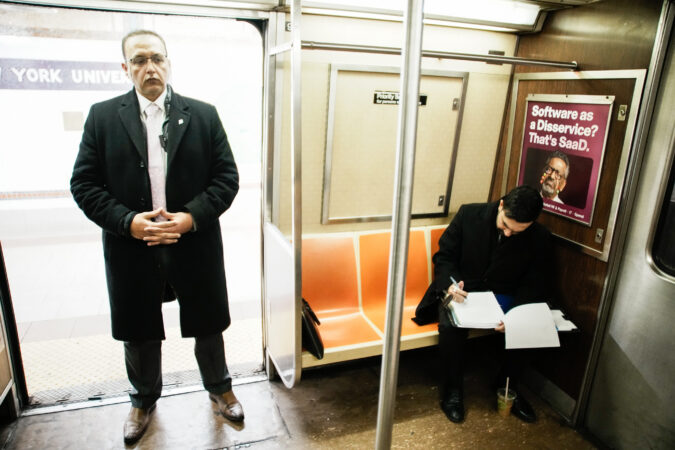
    Flanked by security guards and a small clutch of aides on a Manhattan-bound train, he agreed to several selfies with wide-eyed riders, then moved to a corner seat of the train to review his briefing materials.

    When a pair of French tourists, confused by the hubbub, approached Mamdani, he introduced himself as “the new mayor of New York.” They seemed doubtful. He held up the morning’s copy of the New York Daily News, featuring his smiling face, as proof.

    Mamdani, a Democrat, is hardly alone among city mayors in using the transit system to communicate relatability. His predecessor, Eric Adams, also rode the subway on his first day, and both Bill de Blasio and Michael Bloomberg made a habit out of it, particularly when seeking to make a political point.

    Within minutes of Mamdani entering City Hall, the images of him riding public transit had lit up social media.

    If the ride served as a well-timed photo-op, it also seemed to reflect Mamdani’s pledge, made in his inaugural speech, to ensure his “government looks and lives like the people it represents.”

    His other early actions have also seemed to underscore that priority.

    After centering much of his campaign on making rent cheaper for New Yorkers, Mamdani raced from his inauguration ceremony Thursday to a Brooklyn apartment building lobby, drawing boisterous cheers from the tenants union as he pledged that the city would ramp up an ongoing legal fight against the allegedly negligent landlord.

    Mamdani’s next action, meanwhile, showed the unusual scrutiny faced by his nascent administration, particularly around his criticism of Israel and outspoken support for the Palestinian cause.

    In an effort to give his government a “clean slate,” he revoked a slate of executive orders issued by Adams late in his term, including two related to Israel: one that officially adopted a contentious definition of antisemitism that includes certain criticism of Israel, and another barring city agencies and employees from boycotting or divesting from the country.

    The move drew swift backlash from some Jewish groups, including allegations from the Israeli government posted to social media that Mamdani had poured “antisemitic gasoline on an open fire.”

    When a journalist on Friday asked about the revoked orders, Mamdani read from prepared remarks, promising his administration would be “relentless in its effort to combat hate and division.” He noted that he had left in place the Mayor’s Office to Combat Antisemitism.

    Mamdani also announced the creation of a “mass engagement” office, which he said would continue the work his campaign’s field operation did to bring more New Yorkers into the political fold.

    Ringed by supporters and passersby who stood several rows deep, phones in the air, to catch a glimpse of the new mayor, Mamdani then acknowledged the weight of the current moment.

    “We have an opportunity where New Yorkers are allowing themselves to believe in the possibility of city government once again,” he said. “That is not a belief that will sustain itself in the absence of action.”

    Also on Mamdani’s to-do list: Moving to the mayor’s official residence, a stately mansion in the Upper East Side neighborhood of Manhattan, before the lease on his Queens apartment ends later this month.

  • A forgotten chapter: The stories of Allied POWs in Nagasaki during the atomic bombing

    A forgotten chapter: The stories of Allied POWs in Nagasaki during the atomic bombing

    NAGASAKI, Japan — Hundreds of prisoners of war from Allied countries were held at brutal Japanese camps in Nagasaki when the United States dropped an atomic bomb 80 years ago.

    Their presence during the Aug. 9, 1945, bombing is little known, and family and researchers have been collecting and publishing testimonies to tell the stories of these often unrecognized victims.

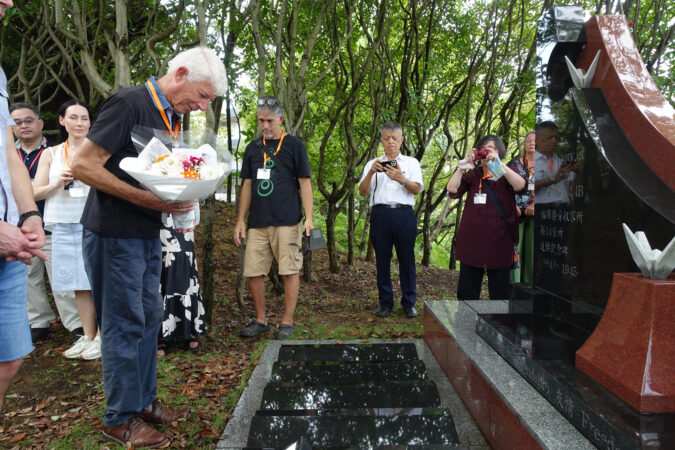
    In September, dozens of relatives of Dutch POWs and descendants of Japanese bombing survivors came together to commemorate both those who were abused at the camps and the tens of thousands of Japanese who were killed that day. The dead included at least eight captives at one of the Nagasaki camps.

    Descendants and survivors reckon with a painful past

    Andre Schram, who represented the Dutch families at the Nagasaki memorial, unveiled in 2015, is the son of a sailor who was among nearly 1,500 POWs held at the Fukuoka No. 2 Branch Camp for three years and forced to work at the Kawanami shipyard.

    Many of the prisoners were Dutch service members captured by the Japanese in Indonesia, transported to Nagasaki on so-called “hell ships,” kept at two major camps — No. 2 and No. 14 — and used as slave labor.

    About 150,000 Allied prisoners were held in dozens of camps across Asia during the war, including 36,000 sent to Japan to make up for labor shortage as Japanese men were drafted and deployed to battlefields across Asia, according to the POW Research Network Japan.

    There were also prisoners from the United States, Britain, and Australia in Nagasaki. None died from the atomic blast at the No. 2 Camp, but more than 70 earlier died of malnutrition, overwork, and illness.

    Andre Schram’s father, Johan Willem Schram, returned to the Netherlands four months after the war ended, but only near the end of his life did he tell his son about being treated like a slave. Japanese officials have apologized multiple times for wartime atrocities, “but Johan, like many other victims, had doubts about their sincerity,” his son said.

    “He felt Japan and the Netherlands treated him and other prisoners of war with disrespect. He never wanted anything to do with Japan again,” Andre Schram wrote in Johan’s Story, a booklet about the Netherlands’ colonial rule of the Dutch East Indies, the war with Japan and the aftermath, based on his research after his father died in 1993.

    Peter Klok said his father, Leendert Klok, also a Dutch POW at the camp, told him that Japanese civilians at the shipyard were friendly and helped him find parts to repair his watch. Military police later beat him for seeking help.

    Klok called the atomic bombings of Hiroshima and Nagasaki awful, but said Japan must reflect on its atrocities.

    A blinding flash, violent explosions, then the end of the war

    When the U.S. B-29 dropped the “Fat Man” plutonium bomb on Nagasaki, prisoners at the No. 2 Camp, about 6.2 miles from ground zero, saw a huge orange fireball, purple smoke, and a triple-layer mushroom cloud, British captive Tom Humphrey wrote in his diary, part of which is quoted on the Royal Air Force website.

    Windows at the camp were shattered, doors were blasted off, and the clinic ceiling collapsed, he wrote.

    The other camp, Fukuoka No. 14, was much closer to the blast. The brick buildings were destroyed, killing eight and injuring dozens.

    A former Dutch captive, Rene Schafer recalled that he and his fellow prisoners were digging a new shelter when Japanese soldiers warned of U.S. aircraft approaching. They jumped into a bunker, but his roommate suffered severe burns and died nine days later.

    Australian survivor Peter McGrath-Kerr was reading when everyone bolted to shelters. A fellow Australian captive dug him out from the debris, but he was unconscious for five days with broken ribs, cuts and bruises and radiation burns on his hand.

    Researchers examine a largely neglected history

    In the days that followed the atomic bombing, prisoners from the Fukuoka No. 2 Camp provided rice and other assistance to their comrades from the No. 14 Camp.

    Schram’s father and fellow POWs at the No. 2 Camp were officially notified of Japan’s surrender on Aug. 18, and a U.S. B-29 delivered its first food drop for the Allied POWs on Aug. 26.

    On Sept. 13, the prison camp survivors left Nagasaki, heading for the Philippines on a U.S. carrier.

    The ceremony in Nagasaki at a granite monument with three inscribed panels was the result of efforts by the families of Dutch POWs, who returned home with painful memories, and the descendants of atomic bombing survivors, said Kazuhiro Ihara, whose father lived through the bombing and was devoted to reconciliation with the POWs.

    In Hiroshima, Japanese survivor Shigeaki Mori’s decadeslong independent research led to U.S. confirmation of the deaths of 12 captured American service members in the Aug. 6 atomic bombing.

    Former President Barack Obama, who became the first U.S. leader to visit Hiroshima’s Peace Memorial Park in 2016, mentioned in his speech “a dozen Americans held prisoner” as part of the victims. He recognized Mori for seeking out the Americans’ families, believing their loss was equal to his own, and later gave him a hug.

    A 1957 Japanese law allowed medical support for certified atomic bombing survivors and has since gradually expanded its scope. The number of certificate holders is now 99,000, down from a peak of 372,000 in 1980.

    The Health and Welfare ministry says about 4,000 certificate holders were living outside Japan, many of them South Koreans and Japanese in the United States, Brazil and other countries.

    According to the POW Research Network, at least 11 former POWs who were in Nagasaki — seven Dutch, three Australian and one British — received survivors’ certificates.

    “The issue has been swept under the rug,” POW Research Network co-founder Taeko Sasamoto said.

    The research requires the time-consuming examination of historical documents that haven’t attracted much academic interest, Sasamoto said. “It’s an important issue that has long been neglected.”

  • Diane Crump, the first female jockey to ride in the Kentucky Derby, has died at 77

    Diane Crump, the first female jockey to ride in the Kentucky Derby, has died at 77

    WASHINGTON — Diane Crump, who in 1969 became the first woman to ride professionally in a horse race and a year later became the first female jockey in the Kentucky Derby, has died. She was 77.

    Ms. Crump was diagnosed in October with an aggressive form of brain cancer and died Thursday night in hospice care in Winchester, Va., her daughter, Della Payne, told the Associated Press.

    Ms. Crump went on to win 228 races before riding her last race in 1998, a month shy of her 50th birthday and nearly 30 years after her trailblazing ride at Hialeah Park in Florida on Feb. 7, 1969.

    Ms. Crump was among several women to fight successfully at the time to be granted a jockey license, but they still needed a trainer willing to put them in a race and then for the race to run. Others were thwarted when male jockeys boycotted or threatened to boycott if a woman was riding.

    Photographs of Ms. Crump’s walk to the saddling area at Hialeah show her protected by security guards as a crowd pressed in on all sides. Six of the original 12 jockeys in the race had refused to ride, Mark Shrager wrote in his biography, Diane Crump: A Horse Racing Pioneer’s Life in the Saddle. Among them were future legends Angel Cordero Jr., Jorge Velasquez, and Ron Turcotte, who four years later would ride Secretariat to win the Triple Crown.

    But other jockeys stepped up, and as the 12 horses made their way onto the track, the bugler skipped the traditional call to the post and instead played “Smile for Me, My Diane.” Ms. Crump, on a 50-1 longshot called Bridle ’n Bit, finished 10th, but the barrier had been broken. A month later, Bridle ’n Bit gave Ms. Crump her first victory at Gulfstream Park.

    She again made history in 1970 by becoming the first woman to ride in the Kentucky Derby. She won the first race that day at Churchill Downs, but again her mount for the history-making race was outclassed. She finished 15th out of 17 on Fathom.

    It would be 14 more years before another female jockey would ride in the Derby, with only four more to follow in the decades since.

    The president of Churchill Downs Racetrack, Mike Anderson, said in a statement on Friday that Crump “will be forever respected and fondly remembered in horse racing lore.”

    He noted that Ms. Crump, who had been riding since age 5 and galloping young Thoroughbreds since she was a teenager, “was an iconic trailblazer who admirably fulfilled her childhood dreams.”

    Chris Goodlett, of the Kentucky Derby Museum, said “Diane Crump’s name stands for courage, grit, and progress.” He added: “Her determination in the face of overwhelming odds opened doors for generations of female jockeys and inspired countless others far beyond racing.”

    After retiring from racing, Ms. Crump settled in Virginia and started a business helping people buy and sell horses.

    In later years, she took her therapy dogs, all Dachshunds, to visit patients in hospitals and other medical clinics. Some with chronic illnesses she visited regularly for years.

    Payne said when her mother went into assisted living in November, she was already “quasi-famous” in the medical center because of how much time she had spent there, and a “steady stream” of doctors and nurses came to see her. One of the last people to visit her was the man who mowed her lawn.

    Her daughter said Ms. Crump would never take “no” for an answer, whether it was becoming a jockey or helping someone in need.

    “I wouldn’t say she was as competitive as she was stubborn,” Payne said. “If someone was counting on her, she could never let someone down.”

    Late in life, Ms. Crump’s mottos were literally tattooed on her forearms: “Kindness” on the left, “Compassion” on the right.

    Crump will be cremated and her ashes interred between her parents in Prospect Hill Cemetery in Front Royal, Va.

  • Earthquake with 6.5 magnitude rattles southern and central Mexico, killing 2

    Earthquake with 6.5 magnitude rattles southern and central Mexico, killing 2

    MEXICO CITY — A strong earthquake rattled southern and central Mexico on Friday, interrupting President Claudia Sheinbaum‘s first press briefing of the new year as seismic alarms sounded and leaving at least two people dead.

    The earthquake had a magnitude of 6.5 and its epicenter was near the town of San Marcos in the southern state of Guerrero near the Pacific coast resort of Acapulco, according to Mexico‘s national seismological agency. There were more than 500 aftershocks.

    The state’s civil defense agency reported various landslides around Acapulco and on other highways in the state.

    Guerrero Gov. Evelyn Salgado said that a 50-year-old woman living in a small community near the epicenter died when her home collapsed. Authorities also said that a hospital in Chilpancingo, Guerrero’s capital, suffered major structural damage and various patients were evacuated.

    Residents and tourists in Mexico City and Acapulco rushed into the streets when the shaking began. Mexico City Mayor Clara Brugada said that one person died after suffering an apparent medical emergency followed by a fall while evacuating a building.

    The U.S. Geological Survey said the earthquake occurred at a depth of 21.7 miles, 2.5 miles north-northwest of Rancho Viejo, Guerrero, which is in the mountains about 57 miles northeast of Acapulco.

    Sheinbaum resumed her press briefing a short time after the quake.

    José Raymundo Díaz Taboada, a doctor and human rights defender who lives on one of the peaks ringing Acapulco, said he heard a strong rumble noise and all the neighborhood dogs began barking.

    “In that moment the seismic alert went off on my cellphone,” he said, ”and then the shaking began to feel strong with a lot of noise.”

    He said the shaking was lighter than in some previous quakes and he had prepared a backpack of essentials to be ready to leave as the aftershocks continued.

    He said he had been unable to reach some friends who live along the Costa Chica southeast of Acapulco because communications were cut.

  • A grandmother and her grandson burn to death in a Gaza tent; Angelina Jolie visits Rafah crossing

    A grandmother and her grandson burn to death in a Gaza tent; Angelina Jolie visits Rafah crossing

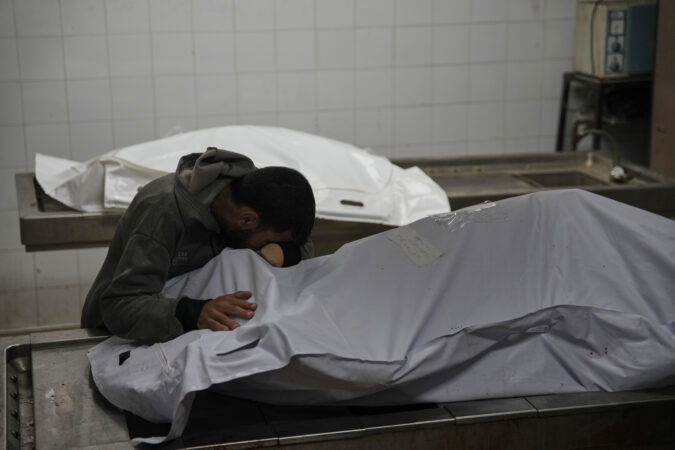
    DEIR AL BALAH, Gaza Strip — A grandmother and her 5-year-old grandson burned to death in Gaza when their tent caught fire while cooking, as thousands of Palestinians endure colder weather in makeshift housing.

    The nylon tent in Yarmouk caught fire Thursday night while a meal was being prepared, a neighbor said. A hospital official said that two Palestinian men were killed by Israeli gunfire on Friday in Gaza.

    The shaky 12-week-old ceasefire between Israel and the Hamas militant group has largely ended large-scale Israeli bombardment of Gaza. But Palestinians are still being killed by Israeli forces, especially along the so-called Yellow Line that delineates areas under Israeli control.

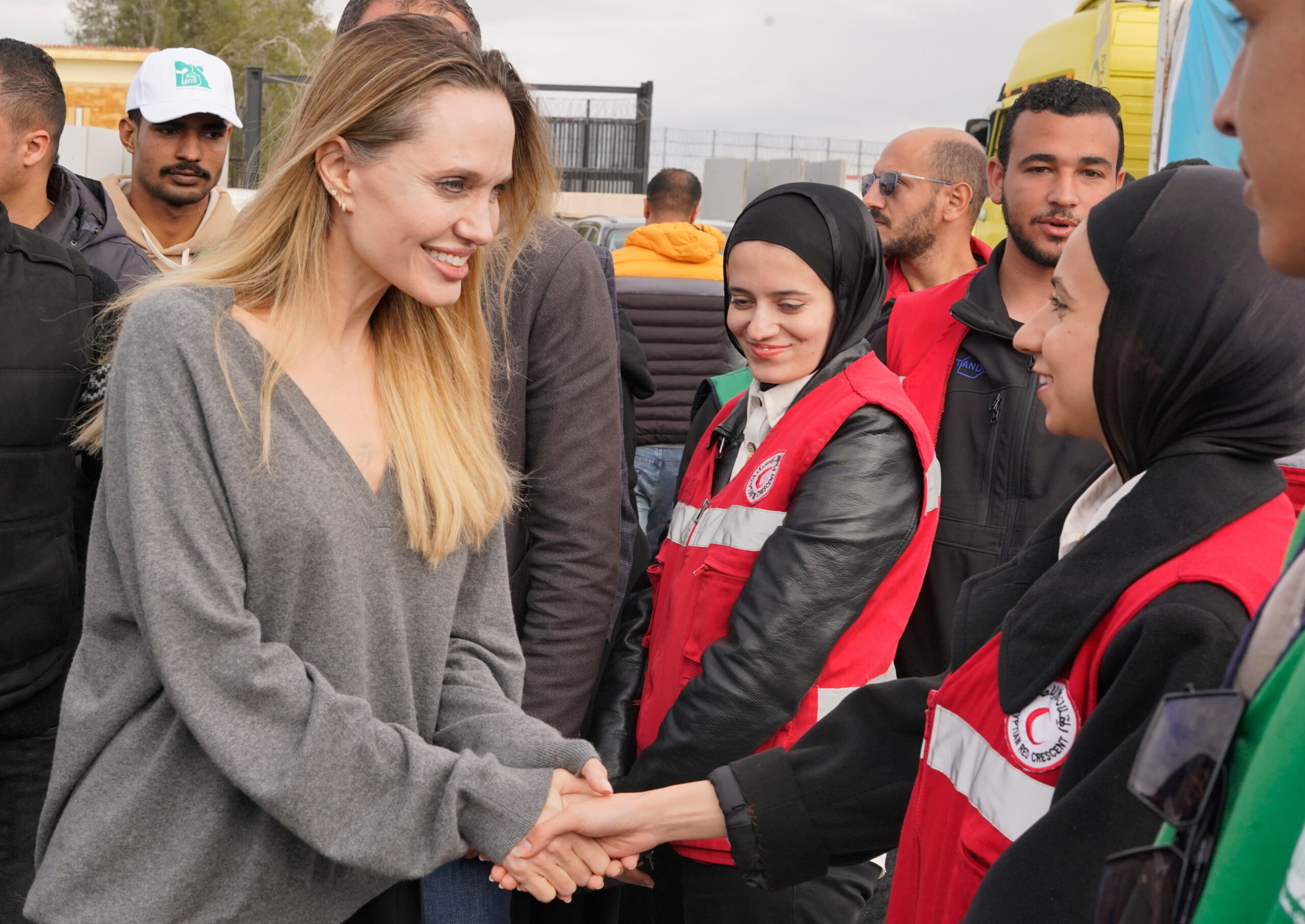
    On Friday, American actor and film producer Angelina Jolie visited the Rafah border crossing between Egypt and the Gaza Strip.

    Wintry weather hits tent cities

    Over the past few weeks, cold winter rains have repeatedly lashed the sprawling tent cities, causing flooding, turning Gaza’s dirt roads into mud and causing damaged buildings to collapse.

    Aid groups say not enough shelter materials are getting into Gaza during the truce. Figures recently released by Israel’s military suggest it hasn’t met the ceasefire stipulation of allowing 600 trucks of aid into Gaza a day, though Israel disputes that finding.

    Israel has said throughout the war that Hamas was siphoning off aid supplies, preventing the population in Gaza from receiving them. Last month, the World Food Program said that there have been “notable improvements” in food security in Gaza since the ceasefire.

    Palestinians have long called for mobile homes and caravans to be allowed in to protect them against living in impractical and worn out tents.

    Angelina Jolie greets Red Crecent workers during her visit Friday to the Rafah border crossing between Egypt and the Gaza Strip.

    Actor visits Rafah crossing

    Jolie met with members of the Red Crescent on the Egyptian side of the Rafah border crossing and then visited a hospital in the nearby city of Arish to speak with Palestinian patients on Friday, according to Egyptian officials.

    Her visit sought to raise support for the displaced and humanitarian workers in the crises in Gaza as well as in Sudan, Jolie’s team said in a statement.

    “What needs to happen is clear: the ceasefire must hold, and access must be sustained, safe and urgently scaled up so that aid, fuel and critical medical supplies can move quickly and consistently, at the volume required,” Jolie said about Gaza.

    Reopening the crossing, which would allow Palestinians to leave Gaza — especially the ill and wounded who could get specialized care unavailable in the territory — has been contentious. Israel has said that it will only allow Palestinians to exit Gaza, not enter, until militants in Gaza return all the hostages they took in the attack on Oct. 7, 2023, which triggered the war. The remains of one hostage are still in Gaza.

    Israel also says Palestinians wanting to leave Gaza will have to get Israeli and Egyptian security approval. Egypt, meanwhile, says it wants the crossing immediately opened in both directions, so Palestinians in Egypt can enter Gaza. That’s a position rooted in Egypt’s vehement opposition to Palestinian refugees permanently resettling in the country.

    For more than two decades until 2022, Jolie was a special envoy to the U.N. refugee agency.

    Gaza’s humanitarian situation

    On Friday, the foreign ministers of Arab and Muslim countries, including Egypt, Qatar, and Saudi Arabia, expressed concern about Gaza’s humanitarian situation.

    The situation has been “compounded by the continued lack of sufficient humanitarian access, acute shortages of essential life-saving supplies, and the slow pace of the entry of essential materials,” according to the joint statement.

    The Palestinian death toll from the war is at least 71,271, according to Gaza’s Health Ministry, which doesn’t distinguish between militants and civilians in its count. The Israel-Hamas war began with the Hamas-led Oct. 7 attack in southern Israel that killed about 1,200 people and saw 251 taken hostage.

    On Friday, two Palestinian men were killed in separate incidents by Israeli gunfire in the Khan Younis area of southern Gaza, a hospital official said. Israel’s military said troops operating in the southern Gaza Strip killed a person who “crossed the Yellow Line and approached the troops, posing an immediate threat to them.”

    West Bank raids

    Meanwhile, Israel continues operating in the occupied West Bank.

    On Friday, the Palestinian Prisoners media office said that Israel carried out numerous raids across the territory, including the major cities of Ramallah and Hebron. Nearly 50 people were detained, following the arrest of at least 50 other Palestinians on Thursday, most of those in the Ramallah area.

    Israel’s military said there were arrests made of people “involved in terrorist activity.” Last week, a Palestinian attacker rammed his car into a man and then stabbed a young woman in northern Israel, killing both of them, police said.

    The Palestinian Prisoner’s Society says that Israel has arrested 7,000 Palestinians in the West Bank and Jerusalem this year, and 21,000 since the war began. The number arrested from Gaza isn’t made public by Israel.

  • Runner fought off a mountain lion weeks before a suspected fatal Colorado attack

    Runner fought off a mountain lion weeks before a suspected fatal Colorado attack

    A solo hiker who authorities believe was killed by a mountain lion on a remote Colorado trail on New Year’s Day was not the first person to encounter one of the predators in the area in recent weeks.

    Gary Messina said he was running along the same trail on a dark November morning when his headlamp caught the gleam of two eyes in the nearby brush. Messina used his phone to snap a quick photo before a mountain lion rushed him.

    Messina said he threw the phone at the animal, kicked dirt and yelled as the lion kept trying to circle behind him. After a couple of harrowing minutes he broke a bat-sized stick off a downed log, hit the lion in the head with it, and it ran off, he said.

    The woman whose body was found Thursday on the same Crosier Mountain trail had “wounds consistent with a mountain lion attack,” said Kara Van Hoose with Colorado Parks and Wildlife. An autopsy is scheduled for next week, said Rafael Moreno with the Larimer County Coroner’s Office.

    Prior warnings and the hunt for a culprit

    Wildlife officials late Thursday tracked down and killed two mountain lions in the area — one at the scene and another nearby. A necropsy will help determine if either or both of those animals attacked the woman and whether they had neurological diseases such as rabies or avian flu.

    A search for a third mountain lion reported in the area was ongoing Friday, Van Hoose said. Nearby trails remained closed while the hunt continued. Van Hoose said circumstances would dictate whether that lion is also killed.

    Based on the aggressiveness of the animal that attacked him on Nov. 11, Messina suspects it could be the same one that killed the woman on New Year’s Day.

    “I had to fight it off because it was basically trying to maul me,” Messina told the Associated Press. “I was scared for my life and I wasn’t able to escape. I tried backing up and it would try to lunge at me.”

    The 32-year-old man from nearby Glen Haven, Colorado, reported his encounter to wildlife officials days later who posted signs to warn people about the animal along trails in the Crosier Mountain area northeast of Estes Park, Van Hoose said. The signs were later removed, she said.

    Mountain lions don’t often attack humans

    Mountain lion sightings in that area east of Rocky Mountain National Park are common, Van Hoose said, because it offers good habitat for the animals: It’s remote with thick forests, rocky outcroppings and lots of elevation changes.

    Yet attacks on humans by the animals are rare, and the last suspected fatal encounter in Colorado was in 1999, when a 3-year-old boy disappeared in the wilderness and his tattered clothes were found more than three years later. In 1997, a 10-year-old boy was killed by a lion and dragged away while hiking with family members in Rocky Mountain National Park.

    Two hikers on Thursday saw the victim’s body on the trail at around noon from about 100 yards away, Van Hoose said. A mountain lion was nearby and they threw rocks to scare it away. One of the hikers, a physician, attended to the victim but did not find a pulse, Van Hoose said.

    The victim will be publicly identified following the autopsy by the coroner, who is also expected to provide a cause of death.

    Mountain lions — also known as cougars, pumas or catamounts — can weigh 130 pounds and grow to more than 6 feet long. They primarily eat deer.

    Colorado has an estimated 3,800 to 4,400 of the animals, which are classified as a big game species in the state and can be hunted.

    Back away slowly. Do not run

    Thursday’s killing would be the fourth fatal mountain lion attack in North America over the past decade, and the 30th since 1868, according to information from the California-based Mountain Lion Foundation. Not all of those deaths have been confirmed as mountain lion attacks.

    Most attacks occur during the day and when humans are active in lion territories, indicating the animals are not seeking out the victims, according to the advocacy group. About 15% of attacks are fatal.

    “As more people live, work, and recreate in areas that overlap wildlife habitat, interactions can increase, not because mountain lions are becoming more aggressive, but because overlap is growing,” said Byron Weckworth, chief conservation officer for the foundation.

    To reduce the risk travel in groups, keep children close and avoid dawn and dusk when lions are most active, Weckworth said. During an encounter, maintain eye contact with the lion, make yourself appear larger, and back away slowly; don’t run, he said.

    Last year in Northern California, two brothers were stalked and attacked by a lion that they tried to fight off. One of the brothers was killed.