Category: Associated Press

  • Trump administration rolls out rural health funding, with strings attached

    Trump administration rolls out rural health funding, with strings attached

    States will share $10 billion for rural healthcare next year in a program that aims to offset the Trump administration’s massive budget cuts to rural hospitals, federal officials announced Monday.

    But while every state applied for money from the Rural Health Transformation Program, it won’t be distributed equally. And critics worry that the funding might be pulled back if a state’s policies don’t match up with the administration’s.

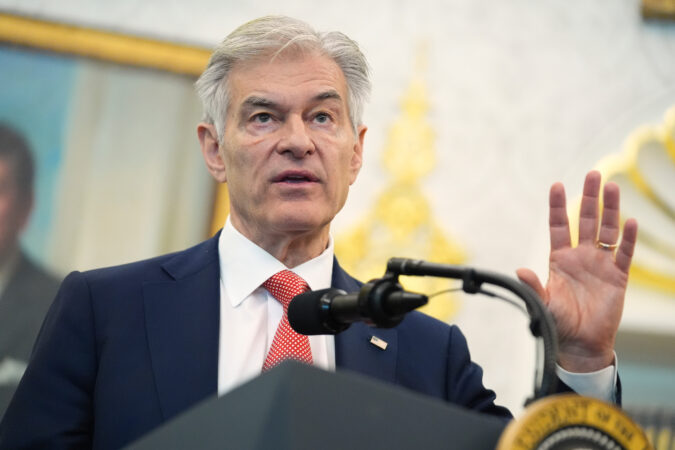
    Officials said the average award for 2026 is $200 million, and the fund puts a total of $50 billion into rural health programs over five years. States propose how to spend their awards, and the Centers for Medicare and Medicaid Services assigns project officers to support each state, said agency administrator Mehmet Oz.

    “This fund was crafted as part of the One Big Beautiful Bill, signed only six months ago now into law, in order to push states to be creative,” Oz said in a call with reporters Monday.

    Under the program, half of the money is equally distributed to each state. The other half is allocated based on a formula developed by CMS that considered rural population size, the financial health of a state’s medical facilities, and health outcomes for a state’s population.

    The formula also ties $12 billion of the five-year funding to whether states are implementing health policies prioritized by the Trump administration’s Make America Healthy Again initiative. Examples include requiring nutrition education for healthcare providers, having schools participate in the Presidential Fitness Test, or banning the use of SNAP benefits for so-called junk foods, Oz said.

    Several Republican-led states — including Arkansas, Iowa, Louisiana, Nebraska, Oklahoma, and Texas — have already adopted rules banning the purchase of foods like candy and soda with SNAP benefits.

    The money that the states get will be recalculated annually, Oz said, allowing the administration to claw back funds if, for example, state leaders don’t pass promised policies. Oz said the clawbacks are not punishments, but leverage governors can use to push policies by pointing to the potential loss of millions.

    “I’ve already heard governors express that sentiment that this is not a threat, that this is actually an empowering element of the One Big Beautiful Bill,” he said.

    Carrie Cochran-McClain, chief policy officer with the National Rural Health Association, said she’s heard from a number of Democratic-led states that refused to include such restrictions on SNAP benefits even though it could hurt their chance to get more money from the fund.

    “It’s not where their state leadership is,” she said.

    Experts say fund is inadequate in face of other cuts

    Oz and other federal officials have touted the program as a 50% increase in Medicaid investments in rural healthcare. Rep. Don Bacon, a Republican from Nebraska who has been critical of many of the administration’s policies but voted for the budget bill that slashed Medicaid, pointed to the fund when recently questioned about how the cuts would hurt rural hospitals.

    “That’s why we added a $50 billion rural hospital fund, to help any hospital that’s struggling,” Bacon said. “This money is meant to keep hospitals afloat.”

    But experts say it won’t nearly offset the losses that struggling rural hospitals will face from the federal spending law’s $1.2 trillion cut from the federal budget over the next decade, primarily from Medicaid. Millions of people are also expected to lose Medicaid benefits.

    Estimates suggest rural hospitals could lose around $137 billion over the next decade because of the budget measure. As many as 300 rural hospitals were at risk for closure because of the GOP’s spending package, according to an analysis by the Cecil G. Sheps Center for Health Services Research at the University of North Carolina at Chapel Hill.

    “When you put that up against the $50 billion for the Rural Health Transformation Fund, you know — that math does not add up,” Cochran-McClain said.

    She also said there’s no guarantee that the funding will go to rural hospitals in need. For example, she noted, one state’s application included a proposal for healthier, locally sourced school lunch options in rural areas.

    And even though innovation is a goal of the program, Cochran-McClain said it’s tough for rural hospitals to innovate when they were struggling to break even before Congress’ Medicaid cuts.

    “We talk to rural providers every day that say, ‘I would really love to do x, y, z, but I’m concerned about, you know, meeting payroll at the end of the month,’” she said. “So when you’re in that kind of crisis mode, it is, I would argue, almost impossible to do true innovation.”
  • During Netanyahu visit, Trump warns Iran of further U.S. strikes if it reconstitutes nuclear program

    During Netanyahu visit, Trump warns Iran of further U.S. strikes if it reconstitutes nuclear program

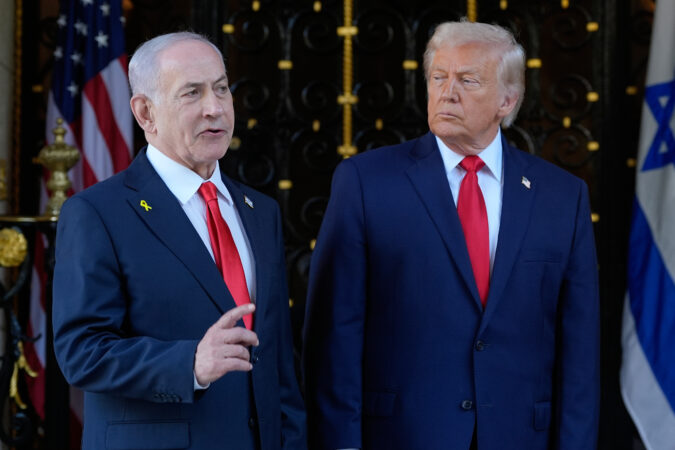
    PALM BEACH, Fla. — President Donald Trump warned Iran on Monday that the U.S. could carry out further military strikes if the country attempts to reconstitute its nuclear program as he held wide-ranging talks with Israeli Prime Minister Benjamin Netanyahu at his home in Florida.

    Trump had previously insisted that Tehran’s nuclear capabilities were “completely and fully obliterated” by U.S. strikes on key nuclear enrichment sites in June. But with Netanyahu by his side, Trump raised the possibility that suspected activity could be taking place outside those sites. Israeli officials, meanwhile, have been quoted in local media expressing concern about Iran rebuilding its supply of long-range missiles capable of striking Israel.

    “Now I hear that Iran is trying to build up again,” Trump told reporters gathered at his Mar-a-Lago estate. “And if they are, we’re going to have to knock them down. We’ll knock them down. We’ll knock the hell out of them. But hopefully that’s not happening.”

    Trump’s warning to Iran comes as his administration has committed significant resources to targeting drug trafficking in South America and the president looks to create fresh momentum for the U.S.-brokered Israel-Hamas ceasefire. The Gaza deal is in danger of stalling before reaching its complicated second phase that would involve naming an international governing body and rebuilding the devastated Palestinian territory.

    At a news conference with Netanyahu after their meeting, Trump suggested that he could order another U.S. strike.

    “If it’s confirmed, they know the consequences, and the consequences will be very powerful, maybe more powerful than the last time,” Trump said.

    Iran has insisted that it is no longer enriching uranium at any site in the country, trying to signal to the West that it remains open to potential negotiations over its atomic program. The two leaders discussed the possibility of taking new military action against Tehran just months after June’s 12-day war.

    The Iranian mission to the United Nations did not immediately respond to a request for comment on Trump’s warning.

    Gaza ceasefire progress has slowed

    Trump, with Netanyahu by his side, said he wants to get to the second phase of the Gaza deal “as quickly as we can.”

    “But there has to be a disarming of Hamas,” Trump added.

    The ceasefire between Israel and Hamas that Trump championed has mostly held, but progress has slowed recently. Both sides accuse each other of violations, and divisions have emerged among the U.S., Israel, and Arab countries about the path forward.

    The truce’s first phase began in October, days after the two-year anniversary of the initial Hamas-led attack on Israel that killed about 1,200 people. All but one of the 251 hostages taken then have been released, alive or dead.

    The Israeli leader, who also met separately with Secretary of State Marco Rubio and Defense Secretary Pete Hegseth, has signaled he is in no rush to move forward with the next phase as long as the remains of Ran Gvili are still in Gaza.

    Gvili’s parents met with Netanyahu as well as Rubio, U.S. envoy Steve Witkoff, and the president’s son-in-law, Jared Kushner, in Florida on Monday.

    “They’re waiting for their son to come home,” Trump said of the family of the young police officer known affectionately as “Rani.”

    Next phase is complex

    The path to implementing Trump’s peace plan is certainly complicated.

    If successful, the second phase would see the rebuilding of a demilitarized Gaza under international supervision by a group chaired by Trump and known as the Board of Peace. The Palestinians would form a “technocratic, apolitical” committee to run daily affairs in Gaza, under Board of Peace supervision.

    It further calls for normalized relations between Israel and the Arab world and a possible pathway to Palestinian independence. Then there are thorny logistical and humanitarian questions, including rebuilding war-ravaged Gaza, disarming Hamas, and creating a security apparatus called the International Stabilization Force.

    Much remains unsettled

    Two main challenges have complicated moving to the second phase, according to an official who was briefed on those meetings. Israeli officials have been taking a lot of time to vet and approve members of the Palestinian technocratic committee from a list given to them by the mediators, and Israel continues its military strikes.

    Trump’s plan also calls for the stabilization force, proposed as a multinational body, to maintain security. But it, too, has yet to be formed. Whether details will be forthcoming after Monday’s meeting is unclear.

    A Western diplomat said there is a “huge gulf” between the U.S.-Israeli understanding of the force’s mandate and that of other major countries in the region, as well as European governments.

    All spoke on the condition of anonymity to provide details that haven’t been made public.

    The U.S. and Israel want the force to have a “commanding role” in security duties, including disarming Hamas and other militant groups. But countries being courted to contribute troops fear that mandate will make it an “occupation force,” the diplomat said.

    Hamas has said it is ready to discuss “freezing or storing” its arsenal of weapons but insists it has a right to armed resistance as long as Israel occupies Palestinian territory. One U.S. official said a potential plan might be to offer cash incentives in exchange for weapons, echoing a “buyback” program Witkoff has previously floated.

    Trump makes case once again for Netanyahu pardon

    The two leaders, who have a long and close relationship, heaped praise on each other. Trump also tweaked the Israeli leader, who at moments during the war has raised Trump’s ire, for being “very difficult on occasion.”

    Netanyahu said Trump during the lunch was formally told that his country’s education ministry will award him the Israel Prize, breaking the long-held convention of bestowing the honor on an Israeli citizen or resident.

    “President Trump has broken so many conventions to the surprise of people,” Netanyahu said. He added, “So we decided to break a convention, too, or create a new one.”

    Trump also renewed his call on Israeli President Isaac Herzog to grant Netanyahu, who is in the midst of a corruption trial, a pardon.

    Netanyahu is the only sitting prime minister in Israeli history to stand trial, after being charged with fraud, breach of trust, and accepting bribes in three separate cases accusing him of exchanging favors with wealthy political supporters.

    Trump has previously written to Herzog to urge a pardon and advocated for one during his October speech before the Knesset. He said Monday that Herzog has told him “it’s on its way” without offering further details.

    “He’s a wartime prime minister who’s a hero. How do you not give a pardon?” Trump said.

    Herzog’s office said in a statement that the Israeli president and Trump have not spoken since the pardon request was submitted, but that Herzog has spoken with a Trump representative about the U.S. president’s letter advocating for Netanyahu’s pardon.

    “During that conversation, an explanation was provided regarding the stage of the process in which the request currently stands, and that any decision on the matter will be made in accordance with the established procedures,” the Israeli president’s office said.

  • Zohran Mamdani has bold promises. Can he make them come true as New York City mayor?

    Zohran Mamdani has bold promises. Can he make them come true as New York City mayor?

    Zohran Mamdani has promised to transform New York City government when he becomes mayor. Can he do it?

    Mamdani, a 34-year-old democratic socialist, already faces intense scrutiny, even before taking office in one of the country’s most scrutinized political jobs. Republicans have cast him as a liberal boogeyman. Some of his fellow Democrats have deemed him too far left. Progressives are closely watching for any signs of him shifting toward the center.

    On Jan. 1, he will assume control of America’s biggest city under that harsh spotlight, with the country watching to see if he can pull off the big promises that vaulted him to office and handle the everyday duties of the job. All while skeptics call out his every stumble.

    For Mamdani, starting off strong is key, said George Arzt, a veteran Democratic political consultant in New York who worked for former Mayor Ed Koch.

    “He’s got to use the first 100 days of the administration to show people he can govern,” he said. “You’ve got to set a mindset for people that’s like, ‘Hey, this guy’s serious.’”

    That push should begin with Mamdani’s first speech as mayor, where Arzt said it will be important for the city’s new leader to establish a clear blueprint of his agenda and tell New Yorkers what he plans to do and how he plans to do it.

    Mamdani will be sworn in around midnight during a private ceremony at a historic, out-of-use City Hall subway station. Then in the afternoon, he will be sworn in a second time on the steps of City Hall, while his supporters are expected to crowd surrounding streets for an accompanying block party.

    From there, Arzt said, Mamdani will have to count on the seasoned hands he’s hired to help him handle the concrete responsibilities of the job, while he and his team also pursue his ambitious affordability agenda.

    Managing expectations as a movement candidate

    Mamdani campaigned on a big idea: shifting the power of government toward helping working class New Yorkers, rather than the wealthy.

    His platform — which includes free childcare, free city bus service, and a rent freeze for people living in rent stabilized apartments — excited voters in one of America’s most expensive cities and made him a leading face of a Democratic Party searching for bright, new leaders during President Donald Trump’s second term.

    But Mamdani may find himself contending with the relentless responsibilities of running New York City. That includes making sure the trash is getting picked up, potholes are filled, and snow plows go out on time. When there’s a subway delay or flooding, or a high-profile crime or a police officer parked in a bicycle lane, it’s not unusual for the city’s mayor to catch some heat.

    “He had a movement candidacy and that immediately raises expectations locally and nationally,” said Basil Smikle, a Democratic political strategist and Columbia University professor, who added that it might be good for Mamdani to “Just focus on managing expectations and get a couple of good wins under your belt early on.”

    “There’s a lot to keep you busy here,” he said.

    A large part of Mamdani’s job will also be to sell his politics to the New Yorkers who remain skeptical of him, with Smikle saying “the biggest hurdle” is getting people comfortable with his policies and explaining how what he’s pushing could help the city.

    “It’s difficult to have this all happen on day one,” he said, “or even day 30 or even day 100.”

    Challenges and opportunities

    Mamdani’s universal freechild care proposal — perhaps one of his more expensive plans — is also one that has attracted some of the strongest support from New York Gov. Kathy Hochul, a moderate from Buffalo who endorsed the mayor-elect.

    Hochul is eager to work with Mamdani on the policy and both leaders consider the program a top priority, although it’s not yet clear how exactly the plan could come to fruition. The governor, who is up for reelection next year, has repeatedly said she does not want to raise income taxes — something Mamdani supports for wealthy New Yorkers — but she has appeared open to raising corporate taxes.

    “I think he has allies and supporters for his agenda, but the question is how far will the governor go,” said state Senate Deputy Leader Michael Gianaris, a Mamdani ally.

    “There’s an acknowledgment that the voters have spoken, and there’s very clear policies that were associated with his successful campaign,” he said, “so to not make progress on them would be us thumbing our noses at the voters.”

    Mamdani’s pledge to freeze the rent for roughly 1 million rent-stabilized apartments in the city would not require state cooperation.

    But that proposal — perhaps the best known of his campaign — is already facing headwinds, after the city’s departing mayor, Eric Adams, made a series of appointments in recent weeks to a local board that determines annual rent increases for the city’s rent stabilized units.

    The move could potentially complicate the mayor-elect’s ability to follow through on the plan, at least in his first year, although Mamdani has said he remains confident in his ability to enact the freeze.

    Other challenges await

    His relationship with some of the city’s Jewish community remains in tatters over his criticisms of Israel’s government and support for Palestinian human rights.

    The Anti-Defamation League, a prominent Jewish advocacy organization, plans to track Mamdani’s policies and hires as it pledged to “protect Jewish residents across the five boroughs during a period of unprecedented antisemitism in New York City.”

    Earlier this month, a Mamdani appointee resigned over social media posts she made more than a decade ago that featured antisemitic tropes, after the Anti-Defamation League shared the posts online.

    The group has since put out additional findings on others who are serving in committees that Mamdani set up as he transitions into his mayoral role. In response, Mamdani said the ADL often “ignores the distinction” between antisemitism and criticism of the Israeli government.

    The mayor-elect’s past calls to defund the city’s police department continue to be a vulnerability. His decision to retain Jessica Tisch, the city’s current police commissioner, has eased some concerns about a radical shake-up at the top of the nation’s largest police force.

    And then there’s Trump.

    Tensions between Trump and Mamdani have appeared to cool — for now — after months of rancor led into a surprisingly friendly Oval Office meeting. Future clashes may emerge given the sharp political differences between them, particularly on immigration enforcement, along with anything else that could set off the mercurial president.

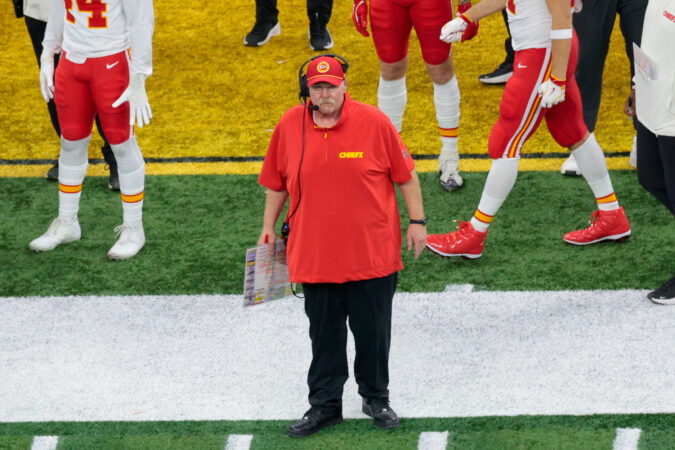
  • Andy Reid plans to return as Chiefs coach next season

    Andy Reid plans to return as Chiefs coach next season

    KANSAS CITY, Mo. — Kansas City Chiefs coach Andy Reid said Monday that he plans to return next season, batting away any thought of an impending retirement by making a tongue-in-cheek joke about his status with a franchise he has led to three Super Bowl titles.

    “I mean, I think I’m coming back, right?” Reid told local Kansas City reporters on a Zoom call. “If they’ll have me back, I’ll come back. You never know in this business. That’s a tough one. But I plan on it, yeah.”

    The 67-year-old Reid is accustomed to answering questions about his future in February, after the Chiefs have played in the Super Bowl, which they had done each of the last three years. But he’s less familiar with facing those questions in the final days of December, when the Chiefs have long since been eliminated from postseason contention.

    Kansas City is 6-10 as it prepares for its season finale this weekend in Las Vegas.

    Reid, who signed a five-year, $100 million extension with the Chiefs in April 2024, spent his first 14 seasons as an NFL head coach in Philadelphia, where he led the Eagles to 130 regular-season wins and 10 more in the playoffs. That included four seasons that ended in the NFC title game and another that ended with a loss in the Super Bowl.

    Reid’s last 13 years have come in Kansas City, where he has won at an even greater clip.

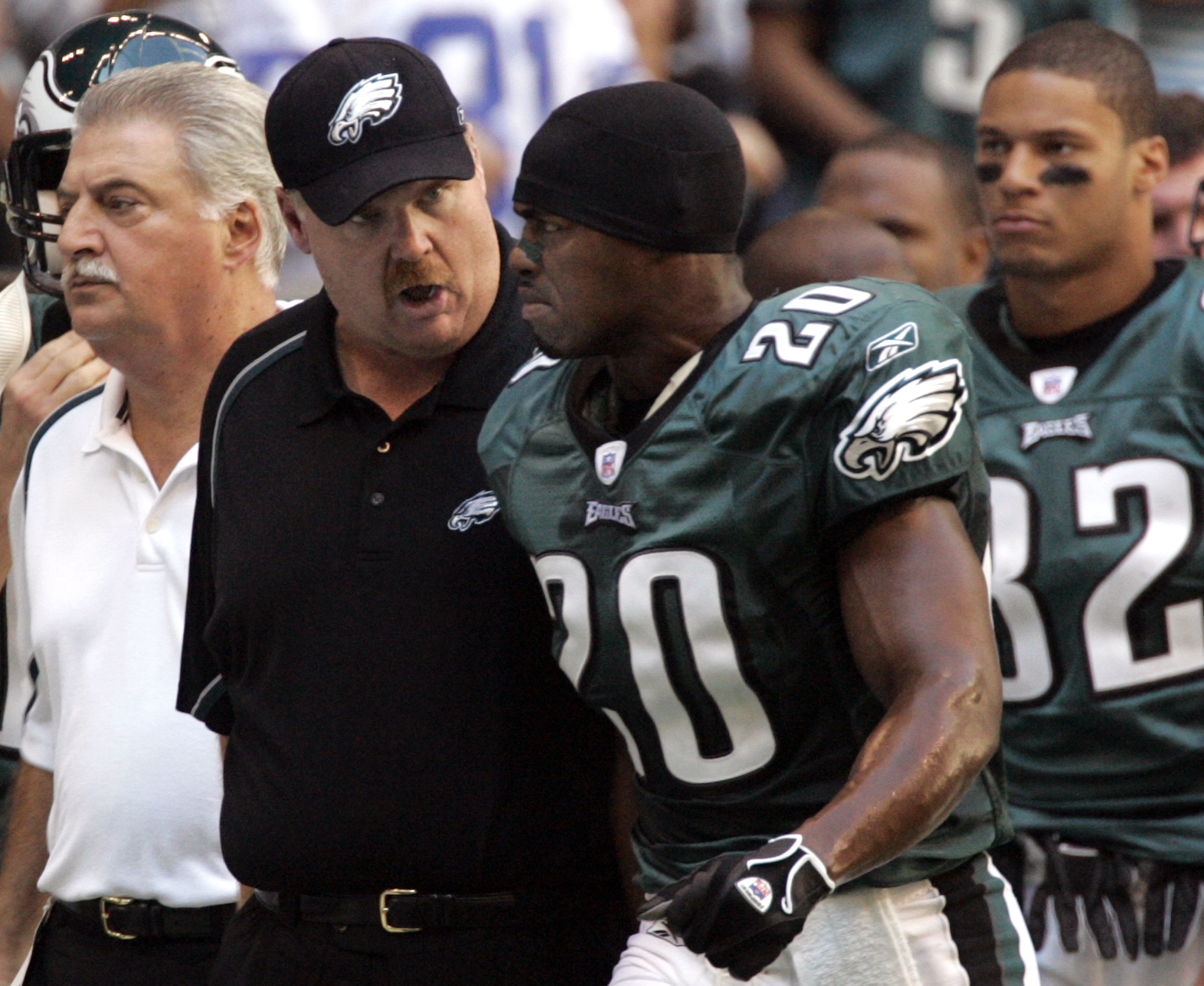
    Eagles coach Andy Reid with safety Brian Dawkins during a game in October 2005.

    With Alex Smith at quarterback the first five years and Patrick Mahomes under center since, the Chiefs have piled up 149 regular-season wins and gone 18-8 in the playoffs. This season will end streaks of 10 consecutive playoff trips, nine straight AFC West titles, seven consecutive AFC title game appearances and the last three years in the Super Bowl.

    In five trips to the big game, Reid and Co. have brought three Lombardi Trophies back to Kansas City. Bill Belichick is the only coach with more Super Bowl rings, capturing six of them with Tom Brady and the Patriots.

    Reid has 307 wins overall. He needs 18 to pass George Halas for third on the NFL’s career list behind Belichick and Don Shula.

  • Bomb cyclone brings blizzards, dangerous wind chills to Midwest

    Bomb cyclone brings blizzards, dangerous wind chills to Midwest

    A strengthening bomb cyclone barreled across the northern U.S. on Monday, unleashing severe winter weather in the Midwest as it took aim at the East Coast.

    The storm brought blizzard conditions, treacherous travel, and widespread power outages to parts of the Plains and Great Lakes on Monday as sharply colder air, strong winds, and a mix of snow, ice, and rain swept through.

    Forecasters said the storm intensified quickly enough to meet the criteria of a bomb cyclone, a system that rapidly strengthens as surface pressure drops. The sharp cold front left parts of the central U.S. waking up Monday to temperatures as much as 50 degrees Fahrenheit colder than the day before.

    The driving wind and snow created “a pretty significant system for even this part of the country,” said Cody Snell, a meteorologist with the Weather Prediction Center. Forecasters expect the storm to intensify as it moves east, fueled by a sharp clash between frigid Canadian air and lingering warmth across the southern United States.

    The plunging temperatures, combined with strong winds, created dangerous wind chills as low as minus 30 degrees Fahrenheit across parts of North Dakota and Minnesota. The National Weather Service warned of whiteout conditions beginning Sunday that could make travel impossible in some places.

    In Iowa, blizzard conditions eased but high winds were still blowing fallen snow across roadways, keeping more than 200 miles of Interstate 35 closed Monday morning. State troopers reported dozens of crashes during the storm, including one that killed a person.

    The strong area of low pressure tracking from the Great Lakes into southeast Canada brought heavy snow to parts of Michigan on Monday, with powerful winds and intense lake-effect snow expected across the Great Lakes into New York.

    In Detroit, three semitrailers and roughly 20 other vehicles crashed on Interstate 75, injuring one person, said Michigan Department of Transportation spokesperson Diane Cross, as strong winds whipped newly fallen snow into sudden squalls.

    Nationwide, about 400,000 customers were without power Monday morning, nearly a third of them in Michigan, according to Poweroutage.us. U.S. airports reported around 5,000 flight delays and around 700 cancellations.

    Snow piled up quickly in Michigan’s Upper Peninsula, where as much as 2 feet fell in some areas, according to the National Weather Service. Meteorologist Ryan Metzger said additional snow was expected in the coming days, although totals would be far lighter than what fell overnight.

    Rain and a wintry mix fell farther east across parts of the Northeast. Freezing rain was reported in parts of northern New York, with the threat extending into Vermont, New Hampshire, and Maine. Forecasters warned the ice could strain power lines and trees. State police in Vermont said they responded to 92 crashes overnight, three of which resulted in injuries.

    On the West Coast, the National Weather Service warned that moderate to strong Santa Ana winds were expected in parts of Southern California through Tuesday, raising concerns about downed trees in areas where soils have been saturated by recent storms. Two more storms were forecast later this week, with rain on New Year’s Day potentially soaking the Rose Parade in Pasadena for the first time in about two decades.

    A weekend snowstorm hit Alaska’s northern panhandle with 15 to 40 inches, according to the National Weather Service, keeping the region under a winter storm warning Monday as Juneau braced for up to 9 more inches and possible freezing rain. City facilities were closed and road crews piled snow into towering berms, while communities farther south faced flood watches from snowmelt and heavy rain.

    And in central Illinois, an EF1 tornado with peak winds of 98 mph damaged buildings and snapped power poles on Sunday.

  • Judge orders release of transcript from closed hearing for man accused of killing Charlie Kirk

    Judge orders release of transcript from closed hearing for man accused of killing Charlie Kirk

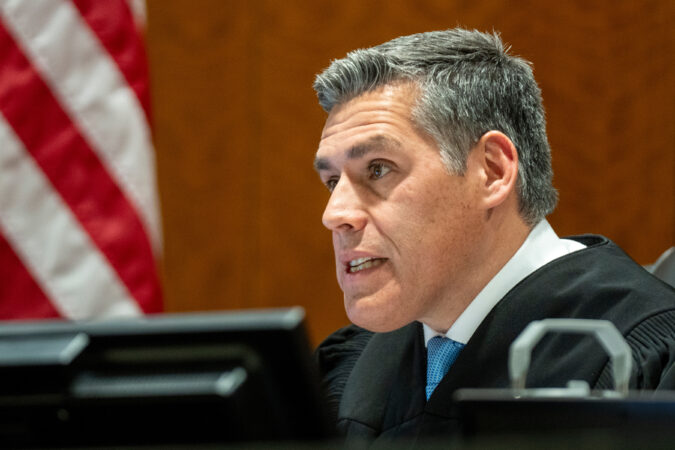
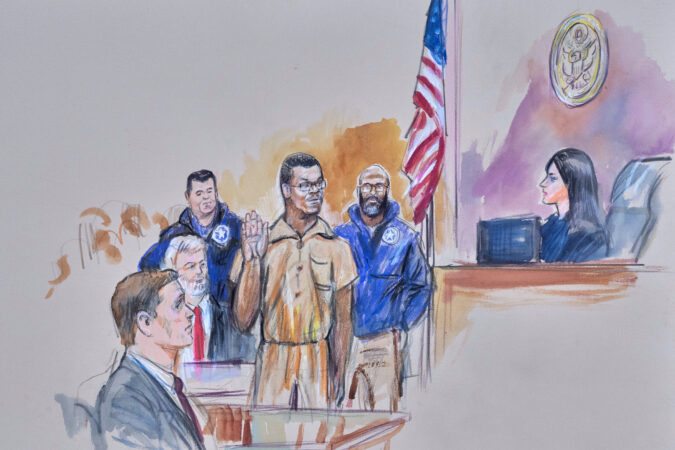
    A Utah judge on Monday ordered the release of a transcript from a closed-door hearing in October over whether the man charged with killing Charlie Kirk must be shackled during court proceedings.

    State District Judge Tony Graf said the transcript must be posted on the court docket by the end of the day. Attorneys for media outlets including the Associated Press had argued for details of the closed hearing to be made public.

    Prosecutors have charged Tyler Robinson with aggravated murder in the Sept. 10 shooting of the conservative activist on the Utah Valley University campus in Orem, just a few miles north of the Provo courthouse. They plan to seek the death penalty.

    Defense attorneys for Robinson in early October requested that he be allowed to appear in court in civilian clothes and without restraints, to prevent any bias against him among potential jurors.

    Days after an Oct. 24 closed-door hearing on the matter, Graf ruled that Robinson could appear in civilian clothes but must wear restraints. Utah court rules require defendants who are in custody to be restrained unless otherwise ordered.

    Graf wrote in an Oct. 27 order that restraints for Robinson would protect the safety of court staff and the defendant, by allowing him to be quickly secured if court proceedings were disrupted.

    But the judge said Monday that public transparency was “foundational” to the judicial system before ordering details of the closed hearing to be released. The judge ordered limited redactions to remove discussions of security protocols in the closely watched case.

    Graf also ordered the release of an audio recording of the hearing, again with redactions.

    Lawyers for the media wrote in recent filings that an open court “safeguards the integrity of the fact-finding process” while fostering public confidence in judicial proceedings. Criminal cases in the U.S. have long been open to the public, which the attorneys argued is proof that trials can be conducted fairly without restricting reporters.

    Graf has said in a separate order that Robinson’s restraints could not be shown by media outlets that publish or broadcast photographs of court proceedings.

    Graf briefly stopped a media livestream of a hearing earlier this month and ordered the camera be moved after Robinson’s attorneys said the stream showed the defendant’s shackles.

    In a separate ruling Monday, Graf denied a request from attorneys for the media who sought to intervene in the case. The judge said members of the press do not need to be formal parties in the proceedings to access court records.

    Robinson was not present in court Monday but appeared via audio link from the Utah County Jail.

    A preliminary hearing, where prosecutors will lay out their case against him, is scheduled for the week of May 18.

  • China stages military drills around Taiwan to warn ‘external forces’ after U.S., Japan tensions

    China stages military drills around Taiwan to warn ‘external forces’ after U.S., Japan tensions

    HONG KONG — China’s military on Monday dispatched air, navy, and missile units to conduct joint live-fire drills around the island of Taiwan, which Beijing called a “stern warning” against separatist and “external interference” forces. Taiwan said it was placing forces on alert and called the Chinese government “the biggest destroyer of peace.”

    Taiwan’s aviation authority said more than 100,000 international air travelers would be affected by flight cancellations or diversions.

    The drills came after Beijing expressed anger at what could be the largest-ever U.S. arms sale to the self-ruled territory, and at a statement by Japan’s prime minister, Sanae Takaichi, saying its military could get involved if China takes action against Taiwan. China says Taiwan must come under its rule.

    China’s military did not mention the United States and Japan in its statement on Monday, but Beijing’s foreign ministry accused Taiwan’s ruling party of trying to seek independence through requesting U.S. support.

    Taiwan’s Defense Ministry said rapid response exercises were underway, with forces on high alert. “The Chinese Communist Party’s targeted military exercises further confirm its nature as an aggressor and the biggest destroyer of peace,” it said.

    Beijing sends warplanes and navy vessels toward the island on a near-daily basis, and in recent years it has stepped up the scope and scale of the exercises.

    Senior Col. Shi Yi, spokesperson of China’s People’s Liberation Army’s Eastern Theater Command, said the drills would be conducted in the Taiwan Strait and areas to the north, southwest, southeast, and east of the island.

    Shi said activities would focus on sea-air combat readiness patrol, “joint seizure of comprehensive superiority” and blockades on key ports. It was the first large-scale military drill where the command publicly mentioned one goal was “all-dimensional deterrence outside the island chain.”

    “It is a stern warning against ‘Taiwan independence’ separatist forces and external interference forces, and it is a legitimate and necessary action to safeguard China’s sovereignty and national unity,” Shi said.

    China and Taiwan have been governed separately since 1949, when a civil war brought the Communist Party to power in Beijing. Defeated Nationalist Party forces fled to Taiwan. The island has operated since then with its own government, though the mainland’s government claims it as sovereign territory.

    Drills will continue

    China’s command on Monday deployed destroyers, frigates, fighters, bombers, and unmanned aerial vehicles, alongside long-range rockets, to the north and southwest of the Taiwan Strait. It carried out live-fire exercises against targets in the waters. Among other training, drills to test the capabilities of sea-air coordination and precise target hunting were conducted in the waters and airspace to the east of the strait.

    Hsieh Jih-sheng, deputy chief of the general staff for intelligence of the Taiwanese Defense Ministry, said that as of 3 p.m. Monday, 89 aircraft and drones were operating around the strait, with 67 of them entering the “response zone” — airspace under the force’s monitoring and response. The ministry detected 14 navy ships around the strait and four other warships in the Western Pacific, in addition to 14 coast guard vessels.

    “Conducting live-fire exercises around the Taiwan Strait … does not only mean military pressure on us. It may bring more complex impact and challenges to the international community and neighboring countries,” Hsieh told reporters.

    Military drills are set to continue Tuesday. Taiwan’s Civil Aviation Administration said Chinese authorities had issued a notice saying seven temporary dangerous zones would be set up around the strait to carry out rocket-firing exercises from 8 a.m. to 6 p.m., barring aircraft from entering them.

    The Taiwanese aviation authority said more than 850 international flights were initially scheduled during that period and the drills would affect over 100,000 travelers. Over 80 domestic flights, involving around 6,000 passengers, were also canceled, it added.

    Commercial airlines began to announce dozens of cancellations and delays for domestic routes across Taiwan, particularly ones along islands near China.

    The Chinese command released themed posters about the drills online accompanied by provocative wording. One depicted two shields with the Great Wall alongside three military aircraft and two ships. Its social media post said the drills were about the “Shield of Justice, Smashing Illusion,” adding that any foreign interlopers or separatists touching the shields would be eliminated.

    Last week, Beijing imposed sanctions against 20 U.S. defense-related companies and 10 executives, a week after Washington announced large-scale arms sales to Taiwan valued at more than $10 billion. It still requires approval by the U.S. Congress.

    Under U.S. federal law in place for many years, Washington is obligated to assist Taipei with its defense, a point that has become increasingly contentious with China. The U.S. and Taiwan had formal diplomatic relations until 1979, when President Jimmy Carter’s administration recognized and established relations with Beijing.

    Asked about the drills, Chinese foreign ministry spokesperson Lin Jian said Taiwan’s Democratic Progressive Party has attempted “to seek independence by soliciting U.S. support and even risk turning Taiwan into a powder keg and ammunition depot.”

    “External forces’ attempts to use Taiwan to contain China and to arm Taiwan will only embolden the Taiwan independence forces and push the Taiwan Strait toward a dangerous situation of military confrontation and war,” he said.

    There was no immediate U.S. statement on the drills.

    Taiwanese army on high alert

    Karen Kuo, spokesperson for the Taiwanese president’s office, said the drills were undermining the stability and security of the Taiwan Strait and Indo-Pacific region and openly challenging international law and order.

    “Our country strongly condemns the Chinese authorities for disregarding international norms and using military intimidation to threaten neighboring countries.” she said.

    Taiwan’s Defense Ministry released a video that featured its weapons and forces in a show of resilience. Multiple French Mirage-2000 aircraft conducted landings at an air force base.

    In October, the Taiwanese government said it would accelerate the building of a “Taiwan Shield” or “T-Dome” air defense system in the face of the military threat from China.

    The military tensions came a day after Taipei Mayor Chiang Wan-an said he hoped the Taiwan Strait would be associated with peace and prosperity, instead of “crashing waves and howling winds,” during a trip to Shanghai.

  • US pledges $2 billion for U.N. humanitarian aid as Trump warns agencies must ‘adapt or die’

    US pledges $2 billion for U.N. humanitarian aid as Trump warns agencies must ‘adapt or die’

    GENEVA — The United States on Monday announced a $2 billion pledge for U.N. humanitarian aid as President Donald Trump’s administration slashes U.S. foreign assistance and warns United Nations agencies to “adapt, shrink or die” in a time of new financial realities.

    The money is a small fraction of what the U.S. has contributed in the past but reflects what the administration believes is still a generous amount that will maintain America’s status as the world’s largest humanitarian donor.

    “This new model will better share the burden of U.N. humanitarian work with other developed countries and will require the U.N. to cut bloat, remove duplication, and commit to powerful new impact, accountability and oversight mechanisms,” Secretary of State Marco Rubio said on social media.

    The pledge creates an umbrella fund from which money will be doled out to agencies and priorities, a key part of U.S. demands for drastic changes across the U.N. that have alarmed many humanitarian workers and led to severe reductions in programs and services.

    The $2 billion is only a sliver of traditional U.S. humanitarian funding for U.N.-coordinated programs, which has run as high as $17 billion annually in recent years, according to U.N. data. U.S. officials say only $8 billion to $10 billion of that has been in voluntary contributions. The United States also pays billions in annual dues related to its U.N. membership.

    “The piggy bank is not open to organizations that just want to return to the old system,” Jeremy Lewin, the State Department official in charge of foreign assistance, said at a press conference Monday in Geneva. ”President Trump has made clear that the system is dead.”

    The State Department said “individual U.N. agencies will need to adapt, shrink, or die.” Critics say the Western aid cutbacks have been shortsighted, driven millions toward hunger, displacement, or disease, and harmed U.S. soft power around the world.

    A year of crisis in aid

    The move caps a crisis year for many U.N. organizations, including its refugee, migration, and food aid agencies. The Trump administration has already cut billions in U.S. foreign aid, prompting the agencies to slash spending, aid projects, and thousands of jobs. Other traditional Western donors have reduced outlays, too.

    The U.S. pledge for aid programs of the United Nations — the world’s top provider of humanitarian assistance and biggest recipient of U.S. humanitarian aid money — takes shape in a preliminary deal with the U.N. Office for the Coordination of Humanitarian Affairs, or OCHA, run by Tom Fletcher, a former British diplomat and government official.

    Fletcher, who has spent the past year lobbying U.S. officials not to abandon U.N. funding altogether, appeared optimistic at the deal’s signing in Geneva.

    “It’s a very, very significant landmark contribution. And a month ago, I would have anticipated the number would have been zero,” he told reporters. “And so I think, before worrying about what we haven’t got, I’d like to look at the millions of people whose lives will be saved, whose lives will be better because of this contribution, and start there.”

    Even as the U.S. pulls back its aid contributions, needs have ballooned worldwide: Famine has been recorded this year in parts of conflict-ridden Sudan and Gaza, and floods, drought, and natural disasters that many scientists attribute to climate change have taken many lives or driven thousands from their homes.

    The cuts will have major implications for U.N. affiliates like the International Organization for Migration, the World Food Program, and refugee agency UNHCR. They have already received billions less from the U.S. this year than under annual allocations from the Biden administration — or even during Trump’s first term.

    Now, the idea is that Fletcher’s office — which has aimed to improve efficiency — will become a funnel for U.S. and other aid money that can be redirected to those agencies, rather than scattered U.S. contributions to a variety of individual appeals for aid.

    Asked by reporters if the U.S. language of “adapt or die” worried him, Fletcher said, “If the choices are adapt or die, I choose adapt.”

    U.S. seeks aid consolidation

    U.S. officials say the $2 billion is just a first outlay to help fund OCHA’s annual appeal for money. Fletcher, noting the upended aid landscape, already slashed the request this year. Other traditional U.N. donors like Britain, France, Germany, and Japan have reduced aid allocations and sought reforms this year.

    “This humanitarian reset at the United Nations should deliver more aid with fewer tax dollars — providing more focused, results-driven assistance aligned with U.S foreign policy,” U.S. Ambassador to the United Nations Mike Waltz said.

    At its core, the change will help establish pools of funding that can be directed either to specific crises or countries in need. A total of 17 countries will be initially targeted, including Bangladesh, the Democratic Republic of the Congo, Haiti, Syria, and Ukraine.

    Two of the world’s most desperate countries, Afghanistan and Yemen, are not included, with U.S. officials citing aid diversion to the Taliban and Houthi rebels as concerns over restarting contributions.

    Also not mentioned on the list are the Palestinian territories, which officials say will be covered by money stemming from Trump’s as-yet-incomplete Gaza peace plan.

    The U.N. project, months in the making, stems from Trump’s longtime view that the world body has great promise but has failed to live up to it and has — in his eyes — drifted too far from its original mandate to save lives while undermining American interests, promoting radical ideologies, and encouraging wasteful, unaccountable spending.

    “No one wants to be an aid recipient. No one wants to be living in a UNHCR camp because they’ve been displaced by conflict,” Lewin said. “So the best thing that we can do to decrease costs, and President Trump recognizes this and that’s why he’s the president of peace, is by ending armed conflict and allowing communities to get back to peace and prosperity.”

  • Pipe bomb suspect told FBI he targeted U.S. political parties because they were ‘in charge,’ memo says

    Pipe bomb suspect told FBI he targeted U.S. political parties because they were ‘in charge,’ memo says

    WASHINGTON — The man accused of placing two pipe bombs in Washington on the eve of the Jan. 6, 2021, riot at the U.S. Capitol told investigators after his arrest that he believed someone needed to “speak up” for people who believed the 2020 election was stolen and that he wanted to target the country’s political parties because they were “in charge,” prosecutors said Sunday.

    The allegations were laid out in a Justice Department memo arguing that Brian J. Cole Jr., who was arrested earlier this month on charges of placing pipe bombs outside the headquarters of the Democratic and Republican national committees, should remain locked up while the case moves forward.

    The memo provides the most detailed government account of statements Cole is alleged to have made to investigators and points to evidence, including bomb-making components found at his home after his arrest, that officials say connects him to the act. The homemade bombs did not detonate and were discovered Jan. 6, the afternoon that rioters supporting President Donald Trump stormed the Capitol in an effort to halt the certification of his election loss to Democrat Joe Biden.

    Cole denied to investigators that his actions were connected to Congress or the events of Jan. 6, the memo says. But after initially disputing that he had any involvement in the pipe bombs, prosecutors say, he confessed to placing them outside the RNC and DNC and acknowledged feeling disillusioned by the 2020 election, fed up with both political parties, and sympathetic to claims by Trump and some of his allies that the contest had been stolen.

    According to the memo, he told agents who interviewed him that if people “feel that, you know, something as important as voting in the federal election is being tampered with, is being, you know, being — you know, relegated null and void, then, like, someone needs to speak up, right? Someone up top. You know, just to, just to at the very least calm things down.”

    He said “something just snapped” after “watching everything, just everything getting worse” and that he wanted to do something “to the parties” because “they were in charge,” according to the Justice Department’s memo. Prosecutors say when Cole was asked why he had placed the explosives at the RNC and DNC, he responded, “I really don’t like either party at this point.”

    Cole was arrested on the morning of Dec. 4 at his Woodbridge, Va., house in what law enforcement officials described as a major breakthrough in their nearly five-year-old investigation. His lawyers will also have an opportunity to state their position on detention ahead of a hearing set for Tuesday in Washington’s federal court.

    During a search of Cole’s home and car after his arrest, prosecutors say, investigators found shopping bags of bomb-making components. He at first denied having manufactured or placed the pipe bombs, prosecutors say, and when pressed about his whereabouts on the evening of Jan. 5, 2021, initially told investigators he had driven by himself to attend a protest related to the 2020 election.

    “I didn’t agree with what people were doing, like just telling half the country that they — that their — that they just need to ignore it. I didn’t think that was a good idea, so I went to the protest,” the memo quotes him as saying.

    But over the course of hours of questioning, prosecutors say, Cole acknowledged he went to Washington not for a protest but rather to place the bombs. He stowed the explosives in a shoebox in the back seat of his Nissan Sentra and placed one apiece outside the RNC and DNC headquarters, setting the timer on each for 60 minutes, the memo says.

    Neither device exploded, a fact Cole says he was “pretty relieved” about because he planted them at night because he did not want to kill anyone, the memo says.

    The fact that the devices did not detonate is due to luck, “not lack of effort,” prosecutors said in arguing that Cole poses a danger to the community and must remain detained pending trial.

    “The defendant’s choice of targets risked the lives not only of innocent pedestrians and office workers but also of law enforcement, first responders, and national political leaders who were inside of the respective party headquarters or drove by them on January 6, 2021, including the Vice President-elect and Speaker of the House,” prosecutors wrote.

  • Trump confirms U.S. ‘hit’ loading dock in Venezuela

    Trump confirms U.S. ‘hit’ loading dock in Venezuela

    President Donald Trump said Monday that unspecified U.S. forces were responsible for an explosion at a marine loading facility in Venezuela, escalating the confrontation with the South American country over alleged drug smuggling.

    “There was a major explosion in the dock area where they load the boats up with drugs,” Trump told reporters outside his Mar-a-Lago Club on Monday while greeting Israeli Prime Minister Benjamin Netanyahu. “And that is no longer around.”

    Trump has been raising pressure on Venezuela’s president, Nicolás Maduro, by building up naval forces in the region, seizing oil tankers and destroying 29 boats that U.S. officials said carried drugs.

    The military said Monday that it had conducted another strike against a boat accused of smuggling drugs in the eastern Pacific Ocean, killing two people.

    The strike, which was announced by U.S. Southern Command on social media, has brought the total number of known boat strikes to 30 and the number of people killed to at least 107 since early September.

    The shoreline attack would be the first on land, which Trump has been previewing for months.

    Trump declined to say if the military or the CIA carried out the strike. He previously authorized the CIA to conduct covert operations.

    “I know exactly who it was, but I don’t want to say who it was,” he said.

    The Pentagon declined to address questions about the U.S. military’s involvement in the attack. The CIA declined to comment.

    The president has declared a “non-international armed conflict” on drug cartels, with officials likening traffickers to al-Qaeda or Islamic State terrorists. Judges and lawmakers from both parties have questioned the administration’s legal authority for the strikes and for fast-tracked deportation of alleged gang members.

    Trump first referenced the shoreline attack on Friday in a radio interview with Republican donor John Catsimatidis, saying the strike occurred two nights earlier.

    “We just knocked out — I don’t know if you read or you saw — they have a big plant or big facility where they send the, you know, where the ships come from,” Trump said in the interview. “Two nights ago, we knocked that out. So we hit them very hard.”

    In October, Trump signed a document known as a “finding” that gave the CIA authority to undertake aggressive covert action against the Venezuelan government and associated drug traffickers, according to two people familiar with the document. The document does not explicitly order the CIA to overthrow Maduro, but it authorizes steps that could lead to that outcome, according to the people familiar with it.

    Trump’s precise instructions to the CIA are highly classified. The CIA has moved to beef up its presence in the region, surging personnel to the Caribbean and surrounding area to collect human and electronic intelligence, the people familiar with the matter said.