Category: Associated Press

  • Maxey, Edgecombe help the 76ers hand the Knicks their second home loss of the season

    Maxey, Edgecombe help the 76ers hand the Knicks their second home loss of the season

    NEW YORK — Tyrese Maxey scored 30 points, VJ Edgecombe had 23 and the 76ers became just the second visiting team to win at Madison Square Garden this season, beating the New York Knicks 116-107 on Friday night.

    Andre Drummond, starting with Joel Embiid out because of an illness and right knee injury management, had 19 points and 13 rebounds. The center was 3 for 4 from 3-point range.

    The 76ers snapped the Knicks’ six-game winning streak by outscoring them 28-20 in the fourth quarter, when Maxey scored 11 points and Jalen Brunson missed all five of his shots and was scoreless.

    Brunson finished with 22 points, nine assists and six rebounds, but shot 7 for 22 a night after making the go-ahead 3-pointer with 4.4 seconds left in a victory at Indiana. Karl-Anthony Towns also scored 22 points and grabbed 11 rebounds.

    In their first home game since winning the NBA Cup on Tuesday, the Knicks fell to 13-2 at home. They had been off to their best start at MSG since 1992-93.

    They celebrated the Cup title before the game, though they have chosen not to hang a banner to commemorate it, as previous champions the Lakers and Bucks did.

    The Knicks wasted Mitchell Robinson’s best game of the season. The center had season highs of 21 points and 16 rebounds and was a stunning 7 for 8 at the free-throw line after he came into the game 6 for 27 (22.2%) for the season.

    Mikal Bridges also scored 21 points.

    Maxey and Edgecombe combined for 18 points in the fourth quarter after the 76ers led by one going into the period. The Knicks were 1 for 8 on 3s in the quarter.

  • U.S. military launches strikes in Syria against Islamic State fighters after American deaths

    U.S. military launches strikes in Syria against Islamic State fighters after American deaths

    WASHINGTON — The Trump administration launched military strikes Friday in Syria to “eliminate” Islamic State group fighters and weapons sites in retaliation for an ambush attack that killed two U.S. troops and an American interpreter almost a week ago.

    A U.S. official described it as “a large-scale” strike that hit 70 targets in areas across central Syria that had IS infrastructure and weapons. Another U.S. official, who also spoke on condition of anonymity to discuss sensitive operations, said more strikes should be expected.

    The attack was conducted using F-15 Eagle jets, A-10 Thunderbolt ground attack aircraft, and AH-64 Apache helicopters, the officials said. F-16 fighter jets from Jordan and HIMARS rocket artillery also were used, one official said.

    “This is not the beginning of a war — it is a declaration of vengeance. The United States of America, under President Trump’s leadership, will never hesitate and never relent to defend our people,” Defense Secretary Pete Hegseth said on social media.

    President Donald Trump had pledged “very serious retaliation” after the shooting in the Syrian desert, for which he blamed IS. The troops were among hundreds of U.S. troops deployed in eastern Syria as part of a coalition fighting the terrorist group.

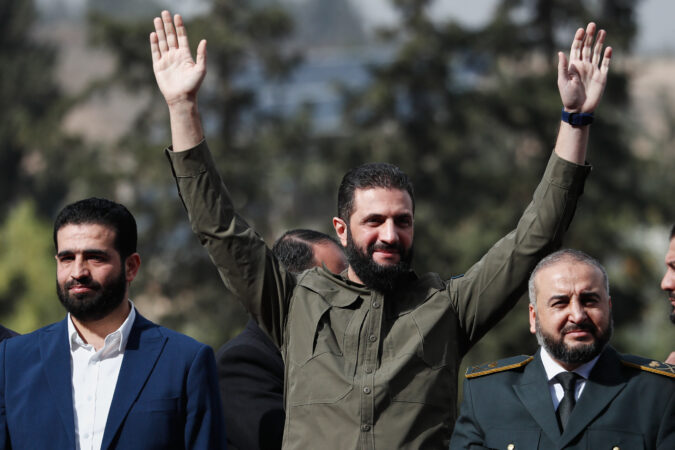
    Trump in a social media post said the strikes were targeting IS “strongholds.” He reiterated his support for Syrian President Ahmad Al-Sharaa, who he said was “fully in support” of the U.S. effort to target the militant group.

    Trump also offered an all-caps threat, warning the group against attacking U.S. personnel again.

    “All terrorists who are evil enough to attack Americans are hereby warned — YOU WILL BE HIT HARDER THAN YOU HAVE EVER BEEN HIT BEFORE IF YOU, IN ANY WAY, ATTACK OR THREATEN THE U.S.A.,” the president added.

    The attack was a major test for the warming ties between the United States and Syria since the ouster of autocratic leader Bashar Assad a year ago. Trump has stressed that Syria was fighting alongside U.S. troops and said al-Sharaa was “extremely angry and disturbed by this attack,” which came as the U.S. military is expanding its cooperation with Syrian security forces.

    Syria’s foreign ministry in a statement on X following the launch of U.S. strikes said that last week’s attack “underscores the urgent necessity of strengthening international cooperation to combat terrorism in all its forms” and that Syria is committed “to fighting ISIS and ensuring that it has no safe havens on Syrian territory and will continue to intensify military operations against it wherever it poses a threat.”

    IS has not claimed responsibility for the attack on the U.S. service members, but the group has claimed responsibility for two attacks on Syrian security forces since, one of which killed four Syrian soldiers in Idlib province. The group in its statements described al-Sharaa’s government and army as “apostates.” While al-Sharaa once led a group affiliated with al-Qaida, he has had a long-running enmity with IS.

    Syrian state television reported that the U.S. strikes hit targets in rural areas of Deir ez-Zor and Raqqa provinces and in the Jabal al-Amour area near Palmyra. It said they targeted “weapons storage sites and headquarters used by ISIS as launching points for its operations in the region.”

    Trump this week met privately with the families of the slain Americans at Dover Air Force Base in Delaware before he joined top military officials and other dignitaries on the tarmac for the dignified transfer, a solemn and largely silent ritual honoring U.S. service members killed in action.

    The guardsmen killed in Syria last Saturday were Sgt. Edgar Brian Torres-Tovar, 25, of Des Moines, and Sgt. William Nathaniel Howard, 29, of Marshalltown, according to the U.S. Army. Ayad Mansoor Sakat, of Macomb, Mich., a U.S. civilian working as an interpreter, was also killed.

    The shooting nearly a week ago near the historic city of Palmyra also wounded three other U.S. troops as well as members of Syria’s security forces, and the gunman was killed. The assailant had joined Syria’s internal security forces as a base security guard two months ago and recently was reassigned because of suspicions that he might be affiliated with IS, Interior Ministry spokesperson Nour al-Din al-Baba has said.

    The man stormed a meeting between U.S. and Syrian security officials who were having lunch together and opened fire after clashing with Syrian guards.

    When asked for further information, the Pentagon referred AP to Hegseth’s social media post.

  • Rep. Elise Stefanik says she’s suspending her campaign for New York governor, won’t seek reelection

    Rep. Elise Stefanik says she’s suspending her campaign for New York governor, won’t seek reelection

    ALBANY, N.Y. — Rep. Elise Stefanik announced Friday that she is suspending her campaign for New York governor and will not seek reelection to Congress, bowing out of the race in a surprise statement that said “it is not an effective use of our time” to stay in what was expected to be a bruising Republican primary.

    Stefanik, a Republican ally of President Donald Trump, said in a post on X that she was confident of her chances in the primary against Bruce Blakeman, a Republican county official in New York City’s suburbs. But she said she wanted to spend more time with her young son and family.

    “I have thought deeply about this and I know that as a mother, I will feel profound regret if I don’t further focus on my young son’s safety, growth, and happiness — particularly at his tender age,” she said.

    Stefanik has been an intense critic of incumbent Democratic Gov. Kathy Hochul, who is also seeking reelection but faces a primary challenge from her own lieutenant governor, Antonio Delgado.

    The announcement marks an abrupt end, at least for now, for a once-promising career for Stefanik. She was the youngest woman ever elected to Congress when she won her first campaign in 2014 at just 30 years old, representing a new generation of Republicans making inroads in Washington. She ultimately rose to her party’s leadership in the House when she became the chair of the House Republican Conference in 2021.

    First viewed as a moderate when she came to Washington, Stefanik became far more conservative as Trump began to dominate the party. Once someone who refused to say Trump’s name, she became one of his top defenders during his first impeachment inquiry. She would go on to vote against certifying the 2020 election results, even after a violent mob stormed the Capitol on Jan. 6.

    Stefanik was expected to have a bitter Republican primary against Blakeman, who also counts himself as an ally of Trump. The president had so far seemed keen on avoiding picking a side in the race, telling reporters recently: “He’s great, and she’s great. They’re both great people.”

    Stefanik’s decision follows a clash with Speaker Mike Johnson, whom she accused of lying before embarking on a series of media interviews criticizing him. In one with The Wall Street Journal, she called Johnson a “political novice” and said he wouldn’t be reelected speaker if the vote were held today.

    The tumultuous early December episode appeared to cool when Johnson said he and Stefanik had a “great talk.”

    “I called her and I said, ‘Why wouldn’t you just come to me, you know?’” Johnson said. “So we had some intense fellowship about that.”

    Still, Stefanik, the chairwoman of the House Republican leadership, has not fully walked back her criticisms. A Dec. 2 social media post remains online in which, after a provision she championed was omitted from a defense authorization bill, Stefanik accused Johnson of falsely claiming he was unaware of it, calling it “more lies from the Speaker.”

    State Republican Chairman Ed Cox said the party respected Stefanik’s decision and thanked her for her efforts.

    “Bruce Blakeman has my endorsement and I urge our State Committee and party leaders to join me,” Cox said in a prepared statement. “Bruce is a fighter who has proven he knows how to win in difficult political terrain.”

  • Justice Department releases limited set of files tied to Epstein sex trafficking investigation

    Justice Department releases limited set of files tied to Epstein sex trafficking investigation

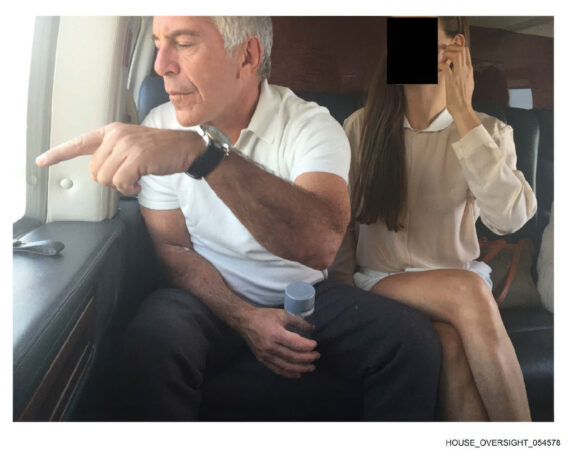
    WASHINGTON — The Justice Department released thousands of files Friday about convicted sex offender Jeffrey Epstein but the incomplete document dump did not break significant ground about the long-running criminal investigations of the financier or his ties to wealthy and powerful individuals.

    The files included a small number of photos of President Donald Trump, sparing the White House for now from having to confront fresh revelations about an Epstein relationship that the administration for months has tried in vain to push past.

    It did, however, feature a series of never-before-seen photos of Bill Clinton from a trip that the former president appears to have take with Epstein decades ago.

    Reaction to the disclosures broke along mostly partisan lines. Democrats and some Republicans seized on the limited release to accuse the Justice Department of failing to meet a congressionally set deadline to produce the Epstein files. White House officials on social media gleefully promoted a photo of Clinton in a hot tub with a person with a blacked-out face. The Trump administration touted the release as a show of its commitment to transparency, ignoring the fact that the Justice Department just months ago said no more files would be released. Congress then passed a law mandating it.

    The records, consisting largely of pictures but also including call logs, grand jury testimony, interview transcripts, and other documents, arrived amid extraordinary anticipation that they might offer the most detailed look yet at nearly two decades worth of government scrutiny of Epstein’s sexual abuse of young women and underage girls. Their release has long been demanded by a public hungry to learn whether any of Epstein’s associates knew about or participated in the abuse. Epstein’s accusers have also sought answers about why federal authorities shut down their initial investigation into the allegations in 2008.

    Yet the release, replete with redactions. seemed unlikely to satisfy the public clamor for information given how many investigative records the department indicated it was continuing to withhold.

    In a letter to Congress obtained by The Associated Press, Deputy Attorney General Todd Blanche wrote that the Justice Department was continuing to review files in its possession and expected additional disclosures by the end of the year. The department also said it was withholding some documents under exemptions allowed in the law and was redacting names of victims. The department expects to complete its document production by the end of the year, Blanche said.

    Bowing to political pressure from fellow Republicans, Trump on Nov. 19 signed a bill giving the Justice Department 30 days to release most of its files and communications related to Epstein, including information about the investigation into his death in a federal jail. The law’s passage, which set a deadline for Friday, was a remarkable display of bipartisanship that overcame months of opposition from Trump and Republican leadership.

    Limited details about Trump

    The released files include a small number of photos of Trump, which appear to have been known for decades, including two in which Trump and Epstein are posing with now-first lady Melania Trump in February 2000 at an event at Trump’s Palm Beach club, Mar-a-Lago, before the pair’s friendship ruptured.

    Trump was friends with Epstein for years before the two had a falling-out. Neither he nor Clinton has ever been accused of wrongdoing in connection with Epstein, and the mere inclusion of someone’s name in files from the investigation does not imply otherwise.

    Attorney General Pam Bondi said last month that she had ordered a top federal prosecutor to investigate Epstein’s ties to Trump’s political foes, including Clinton. Bondi acted after Trump pressed for such an inquiry, though he did not explain what supposed crimes he wanted the Justice Department to investigate.

    In July, Trump dismissed some of his own supporters as “weaklings” for falling for “the Jeffrey Epstein hoax.” But both Trump and House Speaker Mike Johnson (R., La.) failed to prevent the legislation from coming to a vote.

    Trump did a U-turn on the files once it became clear that congressional action was inevitable. He insisted that the Epstein matter had become a distraction to the Republican agenda and that releasing the records was the best way to move on.

    After nearly two decades of court action and prying by reporters, a voluminous number of records related to Epstein had already been public well before Froday, including flight logs, address books, email correspondence, police reports, grand jury records, courtroom testimony, and transcripts of depositions of his accusers, his staffers and others.

    New photos of Clinton

    Senior Trump White House aides took to X to promote photos in the Epstein files that show Clinton with women whose faces are redacted.

    Karoline Leavitt, the White House press secretary, wrote “Oh my!” and added a shocked face emoji in response to a photo of Clinton in a hot tub with a woman whose face was redacted.

    “They can release as many grainy 20-plus-year-old photos as they want, but this isn’t about Bill Clinton,” Clinton spokesman Angel Ureña said in a statement.

    “There are two types of people here,” he said. “The first group knew nothing and cut Epstein off before his crimes came to light. The second group continued relationships after that. We’re in the first. No amount of stalling by people in the second group will change that.”

    The Epstein investigations

    Police in Palm Beach, Fla., began investigating Epstein in 2005 after the family of a 14-year-old girl reported she had been molested at his mansion. The FBI joined the investigation, and authorities gathered testimony from multiple underage girls who said they had been hired to give Epstein sexual massages.

    Ultimately, though, prosecutors gave Epstein a deal that allowed him to avoid federal prosecution. He pleaded guilty to state prostitution charges involving someone under age 18 and was sentenced to 18 months in jail.

    Epstein’s accusers then spent years in civil litigation trying to get that plea deal set aside. One of those women, Virginia Giuffre, accused Epstein of arranging for her to have sexual encounters, starting at age 17, with numerous other men, including billionaires, famous academics, U.S. politicians, and Andrew Mountbatten-Windsor, then known as Britain’s Prince Andrew. Mountbatten-Windsor denied ever having sex with Giuffre, but King Charles III stripped him of his royal titles this year after Giuffre’s memoir was published after she died.

    Prosecutors never brought charges in connection with Giuffre’s claims, but her account fueled conspiracy theories about supposed government plots to protect the powerful. Giuffre died by suicide at her farm in Western Australia in April at age 41.

    Federal prosecutors in New York brought new sex trafficking charges against Epstein in 2019, but he killed himself in jail a month after his arrest. Prosecutors then charged Epstein’s longtime confidant, British socialite Ghislaine Maxwell, with recruiting underage girls for Epstein to abuse.

    Maxwell was convicted in late 2021 and is serving a 20-year prison sentence, though she was moved from a low-security federal prison in Florida to a minimum-security prison camp in Texas after she was interviewed over the summer by Blanche. Her lawyers argued that she never should have been tried or convicted.

    The Justice Department in July said it had not found any information that could support prosecuting anyone else.

  • Rubio is hopeful about Russia-Ukraine and Gaza peace efforts but clear about the challenges

    WASHINGTON — Secretary of State Marco Rubio was hopeful but clear about the challenges facing the Trump administration’s Russia-Ukraine and Israel-Hamas peace efforts and defended increasing U.S. military pressure on Venezuela during a marathon end-of-year news conference Friday.

    In a freewheeling exchange with reporters running more than two hours, Rubio offered no predictions for timing or success on any of those three issues. He also said he was proud of President Donald Trump’s radical overhaul in foreign assistance and that the administration was working to reach a humanitarian ceasefire in Sudan in time for the new year.

    Rubio’s rare and lengthy appearance in the State Department briefing room came as key meetings on Gaza and Russia-Ukraine are being held in Miami on Friday and Saturday after a tumultuous year in U.S. foreign policy. Rubio has assumed the additional role of national security adviser and emerged as a staunch defender of Trump’s “America First” priorities on issues ranging from visa restrictions to a shakeup of the State Department bureaucracy.

    Talks on Ukraine and Gaza are planned

    Rubio spoke about peace efforts as national security officials from Britain, France, and Germany were taking part in talks in Florida with Ukraine’s lead negotiator, Rustem Umerov, and envoys Steve Witkoff and Jared Kushner to discuss the latest iteration of Trump’s Ukraine-Russia peace proposal.

    A White House official, who spoke on condition of anonymity because of the sensitivity of the matter, said Witkoff and Kushner, who is Trump’s son-in-law, also would see Egyptian, Turkish, and Qatari officials Friday for talks on how to get to the next phase of Trump’s plan to end the Israel-Hamas war in Gaza.

    Progress on Trump’s Gaza ceasefire plan has moved slowly since it was announced in October. U.S. officials have been pushing to get the plan implemented by setting up a “Board of Peace” that would oversee the territory after two years of war and create an international stabilization force that would police the area.

    “I think we owe them a few more answers before we get there,” Rubio said when asked about contributions to the stabilization force. After establishing the Board of Peace and a Palestinian technocratic group to govern Gaza, “that will allow us to firm up the stabilization force, including how it’s going to be paid for, what the rules of engagement are, what their role will be in demilitarization.”

    In a whirlwind of diplomacy, Witkoff and Kushner are also set to meet Saturday with Russian President Vladimir Putin’s adviser Kirill Dmitriev in Miami, officials said. Rubio, who will be at his home in Florida for the holidays, said he would probably attend the meeting.

    But he said there would be no peace deal unless both Ukraine and Russia can agree to the terms, making it impossible for the U.S. to force a deal on anyone. Instead, the U.S. is trying to “figure out if we can nudge both sides to a common place.”

    “We understand that you’re not going to have a deal unless both sides have to give, and both sides have to get,” Rubio said. “Both sides will have to make concessions if you’re going to have a deal. You may not have a deal. We may not have a deal. It’s unfortunate.”

    The U.S. proposal has been through numerous versions with Trump seesawing back and forth between offering support and encouragement for Ukraine and then seemingly sympathizing with Putin’s hard-line stances by pushing Ukrainian President Volodymyr Zelensky to agree to territorial concessions. Kyiv has rejected that concession in return for security guarantees intended to protect Ukraine from future Russian incursions.

    Rubio defends U.S. policy toward Venezuela

    On Venezuela, Rubio has been a leading proponent of military operations against suspected drug-running vessels targeted in the Caribbean Sea and eastern Pacific Ocean since early September. The actions have ramped up pressure on leftist Venezuelan President Nicolás Maduro, who has been charged with narcoterrorism in the U.S.

    Rubio defended Trump’s prerogatives on Venezuela and said the administration believes “nothing has happened that requires us to notify Congress or get congressional approval or cross the threshold into war.” He added, “We have very strong legal opinions.”

    In an NBC News interview Friday, Trump would not rule out a war with Venezuela. Rubio and Defense Secretary Pete Hegseth have publicly maintained that the current operations are directed at “narcoterrorists” trying to smuggle deadly drugs into the United States. Maduro has insisted the real purpose is to force him from office.

    Rubio sidestepped a direct question about whether the U.S. wants “regime change in 2026” in the South American country.

    “We have a regime that’s illegitimate, that cooperates with Iran, that cooperates with Hezbollah, that cooperates with narcotrafficking and narcoterrorist organizations,” Rubio said, “including not just protecting their shipments and allowing them to operate with impunity, but also allows some of them to control territory.”

    Other peacemaking efforts at risk

    Trump has spoken of wanting to be remembered as a “peacemaker,” but ceasefires his administration helped craft are already in trouble due to renewed military action between Cambodia and Thailand as well as Rwanda and Congo. Rubio, however, said those deals created a list of commitments that can now be used to push the parties back to peace.

    “Those commitments today are not being kept,” Rubio said of the Thailand-Cambodia conflict, which now threatens to reignite following Thai airstrikes. “The work now is to bring them back to the table.”

    In a departure from his predecessors who often limited questions to just four, Rubio responded to queries, including a handful in Spanish, from nearly every reporter seated in the 59-seat briefing room, which has not been used since the State Department ended its twice-weekly press briefings in August.

    Since taking over the department, Rubio has moved swiftly to implement Trump’s “America First” agenda, helping dismantle the U.S. Agency for International Development and reducing the size of the diplomatic corps through a significant reorganization. Previous administrations have distributed billions of dollars in foreign assistance over the past five decades through USAID.

    Critics have said the decision to eliminate USAID and slash foreign aid spending has cost lives overseas, although Rubio and others have denied this, pointing to ongoing disaster relief operations in the Philippines, the Caribbean and elsewhere, along with new global health compacts being signed with countries that previously had programs run by USAID.

    “We have a limited amount of money that can be dedicated to foreign aid and humanitarian assistance,” Rubio said. “And that has to be applied in a way that furthers our national interest.”

  • Syria welcomes the permanent repeal of sweeping U.S. sanctions

    Syria welcomes the permanent repeal of sweeping U.S. sanctions

    DAMASCUS, Syria — Syria’s government and its allies on Friday welcomed the final lifting of the most draconian sanctions imposed on the country in recent decades.

    The U.S. Congress imposed the so-called Caesar Act sanctions on Syria’s government and financial system in 2019 to punish then-President Bashar Assad for human rights abuses during the country’s nearly 14-year Civil War that began in 2011.

    After Assad was ousted in a lightning rebel offensive in December 2024, advocates — including some who had previously lobbied for the imposition of the sanctions — pushed to have the penalties removed. They argued that the sanctions were preventing international investors from launching Reconstruction projects and blocking Syria from rebuilding its battered economy and infrastructure.

    U.S. President Donald Trump, who had previously lifted the penalties temporarily by executive order, signed off on the final repeal late Thursday after Congress passed it as part of the country’s annual defense spending bill.

    Some lawmakers had pushed for making the repeal conditional on steps by the new Sunni Islamist-dominated Syrian government to protect religious minorities, among other measures. In the end, the sanctions were repealed without conditions but with a requirement for periodic reports to Congress on Syria’s progress on issues including minority rights and counterterrorism measures.

    Syria’s foreign ministry in a statement Friday thanked the U.S. for the move and said it will “contribute to alleviating the burdens on the Syrian people and open the way for a new phase of recovery and stability.”

    It called for Syrian businesspeople and foreign investors to “explore investment opportunities and participate in Reconstruction,” the cost of which the World Bank has estimated at $216 billion.

    Central Bank Governor Abdulkader Husrieh said in a statement that the Caesar Act repeal will facilitate the country’s reintegration in the international financial system by allowing it to seek a sovereign credit rating.

    “Syria will likely start with a low rating, which is normal for countries emerging from conflict,” he said. “The real value lies in the benchmark set by the rating and the road map it provides for improvement.”

    Turkey, Saudi Arabia and Qatar, regional allies of the new Syrian government led by interim President Ahmad al-Sharaa, also welcomed the move.

    “We hope that this step will contribute to strengthening stability, security, and prosperity in Syria by further promoting international cooperation toward the country’s Reconstruction and development,” Turkish Foreign Ministry spokesman Oncu Keceli said in a statement.

    The Saudi foreign ministry commended “the significant and positive role played by U.S. President Donald Trump” in lifting the sanctions.

    Trump previously said that he had moved to remove the penalties at the urging of Crown Prince Mohammed bin Salman, the Saudi de facto ruler, and Turkish President Recep Tayyip Erdogan.

    Also Friday, the United Kingdom — which had previously removed its own broad sanctions against the Syrian government and financial institutions — imposed new sanctions on organizations and individuals it said were “involved in violence against civilians” in Syria.

    They include four people affiliated with Assad’s government in either a military or financial role as well as two people and three armed groups affiliated with the military of the new Syrian government who were allegedly responsible for attacks on civilians during sectarian violence on Syria’s coast earlier this year.

    Clashes erupted in March after a group of Assad loyalists attacked security forces. They spiraled into revenge killings as militants from Syria’s Sunni majority — some of them officially affiliated with the new government’s security forces — targeted members of the Alawites sect to which Assad belongs, regardless of whether they were involved in the insurgency. Hundreds of civilians were killed.

  • Head of workplace rights agency urges white men to report discrimination

    Head of workplace rights agency urges white men to report discrimination

    The head of the U.S. agency for enforcing workplace civil rights posted a social media call-out urging white men to come forward if they have experienced race or sex discrimination at work.

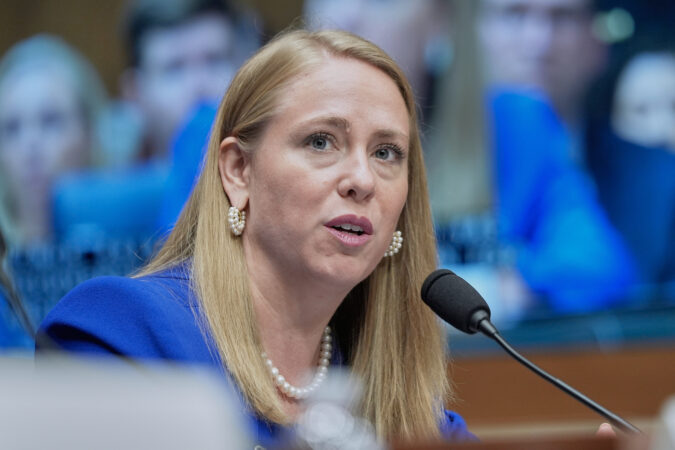
    “Are you a white male who has experienced discrimination at work based on your race or sex? You may have a claim to recover money under federal civil rights laws,” U.S. Equal Employment Opportunity Commission Chair Andrea Lucas, a vocal critic of diversity, equity and inclusion, wrote in an X post Wednesday evening with a video of herself. The post urged eligible workers to reach out to the agency “as soon as possible” and referred users to the agency’s fact sheet on “DEI-related discrimination” for more information.

    Lucas’ post, viewed millions of times, was shared about two hours after Vice President JD Vance posted an article he said “describes the evil of DEI and its consequences,” which also received millions of views. Lucas responded to Vance’s post saying: “Absolutely right @JDVance. And precisely because this widespread, systemic, unlawful discrimination primarily harmed white men, elites didn’t just turn a blind eye; they celebrated it. Absolutely unacceptable; unlawful; immoral.”

    She added that the EEOC “won’t rest until this discrimination is eliminated.”

    A representative for Vance did not respond to a request for comment. Lucas said Thursday evening that “the gaslighting surrounding what DEI initiatives have entailed in practice ends now. We can’t attack and remedy a problem if we refuse to call it out for what it is — race or sex discrimination — or acknowledge who is harmed.”

    She added that “the EEOC’s doors are open to all,” and Title VII of the Civil Rights Act of 1964 “protects everyone, including white men.”

    Since being elevated to acting chair of the EEOC in January, Lucas has been shifting the agency’s focus to prioritize “rooting out unlawful DEI-motivated race and sex discrimination,” aligning with President Donald Trump’s own anti-DEI executive orders. Trump named Lucas as the agency’s chair in November.

    Earlier this year, the EEOC along with the Department of Justice issued two “technical assistance” documents attempting to clarify what might constitute “DEI-related Discrimination at Work” and providing guidance on how workers can file complaints over such concerns. The documents took broad aim at practices such as training, employee resource groups and fellowship programs, warning such programs — depending on how they’re constructed — could run afoul of Title VII of the Civil Rights Act, which prohibits employment discrimination based on race and gender.

    Those documents have been criticized by former agency commissioners as misleading for portraying DEI initiatives as legally fraught.

    David Glasgow, executive director of the Meltzer Center for Diversity, Inclusion, and Belonging at the NYU School of Law, said Lucas’s latest social media posts demonstrate a “fundamental misunderstanding of what DEI is.”

    “It’s really much more about creating a culture in which you get the most out of everyone who you’re bringing on board, where everyone experiences fairness and equal opportunity, including white men and members of other groups,” Glasgow said.

    The Meltzer Center tracks lawsuits that are likely to affect workplace DEI practices, including 57 cases of workplace discrimination. Although there are instances in which it occurs on a case-by-case basis, Glasgow said he has not seen “any kind of systematic evidence that white men are being discriminated against.”

    He pointed out that Fortune 500 CEOs are overwhelmingly white men, and that relative to their share of the population, the demographic is overrepresented in corporate senior leadership, Congress, and beyond.

    “If DEI has been this engine of discrimination against white men, I have to say it hasn’t really been doing a very good job at achieving that,” Glasgow said.

    Jenny Yang, a former EEOC chair and now a partner at law firm Outten & Golden, said it is “unusual” and “problematic” for the head of the agency to single out a particular demographic group for civil rights enforcement.

    “It suggests some sort of priority treatment,” Yang said. “That’s not something that sounds to me like equal opportunity for all.”

    On the other hand, the agency has done the opposite for transgender workers, whose discrimination complaints have been deprioritized or dropped completely, Yang said.

    The EEOC has limited resources, and must accordingly prioritize which cases to pursue. But treating charges differently based on workers’ identities goes against the mission of the agency, she said.

    “It worries me that a message is being sent that the EEOC only cares about some workers and not others,” Yang said.

  • Turning Point USA’s Erika Kirk backs Vice President JD Vance’s potential 2028 presidential bid

    Turning Point USA’s Erika Kirk backs Vice President JD Vance’s potential 2028 presidential bid

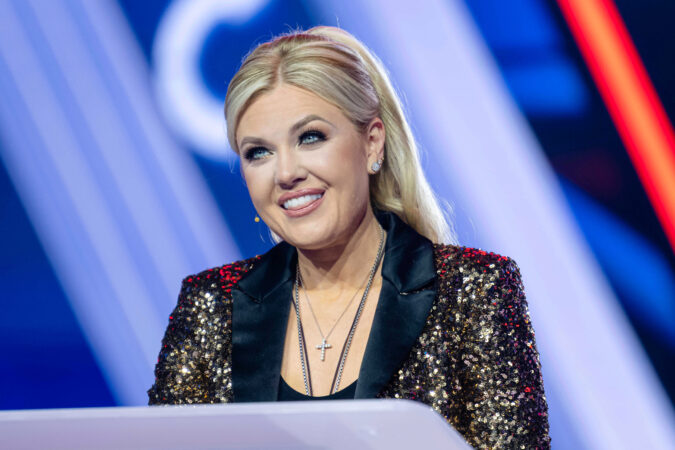
    PHOENIX — Erika Kirk, widow of Turning Point USA founder Charlie Kirk and the organization’s new leader, endorsed a potential presidential bid by Vice President JD Vance on the opening night of the conservative youth group’s annual conference.

    After telling the cheering crowd that Turning Point would help keep Congress in Republican hands next year, she said, “We are going to get my husband’s friend JD Vance elected for 48 in the most resounding way possible.”

    Vance would be the 48th president if he takes office after President Donald Trump.

    Kirk’s statement on Thursday is the most explicit backing of Vance’s possible candidacy by a woman who has been positioned as a steward to her late husband’s legacy. Charlie Kirk had become a powerbroker and bridge builder within the conservative movement before he was assassinated in September.

    Vance was close with Charlie Kirk, whose backing helped enable his rapid political rise. After the assassination, Vance and his wife joined Erika Kirk in Utah to fly her husband’s remains home to Arizona aboard Air Force Two.

    Vance is set to speak to Turning Point on Sunday, the conference’s last day. The convention has featured the usual spectacle and energy that have characterized the organization’s events, but the proceedings have also been marred by intense infighting among conservative commentators and estranged allies who have turned on each other in the wake of Kirk’s death.

    As Trump’s vice president, Vance is well-positioned to inherit the movement that remade the Republican Party and twice sent Trump to the White House. But it would be no small task for him to hold together the Trump coalition, which is built around personal loyalty to him more than shared political goals.

    Various wings of the conservative movement already are positioning to steer the party after Trump’s presidency, a skirmish that’s becoming increasingly public and pointed.

    Turning Point, with its thousands of young volunteers, would provide a major boost for Vance in a fractious primary. Now 41, Vance would be the first Millennial president if elected, a natural fit for the organization built around mobilizing youth.

    Trump has repeatedly mused about running for a third term despite a constitutional prohibition. However, he’s also speculated about a 2028 ticket featuring Vance and Secretary of State Marco Rubio.

    Although Rubio previously ran for president in 2016, he has said he would support Vance as Trump’s successor.

  • Motive still unknown after suspect in the Brown attack and MIT professor’s killing is found dead

    Motive still unknown after suspect in the Brown attack and MIT professor’s killing is found dead

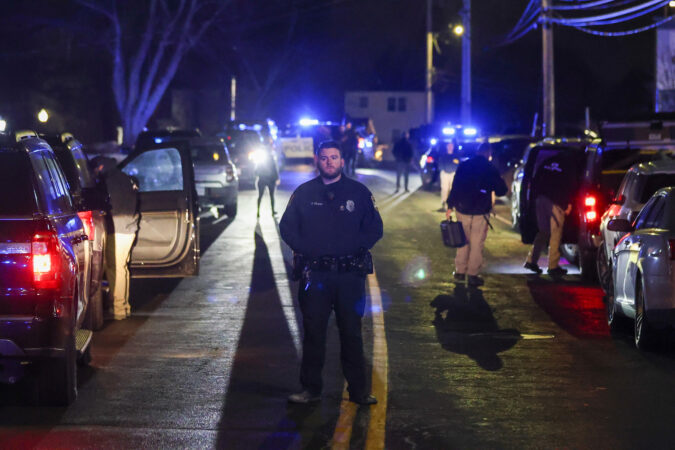
    A frantic search for the suspect in last weekend’s mass shooting at Brown University ended at a New Hampshire storage facility where authorities discovered the man dead inside and then revealed he also was suspected of killing a Massachusetts Institute of Technology professor.

    Claudio Neves Valente, 48, a former Brown student and Portuguese national, was found dead Thursday night from a self-inflicted gunshot wound, said Col. Oscar Perez, the Providence police chief.

    Investigators believe he is responsible for fatally shooting two students and wounding nine other people in a Brown lecture hall last Saturday, then killing MIT professor Nuno F.G. Loureiro two days later at his home in the Boston suburbs, nearly 50 miles (80 kilometers) from Providence. Perez said as far as investigators know, Neves Valente acted alone.

    Portugal’s top diplomat said Friday that the government was taken aback by revelations that a Portuguese man is the main suspect in the mass shooting at Brown and the killing of an MIT professor who was of the same nationality. Police said they were contacted by U.S. authorities Thursday once Neves Valente was named.

    Foreign Minister Paulo Rangel said Portugal has provided “very broad cooperation” in the case. He said in comments to the national news agency Lusa that “the investigation is far from over.”

    Brown University President Christina Paxson said Neves Valente was enrolled there as a graduate student studying physics from the fall of 2000 to the spring of 2001.

    “He has no current affiliation with the university,” she said.

    Neves Valente and Loureiro attended the same academic program at a university in Portugal between 1995 and 2000, U.S. attorney for Massachusetts Leah B. Foley said. Loureiro graduated from the physics program at Instituto Superior Técnico, Portugal’s premier engineering school, in 2000, according to his MIT faculty page. The same year, Neves Valente was let go from his temporary student support and faculty liaison position at the Lisbon university, according to an archive of a termination notice from the school’s then-president in February 2000.

    Neves Valente, who was born in Torres Novas, Portugal, about 75 miles (121 kilometers) north of Lisbon, had come to Brown on a student visa. He eventually obtained legal permanent resident status in September 2017, Foley said. It wasn’t immediately clear where he was between taking a leave of absence from the school in 2001 and getting the visa in 2017. His last known residence was in Miami.

    After officials revealed the suspect’s identity, President Donald Trump suspended the green card lottery program that allowed Neves Valente to stay in the United States.

    There are still “a lot of unknowns” in regard to motive, Rhode Island Attorney General Peter Neronha said. “We don’t know why now, why Brown, why these students and why this classroom,” he said.

    Tip helps investigators connect the dots

    The FBI previously said it knew of no links between the Rhode Island and Massachusetts shootings.

    Police credited a person who had several encounters with Neves Valente for providing a crucial tip that led authorities to him.

    After police shared security video of a person of interest, the witness — known only as “John” in a Providence police affidavit — recognized him and posted his suspicions on the social media forum Reddit. Reddit users urged him to tell the FBI, and John said he did.

    John said he encountered Neves Valente about two hours before the attack in a bathroom in the engineering building, which was where the shooting occurred, and noticed he was wearing inappropriate clothing for the weather, according to the affidavit. Still before the attack, he again bumped into Neves Valente a couple blocks away and saw him suddenly turn away from a Nissan sedan when he saw John.

    “When you do crack it, you crack it. And that person led us to the car, which led us to the name,” Neronha said.

    His tip pointed investigators to a Nissan Sentra with Florida plates. That enabled Providence police to tap into a network of more than 70 street cameras operated around the city by surveillance company Flock Safety. Those cameras track license plates and other vehicle details.

    After leaving Rhode Island, Providence officials said Neves Valente stuck a Maine license plate over his rental car’s plate to help conceal his identity.

    Investigators found footage of Neves Valente entering an apartment building near Loureiro’s in a Boston suburb. About an hour later, Neves Valente was seen entering the Salem, New Hampshire, storage facility where he was found dead, Foley said. He had with him a satchel and two firearms, Neronha said.

    Victims include renowned physicist, political organizer and aspiring doctor

    Loureiro, a 47-year-old physicist and fusion scientist, joined MIT in 2016 and was named last year to lead the school’s Plasma Science and Fusion Center, one of its largest laboratories. The scientist from Viseu, Portugal, had been working to explain the physics behind astronomical phenomena such as solar flares.

    In Lisbon, he was remembered as a highly regarded researcher and instructor for “all the contributions he gave and what he could still have given, all the equations left unwritten,” said Professor Bruno Gonçalves, head of the Institute for Plasmas and Nuclear Fusion at Instituto Superior Técnico.

    Gonçalves added, “It is difficult to imagine in what context someone would want to harm someone that works in this field.”

    The two Brown students killed during a study session for final exams were 19-year-old sophomore Ella Cook and 18-year-old freshman MukhammadAziz Umurzokov. Cook was active in her Alabama church and served as vice president of the Brown College Republicans. Umurzokov’s family immigrated to the U.S. from Uzbekistan when he was a child, and he aspired to be a doctor.

    As for the wounded, three had been discharged and six were in stable condition Thursday, officials said.

    Although Brown officials say there are 1,200 cameras on campus, the attack happened in an older part of the engineering building that has few, if any, cameras. And investigators believe the shooter entered and left through a door that faces a residential street bordering campus, which might explain why the cameras Brown does have didn’t capture footage of the person.

    ___

    Associated Press reporters Barry Hatton and Helena Alves in Lisbon, Portugal, Mark Scolforo in Harrisburg, Pennsylvania, Audrey McAvoy in Honolulu, Hallie Golden in Seattle and Matt O’Brien in Providence contributed.


  • The spread of famine in the Gaza Strip has been averted but Palestinians there still face starvation, experts say

    The spread of famine in the Gaza Strip has been averted but Palestinians there still face starvation, experts say

    TEL AVIV, Israel — The spread of famine has been averted in the Gaza Strip, but the situation remains critical with the entire Palestinian territory still facing starvation, the world’s leading authority on food crises said Friday.

    The new report by The Integrated Food Security Phase Classification, or IPC, comes months after the group said famine was occurring in Gaza City and likely to spread across the territory without a ceasefire and an end to humanitarian aid restrictions.

    There were “notable improvements” in food security and nutrition following an October ceasefire and no famine has been detected, the report said. Still, the IPC warned that the situation remains “highly fragile” and the entire Gaza Strip is in danger of starvation with nearly 2,000 people facing catastrophic levels of hunger through April.

    In the worst-case scenario, including renewed conflict and a halt of aid, the whole Gaza Strip is at risk of famine. Needs remain immense, and sustained, expanded and unhindered aid is required, the IPC said.

    Palestinians wait to receive donated food at a community kitchen in Gaza City on Thursday, Oct. 23.

    The Israeli military agency in charge of coordinating aid to Gaza, known as COGAT, said Friday that it strongly rejected the findings.

    The agency adheres to the ceasefire and allows the agreed amount of aid to reach the strip, COGAT said, noting the aid quantities “significantly exceed the nutritional requirements of the population” in Gaza according to accepted international methodologies, including the United Nations.

    The Israeli Foreign Ministry said Friday that it also rejects the findings, saying the IPC’s report doesn’t reflect reality in Gaza and more than the required amount of aid was reaching the territory. The ministry said the IPC ignores the vast volume of aid entering Gaza, because the group relies primarily on data related to U.N. trucks, which account for only 20% of all aid trucks.

    The IPC said that the report totals include commercial and U.N. trucks and its information is based on U.N. and COGAT data.

    Israel’s government has rejected the IPC’s past findings, with Israeli Prime Minister Benjamin Netanyahu calling the previous report an “outright lie.”

    Palestinians grab sacks of flour from a moving truck carrying World Food Programme aid as it drives through Deir al-Balah in central Gaza on Nov. 15.

    Ceasefire offsets famine

    The report’s findings come as the shaky U.S.-brokered ceasefire between Israel and Hamas reaches a pivotal point as Phase 1 nears completion, with the remains of one hostage still in Gaza. The more challenging second phase has yet to be implemented and both sides have accused the other of violating the truce.

    The IPC in August confirmed the grim milestone of famine for the first time in the Middle East and warned it could spread south to Deir al-Balah and Khan Younis. More than 500,000 people in Gaza, about a quarter of its population, faced catastrophic levels of hunger, with many at risk of dying from malnutrition-related causes, the August report said.

    Friday’s report said that the spread of famine had been offset by a significant reduction in conflict, a proposed peace plan and improved access for humanitarian and commercial food deliveries.

    There is more food on the ground and people now have two meals daily, up from one meal each day in July. That situation “is clearly a reversal of what had been one of the most dire situations where we were during the summer,” Antoine Renard, the World Food Program’s director for the Palestinian territories, told U.N. reporters in a video briefing from Gaza City Thursday.

    Food access has “significantly improved,” he said, warning that the greatest challenge now is adequate shelter for Palestinians, many of whom are soaked and living in water-logged tents. Aid groups say nearly 1.3 million Palestinians need emergency shelter as winter sets in.

    Aid is still not enough

    Displacement is one of the key drivers behind the food insecurity, with more than 70% of Gaza’s population living in makeshift shelters and relying on assistance. Other factors such as poor hygiene and sanitation as well as restricted access to food are also exacerbating the hunger crisis, the IPC said.

    While humanitarian access has improved compared with previous analysis periods, that access fluctuates daily and is limited and uneven across the Gaza Strip, the IPC said.

    To prevent further loss of life, expanded humanitarian assistance including food, fuel, shelter and health care is urgently needed, according to the group’s experts, who warned that over the next 12 months, more than 100,000 children between the ages of 6 months and 5 years are expected to suffer from acute malnutrition and require treatment.

    Figures recently released by Israel’s military suggest that it hasn’t met the ceasefire stipulation of allowing 600 trucks of aid into Gaza each day, though Israel disputes that finding. American officials with the U.S.-led center coordinating aid shipments into Gaza also say deliveries have reached the agreed upon levels.

    Aid groups say despite an increase of assistance, aid still isn’t reaching everyone in need after suffering two years of war.

    “This is not a debate about truck numbers or calories on paper. It’s about whether people can actually access food, clean water, shelter and health care safely and consistently. Right now, they cannot,” said Bushra Khalidi, Oxfam’s policy lead for Israel and the occupied Palestinian territory.

    People must be able to rebuild their homes, grow food and recover and the conditions for that are still being denied, she said.

    Even with more products in the markets, Palestinians say they can’t afford it. “There is food and meat, but no one has money,” said Hany al-Shamali, who was displaced from Gaza City.

    “How can we live?”