Category: Associated Press

  • Four Republicans, including Pa. Reps. Fitzpatrick, Bresnahan and Mackenzie, defy Speaker Johnson to force House vote on ACA subsidies

    Four Republicans, including Pa. Reps. Fitzpatrick, Bresnahan and Mackenzie, defy Speaker Johnson to force House vote on ACA subsidies

    WASHINGTON — Four centrist Republicans broke with Speaker Mike Johnson on Wednesday and signed onto a Democratic-led petition that will force a House vote on extending for three years an enhanced pandemic-era subsidy that lowers health insurance costs for millions of Americans.

    The stunning move comes after House Republican leaders pushed ahead with a health care bill that does not address the soaring monthly premiums that millions of people will soon endure when the tax credits for those who buy insurance through the Affordable Care Act expire at year’s end.

    Democrats led by Minority Leader Hakeem Jeffries of New York needed 218 signatures to force a floor vote on their bill, which would extend the subsides for three years.

    Republican Reps. Brian Fitzpatrick, Robert Bresnahan and Ryan Mackenzie, all from Pennsylvania, and Mike Lawler of New York signed on Wednesday morning, pushing it to the magic number of 218. A vote on the subsidy bill could come as soon as January under House rules.

    “Unfortunately, it is House leadership themselves that have forced this outcome.” Fitzpatrick said in a statement.

    Johnson told reporters Wednesday that “I have not lost control of the House” and he noted that Republicans have a razor-thin majority that allows a small number of members to employ procedures that would not usually be successful in getting around leadership.

    “These are not normal times,” said Johnson, R-La.

    Origins of a Republican revolt

    The revolt against GOP leadership came after days of talks centered on the health care subsidies.

    Johnson had discussed allowing more politically vulnerable GOP lawmakers a chance to vote on bills that would temporarily extend the subsidies while also adding changes such as income caps for beneficiaries. But after days of discussions, the leadership sided with the more conservative wing of the party’s conference, which has assailed the subsidies as propping up a failed marketplace through the ACA, which is widely known as “Obamacare.”

    House Republicans pushed ahead Wednesday a 100-plus-page health care package without the subsidies, instead focusing on long-sought GOP proposals designed to expand insurance coverage options for small businesses and the self-employed.

    Fitzpatrick and Lawler tried to add a temporary extension of the subsidies to the bill, but were denied.

    “Our only request was a floor vote on this compromise, so that the American People’s voice could be heard on this issue. That request was rejected. Then, at the request of House leadership I, along with my colleagues, filed multiple amendments, and testified at length to those amendments,” Fitzpatrick said. “House leadership then decided to reject every single one of these amendments.

    “As I’ve stated many times before, the only policy that is worse than a clean three-year extension without any reforms, is a policy of complete expiration without any bridge,” Fitzpatrick said.

    Lawler, in a social media post, similarly said that “the failure of leadership” to permit a vote had left him with “no choice” but to sign the petition. He urged Johnson to bring the plan up for an immediate floor vote.

    Jeffries, for several weeks, had called on Republicans to sign his discharge petition. He particularly challenged Republicans in competitive congressional districts to join the effort if they really wanted to prevent premium increases for their constituents.

    “Mike Johnson needs to bring the bill to the floor today,” Jeffries said. “Our position from the very beginning was that we are standing on the right side of the American people who want to see the Affordable Care Act tax credits extended, and we’re appreciative that we now have the bipartisan coalition to get that done.”

    Path ahead is uncertain

    Even if the subsidy bill were to pass the House, which is far from assured, it would face an arduous climb in the Republican-led Senate.

    Republicans last week voted down a three-year extension of the subsidies and proposed an alternative that also failed. But in an encouraging sign for Democrats, four Republican senators crossed party lines to support their proposal.

    Senate Majority Leader John Thune, R-S.D., argued against the Democratic extension as “an attempt to disguise the real impact of Obamacare’s spiraling health care costs.”

  • Warner Bros asks its investors to reject the takeover bid from Paramount Skydance, saying Netflix’s will be better for customers

    Warner Bros asks its investors to reject the takeover bid from Paramount Skydance, saying Netflix’s will be better for customers

    NEW YORK — Warner Bros. is telling shareholders to reject a takeover bid from Paramount Skydance, saying that a rival bid from Netflix will be better for customers.

    “We strongly believe that Netflix and Warner Bros. joining forces will offer consumers more choice and value, allow the creative community to reach even more audiences with our combined distribution, and fuel our long-term growth,” Warner Bros. said Wednesday. “We made this deal because their deep portfolio of iconic franchises, expansive library, and strong studio capabilities will complement—not duplicate—our existing business.”

    Paramount went hostile with its bid last week, asking shareholders to reject the deal with Netflix favored by the board of Warner Bros.

    Paramount’s bid isn’t off the table altogether. While Wednesday’s letter to shareholders means Paramount’s is not the offer favored by the board at Warner Bros., shareholders can still decide to tender their shares in favor of Paramount’s offer for the entire company — including cable stalwarts CNN and Discovery.

    Unlike Paramount’s bid, the offer from Netflix does not include buying the cable operations of Warner Bros. An acquisition by Netflix, if approved by regulators and shareholders, will close only after Warner completes its previously announced separation of its cable operations.

  • States sue Trump administration again over billions in withheld electric vehicle charging funds

    States sue Trump administration again over billions in withheld electric vehicle charging funds

    DETROIT — Sixteen states and the District of Columbia are suing President Donald Trump’s administration for what they say is the unlawful withholding of more than $2 billion dollars in funding for two electric vehicle charging programs, according to a federal lawsuit announced Tuesday.

    The lawsuit filed Tuesday in the U.S. District Court for the Western District of Washington is the latest legal battle that several states are pursuing over funding for EV charging infrastructure that they say was obligated to them by Congress under former President Joe Biden, but that the Department of Transportation and Federal Highway Administration are “impounding.”

    “The Trump Administration’s illegal attempt to stop funding for electric vehicle infrastructure must come to an end,” California Attorney General Rob Bonta said in a release. “This is just another reckless attempt that will stall the fight against air pollution and climate change, slow innovation, thwart green job creation, and leave communities without access to clean, affordable transportation.”

    The Department of Transportation did not immediately respond to request for comment.

    The Trump administration in February ordered states to halt spending money for EV charging that was allocated in the bipartisan infrastructure law passed under the previous administration.

    Several states filed a lawsuit in May against the administration for withholding the funding from the $5 billion National Electric Vehicle Infrastructure program for a nationwide charging buildout. A federal judge later ordered the administration to release much of the funding for chargers in more than a dozen states.

    Tuesday’s separate lawsuit addresses the withholding of funding obligations for two other programs: $1.8 billion for the Charging and Fueling Infrastructure Grant program, as well as about $350 million in Electric Vehicle Charger Reliability and Accessibility Accelerator money.

    Tuesday’s lawsuit is led by attorneys general from California and Colorado, joined by the attorneys general of Arizona, Delaware, Illinois, Maryland, Massachusetts, Michigan, New Jersey, New York, Oregon, Rhode Island, Vermont, Washington, Wisconsin, the District of Columbia, and the governor of Pennsylvania, Josh Shapiro.

    The Trump administration has been hostile to EVs and has dismantled several policies friendly to cleaner cars and trucks that were put in place under Biden, in favor of policies that instead align with Trump’s oil and gas industry agenda.

    Once in office a second time, President Trump immediately ordered an end to what he has called Biden’s “EV mandate.” While Biden targeted for half of new vehicle sales in the U.S. to be electric by 2030, policies did not force American consumers to buy or automakers to sell electric vehicles.

    Biden did set stringent tailpipe emissions and fuel economy rules in an effort to encourage more widespread EV uptake, as the auto industry would have had to meet both sets of requirements with a greater number of EVs in their sales mix.

    Under the Biden administration, consumers could also receive up to $7,500 in tax incentives off the price of an EV purchase.

    The Trump administration has proposed rolling back both tailpipe rules and the gas mileage standards, cut the fines to automakers for not meeting those standards, and eliminated the EV credits.

    The lawsuit comes amid those regulatory changes and as the pace of EV sales have slowed in the U.S. as mainstream buyers remain concerned about both charging availability and the price of the vehicles.

    New EVs transacted for an average of $58,638 last month, compared with $49,814 for a new vehicle overall, according to auto buying resource Kelley Blue Book.

    Automakers, meanwhile, have responded to consumers accordingly.

    Earlier this week, Ford Motor Co. announced it was pivoting away from its once-ambitious, multibillion-dollar electrification strategy in lieu of more hybrid-electric and more fuel-efficient gasoline-powered vehicles.

    In the spring, Honda Motor Co. also said it would take a significant step back from its EV efforts.

    Still, EVs are gaining traction in other areas around the world.

  • Hyundai and Kia will repair millions of vehicles under a deal to fix anti-theft technology

    Hyundai and Kia will repair millions of vehicles under a deal to fix anti-theft technology

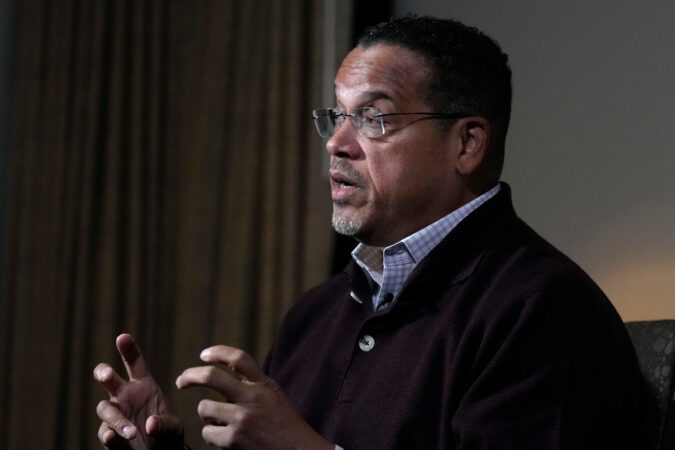
    Automakers Hyundai and Kia must offer free repairs to millions of models under a settlement announced Tuesday by Minnesota’s attorney general, who led an effort by dozens of states that argued the vehicles weren’t equipped with proper anti-theft technology, leaving them vulnerable to thefts.

    Under the nationwide settlement, the companies will offer a free repair to all eligible vehicles at a cost that could top $500 million, Minnesota Attorney General Keith Ellison said. Hyundai and Kia must also outfit all future vehicles sold in the U.S. with a key piece of technology called an engine immobilizer and pay up to $4.5 million of restitution to people whose vehicles were damaged by thieves.

    The settlement was reached by 35 states, including Pennsylvania, New Jersey, California, and New York. The vehicles eligible for fixes date as far back as 2011 and as recently as 2022. About 9 million eligible vehicles were sold nationwide.

    Thefts of Hyundai and Kia vehicles soared in part because beginning in 2021, videos posted to TikTok and other social media demonstrated how someone could steal a car with just a screwdriver and a USB cable. Minneapolis reported an 836% increase in Hyundai and Kia thefts from 2021 to 2022. Ellison announced an investigation into the automakers in early 2023.

    Ellison said the two companies installed engine immobilizers on cars sold in Mexico and Canada, but not widely in the U.S., leading to car thefts, crimes, and crashes that injured and even killed people, including teenagers.

    “This crisis that we’re talking about today started in a boardroom, traveled through the Internet, and ended up in tragic results when somebody stole those cars,” Ellison said at a news conference.

    He was joined by Twin Cities officials, a woman whose mother was killed when a stolen Kia crashed into her parents’ vehicle, and a man whose car was stolen nine times — as recently as Monday night, and including seven times after a previous software fix.

    Under the settlement, Hyundai and Kia will install a zinc sleeve to stop would-be thieves from cracking open a vehicle’s ignition cylinder and starting the car.

    Eligible customers will have one year from the date of the companies’ notice to get the repair at an authorized dealership. The repairs are expected to be available from early 2026 through early 2027.

    In a statement, Kia said the agreement is the latest step it has taken to help its customers and prevent thefts.

    “Kia is eager to continue working with law enforcement officers and officials at federal, state, and local levels to combat criminal car theft, and the role social media has played in encouraging it, and we remain fully committed to upholding vehicle security,” the company said.

    Hyundai said, “We will continue to take meaningful action to support our customers and ensure peace of mind.”

  • Rob Reiner’s son Nick charged with 2 counts of murder in killing of his parents

    Rob Reiner’s son Nick charged with 2 counts of murder in killing of his parents

    LOS ANGELES — Rob Reiner’s son Nick Reiner was charged Tuesday with two counts of first-degree murder in the killing of his parents, which stunned their communities in Hollywood and Democratic politics, where both were widely beloved.

    Nick Reiner, 32, is charged with killing Rob Reiner, the 78-year-old actor and director, and his wife, Michele Singer Reiner, District Attorney Nathan Hochman announced at a news conference with Los Angeles Police Chief Jim McDonnell.

    “Their loss is beyond tragic and we will commit ourselves to bringing their murderer to justice,” Hochman said.

    Along with the two counts of first-degree murder, prosecutors added special circumstances of multiple murders and a special allegation that the defendant used a dangerous weapon: a knife. The additions could mean a greater sentence.

    Hochman said his office had not decided whether to seek the death penalty.

    “This case is heartbreaking and deeply personal, not only for the Reiner family and their loved ones but for our entire city,” McDonnell said. “We will continue to support the Reiner family and ensure that every step forward is taken with care, dignity, and resolve.”

    The announcement came two days after the couple were found dead with apparent stab wounds in their home in the upscale Brentwood neighborhood on the west side of Los Angeles. Nick Reiner did not resist when he was arrested hours later in the Exposition Park area near the University of Southern California, about 14 miles from the crime scene, police said.

    Nick Reiner had been expected to make an initial court appearance Tuesday, but his attorney Alan Jackson said he was not brought from the jail to the courthouse for medical reasons and the appearance would not come before Wednesday.

    An email sent to Jackson seeking comment on the charges was not immediately answered. Nick Reiner has not entered a plea.

    Rob Reiner was the Emmy-winning costar of the sitcom All in the Family who went on to direct films including When Harry Met Sally … and The Princess Bride. He was an outspoken liberal activist for decades. Michele Singer Reiner was a photographer, a movie producer, and an advocate for LGBTQ+ rights. They had been married for 36 years.

    Representatives for the Reiner family did not respond to requests for comment. Police have not said anything about a motive for the killings.

    Nick Reiner is being held in jail without bail. He was arrested several hours after his parents were found dead on Sunday, police said.

    Jackson is a high-profile lawyer who represented Harvey Weinstein at his Los Angeles trial and Karen Read at her trial in Massachusetts. He was a central figure in the HBO documentary on the Read case.

    Investigators believe Rob and Michele Singer Reiner died from stab wounds, a law enforcement official told the Associated Press. The official, who was briefed on the investigation, could not publicly discuss the details and spoke on condition of anonymity.

    The killings were especially shocking given the warm comic legacy of the family. Rob Reiner was the son of comedy legend Carl Reiner, who died in 2020 at age 98.

    Kathy Bates, who won an Oscar as the star of Rob Reiner’s 1990 film Misery, was among those paying tribute to the couple.

    “I loved Rob,” Bates said in a statement. “He was brilliant and kind, a man who made films of every genre to challenge himself as an artist. He also fought courageously for his political beliefs. He changed the course of my life. Michele was a gifted photographer.”

    Former President Bill Clinton called the couple “good, generous people who made everyone who knew them better.”

    “Hillary and I are heartbroken by the tragic deaths of our friends Rob and Michele Reiner,” he said in a statement. “They inspired and uplifted millions through their work in film and television.”

    Three months ago, Nick Reiner was photographed with his parents and siblings at the premiere of his father’s film Spinal Tap 2: The End Continues.

    He had spoken publicly of his struggles with addiction, cycling in and out of treatment facilities with bouts of homelessness in between through his teen years. Rob and Nick Reiner explored — and seemed to improve — their relationship through the making of the 2016 film Being Charlie.

    Nick Reiner cowrote and Rob Reiner directed the film about the struggles of an addicted son and a famous father. It was not autobiographical but included several elements of their lives.

    “It forced us to understand ourselves better than we had,” Rob Reiner told the AP in 2016. “I told Nick while we were making it, I said, ‘You know, it doesn’t matter, whatever happens to this thing, we won already.’”

    Rob Reiner was long one of the most prolific directors in Hollywood, and his work included some of the most memorable and endlessly watchable movies of the 1980s and ’90s, including This is Spinal Tap and A Few Good Men.

    He met Michele Singer Reiner on the set of When Harry Met Sally …, and their meeting would inspire the film’s shift to a happy ending, with stars Billy Crystal — one of Reiner’s closest friends for decades — and Meg Ryan ending up together on New Year’s Eve.

    The Reiners were outspoken advocates for liberal causes and major Democratic donors.

    President Donald Trump on Monday blamed Rob Reiner’s outspoken opposition to the president for the actor-director’s killing, delivering the unsubstantiated claim in a social media post that seemed intent on decrying his opponents even in the face of a tragedy.

  • Investigators release video timeline of the Brown campus shooting suspect’s movements

    Investigators release video timeline of the Brown campus shooting suspect’s movements

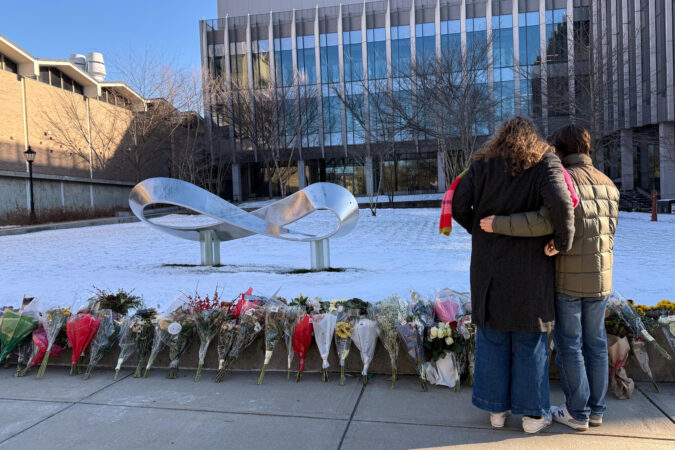
    PROVIDENCE, R.I. — Authorities on Tuesday released a new video timeline and a slightly clearer image of the man suspected in the Brown University shooting, though investigators provided no indication that they were any closer to zeroing in on his identity.

    Investigators have been canvassing Providence homes, yards, and dumpsters in search of videos or other clues that might help them figure out who was behind Saturday’s campus shooting, which killed two students and wounded nine others.

    In all of the videos made public, the suspect’s face was masked or turned away, and authorities have been able to give only a vague description of him as being stocky and about 5 feet, 8 inches tall.

    The FBI’s video timeline includes new footage of the man that was recorded before the attack. It shows him running at times along quiet and empty residential streets near campus. Authorities believe he was casing the area, Col. Oscar Perez, the Providence police chief, said in a news conference Tuesday.

    Perez asked residents to look at their camera systems in the area to see if they have any footage that might help officials identify him.

    “We’re looking for a moment that is shorter than someone taking a breath,” Perez said.

    Perez said there was no clear video of the gunman from inside the engineering building where the shooting took place. Attorney General Peter Neronha said there were cameras in the newer part of the building but “fewer, if any, cameras” where the shooting happened “because it’s an older building.”

    The Brown University president said the campus is equipped with 1,200 cameras.

    Neronha said that from his perspective, the investigation was going “really well.” He pleaded for public patience in locating the suspected killer.

    Providence is understandably tense, and additional police were sent to city schools on Tuesday to reassure worried parents that their kids will be safe. Ten state troopers were assigned to support the local police sent to beef up security at schools, district Superintendent Javier Montañez said.

    “We recognize that the tragic incident at Brown University, occurring so close to where many of our students and families live and learn, is deeply unsettling and frightening,” he wrote in an email to parents.

    Alex Torres-Perez, a spokesperson for the Providence Public School District, said the district canceled all after-school activities and field trips for the week “as a precaution.”

    A city on edge

    Locals expressed fear as well as defiance as the investigation continued Tuesday.

    “Of course it feels scary. But at the same time, I think that if the person really wanted to scare us, we shouldn’t allow him or her to win,” said Tatjana Stojanovic, a Providence parent who lives next door to the Brown campus. ”Despite all of that, we should just go about our lives. I mean, obviously, you cannot forget this. But I think we shouldn’t cower and just sort of stop living despite what has happened.

    The attack and the shooter’s escape have raised questions about campus security, including a lack of security cameras, and led to calls for better locks on campus doors. Others pushed back, though, saying such efforts do little to address the real issue.

    “The issue isn’t the doors, it’s the guns,” said Zoe Kass, a senior who fled the engineering building as police stormed in Saturday. “And all of this, like, ‘Oh, the doors need to be locked.’ I get it, parents are scared. But any of us could have opened the door for the guy if the doors had been locked.”

    After spending of her life in schools where every door was locked and school shootings persisted, Kass said, such security measures only created “the illusion of safety.”

    FBI Boston special agent in charge Ted Docks said the bureau had 30 people in the city to support survivors, victims, and loved ones, noting that the toll a tragedy like this takes on them is “immeasurable.”

    A fuller picture of the victims emerges

    Meanwhile, details have emerged about the victims, who were in the first-floor classroom in the school’s engineering building studying for a final.

    Two of the wounded students had been released as of Tuesday, Brown spokesperson Amanda McGregor said. Of the seven people who remained hospitalized, Mayor Brett Smiley said, one remained in critical condition, five were in critical but stable condition, and one was in stable condition.

    One of the wounded students, 18-year-old freshman Spencer Yang of New York City, told the New York Times and the Brown Daily Herald that there was a mad scramble after the gunman entered the room. Many students ran toward the front, but Yang said he wound up on the ground between some seats and was shot in the leg. He expected to be discharged within days.

    Jacob Spears, 18, a freshman from Evans, Ga., was shot in the stomach, “but through sheer adrenaline and courage, he managed to run outside, where he was aided by others,” according to a GoFundMe site organized for him.

    Ella Cook, a 19-year-old sophomore who was one of the two students killed, was vice president of the Brown College Republicans and was beloved in her church in Birmingham, Ala. In announcing her death Sunday, the Rev. R. Craig Smalley described her as “an incredible grounded, faithful, bright light” who encouraged and “lifted up those around her.”

    The other student killed was MukhammadAziz Umurzokov, an 18-year-old freshman from Brandermill, Va., who was majoring in biochemistry and neuroscience. His family immigrated to the U.S. from Uzbekistan when he was a kid.

    As a child, Umurzokov suffered a neurological condition that required surgery, and he later wore a back brace because of scoliosis, his sister Samira Umurzokova told the Associated Press by phone. He knew from an early age that he wanted to be a neurosurgeon to help others like him.

    “He had so many hardships in his life, and he got into this amazing school and tried so hard to follow through with the promise he made when was 7 years old,” she said.

  • Susie Wiles, White House chief of staff, criticizes Bondi and opines on Trump in Vanity Fair

    Susie Wiles, White House chief of staff, criticizes Bondi and opines on Trump in Vanity Fair

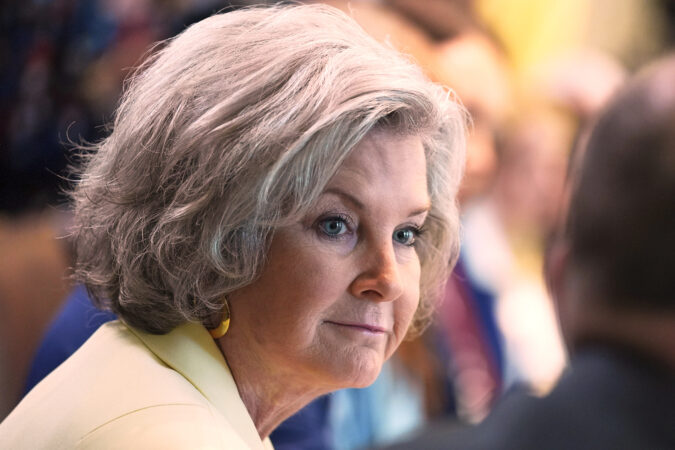
    WASHINGTON — Susie Wiles, President Donald Trump’s understated but influential chief of staff, criticized Attorney General Pam Bondi’s handling of the Jeffrey Epstein case and offered an unvarnished take on her boss and those in his orbit in interviews published Tuesday in Vanity Fair that sent the West Wing into damage control.

    The startlingly candid remarks from Wiles, the first woman ever to hold her current post, included describing the president as someone with “an alcoholic’s personality” and Vice President JD Vance as a calculating “conspiracy theorist.” The observations from Wiles, who rarely speaks publicly given the behind-the-scenes nature of her job running the White House, prompted questions about whether the chief of staff might be on her way out.

    Wiles pushed back after the piece’s publication, describing it as a “hit piece” that lacked context, and White House press secretary Karoline Leavitt said the “entire administration is grateful for her steady leadership and united fully behind her.”

    As for Trump, he told the New York Post that he had not read the piece and, when asked if he retained confidence in Wiles, said: “Oh, she’s fantastic.”

    Trump also agreed that he does have the personality of an alcoholic, describing himself as having “a very possessive personality.”

    A senior White House official, who spoke on condition of anonymity to describe internal thinking, dismissed the notion that Wiles might leave because of the profile, saying if top staffers were rattled by negative news coverage, “none of us would work here.”

    Wiles’ candor was so unusual that Rahm Emanuel, who served as chief of staff to former President Barack Obama, said that when he first saw her comments, he thought he was reading a spoof. He said he could not recall a chief of staff giving such a candid interview — at least “not while you hold the title.”

    Emanuel said the role often involves public remarks that promote the president’s agenda, but not sharing personal views about “everything, everybody” in the White House.

    His advice to Wiles: “Next time there’s a meal, bring a food taster.”

    Candor from the ‘ice maiden’ who stays behind the scenes

    The interviews with Vanity Fair were themselves uncharacteristic for Wiles, who cut her reputation as someone who brought order to the president’s chaotic style and shunned the spotlight so much that at Trump’s 2024 election night victory party, she repeatedly shook her head and avoided the microphone as Trump tried to coax her to speak to the crowd.

    “Susie likes to stay sort of in the back,” said Trump, who has repeatedly referred to her as the “ice maiden.”

    Most members of his cabinet, along with former and current White House officials, posted statements praising Wiles and criticizing the media as dishonest.

    But neither Wiles nor the members of the administration who came to her defense on Tuesday disputed any details in the two-part profile, including areas where she conceded mistakes and seemed to contradict the administration’s official reasoning for its bombing of alleged drug boats in the waters off the coast of Venezuela.

    Though the Trump administration has said the campaign is about stopping drugs headed to the U.S., Wiles appeared to confirm that the campaign is part of a push to oust Venezuela’s authoritarian leader, Nicolas Maduro, saying Trump “wants to keep on blowing boats up until Maduro cries uncle.”

    Wiles pushed back but without any denials

    After the comments were published, Wiles disparaged the Vanity Fair report as a “disingenuously framed hit piece on me and the finest President, White House staff, and Cabinet in history.”

    “Significant context was disregarded and much of what I, and others, said about the team and the President was left out of the story,” she wrote in a social media post. “I assume, after reading it, that this was done to paint an overwhelmingly chaotic and negative narrative about the President and our team.”

    Trump, in an interview with the New York Post, said he was not offended by Wiles’ remarks, including her description of him as someone with “an alcoholic’s personality,” which she said she recognizes from her father, the famous sports broadcaster Pat Summerall.

    The president, who is a teetotaler and had a brother who struggled with alcohol, said: “I’ve said that many times about myself. I’m fortunate I’m not a drinker. If I did, I could very well, because I’ve said that — what’s the word? Not possessive — possessive and addictive-type personality. Oh, I’ve said it many times, many times before.”

    Vance, speaking in Pennsylvania on Tuesday about the president’s economic agenda, said that he had not read the Vanity Fair piece. But he defended Wiles and joked that “I only believe in the conspiracy theories that are true.”

    “Susie Wiles, we have our disagreements. We agree on much more than we disagree, but I’ve never seen her be disloyal to the president of the United States, and that makes her the best White House chief of staff that I think the president could ask for,” Vance said.

    He said his takeaway was that the administration “should be giving fewer interviews to mainstream media outlets.”

    The chief of staff criticizes the attorney general

    Wiles, over the series of interviews, described the president behind the scenes very much as he presents himself in public: an intense figure who thinks in broad strokes yet is often not concerned with the details of process and policy. She added, though, that he has not been as angry or temperamental as is often suggested, even as she affirmed his ruthlessness and determination to achieve retribution against those he considers his political enemies.

    Wiles described much of her job as channeling Trump’s energy, whims, and desired policy outcomes — including managing his desire for vengeance against his political opponents, anyone he blames for his 2020 electoral defeat, and those who pursued criminal cases against him after his first term.

    On Epstein, Wiles told the magazine that she had underestimated the scandal involving the disgraced financier, but she sharply criticized how Bondi managed the case and the public’s expectations.

    Wiles faulted Bondi’s handling of the matter, going back to earlier in the year when she distributed binders to a group of social media influencers that included no new information about Epstein. That led to even more calls from Trump’s base for the files to be released.

    “I think she completely whiffed on appreciating that that was the very targeted group that cared about this,” Wiles said of Bondi. “First she gave them binders full of nothingness. And then she said that the witness list, or the client list, was on her desk. There is no client list, and it sure as hell wasn’t on her desk.”

    Bondi did not address the criticism when she released a statement supporting Wiles.

    Wiles also said at one point that Trump’s tariffs had been more painful than expected. She conceded some mistakes in Trump’s mass deportation program and suggested that the president’s retribution campaign against his perceived political enemies has gone beyond what she initially wanted.

  • Hegseth says he won’t publicly release video of boat that killed survivors in the Caribbean

    Hegseth says he won’t publicly release video of boat that killed survivors in the Caribbean

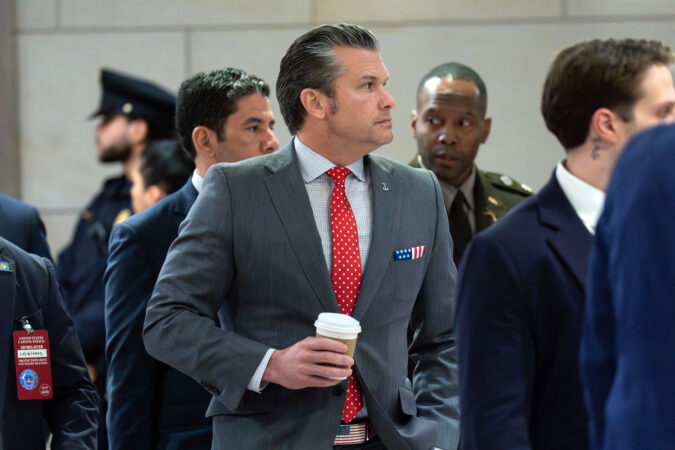
    WASHINGTON — Defense Secretary Pete Hegseth said Tuesday the Pentagon will not publicly release unedited video of a U.S. military strike that killed two survivors of an initial attack on a boat allegedly carrying cocaine in the Caribbean, as questions mounted in Congress about the incident and the overall buildup of U.S. military forces near Venezuela.

    Hegseth said members of the Armed Services Committee in the House and Senate would have an opportunity this week to review the video, but did not say whether all members of Congress would be allowed to see it as well.

    “Of course we’re not going to release a top secret, full, unedited video of that to the general public,” Hegseth told reporters as he exited a closed-door briefing with senators.

    President Donald Trump’s cabinet members overseeing national security were on Capitol Hill on Tuesday to defend a campaign that has killed at least 95 people in 25 known strikes on vessels in international waters in the Caribbean and eastern Pacific. Overall, they defended the campaign as a success, saying it has prevented drugs from reaching American shores, and they pushed back on concerns that it is stretching the bounds of lawful warfare.

    Secretary of State Marco Rubio told reporters the campaign is a “counter-drug mission” that is “focused on dismantling the infrastructure of these terrorist organizations that are operating in our hemisphere, undermining the security of Americans, killing Americans, poisoning Americans.”

    Lawmakers have been focused on the Sept. 2 attack on two survivors as they sift through the rationale for a broader U.S. military buildup in the region. On the eve of the briefings, the U.S. military said it attacked three more boats believed to have been smuggling drugs in the eastern Pacific Ocean, killing eight people.

    Lawmakers left in the dark about Trump’s goal with Venezuela

    Senate Minority Leader Chuck Schumer (D., N.Y.) said Hegseth had come “empty-handed” to the briefing, without a pledge to more broadly release the video of the Sept. 2 strike.

    “If they can’t be transparent on this, how can you trust their transparency on all the other issues swirling about in the Caribbean?” Schumer said.

    Senators on both sides of the aisle said the officials left them in the dark about Trump’s goals when it comes to Venezuelan President Nicolás Maduro or sending U.S. forces directly to the South American nation.

    “I want to address the question: Is it the goal to take him out? If it’s not the goal to take him out, you’re making a mistake,” said Sen. Lindsey Graham (R., S.C.), who defended the legality of the campaign and said he wanted to see Maduro removed from power.

    The U.S. has deployed warships, flown fighter jets near Venezuelan airspace, and seized an oil tanker as part of its campaign against Maduro, who has insisted the real purpose of the U.S. military operations is to force him from office. Maduro said on a weekly state television show Monday that his government still does not know the whereabouts of the tanker’s crew. He criticized the United Nations for not speaking out against what he described as an “act of piracy” against “a private ship carrying Venezuelan oil.”

    In a social media post Tuesday night, Trump said he is ordering a blockade of all “sanctioned oil tankers” entering and leaving Venezuela. Trump alleged Venezuela was using oil to fund drug trafficking and other crimes and vowed to escalate the military buildup.

    Trump’s Republican administration has not sought any authorization from Congress for action against Venezuela. The go-it-alone approach has led to problematic military actions, experts say, none more so than the strike that killed two people who had climbed atop part of a boat that had been partially destroyed in an initial attack.

    “If it’s not a war against Venezuela, then we’re using armed force against civilians who are just committing crimes,” said John Yoo, a Berkeley Law professor who helped craft the George W. Bush administration’s legal arguments and justification for aggressive interrogation after the Sept. 11, 2001, attacks. “Then this question, this worry, becomes really pronounced. You know, you’re shooting civilians. There’s no military purpose for it.”

    Yet for the first several months, Congress received little more than a trickle of information about why or how the U.S. military was conducting the operations. At times, lawmakers have learned of strikes from social media after the Pentagon posted videos of boats bursting into flames.

    Hegseth now faces language included in an annual military policy bill that threatens to withhold a quarter of his travel budget if the Pentagon does not provide unedited video of the strikes to the House and Senate Committees on Armed Services.

    The demand for release of video footage

    For some, the controversy over the footage demonstrates the flawed rationale behind the entire campaign.

    “The American public ought to see it. I think shooting unarmed people floundering in the water, clinging to wreckage, is not who we are as a people,” said Sen. Rand Paul (R., Ky.), who has been an outspoken critic of the campaign.

    But senators were told the Trump administration will not release all of the Sept. 2 attack footage because it would reveal U.S. military practices on intelligence gathering, said Democratic Sen. Elizabeth Warren of Massachusetts. She said the reasoning ignores the fact that the military has already released footage of the initial attack.

    “They just don’t want to reveal the part that suggests war crimes,” she said.

    Some GOP lawmakers are determined to dig into the details of the Sept. 2 attack. Adm. Frank “Mitch” Bradley, who ordered the second strike, was expected back on Capitol Hill on Wednesday for classified briefings with the Senate and House Armed Services Committees. The committees would also review video of the Sept. 2 strikes, Hegseth said.

    Still, many Republicans emerged from the briefings backing the campaign, defending their legality and praising the “exquisite intelligence” that is used to identify targets. House Speaker Mike Johnson (R., La.) called the strike in question “certainly appropriate” and “necessary to protect the United States and our interests.”

  • Zelensky says proposals to end the war in Ukraine could be presented to Russia within days

    Zelensky says proposals to end the war in Ukraine could be presented to Russia within days

    KYIV, Ukraine — Ukrainian President Volodymyr Zelensky says proposals being negotiated with U.S. officials for a deal to end the fighting in Russia’s nearly four-year-old invasion of his country could be finalized within days, after which American envoys will present them to the Kremlin before possible further meetings in the U.S. next weekend.

    A draft peace plan discussed with the U.S. during talks in Berlin on Monday is “not perfect” but is “very workable,” Zelensky told reporters hours after the discussions. He cautioned, however, that some key issues — notably what happens to Ukrainian territory occupied by Russian forces — remain unresolved.

    U.S.-led peace efforts appear to be picking up momentum. But as the spotlight shifts to Moscow, Russian President Vladimir Putin may balk at some of the proposals thrashed out by officials from Washington, Kyiv, and Western Europe, including postwar security guarantees for Ukraine.

    Zelensky said that after the Berlin talks, “we are very close to [a deal on] strong security guarantees.”

    The security proposal will be based on Western help in keeping the Ukrainian army strong, an official from a NATO nation said, speaking on condition of anonymity to discuss sensitive matters.

    “Europeans will lead a multinational and multi-domain force to strengthen those troops and to secure Ukraine from the land, sea, and air, and the U.S. will lead a ceasefire monitoring and verification mechanism, with international participation,” the official said.

    Kremlin spokesperson Dmitry Peskov repeated Tuesday that Russia wants a comprehensive peace deal, not a temporary truce.

    If Ukraine seeks “momentary, unsustainable solutions, we are unlikely to be ready to participate,” he said.

    “We want peace — we don’t want a truce that would give Ukraine a respite and prepare for the continuation of the war,” he told reporters. “We want to stop this war, achieve our goals, secure our interests, and guarantee peace in Europe for the future.”

    American officials said Monday there is consensus from Ukraine and Europe on about 90% of the U.S.-authored peace plan. President Donald Trump said: “I think we’re closer now than we have been, ever,” to a peace settlement.

    Plenty of potential pitfalls remain, notably the land issue.

    Zelensky reiterated that Kyiv rules out recognizing Moscow’s control over any part of the Donbas, an economically important region in eastern Ukraine made up of Luhansk and Donetsk. Russia’s army does not fully control either, but Trump has previously indicated that Ukraine will have to cede territory.

    “The Americans are trying to find a compromise,” Zelensky said before visiting the Netherlands on Tuesday. “They are proposing a ‘free economic zone’ [in the Donbas]. And I want to stress once again: A ‘free economic zone’ does not mean under the control of the Russian Federation.”

    Putin wants all the areas in four key regions that his forces have seized, as well as the Crimean Peninsula, which Moscow illegally annexed in 2014, to be recognized as Russian territory.

    Zelensky warned that if Putin rejects diplomatic efforts, Ukraine expects increased Western pressure on Moscow, including tougher sanctions and additional military support for defense, such as enhanced air defense systems and long-range weapons.

    Zelensky said that what is driving Kyiv officials in the negotiations is for Russia to be “held accountable for what it has done — for this war, for all the killings, for all the suffering.”

    Ukraine and the U.S. are preparing up to five documents related to the peace framework, several of them focused on security, Zelensky said.

    He was upbeat about the progress in the Berlin talks.

    “Overall, there was a demonstration of unity,” Zelensky said. “It was truly positive in the sense that it reflected the unity of the U.S., Europe, and Ukraine.”

  • FIFA slashes price of some World Cup tickets to $60 after fan backlash

    FIFA slashes price of some World Cup tickets to $60 after fan backlash

    MIAMI — FIFA slashed the price of some World Cup tickets for teams’ most loyal fans following a global backlash and some will get $60 seats for the final instead of being asked to pay $4,185.

    FIFA said Tuesday that $60 tickets will be made available for every game at the tournament in North America, going to the national federations whose teams are playing. Those federations decide how to distribute them to loyal fans who have attended previous games at home and on the road.

    Among the 72 World Cup group stage matches scheduled to be held in the United States, Canada, and Mexico this summer, five will take place at Lincoln Financial Field, with the Ivory Coast and Ecuador kicking off Philly’s slate of matches on June 14.

    The number of $60 tickets for each game is likely to be in the hundreds, rather than thousands, in what FIFA is now calling a “Supporter Entry Tier” price category.

    FIFA did not specify exactly why it so dramatically changed strategy, but said the lower prices are “designed to further support traveling fans following their national teams across the tournament.”

    The World Cup in North America will be the first edition that features 48 teams — up from 32 — and is expected to earn FIFA at least $10 billion in revenue. But fans worldwide reacted with shock and anger last week on seeing FIFA’s ticketing plans that gave participating teams no tickets in the lowest-priced category.

    Dan Mayk, 27, of South Philadelphia, wearing a FIFA Philadelphia 2026 scarf at the FIFA World Cup drawing at Stateside Live! on Dec. 5.

    The cheapest prices ranged from $120 to $265 for group-stage games that did not involve the United States, Canada, and Mexico.

    FIFA had set those prices despite the co-hosts having pledged eight years ago — when they were bidding for the tournament — that hundreds of thousands of $21 tickets would be made available.

    Criticism from fans, especially in Europe, had been increasing for several months over plans for “dynamic pricing” plus extra fees on a FIFA-run resale platform — both features that are common in the U.S. entertainment industry but not to soccer fans worldwide.

    Fan anger intensified last week when it became clear loyal supporters would have no access to the cheapest category tickets and that fans who wanted to reserve a ticket for all of their team’s potential games — through the final — would not get refunded until after the tournament.

    In another change Tuesday, FIFA said it would waive its administrative fees when refunds are made after the July 19 final.