Category: Associated Press

  • Joe Ely, a Texas songwriter whose legacy touched rock and punk, dies at 78

    Joe Ely, a Texas songwriter whose legacy touched rock and punk, dies at 78

    AUSTIN, Texas — Joe Ely, 78, the influential Texas-born singer-songwriter whose blend of honky-tonk, rock, and roadhouse blues made him a favorite among other musicians and led to collaborations with Bruce Springsteen and the Clash, has died.

    Mr. Ely died in Taos, N.M., of complications from Lewy body dementia, Parkinson’s disease, and pneumonia, with his wife and daughter by his side, according to a post on his Facebook account Monday night and later confirmed by his representatives.

    Mr. Ely was considered a key figure in the progressive country music movement as a founder of the influential country-rock band the Flatlanders with Jimmie Dale Gilmore and Butch Hancock, and later as a solo artist.

    “Joe Ely performed American roots music with the fervor of a true believer who knew music could transport souls,” said Kyle Young, CEO of the Country Music Hall of Fame and Museum.

    “But his true measure came through in the dynamic intensity of his powerhouse live performances, where he could stand his ground aside fellow zealots Bruce Springsteen, who recorded duets with Ely, and the [Rolling] Stones and the Clash, who took Ely on tour as an opening act,” Young said.

    After signing with MCA, Mr. Ely released his first solo album in 1977. He would release more than 20 albums over his career, including Love and Freedom earlier this year.

    Born in Amarillo, Texas, Mr. Ely stayed connected to his Texas roots through decades of recording and performing that lacked a mainstream breakthrough but made him a favorite of other artists.

    “Every time I start a new album I head up to West Texas and drive around, you know, drive on those old cotton roads and in the wide-open spaces, and every once in a while I’ll come across a place where I’ve spent some time,” Mr. Ely told Texas Monthly in 2011.

    It was a soundcheck for a show in London that led to the collaboration with British punk band the Clash. Mr. Ely would later open for the Clash at several shows and sang backup vocals for their hit song “Should I Stay or Should I Go?”

  • Britain’s BBC is both beloved and maligned. Now it faces a $10 billion Trump lawsuit

    Britain’s BBC is both beloved and maligned. Now it faces a $10 billion Trump lawsuit

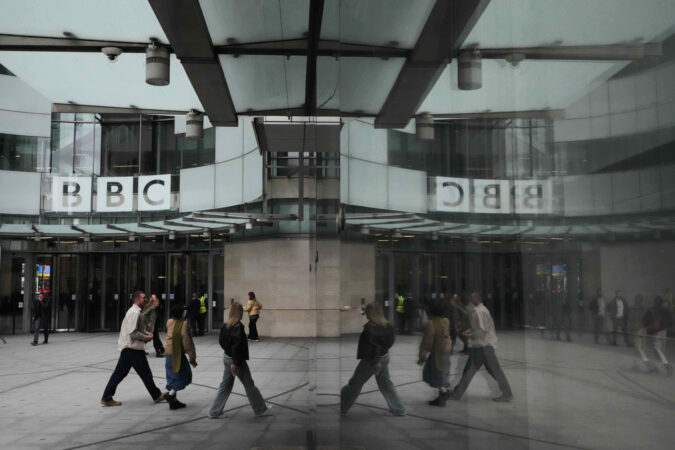
    LONDON — President Donald Trump is suing the BBC for $10 billion over a television documentary he claims was “false, defamatory, deceptive, disparaging, inflammatory, and malicious.”

    Britain’s national broadcaster has apologized to Trump over the way it edited a speech in the program, but says it will defend itself against the defamation claim.

    The BBC is not the first media organization on the receiving end of a lawsuit from the president. But its position is complicated by its status as a taxpayer-funded public broadcaster and its stature as a closely scrutinized national institution.

    A pioneering broadcaster

    The BBC was founded in 1922 as a radio service to “inform, educate and entertain,” a mantra still central to its self-image.

    It launched the world’s first regularly scheduled television service in 1936, and helped make TV a mass medium when many Britons bought a TV set specifically to watch the 1953 coronation of Queen Elizabeth II.

    It operates 15 U.K. national and regional TV channels, several international channels, 10 national radio stations, dozens of local radio stations, the globe-spanning World Service radio and copious digital output including the iPlayer streaming service.

    As well as its news output it has a huge global viewership for entertainment shows including “Doctor Who,” “EastEnders,” “The Traitors” and “Strictly Come Dancing.”

    The BBC is funded from the public purse

    The broadcaster is funded by an annual license fee, currently set at 174.50 pounds ($230), paid by all U.K. households who watch live TV or any BBC content.

    The license fee has long had opponents, not least rival commercial broadcasters, and they have grown louder in an era of digital streaming when many people no longer have television sets or follow traditional TV schedules.

    The BBC’s governing charter, which sets the license fee, is reviewed once a decade, and the latest round of the process kicked off Tuesday. The center-left Labour government says it will ensure the BBC has “sustainable and fair” funding but has not ruled out replacing the license fee with another funding model.

    Managing the broadcaster has become a political football

    The broadcaster is bound by the terms of its charter to be impartial in its output. It is not a state broadcaster beholden to the U.K government, but is overseen by a board that includes both BBC staff and political appointees.

    It’s frequently a political football, with conservatives seeing a leftist slant in its news programs and some liberals accusing it of having a conservative bias.

    It has repeatedly battled British governments over editorial independence, from the 1926 general strike, when Cabinet minister Winston Churchill tried to seize control of the airwaves, to a battle with Tony Blair’s administration over the intelligence used to justify the 2003 invasion of Iraq.

    Recently it has been criticized for its coverage of trans issues and the Israel-Hamas war in Gaza. In February, the BBC removed a documentary about Gaza from its streaming service after it emerged that the child narrator was the son of an official in the Hamas-led government.

    Documentary that riled Trump

    The lawsuit stems from an edition of the BBC’s “Panorama” current affairs series titled “Trump: A Second Chance?” that was broadcast days before the 2024 U.S. presidential election. The film, made by a third-party production company, spliced together two sections of a speech given by Trump on Jan. 6, 2021, into what appeared to be one quote in which Trump urged supporters to march with him and “fight like hell.”

    By doing so, it made it look like Trump was giving the green light to his supporters to storm the U.S. Capitol as Congress was poised to certify President-elect Joe Biden’s victory in the 2020 election that Trump falsely alleged was stolen from him.

    The BBC apologized last month and two of its top executives resigned.

    Trump’s lawyers say the program falsely portrayed the president as a “violent insurrectionist,” caused “massive economic damage to his brand value” and was a “brazen attempt” to interfere in the U.S. election.

    The lawsuit, filed in a Florida court, seeks $5 billion in damages for defamation and $5 billion for unfair trade practices.

    Legal jeopardy

    The BBC said in a statement that “we will be defending this case. We are not going to make further comment on ongoing legal proceedings.”

    Media attorney Mark Stephens said Trump and his lawyers face several hurdles. They must prove that the BBC program was shown in Florida and that people in that state thought less of him as a consequence. Trump’s lawyers argue that U.S. subscribers to BritBox and people using virtual private networks could have watched it, but they must prove it definitively, said Stephens, a consultant at the firm Howard Kennedy.

    “Allegations of libel are cheap, but proof is dear,’’ Stephens said.

    Stephens said Trump’s lawyers also have to deal with the fact that public figures have “to put up with the slings and arrows of incorrect reporting,’’ which are protected under the First Amendment.

    While many legal experts have dismissed the president’s claims against the media as having little merit, he has won some lucrative settlements against U.S. media companies and he could try to leverage the BBC mistake for a payout, potentially to a charity of his choice.

    The BBC’s position is complicated by the fact that any money it pays out in legal fees or a settlement comes from British taxpayers’ pocket.

    “I think President Trump is banking on the fact that the British public will not want to spend the money to defend the claim, nor will they want to pay any money in damages to him,’’ Stephens said. “So it allows him to continue a narrative of fake news and all of those other things at fairly little cost in the global scheme of things.”

  • The U.S. gained 64,000 jobs in November but lost 105,000 in October as the unemployment rate rose to 4.6%

    The U.S. gained 64,000 jobs in November but lost 105,000 in October as the unemployment rate rose to 4.6%

    WASHINGTON — The United States gained a decent 64,000 jobs in November but lost 105,000 in October as federal workers departed after cutbacks by the Trump administration, the government said in delayed reports.

    The unemployment rate rose to 4.6%, highest since 2021.

    Both the October and November job creation numbers, released Tuesday by the Labor Department, came in late because of the 43-day federal government shutdown.

    The November job gains came in higher than the 40,000 economists had forecast. The October job losses were caused by a 162,000 drop in federal workers, many of whom resigned at the end of fiscal year 2025 on Sept. 30 under pressure from billionaire Elon Musk’s purge of U.S. government payrolls.

    Labor Department revisions also knocked 33,000 jobs off August and September payrolls.

    Workers’ average hourly earnings rose just 0.1% from October, the smallest gain since August 2023. Compared to a year earlier, pay was up 3.5%, the lowest since May 2021.

    Healthcare employers added more than 46,000 jobs in November, accounting for more than two-thirds of the 69,000 private sector jobs created last month. Construction companies added 28,000 jobs. Manufacturing shed jobs for the seventh straight month, losing 5,000 jobs in November.

    Hiring has clearly lost momentum, hobbled by uncertainty over President Donald Trump’s tariffs and the lingering effects of the high interest rates the Federal Reserve engineered in 2022 and 2023 to rein in an outburst of inflation.

    American companies are mostly holding onto the employees they have. But they’re reluctant to hire new ones as they struggle to assess how to use artificial intelligence and how to adjust to Trump’s unpredictable policies, especially his double-digit taxes on imports from around the world.

    The uncertainty leaves jobseekers struggling to find work or even land interviews. Federal Reserve policymakers are divided over whether the labor market needs more help from lower interest rates. Their deliberations are rendered more difficult because official reports on the economy’s health are coming in late and incomplete after a 43-day government shutdown.

    Labor Department revisions in September showed that the economy created 911,000 fewer jobs than originally reported in the year that ended in March. That meant that employers added an average of just 71,000 new jobs a month over that period, not the 147,000 first reported. Since March, job creation has fallen farther — to an average 35,000 a month.

    The unemployment rate, though still modest by historical standards, has risen since bottoming out at a 54-year low of 3.4% in April 2023.

    “The takeaway is that the labor market remains on a relatively soft footing, with employers showing little appetite to hire, but are also reluctant to fire,” Thomas Feltmate, senior economist at TD Economics, wrote in a commentary. “That said, labor demand has cooled more than supply in recent months, which is what’s behind the steady upward drift in the unemployment rate.’’

    Adding to the uncertainty is the growing use of artificial intelligence and other technologies that can reduce demand for workers.

    “We’ve seen a lot of the businesses that we support are stuck in that stagnant mode: ‘Are we going to hire or are we not? What can we automate? What do we need the human touch with?’’’ said Matt Hobbie, vice president of the staffing firm HealthSkil in Allentown, Pennsylvania.

    “We’re in Lehigh Valley, which is a big transportation hub in eastern Pennsylvania. We’ve seen some cooling in the logistics and transportation markets, specifically because we’ve seen automation in those sectors, robotics.’’

    Worries about the job market were enough to nudge the Fed into cutting its benchmark interest rate by a quarter of a percentage point last week for the third time this year.

    But three Fed officials refused to go along with the move, the most dissents in six years. Some Fed officials are balking at further cuts while inflation remains above the central bank’s 2% target. Two voted to keep the rate unchanged. Stephen Miran, appointed by Trump to the Fed’s governing board in September, voted for a bigger cut – in line with what the president demands.

    Tuesday’s report shows that “the labor market remains weak, but the pace of deterioration probably is too slow to spur the (Fed) to ease again in January,’’ Samuel Tombs, chief U.S. economist at Pantheon Macroeconimics, wrote in a commentary. The Fed holds its next policy meeting Jan. 27-28.

    Because of the government shutdown, the Labor Department did not release its jobs reports for September, October and November on time.

    It finally put out the September jobs report on Nov. 20, seven weeks late. It published some of the October data – including a count of the jobs created that month by businesses, nonprofits and government agencies – along with the November report Tuesday. But it did not release an unemployment rate for October because it could not calculate the number during the shutdown.

  • Australian police say the Bondi Beach mass shooting was inspired by an Islamic State group

    Australian police say the Bondi Beach mass shooting was inspired by an Islamic State group

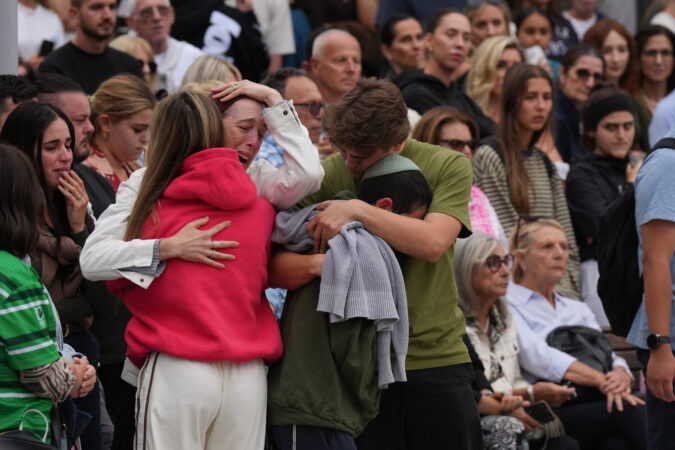
    MELBOURNE, Australia — A mass shooting in which 15 people were killed during a Hanukkah celebration at Sydney’s Bondi Beach was “a terrorist attack inspired by Islamic State,” Australia’s federal police commissioner, Krissy Barrett, said Tuesday.

    The suspects were a father and son, ages 50 and 24, authorities have said. The older man, whom state officials named as Sajid Akram, was shot dead. His son was being treated at a hospital.

    A news conference by political and law enforcement leaders on Tuesday was the first time officials confirmed their beliefs about the suspects’ ideologies. Prime Minister Anthony Albanese said the remarks were based on evidence obtained, including “the presence of Islamic State flags in the vehicle that has been seized.”

    Indian police said Tuesday that the older suspect was originally from the southern city of Hyderabad and held an Indian passport. They said he married a woman of European origin and migrated to Australia in 1998 in search of employment opportunities, maintaining little contact with his family in India.

    “The family members have expressed no knowledge of his radical mindset or activities, nor of the circumstances that led to his radicalization,” Telangana State Police Chief B. Shivadhar Reddy said in a statement.

    Twenty-five people are still being treated in hospitals after Sunday’s massacre, 10 of them in critical condition. Three are patients in a children’s hospital.

    Also among those being treated is Ahmed al Ahmed, who was captured on video tackling and disarming one assailant, before pointing the man’s weapon at him and then setting it on the ground.

    Those killed ranged in age from 10 to 87. They were attending a Hanukkah event at Australia’s most famous beach Sunday when the gunshots rang out.

    Calls for stricter gun laws

    Albanese and the leaders of some of Australia’s states have pledged to tighten the country’s already strict gun laws in what would be the most sweeping reforms since a shooter killed 35 people in Port Arthur, Tasmania, in 1996. Mass shootings in Australia have since been rare.

    Officials divulged more information as public questions and anger grew about how the attackers were able to plan and enact it and whether Australian Jews had been sufficiently protected from rising antisemitism.

    Albanese announced plans to further restrict access to guns, in part because it emerged the older suspect had amassed his cache of six weapons legally.

    “The suspected murderers, callous in how they allegedly coordinated their attack, appeared to have no regard for the age or ableness of their victims,” Barrett said. “It appears the alleged killers were interested only in a quest for a death tally.”

    Authorities probe suspects’ trip to Philippines

    The suspects traveled to the Philippines last month, said Mal Lanyon, the police commissioner for New South Wales state. Their reasons for the trip and where in the Philippines they went would be probed by investigators, Lanyon said.

    He also confirmed that a vehicle removed from the scene, registered to the younger suspect, contained improvised explosive devices.

    “I also confirm that it contained two homemade ISIS flags,” Lanyon said.

    The Philippines Bureau of Immigration confirmed Tuesday that Sajid Akram traveled to the country from Nov. 1 to Nov. 28 along with Naveed Akram, 24, giving the city of Davao as their final destination. Australian authorities have not named the younger suspect.

    Groups of Muslim separatist insurgents, including Abu Sayyaf in the southern Philippines, once expressed support for the Islamic State group and have hosted small numbers of foreign combatants from Asia, the Middle East, and Europe in the past.

    Decades of military offensives, however, have considerably weakened Abu Sayyaf and other such armed groups, and Philippine military and police officials say there has been no recent indication of any foreign militants in the country’s south.

    Albanese visits man who tackled shooter

    Earlier, Albanese visited Ahmed in a hospital. Albanese said the 42-year-old Syrian-born fruit shop owner had further surgery scheduled on Wednesday for shotgun wounds to his left shoulder and upper body.

    “It was a great honor to met Ahmed al Ahmed. He is a true Australian hero,” Albanese told reporters after a 30-minute meeting with him and his parents.

    “We are a brave country. Ahmed al Ahmed represents the best of our country. We will not allow this country to be divided. That is what the terrorists seek. We will unite. We will embrace each other, and we’ll get through this,” Albanese added.

    Lifeguards praised for actions during massacre

    The famous blue-shirted lifeguards of Bondi Beach attracted praise as more stories of their actions during the shooting emerged.

    One duty lifeguard, identified by the organization’s Instagram account as Rory Davey, performed an ocean rescue during the shooting after people fled, fully clothed, into the sea.

    Another lifeguard, Jackson Doolan, posted to his social media a photo taken as he sprinted, barefoot and clutching a first aid kit, from Tamarama beach a mile away toward Bondi as the massacre continued.

    “These guys are community members, and it’s not about the surf,” Anthony Caroll, one of the stars of a popular reality television show called Bondi Rescue, told Sky News on Tuesday. “They heard the gunshots and they left the beach and came right up the back here into the scene of the crime, into harm’s way while those bullets were being shot.”

    Record numbers sign up to donate blood as Australians mourn at scene of shooting

    Israeli Ambassador to Australia Amir Maimon visited the scene of the carnage on Tuesday and was welcomed by Jewish leaders.

    “I’m not sure that my vocabulary is rich enough to express how I feel. My heart is torn apart because the Jewish community, the Australians of Jewish faith, the Jewish community is also my community,” Maimon said.

    Thousands have visited Bondi from all walks of life since the tragedy to pay their respects and lay flowers on a mounting pile at an impromptu memorial site.

    One of the visitors on Tuesday was former Prime Minister John Howard, who was responsible for the 1996 overhaul of gun laws and an associated buyback of newly outlawed weapons.

    In the aftermath of Sunday’s shooting, a record number of Australians signed up to donate blood. On Monday alone close to 50,000 appointments were booked, more than double the previous record, the national donation organization Lifeblood told the Associated Press.

    Almost 1,300 people signed up to donate for the first time. Such was the enthusiasm at Lifeblood’s Bondi location that appointments to give blood were unavailable before Dec. 31, according to the organization’s website.

    A total of 7,810 donations of blood, plasma, and platelets were made across the country on Monday, spokesperson Cath Stone said. Australian news outlets reported queues of up to four hours at some Sydney donation sites.

  • Ford scraps fully-electric F-150 Lightning as mounting losses and falling demand hit EV plans

    Ford scraps fully-electric F-150 Lightning as mounting losses and falling demand hit EV plans

    DETROIT — Ford Motor Co. is pivoting away from its once-ambitious electric vehicle plans amid financial losses and waning consumer demand for the vehicles in lieu of investment in more efficient gasoline-engines and hybrid EVs, the company said Monday.

    The Detroit automaker, which has poured billions of dollars into electrification along with most of its industry peers, said it will no longer make the F-150 Lightning electric pickup truck, instead opting for an extended range version of the vehicle.

    Ford will also introduce some manufacturing changes; its Tennessee Electric Vehicle Center — part of the BlueOval City campus and once the future of Ford’s EVs and batteries — is being renamed the Tennessee Truck Plant and will produce new affordable gas-powered trucks instead. Ford’s Ohio Assembly Plant will produce a new gas and hybrid van.

    The company has lost $13 billion on EVs since 2023 and said it expects to take a $19.5 billion hit largely in the fourth quarter due to the EV business.

    “This is a customer-driven shift to create a stronger, more resilient and more profitable Ford,” CEO Jim Farley said in a statement. “The operating reality has changed, and we are redeploying capital into higher-return growth opportunities: Ford Pro, our market-leading trucks and vans, hybrids and high-margin opportunities like our new battery energy storage business.”

    Ford said it now expects half of its global volume will be hybrids, extended-range EVs — which also incorporate a gasoline-powered engine — and full EVs by 2030, up from 17% this year.

    “Ford’s elimination of the electric F-150 Lightning is not much of a surprise after the truck failed to come close to filling the plant’s capacity. Ford’s choice to convert an existing gas-powered truck to accept the electric drivetrain helped reduce their upfront costs which, in hindsight, was the right move,” Sam Fiorani, vice president at AutoForecast Solutions in Chester Springs, told the Associated Press.

    “For months, the future of Blue Oval City has been in question and this announcement locks in the direction of this large plant,” Fiorani added. ”Adding an affordable vehicle to the Ford lineup fills a glaring gap in the market.”

    Several other automakers have made changes to their electrified product plans in recent years as consumer demand for EVs in the U.S. hasn’t quite met expectations.

    EVs accounted for about 8% of new vehicles sales in the U.S. last year, but factors such as cost and charging infrastructure remain concerns for mainstream buyers.

    The average transaction price for a new EV last month was $58,638, compared with $49,814 for a new vehicle overall, according to auto buying resource Kelley Blue Book.

    Meanwhile, while public charging availability has improved, the industry has relied on home charging as a selling point for prospective buyers, and not everyone has access to charging at home.

    Since taking office for a second time, President Donald Trump has drastically shifted U.S. policy away from EVs, calling EV-friendly policy set under former President Joe Biden a “mandate.”

    Though Biden-era policies — including generous tax incentives for consumers, and tailpipe and fuel economy rules for automakers — encouraged EV adoption, no policies required the industry to sell or Americans to buy EVs. Biden targeted half of new vehicle sales in the U.S. to be electric by 2030.

    The Trump administration has since slashed that target, eliminated EV tax credits, and proposed weakening the emissions and gas mileage rules.

    “The one-two punch of the public’s slow EV adoption and the Trump administration’s softer stance on fuel economy and emissions has encouraged every automaker to rethink their current direction,” Fiorani added. “Electric vehicles are still the future, but the transition to EVs was always going to take longer than automakers have been promising the public.”

  • Trump administration says White House ballroom construction is a matter of national security

    Trump administration says White House ballroom construction is a matter of national security

    WASHINGTON — The Trump administration said Monday in a court filing that the president’s White House ballroom construction project must continue for reasons of national security.

    The filing came in response to a lawsuit filed last Friday by the National Trust for Historic Preservation asking a federal judge to halt the project until it goes through multiple independent reviews and wins approval from Congress.

    In its filing, the administration included a declaration from the deputy director of the U.S. Secret Service saying more work on the site of the former White House East Wing is still needed to meet the agency’s “safety and security requirements.” The administration has offered to share classified details with the judge in an in-person setting without the plaintiffs present.

    The government’s response to the lawsuit offers the most comprehensive look yet at the ballroom construction project, including a window into how it was so swiftly approved by the Trump administration bureaucracy and its expanding scope.

    The filings assert that final plans for the ballroom have yet to be completed despite the continuing demolition and other work to prepare the site for construction. Below-ground work on the site continues, wrote John Stanwich, the National Park Service’s liaison to the White House, and work on the foundations is set to begin in January. Above-ground construction “is not anticipated to begin until April 2026, at the earliest,” he wrote.

    The National Trust for Historic Preservation did not immediately respond to email messages seeking comment.

    The privately funded group last week asked the U.S. District Court to block Trump’s ballroom addition until it goes through comprehensive design reviews, environmental assessments, public comments, and congressional debate and ratification.

    Trump had the East Wing torn down in October as part of the project to build an estimated $300 million, 90,000-square-foot ballroom before his term ends in 2029.

    The administration argues in the filing that the plaintiff’s claims about the demolition of the East Wing are “moot” because the tear-down cannot be undone. The administration also argues that claims about future construction are “unripe” because the plans are not final.

    The administration also contends that the National Trust for Historic Preservation cannot establish “irreparable harm” because above-ground construction is not expected until April. It argues that the reviews sought in the lawsuit, consultation with the National Capital Planning Commission and the Commission of Fine Arts, “will soon be underway without this Court’s involvement.”

    “Even if Plaintiff could overcome the threshold barriers of mootness, ripeness, and lack of standing, Plaintiff would fail to meet each of the stringent requirements necessary to obtain such extraordinary preliminary relief,” the administration said.

    Trump’s ballroom project has prompted criticism in the historic preservation and architectural communities, and among his political adversaries, but the lawsuit is the most tangible effort thus far to alter or stop his plans for an addition that itself would be nearly twice the size of the White House before the East Wing was torn down.

    A hearing in the case was scheduled today in federal court in Washington.

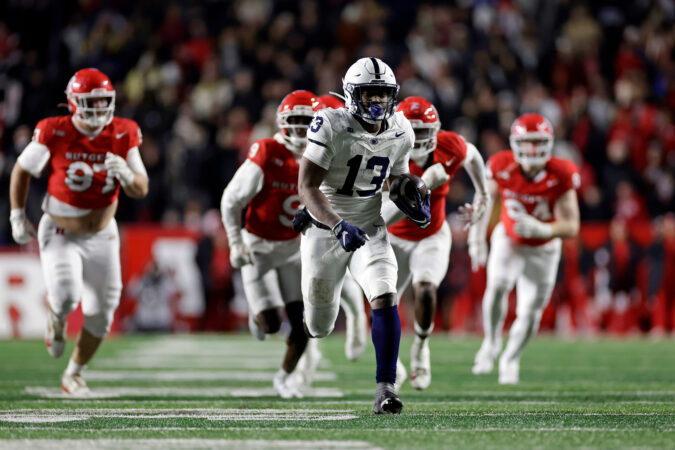
  • Penn State’s Kaytron Allen and Olaivavega Ioane named to AP All-American teams

    Penn State’s Kaytron Allen and Olaivavega Ioane named to AP All-American teams

    Four players from Ohio State are among 10 first-team picks from the Big Ten on The Associated Press All-America team released Monday, a group headed by repeat selection Caleb Downs of the Buckeyes and AP Player of the Year Fernando Mendoza of Indiana.

    The AP has named an All-America team every year since 1925, and Notre Dame’s two first-team picks this season increased its all-time lead to 87.

    Downs, the Big Ten defensive player of the year, has made the first team each of his two seasons at Ohio State after landing on the second team as a freshman at Alabama in 2023. He is one of 12 players on the 27-man first team who did not start their careers at their current school. Downs is joined on the first team by fellow Buckeyes Jeremiah Smith, Kayden McDonald and Arvell Reese.

    Mendoza, who won the Heisman Trophy over the weekend, led the top-ranked Hoosiers to a 13-0 record and the No. 1 seed in the College Football Playoff after transferring from California. He has thrown a nation-leading 33 touchdown passes and is the catalyst of one of the most productive offenses in the country.

    A total of 18 schools are represented on the first team, including seven of the 12 in the CFP.

    Iowa has had at least one first-team player seven straight years and in 10 of the last 12. This is the fourth year in a row Miami, Notre Dame and Ohio State have had at least one.

    Punter Cole Maynard gave Western Kentucky its first-ever first-team pick. Defensive lineman Landon Robinson is Navy’s first since 1975 and kicker Kansei Matsuzawa is Hawaii’s first since 1986.

    First-team All-Americans (by conference)

    Big Ten — 10

    SEC — 6

    Big 12 — 3

    ACC — 1

    Independent — 3

    Conference USA — 2

    American — 1

    Mountain West — 1

    ___

    The AP All-America team was selected by a panel of 52 college Top 25 poll voters.

    First-team offense

    Wide receiver — Makai Lemon, Southern California, junior, 5-11, 195, Los Angeles.

    Wide receiver — Jeremiah Smith, Ohio State, sophomore, 6-3, 223, Miami Gardens, Fla.

    Wide receiver — Skyler Bell, Connecticut, senior, 6-0, 185, New York, N.Y.

    Tackle — Francis Mauigoa, Miami, junior, 6-6, 335, Ili’ili, American Samoa.

    Tackle — Spencer Fano, Utah, junior, 6-6, 308, Spanish Fork, Utah.

    Guard — Emmanuel Pregnon, Oregon, senior, 6-5, 318, Denver.

    Guard — Beau Stephens, Iowa, senior, 6-5, 315, Blue Springs, Mo.

    Center — Logan Jones, Iowa, graduate, 6-3, 202, Council Bluffs, Iowa.

    Tight end — Eli Stowers, Vanderbilt, graduate, 6-4, 235, Denton, Texas.

    Quarterback — Fernando Mendoza, Indiana, junior, 6-5, 225, Miami.

    Running back — Jeremiyah Love, Notre Dame, junior, 6-0, 214, St. Louis.

    Running back — Ahmad Hardy, Missouri, sophomore, 5-10, 210, Oma, Miss.

    Kicker — Kansei Matsuzawa, Hawaii, senior, 6-2, 200, Tokyo.

    All-purpose — KC Concepcion, Texas A&M, junior, 5-11, 190, Charlotte, N.C.

    First-team defense

    Edge rusher — David Bailey, Texas Tech, senior, 6-3, 250, Irvine, Calif.

    Edge rusher — Cashius Howell, Texas A&M, senior, 6-2, 248, Kansas City, Mo.

    Interior lineman — Kayden McDonald, Ohio State, junior, 6-3, 326, Suwanee, Ga.

    Interior lineman — Landon Robinson, Navy, senior, 6-0, 287, Fairlawn, Ohio.

    Linebacker — Jacob Rodriguez, Texas Tech, senior, 6-1, 235, Wichita Falls, Texas.

    Linebacker — Arvell Reese, Ohio State, junior, 6-4, 243, Cleveland.

    Linebacker — CJ Allen, Georgia, junior, 6-1, 235, Barnesville, Ga.

    Cornerback — Leonard Moore, Notre Dame, sophomore, 6-2, 195, Round Rock, Texas.

    Cornerback — Mansoor Delane, LSU, senior, 6-0, 190, Silver Spring, Md.

    Safety — Caleb Downs, Ohio State, junior, 6-0, 205, Hoschton, Ga.

    Safety — Bishop Fitzgerald, Southern California, senior, 5-11, 205, Woodbridge, Va.

    Defensive back — Jakari Foster, Louisiana Tech, senior, 6-0, 211, Piedmont, Ala.

    Punter — Cole Maynard, Western Kentucky, senior, 6-1, 180, Mooresville, N.C.

    Second-team offense

    Wide receiver — Carnell Tate, Ohio State, junior, 6-3, 195, Chicago.

    Wide receiver — Malachi Toney, Miami, freshman, 5-11, 188, Liberty City, Fla.

    Wide receiver — Danny Scudero, San Jose State, sophomore, 5-9, 174, San Jose, Calif.

    Tackle — Kadyn Proctor, Alabama, junior, 6-7, 366, Des Moines, Iowa.

    Tackle — Carter Smith, Indiana, junior, 6-5, 313, Powell, Ohio.

    Guard — Olaivavega Ioane, Penn State, junior, 6-4, 323, Graham, Wash.

    Guard — Ar’maj Reed-Adams, Texas A&M, graduate, 6-5, 325, Dallas.

    Center — Jake Slaughter, Florida, senior, 6-4, 303, Sparr, Fla.

    Tight end — Kenyon Sadiq, Oregon, junior, 6-3, 245, Idaho Falls, Idaho.

    Quarterback — Diego Pavia, Vanderbilt, graduate, 6-0, 207, Albuquerque, N.M.

    Running back — Emmett Johnson, Nebraska, junior, 5-11, 200, Minneapolis.

    Running back — Kewan Lacy, Mississippi, sophomore, 5-11, 210, Dallas.

    Kicker — Tate Sandell, Oklahoma, junior, 5-9, 182, Port Neches, Texas.

    All-purpose — Wayne Knight, James Madison, junior, 5-7, 190, Smyrna, Del.

    Second-team defense

    Edge rusher — Rueben Bain Jr., Miami, junior, 6-3, 270, Miami.

    Edge rusher — John Henry Daley, Utah, sophomore, 6-4, 255, Alpine, Utah.

    Interior lineman — A.J. Holmes Jr., Texas Tech, junior, 6-3, 300, Houston.

    Interior lineman — Peter Woods, Clemson, junior, 6-3, 310, Alabaster, Ala.

    Linebacker — Sonny Syles, Ohio State, senior, 6-5, 243, Pickerington, Ohio.

    Linebacker — Anthony Hill Jr., Texas, junior, 6-3, 238, Denton, Texas.

    Linebacker — Red Murdock, Buffalo, graduate, 6-1, 240, Petersburg, Va.

    Cornerback — D’Angelo Ponds, Indiana, junior, 5-9, 173, Miami.

    Cornerback — Chris Johnson, San Diego State, senior, 6-0, 195, Eastvale, Calif.

    Safety — Dillon Thieneman, Oregon, junior, 6-0, 205, Westfield, Indiana.

    Safety — Louis Moore, Indiana, senior, 5-11, 200, Mesquite, Texas.

    Defensive back — Hezekiah Masses, California, senior, 6-1, 185, Deerfield Beach, Fla.

    Punter — Brett Thorson, Georgia, senior, 6-2, 235, Melbourne, Australia.

    Third-team offense

    Wide receiver — Eric McAlister, TCU, senior, 6-3, 205, Azle, Texas.

    Wide receiver — Chris Brazzell II, Tennessee, junior, 6-5, 200, Midland, Texas.

    Wide receiver — Jordyn Tyson, Arizona State, junior, 6-2, 200, Allen, Texas.

    Tackle — Keagen Trost, Missouri, graduate, 6-4, 316, Kankakee, Ill.

    Tackle — Brian Parker II, Duke, junior, 6-5, 305, Cincinnati.

    Guard — Keylan Rutledge, Georgia Tech, senior, 6-4, 330, Royston, Ga.

    Guard — Evan Tengesdahl, Cincinnati, sophomore, 6-3, 320, Dayton, Ohio.

    Center — Iapani Laloulu, Oregon, junior, 6-2, 329, Honolulu.

    Tight end — Michael Trigg, Baylor, senior, 6-4, 240, Tampa, Fla.

    Quarterback — Julian Sayin, Ohio State, redshirt freshman, 6-1, 208, Carlsbad, Calif.

    Running back — Cam Cook, Jacksonville State, junior, 5-11, 200, Round Rock, Texas.

    Running back — Kaytron Allen, Penn State, senior, 5-11, 219, Norfolk, Va.

    Kicker — Aidan Birr, Georgia Tech, junior, 6-1, 205, Kennedale, Texas.

    All-purpose — Jadarian Price, Notre Dame, junior, 5-11, 210, Denison, Texas.

    Third-team defense

    Edge rusher — Caden Curry, Ohio State, senior, 6-3, 260, Greenwood, Ind.

    Edge rusher — Nadame Tucker, Western Michigan, senior, 6-3, 250, New York.

    Interior lineman — Tyrique Tucker, Indiana, junior, 6-0, 302, Norfolk, Va.

    Interior lineman — Lee Hunter, Texas Tech, senior, 6-4, 330, Mobile, Alabama.

    Linebacker — Aiden Fisher, Indiana, senior, 6-1, 231, Fredericksburg, Va.

    Linebacker — Caden Fordham, North Carolina State, graduate, 6-1, 230, Ponte Vedra, Fla.

    Linebacker — Owen Long, Colorado State, sophomore, 6-2, 230, Whittier, Calif.

    Cornerback — Avieon Terrell, Clemson, junior, 5-11, 180, Atlanta.

    Cornerback — Treydan Stukes, Arizona, senior, 6-2, 200, Litchfield Park, Ariz.

    Safety — Michael Taaffe, Texas, senior, 6-0, 189, Austin, Texas.

    Safety — Emmanuel McNeil-Warren, Toledo, senior, 6-2, 202, Tampa, Fla.

    Defensive back — Bray Hubbard, Alabama, junior, 6-2, 213, Ocean Springs, Miss.

    Punter — Ryan Eckley, Michigan State, junior, 6-2, 207, Lithia, Fla.
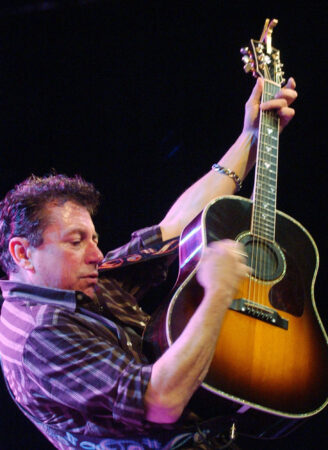
  • ‘General Hospital’ star Anthony Geary of Luke and Laura fame dies at 78

    ‘General Hospital’ star Anthony Geary of Luke and Laura fame dies at 78

    Anthony Geary, who rose to fame in the 1970s and ’80s as half the daytime TV super couple Luke and Laura on General Hospital, has died. He was 78.

    “We are deeply saddened by the passing of Anthony Geary, whose portrayal of Luke Spencer helped define General Hospital and daytime television,” ABC said in a statement confirming his death.

    Geary died Sunday in Amsterdam of complications from a surgical procedure three days prior.

    “The entire General Hospital family is heartbroken over the news of Tony Geary’s passing,” Frank Valentini, executive producer of the ABC show, said in a statement Monday. “Tony was a brilliant actor and set the bar that we continue to strive for.”

    In a career spanning more than 40 years, Geary earned eight Daytime Emmy awards as Luke Spencer after joining the soap in 1978. Luke’s pairing with Genie Francis’ Laura Webber Baldwin (as she was known at the time) propelled the two onto magazine covers and into the cultural mainstream.

    The 1981 wedding of Luke and Laura was a pop culture phenom done in two parts, drawing guest appearances that included Elizabeth Taylor. A record 30 million viewers watched.

    “He was a powerhouse as an actor. Shoulder to shoulder with the greats. No star burned brighter than Tony Geary. He was one of a kind. As an artist, he was filled with a passion for the truth, no matter how blunt, or even a little rude it might be, but always hilariously funny,” Francis said in a statement.

    In addition to his role as Luke, Geary had numerous TV and stage credits, including stints on other soaps: The Young and the Restless and Bright Promise. Geary played Luke on and off until 2015, though he returned for a cameo in 2017.

    He lived a quiet life with husband Claudio Gama in Amsterdam.

    In a 1993 interview, Geary spoke of the many highs and lows of playing Luke.

    “I felt like I had to be Luke 24 hours a day or people would be disappointed,” he said. “As far as I’m concerned, they are mythic creatures. They come from two sides of the universe together and have a mutual connection, which is basically lust and appreciation for individuality. They love the eccentricity in each other.”

    Geary’s Luke began as a small-time hitman recruited to dismantle the relationship of Laura and her first husband, Scotty Baldwin. Their story arc turned darker when Luke sexually assaulted Laura. The assault led to a redemption trail for Luke, who evolved into a hero and even served as mayor of the show’s small town, Port Charles.

    “He was not created to be a heroic character,” Geary told ABC’s Nightline in 2015. “He was created to be an anti-hero, and I have treasured the anti-side of the hero and pushed it for a long time. … He’s not a white hat or a black hat, he’s all shades of gray. And that has been the saving grace of playing him all these years.”

    Geary was born to Mormon parents in Coalville, Utah. He was discovered while attending the University of Utah and performing on stage. He joined a touring company of The Subject Was Roses, which brought him to Los Angeles.

    Over the years, he appeared frequently in stage productions alongside his screen work.

    Geary’s first appearance on TV was as Tom Whalom on an episode of Room 222. He went on to appear in All in the Family, The Partridge Family, The Mod Squad, Marcus Welby, M.D., The Streets of San Francisco, and Barnaby Jones.

  • Punk protest group Pussy Riot declared ‘extremist organization’ by a Russian court

    Punk protest group Pussy Riot declared ‘extremist organization’ by a Russian court

    Punk group Pussy Riot was declared an “extremist organization” by a Russian court on Monday.

    The ruling, which was made by Moscow’s Tverskoy District Court, effectively outlaws the group from operating in Russia and puts anyone linked with the group at risk of criminal prosecution.

    The feminist protest group first catapulted to notoriety in 2012, when its members performed a provocative “punk prayer” against President Vladimir Putin from the pulpit of Russia’s largest cathedral.

    Today, members of the group remain part of Russia’s opposition, largely working in exile.

    In September, five people linked with Pussy Riot — Maria Alyokhina, Taso Pletner, Olga Borisova, Diana Burkot, and Alina Petrova — were handed jail terms by a Russian court after being found guilty of spreading “false information” about the Russian military, news outlet Mediazona reported. Mediazona was founded by Alyokhina along with another Pussy Riot member, Nadezhda Tolokonnikova.

    The case was linked to an anti-war music video made by the group, as well as an art performance in Germany that saw Pletner urinate on a portrait of Putin.

    Alyokhina received a 13-year prison sentence, while Pletner was given 11 years. Burkot, Petrova, and Borisova were given eight years’ imprisonment. All have rejected the charges as politically motivated.

  • Western, Arab diplomats tour Lebanon-Israel border to observe Hezbollah disarmament efforts

    Western, Arab diplomats tour Lebanon-Israel border to observe Hezbollah disarmament efforts

    BEIRUT — Western and Arab diplomats toured an area along Lebanon’s border with Israel Monday where Lebanese troops and U.N. peacekeepers have been working for months to end the armed presence of the militant Hezbollah group.

    The delegation that included the ambassadors of the United States and Saudi Arabia was accompanied by Gen. Rodolph Haikal, commander of the Lebanese Armed Forces, as well as top officers in the border region.

    The Lebanese government has said that by the end of the year, the army should have cleared all the border area south of the Litani River of Hezbollah’s armed presence.

    Hezbollah’s leader Naim Kassem had said that the group will end its military presence south of the Litani but vowed again over the weekend that they will keep their weapons in other parts of Lebanon.

    Parts of the zone south of the Litani River and north of the border with Israel were formerly a Hezbollah stronghold, off limits to the Lebanese national army and U.N. peacekeepers deployed in the area.

    During the tour, the diplomats and military attaches were taken to an army post that overlooks one of five hills inside Lebanon that were captured by Israeli troops last year.

    “The main goal of the military is to guarantee stability,” an army statement quoted Haikal as telling the diplomats. Haikal added that the tour aims to show that the Lebanese army is committed to the ceasefire agreement that ended the Israel-Hezbollah war last year.

    There were no comments from the diplomats.

    The latest Israel-Hezbollah war began Oct. 8, 2023, a day after Hamas attacked southern Israel, after Hezbollah fired rockets into Israel in solidarity with Hamas. Israel launched a widespread bombardment of Lebanon in September last year that severely weakened Hezbollah, followed by a ground invasion.

    The war ended in November 2024 with a ceasefire brokered by the U.S.

    Israel has carried out almost daily airstrikes since then, mainly targeting Hezbollah members but also killing 127 civilians, according to the office of the U.N. High Commissioner for Human Rights.

    On Sunday, the Israeli military said it killed three Hezbollah members in strikes on southern Lebanon.

    Over the past weeks, the U.S. has increased pressure on Lebanon to work harder on disarming Hezbollah and canceled a planned trip to Washington last month by Haikal.

    U.S. officials were angered in November by a Lebanese army statement that blamed Israel for destabilizing Lebanon and blocking the Lebanese military deployment in south Lebanon.

    A senior Lebanese army official told the Associated Press Monday that Haikal will fly to France this week where he will attend a meeting with U.S., French, and Saudi officials to discuss ways of assisting the army in its mission. The officer spoke on condition of anonymity because he wasn’t authorized to speak publicly.

    The Lebanese army has been severely affected by the economic meltdown that broke out in Lebanon in October 2019.