DETROIT — RoboCop has finally found a permanent home in Detroit.
A statue looming 11 feet tall and weighing 3,500 pounds has been drawing fans since it began standing guard over the Motor City on Wednesday afternoon, after about 15 years in the making. Even in a snowstorm in the dark, people were driving by to see it, said Jim Toscano, co-owner of the FREE AGE film production company where the bronze-cast statue now stands bolted near the sidewalk.
RoboCop hit theaters in 1987, portraying a near-future Detroit as crime-ridden and poorly protected by a beleaguered and outgunned police force, until actor Peter Weller appeared as a nearly invincible cyborg, created by a nefarious corporation bent on privatizing policing.
There was a time when Detroit pushed back on anything pointing to its past reputation as an unsafe city, and the movie, which developed a cult following, spawning two sequels and a reboot, didn’t help its image.
But things have changed. Violent crime has been trending down for years. Homicide numbers have dropped below mid-1960s levels. And city officials offered no objections to the statue’s installation, Toscano said.
“I think there will be a lot more acceptance,” Toscano said. “Detroit has come a long way. You put in a little nostalgia and that helps.”
The statue campaign appears to have started around 2010 when Detroit Mayor Dave Bing was tagged in a tweet that noted Philadelphia’s statue of boxer Rocky Balboa and said RoboCop would be a “GREAT ambassador for Detroit.”
Bing tweeted back, saying there were no such plans. But some Detroiters ran with the idea, crowdfunding it through a 2012 Kickstarter campaign that raised more than $67,000 from more than 2,700 backers worldwide, and Detroit sculptor Giorgio Gikas finished the statue in 2017.
Then, it got stuck, stored away from public view.
The Michigan Science Center in Detroit ultimately nixed plans to host the sculpture in 2021, citing pressures from the coronavirus pandemic and the need to focus museum resources. Officials in Stevens Point, Wis., raised their hands, hoping to honor Weller, a native son of that city, by erecting it outside the police station or in a park.
The search for a suitable home for RoboCop remained in limbo until about three years ago when Toscano’s company bought a building in Eastern Market, an open-air produce market, shopping and entertainment district just northeast of downtown. Toscano says he thought they were “kidding” when he was contacted by the creator of the statue idea and Eastern Market officials. But he and his business partner gladly came on board: “It’s too unusual, too unique, too cool not to do,” Toscano said.
Toscano, 48, says he’s only viewed the first RoboCop movie.
“It wasn’t a big film in our house,” he admitted. But if there is one iconic line uttered by RoboCop that fits this moment, Toscano said it would be “Thank you for your cooperation.”
On Thursday, James Campbell approached the statue and told three picture-takers: “I own this. Do you guys know that?”
Campbell said he donated $100 to the original Kickstarter campaign over a decade ago, which makes him a “.038% owner of this statue.”
“I’m here to see this big, beautiful, bronze piece of art,” he said. “What a piece of cinematic history to represent the city of Detroit.”
Asked why RoboCop is an appropriate symbol for the city, Campbell said: “He’s a cyborg crime fighter! In the movie, in the futuristic Detroit, he’s there to save the city. He’s a symbol of hope.”
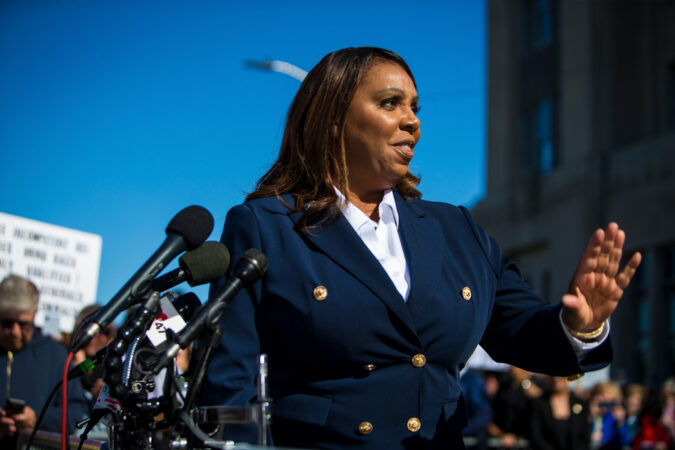
NORFOLK, Va. — The Justice Department failed Thursday to secure a new indictment against New York Attorney General Letitia James after a judge dismissed the previous mortgage fraud prosecution encouraged by President Donald Trump, according to people familiar with the matter.
Prosecutors went back to a grand jury in Virginia after a judge’s ruling halting the prosecution of James and another longtime Trump foe, former FBI Director James Comey, on the grounds that the U.S. attorney who presented the cases was illegally appointed. But grand jurors rejected prosecutors’ request to bring charges.
It’s the latest setback for the Justice Department in its bid to prosecute the frequent political target of the Republican president.
Prosecutors are expected to try again for an indictment, according to one person familiar with the matter who spoke on the condition of anonymity because they were not authorized to publicly discuss the case.
James was initially charged with bank fraud and making false statements to a financial institution in connection with a home purchase in Norfolk, Va., in 2020. Lindsey Halligan, a former White House aide and Trump lawyer, personally presented the case to the grand jury in October after being installed as U.S. attorney for the Eastern District of Virginia amid pressure from Trump to charge Comey and James.
James has denied any wrongdoing and accused the administration of using the justice system to seek revenge against Trump’s political opponents. In a statement Thursday, James said: “It is time for this unchecked weaponization of our justice system to stop.”
“This should be the end of this case,” her attorney, Abbe Lowell, said in a statement. “If they continue, undeterred by a court ruling and a grand jury’s rejection of the charges, it will be a shocking assault on the rule of law and a devastating blow to the integrity of our justice system.”
The allegations related to James’ purchase of a modest house in Norfolk, where she has family. During the sale, she signed a standard document called a “second home rider” in which she agreed to keep the property primarily for her “personal use and enjoyment for at least one year,” unless the lender agreed otherwise.
Rather than using the home as a second residence, James rented it out to a family of three, allowing her to obtain favorable loan terms not available for investment properties, prosecutors alleged.
It’s the latest example of pushback by grand jurors since the beginning of the second Trump administration. It’s so unusual for grand jurors to refuse to return an indictment that it was once said that prosecutors could persuade a grand jury to “indict a ham sandwich.” But the Justice Department has faced setbacks in front of grand juries in several recent cases.
Even if the charges against James are resurrected, the Justice Department could face obstacles in securing a conviction against James.
James’ lawyers separately argued the case was a vindictive prosecution brought to punish the Trump critic who spent years investigating and suing the Republican president and won a staggering judgment in a lawsuit alleging he defrauded banks by overstating the value of his real estate holdings on financial statements. The fine was later tossed out by a higher court, but both sides are appealing.
The defense had also alleged “outrageous government conduct” preceding her indictment, which the defense argued warrants the case’s dismissal. The judge hadn’t ruled on the defense’s arguments on those matters before dismissing the case last month over the appointment of Lindsey Halligan as U.S. attorney.
U.S. District Judge Cameron McGowan Currie took issue with the mechanism the Trump administration employed to appoint Halligan to lead one of the Justice Department’s most elite and important offices.
Halligan was named as a replacement for Erik Siebert, a veteran prosecutor in the office and interim U.S. attorney who resigned in September amid Trump administration pressure to file charges against both Comey and James.
The following night, Trump said he would be nominating Halligan to the role of interim U.S. attorney and publicly implored Attorney General Pam Bondi to take action against his political opponents, saying in a Truth Social post that, “We can’t delay any longer, it’s killing our reputation and credibility” and “JUSTICE MUST BE SERVED, NOW!!!”
Comey was indicted three days after Halligan was sworn in by Bondi, and James was charged two weeks after that.
The Justice Department had defended Halligan’s appointment but has also revealed that Bondi had given Halligan a separate position of “Special Attorney,” presumably as a way to protect the indictments from the possibility of collapse. But Currie said such a retroactive designation could not save the cases.
SANTA ROSA, Calif. — A California animal welfare activist who took four chickens from a major Perdue Farms poultry plant was sentenced to 90 days in jail after being convicted of felony conspiracy, trespassing and other charges.
Zoe Rosenberg, 23, did not deny taking the animals from Petaluma Poultry but argued she wasn’t breaking the law because she was rescuing the birds from a cruel situation. A jury found her guilty in October after a seven-week trial in Sonoma County, an agricultural area of Northern California.
Rosenberg was sentenced on Wednesday and ordered to report to the Sonoma County Jail on Dec. 10. She will serve the 90 days, but 60 of those may involve jail alternates, such as house arrest, the county’s district attorney’s office said. Rosenberg will also have two years of probation, and she is ordered to stay away from all Perdue facilities in the county.
The activist with Direct Action Everywhere, or DxE, a Berkeley-based animal rights group, has said she does not regret what she did.
“I will not apologize for taking sick, neglected animals to get medical care,” Rosenberg said following her conviction.
The group named the birds — Poppy, Ivy, Aster, and Azalea — and placed them in an animal sanctuary.
Petaluma Poultry has said that DxE is an extremist group that is intent on destroying the animal agriculture industry. The company maintains that the animals were not mistreated and said Wednesday’s sentencing upholds the rule of law.
“We’re grateful that DxE has been held to account for its unlawful campaign –- training and paying staff to carry out dangerous, unauthorized intrusions onto private property,” Herb Frerichs, general counsel for Petaluma Poultry, said in a statement Thursday. “DxE’s actions show a reckless disregard for employee safety, animal welfare, and food security.”
Rosenberg testified that she disguised herself as a Petaluma Poultry worker using a fake badge and earpiece to take the birds, and then posted a video of her actions on social media.
Petaluma Poultry is a subsidiary of Perdue Farms — one of the United States’ largest poultry providers for major grocery chains.
The co-founder of DxE was convicted two years ago for his role in factory farm protests in Petaluma.
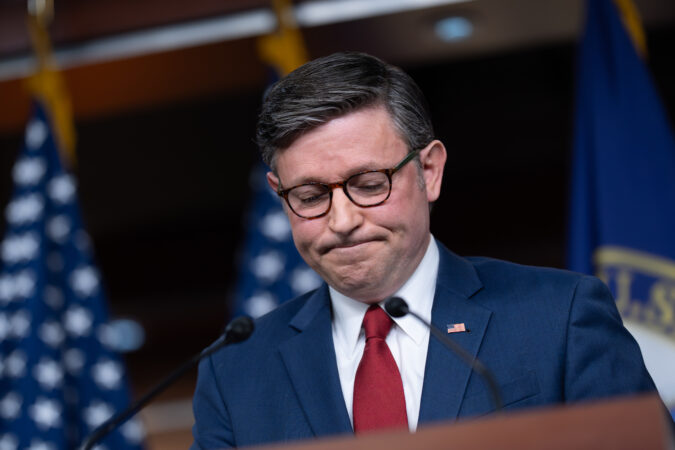
WASHINGTON — House Speaker Mike Johnson is imploring his fellow Republicans to stop venting their frustrations in public and bring their complaints to him directly.
“They’re going to get upset about things. That’s part of the process,” Johnson told reporters Thursday. “It doesn’t bother me. But when there is a conflict or concern, I always ask all members to come to me, don’t go to social media.”
Increasingly, they’re ignoring him.
Cracks inside the GOP conference were stark this week as a member of Johnson’s own leadership team openly accused him of lying, rank-and-file Republicans acted unilaterally to force votes and a leadership-backed bill faltered. It’s all underscored by growing worries that the party is on a path towards losing the majority next year.
“I certainly think that the current leadership and specifically the speaker needs to change the way that he approaches the job,” GOP Rep. Kevin Kiley of California said on Thursday.
Kiley, who has grown vocally critical of Johnson after the GOP’s nationwide redistricting campaign backfired in California, said that the speaker has been critical of rank-and-file Republicans, so “he needs to be prepared to accept any criticism that comes with the job.”
“And I think, unfortunately, there’s been ample reason for criticism,” he added.
‘Why do we have to legislate by discharge petitions?’
For the first part of 2025, Johnson held together his slim Republican majority in the House to pass a number of President Donald Trump’s priorities, including his massive spending and tax cut plan.
But after Johnson kept members out of session for nearly two months during the government shutdown, they returned anxious to work on priorities that had been backlogged for months — and with the reality that their time in the majority may be running out.
First was a high-profile discharge petition to force the vote on releasing the Jeffrey Epstein files, which succeeded after it reached the 218-signature threshold. Other lawmakers are launching more petitions, a step that used to be considered a major affront to party leadership.
“The discharge petition, I think, always shows a bit of frustration,” said GOP Rep. Dusty Johnson.
Another discharge petition on a bill that would repeal Trump’s executive order to end collective bargaining with federal labor unions reached the signature threshold last month, with support from seven Republicans.
And this week, GOP Rep. Anna Paulina Luna of Florida brought a long-anticipated discharge petition for a bill to bar members of Congress from trading stock. A number of Republicans have already signed on, in addition to Democrats.
“Anxious is what happens when you get nervous. I’m not nervous. I’m pissed,” Luna wrote on social media late Thursday, responding to leadership comments that she was overly anxious.
GOP Rep. Nancy Mace of South Carolina signed both Luna’s petition and the one to release the Epstein files. She told reporters Thursday that she expressed her frustrations directly to Johnson in a phone call, and also in what she described as “a deeply personal, deeply passionate letter, that we are legislating by discharge petition.”
“We have a very slim majority, but I want President Trump’s executive orders codified,” Mace said. “I want to see his agenda implemented. Why do we have to legislate by discharge petitions?”
Johnson’s own leadership team going after him
At the center of Johnson’s pleas for members to bring concerns to him privately instead of on social media is the chairwoman of House Republican leadership, New York Rep. Elise Stefanik.
Angered that a provision she championed wasn’t included in a defense authorization bill, Stefanik blasted Johnson’s claims that he wasn’t aware of the provision as “more lies from the Speaker.” She conducted a series of media interviews criticizing Johnson, including one with The Wall Street Journal in which she said he was a “political novice” who wouldn’t be re-elected speaker if the vote were held today.
Johnson told reporters Thursday that he had a “great talk” with Stefanik the night before.
“I called her and I said, ‘why wouldn’t you just come to me, you know?’” Johnson said. “So we had some intense fellowship about that.”
Asked if she had apologized for calling him a liar, Johnson said: “Um, you ask Elise about that.”
Illinois GOP Rep. Mary Miller released a statement Thursday providing support for Johnson, saying that while there are differences among members “our mission is bigger than any one individual or headline.”
Democrats, who have had leadership criticisms of their own, have reveled in the GOP’s disarray. House Republican leaders attempted to muscle through an NCAA-backed bill to regulate college sports after the White House endorsed it, before support within Republican ranks crumbled. Some GOP lawmakers pointedly said they had bigger priorities before the end of the year.
“It’s not that Congress can’t legislate, it’s House Republicans that can’t legislate. It’s the gang that can’t legislate straight. They continue to take the ‘my way or the highway’ approach,” said House Democratic Leader Hakeem Jeffries.
Underlying GOP unease about 2026
All eyes in the U.S. House were on a special election Tuesday night in a Tennessee district that a Republican had won in 2024 by nearly 21 percentage points, with Trump carrying the area by a similar margin.
Republicans hoped the contest would help them regain momentum after losing several marquee races across the country in November. Democrats, meanwhile, argued that keeping the race close would signal strong political winds at their backs ahead of next year’s midterms, which will determine control of both chambers.
Republican Matt Van Epps ultimately won by nearly 9 percentage points.
“I do think to have that district that went by over 20 points a year ago be down to nine, it should be a wake up call,” said GOP Rep. Don Bacon of Nebraska.
He argued that Republicans need “to get some economic progress, like immediately,” adding that “the president and his team have got to come to grips” that tariffs are not driving the economic growth Americans are feeling.
“I just feel like they’re going to have to get out of their bubble,” Bacon said of the White House. “Get out of your bubble. The economy needs improving. Fix Ukraine and we do need a temporary health care fix.”
Bacon is among a growing number of House Republicans who have announced they will retire after this term. Republican Rep. Marjorie Taylor Greene abruptly declared last month that she would resign in January, citing multiple reasons, including that “the legislature has been mostly sidelined” this year.
Those retirements add to the GOP’s challenge in holding the House, as the party must now defend more open seats. Republicans have also seen a redistricting battle — sparked by Trump’s pressure on Texas Republicans and then more states — backfire in part. In November, California voters handed Democrats a victory by approving a new congressional map.
“That’s living in a fantasy world if you think that this redistricting war is what’s going to save the majority,” said Kiley, now at risk of losing his seat after redistricting in California.
He added: “I think what would make a lot bigger impact is if the House played a proactive role in actually putting forward legislation that matters.”
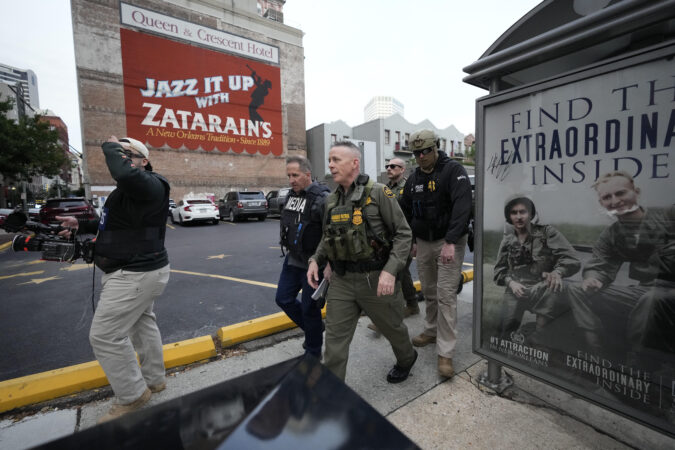
NEW ORLEANS — Trump administration officials overseeing the immigration crackdown launched this week in New Orleans are aiming to make 5,000 arrests with a focus on violent offenders, a target that some city leaders say is not realistic.
It’s an ambitious goal that would surpass the number of arrests during a two-month enforcement blitz this fall around Chicago, a region with a much bigger immigrant population than New Orleans.
In Los Angeles — the first major battleground in President Donald Trump’s aggressive immigration plan — roughly 5,000 people were arrested over the summer in an area where 10 million LA county residents are foreign-born.
“There is no rational basis that a sweep of New Orleans, or the surrounding parishes, would ever yield anywhere near 5,000 criminals, let alone ones that are considered ‘violent’ by any definition,” New Orleans City Council President J.P. Morrell said Thursday.
Census Bureau figures show the New Orleans metro area had a foreign-born population of almost 100,000 residents last year, and that just under 60% were not U.S. citizens.
“The amount of violent crime attributed to illegal immigrants is negligible,” Morrell said, pointing out that crime in New Orleans is at historic lows.
Violent crimes, including murders, rapes, and robberies, have fallen by 12% through October compared to a year ago, from a total of 2,167 violent crimes to 1,897 this year, according to New Orleans police statistics.
A flood of messages about arrests
Federal agents in marked and unmarked vehicles began spreading out across New Orleans and its suburbs Wednesday, making arrests in home improvement store parking lots and patrolling neighborhoods with large immigrant populations.
Alejandra Vasquez, who runs a social media page in New Orleans that reports the whereabouts of federal agents, said she has received a flood of messages, photos and video since the operations began.
“My heart is so broken,” Vasquez said. “They came here to take criminals and they are taking our working people. They are not here doing what they are supposed to do. They are taking families.”
Several hundred agents from Customs and Border Protection and U.S. Immigration and Customs Enforcement are participating in the two-month operation dubbed “Catahoula Crunch.”
House Speaker Mike Johnson, who is from Louisiana, is among the state’s Republicans supporting the crackdown. “Democrats’ sanctuary city policies have failed — making our American communities dangerous. The people of our GREAT city deserve better, and help is now on the ground,” Johnson posted on social media.
Operation is being met with resistance
About two dozen protesters were removed from a New Orleans City Council meeting Thursday after chants of “Shame” broke out. Police officers ordered protesters to leave the building, with some pushed or physically carried out by officers.
Planning documents obtained last month by The Associated Press show the crackdown is intended to cover southeast Louisiana and into Mississippi.
Homeland Security Department spokesperson Tricia McLaughlin said agents are going after immigrants who were released after arrests for violent crimes.
“In just 24 hours on the ground, our law enforcement officers have arrested violent criminals with rap sheets that include homicide, kidnapping, child abuse, robbery, theft, and assault,” McLaughlin said Thursday in a statement. Border Patrol and immigration officials have not responded to requests for details, including how many have been arrested so far.
She told CNN on Wednesday that “we will continue whether that will be 5,000 arrests or beyond.”
Immigration arrests go beyond violent criminals
To come close to reaching their target numbers in New Orleans, immigrant rights group fear federal agents will set their sights on a much broader group.
New Orleans City Councilmember Lesli Harris said “there are nowhere near 5,000 violent offenders in our region” whom Border Patrol could arrest.
“What we’re seeing instead are mothers, teenagers, and workers being detained during routine check-ins, from their homes and places of work,” Harris said. “Immigration violations are civil matters, not criminal offenses, and sweeping up thousands of residents who pose no threat will destabilize families, harm our economy.”
During the “Operation Midway Blitz” crackdown in Chicago that began in September, federal immigration agents arrested more than 4,000 people across the city and its many suburbs, dipping into Indiana.
Homeland Security officials heralded efforts to nab violent criminals, posting dozens of pictures on social media of people appearing to have criminal histories and lacking legal permission to be in the U.S. But public records tracking the first weeks of the Chicago push show most arrestees didn’t have a criminal record.
Of roughly 1,900 people arrested in the Chicago area from early September through the middle of October — the latest data available — nearly 300 or about 15% had criminal convictions on their records, according to ICE arrest data from the University of California Berkeley Deportation Data Project analyzed by The Associated Press.
The vast majority of those convictions were for traffic offenses, misdemeanors or nonviolent felonies, the data showed.
New Orleans, whose international flavor comes from its long history of French, Spanish, African, and Native American cultures, has seen a new wave of immigrants from places in Central and South America and Asia.
Across all of Louisiana, there were more than 145,000 foreign-born noncitizens, according to the Census Bureau. While those numbers don’t break down how many residents of the state were in the country illegally, the Pew Research Center estimated the number at 110,000 people in 2023.
ALBANY, N.Y. — President Donald Trump’s effort to install political loyalists as top federal prosecutors has run into a legal buzz saw lately, with judges ruling that his handpicked U.S. attorneys for New Jersey, eastern Virginia, Nevada, and Los Angeles were all serving unlawfully.
On Thursday, another federal judge heard an argument by New York Attorney General Letitia James that the administration also twisted the law to make John Sarcone the acting U.S. attorney for northern New York.
James, a Democrat, is challenging Sarcone’s authority to oversee a Justice Department investigation into regulatory lawsuits she filed against Trump and the National Rifle Association. It’s one of several arguments she is making to block subpoenas issued as part of the probe, which her lawyers say is part of a campaign of baseless investigations and prosecutions of Trump’s perceived enemies.
Her attorney Hailyn Chen argued in court that since Sarcone lacks legitimate authority to act as U.S. attorney, legal steps taken by him in that capacity — like the subpoenas — are unlawful. In response to a question from U.S. District Judge Lorna G. Schofield, Chen said Sarcone should be disqualified from the investigation and the office.
“Sarcone exercised power that he did not lawfully possess,” Chen told the judge.
Justice Department lawyers say Sarcone was appointed properly and the motion to block the subpoenas should be denied. Assistant U.S. Attorney Richard Belliss argued that disqualifying Sarcone would be “drastic and extreme.”
“We don’t think that’s a proper remedy,” Belliss said.
Schofield, after peppering both attorneys with questions, did not say when she would rule.
The fight in New York and other states is largely over the legality of unorthodox strategies the Trump administration has adopted to appoint prosecutors seen as unlikely to get confirmed by the U.S. Senate.
The hearing came a week after a federal judge in Virginia dismissed indictments brought there against James and former FBI Director James Comey. That judge concluded that the interim U.S. attorney who brought the charges, Lindsey Halligan, was unlawfully appointed. The Justice Department is expected to appeal.
On Monday, a federal appeals court ruled that Alina Habba, Trump’s former personal lawyer, is disqualified from serving as New Jersey’s top federal prosecutor.
Under federal law, the president’s nominees for U.S. attorney must be confirmed by the Senate. If a position is vacant, the U.S. attorney general can appoint someone temporarily, but that appointment expires after 120 days. If that time period elapses, judges in the district can either keep the interim U.S. attorney or appoint someone of their own choosing.
Sarcone’s appointment didn’t follow that path.
Trump hasn’t nominated anyone to serve as U.S. attorney for the Northern District of New York. U.S. Attorney General Pam Bondi appointed Sarcone to serve as the interim U.S. attorney in March. When his 120-day term elapsed, judges in the district declined to keep him in the post.
Bondi then took the unusual step of appointing Sarcone as a special attorney, then designated him first assistant U.S. attorney for the district, a maneuver federal officials say allows him to serve as an acting U.S. attorney.
Chen called it an abuse of executive power.
The New York subpoenas seek records related to a civil case James filed against Trump over alleged fraud in his personal business dealings and records from a lawsuit involving the National Rifle Association and two senior executives.
Belliss argued in court that the U.S. attorney general has broad authority to appoint attorneys within her department and to delegate her functions to those attorneys. Belliss said that even if Sarcone is not properly holding the office of acting U.S. attorney, he can still conduct grand jury investigations as a special attorney.
Sarcone was part of Trump’s legal team during the 2016 presidential campaign and worked for the U.S. General Services Administration as the regional administrator for the Northeast and Caribbean during Trump’s first term.
Habba also served as an interim U.S. attorney. When her appointment expired, New Jersey judges replaced her with a career prosecutor who had served as her second-in-command. Bondi then fired that prosecutor and renamed Habba as acting U.S. attorney.
A similar dynamic is playing out in Nevada, where a federal judge disqualified the Trump administration’s pick to be U.S. attorney there. And a federal judge in Los Angeles disqualified the acting U.S. attorney in Southern California from several cases after concluding he had stayed in the job longer than allowed by law.
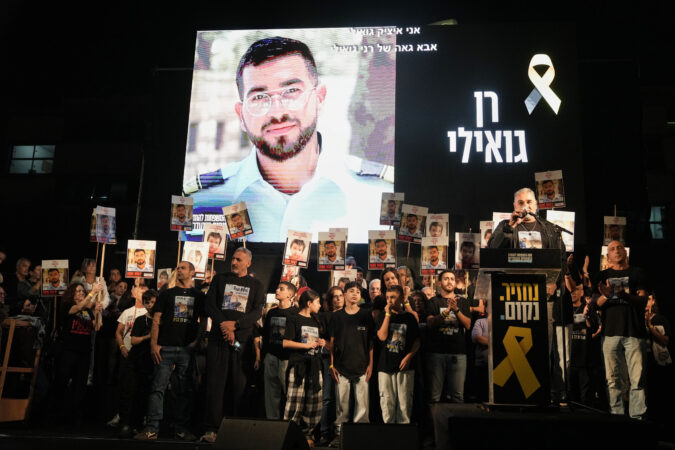
JERUSALEM — There were hundreds, then dozens, and then just a few. Now there’s one Israeli hostage left in Gaza: Ran Gvili.
Gvili, a 24-year-old police officer known affectionately as “Rani,” was killed while fighting Hamas militants during the Oct. 7, 2023, attack that triggered the war. After a series of ceasefire-mandated exchanges of hostages for Palestinians held by Israel, Gvili’s body still has not been recovered.
His remains are somewhere in Gaza. On Thursday, as Israel woke to the news that remains militants returned the previous day belonged to another hostage, the country mourned Gvili as a hero who died fighting to save a kibbutz that was not his own.
“The first to go, the last to leave,” his mother, Talik Gvili, wrote on Facebook Thursday. “We won’t stop until you come back.”
‘The Shield of Alumim’
At the entrance to Kibbutz Alumim, one of the many border villages militants attacked on Oct. 7, there is a sign emblazoned with a photo of Gvili smiling in his uniform, his name beneath it.
“He fought a heroic battle, saving the lives of the kibbutz members,” the sign says. ”Since then he has been known as ‘Rani, the Shield of Alumim.’”
Unlike those from other Israeli kibbutzim targeted that day, the residents of Alumim survived. They credit that to men like Gvili, who joined a group of emergency response team members, soldiers and police officers who fended off waves of intruding militants.
Migrant workers on the kibbutz, however, met a different fate. Left exposed in agricultural areas outside the kibbutz’s defensive perimeter, 22 foreign nationals were killed, according to the Israeli newspaper Haaretz.
Gvili died fighting in battle
On the morning of Oct. 7, Gvili was at home, his younger sister Shira Gvili said in an interview with the AP. He had been on medical leave from his elite police unit for a broken shoulder.
Still, when he heard that gunmen were attacking panicked partygoers at the site of the Nova Music Festival, he headed straight for the venue grounds, along with other men from the unit.
Nova later became the site of the largest civilian massacre in Israeli history, when the militants killed at least 364 people and took more than 40 hostage.
Gvili and the other officers never made it there, his sister said. Instead, they encountered the militants at Kibbutz Alumim.
Sgt. Richard Schechtman, a fellow police officer who also fought in the battle, said that Gvili appeared to immediately know what to do.
“Rani was at the head of the team — because that’s who he was,” Schechtman was quoted as telling the Israeli news site Ynet. “Rani and I were standing on the road. I saw the terrorists, but I hesitated because it was the first time in my life I’d ever seen a terrorist face-to-face, and I had a moment of, ‘Wait, what am I seeing?’ Then Rani pulled the pin and opened fire — and the whole team followed him.”
At one point in battle, Gvili ran to the western flank of the kibbutz to fight militants arriving in trucks, said his mother, who has spoken with others who fought with him that day. That’s where he was injured in the leg.
“He radioed his team to warn that more vehicles carrying terrorists were approaching,” his mother said in an interview with Ynet. “He opened fire, and they came at him. He fought them alone, injured in both his leg and arm, and he took down those monsters.”
Israel’s military says Gvili’s body was abducted to Gaza by the militants soon after. The military confirmed his death, based on an intelligence assessment, four months later.
Last step in first phase of ceasefire
The return of Gvili’s remains would mark the completion of the first phase of President Donald Trump’s 20-point ceasefire plan. The first phase also calls for the release of thousands of Palestinians from Israel, both alive and dead, and an increase of aid shipments into war-ravaged Gaza.
The next phases of the ceasefire agreement will be much more complicated to fulfill. Key elements include deploying an international force to secure Gaza, disarming Hamas, and forming a temporary Palestinian government to run day to day affairs under the supervision of an international board led by Trump.
Family worries Gvili’s remains will not come back
Gvili’s family — which includes his brother, Omri — is holding out hope they’ll receive the remains soon.
“We see all the other families whose sons came back and we see in their eyes that they have relief,” his sister said. ”This is why it’s so important. Because we want to move on with our with our life and just remember Rani.”
Gvili was a hero, but he was more than that, his sister recalled: He was protective and goofy; he occasionally told bad jokes that everyone laughed at; he loved playing guitar and singing ‘The House of the Rising Sun’; and he had a tattoo on his leg of his dog, Luna, who the family now cares for.
Both his mother, Talik, and father, Itzik Gvili, say they fear a worst-case scenario of the type experienced by families of Israeli soldiers Hadar Goldin or Ron Arad.
Goldin was killed in Gaza in 2014. His body was only returned to Israel about a month ago as part of the ceasefire. Arad was abducted in Lebanon in 1988 after ejecting from his aircraft. He’s never been found.
“We pray, of course, that he will not be another Ron Arad or (Hadar) Goldin,” Itzik Gvili told Kan News. “That we don’t drag it out for many more years.”
“As far as I am concerned, until Ran comes back, he is alive,” the father said. “I have nothing else to hope for.”
NEW YORK — Minutes after police approached Luigi Mangione in a Pennsylvania McDonald’s, he told an officer he didn’t want to talk, according to video and testimony at a court hearing Thursday for the man charged with killing UnitedHealthcare CEO Brian Thompson.
Although some video and accounts of police interactions with Mangione emerged earlier in this week’s hearing, Thursday’s proceedings shed new light on the lead-up to and aftermath of his Dec. 9, 2024, arrest in Altoona, Pa.
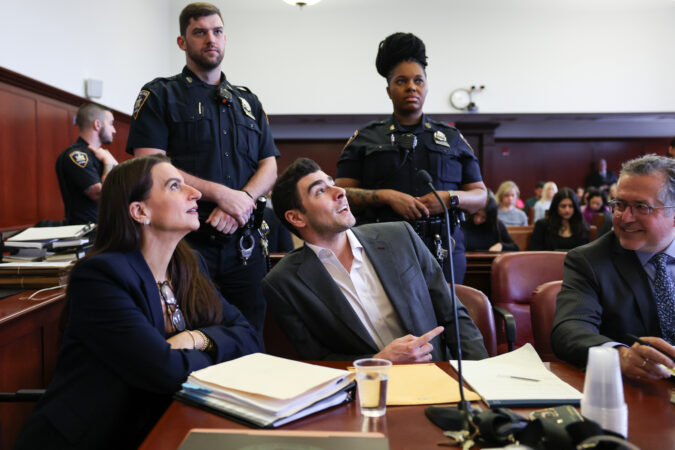
Mangione, 27, appeared to follow the proceedings intently, at times leaning over the defense table to scrutinize papers or take notes. He briefly looked down as Altoona Police Officer Tyler Frye was asked about a strip-search of Mangione after his arrest. Under the department’s policy, that search wasn’t recorded.
It happened after police were told that someone at the McDonald’s resembled the much-publicized suspect in Thompson’s killing. But Frye and Officer Joseph Detwiler initially approached Mangione with a low-key tone, saying only that someone had said he looked “suspicious.” Asked for his ID, he gave a phony New Jersey driver’s license with a fake name, according to prosecutors.
Moments later, after frisking Mangione, Detwiler stepped away to communicate with dispatchers about the license, leaving the rookie Frye by Mangione’s table.
“So what’s going on? What brings you up here from New Jersey?” Frye asked, according to his body-camera video.
Mangione answered in a low voice. Asked what the suspect had said, Frye testified Thursday: “It was something along the lines of: He didn’t want to talk to me at that time.”
Mangione later added that “he was just trying to use the Wi-Fi,” according to Frye.
During the roughly 20 minutes before Mangione was told he had the right to remain silent, he answered other questions asked by the officers, and also posed a few of his own.
“Can I ask why there’s so many cops here?” he asked shortly before being informed he was being arrested on a forgery charge related to his false ID. By that point, roughly a dozen officers had converged on the restaurant, and Mangione had been told he was being investigated and had been handcuffed.
Mangione has pleaded not guilty to state and federal murder charges. Before any trials get scheduled, his lawyers are trying to preclude the eventual jurors from hearing about his alleged statements to law officers and items — including a gun and a notebook — they allegedly seized from his backpack.
The evidence is key to prosecutors’ case. They have said the 9 mm handgun matches the firearm used in the killing, that writings in the notebook laid out Mangione’s disdain for health insurers and ideas about killing a CEO at an investor conference, and that he gave police the same fake name that the alleged gunman used at a New York hostel days before the shooting.
Thursday’s proceedings came on the anniversary of the killing, which UnitedHealthcare marked by lowering the flags at its headquarters in Minnetonka, Minnesota, and encouraging employees to engage in volunteering.
Thompson, 50, was shot from behind as he walked to an investor conference. He became UnitedHealthcare’s CEO in 2021 and had worked within parent UnitedHealth Group Inc. for 20 years.
The hearing, which started Monday and could extend to next week, applies only to the state case. But it is giving the public an extensive preview of some testimony, video, 911 audio and other records relevant to both cases.
After encountering Mangione, Detwiler and Frye tried to play it cool and buy time by intimating that they were simply responding to a loitering complaint and chatting about his sandwich. Still, they patted Mangione down and pushed his backpack away from him. About 15 minutes in, officers warned him that he was being investigated and would be arrested if he repeated what they had determined was a fake name.
After he gave his real one, he was read his rights, handcuffed, frisked again and ultimately arrested on a forgery charge related to his fake ID.
Mangione’s lawyers argue that his statements shouldn’t be allowed as trial evidence because officers started questioning him before reading his rights. They say the contents of his backpack should be excluded because police didn’t get a warrant before searching it.
Manhattan prosecutors haven’t yet detailed their arguments for allowing the disputed evidence. Federal prosecutors have maintained that the backpack search was justified to ensure there was nothing dangerous inside, and that Mangione’s statements to officers were voluntary and made before he was under arrest.
Many criminal cases see disputes over evidence and the complicated legal standards governing police searches and interactions with potential suspects.
WASHINGTON — President Donald Trump praised the leaders of the Democratic Republic of Congo and Rwanda for their courage as they signed onto a deal on Thursday aimed at ending the conflict in eastern Congo and opening the region’s critical mineral reserves to the U.S. government and American companies.
The moment offered Trump — who has repeatedly and with a measure of exaggeration boasted of brokering peace in some of the world’s most entrenched conflicts — another chance to tout himself as a dealmaker extraordinaire on the global stage and make the case that he’s deserving of the Nobel Peace Prize. The U.S. leader hasn’t been shy about his desire to receive the honor.
“It’s a great day for Africa, a great day for the world,” Trump said shortly before the leaders signed the pact. He added, “Today, we’re succeeding where so many others have failed.”
Trump welcomed Presidents Felix Tshisekedi of Congo and Paul Kagame of Rwanda, as well as several officials from other African nations who traveled to Washington to witness the signing, in the same week he contemptuously derided the war-torn country of Somalia and said he did he did not want immigrants from the East African nation in the U.S.
Lauded by the White House as a “historic” agreement brokered by Trump, the pact between Tshisekedi and Kagame follows monthslong peace efforts by the U.S. and partners, including the African Union and Qatar, and finalizes an earlier deal signed in June.
Fighting, meanwhile, continued this week in the conflict-battered region with pockets of clashes reported between the rebels and Congolese soldiers, together with their allied forces. Trump, a Republican, has often said that his mediation has ended the conflict, which some people in Congo say isn’t true.
Still, Kagame and Tshisekedi offered a hopeful tone as they signed onto to the agreement.
“No one was asking President Trump to take up this task. Our region is far from the headlines,” Kagame said. “But when the president saw the opportunity to contribute to peace, he immediately took it.”
“I do believe this day is the beginning of a new path, a demanding path, yes. Indeed, quite difficult,” Tshisekedi said. ”But this is a path where peace will not just be a wish, an aspiration, but a turning point.”
Indeed, analysts say Thursday’s deal also isn’t expected to quickly result in peace. A separate peace deal has been signed between Congo and the M23.
“We are still at war,” said Amani Chibalonza Edith, a 32-year-old resident of Goma, eastern Congo’s key city seized by rebels early this year. “There can be no peace as long as the front lines remain active.”
Rare earth minerals
Thursday’s pact will also build on a Regional Economic Integration Framework previously agreed upon that officials have said will define the terms of economic partnerships involving the three countries.
Trump also announced the United States was signing bilateral agreements with the Congo and Rwanda that will unlock new opportunities for the United States to access critical minerals–deals that will benefit all three nations’ economies.
“And we’ll be involved with sending some of our biggest and greatest U.S. companies over to the two countries,” Trump said. He added, “Everybody’s going to make a lot of money.”
The region, rich in critical minerals, has been of interest to Trump as Washington looks for ways to circumvent China to acquire rare earths, essential to manufacturing fighter jets, cell phones and more. China accounts for nearly 70% of the world’s rare earth mining and controls roughly 90% of global rare earths processing.
Trump hosted the leaders on Thursday morning for one-on-one meetings at the White House as well as a three-way conversation before the signing ceremony at the Institute of Peace in Washington, which the State Department announced on Wednesday has been rebranded “the Donald J. Trump Institute of Peace.”
Later Thursday, the U.S. Chamber of Commerce will host an event that will bring together American business leaders and the Congolese and Rwandan delegations to discuss potential investment opportunities in critical minerals, energy and tourism.
Ongoing clashes
In eastern Congo, meanwhile, residents reported pockets of clashes and rebel advances in various localities. Both the M23 and Congolese forces have accused each other of violating the terms of the ceasefire agreed earlier this year. Fighting has also continued in the central plateaus across South Kivu province.
The hardship in the aftermath of the conflict has worsened following U.S. funding cuts that were crucial for aid support in the conflict.
In rebel-held Goma, which was a regional hub for security and humanitarian efforts before this year’s escalation of fighting, the international airport is closed. Government services such as bank operations have yet to resume and residents have reported a surge in crimes and in the prices of goods.
“We are waiting to see what will happen because so far, both sides continue to clash and attack each other,” said Moise Bauma, a 27-year-old student in rebel-held Bukavu city.
Both Congo and Rwanda, meanwhile, have touted American involvement as a key step towards peace in the region.
“We need that attention from the administration to continue to get to where we need to get to,” Makolo said. “We are under no illusion that this is going to be easy. This is not the end but it’s a good step.”
Conflict’s cause
The conflict can be traced to the aftermath of the 1994 genocide in Rwanda, where Hutu militias killed between 500,000 and 1 million ethnic Tutsi, as well as moderate Hutus and Twa, Indigenous people. When Tutsi-led forces fought back, nearly 2 million Hutus crossed into Congo, fearing reprisals.
Rwandan authorities have accused the Hutus who fled of participating in the genocide and alleged that elements of the Congolese army protected them. They have argued that the militias formed by a small fraction of the Hutus are a threat to Rwanda’s Tutsi population.
Congo’s government has said there can’t be permanent peace if Rwanda doesn’t withdraw its support troops and other support for the M23 in the region. Rwanda, on the other hand, has conditioned a permanent ceasefire on Congo dissolving a local militia that it said is made up of the Hutus and is fighting with the Congolese military.
U.N. experts have said that between 3,000 and 4,000 Rwandan government forces are deployed in eastern Congo, operating alongside the M23. Rwanda denies such support, but says any action taken in the conflict is to protect its territory.
ROGERS, Ark. — She was already separated from her husband, the family breadwinner and father of her two youngest children, and had lost the home they shared in Arkansas.
Then Cristina Osornio was ensnared by the nation’s rapidly expanding immigration enforcement crackdown just months after her husband was deported to Mexico. Following a traffic stop in Benton County, in the state’s northwest corner, she was jailed for several days on an Immigration and Customs Enforcement hold, records show, even though she is a legal permanent U.S. resident and the mother of six children.
Best known as home to Walmart headquarters, the county and the wider region have emerged as a little-known hot spot in the Trump administration’s crackdown, according to an Associated Press review of ICE arrest data, jail records, police reports and interviews with residents, immigration lawyers and watchdogs.
The county offers a window into what the future may hold in places where local and state law enforcement authorities cooperate broadly with ICE, as the Department of Homeland Security offers financial incentives in exchange for help making arrests.
The partnership in Arkansas has led to the detention and deportation of some violent criminals but also repeatedly turned misdemeanor arrests into the first steps toward deportations, records show. The arrests have split apart families, sparked protests and spread fear through the immigrant community, including people born in Mexico, El Salvador, Guatemala, Honduras and the Marshall Islands.
“Nobody is safe at this point because they are targeting you because of your skin color,” said Osornio, 35, who was born in Mexico but has lived in the U.S. since she was 3 months old.
Her odyssey began in September, when an officer in the city of Rogers cited her for driving without insurance and with a suspended license, body cam video shows. She was arrested on a warrant for missing a court appearance in a misdemeanor case and taken to the Benton County Jail, where an ICE hold was placed on her.
After four days behind bars, she said she was released without explanation. She called it a “very scary” experience that exacerbated her health conditions.
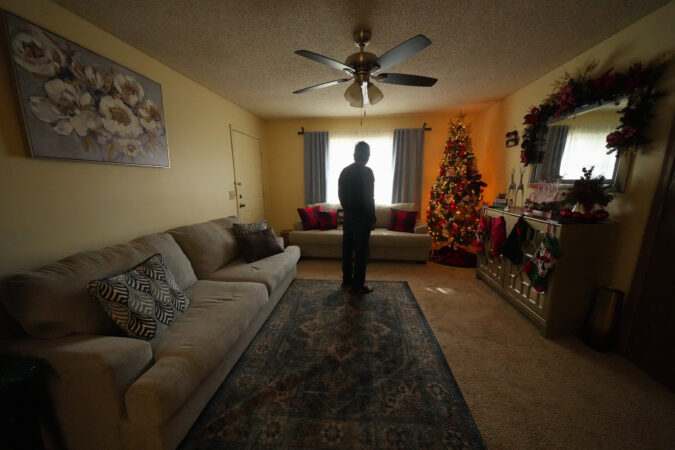
Cristina Osornio and her 3-year-old daughter, Valentina, decorate a Christmas tree in their apartment in Rogers, Ark.
Benton County offers the kind of help ICE wants nationwide
More than 450 people were arrested by ICE at the Benton County Jail from Jan. 1 through Oct. 15, according to ICE arrest data from the University of California Berkeley Deportation Data Project analyzed by AP. That’s more than 1.5 arrests per day in the county of roughly 300,000 people.
Most of the arrests were made through the county’s so-called 287(g) agreement, named for a section of immigration law, that allows deputies to question people who are booked into the jail about their immigration status. In fact, the county’s program accounted for more than 4% of roughly 7,000 arrests nationwide that were attributed to similar programs during the first 9 1/2 months of this year, according to the data.
Under the program, deputies alert ICE to inmates suspected of being in the country illegally, who are usually held without bond and eventually transferred into ICE custody. After a couple of days, they are often moved to the neighboring Washington County Detention Center in Fayetteville, which has long held detainees for ICE, before they are taken to detention centers in Louisiana and potentially deported.
ICE now has more than 1,180 cooperation agreements with state and local law enforcement agencies, up from 135 at the start of the new administration, and it has offered federal payments to cover the costs of training, equipment and salaries in some circumstances. Arrests under the programs have surged in recent months as more agencies get started, ICE data shows.
The growth has been particularly pronounced in Republican-led states such as Florida, where new laws encourage or require such cooperation. Earlier this year, Arkansas Gov. Sarah Huckabee Sanders signed a law requiring all county sheriffs to cooperate with ICE through either a 287(g) program at the jail or a program in which they serve ICE warrants to expedite detentions and removals.
ICE arrests have surged in Benton County this year
Benton County’s partnership with ICE has been controversial off and on since its inception nearly 20 years ago.
ICE data shows arrests have shot up this year in the county, a Trump stronghold in a heavily Republican state that has a large foreign-born population compared with other parts of Arkansas.
About half of those arrested by ICE through the program have been convicted of crimes, while the other half have charges pending, according to the data. But the severity of the charges ranges widely.
Jail records show those on recent ICE holds include people charged with forgery, sexual assault, drug trafficking, theft, and public intoxication. Offenses related to domestic violence and unsafe driving are among the most common.
Local observers say they have tracked an uptick in people facing ICE detention after traffic stops involving violations such as driving without a license.
“It just feels more aggressive. We’re seeing people detained more frequently on extremely minor charges,” said Nathan Bogart, an immigration attorney. “They’ve kind of just been let off the leash now.”
County officials were unwilling to talk about their partnership with ICE. County Judge Barry Moehring, the county’s chief executive who oversees public safety, referred questions to the sheriff’s office.
Sheriff Shawn Holloway, who has championed the program since his election in 2015, did not respond to several interview requests. The sheriff’s office spokesperson referred questions to ICE.
A routine traffic stop turns into an ICE hold
Body cam video shows that police officer Myles Tucker pulled Osornio over on Sept. 15 in a quiet neighborhood of Rogers as she drove to a bank to get change for her job at the retail chain Five Below.
Tucker said he stopped Osornio because a check of her license plate number indicated that her auto insurance was unconfirmed, and he thought she made a suspicious turn after seeing police.
In addition to issuing tickets for lacking insurance and driving with a suspended license, the officer learned she had a warrant for failing to appear for a misdemeanor domestic violence case. That case stemmed from a 2023 incident in which she argued and fought with her husband.
Osornio disputed that she missed a court hearing. She told the officer that her husband had been deported and that she needed to arrange child care for her children.
During the drive to the jail, Tucker played upbeat Christian-themed music in his patrol vehicle.
He turned down the music to ask Osornio where she was born, saying the information would be required at the jail. “I ask the question because I have to put it on the form, not because I’m trying to get you in trouble,” he said.
Osornio said she was baffled about why she was placed on an ICE hold. She offered to show her residency and Social Security cards, but jail staff told her she would have to meet with an immigration agent in a few days. She said that never happened and instead she was told the hold was “lifted.”
Neither a jail spokesperson nor ICE responded to questions about the matter.
Cpl. Don Lisi, spokesperson for the Rogers Police Department, said his agency has “nothing to do with” the county’s ICE partnership.
But jail records show dozens of the department’s recent arrests have turned into ICE detentions once suspects are booked. Advocates for immigrants allege the department and others nearby engage in racial profiling in traffic stops.
Afraid of racial profiling, local residents take precautions
In interviews, nonwhite residents said they were afraid to drive in northwest Arkansas regardless of whether they had legal status. Some said they leave home only to go to work, have groceries and food delivered rather than eating out, and avoid other activities.
“This is a kind of jail, one would say,” said Ernesto, 73, a school custodian born in Venezuela, from his apartment filled with Christmas decorations. He spoke on the condition that only his first name be used to avoid retaliation.
One of Ernesto’s adult daughters was recently stripped of her asylum status, and his temporary legal status also recently expired. He recently witnessed authorities “taking away people” from a traffic stop.
“Don’t just pull over people because they’re Latino or a foreigner,” he said. “I hope that all this is over soon, that the state of Arkansas sees who are the immigrants that are doing good here.”
Immigration attorney Lilia Pacheco in her vehicle, which has a surveillance camera she installed on the windshield in order to record interactions with police should she be pulled over.
Rogers-based attorney Lilia Pacheco said she started practicing law in the area during the first Trump administration, and “it’s day and night between the first administration as far as enforcement.” She said Benton County authorities have taken their cooperation with ICE to new heights, stepping up traffic stops, assisting with arrests and welcoming undercover agents.
“We’re seeing that shift here, and I think that’s given a rise to the arrests and operations in the area,” she said. “It looks like their relationship is a lot closer than what we anticipated that it would be.”
Pacheco said her husband was recently pulled over in Rogers while taking their daughter to school when he was driving the speed limit and could not understand why. The officer asked for his driver’s license, and he was let go without a ticket, she said.
The family has since installed a dashboard camera in their car so that they can record any future interactions with police after the Supreme Court decision that allowed ICE to racially profile, she said.
Pacheco said many who live in the area are from the state of Guanajuato in Mexico, and fear deportation because of a rise in violence linked to drug cartels. Those from El Salvador fear prolonged detention in their country, which has swept up innocent people in its crackdown on gangs, she said.
After husband’s deportation, family has struggled
Osornio said she has been with her husband, Edwin Sanchez-Mendoza, for eight years. They got together a couple of years after he illegally crossed the border from Mexico when he was in his late teens.
They have two children together, a 5-year-old boy and 3-year-old girl. She said her husband worked in construction, and his salary paid the rent and bills in the home they shared in Bentonville.
Court records show Sanchez-Mendoza was arrested on misdemeanor charges in September 2024 after he was accused of striking one of his teenage stepsons.
Sanchez-Mendoza told police he was restraining the stepson in self-defense and believed the teen called police to scare him since he was not in the country legally. A Bentonville officer wrote in a report that the sheriff’s office should check “the legality of Edwin’s nationality status.”
Sanchez-Mendoza was placed on a hold for ICE at the Benton County Jail. The charges were dropped after ICE transferred him elsewhere in January 2025.
Ultimately, Osornio said her husband ended up at an ICE detention facility in Louisiana, where he found the conditions unbearable. He agreed to be deported and was flown last spring to Mexico, where he has since moved back to his rural hometown and helps on the family farm.
His absence has been devastating financially and emotionally, Osornio said. When they drive past construction sites, their young daughter says, “Look, Mom, Daddy’s working there,” she said.
The family could no longer afford their house. Osornio got the retail job but has struggled to pay for the apartment where they moved and their bills. She’s getting help from a local advocacy organization and asking for help on GoFundMe.
She suffers from high blood pressure and said she suffered a stroke days after her release from jail.
Osornio said Sanchez-Mendoza wants her to move to Mexico, and she and the kids visited him in May. But she’s agonizing over the decision, saying she fears it would put her children in danger of cartel violence and that she knows the U.S. as home.
She’s anxiously waiting for her new permanent residency card to arrive after receiving a temporary extension earlier this year.
“Obviously over there it’s the cartels. But here now the scare is with immigration. Now we don’t know even if we are safe here anymore,” she said. “Ever since that happened to me, I don’t go anywhere. I don’t go out of my house.”