Category: Business Wires

  • U.S. economic growth weaker than thought in fourth quarter with government shutdown, consumer pullback

    U.S. economic growth weaker than thought in fourth quarter with government shutdown, consumer pullback

    WASHINGTON — U.S. economic growth slowed in the final three months of last year, dragged down by the six-week shutdown of the federal government and a pullback in consumer spending.

    The nation’s gross domestic product — the total output of goods and services — increased at a 1.4% annual rate in the fourth quarter, the Commerce Department reported Friday, down from 4.4% in the July-September quarter and 3.8% in the quarter before that.

    The figures point to what could be a more modest pace of growth in the coming quarters, as consumers have taken on more debt and saved less to maintain their spending, a process that may be difficult to sustain. Business investment, other than data centers and equipment dedicated to artificial intelligence, grew at only a moderate pace.

    Still, a measure of underlying growth that focuses on consumer and business spending was mostly healthy at 2.4%, economists said. The sharp slowdown in government outlays because of the shutdown shaved a full percentage point from growth.

    Consumers and companies spent at a “reasonably solid” pace, said Martha Gimbel, executive director of the Budget Lab at Yale and former economist in the Biden White House. “This is not a disastrous report.”

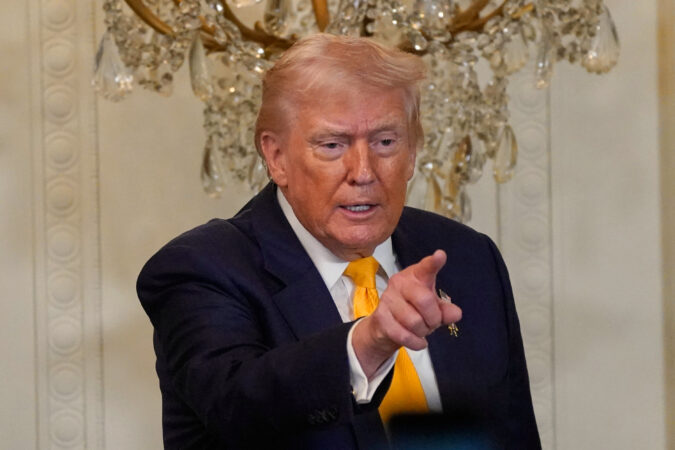
    Also Friday, the Supreme Court struck down many of President Donald Trump’s tariffs, which have lifted inflation slightly and likely discouraged many companies from hiring by raising their costs. At a news conference, Trump quickly promised to reimpose the tariffs under different laws than the one the court invalidated.

    Consumer spending also rose 2.4% in the fourth quarter, a solid increase but notably below the third quarter’s healthy 3.5% gain. Federal government outlays plunged nearly 17% amid the shutdown. That decline should mostly reverse in the coming quarters, however.

    The outsize growth last summer and fall — when the economy expanded at about a 4% annual pace — partly reflected sharply lower imports. Companies ramped up imports in the first quarter of last year to get ahead of President Donald Trump’s tariffs. After boosting growth in the second and third quarters, trade had little impact at the end of last year.

    Diane Swonk, chief economist at KPMG, said the report reflected a “one-legged” economy boosted mostly by artificial intelligence, which is fueling business spending and has also lifted wealth for those households that own stocks and have benefited from rising share prices.

    Many households, however, have had to take on more debt to fuel their spending. The saving rate dropped to just 3.6% in the fourth quarter, the second-lowest figure since August 2008, when the economy was mired in the Great Recession.

    “The economy looks golden on paper, but beneath the surface is lead,” Swonk said.

    Early Friday, before the figures were released, Trump attacked congressional Democrats for shutting down the government last fall. He also reiterated his criticism of Federal Reserve Chair Jerome Powell for not cutting interest rates more quickly.

    “The Democrat Shutdown cost the U.S.A. at least two points in GDP,” Trump posted on his social media site. “That’s why they are doing it, in mini form, again. No Shutdowns! Also, LOWER INTEREST RATES. “Two Late” Powell is the WORST!!!”

    A separate report Friday showed that inflation, according to the Fed’s preferred measure, accelerated in December, as the cost of goods such as furniture, clothes, and groceries picked up. That makes it less likely the Fed will reduce its key interest rate in the coming months.

    Earlier this month, Trump predicted a blowout gain in GDP of more than 5% even if the government shutdown was factored into the figures. Trump has been trying to claim that the economy is at its strongest point in history, even though the new data shows that growth slowed, compared with 2024, following his return to the White House.

    The data arrives before Trump delivers the State of the Union address on Tuesday, where he is expected to say that the economy is booming.

    The report also underscores an odd aspect of the U.S. economy: It is growing steadily, but without creating many jobs. Growth was a solid 2.2% in 2025, yet a government report last week showed that employers added less than 200,000 jobs last year — the fewest since COVID struck in 2020.

    Economists point to several possible reasons for the gap: The Trump administration’s crackdown on immigration has sharply slowed population growth, reducing the number of people available to take jobs. It’s one reason that the unemployment rate rose only slightly — to 4.3% from 4% — last year, even with the nearly non-existent hiring.

    Some businesses may also be holding back on adding jobs out of uncertainty about whether artificial intelligence will enable them to produce more without finding new employees. And the cost of tariffs has reduced many companies’ profits, possibly leading them to cut back on hiring.

    The economy is also unusual right now because growth is solid, inflation has slowed a bit, and unemployment is low, but surveys show that Americans are generally gloomy about the economy. In January, a measure of consumer confidence fell to its lowest level since 2014, yet consumers have kept spending, propelling growth.

    Some of that spending may be disproportionately driven by upper-income consumers, in a phenomenon known as the “K-shaped” economy. Yet data from many large banks suggests lower-income consumers are still raising their spending, even if by not as much.

  • Supreme Court strikes down Trump’s sweeping tariffs, sparking fierce pushback and vow of new levies

    Supreme Court strikes down Trump’s sweeping tariffs, sparking fierce pushback and vow of new levies

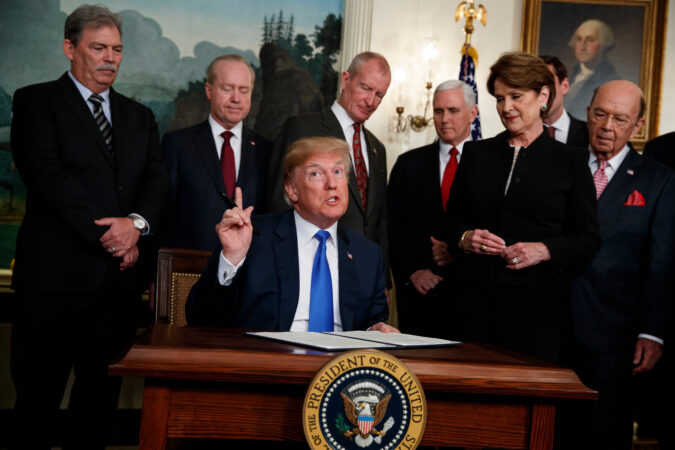
    WASHINGTON — The Supreme Court struck down President Donald Trump’s far-reaching global tariffs on Friday, handing him a stinging loss that sparked a furious attack on the court he helped shape.

    Trump said he was “absolutely ashamed” of some justices who ruled 6-3 against him, calling them “disloyal to our Constitution” and “lapdogs.” At one point he even raised the specter of foreign influence without citing any evidence.

    The decision could have ripple effects on economies around the globe after Trump’s moves to remake post-World War II trading alliances by wielding tariffs as a weapon.

    But an unbowed Trump pledged to impose a new global 10% tariff under a law that’s restricted to 150 days and has never been used to apply tariffs before.

    “Their decision is incorrect,” he said. “But it doesn’t matter because we have very powerful alternatives.”

    The court’s ruling found tariffs that Trump imposed under an emergency powers law were unconstitutional, including the sweeping “reciprocal” tariffs he levied on nearly every other country.

    Trump appointed three of the justices on the nation’s highest court during his first term, and has scored a series of short-term wins that have allowed him to move ahead with key policies.

    Tariffs, though, were the first major piece of Trump’s broad agenda to come squarely before the Supreme Court for a final ruling, after lower courts had also sided against the president.

    The majority found that it is unconstitutional for the president to unilaterally set and change tariffs because taxation power clearly belongs to Congress. “The Framers did not vest any part of the taxing power in the Executive Branch,” Chief Justice John Roberts wrote.

    Justices Brett Kavanaugh, Samuel Alito, and Clarence Thomas dissented.

    “The tariffs at issue here may or may not be wise policy. But as a matter of text, history, and precedent, they are clearly lawful,” Kavanaugh wrote. Trump praised his 63-page dissent as “genius.”

    The court majority did not address whether businesses could get refunded for the billions they have collectively paid in tariffs. Many companies, including the big-box warehouse chain Costco, have already lined up in lower courts to demand refunds. Kavanaugh noted the process could be complicated.

    “The Court says nothing today about whether, and if so how, the Government should go about returning the billions of dollars that it has collected from importers. But that process is likely to be a ‘mess,’ as was acknowledged at oral argument,” he wrote.

    The Treasury had collected more than $133 billion from the import taxes the president has imposed under the emergency powers law as of December, federal data show. The impact over the next decade has been estimated at some $3 trillion.

    The tariffs decision doesn’t stop Trump from imposing duties under other laws. Those have more limitations on the speed and severity of Trump’s actions, but the president said they would still allow him to “charge much more” than he had before.

    Vice President JD Vance called the high court decision “lawlessness” in a post on X.

    Questions about what Trump can do next

    Still, the ruling is a “complete and total victory” for the challengers, said Neal Katyal, who argued the case on behalf of a group of small businesses.

    “It’s a reaffirmation of our deepest constitutional values and the idea that Congress, not any one man, controls the power to tax the American people,” he said.

    It wasn’t immediately clear how the decision restricting Trump’s power to unilaterally set and change tariffs might affect trade deals with other countries.

    “We remain in close contact with the U.S. Administration as we seek clarity on the steps they intend to take in response to this ruling,” European Commission spokesman Olof Gill said, adding that the body would keep pushing for lower tariffs.

    The Supreme Court ruling comes after victories on the court’s emergency docket have allowed Trump to push ahead with extraordinary flexes of executive power on issues ranging from immigration enforcement to major federal funding cuts.

    The Republican president had long been vocal about the tariffs case, calling it one of the most important in U.S. history and saying a ruling against him would be an economic body blow to the country. But legal opposition crossed the political spectrum, including libertarian and pro-business groups that are typically aligned with the GOP. Polling has found tariffs aren’t broadly popular with the public, amid wider voter concern about affordability.

    While the Constitution gives Congress the power to levy tariffs, the Trump administration argued that a 1977 law allowing the president to regulate importation during emergencies also allows him to set import duties. Other presidents have used the law dozens of times, often to impose sanctions, but Trump was the first president to invoke it for tariffs.

    “And the fact that no President has ever found such power in IEEPA is strong evidence that it does not exist,” Roberts wrote, using an acronym for the International Emergency Economic Powers Act.

    Trump set what he called “reciprocal” tariffs on most countries in April 2025 to address trade deficits that he declared a national emergency. Those came after he imposed duties on Canada, China, and Mexico, ostensibly to address a drug trafficking emergency.

    A series of lawsuits followed, including a case from a dozen largely Democratic-leaning states and others from small businesses selling everything from plumbing supplies to women’s cycling apparel.

    The challengers argued the emergency powers law doesn’t even mention tariffs and Trump’s use of it fails several legal tests, including one that doomed then-President Joe Biden’s $500 billion student loan forgiveness program.

    Justices reject use of emergency powers for tariffs

    The three conservative justices in the majority pointed to that principle, which is called the major questions doctrine. It holds that Congress must clearly authorize actions of major economic and political significance.

    “There is no exception to the major questions doctrine for emergency statutes,” Roberts wrote. The three liberal justices formed the rest of the majority, but didn’t join that part of the opinion.

    The Trump administration had argued that tariffs are different because they’re a major part of Trump’s approach to foreign affairs, an area where the courts should not be second-guessing the president.

    But Roberts, joined by Justices Neil Gorsuch and Amy Coney Barrett, brushed that aside, writing that the implications for international relations don’t change the legal principle.

    Small businesses celebrated the ruling, with the National Retail Federation saying it provides “much needed certainty.”

    Illinois toy company Learning Resources was among the businesses challenging the tariffs in court. CEO Rick Woldenberg said he expected Trump’s new tariffs but hoped there might be more constraint in the future, both legal and political. “Somebody’s got to pay this bill. Those people that pay the bill are voters,” he said.

    Ann Robinson, who owns Scottish Gourmet in Greensboro, N.C., said she was “doing a happy dance” when she heard the news.

    The 10% baseline tariff on U.K. goods put pressure on Robinson’s business, costing about $30,000 in the fall season. She’s unsure about the Trump administration’s next steps, but said she’s overjoyed for now. “Time to schedule my ‘Say Goodbye to Tariffs’ Sale!”

  • All truckers and bus drivers will be required to take commercial driver’s license tests in English

    All truckers and bus drivers will be required to take commercial driver’s license tests in English

    All truckers and bus drivers will have to take their commercial driver’s license tests in English as the Trump administration expands its aggressive campaign to improve safety in the industry and get unqualified drivers off the road.

    Transportation Secretary Sean Duffy announced the latest effort Friday to ensure that drivers meet the federal requirements to understand English well enough to read road signs and communicate with law enforcement officers. Florida already started administering its tests in English.

    Currently, many states allow drivers to take their license tests in other languages even though they are required to demonstrate English proficiency. California offered tests in 20 other languages. Duffy said that a number of states have hired other companies to administer commercial driver’s licenses tests, and those companies aren’t enforcing the standards that drivers are supposed to meet to demonstrate their driving and English skills.

    These latest enforcement efforts come just days after the Transportation Department said 557 driving schools should close because they failed to meet basic safety standards. The department has been aggressively going after states that handed out commercial driver’s licenses to immigrants who shouldn’t have qualified for them ever since a fatal crash in August.

    A truck driver who Duffy says wasn’t authorized to be in the U.S. made an illegal U-turn and caused a crash in Florida that killed three people. Other fatal crashes since then, including one in Indiana that killed four members of an Amish community earlier this month, have only heightened concerns.

    Duffy says truckers should be well qualified

    States are expected to ensure drivers can speak English before giving them a commercial license, and then law enforcement is supposed to check driver’s language skills during any traffic stops or inspections. Drivers who can’t communicate effectively are supposed to be pulled off the road. A recent federal effort involving 8,215 inspections led to nearly 500 drivers being disqualified because of their English skills. California initially resisted enforcing the English rules, but the state recently pulled more than 600 drivers off the highways.

    Duffy said every American wants drivers who get behind the wheel of a big rig to be well-qualified to handle those vehicles. But he said that for too long the problems in the trucking industry were “allowed to rot and no one’s paying attention to it for decades.”

    “Once you start to pay attention, you see that all these bad things have been happening. And the consequence of that is that Americans get hurt,” Duffy said. “When we get on the road, we should expect that we should be safe. And that those who drive those 80,000-pound big rigs, that they are well-trained, they’re well-qualified, and they’re going to be safe.”

    More efforts to crack down on fraudulent companies

    The campaign will also now expand to prevent fraudulent trucking companies from getting into the business while continuing to go after questionable schools and ensure states are complying with all the regulations for handing out commercial licenses.

    Duffy said that the registration system and requirements for trucking companies will be strengthened while Federal Motor Carrier Safety Administration inspectors conduct more spot checks of trucks and commercial driver’s license schools.

    Officials are also trying to make sure that the electronic logging devices drivers use are accurate, and that states are following all the regulations to ensure drivers are qualified to get commercial licenses.

    ‘Chameleon carriers’ avoid enforcement

    Currently, companies only have to pay $300 and show proof of insurance to get registered to operate, and then they might not be audited until a year or more later. And even then the audits might be done virtually, which makes it less likely to identify fraudulent companies.

    That has made it easy for fraudulent companies that are known in the industry as “chameleon carriers” to register multiple times under different names and then simply switch names and registration numbers to avoid any consequences after crashes or other violations.

    Dan Horvath, who is the chief operating officer for the American Trucking Associations trade group, said this longstanding problem has made it far too easy for companies that have been ordered to shut down to just change their name and registration number and keep operating the same way.

    “What we think at ATA has happened over the years is that we have a lack of true enforcement and intervention with motor carriers that are in operation,” Horvath said. Only a small fraction of trucking companies ever undergo a full compliance review with an in-person inspection, he said.

    Past enforcement efforts

    After that Indiana crash, the Federal Motor Carrier Safety Administration knocked the company that employed the driver out of service and pulled the DOT numbers assigned to two other companies that were linked to AJ Partners. Tutash Express and Sam Express in the Chicago area were also disqualified, and the Aydana driving school that the trucker involved in the crash attended lost its certification.

    Immigration authorities arrested that driver because they said the 30-year-old from Kyrgyzstan entered the country illegally. Authorities say he pulled out and tried to go around a truck that had slowed in front of him, and his truck slammed into an oncoming van.

    In December, the Federal Motor Carrier Safety Administration took action to decertify up to 7,500 of the 16,000 schools nationwide, but that included many defunct operations.

    Duffy said the companies involved in that Indiana crash were all registered at the same apartment. In other cases, there might be hundreds of these chameleon companies registered at a single address.

  • Which Trump tariffs did the Supreme Court strike down? Here’s what to know

    Which Trump tariffs did the Supreme Court strike down? Here’s what to know

    NEW YORK — The nation’s highest court struck down some of President Donald Trump’s most sweeping tariffs on Friday, in a 6-3 decision that he overstepped his authority when using an emergency powers law to justify new taxes on goods from nearly every country in the world.

    Trump has launched a barrage of new tariffs over the last year. Despite Friday’s ruling, many sectoral levies remain in place — and the president has already said that he’ll turn to other options for more import taxes, including plans to impose a new 10% tariff globally. But the Supreme Court decision upends a core set of tariffs that Trump rolled out using the 1977 International Emergency Economic Powers Act, or IEEPA.

    IEEPA authorizes the president to broadly regulate commerce after declaring a national emergency. Over the years, presidents have turned to this law dozens of times, often to place sanctions on other countries. But Trump was the first to use it to implement tariffs.

    Here’s a look at the now-overturned tariffs Trump imposed using IEEPA — and other levies that still stand today.

    ‘Liberation Day’ tariffs

    Trump used IEEPA to slap import taxes on nearly every country in the world last spring. On April 2, which Trump called Liberation Day, he imposed “reciprocal” tariffs of up to 50% on goods from dozens of countries — and a baseline 10% tariff on just about everyone else.

    The 10% tax kicked in early April. But the bulk of Liberation Day’s higher levies got delayed by several months, and many rates were revised over time (in some cases after new “framework” agreements). Most went into effect Aug. 7.

    The national emergency underlying these tariffs, Trump argued at the time, was the long-running gap between what the U.S. sells and what it buys from the rest of the world. Still, goods from countries with which the U.S. runs a trade surplus also faced taxes.

    Major trading partners impacted by Liberation Day tariffs include South Korea, Japan and the European Union — which combined export a range of products to the U.S., like electronics, cars, and car parts and pharmaceuticals. Following trade talks, Trump’s rates on most goods stood at 15% for the EU, Japan and South Korea ahead of Friday. But just last month, Trump threatened to hike levies on certain South Korean products to 25% — and countries worldwide still face sector-specific, non-IEEPA tariffs.

    ‘Trafficking tariffs’ on Canada, China and Mexico

    At the start of his second term, Trump used IEEPA to impose new tariffs on America’s three biggest trading partners: Mexico, Canada, and China.

    To justify these tariffs, Trump declared a national emergency ostensibly over undocumented immigration and the trafficking of drugs like fentanyl and the chemicals made to use it. The levies were first announced at the start of February 2025, but went into effect over time — and were at times delayed, reduced or heightened through further retaliation.

    Ahead of Friday’s decision, “trafficking tariffs” on Canadian and Mexican imports were 35% and 25%, respectively, for goods that don’t comply with the 2020 United States-Mexico-Canada Agreement. China, meanwhile, faced a 10% fentanyl-related tariff. That’s down from 20% imposed by Trump earlier last year. Chinese goods also once saw sky-high levies after Liberation Day, but rates had since come down during trade talks.

    Top U.S. imports from China include mobile phones and other electronics, as well as clothing, toys and household appliances. Meanwhile, Canada and Mexico are both major sources of cars and auto parts. Canada is also the U.S.’s largest supplier of crude oil. And Mexico is a key exporter of fresh produce, beverages and more.

    Tariffs on Brazil over Bolsonaro trial

    Trump also used IEEPA to slap steep import taxes on Brazilian imports over the summer, citing the country’s policies and criminal prosecution of former President Jair Bolsonaro.

    Brazil already faced Trump’s 10% baseline Liberation Day rate. The Bolsonaro-related duties added another 40%, bringing total levies to 50% on many products ahead of Friday.

    The U.S. has actually run a consistent trade surplus with Brazil over the years. But top exports from the country include manufactured products, crude oil and agricultural products like soybeans and sugar.

    Tariffs on India linked to Russian oil

    India has faced additional IEEPA tariffs, too. After Liberation Day, Trump slapped a 25% levy on Indian imports — and later added another 25% for the country’s purchases of Russian oil, while also citing the emergency powers law, bringing the total to 50%.

    But earlier this month, the U.S. and India reached a trade framework deal. Trump said Prime Minister Narendra Modi agreed to stop buying Russian oil, and that he planned to lower U.S. tariffs on its ally to 18%. Meanwhile, India said it would “eliminate or reduce tariffs” on all U.S. industrial goods and a range of agricultural products.

    India’s top exports to the U.S. include pharmaceuticals, precious stones, clothing and textiles.

    What are other non-IEEPA tariffs that countries still face today?

    Despite the Supreme Court knocking down sweeping import taxes Trump imposed with IEEPA, most countries still face steep tariffs from the U.S. on specific sectors.

    Citing national security threats, Trump has used another law — Section 232 of the 1962 Trade Expansion Act — to slap levies on steel, aluminum, cars, copper, and lumber worldwide. He began to roll out even more Section 232 tariffs in September, on kitchen cabinets, bathroom vanities and upholstered furniture.

    Amid pressure to lower rising prices, Trump has rolled back some of his tariffs recently. Beyond trade frameworks, that’s included adding exemptions to specific levies and scrapping import taxes for goods like coffee, tropical fruit and beef.

    Still, Trump has threatened more sectoral levies are on the way. And following Friday’s decision, he said that he would sign an executive order to enact a 10% global tariff — using another federal law, known as Section 122. Those tariffs would be limited to just 150 days, unless they are extended legislatively.

  • Trump administration eases limits on coal plants for emitting mercury, other toxins

    Trump administration eases limits on coal plants for emitting mercury, other toxins

    WASHINGTON — The Environmental Protection Agency on Friday weakened limits on mercury and other toxic emissions from coal-fired power plants, the Trump administration’s latest effort to boost the fossil fuel industry by paring back clean air and water rules.

    Toxic emissions from coal- and oil-fired plants can harm the brain development of young children and contribute to heart attacks and other problems in adults. The plants are also a major source of greenhouse gas emissions that drive climate change. The EPA announced the move at a massive coal plant next to the Ohio River in Louisville, Ky.

    “The Trump EPA’s action follows the rule of law and will reduce of cost of generating baseload power, lowering costs and improving reliability for consumers,” EPA Deputy Administrator David Fotouhi said in a statement. The agency said the change should save hundreds of millions of dollars.

    The final rule reverts the industry to standards first established in 2012 by the Obama administration that have reduced mercury emissions by nearly 90%. The Biden administration had sought to tighten those standards even further after the first Trump administration had moved to undermine them.

    Coal-fired power plants are the largest single human source of mercury pollutants. Power plants release the mercury into the atmosphere, which then falls in rain or simply by gravity, entering the food chain through fish and other items that people consume.

    Environmental groups said the tightened rules have saved lives and made communities that live near coal-fired power plants healthier. But industry groups argued that the tougher standards, along with other rules that limited emissions from coal plants, made operating them too expensive.

    They accused the Biden administration of piling on so many requirements that it would drive a rush of plant retirements.

    “The reliability of the electric grid is in a better place because of the administration’s swift repeal of this rule. As crafted, the rule would have dealt a crippling blow to power plants that are essential to maintaining grid reliability,” said Jim Matheson, CEO of the National Rural Electric Cooperative Association.

    The coal industry’s outlook has changed dramatically in the last year.

    In March, the EPA promoted the “biggest deregulatory action in U.S. history,” announcing their intention to peal back dozens of environmental protections. The Biden administration’s focus on climate change was over — EPA Administrator Lee Zeldin said the actions marked “the death of the ‘green new scam.’” Fossil fuel rules were big targets, including major efforts to reduce carbon emissions from coal plants and mandate greenhouse gas reporting. The Trump administration has also extended deadlines for dozens of coal-fired power plants to comply with certain Clean Air Act rules.

    Beyond fewer environmental protections, the Trump administration has issued emergency orders halting the planned shutdown of several coal plants. Officials say the plants produce consistent power during major storms or at other times when need is high. Removing coal would reduce the grid’s reliability, especially at time when a rush of new data centers is demanding more than ever from the grid, they say. Officials have dismissed concerns about higher customer costs from keeping coal plants operating, their plentiful emissions, and their significant contribution to climate change.

    And earlier this month, the EPA revoked a finding that climate change is a threat to public health, which has long been the basis for U.S. action to regulate greenhouse gas emissions. Recently, President Donald Trump hosted a group of coal miners who honored him as the “Undisputed Champion of Beautiful, Clean Coal.”

    Activists say favoring coal makes little sense at a time when renewables are cleaner, cheaper, and reliable.

    Gina McCarthy, who headed the EPA under former President Barack Obama, said the Trump administration will be remembered for helping the coal industry at the expense of public health.

    “By weakening pollution limits and monitoring for brain-damaging mercury and other pollutants, they are actively spiking any attempt to make America – and our children – healthy,” said McCarthy, who is also the chair of the climate action group America Is All In.

    Associated Press writer Matthew Daly contributed.

  • How to choose the best nursing home or assisted living facility

    How to choose the best nursing home or assisted living facility

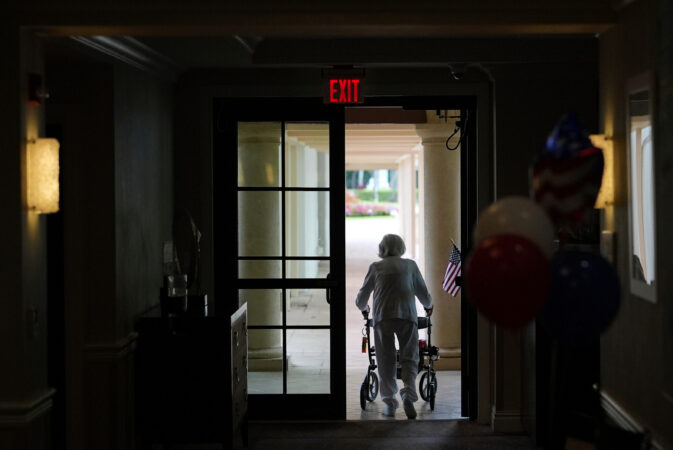
    Sometimes it’s a fall that brings a broken hip and a loss of mobility. Or memory problems that bubble into danger. Or the death of the partner who was relied upon for care.

    The need to move to a nursing home, assisted living facility, or another type of care setting often comes suddenly, setting off an abrupt, daunting search. It’s likely something no one ever wanted, but knowing what to look for and what to ask can make a big difference.

    Here’s what to do when looking for a long-term care facility:

    Start with government ratings

    Regulation of assisted living facilities varies greatly from state to state, meaning there’s no centralized standards or source for information. If you’re looking for a nursing home, though, they are monitored by the federal government.

    The Centers for Medicare and Medicaid Services maintains records on nursing homes, including data on who owns the facility, how robust its staffing is, and what types of violations it might have been fined for. It assigns homes a star rating, from one to five.

    Sam Brooks, director of public policy for the National Consumer Voice for Quality Long-Term Care, says while the star rating “can be notoriously unreliable,” due to its reliance on self-reported data, it can still provide some clues about a home.

    “One or two stars, expect it to be bad,” Brooks says.

    Ratings can be a resource to rule out the worst options, but not necessarily to find the best. Still, Brooks suggests taking a closer look at four- and five-star facilities and to consider a home’s ownership, too. Nonprofit homes are often better staffed.

    You could scour inspection reports and online reviews for clues, too, but eventually you’ll need to make a list of potential candidates and start making visits.

    “The data,” Brooks says, “only goes so far.”

    Look past the lobby

    When visiting a home on your list, be careful not to be too swayed by decorative touches that might be designed to lure you in, like a lobby’s furniture, dangling chandeliers, or vases of flowers.

    “When I tour a building, I listen first. Is it loud? Are call bells ringing nonstop?” says Mark Sanchez, CEO of United Hebrew, a nursing home in New Rochelle, N.Y.

    After that, Sanchez says, switch your senses. Do you detect an odor? Do you see residents clustered around the nurses’ station, perhaps clamoring for help? Are staffers speaking respectfully to residents? Are they making eye contact? Are they rushed?

    “Culture shows up in small moments,” Sanchez says, “and it matters.”

    Seeking input from families of current residents can be insightful. Another resource may be your local long-term care ombudsman. Ombudsmen, funded by the federal Older Americans Act and present in every state, investigate long-term care residents’ complaints.

    With all the available information on each home, it can be easy to feel like you’re drowning in data. So pay attention to how a place feels, too, and pair that with concrete facts.

    When Jennifer Fink was making the “stressful, grief-inducing, hard, and scary” decision on what memory care community was right for her mother, she didn’t consult state databases or Google ratings. She went with her gut reaction and luckily, it was right.

    “Trust your gut. Keep top of mind that the salesperson wants your loved one’s money,” says Fink, of Auburn, Calif. “If it’s giving you the ‘ick,’ then move on.”

    Staffing matters most

    More than any other single thing, experts on long-term care stress that a facility’s staffing is most important. That means both the quality of the care you witness workers giving residents during your visit and the average staffing levels shown in the reported data.

    A home providing an average of three hours of nursing care to each resident each day may not look all that different on paper from one providing three-and-a-half hours. But those minutes matter dearly, meaning the difference between a person getting a shower, having help at mealtime, or being discovered if they’ve fallen.

    During a visit, pay attention to how quickly call bells are answered and whether it seems like residents are engaged in activities. Ask staff how long they’ve worked there. A home that holds on to its workers for years may offer your loved one more continuity.

    Evan Farr, an elder law attorney in Lorton, Va., who wrote The Nursing Home Survival Guide, says visiting a facility at night or on the weekend can be particularly revealing.

    “These are the times when staffing is reduced and the true operation of the facility becomes apparent,” Farr says. “It is entirely possible to have a five-star rated facility that is woefully understaffed from 5 p.m. Friday until 8 a.m. Monday morning.”

    Keep a long-range view

    When faced with an urgent decision, it can be difficult to focus on anything beyond the factors in front of you. But it’s important to choose a home with a long-range view.

    At the start, many long-term care residents are able to pay for the cost of their bill. But what happens if their money runs out? If it’s a nursing home that accepts Medicaid, how many beds are allocated to such residents? Would your loved one get that slot? If it’s an assisted living facility, do they even accept people on Medicaid?

    Assisted living facilities often have complicated billing structures that require a bevy of questions to understand. Ask how costs may change as a person’s needs increase. Some places tack on separate charges for tasks like helping a person to the bathroom.

    “Four-thousand dollars a month can become $8,000 overnight,” says Geoff Hoatson, founder of the elder law practice Family First Firm in Winter Park, Florida.

    Another fact of long-term care that few understand is how often facilities seek to remove residents seen as undesirable, often due to a change in their financial circumstances or in their health. Dementia patients in particular — with challenging care needs and symptoms that can sometimes bring aggression — are targeted with orders to leave.

    “Ask specifically what conditions would require transfer,” Hoatson says.

  • Sponsors are becoming more visible at the Winter Olympics with product placement and arena shoutouts

    Sponsors are becoming more visible at the Winter Olympics with product placement and arena shoutouts

    MILAN — Eileen Gu and all the other freestyle skiers wait for their scores by a large Powerade-branded cooler, then glide away without taking a drink.

    Bottles of the blue sports drink are stacked in hockey penalty boxes. Even the tissues in figure skating’s drama-packed “Kiss and Cry” area are branded.

    One way the Olympics generally stand out is by the absence of advertising on courses, rinks, and slopes. But increasingly at the Milan Cortina Games, sponsors are creeping into the action.

    “We continue to open up those opportunities for partners,” International Olympic Committee marketing director Anne-Sophie Voumard said Wednesday, noting sponsor products can now “organically be present” more widely.

    The change has seemingly accelerated since French luxury goods maker LVMH prominently placed its Louis Vuitton brand at the opening ceremony of the 2024 Paris Olympics.

    “It seems like there’s been an increasing need and desire from the sponsors for the IOC to show greater value in the TOP [the Olympic partners] program,” Terrence Burns, who has worked for the Olympic body in marketing and consulted for sponsors and hosting bids, told the Associated Press.

    There’s product placement on TV, even if it is still restrained compared to most American sports. Spectators inside the Olympic arenas hear shout-outs by the announcers and see logos on the big screen.

    It’s all happening as sponsors eye fresh opportunities for the 2028 Los Angeles Olympics.

    The IOC is looking to create extra value in its TOP program, which has been a financial success for the organization over four decades. There are 11 TOP sponsors in Milan, after peaking at 15 in Paris. Revenue in 2025 dropped a bit to $560 million in cash and services compared to $871 million in 2024.

    Watching a hockey game in the arena is different

    An Olympic hockey game looks clean and non-commercial on TV to NHL fans used to seeing sponsors on the boards. It’s a little different in the venue.

    “This is the Corona Cero wave!” roars an announcer, attaching an alcohol-free beer brand to efforts to liven up fans at a quiet afternoon game with a wave around the arena.

    An automaker gets a mention with the “Stellantis Freeze Cam” and an interview with a boxer during the intermission between periods is “thanks to Salomon,” a skiwear brand that signed a sponsor deal with the Milan Cortina organizing committee.

    Burns thinks the logos in Olympic arenas are a morale booster for sponsors, but worth relatively little compared to the big campaigns they typically launch in the year before the Games.

    “I think it’s a psychological ‘Attaboy’ to see your brand on a board somewhere in and around the Olympics,” Burns said. ”I get it, but show me how that helps you sell more things.”

    A long-term trend ahead of the 2028 Los Angeles Olympics

    The Olympic Charter, a kind of constitution for the Games, says any logo in an Olympic venue must be approved “on an exceptional basis,” but the IOC has gradually relaxed its restrictions.

    “The Olympic world moves slow, and it should. It’s a 3,000-year-old brand, so they’ve got to be careful with it,” Burns said.

    Barely a decade ago, the “clean venue” policy was so strict that IOC staff checked the hand dryers in arena bathrooms to make sure they had their manufacturer’s brand covered with tape.

    For the Tokyo Olympics in 2021, restrictions on athletes promoting their personal sponsors on social media were relaxed after a legal challenge in Germany.

    The Paris Olympics saw medals delivered to the podium in Louis Vuitton-branded boxes before athletes were handed a phone for “the Olympic Victory Selfie, presented by Samsung,” a new tradition that’s continued at the Milan Cortina Games.

    Voumard, the IOC’s marketing director, acknowledged the need to “be mindful of the legacy of those [Olympic] Games and the uniqueness of the presentation.”

    New opportunities

    The Los Angeles Olympics will break new ground on sponsorship.

    For the first time, the IOC has approved the selling of naming rights for venues in a pilot program. The volleyball venue in Anaheim will keep its Honda Center name, just like it does for NHL games, and Comcast is putting its brand on a temporary arena for squash.

    Until now, stadiums named for sponsors have had to switch to generic names for the Olympics. The O2 Arena in London became the North Greenwich Arena for basketball and gymnastics in 2012, and a raft of French soccer stadiums got new names for 2024.

    Burns predicts the IOC might come under pressure from Los Angeles organizers to take further sponsor-friendly steps, and might need to push back on some requests to protect the Olympic brand.

    “It’s not unreasonable to think that LA would look to what happened in Paris with Louis Vuitton or even Samsung on a podium,” Burns said.

    “It’s their fiduciary responsibility to try to make as much money as they can. So they’re going to be looking for any and all opportunities to generate incremental revenue from sponsors. That’s the IOC’s role as a franchisor to protect that.”

  • Tariffs paid by midsize U.S. companies tripled last year, a JPMorganChase Institute study shows

    Tariffs paid by midsize U.S. companies tripled last year, a JPMorganChase Institute study shows

    WASHINGTON — Tariffs paid by midsize U.S. businesses tripled over the course of the past year, new research tied to one of America’s leading banks showed on Thursday — more evidence that President Donald Trump‘s push to charge higher taxes on imports is causing economic disruption.

    The additional taxes have meant that companies that employ a combined 48 million people in the U.S. — the kinds of businesses that Trump had promised to revive — have had to find ways to absorb the new expense, by passing it along to customers in the form of higher prices, employing fewer workers, or accepting lower profits.

    “That’s a big change in their cost of doing business,” said Chi Mac, business research director of the JPMorganChase Institute, which published the analysis Thursday. “We also see some indications that they may be shifting away from transacting with China and maybe toward some other regions in Asia.”

    The research does not say how the additional costs are flowing through the economy, but it indicates that tariffs are being paid by U.S. companies. The study is part of a growing body of economic analyses that counter the administration’s claims that foreigners pay the tariffs.

    The JPMorganChase Institute report used payments data to look at businesses that might lack the pricing power of large multinational companies to offset tariffs, but may be small enough to quickly change supply chains to minimize exposure to the tax increases. The companies tended to have revenues between $10 million and $1 billion with fewer than 500 employees, a category known as “middle market.”

    The analysis suggests that the Trump administration’s goal of becoming less directly reliant on Chinese manufacturers has been occurring. Payments to China by these companies were 20% below their October 2024 levels, but it’s unclear whether that means China is simply routing its goods through other countries or if supply chains have moved.

    The authors of the analysis emphasized in an interview that companies are still adjusting to the tariffs and said they plan to continue studying the issue.

    White House spokesperson Kush Desai called the analysis “pointless” and said it didn’t “change the fact that President Trump was right.” The study showed that U.S. companies are paying tariffs that the president had previously said would be paid by foreign entities.

    Trump defended his tariffs during a trip to Georgia on Thursday while touring Coosa Steel, a company involved in steel processing and distribution. The president said he couldn’t believe the Supreme Court would soon decide on the legality of some of his tariffs, given his belief that the taxes were helping U.S. manufacturers.

    “The tariffs are the greatest thing to happen to this country,” Trump said.

    The president imposed a series of tariffs last year for the ostensible goal of reducing the U.S. trade imbalance with other countries, so that America was not longer importing more than it exports. But trade data published Thursday by the Census Bureau showed that the trade deficit climbed last year by $25.5 billion to $1.24 trillion. The president on Wednesday posted on social media that he expected there would be a trade surplus “during this year.”

    The Trump administration has been adamant that the tariffs are a boon for the economy, businesses, and workers. Kevin Hassett, director of the White House National Economic Council, lashed out on Wednesday at research by the New York Federal Reserve showing that nearly 90% of the burden for Trump’s tariffs fell on U.S. companies and consumers.

    “The paper is an embarrassment,” Hassett told CNBC. “It’s, I think, the worst paper I’ve ever seen in the history of the Federal Reserve system. The people associated with this paper should presumably be disciplined.”

    Trump increased the average tariff rate to 13% from 2.6% last year, according to the New York Fed researchers. He declared that tariffs on some items such as steel, kitchen cabinets, and bathroom vanities were in the national security interest of the country. He also declared an economic emergency to bypass Congress and impose a baseline tax on goods from much of the world in April 2025 at an event he called “Liberation Day.”

    The high rates provoked a financial market panic, prompting Trump to walk back his rates and then engage in talks with multiple countries that led to a set of new trade frameworks. The Supreme Court is expected to rule soon on whether Trump surpassed his legal authority by declaring an economic emergency.

    Trump was elected in 2024 on his promise to tame inflation, but his tariffs have contributed to voter frustration over affordability. While inflation has not spiked during Trump’s term thus far, hiring slowed sharply, and a team of academic economists estimate that consumer prices were roughly 0.8 percentage points higher than they would otherwise be.

  • How the rich pass on their wealth. And how you can too

    How the rich pass on their wealth. And how you can too

    NEW YORK — Death and taxes may be inevitable. A big bill for your heirs is not.

    The rich have made an art of avoiding taxes and making sure their wealth passes down effortlessly to the next generation. But the tricks they use to expedite payouts to heirs and avoid handing money to the government — can also work for people with far more modest estates.

    “It’s a strategic game of chess played over decades,” says Mark Bosler, an estate planning attorney in Troy, Mich., and legal adviser to Real Estate Bees. “While the average person relies on a simple will, the well-to-do utilize a different playbook.”

    Consider a trust

    First, consider the facts: Despite widespread misconceptions, only estates of the very richest Americans are generally subject to taxes. At the federal level, estates of over $15 million typically trigger taxes. At the state level, 16 states and the District of Columbia do collect estate or inheritance taxes, according to the Tax Foundation, sometimes with lower exemptions than the IRS, but still at thresholds targeting millionaires.

    While most people can pass on what they have without worrying about their heirs being caught in a web of taxes, it can require planning to escape a messy process that can hold up estates for years and cost families significantly in court fees and lawyer bills.

    The solution at the center of many estate planners’ designs is a trust.

    Though trusts conjure images of complex arrangements utilized by the uber-rich, they are relatively simple tools that can make sense for many people. They come with expense, often costing thousands of dollars in lawyer fees to set them up. But for a retired couple with a paid-off house, 401(k)s and a portfolio of investments, they can ease the passing of assets to heirs.

    Among the reasons: Even if you aren’t leaving enough behind to trigger taxes, your estate can get tied up in probate court, which typically assesses fees based on an estate’s total value.

    “You are leaving what might have gone to your children or other loved ones to attorneys and the courts,” says Renee Fry, CEO of Gentreo, an online estate planner based in Quincy, Massachusetts. “Anywhere from 3[%] to 8% of an estate might be lost.”

    Trusts can allow an estate to sidestep court altogether and to shield it from public view by keeping details out of public records. Some people also use them to protect their savings if they someday need nursing home care and would prefer to qualify for a government-paid stay under Medicaid instead of paying themselves.

    Pass on stocks virtually tax-free

    Imagine being an investor in a stock like Nvidia that has soared in recent years. Now imagine being able to reap the profit of selling your shares without paying tax.

    It’s possible with one caveat: You have to die.

    That scenario, known in estate lingo as “step-up,” allows many rich families to grow their wealth while ensuring their heirs won’t be saddled with the bill.

    It works like this: Say your savvy uncle bought 100 shares of Nvidia when it began trading in 1999 at $12 a share. Between splits and a soaring price, that $1,200 investment would be worth more than $9 million today. If he left it all to you, you could sell the shares owing little or no tax because gains are calculated from the day he died, not the day he bought it.

    Benjamin Trujillo, a partner with the wealth advisory firm Moneta, based in St. Louis, Mo., says it all seems “like a magic trick.” And it’s completely legal.

    “Wealth transfer looks like smoke and mirrors,” Trujillo says. “Assets like stocks can quietly grow for decades and, when they’re inherited, the tax bill often disappears.”

    Lawmakers have sometimes proposed limits on the “step-up” rule, but at least for now, it remains, making it one of the biggest not-so-secret weapons in the arsenals of those looking to create generational wealth. If stocks aren’t your forte, “step-up” applies to other types of investments too, including artwork, real estate, and collectibles.

    Keep up to date on beneficiaries

    Ever get a prompt on one of your accounts asking you to name a beneficiary? It’s more than a confusing (or annoying) nudge from your brokerage. Estate planners say it is one of the simplest ways to ease the transfer of assets to loved ones after you die.

    Regulations vary from place to place, but many banks and brokerages allow you to name a beneficiary to whom the funds will be transferred to upon your death.

    “One of the easiest ways to transfer assets hassle-free,” says Allison Harrison, an attorney in Columbus, Ohio, who focuses on estate planning.

    Beneficiary designations generally override wills, so it’s important to make sure yours are up to date to avoid the mess of having, say, an ex-spouse end up with everything you saved.

    All of this requires planning, but experts say investing a little time in mapping out your estate is one of the moves that separates the rich from the less well-off.

    “Wealthy families plan,” says Fry. “They don’t leave assets and decisions unprotected.”

  • U.S. trade deficit slipped lower in 2025, but gap for goods hits a record despite Trump tariffs

    U.S. trade deficit slipped lower in 2025, but gap for goods hits a record despite Trump tariffs

    WASHINGTON — The U.S. trade deficit slipped modestly in 2025, a year in which President Donald Trump upended global commerce by slapping double digit tariffs on imports from most countries. But the gap in the trade of goods such as machinery and aircraft — the main focus of Trump’s protectionist policies — hit a record last year despite sweeping import taxes.

    Overall, the gap between the goods and services the U.S. sells other countries and what it buys from them narrowed to just over $901 billion, from $904 billion in 2024, but it was still the third-highest on record, the Commerce Department reported Thursday.

    Exports rose 6% last year, and imports rose nearly 5%.

    And the U.S. deficit in the trade of goods widened 2% to a record $1.24 trillion last year as American companies boosted imports of computer chips and other tech goods from Taiwan to support massive investments in artificial intelligence.

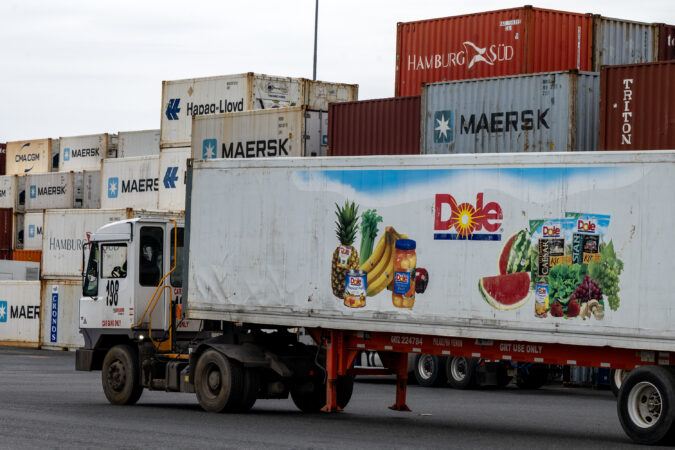
    Amid continuing tensions with Bejing, the deficit in the goods trade with China plunged nearly 32% to $202 billion in 2025 on a sharp drop in both exports to and imports from the world’s second-biggest economy. But trade was diverted away from China. The goods gap with Taiwan doubled to $147 billion and shot up 44%, to $178 billion, with Vietnam.

    Economist Chad Bown, senior fellow at the Peterson Institute for International Economics, said the widening gaps with Taiwan and Vietnam might put a “bull’s-eye’’ on them this year if Trump focuses more on the lopsided trade numbers and less on the U.S. rivalry with China.

    In 2025, U.S. goods imports from Mexico outpaced exports by nearly $197 billion, up from a 2024 gap of $172 billion. But the goods deficit with Canada shrank by 26% to $46 billion. The United States this year is negotiating a renewal of a pact Trump reached with those two countries in his first term.

    The U.S. ran a bigger surplus in the trade of services such as banking and tourism last year — $339 billion, up from $312 billion in 2024.

    The trade gap surged from January-March as U.S. companies tried to import foreign goods ahead of Trump’s taxes, then narrowed most of the rest of the year.

    Trump’s tariffs are a tax paid by U.S. importers and often passed along to their customers as higher prices. But they haven’t had as much impact on inflation as economists originally expected. Trump argues that the tariffs will protect U.S. industries, bringing manufacturing back to America and raise money for the U.S. Treasury.