Category: Business Wires

  • U.S. says it struck multiple targets in Iran after drone attack on Bahrain, ship struck in strait

    U.S. says it struck multiple targets in Iran after drone attack on Bahrain, ship struck in strait

    DUBAI, United Arab Emirates — The U.S. military said Saturday it had struck multiple targets in Iran at President Donald Trump’s direction, continuing a string of attacks that have shaken the war’s uneasy ceasefire.

    The military said in a post on X that “Iran had a chance to honor the ceasefire agreement” but “elected not to” when its forces attacked a ship near the Strait of Hormuz earlier Saturday.

    Iran state TV reported explosions north of the Strait of Hormuz.

    Iran launched a drone assault targeting Bahrain while a ship in the Strait of Hormuz separately came under attack Saturday, in Tehran’s likely response to overnight airstrikes by the United States.

    The attacks in the Persian Gulf show the danger of the Iran war again spinning out of control, even after Iran and the U.S. reached an interim deal to try to agree on a final accord to end the conflict.

    The U.S. had launched airstrikes overnight in response to an Iranian drone attack on a container ship trying to leave the strait on Thursday, continuing a string of attacks that have shaken the war’s uneasy ceasefire.

    Meanwhile, a multinational maritime body overseen by the U.S. Navy said Saturday that it would expand a route near Oman in the strait to allow for both inbound and outbound traffic. That likely sets up a new flashpoint with Tehran, which sees the strait as a key source of leverage in ongoing talks with the U.S.

    Bahrain condemns Iran’s drone attack

    Bahrain has been one of the strongest critics of Iran and is home to the U.S. Navy’s 5th Fleet. It just hosted U.S. Secretary of State Marco Rubio for a meeting of the Gulf Cooperation Council’s foreign ministers, which ended with a call for an end to Iran’s attacks and for the strait to be completely open.

    A statement from Bahrain’s Foreign Ministry said a “number of Iranian drones” targeted the country. It called the attack “a flagrant threat to the security of citizens and residents.” There were no immediate reports of damage.

    Iran’s paramilitary Revolutionary Guard earlier on Saturday issued a statement carried by the state-run IRNA news agency saying it had targeted several locations “of the U.S. terrorist army in the region.” It did not name what areas were targeted.

    The U.S. military’s Central Command said the military struck Iranian missile and drone locations and coastal radar sites in the overnight strikes.

    U.S. Vice President JD Vance, who has led the negotiations with Iran, said on social media Friday night that Iran should “pick up the phone” if there are disagreements about the ceasefire agreement, “but violence will be met with violence.”

    The U.S. and Iran are negotiating terms of the deal including issues such as getting ships through the strait that are vital to global supplies of oil and natural gas and addressing the future of Iran’s nuclear program and stockpile of highly enriched uranium.

    Under the interim deal, the two sides have 60 days to work out the details. Ending the fighting in Lebanon between Israel and the Iranian-backed Hezbollah militant group is a key part of the deal.

    Ship comes under attack as strait route expands

    The British military’s United Kingdom Maritime Trade Operations center said that a tanker was attacked Saturday in the strait, with the crew safe and no environmental damage reported. No one immediately claimed the strike, but suspicion fell on Iran.

    Just after that report, the Joint Maritime Information Center, overseen by the U.S. Navy, said the route near Oman’s shore is expanding to allow for inbound and outbound traffic.

    Iran has insisted that ships must obey its orders and warned it will start charging fees for transit through the strait. However, ships have been increasingly trying to leave the Gulf in recent days.

    Ebrahim Azizi, who heads the Iranian parliament’s national security commission, wrote Friday that “the Strait of Hormuz is governed by Iran, so: Respect the rules.”

    The U.S. and Gulf Arab states have rejected Iran’s demands. The strait is considered an international waterway, despite being the territorial waters of Iran and Oman.

    The Joint Maritime Information Center warned that the threat to ships was “substantial,” adding that “mariners are advised of the existence of mines and should expect a naval presence as clearance operations continue.”

    The International Maritime Organization on Friday halted a new effort to evacuate ships and said it won’t resume until there are guarantees that other ships won’t be attacked. It said about 115 ships have been able to move out of the strait in recent days.

  • Trump threatens 100% tax on European imports if countries impose tax on digital services

    Trump threatens 100% tax on European imports if countries impose tax on digital services

    WASHINGTON — President Donald Trump on Friday threatened a 100% tax on imports from any country that imposes a tax on digital services from United States companies.

    In a post on social media, Trump took aim at European countries that he said are discussing “imminent” implementation of taxes on American companies. The U.S. president has repeatedly sought to use tariffs as way to deter such taxes, but many countries are looking for revenues as their economies increasingly operate in digital realms that are dominated by American companies.

    “Please let this statement serve to represent that any Country that imposes such a Tax will immediately be met with a 100% TARIFF on any and all Goods sent to the United States of America,” Trump wrote.

    He added that the new tax would supersede any previously negotiated trade deals. Trump said the penalty would apply to any country that moves forward with such a tax, but he singled out European nations in his post.

    The move could lead to a larger showdown that could increase prices and hinder economic growth, possibly setting off a larger trade war if the 27-member European Union was compelled to retaliate.

    “Unilateral measures targeting such legitimate policies are unjustified. If pursued, the EU will respond swiftly and decisively to defend its rights and regulatory autonomy,” said Olof Gill, a spokesperson for the European Commission on Friday.

    He defended taxation on technology companies as “non-discriminatory” and applied equally to “all large companies, regardless of their origin.”

    Trump has repeatedly pushed against foreign efforts to tax or regulate American tech giants. Last year, he threatened new tariffs on any country that moved to do so. A post from last August said that digital taxes and regulation “are all designed to harm, or discriminate against, American Technology.”

    The threat comes ahead of Trump’s July 4 deadline for the European Union and the United States to start implementing a tariff deal that caps tariffs on most EU exports at 15%.

    The European Union in May finalized a trade deal with the United States that caps most tariffs on EU exports at 15%. The deal followed months of debate within the EU after European Commission chief Ursula von der Leyen tentatively struck the deal last year while visiting Trump’s golf course in Scotland.

    Digital taxes were not part of the agreement and have remained a sticking point between the U.S. and the European bloc.

    The U.S. government has previously conducted tariff investigations into digital services taxes under Section 301 of the Trade Act of 1974. But it was unclear how Trump would carry out his threat and whether he would apply the tariffs broadly or initially target certain nations.

    Britain, which is no longer part of the EU, has since 2020 levied a 2% digital services tax on revenues earned by search engines, social media sites, and online marketplaces that “derive value” from U.K. users.

    The British government said in a policy document at the time that corporate tax rules for digital businesses had “led to a misalignment between the place where profits are taxed and the place where value is created.”

    The U.K. tax includes thresholds, so mainly large international companies will pay it. The tax was designed to “ensure the large multinational businesses in-scope make a fair contribution to supporting vital public services,” the document said.

  • MLB proposes limiting most free agent contracts to 5 years and 15% of a team’s salary cap

    MLB proposes limiting most free agent contracts to 5 years and 15% of a team’s salary cap

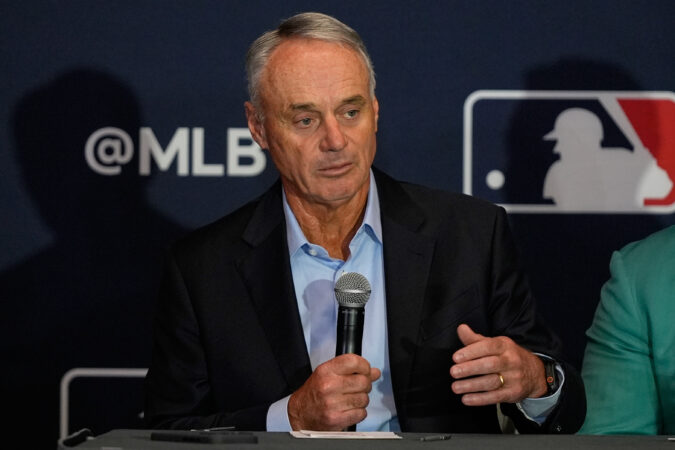
    Major League Baseball proposed limiting most free agent contracts to five years and 15% of a team’s salary cap and to eliminate deferred compensation, fleshing out details of a plan likely to spark a confrontation with the players’ association.

    MLB’s plan would eliminate deals such as Juan Soto’s $765 million, 15-year contract with the New York Mets. The league said just seven players this year exceed the proposed maximum and 98% of free agent contracts would not have been impacted.

    “There’s no question that we’re very far apart,” union head Bruce Meyer said during an online news conference.

    During a bargaining session Thursday at the union’s office, MLB said it would accept the union’s proposal granting free agency a year early for players who have reached age 30 if the union accepted the league’s salary cap system. MLB also proposed boosting the minimum salary from $780,000 to $1 million for those with two years of big league service.

    MLB also proposed increasing the pre-arbitration bonus pool from $50 million to $65 million next year and $75 million by 2032, the sixth season of MLB’s proposed seven-year deal.

    Meyer said “the debate got a little more vigorous today.”

    “The league has done us a favor because their proposals are in fact so obviously and extremely bad for players at all levels that it’s actually been a benefit for our unity,” Meyer said. “Anybody who’s banking on Major League Baseball players cracking, it’s never happened. It’s not going to happen. That’s why we’re the only ones who don’t have a salary cap.”

    MLB also said it would agree to eliminate the qualifying offer for free agents that since its inception in 2012 has restricted the market for some players.

    Bargaining started May 13 for a contract to replace the five-year deal that expires Dec. 1, and owners proposed a salary cap for the first time since the union fought off the system during a 7½-month strike in 1994-95. MLB is expected to impose a lockout in December, halting free agent signings and trades.

    After the prior agreement expired in December 2021, intensive bargaining did not start until late February as the threat approached of losing regular-season games — along with revenue and salary. The sides reached an agreement on March 10, the 99th day of the lockout, preserving the 162-game schedule.

    In the league’s cornerstone proposal, made last month, team spending would be capped next year at $245.3 million, using figures for luxury tax payrolls that include $20.1 million for benefits and the pre-arbitration bonus pool. It also would establish a payroll floor of $171.2 million, forcing several teams to spend more. The two-time World Series champion Los Angeles Dodgers, baseball’s biggest spenders, had a $415.2 million payroll on opening day this year — around $170 million over the proposed cap.

    “The biggest issue baseball fans want solved to strengthen the game is fixing the payroll disparity that leaves too many fans without hope of their team competing for a World Series title,” MLB spokesman Glen Caplin said in a statement. “Every other major U.S. sport has tackled this problem, and every year more small market teams in those leagues have a chance to win. The salary cap and floor proposal levels the playing field.”

    Meyer took issue with that.

    “It’s appalling that the stewards of the game, the people whose job it is to grow the game primarily and promote the game have for whatever period of time now in the last couple of years been saying nothing but the game’s broken,” he said.

    As part of the plan, MLB would establish a “cornerstone player” similar to the NBA’s Bird rule, which would allow a team to re-sign a player at 16% of the cap. A free agent switching clubs would be limited to a $36.8 million salary next year and a re-signing player to $39.2 million.

    Salaries for free agents in additional seasons of a multiyear contract would be limited to 5% increases, as would salaries for younger players in multiyear deals that cover potential free-agent seasons.

    Contracts would be capped by service time: at $500 million and 12 years for those yet to make major league debuts, $461 million and 11 seasons for those with 0-1 years of service, $421 million and 10 years for 1-2, $382 million and nine seasons for 2-3, $343 million and eight years for 3-4, $304 million and seven years for 4-5, and $265 million and six years for free-agent eligible players.

    Agent Scott Boras claimed the then-record $252 million, 10-year contract he negotiated for Alex Rodriguez in December 2000 would not have been allowed.

    “It’s like offering a few pieces of furniture if you agree to live in a house with a 4-foot ceiling,” he said, “an attempt to move player contract values back to the 1990s.”

    Banning deferred compensation would eliminate a business practice used most prominently by the Dodgers, who owe just under $1.1 billion to 10 players from 2028-47. In addition, MLB would restrict bonus provisions in player contracts and mandate a standard award bonus package.

    MLB said it would accept the union’s proposal to drop free-agent eligibility to five seasons of service from six for those turning 30 by the Nov. 1 of the offseason. MLB said 354 players on big league rosters as of Thursday would reach free agency a year earlier. MLB would start the change in the 2027-28 offseason.

    As part of the minimum salary proposal, MLB said players with less than two years of service would have a $900,000 minimum and if earning a full year of service would get an additional $100,000 from the pre-arbitration bonus pool. Minor league minimums for players with major league contracts would increase from $63,600 to $73,400 for initial big league deals and $127,100 to $146,700 for additional contracts.

    The union proposed to jointly lobby with MLB for the prohibition on prop bets; to allow player endorsement and sponsorship of legal betting entities, including sportsbooks and prediction markets; to have players under MLB betting investigations to be placed on administrative leave, similar to the domestic violence policy; and to allow players near the end of suspensions for betting to have unpaid 15-day minor league assignments, similar to the drug policy.

    In addition, players asked for increases for in-season meal and tip allowances; housing benefits for players with major league contracts who are assigned to the minors; and increased moving expenses, including for assignments from one minor league affiliate to another.

    Meyer expects at least one more bargaining session before the All-Star break.

  • Ukraine’s latest long-range strikes on Russia hit a major natural gas plant and satellite centers

    Ukraine’s latest long-range strikes on Russia hit a major natural gas plant and satellite centers

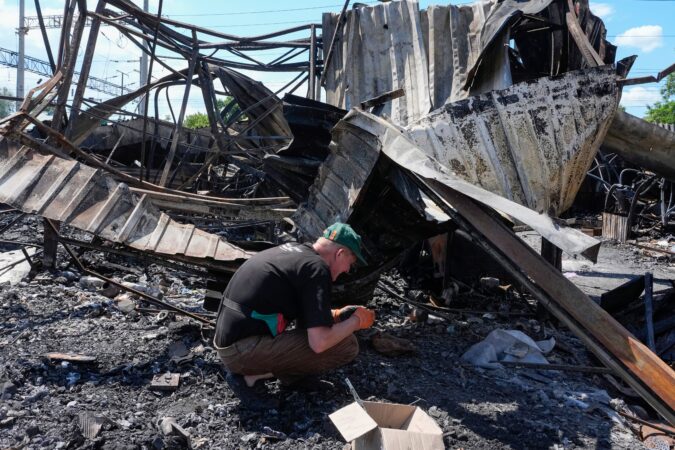
    KYIV, Ukraine — Ukrainian forces struck a major natural gas processing plant and two key satellite communications centers in their latest nighttime attacks on Russia, Ukraine’s General Staff said Wednesday.

    The operation was part of Ukraine’s aerial campaign targeting energy facilities and military industries that has intensified as Kyiv builds bigger and better long-range weapons to ward off Russia’s full-scale invasion, now in its fifth year.

    In response, Moscow has ordered the redeployment of some air defense systems from Russian regions to the capital and to Crimea’s Kerch Bridge, a crucial link for supplying Russian troops, Ukrainian President Volodymyr Zelensky said. The bridge connects the Crimean Peninsula with the Russian mainland.

    “It is important that as many Russians as possible come to understand that it is the Russian leadership’s rejection of diplomacy that is prolonging the war,” Zelensky said on X.

    Zelensky has accepted an unconditional ceasefire demanded by President Donald Trump but Russian President Vladimir Putin has refused.

    Ukraine says the stricken gas plant was among the world’s largest

    The overnight attack hit the Orenburg Gas Processing Plant, which is part of a complex that also houses the only helium plant in Russia, the General Staff said in a statement on the Telegram messaging app. The attack set the complex on fire, it said.

    Orenburg, in the southern Urals near Russia’s border with Kazakhstan, is more than 750 miles behind the front line in eastern and southern Ukraine.

    The plant is one of the largest gas complexes in the world, according to the General Staff. It produces helium, used in liquid-fuel rocket engines and guidance systems, and ethane, a key component in producing solid rocket fuel and gunpowder, it added.

    Overnight attacks also hit two satellite communication centers used by the Russian military, according to the General Staff.

    One was the Dubna Space Communications Center near Moscow, which it described as Russia’s largest ground-based satellite communications complex, and the other was in the Vladimir region east of the capital.

    It was not possible to independently verify the General Staff’s report, and Russian officials made no immediate comment.

    The General Staff’s statement did not say whether the military used drones or missiles in the assault, but drones have recently been used to strike Moscow and St. Petersburg.

    Ukraine keeps hammering Crimea

    Ukraine has recently focused its drone and missile attacks on Crimea, aiming to cut off the vital Russian-held peninsula, and overnight drone strikes knocked out power in Sevastopol, Mikhail Razvozhayev, the city’s Moscow-installed governor, said Wednesday.

    Crimea, which was illegally annexed by Russia in 2014, sits in a strategic location on the Black Sea. It has naval bases and also provides an important supply line to Moscow’s forces inside Ukraine.

    Ukraine recently destroyed more than 60,000 tons of Russian ammunition when it hit a Baltic Fleet arsenal near St. Petersburg, Zelensky said.

    Ukraine is trying to disrupt military supply lines in Crimea and strike the peninsula’s power grid at the height of the summer tourist season. Kyiv hopes the campaign will embarrass Putin and increase public pressure on him to end the war, according to Western analysts.

    Ukraine’s Security Service said Wednesday it struck two military airfields and destroyed missile systems in Crimea.

    Attacks kill at least 6 people

    Two staff members of Norwegian People’s Aid were killed during a Russian attack in Ukraine, the demining organization said Wednesday, although local officials said only one person was killed.

    Four other workers with the organization were injured, two of them critically, according to the head of the southern Kherson region’s military administration, Oleksandr Prokudin.

    Russian forces shot down 323 Ukrainian drones overnight, Russia’s Defense Ministry said.

    Two people were killed and two others wounded overnight in a Ukrainian drone strike on Russia’s Nizhny Novgorod region, east of Moscow, regional Gov. Gleb Nikitin said. Also, a Ukrainian drone strike killed one person overnight in Russia’s Belgorod border region bordering Ukraine, local officials said.

    Ukraine’s air force, meanwhile, said Russia launched 101 long-range attack drones overnight.

    Russian drones attacked the city of Balakliia in northeastern Ukraine, killing a 56-year-old woman, according to Oleh Syniehubov, head of the Kharkiv regional military administration. Also, a 57-year-old streetcar driver man died as a result of a Russian guided aerial bomb that hit the outskirts of Sumy, said Oleh Hryhorov, head of the regional military administration.

    In addition, the death toll rose to four from Tuesday’s ballistic missile strike using cluster munitions on Kryvyi Rih, Zelensky’s hometown, after a 62-year-old woman died from her injuries, said Oleksandr Vilkul, the head of the city administration, said.

    Both Moscow and Kyiv have deployed the controversial munitions during the war.

  • U.S. says chemical maker Chemours to pay $450M to settle ‘forever chemicals’ case

    U.S. says chemical maker Chemours to pay $450M to settle ‘forever chemicals’ case

    WASHINGTON — The Trump administration on Wednesday reached a multistate settlement with chemical giant Chemours Co. over yearslong, illegal discharges of synthetic “forever chemicals” used to make products resistant to water, grease, and stains. The settlement is the first by the federal government to resolve enforcement claims against a manufacturer of harmful chemicals known as PFAS.

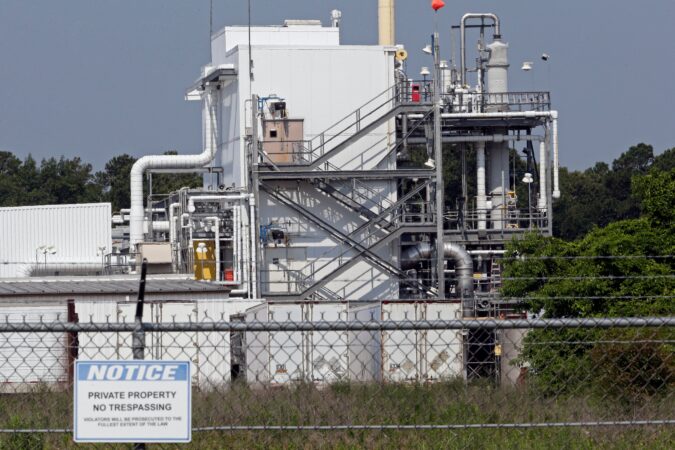
    Under the agreement, filed in federal court in West Virginia, Chemours will pay a civil penalty of $22.5 million for alleged violations and spend $90 million over 15 years to mitigate PFAS discharges in three states: West Virginia, North Carolina, and New Jersey.

    Wilmington-based Chemours, a spin-off of chemical maker DuPont, also agreed to install PFAS pollution controls for surface water discharges and air emissions at a West Virginia facility at an estimated cost of $60 million, supply clean drinking water to communities near its West Virginia and New Jersey sites at an estimated cost of $280 million, and implement controls to reduce releases of PFAS and other toxic chemicals from its facility in North Carolina.

    Combined, the penalties and relief programs are estimated to cost about $450 million, the Justice Department said.

    The settlement allows Chemours to continue manufacturing PFAS for commercial and military applications while preventing future contamination and protecting communities from existing pollution, said Adam Gustafson, principal deputy assistant attorney general for the Environment and Natural Resources Division.

    Justice Dept. says settlement protects public health

    “The Trump administration recognizes the important role of Chemours for its commercial and military obligations,” Gustafson said in an interview. “The settlement protects public health while preserving that important balance.”

    The settlement against a major PFAS manufacturer “delivers on the Trump administration’s promise to make polluters pay and stop PFAS contamination at the source,” said Jeffrey Hall, assistant EPA administrator for enforcement and compliance assurance.

    The agreement will greatly reduce PFAS contamination of water, land, and air and even begin to mitigate past harm, Hall said. “This settlement brings Chemours into compliance with the law and holds it fully accountable,” he said.

    In a statement Wednesday, Chemours said it has already begun planning and implementing operational improvements at its facilities and will take steps to mitigate future emissions and enhance existing programs.

    “This settlement provides Chemours with greater clarity on future compliance requirements and actions to support long-term responsible manufacturing,” spokesperson Jess Loizeaux said.

    The settlement comes as the Trump administration is expected to propose softening Biden-era limits on “forever chemicals” in drinking water, while delaying but keeping tough standards for two common types of the substance.

    The proposal will start the formal process of rolling back parts of the first-ever limits on PFAS in drinking water finalized during former President Joe Biden’s administration. Officials at the time found they increased the risk of cardiovascular disease, certain cancers, and babies being born with low birth weight.

    The agency is committed to addressing per- and polyfluoroalkyl substances (PFAS) in drinking water while following the law and ensuring that regulatory compliance is achievable for drinking water systems, EPA Administrator Lee Zeldin said.

    Chemours discharged PFAS into rivers in three states

    The settlement determined that facilities Chemours operates in the three states have discharged PFAS into the Ohio River, Cape Fear River, and Delaware River in violation of permits required by the Clean Water Act and state laws. Chemours also violated legal requirements under the federal Toxic Substances Control Act at all three facilities.

    As a result of the alleged violations, people living near the facilities were exposed to illegal PFAS, officials said. PFAS are widely used and found around the world, with scientific studies showing that exposure to some PFAS in the environment may be linked to harmful health effects in humans and animals.

    The violations continued for over a decade, the Justice Department said. The facilities were previously owned for many decades by DuPont. The settlement announced Wednesday does not resolve DuPont’s liability for past PFAS violations, officials said.

    A federal judge last year ordered Chemours to stop discharging unlawful levels of cancer-causing chemicals into the Ohio River from the company’s Washington Works plant in West Virginia. The pollutants endanger the environment, aquatic life, and human health, U.S. District Judge Joseph Goodwin wrote in the August 2025 order.

    The West Virginia Rivers Coalition had asked Goodwin to require the company to immediately comply with its permit limits after violating them for more than five years.

    DuPont, Chemours, and another company, Corteva, agreed to pay New Jersey up to $2 billion last year to settle environmental claims stemming from PFAS. The federal settlement does not affect the state case.

    N.C. AG blasts settlement

    North Carolina Attorney General Jeff Jackson called the settlement “an insult to the people of eastern North Carolina.”

    His state is “ground zero for GenX contamination, but this deal does practically nothing to clean up our water,” said Jackson, a Democrat. GenX is a trade name for a synthetic chemical developed by Chemours as an alternative to PFAS but which has raised significant health and environmental concerns in its own right.

    “Chemours made this mess, and Chemours should clean it up,” Jackson said in a statement.

    The federal consent decree calls for 14 specific treatment systems to reduce PFAS in wastewater, stormwater, and groundwater from the West Virginia plant. Chemours will test drinking water near the West Virginia and New Jersey sites and provide treated or alternative clean water.

    Editor’s note: This article has been updated to include statements from Chemours and the North Carolina attorney general.

  • Top auto regulator opens special probe after a Tesla slams into a Texas home, killing a woman

    Top auto regulator opens special probe after a Tesla slams into a Texas home, killing a woman

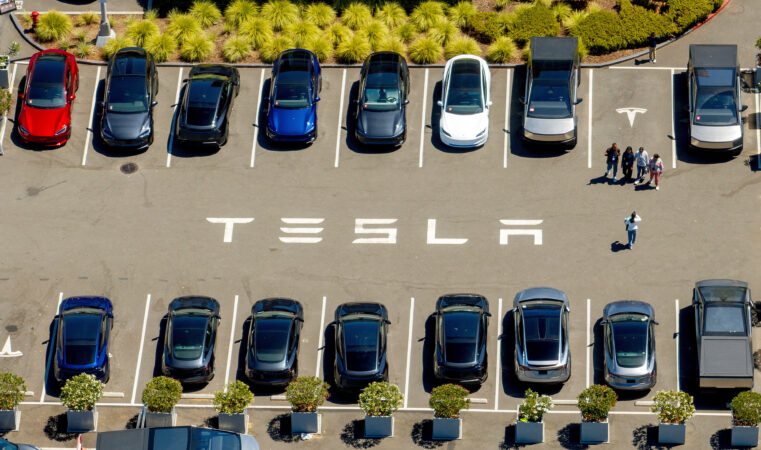
    NEW YORK — The top U.S. auto regulator opened an investigation Monday after a Tesla using an automated driving feature slammed into a Texas home at high speed and killed a 76-year-old woman standing inside.

    The National Highway Traffic Safety Administration said it’s opening a special investigation into the Tesla Model 3 crash on Friday near Houston, a significant probe because the car was using technology that Elon Musk considers key to the company’s future.

    The Tesla CEO is rolling out robotaxis using automated software in several U.S. cities this year and plans to invite Tesla owners to put their cars into the fleet using the same system across the country.

    The driver told the Harris County Sheriff’s Office that he was using the technology, according to a police report on the crash, but it’s not clear what role, if any, it played in the incident.

    Tesla did not respond to a request for comment but the head of the company’s artificial intelligence efforts suggested on social media later Monday that the self-driving feature was not to blame.

    “In this case, the driver manually overrode self-driving by pressing the accelerator all the way to 100% of the accel pedal in this residential area,” wrote Ashok Elluswamy on X, the platform that is now part of Musk’s rocket company, SpaceX. “They reached a speed of 73 mph during the crash, and had the accelerator pressed even after the crash.”

    The police report noted that the driver was not drunk and is cooperating. It identified the woman killed as Martha Avila.

    Video obtained by KHOU-TV shows the car traveling at top speed over the front lawn of a brick home in Katy, then ramming into a front room. The next shot shows the car encased in the home amid piles of crumbling plaster, split beams, and bits of furniture.

    The auto safety regulator, known as NHTSA, has launched several investigations into Tesla, including one late last year into 58 incidents in which Teslas reportedly violated traffic safety laws while using self-driving technology, leading to more than a dozen crashes and fires and nearly two dozen injuries.

    A few months earlier, the NHTSA opened an investigation into why Tesla apparently had not been reporting crashes promptly as required.

    As for special crash investigations, the NHTSA has opened 46 involving Teslas using self-driving or driver-assistance technology over the past decade, according to the agency’s records. In more than a dozen of those crashes, at least one person — a driver, passenger, or pedestrian — was killed.

    Tesla stock fell sharply early last year as car sales plunged amid a boycott of Musk after he waded into politics, leading President Donald Trump’s budget-cutting Department of Government Efficiency initiative and embracing European extremist candidates.

    Musk has since shifted the Tesla story to one less about car sales and more about AI and robotaxis, and done so successfully. The stock is up 16% in the past year. It closed down 5.8% Tuesday.

  • Alan Greenspan, former Federal Reserve chairman, dies at 100

    Alan Greenspan, former Federal Reserve chairman, dies at 100

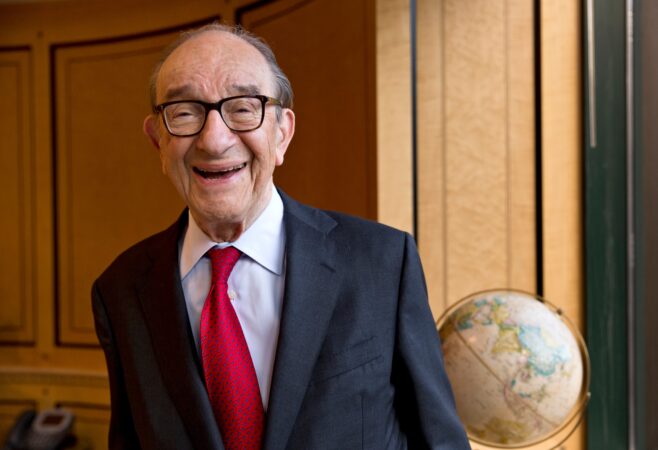
    WASHINGTON — Alan Greenspan, the jazz-playing U.S. Federal Reserve chair who was celebrated for engineering a decade of prosperity but later shared the blame for a devastating financial crisis, died Monday. He was 100.

    Mr. Greenspan died from complications of Parkinson’s disease, said his wife of 29 years, NBC News correspondent Andrea Mitchell.

    “To me he was my husband, who shaped my life from our very first date in 1984,” Mitchell wrote. ”He had ‘irrational exuberance’ for baseball, the Washington Commanders, tennis, golf, and music, especially jazz. He will be remembered for his brilliance and his kindness. Being his life partner was the joy of my life.”

    The Fed said Mr. Greenspan helped to cement trust in the Fed during a time of economic uncertainty.

    “Under his leadership, the Federal Reserve achieved a sustained era of price stability that supported economic growth and helped anchor the public’s confidence in the institution,” the central bank said in a statement Monday.

    Greenspan was hailed as “Maestro’’ — before crisis hit

    In 18½ years at the Fed, Mr. Greenspan presided over a breathtaking surge in stock prices and a 10-year economic boom that started in March 1991. He was celebrated as “Maestro’’ and “Oracle’’ — an economic virtuoso whose every utterance was dissected for clues on where interest rates and the economy were headed.

    The intense scrutiny of Mr. Greenspan’s intentions gave birth to new Fed folklore: the “Briefcase Indicator.” A stuffed briefcase carried into Fed meetings implied changes might be afoot because Mr. Greenspan carried with him charts and research to make his point.

    But his reputation began to suffer almost as soon as he left the Fed in 2006. American housing prices tumbled rapidly, causing huge losses for banks that had repackaged mortgage loans into a dizzying array of complex securities. The growing financial crisis pushed the U.S. economy into the Great Recession of 2007-2009 — the deepest downturn since the 1930s.

    Critics blamed the devastation on Mr. Greenspan’s easy money policies and his support for deregulated financial markets. Mr. Greenspan himself later acknowledged “I made a mistake’’ in assuming that banks could essentially regulate themselves.

    The authoritative voice on the U.S. economy

    For almost two decades, it seemed that Mr. Greenspan could do no wrong. Not only in the United States but across the world, he was regarded with a mixture of reverence and awe. Many openly dreaded the day when he would leave the Fed.

    Investors hung on his sometimes inscrutable observations. In the most well-known such remark, Mr. Greenspan sent financial markets reeling on Dec. 5, 1996, when he suggested with just two words — “irrational exuberance” — that stock prices were too high.

    Mindful of his power to move markets, Mr. Greenspan typically resorted to obfuscation. At times, he even joked about his habit of doing so. “I know you believe you understand what you think I said, but I am not sure you realize that what you heard is not what I meant,” Mr. Greenspan once told a befuddled congressional committee.

    Mr. Greenspan was one of the few Fed chairs that Kevin Warsh, chosen by Trump to lead the Fed, praised at his swearing-in last month. Warsh has said one of his goals is to dial back the Fed’s communications, particularly the guidance it gives financial markets, an approach closer to Mr. Greenspan’s than to Warsh’s immediate predecessors as chair.

    Yet for all his circumspect comments, Mr. Greenspan did make the Fed more transparent. He was the first chair to issue a statement explaining the Fed’s interest-rate decisions. Before Mr. Greenspan, investors had to divine the Fed’s intentions from market changes. Mr. Greenspan also began to release minutes and even full transcripts of meetings, though those changes were in response to pressure from Congress.

    A protégé is born

    Born in the Washington Heights neighborhood of Manhattan, the young Mr. Greenspan was a math whiz who was trotted out by his mother to show off for visitors.

    “I was a prop at parties,’’ he said in a 2007 interview with PBS NewsHour. A Julliard School dropout, he worked as a professional musician in his teens, playing clarinet and saxophone alongside the future jazz great Stan Getz. It was a humbling experience that persuaded the young Mr. Greenspan to seek another line of work.

    He pursued undergraduate and graduate study in economics at New York University, eventually earning a doctorate there. For most of three decades, he ran an economic consulting firm. During the 1950s, he became a disciple of the libertarian philosopher Ayn Rand, who stuck him with the nickname the “Undertaker’’ for his dark clothes and quiet bearing. When Mr. Greenspan was sworn in as President Gerald Ford’s chief economic adviser in 1974, Rand stood beside him.

    An early trial for a new Fed chair

    President Ronald Reagan tapped Mr. Greenspan to run the Fed in 1987. He was tested almost immediately. On Oct. 19, 1987, which came to be known as “Black Monday,” the stock market suffered the worst one-day percentage loss in American history just two months into his term. The Dow Jones Industrial Average plunged 22.6% for reasons that remain opaque to this day.

    Mr. Greenspan was credited for helping restore stability. He assured Wall Street that the Fed would supply as much money to the financial system as was needed to restore calm. Stocks recovered, and the American economy emerged unscathed by the market crash.

    During his tenure at the Fed, Mr. Greenspan drew praise for presiding over what was at the time the longest economic expansion in American history. (It was later surpassed by a 128-month expansion that ran from June 2009 through February 2020.) During Mr. Greenspan’s tenure at the Fed, the nation’s unemployment rate briefly dropped below 4% for the first time since 1970.

    And inflation, which had bedeviled the United States and much of the global economy during the 1970s, was remarkably dormant during Mr. Greenspan’s chairmanship, something many economists thought impossible for so long a period.

    During the long boom, Mr. Greenspan argued that improvements in technology had made the economy so efficient that it could run faster and at lower rates of unemployment, without unleashing inflation. As a consequence, the theory went, the Fed could keep interest rates low even when the economy was roaring.

    The economy soared in the late 1990s, expanding by 4% or more for four straight years, and Mr. Greenspan was credited with holding off on rate hikes and allowing the boom to run.

    Warsh has said that AI could reproduce the 1990s experience of high growth with low inflation, though economists are skeptical it will play out the same way.

    A passion for numbers and life

    As Fed chair, Mr. Greenspan relished poring over obscure economic data, from monthly boxcar loadings to steel production, all in a bid to assess where the economy was going. He would often phone economists at other government agencies to discuss details. He would rise early each morning for a two-hour soak in his bathtub, time that he used to review statistics and Fed staff memos.

    Improbably, Mr. Greenspan also made the gossip pages as an unlikely ladies’ man. He dated the television journalist Barbara Walters and later married Mitchell after a 12-year courtship. They had no children. Mitchell graduated from the University of Pennsylvania and worked for KWY radio and TV. She founded the Andrea Mitchell Center for the Study of Democracy in 2017.

    Mr. Greenspan dated Walters while working as an adviser to President Gerald Ford. According to a biography of Mr. Greenspan, The Man Who Knew by Sebastian Mallaby, when Ford read a newspaper item about the pair, he cut it out and sent it to his chief of staff, Dick Cheney, with a note that said, “I don’t believe it.”

    Faith in self-regulating markets is challenged

    All along, Mr. Greenspan held fast to the belief that financial markets could largely regulate themselves. With officials from President Bill Clinton’s White House, he helped block efforts by Brooksley Born, the nation’s top commodities regulator, to bring federal oversight in the late 1990s to the shadowy market in over-the-counter derivatives. The derivatives allowed speculators to make bets on everything from the price of oil to high-risk mortgages.

    Eventually, history would vindicate Born, not the Maestro.

    The low interest rates Mr. Greenspan had engineered helped swell housing prices into a dangerous bubble. And the financial deregulation he supported allowed banks and other financial firms to pile up huge risks, often hidden from government supervision. Bad derivatives bets helped sink insurance giant American International Group, which required a $180 billion taxpayer bailout. Vaunted investment firms Bear Stearns and Lehman Brothers failed and U.S. financial markets nearly collapsed.

    The Financial Crisis Inquiry Commission, which was assigned to investigate the debacle by Congress, concluded:

    “More than 30 years of deregulation and reliance on self-regulation by financial institutions, championed by former Federal Reserve chairman Alan Greenspan and others … had stripped away key safeguards, which could have helped avoid catastrophe.”

    Life after the Fed

    In the years after stepping down as Fed chairman in 2006 just shy of his 80th birthday, Mr. Greenspan kept busy doing what he loved to do most — following the economic data. He ran his own consulting firm, Greenspan Associates, through which he dispensed advice to Wall Street clients and collected handsome speaking fees.

    He kept up a busy schedule well into his 90s, writing his memoir and two other books on the economy, as well as opining on the latest economic developments on television news shows.

    He also signed onto opinion articles and statements defending the Federal Reserve’s political independence from President Donald Trump’s ongoing attacks. In January 2026 he signed a statement criticizing the Trump administration’s investigation of Fed Chair Jerome Powell. The statement, which was also signed by two other former Fed chairs and five former Treasury secretaries, called the investigation “an unprecedented attempt to use prosecutorial attacks to undermine” the Fed’s independence and warned it would have “highly negative consequences for inflation.”

    In his 2013 book The Map and the Territory, Mr. Greenspan defended himself against critics who assigned him significant blame for the 2008 financial meltdown. He argued that traditional economic forecasting was no match for the irrational risk-taking that can feed catastrophic price bubbles.

    “Bubbles go up very slowly as euphoria builds,” Mr. Greenspan said in a 2013 interview with the Associated Press. “Then fear hits, and it comes down very sharply. When I started to look at that, I was sort of intellectually shocked.”
  • Ukrainian attacks prompt Russian-held Crimea to halt civilian gasoline sales

    Ukrainian attacks prompt Russian-held Crimea to halt civilian gasoline sales

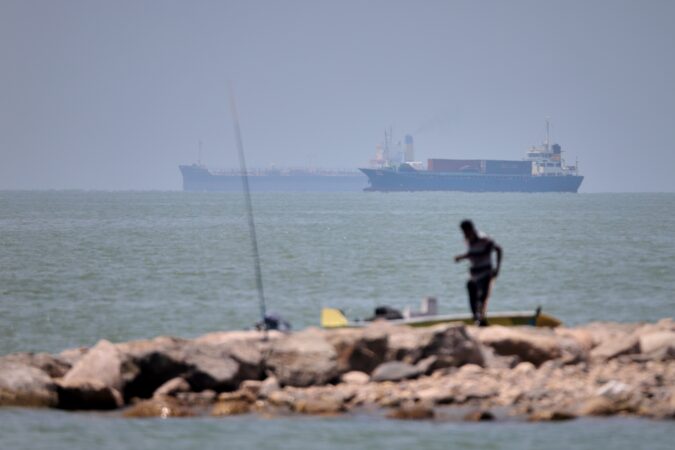
    Officials in Russia-occupied Crimea suspended civilian gasoline sales Sunday as Ukraine ramped up attacks on fuel supplies on the Black Sea peninsula.

    Gov. Sergey Aksyonov, the Kremlin-appointed head of Crimea, said that overnight Ukrainian strikes killed four people and wounded 28 others. He did not specify the target of the attack.

    He later wrote on social media that local gas stations would halt all sales to nonstate companies and individuals for an undefined period.

    “Fuel will be sold only to government agencies that ensure the functioning and security of the Republic of Crimea,” Aksyonov said. “I ask everyone to remain calm and to only trust official sources of information.”

    Ukrainian forces have repeatedly targeted fuel supplies to Crimea in recent weeks, triggering the worst energy crisis in the region since it was illegally annexed by Russia in 2014.

    Ukrainian President Volodymyr Zelensky said in a statement Sunday that a Crimean oil depot as well as an oil transport facility in Russia’s southern Krasnodar region were among the targets. He described the attacks as part of Ukraine’s “long-range sanctions” against Russia’s energy infrastructure.

    “Russia understands only strength, and our long-range strength is certainly working for peace,” he wrote.

    Russian officials in Krasnodar reported earlier Sunday that a drone strike sparked a fire at a Black Sea oil terminal in the village of Chushka. They said that Ukrainian attacks struck a ferry, killing one person.

    Motorists struggle to find fuel

    The Crimean peninsula has had periodic fuel shortages from Ukrainian strikes before, but the current crisis is the worst since its 2014 annexation.

    At the end of May, authorities restricted the sale of gas to 20 liters (5⅓ gallons) per vehicle owner per week, using prepaid coupons. Those were snapped up immediately following their release on an official messaging app channel, and motorists lined up for hours, waiting to refuel.

    Social networks have been abuzz with requests and advice on where to find fuel, and authorities launched a hotline for tourists in the area who have found themselves trapped.

    Some motorists bring their own gas from Krasnodar and elsewhere via the Kerch bridge, but they are restricted to carrying 100 liters (about 26½ gallons) per vehicle. Some speculators are selling gas at double the market price.

    In a rare public acknowledgment, the Kremlin has recognized the scope of the problem and promised to address the issue quickly.

    However, Ukraine’s successes have highlighted its ability to inflict painful damage on Russia and change the course of the conflict while Moscow’s advances recently have ground to a near halt. On June 11, Russia’s full-scale invasion of Ukraine reached its 1,569th day, surpassing the duration of World War I.

  • Trump post seems to push Starmer to resign

    Trump post seems to push Starmer to resign

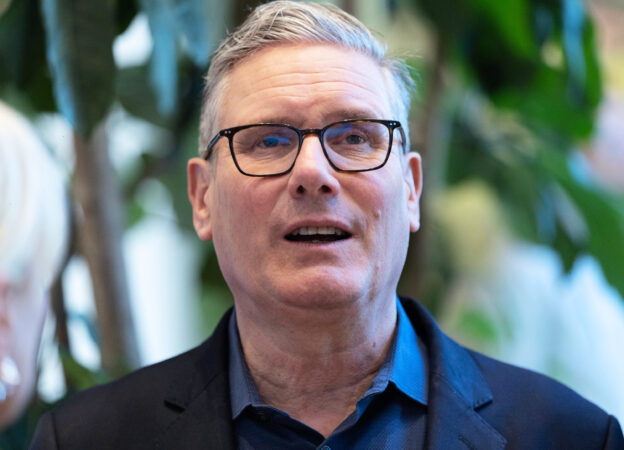
    LONDON — President Donald Trump appeared to scoop Downing Street on Sunday, announcing that Prime Minister Keir Starmer would resign before any public statement from Starmer himself.

    “Keir Starmer will resign as Prime Minister of The United Kingdom,” proclaimed in a social media post, in which he also asserted that Starmer had “failed badly” on immigration and energy policy.

    Then, Trump added: “I wish him well!”

    Doubts about Starmer’s political future have swirled for weeks since his Labour Party suffered staggering losses in local elections in May, and prospects of a leadership challenge increased markedly on Friday after his most formidable rival, Greater Manchester Mayor Andy Burnham, won a special election for an open seat in parliament.

    Earlier on Sunday, British media had reported that Starmer was considering resigning. Still, Trump’s intervention represented an extraordinary foray into British domestic politics that left some veteran political observers stunned.

    “There is literally no boundary this American president will not bulldoze through,” ITV’s Robert Peston wrote on X.

    Peston also cited a cabinet minister who said that, despite Trump’s “scoop,” Starmer had “genuinely not made a decision to quit.”

    Broadcaster Piers Morgan called it “the final humiliation.”

    Downing Street told the Washington Post on Sunday evening that Starmer and Trump had not spoken over the weekend, raising questions about how the U.S. president came to make such a definitive prediction.

    But it also didn’t mean Trump was wrong about Starmer’s plans. A senior Labour Party MP told the Post on Sunday evening that some Labour Party lawmakers were “being briefed that he will step down tomorrow and that he realizes his position is untenable.”

    Speaking on the condition of anonymity because she wasn’t authorized to discuss the matter publicly, she added that Starmer “no longer has the confidence” of his peers and that it was “only right that he now steps aside.”

    However Trump reached his conclusion, the president’s ties with close European allies are increasingly strained. In recent days, Italian Prime Minister Giorgia Meloni accused Trump of lying after he claimed she had “begged” to have her photograph taken with him.

    Relations between Starmer and Trump have been rocky for months.

    Earlier this year, Trump branded Starmer “no Winston Churchill” during a dispute over Britain’s support for U.S. strikes on Iran, and the two leaders did not hold a bilateral meeting at the Group of Seven summit in France last week.

    Starmer led the Labour Party to a landslide election victory just two years ago, but has faced increasing pressure from within his own party and growing calls for him to step aside since the local elections in which Labour and the Conservatives lost badly to Reform UK, the populist party led by Nigel Farage, one of the key architects of Brexit, the U.K.’s departure from the European Union.

    Starmer on Friday vowed to fight any leadership challenge. He has not commented publicly on the matter since then, but briefings from senior lawmakers have suggested that he spent the weekend weighing his position.

    Some commentators have suggested that the question is no longer if Starmer will leave, but how, and when.

    The focus, they say, has shifted to choreography — whether Labour will stage a full leadership contest, with figures such as Wes Streeting, the former health secretary, also entering the race — or rally around a single successor.

    British politics have been remarkably unstable since the 2016 Brexit referendum. If Starmer does announce his resignation, it would usher in Britain’s seventh prime minister in a decade.

    In the special election last week, Burnham won a decisive victory against a Reform UK opponent — a win that for many Labour lawmakers provided a test case of whether Burnham could help reverse Labour’s dire poll ratings of late.

    Starmer, for his part, took to social media on Sunday only to comment on Father’s Day. “Being a dad is my great joy,” he wrote.

  • France restricts public drinking and outdoor sports as heat wave bakes parts of Europe

    France restricts public drinking and outdoor sports as heat wave bakes parts of Europe

    PARIS — France sizzled Sunday, canceling trains, concerts, and sports events and cracking down on public drinking as an exceptional heat wave unfurled across parts of Europe. Multiple drownings were reported as people sought relief in whatever water they could find.

    About a third of France is under ‘’red alert″ heat and temperatures reached 104 degrees Fahrenheit in some areas, in a country where air-conditioning isn’t widespread. The forecast for Monday is even hotter.

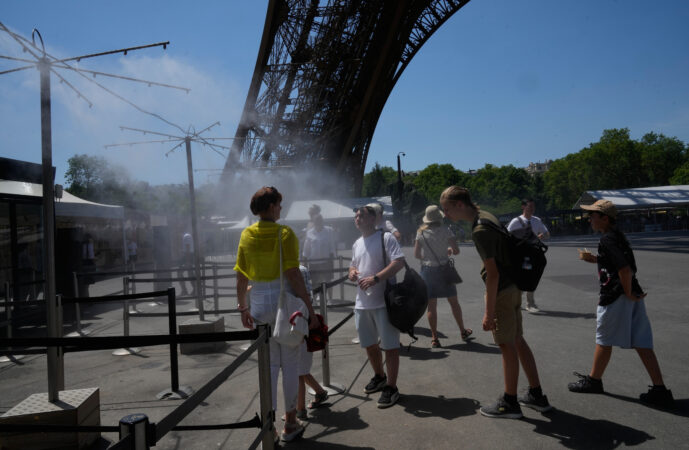
    The Eiffel Tower and other Paris venues set up misting stations to cool crowds, among a raft of measures introduced by authorities to minimize risks. Tourists in Rome dunked in fountains. Spain’s Basque Country canceled some sports and cultural events.

    More than 200,000 people across Europe died from heat-related causes over the last four years, and most of the fatalities were preventable, the World Health Organization’s Europe office said this month. More above-average temperatures are expected this summer, which can cause heat exhaustion and life-threatening heat stroke.

    Human-caused climate change is tied to increasing extreme weather events and U.N. climate agency projections say the next five years should shatter more heat records. A rapid study found that human-caused climate change was responsible for killing about 1,500 people in an unusually early European heat wave in May.

    In this latest European hot spell, French media reported that four children drowned Saturday. Summer drownings are an annual problem that health authorities say worsens during hot spells.

    Solstice parties draw large crowds in extreme heat

    France’s annual Music Day on Sunday was of particular concern. The nationwide summer solstice celebration involves thousands of concerts in village squares, rave venues, and Paris clubs, bringing communities together and increasingly drawing British and other international visitors. Some of the concerts outside Paris were canceled.

    The French government banned public drinking in ’’red alert″ zones, and ordered organizers of music day events to limit alcohol consumption to “preserve emergency services and allow medics to concentrate on taking care of the most vulnerable.”

    Scores of French trains were canceled, and the national rail authority dispatched thousands of extra staff to deal with potential problems as the heat threatened rails and electrical cables.

    Authorities are notably worried about people living in the baking streets, and elderly people in nursing homes or isolated in their homes. About 15,000 older people died in France in a 2003 heat wave that became a national reckoning.

    The government mobilized emergency services and military forces for reinforced wildfire readiness, imposed tightened surveillance of water supplies to France’s many nuclear reactors, and ordered 845 schools to close Monday.

    Spain, Italy, Germany swelter as tourists seek relief

    Spain kicked off the summer with large parts of the country on alert due to temperatures expected to hover around 104 F — even in the interior of Basque Country, a northern region that typically experiences cooler temperatures.

    Authorities have suspended outdoor sports and cultural activities in the region. The heat wave is expected to scorch Spain at least through Wednesday.

    In Italy, authorities expanded heat warnings — referred to locally as “red flags” — to eight cities Sunday in northern and central parts of the country. Temperatures there are mostly in the high 90s to low 100s F.

    At one farm outside Milan, owners set up fans and sprinklers to keep cows cool, while visitors to Milan Fashion Week huddled under parasols and clutched fans. In Rome, tourists dunked their arms and occasionally their faces into the city’s famed fountain pools.

    The German Weather Service is forecasting temperatures of up to 98 F for Monday and Tuesday, and up to 102 F Wednesday.

    A 23-year-old man drowned Saturday in a lake near Rheinstetten in the southwestern region of Baden-Württemberg, the German news agency dpa reported. Three other people are missing after swimming in the Rhine River, a police spokesperson told dpa.

    Britain’s weather office has issued an “extreme heat” warning for much of southern England and parts of Wales from Monday until Thursday, saying temperatures could reach 100 F. The current record for a June day is 96 F, reached in 1976.

    Thunderstorms also threatened regions in Germany and Poland.

    French Prime Minister Sebastien Lecornu convened a new government heat crisis meeting Sunday, and ordered government ministers to plan for better adapting France to heat waves in the future — including “via air-conditioning, if necessary.”