Category: Business Wires

  • Supply chain disruptions from the Iran war could raise prices for drugs, electronics, and more

    Supply chain disruptions from the Iran war could raise prices for drugs, electronics, and more

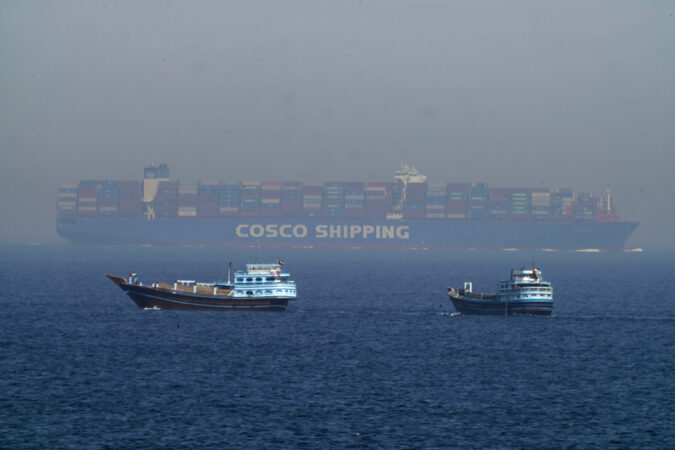
    NEW YORK — The Iran war has effectively halted oil tanker movement in the key Strait of Hormuz. But it’s also disrupting the wider global supply chain beyond oil, affecting everything from pharmaceuticals from India, semiconductors from Asia, and oil-derived products such as fertilizers that come from the Middle East.

    Cargo ships are stuck in the Gulf or making a much longer detour around the southern tip of Africa. Planes carrying air cargo out of the Middle East are grounded. And the longer the war drags on, the more likely that there will be shortages and price increases on a wide range of goods.

    “This is really causing some major impacts within the global supply chain,” said Patrick Penfield, professor of supply chain practice at Syracuse University. “As this conflict keeps progressing, you’ll start to see some shortages, you’ll see some major price increases.”

    Stalled at sea

    Clarksons Research, which tracks shipping data, estimates that about 3,200 ships, or about 4% of global ship tonnage, are idle inside the Persian Gulf, but that includes about 1,231 that likely only operate within the Gulf. About 500 ships, or 1% of global tonnage, are currently “waiting” outside the Gulf in ports off the coast of the United Arab Emirates and Oman, according to the firm.

    While those may seem like small percentages, they have a domino effect that will lead to congestion elsewhere, said Michael Goldman, general manager North America of CARU Containers.

    “The supply chain is kind of like a long train with many cars and each car represents, let’s say, a port in the world. Well, if one car gets derailed, it can very often have a domino effect to many other cars behind it or in front of it,” he said. “So although we only have a small number of ports affected by this military action, it can really have a big effect on the total supply chain.”

    On Tuesday, President Donald Trump pitched a plan aimed at getting oil and trade moving again through the Strait.

    Trump said on social media he ordered the U.S. International Development Finance Corp. to provide political risk insurance for tankers carrying oil and other goods through the Persian Gulf “at a very reasonable price.”

    Political risk insurance is a type of coverage intended to protect firms against financial losses caused by unstable political conditions, government actions, or violence. Marine insurers had been canceling or raising rates for insurance in the region.

    He said that, if necessary, the U.S. Navy would escort oil tankers through the Strait of Hormuz. The Navy has at least eight destroyers and three, smaller, littoral combat ships in the region. These ships have previously been used to escort merchant shipping in the region and in the Red Sea.

    Computer chips, pharmaceuticals, and other goods face delays

    A wide range of products are shipped through the Mideast region. Along with about 20% of the world’s oil that comes from the region, products made with natural gas such as petrochemical feedstock — used to make plastic and rubber — and nitrogen fertilizer come from the Middle East. Pharmaceuticals exported from India and semiconductors and batteries exported from Asia to the rest of the world are all shipped through the region and could face delays.

    Limited routes, higher costs

    In addition to constraints on the Strait of Hormuz, the instability has put a damper on transit in the Red Sea and the Suez Canal, which had just begun to see more transit after years of instability due to Houthi attacks on ships in the region. Shipping company Maersk had resumed transit in the Suez Canal and Red Sea but said Sunday that it was rerouting that traffic around the Cape of Good Hope in Africa, a move other companies have been making to avoid the volatile region.

    That journey adds 10 to 14 days to the trip and about $1 million extra in fuel per ship, Syracuse’ Penfield estimates.

    With higher fuel prices, longer routes, and higher risk in the region, shippers have begun adding fuel and “war risk” or “emergency conflict” surcharges to what they’re charging clients, leading to higher costs all around, he said.

    Air cargo under pressure

    Air cargo has also been constrained. Closed airspace and airports in countries including UAE, Qatar, Bahrain, Kuwait, Iraq, and Iran have stranded tens of thousands of people — and cargo.

    Each of the three major Middle Eastern airlines — Emirates, Qatar Airways, and Etihad Airways — operate fleets of cargo aircraft, and the airlines also transport goods in the belly of their passenger planes.

    The amount of goods that travels through the air typically accounts for less than 1% of all freight moving globally, but the products that do travel by air tend to be perishable or high-value goods like pharmaceuticals, electronics, and produce that together account for about 35% of the world trade value, Boeing estimated in its World Air Cargo Forecast.

    The longer these airports in the Middle East remain closed the greater the potential disruption to the economy if these sensitive shipments don’t arrive or have to be rerouted around the conflict. Even before the war in Iran began over the weekend, air freight and airlines were already contending with closed airspace over Ukraine and Russia.

    Flights through these Middle Eastern airport hubs are a key route for passengers and cargo from India. Henry Harteveldt, an airline industry analyst with Atmosphere Research Group, said it’s going to be hard to get to India now, and passengers may have to switch to different routes that fly west across Asia. Airlines may have to resort to longer flights, and in some case even add fuel stops on some routes.

    “Remember, there’s a lot of pharmaceutical products that are made in India and then exported to different countries around the world. If that’s disrupted, that has a huge, huge, huge impact,” Harteveldt said.

    Air cargo costs are expected to rise due to reduced capacity, increased demand, and surcharges.

    Maersk said in an operational update Tuesday that it expects air freight rates to rise due to capacity constraints.

    “Airlines are also introducing or reviewing the possibility of introducing war risk surcharges on shipments routed through or near the impacted regions,” Maersk said in a statement. “There may also be added costs linked to jet fuel which in turn can push up costs.”

    An industry that ‘runs on disruption’

    Despite the supply chain upheaval, however, Michael Goldman, general manager North America of CARU Containers, said the industry will adjust. Over the past few years it has faced other major disruptions like COVID supply shortages and other recent Mideast conflicts and has become more nimble.

    “The specific situation that’s happening is pretty unprecedented, so it’s very unique from that perspective,” he said. “[But] for the last few years the industry just kind of runs on disruption. So in terms of our industry having disruption, that is nothing new. That’s more of the same.”

  • Crews in Cuba rush to repair a damaged power plant to ease a blackout

    Crews in Cuba rush to repair a damaged power plant to ease a blackout

    HAVANA — Swaths of Cuba remained without power on Thursday nearly a day after a huge blackout hit the western part of the island in the latest outage blamed on a fragile electric grid and a lack of fuel.

    Crews worked overnight to repair a broken boiler at one of Cuba’s largest thermoelectric plants, but officials have warned that it could take three to four days for power to be fully restored.

    State media reported that nearly 660,000 customers in Havana, or 77%, had power, as well as 43 hospitals and 10 water supply stations. However, officials warned of low power generation and said some circuits that crews had reconnected were kicked offline again.

    Millions still remained without power, including Miguel Leyva, 65, who lives with his mother and brother, both of whom are ill.

    “I have no words to describe what I’m going through: the heat, the mosquitoes and no electricity. The food could spoil,” he said. “I’m aware of all the problems that exist, but listen, it’s been more than 24 hours now.”

    Cuba’s Ministry of Energy and Mines wrote on X that the electrical system is operating “in a limited capacity, prioritizing basic services, primarily health and water supply.”

    State media reported that two power plants are offline because of a lack of petroleum.

    Government officials said Wednesday afternoon that crews have located the crack in the boiler drum that led to the outage. They said it will take 12 hours to cool that area so crews can enter the furnace and start repairing it. Work already is underway to fix a pipe that also is damaged, officials added.

    Sonia Vázquez, 61, said the blackout didn’t stop her from selling coffee to passersby daily, saying she prepared it with gas at 5 a.m. under a rechargeable lamp.

    “I didn’t sleep last night. Too many mosquitoes,” said Vázquez, who lives with her grandson.

    Meanwhile, 57-year-old cafe owner José Ignacio Dorta, said that some of his frozen food has spoiled.

    “We’ve looked for ways to prevent further spoilage. We’re working on it. We hope nothing else will spoil,” he said.

    Cuba has long struggled with an aging electric grid and intermittent fuel supplies, but the crisis has deepened in recent months.

    Key oil shipments from Venezuela were halted after the United States attacked the South American country in early January. Then later that month, President Donald Trump warned that he would impose tariffs on any country that sells or supplies oil to Cuba.

    On Thursday, Trump suggested a deal may be imminent with Cuba but that he’s focusing on Iran in the meantime.

    Referring to a co-owner of Inter Miami being originally from Cuba, Trump said, “You’re gonna go back” and added, “That’s going to be a great day, right?”

    Without providing details, Trump said, “We’re going to celebrate that separately. I just want to wait a couple of weeks. I want him to wait a couple of weeks. But we’ll be together again soon, I suspect, celebrating what’s going on in Cuba.”

    He added of the island’s government, “They want to make a deal so badly. You have no idea.”

    Then, referring to Marco Rubio, the president said the secretary of state wants to work on Cuba but is cautious to do so during the war in Iran.

    “You’re next one’s going to be — we want to do that special — Cuba,” Trump said. “He’s waiting. But he says, “Let’s get this one finished first.’ We could do them all at the same time. But bad things happen. If you watch countries over the years, you do them all too fast, bad things happen.”

    Trump didn’t clarify his meaning, but the comments followed his from last week, when he raised that the prospect of a “friendly takeover” of Cuba might be possible without elaborating.

    Wednesday’s outage is the second one to hit western Cuba in three months.

    The outage in early December lasted nearly 12 hours. Officials said that a fault in a transmission line linking two power plants caused an overload and led to the collapse of the energy system’s western sector.

    Some of Cuba’s thermoelectric plants have been operating for more than three decades and receive little maintenance because of high costs. U.S. sanctions also have prevented the government from buying new equipment and specialized parts, officials say.

  • More than 20 states sue over new global tariffs Trump imposed after his stinging Supreme Court loss

    More than 20 states sue over new global tariffs Trump imposed after his stinging Supreme Court loss

    WASHINGTON — About two dozen states — including Pennsylvania and New Jersey — challenged President Donald Trump’s new global tariffs on Thursday, filing a lawsuit over import taxes he imposed after a stinging loss at the Supreme Court.

    The Democratic attorneys general and governors in the lawsuit argue that Trump is overstepping his power with planned 15% tariffs on much of the world.

    Trump has said the tariffs are essential to reduce America’s longstanding trade deficits. He imposed duties under Section 122 of the Trade Act of 1974 after the Supreme Court struck down tariffs he imposed last year under an emergency powers law.

    Section 122, which has never been invoked, allows the president to impose tariffs of up to 15%. They are limited to five months unless extended by Congress.

    The lawsuit is led by attorneys general from Oregon, Arizona, California, and New York.

    “The focus right now should be on paying people back, not doubling down on illegal tariffs,” said Oregon Attorney General Dan Rayfield. The suit comes a day after a judge ruled that companies who paid tariffs under Trump’s old framework should get refunds.

    The new suit argues that Trump can’t pivot to Section 122 because it was intended to be used only in specific, limited circumstances — not for sweeping import taxes. It also contends the tariffs will drive up costs for states, businesses and consumers.

    Many of those states also successfully sued over Trump’s tariffs imposed under a different law: the International Emergency Economic Powers Act (IEEPA).

    Four days after the Supreme Court struck down his sweeping IEEPA tariffs Feb. 20, Trump invoked Section 122 to slap 10% tariffs on foreign goods. Treasury Secretary Scott Bessant told CNBC on Wednesday that the administration would raise the levies to the 15% limit this week.

    The Democratic states and other critics say the president can’t use Section 122 as a replacement for the defunct tariffs to combat the trade deficit.

    The Section 122 provision is aimed at what it calls “fundamental international payments problems.’’ At issue is whether that wording covers trade deficits, the gap between what the U.S. sells other countries and what it buys from them.

    Section 122 arose from the financial crises that emerged in the 1960s and 1970s when the U.S. dollar was tied to gold. Other countries were dumping dollars in exchange for gold at a set rate, risking a collapse of the U.S. currency and chaos in financial markets. But the dollar is no longer linked to gold, so critics say Section 122 is obsolete.

    Awkwardly for Trump, his own Justice Department argued in a court filing last year that the president needed to invoke the emergency powers act because Section 122 did “not have any obvious application’’ in fighting trade deficits, which it called “conceptually distinct’’ from balance-of-payment issues.

    Still, some legal analysts say the Trump administration has a stronger case this time.

    “The legal reality is that courts will likely provide President Trump substantially more deference regarding Section 122 than they did to his previous tariffs under IEEPA,’’ Peter Harrell, visiting scholar at Georgetown University’s Institute of International Economic Law, wrote in a commentary Wednesday.

    The specialized Court of International Trade in New York, which will hear the states’ lawsuit, wrote last year in its own decision striking down the emergency-powers tariffs that Trump didn’t need them because Section 122 was available to combat trade deficits.

    Trump does have other legal authorities he can use to impose tariffs, and some have already survived court tests. Duties that Trump imposed on Chinese imports during his first term under Section 301 of the same 1974 trade act are still in place.

    Also joining the lawsuit are the attorneys general of Colorado, Connecticut, Delaware, Illinois, Maine, Maryland, Massachusetts, Michigan, Minnesota, Nevada, New Jersey, New Mexico, North Carolina, Rhode Island, Vermont, Virginia, Washington, Wisconsin, and the governors of Kentucky and Pennsylvania.

  • The sea is higher than we thought and millions more are at risk, study finds

    The sea is higher than we thought and millions more are at risk, study finds

    Climate change’s rising seas may threaten tens of millions more people than scientists and government planners originally thought because of mistaken research assumptions on how high coastal waters already are, a new study said.

    Researchers studied hundreds of scientific studies and hazard assessments, calculating that about 90% of them underestimated baseline coastal water heights by an average of 1 foot, according to Wednesday’s study in the journal Nature. The problem arises far more frequently in the Global South, the Pacific, and Southeast Asia, and less in Europe and along the Atlantic coasts.

    The cause is a mismatch between the way sea and land altitudes are measured, said study coauthor Philip Minderhoud, a hydrogeology professor at Wageningen University and Research in the Netherlands. And he attributed that to a “methodological blind spot” between the different ways those two things are measured.

    Each way measures its own areas properly, he said. But where sea meets land, there are a lot of factors that often do not get accounted for when satellites and land-based models are used. Studies that calculate sea level rise impact usually “do not look at the actual measured sea level, so they used this zero-meter” figure as a starting point, said lead author Katharina Seeger of the University of Padua in Italy. In some places in the Indo-Pacific, the figure is close to 1 meter, or about 3 feet, Minderhoud said.

    One simple way to understand that is that many studies assume sea levels without waves or currents, when the reality at the water’s edge is of oceans constantly roiled by wind, tides, currents, changing temperatures, and things like El Niño, Minderhoud and Seeger said.

    Adjusting to a more accurate coastal height baseline means that if seas rise by a little more than 3 feet — as some studies suggest will happen by the end of the century — waters could inundate up to 37% more land and threaten 77 million to 132 million more people, the study said.

    That would trigger problems in planning and paying for the impacts of a warming world.

    People at risk

    “You have a lot of people here for whom the risk of extreme flooding is much higher than people thought,” said Anders Levermann, a climate scientist at the Potsdam Institute for Climate Impacts Research in Germany, who was not part of the study. Southeast Asia, where the study finds the biggest discrepancy, has the most people already threatened by sea level rise, he said.

    Minderhoud pointed to island nations in that region as an area where the reality of discrepancy hits home.

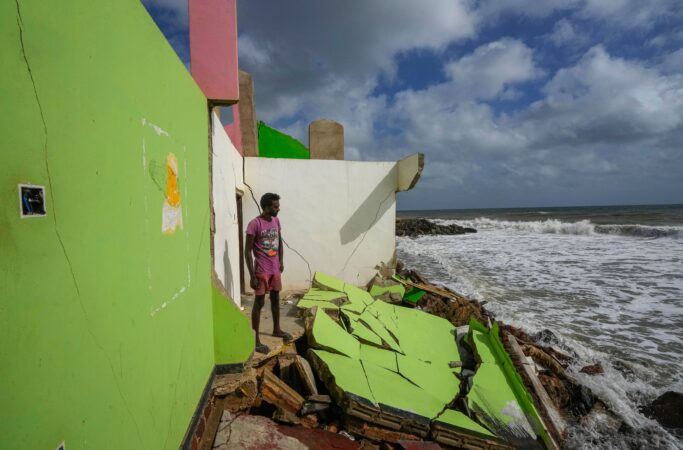
    For 17-year-old climate activist Vepaiamele Trief, the projections are not abstract. On her island home in the South Pacific archipelago of Vanuatu, the shoreline has visibly retreated within her short lifetime, with beaches eroded, coastal trees uprooted, and some homes now barely 3 feet from the sea at high tide. On her grandmother’s island of Ambae, a coastal road from the airport to her village has been rerouted inland because of encroaching water. Graves have been submerged and entire ways of life feel under threat.

    “These studies, they aren’t just words on a paper. They aren’t just numbers. They’re people’s actual livelihoods,” she said. “Put yourself in the shoes of our coastal communities — their lives are going to be completely overturned because of sea level rise and climate change.”

    Paying attention to the starting point

    This new study is pretty much about what is the truth on the ground.

    Calculations that may be correct for the seas overall or for the land are not quite right at that key intersection point of water and land, Seeger and Minderhoud said. That is especially true in the Pacific.

    “To understand how much higher a piece of land is than the water, you need to know the land elevation and the water elevation. And what this paper says the vast majority of studies have done is to just assume that zero in your land elevation data set is the level of the water — when, in fact, it’s not,” said sea level rise expert Ben Strauss, CEO of Climate Central. His 2019 study was one of the few the new paper said got it right.

    “It’s just the baseline that you start from that people are getting wrong,” said Strauss, who was not part of the research.

    Maybe not so bad, some scientists say

    Other outside scientists said that Minderhoud and Seeger may be making too much of the problem.

    “I think they’re exaggerating the implications for impact studies a bit — the problem is actually well understood, albeit addressed in a way that could probably be improved,” said Gonéri Le Cozannet, a scientist at the French geological survey. Most local planners know their coastal issues and plan accordingly, Rutgers University sea level expert Robert Kopp said.

    That’s true in Vietnam, in the high-impact area, Minderhoud said. Officials there have an accurate sense of elevation, he said.

    The findings come as a new UNESCO report warns of major gaps in understanding how much carbon the ocean absorbs. That report said that models differ by 10% to 20% in estimating the size of that carbon sink, raising questions about the accuracy of global climate projections that rely on them.

    Together, the studies suggest governments may be planning for coastal and climate risks with an incomplete picture of how the ocean is changing.

    “When the ocean comes closer, it takes away more than just the land we used to enjoy,” said Thompson Natuoivi, a climate advocate for Save the Children Vanuatu.

    “Sea level rise is not just changing our coastline, it’s changing our lives. We are not talking about the future — we’re talking about the right now.”

  • High-tech snowplows and AI help cities clean up from big storms

    High-tech snowplows and AI help cities clean up from big storms

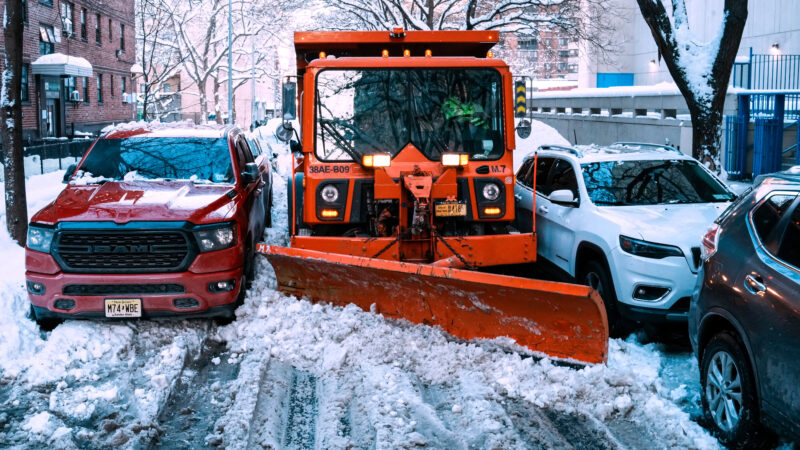
    Residents of Syracuse, N.Y. — America’s snowiest city — once barraged a service hotline with street neglect complaints during blizzards, even if plows had passed two hours earlier but the work was hidden by fresh snow.

    Now public trust seems to be rising as Syracuse and other cities across the U.S. integrate upgrades such as video monitoring, GPS mapping and artificial intelligence into snow operations that once relied almost entirely on manual planning.

    Syracuse was one of the first to revamp the way it deploys its snowplows, and complaint calls have dropped by 30% under the new system, said Conor Muldoon, the city’s chief innovation officer.

    “People will look out their window and say, ‘Hey, you guys are doing a terrible job,’” Muldoon said. “And we can point to a public map and say, ‘Here’s all the breadcrumbs for when that plow was there.’”

    Snowier than usual in the U.S. snow capital

    Each winter, Syracuse averages 126 inches (3.2 meters) of snow, more than any other U.S. city of at least 100,000 people. Even before the blizzard that pounded the Northeast last week, the city had already surpassed its typical average due to a record 2-foot (60-centimeter) accumulation on one day in late December.

    With a goal of clearing every street within 24 hours after a storm, Syracuse partnered in 2021 with San Francisco-based Samsara to put live GPS tracking and dashcams on city fleet vehicles including snowplows. Integrated with GIS mapping software, the system allows officials to monitor live video and plow locations in real time.

    While residents can’t access live feeds, they can view a public map that updates every 5 minutes to show which roads have been cleared.

    Samsara started incorporating AI into its products in 2019. This winter, for the first time, it has provided customers with footage from other cameras within its large network, helping officials better understand conditions on a street even when no worker is there.

    Kiren Sekar, the company’s chief product officer, cited an example of needing to dispatch the closest plow for a snow emergency in Plainwell, Michigan.

    “Rather than having to sift through a list of vehicles, it can actually figure this out: ‘We’ve got Trevor in vehicle 203, 15 minutes away,’” Sekar said.

    New York City’s approach

    Samsara partners with communities of various sizes to upgrade their snowplow systems, but the nation’s largest city — New York City — developed its own.

    Its tracking program known as BladeRunner monitors snow removal equipment (including garbage trucks with plows attached) while a human in a command center — not AI — analyzes the GPS data. The city is exploring AI in the future to process the thousands of 311 calls and online service requests it can get in a single day.

    The other way the big city’s approach differs from its upstate neighbor of Syracuse is that each plow runs a specific route during storms, ensuring main and side streets get essentially the same treatment.

    “So what it does is allow equity,” said Joshua Goodman, deputy commissioner at the city’s Department of Sanitation.

    Typically 99% of the city’s roads will be plowed within the first four hours after a moderate snowfall under ideal conditions, but Goodman said it didn’t quite meet that mark during last week’s historic storm.

    Cutting costs and insurance claims

    With U.S. cities and states spending upward of $4 billion each year on snow operations, the new technology also helps assure roads aren’t overplowed or oversalted, which can cause environmental damage.

    Fayetteville, Ark., launched a public-facing snow removal map for the first time this winter. It reported improvements in plowing time, labor costs and fuel savings, despite enduring about double the snow from a year ago.

    “This is the first year some roads have ever been treated or plowed, and that goes right back to being able to see where we need to go and if we’ve been there,” said Ross Jackson Jr., the city’s fleet operations manager.

    The township of Edison, N.J., reduced its spending on salt and brine by 35% and its insurance payouts by 60%, thanks to video that helped prove plow drivers usually weren’t at fault when the vehicles collided with another motorist’s car.

    Video installed on snowplows in Iowa helped demonstrate that all but one of 12 snowplow accidents in a single day were the other driver’s fault, said Craig Bargfrede, the state’s winter operations administrator.

    “How can you not see this big orange truck with flashing lights ahead of you?” he said. “Boom, they just drive right into us.”

    Kalamazoo County was the first county in Michigan to employ turn-by-turn navigation to dispatch snowplows during a storm. Rusty McClain, assistant general superintendent of its road commission, called it a huge improvement in efficiency.

    “The old-school way of doing it, that bird’s-eye view of where everyone needs to go to plow, was just in a large book with paper maps,” McClain said. “You’d have to pull over, find the page you’re looking for, call somebody on the phone and ask if they have plowed that area.”

  • Pentagon dispute bolsters Anthropic reputation but raises questions about AI readiness in military

    Pentagon dispute bolsters Anthropic reputation but raises questions about AI readiness in military

    Anthropic’s moral stand on U.S. military use of artificial intelligence is reshaping the competition between leading AI companies but also exposing a growing awareness that maybe chatbots just aren’t capable enough for acts of war.

    Anthropic’s chatbot Claude, for the first time, outpaced rival ChatGPT in phone app downloads in the United States this week, a signal of growing interest from consumers siding with Anthropic in its standoff with the Pentagon, according to market research firm Sensor Tower.

    The Trump administration on Friday ordered government agencies to stop using Claude and designated it a supply chain risk after Anthropic CEO Dario Amodei refused to bend his company’s ethical safeguards preventing the technology from being applied to autonomous weapons and domestic mass surveillance. Anthropic has said it will challenge the Pentagon in court once it receives formal notice of the penalties.

    And while many military and human rights experts have applauded Amodei for standing up for ethical principles, some are also frustrated by years of AI industry marketing that persuaded the government to apply the technology to high-stakes tasks.

    “He caused this mess,” said Missy Cummings, a former Navy fighter pilot who now directs the robotics and automation center at George Mason University. “They were the No. 1 company to push ridiculous hype over the capabilities of these technologies. And now, all of a sudden, they want to be for real. They want to tell people, ‘Oh, wait a minute. We really shouldn’t be using these technologies in weapons.’”

    Anthropic didn’t immediately respond to a request for comment. The Defense Department declined to comment on whether it is still using Claude, including in the Iran war, citing operational security.

    Cummings published a paper at a top AI conference in December arguing that government agencies should prohibit the use of generative AI “to control, direct, guide or govern any weapon.” Not because AI is so smart that it could go rogue, but because the large language models behind chatbots like Claude make too many mistakes — called hallucinations or confabulations — and are “inherently unreliable and not appropriate in environments that could result in the loss of life.”

    “You’re going to kill noncombatants,” Cummings said in an interview Tuesday with the Associated Press. “You’re going to kill your own troops. I’m not clear whether the military truly understands the limitations.”

    Amodei sought to emphasize those limitations in defending Anthropic’s ethical stance last week, arguing that “frontier AI systems are simply not reliable enough to power fully autonomous weapons. We will not knowingly provide a product that puts America’s warfighters and civilians at risk.”

    Anthropic, until recently, was the only one of its peers to have approval for use in classified military systems, where it has partnered with data analysis company Palantir and other defense contractors. President Donald Trump said Friday, around the same time he was approving Saturday’s military strikes on Iran, that the Pentagon would have six months to phase out Anthropic’s military applications.

    Cummings, a former Palantir adviser, said it’s possible that Claude has already been used in military strike planning.

    “I just fundamentally hope that there were humans in the loop,” she said. “A human has to babysit these technologies very closely. You can use them to do these things, but you need to verify, verify, verify.”

    She said that’s a contrast to the messaging from AI companies that have suggested that their technology is evolving to the point where it is “almost sentient.”

    “If there’s culpability here, I’d say half is Anthropic’s for driving the hype and half is the Department of War’s fault for firing all the people that would have otherwise advised them against stupid uses of technology,” Cummings said.

    One social media commentator this week described Anthropic’s government problems as a “Hype Tax” — a message that was reposted by President Donald Trump’s top AI adviser, David Sacks, a frequent critic of the company.

    And while it has caused legal hassles that could jeopardize Anthropic’s business partnerships with other military contractors, it has also bolstered its reputation as a safety-minded AI developer.

    “It’s applaudable that a company stood up to the government in order to maintain what it felt were its ethics and were its business choices, even in the face of these potentially crippling policy responses,” said Jennifer Huddleston, a senior fellow at the libertarian-leaning Cato Institute.

    Consumers have already spoken, leading to a surge of Claude downloads that made it the most popular iPhone app starting on Saturday and for all phone systems in the U.S. on Monday, according to Sensor Tower. That’s come at the expense of OpenAI’s ChatGPT, which saw its consumer reputation damaged when it announced a Friday deal with the Pentagon to effectively replace Anthropic with ChatGPT in classified environments.

    In the Apple store, the number of 1-star reviews — the worst rating — of ChatGPT grew by 775% on Saturday and continued to grow early this week, forcing OpenAI to do damage control.

    “We shouldn’t have rushed to get this out on Friday,” OpenAI CEO Sam Altman said in a social media post Monday. “The issues are super complex, and demand clear communication. We were genuinely trying to de-escalate things and avoid a much worse outcome, but I think it just looked opportunistic and sloppy.”

    Altman was planning to gather employees for an “all-hands” meeting on Tuesday to discuss next steps.

    “There are many things the technology just isn’t ready for, and many areas we don’t yet understand the tradeoffs required for safety,” Altman said. “We will work through these, slowly, with the [Pentagon], with technical safeguards and other methods.”

  • New York’s congestion toll into Manhattan upheld by a federal judge over Trump’s objections

    New York’s congestion toll into Manhattan upheld by a federal judge over Trump’s objections

    NEW YORK — A federal judge has blocked President Donald Trump’s administration’s efforts to halt New York’s first-in-the-nation congestion fee meant to reduce traffic and pump revenue into the region’s aging transit system.

    U.S. District Judge Lewis Liman on Tuesday ruled that the U.S. Department of Transportation lacked the authority to unilaterally rescind approval of the $9 toll, which former Democratic President Joe Biden initially green-lit.

    Instead, he sided with the Metropolitan Transportation Authority, which had argued that the department’s reversal was “unlawful” because the agency had not adequately explained its reasoning.

    “The Secretary’s actions were arbitrary and capricious, an abuse of discretion, and not in accordance with law,” Liman wrote in his 149-page ruling, referring to Trump’s Transportation Secretary Sean Duffy.

    The judge noted that New York’s legislature passed the toll, which its governor signed into law and received the necessary federal approvals before launching.

    “The democratic process worked,” Liman wrote, even as he left the door open for future attempts by Trump and other opponents to kill the program, which took effect on Jan. 5, 2025.

    Gov. Kathy Hochul said the decision vindicates a “once-in-a-lifetime success story” that’s “yielded huge benefits” in its first year of operation, including reducing gridlock and unlocking critical funding for mass transit.

    “The judge’s decision is clear: Donald Trump’s unlawful attempts to trample on the self-governance of his home state have failed spectacularly,” the Democrat said in a statement. “Congestion pricing is legal, it works, and it is here to stay.”

    The U.S. DOT said it’s reviewing its legal options, including appealing.

    “Once again, working-class Americans are being sidelined under Governor Kathy Hochul’s policies, which impose a massive tax on every New Yorker,” the agency said in a statement.

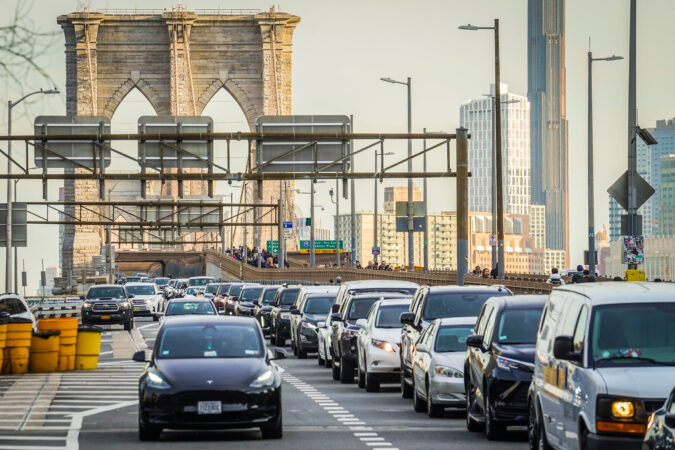
    New York’s congestion toll is imposed on most vehicles driving into Manhattan south of Central Park.

    The toll varies depending on vehicle type and time of day, and is added to tolls drivers already pay to cross bridges and tunnels into Manhattan, but generally costs about $9.

    Congestion pricing schemes aimed at reducing traffic pollution and encouraging public transit use have long existed in other global cities, including London, Stockholm, Milan, and Singapore, but not in the U.S.

    But Trump, whose namesake Trump Tower and other properties are within the congestion zone, has strongly opposed the idea. During his presidential campaign, he vowed to kill New York’s plan as soon as he took office.

    Then last February, Duffy rescinded the toll’s federal approval, calling the fee “a slap in the face to working-class Americans and small business owners.” He threatened to withhold federal funding for projects in New York if the toll weren’t discontinued.

    But Liman temporarily blocked the administration from following through on those threats until he issued a final decision. The Manhattan judge previously dismissed a series of lawsuits brought by local opponents, including New Jersey’s governor, unionized teachers in New York City, a trucking industry group, and local suburban leaders.

    Hochul had been a vocal supporter of the toll but paused its planned rollout in 2024, a move widely seen as an attempt to help suburban Democrats in congressional races where the toll was divisive. She then reinstated the fee after the election, but lowered it from $15 to $9.

    As the program marked its first anniversary in January, Hochul, who is up for reelection, joined the MTA in touting the toll’s benefits.

    According to a recent MTA report, the toll has led to some 27 million fewer vehicles coming into the heart of Manhattan, resulting in 22% less air pollution and 23% faster commute times for those opting to drive and pay the fee.

    The toll has also generated more than $550 million in revenue for the region’s creaky and cash-strapped transit system — exceeding projections, the MTA has said.

    Sales tax revenues, office leases and foot traffic in the congestion zone have all increased since the toll took effect, disproving concerns it would hurt the local economy, according to the agency.

    “Traffic is down, business is up, and we’re making crucial investments in a transit system that moves millions of people a day,” Janno Lieber, the MTA’s CEO, said Tuesday. “New York is winning.”

  • War with Iran strains the U.S.-U.K. relationship as Starmer and Trump disagree

    War with Iran strains the U.S.-U.K. relationship as Starmer and Trump disagree

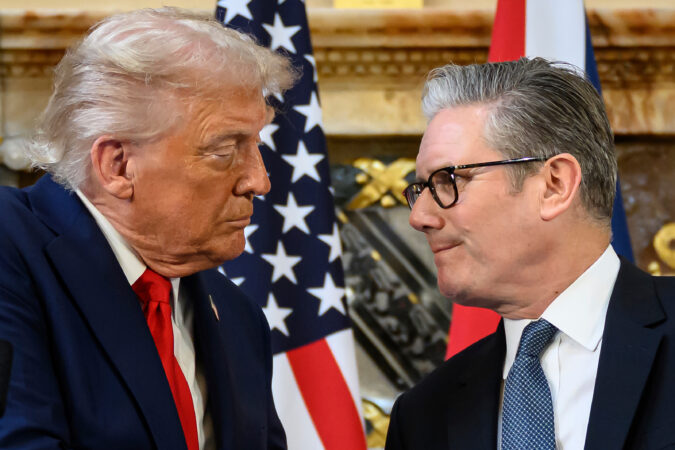
    LONDON — Keir Starmer has never had a bad word to say in public about Donald Trump.

    That is not being reciprocated now as the American president lambasts the British prime minister over his reluctance to join the U.S.-Israeli strikes on Iran.

    “This is not Winston Churchill that we’re dealing with,” Trump said Tuesday at the White House, blasting Britain’s reluctance to let U.S. warplanes use its bases.

    The dispute is roiling a relationship that Starmer worked hard to forge, and further straining trans-Atlantic ties frayed by Trump’s “America first” foreign policy and transactional approach to international relations.

    Britain is in Trump’s bad books

    “This was the most solid relationship of all. And now we have very strong relationships with other countries in Europe,” Trump told British tabloid the Sun in an interview published Tuesday.

    “I mean, France has been great. They’ve all been great,” Trump said. “The U.K. has been much different from others.”

    “It’s very sad to see that the relationship is obviously not what it was,” he said.

    Starmer initially blocked American planes from using British bases for the attacks on Iran that started on Saturday. He later agreed to let the United States use bases in England and on Diego Garcia in the Indian Ocean to strike Iran’s ballistic missiles and their storage sites, but not to hit other targets.

    Even after the British base at Akrotiri in Cyprus was hit by an Iran-made drone over the weekend, Starmer said that the United Kingdom “will not join offensive action.” He said Tuesday that a Royal Navy destroyer, HMS Dragon, and Wildcat helicopters with counter-drone capabilities were being sent to the region as part of “defensive operations.” British forces have also shot down drones in Jordanian and Iraqi airspace, the government said.

    Starmer has offered a rare, though implicit, rebuke of the U.S. president, saying Monday that the U.K. government doesn’t believe in “regime change from the skies.”

    “Any U.K. actions must always have a lawful basis and a viable, thought-through plan,” Starmer told lawmakers in the House of Commons on Monday.

    “President Trump has expressed his disagreement with our decision not to get involved in the initial strikes, but it is my duty to judge what is in Britain’s national interest,” Starmer added.

    The Financial Times called it Starmer’s “Love Actually moment” — a reference to the 2003 movie scene in which a British prime minister played by Hugh Grant stands up to a bullying U.S. president played by Billy Bob Thornton.

    Friction has grown over Greenland and Diego Garcia

    Friction between the two leaders has been building for months. Trump’s threat to take over Greenland was denounced by Starmer and other European leaders earlier this year. Recently, Trump has condemned Britain’s agreement to hand over the Chagos Islands, home to the Diego Garcia base, to Mauritius, despite his administration earlier backing the deal.

    Peter Ricketts, a former head of the U.K. Foreign Office, told the Observer newspaper that under Trump, “the Americans have effectively given up on any effort to be consistent with international law.”

    That is a red line for the law-abiding Starmer, a barrister and former chief prosecutor for England and Wales.

    The spat is a setback for Starmer’s efforts to woo Trump since the president’s return to office in 2025. The British government rolled out the red carpet to the president for a state visit as the guest of King Charles III, and Starmer consistently has praised Trump’s efforts — so far unsuccessful — to broker an end to the Russia-Ukraine war.

    The Iran war has also divided European leaders, who fall along a spectrum from condemnation to support.

    NATO Secretary-General Mark Rutte said that he unreservedly approves of Trump’s decision to attack Iran and kill its supreme leader, and called the war crucial for Europe’s security.

    The U.K., France, and Germany jointly said that they weren’t involved in the strikes, but were prepared to enable “necessary and proportionate defensive action to destroy Iran’s capability to fire missiles and drones at their source.”

    Spanish Prime Minister Pedro Sánchez condemned the strikes as “unjustifiable” and “dangerous.”

    Polling suggests many Britons are skeptical of the U.S. justification for war. But politicians to the right of Starmer’s Labour Party slammed the prime minister for not joining the offensive. Conservative leader Kemi Badenoch said that her party “stands behind America taking this necessary action against state-sponsored terror.”

    Foreign Office Minister Stephen Doughty denied the U.S.-U.K. “special relationship” was on the ropes.

    “Our relationship with the United States is strong,” he said Tuesday in the House of Commons. “It has endured, it continues to endure, and it will endure into the future on both the economic and the security fronts.”

  • Dubai’s image as a safe, tax-free haven is rocked by blasts from Iranian airstrikes

    Dubai’s image as a safe, tax-free haven is rocked by blasts from Iranian airstrikes

    The United Arab Emirates has sold itself to foreigners for years as a sunny, safe, tax-free oasis.

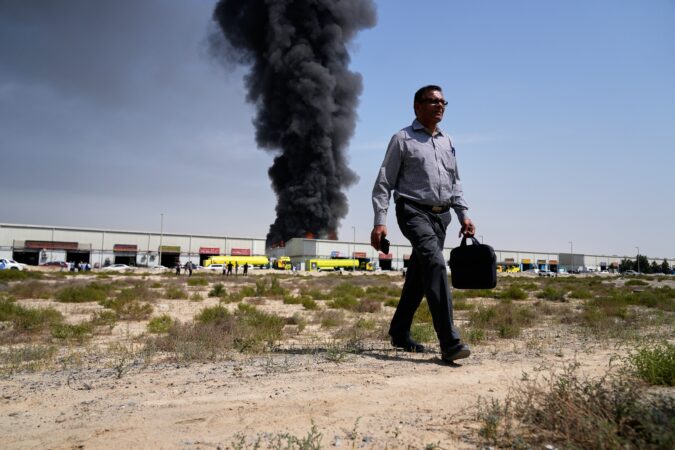
    That peaceful image was shattered Saturday as Iranian weaponry rained down on Dubai, setting fire to a five-star resort, threatening the world’s tallest building, and killing one person and injuring seven others at the airport in the capital city of Abu Dhabi.

    Iran has hit the UAE and several of its neighbors as it strikes back from the major attack by U.S. and Israeli forces, causing fear and chaos in a place that until Saturday was predictably calm.

    “This is Dubai’s ultimate nightmare, as its very essence depended on being a safe oasis in a troubled region,” Cinzia Bianco, an expert on the Persian Gulf at the European Council on Foreign Relations wrote on X. “There might be a way to be resilient, but there is no going back.”

    Officials tried to reassure residents and visitors that the country’s air defense system was among the best in the world, blasting down drones and missiles.

    “I know it’s a scary time for a lot of the residents,” Reem Al Hashimy, minister of state for international cooperation, told CNN. “We don’t hear these types of loud sounds. But at the same time, those are sounds of interception. And where there has been damage — that has been primarily debris.”

    Fallout from the attacks has undermined the Emirates’ efforts to de-escalate tensions with Iran despite longtime suspicions of its neighbor across the Gulf. The UAE closed its embassy in Tehran on Sunday.

    The oil-rich federation of seven sheikhdoms has relied on its image as a place of serenity to lure wealthy tourists, businesspeople, and future residents who want to live largely tax-free in luxury in the desert by the sea. Nearly 90% of the estimated 11 million residents are foreigners.

    Real estate firms sell glimmering high-rises and poolside villas to rich Europeans and Americans by promoting a welcoming climate and business-friendly policies, and touting it as one of the safest places on earth.

    Hundreds of drone and missile attacks later, though, that reputation has been rocked.

    “Last night was pretty surreal,” said British racehorse trainer Jamie Osborne, who was in Dubai for the Emirates Super Saturday. “You’re standing in the paddock watching missiles get shot through the sky.”

    The Ministry of Defense said Sunday that air defenses had dealt with 165 ballistic missiles, two cruise missiles, and more than 540 Iranian drones over two days.

    While officials said they intercepted all air attacks Saturday, debris from the knocked-down weapons sparked blazes at some of Dubai’s most iconic locations.

    Social media videos and photos showed a fire outside the Fairmont hotel on the prestigious human-made Palm Jumeirah island, flames licked at the facade of the famous Burj Al Arab hotel, and smoke rose into the sky near Burj Khalifa, the 2,723-foot skyscraper.

    There also was a fire at Dubai’s Jebel Ali Port, the city’s main sea terminal and a major shipping hub, and the Dubai International Airport was damaged and four employees were injured, according to the Dubai Media Office.

    Kristy Ellmer, who was on a business trip from New Hampshire, said she was staying away from the windows of her hotel but felt relatively safe despite the numerous blasts.

    “You hear a lot of explosions at times, you know, there’s hundreds of them,” she said. “It’s unsettling. We’re not used to hearing bombs, right, or missiles.”

    Louise Herrle, an American tourist whose flight home with her husband from Dubai was scrapped, said it was her third time trying to visit the area. Previous trips were canceled by the COVID-19 pandemic and the Hamas attack on Israel in October 2023.

    With their current Abu Dhabi and Dubai tour over, she is less likely to return to the Emirates or the region.

    “I would probably be inclined to avoid this part of the world when there’s increased tensions, it just explodes so quickly,” Herrle said.

    Maybe, she said, “the universe was trying to tell us something.”

  • Trump expects his Fed pick and AI to deliver a replay of the ’90s boom. Economists have doubts

    Trump expects his Fed pick and AI to deliver a replay of the ’90s boom. Economists have doubts

    WASHINGTON — President Donald Trump, his Treasury secretary, and his choice to lead the Federal Reserve believe they can coax the U.S. economy into partying like it’s 1999.

    They are putting their faith in artificial intelligence to duplicate what happened when another technology arrived in the 1990s: the internet. Back then, the American economy surged as businesses became more productive, unemployment tumbled, and inflation remained in check.

    Trump is confident that his nominee to become Fed chair, Kevin Warsh, can unleash an even greater economic bonanza by jettisoning what the president sees as the central bank’s hidebound reluctance to slash interest rates.

    Many economists are skeptical.

    The world looks a lot different today than it did when the Spice Girls ruled radio and Titanic dominated the box office. And the story the Trump team is telling — that a visionary Fed chair, Alan Greenspan, fueled the ‘90s boom by keeping interest rates low — is incomplete at best.

    “The administration is offering a rather distorted version of what actually happened in the 1990s,’’ economist Dario Perkins of TS Lombard said in a commentary.

    Nonetheless, the Trump administration believes history can repeat itself. All that’s been missing, in the president’s view, is a Fed chair with Greenspan’s foresight.

    AI’s influence over interest rates

    Trump has repeatedly attacked current Fed chief Jerome Powell, whose term as chair ends in May, for his reluctance to lower rates aggressively while inflation hovers above the central bank’s 2% target. Treasury Secretary Scott Bessent said on social media in January that the president sought to replace Powell with someone with “an open, Greenspan-like mind.”

    “Our nation can see productivity boom like we did in the ’90s when we are not encumbered by a Federal Reserve which throws the brakes on,’’ Bessent said.

    On Jan. 30, Trump said he was picking Warsh.

    In speeches and writings, Warsh has argued that AI-driven improvements in productivity could justify lower interest rates.

    These views align with Trump’s desires for Fed rate cuts but mark a break with Warsh’s own past as an inflation hawk. In the aftermath of the 2007-2009 Great Recession, Warsh — then a Fed governor — objected to some of the central bank’s efforts to help the struggling economy by pushing down rates even though unemployment exceeded 9%. Warsh warned then, wrongly, that inflation would soon accelerate.

    At issue now are gains in productivity and the possibility that AI will make them bigger — much bigger.

    To economists, productivity improvements are almost magical. When companies roll out new machines or technology, their workers can become more efficient and produce more stuff per hour. That allows firms to earn more and to raise employees’ pay without raising prices. In short: Surging productivity can drive economic growth without spurring inflation.

    Greenspan and the internet

    In the mid-1990s, Greenspan was contending with a strange set of economic circumstances: Wages were rising, but inflation wasn’t heating up.

    Big productivity gains might have explained things, but government data showed no sign of them. Other Fed policymakers worried that surging wages and tame inflation couldn’t coexist and that higher prices were coming. They wanted to raise interest rates.

    But Greenspan suspected the official productivity numbers were missing something. For one thing, they didn’t jibe with the amazing tales of efficiency improvements the Fed was hearing from companies investing in computers and turning to the internet.

    So he ordered his lieutenants to dig through decades of productivity numbers. The official statistics they assembled told an implausible story: Services firms — from retailers to legal practices — had supposedly seen productivity fall over the years, despite intense competitive pressure and massive investments in technology.

    Greenspan didn’t believe it. He persuaded his Fed colleagues that the government’s numbers were wrong and were understating productivity. They agreed in September 1996 to hold off on raising rates.

    The economy took flight.

    Tardily, productivity advances began to show up in the official data. Overall, American economic growth surpassed 4% every year from 1997 through 2000, something it would do again only once in the next quarter century. The unemployment rate plunged to 3.8% in April 2000, lowest in three decades. Inflation stayed in its cage, coming in below 2% — later the Fed’s official target — for 17 straight months in 1997-1999.

    History repeats itself … maybe?

    American productivity certainly looked strong in the second and third quarters of 2025, and some economists attribute the improvements to early adoption of AI; they see bigger gains and stronger economic growth ahead.

    Others aren’t so sure.

    Joe Brusuelas, chief economist at the consulting firm RSM, wrote that the 2025 productivity improvements “are not because of artificial intelligence’’ but reflect investments in automation that companies made when they couldn’t find enough workers during and after the COVID-19 pandemic. “Those investments are starting to pay off,’’ Brusuelas wrote.

    Economist Martin Baily, senior fellow emeritus at the Brookings Institution, believes it will take time for AI to have a big impact on the way companies do business and on the nation’s productivity.

    “Companies don’t change that fast,” said Baily, chairperson of President Bill Clinton’s Council of Economic Advisers. “It’s expensive to change. It’s risky to change. The managers don’t necessarily understand the new technology that well. So they have to learn how to use it. They have to train their staff. All that stuff takes a long time.’’

    A productivity boom can raise the economy’s speed limit — how fast it can grow without pushing prices higher. But it might not justify lower interest rates, Federal Reserve Gov. Michael Barr said in a speech earlier this month.

    Businesses will borrow to invest in AI, putting upward pressure on interest rates. Likewise, American workers and their families likely would save less and borrow more in anticipation of higher wages, the payoff for being more productive; that would put still more pressure on rates to rise.

    Bottom line, Barr said: “The AI boom is unlikely to be a reason for lowering policy rates.’’

    Even Greenspan’s Fed eventually came to the same conclusion, reversing course and starting to raise its benchmark rate in mid-1999, taking it from 4.75% to 6.5% in less than a year. (The rate Trump complains about now is around 3.6%.)

    “Warsh and Bessent talk only about the dovish 1995/96 version of Greenspan; they overlook the hawkish 1999/2000 variant,’’ Perkins wrote.

    Then and now

    Many of Warsh’s potential future colleagues on the Fed’s interest-rate setting committee see the late 1990s experience differently than he does, setting up what could be a clash at the central bank if the Senate confirms Warsh as chair.

    Austan Goolsbee, president of the Federal Reserve Bank of Chicago, said earlier this week that “the analogy to the late 90s is a little harder for me to understand.” Greenspan’s insight was that productivity gains meant the Fed could hold off on raising rates, not that it should slash them, Goolsbee noted.

    “It wasn’t, ‘Should we cut rates because productivity growth is higher?’” he said.

    The economic backdrop that awaits Warsh is also far less friendly than the one Greenspan enjoyed.

    Greenspan was avoiding rate hikes at a time when the usually profligate U.S. government was running rare budget surpluses and didn’t need to borrow so desperately. Now, after a series of spending hikes and tax cuts, deficits are piling up year after year, and the Congressional Budget Office expects federal debt to hit a historic high of 120% of America’s GDP by 2035.

    Nor was productivity the only thing controlling inflation in the 1990s. Countries were lowering tariffs and dismantling trade barriers. Immigration was surging.

    Now, thanks largely to Trump’s own policies, notably his sweeping taxes on imports and his crackdown on immigration, the world is much different. “Trade barriers are going up,’’ Perkins wrote. “Globalization has given way to de-globalization.’’

    “That benign era is clearly behind us,’’ said Michael Pearce, chief U.S. economist at Oxford Economics.