Category: Business Wires

  • Trump administration hits Iran with new sanctions as nuclear talks near

    Trump administration hits Iran with new sanctions as nuclear talks near

    WASHINGTON — The Trump administration on Wednesday imposed another tranche of sanctions on people and companies accused of enabling Iran’s ballistic missile program, drone production, and illicit oil sales as the U.S. presses Tehran to make a deal ahead of nuclear talks this week.

    The sanctions against 30 people, companies, and ships come as President Donald Trump has massed the largest U.S. buildup of warships and aircraft in the region in decades and has threatened to use military action in a bid to get Iran to constrain its nuclear program.

    The latest round of talks between U.S. officials, including envoy Steve Witkoff, and Iranian negotiators via mediator Oman are scheduled for Thursday in Geneva.

    The new sanctions imposed by the Treasury Department’s Office of Foreign Assets Control include a list of ships accused of being part of Iran’s “shadow fleet,” which refers to rusting oil tankers that smuggle oil for countries facing stiff sanctions.

    Also targeted are drone manufacturing firms, including Qods Aviation Industries, which has supplied drones “to all branches of the Iranian military and buyers in Africa and Latin America,” the Treasury Department said.

    Among other things, sanctions deny the people and firms access to any property or financial assets held in the U.S. and prevent American companies and citizens from doing business with them. However, they are largely symbolic because many of them do not hold funds with U.S. institutions.

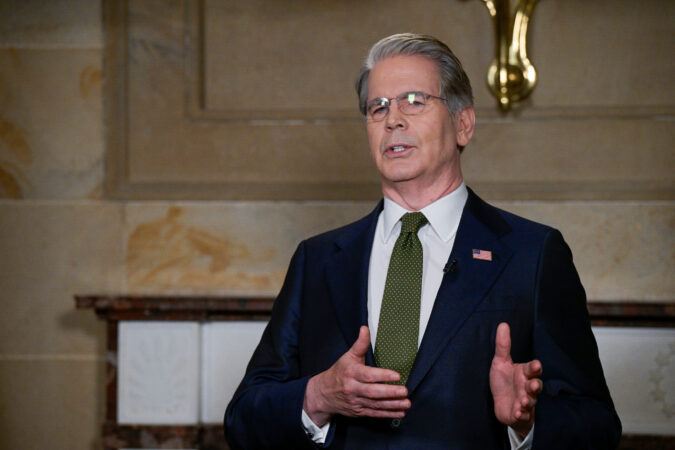
    “Treasury will continue to put maximum pressure on Iran to target the regime’s weapons capabilities and support for terrorism, which it has prioritized over the lives of the Iranian people,” Treasury Secretary Scott Bessent said in a statement.

    Trump and other top administration officials insist that Iran cannot be allowed to develop a nuclear weapon and ramped up pressure months after U.S. strikes in June on three Iranian nuclear sites.

    Iran long has maintained its nuclear program is peaceful. It had been enriching uranium up to 60% purity before the June attack — a short, technical step away from weapons-grade levels of 90%.

    “We wiped it out and they want to start all over again. And they’re at this moment again pursuing their sinister ambitions,” Trump said during his State of the Union speech Tuesday night. “We are in negotiations with them. They want to make a deal, but we haven’t heard those secret words: We will never have a nuclear weapon.”

  • Trump used the longest-ever State of the Union to try to convince voters that the U.S. is ‘winning so much’

    Trump used the longest-ever State of the Union to try to convince voters that the U.S. is ‘winning so much’

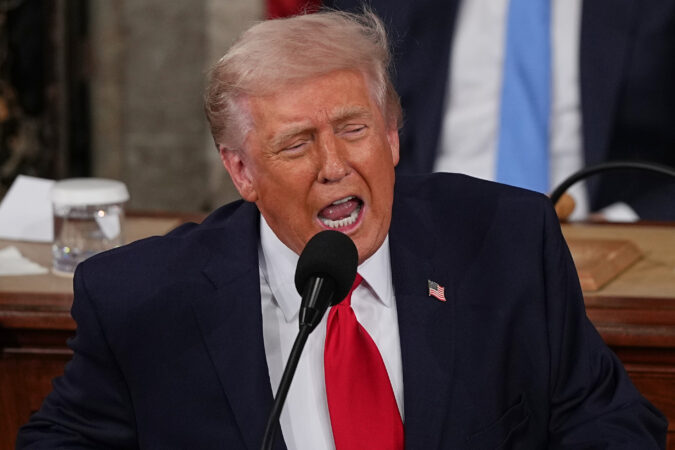
    WASHINGTON — President Donald Trump declared during a marathon State of the Union on Tuesday that “we’re winning so much” — insisting he’d sparked an economic boom at home and imposed a new world order abroad in hopes it can counter his sliding approval ratings.

    Trump’s main objective was convincing increasingly wary Americans that the economy is stronger than many believe, and that they should vote for more of the same by backing Republicans during November’s midterm elections. In all, Trump spoke for a record 108 minutes, breaking — by eight minutes — the previous time mark from his address before a joint session of Congress last year.

    The president largely avoided his usual bombast, only occasionally veering off-script — mostly to slam Democrats. As he did during such addresses in his first term, Trump relied on a series of surprise special guests to dramatically punctuate his message. They included U.S. military heroes and a former political prisoner released after U.S. forces toppled Venezuelan President Nicolás Maduro.

    Trump drew some of the loudest applause of the night when he invited the Olympic gold medal-winning U.S. men’s hockey team into the House chamber.

    “Our country is winning again. In fact, we’re winning so much that we really don’t know what to do about it. People are asking me, ‘Please, please, please, Mister President, we’re winning too much. We can’t take it anymore,’” Trump said before introducing the team.

    The hockey players, wearing their medals and “USA” sweaters, drew a bipartisan standing ovation. Trump pointed to the Democratic side of the chamber and quipped, “That’s the first time I ever I’ve ever seen them get up.”

    In a made-for-TV moment, the president announced he would be awarding the Presidential Medal of Freedom, America’s highest civilian honor, to the hockey team’s goaltender, Connor Hellebuyck. He also bestowed the Purple Heart on Andrew Wolfe — a National Guard member who was shot while deployed on the streets of the nation’s capital. Wolfe made his first public appearance since then during the speech.

    That scene recalled a similar surprise announcement in 2020, when Trump gave the Medal of Freedom to conservative radio host Rush Limbaugh during his State of the Union speech.

    Trump decries tariff decision as justices look on

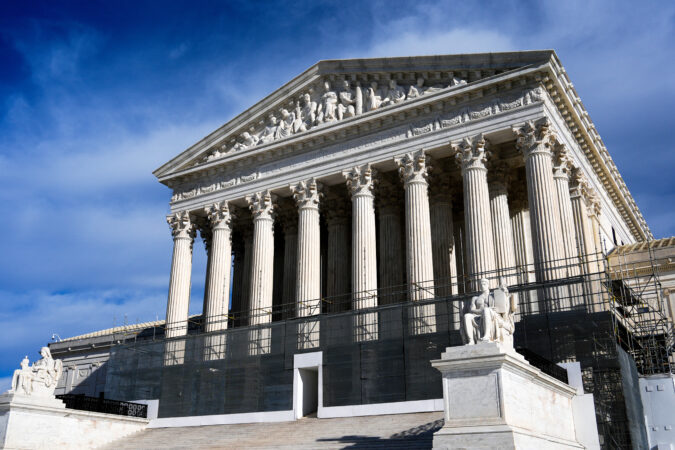
    The president championed his immigration crackdowns and his push to preserve widespread tariffs that the Supreme Court just struck down. He drew applause only from Democrats while describing the high court’s decision, which he called “an unfortunate ruling.”

    Trump vowed to plow ahead, using “alternative” laws to impose the taxes on imports and telling lawmakers, “Congressional action will not be necessary.” Trump argued that the tariffs are paid by foreign countries, despite evidence that the costs are borne by American consumers and businesses. “It’s saving our country,” he said.

    The only Supreme Court justices attending were Chief Justice John Roberts, as well as Justices Brett Kavanaugh, Amy Coney Barrett and Elena Kagan. Trump greeted them personally before the speech, despite last week slamming Coney Barrett — who he appointed to the high court in his first term — for siding with the majority against his tariffs.

    Democrats also stood for Trump vowing to halt insider trading by members of Congress. But Rep. Mark Takano, a California Democrat, yelled, “How about you first!” Rep. Rashida Tlaib, a Michigan Democrat, called out, “You’re the most corrupt president!”

    When some heckling continued, Trump proclaimed, “You should be ashamed of yourselves.” Later, he pointed at Democrats and proclaimed, “These people are crazy.”

    Democratic Rep. Al Green was escorted from the chamber early in the speech, after he unfurled a sign of protest that read “Black People Aren’t Apes!” That was an apparent reference to a racist video the president posted that depicted former President Barack Obama and First Lady Michelle Obama as primates in a jungle. Green was also removed during Trump’s address last year.

    The president, meanwhile, was mostly optimistic and patriotic, but Trump struck a darker tone in large swaths of his speech to warn about the dangers posed by immigrants. He invited lawmakers from both parties to “protect American citizens, not illegal aliens” and championed proposals to limit mail-in ballots and tighten voter identification rules.

    Affordability gets relatively little time

    Trump didn’t dwell on efforts to lower the cost of living — despite polling showing that his handling of the economy and kitchen-table issues has increasingly become a liability. Such concerns about the high costs of living helped propel Democratic wins around the country on Election Day last November.

    There also are persistent fears that tariffs stoking higher prices could eventually hurt the economy and job creation. Economic growth slowed in the last three months of last year.

    It is potentially politically perilous ahead of November elections that could deliver congressional wins to Democrats, just as 2018’s blue wave created a strong check to his administration during his first term.

    On Tuesday, Trump blamed his predecessor, former President Joe Biden, along with Democratic lawmakers in the chamber, saying they were responsible for rising prices and health care costs, two issues his political opponents have repeatedly raised against him.

    “You caused that problem,” Trump said of affordability concerns. He added a moment later, “They knew their statements were a dirty, rotten lie.”

    Trump also said he’d press tech companies involved in artificial intelligence to pay higher electricity rates in areas where their data centers are located. Such data centers tend to use large volumes of electricity, potentially increasing the cost of power to other consumers in the area.

    Another notable off-script moment came as Trump was referencing prescription drug prices, saying, “So in my first year of the second term — should be my third term — but strange things happen,” prompting at least one chant in the chamber of “Four more years!”

    Virginia Gov. Abigail Spanberger, who delivered the Democratic response to Trump’s speech, slammed the president’s aggressive immigration policies, his widespread cuts to the federal government and his tariffs.

    “Even though the Supreme Court struck these tariffs down four days ago, the damage to us, the American people, has already been done. Meanwhile, the president is planning for new tariffs,” she said. “Another massive tax hike on you and your family.”

    A warning to Iran

    Trump’s address came as two U.S. aircraft carriers have been dispatched to the Middle East amid tensions with Iran. Trump said, “My preference is to solve this problem through diplomacy.”

    “But one thing is certain, I will never allow the world’s number one sponsor of terror — which they are, by far — to have a nuclear weapon,” he added.

    The president also recounted U.S. airstrikes last summer that pounded Tehran’s nuclear capabilities, and lauded the raid that ousted Maduro in Venezuela — as well as his administration’s brokering of a ceasefire in Israel’s war with Hamas in Gaza.

    “As president, I will make peace wherever I can,” Trump said. ”But I will never hesitate to confront threats to America, wherever we must.”

  • Hegseth warns Anthropic to let the military use the company’s AI tech as it sees fit, AP source says

    Hegseth warns Anthropic to let the military use the company’s AI tech as it sees fit, AP source says

    WASHINGTON — Defense Secretary Pete Hegseth gave Anthropic’s CEO a Friday deadline to open the company’s artificial intelligence technology for unrestricted military use or risk losing its government contract, according to a person familiar with their meeting Tuesday.

    Anthropic makes the chatbot Claude and is the last of its peers to not supply its technology to a new U.S. military internal network. CEO Dario Amodei repeatedly has made clear his ethical concerns about unchecked government use of AI, including the dangers of fully autonomous armed drones and of AI-assisted mass surveillance that could track dissent.

    Defense officials warned they could designate Anthropic a supply chain risk or use the Defense Production Act to essentially give the military more authority to use its products even if it doesn’t approve of how they are used, according to the person familiar with the meeting and a senior Pentagon official, who both were not authorized to comment publicly and spoke on condition of anonymity.

    The development, which was reported earlier by Axios, underscores the debate over AI’s role in national security and concerns about how the technology could be used in high-stakes situations involving lethal force, sensitive information, or government surveillance. It also comes as Hegseth has vowed to root out what he calls a “woke culture” in the armed forces.

    “A powerful AI looking across billions of conversations from millions of people could gauge public sentiment, detect pockets of disloyalty forming, and stamp them out before they grow,” Amodei wrote in an essay last month.

    The person familiar called the tone of the meeting cordial but said Amodei didn’t budge on two areas he has established as lines Anthropic won’t cross — fully autonomous military targeting operations and domestic surveillance of U.S. citizens.

    The Pentagon objects to Anthropic’s ethical restrictions because military operations need tools that don’t come with built-in limitations, the senior Pentagon official said. The official argued that the Pentagon has only issued lawful orders and stressed that using Anthropic’s tools legally would be the military’s responsibility.

    Anthropic will no longer be the only AI company approved for classified military networks

    The Pentagon announced last summer that it was awarding defense contracts to four AI companies — Anthropic, Google, OpenAI, and Elon Musk’s xAI. Each contract is worth up to $200 million.

    Anthropic was the first AI company to get approved for classified military networks, where it works with partners like Palantir. Musk’s xAI company, which operates the Grok chatbot, says Grok also is ready to be used in classified settings, according to the senior Pentagon official.

    The official noted that the other AI companies were “close” to that milestone. SpaceX, Musk’s space flight company that recently merged with xAI, didn’t immediately return a request for comment Tuesday.

    Hegseth said in a January speech at SpaceX in South Texas that he was shrugging off any AI models “that won’t allow you to fight wars.”

    Hegseth said his vision for military AI systems means that they operate “without ideological constraints that limit lawful military applications,” before adding that the Pentagon’s “AI will not be woke.”

    The defense secretary said that Grok would join the secure but unclassified Pentagon AI network, called GenAI.mil. The announcement came days after Grok — which is embedded into X, the social media network owned by Musk — drew global scrutiny for generating highly sexualized deepfake images of people without their consent.

    OpenAI announced in early February that it, too, would join GenAI.mil, enabling service members to use a custom version of ChatGPT for unclassified tasks.

    Anthropic calls itself more safety-minded

    Anthropic said in a statement after Tuesday’s meeting that it “continued good-faith conversations about our usage policy to ensure Anthropic can continue to support the government’s national security mission in line with what our models can reliably and responsibly do.”

    Anthropic has long pitched itself as the more responsible and safety-minded of the leading AI companies, ever since its founders quit OpenAI to form the startup in 2021.

    The uncertainty with the Pentagon is putting those intentions to the test, according to Owen Daniels, associate director of analysis and fellow at Georgetown University’s Center for Security and Emerging Technology.

    “Anthropic’s peers, including Meta, Google, and xAI, have been willing to comply with the department’s policy on using models for all lawful applications,” Daniels said. “So the company’s bargaining power here is limited, and it risks losing influence in the department’s push to adopt AI.”

    In the AI craze that followed the release of ChatGPT, Anthropic closely aligned with President Joe Biden’s Democratic administration in volunteering to subject its AI systems to third-party scrutiny to guard against national security risks.

    Amodei, the CEO, has warned of AI’s potentially catastrophic dangers while rejecting the label that he’s an AI “doomer.” He argued in the January essay that “we are considerably closer to real danger in 2026 than we were in 2023″ but that those risks should be managed in a “realistic, pragmatic manner.”

    Anthropic has been at odds with the Trump administration

    This would not be the first time Anthropic’s advocacy for stricter AI safeguards has put it at odds with President Donald Trump’s administration. Anthropic needled chipmaker Nvidia publicly, criticizing Trump’s proposals to loosen export controls to enable some AI computer chips to be sold in China. The AI company, however, remains a close partner with Nvidia.

    Trump’s Republican administration and Anthropic also have been on opposite sides of a lobbying push to regulate AI in U.S. states.

    Trump’s top AI adviser, David Sacks, accused Anthropic in October of “running a sophisticated regulatory capture strategy based on fear-mongering.”

    Sacks was responding on X to Anthropic cofounder Jack Clark, writing about his attempt to balance technological optimism with “appropriate fear” about the steady march toward more capable AI systems.

    Anthropic hired a number of ex-Biden officials soon after Trump’s return to the White House, but it’s also tried to signal a bipartisan approach. The company recently added Chris Liddell, a former White House official from Trump’s first term, to its board of directors.

    The Pentagon’s “breakneck” adoption of AI shows the need for greater AI oversight or regulation by Congress, particularly if AI is being used to surveil Americans, said Amos Toh, senior counsel at the Brennan Center’s Liberty and National Security Program at New York University.

    “The law is not keeping up with how quickly the technology is evolving,” Toh wrote in a post on Bluesky. “But that doesn’t mean DoD has a blank check.”

  • Supreme Court rules the Postal Service can’t be sued, even when mail is intentionally not delivered

    Supreme Court rules the Postal Service can’t be sued, even when mail is intentionally not delivered

    WASHINGTON — A divided Supreme Court on Tuesday ruled that Americans can’t sue the U.S. Postal Service, even when employees deliberately refuse to deliver mail.

    By a 5-4 vote, the justices ruled against a Texas landlord, Lebene Konan, who alleges her mail was intentionally withheld for two years. Konan, who is Black, claims racial prejudice played a role in postal employees’ actions.

    Justice Clarence Thomas, writing for a majority of five conservative justices, said the federal law that generally shields the Postal Service from lawsuits over missing, lost, and undelivered mail includes “the intentional nondelivery of mail.”

    In dissent, Justice Sonia Sotomayor wrote that while the protection against lawsuits is broad, it does not extend to situations when the decision not to deliver mail “was driven by malicious reasons.” Justice Neil Gorsuch joined his three liberal colleagues in dissent.

    President Donald Trump’s Republican administration had warned that a ruling for Konan would have led to a flood of similar lawsuits against the cash-strapped Postal Service.

    Konan, who’s also a real estate agent and an insurance agent, claims two employees at a post office in Euless, Texas, part of the Dallas-Fort Worth metroplex, deliberately didn’t deliver mail belonging to her and her tenants because, she alleges, they didn’t like that she is Black and owns multiple properties.

    According to court documents, the dispute began when Konan discovered the mailbox key for one of her rental properties had been changed without her knowledge, preventing her from collecting and distributing tenants’ mail from the box. When she contacted the local post office, she was told she wouldn’t receive a new key or regular delivery until she proved she owned the property. She did so, the documents say, but the mail problems continued, despite the USPS inspector general instructing the mail to be delivered.

    Konan alleges the employees marked some of the mail as undeliverable or return to sender. Konan and her tenants failed to receive important mail such as bills, medications, and car titles, according to the lawsuit. Konan also claims she lost rental income because some tenants moved out due to the situation.

    After filing dozens of complaints with postal officials, Konan finally filed a lawsuit under the 1946 Federal Tort Claims Act, which allows some lawsuits against the government. The case focused on the reach of the special postal exemption to the law.

  • Supreme Court ruling against Trump’s tariffs is unlikely to end to trade policy chaos

    Supreme Court ruling against Trump’s tariffs is unlikely to end to trade policy chaos

    WASHINGTON — The Supreme Court’s stunning rebuke of President Donald Trump’s most sweeping tariffs means he can’t conjure up new import taxes on a whim anymore.

    But the justices’ ruling on Friday is nonetheless unlikely to ease the uncertainty over Trump’s trade policy that has paralyzed businesses over the past year. “It’s only gotten more complicated for everybody,” said trade lawyer Ryan Majerus, partner at King & Spalding and a former U.S. trade official.

    Vexing questions remain: How will the president use other laws to reconstruct the tariffs the Supreme Court knocked down, and will those attempts withstand legal challenges? What does the decision mean for the trade deals Trump strong-armed other countries into accepting, using his now-defunct tariffs as leverage? Can importers collect refunds for the tariffs they paid last year, and if so, how?

    Then there’s Trump’s own unpredictability. Even though he had weeks to prepare for an unfavorable Supreme Court ruling, his response was still chaotic: On Friday, he said he’d use other legal authority to impose 10% levies on imports from other countries. Saturday, he ratcheted it up to 15%.

    Normally, lower tariffs arising from the Supreme Court’s decision might be expected to give the economy a little lift. But “any benefit you would get from that is more than offset to a modest negative from the uncertainty front,” said Mike Skordeles, head of U.S. economics at Truist, a bank.

    Trump looks for new import taxes

    Gone for good are the sweeping tariffs Trump justified under the 1977 International Emergency Economic Powers Act (IEEPA), mainly to combat America’s persistent trade deficits. But that doesn’t mean the president can’t invoke other laws to rebuild much of his tariff wall around the U.S. economy.

    “Tariff revenues will be unchanged this year and will be unchanged in the future,” Treasury Secretary Scott Bessent said in a Fox News interview Sunday.

    Trump reached for a stop-gap option immediately after his defeat Friday at the Supreme Court: Section 122 of the Trade Act of 1974 allows the president to impose tariffs of up to 15% for up to 150 days. But any extension beyond 150 days must be approved by a Congress likely to balk at passing a tax increase as November’s midterm elections loom.

    Section 122 has never been invoked before, and some critics say the president can’t use it as a stand-in for the IEEPA tariffs to combat the trade deficit.

    Bryan Riley of National Taxpayers Union, for example, argues that Section 122 is meant to give the president a tool to fight what it calls “fundamental international payments problems,’’ not the trade deficit.

    The provision arose from the financial crises that emerged in the 1960s and 1970s when the U.S. dollar was tied to gold. Other countries were dumping dollars in exchange for gold at a set rate, putting alarming downward pressure on the dollar. But the U.S. currency is no longer linked to gold, so Section 122 has been “effectively rendered obsolete,’’ Riley wrote in a commentary.

    “Given the amount of money at issue for U.S. businesses, it is not hard to imagine a new wave of litigation attacking Section 122, and again seeking refunds of Section 122 duties collected,” said trade lawyer Dave Townsend, a partner at Dorsey & Whitney.

    A sturdier alternative is Section 301 of the same 1974 trade act, which gives the United States a handy cudgel with which to smack countries it accuses of engaging in “unjustifiable,” “unreasonable” or “discriminatory” trade practices. In a statement Friday, in fact, U.S. Trade Representative Jamieson Greer said the administration was launching a series of 301 investigations after the loss at the Supreme Court.

    Trump invoked Section 301 in his first term to impose sweeping tariffs on Chinese imports in a dispute over the sharp-elbowed tactics that Beijing was using to challenge America’s technological dominance. Those tariffs were upheld in court and kept by the Biden administration.

    “We’re eight years in, and those China tariffs are still here,” King & Spalding’s Majerus said. “They’re sticky tariffs.’’

    Confusion surrounds Trump’s trade deals

    The Supreme Court’s decision also raises questions about the lopsided trade agreements Trump negotiated last year, using the threat of potentially unlimited IEEPA tariffs to squeeze concessions out of U.S. trading partners from the European Union to Japan.

    Will countries try to back out of their commitments, now that the IEEPA tariff threat is gone?

    The European Union’s trade deal with Trump is already on hold amid confusion following the Supreme Court’s ruling — and Trump’s decision to respond to it with the 15% Section 122 global tariff.

    European lawmakers on Monday delayed a vote on ratifying the pact to seek clarification. They are worried that Trump’s new import tax will stack on top of the “most favored nation’’ tariffs the United States charges under pre-existing World Trade Organization rules — and lift U.S. tariffs on EU imports above the 15% the Europeans had agreed to last year.

    “A deal is a deal,” said commission spokesman Olof Gill. “So now we are simply saying to the US, it is up to you to clearly show to us what path you are taking to honor the agreement.”

    Then there’s the United Kingdom, which had reached a deal with Trump last year for 10% tariffs on its exports to the United States. Will they really go to 15%?

    Still, trade analysts largely expect U.S. trade partners to stick by the deals they reached with Trump last year. For one thing, the United States could wallop them with hefty Section 301 tariffs, which are potentially unlimited, for violating trade agreements.

    “They’re going to pretty leery of rocking the boat on their deals,” Majerus said. “Violations of trade agreements can be a basis for taking 301 action. So you could see Section 301 become an enforcement mechanism’’ for the United States.

    “We are confident that all trade agreements negotiated by President Trump will remain in effect,’’ U.S. Trade Representative Greer said in his statement.

    A messy refund process

    In its ruling, the Supreme Court didn’t bother to say what would happen to all the money collected from the IEEPA tariffs, $133 billion as of mid-December. It left the messy issue of refunds to importers — but likely not to consumers — to lower courts and the Customs and Border Protection agency, which collects import taxes. But they’re likely to be overwhelmed — hundreds of companies are already lined up to get their money back — and the refunds could take months or years to be paid.

    “The whole thing’s going to be a mess,’’ Majerus said.

    It’s possible that Congress will order Customs to take an “easy ‘one-click’ approach to refunds,’’ wrote strategists Thierry Wizman and Gareth Berry at the investment bank Macquarie. Otherwise, they warned, the Trump administration could “make the refund process as burdensome as possible, requiring every importer to file stacks of paperwork, if not file a lawsuit, to get its money back. That would be costly for businesses.”

  • Panama orders occupation of 2 key canal ports after Supreme Court ruling

    Panama orders occupation of 2 key canal ports after Supreme Court ruling

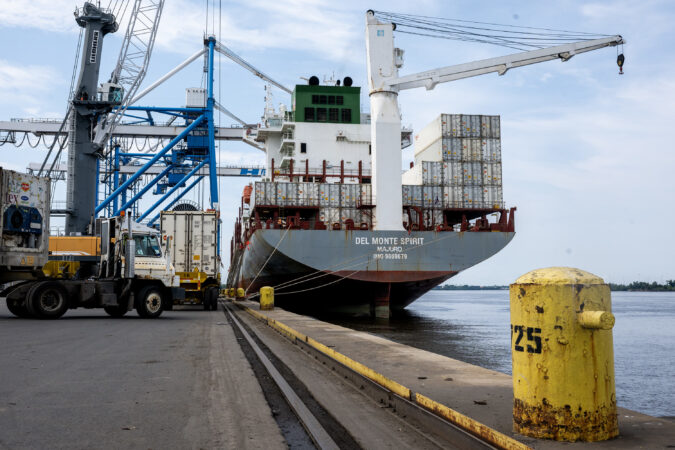
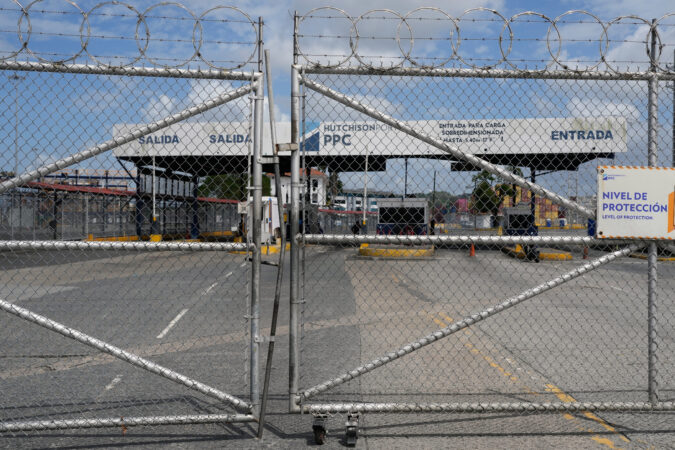
    PANAMA CITY — The Panamanian government on Monday issued a decree ordering the occupation of two ports at the entrances of the Panama Canal, a move triggered by a final Supreme Court ruling that declared the operating concession held by Hong Kong-based company CK Hutchison unconstitutional.

    The decree authorizes the Panama Maritime Authority to occupy the ports for “reasons of urgent social interest.” The occupation includes all movable property within or outside the Balboa and Cristóbal terminals, specifically covering cranes, vehicles, computer systems, and software.

    The saga surrounding the two Panamanian ports is part of a broader rivalry between the United States and China, in which the Central American country became caught in the middle after U.S. President Donald Trump accused China last year of “running the Panama Canal.”

    CK Hutchison was slated to sell the two ports to a consortium that includes U.S. investment firm BlackRock, but this prompted swift intervention from the Chinese government, which halted the deal.

    In January, Panama’s Supreme Court struck down the law approving the concession contract for Panama Ports Company, or PPC, a subsidiary of CK Hutchison. The ruling also invalidated an extension granted in 2021, stripping the port operations of any legal basis.

    PPC has operated these terminals since 1997, when the state awarded it the concession to manage the ports located at the Pacific and Atlantic entrances to the Panama Canal.

    Panama’s government announced days ago that it will guarantee the continuity of port operations and job stability, and that APM Terminals, a subsidiary of the Danish group A.P. Moller-Maersk, would temporarily assume the administration of the terminals while a new contract is awarded.

    Meanwhile, CK Hutchison Holdings started arbitration proceedings against Panama under the rules of the International Chamber of Commerce. It’s unclear what the impact of the proceedings would be and how long they could take. It also threatened to sue APM Terminals, if it operates the concession. The Danish group responded that it’s not a party to the legal proceedings.

    A PPC spokesperson told local media last week that the company was seeking an agreement with the Panamanian government to continue operating.

  • After Supreme Court rebuke, Democrats call for government to refund billions in Trump tariff money

    After Supreme Court rebuke, Democrats call for government to refund billions in Trump tariff money

    WASHINGTON — A trio of Senate Democrats is calling for the government to start refunding roughly $175 billion in tariff revenues that the Supreme Court ruled were collected because of an illegal set of orders by President Donald Trump.

    Sens. Ron Wyden of Oregon, Ed Markey of Massachusetts, and Jeanne Shaheen of New Hampshire unveiled a bill on Monday that would require U.S. Customs and Border Protection to issue refunds over the course of 180 days and pay interest on the refunded amount.

    The measure would prioritize refunds to small businesses and encourages importers, wholesalers, and large companies to pass the refunds on to their customers.

    “Trump’s illegal tax scheme has already done lasting damage to American families, small businesses, and manufacturers who have been hammered by wave after wave of new Trump tariffs,” said Wyden, stressing that the “crucial first step” to fixing the problem begins with “putting money back in the pockets of small businesses and manufacturers as soon as possible.”

    The bill is unlikely to become law, but it reveals how Democrats are starting to apply public pressure on a Trump administration that has shown little interest in trying to return tariff revenues after the Supreme Court announced its 6-3 ruling on Friday.

    Because of the ruling, going into November’s midterm elections for control of Congress, Democrats have begun telling the public that Trump illegally raised taxes and now refuses to repay the money to the American people.

    Shaheen said that repairing any of the damage caused by the tariffs in the form of higher prices starts with “President Trump refunding the illegally collected tariff taxes that Americans were forced to pay.” Markey stressed that small business tend to have ”little to no resources” and a “refund process can be extremely difficult and time consuming” for companies.

    The Trump administration has asserted that its hands are tied, because any refunds should be the responsibility of further litigation in court.

    That message could put Republicans on the defensive as they try to explain why the government isn’t proactively seeking to return the money. GOP lawmakers had planned to try to preserve their House and Senate majorities by running on the income tax cuts that Trump signed into law last year, saying that tax refunds this year would help families.

    Treasury Secretary Scott Bessent told CNN on Sunday that it’s “bad framing” to raise the question of refunds because the Supreme Court ruling did not address the issue. The administration’s position is that any refunds will be decided by lawsuits winding their way through the legal system, rather than by a president who has repeatedly stressed to voters that he has the ability to act with speed and resolve.

    “It is not up to the administration — it is up to the lower court,” Bessent said, stressing that rather than offer any guidance he would “wait” for a court opinion on refunds.

    Trump has defended his use of the 1977 International Emergency Economic Powers Act to impose broad tariffs on almost every U.S. trading partner, saying that his ability to levy taxes on imports had helped to end military conflicts, bring in new federal revenues, and apply pressure for negotiating trade frameworks.

    The University of Pennsylvania’s Penn Wharton Budget Model released estimates that the refunds would total $175 billion. That’s the equivalent of an average of $1,300 per U.S. household. But determining how to structure reimbursements would be tricky, as the costs of the tariffs flowed through the economy in the form of customers paying the taxes directly as well as importers passing along the cost either indirectly or absorbing them.

    The president has previously claimed that refunds would drive up U.S. government debt and hurt the economy. On Friday, he told reporters at a briefing that the refund process could be finished after he leaves the White House.

    “I guess it has to get litigated for the next two years,” Trump said, later amending his timeline by saying: “We’ll end up being in court for the next five years.”

  • EU says U.S. must honor a trade deal after court blocks Trump tariffs

    EU says U.S. must honor a trade deal after court blocks Trump tariffs

    BRUSSELS — The European Union’s executive arm requested “full clarity” from the United States and asked its trade partner to fulfill its commitments after the U.S. Supreme Court struck down some of President Donald Trump’s most sweeping tariffs.

    Trump has lashed out at the court decision and said Saturday that he wants a global tariff of 15%, up from the 10% he announced a day earlier.

    The European Commission said the current situation is not conducive to delivering “fair, balanced, and mutually beneficial” trans-Atlantic trade and investment, as agreed to by both sides and spelled out in the EU-U.S. Joint Statement of August 2025.

    American and EU officials sealed a trade deal last year that imposes a 15% import tax on 70% of European goods exported to the United States. The European Commission handles trade for the 27 EU member countries.

    A top EU lawmaker said on Sunday he will propose to the European Parliament negotiating team to put the ratifying process of the deal on pause.

    “Pure tariff chaos on the part of the U.S. administration,” Bernd Lange, the chair of Parliament’s international trade committee, wrote on social media. “No one can make sense of it anymore — only open questions and growing uncertainty for the EU and other U.S. trading partners.”

    The value of EU-U.S. trade in goods and services amounted to 1.7 trillion euros ($2 trillion) in 2024, or an average of 4.6 billion euros a day, according to EU statistics agency Eurostat.

    “A deal is a deal,” the European Commission said. “As the United States’ largest trading partner, the EU expects the U.S. to honor its commitments set out in the Joint Statement — just as the EU stands by its commitments. EU products must continue to benefit from the most competitive treatment, with no increases in tariffs beyond the clear and all-inclusive ceiling previously agreed.”

    Jamieson Greer, Trump’s top trade negotiator, said in a CBS News interview Sunday morning that the U.S. plans to stand by its trade deals and expects its partners to do the same.

    He said he talked to his European counterpart this weekend and hasn’t heard anyone tell him the deal is off.

    “The deals were not premised on whether or not the emergency tariff litigation would rise or fall,” Greer said. “I haven’t heard anyone yet come to me and say the deal’s off. They want to see how this plays out.”

    Europe’s biggest exports to the U.S. are pharmaceuticals, cars, aircraft, chemicals, medical instruments, and wine and spirits. Among the biggest U.S. exports to the bloc are professional and scientific services like payment systems and cloud infrastructure, oil and gas, pharmaceuticals, medical equipment, aerospace products, and cars.

    “When applied unpredictably, tariffs are inherently disruptive, undermining confidence and stability across global markets and creating further uncertainty across international supply chains,” the commission added.

    As primarily a trading bloc, the EU has a powerful tool at its disposal to retaliate — the bloc’s Anti-Coercion Instrument. It includes a raft of measures for blocking or restricting trade and investment from countries found to be putting undue pressure on EU member nations or corporations.

    The measures could include curtailing the export and import of goods and services, barring countries or companies from EU public tenders, or limiting foreign direct investment. In its most severe form, it would essentially close off access to the EU’s 450-million customer market and inflict billions of dollars of losses on U.S. companies and the American economy.

  • U.S. economic growth weaker than thought in fourth quarter with government shutdown, consumer pullback

    U.S. economic growth weaker than thought in fourth quarter with government shutdown, consumer pullback

    WASHINGTON — U.S. economic growth slowed in the final three months of last year, dragged down by the six-week shutdown of the federal government and a pullback in consumer spending.

    The nation’s gross domestic product — the total output of goods and services — increased at a 1.4% annual rate in the fourth quarter, the Commerce Department reported Friday, down from 4.4% in the July-September quarter and 3.8% in the quarter before that.

    The figures point to what could be a more modest pace of growth in the coming quarters, as consumers have taken on more debt and saved less to maintain their spending, a process that may be difficult to sustain. Business investment, other than data centers and equipment dedicated to artificial intelligence, grew at only a moderate pace.

    Still, a measure of underlying growth that focuses on consumer and business spending was mostly healthy at 2.4%, economists said. The sharp slowdown in government outlays because of the shutdown shaved a full percentage point from growth.

    Consumers and companies spent at a “reasonably solid” pace, said Martha Gimbel, executive director of the Budget Lab at Yale and former economist in the Biden White House. “This is not a disastrous report.”

    Also Friday, the Supreme Court struck down many of President Donald Trump’s tariffs, which have lifted inflation slightly and likely discouraged many companies from hiring by raising their costs. At a news conference, Trump quickly promised to reimpose the tariffs under different laws than the one the court invalidated.

    Consumer spending also rose 2.4% in the fourth quarter, a solid increase but notably below the third quarter’s healthy 3.5% gain. Federal government outlays plunged nearly 17% amid the shutdown. That decline should mostly reverse in the coming quarters, however.

    The outsize growth last summer and fall — when the economy expanded at about a 4% annual pace — partly reflected sharply lower imports. Companies ramped up imports in the first quarter of last year to get ahead of President Donald Trump’s tariffs. After boosting growth in the second and third quarters, trade had little impact at the end of last year.

    Diane Swonk, chief economist at KPMG, said the report reflected a “one-legged” economy boosted mostly by artificial intelligence, which is fueling business spending and has also lifted wealth for those households that own stocks and have benefited from rising share prices.

    Many households, however, have had to take on more debt to fuel their spending. The saving rate dropped to just 3.6% in the fourth quarter, the second-lowest figure since August 2008, when the economy was mired in the Great Recession.

    “The economy looks golden on paper, but beneath the surface is lead,” Swonk said.

    Early Friday, before the figures were released, Trump attacked congressional Democrats for shutting down the government last fall. He also reiterated his criticism of Federal Reserve Chair Jerome Powell for not cutting interest rates more quickly.

    “The Democrat Shutdown cost the U.S.A. at least two points in GDP,” Trump posted on his social media site. “That’s why they are doing it, in mini form, again. No Shutdowns! Also, LOWER INTEREST RATES. “Two Late” Powell is the WORST!!!”

    A separate report Friday showed that inflation, according to the Fed’s preferred measure, accelerated in December, as the cost of goods such as furniture, clothes, and groceries picked up. That makes it less likely the Fed will reduce its key interest rate in the coming months.

    Earlier this month, Trump predicted a blowout gain in GDP of more than 5% even if the government shutdown was factored into the figures. Trump has been trying to claim that the economy is at its strongest point in history, even though the new data shows that growth slowed, compared with 2024, following his return to the White House.

    The data arrives before Trump delivers the State of the Union address on Tuesday, where he is expected to say that the economy is booming.

    The report also underscores an odd aspect of the U.S. economy: It is growing steadily, but without creating many jobs. Growth was a solid 2.2% in 2025, yet a government report last week showed that employers added less than 200,000 jobs last year — the fewest since COVID struck in 2020.

    Economists point to several possible reasons for the gap: The Trump administration’s crackdown on immigration has sharply slowed population growth, reducing the number of people available to take jobs. It’s one reason that the unemployment rate rose only slightly — to 4.3% from 4% — last year, even with the nearly non-existent hiring.

    Some businesses may also be holding back on adding jobs out of uncertainty about whether artificial intelligence will enable them to produce more without finding new employees. And the cost of tariffs has reduced many companies’ profits, possibly leading them to cut back on hiring.

    The economy is also unusual right now because growth is solid, inflation has slowed a bit, and unemployment is low, but surveys show that Americans are generally gloomy about the economy. In January, a measure of consumer confidence fell to its lowest level since 2014, yet consumers have kept spending, propelling growth.

    Some of that spending may be disproportionately driven by upper-income consumers, in a phenomenon known as the “K-shaped” economy. Yet data from many large banks suggests lower-income consumers are still raising their spending, even if by not as much.

  • Supreme Court strikes down Trump’s sweeping tariffs, sparking fierce pushback and vow of new levies

    Supreme Court strikes down Trump’s sweeping tariffs, sparking fierce pushback and vow of new levies

    WASHINGTON — The Supreme Court struck down President Donald Trump’s far-reaching global tariffs on Friday, handing him a stinging loss that sparked a furious attack on the court he helped shape.

    Trump said he was “absolutely ashamed” of some justices who ruled 6-3 against him, calling them “disloyal to our Constitution” and “lapdogs.” At one point he even raised the specter of foreign influence without citing any evidence.

    The decision could have ripple effects on economies around the globe after Trump’s moves to remake post-World War II trading alliances by wielding tariffs as a weapon.

    But an unbowed Trump pledged to impose a new global 10% tariff under a law that’s restricted to 150 days and has never been used to apply tariffs before.

    “Their decision is incorrect,” he said. “But it doesn’t matter because we have very powerful alternatives.”

    The court’s ruling found tariffs that Trump imposed under an emergency powers law were unconstitutional, including the sweeping “reciprocal” tariffs he levied on nearly every other country.

    Trump appointed three of the justices on the nation’s highest court during his first term, and has scored a series of short-term wins that have allowed him to move ahead with key policies.

    Tariffs, though, were the first major piece of Trump’s broad agenda to come squarely before the Supreme Court for a final ruling, after lower courts had also sided against the president.

    The majority found that it is unconstitutional for the president to unilaterally set and change tariffs because taxation power clearly belongs to Congress. “The Framers did not vest any part of the taxing power in the Executive Branch,” Chief Justice John Roberts wrote.

    Justices Brett Kavanaugh, Samuel Alito, and Clarence Thomas dissented.

    “The tariffs at issue here may or may not be wise policy. But as a matter of text, history, and precedent, they are clearly lawful,” Kavanaugh wrote. Trump praised his 63-page dissent as “genius.”

    The court majority did not address whether businesses could get refunded for the billions they have collectively paid in tariffs. Many companies, including the big-box warehouse chain Costco, have already lined up in lower courts to demand refunds. Kavanaugh noted the process could be complicated.

    “The Court says nothing today about whether, and if so how, the Government should go about returning the billions of dollars that it has collected from importers. But that process is likely to be a ‘mess,’ as was acknowledged at oral argument,” he wrote.

    The Treasury had collected more than $133 billion from the import taxes the president has imposed under the emergency powers law as of December, federal data show. The impact over the next decade has been estimated at some $3 trillion.

    The tariffs decision doesn’t stop Trump from imposing duties under other laws. Those have more limitations on the speed and severity of Trump’s actions, but the president said they would still allow him to “charge much more” than he had before.

    Vice President JD Vance called the high court decision “lawlessness” in a post on X.

    Questions about what Trump can do next

    Still, the ruling is a “complete and total victory” for the challengers, said Neal Katyal, who argued the case on behalf of a group of small businesses.

    “It’s a reaffirmation of our deepest constitutional values and the idea that Congress, not any one man, controls the power to tax the American people,” he said.

    It wasn’t immediately clear how the decision restricting Trump’s power to unilaterally set and change tariffs might affect trade deals with other countries.

    “We remain in close contact with the U.S. Administration as we seek clarity on the steps they intend to take in response to this ruling,” European Commission spokesman Olof Gill said, adding that the body would keep pushing for lower tariffs.

    The Supreme Court ruling comes after victories on the court’s emergency docket have allowed Trump to push ahead with extraordinary flexes of executive power on issues ranging from immigration enforcement to major federal funding cuts.

    The Republican president had long been vocal about the tariffs case, calling it one of the most important in U.S. history and saying a ruling against him would be an economic body blow to the country. But legal opposition crossed the political spectrum, including libertarian and pro-business groups that are typically aligned with the GOP. Polling has found tariffs aren’t broadly popular with the public, amid wider voter concern about affordability.

    While the Constitution gives Congress the power to levy tariffs, the Trump administration argued that a 1977 law allowing the president to regulate importation during emergencies also allows him to set import duties. Other presidents have used the law dozens of times, often to impose sanctions, but Trump was the first president to invoke it for tariffs.

    “And the fact that no President has ever found such power in IEEPA is strong evidence that it does not exist,” Roberts wrote, using an acronym for the International Emergency Economic Powers Act.

    Trump set what he called “reciprocal” tariffs on most countries in April 2025 to address trade deficits that he declared a national emergency. Those came after he imposed duties on Canada, China, and Mexico, ostensibly to address a drug trafficking emergency.

    A series of lawsuits followed, including a case from a dozen largely Democratic-leaning states and others from small businesses selling everything from plumbing supplies to women’s cycling apparel.

    The challengers argued the emergency powers law doesn’t even mention tariffs and Trump’s use of it fails several legal tests, including one that doomed then-President Joe Biden’s $500 billion student loan forgiveness program.

    Justices reject use of emergency powers for tariffs

    The three conservative justices in the majority pointed to that principle, which is called the major questions doctrine. It holds that Congress must clearly authorize actions of major economic and political significance.

    “There is no exception to the major questions doctrine for emergency statutes,” Roberts wrote. The three liberal justices formed the rest of the majority, but didn’t join that part of the opinion.

    The Trump administration had argued that tariffs are different because they’re a major part of Trump’s approach to foreign affairs, an area where the courts should not be second-guessing the president.

    But Roberts, joined by Justices Neil Gorsuch and Amy Coney Barrett, brushed that aside, writing that the implications for international relations don’t change the legal principle.

    Small businesses celebrated the ruling, with the National Retail Federation saying it provides “much needed certainty.”

    Illinois toy company Learning Resources was among the businesses challenging the tariffs in court. CEO Rick Woldenberg said he expected Trump’s new tariffs but hoped there might be more constraint in the future, both legal and political. “Somebody’s got to pay this bill. Those people that pay the bill are voters,” he said.

    Ann Robinson, who owns Scottish Gourmet in Greensboro, N.C., said she was “doing a happy dance” when she heard the news.

    The 10% baseline tariff on U.K. goods put pressure on Robinson’s business, costing about $30,000 in the fall season. She’s unsure about the Trump administration’s next steps, but said she’s overjoyed for now. “Time to schedule my ‘Say Goodbye to Tariffs’ Sale!”