Category: Business Wires

  • Mark Zuckerberg quizzed on kids’ Instagram use in social media trial

    Mark Zuckerberg quizzed on kids’ Instagram use in social media trial

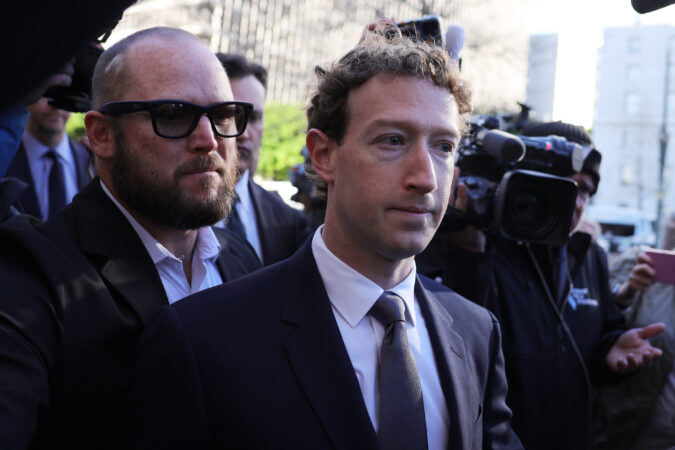
    LOS ANGELES — Mark Zuckerberg and opposing lawyers dueled in a Los Angeles courtroom on Wednesday, where the Meta CEO answered questions about young people’s use of Instagram, his congressional testimony and internal advice he’s received about being “authentic” and not “robotic.”

    Zuckerberg’s testimony is part of an unprecedented social media trial that questions whether Meta’s platforms deliberately addict and harm children.

    As of early afternoon, Zuckerberg has not directly answered the central question of the case: whether Instagram is addictive. The plaintiff’s attorney, Mark Lanier, asked if people tend to use something more if it’s addictive.

    “I’m not sure what to say to that,” Zuckerberg said. “I don’t think that applies here.”

    Attorneys representing the plaintiff, a now 20-year-old woman identified by the initials KGM, claim her early use of social media addicted her to the technology and exacerbated depression and suicidal thoughts. Meta Platforms and Google’s YouTube are the two remaining defendants in the case, which TikTok and Snap have settled.

    Beginning his questioning, Lanier laid out three options of what people can do regarding vulnerable people: help them, ignore them, or “prey upon them and use them for our own ends.” Zuckerberg said he agrees the last option is not what a reasonable company should do, saying, “I think a reasonable company should try to help the people that use its services.”

    When he was asked about his compensation, Zuckerberg said he has pledged to give “almost all” of his money to charity, focusing on scientific research. Lanier asked him how much money he has pledged to victims impacted by social media, to which Zuckerberg replied, “I disagree with the characterization of your question.”

    Lanier questioned the Meta CEO extensively about a comment he made during a past congressional hearing, where he said Instagram employees are not given goals to increase amount of time people spent on the platform.

    Lanier presented internal documents that seemed to contradict that statement. Zuckerberg replied that they previously had goals associated with time, but said he and the company made the conscious decision to move away from those goals, focusing instead on utility. He said he believes in the “basic assumption” that “if something is valuable, people will use it more because it’s useful to them.”

    Lanier also asked Zuckerberg about what he characterized as extensive media training, including for testimonies like the one he was giving in court. Lanier pointed to an internal document about feedback on Zuckerberg’s tone of voice on his own social media, imploring him to come off as “authentic, direct, human, insightful and real,” and instructing him to “not try hard, fake, robotic, corporate or cheesy” in his communication.

    Zuckerberg pushed back against the idea that he’s been coached on how to respond to questions or present himself, saying those offering the advice were “just giving feedback.”

    Regarding his media appearances and public speaking, Zuckerberg said, “I think I’m actually well known to be sort of bad at this.”

    The Meta CEO has long been mocked online for appearing robotic and, when he was younger, nervous when speaking publicly. In 2010, during an interview with renowned tech journalists Kara Swisher and Walt Mossberg, he was sweating so profusely that Swisher asked him if he wanted to “take off the hoodie” that was his uniform at the time.

    Lanier spent a considerable stretch of his limited time with Zuckerberg asking about the company’s age verification policies.

    “I don’t see why this is so complicated,” Zuckerberg said after a lengthy back-and-forth, reiterating that the company’s policy restricts users under the age of 13 and that they work to detect users who have lied about their ages to bypass restrictions.

    Zuckerberg mostly stuck to his talking points, referencing his goal of building a platform that is valuable to users and, on multiple occasions, saying he disagreed with Lanier’s “characterization” of his questions or of Zuckerberg’s own comments.

    Zuckerberg has testified in other trials and answered questions from Congress about youth safety on Meta’s platforms. During his 2024 congressional testimony, he apologized to families whose lives had been upended by tragedies they believed were caused by social media. But while he told parents he was “sorry for everything you have all been through,” he stopped short of taking direct responsibility for it. This trial marks the first time Zuckerberg stands before a jury. Once again, bereaved parents are sitting in the courtroom audience.

    The case, along with two others, has been selected as a bellwether trial, meaning its outcome could impact how thousands of similar lawsuits against social media companies are likely to play out.

    A Meta spokesperson said the company strongly disagrees with the allegations in the lawsuit and said they are “confident the evidence will show our longstanding commitment to supporting young people.”

    One of Meta’s attorneys, Paul Schmidt, said in his opening statement that the company is not disputing that KGM experienced mental health struggles, but rather disputing that Instagram played a substantial factor in those struggles. He pointed to medical records that showed a turbulent home life, and both he and an attorney representing YouTube argue she turned to their platforms as a coping mechanism or a means of escaping her mental health struggles.

    Zuckerberg’s testimony comes a week after that of Adam Mosseri, the head of Meta’s Instagram, who said in the courtroom that he disagrees with the idea that people can be clinically addicted to social media platforms. Mosseri maintained that Instagram works hard to protect young people using the service, and said it’s “not good for the company, over the long run, to make decisions that profit for us but are poor for people’s well-being.”

    Much of Mosseri’s questioning from the plaintiff’s lawyer centered on cosmetic filters on Instagram that changed people’s appearance — a topic that Lanier is sure to revisit with Zuckerberg. He is also expected to face questions about Instagram’s algorithm, the infinite nature of Meta’s feeds and other features the plaintiffs argue are designed to get users hooked.

    Meta is also facing a separate trial in New Mexico that began last week.

  • China grants U.K. and Canada visa-free entry, raising total to 79 countries

    China grants U.K. and Canada visa-free entry, raising total to 79 countries

    BEIJING — British and Canadian citizens can enter China without a visa starting Tuesday, bringing to 79 the number of countries granted visa-free access in a bid to boost tourism and business.

    China has expanded eligibility for the program significantly in the last two years. Visitors can stay for up to 30 days for business, tourism, and exchange programs and to visit family and friends.

    Most Europeans qualify for visa-free entry, along with some from select countries in other regions including Latin America, Southeast Asia, and the Middle East.

    Citizens of a few other countries, including the United States and Indonesia, can enter for 10 days if they are in transit — meaning they have a ticket departing for a different country than they arrived from.

    Business executives and tourists have welcomed the change, as the China visa application process can be a relatively cumbersome one.

    The U.K. and Canada are being added following visits to China last month by their prime ministers, Keir Starmer and Mark Carney. Both are relatively new leaders who are trying to revamp ties with Beijing after a downturn in recent years.

    For most countries, the visa-free access expires at the end of this year, but it has been extended in the past.

  • Four smart moves to cut your 2025 tax bill under new rules

    Four smart moves to cut your 2025 tax bill under new rules

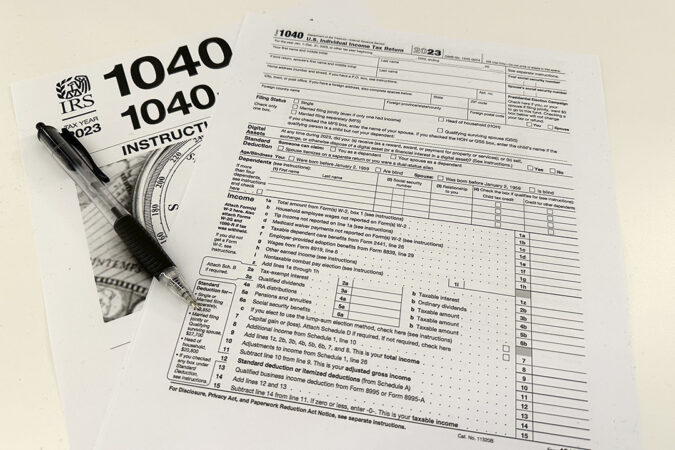
    The One Big Beautiful Bill Act made some long-awaited permanent changes to the tax code. It also introduced short-term tax breaks that come with strict limits and phaseouts, and many of them are only available through 2028 or 2029. Here are four ways to get the most out of the OBBBA’s temporary provisions as you file your 2025 taxes and plan ahead.

    Don’t dismiss itemizing your deductions

    The OBBBA temporarily boosts the state and local tax deduction cap, or SALT, from $10,000 to $40,000 (for married couples filing jointly and single filers). This higher cap applies from 2025 through 2029.

    Run the numbers: For 2025, the standard deduction is $31,500 for married couples and $15,750 for singles. If your total itemized deductions — including mortgage interest, charitable giving, and state and local taxes (up to the new $40,000 cap) — add up to more than your standard deduction, you should itemize.

    Watch your income: The new $40,000 SALT cap isn’t for everyone. It begins to phase out if your modified adjusted gross income is over $500,000 (for all filers). If your MAGI reaches $600,000, your SALT deduction reverts to the original $10,000 limit.

    Maximize the new targeted deductions — if you qualify

    The OBBBA introduced several temporary above-the-line deductions (available whether you itemize or not) to help middle-income workers. But they have very strict income and benefit limits.

    The qualified overtime pay deduction: Capped at $25,000 for married couples filing jointly and $12,500 for singles. Only the extra “half-time” portion of your time-and-a-half pay qualifies for the deduction. For a married couple, this benefit begins to disappear if your MAGI hits $300,000 and is entirely gone once your MAGI reaches $550,000.

    The qualified tips income deduction: Allows you to write off qualified tip income up to $25,000 per tax return, whether you file as married or single. The deduction is only available for tips that are formally reported on a Form W-2 or Form 1099. It phases out sharply for higher earners, starting at a MAGI of $300,000 for married couples and $150,000 for singles, and is fully eliminated at $550,000 and $400,000, respectively.

    The auto loan interest deduction: This temporary deduction allows you to write off up to $10,000 of interest paid on a loan for a new, personal-use vehicle with final assembly in the United States. (Leases are excluded.) It starts to phase out at $200,000 for married couples and $100,000 for singles and is completely gone by $250,000 and $150,000.

    Seniors, time your 2026 Roth conversions carefully

    If you are 65 or older, the OBBBA offers a new, temporary deduction for seniors of up to $12,000 for married couples ($6,000 per eligible spouse) and $6,000 for single filers. This is a welcome tax break, but it’s fragile.

    Beware the MAGI trap: This deduction begins to disappear for married couples with a MAGI over $150,000 and for singles over $75,000.

    Model Roth conversions for 2026: If you are a senior who is close to the $150,000 MAGI limit, a Roth conversion done in 2026 could push your income over the threshold, causing you to lose this entire $12,000 deduction. Work with your adviser to model any planned 2026 conversions.

    Optimize income to qualify for the best breaks

    Many of the OBBBA’s most valuable, temporary provisions are income-sensitive, particularly those new targeted deductions and the elevated SALT cap. Keep these rules in mind for 2025 filing and 2026 tax planning.

    If you are nearing any of the income phaseouts (like the $300,000 for tips/overtime, or the $500,000 for the elevated SALT cap), consider deferring income until 2026. This might include:

    • Postponing the sale of highly appreciated stock to avoid a large capital gain.
    • Delaying the exercise of nonqualified stock options.
    • Maximizing your 401(k) and health savings account contributions to reduce your current-year MAGI.
    • Holding off on large Roth conversions.

    A proactive approach to these expiring OBBBA provisions is essential for year-end. Don’t let the technical limitations and phaseouts catch you by surprise. With a little planning now, you can lock in significant tax savings.

    This article was provided to the Associated Press by Morningstar. For more personal finance content, go to https://www.morningstar.com/personal-finance.

    Sheryl Rowling, CPA, is an editorial director, financial adviser for Morningstar.

  • Cuba postpones its annual cigar fair as a U.S. oil siege causes severe fuel shortages and blackouts

    Cuba postpones its annual cigar fair as a U.S. oil siege causes severe fuel shortages and blackouts

    HAVANA, Cuba — Cuba’s annual cigar fair, which was set to be held the last week of February, has been postponed, organizers said Saturday, as the island faces blackouts and severe fuel shortages brought about by a U.S oil embargo.

    In a statement, the cigar fair’s organizer, Habanos S.A., said it decided to postpone the iconic event to “preserve its high standard of quality.”

    Habanos S.A., a joint venture between the state-owned company Cubatabaco and international firm Altadis, holds the global monopoly on Cuban cigar sales.

    Every year, the company hosts the annual Habanos Festival, a key event for cigar aficionados and distributors worldwide, where attendees tour tobacco plantations, participate in auctions, and witness the latest in craftsmanship.

    The statement by Habanos S.A. did not set a new date for the 26th edition of the cigar fair.

    Last year, the event closed with an auction in which $18 million was paid for a batch of highly coveted, hand-rolled cigars. The company last year also reported record sales of $827 million.

    Several cultural events, including a book fair, have been postponed in Cuba this month as the island grapples with the most severe fuel shortages and power blackouts in years.

    In late January, U.S. President Donald Trump threatened to impose tariffs on any country that sold oil to Cuba, as Washington puts more pressure on the island’s communist leadership to implement political and economic reforms.

    Cuba imports about 60% of its energy supply, and had long relied on Venezuela and Mexico for much of its oil.

    But shipments from Venezuela were canceled in January following the removal of that nation’s then-president Nicolas Maduro in a U.S. military raid, a move that also resulted in greater U.S. oversight over Venezuela’s oil industry.

    Shipments from Mexico stopped in mid-February following Trump’s tariff threat.

    Earlier this week, three Canadian airlines canceled flights to Cuba after the island’s government announced there would be no jet fuel for planes seeking to refuel at Cuba’s airports. Other airlines have maintained their flights to the island but will be refueling their planes with stopovers in the Dominican Republic.

    The fuel shortages have also hurt tourism on the island, with some agencies canceling trips as the government shuts down some hotels, and relocates tourists in a bid to save electricity.

    Tabacuba, a state-run tobacco company, lamented the postponement of this year’s cigar fair in a statement, saying it had come about due to “the complex economic situation that the nation is facing, as a result of the intensification of the economic, commercial and financial blockade” imposed by the United States.

  • What to know about student loan repayment plans and collections

    What to know about student loan repayment plans and collections

    NEW YORK — It’s been a confusing time for people with student loans. Collections restarted, then were put on hold. At the same time, borrowers had to stay on top of changes to key forgiveness plans.

    Last year, the long-contested SAVE plan introduced by the Biden administration ended with a settlement agreement. President Donald Trump’s “Big Beautiful Bill” introduced new borrowing limits for graduates and raised challenges to the Public Service Loan Forgiveness program. While several changes for student loan borrowers will take effect this summer, other key questions remain unresolved.

    More than 5 million Americans were in default on their federal student loans as of September, according to the Education Department. Millions are behind on loan payments and at risk of default this year.

    Borrowers “genuinely struggle to afford their loans and then to hear that the administration is making it more expensive and taking away some of the tools and resources that help folks afford their loans is really, it’s panic-inducing,” said Winston Berkman-Breen, legal director at Protect Borrowers.

    Last month, the Education Department announced that it would delay involuntary collections for student loan borrowers in default until the department finalizes its new loan repayment plans. The date for this is still unclear.

    If you’re a student loan borrower, here are some key things to know.

    If you were enrolled in the SAVE plan

    The SAVE plan was a repayment plan with some of the most lenient terms ever. Soon after its launch it was challenged in court, leaving millions of student loan borrowers in limbo. Last December, the Education Department announced a settlement agreement to end the SAVE plan. What is next for borrowers who were enrolled in this repayment plan is yet to be determined.

    “Seven and a half million borrowers who are currently enrolled in SAVE need to be moved to another plan,” Berkman-Breen said.

    As part of the agreement, the Education Department says it will not enroll new borrowers, will deny pending applications, and will move all current SAVE borrowers into other repayment plans.

    The Education Department is expected to develop a plan for borrowers to transition from the SAVE plan, yet borrowers should be proactive about enrolling in other repayment plans, said Kate Wood, a lending expert at NerdWallet.

    If you are looking to enroll in an income-driven repayment plan

    Borrowers can apply for the following income-driven plans: the Income-Based Repayment Plan, the Pay as You Earn plan, and the Income-Contingent Repayment plan.

    “They all have similar criteria, and they function similarly. Your payment is set as a percentage of your income, not how much you owe, so it’s usually a lower payment,” Berkman-Breen said.

    The payment amount under income-driven plans is a percentage of your discretionary income, and the percentage varies depending on the plan. Since many people are looking to switch plans, some applications to income-driven repayment plans might take longer to process, said Jill Desjean, director of policy analysis at the National Association of Student Financial Aid Administrators.

    You can find out which repayment plan might work best for you by logging on to the Education Department’s loan simulator at studentaid.gov/loan-simulator/.

    If you’re working toward your Public Service Loan Forgiveness

    There are no changes to the Public Service Loan Forgiveness Program yet. Last year, the Trump administration announced plans to change the eligibility requirements for participating nonprofits.

    The policy seeks to disqualify nonprofit workers if their work is deemed to have “substantial illegal purpose.” The Trump administration said it’s necessary to block taxpayer money from lawbreakers, while critics say it turns the program into a tool of political retribution.

    The proposal says illegal activity includes the trafficking or “chemical castration” of children, illegal immigration, and supporting foreign terrorist organizations. This move could cut off some teachers, doctors, and other public workers from federal loan cancellation.

    “This is something that obviously is very stressful, very nerve-wracking for a lot of people, but given that we don’t know exactly how this is going to be enforced, how these terms are going to be defined, it’s not really something that you can try to plan ahead for now,” Wood said.

    While this policy is currently being challenged by 20 Democrat-led states, it’s expected to take effect in July. In the meantime, Wood recommends that borrowers enrolled in the PSLF program continue making payments.

    If your student loans are in default

    Involuntary collections on federal student loans will remain on hold. The Trump administration announced earlier this month that it is delaying plans to withhold pay from student loan borrowers who default on their payments.

    Federal student loan borrowers can have their wages garnished and their federal tax refunds withheld if they default on their loans. Borrowers are considered in default when they are at least 270 days behind on payments.

    If your student loans are in default, you can contact your loan holder to apply for a loan rehabilitation program.

    “They essentially come up with a payment plan where you’re making a reduced payment,” Woods. “After five successful payments on that rehabilitation plan, wage garnishment will cease.”

    If you’re planning to attend graduate school

    Trump’s “Big Beautiful Bill” has changed the amount graduate students can borrow from federal student loans. Graduate students could previously borrow loans up to the cost of their degree; the new rules cap the amount depending on whether the degree is considered a graduate or a professional program.

    Wood said that if you’re starting a new program and taking out a loan after July 1, you will be subject to the new loan limits.

    Under the new plan, students in professional programs would be able to borrow up to $50,000 per year and up to $200,000 in total. Other graduate students, such as those pursuing nursing and physical therapy, would be limited to $20,500 a year and up to $100,000 total.

    The Education Department is defining the following fields as professional programs: pharmacy, dentistry, veterinary medicine, chiropractic, law, medicine, optometry, osteopathic medicine, podiatry and theology.

    If you want to consolidate your loan

    The online application for loan consolidation is available at studentaid.gov/loan-consolidation. If you have multiple federal student loans, you can combine them into a single loan with a fixed interest rate and a single monthly payment.

    The consolidation process typically takes around 60 days to complete. You can only consolidate your loans once.

  • TSA agents are working without pay at U.S. airports due to another shutdown

    TSA agents are working without pay at U.S. airports due to another shutdown

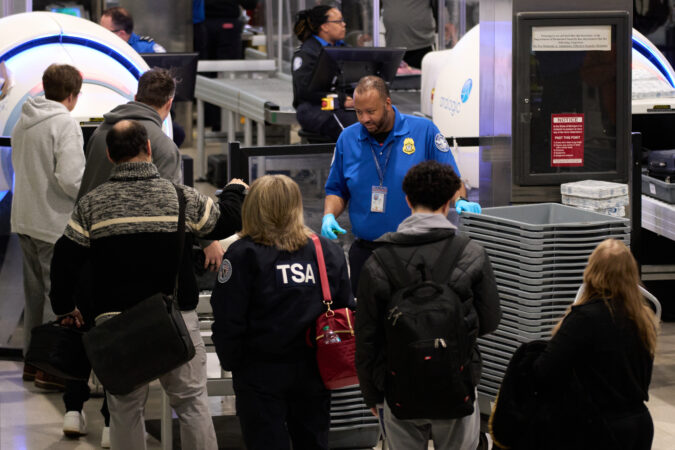
    A shutdown of the U.S. Department of Homeland Security that took effect early Saturday impacts the agency responsible for screening passengers and bags at airports across the country. Travelers with airline reservations may be nervously recalling a 43-day government shutdown that led to historic flight cancellations and long delays last year.

    Transportation Security Administration officers are expected to work without pay while lawmakers remain without an agreement on DHS’ annual funding. TSA officers also worked through the record shutdown that ended Nov. 12, but aviation experts say this one may play out differently.

    Trade groups for the U.S. travel industry and major airlines nonetheless warned that the longer DHS appropriations are lapsed, the longer security lines at the nation’s commercial airports could get.

    Here’s what to know about the latest shutdown and how to plan ahead.

    What’s different about this shutdown?

    Funding for Homeland Security expired at midnight Friday. But the rest of the federal government is funded through Sept. 30. That means air traffic controllers employed by the Federal Aviation Administration will receive paychecks as usual, reducing the risk of widespread flight cancellations.

    According to the department’s contingency plan, about 95% of TSA workers are deemed essential personnel and required to keep working. Democrats in the House and Senate say DHS won’t get funded until new restrictions are placed on federal immigration operations.

    During past shutdowns, disruptions to air travel tended to build over time, not overnight. About a month into last year’s shutdown, for example, TSA temporarily closed two checkpoints at Philadelphia International Airport. That same day, the government took the extraordinary step of ordering all commercial airlines to reduce their domestic flight schedules.

    On Saturday afternoon, the Philadelphia airport’s website showed all checkpoints open with normal brief wait times of 10 minutes or less.

    John Rose, chief risk officer for global travel management company Altour, said strains could surface at airports more quickly this time because the TSA workforce also will be remembering the last shutdown.

    “It’s still fresh in their minds and potentially their pocketbooks,” Rose said.

    What is the impact on travelers?

    It’s hard to predict whether, when, or where security screening snags might pop up. Even a handful of unscheduled TSA absences could quickly lead to longer wait times at smaller airports, for example, if there’s just a single security checkpoint.

    That’s why travelers should plan to arrive early and allow extra time to get through security.

    “I tell people to do this even in good times,” Rose said.

    Experts say flight delays also are a possibility even though air traffic controllers are not affected by the DHS shutdown.

    Airlines might decide to delay departures in some cases to wait for passengers to clear screening, said Rich Davis, senior security adviser at risk mitigation company International SOS. Shortages of TSA officers also could slow the screening of checked luggage behind the scenes.

    What travelers can do to prepare

    Most airports display security line wait times on their websites, but don’t wait until the day of a flight to check them, Rose advised.

    “You may look online and it says 2½ hours,” he said. ”Now it’s 2½ hours before your flight and you haven’t left for the airport yet.”

    Passengers should also pay close attention while packing since prohibited items are likely to prolong the screening process. For carry-on bags, avoid bringing full-size shampoo or other liquids, large gels or aerosols, and items like pocketknives in carry-on bags.

    TSA has a full list on its website of what is and isn’t allowed in carry-on and checked luggage.

    At the airport, Rose said, remember to “practice patience and empathy.”

    “Not only are they not getting paid,” he said of TSA agents, “they’re probably working with reduced staff and dealing with angry travelers.”

    Will the shutdown drag on?

    The White House has been negotiating with Democratic lawmakers, but the two sides failed to reach a deal by the end of the week before senators and members of Congress were set to leave Washington for a 10-day break.

    Lawmakers in both chambers were on notice, however, to return if a deal to end the shutdown is struck.

    Democrats have said they won’t help approve more DHS funding until new restrictions are placed on federal immigration operations after the fatal shootings of Alex Pretti and Renee Good in Minneapolis last month.

    In a joint statement, U.S. Travel, Airlines for America, and the American Hotel & Lodging Association warned that the shutdown threatens to disrupt air travel as the busy spring break travel season approaches.

    “Travelers and the U.S. economy cannot afford to have essential TSA personnel working without pay, which increases the risk of unscheduled absences and call outs, and ultimately can lead to higher wait times and missed or delayed flights,” the statement said.

  • Wendy’s closes U.S. restaurants and focuses on value to turn around falling sales

    Wendy’s closes U.S. restaurants and focuses on value to turn around falling sales

    Wendy’s is closing several hundred U.S. restaurants and increasing its focus on value after a weaker-than-expected fourth quarter.

    The Dublin, Ohio-based company said Friday that its global same-store sales, or sales at locations open at least a year, fell 10% in the October-December period. That was worse than the 8.5% drop expected by analysts polled by FactSet.

    U.S. same-store sales fell even further in the fourth quarter. Wendy’s said late last year that it planned to close underperforming U.S. restaurants, but it gave more details about those closures Friday.

    Wendy’s said it already closed 28 restaurants in the fourth quarter and ended 2025 with 5,969 U.S. locations. It expects to close between 5% and 6% of its U.S. restaurants — or 298 to 358 locations — in the first half of this year.

    Those actions come on top of the closure of 240 U.S. Wendy’s locations in 2024. At the time, the 57-year-old chain said many of its locations are simply out of date.

    Like McDonald’s, Taco Bell, and other rivals, Wendy’s also plans to emphasize value as it tries to win back inflation-weary customers.

    “One learning from 2025 around value, we swung the pendulum too far towards limited-time price promotions instead of everyday value,” said Ken Cook, Wendy’s interim CEO and chief financial officer, in a conference call with investors.

    In January, Wendy’s introduced a permanent “Biggie Deals” value menu with three price tiers: $4 Biggie Bites, $6 Biggie Bags, and an $8 Biggie Bundle. Cook said Wendy’s also has new products coming this year, including a new chicken sandwich.

    Wendy’s said its revenue fell 5.5% in the fourth quarter to $543 million. That was higher than the $537 million analysts had forecast.

    Wendy’s expressed confidence that its U.S. turnaround plans and international growth will help arrest its sales slide this year. The company said it expects global systemwide sales — which includes sales at both company-owned and franchised restaurants — will be flat this year. Systemwide sales fell 3.5% last year.

    Wendy’s shares closed up nearly 3% on Friday.

  • Gifts and soup from ‘Uncle Jeffrey’: The Epstein ties that ended Kathy Ruemmler’s run at Goldman

    Gifts and soup from ‘Uncle Jeffrey’: The Epstein ties that ended Kathy Ruemmler’s run at Goldman

    NEW YORK — Goldman Sachs general counsel Kathy Ruemmler has had a storied legal career. As a federal prosecutor, she helped successfully prosecute Enron executives including Ken Lay and Jeffrey Skilling. She was part of President Barack Obama’s administration, working in various roles for much of his two terms in office, including as White House counsel.

    She was even briefly considered by President Obama as a candidate for attorney general.

    On Thursday, Ruemmler, 54, announced that she plans to resign from the top legal post at Goldman after a trove of emails and correspondence between her and disgraced financier Jeffrey Epstein showed the two individuals were especially close, years after Epstein’s 2008 conviction on sex crimes charges, when he became a registered sex offender.

    Ruemmler previously downplayed her relationship with Epstein. She called him a “monster” and said she regretted ever knowing him. Ruemmler has repeatedly described their relationship as professional, citing her job as a private defense attorney before she ever joined Goldman Sachs.

    But documents released in recent weeks and reviewed by the Associated Press depict a deeper relationship than had previously been characterized by Ruemmler and Goldman Sachs. These included intimate email exchanges, social plans and gifts that went beyond formal legal work.

    Roughly 8,400 documents involved Ruemmler or referenced her. Some correspondence shows that Ruemmler was aware of the extent of the allegations that Epstein had faced involving underage girls in Florida. In some instances, she advised Epstein on how he might go about trying to repair his image and defend himself publicly against new claims of misconduct.

    The gifts Epstein gave to Ruemmler have been documented in news reports: the spa treatments, the handbags from Hermes, an Apple Watch, a Fendi coat, among many others. But some of the interactions between Epstein and Ruemmler described throughout their correspondence indicates that Epstein and Ruemmler did not simply have a lawyer-client transactional relationship, as Ruemmler previously attested to.

    “It makes him happy to see you happy,” Epstein’s assistant wrote to Ruemmler in 2016, after Epstein prepaid for a spa treatment for her.

    In October 2018, Epstein directed one of his assistants to send flowers and chicken soup to Ruemmler because she has “not been feeling well.” It would not be the first time that Epstein would send her a small token of appreciation when she was sick. They talked about dating issues, made jokes about both the wealthy and everyday people, and shared laments about their careers and dating lives.

    They would message each other about mundane things like their mutual distaste for seeing babies in business class on flights and would repeatedly plan to have dinner or drinks in various places. Epstein even had Ruemmler as a backup executor of his will at one point.

    Setting aside the immense wealth and privilege and Epstein’s legal troubles, many of the emails between the two would look no different from the banter that many Americans would share to in their own text messages, emails, or group chats.

    “Well, I adore him. It’s like having another older brother!” she wrote in an email in 2015.

    During her time in private practice after she left the White House in 2014, Ruemmler received several expensive gifts from Epstein, including luxury handbags and a fur coat. The gifts were given after Epstein had already been convicted of sex crimes in 2008 and was registered as a sex offender. Ruemmler was also involved in Epstein’s legal defense efforts after he was arrested a second time for sex crimes in 2019 and later killed himself in a Manhattan jail.

    “So lovely and thoughtful! Thank you to Uncle Jeffrey!!!” Ruemmler wrote to Epstein in 2018.

    She later joined Goldman Sachs in 2020 and became the investment bank’s top lawyer in 2021.

    The firm’s leadership backed her publicly amid the revelations. But the embarrassing emails raised questions about Ruemmler’s judgment. Historically, Wall Street frowns on gift-giving between clients and bankers or Wall Street lawyers, particularly high-end gifts that could pose a conflict of interest. Goldman Sachs requires its employees to get pre-approval before receiving gifts from or giving them to clients, according to the company’s code of conduct, partly in order to not run afoul of anti-bribery laws.

    Bloomberg News, the Wall Street Journal, and other media outlets reported that Goldman’s partners, who are the firm’s most senior and well-regarded members going back to when the investment bank was privately held, had begun to question why the firm was holding Ruemmler in such high regard when other lawyers were just as qualified to hold the top legal job.

    In her statement Thursday, Ruemmler said: “Since I joined Goldman Sachs six years ago, it has been my privilege to help oversee the firm’s legal, reputational, and regulatory matters; to enhance our strong risk management processes; and to ensure that we live by our core value of integrity in everything we do. My responsibility is to put Goldman Sachs’ interests first.”

    Goldman CEO David Solomon said he respected Ruemmler’s decision to resign. The firm isn’t rushing Ruemmler out the door, saying in a statement that she would wind down her work at the bank “to ensure a smooth transition,” before her last day on June 30.

  • Inflation measure falls to nearly five-year low, but consumer prices are still about 25% higher

    Inflation measure falls to nearly five-year low, but consumer prices are still about 25% higher

    WASHINGTON — A key measure of inflation fell to nearly a five-year low last month as apartment rental price growth slowed and gas prices fell, offering some relief to Americans grappling with the sharp cost increases of the past five years.

    Inflation dropped to 2.4% in January compared with a year earlier, down from 2.7% in December and not too far from the Federal Reserve’s 2% target. Core prices, which exclude the volatile food and energy categories, rose just 2.5% in January from a year ago, down from 2.6% the previous month and the smallest increase since March 2021.

    Friday’s report suggests inflation is cooling, but the cost of food, gas, and apartment rents have soared after the pandemic, with consumer prices still about 25% higher than they were five years ago. The increase in such a broad range of costs has kept “affordability,” a topic that helped shape the most recent U.S. presidential election, front and center as a dominant political issue.

    And on a monthly basis, consumer prices rose 0.2% in January from December, while core prices rose 0.3%. Core inflation was held down by a sharp drop in the price of used cars, which fell 1.8% just in January from December.

    “Inflation continues to decelerate and is not threatening to move back up, and that will enable more rate cuts by the Fed,” said Luke Tilley, chief economist at Wilmington Trust.

    There were signs in the report that retailers are passing on more of the costs of President Donald Trump’s tariffs to consumers for goods such as furniture, appliances, and clothes. But those increases were offset by falling prices elsewhere. In other areas, Trump has delayed, scrapped, or provided exemptions to his duties.

    Furniture prices jumped 0.7% in January from the previous month and are up 4% from a year ago. Appliances rose 1.3% in January though are only slightly more expensive than a year earlier. Clothing price rose 0.3% in January from December and have increased 1.7% in the past year.

    Some services prices also rose: Airline fares soared 6.5% just in January, after a 3.8% jump in November, though they rose only 2.2% from a year earlier. Music streaming subscriptions increased 4.5% in January and are 7.8% higher than a year ago.

    Yet those increases were largely offset by price declines, or much slower price growth, in other areas, including many that make up a greater share of Americans’ spending.

    The cost of used cars, for example, plunged 1.8% in January, the biggest decline in two years. Gas prices fell 3.2% last month, the third drop in the past four months, and are down 7.5% from a year earlier. Grocery prices rose just 0.2% in January, after a big 0.6% rise in December, and are up 2.1% from a year ago. Hotel prices ticked down 0.1% in January and have fallen 2% from last year.

    Rental prices and the cost of owning a home, which make up a third of the inflation index, both rose just 0.2% in December, while rents increased only 2.8% from a year earlier. That is much lower than during the pandemic: Rents rose by more than 8% in 2022.

    The tariffs have increased some costs and many economists forecast companies will pass through more of those increases to consumers in the coming months. A study released Thursday by the Federal Reserve Bank of New York found that U.S. companies and consumers are paying nearly 90% of the tariffs’ costs, echoing similar findings in studies by Harvard and other economists.

    Yet the increases haven’t been as broad-based as many economists feared.

    Tilley said that the higher tariffs have pulled some consumer spending away from other services, which has forced companies to keep those prices a bit lower as a result.

    “We don’t think consumers are in a place to take on price increases across the board, so you’re not seeing those price increses,” he said. Hiring was particularly weak last year, slowing wage growth, and many Americans remain gloomy about the economy.

    Some economists note that the rental figures were distorted by October’s six-week government shutdown, which interrupted the Labor Department’s gathering of the data. The government plugged in estimated figures for October which economists say have artificially lowered some of the housing costs.

    Companies are still grappling with the higher costs from Trump’s duties, though some have benefited from tariffs being delayed or scrapped.

    Arin Schultz, chief growth officer at Naturepedic, which makes organic mattresses in Cleveland, breathed a sigh of relief when Trump postponed import duties on upholstered furniture until 2027. They would have substantially pushed up the cost of the headboards the company imports.

    Schultz welcomed the decision to lower tariffs on imports from India to 18%, from 50%. Naturepedic sources a lot of the cotton fabrics and bedding that it sells from India. When that reduction kicks in, he said, the company could even cut some prices.

    Still, Naturepedic’s costs jumped because of duties on imports from Vietnam and Malaysia, where it sources its organic latex, which can’t be grown in the United States. Naturepedic makes its mattresses in the United States at a factory in Cleveland and employs about 200 workers.

    “We’re paying more now for that,” he said, and the company raised its prices about 7% last year as a result. “Tariffs are awful. We are less profitable now as a company because of tariffs.”

    If inflation gets closer to the Federal Reserve’s target of 2%, it could allow the central bank to cut its key short-term interest rate further this year, as Trump has repeatedly demanded. High borrowing costs for things like mortgages and auto loans have also contributed to a perception that many big-ticket items remain out of reach for many Americans.

    Inflation surged to 9.1% in 2022 as consumer spending soared as supply chains snarled after the pandemic. It began to fall in 2023 but leveled off around 3% in mid-2024 and remained elevated last year.

    At the same time, measures of wage growth have declined as hiring has cratered. With companies reluctant to add jobs, workers don’t have as much leverage to demand raises.

  • MLB commissioner Rob Manfred optimistic major leaguers will play in 2028 Los Angeles Olympics

    MLB commissioner Rob Manfred optimistic major leaguers will play in 2028 Los Angeles Olympics

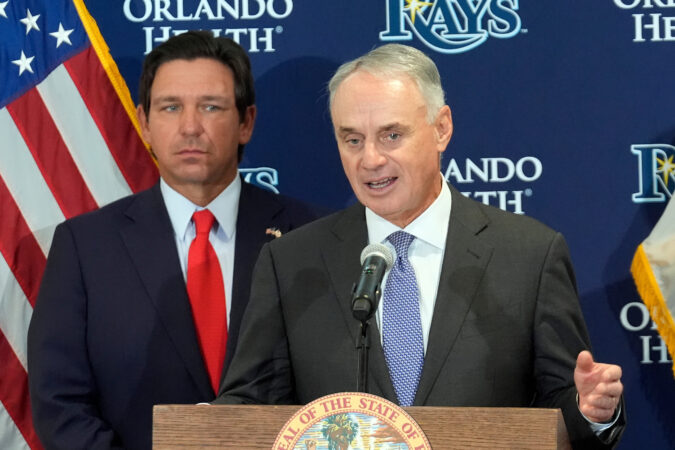
    PALM BEACH, Fla. — Baseball commissioner Rob Manfred is optimistic that major leaguers will play in the 2028 Los Angeles Olympics.

    Manfred, speaking following an owners meeting Thursday, said there are still issues to resolve with the Major League Baseball Players Association before those Olympic aspirations are a reality, but “I think we’re a lot closer to there than we were the last time we talked about it,” he said.

    The six-nation baseball tournament will be played from July 13-19 at Dodger Stadium. MLB is planning for an extended All-Star break between July 9 and July 21, with the All-Star Game likely at San Francisco on July 11.

    An agreement with the union is needed.

    “I sense a lot of momentum towards playing in L.A. in 2028,” Manfred said. “I think we are going to get over those issues. I think people have come to appreciate that the Olympics on U.S. soil is a unique marketing opportunity for the game. I think we had a lot of players interested in doing it and, you know, I feel pretty good about the idea (that) we’ll get there.”

    In addition, an agreement is needed on insurance to cover player contracts for time with Olympic teams.

    The United States will have an automatic berth in the both the baseball and softball tournaments and the top two other nations from the Americas in next month’s World Baseball Classic will earn berths.

    MLB did not allow players on 40-man rosters to participate in the 2021 Tokyo Olympics, when Nippon Professional Baseball interrupted its season and Japan beat the U.S. 2-0 in the gold medal game.

    Manfred was also asked if the involvement of Casey Wasserman, the prominent businessman and talent agent who has recently lost clients because of his appearance in recently released government files on Jeffrey Epstein, would deter the league from participating in the Olympics. He declined to comment on Wasserman, who is the chairman of the Los Angeles Games, saying, “Look, our dealings are not with Casey. Our dealings are with the institution of the Olympics.”