Category: Business Wires

  • Voters are worried about the cost of housing. But Trump wants home prices to keep climbing

    Voters are worried about the cost of housing. But Trump wants home prices to keep climbing

    WASHINGTON — President Donald Trump wants to keep home prices high, bypassing calls to ramp up construction so people can afford what has been a ticket to the middle class.

    Trump has instead argued for protecting existing owners who have watched the values of their homes climb. It’s a position that flies in the face of what many economists, the real estate industry, local officials, and apartment dwellers say is needed to fix a big chunk of America’s affordability problem.

    “I don’t want to drive housing prices down. I want to drive housing prices up for people that own their homes, and they can be assured that’s what’s going to happen,” Trump told his cabinet on Jan. 29.

    That approach could bolster the Republican president’s standing with older voters, a group that over time has been more likely to vote in midterm elections. Those races in November will determine whether Trump’s party can retain control of the House and Senate.

    “You have a lot of people that have become wealthy in the last year because their house value has gone up,” Trump said. “And you know, when you get the housing — when you make it too easy and too cheap to buy houses — those values come down.”

    But by catering to older baby boomers on housing, Trump risks alienating the younger voters who expanded his coalition in 2024 and helped him win a second term, and he could wade into a “generational war” in the midterms, said Brent Buchanan, whose polling firm Cygnal advises Republicans.

    “The under-40 group is the most important right now — they are the ones who put Trump in the White House,” Buchanan said. “Their desire to show up in an election or not is going to make the difference in this election. If they feel that Donald Trump is taking care of the boomers at their expense, that is going to hurt Republicans.”

    The logic in appealing to older voters

    In the 2024 presidential election, 81% of Trump’s voters were homeowners, according to AP VoteCast data. This means many of his supporters already have mortgages with low rates or own their homes outright, possibly blunting the importance of housing as an issue.

    Older voters tend to show up to vote more than do younger people, said Oscar Pocasangre, a senior data analyst at liberal think tank New America who has studied the age divide in U.S. politics. “However, appealing to older voters may prove to be a misguided policy if what’s needed to win is to expand the voting base,” Pocasangre said.

    Before the 2026 elections, voters have consistently rated affordability as a top concern, and that is especially true for younger voters with regard to housing.

    Booker Lightman, 30, a software engineer in Highlands Ranch, Colo., who identifies politically as a libertarian Republican, said the shortage of housing has been a leading problem in his state.

    Lightman just closed on a home last month, and while he and his wife, Alice, were able to manage the cost, he said that the lack of construction is pushing people out of Colorado. “There’s just not enough housing supply,” he said.

    Shay Hata, a real estate agent in the Chicago and Denver areas, said she handles about 100 to 150 transactions a year. But she sees the potential for a lot more. “We have a lack of inventory to the point where most properties, particularly in the suburbs, are getting between five and 20 offers,” she said, describing what she sees in the Chicago area.

    New construction could help more people afford homes because in some cases, buyers qualify for discounted mortgage rates from the builders’ preferred lenders, Hata said. She called the current situation “very discouraging for buyers because they’re getting priced out of the market.”

    But pending construction has fallen under Trump. Permits to build single-family homes have plunged 9.4% over the past 12 months in October, the most recent month available, to an annual rate of 876,000, according to the U.S. Census Bureau.

    Trump’s other ideas to help people buy houses

    Trump has not always been against increasing housing supply.

    During the 2024 campaign, Trump’s team said he would create tax breaks for homebuyers, trim regulations on construction, open up federal land for housing developments, and make monthly payments more manageable by cutting mortgage rates. Advisers also claimed that housing stock would open up because of Trump’s push for mass deportations of people who were in the United States illegally.

    As recently as October, Trump urged builders to ramp up construction. “They’re sitting on 2 Million empty lots, A RECORD. I’m asking Fannie Mae and Freddie Mac to get Big Homebuilders going and, by so doing, help restore the American Dream!” Trump posted on social media, referring to the government-backed lenders.

    But more recently, he has been unequivocal on not wanting to pursue policies that would boost supply and lower prices.

    In office, Trump has so far focused his housing policy on lobbying the Federal Reserve to cut its benchmark interest rates. He believes that would make mortgages more affordable, although critics say it could spur higher inflation. Trump announced that the two mortgage companies, which are under government conservatorship, would buy at least $200 billion in home loan securities in a bid to reduce rates.

    Trump also wants Congress to ban large financial institutions from buying homes. But he has rejected suggestions for expanding rules to let buyers use 401(k) retirement accounts for down payments, telling reporters that he did not want people to take their money out of the stock market because it was doing so well.

    There are signs that lawmakers in both parties see the benefits of taking steps to add houses before this year’s elections. There are efforts in the Senate and House to jump-start construction through the use of incentives to change zoning restrictions, among other policies.

    One of the underlying challenges on affordability is that home prices have been generally rising faster than incomes for several years.

    This makes it harder to save for down payments or upgrade to a nicer home. It also means that the places where people live increasingly double as their key financial asset, one that leaves many families looking moneyed on paper even if they are struggling with monthly bills.

    There is another risk for Trump. If the economy grows this year, as he has promised, that could push up demand for houses — as well as their prices — making the affordability problem more pronounced, said Edward Pinto, a senior fellow at the American Enterprise Institute, a center-right think tank.

    Pinto said construction of single-family homes would have to rise by 50% to 100% during the next three years for average home price gains to be flat — a sign, he said, that Trump’s fears about falling home prices were probably unwarranted.

    “It’s very hard to crater home prices,” Pinto said.
  • Japanese prime minister’s party secures supermajority in lower house in landslide victory

    Japanese prime minister’s party secures supermajority in lower house in landslide victory

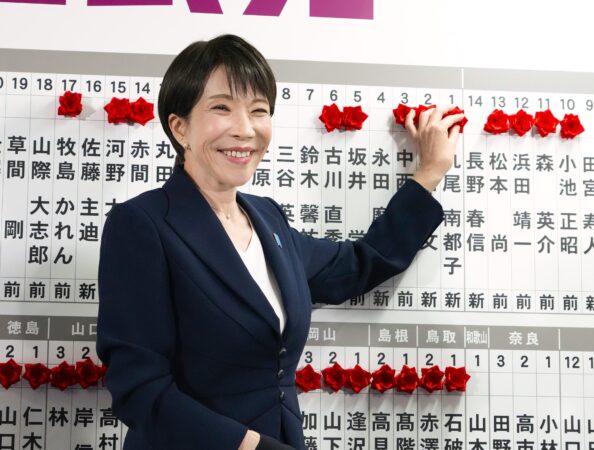
    TOKYO — The governing party of Prime Minister Sanae Takaichi secured a two-thirds supermajority in a key parliamentary election Sunday, Japanese media reported citing preliminary results, earning a landslide victory thanks to her popularity.

    Takaichi, in a televised interview with public television network NHK following her sweeping victory, said she is now ready to pursue policies to make Japan strong and prosperous.

    NHK, citing results of vote counts, said Takaichi’s Liberal Democratic Party, or LDP, alone secured 316 seats by early Monday, comfortably surpassing a 261-seat absolute majority in the 465-member lower house, the more powerful of Japan’s two-chamber parliament. That marks a record since the party’s foundation in 1955 and surpasses the previous record of 300 seats won in 1986 by late Prime Minister Yasuhiro Nakasone.

    A smiling Takaichi placed a big red ribbon above each winner’s name on a signboard at the LDP’s headquarters, as accompanying party executives applauded.

    Despite the lack of a majority in the other chamber, the upper house, the huge jump from the preelection share in the superior lower house would allow Takaichi to make progress on a right-wing agenda that aims to boost Japan’s economy and military capabilities as tensions grow with China and she tries to nurture ties with the United States.

    Takaichi said she would try to gain support from the opposition while firmly pushing forward her policy goals.

    “I will be flexible,” she said.

    Takaichi is hugely popular, but the governing LDP, which has ruled Japan for most of the last seven decades, has struggled with funding and religious scandals in recent years. She called Sunday’s early election after only three months in office, hoping to turn that around while her popularity is high.

    Popular leader

    The ultraconservative Takaichi, who took office as Japan’s first female leader in October, pledged to “work, work, work,” and her style, which is seen as both playful and tough, has resonated with younger fans who say they weren’t previously interested in politics.

    The opposition, despite the formation of a new centrist alliance and a rising far right, was too splintered to be a real challenger. The new opposition alliance of LDP’s former coalition partner, Buddhist-backed dovish Komeito, and the liberal-leaning Constitutional Democratic Party of Japan, is projected to sink to half of their combined preelection share of 167 seats.

    Takaichi was betting with this election that her LDP party, together with its new partner, the Japan Innovation Party, would secure a majority.

    Akihito Iwatake, a 53-year-old office worker, said he welcomed the big win by the LDP because he felt the party went too liberal in the past few years. “With Takaichi shifting things more toward the conservative side, I think that brought this positive result,” he said.

    Takaichi’s policies

    The prime minister wants to push forward a significant shift to the right in Japan’s security, immigration, and other policies. The LDP’s right-wing partner, JIP leader Hirofumi Yoshimura, has said his party will serve as an “accelerator” for this push.

    Japan has recently seen far-right populists gain ground, such as the anti-globalist and surging nationalist party Sanseito. Exit polls projected a big gain for Sanseito.

    The first major task for Takaichi when the lower house reconvenes in mid-February is to work on a budget bill, delayed by the election, to fund economic measures that address rising costs and sluggish wages.

    Takaichi has pledged to revise security and defense policies by December to bolster Japan’s offensive military capabilities, lifting a ban on weapons exports and moving further away from the country’s postwar pacifist principles.

    She has been pushing for tougher policies on foreigners, anti-espionage laws, and other measures that resonate with a far-right audience, but ones that experts say could undermine civil rights.

    Takaichi also wants to increase defense spending in response to U.S. President Donald Trump’s pressure for Japan to loosen its purse strings.

    She now has time to work on these policies, without an election until 2028.

    Divisive policies

    Though Takaichi said that she’s seeking to win support for policies seen as divisive in Japan, she largely avoided discussing ways to fund soaring military spending, how to fix diplomatic tension with China, and other issues.

    Her rightward shift is unlikely to redirect Japan’s foreign policy and Takaichi is expected to maintain good relations with South Korea given shared concerns about threats from North Korea and China. But Seoul would worry about a Japanese attempt to revise the country’s pacifist constitution or to further build up military because of Japan’s wartime past, said Leif-Eric Easley, professor of international studies at Ewha Womans University in Seoul.

    In her campaign speeches, Takaichi enthusiastically talked about the need for proactive government spending to fund “crisis management investment and growth,” such as measures to strengthen economic security, technology, and other industries. Takaichi also seeks to push tougher measures on immigration, including stricter requirements for foreign property owners and a cap on foreign residents.

    Sunday’s election “underscores a problematic trend in Japanese politics in which political survival takes priority over substantive policy outcomes,” said Masato Kamikubo, a Ritsumeikan University politics professor. “Whenever the government attempts necessary but unpopular reforms … the next election looms.”

    Impact of snow

    Sunday’s vote coincided with fresh snowfall across the country, including in Tokyo. Record snowfall in northern Japan over the past few weeks blocked roads and was blamed for dozens of deaths nationwide.

  • Iran sentences Nobel laureate Narges Mohammadi to 7 more years in prison

    Iran sentences Nobel laureate Narges Mohammadi to 7 more years in prison

    DUBAI, United Arab Emirates — Iran sentenced Nobel Peace Prize laureate Narges Mohammadi to over seven more years in prison after she began a hunger strike, supporters said Sunday, as Tehran cracks down on all dissent following nationwide protests and the deaths of thousands at the hands of security forces.

    The new convictions against Mohammadi come as Iran tries to negotiate with the United States over its nuclear program to avert a threatened military strike by U.S. President Donald Trump. Iran’s top diplomat insisted Sunday that Tehran’s strength came from its ability to “say no to the great powers,” striking a maximalist position just after negotiations in Oman with the U.S.

    Mohammadi’s supporters cited her lawyer, who spoke to Mohammadi. The lawyer, Mostafa Nili, confirmed the sentence on X, saying it had been handed down Saturday by a Revolutionary Court in the city of Mashhad. Such courts typically issue verdicts with little or no opportunity for defendants to contest their charges.

    “She has been sentenced to six years in prison for ‘gathering and collusion’ and one and a half years for propaganda and two-year travel ban,” he wrote. She received another two years of internal exile to the city of Khosf, some 460 miles southeast of Tehran, the capital, the lawyer added.

    Iran did not immediately acknowledge the sentence. Supporters say Mohammadi has been on a hunger strike since Feb. 2. She had been arrested in December at a ceremony honoring Khosrow Alikordi, a 46-year-old Iranian lawyer and human rights advocate who had been based in Mashhad. Footage from the demonstration showed her shouting, demanding justice for Alikordi and others.

    Mohammadi a symbol for Iranian activists

    Supporters had warned for months before her December arrest that Mohammadi, 53, was at risk of being put back into prison after she received a furlough in December 2024 over medical concerns.

    While that was to be only three weeks, Mohammadi’s time out of prison lengthened, possibly as activists and Western powers pushed Iran to keep her free. She remained out even during the 12-day war in June between Iran and Israel.

    Mohammadi still kept up her activism with public protests and international media appearances, including even demonstrating at one point in front of Tehran’s notorious Evin prison, where she had been held.

    Mohammadi had been serving 13 years and nine months on charges of collusion against state security and propaganda against Iran’s government. She also had backed the nationwide protests sparked by the 2022 death of Mahsa Amini, which have seen women openly defy the government by not wearing the hijab.

    Mohammadi suffered multiple heart attacks while imprisoned before undergoing emergency surgery in 2022, her supporters say. Her lawyer in late 2024 revealed doctors had found a bone lesion that they feared could be cancerous that later was removed.

    “Considering her illnesses, it is expected that she will be temporarily released on bail so that she can receive treatment,” Nili wrote.

    However, Iranian officials have been signaling a harder line against all dissent since the demonstrations. Speaking on Sunday, Iranian judiciary chief Gholamhossein Mohseni-Ejei made comments suggesting harsh prison sentences awaited many.

    “Look at some individuals who once were with the revolution and accompanied the revolution,” he said. ”Today, what they are saying, what they are writing, what statements they issue, they are unfortunate, they are forlorn (and) they will face damage.”

    Foreign minister strikes hard-line tone

    The news about Mohammadi came as Foreign Minister Abbas Araghchi, speaking to diplomats at a summit in Tehran, signaled that Iran would stick to its position that it must be able to enrich uranium — a major point of contention with Trump, who bombed Iranian atomic sites in June during the 12-day Iran-Israel war.

    Israeli Prime Minister Benjamin Netanyahu is expected to travel to Washington this week, with Iran expected to be the major subject of discussion, his office said.

    While Iranian President Masoud Pezeshkian praised the talks Friday in Oman with the Americans as “a step forward,” Araghchi’s remarks show the challenge ahead. Already, the U.S. moved the aircraft carrier USS Abraham Lincoln, other ships, and warplanes to the Middle East to pressure Iran into an agreement and have the firepower necessary to strike the Islamic Republic should Trump choose to do so.

    “I believe the secret of the Islamic Republic of Iran’s power lies in its ability to stand against bullying, domination, and pressures from others,” Araghchi said. ”They fear our atomic bomb, while we are not pursuing an atomic bomb. Our atomic bomb is the power to say no to the great powers. The secret of the Islamic Republic’s power is in the power to say no to the powers.”

    ‘Atomic bomb’ as rhetorical device

    Araghchi’s choice to explicitly use an “atomic bomb” as a rhetorical device likely wasn’t accidental. While Iran has long maintained its nuclear program is peaceful, the West and the International Atomic Energy Agency say Tehran had an organized military program to seek the bomb up until 2003.

    Iran had been enriching uranium up to 60% purity, a short, technical step to weapons-grade levels of 90%, the only nonweapons state to do so. Iranian officials in recent years had also been increasingly threatening that the Islamic Republic could seek the bomb, even while its diplomats have pointed to Iranian Supreme Leader Ayatollah Ali Khamenei’s preachings as a binding fatwa, or religious edict, that Iran wouldn’t build one.

    Pezeshkian, who ordered Araghchi to pursue talks with the Americans after likely getting Khamenei’s blessing, also wrote on X on Sunday about the talks.

    “The Iran-U.S. talks, held through the follow-up efforts of friendly governments in the region, were a step forward,” the president wrote. “Dialogue has always been our strategy for peaceful resolution. … The Iranian nation has always responded to respect with respect, but it does not tolerate the language of force.”

    It remains unclear when and where, or if, there will be a second round of talks. Trump, after the talks Friday, offered few details but said: “Iran looks like they want to make a deal very badly — as they should.”

  • Washington Post publisher Will Lewis says he’s stepping down, days after big layoffs at the paper

    Washington Post publisher Will Lewis says he’s stepping down, days after big layoffs at the paper

    Washington Post publisher Will Lewis said Saturday that he’s stepping down, ending a troubled tenure three days after the newspaper said that it was laying off one-third of its staff.

    Lewis announced his departure in a two-paragraph email to the newspaper’s staff, saying that after two years of transformation, “now is the right time for me to step aside.” The Post’s chief financial officer, Jeff D’Onofrio, was appointed temporary publisher.

    Neither Lewis nor the newspaper’s billionaire owner, Jeff Bezos, participated in the meeting with staff members announcing the layoffs on Wednesday. While anticipated, the cutbacks were deeper than expected, resulting in the shutdown of the Post’s renowned sports section, the elimination of its photography staff, and sharp reductions in personnel responsible for coverage of metropolitan Washington and overseas.

    They came on top of widespread talent defections in recent years at the newspaper, which lost tens of thousands of subscribers following Bezos’ order late in the 2024 presidential campaign pulling back from a planned endorsement of Kamala Harris, and a subsequent reorienting of its opinion section in a more conservative direction.

    Martin Baron, the Post’s first editor under Bezos, condemned his former boss last week for attempting to curry favor with President Donald Trump and called what has happened at the newspaper “a case study in near-instant, self-inflicted brand destruction.”

    The British-born Lewis was a former top executive at the Wall Street Journal before taking over at the Post in January 2024. His tenure has been rocky from the start, marked by layoffs and a failed reorganization plan that led to the departure of former top editor Sally Buzbee.

    His initial choice to take over for Buzbee, Robert Winnett, withdrew from the job after ethical questions were raised about both he and Lewis’ actions while working in England. They include paying for information that produced major stories, actions that would be considered unethical in American journalism. The current executive editor, Matt Murray, took over shortly thereafter.

    Lewis didn’t endear himself to Washington Post journalists with blunt talk about their work, at one point saying in a staff meeting that they needed to make changes because not enough people were reading their work.

    This week’s layoffs have led to some calls for Bezos to either increase his investment in the Post or sell it to someone who will take a more active role. Lewis, in his note, praised Bezos: “The institution could not have had a better owner,” he said.

    “During my tenure, difficult decisions have been taken in order to ensure the sustainable future of The Post so it can for many years ahead publish high-quality nonpartisan news to millions of customers each day,” Lewis said.

    The Washington Post Guild, the union representing staff members, called Lewis’ exit long overdue.

    “His legacy will be the attempted destruction of a great American journalism institution,” the Guild said in a statement. “But it’s not too late to save The Post. Jeff Bezos must immediately rescind these layoffs or sell the paper to someone willing to invest in its future.”

    Bezos did not mention Lewis in a statement saying D’Onofrio and his team are positioned to lead the Post into “an exciting and thriving next chapter.”

    “The Post has an essential journalistic mission and an extraordinary opportunity,” Bezos said. “Each and every day our readers give us a roadmap to success. The data tells us what is valuable and where to focus.”

    D’Onofrio, who joined the paper last June after jobs at the digital ad management company Raptive, Google, Zagat, and Major League Baseball, said in a note to staff that “we are ending a hard week of change with more change.

    “This is a challenging time across all media organizations, and The Post is unfortunately no exception,” he wrote. “I’ve had the privilege of helping chart the course of disrupters and cultural stalwarts alike. All faced economic headwinds in changing industry landscapes, and we rose to meet those moments. I have no doubt we will do just that, together.”

  • Judge orders Trump administration to restore funding for rail tunnel between New York, New Jersey

    Judge orders Trump administration to restore funding for rail tunnel between New York, New Jersey

    NEW YORK — A federal judge ordered the Trump administration to restore funding to a new rail tunnel between New York and New Jersey on Friday, ruling just as construction was set to shut down on the massive infrastructure project.

    The decision came months after the administration announced it was halting $16 billion in support for the project, citing the then-government shutdown and what a top federal budget official said were concerns about unconstitutional spending around diversity, equity, and inclusion principles.

    U.S. District Judge Jeannette A. Vargas in Manhattan approved a request by New York and New Jersey for a temporary restraining order barring the administration from withholding the funds while the states seek a preliminary injunction that would keep the money flowing while their lawsuit plays out in court.

    “The Court is also persuaded that Plaintiffs would suffer irreparable harm in the absence of an injunction,” the judge wrote. “Plaintiffs have adequately shown that the public interest would be harmed by a delay in a critical infrastructure project.”

    The White House and U.S. Department of Transportation did not immediately respond to emails seeking comment Friday night.

    New York Attorney General Letitia James called the ruling “a critical victory for workers and commuters in New York and New Jersey.”

    “I am grateful the court acted quickly to block this senseless funding freeze, which threatened to derail a project our entire region depends on,” James said in a statement. “The Hudson Tunnel Project is one of the most important infrastructure projects in the nation, and we will keep fighting to ensure construction can continue without unnecessary federal interference.”

    The panel overseeing the project, the Gateway Development Commission, had said work would stop late Friday afternoon because of the federal funding freeze, resulting in the immediate loss of about 1,000 jobs as well as thousands of additional jobs in the future.

    It was not immediately clear when work would resume. In a nighttime statement, the commission said: “As soon as funds are released, we will work quickly to restart site operations and get our workers back on the job.”

    The new tunnel is meant to ease strain on an existing tunnel that is more than 110 years old that connects New York and New Jersey for Amtrak and commuter trains, where delays can lead to backups up and down the East Coast.

    New York and New Jersey sued over the funding pause this week, as did the Gateway Development Commission, moving to restore the Trump administration’s support.

    The suspension was seen as a way for the Trump administration to put pressure on Democratic Senate Minority Leader Chuck Schumer of New York, whom the White House was blaming for a government shutdown last year. The shutdown was resolved a few weeks later.

    Speaking to the media on Air Force One, Trump was asked about reports that he would unfreeze funding for the tunnel project if Schumer would agree to a plan to rename Penn Station in New York and Dulles International Airport in Virginia after Trump.

    “Chuck Schumer suggested that to me, about changing the name of Penn Station to Trump Station. Dulles Airport is really separate,” Trump responded.

    Schumer responded on social media: “Absolute lie. He knows it. Everyone knows it. Only one man can restart the project and he can restart it with the snap of his fingers.”

    At a hearing in the states’ lawsuit earlier in Manhattan, Shankar Duraiswamy, of the New Jersey attorney general’s office, told the judge that the states need “urgent relief” because of the harm and costs that will occur if the project is stopped.

    “There is literally a massive hole in the earth in North Bergen,” he said, referring to the New Jersey city and claiming that abandoning the sites, even temporarily, “would pose a substantial safety and public health threat.”

    Duraiswamy said the problem with shutting down now is that even a short stoppage would cause longer delays because workers will be laid off and go to other jobs and it’ll be hard to quickly remobilize if funding becomes available. And, he added, “any long-term suspension of funding could torpedo the project.”

    Tara Schwartz, an assistant U.S. attorney arguing for the government, disagreed with the “parade of horribles” described by attorneys for the states.

    She noted that the states had not even made clear how long the sites could be maintained by the Gateway Development Commission. So the judge asked Duraiswamy, and he said they could maintain the sites for a few weeks and possibly a few months, but that the states would continue to suffer irreparable harm because trains would continue to run late because they rely on an outdated tunnel.

  • Iran and U.S. hold indirect talks in Oman. America’s military leader in the Mideast joins the talks

    Iran and U.S. hold indirect talks in Oman. America’s military leader in the Mideast joins the talks

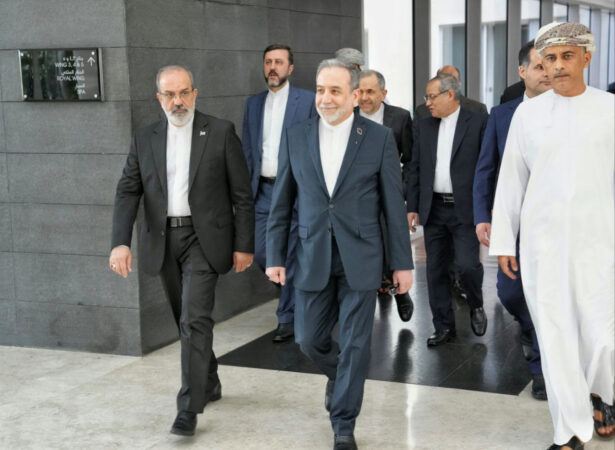
    MUSCAT, Oman — Iran and the United States held indirect talks in Oman on Friday, negotiations that appeared to return to the starting point on how to approach discussions over Tehran’s nuclear program. But for the first time, America brought its top military commander in the Middle East to the table.

    The presence of U.S. Navy Adm. Brad Cooper, the head of the American military’s Central Command, in his dress uniform at the talks in Muscat, the Omani capital, served as a reminder that the aircraft carrier USS Abraham Lincoln and other warships were now off the coast of Iran in the Arabian Sea.

    President Donald Trump said the United States had “very good” talks on Iran and said more were planned for early next week. But he kept up the pressure, warning that if the country didn’t make a deal over its nuclear program, “the consequences are very steep.”

    Trump has repeatedly threatened to use force to compel Iran to reach a deal on the program after earlier sending the carrier to the region over Tehran’s bloody crackdown on nationwide protests that killed thousands and saw tens of thousands of others detained in the Islamic Republic.

    Gulf Arab nations fear an attack could spark a regional war that would drag them in as well.

    That threat is real — U.S. forces shot down an Iranian drone near the Lincoln and Iran attempted to stop a U.S.-flagged ship in the Strait of Hormuz just days before Friday’s talks in this sultanate on the eastern edge of the Arabian Peninsula.

    “We did note that nuclear talks and the resolution of the main issues must take place in a calm atmosphere, without tension and without threats,” Iranian Foreign Minister Abbas Araghchi later told journalists.

    “The prerequisite for any dialogue is refraining from threats and pressure,” he added. “We stated this point explicitly today as well, and we expect it to be observed so that the possibility of continuing the talks exists.”

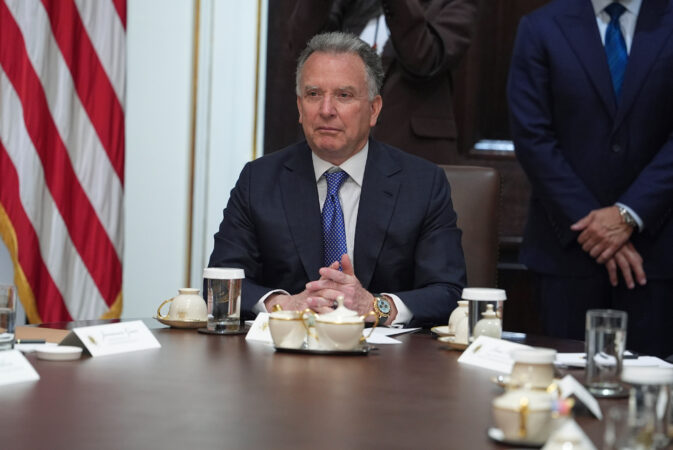
    The U.S., represented by U.S. Mideast special envoy Steve Witkoff and Jared Kushner, Trump’s son-in-law, did not immediately comment on the talks. Araghchi said diplomats would return to their capitals, signaling this round of negotiations was over.

    On Friday evening, in a display of force, the U.S. military published photos on X of the Lincoln carrier group sailing in the Arabian Sea with aircraft flying overhead, with the message “Peace through Strength!” The The carrier and accompanying warships arrived in the Middle East at the end of January as Trump threatened attacks on Iran over the killing of protesters.

    Iran’s top diplomat offers a positive note

    Araghchi offered cautious optimism as he spoke in a live interview from Muscat on Iranian state television. He described Friday’s talks as taking place over multiple rounds and said that they were focused primarily on finding a framework for further negotiations.

    “We will hold consultations with our capitals regarding the next steps, and the results will be conveyed to Oman’s foreign minister,” Araghchi said.

    “The mistrust that has developed is a serious challenge facing the negotiations,” Araghchi said. “We must first address this issue, and then enter into the next level of negotiations.”

    Omani Foreign Minister Badr al-Busaidi, who oversaw multiple rounds of negotiations before Israel launched its 12-day war on Iran in June, called the talks “useful to clarify both the Iranian and American thinking and identify areas for possible progress.”

    Still, Oman described the talks as a means to find “the requisite foundations for the resumption of both diplomatic and technical negotiations” rather than a step toward reaching a nuclear deal or easing tensions.

    The talks had initially been expected to take place in Turkey in a format that would have included regional countries as well, and would have included topics like Tehran’s ballistic missile program — something Iran apparently rejected in favor of focusing only on its nuclear program.

    Before the June war, Iran had been enriching uranium up to 60% purity, a short, technical step away from weapons-grade levels. The U.N. nuclear watchdog — International Atomic Energy Agency — had said Iran was the only country in the world to enrich to that level that wasn’t armed with the bomb.

    Iran has been refusing requests by the IAEA to inspect the sites bombed in the June war, raising the concerns of nonproliferation experts. Even before that, Iran has restricted IAEA inspections since Trump’s decision in 2018 to unilaterally withdraw America from Iran’s 2015 nuclear deal with world powers.

    Omani palace hosts talks

    Friday’s talks saw in-person meetings at a palace near Muscat’s international airport, used by Oman in earlier talks Iran-U.S. talks in 2025. Associated Press journalists saw Iranian officials first at the palace and later returning to their hotel before the Americans came separately.

    It remains unclear just what terms Iran is willing to negotiate at the talks. Tehran has maintained that these talks will only be on its nuclear program. However, the Al Jazeera satellite news network reported that diplomats from Egypt, Turkey, and Qatar offered Iran a proposal in which Tehran would halt enrichment for three years, send its highly enriched uranium out of the country and pledge “not initiate the use of ballistic missiles.”

    Russia had signaled it would take the uranium, but Iran has said ending the program or shipping out the uranium were nonstarters.

    U.S. Secretary of State Marco Rubio said on Wednesday that the talks needed to include all those issues.

    “I’m not sure you can reach a deal with these guys, but we’re going to try to find out,” he said.

    The U.S. slaps new sanctions on Iran’s energy sector

    Shortly after Friday’s talks, the Treasury and the U.S. State Department announced a new round of sanctions on Iran targeting its energy sector, imposing penalties, including freezes on assets in U.S. jurisdictions, on 14 oil tankers in a so-called “shadow fleet” that the U.S. says are used to try to evade sanctions, as well as on 15 trading firms and two business executives.

    “Time and time again, the Iranian government has prioritized its destabilizing behavior over the safety and security of its own citizens, as demonstrated by the regime’s mass murder of peaceful protestors,” the State Department said. “The United States will continue to act against the network of shippers and traders involved in the transport and acquisition of Iranian crude oil, petroleum products, and petrochemical products, which constitutes the regime’s primary source of income.”

    In the past month, the U.S. has sanctioned Iran’s interior minister,the secretary of the Supreme Council for National Security, and several other leaders involved in Iran’s deadly crackdown against last month’s protests.

  • Argentina and U.S. sign a major trade deal to slash tariffs and boost a political alliance

    Argentina and U.S. sign a major trade deal to slash tariffs and boost a political alliance

    BUENOS AIRES, Argentina — Argentina and the United States agreed Thursday to ease restrictions on each other’s goods in an expansive trade and investment deal that boosts a drive by President Javier Milei’s government to open up Argentina’s protectionist economy and a push by the Trump administration to reduce food prices for Americans.

    The deal, which slashes hundreds of reciprocal tariffs between the countries, also reflects the importance of Milei’s ideological loyalty to President Donald Trump, even as the chronically distressed South American nation long isolated from the global economy has little to offer Washington in the way of economic reward or geopolitical clout.

    Argentina’s radical libertarian leader has gone to dramatic lengths to prove his devotion to Trump, reshaping his country’s foreign policy to align with the U.S. and championing Trump’s increasingly aggressive interventions in the Western Hemisphere. Milei has traveled to the U.S. at least a dozen times since entering office and plans to visit Trump’s private Mar-a-Lago club in Florida again next week.

    The efforts have already paid off. Last year as market turmoil threatened to derail Milei’s free-market overhaul and drain Argentina’s foreign currency reserves ahead of a crucial midterm election, Trump offered his ally a $20 billion credit line. Milei avoided a currency devaluation and won a decisive victory in the election that sent markets rallying.

    A trade deal between ideological allies

    On Thursday, Argentine Foreign Minister Pablo Quirno and U.S. Trade Representative Jamieson Greer signed the trade and investment agreement in Washington.

    After imposing sweeping tariffs on its traditional trading partners for months, the Trump administration changed its tune last November in announcing framework deals with four Latin American countries, including Argentina.

    The White House argued that the reduction of mutual tariffs on a range of food imports, like Argentine beef and Ecuadorian bananas, would improve the ability of American firms to sell industrial and agricultural products abroad and relieve rising prices for American consumers. The announcement also came as Trump’s steep tariffs drew scrutiny from the Supreme Court.

    Argentina on Thursday became the first of the four countries to finalize its agreement with the U.S. Quirno hailed it as a milestone not only in Argentina’s alliance with the U.S., but also in Milei’s campaign to rebuild the serial defaulter’s reputation.

    “Today Argentina sent a clear signal to the world,” he wrote on social media. “We are a reliable partner, open to trade and committed to clear rules, predictability and strategic cooperation.”

    Concessions could revive criticism

    Argentina’s foreign ministry said it would scrap trade barriers on more than 200 categories of goods from the U.S., including chemicals, machinery and medical devices, slash tariffs to 2% on a range of imports like auto parts and allow sensitive imports like vehicles, beef and dairy products to enter the country tariff-free under government quotas.

    Those are key concessions as local Argentine industries long protected by steep tariffs voice concern about their ability to compete with American manufacturers.

    Washington, for its part, will eliminate reciprocal tariffs on 1,675 Argentine products, the Argentine Foreign Ministry said, adding $1 billion in export revenue. It did not name all the products, while the White House only said the U.S. would remove reciprocal tariffs on “unavailable natural resources” and ingredients for pharmaceutical goods.

    The text of the deal also shows the U.S. agreeing to review its stiff 50% taxes on steel and aluminum imports that have hobbled Argentine manufacturers since last year and quadruple the amount of Argentine beef it allows into the country annually at a lower tariff rate.

    An influx of Argentine beef

    The influx of beef could reignite criticism from cattle ranchers and Republican lawmakers in farm states who were outraged last October when Trump first floated plans to increase imports of Argentine beef, threatening to lower the price that American ranchers receive for their cattle.

    The move, aimed at shoring up the South American country’s limping economy while helping bring beef prices in the U.S. down from record highs, came shortly after the Trump administration offered Milei the $20 billion lifeline and directly purchased both U.S. dollar-denominated Argentine bonds that ratings agencies were classifying as “junk” at the time and the volatile Argentine currency that local investors were dumping in droves.

    The backlash came from across the political spectrum. Trump’s MAGA base questioned the need to bail out a far-flung country that has never been a natural U.S. trading partner: The two countries export many of the same things and directly compete in markets of soy, corn, wheat, meat and oil.

    Democratic lawmakers expressed outrage that Trump was staking taxpayer money on a political gift to an ideological soulmate. That criticism continues, with U.S. Sen. Elizabeth Warren, the top Democrat on the Senate Banking Committee, on Thursday appealing to Treasury Secretary Scott Bessent to end the $20 billion lifeline.

  • Families of plane crash victims ask U.S. appeals court to revive a criminal case against Boeing

    Families of plane crash victims ask U.S. appeals court to revive a criminal case against Boeing

    Thirty-one families that lost relatives in two fatal crashes of Boeing 737 Max jetliners asked a federal appeals court on Thursday to revive a criminal case against the aircraft manufacturer.

    Paul Cassell, a lawyer for the families, urged a three-judge panel of the 5th U.S. Circuit Court of Appeals to overturn a lower court’s dismissal of a criminal conspiracy charge Boeing faced for allegedly misleading Federal Aviation Administration regulators about a flight-control system tied to the crashes, which killed 346 people.

    The dismissal came at the request of the U.S. government after it reached a deal with Boeing that allowed the company to avoid prosecution in exchange for paying or investing an additional $1.1 billion in fines, compensation for victims’ families, and internal safety and quality measures.

    Cassell said Thursday that federal prosecutors violated the families’ rights by failing to properly consult them before striking the deal and shutting them out of the process.

    Federal prosecutors countered that, for years, the government, “has solicited and weighed the views of the crash victims’ families as it’s decided whether and how to prosecute the Boeing Company.”

    More than a dozen family members attended Thursday’s hearing in New Orleans, and Cassell said many more “around the globe” listened to a livestream of the arguments.

    “I feel that there wouldn’t be meaningful accountability without a trial,” Paul Njoroge said in a statement after the hearing. Njoroge, who lives in Canada, lost his entire family in the second of the two crashes — his wife, Carolyne, their children, ages 6, 4, and 9 months, and his mother-in-law.

    All passengers and crew died when the 737 Max jets crashed less than five months apart in 2018 and 2019 — a Lion Air flight that plunged into the sea off the coast of Indonesia and an Ethiopian Airlines flight that crashed into a field shortly after takeoff.

    U.S. District Judge Reed O’Connor in Texas, who oversaw the case for years, issued a written decision in November that described the families’ arguments as compelling. But O’Connor said case law prevented him from blocking the dismissal motion simply because he disagreed with the government’s view that the deal with Boeing served the public interest.

    The judge also concluded that federal prosecutors hadn’t acted in bad faith, had explained their decision and had met their obligations under the Crime Victims’ Rights Act.

    In the case of its deal with Boeing, the Justice Department had argued that given the possibility a jury might acquit the company, taking the case to trial carried a risk that Boeing would be spared any further punishment.

    Boeing attorney Paul Clement said Thursday that more than 60 families of crash victims “affirmatively supported” the deal and dozens more did not oppose it.

    “Boeing deeply regrets” the tragic crashes, Clement said, and “has taken extraordinary steps to improve its internal processes and has paid substantial compensation” to the victims’ families.

    The appeals court panel that heard the arguments said it would issue a decision at a later date.

    The criminal case took many twists and turns after the Justice Department first charged Boeing in 2021 with defrauding the government but agreed not to prosecute if the company paid a settlement and took steps to comply with anti-fraud laws.

    However, federal prosecutors determined in 2024 that Boeing had violated the agreement, and the company agreed to plead guilty to the charge. O’Connor later rejected that plea deal, however, and directed the two sides to resume negotiations. The Justice Department returned last year with the new deal and its request to withdraw the criminal charge.

    The case centered on a software system that Boeing developed for the 737 Max, which airlines began flying in 2017. The plane was Boeing’s answer to a new, more fuel-efficient model from European rival Airbus, and Boeing billed it as an updated 737 that wouldn’t require much additional pilot training.

    But the Max did include significant changes, some of which Boeing downplayed — most notably, the addition of an automated flight-control system designed to help account for the plane’s larger engines. Boeing didn’t mention the system in airplane manuals, and most pilots didn’t know about it.

    In both of the deadly crashes, that software pitched the nose of the plane down repeatedly based on faulty readings from a single sensor, and pilots flying for Lion Air and Ethiopian Airlines were unable to regain control. After the Ethiopia crash, the planes were grounded worldwide for 20 months.

    Investigators found that Boeing did not inform key Federal Aviation Administration personnel about changes it had made to the software before regulators set pilot training requirements for the Max and certified the airliner for flight.

  • U.S., Russia agree to reestablish military dialogue after Ukraine talks

    U.S., Russia agree to reestablish military dialogue after Ukraine talks

    The U.S. and Russia agreed Thursday to reestablish high-level military dialogue for the first time in more than four years in another sign of warming relations between the two countries since President Donald Trump returned to office and sought to end the war in Ukraine.

    High-level military communication was suspended in late 2021, as tension between Moscow and Washington rose ahead of the full-scale Russian invasion of Ukraine in February 2022. Trump then campaigned for a second term on promises that he would swiftly end the fighting. Many of his proposals for peace have heavily favored the Kremlin, including requiring Ukraine to cede territory to Russia.

    The restored communication channel “will provide a consistent military-to-military contact as the parties continue to work towards a lasting peace,” the U.S. European Command said in a statement. The agreement emerged from a meeting between senior Russian and American military officials in the capital of the United Arab Emirates.

    U.S. Gen. Alexus Grynkewich, who is the commander in Europe of both U.S. and NATO forces, was in Abu Dhabi, where talks between American, Russian, and Ukrainian officials on ending the war entered a second day.

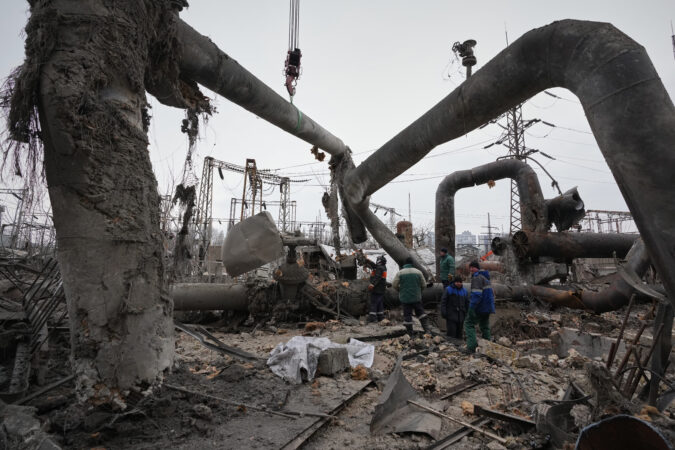
    Meanwhile, Moscow escalated its attacks on Ukraine’s power grid in an apparent effort to deny civilians power and to weaken public support for the fight, while hostilities continued along the roughly 600-mile front line snaking through eastern and southern parts of Ukraine.

    An effort to ease tensions

    The resumption of the military hotline marks an effort to ease tensions that soared after the start of the war and to avoid collisions between Russian and U.S. forces.

    In one such incident in March 2023, the American military said it ditched an Air Force MQ-9 Reaper drone in the Black Sea after a pair of Russian fighter jets dumped fuel on it, and then one of them struck its propeller while flying in international airspace.

    Moscow has denied that its warplanes hit the drone, alleging that it crashed while making a sharp maneuver. The Kremlin said its aircraft reacted to a violation of a no-fly zone Russia has established in the area near Crimea.

    Moscow has repeatedly voiced concern about intelligence flights by the U.S. and other NATO aircraft over the Black Sea, and some Russian officials charged that the American surveillance flights helped gather intelligence that allowed Ukraine to strike Russian targets.

    NATO members have been increasingly worried about intrusions into allied airspace. Some European officials described the incidents as Moscow testing NATO’s response.

    In September, a swarm of Russian drones flew into Poland’s airspace, prompting NATO aircraft to scramble to intercept them and shoot down some of the devices. It was the first direct encounter between NATO and Moscow since the full-scale invasion. Later that month, NATO jets escorted three Russian warplanes out of Estonia’s airspace.

    Russia, Ukraine exchange prisoners following talks

    The delegations from Moscow and Kyiv were joined Thursday in Abu Dhabi by U.S. special envoy Steve Witkoff and Trump’s son-in-law Jared Kushner, according to Rustem Umerov, Ukraine’s National Security and Defense Council chief, who was present at the meeting.

    They were also at last month’s talks in the same place as the Trump administration tries to steer Russia and Ukraine toward a settlement.

    Officials have provided no information about any progress in the discussions.

    Following the talks on Thursday, however, Russia and Ukraine said they carried out a prisoner exchange.

    The Russian Defense Ministry said it brought 157 Russian servicemen back from Ukrainian captivity, as well as three Russian nationals captured during Kyiv’s incursion into Russia’s Kursk region. Ukrainian officials said 150 Ukrainian servicemen and seven civilians returned from Russian captivity.

    The Russian Defense Ministry said the released Russian soldiers are currently in Belarus, getting medical assistance, before being taken back to Russia “for treatment and rehabilitation.”

    Ukrainian human rights ombudsman Dmytro Lubinets said that among the 150 service members who returned from Russian captivity, 18 were “illegally sentenced by Russia.” He said that “overall, those released are in a difficult psychological condition, and some are critically underweight.”

    Zelensky says 55,000 Ukrainian troops killed

    Ukrainian President Volodymyr Zelensky said 55,000 Ukrainian troops have died since Russia’s invasion. “And there is a large number of people whom Ukraine considers missing,” he added in an interview broadcast late Wednesday by French TV channel France 2.

    The last time Zelensky gave a figure for battlefield deaths, in early 2025, he said 46,000 Ukrainian troops had been killed.

    Zelensky has repeatedly said his country needs security guarantees from the U.S. and Europe to deter any postwar Russian attacks.

    Ukrainians must feel that there is genuine progress toward peace and “not toward a scenario in which the Russians exploit everything to their advantage and continue their strikes,” Zelensky said on social media late Wednesday.

    Last year saw a 31% increase in Ukrainian civilian casualties compared with 2024, the advocacy group Human Rights Watch said in a report published Wednesday.

    Almost 15,000 Ukrainian civilians have been killed and just over 40,000 wounded since the start of the war through last December, according to the United Nations Human Rights Monitoring Mission in Ukraine.

    In other developments:

    Russian troops have lost access to their Starlink satellite internet terminals on the front line, Ukrainian Economic Minister Mykhailo Fedorov said Thursday, after Ukraine asked Elon Musk’s SpaceX to help deny Russia use of the service in Ukraine.

    Russian forces have consequently lost command-and-control capabilities and navigation for drones, and assaults have stopped in many sectors, according to Fedorov’s adviser Serhii Beskrestnov. Russian officials made no immediate comment.

    Ukraine is registering its civilian and military Starlink users on a database, allowing approved devices to function while unregistered terminals are disabled inside Ukraine.

    Also, Polish Prime Minister Donald Tusk said during a visit to Kyiv that he agreed with Zelensky to develop the joint production of ammunition at plants in their countries.

    Zelensky said Poland plans to increase supplies to Ukraine of liquefied natural gas, and the countries are exploring an exchange of weaponry, with Kyiv possibly receiving Polish MiG fighter jets and Warsaw receiving Ukrainian drones.

    Russia fired 183 drones and two ballistic missiles at Ukraine overnight, according to the Ukrainian air force. Three people were injured, officials said.

    The Russian Defense Ministry said its air defenses downed 95 Ukrainian drones overnight over several regions, the Azov Sea and Crimea, which Russia illegally annexed in 2014.

  • What to know as Iran and U.S. prepare for nuclear talks in Oman

    What to know as Iran and U.S. prepare for nuclear talks in Oman

    DUBAI, United Arab Emirates — Iran and the United States will hold talks Friday in Oman, their latest over Tehran’s nuclear program after Israel launched a 12-day war on the country in June and the Islamic Republic launched a bloody crackdown on nationwide protests.

    President Donald Trump has kept up pressure on Iran, moving aircraft carriers and other military assets to the Gulf and suggesting America could attack Iran over the killing of peaceful demonstrators or if Tehran launches mass executions over the protests. Trump has pushed Iran’s nuclear program back into the frame as well after the June war disrupted five rounds of talks held in Rome and Muscat, Oman, last year.

    Just hours ahead of Friday’s meeting, many questions hovered over the talks, including the scope of the agenda. While negotiations are expected to focus on Iran’s nuclear program, Secretary of State Marco Rubio this week said the U.S. hoped to discuss other concerns, including Iran’s ballistic missiles, support for proxy networks across the region and the “treatment of their own people.” Iran has said it wants talks to focus solely on the nuclear issue.

    Trump began the diplomacy initially by writing a letter last year to Iran’s 86-year-old Supreme Leader Ayatollah Ali Khamenei to jump start these talks. Khamenei has warned Iran would respond to any attack with an attack of its own, particularly as the theocracy he commands reels following the protests.

    Here’s what to know about Iran’s nuclear program and the tensions that have stalked relations between Tehran and Washington since the 1979 Islamic Revolution.

    Trump writes letter to Khamenei

    Trump dispatched the letter to Khamenei on March 5, 2025, then gave a television interview the next day in which he acknowledged sending it. He said: “I’ve written them a letter saying, ‘I hope you’re going to negotiate because if we have to go in militarily, it’s going to be a terrible thing.’”

    Since returning to the White House, the president has been pushing for talks while ratcheting up sanctions and suggesting a military strike by Israel or the U.S. could target Iranian nuclear sites.

    A previous letter from Trump during his first term drew an angry retort from the supreme leader.

    But Trump’s letters to North Korean leader Kim Jong Un in his first term led to face-to-face meetings, though no deals to limit Pyongyang’s atomic bombs and a missile program capable of reaching the continental U.S.

    Oman mediated previous talks

    Oman, a sultanate on the eastern edge of the Arabian Peninsula, has mediated talks between Iranian Foreign Minister Abbas Araghchi and U.S. Mideast envoy Steve Witkoff. The two men have met face to face after indirect talks, a rare occurrence due to the decades of tensions between the countries.

    It hasn’t been all smooth, however. Witkoff at one point made a television appearance in which he suggested 3.67% enrichment for Iran could be something the countries could agree on. But that’s exactly the terms set by the 2015 nuclear deal struck under former President Barack Obama, from which Trump unilaterally withdrew America. Witkoff, Trump and other American officials in the time since have maintained Iran can have no enrichment under any deal, something to which Tehran insists it won’t agree.

    Those negotiations ended, however, with Israel launching the war in June on Iran.

    12-day war and nationwide protests

    Israel launched what became a 12-day war on Iran in June that included the U.S. bombing Iranian nuclear sites. Iran later acknowledged in November that the attacks saw it halt all uranium enrichment in the country, though inspectors from the International Atomic Energy Agency have been unable to visit the bombed sites.

    Iran soon experienced protests that began in late December over the collapse of the country’s rial currency. Those demonstrations soon became nationwide, sparking Tehran to launch a bloody crackdown that killed thousands and saw tens of thousands detained by authorities.

    Iran’s nuclear program worries the West

    Iran has insisted for decades that its nuclear program is peaceful. However, its officials increasingly threaten to pursue a nuclear weapon. Iran now enriches uranium to near weapons-grade levels of 60%, the only country in the world without a nuclear weapons program to do so.

    Under the original 2015 nuclear deal, Iran was allowed to enrich uranium up to 3.67% purity and to maintain a uranium stockpile of 300 kilograms (661 pounds). The last report by the International Atomic Energy Agency on Iran’s program put its stockpile at some 9,870 kilograms (21,760 pounds), with a fraction of it enriched to 60%.

    U.S. intelligence agencies assess that Iran has yet to begin a weapons program, but has “undertaken activities that better position it to produce a nuclear device, if it chooses to do so.” Iranian officials have threatened to pursue the bomb.

    Israel, a close American ally, believes Iran is pursuing a weapon. It wants to see the nuclear program scrapped, as well as a halt in its ballistic missile program and support for anti-Israel militant groups such as Hezbollah in Lebanon and Hamas.

    Decades of tense relations

    Iran was once one of the U.S.’s top allies in the Mideast under Shah Mohammad Reza Pahlavi, who purchased American military weapons and allowed CIA technicians to run secret listening posts monitoring the neighboring Soviet Union. The CIA had fomented a 1953 coup that cemented the shah’s rule.

    But in January 1979, the shah, fatally ill with cancer, fled Iran as mass demonstrations swelled against his rule. The Islamic Revolution followed, led by Grand Ayatollah Ruhollah Khomeini, and created Iran’s theocratic government.

    Later that year, university students overran the U.S. Embassy in Tehran, seeking the shah’s extradition and sparking the 444-day hostage crisis that saw diplomatic relations between Iran and the U.S. severed. The Iran-Iraq war of the 1980s saw the U.S. back Saddam Hussein. The “Tanker War” during that conflict saw the U.S. launch a one-day assault that crippled Iran at sea, while the U.S. later shot down an Iranian commercial airliner that the U.S. military said it mistook for a warplane.

    Iran and the U.S. have seesawed between enmity and grudging diplomacy in the years since, with relations peaking when Tehran made the 2015 nuclear deal with world powers. But Trump unilaterally withdrew America from the accord in 2018, sparking tensions in the Mideast that persist today.