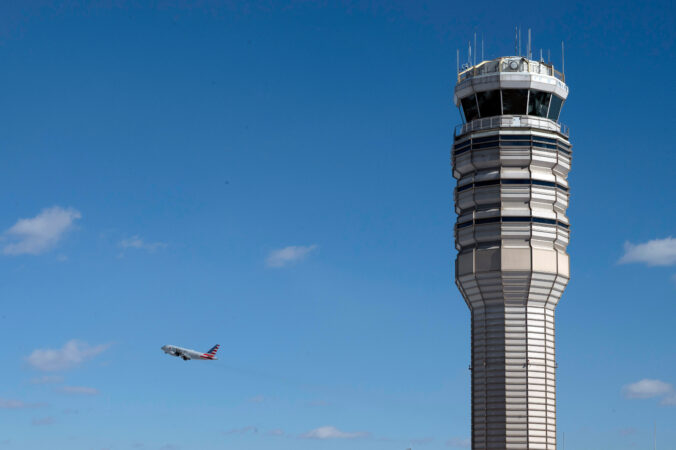
Key senators and the families of the 67 dead in an airliner collision with an Army helicopter near the nation’s capital are convinced that advanced aircraft locator systems recommended by experts for nearly two decades would have prevented last year’s tragedy. But it remains unclear if Congress will pass a bill requiring every plane and helicopter to use them around every busy airport.
The Senate Commerce Committee held a hearing Thursday to highlight why the National Transportation Safety Board has been recommending since 2008 that all aircraft be equipped with one system that can broadcast their locations and another one to receive data about the location of other aircraft. Only the system that broadcasts location is currently required. The hearing will review all 50 of the NTSB’s recommendations to prevent another midair collision like that of Jan. 29, 2025.
Everyone aboard the helicopter and the American Airlines jet flying from Wichita, Kansas, including 28 members of the figure skating community, died when the aircraft collided and plummeted into the icy Potomac River.
The Senate already unanimously approved the bill that would require all aircraft flying around busy airports to have both kinds of Automatic Dependent Surveillance-Broadcast systems installed. However, leaders of the key House committees seem to want to craft their own comprehensive bill addressing all the NTSB recommendations instead of immediately passing what’s known as the ROTOR act. The ADS-B Out systems continually broadcast an aircraft’s location and speed and have been required since 2020. But ADS-B In systems that can receive those signals and create a display showing pilots were all air traffic is located around them are not standard.
Facing headwinds in the House
Commerce Committee Chairman Sen. Ted Cruz said he’s concerned that some people are talking about possibly adding loopholes to the bill that would exempt regional airlines and private jets from the mandate. The Texas Republican said that would undermine the effort, and doesn’t make sense given that the plane involved in this collision was flown by a regional airline.
“Flying can only be safe when everyone follows the same standards,” Cruz said. He said that he hopes the House will vote on the bill in the next two weeks to send it to the president’s desk.
But Rep. Sam Graves, who leads the House Transportation Committee, said Thursday that he doesn’t plan to consider the Senate bill.
“I haven’t looked a whole lot at the ROTOR Act. We’re going to do our own bill,” Graves said.
If the American Airlines jet and the helicopter had also been equipped with one of the ADS-B In systems that can receive location data, the NTSB and the victims’ families and key lawmakers say, the pilots may have been able to avoid the collision because they would have received nearly a minute of advanced warning.
The receiving systems would have provided more warning along with an indication of where the other aircraft was. But for that to work the helicopter’s ADS-B Out system that’s supposed to broadcast its location would have to be turned on and working correctly, which wasn’t the case on the night of the crash.
Tragedy could have been prevented
These locator systems are one of the measures that might have been able to overcome all the systemic problems and mistakes the NTSB identified in the disaster. That’s why this requirement was endorsed by NTSB Chairwoman Jennifer Homendy — the only witness called to the hearing — Transportation Secretary Sean Duffy and all of the Senate. This is the 18th time the NTSB has recommended the technology.
“This seems like a no-brainer, right? Especially when this is not a new thing that they’re proposing,” said Amy Hunter, whose cousin Peter Livingston died on the flight with his wife and two young daughters.
Sen. Tammy Duckworth said the FAA also failed to act on warnings from its own controllers after a strikingly similar near miss in 2013 about the risks that helicopters pose around DCA (Ronald Reagan Washington National Airport), and an alarming number of near misses chronicled in the agency’s own data.
“FAA’s failure in the face of blaring alarm bells, screaming out that it was a matter of when — not if — one of the near misses at DCA would become a deadly tragedy is, unfortunately, emblematic of a chronic crisis that’s plagued FAA for years,” Duckworth said.
Afterward, the FAA made several changes including prohibiting helicopters from flying along the route where the crash happened whenever a plane is landing on DCA’s secondary runway and requiring all aircraft to use their ADS-B Out systems to broadcast their locations.
The crash anniversary and NTSB hearing on the causes of the crash have made recent weeks challenging for victims’ families. And now the Olympics are reminding Hunter and others that their loved ones — like young Everly and Alydia Livingston — will never have a chance to realize their dreams of competing for a gold medal.
Cost concerns for plane owners
The biggest stumbling block is cost. Upgrading some airline jets might cost hundreds of thousands of dollars or more, placing an expensive burden on some — especially regional airlines with tighter profit margins like the one that flew the jet that collided with the Army helicopter. Some also worry whether general aviation pilots could afford the upgrades. These systems haven’t even been designed and certified for some airline jets — particularly the CRJ models that were involved in this crash.
But some airlines have already begun to add the technology to their planes, partly because in addition to the safety benefits, the systems can help increase the number of planes that can fly into an airport by spacing them more precisely. American Airlines leads the industry, having added the technology to its Airbus A321s over the past several years, equipping more than 300 of its roughly 1,000 planes to date. Homendy said American officials told her the retrofits cost less than $50,000 per plane.
Any plane more than a decade old likely doesn’t have either of these systems installed. Most newer planes have at least an ADS-B Out system that broadcasts their location.
But roughly three quarters of the pilots of business jets and smaller single-engine Cessnas and Bonanzas use portable devices that only cost $400 dollars that can tap into this location data and display the information about nearby aircraft on an iPad. So it doesn’t appear the legislation would create a significant expense for them. Homendy held up one of the small receivers during her testimony to demonstrate how easy it is for pilots to get ADS-B In warnings.
Tim Lilley, a pilot himself, said having both these locator systems would have saved the life of his son Sam, who was copilot of the airliner, and everyone else who died. He said small plane owners have an affordable option, but even the expensive upgrades to large planes would be worth it.
“If those recommendations had been fully realized, this accident wouldn’t have happened,” Lilley said. “I don’t know what value we put on the human life, but 67 lives would still be here today.”
WASHINGTON — The Trump administration on Thursday revoked a scientific finding that long has been the central basis for U.S. action to regulate greenhouse gas emissions and fight climate change, the most aggressive move by the Republican president to roll back climate regulations.
The rule finalized by the Environmental Protection Agency rescinds a 2009 government declaration known as the endangerment finding that determined that carbon dioxide and other greenhouse gases threaten public health and welfare. The Obama-era finding is the legal underpinning of nearly all climate regulations under the Clean Air Act for motor vehicles, power plants and other pollution sources that are heating the planet.
The repeal eliminates all greenhouse gas emissions standards for cars and trucks and could unleash a broader undoing of climate regulations on stationary sources such as power plants and oil and gas facilities, experts say. Legal challenges are near certain.
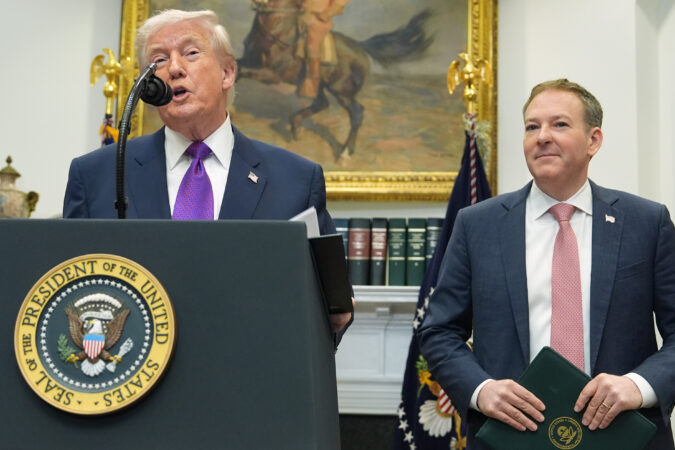
President Donald Trump called the move “the single largest deregulatory action in American history, by far,” while EPA Administrator Lee Zeldin called the endangerment finding “the Holy Grail of federal regulatory overreach.”
Trump called the endangerment finding “one of the greatest scams in history,” claiming falsely that it “had no basis in fact” or law. “On the contrary, over the generations, fossil fuels have saved millions of lives and lifted billions of people out of poverty all over the world,” Trump said at a White House ceremony, although scientists across the globe agree that carbon dioxide and other greenhouse gases are driving catastrophic heat waves and storms, droughts and sea level rise.
Environmental groups described the move as the single biggest attack in U.S. history against federal authority to address climate change. Evidence backing up the endangerment finding has only grown stronger in the 17 years since it was approved, they said.
“This action will only lead to more climate pollution, and that will lead to higher costs and real harms for American families,” said Fred Krupp, president of Environmental Defense Fund, adding that the consequences would be felt on Americans’ health, property values, water supply and more.
The EPA also said it will propose a two-year delay to a Biden-era rule restricting greenhouse gas emissions by cars and light trucks. And the agency will end incentives for automakers who install automatic start-stop ignition systems in their vehicles. The device is intended to reduce emissions, but Zeldin said “everyone hates” it.
Zeldin, a former Republican congressman who was tapped by Trump to lead EPA last year, has criticized his predecessors in Democratic administrations, saying that in the name of tackling climate change, they were “willing to bankrupt the country.”
The endangerment finding “led to trillions of dollars in regulations that strangled entire sectors of the United States economy, including the American auto industry,” Zeldin said. “The Obama and Biden administrations used it to steamroll into existence a left-wing wish list of costly climate policies, electric vehicle mandates and other requirements that assaulted consumer choice and affordability.”
The endangerment finding and the regulations based on it “didn’t just regulate emissions, it regulated and targeted the American dream. And now the endangerment finding is hereby eliminated,” Zeldin said.
Supreme Court has upheld the endangerment finding
The Supreme Court ruled in a 2007 case that planet-warming greenhouse gases, caused by the burning of oil and other fossil fuels, are air pollutants under the Clean Air Act.
Since the high court’s decision, in a case known as Massachusetts v. EPA, courts have uniformly rejected legal challenges to the endangerment finding, including a 2023 decision by the U.S. Court of Appeals for the District of Columbia Circuit.
The endangerment finding is widely considered the legal foundation that underpins a series of regulations intended to protect against threats made increasingly severe by climate change. That includes deadly floods, extreme heat waves, catastrophic wildfires and other natural disasters in the United States and around the world.
Gina McCarthy, a former EPA administrator who served as White House climate adviser in the Biden administration, called the Trump administration’s actions reckless. “This EPA would rather spend its time in court working for the fossil fuel industry than protecting us from pollution and the escalating impacts of climate change,” she said.
Former President Barack Obama said on X that repeal of the endangerment finding will make Americans “less safe, less healthy and less able to fight climate change — all so the fossil fuel industry can make even more money.”
Dr. Lisa Patel, a pediatrician and executive director of the Medical Society Consortium on Climate and Health, said Trump’s action “prioritizes the profits of big oil and gas companies and polluters over clean air and water” and children’s health.
“As a result of this repeal, I’m going to see more sick kids come into the Emergency Department having asthma attacks and more babies born prematurely,” she said in a statement. “My colleagues will see more heart attacks and cancer in their patients.”
David Doniger, a climate expert at the Natural Resources Defense Council, said Trump and Zeldin are trying to use repeal of the finding as a “kill shot’’ that would allow the administration to make nearly all climate regulations invalid. The repeal could erase current limits on greenhouse gas pollution from cars, factories, power plants and other sources and could hinder future administrations from imposing rules to address global warming.
The EPA action follows an executive order from Trump that directed the agency to submit a report on “the legality and continuing applicability” of the endangerment finding. Conservatives and some congressional Republicans have long sought to undo what they consider overly restrictive and economically damaging rules to limit greenhouse gases that cause global warming.
Withdrawing the endangerment finding “is the most important step taken by the Trump administration so far to return to energy and economic sanity,” said Myron Ebell, a conservative activist who has questioned the science behind climate change.
Tailpipe emission limits targeted
Zeldin and Transportation Secretary Sean Duffy have moved to drastically scale back limits on tailpipe emissions from cars and trucks. Rules imposed under Democratic President Joe Biden were intended to encourage U.S. automakers to build and sell more electric vehicles. The transportation sector is the largest source of greenhouse gas emissions in the U.S.
The Trump administration announced a proposal in December to weaken vehicle mileage rules for the auto industry, loosening regulatory pressure on automakers to control pollution from gasoline-powered cars and trucks. The EPA said its two-year delay to a Biden-era rule on greenhouse gas emissions by cars and light trucks will give the agency time to develop a plan that better reflects the reality of slower EV sales, while promoting consumer choice and lowering prices.
Environmental groups said the plan would keep polluting, gas-burning cars and trucks on U.S. roads for years to come, threatening the health of millions of Americans, particularly children and the elderly.
CLAIRTON, Pa. — For Don Furko, Aug. 11, 2025, was a normal shift. Until it became the shift he would never forget.
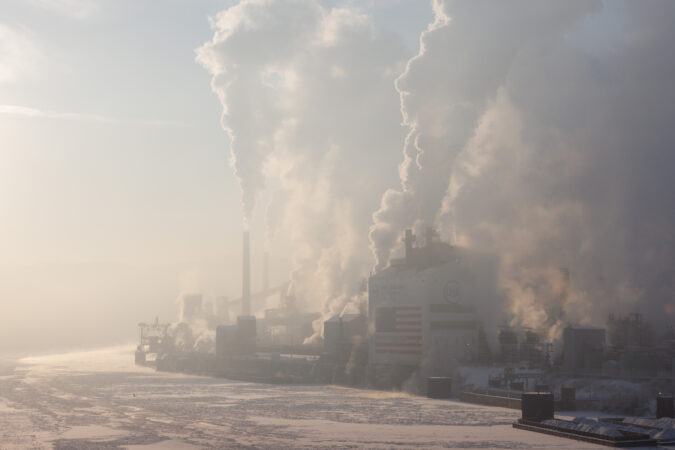
At 10:47 a.m., U.S. Steel’s Clairton Coke Works outside Pittsburgh — a sprawling riverside industrial facility and the largest of its kind in the Western Hemisphere — erupted in an ear-piercing boom.
A steelworker for 25 years and former Clairton local union president, Furko pulled on flame-retardant jacket and pants, a hard hat and safety glasses, left his post and rushed to the black plume of smoke rising from the facility’s batteries — the massive arrangements of industrial ovens that heat coal to some 2,000 degrees, turning it into carbon-rich coke.
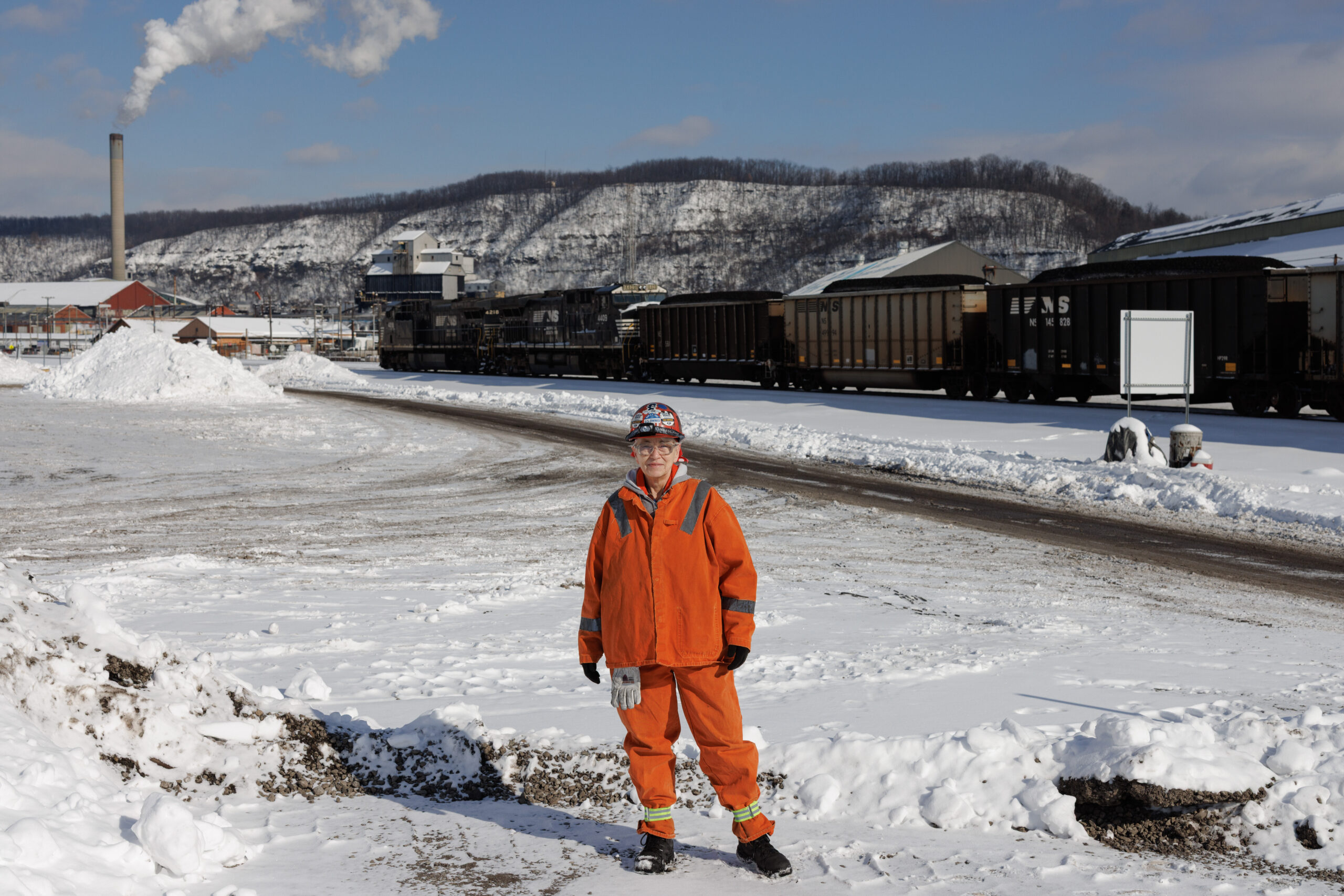
Steelworker Renee Hough stands at U.S. Steel’s Clairton Coke Works in Clairton, Pa., on Jan. 29. (Quinn Glabicki/Pittsburgh’s Public Source via AP)
Near the wharf, Renee Hough, a utility technician in charge of loading coke, sat in the cab of the plant’s screening station when the explosion ripped through the air, blinding her in black dust. “My first thought was I was dead,” Hough recalls. Flames emerged as the dust settled, and a voice crackled through the radio: Battery 13 had just exploded.
“I can’t even explain how mangled everything was,” Furko recalls. “There were flames everywhere.” Workers shuttled the injured to the helipad for evacuation. Through the chaos, Furko heard a fellow steelworker screaming, buried beneath the rubble.
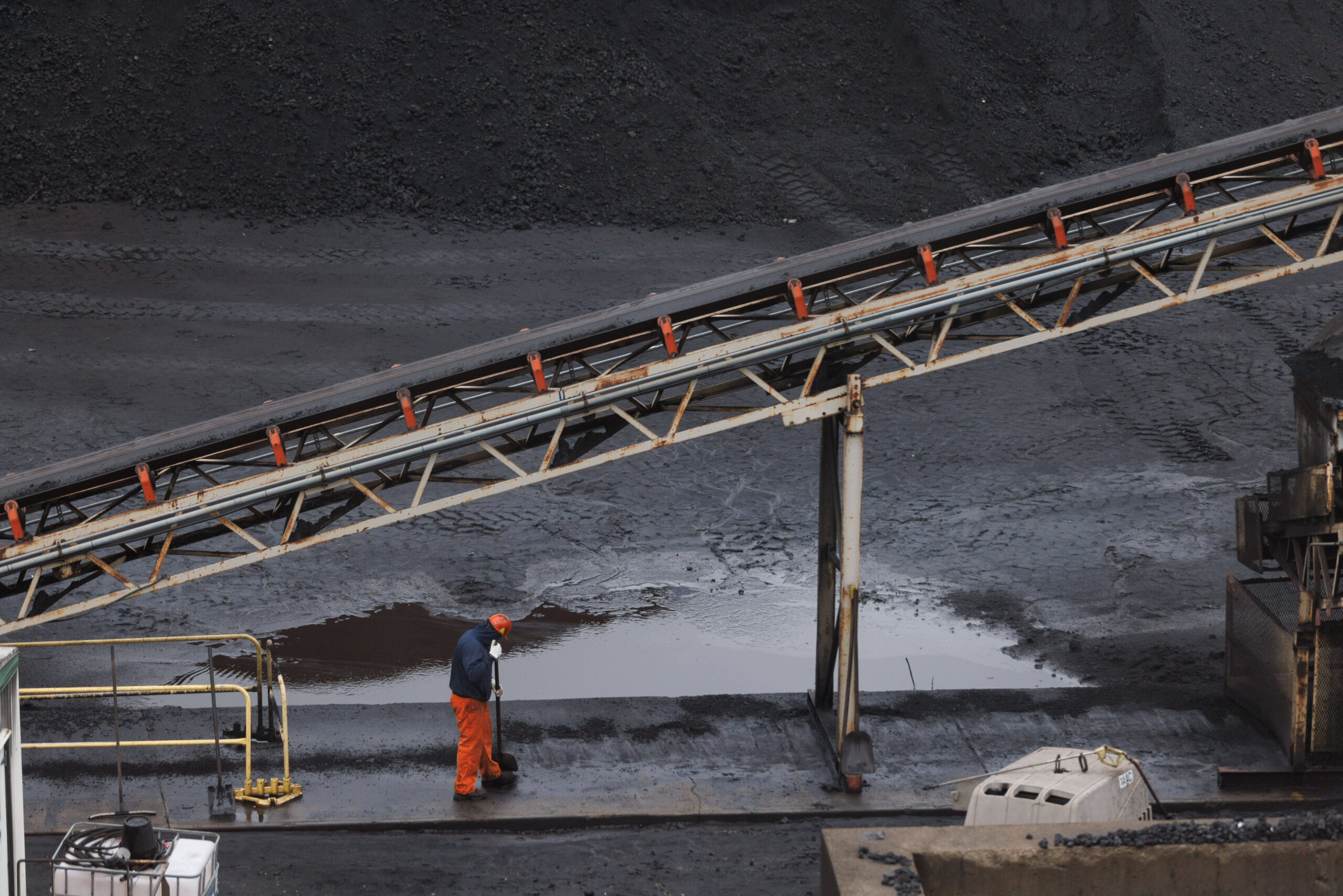
A worker in the coal fields at U.S. Steel’s Clairton Coke Works in Clairton, Pa., on Nov. 19, 2025. (Quinn Glabicki/Pittsburgh’s Public Source via AP)
The blast killed two U.S. Steel workers and injured 11 others, including contractors, according to the Chemical Safety Board, a federal agency investigating the incident.
Six months later, workers remain rattled and community concerns about air pollution from the plant are heightened.
The blast comes on top of a string of other accidents at the Clairton plant over time as well as a long history of legal battles between U.S. Steel and Allegheny County regulators, who regularly accuse the company of flouting environmental rules at the facility. As recently as Jan. 27, pollution control equipment at the Clairton plant temporarily broke down and nearby air monitors recorded elevated air pollution, according to the Allegheny County Health Department.
To U.S. Steel’s critics, the August blast highlighted chronic problems at the facility. And some current and former workers at Clairton Coke Works say poor management and underinvestment have exacerbated air pollution and undermined workplace safety at the plant where operators already have little margin for error, Pittsburgh’s Public Source and the Associated Press have found.
The August explosion also came after Nippon Steel’s $15 billion acquisition of U.S. Steel in June 2025. It’s an open question whether the Japanese steel company will invest significantly in Clairton Coke Works and address issues raised by workers, government officials and environmental watchdogs.
The Chemical Safety Board has said that the August explosion occurred while workers were preparing to replace a damaged valve that was detected in July, as well as other valves. The agency’s investigation continues; it said in December that it has identified “potentially unmitigated hazards for workers at Clairton Coke Works that warrant immediate attention.”
“They try to say ‘safety first, safety first,’” said Brian Pavlack, a current worker at Clairton Coke Works. “Safety is not the first priority for them.”
Nippon Steel did not provide a response to written questions. In a written statement responding to detailed questions, U.S. Steel stressed its commitment to safety.
“Safety is our core value and shapes our culture, influences how we lead, and anchors our responsibility to ensure that every employee returns home safely, every single day,” the company said.
Dangerous work
The 392-acre Clairton Coke Works opened more than a century ago, 20 miles south of Pittsburgh along the west bank of the Monongahela River. The ovens at the plant heat coal at high temperatures for hours to make coke, a key component in steelmaking. Its ovens produce 3.6 million tons of coke annually, which is shipped to the company’s operations farther up the river at the Edgar Thomson Works in Braddock, and to U.S. Steel’s Gary Works in Indiana.
But making coke isn’t a clean process or without risk. The heat removes impurities, producing a flammable byproduct called coke oven gas. Coke oven gas includes hydrogen, methane, nitrogen and carbon monoxide, and some of it is used as fuel to heat the coke ovens. Coke oven gas is explosive due to high hydrogen content, said Fred Rorick, a former operations manager at Bethlehem Steel and steel industry consultant.
“At a coke works, when you have that, you have to be very, very, very careful,” Rorick said.
According to the Chemical Safety Board, the August explosion happened while workers were closing and opening a gas isolation valve in a basement after pumping water into the valve. U.S. Steel’s written procedure did not mention the use of water and a U.S. Steel supervisor directed workers to pump the water, the agency said. Kurt Barshick, U.S. Steel’s vice president of the Mon Valley Works, said during an October presentation to residents in the wake of the August explosion that workers trapped “3,000 PSI water inside of a valve that’s rated for 50 PSI.” The valve cracked and gas filled the area, Barshick added.
Drew Sahli, the Chemical Safety Board’s investigator in charge, said there was a “release of coke oven gas” and that the gas “contacted an ignition source” and exploded. The agency is still investigating how the gas was released, Sahli said.
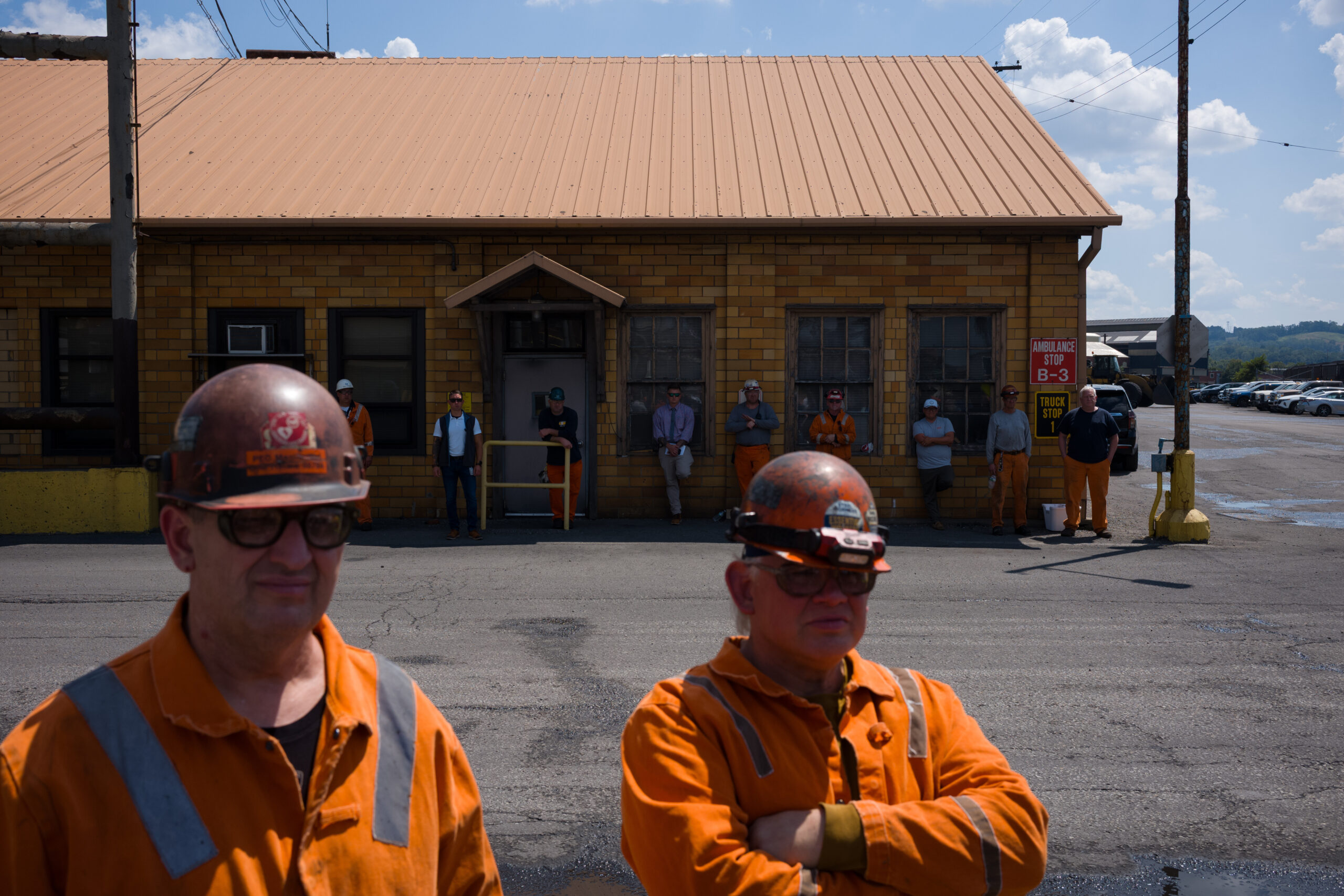
Steelworkers stand at U.S. Steel’s Clairton Coke Works in Clairton, Pa., on Aug. 12, 2025, a day after an explosion at the facility killed two workers. (Quinn Glabicki/Pittsburgh’s Public Source via AP)
U.S. Steel said it has “strengthened several safety protocols” based on its own ongoing investigation, including prohibiting the use of high-pressure water for valve cleaning and reviewing their “Management of Change program, which assesses proposed changes in procedures and evaluates risk.”
Before the August blast, Clairton Coke Works already had a history of accidents and explosions.
In 2009, a maintenance worker was killed in a blast.
In 2010, an explosion injured 14 employees and six contractors.
In 2014, a worker was burned and died after falling into a trench.
In February 2025, a problem at a battery led to a “buildup of combustible material” that ignited, injuring two people, according to the Allegheny County Health Department.
After the 2010 explosion, the Occupational Safety and Health Administration fined U.S. Steel and a subcontractor $175,000 for safety violations. U.S. Steel appealed its citations and fines, which were later reduced to $78,500 under a settlement agreement. U.S. Steel admitted no wrongdoing as part of the settlement.
While there’s “a lot of ways that you can get yourself hurt or killed” at Clairton Coke Works, explosions are the biggest hazard, said Calvin Croftcheck, who previously worked at the plant and served as the United Steelworkers safety coordinator for U.S. Steel.
“Since 2009, there have been three accidents that have resulted in fatalities and that is just not common in today’s age of safety,” said Phillip Kondrot, a workers’ compensation attorney who represents workers injured at Clairton Coke Works. “That is a dangerous place to work.”
“We have intensive procedures that are currently in place at Clairton and our other facilities, and our employees are charged with following them,” U.S. Steel said. “We will not respond to comments from for-profit lawyers and stand behind the safety professionals who tirelessly work at U. S. Steel.”
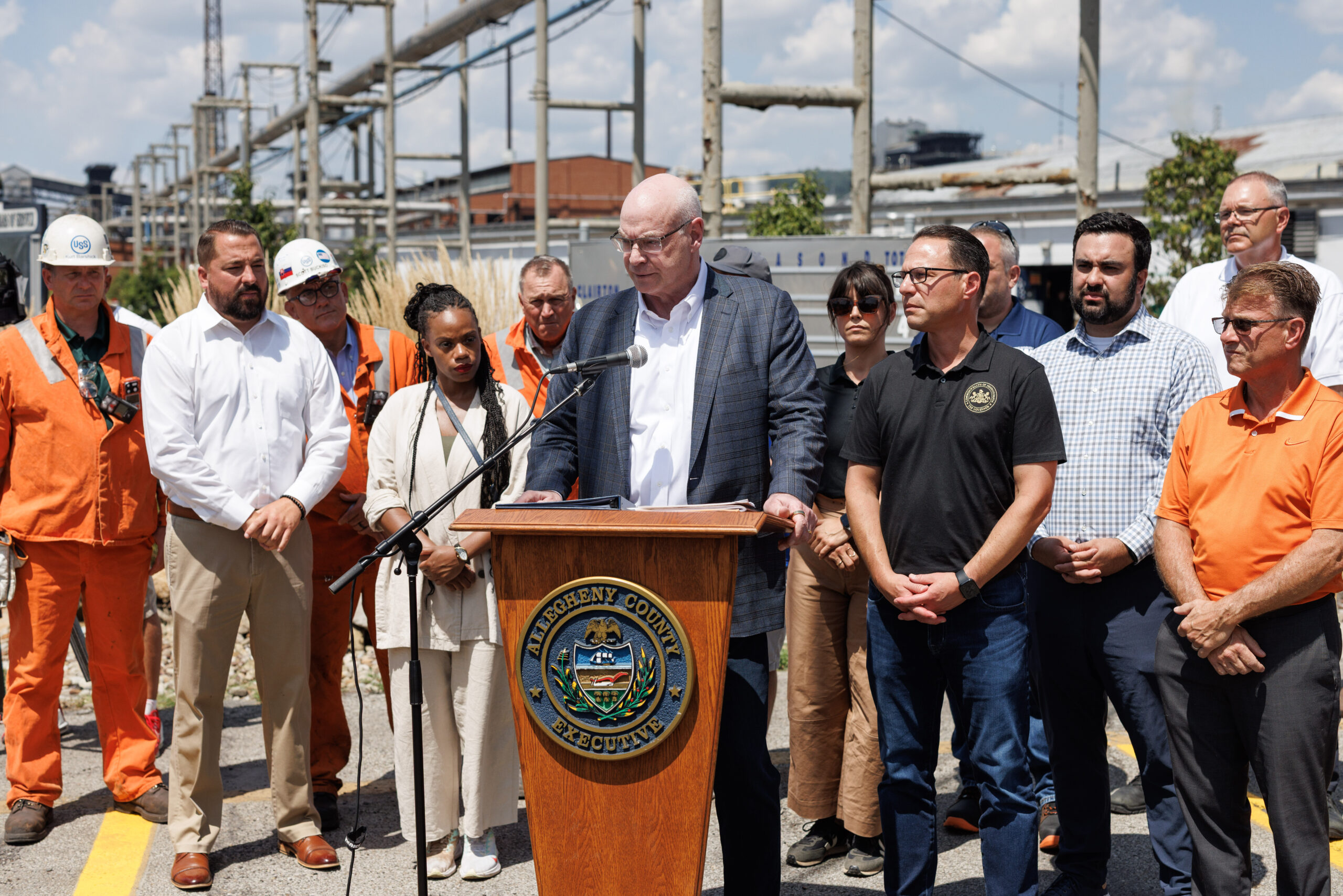
U.S. Steel president and CEO David B. Burritt, accompanied by Pennsylvania Gov. Josh Shapiro (center right) and other officials, speaks during a news conference at U.S. Steel’s Clairton Coke Works in Clairton, Pa., on Aug. 12, 2025, a day after an explosion at the facility killed two workers. (Quinn Glabicki/Pittsburgh’s Public Source via AP)
Management questioned
Some current and former workers at the Clairton plant fault U.S. Steel’s management of the aging facility, saying that it has caused a range of operational problems.
“A lot of things that have happened there, where they needed something fixed and something went wrong, it was because corporate wouldn’t approve them ordering the parts,” said Jonathan Ledwich, who worked at Clairton Coke Works between 2011 and 2022 trying to prevent emission leaks from the coke ovens. “We did the best we could with what we had.”
Ledwich points to a fire at the Clairton plant on Christmas Eve 2018. It shut down pollution control equipment and led to repeated releases of sulfur dioxide and hydrogen sulfide, according to a lawsuit filed by environmental groups after the incident. In the wake of the fire, Allegheny County warned residents to limit outdoor activities, with residents saying for weeks afterward that the air smelled like rotten eggs and was hard to breathe.
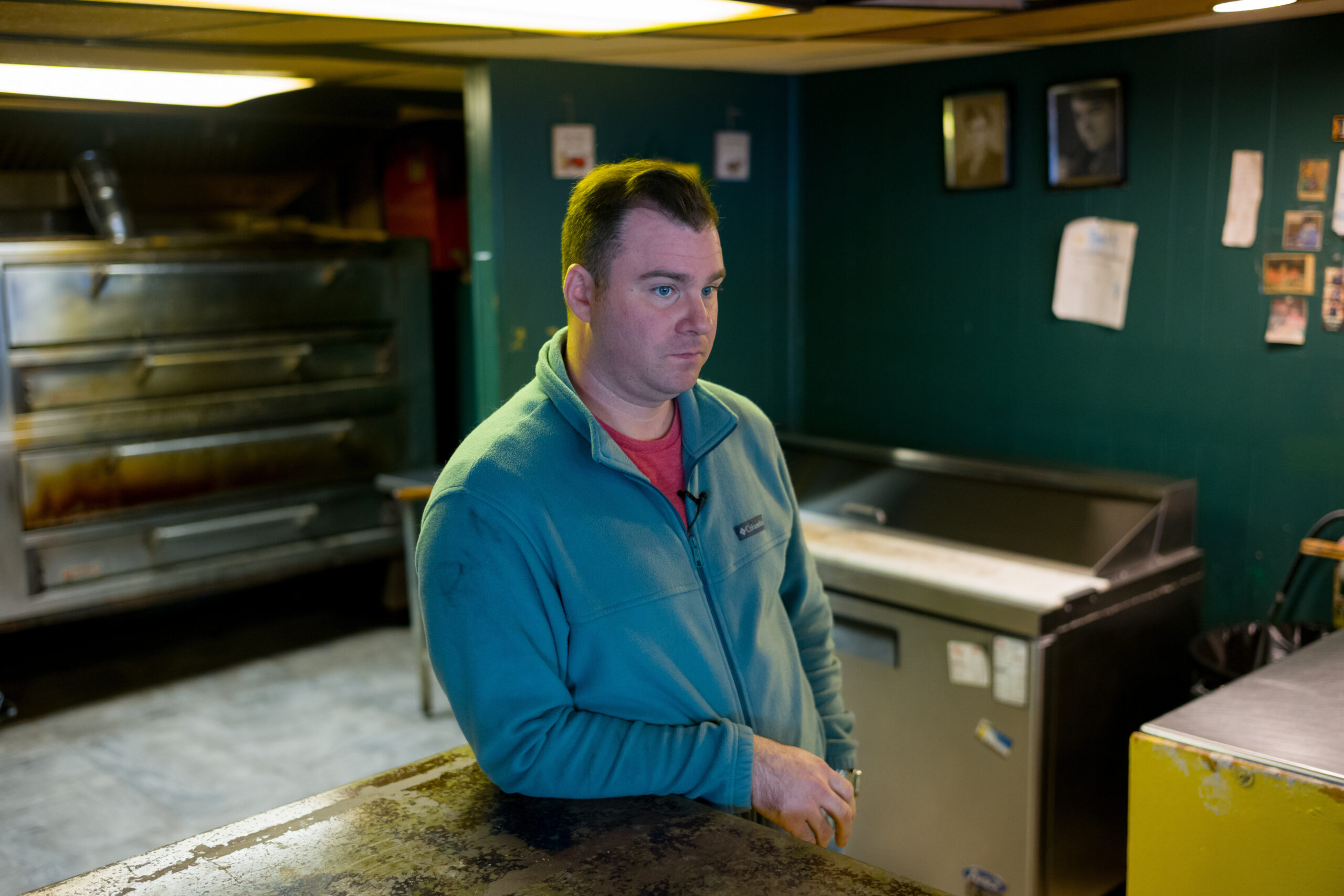
Former U.S. Steel worker Jonathan Ledwich stands at the pizza shop he now owns in Trafford, Pa., on Dec. 15, 2025. (Quinn Glabicki/Pittsburgh’s Public Source via AP)
Ranajit Sahu, an engineer hired by the plaintiffs, wrote in a report filed in the case that he found “no indication” that U.S. Steel “has an effective, comprehensive maintenance program for the Clairton plant.” Sahu also wrote that the 2018 accident, which was precipitated by piping falling due to corrosion, was “preventable by a robust inspection and preventive maintenance program and by better plant design.”
In a 2024 consent decree settling the lawsuit, U.S. Steel agreed to measures including investing close to $20 million in facility upgrades and permanently idling a battery of coke ovens at the plant. As part of the consent decree, U.S. Steel admitted no liability.
Hough, the utility technician in charge of loading coke, said that the lack of proactive maintenance at Clairton Coke Works makes her feel unsafe at times.
“There’s a lot of things that need to be repaired that they’re not prioritizing because you can’t stop production,” Hough said of U.S. Steel.
Some current and former plant workers also describe difficulty getting coke oven doors replaced. Ledwich, the former Clairton steel worker, said some doors that needed to be replaced would leak emissions.
In a 2020 deposition for the lawsuit related to the 2018 Christmas Eve fire, James Kelly, former deputy director of the environmental health bureau at the Allegheny County Health Department — the agency that oversees emissions at the plant — said the facility is “one of the most decrepit facilities” that he’d ever seen.
The litigation surrounding the Christmas Eve fire wasn’t the first time U.S. Steel was accused in court of skimping on maintenance. In a 2017 amended federal class action lawsuit alleging violations of federal securities laws, U.S. Steel shareholders said that the company CEO hired the consulting firm McKinsey & Company in 2014 after multiple unprofitable years and “implemented extreme cost-cutting measures” in 2015 involving layoffs and deferrals of “desperately-needed maintenance and repairs.” The lawsuit was eventually settled and the U.S. Steel defendants admitted no wrongdoing.
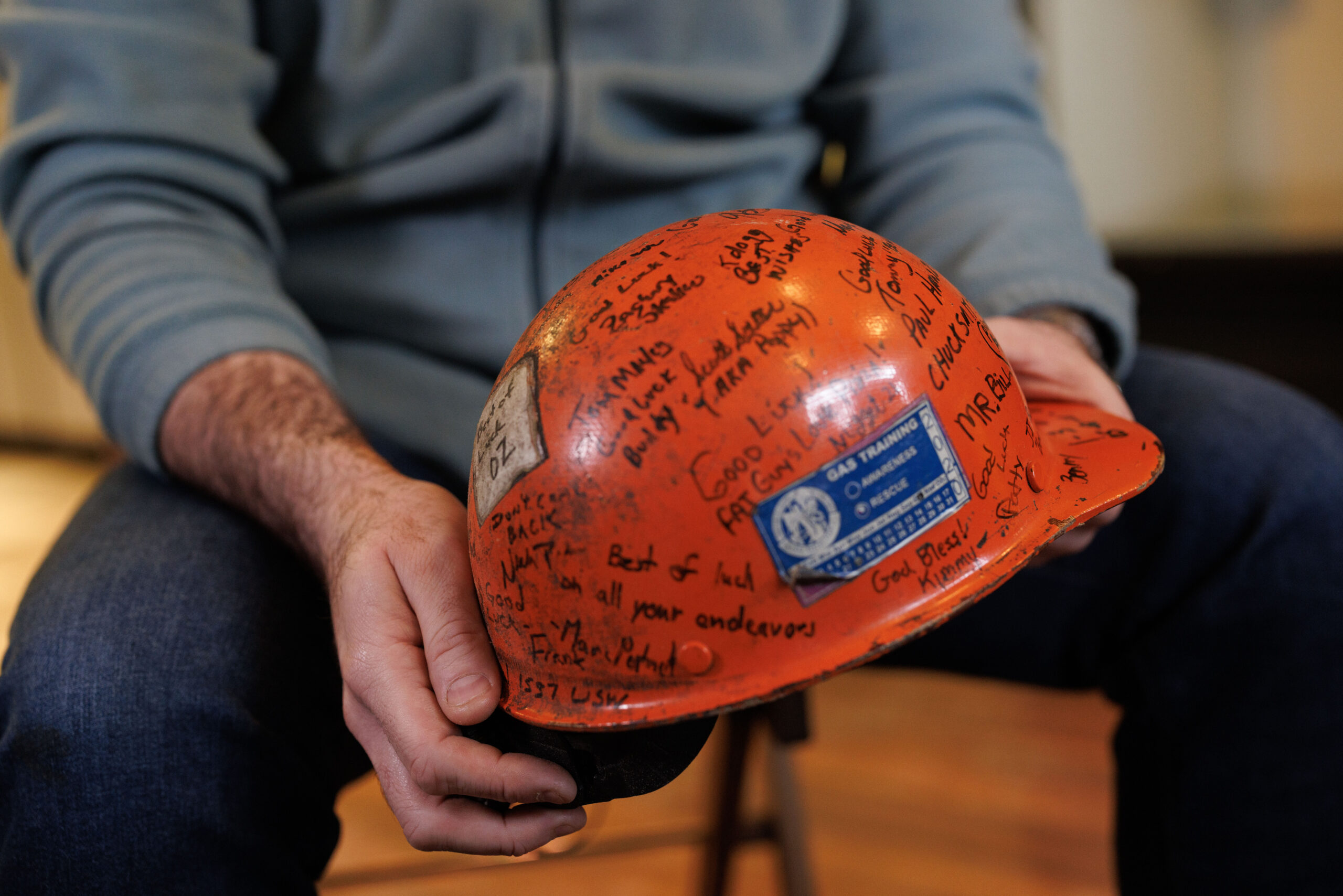
Former U.S. Steel worker Jonathan Ledwich holds his old hard hat at the pizza shop he now owns in Trafford, Pa., on Dec. 15, 2025. (Quinn Glabicki/Pittsburgh’s Public Source via AP)
U.S. Steel had “one of the best safety staffs in the country,” said Mike Wright, former director of the health, safety, and environment department at the United Steelworkers. But key safety department leaders were fired, according to Wright and Croftcheck, the former union safety coordinator. Wright said the dismissals occurred in 2016.
Ed Mazurkiewicz, former director of safety and industrial hygiene at U.S. Steel, said that he was let go by the company in 2016. While he knew at the time that McKinsey had been “evaluating all of U.S. Steel” and that there would be downsizing, it was still a shock when his job was eliminated, Mazurkiewicz said.
U.S. Steel said it has “worked with many advisers and partners” over the years and that the company’s “overall transformation efforts have improved our company’s performance, created a robust maintenance program, and improved employee safety over time.” In response to questions about U.S. Steel’s safety department and the firing of department leaders, the company said: “We cannot comment on personnel matters.”
“They brought in McKinsey to tell them really how to run things,” Wright said of U.S. Steel. “We were a little outraged by that.”
McKinsey said in a statement that the company is one of “many advisers that have served U.S. Steel in support of its efforts to keep manufacturing jobs in the United States, improve operational resiliency, and invest in and support the communities in which it operates.”
“As with all our work for the company — and with all our clients — safety is always a top priority,” the company added.
Maintenance practices have changed over time, some current and former workers say.
“I used to see a lot more maintenance and taking care of things and fixing things before they broke, or replacing things that were worn out,” said Hough, who has worked at the plant for 29 years. “That used to happen back when I was first hired there, and that hasn’t happened in the last 10 or so years.”
Battles over air pollution
For years, Clairton Coke Works has drawn the ire of government regulators, environmental advocates and community members concerned about air pollution originating from the plant. Air quality in the region has improved over time, but the Clairton plant has been the largest local source of air pollution — such as sulfur oxides and particulate matter — in recent years, according to the Allegheny County Health Department. Particulate matter, for instance, is linked to various health issues, including heart attacks and aggravated asthma. The plant also emits carcinogenic benzene.
While the Clairton plant is allowed to emit some air pollution, county Health Department regulators routinely clash with U.S. Steel over alleged violations of the plant’s operating permit, such as excessive emissions or failing to use pollution control equipment. In 2023, for instance, the Allegheny County Health Department fined U.S. Steel more than $2 million for violations at Clairton Coke Works.
“You’re sort of in this cycle of patching, monitoring, fining, patching, monitoring, fining, and it’s never really good enough,” said Karen Hacker, director of the Allegheny County Health Department between 2013 and 2019. “You can’t say it hasn’t improved. Just look at the sky in Pittsburgh, right? But it hasn’t removed a source of pollution.”
In response to questions from Public Source and AP, the Allegheny County Health Department said in a written statement that the agency “inspects coking operations daily” and “addresses violations as discovered during inspections” with a full compliance evaluation every two years.
The department also said that air monitoring stations near the Clairton plant “have measured a 15-25% reduction in annual average particle pollution concentrations compared to ten years ago.” The department declined to comment on “open investigations, enforcement orders, or pending litigation.”
Nationally, Clairton Coke Works’ environmental compliance track record is an outlier, according to a Public Source and AP analysis of federal Clean Air Act data from about 14,000 facilities. The analysis found that Clairton Coke Works is classified by the EPA as a “high-priority violator” — only about 11% of major emitters fall into that category. It’s even rarer for facilities to garner financial penalties on the magnitude that Clairton Coke Works has faced in the last five years, the analysis shows. Just 11 facilities, including Clairton Coke Works, have faced $10 million in penalties or more in the last five years.
“It’s a massive facility. It’s a complex facility and it’s an underfunded facility,” said Adam Ortiz, former EPA regional administrator of the Mid-Atlantic region during the Biden administration. “All those things make it tough.”
Clairton resident and environmental advocate Melanie Meade stands at the entrance of the Clairton Coke Works in Clairton, Pa., on Aug. 12, 2025, a day after an explosion at the facility killed two workers. (Quinn Glabicki/Pittsburgh’s Public Source via AP)
U.S. Steel said in its statement that the company spends “$100 million annually on environmental compliance at Clairton alone and has consistently achieved an environmental compliance rate exceeding 99% for regulated activities per year at our Clairton Plant, the largest coke-making facility in North America.”
The company said that it has “invested more than $750 million in environmental improvement projects in the Mon Valley” and that preliminary data shows that a county air monitor located downwind of the Clairton plant has met the Environmental Protection Agency’s national ambient air quality standard for particulate matter since 2024.
“Our steadfast pursuit of environmental excellence will continue,” the company said. “We maintain a productive relationship with the ACHD and other regulators, with a commitment to regulation grounded in science and law.”
Some environmental advocates have argued that the Allegheny County Health Department is outgunned against U.S. Steel. The department’s air quality program, which handles oversight of Clairton Coke Works, is funded by fees paid by industrial polluters. But the program has struggled financially in recent years. In a 2018 report, the EPA asserted that revenue from emissions-based fees was “diminishing as a result of emissions reductions” and that the existing fee structure could potentially “undermine long-term program sustainability.” The Allegheny County Council approved raising the fees in 2021 and again in November.
Meanwhile, the Trump administration has signaled that it is taking a more hands-off approach with polluters. In November, President Donald Trump temporarily exempted Clairton Coke Works and other coking plants from provisions of a Biden-era rule that, for instance, required fence line monitoring for benzene emissions. U.S. Steel previously requested an exemption.
U.S. Steel said that the rule “imposed significant compliance costs while setting technically unachievable standards and providing little or no environmental benefit.” Its Mon Valley facilities have “never been fined” for exceeding benzene emission standards, the company said.
New ownership arrives
Before the August explosion, workers and outside observers were already watching Nippon Steel closely for clues about their plans for Clairton Coke Works and the Mon Valley. Now, questions about Nippon’s intentions have become even more pressing.
In the nearly $15 billion deal to buy U.S. Steel, Nippon Steel pledged to invest $14 billion in domestic steelmaking operations, including building a new electric arc furnace somewhere in the U.S. Much of that money remains publicly uncommitted, and U.S. Steel has been firm that it wants to keep the Clairton plant operating.
“The Clairton Coke Plant is an important part of our North American Flat-Rolled integrated operations,” the company said in November. The company added that a “steady coke supply remains critical” and that the “Clairton Coke Plant will be maintained for the next generation of steelmaking.”
Since Nippon Steel acquired the company, things have started to change, according to Hough. The company has invested more in repairs and preventive maintenance, she said.
“Nippon is putting the money into the plant, and let me tell you, they’ve got a long way to go,” Hough said. “U.S. Steel let it go so bad for so long.”
However, U.S. Steel has not publicly committed to spending money at the Clairton plant to expand production, extend its life, improve efficiency, upgrade safety or reduce its polluting air emissions.
In response to questions about its investment plans for Clairton Coke Works, U.S. Steel said the company plans to invest “more than $2 billion at Mon Valley Works.”
Furko served as Clairton local union president in 2021 when U.S. Steel canceled a pledged $1 billion investment in the Mon Valley Works. He remains wary of Nippon’s promises.
“Until I see shovels start to hit dirt,” Furko said, “then I don’t believe it until I see it.”
Of the $14 billion, U.S. Steel has said $2.4 billion will go toward its Pittsburgh-area plants. A portion of that money will be spent on building a new hot strip mill to replace the one at its Irvin plant, just down the Monongahela River from Clairton, that processes steel into massive sheet rolls, primarily for the automotive, appliance and construction industries.
It’s unclear how Nippon and U.S. Steel will address recent findings from federal investigators. In December, the Chemical Safety Board recommended that U.S. Steel conduct a siting evaluation of all buildings at the Clairton plant that are occupied or could be occupied to identify and assess potential hazards for workers. The agency said that the company has not conducted a facility siting evaluation as part of efforts to rebuild and relocate its “personnel facilities” after the blast.
U.S. Steel continues to cooperate with the Chemical Safety Board and the Occupational Safety and Health Administration and “evaluate their recommendations,” the company said.
Even with Nippon’s promise of revitalizing U.S. Steel with billions of dollars of investment, the August explosion is still darkening the minds of workers. Furko said he struggles to motivate himself to go to work on some days.
“I’ve been there 25 years. There’s been guys who have lost legs from rail equipment running over them. Bad falls and stuff like that,” Furko said. “Nothing has affected me like this has.”
This story is a collaboration between Pittsburgh’s Public Source and the Associated Press.
NEW YORK — Activists planned protests at more than two dozen Target stores around the United States on Wednesday to pressure the discount retailer into taking a public stand against the 5-week-old immigration crackdown in its home state of Minnesota.
ICE Out Minnesota, a coalition of community groups, religious leaders, labor unions, and other critics of the federal operation, called for sit-ins and other demonstrations to continue at Target locations for a full week. Target’s headquarters are located in Minneapolis, where federal officers last month killed two residents who had participated in anti-ICE protests, and its name adorns the city’s major league baseball stadium and an arena where its basketball teams plays.
“They claim to be part of the community, but they are not standing up to ICE,” said Elan Axelbank, a member of the Minnesota chapter of Socialist Alternative, which describes itself as a revolutionary political group. He organized a Wednesday protest outside a Target store in Minneapolis’ Dinkytown commercial district.
Demonstrations also were scheduled in St. Paul, Minnesota, Boston, Chicago, Honolulu, Philadelphia, Pittsburgh, Raleigh, North Carolina, San Diego, Seattle and other cities, as well as in suburban areas of Minnesota, California and Massachusetts. Target declined Wednesday to comment on the protests.
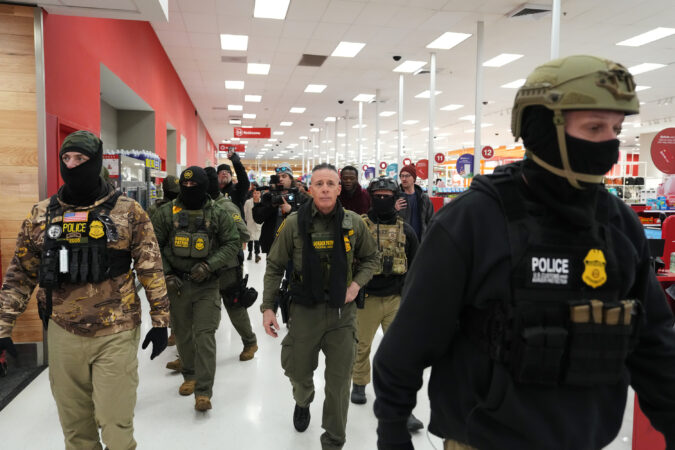
Target first became a bull’s-eye for critics of the Trump administration’s surge in immigration enforcement activity after a widely-circulated video showed federal agents detaining two Target employees in a store in the Minneapolis suburb of Richfield last month. Luis Argueta, a spokesperson for Unidos Minnesota, an immigrant-led social justice advocacy organization that is part of the ICE Out Minnesota coalition, said his group is focusing its protests on the Richfield store.
One of the demands of Wednesday’s protests is for Target to deny federal agents entry to stores unless they have judicial warrants authorizing arrests.
Some lawyers have argued that anyone, including U.S. Border Patrol and Immigration and Customers Enforcement agents without signed warrants, can enter public areas of a business as they wish. Public areas include restaurant dining sections, open parking lots, office lobbies and shopping aisles, but not back offices, closed-off kitchens or other areas of a business that are generally off-limits to the public and where privacy would be reasonably expected, those lawyers say.
Target has not commented publicly on the detention of the store employees. CEO Michael Fiddelke, who became Target’s chief executive on Feb. 2, sent a video message to the company’s 400,000 workers two days after a Border Patrol agent and a Customs and Border Protection officer shot and killed Minneapolis resident Alex Pretti on Jan. 24.
Fiddelke said the “violence and loss of life in our community is incredibly painful,” but he did not mention the immigration crackdown or the fatal shootings of Pretti, an ICU nurse at a medical center for U.S. veterans in Minneapolis, and Renee Good, a mother of three fired on in her car by an ICE agent.
Fiddelke was one of 60 CEOs of Minnesota-based companies who, in the wake of Pretti’s death, signed an open letter “calling for an immediate de-escalation of tensions and for state, local and federal officials to work together to find real solutions.”
The protests over its alleged failure to oppose the immigration crackdown in Minnesota come a year after Target faced protests and boycotts over the company’s decision to roll back its diversity, equity and inclusion initiatives. At the time, critics said the decision marked a betrayal of Target’s retail giant’s philanthropic commitment to fighting racial disparities and promoting progressive values in liberal Minneapolis and beyond.
The retail chain also is struggling with a persistent sales malaise. Critics have complained of disheveled stores that are missing the budget-priced flair that long ago earned the retailer the nickname “Tarzhay.”
While Wednesday’s protests targeted a tiny fraction of the company’s nearly 2,000 stores, the negative attention serves as another distraction from Target’s business, according to Neil Saunders, managing director of the retail division of market research firm GlobalData.
“The agenda has been hijacked by this,” Saunders said. “And it is a bit of a distraction for Target that they’d rather not have.”
In recent days, a national coalition of Mennonite congregations organized roughly a dozen demonstrations inside and outside of Target stores across the country, singing and urging Target to publicly call Congress to defund Immigration and Customs Enforcement among other demands.
A spokesperson for Mennonite Action said the coalition was not formally connected to ICE Out but following the lead of organizers in Minneapolis.
The Rev. Joanna Lawrence Shenk, associate pastor at First Mennonite Church of San Francisco, said the group did not plan any actions on Wednesday but was mapping out weekend singalong events at Targets in a handful of towns and cities, including Pittsburgh and Harrisonburg, Virginia. She estimated that by the end of the weekend more than 1,000 congregation members will have participated.
Shenk noted that the Mennonites sing This Little Light of Mine and other gospel songs and hymns.
“The singing was an expression of our love for immigrant neighbors who are at risk right now and who are also a part of our congregation,” she said. “For us, it’s not just standing in solidarity with others but it’s also protecting people who are vulnerable.”
EL PASO, Texas — The Pentagon allowed U.S. Customs and Border Protection to use an anti-drone laser earlier this week, leading the Federal Aviation Administration to suddenly close the airspace over El Paso, Texas, on Wednesday, according to two people familiar with the situation who spoke on the condition of anonymity to discuss sensitive details.
The confusing arc of events began as the FAA announced it was shutting down all flight traffic over the city on the U.S.-Mexico border for 10 days, stranding some travelers, but the closure ended up only lasting a few hours. The Trump administration said it stemmed from the FAA and Pentagon working to halt an incursion by Mexican cartel drones, which are not uncommon along the southern border.
One of the people said the laser was deployed near Fort Bliss without coordinating with the FAA, which decided then to close the airspace to ensure commercial air safety. Others familiar with the matter said the technology was used despite a meeting scheduled for later this month between the Pentagon and the FAA to discuss the issue.
While the restrictions were short-lived in the city of nearly 700,000 people, it is unusual for an entire airport to shut down even for a short time. Stranded travelers with luggage lined up at airline ticket counters and car rental desks before the order was lifted.
Normal flights resumed after seven arrivals and seven departures were canceled. Some medical evacuation flights also had to be rerouted.
Jorge Rueda, 20, and Yamilexi Meza, 21, of Las Cruces, New Mexico, had their morning flight to Portland, Ore., canceled, so they were losing part of their Valentine’s Day weekend trip.
Rueda said he was glad that “10 days turned into two hours.” They were booked on an evening flight out of El Paso.
Troubling lack of coordination
The investigation into last year’s midair collision near Washington, D.C., between an airliner and Army helicopter that killed 67 people highlighted how the FAA and Pentagon were not always working well together.
The National Transportation Safety Board said the FAA and the Army did not share safety data with each other about the alarming number of close calls around Reagan National Airport and failed to address the risks.
Democratic Sen. Tammy Duckworth of Illinois, a former Army helicopter pilot who serves on committees focused on aviation and the armed services, said the issue Wednesday was the latest example of “the lack of coordination that’s endemic in this Trump administration.”
Senate Commerce Committee Chairman Ted Cruz (R., Texas) said he would request a briefing from the FAA on the incident.
Rep. Veronica Escobar, a Democrat whose district includes El Paso, said neither her office nor local officials received any advance notice of the closure. After it was lifted, she said “the information coming from the federal government does not add up.”
“I believe the FAA owes the community and the country an explanation as to why this happened so suddenly and abruptly and was lifted so suddenly and abruptly,” Escobar said at a news conference.
Transportation Secretary Sean Duffy said earlier that the airspace was closed as the Defense Department and the FAA halted an incursion by Mexican cartel drones and “the threat has been neutralized.”
Officials at the Department of Homeland Security, FAA and Department of Transportation did not immediately respond to requests for comment. A Trump administration official insisted the agencies were in lockstep to protect national security and pointed to Duffy’s statement. The Pentagon said it had nothing to add to its statement that largely mirrored Duffy’s.
Cross-border drone activity is not new
Republican Rep. Tony Gonzales, whose congressional district covers an area that stretches about 800 miles along Texas’ border with Mexico, said cartel drone sightings are common.
“For any of us who live and work along the border, daily drone incursions by criminal organizations is everyday life for us. It’s a Wednesday for us,” Gonzales said.
Steven Willoughby, deputy director of the counter-drone program at the Department of Homeland Security, told Congress in July that cartels are using drones nearly every day to transport drugs across the border and surveil Border Patrol agents. More than 27,000 drones were detected within 1,600 feet of the southern border in the last six months of 2024, he said, mostly at night.
What is “extremely rare” is the closure of an entire airport over a security issue, according to a former chief security officer at United Airlines.
Officials usually will try to take security measures to isolate the risk if a specific plane or airline is threatened rather than shut down the airport, said Rich Davis, now a senior security adviser at risk mitigation company International SOS.
Mexican officials question the explanation
Asked about the drone explanation provided by U.S. officials, Mexican President Claudia Sheinbaum said she had “no information about the use of drones on the border.” She noted that if U.S. authorities have more information, they should contact Mexico’s government.
Mexican defense and navy secretaries planned to talk with officials from U.S. Northern Command in a meeting Wednesday in Washington attended by several other countries, Sheinbaum told reporters. Sheinbaum said the Mexican officials would “listen” in the meeting and her government would look into “the exact causes” of the closure.
El Paso is a hub of cross-border commerce alongside Ciudad Juárez. That Mexican city is home to about 1.5 million people, and some of its residents are accustomed to taking advantage of facilities, including airports, on the U.S. side of the border.
That easy access to the United States also has made Juarez, like other border cities, attractive to Mexico’s drug cartels seeking to safeguard their smuggling routes for drugs and migrants headed north and cash and guns moving to the south.
‘This was a major and unnecessary disruption’
El Paso Mayor Renard Johnson told reporters that he did not hear about the closure until after the alert was issued.
“Decisions made without notice and coordination puts lives at risk and creates unnecessary danger and confusion,” Johnson said. “This was a major and unnecessary disruption, one that has not occurred since 9/11.”
The airport describes itself as the gateway to west Texas, southern New Mexico and northern Mexico. Southwest, United, American and Delta are among the carriers that operate flights there.
A similar 10-day temporary flight restriction for special security reasons remained in place Wednesday around Santa Teresa, New Mexico, which is about 15 miles (24 kilometers) northwest of the El Paso airport. FAA officials did not immediately explain why that restriction remained.
Sen. Ben Ray Lujan, a New Mexico Democrat, said in a statement that he was seeking answers from the FAA and the Trump administration “about why the airspace was closed in the first place without notifying appropriate officials, leaving travelers to deal with unnecessary chaos.”
Confusion for travelers
Travel plans on both sides of the border were disrupted.
María Aracelia was pushing two roller suitcases across the pedestrian bridge from Ciudad Juarez to El Paso on Wednesday morning. She had a round-trip flight to Illinois scheduled for the afternoon.
After receiving a text at 4 a.m. telling her about the 10-day closure, she scrambled to try to find other options, even how to get to another airport. Then came a notification that the El Paso airport had reopened.
“This is stressful, and there isn’t time to make so many changes, especially if you need to get back for work,” Aracelia said.
WASHINGTON — The House voted Wednesday to slap back President Donald Trump’s tariffs on Canada, a rare if largely symbolic rebuke of the White House agenda as Republicans joined Democrats over the objections of GOP leadership.
The tally, 219-211, was among the first times the House, controlled by Republicans, has confronted the president over a signature policy, and drew instant recrimination from Trump himself. The resolution seeks to end the national emergency Trump declared to impose the tariffs, though actually undoing the policy would require support from the president, which is highly unlikely. The resolution next goes to the Senate.
Trump believes in the power of tariffs to force U.S. trade partners to the negotiating table. But lawmakers are facing unrest back home from businesses caught in the trade wars and constituents navigating pocketbook issues and high prices.
“Today’s vote is simple, very simple: Will you vote to lower the cost of living for the American family or will you keep prices high out of loyalty to one person — Donald J. Trump?” said Rep. Gregory Meeks of New York, the top Democrat on the House Foreign Affairs Committee, who authored the resolution.
Within minutes, as the gavel struck, Trump fired off a stern warning to those in the Republican Party who would dare to cross him.
“Any Republican, in the House or the Senate, that votes against TARIFFS will seriously suffer the consequences come Election time, and that includes Primaries!” the president posted on social media.
The high-stakes moment provides a snapshot of the House’s unease with the president’s direction, especially ahead of the midterm elections as economic issues resonate among voters. The Senate has already voted to reject Trump’s tariffs on Canada and other countries in a show of displeasure. But both chambers would have to approve the tariff rollbacks, and send the resolution to Trump for the president’s signature — or veto.
Trump recently threatened to impose a 100% tariff on goods imported from Canada over that country’s proposed China trade deal, intensifying a feud with the longtime U.S. ally and Prime Minister Mark Carney.
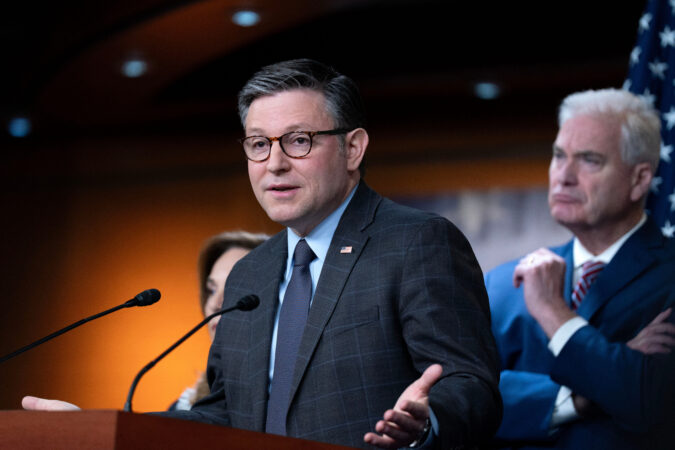
Johnson (R., La.) insisted lawmakers wait for a pending Supreme Court ruling in a lawsuit about the tariffs. He engineered a complicated rules change to prevent floor action. But Johnson’s strategy collapsed late Tuesday, as Republicans peeled off during a procedural vote to ensure the Democratic measure was able to advance.
“The president’s trade policies have been of great benefit,” Johnson had said. “And I think the sentiment is that we allow a little more runway for this to be worked out between the executive branch and the judicial branch.”
Late Tuesday evening, Johnson could be seen speaking to holdout Republican lawmakers as the GOP leadership team struggled to shore up support during a lengthy procedural vote, but the numbers lined up against him.
“We’re disappointed in what the people have done,” Kevin Hassett, the director of the White House’s National Economic Council, told reporters at the White House on Wednesday morning. “The president will make sure they don’t repeal his tariffs.”
Terminating Trump’s emergency
The resolution put forward by Meeks would terminate the national emergency that Trump declared a year ago as one of his executive orders.
The administration claimed illicit drug flow from Canada constitutes an unusual and extraordinary threat that allows the president to slap tariffs on imported goods outside the terms of the U.S.-Mexico-Canada trade agreement.
The Republican chairman of the House Foreign Affairs Committee, Rep. Brian Mast of Florida, said the flow of fentanyl into the U.S. is a dire national emergency and the policy must be left in place.
“Let’s be clear again about what this resolution is and what it’s not. It’s not a debate about tariffs. You can talk about those, but that’s not really what it is,” Mast said. “This is Democrats trying to ignore that there is a fentanyl crisis.”
Experts say fentanyl produced by cartels in Mexico is largely smuggled into the U.S. from land crossings in California and Arizona. Fentanyl is also made in Canada and smuggled into the U.S., but to a much lesser extent.
Torn between Trump and tariffs
Ahead of voting, some rank-and-file Republican lawmakers expressed unease over the choices ahead as Democrats — and a few renegade Republicans — impressed on their colleagues the need to flex their power as the legislative branch rather than ceding so much power to the president to take authority over trade and tariff policy.
Rep. Don Bacon (R., Neb.) said he was unpersuaded by Johnson’s call to wait until the Supreme Court makes its decision about the legality of Trump’s tariffs. He voted for passage.
“Why doesn’t the Congress stand on its own two feet and say that we’re an independent branch?” Bacon said. “We should defend our authorities. I hope the Supreme Court does, but if we don’t do it, shame on us.”
Bacon, who is retiring rather than facing reelection, also argued that tariffs are bad economic policy.
Other Republicans had to swiftly make up their minds after Johnson’s gambit — which would have paused the calendar days to prevent the measure from coming forward — was turned back.
“At the end of the day, we’re going to have to support our president,” said Rep. Keith Self (R., Texas).
Rep. Darrell Issa (R., Calif.) said he doesn’t want to tie the president’s hands on trade and would support the tariffs on Canada “at this time.”
LOS ANGELES — Adam Mosseri, the head of Meta’s Instagram, testified Wednesday during a landmark social media trial in Los Angeles that he disagrees with the idea that people can be clinically addicted to social media platforms.
The question of addiction is a key pillar of the case, where plaintiffs seek to hold social media companies responsible for harms to children who use their platforms. Meta Platforms and Google’s YouTube are the two remaining defendants in the case, which TikTok and Snap have settled.
At the core of the Los Angeles case is a 20-year-old identified only by the initials “KGM,” whose lawsuit could determine how thousands of similar lawsuits against social media companies would play out. She and two other plaintiffs have been selected for bellwether trials — essentially test cases for both sides to see how their arguments play out before a jury.
Mosseri said it’s important to differentiate between clinical addiction and what he called problematic use. The plaintiff’s lawyer, however, presented quotes directly from Mosseri in a podcast interview a few years ago where he said the opposite, but he clarified that he was probably using the term “too casually,” as people tend to do.
Mosseri said he was not claiming to be a medical expert when questioned about his qualifications to comment on the legitimacy of social media addiction, but said someone “very close” to him has experienced serious clinical addiction, which is why he said he was “being careful with my words.”
He said he and his colleagues use the term “problematic use” to refer to “someone spending more time on Instagram than they feel good about, and that definitely happens.”
It’s “not good for the company, over the long run, to make decisions that profit for us but are poor for people’s wellbeing,” Mosseri said.
Mosseri and the plaintiff’s lawyer, Mark Lanier, engaged in a lengthy back-and-forth about cosmetic filters on Instagram that changed people’s appearance in a way that seemed to promote plastic surgery.
“We are trying to be as safe as possible but also censor as little as possible,” Mosseri said.
In the courtroom, bereaved parents of children who have had social media struggles seemed visibly upset during a discussion around body dysmorphia and cosmetic filters. Meta shut down all third-party augmented reality filters in January 2025. The judge made an announcement to members of the public on Wednesday after the displays of emotion, reminding them not to make any indication of agreement or disagreement with testimony, saying that it would be “improper to indicate some position.”
In recent years, Instagram has added a slew of features and tools it says have made the platform safer for young people. But this does not always work. A report last year, for instance, found that teen accounts researchers created were recommended age-inappropriate sexual content, including “graphic sexual descriptions, the use of cartoons to describe demeaning sexual acts, and brief displays of nudity.”
In addition, Instagram also recommended a “range of self-harm, self-injury, and body image content” on teen accounts that the report says “would be reasonably likely to result in adverse impacts for young people, including teenagers experiencing poor mental health, or self-harm and suicidal ideation and behaviors.” Meta called the report “misleading, dangerously speculative” and said it misrepresents its efforts on teen safety.
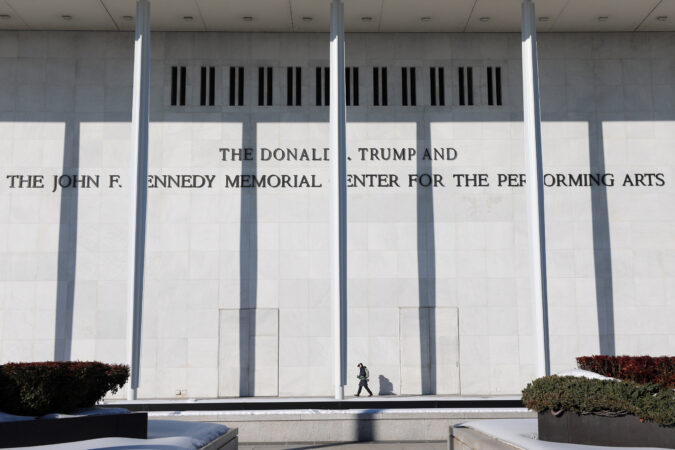
As the Trump administration prepares to close the Kennedy Center for a two-year renovation, the head of Washington’s performing arts center has warned its staff about impending cuts that will leave “skeletal teams.”
In a Tuesday memo obtained by The Associated Press, Kennedy Center president Richard Grenell told staff that “departments will obviously function on a much smaller scale with some units totally reduced or on hold until we begin preparations to reopen in 2028,” promising “permanent or temporary adjustments for most everyone.”
A Kennedy Center spokesperson declined comment Wednesday.
Over the next few months, he wrote, department heads would be “evaluating the needs and making the decisions as to what these skeletal teams left in place during the facility and closure and construction phase will look like.” Grenell said leadership would “provide as much clarity and advance notice as possible.”
The Kennedy Center is slated to close in early July. Few details about what the renovations will look like have been released since President Donald Trump announced his plan at the beginning of February. Neither Trump nor Grenell have provided evidence to support claims about the building being in disrepair, and last October, Trump had pledged it would remain open during renovations.
It’s unclear exactly how many employees the center currently has, but a 2025 tax filing said nearly 2,500 people were employed during the 2023 calendar year. A request for comment sent to Kennedy Center Arts Workers United, which represents artists and arts professionals affiliated with the center — wasn’t immediately returned.
Leading performers and groups have left or canceled appearances since Trump ousted the center’s leadership a year ago and added his own name to the building in December. The Washington Post, which first reported about Grenell’s memo, has also cited significant drops in ticket revenue that — along with private philanthropy — comprises the center’s operating budget. Officials have yet to say whether such long-running traditions as the Mark Twain Award for comedy or the honors ceremony for lifetime contributions to the arts will continue while the center is closed.
The Kennedy Center was first conceived as a national cultural facility during the Eisenhower administration, in the 1950s. President John F. Kennedy led a fundraising initiative, and the yet-to-be-built center was named in his honor following his assassination. It opened in 1971 and has become a preeminent showcase for theater, music and dramatic performances, enjoying bipartisan backing until Trump’s return to office last year.
“This renovation represents a generational investment in our future,” Grenell wrote. “When we reopen, we will do so as a stronger organization — one that honors our legacy while expanding our impact.”
After indirect fallout from the Jeffrey Epstein files sparked a dramatic day of crisis that threatened to topple him, the U.K. prime minister was saved by a pugnacious fightback and hesitation among his rivals inside the governing Labour Party about the consequences of a leadership coup.
Energy Secretary Ed Miliband said Tuesday that Labour lawmakers had “looked over the precipice … and they didn’t like what they saw.”
“And they thought the right thing was to unite behind Keir,” Miliband told the BBC.
Starmer’s authority over his center-left party has been battered by aftershocks from the publication of files related to Epstein — a man he never met and whose sexual misconduct hasn’t implicated him.
But it was Starmer’s decision to appoint veteran Labour politician Peter Mandelson, a friend of Epstein, as U.K. ambassador to Washington in 2024 that has led many to question the leader’s judgment and call for his resignation.
Starmer has apologized, saying Mandelson had lied about the extent of his ties to the convicted sex offender. And he vowed to fight for his job.
“I will never walk away from the mandate I was given to change this country,” Starmer said Tuesday as he visited a community center in southern England. “I will never walk away from the people that I’m charged with fighting for and I will never walk away from the country that I love.”
Starmer’s risky decision to appoint Mandelson – who brought extensive contacts and trade expertise but a history of questionable ethical judgment – backfired when emails were published in September showing that Mandelson had maintained a friendship with Epstein after the financier’s 2008 conviction for sex offenses involving a minor.
Starmer fired Mandelson, but a new trove of Epstein files released last month by the U.S. government contained more revelations. Mandelson is now facing a police investigation for potential misconduct in public office over documents suggesting that he passed sensitive government information to Epstein. He’s not accused of any sexual offenses.
Simmering discontent
The Mandelson scandal may be the final straw that finishes Starmer’s premiership. But it follows discontent that has built since he led Labour to a landslide election victory 19 months ago.
Some of Starmer’s problems stem from a turbulent world and a gloomy economic backdrop. He has won praise for rallying international support for Ukraine and persuading U.S. President Donald Trump to sign a trade deal easing tariffs on U.K. goods. But at home, he has struggled to bring down inflation, boost economic growth and ease the cost of living.
Despite a huge parliamentary majority that should allow the government easily to implement its plans, Starmer has been forced to make multiple U-turns on contentious policies including welfare cuts and mandatory digital ID cards.
Starmer has been through two chiefs of staff, four directors of communications and multiple lower-level staff changes in Downing Street. The prime minister’s powerful chief of staff, Morgan McSweeney, resigned Sunday over the decision to appoint Mandelson. Communications director Tim Allan left the next day.
Scottish Labour leader Anas Sarwar then held a news conference on Monday and called for Starmer to resign. If other senior party figures had followed, the pressure would have been impossible for Starmer to resist.
But none did. Instead, Starmer’s Cabinet and parliamentary colleagues posted apparently choreographed messages of support. They included former Deputy Prime Minister Angela Rayner and Health Secretary Wes Streeting, considered the two most likely challengers for the top job.
Then, came a highly charged meeting with Labour members of Parliament, where Starmer impressed many with his sense of resolve. Lawmakers in the room said that the mood, initially skeptical, became supportive.
“It was clear he was up for the fight,” said Chris Curtis, one of more than 200 Labour lawmakers elected in the 2024 Starmer landslide.
Temporary reprieve
Starmer appears to have more political lives than Larry the cat, who has outlasted five prime ministers during 15 years as “chief mouser” in Downing Street.
But his respite is likely to be temporary. Many Labour lawmakers remain worried about their reelection chances if the party’s dire opinion poll ratings don’t improve.
Some female party members feel particularly disappointed by Mandelson’s appointment. The Labour leader of Wales, First Minister Eluned Morgan, called revelations about Mandelson “deeply troubling, not least because, once again, the voices of women and girls were ignored.
“That failure must be acknowledged and confronted honestly,” she said, while offering support for Starmer.
Labour faces potential electoral setbacks at a Feb. 26 special election in what was once a party stronghold in northwest England, and in May’s elections for legislatures in Scotland and Wales and local councils in England.
And rivals are still plotting. The Guardian reported that an “Angela for leader” website backing Rayner briefly went live last month by accident. Streeting, whose genial relationship with Mandelson is now a weakness, released messages he’d exchanged with Mandelson before and after the ambassadorial appointment, seemingly in an attempt to show the men weren’t close friends.
The exchanges include implicit criticism of Starmer, with Streeting writing that the government had “No growth strategy at all.”
Tim Bale, professor of politics at Queen Mary University of London, said that Starmer had “bought himself some time” and challengers were “keeping their powder dry” for the moment.
“It’s very difficult to image after the shellacking that the party will presumably face in May, him continuing to lead the party much beyond this summer,” Bale said.
Though in British politics, nothing is impossible.
“There are problems with the other candidates,” Bale said. ”It’s never an ideal situation for any party to be choosing a prime minister in midterm, and it may be that the Labour Party decides, better the devil you know. I suspect that Keir Starmer will go, but who knows?”
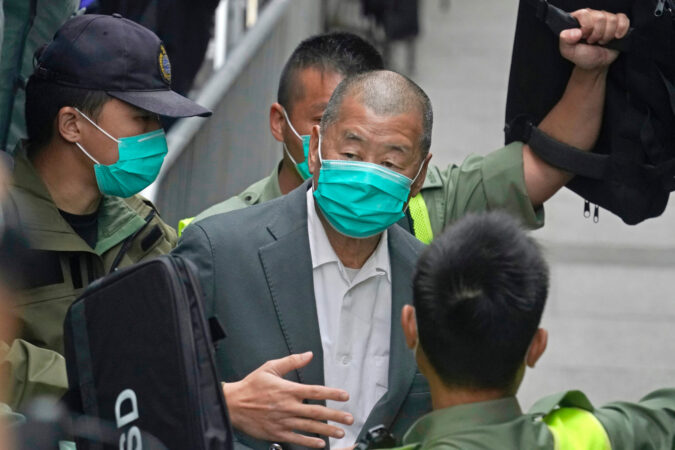
HONG KONG — Jimmy Lai, the pro-democracy former Hong Kong media tycoon and a fierce critic of Beijing, was sentenced on Monday to 20 years in prison in the longest punishment given so far under a China-imposed national security law that has virtually silenced the city’s dissent.
Lai, 78, was convicted in December of conspiring with others to collude with foreign forces to endanger national security, and of conspiracy to publish seditious articles. The maximum penalty for his conviction was life imprisonment.
His co-defendants, six former employees of his Apple Daily newspaper and two activists, received prison terms of between 6 years and 3 months, and 10 years on collusion-related charges.
Lai smiled and waved at his supporters when he arrived for the sentence. But before he left the courtroom, he looked serious, as some people in the public gallery cried. When asked about whether they would appeal, his lawyer Robert Pang said “no comment.”
Lai’s daughter says he will die ‘a martyr’ in prison
The democracy advocate’s arrest and trial have raised concerns about the decline of press freedom in what was once an Asian bastion of media independence. The government insists the case has nothing to do with a free press, saying the defendants used news reporting as a pretext for years to commit acts that harmed China and Hong Kong.
Lai was one of the first prominent figures to be arrested under the security law in 2020. Within a year, some of Apple Daily’s senior journalists also were arrested and the newspaper shut down in June 2021.
Lai’s sentencing could heighten Beijing’s diplomatic tensions with foreign governments, which have criticized Lai’s conviction and sentencing.
U.S. President Donald Trump, who is expected to visit China in April, said he felt “so badly” after the verdict and noted he spoke to Chinese leader Xi Jinping about Lai and asked him “to consider his release.”
British Prime Minister Keir Starmer’s government also has called for the release of Lai, who is a British citizen. U.K. Foreign Secretary Yvette Cooper called the prosecution “politically motivated,” saying the prison term is tantamount to a life sentence.
In a statement, Lai’s son, Sebastien, said the “draconian” prison term was devastating for his family and life-threatening for his father. “It signifies the total destruction of the Hong Kong legal system and the end of justice,” he said.
His sister Claire called the sentence “heartbreakingly cruel” in the same statement. “If this sentence is carried out, he will die a martyr behind bars,” she said.
Hong Kong leader John Lee said Lai’s sentence demonstrated the rule of law, citing his serious crimes.
“It’s bringing great satisfaction to the people,” he said in a statement.
In Beijing, China’s Foreign Ministry spokesperson Lin Jian said Lai is a Chinese citizen and called him a major planner and participant in a series of anti-China destabilizing activities in Hong Kong. He urged “relevant countries” to respect the rule of law in Hong Kong.
Judges ruled Lai was the mastermind
Lai founded Apple Daily, a now-defunct newspaper known for its critical reports against the governments in Hong Kong and Beijing. He was arrested in August 2020 under the security law that was used in a yearslong crackdown on many of Hong Kong’s leading activists.
In their ruling, three government-vetted judges wrote that the starting point of Lai’s sentence was increased because they found him to be the mastermind of the conspiracies. But they also reduced his penalty because they accepted that Lai’s age, health condition, and solitary confinement would cause his prison life to be more burdensome than that of other inmates.
“Lai was no doubt the mastermind of all three conspiracies charged and therefore he warrants a heavier sentence,” they said. “As regards the others, it is difficult to distinguish their relative culpability.”
They took into account that Lai is serving a prison term of five years and nine months in a separate fraud case and ruled that 18 years of Lai’s sentence in the security case should be served consecutively to that prison term.
Urania Chiu, lecturer in law at Oxford Brookes University, said the case is significant for its broad construction of seditious intent and application of the term “collusion with foreign forces” to certain activities by the media. The implication is particularly alarming for journalists and those working in academia, she said.
“Offering and publishing legitimate critiques of the state, which often involves engagement with international platforms and audiences, may now easily be construed as ‘collusion,’” Chiu said.
Lai has been in custody for more than five years. In January, Pang said Lai suffered health issues including heart palpitations, high blood pressure, and diabetes. The prosecution said a medical report noted Lai’s general health condition remained stable. The government said his solitary confinement was at Lai’s wish.
Co-defendants get reduced sentences
The former Apple Daily staffers and activists involved in Lai’s case entered guilty pleas, which helped reduce their sentences Monday. They earlier admitted to the prosecution charge that said they conspired with Lai to request foreign forces to impose sanctions or blockades, or engage in other hostile activities against Hong Kong or China.
The convicted journalists are publisher Cheung Kim-hung, associate publisher Chan Pui-man, editor-in-chief Ryan Law, executive editor-in-chief Lam Man-chung, executive editor-in-chief responsible for English news Fung Wai-kong, and editorial writer Yeung Ching-kee. They received prison terms ranging between six years and nine months, to 10 years.
The two activists, Andy Li and Chan Tsz-wah, were sentenced to six years and three months, and seven years and three months respectively.
The penalties for Cheung, Chan, and Yeung, alongside the two activists, were reduced in part because they served as prosecution witnesses and the judges said their evidence had “significantly” contributed to the conviction of Lai.
Before sunrise, dozens of people stood in line outside the court building to secure a seat in the courtroom. One of them was former Apple Daily employee Tammy Cheung.
“Whatever happens, it’s an end — at least we’ll know the outcome,” Cheung said before the sentence was delivered.
Case considered a blow to Hong Kong media
Lai founded Apple Daily in 1995, two years before the former British colony returned to Chinese rule. Its closure in 2021 shocked the local press scene. Hong Kong ranked 140th out of 180 territories in the press-freedom index compiled by media freedom organization Reporters Without Borders in 2025, far from its 18th place in 2002.
Steve Li, chief superintendent of the police force’s National Security Department, welcomed the heavy sentence on Lai. “Obviously, he has done nothing good for Hong Kong that could serve as a basis for his mitigation,” he told reporters.
The government said it will confiscate assets related to Lai’s crime.
Human Rights Watch’s Asia director Elaine Pearson said the harsh 20-year-sentence is effectively a death sentence, calling it cruel and unjust.