Category: Business Wires

  • Trump’s Medicaid work mandates are meant to save money. But first states will have to spend millions

    Trump’s Medicaid work mandates are meant to save money. But first states will have to spend millions

    JEFFERSON CITY, Mo. — To receive Medicaid health coverage, some adults will soon have to show they are working, volunteering, or taking classes. But to gather that proof, many states first will have to spend millions of dollars improving their computer systems.

    Across the nation, states face an immense task and high costs to prepare for the Jan. 1 kickoff of new Medicaid eligibility mandates affecting millions of lower-income adults in the government-funded healthcare program.

    The first half of a $200 million federal allotment has already begun flowing to states to help implement the new requirements. But the tab for the needed technology improvements and additional staff is likely to exceed $1 billion, according to an Associated Press analysis of budget projections in more than 25 states. That extra cost will be borne by a mixture of federal and state tax dollars.

    The task is not as simple as pushing through a software update on your smartphone or personal computer. That’s because each state has its own system for managing Medicaid, often requiring experts to make customized changes.

    “Our current eligibility systems are pretty old, and the ability to change them is very, very difficult,” said Toi Wilde, chief information officer for the Missouri Department of Social Services.

    New requirements affect millions, but not all

    The big tax-cut law signed last year by Trump is financed, in part, by sweeping Medicaid changes intended to cut government spending. Two of the most prominent will apply in four-fifths of the states, affecting Medicaid enrollees ages 19 through 64, without young children, whose incomes are above the typical eligibility cutoff.

    Those Medicaid participants will have to work or do community service at least 80 hours a month, or enroll at least half-time as a student. They also will face eligibility reviews every six months, instead of annually, meaning they could lose coverage more quickly when their circumstances change.

    The two provisions together are projected to save the federal government $388 billion over the next decade, resulting in 6 million fewer people with health insurance, according to the Congressional Budget Office.

    But states first must update their online portals used by Medicaid participants, their aging computer systems used by state workers, and their methods of verifying information through various databases.

    Most will have to turn to private contractors to meet the time crunch. At least 10 companies have agreed to offer discounted services, according to the federal Centers for Medicare and Medicaid Services.

    Making those technology upgrades “is going to be a lift. It’s not something straightforward. It’s not easy,” said Jason Reilly, a partner at Guidehouse, a firm that is advising several states on the Medicaid requirements.

    Most states don’t currently collect employment or education information about Medicaid participants. So states are looking to tap into outside sources to verify job and school data. But there’s no database of community volunteers.

    And states are still waiting on federal rules — not due until June — to define some of the exceptions to the work requirements, such as how to determine who qualifies as “medically frail.”

    States face extra pressure to get it right because the federal government will start penalizing states with too many Medicaid payment errors in October 2029.

    States will be angling for extra federal money

    Congress guaranteed all states a share of the $200 million allotted for Medicaid work and eligibility changes. But states must apply for additional federal money. The federal government covers up to 90% of states’ costs to develop systems for determining Medicaid eligibility, 75% of costs to maintain those systems, and half of most other administrative costs.

    Missouri won early approval for the 90% federal funding rate. State lawmakers now are fast-tracking a $32 million appropriation needed to solicit bids for vendors to start upgrading technology platforms and improving a chatbot for Medicaid participants. Over the next year, the state’s social services agency expects to need about 120 additional workers — at a cost of $12.5 million — to handle the extra administrative workload.

    Other states also project large costs. Maryland expects to spend over $32 million in federal and state funds to implement the Medicaid changes, Kentucky more than $46 million, and Colorado over $51 million. Arizona estimates it could cost $65 million — and require 150 additional staff — to implement the new federal requirements.

    Some states surveyed by the AP reported even higher expected costs, though they didn’t always provide a breakdown for how much is due to new Medicaid mandates and how much pertains to Supplemental Nutrition Assistance Program changes also contained in Trump’s big law.

    Several states, including Arkansas, said they are still working on cost estimates for the Medicaid changes. Arkansas instituted a Medicaid work requirement in 2018-2019, and thousands of people were dropped from the rolls before a federal court ended it. Many of the technology changes required by the new federal mandates could be covered under an existing vendor contract and have “a minimal financial impact on our Medicaid budget,” the Arkansas Department of Human Services said in an email.

    Nebraska has said it plans to launch Medicaid work requirements in May, seven months ahead of the federal deadline. But the state has not detailed any associated costs and did not respond to inquiries from the AP.

    Georgia’s work requirement prompts concerns

    Georgia is currently the only state requiring some Medicaid recipients to work, after receiving special federal approval several years ago to expand coverage to some adults not otherwise eligible.

    The Georgia Pathways to Coverage program racked up more than $54 million of administrative costs from 2021 through the first part of 2025 — twice the amount of medical assistance paid out over that same period, according to the U.S. Government Accountability Office. Almost all of those costs came from technology changes to its eligibility and enrollment system.

    Some Medicaid analysts point to Georgia’s costs and Arkansas’ enrollment losses as reasons for caution as work requirements roll out in other states.

    “A huge amount of funding is going to go to vendors to construct these complicated red-tape systems that prevent people who need it from getting healthcare,” said Joan Alker, executive director of the Center for Children and Families at Georgetown University. “In my view, that is a big, big risk.”


  • Iran vows revenge as war widens

    Iran vows revenge as war widens

    DUBAI, United Arab Emirates — The U.S. and Israel pounded targets across Iran on Sunday, dropping massive bombs on the country’s ballistic missile sites and wiping out warships as part of an intensifying military campaign following the killing of Supreme Leader Ayatollah Ali Khamenei.

    Blasts rattled windows across the country and sent plumes of smoke high into the sky above Tehran. More than 200 people have been killed since the start of the strikes that killed Khamenei and other senior leaders, Iranian leaders have said.

    Iran vowed revenge, firing missiles at Israel and Gulf Arab states in a counteroffensive that the U.S. military said resulted in the deaths of three service members — the first known American casualties from the conflict. Israeli rescue services said strikes had hit several locations, including Jerusalem and a synagogue in the central town of Beit Shemesh, where nine people were killed and 28 wounded, bringing the overall death toll in the country to 11. Eleven people were still missing after the strike, police said.

    But the attacks on Iran showed no signs of relenting as the U.S. and Israel took aim at key military, political, and intelligence targets in what appeared to be a widening war that carried the potential for a prolonged conflict that could envelop the Middle East and destabilize it. The strikes, the second time in eight months that the U.S. and Israel had combined against Iran, represented a startling show of military might for an American president who swept into office on an “America First” platform and vowed to keep out of “forever wars.”

    U.S. President Donald Trump said the U.S. would “avenge” the deaths of the service members and that “there will likely be more” killed before the conflict ends.

    In a video he posted on social media, Trump called the three service members “true American patriots who have made the ultimate sacrifice for our nation, even as we continue the righteous mission for which they gave their lives.”

    He added: “Sadly, there will likely be more, before it ends. That’s the way it is. Likely be more.”

    Israel, which had pledged “nonstop” strikes, said it was increasing its attacks, with 100 fighter jets simultaneously striking targets in Tehran, Brig. Gen. Effie Defrin told reporters at a briefing. The targets included buildings belonging to Iran’s air force, its missile command, and its internal security force, which violently quashed anti-government protests in January.

    The U.S. military, meanwhile, said B-2 stealth bombers struck Iran’s ballistic missile facilities with 2,000-pound bombs. Trump said on social media that nine Iranian warships had been sunk and that the Iranian navy’s headquarters had been “largely destroyed.”

    Europe has mostly stayed out of the war and pressed for diplomacy, but in an indication that the conflict could draw in other nations, Britain, France, and Germany said Sunday they were ready to work with the U.S. to help stop Iran’s attacks.

    Prime Minister Keir Starmer said Britain would allow the United States to use its bases to strike Iranian missile sites. The U.K. maintains nearby bases on Cyprus and the Chagos Islands, a British archipelago in the Indian Ocean.

    In the 12-day war last June, Israeli and American strikes greatly weakened Iran’s air defenses, military leadership, and nuclear program. But the killing of Khamenei, who ruled Iran for more than three decades, creates a leadership vacuum, increasing the risk of regional instability.

    Trump, who a day earlier had encouraged Iranians to “take over” their government, signaled Sunday that he was open to dialogue with Iran’s new leadership.

    “They want to talk, and I have agreed to talk, so I will be talking to them,” he told the Atlantic.

    Streets of Tehran are largely deserted

    In Tehran, there was little sign that Iranians had heeded Trump’s call for an uprising against the government.

    The streets were largely deserted as people sheltered during heavy airstrikes, witnesses told the Associated Press, speaking anonymously for fear of retribution. The paramilitary Basij, which has played a central role in crushing protests, set up checkpoints across the city, they said.

    Two powerful explosions were heard in Tehran’s Niavaran neighborhood late Sunday.

    An eyewitness in the city told AP that the windows of their apartment shook violently, and residents came out onto the streets fearing it was too dangerous to stay inside. The witness spoke on condition of anonymity for fear of reprisals. Video footage from Tehran showed plumes of smoke filling the skyline, and the official IRNA news agency reported that parts of the building of the Islamic Republic of Iran Broadcasting were struck Sunday.

    In southern Iran, at least 165 people were killed Saturday when a girls’ school was struck, and dozens more were wounded, IRNA reported. The Israeli military said it was not aware of strikes in the area. The U.S. military said it was looking into the reports.

    The U.S. military did not provide details about the three service members who were killed or about five others who were seriously wounded. It said several others suffered minor injuries and concussions.

    Iran says new leadership is in place

    As supreme leader, Khamenei had final say on all major policies since 1989. He led Iran’s clerical establishment and the Revolutionary Guard, the two main centers of power in the governing theocracy.

    The CIA had been tracking the movements of senior Iranian leaders, including Khamenei, for months, according to a person familiar with the operation who was not authorized to comment publicly and spoke on condition of anonymity. The intelligence was shared with Israeli officials, and the timing of the strikes was adjusted in part because of that information, the person said.

    Iranian President Masoud Pezeshkian said in a prerecorded message that a new leadership council had begun its work. The country’s foreign minister, Abbas Araghchi, said a new supreme leader would be chosen in “one or two days.”

    Iran vows revenge for Khamenei killing

    As word spread of Khamenei’s death, some in Tehran could be seen cheering from rooftops, witnesses said. Others mourned as a black flag was raised over the Imam Reza shrine in Mashhad.

    An Iranian medical professional in northern Iran said he and colleagues spent the early hours of Sunday celebrating Khamenei’s death indoors because armed security forces are still heavily deployed in his city.

    There were forces stopping and interrogating people celebrating in their cars, but there was no gunfire, said the doctor, who spoke on condition of anonymity for fear of reprisal.

    “It was one of the best nights, if not the best night of our lives,” the doctor said in a voice message from the city of Rasht. In fact, “it was actually my first time ever smoking a cigarette. It was a very, very nice time. We didn’t sleep at all. And we don’t even feel tired.”

    Araghchi, Iran’s foreign minister, blamed the U.S. and Israel for starting the war. He said he had spoken to his counterparts in the Gulf countries and urged them to pressure the U.S. and Israel to end it.

    “You have crossed our red line and must pay the price,” Iran’s parliamentary speaker, Mohammad Bagher Qalibaf, said in a televised address. “We will deliver such devastating blows that you yourselves will be driven to beg.”

    Trump warned against any retaliation.

    “THEY BETTER NOT DO THAT,” he said in a social media post. “IF THEY DO, WE WILL HIT THEM WITH A FORCE THAT HAS NEVER BEEN SEEN BEFORE!”

    Strikes planned for months, feared for weeks

    Tensions have escalated in recent weeks as the Trump administration built up the largest force of American warships and aircraft in the Middle East in decades. The president insisted he wanted a deal to constrain Iran’s nuclear program while the country struggled with growing dissent following nationwide protests.

    An Israeli military official described Saturday’s mission as the result of months of “extremely high coordination” with the U.S. The official, speaking on condition of anonymity to discuss a covert operation, said a variety of factors created a “golden opportunity” to take out much of Iran’s leadership. Those factors included weeks of training and monitoring the movements of senior figures, along with “real time intelligence” that the targets were gathered together.

    The results, the official said, were near-simultaneous strikes, within 60 seconds of one another, in three locations 1,000 miles from Israel that killed Khamenei and some 40 senior figures, including the head of the Revolutionary Guard and the country’s defense minister.

  • Hundreds of thousands of travelers stranded by flight disruptions after attack on Iran

    Hundreds of thousands of travelers stranded by flight disruptions after attack on Iran

    LONDON — America and Israel’s attack on Iran disrupted flights across the Middle East and beyond Saturday as countries around the region closed their airspace and three of the key airports that connect Europe, Africa, and the West to Asia halted operations.

    Hundreds of thousands of travelers were either stranded or diverted to other airports after Israel, Qatar, Syria, Iran, Iraq, Kuwait, and Bahrain closed their airspace. There also was no flight activity over the United Arab Emirates, flight tracking website FlightRadar24 said, after the government there announced a “temporary and partial closure” of its airspace.

    That led to the closure of key hub airports in Dubai, Abu Dhabi, and Doha, and the cancellation of more than 1,800 flights by major Middle Eastern airlines. The three major airlines that operate at those airports — Emirates, Qatar Airways, and Etihad — typically have about 90,000 passengers per day crossing through those hubs and even more travelers headed to destinations in the Middle East, according to aviation analytics firm Cirium.

    Then later on Saturday officials at Dubai International Airport — the largest in the United Arab Emirates and one of the busiest in the world — said four people were injured as the Emirates condemned what it called a “blatant attack involving Iranian ballistic missiles.” Strikes were also reported at other commercial airports in the region, including Kuwait International.

    “For travelers, there’s no way to sugarcoat this,” said Henry Harteveldt, an airline industry analyst and president of Atmosphere Research Group. “You should prepare for delays or cancellations for the next few days as these attacks evolve and hopefully end.”

    Airlines that are crossing the Middle East will have to reroute flights around the conflict with many flights headed south over Saudi Arabia. That will add hours to those flights and consume additional fuel, adding to the costs airlines will have to absorb. So ticket prices could quickly start to increase if the conflict lingers.

    The added flights will also put pressure on air traffic controllers in Saudi Arabia who might have to slow traffic to make sure they can handle it safely. And the countries that closed their airspace will miss out on the overflight fees airlines pay for crossing overhead.

    But Mike McCormick, who used to oversee air traffic control for the Federal Aviation Administration before he retired and is now a professor at Embry-Riddle Aeronautical University, said over the next few days these countries might be able to reopen parts of their airspace once American and Israeli officials share with the airlines where military flights are operating and how capable Iran remains of firing missiles.

    “Those countries then will be able to go through and say, OK, we can reopen this portion of our space but we’ll keep this portion of our airspace closed,” McCormick said. “So I think what we’ll see in the next 24 to 36 hours how the use of airspace evolves as the kinetic activity gets more well defined and as the capability of Iran to actually shoot missiles and create additional risk is diminished due to the attacks.”

    But it is unclear how long the disruption to flight operations could last. For comparison, the Israeli and U.S. attack on Iran in June 2025 lasted 12 days.

    ‘No one knows’

    The situation was changing quickly and airlines urged passengers to check their flight status online before heading to the airport.

    Some airlines issued waivers to affected travelers that will allow them to rebook their flight plans without paying extra fees or higher fares.

    Jonathan Escott and his fiancé had arrived at the airport in Newcastle, England, on Saturday only to find out that his direct flight to Dubai on Emirates airline was canceled, leaving everyone on the flight stuck there.

    Escott left to go back to where he was staying with family, about an hour from the airport, but has no idea when he may be able to travel.

    “No one knows,” Escott said. “No one really knows what’s going on with the conflict, really. Not Emirates, Emirates don’t have a clue. No one has a clue.”

    At least 145 planes that were en route to cities like Tel Aviv and Dubai early Saturday were diverted to airports in cities like Athens, Istanbul, or Rome, according to FlightAware. Others turned around and returned to where they had taken off. One plane spent nearly 15 hours in the air after leaving Philadelphia and getting all the way to Spain before turning around and returning to where it started.

    Numerous airlines canceled international flights to Dubai through the weekend, as India’s civil aviation agency designated much of the Middle East — including skies above Jordan, Saudi Arabia, and Lebanon — as a high security risk zone at all altitudes.

    Air India canceled all flights to Mideast destinations. Turkish Airlines said flights to Lebanon, Syria, Iraq, Iran, and Jordan were suspended until Monday and flights to Qatar, Kuwait, Bahrain, the United Arab Emirates, and Oman were suspended.

    The airline said additional cancellations may be announced, and many other airlines were suspending flights into the region through the weekend.

    Travelers advised to be ‘very creative’

    U.S.-based Delta Air Lines and United Airlines suspended flights to Tel Aviv at least through the weekend. Dutch airline KLM had already announced earlier in the week that it was suspending flights to and from Tel Aviv.

    Airlines including Lufthansa, Air France, Transavia, and Pegasus canceled all flights to Lebanon, while American Airlines suspended flights from Philadelphia to Doha.

    Virgin Atlantic said it would avoid flying over Iraq, meaning flights to and from India, the Maldives, and Riyadh could take slightly longer. The airline already was not flying over Iran and said all flights would carry appropriate fuel in case they need to reroute on short notice.

    British Airways said flights to Tel Aviv and Bahrain will be suspended until next week, and flights to Amman, Jordan, were canceled Saturday.

    “Travelers should anticipate that there will be a lot of disruptions,” Harteveldt said. “To be honest, if you haven’t left home, chances are you won’t be leaving home if you’re supposed to travel to or through these destinations for at least several days, if not longer. And if you are returning home, you will have to be very creative about how you get home.”

  • Trump orders all federal agencies to phase out use of Anthropic technology

    Trump orders all federal agencies to phase out use of Anthropic technology

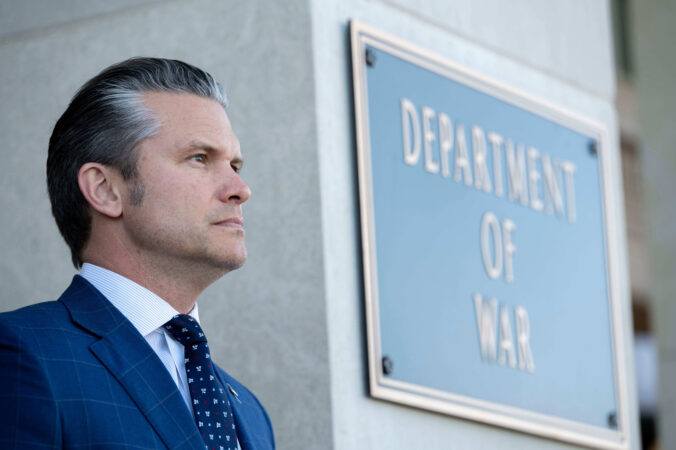
    WASHINGTON — The Trump administration on Friday ordered all U.S. agencies to stop using Anthropic’s artificial intelligence technology and imposed other major penalties, culminating an unusually public clash between the government and the company over AI safety.

    President Donald Trump, Defense Secretary Pete Hegseth, and other officials took to social media to chastise Anthropic for failing to allow the military unrestricted use of its AI technology by a Friday deadline, accusing it of endangering national security after CEO Dario Amodei refused to back down over concerns the company’s products could be used in ways that would violate its safeguards.

    “We don’t need it, we don’t want it, and will not do business with them again!” Trump said on social media.

    Hegseth also deemed the company a “supply chain risk,” a designation typically stamped on foreign adversaries that could derail the company’s critical partnerships with other businesses.

    Anthropic had said it sought narrow assurances from the Pentagon that its AI chatbot Claude would not be used for mass surveillance of Americans or in fully autonomous weapons. The Pentagon said it was not interested in such uses and would only deploy the technology in legal ways, but it also insisted on access without any limitations.

    The government’s effort to assert dominance over the internal decision-making of the company comes amid a wider clash over AI’s role in national security and concerns about how increasingly capable machines could be used in high-stakes situations involving lethal force, sensitive information or government surveillance.

    Trump and others lash out at Anthropic

    Trump said Anthropic made a mistake trying to strong-arm the Pentagon. He wrote on Truth Social that most agencies must immediately stop using Anthropic’s AI but gave the Pentagon a six-month period to phase out the technology that is already embedded in military platforms.

    “The United States of America will never allow a radical left, woke company to dictate how our great military fights and wins wars!” he wrote in all caps.

    After months of private talks exploded into public debate this week, Anthropic said Thursday that the government’s new contract language would allow “safeguards to be disregarded at will.” Amodei said his company “cannot in good conscience accede” to the demands.

    Anthropic can afford to lose the contract. But the government’s actions posed broader risks at the peak of the company’s meteoric rise from a little-known computer science research lab in San Francisco to one of the world’s most valuable startups.

    The president’s decision was preceded by hours of top Trump appointees from the Pentagon and the State Department taking to social media to criticize Anthropic, but their complaints posed contradictions.

    Top Pentagon spokesman Sean Parnell said on social media Thursday that Anthropic’s unwillingness to go along with the military’s demands was “jeopardizing critical military operations and potentially putting our warfighters at risk.” Hegseth said Friday that the Pentagon “must have full, unrestricted access to Anthropic’s models for every LAWFUL purpose in defense of the Republic.”

    Trump’s social media post also mandated the company “better get their act together, and be helpful” during a six-month phase-out period or there would be “major civil and criminal consequences to follow.”

    However, Hegseth’s choice to designate Anthropic a supply chain risk uses an administrative tool that has been designed for companies owned by U.S. adversaries to prevent them from selling products that are harmful to American interests.

    Virginia Sen. Mark Warner, the top Democrat on the Senate Intelligence Committee, noted that this dynamic, “combined with inflammatory rhetoric attacking that company, raises serious concerns about whether national security decisions are being driven by careful analysis or political considerations.”

    Anthropic didn’t immediately reply to a request for comment on the Trump administration’s actions.

    Dispute shakes up Silicon Valley

    The dispute stunned AI developers in Silicon Valley, where venture capitalists, prominent AI scientists and a large number of workers from Anthropic’s top rivals — OpenAI and Google — voiced support for Amodei’s stand in open letters and other forums.

    The move is likely to benefit Elon Musk’s competing chatbot, Grok, which the Pentagon plans to give access to classified military networks, and could serve as a warning to two other competitors, Google and OpenAI, that have still-evolving contracts to supply their AI tools to the military.

    Musk sided with Trump’s administration, saying on his social media platform X that “Anthropic hates Western Civilization.”

    But one of Amodei’s fiercest rivals, OpenAI CEO Sam Altman, sided with Anthropic and questioned the Pentagon’s “threatening” move in a CNBC interview and a letter to employees that said OpenAI shared the same red lines. Amodei once worked for OpenAI before he and other OpenAI leaders quit to form Anthropic in 2021.

    “For all the differences I have with Anthropic, I mostly trust them as a company, and I think they really do care about safety,” Altman told CNBC, hours before he gathered employees for an all-hands meeting Friday.

    Retired Air Force Gen. Jack Shanahan, a former leader of the Pentagon’s AI initiatives, wrote on social media this week that “painting a bullseye on Anthropic garners spicy headlines, but everyone loses in the end.”

    Shanahan said Claude is already being widely used across the government, including in classified settings, and Anthropic’s red lines were “reasonable.” He said the AI large language models that power chatbots like Claude, Grok, and ChatGPT are also “not ready for prime time in national security settings,” particularly not for fully autonomous weapons.

    Anthropic is “not trying to play cute here,” he wrote Thursday on LinkedIn. “You won’t find a system with wider & deeper reach across the military.”

  • US wholesale prices arrive hotter than expected, up 0.5% from December and 2.9% from a year ago

    US wholesale prices arrive hotter than expected, up 0.5% from December and 2.9% from a year ago

    WASHINGTON — U.S. wholesale prices came in hotter than expected last month.

    The Labor Department reported Friday that its producer price index, which measures inflation before it hits consumers, rose 0.5% from December and 2.9% from January 2025. Economists had forecast a 0.3% increase for the month and 1.6% year over year, according to a survey by the data firm FactSet.

    Excluding food and energy prices, which bounce around from month to month, so-called core wholesale prices rose 0.8% from December and 3.6% from January 2025 — both higher than forecasters had expected. The year-over-year increase in core prices was the biggest since March of last year.

    Driving the increase was an uptick in the wholesale price of services, led by higher profit margins for retailers and wholesalers. The increase suggests that companies are passing along the cost of President Donald Trump’s tariffs to their customers.

    “Retailers’ tariff bill has come down marginally in the last few months, but they have continued to lift their selling prices,” Samuel Tombs, chief U.S. economist at Pantheon Macroeconomics, wrote in a commentary.

    And core good prices climbed 0.7% from December and 4.2% from January 2025 on hefty increases in the prices of cosmetics, pet food, some metals, and metal-cutting machinery.

    Energy prices were down as gasoline prices dropped 5.5% from December and 15.7% from a year earlier. Wholesale food prices also fell.

    The producer price report comes two weeks after the Labor Department reported that consumer prices rose just 2.4% last month compared to a year earlier, closing in on the Federal Reserve’s 2% target.

    Economists had worried that Trump’s double-digit taxes on imports would drive inflation higher. Their impact has so far been more modest than expected — although inflation remains higher than the Fed would like.

    Wholesale prices can offer an early look at where consumer inflation might be headed. Economists also watch it because some of its components, notably measures of health care and financial services, flow into the Fed’s preferred inflation gauge — the personal consumption expenditures, or PCE, price index.

    In December, PCE inflation rose faster than economists had forecast, climbing 2.9% from a year earlier — biggest such increase since March 2024.

    The Fed cut its benchmark lending rate three times last year to support a sluggish job market. But the Fed been reluctant to cut further until it sees what happens to inflation. After Friday’s producer price report, economist Ben Ayers of Nationwide said, “We expect the Fed to remain on pause during its upcoming March meeting.’’

  • Anthropic CEO says AI company ‘cannot in good conscience accede’ to Pentagon’s demands

    Anthropic CEO says AI company ‘cannot in good conscience accede’ to Pentagon’s demands

    WASHINGTON — Anthropic CEO Dario Amodei said Thursday the artificial intelligence company “cannot in good conscience accede” to the Pentagon’s demands to allow wider use of its technology.

    The maker of the AI chatbot Claude said in a statement that it’s not walking away from negotiations, but that new contract language received from the Defense Department “made virtually no progress on preventing Claude’s use for mass surveillance of Americans or in fully autonomous weapons.”

    The Pentagon’s top spokesman has reiterated that the military wants to use Anthropic’s artificial intelligence technology in legal ways and will not let the company dictate any limits ahead of a Friday deadline to agree to its demands.

    Sean Parnell said Thursday on social media that the Pentagon “has no interest in using AI to conduct mass surveillance of Americans (which is illegal) nor do we want to use AI to develop autonomous weapons that operate without human involvement.”

    Anthropic’s policies prevent its models, such as its chatbot Claude, from being used for those purposes. It’s the last of its peers — the Pentagon also has contracts with Google, OpenAI, and Elon Musk’s xAI — to not supply its technology to a new U.S. military internal network.

    Parnell said the Pentagon wants to “use Anthropic’s model for all lawful purposes” but didn’t offer details on what that entailed. He said opening up use of the technology would prevent the company from “jeopardizing critical military operations.”

    “We will not let ANY company dictate the terms regarding how we make operational decisions,” he said.

    During a meeting on Tuesday between Defense Secretary Pete Hegseth and Amodei, military officials warned that they could cancel Anthropic’s contract, designate the company as a supply chain risk, or invoke a Cold War-era law called the Defense Production Act to give the military more sweeping authority to use its products, even if the company doesn’t approve.

    Amodei said Thursday that “those latter two threats are inherently contradictory: one labels us a security risk; the other labels Claude as essential to national security.”

    Parnell left out the threatened use of the Defense Production Act in the Thursday post on X and said Anthropic has “until 5:01 PM ET on Friday to decide.”

    “Otherwise, we will terminate our partnership with Anthropic and deem them a supply chain risk,” he wrote.

    The talks that escalated this week began months ago. Amodei said that given “the substantial value that Anthropic’s technology provides to our armed forces, we hope they reconsider.” But if they don’t, he said Anthropic “will work to enable a smooth transition to another provider.”

    Sen. Thom Tillis, a North Carolina Republican who is not seeking reelection, said Thursday that the Pentagon has been handling the matter unprofessionally while Anthropic is “trying to do their best to help us from ourselves.”

    “Why in the hell are we having this discussion in public?” Tillis told reporters. “This is not the way you deal with a strategic vendor that has contracts.”

    He added, “When a company is resisting a market opportunity for fear of negative consequences, you should listen to them and then behind closed doors figure out what they’re really trying to solve.”

    Sen. Mark Warner of Virginia, the ranking Democrat on the Senate Intelligence Committee, said he was “deeply disturbed” by reports that the Pentagon is “working to bully a leading U.S. company.”

    “Unfortunately, this is further indication that the Department of Defense seeks to completely ignore AI governance,” Warner said in a statement. It ”further underscores the need for Congress to enact strong, binding AI governance mechanisms for national security contexts.”

    As Pentagon officials say they always will follow the law with their use of AI models, Hegseth told Fox News last February, weeks after becoming defense secretary, that “ultimately, we want lawyers who give sound constitutional advice and don’t exist to attempt to be roadblocks to anything.”

  • Warner Bros. deems Paramount’s takeover bid superior to Netflix deal

    Warner Bros. deems Paramount’s takeover bid superior to Netflix deal

    NEW YORK — Warner Bros. Discovery has determined that Paramount’s latest takeover offer is superior to the streaming and studio agreement it struck with Netflix, marking a stark shift in momentum in the fight for the storied Hollywood giant.

    Warner Bros. Discovery, the owner of HBO Max, DC Studios, and such popular titles as Harry Potter, had backed Netflix’s proposal for months. But after Skydance-owned Paramount upped its rival bid for the entire company to $31 per share, in addition to other revisions, Warner’s board on Thursday said that the offer “constitutes a ‘company superior proposal.’”

    Netflix declined to raise its offer for Warner Bros., saying the deal was “no longer financially attractive.” Netflix had raised its bid to $27.75 per share.

    Warner Bros. on Thursday maintained that Netflix’s bid remained on the table. The board said it had “not withdrawn or modified” its previous recommendation in favor of that transaction.

    Paramount CEO David Ellison applauded the news — noting in a statement that the company was “pleased WBD’s Board has unanimously affirmed the superior value of our offer.”

    A buyout of all or parts of Warner’s business would vastly reshape Hollywood and the wider media landscape. And the takeover fight was complicated because Netflix and Paramount wanted different things. Unlike the streaming giant, Paramount wants all of Warner’s operations, including networks like CNN and Discovery.

    That would put CNN under the same roof as Paramount’s CBS — which has seen significant editorial shifts, notably with the installation of Free Press founder Bari Weiss at CBS News, under the recent Skydance ownership deal. And if Paramount’s acqusition of Warner proceeds, many expect the reach of those changes to only grow.

    A Paramount-Warner combo would also combine two of Hollywood’s five legacy studios that remain today, in addition to their theatrical channels. Beyond , Warner movies like Superman, Barbie, and One Battle After Another — as well as hit TV series like The White Lotus and Succession — would join Paramount’s content library.

    Today, Paramount’s lineup of titles include Top Gun, Titantic, and The Godfather. And beyond CBS, it owns networks like MTV and Nickelodeon, as well as the Paramount+ streaming service.

    Executives at Paramount — and Netflix, in its separate bid for Warner — have argued that merging will be good for consumers and the wider industry. But lawmakers and entertainment trade groups have sounded the alarm about the prospect of either deal — warning that a buyout of all or parts of Warner’s business would only further consolidate power in an industry already run by just a few major players.

    Critics say that could result in job losses, less diversity in filmmaking, and potentially more headaches for consumers who are facing rising costs of streaming subscriptions as is.

    Combined, that raises tremendous antitrust concerns — and a Warner sale could come down to who gets the regulatory green light. The U.S. Department of Justice has already initiated reviews, and other countries are expected to do so, too.

    The companies have spent the last couple of months in a heated, public back and forth over whose deal has a better regulatory path — and offers more value for Warner shareholders.

    Beyond increasing its proposed purchase price for Warner, the company also agreed to a regulatory termination fee of $7 billion. And Paramount pledged to move up a previously-promised “ticking fee.”

    The company initially said it would pay 25 cents per share for every quarter the deal drags on past the end of the year. Now it has agreed to pay that amount if the deal doesn’t go through by the end of September, Warner said.

    But Paramount is taking on billions of dollars in debt to finance its offer. And David Ellison’s father, Oracle founder Larry Ellison, is heavily backing the bid for his son’s company. Foreign soverign wealth funds have also provided equity for the offer, drawing scrunity.

    The Ellisons also have a close relationship with President Donald Trump — bringing more politics into question. Trump previously made unprecedented suggestions about his involvement in seeing a deal through, before walking back those statements and maintaining that regulatory approval will be up to the Justice Department.

    The push to acquire Warner also arrives just months after Skydance closed its own buyout of Paramount — in a contentious merger approved just weeks after the company agreed to pay the president $16 million to settle a lawsuit over editing at CBS’ 60 Minutes program.

    Still, Trump has continued to publicly lash out at Paramount and 60 Minutes since.

  • The IRS broke the law by disclosing confidential information to ICE 42,695 times, judge says

    The IRS broke the law by disclosing confidential information to ICE 42,695 times, judge says

    WASHINGTON — A federal judge ruled on Thursday that the IRS broke the law by disclosing confidential taxpayer information “approximately 42,695 times” to Immigration and Customs Enforcement.

    U.S. District Judge Colleen Kollar-Kotelly found that the IRS had erroneously shared taxpayer data of thousands of people with the Department of Homeland Security as part of the agencies’ controversial agreement to share information on immigrants for the purpose of identifying and deporting people illegally in the United States.

    Her finding was based off a declaration filed earlier this month by Dottie Romo, IRS’ chief risk and control officer, which revealed that the IRS had provided DHS with information on 47,000 of the 1.28 million people that ICE requested — and that, in most of those cases, gave ICE additional address information in violation of privacy rules created to protect taxpayer data.

    Kollar-Kotelly, an appointee of Bill Clinton in 1997, said in her Thursday decision that the agency violated IRS Code 6103, one of the strictest confidentiality laws in federal statute, “approximately 42,695 times by disclosing last known taxpayer addresses to ICE.”

    She called the Romo declaration “a significant development in this case.”

    “The IRS not only failed to ensure that ICE’s request for confidential taxpayer address information met the statutory requirements, but this failure led the IRS to disclose confidential taxpayer addresses to ICE in situations where ICE’s request for that information was patently deficient,” she wrote.

    The government is appealing the case, but the Thursday ruling is significant because Romo’s declaration supports the decision on appeal.

    Nina Olson, founder of the Center for Taxpayer Rights, which has sued the government over the disclosure, says “this confirms what we’ve been saying all along: that the IRS has an unlawful policy that violates the Internal Revenue Code’s protections by releasing these addresses in a way that violates the law’s requirements.”

    Representatives from the IRS and Treasury Department did not respond to Associated Press requests for comment.

    A data-sharing agreement signed last April by Treasury Secretary Scott Bessent and Homeland Security Secretary Kristi Noem allows ICE to submit names and addresses of immigrants inside the U.S. illegally to the IRS for cross-verification against tax records. The deal led the then-acting commissioner of the IRS to resign.

    There are several ongoing cases that challenge the IRS-DHS agreement.

    Earlier this week, a three-judge panel for the U.S. Court of Appeals for the D.C. Circuit declined to issue a preliminary injunction for the immigrants’ rights group, Centro de Trabajadores Unidos, and other nonprofits that are suing the federal government to stop implementation of the agreement.

    In declining the preliminary injunction request, Judge Harry T. Edwards wrote that the nonprofit groups “are unlikely to succeed on the merits of their claim,” since the information the agencies are sharing isn’t covered by the IRS privacy statute.

    Still, two separate court orders have blocked the agencies from massive transfers of taxpayer information and blocked ICE from acting upon any IRS data in its possession. Those preliminary injunctions are still in place.

  • FedEx joins other U.S. companies in seeking a refund after Trump tariffs are ruled illegal

    FedEx joins other U.S. companies in seeking a refund after Trump tariffs are ruled illegal

    FedEx is suing the U.S. government, the latest company to request a refund on what it paid for tariffs set by President Donald Trump last year after the Supreme Court ruled that the tariffs are illegal.

    More than 1,000 companies have filed suit in the U.S. Court of International Trade in efforts to recoup costs from the illegal tariffs, including large U.S. corporations such as Costco and Revlon. Most of the lawsuits were already in process ahead of the Supreme Court decision Friday.

    FedEx said in a filing with the U.S. Court of International Trade that they have “suffered injury” from having to pay the tariffs and that the relief they’re seeking from the court would redress those injuries.

    Tim Meyer, a law professor at Duke University, said each case is likely to have to be tried individually.

    “We’re going to have to wait and see how the government decides to handle the refund claims,” he said. “And then if the government chooses not to set up a process for the refunds, ultimately the Court of International Trade is going to have to adjudicate over a thousand cases.”

    The National Retail Federation said in a statement on Friday that the Supreme Court’s ruling provided certainty for U.S. businesses and manufacturers.

    “We urge the lower court to ensure a seamless process to refund the tariffs to U.S. importers,” it said. “The refunds will serve as an economic boost and allow companies to reinvest in their operations, their employees and their customers.”

    The Supreme Court struck down Trump’s far-reaching global tariffs on Friday. Trump said he was “absolutely ashamed” of some justices who ruled 6-3 against him, calling them “disloyal to our Constitution” and “lapdogs.” At one point he even raised the specter of foreign influence without citing any evidence.

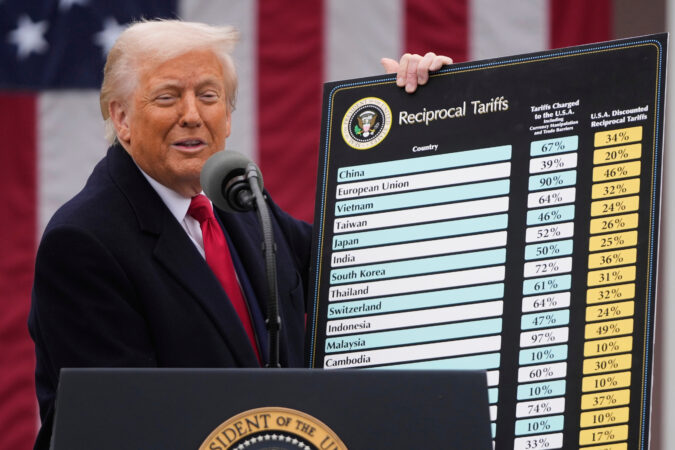
    The court’s ruling found tariffs that Trump imposed under an emergency powers law were unconstitutional, including the sweeping “reciprocal” tariffs he levied on nearly every other country.

    The Treasury had collected more than $133 billion from the import taxes the president has imposed under the emergency powers law as of December, federal data shows. The impact over the next decade has been estimated at some $3 trillion. A study by the Federal Reserve Bank of New York found U.S. businesses and consumers are paying nearly 90% of the tariffs that Trump has imposed.

    Trump has vowed to collect tariffs through other means. He reached for a stopgap option immediately after his defeat Friday at the Supreme Court: Section 122 of the Trade Act of 1974 allows the president to impose tariffs of up to 15% for up to 150 days. But any extension beyond 150 days must be approved by a Congress likely to balk at passing a tax increase as November’s midterm elections loom.

  • Fact check: A look at Trump’s false and misleading claims in his State of the Union speech

    Fact check: A look at Trump’s false and misleading claims in his State of the Union speech

    WASHINGTON — On inflation, immigration, tariffs, and matters of war and peace, President Donald Trump presented a frequently distorted account of the state of the nation Tuesday as he claimed a “turnaround for the ages” and myriad achievements that don’t pass scrutiny.

    Trump has spent the last year boasting of his accomplishments while mocking the record of his predecessor, Joe Biden. But much of this bluster has been based on misinformation, which he again fell back on during his State of the Union address.

    Here’s a closer look at the facts:

    The economy

    Claim: “When I last spoke in this chamber 12 months ago, I had just inherited a nation in crisis, with a stagnant economy.”

    The facts: Not quite. Voters were unhappy with high inflation in the 2024 election, but the U.S. economy was far from stagnant. The U.S. gross domestic product rose 2.8% in 2024 after adjusting for inflation. That’s a stronger pace of growth than the 2.2% achieved last year during the start of Trump’s second term.

    Trump: “Incomes are rising fast, the roaring economy is roaring like never before.”

    The facts: Not so. After-tax incomes, adjusted for inflation, rose just 0.9% in 2025, down from 2.2% in 2024, Biden’s last year in office. The annual gain in Trump’s first year is the smallest since 2022, when inflation soared and caused Americans’ inflation-adjusted income to drop.

    Wages and salaries are the largest component of incomes, and their growth has slowed as companies have sharply slowed hiring. Workers typically command smaller wage gains in such an environment.

    Investment

    Claim: “I secured commitments for more than $18 trillion pouring in from all over the globe.”

    The facts: Trump has presented no evidence that he’s secured this much domestic or foreign investment in the U.S. Based on statements from various companies, foreign countries, and the White House’s own website, that figure appears to be exaggerated, highly speculative, and far higher than the actual sum. The White House website offers a far lower number, $9.6 trillion, and that figure appears to include some investment commitments made during the Biden administration.

    A study published in January raised doubts about whether more than $5 trillion in investment commitments made last year by many of America’s biggest trading partners will actually materialize and questions how it would be spent if it did.

    Jobs

    Claim: “More Americans are working today than at any time in the history of our country.”

    The facts: Yes, but the number of Americans with jobs always rises as the population grows. The relevant figure is the proportion of Americans with jobs, which has fallen significantly in the last quarter-century, partly because the workforce is aging and more people are retired. The proportion of Americans with jobs peaked at 64.7% in April 2000, and was 59.8% in January.

    The unemployment rate is a low 4.3%, but was lower when Biden left office in January 2025, at 4%. During Biden’s presidency, the rate fell to a 50-year low of 3.4%.

    Foreign wars

    Claim: “My first 10 months I ended eight wars.”

    The facts: This statistic, which Trump frequently cites, is highly exaggerated.

    Although he has helped mediate relations among many nations, his impact isn’t as clear-cut as he makes it seem. In at least two instances of peace he claims credit for achieving, there were no wars to end: no fighting between Serbia and Kosovo, and friction rather than fighting between Egypt and Ethiopia over the Grand Ethiopian Renaissance Dam.

    The other wars Trump counts as those that he has solved were between Israel and Hamas, Israel and Iran, India and Pakistan, Rwanda and Congo, Armenia, and Azerbaijan, and Cambodia and Thailand. His influence varied in those conflicts.

    Tariffs

    Claim: Tariff revenues are “saving our country, the kind of money we’re taking in.”

    The facts: Though Trump has imposed massive tax hikes on imports, they’re not sizable enough to make a dent in the government’s annual budget deficits. Nor have the tariffs corresponded with manufacturing job gains.

    Before the Supreme Court struck down Trump’s tariffs based on an emergency declaration, the Congressional Budget Office estimated that his new taxes would raise $3 trillion over 10 years, or $300 billion annually.

    That’s not enough to cover the cost of his $4.7 trillion in tax cuts, including additional interest cuts, that favored companies and the wealthy. Nor is it enough to pay down an annual budget deficit that last year was $1.78 trillion.

    Claim: “Tariffs paid for by foreign countries will, like in the past, substantially replace the modern day system of income tax.’’

    The facts: Not likely. Under Trump, tariff revenues have swelled — to $195 billion in the budget year that ended Sept. 30 from $77 billion the year before. But the import taxes accounted for less than 4% of federal revenue. Income taxes and payroll taxes that finance Social Security and Medicare account for 84%.

    Medicine

    Claim: “I took prescription drugs, a very big part of healthcare, from the highest price in the entire world to the lowest. That’s a big achievement. The result is price differences of 300, 400, 500, 600% and more.”

    The facts: This is impossible. Although the Trump administration has taken steps to lower drug prices, cutting them by more than 100% would theoretically mean that people are being paid to take medications.

    Geoffrey Joyce, director of health policy at the University of Southern California’s Schaeffer Center, said in August that this claim is “total fiction” by the president. He agreed that it would amount to drug companies paying customers, rather than the other way around.

    Crime

    Claim: “Last year, the murder rate saw its single largest decline in recorded history. This is the biggest decline. Think of it in recorded history, the lowest number in over 125 years.”

    The facts: Trump takes credit for a significant decrease in violent crime during 2025, claiming the murder rate in the U.S. dropped to its lowest in 125 years. But this is misleading. Crime had already been trending down in recent years.

    A study released in January by the independent Council on Criminal Justice, which collected data from 35 U.S. cities on homicides, showed a 21% decrease in the homicide rate from 2024 to 2025.

    The report noted that when nationwide data for jurisdictions of all sizes is reported by the FBI later this year, there is a strong possibility that homicides in 2025 will drop to about 4 per 100,000 residents. That would be the lowest rate ever recorded in law enforcement or public health data going back to 1900.

    FBI reports for 2023 and 2024 show significant reductions in violent crimes.

    Crime surged during the coronavirus pandemic, with homicides increasing nearly 30% in 2020 over the previous year, the largest one-year jump since the FBI began keeping records. But violent crime dropped to near pre-pandemic levels around 2022 when Biden was president.

    Immigration

    Claim: “We will always allow people to come in legally, people that will love our country and will work hard to maintain our country.”

    The facts: Trump has actually taken steps to restrict who can emigrate to the U.S., often in the name of protecting national security.

    He suspended the refugee program on his first day in office and in October resumed the program but only in limited numbers for white South Africans.

    Trump has also placed restrictions on who can travel or emigrate to the U.S. from nearly 40 countries around the world. Many of those countries are in Africa.

    Taxes

    Claim: “With the great big beautiful bill, we gave you no tax on tips, no tax on overtime and no tax on Social Security.”

    The facts: Though the president frequently says his big tax cut bill means no tax on Social Security, that’s not true for everyone. Not all Social Security beneficiaries will be able to claim the deduction, which lasts until 2029.

    Those who won’t be able to do so include the lowest-income seniors who already don’t pay taxes on Social Security, those who choose to claim their benefits before they reach age 65 and those above a defined income threshold. The deductions also phase out as income increases.

    Elections

    Claim: “I’m asking you to approve the Save America Act to stop illegal aliens and other who are unpermitted persons from voting in our sacred American elections. The cheating is rampant in our elections.”

    The facts: He and his allies have never produced evidence of rampant election cheating. Experts say voter fraud is extremely rare, and very few noncitizens ever slip through the cracks.

    For example, a recent review in Michigan identified 15 people who appear to be noncitizens who voted in the 2024 general election, out of more than 5.7 million ballots cast in the state. Of those, 13 were referred to the attorney general for potential criminal charges. One involved a voter who has since died, and the final case remains under investigation.

    1776

    Claim: “The revolution that began in 1776 has not ended. It still continues because the flame of liberty and independence still burns in the heart of every American patriot.”

    The facts: To be clear, the American Revolution started the previous year, on April 19, 1775. The colonies declared independence in 1776. It ended Sept. 3, 1783.