Category: Business Wires

  • Power restored to most in San Francisco after massive outage

    Power restored to most in San Francisco after massive outage

    Power was restored Sunday morning to the bulk of the 130,000 homes and businesses in San Francisco impacted by a massive outage a day earlier that caused major disruptions in the city.

    The Pacific Gas and Electric Co.’s outage map showed more than 16,000 customers remained without power as of 12 p.m. PST. PG&E said earlier its crews were working Sunday to restore electricity in several neighborhoods and small areas of downtown San Francisco following Saturday’s outage.

    PG&E said it could not provide a precise timeframe for when the power would be fully restored.

    “The damage from the fire in our substation was significant and extensive, and the repairs and safe restoration will be complex,” the utility said, referring to the substation at 8th and Mission streets. That fire has been blamed for some of the blackouts. The outage remains under investigation.

    PG&E said it has mobilized additional engineers and electricians to help with restoration efforts.

    “This is a very complex work plan and will require the highest amount of safety focus to ensure safe work actions,” PG&E said. No injuries have been reported.

    The outage, which occurred shortly after 1 p.m. on Saturday, left a large swath of the northern part of the city without power that began to grow in size. At its peak, the outage represented roughly one-third of the utility company’s customers in the city.

    At about 4 p.m. on Saturday, PG&E posted on X that it had stabilized the grid and no further outages were expected.

    Social media posts and local media reported mass closures of restaurants and shops and darkened street lights and Christmas decorations on Saturday, one of the busiest shopping days of the year.

    The San Francisco Department of Emergency Management said on X there were “significant transit disruptions” happening citywide and urged residents to avoid nonessential travel and treat down traffic signals as four-way stops. Waymo, the operator of driverless ride-hailing vehicles, suspended its services. At least one video posted on social media appeared to show a Waymo vehicle stopped in the middle of an intersection.

  • Trump’s return brought stiff headwinds for clean energy. So why are advocates optimistic in 2026?

    Trump’s return brought stiff headwinds for clean energy. So why are advocates optimistic in 2026?

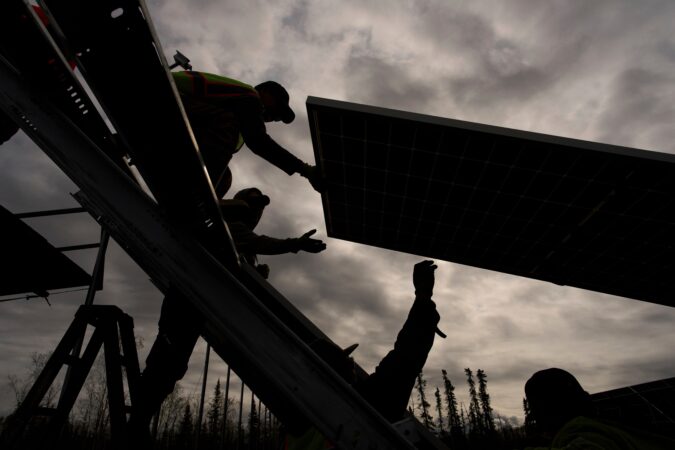
    There were some highs amid a lot of lows in a roller coaster year for clean energy as President Donald Trump worked to boost polluting fuels while blocking wind and solar, according to dozens of energy developers, experts, and politicians.

    Surveyed by the Associated Press, many described 2025 as turbulent and challenging for clean energy, though there was progress as projects connected to the electric grid. They said clean energy must continue to grow to meet skyrocketing demand for electricity to power data centers and to lower Americans’ utility bills.

    Solar builder and operator Jorge Vargas said it has been “a very tough year for clean energy” as Trump often made headlines criticizing renewable energy and Republicans muscled a tax and spending cut bill through Congress in July that dramatically rolled back tax breaks for clean energy.

    “There was a cooldown effect this year,” said Vargas, cofounder and CEO of Aspen Power. “Having said that, we are a resilient industry.”

    Plug Power president Jose Luis Crespo said the developments — both policy recalibration and technological progress — will shape clean energy’s trajectory for years to come.

    Energy policy whiplash in 2025

    Much of clean energy’s fate in 2025 was driven by booster Joe Biden’s exit from the White House.

    The year began with ample federal subsidies for clean energy technologies, a growing number of U.S.-based companies making parts and materials for projects, and a lot of demand from states and corporations, said Tom Harper, partner at global consultant Baringa.

    It ends with subsidies stripped back, a weakened supply chain, higher costs from tariffs, and some customers questioning their commitment to clean energy, Harper said. He described the year as “paradigm shifting.”

    Trump called wind and solar power “the scam of the century” and vowed not to approve new projects. The federal government canceled grants for hundreds of projects.

    The Republicans’ tax bill reversed or steeply curtailed clean energy programs established through the Democrats’ flagship climate and healthcare bill in 2022. Wayne Winegarden, at the Pacific Research Institute think tank, said the time has come for alternative energy to demonstrate viability without subsidies. ( Fossil fuels also receive subsidies.)

    Many energy executives said this was the most consequential policy shift. The bill reshaped the economics of clean energy projects, drove a rush to start construction before incentives expire, and forced developers to reassess their strategies for acquiring parts and materials, Lennart Hinrichs said. He leads the expansion of TWAICE in the Americas, providing analytics software for battery energy storage systems.

    Companies can’t make billion-dollar investments with so much policy uncertainty, said American Clean Power Association CEO Jason Grumet.

    Consequently, greenhouse gas emissions will fall at a much lower rate than previously projected in the U.S., said Brian Murray, director of the Nicholas Institute for Energy, Environment, and Sustainability at Duke University.

    Still, solar and battery storage are booming

    Solar and storage accounted for 85% of the new power added to the grid in the first nine months of the Trump administration, according to Wood Mackenzie research.

    That’s because the economics remain strong, demand is high, and the technologies can be deployed quickly, said Mike Hall, CEO of Anza Renewables.

    Solar energy company Sol Systems said it had a record year as it brought its largest utility-scale project online and grew its business. The energy storage systems company CMBlu Energy said storage clearly stands out as a winner this year too, moving from optional to essential.

    “Trump’s effort to manipulate government regulation to harm clean energy just isn’t enough to offset the natural advantages that clean energy has,” Democratic U.S. Sen. Sheldon Whitehouse said. “The direction is still all good.”

    The Solar Energy Industries Association said that no matter the policies in Washington, solar and storage will grow as the backbone of the nation’s energy future.

    Nuclear, geothermal had a good year, too

    Democrats and Republicans have supported investing to keep nuclear reactors online, restart previously closed reactors, and deploy new, advanced reactor designs. Nuclear power is a carbon-free source of electricity, though not typically labeled as green energy like other renewables.

    “Who had ‘restart Three Mile Island’ on their 2025 Bingo card?” questioned Baringa partner David Shepheard. The Pennsylvania plant was the site of the nation’s worst commercial nuclear power accident, in 1979. The Energy Department is loaning $1 billion to help finance a restart.

    Everyone loves nuclear, said Darrin Kayser, executive vice president at Edelman. It helps that the technology for small, modular reactors is starting to come to fruition, Kayser added.

    Benton Arnett, a senior director at the Nuclear Energy Institute, said that as the need for clean, reliable power intensifies, “we will look back on the actions being taken now as laying the foundation.”

    The Trump administration also supports geothermal energy, and the tax bill largely preserved geothermal tax credits. The Geothermal Rising association said technologies continue to mature and produce, making 2025 a breakthrough year.

    Offshore wind had a terrible year

    Momentum for offshore wind in the United States came to a grinding halt just as the industry was starting to gain traction, said Joey Lange, a senior managing director at Trio, a global sustainability and energy advisory company.

    The Trump administration stopped construction on major offshore wind farms, revoked wind energy permits and paused permitting, canceled plans to use large areas of federal waters for new offshore wind development, and stopped federal funding for offshore wind projects.

    That has decimated the projects, developers, and tech innovators, and no one in wind is raising or spending capital, said Eric Fischgrund, founder and CEO at FischTank PR. Still, Fischgrund said he remains optimistic because the world is transitioning to cleaner energy.

    More clean energy needed in 2026

    An energy strategy with a diverse mix of sources is the only way forward as demand grows from data centers and other sources, and as people demand affordable, reliable electricity, said former Democratic Sen. Mary Landrieu. Landrieu, now with Natural Allies for a Clean Energy Future, said promoting or punishing specific energy technologies on ideological grounds is unsustainable.

    Experts expect solar and battery storage to continue growing in 2026 to add a lot of power to the grid quickly and cheaply. The market will continue to ensure that most new electricity is renewable, said Amanda Levin, policy analysis director at the Natural Resources Defense Council.

    Hillary Bright, executive director of Turn Forward, thinks offshore wind will still play an important role too. It is both ready and needed to help address the demand for electricity in the new year, which will become increasingly clear “to all audiences,” she said. Turn Forward advocates for offshore wind.

    That skyrocketing demand “is shaking up the political calculus that drove the administration’s early policy decisions around renewables,” she said.

    BlueWave CEO Sean Finnerty thinks that states, feeling the pressure to deliver affordable, reliable electricity, will increasingly drive clean energy momentum in 2026 by streamlining permitting and the process of connecting to the grid, and by reducing costs for things like permits and fees.

    Ed Gunn, Lunar Energy’s vice president for revenue, said the industry has weathered tough years before.

    “The fundamentals are unchanged,” Gunn said, ”there is massive value in clean energy.”

  • Sony buys a majority stake in the ‘Peanuts’ comic for $457 million from Canada’s WildBrain

    Sony buys a majority stake in the ‘Peanuts’ comic for $457 million from Canada’s WildBrain

    Happiness is taking control of a beloved comic strip.

    Sony is buying a 41% stake in the Charles M. Schulz comic Peanuts and its characters including Snoopy and Charlie Brown from Canada’s WildBrain in a $457 million deal, the two companies said Friday.

    The deal adds to Sony’s existing 39% stake, bringing its shareholding to 80%, according to a joint statement. The Schulz family will continue to own the remaining 20%.

    “With this additional ownership stake, we are thrilled to be able to further elevate the value of the Peanuts brand by drawing on the Sony Groupʼs extensive global network and collective expertise,” Sony Music Entertainment President Shunsuke Muramatsu said.

    Peanuts made its debut Oct. 2, 1950, in seven newspapers. The travails of the “little round-headed kid” Charlie Brown and pals including Linus, Lucy, Peppermint Patty, and his pet beagle Snoopy eventually expanded to more than 2,600 newspapers, reaching millions of readers in 75 countries.

    The strip offers enduring images of kites stuck in trees, Charlie Brown trying to kick a football, tart-tongued Lucy handing out advice for a nickel, and Snoopy taking the occasional flight of fancy to the skies. Phrases such as “security blanket,” “good grief” and “happiness is a warm puppy” are a part of the global vernacular. Schulz died in 2000.

    Sony acquired its first stake in Peanuts Holdings LLC in 2018 from Toronto-based WildBrain Ltd. In Friday’s transaction, Sony’s music and movie arms signed a “definitive agreement” with WildBrain to buy its remaining stake for $630 million Canadian dollars ($457 million).

    Rights to the Peanuts brand and management of its business are handled by a wholly-owned subsidiary of Peanuts Holdings.

    WildBrain also owns other kids’ entertainment franchises including Strawberry Shortcake and Teletubbies.

  • Head of workplace rights agency urges white men to report discrimination

    Head of workplace rights agency urges white men to report discrimination

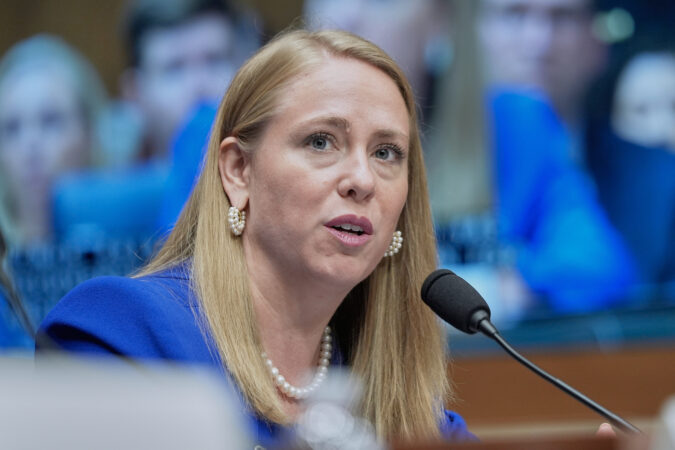
    The head of the U.S. agency for enforcing workplace civil rights posted a social media call-out urging white men to come forward if they have experienced race or sex discrimination at work.

    “Are you a white male who has experienced discrimination at work based on your race or sex? You may have a claim to recover money under federal civil rights laws,” U.S. Equal Employment Opportunity Commission Chair Andrea Lucas, a vocal critic of diversity, equity and inclusion, wrote in an X post Wednesday evening with a video of herself. The post urged eligible workers to reach out to the agency “as soon as possible” and referred users to the agency’s fact sheet on “DEI-related discrimination” for more information.

    Lucas’ post, viewed millions of times, was shared about two hours after Vice President JD Vance posted an article he said “describes the evil of DEI and its consequences,” which also received millions of views. Lucas responded to Vance’s post saying: “Absolutely right @JDVance. And precisely because this widespread, systemic, unlawful discrimination primarily harmed white men, elites didn’t just turn a blind eye; they celebrated it. Absolutely unacceptable; unlawful; immoral.”

    She added that the EEOC “won’t rest until this discrimination is eliminated.”

    A representative for Vance did not respond to a request for comment. Lucas said Thursday evening that “the gaslighting surrounding what DEI initiatives have entailed in practice ends now. We can’t attack and remedy a problem if we refuse to call it out for what it is — race or sex discrimination — or acknowledge who is harmed.”

    She added that “the EEOC’s doors are open to all,” and Title VII of the Civil Rights Act of 1964 “protects everyone, including white men.”

    Since being elevated to acting chair of the EEOC in January, Lucas has been shifting the agency’s focus to prioritize “rooting out unlawful DEI-motivated race and sex discrimination,” aligning with President Donald Trump’s own anti-DEI executive orders. Trump named Lucas as the agency’s chair in November.

    Earlier this year, the EEOC along with the Department of Justice issued two “technical assistance” documents attempting to clarify what might constitute “DEI-related Discrimination at Work” and providing guidance on how workers can file complaints over such concerns. The documents took broad aim at practices such as training, employee resource groups and fellowship programs, warning such programs — depending on how they’re constructed — could run afoul of Title VII of the Civil Rights Act, which prohibits employment discrimination based on race and gender.

    Those documents have been criticized by former agency commissioners as misleading for portraying DEI initiatives as legally fraught.

    David Glasgow, executive director of the Meltzer Center for Diversity, Inclusion, and Belonging at the NYU School of Law, said Lucas’s latest social media posts demonstrate a “fundamental misunderstanding of what DEI is.”

    “It’s really much more about creating a culture in which you get the most out of everyone who you’re bringing on board, where everyone experiences fairness and equal opportunity, including white men and members of other groups,” Glasgow said.

    The Meltzer Center tracks lawsuits that are likely to affect workplace DEI practices, including 57 cases of workplace discrimination. Although there are instances in which it occurs on a case-by-case basis, Glasgow said he has not seen “any kind of systematic evidence that white men are being discriminated against.”

    He pointed out that Fortune 500 CEOs are overwhelmingly white men, and that relative to their share of the population, the demographic is overrepresented in corporate senior leadership, Congress, and beyond.

    “If DEI has been this engine of discrimination against white men, I have to say it hasn’t really been doing a very good job at achieving that,” Glasgow said.

    Jenny Yang, a former EEOC chair and now a partner at law firm Outten & Golden, said it is “unusual” and “problematic” for the head of the agency to single out a particular demographic group for civil rights enforcement.

    “It suggests some sort of priority treatment,” Yang said. “That’s not something that sounds to me like equal opportunity for all.”

    On the other hand, the agency has done the opposite for transgender workers, whose discrimination complaints have been deprioritized or dropped completely, Yang said.

    The EEOC has limited resources, and must accordingly prioritize which cases to pursue. But treating charges differently based on workers’ identities goes against the mission of the agency, she said.

    “It worries me that a message is being sent that the EEOC only cares about some workers and not others,” Yang said.

  • Feds pave the way for Big Tech to plug data centers right into power plants in scramble for energy

    Feds pave the way for Big Tech to plug data centers right into power plants in scramble for energy

    HARRISBURG, Pa. — Federal regulators will allow tech companies to effectively plug massive data centers directly into power plants, issuing a long-awaited order Thursday, as the Trump administration urged the Federal Energy Regulatory Commission to help the U.S. lead the world in artificial intelligence and revive domestic manufacturing.

    The commission’s unanimous order is designed to clear up pressing issues around so-called “colocation” agreements in the nation’s largest grid territory, which stretches across Mid-Atlantic states to parts of Illinois and Indiana.

    But it could become a blueprint for how FERC handles an October request from Trump’s energy secretary, Chris Wright, to ensure that data centers and large manufacturers get the power they need as quickly as possible.

    It also comes amid concerns that the Mid-Atlantic territory covering some 65 million people will face electricity shortages in the coming years, as the build-out of data centers outpaces the speed of new power sources coming online.

    Laura Swett, FERC’s chair, told Thursday’s meeting that clearing the way for massive energy users — like data centers — to get electricity straight from power plants was a “critical step to give investors and consumers more certainty on how FERC believes we can solve the problem of meeting historic surging demand and realize our greatest potential as a country.”

    It would, she said, also protect regular ratepayers, even as evidence mounts in various states that regular ratepayers are bearing the cost of new power plants and transmission lines to feed energy-hungry data centers.

    Power plant owners applauded the step, as their share prices rose steeply in Thursday’s trading. Advanced Energy United, whose members provide solar and wind power, said the FERC order should help clarify how big power users can set up their own power sources.

    The Edison Electric Institute, which represents for-profit utilities, said only that it would “continue to work” to support rapid data center connection, protect ratepayers from cost-shifts and strengthen the grid for everyone.

    Jeff Dennis, executive director of the Electricity Customer Alliance, said the order showed that FERC is trying to address looming issues around fast-growing power demand and underscored the urgency to reform grid policy.

    Thursday’s order grew out of a dispute between power plant owners and electric utilities over a proposed colocation deal between Amazon’s cloud-computing subsidiary and the owner of the Susquehanna nuclear power plant in Luzerne County, Pa.

    For tech giants, such arrangements represent a quick fix to get power while avoiding a potentially longer and more expensive process of hooking into a fraying electric grid that serves everyone else.

    But utilities protested that it allows big power users to avoid paying them to maintain the grid. Some consumer advocates maintained that diverting energy from existing power plants to data centers could drive up energy prices without an answer for how rising power demand will be met for regular ratepayers.

    FERC’s Thursday order sets up a couple new regulatory tracks.

    It requires the operator of the Mid-Atlantic grid, PJM Interconnection, to develop rates and conditions for different colocation scenarios involving new power plants or sources.

    That could mean allowing a big power user to pay for only the transmission services they use, considerably less than they might otherwise pay to connect to the grid through a utility.

    The order also could require a big power user that colocates with an existing power plant to pay the cost to replace the energy that it diverts away from the broader electric grid.

  • TikTok signs deal to sell U.S. unit to American investors, including Oracle, Silver Lake

    TikTok signs deal to sell U.S. unit to American investors, including Oracle, Silver Lake

    SAN FRANCISCO — TikTok has signed agreements with three major investors — Oracle, Silver Lake, and MGX — to form a new TikTok U.S. joint venture, ensuring the popular social video platform can continue operating in the United States.

    The deal is expected to close on Jan. 22, according to an internal memo seen by the Associated Press. In the communication, CEO Shou Zi Chew confirmed to employees that ByteDance and TikTok signed the binding agreements with the consortium.

    “I want to take this opportunity to thank you for your continued dedication and tireless work. Your efforts keep us operating at the highest level and will ensure that TikTok continues to grow and thrive in the U.S. and around the world,” Chew wrote in the memo to employees. “With these agreements in place, our focus must stay where it’s always been — firmly on delivering for our users, creators, businesses and the global TikTok community.”

    Half of the new TikTok U.S. joint venture will be owned by a group of investors — among them Oracle, Silver Lake, and the Emirati investment firm MGX, who will each hold a 15% share. 19.9% of the new app will be held by ByteDance itself, and another 30.1% will be held by affiliates of existing ByteDance investors, according to the memo. The memo did not say who the other investors are and both TikTok and the White House declined to comment.

    The U.S. venture will have a new, seven-member majority-American board of directors, the memo said. It will also be subject to terms that “protect Americans’ data and U.S. national security.”

    U.S. user data will be stored locally in a system run by Oracle.

    TikTok’s algorithm — the secret sauce that powers its addictive video feed — will be retrained on U.S. user data to “ensure the content feed is free from outside manipulation,” the memo said. The U.S. venture will also oversee content moderation and policies within the country.

    American officials have previously warned that ByteDance’s algorithm is vulnerable to manipulation by Chinese authorities, who can use it to shape content on the platform in a way that’s difficult to detect.

    The algorithm has been a central issue in the security debate over TikTok. China previously maintained the algorithm must remain under Chinese control by law. But the U.S. regulation passed with bipartisan support said any divestment of TikTok must mean the platform cuts ties — specifically the algorithm — with ByteDance.

    The deal marks the end of years of uncertainty about the fate of the popular video-sharing platform in the United States. After wide bipartisan majorities in Congress passed — and President Joe Biden signed — a law that would ban TikTok in the U.S. if it did not find a new owner in the place of China’s ByteDance, the platform was set to go dark on the law’s January 2025 deadline. For a several hours, it did. But on his first day in office, President Donald Trump signed an executive order to keep it running while his administration tries to reach an agreement for the sale of the company.

    Three more executive orders followed, as Trump, without a clear legal basis, continued to extend the deadline for a TikTok deal. The second was in April, when White House officials believed they were nearing a deal to spin off TikTok into a new company with U.S. ownership that fell apart after China backed out following Trump’s tariff announcement. The third came in June, then another in September, which Trump said would allow TikTok to continue operating in the United States in a way that meets national security concerns.

    TikTok has more than 170 million users in the U.S. About 43% of U.S. adults under the age of 30 say they regularly get news from TikTok, higher than any other social media app including YouTube, Facebook and Instagram, according to a Pew Research Center report published this fall.

  • U.S. consumer prices slowed unexpectedly in November but are still up 2.7% from last year

    U.S. consumer prices slowed unexpectedly in November but are still up 2.7% from last year

    WASHINGTON — U.S. inflation slowed unexpectedly last month, the government said in a report that was delayed and likely distorted by the government shutdown.

    The Labor Department reported Thursday that its consumer price index rose 2.7% in November from a year earlier. Yet, year-over-year inflation remains well above the Federal Reserve’s 2% target, and Americans are complaining loudly about the high cost of living.

    The report was delayed eight days by the federal government’s 43-day shutdown, which also prevented the Labor Department from compiling overall numbers for consumer prices and core inflation in October. Thursday’ report gave investors, businesses and policymakers their first look at CPI since the September numbers were released on Oct. 24.

    Consumers prices had risen 3% in September from a year earlier, and forecasters had expected the November CPI to match that year-over-year increase.

    Energy prices, driven up by sharply higher fuel oil prices, rose 4.2% in November. Excluding volatile food and energy prices, so-called core inflation rose 2.6%, compared with a 3% year-over-year gain in September and the lowest since March 2021.

    U.S. inflation is still stubbornly high, partly because of President Donald Trump’s decision to impose double-digit taxes on imports from almost every country on earth along with targeted tariffs on specific products like steel, aluminum and autos.

    The president’s tariffs have so far proved less inflationary than economists feared. But they do put upward pressure on prices and complicate matters at the Fed, which is trying to decide whether to keep cutting its benchmark interest rate to support a sputtering job market or whether to hold off until inflationary pressures ease. The central bank last week decided to reduce the rate for the third time this year, but Fed officials signaled that they expect just one cut in 2026.

    Kay Haigh, global co-head of fixed income and liquidity solutions at Goldman Sachs Asset Management, warned that the November numbers were “noisy … The canceling of the October report makes month-on-month comparisons impossible, for example, while the truncated information-gathering process given the shutdown could have caused systematic biases in the data.

    “The Fed will instead focus on the December CPI released in mid-January, just two weeks before its next meeting, as a more accurate bellwether for inflation.’’

    Trump delivered a politically charged speech Wednesday carried live in prime time on network television, seeking to pin the blame for economic challenges on Democrats.

    The speech was a rehash of his recent messaging that has so far been unable to calm public anxiety about the cost of groceries, housing, utilities and other basic goods. Trump has promised an economic boom, yet inflation has stayed elevated and the job market has weakened sharply in the wake of his import taxes.

  • FCC leader says agency is no longer independent as he’s grilled by Democrats over Kimmel controversy

    FCC leader says agency is no longer independent as he’s grilled by Democrats over Kimmel controversy

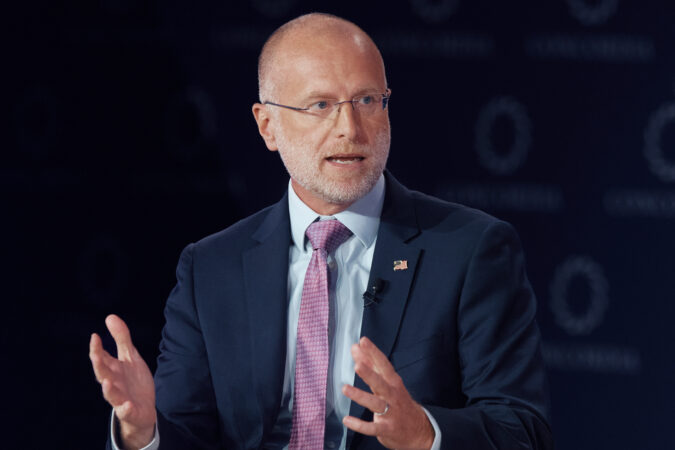
    WASHINGTON — Democratic senators on Wednesday hammered the Federal Communications Commission’s leader for pressuring broadcasters to take ABC late-night host Jimmy Kimmel off the air, suggesting that Brendan Carr was politicizing an independent agency and trampling the First Amendment.

    The FCC chairman refused to disown his comments about Kimmel and, when questioned by Democrats about an agency long considered autonomous, suggested it was not insulated from Trump’s pressure.

    “The FCC is not an independent agency,” Carr said.

    Carr later sidestepped questions about whether he considered the Republican president to be his boss and whether he had taken orders from Trump or his inner circle.

    “President Trump has designated me as chairman of the FCC,” Carr added later. “I think it comes as no surprise that I’m aligned with President Trump on policy.”

    Sen. Ben Ray Luján (D., N.M.) noted that the FCC’s website described it as an “independent U.S. government agency overseen by Congress.”

    Soon after, with the hearing still underway, the website changed, removing “independent” from a section describing its mission.

    Trump has waged an aggressive campaign against the media in his second term, filing lawsuits against outlets whose coverage he dislikes, and threatening to revoke TV broadcast licenses. On Wednesday, he criticized NBC for an interview with Democratic Sen. Raphael Warnock, saying the network “should be ashamed of themselves.”

    “The Public airwaves, which these Networks are using at no charge, should not be allowed to get away with this any longer!” Trump wrote on Truth Social. “They should be properly licensed, and pay significant amounts of money for using this very valuable Public space.”

    The 2½-hour hearing before the Senate Commerce committee repeatedly circled back to Carr’s stance on Kimmel after the late-night host’s comments on slain conservative activist Charlie Kirk. At the time, Carr’s vocal criticism and veiled threats were equated with that of a mob boss.

    Carr said he was simply enforcing laws holding networks to stricter scrutiny than cable and other forms of media and that “the FCC has walked away from enforcing the public interest standard.”

    Democrats insisted he was warping the laws Carr invoked.

    “You are weaponizing the public interest standard,” said Sen. Ed Markey (D., Mass.), who told Carr that he should resign.

    Republican senators referenced perceived First Amendment violations by the administration of former President Joe Biden, calling Democrats’ free speech arguments disingenuous. GOP members appeared intent on bringing up broadcast spectrum auctions, undersea cable infrastructure, algorithm-driven content, robocalls, and just about anything other than Carr’s statements about Kimmel.

    The committee chairman, Sen. Ted Cruz, had previously equated Carr’s comments to those of a mobster and called them “dangerous as hell.” But at the hearing, Cruz (R., Texas) took a far softer stance. He dismissed Kimmel as “tasteless” and “unfunny,” and shifted to criticizing Biden’s administration, a tack that Carr parroted throughout the hearing.

    “Joe Biden is no longer president,” Sen. Amy Klobuchar, (D., Minn.) shot back at one point.

    The hearing also included the two other commissioners, Olivia Trusty and Anna M. Gomez. Gomez, a Biden appointee, said that the FCC has “undermined its reputation as a stable, independent, and expert-driven regulatory body.”

    “Nowhere is that departure more concerning,” Gomez said, “than its actions to intimidate government critics, pressure media companies and challenge the boundaries of the First Amendment.”

    Carr was nominated to the FCC by both Trump and Biden and unanimously confirmed by the Senate three times. But he has more recently shown more overtly right-wing views, writing a section on the FCC for “Project 2025,” the sweeping blueprint for gutting the federal workforce and dismantling agencies in Trump’s second term.

    Since becoming chairman this year, Carr has launched separate investigations of all three major broadcast networks. After Kimmel’s comments on the September killing of Kirk, who was a Trump ally and leading voice of the right, Carr said: “We can do this the easy way or the hard way. These companies can find ways to take action on Kimmel or there is going to be additional work for the FCC ahead.”

    Cruz was unflinchingly critical at the time, saying “I think it is unbelievably dangerous for government to put itself in the position of saying we’re going to decide what speech we like and what we don’t, and we’re going to threaten to take you off air if we don’t like what you’re saying.”

    While Cruz did not repeat those words Wednesday, they were repeatedly invoked by Democrats. Carr did not directly respond to questions from reporters following the hearing about Cruz’s original comments.

    “I think the hearing went really well,” Carr said in response.

  • The Oscars will move to YouTube in 2029, leaving longtime home of ABC

    The Oscars will move to YouTube in 2029, leaving longtime home of ABC

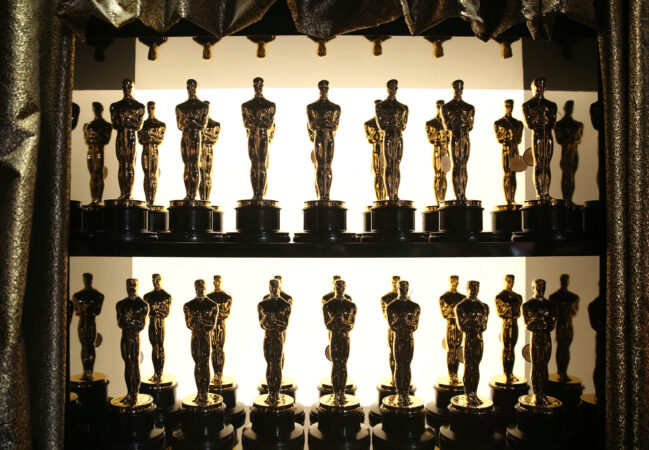
    In a seismic shift for one of television’s marquee events, the Academy Awards will depart ABC and begin streaming on YouTube beginning in 2029, the Academy of Motion Picture Arts and Sciences announced Wednesday.

    ABC will continue to broadcast the annual ceremony through 2028. That year will mark the 100th Oscars.

    But starting in 2029, YouTube will retain global rights to streaming the Oscars through 2033. YouTube will effectively be the home to all things Oscars, including red-carpet coverage, the Governors Awards, and the Oscar nominations announcement.

    “We are thrilled to enter into a multifaceted global partnership with YouTube to be the future home of the Oscars and our year-round Academy programming,” said academy chief executive Bill Kramer and academy president Lynette Howell Taylor. “The Academy is an international organization, and this partnership will allow us to expand access to the work of the Academy to the largest worldwide audience possible — which will be beneficial for our Academy members and the film community.”

    While major award shows have added streaming partnerships, the YouTube deal marks the first of the big four — the Oscars, Grammys, Emmys, and Tonys — to completely jettison broadcast television. It puts one of the most watched non-NFL broadcasts in the hands of Google. YouTube boasts some 2 billion viewers.

    The Academy Awards will stream for free worldwide on YouTube, in addition to YouTube TV subscribers. It will be available with audio tracks in many languages, in addition to closed captioning.

    Financial terms were not disclosed.

    “The Oscars are one of our essential cultural institutions, honoring excellence in storytelling and artistry,” said Neal Mohan, chief executive of YouTube. “Partnering with the academy to bring this celebration of art and entertainment to viewers all over the world will inspire a new generation of creativity and film lovers while staying true to the Oscars’ storied legacy.”

    The Walt Disney Co.-owned ABC has been the broadcast home to the Oscars for almost its entire history. NBC first televised the Oscars in 1953, but ABC picked up the rights in 1961. Aside from a period between 1971 and 1975, when NBC again aired the show, the Oscars have been on ABC.

    “ABC has been the proud home to The Oscars for more than half a century,” the network said in a statement. ”We look forward to the next three telecasts, including the show’s centennial celebration in 2028, and wish the Academy of Motion Picture Arts and Sciences continued success.”

    The 2025 Academy Awards were watched by 19.7 million viewers on ABC, a slight increase from the year before. That remains one of the biggest TV broadcasts of the year, though less than half of Oscar ratings at their peak. In 1999, more than 55 million watched James Cameron’s Titanic win best picture.

    The film academy, in choosing YouTube over other options such as Netflix or NBC Universal/Peacock, selected a platform with a wide-ranging and massive audience but one without as much of an established production infrastructure.

    Still, more people — especially young people — watch YouTube than any other streaming platform. According to Nielsen, YouTube accounted for 12.9% of all television and streaming content consumed in November. Netflix ranked second with an 8.3% market share.

  • Warner Bros asks its investors to reject the takeover bid from Paramount Skydance, saying Netflix’s will be better for customers

    Warner Bros asks its investors to reject the takeover bid from Paramount Skydance, saying Netflix’s will be better for customers

    NEW YORK — Warner Bros. is telling shareholders to reject a takeover bid from Paramount Skydance, saying that a rival bid from Netflix will be better for customers.

    “We strongly believe that Netflix and Warner Bros. joining forces will offer consumers more choice and value, allow the creative community to reach even more audiences with our combined distribution, and fuel our long-term growth,” Warner Bros. said Wednesday. “We made this deal because their deep portfolio of iconic franchises, expansive library, and strong studio capabilities will complement—not duplicate—our existing business.”

    Paramount went hostile with its bid last week, asking shareholders to reject the deal with Netflix favored by the board of Warner Bros.

    Paramount’s bid isn’t off the table altogether. While Wednesday’s letter to shareholders means Paramount’s is not the offer favored by the board at Warner Bros., shareholders can still decide to tender their shares in favor of Paramount’s offer for the entire company — including cable stalwarts CNN and Discovery.

    Unlike Paramount’s bid, the offer from Netflix does not include buying the cable operations of Warner Bros. An acquisition by Netflix, if approved by regulators and shareholders, will close only after Warner completes its previously announced separation of its cable operations.