Category: Business Wires

  • States sue Trump administration again over billions in withheld electric vehicle charging funds

    States sue Trump administration again over billions in withheld electric vehicle charging funds

    DETROIT — Sixteen states and the District of Columbia are suing President Donald Trump’s administration for what they say is the unlawful withholding of more than $2 billion dollars in funding for two electric vehicle charging programs, according to a federal lawsuit announced Tuesday.

    The lawsuit filed Tuesday in the U.S. District Court for the Western District of Washington is the latest legal battle that several states are pursuing over funding for EV charging infrastructure that they say was obligated to them by Congress under former President Joe Biden, but that the Department of Transportation and Federal Highway Administration are “impounding.”

    “The Trump Administration’s illegal attempt to stop funding for electric vehicle infrastructure must come to an end,” California Attorney General Rob Bonta said in a release. “This is just another reckless attempt that will stall the fight against air pollution and climate change, slow innovation, thwart green job creation, and leave communities without access to clean, affordable transportation.”

    The Department of Transportation did not immediately respond to request for comment.

    The Trump administration in February ordered states to halt spending money for EV charging that was allocated in the bipartisan infrastructure law passed under the previous administration.

    Several states filed a lawsuit in May against the administration for withholding the funding from the $5 billion National Electric Vehicle Infrastructure program for a nationwide charging buildout. A federal judge later ordered the administration to release much of the funding for chargers in more than a dozen states.

    Tuesday’s separate lawsuit addresses the withholding of funding obligations for two other programs: $1.8 billion for the Charging and Fueling Infrastructure Grant program, as well as about $350 million in Electric Vehicle Charger Reliability and Accessibility Accelerator money.

    Tuesday’s lawsuit is led by attorneys general from California and Colorado, joined by the attorneys general of Arizona, Delaware, Illinois, Maryland, Massachusetts, Michigan, New Jersey, New York, Oregon, Rhode Island, Vermont, Washington, Wisconsin, the District of Columbia, and the governor of Pennsylvania, Josh Shapiro.

    The Trump administration has been hostile to EVs and has dismantled several policies friendly to cleaner cars and trucks that were put in place under Biden, in favor of policies that instead align with Trump’s oil and gas industry agenda.

    Once in office a second time, President Trump immediately ordered an end to what he has called Biden’s “EV mandate.” While Biden targeted for half of new vehicle sales in the U.S. to be electric by 2030, policies did not force American consumers to buy or automakers to sell electric vehicles.

    Biden did set stringent tailpipe emissions and fuel economy rules in an effort to encourage more widespread EV uptake, as the auto industry would have had to meet both sets of requirements with a greater number of EVs in their sales mix.

    Under the Biden administration, consumers could also receive up to $7,500 in tax incentives off the price of an EV purchase.

    The Trump administration has proposed rolling back both tailpipe rules and the gas mileage standards, cut the fines to automakers for not meeting those standards, and eliminated the EV credits.

    The lawsuit comes amid those regulatory changes and as the pace of EV sales have slowed in the U.S. as mainstream buyers remain concerned about both charging availability and the price of the vehicles.

    New EVs transacted for an average of $58,638 last month, compared with $49,814 for a new vehicle overall, according to auto buying resource Kelley Blue Book.

    Automakers, meanwhile, have responded to consumers accordingly.

    Earlier this week, Ford Motor Co. announced it was pivoting away from its once-ambitious, multibillion-dollar electrification strategy in lieu of more hybrid-electric and more fuel-efficient gasoline-powered vehicles.

    In the spring, Honda Motor Co. also said it would take a significant step back from its EV efforts.

    Still, EVs are gaining traction in other areas around the world.

  • Hyundai and Kia will repair millions of vehicles under a deal to fix anti-theft technology

    Hyundai and Kia will repair millions of vehicles under a deal to fix anti-theft technology

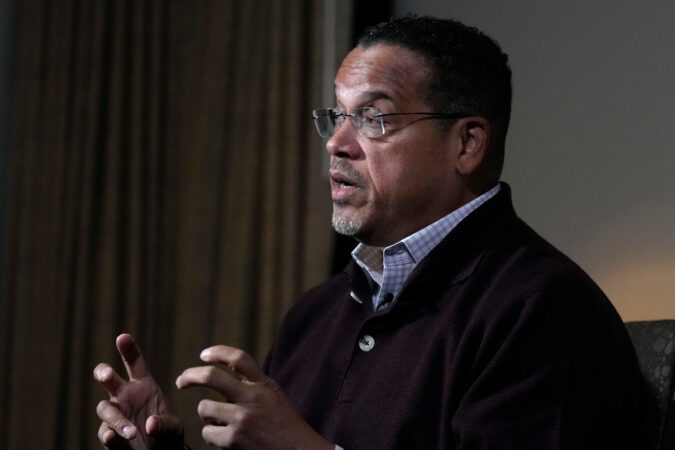
    Automakers Hyundai and Kia must offer free repairs to millions of models under a settlement announced Tuesday by Minnesota’s attorney general, who led an effort by dozens of states that argued the vehicles weren’t equipped with proper anti-theft technology, leaving them vulnerable to thefts.

    Under the nationwide settlement, the companies will offer a free repair to all eligible vehicles at a cost that could top $500 million, Minnesota Attorney General Keith Ellison said. Hyundai and Kia must also outfit all future vehicles sold in the U.S. with a key piece of technology called an engine immobilizer and pay up to $4.5 million of restitution to people whose vehicles were damaged by thieves.

    The settlement was reached by 35 states, including Pennsylvania, New Jersey, California, and New York. The vehicles eligible for fixes date as far back as 2011 and as recently as 2022. About 9 million eligible vehicles were sold nationwide.

    Thefts of Hyundai and Kia vehicles soared in part because beginning in 2021, videos posted to TikTok and other social media demonstrated how someone could steal a car with just a screwdriver and a USB cable. Minneapolis reported an 836% increase in Hyundai and Kia thefts from 2021 to 2022. Ellison announced an investigation into the automakers in early 2023.

    Ellison said the two companies installed engine immobilizers on cars sold in Mexico and Canada, but not widely in the U.S., leading to car thefts, crimes, and crashes that injured and even killed people, including teenagers.

    “This crisis that we’re talking about today started in a boardroom, traveled through the Internet, and ended up in tragic results when somebody stole those cars,” Ellison said at a news conference.

    He was joined by Twin Cities officials, a woman whose mother was killed when a stolen Kia crashed into her parents’ vehicle, and a man whose car was stolen nine times — as recently as Monday night, and including seven times after a previous software fix.

    Under the settlement, Hyundai and Kia will install a zinc sleeve to stop would-be thieves from cracking open a vehicle’s ignition cylinder and starting the car.

    Eligible customers will have one year from the date of the companies’ notice to get the repair at an authorized dealership. The repairs are expected to be available from early 2026 through early 2027.

    In a statement, Kia said the agreement is the latest step it has taken to help its customers and prevent thefts.

    “Kia is eager to continue working with law enforcement officers and officials at federal, state, and local levels to combat criminal car theft, and the role social media has played in encouraging it, and we remain fully committed to upholding vehicle security,” the company said.

    Hyundai said, “We will continue to take meaningful action to support our customers and ensure peace of mind.”

  • Zelensky says proposals to end the war in Ukraine could be presented to Russia within days

    Zelensky says proposals to end the war in Ukraine could be presented to Russia within days

    KYIV, Ukraine — Ukrainian President Volodymyr Zelensky says proposals being negotiated with U.S. officials for a deal to end the fighting in Russia’s nearly four-year-old invasion of his country could be finalized within days, after which American envoys will present them to the Kremlin before possible further meetings in the U.S. next weekend.

    A draft peace plan discussed with the U.S. during talks in Berlin on Monday is “not perfect” but is “very workable,” Zelensky told reporters hours after the discussions. He cautioned, however, that some key issues — notably what happens to Ukrainian territory occupied by Russian forces — remain unresolved.

    U.S.-led peace efforts appear to be picking up momentum. But as the spotlight shifts to Moscow, Russian President Vladimir Putin may balk at some of the proposals thrashed out by officials from Washington, Kyiv, and Western Europe, including postwar security guarantees for Ukraine.

    Zelensky said that after the Berlin talks, “we are very close to [a deal on] strong security guarantees.”

    The security proposal will be based on Western help in keeping the Ukrainian army strong, an official from a NATO nation said, speaking on condition of anonymity to discuss sensitive matters.

    “Europeans will lead a multinational and multi-domain force to strengthen those troops and to secure Ukraine from the land, sea, and air, and the U.S. will lead a ceasefire monitoring and verification mechanism, with international participation,” the official said.

    Kremlin spokesperson Dmitry Peskov repeated Tuesday that Russia wants a comprehensive peace deal, not a temporary truce.

    If Ukraine seeks “momentary, unsustainable solutions, we are unlikely to be ready to participate,” he said.

    “We want peace — we don’t want a truce that would give Ukraine a respite and prepare for the continuation of the war,” he told reporters. “We want to stop this war, achieve our goals, secure our interests, and guarantee peace in Europe for the future.”

    American officials said Monday there is consensus from Ukraine and Europe on about 90% of the U.S.-authored peace plan. President Donald Trump said: “I think we’re closer now than we have been, ever,” to a peace settlement.

    Plenty of potential pitfalls remain, notably the land issue.

    Zelensky reiterated that Kyiv rules out recognizing Moscow’s control over any part of the Donbas, an economically important region in eastern Ukraine made up of Luhansk and Donetsk. Russia’s army does not fully control either, but Trump has previously indicated that Ukraine will have to cede territory.

    “The Americans are trying to find a compromise,” Zelensky said before visiting the Netherlands on Tuesday. “They are proposing a ‘free economic zone’ [in the Donbas]. And I want to stress once again: A ‘free economic zone’ does not mean under the control of the Russian Federation.”

    Putin wants all the areas in four key regions that his forces have seized, as well as the Crimean Peninsula, which Moscow illegally annexed in 2014, to be recognized as Russian territory.

    Zelensky warned that if Putin rejects diplomatic efforts, Ukraine expects increased Western pressure on Moscow, including tougher sanctions and additional military support for defense, such as enhanced air defense systems and long-range weapons.

    Zelensky said that what is driving Kyiv officials in the negotiations is for Russia to be “held accountable for what it has done — for this war, for all the killings, for all the suffering.”

    Ukraine and the U.S. are preparing up to five documents related to the peace framework, several of them focused on security, Zelensky said.

    He was upbeat about the progress in the Berlin talks.

    “Overall, there was a demonstration of unity,” Zelensky said. “It was truly positive in the sense that it reflected the unity of the U.S., Europe, and Ukraine.”

  • The U.S. gained 64,000 jobs in November but lost 105,000 in October as the unemployment rate rose to 4.6%

    The U.S. gained 64,000 jobs in November but lost 105,000 in October as the unemployment rate rose to 4.6%

    WASHINGTON — The United States gained a decent 64,000 jobs in November but lost 105,000 in October as federal workers departed after cutbacks by the Trump administration, the government said in delayed reports.

    The unemployment rate rose to 4.6%, highest since 2021.

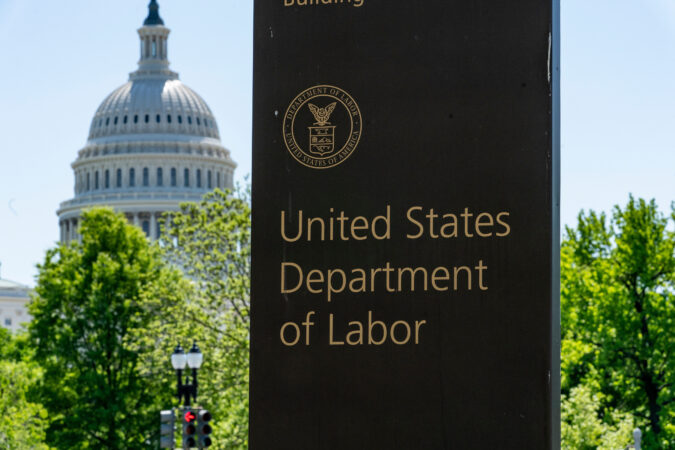
    Both the October and November job creation numbers, released Tuesday by the Labor Department, came in late because of the 43-day federal government shutdown.

    The November job gains came in higher than the 40,000 economists had forecast. The October job losses were caused by a 162,000 drop in federal workers, many of whom resigned at the end of fiscal year 2025 on Sept. 30 under pressure from billionaire Elon Musk’s purge of U.S. government payrolls.

    Labor Department revisions also knocked 33,000 jobs off August and September payrolls.

    Workers’ average hourly earnings rose just 0.1% from October, the smallest gain since August 2023. Compared to a year earlier, pay was up 3.5%, the lowest since May 2021.

    Healthcare employers added more than 46,000 jobs in November, accounting for more than two-thirds of the 69,000 private sector jobs created last month. Construction companies added 28,000 jobs. Manufacturing shed jobs for the seventh straight month, losing 5,000 jobs in November.

    Hiring has clearly lost momentum, hobbled by uncertainty over President Donald Trump’s tariffs and the lingering effects of the high interest rates the Federal Reserve engineered in 2022 and 2023 to rein in an outburst of inflation.

    American companies are mostly holding onto the employees they have. But they’re reluctant to hire new ones as they struggle to assess how to use artificial intelligence and how to adjust to Trump’s unpredictable policies, especially his double-digit taxes on imports from around the world.

    The uncertainty leaves jobseekers struggling to find work or even land interviews. Federal Reserve policymakers are divided over whether the labor market needs more help from lower interest rates. Their deliberations are rendered more difficult because official reports on the economy’s health are coming in late and incomplete after a 43-day government shutdown.

    Labor Department revisions in September showed that the economy created 911,000 fewer jobs than originally reported in the year that ended in March. That meant that employers added an average of just 71,000 new jobs a month over that period, not the 147,000 first reported. Since March, job creation has fallen farther — to an average 35,000 a month.

    The unemployment rate, though still modest by historical standards, has risen since bottoming out at a 54-year low of 3.4% in April 2023.

    “The takeaway is that the labor market remains on a relatively soft footing, with employers showing little appetite to hire, but are also reluctant to fire,” Thomas Feltmate, senior economist at TD Economics, wrote in a commentary. “That said, labor demand has cooled more than supply in recent months, which is what’s behind the steady upward drift in the unemployment rate.’’

    Adding to the uncertainty is the growing use of artificial intelligence and other technologies that can reduce demand for workers.

    “We’ve seen a lot of the businesses that we support are stuck in that stagnant mode: ‘Are we going to hire or are we not? What can we automate? What do we need the human touch with?’’’ said Matt Hobbie, vice president of the staffing firm HealthSkil in Allentown, Pennsylvania.

    “We’re in Lehigh Valley, which is a big transportation hub in eastern Pennsylvania. We’ve seen some cooling in the logistics and transportation markets, specifically because we’ve seen automation in those sectors, robotics.’’

    Worries about the job market were enough to nudge the Fed into cutting its benchmark interest rate by a quarter of a percentage point last week for the third time this year.

    But three Fed officials refused to go along with the move, the most dissents in six years. Some Fed officials are balking at further cuts while inflation remains above the central bank’s 2% target. Two voted to keep the rate unchanged. Stephen Miran, appointed by Trump to the Fed’s governing board in September, voted for a bigger cut – in line with what the president demands.

    Tuesday’s report shows that “the labor market remains weak, but the pace of deterioration probably is too slow to spur the (Fed) to ease again in January,’’ Samuel Tombs, chief U.S. economist at Pantheon Macroeconimics, wrote in a commentary. The Fed holds its next policy meeting Jan. 27-28.

    Because of the government shutdown, the Labor Department did not release its jobs reports for September, October and November on time.

    It finally put out the September jobs report on Nov. 20, seven weeks late. It published some of the October data – including a count of the jobs created that month by businesses, nonprofits and government agencies – along with the November report Tuesday. But it did not release an unemployment rate for October because it could not calculate the number during the shutdown.

  • Ford scraps fully-electric F-150 Lightning as mounting losses and falling demand hit EV plans

    Ford scraps fully-electric F-150 Lightning as mounting losses and falling demand hit EV plans

    DETROIT — Ford Motor Co. is pivoting away from its once-ambitious electric vehicle plans amid financial losses and waning consumer demand for the vehicles in lieu of investment in more efficient gasoline-engines and hybrid EVs, the company said Monday.

    The Detroit automaker, which has poured billions of dollars into electrification along with most of its industry peers, said it will no longer make the F-150 Lightning electric pickup truck, instead opting for an extended range version of the vehicle.

    Ford will also introduce some manufacturing changes; its Tennessee Electric Vehicle Center — part of the BlueOval City campus and once the future of Ford’s EVs and batteries — is being renamed the Tennessee Truck Plant and will produce new affordable gas-powered trucks instead. Ford’s Ohio Assembly Plant will produce a new gas and hybrid van.

    The company has lost $13 billion on EVs since 2023 and said it expects to take a $19.5 billion hit largely in the fourth quarter due to the EV business.

    “This is a customer-driven shift to create a stronger, more resilient and more profitable Ford,” CEO Jim Farley said in a statement. “The operating reality has changed, and we are redeploying capital into higher-return growth opportunities: Ford Pro, our market-leading trucks and vans, hybrids and high-margin opportunities like our new battery energy storage business.”

    Ford said it now expects half of its global volume will be hybrids, extended-range EVs — which also incorporate a gasoline-powered engine — and full EVs by 2030, up from 17% this year.

    “Ford’s elimination of the electric F-150 Lightning is not much of a surprise after the truck failed to come close to filling the plant’s capacity. Ford’s choice to convert an existing gas-powered truck to accept the electric drivetrain helped reduce their upfront costs which, in hindsight, was the right move,” Sam Fiorani, vice president at AutoForecast Solutions in Chester Springs, told the Associated Press.

    “For months, the future of Blue Oval City has been in question and this announcement locks in the direction of this large plant,” Fiorani added. ”Adding an affordable vehicle to the Ford lineup fills a glaring gap in the market.”

    Several other automakers have made changes to their electrified product plans in recent years as consumer demand for EVs in the U.S. hasn’t quite met expectations.

    EVs accounted for about 8% of new vehicles sales in the U.S. last year, but factors such as cost and charging infrastructure remain concerns for mainstream buyers.

    The average transaction price for a new EV last month was $58,638, compared with $49,814 for a new vehicle overall, according to auto buying resource Kelley Blue Book.

    Meanwhile, while public charging availability has improved, the industry has relied on home charging as a selling point for prospective buyers, and not everyone has access to charging at home.

    Since taking office for a second time, President Donald Trump has drastically shifted U.S. policy away from EVs, calling EV-friendly policy set under former President Joe Biden a “mandate.”

    Though Biden-era policies — including generous tax incentives for consumers, and tailpipe and fuel economy rules for automakers — encouraged EV adoption, no policies required the industry to sell or Americans to buy EVs. Biden targeted half of new vehicle sales in the U.S. to be electric by 2030.

    The Trump administration has since slashed that target, eliminated EV tax credits, and proposed weakening the emissions and gas mileage rules.

    “The one-two punch of the public’s slow EV adoption and the Trump administration’s softer stance on fuel economy and emissions has encouraged every automaker to rethink their current direction,” Fiorani added. “Electric vehicles are still the future, but the transition to EVs was always going to take longer than automakers have been promising the public.”

  • The holiday shopping season comes with tons of extra emissions. Here’s how to do it sustainably

    The holiday shopping season comes with tons of extra emissions. Here’s how to do it sustainably

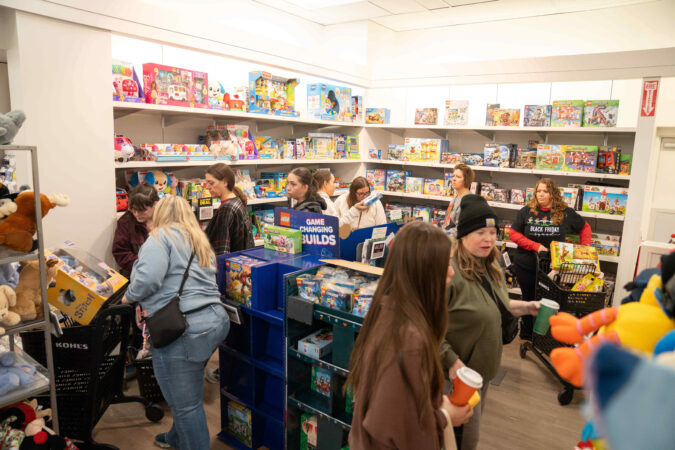
    We’re in the thick of the holiday shopping season, and U.S. residents are expected to shatter the spending record again this year. The National Retail Federation forecasts that 2025 will be the first time we collectively spend more than $1 trillion on year-end gifts.

    A lot of materials, energy, packaging, and gasoline have gone into making and moving those gifts. All of those processes release planet-warming gases into the atmosphere.

    But a lot of that environmental impact is avoidable. Making, baking, thrifting, and avoiding traditional wrapping paper are all more planet-friendly ways to give. We’ve got tips on how to do them all.

    Homemade doesn’t have to be difficult

    Sure, if you’ve got the skill to turn a wooden bowl or needlepoint a Christmas stocking, those gifts are guaranteed to be unique and meaningful. But not all of us have the knowledge or time.

    Sandra Goldmark, associate dean of Columbia Climate School’s Office of Engagement and Impact, said one of her favorite options is an act of service for a loved one. One year, for example, her husband organized all her passwords for her.

    “It was not something easy to wrap and put under the tree, but believe me, it was meaningful and really helped me more than any additional object cluttering up my home could have,” she said.

    Another winner: food. If, say, you have a long list of recipients, buy ingredients in bulk and pack them in Mason jars. Cookie mix, soup mix, sourdough starter, and spice mixes are all easily sealed and transported that way. Add some ribbon and a sprig of cedar, and it’s festive. Homemade baked goods and snacks are other options.

    “It’s inexpensive, but it takes care and time and attention,” said sustainable-living educator Sarah Robertson-Barnes.

    Give experiences instead of buying more stuff

    The advice here starts out simple: Buy less stuff. The best way to give gifts more sustainably is to buy fewer new things, said Goldmark.

    Stockings can be a common spot for toys that break quickly before going straight to the landfill. Instead, you can fill stockings with things that your friends or family need anyway, like toothbrushes or body wash, or traditional treats like fruit and chocolates.

    Giving someone an experience is another popular option. That might mean a pair of concert tickets, a spa day, a gift card to a favorite local restaurant, a local news subscription, or a membership to a local garden or zoo that the recipient can use over and over. Research has indicated that experiences strengthen relationships better than material gifts do.

    “There is so much that you could do by just saying, ‘I would prefer if you just made me a nice meal or took me out for some sort of adventure,’” said Atar Herziger, environmental psychologist and assistant professor at Technion — Israel Institute of Technology.

    Experiences also come with less packaging. Herziger cautions, though, that travel can have a high impact especially if it involves planes. So she recommends local options such as a nearby hike or a staycation.

    And if you’re unsure what experience your loved one would prefer? Herziger said don’t overcomplicate it — just ask.

    Go vintage

    Secondhand gifts are easier on the planet because they involve less manufacturing, packaging, and shipping. Robertson-Barnes looks to Facebook Marketplace or her local Buy Nothing group to find items that she would have otherwise bought new.

    “I bet somebody has the thing that you’re looking for and they would love to get rid of it,” she said.

    Still, for some recipients, secondhand gifts are taboo.

    “We do have a weird cultural thing where new is better and used is gross,” said Robertson-Barnes, who suggested reframing used gifts as “vintage.”

    Similarly, Herziger said secondhand options might be received better when they’re items that can’t be bought new, such as a family heirloom or a collectible that isn’t produced anymore.

    Goldmark looks to thrift stores for smaller toys or mugs. Record stores, used book stores, furniture stores, and antique shops are other options. And of course big names like eBay and Goodwill can have rare and unique finds, too.

    If buying secondhand simply won’t work for a recipient, Goldmark said to focus on items that are high-quality, long-lasting, repairable, and really needed. That ensures that it’s worth investing in and reduces the chance that it gets returned. Look to buy locally, rather than ordering online, to reduce how far it travels.

    The wrapping matters, too

    Millions of pounds of wrapping paper end up in the landfill every year. Much of it is blended with plastic to make it shiny or sparkly, so it can’t be recycled.

    Not sure whether your wrapping paper is recyclable? Check your local recycler’s website for guidelines, or try a simple test by crumpling it into a ball. If it holds its shape, it’s more likely recyclable. Also, if it rips as easily as printer paper or gets soggy like a saturated brown grocery bag, those are good signs it’s recyclable, too.

    Robertson-Barnes said if you already have wrapping paper on hand, you should use it rather than waste it. But once it’s gone, she recommends reusable wrapping cloths such as furoshiki, a traditional Japanese fabric for presenting gifts.

    Some experts also recommend gift bags as long as they’re reused — and not tossed.

    Another cheaper and more planet-friendly alternative to wrapping paper is newspaper or brown paper bags. Tie them off with reusable ribbon, a couple pinecones or a candy cane, and suddenly it’s festive.

    Plus, brown paper is a blank canvas with endless opportunities for customization. “If you’ve got kids, then their drawings are wonderful packaging materials. They make the best wrapping paper,” Herziger said.

  • Belarus frees Nobel Prize laureate Bialiatski, opposition figure Kolesnikova as U.S. lifts sanctions

    Belarus frees Nobel Prize laureate Bialiatski, opposition figure Kolesnikova as U.S. lifts sanctions

    VILNIUS, Lithuania — Belarus freed Nobel Peace Prize laureate Ales Bialiatski, key opposition figure Maria Kolesnikova, and dozens of other prisoners on Saturday, capping two days of talks with Washington aimed at improving ties and getting crippling U.S. sanctions lifted on a key Belarusian agricultural export.

    The U.S. announced earlier Saturday that it was lifting sanctions on Belarus’ potash sector. In exchange, President Alexander Lukashenko pardoned 123 prisoners, Belarus’ state news agency, Belta, reported.

    A close ally of Russia, Minsk has faced Western isolation and sanctions for years. Lukashenko has ruled the nation of 9.5 million with an iron fist for more than three decades, and the country has been repeatedly sanctioned by the West for its crackdown on human rights and for allowing Moscow to use its territory in the 2022 invasion of Ukraine. Belarus has released hundreds of prisoners since July 2024.

    John Coale, the U.S. special envoy for Belarus who met with Lukashenko in Minsk on Friday and Saturday, described the talks to reporters as “very productive” and said normalizing relations between Washington and Minsk was “our goal,” Belta reported.

    “We’re lifting sanctions, releasing prisoners. We’re constantly talking to each other,” Coale said, adding that the relationship between the U.S. and Belarus was moving from “baby steps to more confident steps” as they increased dialogue, according to the Belarusian news agency.

    Among the 123 prisoners were a U.S. citizen, six citizens of U.S. allied countries, and five Ukrainian citizens, a U.S. official told the Associated Press in an email. The official, who spoke on condition of anonymity to discuss private diplomatic negotiations, described the release as “a significant milestone in U.S.-Belarus engagement” and “yet another diplomatic victory” for U.S. President Donald Trump.

    The official said Trump’s engagement so far “has led to the release of over 200 political prisoners in Belarus, including six unjustly detained U.S. citizens and over 60 citizens of U.S. Allies and partners.”

    Bialiatski, Kolesnikova among those freed

    Pavel Sapelka, an advocate with the Viasna rights group, confirmed to the AP that Bialiatski and Kolesnikova were among those released.

    Bialiatski, a human rights advocate who founded Viasna, was in jail when he was awarded the Nobel Peace Prize in 2022 along with the prominent Russian rights group Memorial and Ukraine’s Center for Civil Liberties. He was later convicted of smuggling and financing actions that violated public order — charges that were widely denounced as politically motivated — and sentenced to 10 years in 2023.

    Bialiatski told the AP by phone Saturday that his release after 1,613 days behind bars came as a surprise — in the morning, he was still in an overcrowded prison cell.

    “It feels like I jumped out of icy water into a normal, warm room, so I have to adapt. After isolation, I need to get information about what’s going on,” said Bialiatski, who seemed energetic but pale and emaciated in post-release videos and photos.

    He vowed to continue his work, stressing that “more than a thousand political prisoners in Belarus remain behind bars simply because they chose freedom. And, of course, I am their voice.”

    Kolesnikova, meanwhile, was a key figure in the mass protests that rocked Belarus in 2020, and is a close ally of an opposition leader in exile, Sviatlana Tsikhanouskaya.

    Known for her close-cropped hair and trademark gesture of forming a heart with her hands, Kolesnikova became an even greater symbol of resistance when Belarusian authorities tried to deport her in September 2020. Driven to the Ukrainian border, she briefly broke away from security forces at the frontier, tore up her passport and walked back into Belarus.

    The 43-year-old professional flutist was convicted in 2021 on charges including conspiracy to seize power and sentenced to 11 years in prison.

    Others who were freed

    Among the others who were released, according to Viasna, was Viktar Babaryka — an opposition figure who had sought to challenge Lukashenko in the 2020 presidential election, widely seen as rigged, before being convicted and sentenced to 14 years in prison on charges he rejected as political.

    Viasna reported that the group’s imprisoned advocates, Valiantsin Stefanovic and Uladzimir Labkovich, and prominent opposition figure Maxim Znak were also freed. But it later said it was clarifying its report about Stefanovic’s release, and Bialiatski told the AP that Stefanovic had not been freed, though he hopes he will be soon.

    Most of those released were sent to Ukraine, Franak Viachorka, Tsikhanouskaya’s senior adviser, told the AP.

    “I think Lukashenko decided to deport people to Ukraine to show that he is in control of the situation,” Viachorka said.

    Eight or nine others, including Bialiatski, were being sent to Lithuania on Saturday, and more prisoners will be taken to the Baltic country in the next few days, Viachorka said.

    Ukrainian authorities confirmed that Belarus had handed over 114 civilians. Ukrainian President Volodymyr Zelensky confirmed that five of them are Ukrainian nationals.

    Freed Belarusian nationals “at their request” and “after being given necessary medical treatment” will be taken to Poland and Lithuania, Ukrainian authorities said.

    Lukashenko wants rapprochement with the West

    When U.S. officials last met with Lukashenko in September, Washington said it was easing some of the sanctions on Belarus. Minsk, meanwhile, released more than 50 political prisoners into Lithuania, pushing the number of prisoners it had freed since July 2024 past the 430 mark.

    “The freeing of political prisoners means that Lukashenko understands the pain of Western sanctions and is seeking to ease them,” Tsikhanouskaya, the opposition leader in exile, told the AP on Saturday.

    She added: “But let’s not be naive: Lukashenko hasn’t changed his policies, his crackdown continues and he keeps on supporting Russia’s war against Ukraine. That’s why we need to be extremely cautious with any talk of sanctions relief, so that we don’t reinforce Russia’s war machine and encourage continued repressions.”

    Tsikhanouskaya also described European Union sanctions against Belarusian potash fertilizers as far more painful for Minsk that the U.S. ones, saying that while easing U.S. sanctions could lead to the release of political prisoners, European sanctions should be used to push for long-term, systemic changes in Belarus and the end of the war in Ukraine.

    Sanctions have hit key export hard

    Belarus, which previously accounted for about 20% of global potash fertilizer exports, has faced sharply reduced shipments since Western sanctions targeted state producer Belaruskali and cut off transit through Lithuania’s port in Klaipeda, the country’s main export route.

    “Sanctions by the U.S., EU and their allies have significantly weakened Belarus’ potash industry, depriving the country of a key source of foreign exchange earnings and access to key markets,” Anastasiya Luzgina, an analyst at the Belarusian Economic Research Center BEROC, told the AP.

    “Minsk hopes that lifting U.S. sanctions on potash will pave the way for easing more painful European sanctions; at the very least, U.S. actions will allow discussions to begin,” she said.

    The latest round of U.S.-Belarus talks also touched on Venezuela, as well as Russia’s ongoing invasion of Ukraine, Belta reported.

    Coale told reporters that Lukashenko had given “good advice” on how to address the Russia-Ukraine war, saying that Lukashenko and Russian President Vladimir Putin were “longtime friends” with “the necessary level of relationship to discuss such issues.”

    “Naturally, President Putin may accept some advice and not others,” Coale said.

    The U.S. official told the AP that “continued progress in U.S.-Belarus relations” also requires steps to resolve tensions between Belarus and neighboring Lithuania, which is a member of the EU and NATO.

    The Lithuanian government this week declared a national emergency over security risks posed by meteorological balloons sent from Belarus.

    The balloons forced Lithuania to repeatedly shut down its main airport, stranding thousands of people. Earlier this year, Lithuania temporarily closed its border with Belarus, and Belarusian authorities responded by threatening to seize up to 1,200 Lithuanian trucks they said were stuck in Belarus.

    The U.S. official said improving ties between U.S. and Belarus will require “positive action to stop the release of smuggling balloons from Belarus that affect Lithuanian airspace and resolve the impoundment of Lithuanian trucks.”
  • This holiday season isn’t very merry for consumers, an AP-NORC poll finds

    This holiday season isn’t very merry for consumers, an AP-NORC poll finds

    WASHINGTON — This holiday season isn’t quite so merry for American shoppers as large shares are dipping into savings, scouring for bargains, and feeling like the overall economy is stuck in a rut under President Donald Trump, a new AP-NORC poll finds.

    The vast majority of U.S. adults say they’ve noticed higher than usual prices for groceries, electricity, and holiday gifts in recent months, according to the survey from the Associated Press-NORC Center for Public Affairs Research.

    Roughly half of Americans say it’s harder than usual to afford the things they want to give as holiday gifts, and similar numbers are delaying big purchases or cutting back on nonessential purchases more than they would normally.

    It’s a sobering assessment for the Republican president, who returned to the White House in large part by promising to lower prices, only to find that inflation remains a threat to his popularity just as it did for Democrat Joe Biden’s presidency. The poll’s findings look very similar to an AP-NORC poll from December 2022, when Biden was president and the country was grappling with higher rates of inflation. Trump’s series of tariffs have added to inflationary pressures and generated anxiety about the stability of the U.S. economy, keeping prices at levels that many Americans find frustrating.

    The president has insisted there is “no” inflation and the U.S. economy is booming, as he expressed frustration that the public feels differently.

    “When will people understand what is happening?” Trump said Thursday on Truth Social. “When will Polls reflect the Greatness of America at this point in time, and how bad it was just one year ago?”

    Most U.S. adults, 68%, continue to say the country’s economy is “poor,” which is unchanged from December 2024, before Trump returned to the presidency.

    Americans are feeling strained as they continue to see high prices

    White House officials plan to send Trump barnstorming across the country in hopes of bucking up people’s faith in the economy before next year’s midterm elections. But the president this week in Pennsylvania defended the price increases tied to his tariffs by suggesting that Americans should buy fewer dolls and pencils for children. His message is a jarring contrast with what respondents expressed in the poll, even among people who backed him in the 2024 election.

    Sergio Ruiz, 44, of Tucson, Ariz., said he is using more buy now, pay later programs to spread out over time the expense of gifts for his children. He doesn’t put a huge emphasis on politics, but he voted for Trump last year and would like to see lower interest rates to help boost his real estate business. He believes that more Americans having higher incomes would help to manage any affordability issues.

    “Prices are up. What can you do? You need to make more money,” Ruiz said.

    The poll found that when they do shop, about half of Americans are finding the lowest price more than they would normally. About 4 in 10 are dipping into their savings more than at other times.

    Democrats are more likely than Republicans to say they’re cutting back on expenses or looking for low prices, but many Republicans are budgeting more than usual as well. About 4 in 10 Republicans are looking for low prices more than they usually would, while a similar share are shopping for nonessential items less than usual.

    Views are largely similar to when Biden was president

    People felt similarly dismal about holiday shopping and the economy when Biden was president in 2022. Inflation had spiked to a four-decade high that summer. Three years later, inflation has eased substantially, but it’s still running at 3%, a full percentage point above the Federal Reserve’s target as the job market appears to have entered a deep freeze.

    The survey indicates that it’s the level of prices — and not just the rate of inflation — that is the point of pain for many families. Roughly 9 in 10 U.S. adults, 87%, say they’ve noticed higher than usual prices for groceries in the past few months, while about two-thirds say they’ve experienced higher prices than usual for electricity and holiday gifts. About half say they’ve seen higher than normal prices for gas recently.

    The findings on groceries and holiday gifts are only slightly lower than in the 2022 poll, despite the slowdown from an inflation rate that hit a four-decade peak in the middle of that year.

    Consumer spending has stayed resilient despite the negative sentiments about the economy, yet Trump’s tariffs have caused changes for shoppers such as Andrew Russell.

    The 33-year-old adjunct professor in Arlington Heights, Ill., said he used to shop for unique gifts from around the globe and buy online. But with the tariffs, he got his gifts locally and “this year, I only bought things that I can pick up in person,” he said.

    Russell, who voted Democratic in last year’s election, said he worries about the economy for next year. He thinks the investment in artificial intelligence has become a bubble that could burst, taking down the stock market.

    Little optimism about an economic rebound in 2026

    Few people expect the situation to meaningfully improve next year — a sign that Trump has done little to instill much confidence from his mix of tariffs, income tax cuts, and foreign trips to attract investments. Trump has maintained that the benefits from his policies will begin to snowball in 2026.

    About 4 in 10 U.S. adults expect next year will be economically worse for the country. Roughly 3 in 10 say conditions won’t change much. Only about 2 in 10 think things will get better, with Republicans being more optimistic.

    The belief that things will get better has slipped from last year, when about 4 in 10 said that 2025 would be better than 2024.

    Millicent Simpson, 56, of Cleveland, said she expects the economy to be worse for people like her who rely on Medicaid for healthcare and the Supplemental Nutrition Assistance Program. Simpson voted Democratic last year and blames Trump for the greater economic pressures that she faces going into the winter.

    “He’s making it rough for us,” she said. “He’s messing with the government assistance for everybody, young and old.”

    The AP-NORC poll of 1,146 adults was conducted Dec. 4-8 using a sample drawn from NORC’s probability-based AmeriSpeak Panel, which is designed to be representative of the U.S. population. The margin of sampling error for adults overall is plus or minus 4 percentage points.

  • A guide to good manners at the retail counter this holiday season

    A guide to good manners at the retail counter this holiday season

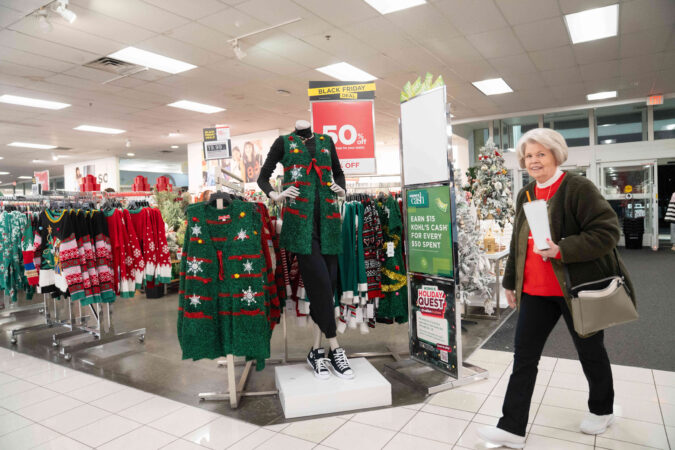
    As shoppers flood stores across the country during the year’s biggest shopping season, retail workers are bracing for what many describe as the most demanding — and often demoralizing — stretch of the job.

    “It magnifies everything,” said Nick Leighton, host of the podcast Were You Raised by Wolves?, which he cohosts with comedian Leah Bonnema. Together, they dissect etiquette and the subtleties of social behavior.

    “People are stressed, they’re busy, they’re frazzled,” he said. “When that happens, we tend to forget other people exist.”

    Whether it’s gridlocked parking lots or shelves picked clean, the holiday retail environment can become a pressure cooker where manners evaporate quickly.

    November and December have long driven retail sales, prompting companies to hire large numbers of seasonal workers to manage the surge. These workers often absorb the brunt of shoppers’ frustration. Some customers treat employees as extensions of a corporation rather than as people.

    This year, there might be even fewer employees to handle crowds of holiday shoppers. Companies say they could cut back on seasonal workers because of economic uncertainty, while at the same time, shoppers are expected to spend more than they did last year.

    “Yelling at a worker isn’t doing anything,” Leighton noted. “Everyone else is busy, too. … Your shopping isn’t more important than the next person’s.”

    Here are some expert suggestions on how customers can be kinder, more polite, and more empathetic toward the people helping to execute all those holiday lists.

    Manners apply everywhere

    People who behave courteously generally do so everywhere, while those who are rude in stores often have similar issues in their personal lives, etiquette consultants say.

    “We do not pay retail workers to be a therapist, a social worker, or a punching bag. It’s not appropriate, and it’s not fair,” said Jodi R.R. Smith, president of Mannersmith Etiquette Consulting in Massachusetts. Long before she advised companies on etiquette, Smith worked several holiday seasons at a Hallmark store.

    Plan your shopping trip and leave time

    Smith advises shoppers to plan ahead — knowing who is on their list, which stores they need to visit and when they will go. “Set yourself up for success,” she said. “Bring water or a snack. Do not go hungry.”

    Timing matters as well. “Ask yourself, ‘When is the best time to go?’” she said. “Weekends are busier, lines are longer, and parking is tighter. If possible, go on a Wednesday morning when the store opens.”

    Establish a little rapport

    Smith suggests making friendly eye contact with workers, offering a greeting, and using humor to diffuse tense moments. If someone in line becomes irritable, she said, a gentle joke about needing a nap can reset the mood.

    “We don’t have control over others’ behavior, but we certainly do over ours,” she said.

    Shoppers can help reduce frustration by asking questions — and recognizing that workers may not have all the answers, said Elizabeth Medeiros, 59, who spent more than 35 years in retail in New York and the Boston area.

    Some companies are acting preemptively. Delta Air Lines is encouraging kindness between customers and employees with a “Centennial Cheer” program. It says it will recognize “100,000 acts of kindness” with Holiday Medallion cards, which can be redeemed for gifts.

    Manage expectations

    Customers often assume store employees can control everything from inventory and discounts to restocking speed and even the behavior of other shoppers, she said.

    They can’t.

    “Customers are focused, especially during the holidays,” said Medeiros, a former district sales manager and longtime store manager. “They’re checking off lists and looking for deals, and anything that interferes with that throws them off.”

    Holiday work is already tough for staff under the best of circumstances, she noted. “Everyone is often stretched thin. Breaks get skipped, shifts get extended unexpectedly, and six-day workweeks become common.”

    As Smith puts it: “Clerks are not the CEO. Don’t expect someone making hourly wages in December to change a store policy you don’t like.”

    Training workers to defuse tension

    Adam Lukoskie, executive director of the National Retail Federation Foundation, emphasized that most customer interactions remain positive.

    “In the news you might see a couple of incidents, but most experiences are OK,” he said. “We work hard to provide a high-quality environment.”

    The industry has invested in new training programs to prepare workers for tense encounters, Lukoskie said.

    The foundation’s RISE Up skills-training courses now reach more than 80,000 people annually. “It gives associates the tools to provide customer service and to understand that an angry customer is usually mad at the problem, not at them,” he said.

    Above all, he said, shoppers should reframe how they view the person behind the counter.

    “Act as if the person helping you is your daughter or son, or your mother or father. Not just someone there to do a task for you.”

  • Venezuelan Nobel laureate credits Trump for pressuring Maduro with ‘decisive’ actions

    Venezuelan Nobel laureate credits Trump for pressuring Maduro with ‘decisive’ actions

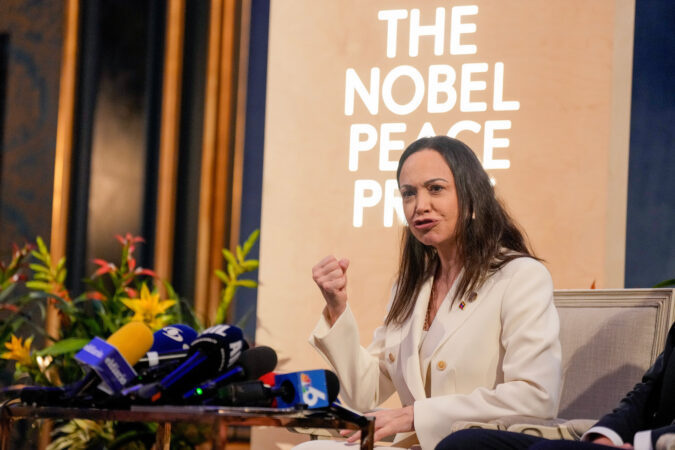
    CARACAS, Venezuela — Venezuelan opposition leader María Corina Machado said Thursday that “decisive” actions by the United States, including the seizure of an oil tanker, have left the repressive government of President Nicolás Maduro at its weakest point, and she vowed to return to the country to keep fighting for democracy.

    Machado’s statements to reporters came hours after she appeared in public for the first time in 11 months, following her arrival in Norway’s capital, Oslo, where her daughter received the Nobel Peace Prize award on her behalf on Wednesday.

    The actions of President Donald Trump “have been decisive to reach where we are now, where the regime is significantly weaker,” she said. “Because before, the regime thought it had impunity …. Now they start to understand that this is serious, and that the world is watching.”

    Machado sidestepped questions on whether a U.S. military intervention is necessary to remove Maduro from power. She told reporters that she would return to Venezuela “when we believe the security conditions are right, and it won’t depend on whether or not the regime leaves.”

    Machado arrived in Oslo hours after Wednesday’s prize ceremony and made her first public appearance early Thursday, emerging from a hotel balcony and waving to an emotional crowd of supporters. She had been in hiding since Jan. 9, when she was briefly detained after joining supporters during a protest in Caracas.

    Machado left Venezuela at a critical point in the country’s protracted crisis, with the Trump administration carrying out deadly military operations in the Caribbean and threatening repeatedly to strike Venezuelan soil. The White House has said the operations, which have killed more than 80 people, are meant to stop the flow of drugs into the U.S.

    But many, including analysts, U.S. members of Congress and Maduro himself, see the operations as an effort to end his hold on power. The opposition led by Machado has only added to this perception by reigniting its promise to soon govern the country.

    On Wednesday, President Donald Trump said the U.S. had seized an oil tanker off the coast of Venezuela. On Thursday, Machado called on governments to expand their support for Venezuela’s opposition beyond words.

    “We, the Venezuelan people that have tried every single, you know, institutional mean, ask support from the democratic nations in the world to cut those resources that come from illegal activities and support repressive approaches,” she said. “And that’s why we are certainly asking the world to act. It’s not a matter of statements, as you say, it’s a matter of action.”

    Machado, 58, was awarded the Nobel Peace Prize in October after mounting the most serious peaceful challenge in years to Maduro’s authoritarian government. Her daughter, Ana Corina Sosa, accepted the prize at a ceremony in Oslo.

    Machado was received Thursday by Norwegian Prime Minister Jonas Gahr Støre, who said that his country is ready to support a democratic Venezuela in “building new and sound institutions.”

    Asked whether the Venezuelan government might have known her whereabouts since January, Machado told reporters: “I don’t think they have known where I have been, and certainly they would have done everything to stop me from coming here.”

    She declined to give details of her journey from Venezuela to Norway. But she thanked “all those men and women that risked their lives so that I could be here today” and later acknowledged that the U.S. government helped her.

    Flight tracking data show that the plane Machado arrived on flew to Oslo from Bangor, Maine.

    Machado won an opposition primary election and intended to challenge Maduro in last year’s presidential election, but the government barred her from running for office. Retired diplomat Edmundo González took her place.

    The lead-up to the election on July 28, 2024, saw widespread repression, including disqualifications, arrests and human rights violations. That increased after the country’s National Electoral Council, which is stacked with Maduro loyalists, declared the incumbent the winner.

    González sought asylum in Spain last year after a Venezuelan court issued a warrant for his arrest.

    It’s unclear how Machado and González could return to Venezuela. An opposition plan to get González back before the Jan. 10 ceremony that gave Maduro another term didn’t materialize.

    Machado, alongside the Norwegian prime minister, said that “we decided to fight until the end and Venezuela will be free.” If Maduro’s government is still in place when she returns, she added, “I will be with my people and they will not know where I am. We have ways to do that and take care of us.”