Category: Business Wires

  • U.S. employers added a surprisingly solid 119,000 jobs in September, the government said in a delayed report

    U.S. employers added a surprisingly solid 119,000 jobs in September, the government said in a delayed report

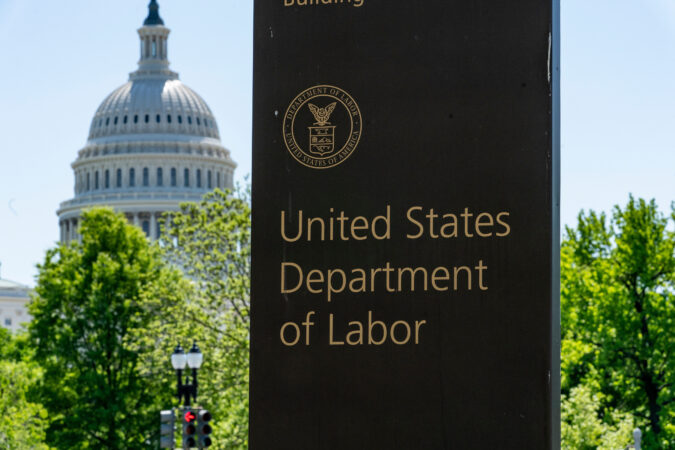
    WASHINGTON — U.S. employers added a surprisingly solid 119,000 jobs in September, the government said, issuing a key economic report that had been delayed for seven weeks by the federal government shutdown.

    The increase in payrolls was more than double the 50,000 economists had forecast.

    Yet there were some troubling details in the delayed report.

    Labor Department revisions showed that the economy lost 4,000 jobs in August instead of gaining 22,000 as originally reported. Altogether, revisions shaved 33,000 jobs off July and August payrolls. The economy had also shed jobs in June, the first time since the 2020 pandemic that the monthly jobs report has gone negative twice in one year.

    And more than 87% of the September job gains were concentrated in two industries: healthcare and social assistance and leisure and hospitality.

    “We’ve got these strong headline numbers, but when you look underneath that you’ll see that a lot of that is driven by healthcare,’’ said Cory Stahle, senior economist at the Indeed Hiring Lab. ”At the end of the day, the question is: Can you support an economic expansion on the back of one industry? Anybody would have a hard time arguing everybody should become a nurse.”

    The unemployment rate rose to 4.4% in September, highest since October 2021 and up from 4.3% in August, the Labor Department said Thursday. The jobless rate rose partly because 470,000 people entered the labor market — either working or looking for work — in September and not all of them found jobs right away.

    The data, though late, was welcomed by businesses, investors, policymakers and the Federal Reserve. During the 43-day shutdown, they’d been groping in the dark for clues about the health of the American job market because federal workers had been furloughed and couldn’t collect the data.

    The report comes at a time of considerable uncertainty about the economy. The job market has been strained by the lingering effects of high interest rates and uncertainty around Trump’s erratic campaign to slap taxes on imports from almost every country on earth. But economic growth at midyear was resilient.

    Healthcare and social assistance firms added more than 57,000 jobs in September, restaurants and bars 37,000, construction companies 19,000 and retailers almost 14,000. But factories shed 6,000 jobs — the fifth straight monthly drop. The federal government, targeted by Trump and billionaire Elon Musk’s DOGE cost cutters, lost 3,000 jobs, the eighth straight monthly decline..

    Average hourly wages rose just 0.2% from August and 3.8% from a year earlier, edging closer to the 3.5% year-over-year increase that the Federal Reserve’s inflation fighters like to see.

    The latest reading on jobs Thursday makes a rate cut by the Fed officials at their next meeting in December less likely. Many were already leaning against a cut next month, according to minutes of their October meeting released Wednesday. Steady hiring suggests the economy doesn’t need lower interest rates to expand.

    The September jobs report will be the last one the Fed will see before its Dec. 9-10 meeting. Officials are split between those who see stubbornly high inflation as the main challenge they need to address by keeping rates elevated, and those who are more concerned that hiring is sluggish and needs to be supported by rate reductions.

    Hiring has been strained this year by the lingering effects of high interest rates engineered to fight a 2021-2022 spike in inflation and uncertainty around Trump’s campaign to slap taxes on imports from almost every country on earth and on specific products — from copper to foreign films.

    Labor Department revisions in September showed that the economy created 911,000 fewer jobs than originally reported in the year that ended in March. That meant that employers added an average of just 71,000 new jobs a month over that period, not the 147,000 first reported. Since March, job creation has fallen farther — to an average 59,000 a month.

    With September numbers out, businesses, investors, policymakers and the Fed will have to wait awhile to get another good look at the numbers behind the American labor market.

    The Labor Department said Wednesday that it won’t release a full jobs report for October because it couldn’t calculate the unemployment rate during the government shutdown.

    Instead, it will release some of the October jobs data — including the number of jobs that employers created last month — along with the full November jobs report on Dec. 16, a couple of weeks late.

    The 2025 job market has been marked by an awkward pairing: relatively weak hiring but few layoffs, meaning that Americans who have work mostly enjoy job security – but those who don’t often struggle to find employment.

    Megan Fridenmaker, 28, lost her job last month as a writer for a podcast network in Indianapolis. She’s applied for at least 200 jobs and landed just one interview. “I am far from the only unemployed person in my friend group,’’ she said. “Where the job market’s at right now – people will apply for hundreds and hundreds (of jobs) before getting one interview.’’

    “Out of everything I’ve applied for, I get a response from maybe a quarter of them,’’ she said. “And the vast majority of the responses are the automated – ‘Thank you so much, but we’ve gone with another candidate.’ ‘Thank you so much, but we’ve already filled the position.’

    “The whole job-hunting experience has felt so cold and so distant and so removed from who we are as humans.”


  • Energy Department loans $1B to help finance the restart of nuclear reactor on Three Mile Island

    Energy Department loans $1B to help finance the restart of nuclear reactor on Three Mile Island

    HARRISBURG — The U.S. Department of Energy said Tuesday that it will loan $1 billion to help finance the restart of the nuclear power plant on Pennsylvania’s Three Mile Island that is under contract to supply power to data centers for tech giant Microsoft.

    The loan is in line with the priorities of President Donald Trump’s administration, including bolstering nuclear power and artificial intelligence.

    For Constellation Energy, which owns Three Mile Island’s lone functioning nuclear power reactor, the federal loan will lower its financing cost to get the mothballed plant up and running again. The 835-megawatt reactor can power the equivalent of approximately 800,000 homes, the Department of Energy said.

    The reactor had been out of operation for five years when Constellation Energy announced last year that it would spend $1.6 billion to restart it under a 20-year agreement with Microsoft to buy the power for its data centers.

    Constellation Energy renamed the functioning unit the Crane Clean Energy Center as it works to restore equipment, including the turbine, generator, main power transformer, and cooling and control systems. It hopes to bring the plant back online in 2027.

    The loan is being issued under an existing $250 billion energy infrastructure program initially authorized by Congress in 2022. Neither the department nor Constellation released terms of the loan.

    The plant, on an island in the Susquehanna River just outside Harrisburg, was the site of the nation’s worst commercial nuclear power accident, in 1979. The accident destroyed one reactor, Unit 2, and left the plant with one functioning reactor, Unit 1.

    In 2019, Constellation Energy’s then-parent company Exelon shut down the functioning reactor, saying it was losing money and Pennsylvania lawmakers had refused to subsidize it to keep it running.

    The plan to restart the reactor comes amid something of a renaissance for nuclear power, as policymakers are increasingly looking to it to shore up the nation’s power supply, help avoid the worst effects of climate change, and meet rising power demand driven by data centers.

  • Larry Summers takes leave from teaching at Harvard after release of Epstein emails

    Larry Summers takes leave from teaching at Harvard after release of Epstein emails

    Former U.S. Treasury Secretary Larry Summers abruptly went on leave Wednesday from teaching at Harvard University, where he once served as president, over recently released emails showing he maintained a friendly relationship with Jeffrey Epstein, Summers’ spokesperson said.

    Summers had canceled his public commitments amid the fallout of the emails being made public and earlier Wednesday severed ties with OpenAI, the maker of ChatGPT. Harvard had reopened an investigation into connections between him and Epstein, but Summers had said he would continue teaching economics classes at the school.

    That changed Wednesday evening with the news that he will step away from teaching classes as well as his position as director of the Mossavar-Rahmani Center for Business and Government with the Harvard Kennedy School.

    “Mr. Summers has decided it’s in the best interest of the Center for him to go on leave from his role as Director as Harvard undertakes its review,” Summers spokesperson Steven Goldberg said, adding that his co-teachers would finish the classes.

    Summers has not been scheduled to teach next semester, according to Goldberg.

    A Harvard spokesperson confirmed to The Associated Press that Summers had let the university know about his decision. Summers decision to go on leave was first reported by The Harvard Crimson.

    Harvard did not mention Summers by name in its decision to restart an investigation, but the move follows the release of emails showing that he was friendly with Epstein long after the financier pleaded guilty to soliciting prostitution from an underage girl in 2008.

    By Wednesday, the once highly regarded economics expert had been facing increased scrutiny over choosing to stay in the teaching role. Some students even filmed his appearance in shock as he appeared before a class of undergraduates on Tuesday while stressing he thought it was important to continue teaching.

    Massachusetts Sen. Elizabeth Warren, a Democrat, said in a social media post on Wednesday night that Summers “cozied up to the rich and powerful — including a convicted sex offender. He cannot be trusted in positions of influence.”

    Messages appear to seek advice about romantic relationship

    The emails include messages in which Summers appeared to be getting advice from Epstein about pursuing a romantic relationship with someone who viewed him as an “economic mentor.”

    “im a pretty good wing man , no?” Epstein wrote on Nov. 30, 2018.

    The next day, Summers told Epstein he had texted the woman, telling her he “had something brief to say to her.”

    “Am I thanking her or being sorry re my being married. I think the former,” he wrote.

    Summers’ wife, Elisa New, also emailed Epstein multiple times, including a 2015 message in which she thanked him for arranging financial support for a poetry project she directs. The gift he arranged “changed everything for me,” she wrote.

    “It really means a lot to me, all financial help aside, Jeffrey, that you are rooting for me and thinking about me,” she wrote.

    New, an English professor emerita at Harvard, did not respond to an email seeking comment Wednesday.

    An earlier review completed in 2020 found that Epstein visited Harvard’s campus more than 40 times after his 2008 sex-crimes conviction and was given his own office and unfettered access to a research center he helped establish. The professor who provided the office was later barred from starting new research or advising students for at least two years.

    Summers appears before Harvard class

    On Tuesday, Summers appeared before his class at Harvard, where he teaches “The Political Economy of Globalization” to undergraduates with Robert Lawrence, a professor with the Harvard Kennedy School.

    “Some of you will have seen my statement of regret expressing my shame with respect to what I did in communication with Mr. Epstein and that I’ve said that I’m going to step back from public activities for a while. But I think it’s very important to fulfill my teaching obligations,” he said.

    Summers’ remarks were captured on video by several students, but no one appeared to publicly respond to his comments.

    Epstein, who authorities said died by suicide in 2019, was a convicted sex offender infamous for his connections to wealthy and powerful people, making him a fixture of outrage and conspiracy theories about wrongdoing among American elites.

    Summers served as treasury secretary from 1999 to 2001 under President Bill Clinton. He was Harvard’s president for five years from 2001 to 2006. When asked about the emails last week, Summers issued a statement saying he has “great regrets in my life” and that his association with Epstein was a “major error in judgement.”

    Other organizations that confirmed the end of their affiliations with Summers included the Center for American Progress, the Center for Global Development and the Budget Lab at Yale University. Bloomberg TV said Summers’ withdrawal from public commitments included his role as a paid contributor, and the New York Times said it will not renew his contract as a contributing opinion writer.

  • Roblox steps up age checks and groups younger users into age-based chats

    Roblox steps up age checks and groups younger users into age-based chats

    Roblox is stepping up its age-verification system for users who want to chat with other players and implementing age-based chats so kids, teens, and adults will only be able to communicate with people around their own age.

    The moves come as the popular gaming platform continues to face criticism and lawsuits over child safety and a growing number of states and countries are implementing age-verification laws.

    The company had previously announced the age-estimation tool, which is provided by a company called Persona, in July. It requires players to take a video selfie that will be used to estimate their age. Roblox says the videos are deleted after the age check is processed. Users are not required to submit a face scan to use the platform, only if they want to chat with other users.

    Roblox doesn’t allow kids under 13 to chat with other users outside of games unless they have explicit parental permission — and unlike different platforms, it does not encrypt private chat conversations, so it can monitor and moderate them.

    While some experts have expressed caution about the reliability of facial age-estimation tools, Matt Kaufman, chief safety officer at Roblox, said that between the ages of about 5 to 25, the system can accurately estimate a person’s age within one or two years.

    “But of course, there’s always people who may be well outside of a traditional bell curve. And in those cases, if you disagree with the estimate that comes back, then you can provide an ID or use parental consent in order to correct that,” he said.

    After users go through the age checks, they will be assigned to age groups ranging from under 9, 9 to 12, 13 to 15, 16 to 17, 18 to 20, and over 21. Users will then be able to chat with their age group or similar age groups, depending on their age and the type of chat.

    Roblox said it will start enforcing age checks in Australia, New Zealand, and the Netherlands in the first week of December and the rest of the world in early January.

    A growing number of tech companies are implementing verification systems to comply with regulations or ward off criticism that they are not protecting children. This includes Google, which recently started testing a new age-verification system for YouTube that relies on AI to differentiate between adults and minors based on their watch histories. Instagram is testing an AI system to determine if kids are lying about their ages.

    “While we welcome the new age ID measures as a step forward, it remains to be seen how effective it will be and whether Roblox will stay the course on a voluntary measure once public scrutiny fades,” said Shelby Knox, director of online safety campaigns at the advocacy group ParentsTogether. “We have to remember this comes from a platform that has historically been slow to address systemic predatory behavior despite being marketed to and used by very young children.”

  • New analysis shows more U.S. consumers are falling behind on their utility bills

    New analysis shows more U.S. consumers are falling behind on their utility bills

    WASHINGTON — More people are falling behind on paying their bills to keep on the lights and heat their homes, according to a new analysis of consumer data — a warning sign for the U.S. economy and another political headache for President Donald Trump.

    Past-due balances to utility companies jumped 9.7% annually to $789 between the April-June periods of 2024 and 2025, said the Century Foundation, a liberal think tank, and the advocacy group Protect Borrowers. The increase has overlapped with a 12% jump in monthly energy bills during the same period.

    Consumers usually prioritize their utility bills along with their mortgages and auto debt, said Julie Margetta Morgan, the foundation’s president. The increase in both energy costs and delinquencies may suggest that consumers are falling behind on other bills, too.

    “There’s a lot of information out there about rising utility costs, but here we can actually look at what that impact has been on families in terms of how they’re falling behind,” Margetta Morgan said.

    Troubles paying electricity and natural gas bills reflect something of an economic quandary for Trump, who is promoting the build-out of the artificial intelligence industry as a key part of an economic boom he has promised for America. But AI data centers are known for their massive use of electricity, and threaten to further increase utility bills for everyday Americans.

    These troubles also come as Trump faces political pressure from voters fed up with the high cost of living. The president spoke about the economy and affordability issues Monday at an event hosted by the McDonald’s fast food company.

    “We have it almost at the sweet spot and prices are coming down on different things,” Trump said at the event, adding that inflation has been “normalized” at a “low level.”

    Ever since Republicans saw their fortunes sag in off-year elections this month and affordability was identified as the top issue, Trump has been trying to convince the public that prices are falling. Fast-rising electricity bills could be an issue in some congressional battlegrounds in next year’s midterm elections.

    Trump has put a particular emphasis on prices at the pump. Gasoline accounts for about 3% of the Consumer Price Index, slightly less than the share belonging to electricity and natural gas bills — meaning that possible savings on gasoline could be more than offset by higher utility bills.

    The president maintains that any troubling data on inflation is false and that Democrats are simply trying to hurt his administration’s reputation.

    “In fact, costs under the TRUMP ADMINISTRATION are tumbling down, helped greatly by gasoline and ENERGY,” Trump posted on social media Friday. ”Affordability is a lie when used by the Dems,”

    Nearly 6 million households have utility debt “so severe” that it will soon be reported to collection agencies, according to the foundation’s analysis, drawn from the University of California Consumer Credit Panel.

    During Trump’s first six months in office, there was a 3.8% increase in households with severely overdue utility bills.

    “Voters are frustrated and families are hurting because these tech giants are cutting backroom deals with politicians, and it’s causing their power bills to go up,” said Mike Pierce, executive director of Protect Borrowers. “If the Trump administration doesn’t want to do its job and protect families and make life more affordable, I guess that’s its choice.”

    Both Margetta Morgan and Pierce previously worked at the Consumer Financial Protection Bureau, a government agency formed in part to track trends in household borrowing to prevent potential abuses. The Trump administration has essentially shut down the bureau.

    The administration has so far said it has no responsibility for any increases in electricity prices, since those are often regulated by state utility boards. The White House maintains that utility costs are higher in Democratic states that rely on renewable forms of energy.

    “Electricity prices are a state problem,” Treasury Secretary Scott Bessent told ABC News this month. “There are things that the federal government can control. Local electricity prices are not one of them.”

    The new analysis of utility bills by the groups counters that the Trump administration is contributing to higher utility costs “by impeding renewable energy generation” including solar and wind power.

    While that analysis is a warning sign, other economic analyses on consumers suggest their finances are stable despite some emerging pressures.

    The New York Federal Reserve has said delinquency rates of 90 days or more for mortgages, auto loans, and student debt have each increased over the past 12 months, though it said mortgage delinquencies are “relatively low.” An analysis of debit and credit card spending by the Bank of America Institute showed that consumers’ “overall financial health looks sound.”

  • Social Security recipients get a 2.8% cost-of-living boost in 2026, average of $56 per month

    Social Security recipients get a 2.8% cost-of-living boost in 2026, average of $56 per month

    WASHINGTON — The Social Security Administration’s annual cost-of-living adjustment will go up by 2.8% in 2026, translating to an average increase of more than $56 for retirees every month, agency officials said Friday.

    The benefits increase for nearly 71 million Social Security recipients will go into effect beginning in January. And increased payments to nearly 7.5 million people receiving Supplemental Security Income will begin on Dec. 31.

    Friday’s announcement was meant to be made last week but was delayed because of the federal government shutdown.

    The cost-of-living adjustment, or COLA, for retirees and disabled beneficiaries is financed by payroll taxes collected from workers and their employers, up to a certain annual salary, which is slated to increase to $184,500 in 2026, from $176,100 in 2025.

    Recipients received a 2.5% cost-of-living boost in 2025 and a 3.2% increase in their benefits in 2024, after a historically large 8.7% benefit increase in 2023, brought on by record 40-year-high inflation.

    The smaller increase for 2026 reflects moderating inflation. The agency will notify recipients of their new benefit amount by mail in early December.

    Some seniors say the increase isn’t enough

    Some seniors say the cost-of-living adjustment won’t help much in their ability to pay for their daily expenses. Linda Deas, an 80-year-old Florence, South Carolina, resident said “it does not match the affordability crisis we are having right now.”

    Deas, a retired information systems network operations specialist, moved to South Carolina from New York in 2022 to be closer to family. She says her monthly rent has increased by $400 in the past two years.

    She listed other items that have become more expensive for her in the past two years, including auto insurance and food. “If you have been into the supermarkets lately you will notice how prices are going up, not down,” she said.

    Deas is not alone in feeling that costs are getting out of control. Polling from the AARP shows that older Americans are increasingly struggling to keep up in today’s economy. The poll states that only 22% of Americans over age 50 agree that a COLA of right around 3% for Social Security recipients is enough to keep up with rising prices, while 77% disagree. That sentiment is consistent across political party affiliations, according to the AARP.

    In Deas’ case, the MIT Living Wage Calculator estimates that an adult living alone in Florence, South Carolina, would spend per year $10,184 for housing, $3,053 for medical expenses and $3,839 for food.

    AARP CEO Myechia Minter-Jordan said the COLA is “a lifeline of independence and dignity, for tens of millions of older Americans,” but even with the annual inflation-gauged boost in income, “older adults still face challenges covering basic expenses.”

    Social Security Administration Commissioner Frank Bisignano said in a statement Friday that the annual cost-of-living adjustment “is one way we are working to make sure benefits reflect today’s economic realities and continue to provide a foundation of security.”

    Emerson Sprick, the Bipartisan Policy Center’s director of retirement and labor policy, said in a statement that cost-of-living increases “can’t solve all the financial challenges households face or all the shortcomings of the program.”

    The agency has been in turmoil in recent months

    The latest COLA announcement comes as the Social Security Administration has been navigating almost a year of turmoil, including the termination of thousands of workers as part of the Trump administration’s efforts to shrink the size of the federal workforce. Trump administration officials have also made statements they later walked back that raised concerns about the future of the program.

    Treasury Secretary Scott Bessent said in July that the Republican administration was committed to protecting Social Security hours after he said in an interview that a new children’s savings program President Donald Trump signed into law “is a back door for privatizing Social Security.”

    And in September, Bisignano had to walk back comments that the agency is considering raising the retirement age to shore up Social Security. “Raising the retirement age is not under consideration at this time by the Administration,” Bisignano said at the time in an e-mailed statement to The Associated Press.

    “I think everything’s being considered, will be considered,” Bisignano said in the statement when asked whether raising the retirement age was a possibility to maintain the old age program’s solvency.

    Efforts to boost benefits for seniors

    In addition, the Social Security Administration faces a looming bankruptcy date if it is not addressed by Congress. The June 2025 Social Security and Medicare trustees’ report states that Social Security’s trust funds, which cover old age and disability recipients, will be unable to pay full benefits beginning in 2034. Then, Social Security would only be able to pay 81% of benefits.

    Social Security benefits were last reformed roughly 40 years ago, when the federal government raised the eligibility age for the program from 65 to 67.

    While a permanent solution for shoring up the benefits program has not been passed into law, both the Trump and Biden administrations have recently signed into law new benefits for retirees, which are expected to boost their finances.

    The Trump administration, as part of Republicans’ tax and spending bill, gave tax relief to many seniors through a temporary tax deduction for seniors aged 65 and over, which applies to all income — not just Social Security. However, those who won’t be able to claim the deduction include the lowest-income seniors who already don’t pay taxes on Social Security, those who choose to claim their benefits before they reach age 65 and those above a defined income threshold.

    Additionally, former President Joe Biden in 2024 repealed two federal policies — the Windfall Elimination Provision and the Government Pension Offset — that previously limited Social Security payouts for roughly 2.8 million people, including largely former public workers.

    These measures have accelerated the insolvency of the old-age benefits program.

    Sprick at the Bipartisan Policy Center said “there have been longstanding questions about whether benefits are adequate for low-income seniors, which should inspire urgency among policymakers to work toward broader reforms instead of ignoring Social Security’s long-term solvency.”

  • Trump pardons Binance founder Changpeng Zhao, high-profile cryptocurrency figure

    Trump pardons Binance founder Changpeng Zhao, high-profile cryptocurrency figure

    WASHINGTON — President Donald Trump has pardoned Binance founder Changpeng Zhao, who created the world’s largest cryptocurrency exchange and served prison time for failing to stop criminals from using the platform to move money connected to child sex abuse, drug trafficking and terrorism.

    The pardon caps a monthslong effort by Zhao, a billionaire commonly known as CZ in the crypto world and one of the biggest names in the industry. He and Binance have been key supporters of some of the Trump family’s crypto enterprises.

    “Deeply grateful for today’s pardon and to President Trump for upholding America’s commitment to fairness, innovation, and justice,” Zhao said on social media Thursday.

    Zhao served four months in prison after reaching a deal with the Justice Department to plead guilty to charges of enabling money laundering at Binance. But, in explaining the pardon, Trump said of Zhao, “He was recommended by a lot of people.”

    “A lot of people say that he wasn’t guilty of anything,” Trump said. “He served four months in jail and they say that he was not guilty of anything.”

    The president added that he didn’t believe he’d ever met Zhao personally, but had “been told” he “had a lot of support, and they said that what he did is not even a crime.” He said Zhao had been “persecuted by the Biden administration.”

    “I gave him a pardon at the request of a lot of very good people,” Trump said.

    It’s the latest move by a president who has flexed his executive power to bestow clemency on political allies, prominent public figures and others convicted of crimes.

    White House press secretary Karoline Leavitt announced the pardon in a statement and later told reporters in a briefing that the White House counsel’s office “thoroughly reviewed” the request. She said the administration of Democratic President Joe Biden pursued “an egregious oversentencing” in the case, was “very hostile to the cryptocurrency industry” and Trump “wants to correct this overreach.”

    The crypto industry has also long complained it was subject to a “regulation by enforcement” ethos under the Biden administration.

    Trump’s pardon of Zhao fits into a broad pattern of his taking a hands-off approach to an industry that spent heavily to help him win the election in 2024. His administration has dropped several enforcement actions against crypto companies that began during Biden’s term and disbanded the crypto-related enforcement team at the Justice Department.

    Former federal prosecutor Mark Bini said Zhao went to prison for what “sounds like a regulatory offense, or at worst its kissing cousin.”

    “So this pardon, while it involves the biggest name in crypto, is not very surprising,” said Bini, a white collar defense lawyer who handles crypto issues at Reed Smith.

    Zhao was released from prison last year after being sentenced for violating the Bank Secrecy Act. He was the first person ever sentenced to prison time for such violations of that law, which requires U.S. financial institutions to know who their customers are, to monitor transactions and to file reports of suspicious activity. Prosecutors said no one had ever violated the regulations to the extent Zhao did.

    The judge in the case said he was troubled by Zhao’s decision to ignore U.S. banking requirements that would have slowed the company’s explosive growth.

    “Better to ask for forgiveness than permission,” was what Zhao told his employees about the company’s approach to U.S. law, prosecutors said. Binance allowed more than 1.5 million virtual currency trades, totaling nearly $900 million, that violated U.S. sanctions, including ones involving Hamas’ al-Qassam Brigades, al-Qaida and Iran, prosecutors said.

    “I failed here,” Zhao told the court last year during sentencing. “I deeply regret my failure, and I am sorry.”

    Zhao had a remarkable path to becoming a crypto billionaire. He grew up in rural China and his family immigrated to Canada after the 1989 Tiananmen Square massacre. As a teenager, he worked at a McDonald’s and became enamored with the tech industry in college. He founded Binance in 2017.

    In addition to taking pro-crypto enforcement and regulatory positions, the president and his family have plunged headfirst into making money in crypto.

    A stablecoin launched by World Liberty Financial, a crypto project founded by Trump and sons Donald Jr. and Eric, received early support and credibility thanks to an investment fund in the United Arab Emirates using $2 billion worth of World Liberty’s stablecoin to purchase a stake in Binance. Stablecoins are a type of cryptocurrency that are typically tied to the value of the U.S. dollar.

    A separate World Liberty Finance token saw a huge spike in price on Thursday shortly after news of the pardon was made public, with gains that far outpaced any other major cryptocurrency, according to data from CoinMarketCap.

    Zhao said earlier this year that his lawyers had requested a pardon.

    It is not immediately clear what impact Trump’s pardon of Zhao may have on operations at Binance and Binance.US, a separate arm of the main exchange offering more limited trading options to U.S. residents.

  • OpenAI launches Atlas web browser to compete with Google Chrome

    OpenAI launches Atlas web browser to compete with Google Chrome

    OpenAI introduced its own web browser, Atlas, on Tuesday, putting the ChatGPT maker in direct competition with Google as more internet users rely on artificial intelligence to answer their questions.

    Making its popular AI chatbot a gateway to online searches could allow OpenAI, the world’s most valuable startup, to pull in more internet traffic and the revenue made from digital advertising. It could also further cut off the lifeblood of online publishers if ChatGPT so effectively feeds people summarized information that they stop exploring the internet and clicking on traditional web links.

    OpenAI has said ChatGPT already has more than 800 million users but many of them get it for free. The San Francisco-based company also sells paid subscriptions but is losing more money than it makes and has been looking for ways to turn a profit.

    OpenAI said Atlas launches Tuesday on Apple laptops and will later come to Microsoft’s Windows, Apple’s iOS phone operating system and Google’s Android phone system.

    OpenAI CEO Sam Altman called it a “rare, once-a-decade opportunity to rethink what a browser can be about and how to use one.”

    But analyst Paddy Harrington of market research group Forrester said it will be a big challenge “competing with a giant who has ridiculous market share.”

    OpenAI’s browser is coming out just a few months after one of its executives testified that the company would be interested in buying Google’s industry-leading Chrome browser if a federal judge had required it to be sold to prevent the abuses that resulted in Google’s ubiquitous search engine being declared an illegal monopoly.

    But U.S. District Judge Amit Mehta last month issued a decision that rejected the Chrome sale sought by the U.S. Justice Department in the monopoly case, partly because he believed advances in the AI industry already are reshaping the competitive landscape.

    OpenAI’s browser will face a daunting challenge against Chrome, which has amassed about 3 billion worldwide users and has been adding some AI features from Google’s Gemini technology.

    Chrome’s immense success could provide a blueprint for OpenAI as it enters the browser market. When Google released Chrome in 2008, Microsoft’s Internet Explorer was so dominant that few observers believed a new browser could mount a formidable threat.

    But Chrome quickly won over legions of admirers by loading webpages more quickly than Internet Explorer while offering other advantages that enabled it to upend the market. Microsoft ended up abandoning Explorer and introducing its Edge browser, which operates similarly to Chrome and holds a distant third place in market share behind Apple’s Safari.

    Perplexity, another smaller AI startup, rolled out its own Comet browser earlier this year. It also expressed interest in buying Chrome and eventually submitted an unsolicited $34.5 billion offer for the browser that hit a dead end when Mehta decided against a Google breakup.

    Altman said he expects a chatbot interface to replace a traditional browser’s URL bar as the center of how he hopes people will use the internet in the future.

    “Tabs were great, but we haven’t seen a lot of browser innovation since then,” he said on a video presentation aired Tuesday.

    A premium feature of the ChatGPT Atlas browser is an “agent mode” that accesses the laptop and effectively clicks around the internet on the person’s behalf, armed with a users’ browser history and what they are seeking to learn and explaining its process as it searches.

    “It’s using the internet for you,” Altman said.

    Harrington, the Forrester analyst, says another way of thinking about that is it’s “taking personality away from you.”

    “Your profile will be personally attuned to you based on all the information sucked up about you. OK, scary,” Harrington said. “But is it really you, really what you’re thinking, or what that engine decides it’s going to do? … And will it add in preferred solutions based on ads?”

    About 60% of Americans overall — and 74% of those under 30 — use AI to find information at least some of the time, making online searches one of the most popular uses of AI technology, according to findings from an Associated Press-NORC Center for Public Affairs Research poll taken over the summer.

    Google since last year has automatically provided AI-generated responses that attempt to answer a person’s search query, appearing at the top of results.

    Reliance on AI chatbots to summarize information they collect online has raised a number of concerns, including the technology’s propensity to confidently spout false information, a problem known as hallucination.

    The way that chatbots trained on online content spout new writings has been particularly troubling to the news industry, leading The New York Times and other outlets to sue OpenAI for copyright infringement and others, including The Associated Press, to sign licensing deals.

    A study of four top AI assistants including ChatGPT and Google’s Gemini released Wednesday showed nearly half their responses were flawed and fell short of the standards of “high-quality” journalism.

    The research from the European Broadcasting Union, a group of public broadcasters in 56 countries, compiled the results of more than 3,000 responses to news-related questions to help ascertain quality responses and identify problems to fix.

  • What to know about the Amazon cloud outage

    What to know about the Amazon cloud outage

    A massive internet outage stemming from errors in Amazon cloud services on Monday demonstrated just how many people rely on the corporate behemoth’s computational infrastructure every day — and laid bare the vulnerabilities of an increasingly concentrated system.

    But despite its omnipresence, most users don’t know what — or where — the cloud is.

    Here is what to know about the data centers in Northern Virginia where the outage originated, and what the malfunction reveals about a rapidly evolving industry.

    Renting internet infrastructure

    Cloud computing is a technology that allows companies to remotely access massive computing equipment and services without having to purchase and maintain physical infrastructure.

    In other words, businesses ranging from Snapchat to McDonald’s essentially rent Amazon’s physical infrastructure located in places all around the world to operate their own websites. Instead of building expensive computing systems in-house, companies rely on Amazon to store data, develop and test software, and deliver applications.

    Amazon is the leading provider of cloud infrastructure and platform services, constituting over 41% of the market, according to market research group Gartner. Google and Microsoft are the next biggest competitors.

    Biggest and oldest hub

    Although the cloud sounds like an abstract, formless entity, its physical location matters: Proximity to cloud data centers determines how quickly users can access internet platforms.

    Amazon Web Services has just four cloud computing hubs in the United States, according to their website. Those are strategically spread out in California, Ohio, Virginia, and Oregon to deliver fast services to users across the country.

    A user’s distance from the hub affects how quickly they can access platforms.

    “If you’re waiting a minute to use an application, you’re not going to use it again,” said Amro Al-Said Ahmad, a lecturer in computer science at Keele University in England.

    The region in Northern Virginia where Monday’s problems originated is the biggest and oldest cloud hub in the country.

    In fact, the Virginia cluster known as US-East-1 region is responsible for “orders of magnitude” more data than its nearest cluster in Ohio, or even its big West Coast hubs, said Doug Madory, director of internet analysis at Kentik. The idea of a big cloud provider like Amazon is that organizations can split their workloads across multiple regions, so it doesn’t matter as much if one fails, but “the reality is it’s all very concentrated,” Madory said.

    “For a lot of people, if you’re going to use AWS, you’re going to use US-East-1 regardless of where you are on Planet Earth,” Madory said. “We have this incredible concentration of IT services that are hosted out of one region by one cloud provider, for the world, and that presents a fragility for modern society and the modern economy.”

    More than 100 warehouses

    The servers aren’t located in just one building.

    Amazon has “well over 100” of the sprawling computing warehouses in Virginia, mostly in the exurbs at the edge of the Washington metropolitan area, said Gartner analyst Lydia Leong.

    Leong said one reason why it’s Amazon’s “single-most popular region” is that it is increasingly becoming a hub for handling artificial intelligence workloads. The growing usage of chatbots, image generators, and other generative AI tools has spiked demand for computing power and led to a construction boom of new data center complexes around the U.S. and world.

    A report Monday from TD Cowen said that the leading cloud computing providers leased a “staggering” amount of U.S. data center capacity in the third fiscal quarter of this year, amounting to more than 7.4 gigawatts of energy, more than all of last year combined.

    Cloud service perils

    The outage, which some analysts are calling Amazon’s worst since 2021, reminded the world of the perils of depending on a handful of cloud companies to deliver crucial computing and internet services. Outages like Monday’s strike at a core premise of the cloud: that a centralized operation full of sharp engineers will keep servers running better and more efficiently than individual companies’ own staff.

    The breakdown occurred at a challenging moment for the Amazon Web Services cloud unit, which has long touted reliability and accountability as a core piece of its pitch to customers. Sales growth has slowed, and AWS has struggled to keep up as its two biggest rivals, Microsoft Corp. and Alphabet Inc.’s Google, grab new business selling artificial intelligence tools.

    AWS remains the world’s largest cloud provider and is hardly the first to suffer an outage. Moreover, it’s not easy for customers to jump ship, especially given the current capacity crunch at data centers. Still, in recent years, some companies have sought to reduce their reliance on a single cloud provider.

    “The outage will likely fuel customers wanting to spread their infrastructure between multiple clouds, which could be a positive for smaller vendors like Google,” said Bloomberg Intelligence analyst Anurag Rana. Still, he said, it’s unlikely to result in any meaningful market share loss for Amazon due to the difficulty of shifting work between clouds and industrywide capacity constraints.

    Bloomberg contributed to this article.

  • Warner Bros. Discovery confirms it has received buyout interest and is considering its options

    Warner Bros. Discovery confirms it has received buyout interest and is considering its options

    NEW YORK — Warner Bros. Discovery — the home of HBO, CNN and DC Studios — has signaled that it may be open to selling all or parts of its business, just months after announcing plans to split into two companies.

    In an announcement Tuesday, the entertainment and media giant said it had initiated a review of “strategic alternatives” in light of “unsolicited interest” it had received from multiple parties, for both the entire company and Warner Bros. specifically.

    Warner Bros. Discovery did not specify where that interest was coming from, and a spokesperson said the company couldn’t share additional information when reached by The Associated Press. But its review arrives after growing reports of a potential bidding war — including from Skydance-owned Paramount, which closed its own $8 billion merger in early August.

    Citing anonymous sources familiar with the matter, The Wall Street Journal recently reported that Paramount approached Warner Bros. Discovery about a majority-cash offer in late September — but that Warner Chief Executive David Zaslav had rebuffed those first overtures. According to the outlet, Paramount Skydance CEO David Ellison later considered taking a more aggressive approach, such as going directly to shareholders.

    CNBC has also reported that Netflix and Comcast are among other interested parties, citing unnamed sources. Comcast declined to comment Tuesday. Paramount and Netflix did not immediately respond to the AP’s requests for statements.

    If a sale of all or part of Warner Bros. Discovery arrives, it would mark a considerable shift in the U.S. media landscape that is “already trending towards a concerning level of consolidation,” said Mike Proulx, a VP research director at Forrester.

    He pointed to the streaming space in particular — noting that, on one hand, a potential transaction could help scale the company’s streamers to better compete with other platforms. But on the other hand, consumers could see fewer choices controlled by just a handful of corporate giants.

    “When just a few conglomerates, like Skydance, increasingly control the lion’s share of some of the most popular platforms, it raises all sorts of questions around the future of content diversity and expression,” Proulx said over email Tuesday. “Bigger is better might be good for shareholders but will consumers ultimately benefit with better quality content, lower prices, and accessibility?”

    Still, he added, much of that will depend on if a sale happens and who ends up buying Warner Bros. Discovery.

    Back in June, Warner Bros. Discovery outlined plans to split its cable and streaming offerings — with HBO, HBO Max, as well as Warner Bros. Television, Warner Bros. Motion Picture Group, DC Studios, to become part of a new streaming and studios company; while networks like CNN, Discovery and TNT Sports and digital products such as the Discovery+ streaming service and Bleacher Report would make up a separate cable counterpart.

    Warner expected the split to be complete by mid-2026 — and said Tuesday that continuing to advance this separation was still among the options it’s considering.

    “We took the bold step of preparing to separate the Company into two distinct, leading media companies, Warner Bros. and Discovery Global, because we strongly believed this was the best path forward,” Zaslav said in a statement. Still, he added, “it’s no surprise that the significant value of our portfolio is receiving increased recognition by others in the market.”

    The company said that there’s no definite timeline for its review process — and noted that, beyond the separation that is already underway, “there can be no assurance” that a transaction will emerge.

    Shares of Warner Bros. Discovery, headquarted in New York, were up nearly 10% by Tuesday afternoon trading.

    Warner Bros. Discovery was created just three years ago when AT&T spun off WarnerMedia, which was merged with Discovery Communications in a $43 billion deal. An even bigger transaction could attract antitrust scrutiny — but like other recent mega-mergers and proposed transactions, could find success under the Trump administration.