Category: Entertainment Wires

  • Former ‘Jersey Shore’ star Snooki says she has cervical cancer

    Former ‘Jersey Shore’ star Snooki says she has cervical cancer

    FLORHAM PARK, N.J. — Nicole “Snooki” Polizzi said Friday that she has cervical cancer.

    The former “Jersey Shore” star said in a video posted to TikTok that a biopsy had revealed the stage one cancer.

    “Obviously not the news that I was hoping for,” she said, sitting in her car between medical appointments. “But also not the worst news, just because they caught it so early, thank freaking God.”

    She urged her followers to get Pap smears, and said she is likely to have a hysterectomy after her initial treatment.

    “So 2026 is not panning out how I wanted it to,” she said.

    Polizzi became one of the breakout stars of “Jersey Shore” from its debut on MTV in 2009. She was on the reality show for six seasons and appeared in the later spinoffs “Snooki & JWoww” and “Jersey Shore: Family Vacation.”

    Now 38, she still lives in New Jersey, has been married for 11 years and has three children.

  • Police search Andrew Mountbatten-Windsor’s former home a day after his arrest

    Police search Andrew Mountbatten-Windsor’s former home a day after his arrest

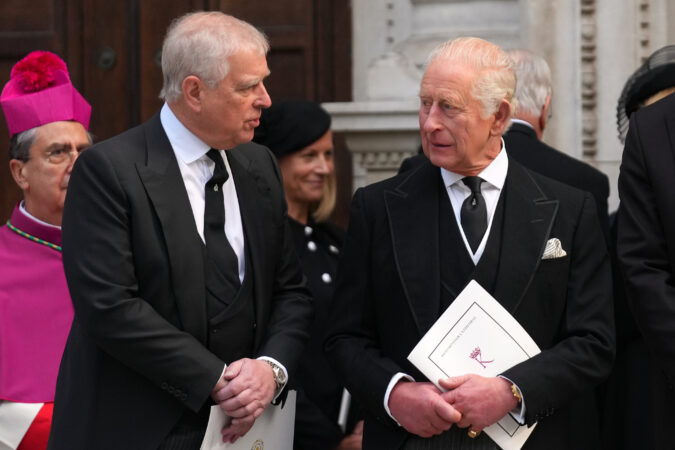
    LONDON — Police searched the former home of Andrew Mountbatten-Windsor again on Friday, a day after he was arrested and held in custody for nearly 11 hours on suspicion of misconduct in having shared confidential trade information with the late convicted sex offender Jeffrey Epstein.

    In another blow for the former Prince Andrew, the British government is considering formally removing him from the line of succession to the crown. Despite losing his status as prince and facing a police investigation, Andrew remains eighth in line to the throne. That can only be changed with new legislation.

    When the king stripped his brother of his titles in the fall, the government said passing a new law would not be a good use of Parliament’s time.

    But that view has changed and the government is now considering legislation once the police investigation is finished. James Murray, the government’s chief secretary to the treasury, said “the government is considering any further steps that might be required, and we’re not ruling anything out.”

    The last time a royal was removed from the line of succession was after the abdication of King Edward VIII in 1936, when the law was changed to strike him and any descendants from the list.

    Removing Andrew would also require agreement from more than a dozen other countries, including Jamaica, Canada, and Australia, that have the British monarch as head of state.

    Following one of the most tumultuous days in the modern history of Britain’s royal family, the former prince was back at his new residence on the Sandringham estate, King Charles III‘s private retreat, around 115 miles northeast of London.

    Police have concluded their search there, but are still searching Royal Lodge, his 30-room former home in the parkland near Windsor Castle, just west of the capital, where the king’s younger brother had lived for decades until his eviction earlier this month. Unmarked vans, believed to be police vehicles, have been entering the grounds Friday morning.

    The search is expected to continue for several days.

    Mountbatten-Windsor, who was pictured slouched in the back of his chauffeur-driven car following his release Thursday evening from a police station near Sandringham, remains under investigation, which means he has neither been charged nor exonerated by Thames Valley Police, the force responsible for areas west of London.

    Arrest was years in the making

    His arrest follows years of allegations over his links with Epstein, who died by suicide in a New York jail in 2019.

    The accusation at the heart of his arrest is that Mountbatten-Windsor — who was known as Prince Andrew until October when his brother stripped him of his titles and honors and banished him from Royal Lodge — shared confidential trade information with the disgraced financier when he was a trade envoy for the U.K.

    Emails released last month by the U.S. Department of Justice appeared to show Mountbatten-Windsor sharing reports of official visits to Hong Kong, Vietnam, and Singapore, and sending Epstein a confidential brief on investment opportunities in Afghanistan.

    Thames Valley Police has previously said it was also reviewing allegations that a woman was trafficked to the U.K. by Epstein to have a sexual encounter with Andrew. Thursday’s arrest had nothing to do with that.

    Other police forces are also conducting their own investigations into Epstein’s links to the U.K., including the assessment of flight logs at airports, large and small. They are coordinating their work within a national group.

    On Friday, London’s Metropolitan Police said it was assessing, with the help of U.S. counterparts, whether the capital’s airports, which include Heathrow, “may have been used to facilitate human trafficking and sexual exploitation.”

    It also said that it’s asking past and present officers who protected Mountbatten-Windsor to “consider carefully” whether they saw or heard anything that may be relevant to the investigations.

    As of now, it said no new criminal allegations have been made regarding sexual offenses within its jurisdiction.

    Mountbatten-Windsor has consistently denied any wrongdoing in his association with Epstein but has not commented on the most recent allegations that have emerged with the release of the so-called Epstein files.

    Arrest was sudden, investigation will take time

    Police swept into the grounds of Mountbatten-Windsor’s home to arrest him at 8 a.m. Thursday — his 66th birthday — before taking him to Aylsham police station for questioning.

    It’s not known what he told them. He may have said nothing, or “no comment,” as is his right.

    Experts said that misconduct in a public office is notoriously difficult to prove.

    “Firstly, it must be determined if Andrew Mountbatten-Windsor was in a role within government that constitutes the title of public officer,” said Sean Caulfield, a criminal defense lawyer at Hodge Jones & Allen. “There is no standard definition to clearly draw on.”

    The Crown Prosecution Service will ultimately make a decision about charging Mountbatten-Windsor.

    Andrew Gilmore, a partner at Grosvenor Law, said that prosecutors will apply the two-stage test known as the “Code for Crown Prosecutors.”

    “That test is to determine whether there is a more realistic prospect of a conviction than not based on the evidence and whether the matter is in the public interest,” he said. “If these two tests are met, then the matter will be charged and proceed to court.”

    Arrest is not just unusual, it’s historic

    Mountbatten-Windsor was the first royal since King Charles I nearly four centuries ago to be placed under arrest. That turned into a seismic moment in British history, leading Charles’ beheading and the temporary abolition of the monarchy.

    Mountbatten-Windsor’s arrest is arguably one of the gravest crises for the House of Windsor since its establishment more than 100 years ago. Arguably, only the abdication of King Edward VIII in 1936, and the death of Diana, Princess of Wales, in 1997, have been as grave for the institution of the British monarchy in modern times.

    In a statement Thursday, the king said the “law must take its course,’’ but that as ”this process continues, it would not be right for me to comment further on this matter.’’

    The allegations are not related to Epstein’s sex trafficking

    The allegations being investigated Thursday are separate from those made by Virginia Giuffre, who claimed she was trafficked to Britain to have sex with the prince in 2001, when she was just 17. Giuffre died by suicide last year.

    Still, Giuffre’s sister-in-law Amanda Roberts said that she was overjoyed when she got a phone call at 3 a.m. telling her the news of the arrest. But those feelings of elation were quickly complicated by the realization that she couldn’t share the feelings of “vindication” with Giuffre.

    “We can’t tell her how much we love her, and that everything that she was doing is not in vain,” Roberts added tearfully.

  • How to choose the best nursing home or assisted living facility

    How to choose the best nursing home or assisted living facility

    Sometimes it’s a fall that brings a broken hip and a loss of mobility. Or memory problems that bubble into danger. Or the death of the partner who was relied upon for care.

    The need to move to a nursing home, assisted living facility, or another type of care setting often comes suddenly, setting off an abrupt, daunting search. It’s likely something no one ever wanted, but knowing what to look for and what to ask can make a big difference.

    Here’s what to do when looking for a long-term care facility:

    Start with government ratings

    Regulation of assisted living facilities varies greatly from state to state, meaning there’s no centralized standards or source for information. If you’re looking for a nursing home, though, they are monitored by the federal government.

    The Centers for Medicare and Medicaid Services maintains records on nursing homes, including data on who owns the facility, how robust its staffing is, and what types of violations it might have been fined for. It assigns homes a star rating, from one to five.

    Sam Brooks, director of public policy for the National Consumer Voice for Quality Long-Term Care, says while the star rating “can be notoriously unreliable,” due to its reliance on self-reported data, it can still provide some clues about a home.

    “One or two stars, expect it to be bad,” Brooks says.

    Ratings can be a resource to rule out the worst options, but not necessarily to find the best. Still, Brooks suggests taking a closer look at four- and five-star facilities and to consider a home’s ownership, too. Nonprofit homes are often better staffed.

    You could scour inspection reports and online reviews for clues, too, but eventually you’ll need to make a list of potential candidates and start making visits.

    “The data,” Brooks says, “only goes so far.”

    Look past the lobby

    When visiting a home on your list, be careful not to be too swayed by decorative touches that might be designed to lure you in, like a lobby’s furniture, dangling chandeliers, or vases of flowers.

    “When I tour a building, I listen first. Is it loud? Are call bells ringing nonstop?” says Mark Sanchez, CEO of United Hebrew, a nursing home in New Rochelle, N.Y.

    After that, Sanchez says, switch your senses. Do you detect an odor? Do you see residents clustered around the nurses’ station, perhaps clamoring for help? Are staffers speaking respectfully to residents? Are they making eye contact? Are they rushed?

    “Culture shows up in small moments,” Sanchez says, “and it matters.”

    Seeking input from families of current residents can be insightful. Another resource may be your local long-term care ombudsman. Ombudsmen, funded by the federal Older Americans Act and present in every state, investigate long-term care residents’ complaints.

    With all the available information on each home, it can be easy to feel like you’re drowning in data. So pay attention to how a place feels, too, and pair that with concrete facts.

    When Jennifer Fink was making the “stressful, grief-inducing, hard, and scary” decision on what memory care community was right for her mother, she didn’t consult state databases or Google ratings. She went with her gut reaction and luckily, it was right.

    “Trust your gut. Keep top of mind that the salesperson wants your loved one’s money,” says Fink, of Auburn, Calif. “If it’s giving you the ‘ick,’ then move on.”

    Staffing matters most

    More than any other single thing, experts on long-term care stress that a facility’s staffing is most important. That means both the quality of the care you witness workers giving residents during your visit and the average staffing levels shown in the reported data.

    A home providing an average of three hours of nursing care to each resident each day may not look all that different on paper from one providing three-and-a-half hours. But those minutes matter dearly, meaning the difference between a person getting a shower, having help at mealtime, or being discovered if they’ve fallen.

    During a visit, pay attention to how quickly call bells are answered and whether it seems like residents are engaged in activities. Ask staff how long they’ve worked there. A home that holds on to its workers for years may offer your loved one more continuity.

    Evan Farr, an elder law attorney in Lorton, Va., who wrote The Nursing Home Survival Guide, says visiting a facility at night or on the weekend can be particularly revealing.

    “These are the times when staffing is reduced and the true operation of the facility becomes apparent,” Farr says. “It is entirely possible to have a five-star rated facility that is woefully understaffed from 5 p.m. Friday until 8 a.m. Monday morning.”

    Keep a long-range view

    When faced with an urgent decision, it can be difficult to focus on anything beyond the factors in front of you. But it’s important to choose a home with a long-range view.

    At the start, many long-term care residents are able to pay for the cost of their bill. But what happens if their money runs out? If it’s a nursing home that accepts Medicaid, how many beds are allocated to such residents? Would your loved one get that slot? If it’s an assisted living facility, do they even accept people on Medicaid?

    Assisted living facilities often have complicated billing structures that require a bevy of questions to understand. Ask how costs may change as a person’s needs increase. Some places tack on separate charges for tasks like helping a person to the bathroom.

    “Four-thousand dollars a month can become $8,000 overnight,” says Geoff Hoatson, founder of the elder law practice Family First Firm in Winter Park, Florida.

    Another fact of long-term care that few understand is how often facilities seek to remove residents seen as undesirable, often due to a change in their financial circumstances or in their health. Dementia patients in particular — with challenging care needs and symptoms that can sometimes bring aggression — are targeted with orders to leave.

    “Ask specifically what conditions would require transfer,” Hoatson says.

  • How the rich pass on their wealth. And how you can too

    How the rich pass on their wealth. And how you can too

    NEW YORK — Death and taxes may be inevitable. A big bill for your heirs is not.

    The rich have made an art of avoiding taxes and making sure their wealth passes down effortlessly to the next generation. But the tricks they use to expedite payouts to heirs and avoid handing money to the government — can also work for people with far more modest estates.

    “It’s a strategic game of chess played over decades,” says Mark Bosler, an estate planning attorney in Troy, Mich., and legal adviser to Real Estate Bees. “While the average person relies on a simple will, the well-to-do utilize a different playbook.”

    Consider a trust

    First, consider the facts: Despite widespread misconceptions, only estates of the very richest Americans are generally subject to taxes. At the federal level, estates of over $15 million typically trigger taxes. At the state level, 16 states and the District of Columbia do collect estate or inheritance taxes, according to the Tax Foundation, sometimes with lower exemptions than the IRS, but still at thresholds targeting millionaires.

    While most people can pass on what they have without worrying about their heirs being caught in a web of taxes, it can require planning to escape a messy process that can hold up estates for years and cost families significantly in court fees and lawyer bills.

    The solution at the center of many estate planners’ designs is a trust.

    Though trusts conjure images of complex arrangements utilized by the uber-rich, they are relatively simple tools that can make sense for many people. They come with expense, often costing thousands of dollars in lawyer fees to set them up. But for a retired couple with a paid-off house, 401(k)s and a portfolio of investments, they can ease the passing of assets to heirs.

    Among the reasons: Even if you aren’t leaving enough behind to trigger taxes, your estate can get tied up in probate court, which typically assesses fees based on an estate’s total value.

    “You are leaving what might have gone to your children or other loved ones to attorneys and the courts,” says Renee Fry, CEO of Gentreo, an online estate planner based in Quincy, Massachusetts. “Anywhere from 3[%] to 8% of an estate might be lost.”

    Trusts can allow an estate to sidestep court altogether and to shield it from public view by keeping details out of public records. Some people also use them to protect their savings if they someday need nursing home care and would prefer to qualify for a government-paid stay under Medicaid instead of paying themselves.

    Pass on stocks virtually tax-free

    Imagine being an investor in a stock like Nvidia that has soared in recent years. Now imagine being able to reap the profit of selling your shares without paying tax.

    It’s possible with one caveat: You have to die.

    That scenario, known in estate lingo as “step-up,” allows many rich families to grow their wealth while ensuring their heirs won’t be saddled with the bill.

    It works like this: Say your savvy uncle bought 100 shares of Nvidia when it began trading in 1999 at $12 a share. Between splits and a soaring price, that $1,200 investment would be worth more than $9 million today. If he left it all to you, you could sell the shares owing little or no tax because gains are calculated from the day he died, not the day he bought it.

    Benjamin Trujillo, a partner with the wealth advisory firm Moneta, based in St. Louis, Mo., says it all seems “like a magic trick.” And it’s completely legal.

    “Wealth transfer looks like smoke and mirrors,” Trujillo says. “Assets like stocks can quietly grow for decades and, when they’re inherited, the tax bill often disappears.”

    Lawmakers have sometimes proposed limits on the “step-up” rule, but at least for now, it remains, making it one of the biggest not-so-secret weapons in the arsenals of those looking to create generational wealth. If stocks aren’t your forte, “step-up” applies to other types of investments too, including artwork, real estate, and collectibles.

    Keep up to date on beneficiaries

    Ever get a prompt on one of your accounts asking you to name a beneficiary? It’s more than a confusing (or annoying) nudge from your brokerage. Estate planners say it is one of the simplest ways to ease the transfer of assets to loved ones after you die.

    Regulations vary from place to place, but many banks and brokerages allow you to name a beneficiary to whom the funds will be transferred to upon your death.

    “One of the easiest ways to transfer assets hassle-free,” says Allison Harrison, an attorney in Columbus, Ohio, who focuses on estate planning.

    Beneficiary designations generally override wills, so it’s important to make sure yours are up to date to avoid the mess of having, say, an ex-spouse end up with everything you saved.

    All of this requires planning, but experts say investing a little time in mapping out your estate is one of the moves that separates the rich from the less well-off.

    “Wealthy families plan,” says Fry. “They don’t leave assets and decisions unprotected.”

  • Eric Dane, ‘Grey’s Anatomy’ and ‘Euphoria’ star, has died at 53

    Eric Dane, ‘Grey’s Anatomy’ and ‘Euphoria’ star, has died at 53

    Eric Dane, the celebrated actor best known for his roles on Grey’s Anatomy and Euphoria and who later in life became an advocate for ALS awareness, died Thursday. He was 53.

    His representatives said Mr. Dane died from amyotrophic lateral sclerosis, known also as Lou Gehrig’s disease, less than a year after he announced his diagnosis.

    “He spent his final days surrounded by dear friends, his devoted wife, and his two beautiful daughters, Billie and Georgia, who were the center of his world,” said a statement that requested privacy for his family. “Throughout his journey with ALS, Eric became a passionate advocate for awareness and research, determined to make a difference for others facing the same fight. He will be deeply missed, and lovingly remembered always. Eric adored his fans and is forever grateful for the outpouring of love and support he’s received.”

    Mr. Dane developed a devoted fan base when his big break arrived in the mid-2000s: He was cast as Dr. Mark Sloan, aka McSteamy, on the ABC medical drama Grey’s Anatomy, a role he would play from 2006 until 2012 and reprise in 2021.

    Although his character was killed off on the show after a plane crash, Mr. Dane’s character left an indelible mark on the still-running show: Seattle Grace Hospital became Grey Sloan Memorial Hospital.

    In 2019, he did a complete 180 from the charming McSteamy and became the troubled Cal Jacobs in HBO’s provocative drama Euphoria, a role he continued in up until his death.

    Mr. Dane also starred as Tom Chandler, the captain of a U.S. Navy destroyer at sea after a global catastrophe wiped out most of the world’s population, in the TNT drama The Last Ship. In 2017, production was halted as Mr. Dane battled depression.

    In April 2025, Mr. Dane announced he had been diagnosed with ALS, a progressive disease that attacks nerve cells controlling muscles throughout the body.

    ALS gradually destroys the nerve cells and connections needed to walk, talk, speak, and breathe. Most patients die within three to five years of a diagnosis.

    Mr. Dane became an advocate for ALS awareness, speaking a news conference in Washington on health insurance prior authorization. “Some of you may know me from TV shows, such as Grey’s Anatomy, which I play a doctor. But I am here today to speak briefly as a patient battling ALS,” he said in June 2025. In September of that year, the ALS Network named Mr. Dane the recipient of their advocate of the year award, recognizing his commitment to raising awareness and support for people living with ALS.

    Mr. Dane was born on Nov. 9, 1972, and raised in Northern California. His father, who the actor said was a Navy veteran and an architect, died of a gunshot wound when Mr. Dane was 7. After high school, he moved to Los Angeles to pursue acting, landing guest roles on shows like Saved by the Bell, Married … With Children, Charmed, and X-Men: the Last Stand, and one season of the short-lived medical drama Gideon’s Crossing.

    A memoir by Mr. Dane is scheduled to be published in late 2026. Book of Days: A Memoir in Moments will be released by Maria Shriver’s The Open Field, a Penguin Random House imprint. According to Open Field, Mr. Dane’s memoir covers key moments in his life, from his first day at work on Grey’s Anatomy to the births of his two daughters and learning that he had ALS.

    “I want to capture the moments that shaped me — the beautiful days, the hard ones, the ones I never took for granted — so that if nothing else, people who read it will remember what it means to live with heart,” Mr. Dane said in a statement about the book. “If sharing this helps someone find meaning in their own days, then my story is worth telling.”

    Mr. Dane is survived by his wife, actor Rebecca Gayheart, and their two teen daughters, Billie Beatrice and Georgia Geraldine. Gayheart and Mr. Dane wed in 2004 and separated in September 2017. Gayheart filed for divorce in 2018, but later filed to dismiss the petition. In a December essay for New York magazine’s The Cut reflecting on Mr. Dane’s diagnosis, Gayheart called their dynamic “a very complicated relationship, one that’s confusing for people.” She said they never got a divorce, but dated other people and lived separately.

    “Our love may not be romantic, but it’s a familial love,” she said. “Eric knows that I am always going to want the best for him. That I’m going to do my best to do right by him. And I know he would do the same for me. So whatever I can do or however I can show up to make this journey better for him or easier for him, I want to do that.”

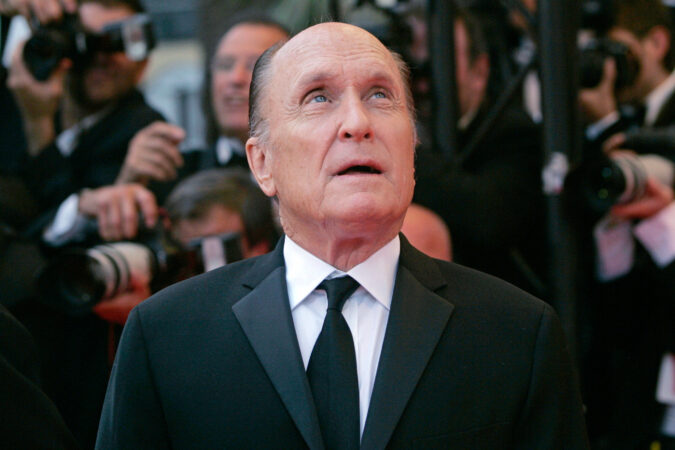
  • Robert Duvall, chameleon of the silver screen, has died at 95

    Robert Duvall, chameleon of the silver screen, has died at 95

    Robert Duvall, an Oscar-winning actor who disappeared into an astonishing range of roles — lawmen and outlaws, Southern-fried alcoholics and Manhattan boardroom sharks, a hotheaded veteran and a cool-tempered mob consigliere — and emerged as one of the most respected screen talents of his generation, died Feb. 15. He was 95.

    His wife, Luciana Pedraza Duvall, said in a Facebook post that Mr. Duvall died at home, without citing a cause. He had long lived at Byrnley, a horse farm in Fauquier County, Va., near The Plains.

    By his own account, Mr. Duvall was a late-blooming youth, a Navy rear admiral’s son whose only discernible talent in childhood was for meticulous mimicry. His repertoire included Western ranchers and the military brass, and his stage was the dinner table.

    Metamorphosis became a hallmark of his career. Newsweek film critic David Ansen once called Mr. Duvall “a character actor who approaches each role with the diligence of an ethnologist on a field trip into the soul.”

    Without matinee-idol looks — he had a sinewy frame, chlorine-blue eyes, a slightly bent nose and sandy brown hair slicked back on either side of his balding pate — he seemed destined to portray taciturn outsiders, macho oddballs, and rugged eccentrics.

    Mr. Duvall was a near-constant presence on-screen beginning with his movie debut as the ghostly, feebleminded Boo Radley in To Kill a Mockingbird (1962), based on the Harper Lee novel.

    Over the next half-century, he had a few top-billed parts, notably his Academy Award-winning turn as an alcoholic country-western singer in Tender Mercies (1983). He performed the songs so authentically, with his lived-in tenor, that he was invited to record an album in Nashville with veteran music producer Chips Moman.

    Mr. Duvall received Oscar nominations for his starring roles as a tyrannical, hypercompetitive military father in The Great Santini (1979), based on the Pat Conroy novel, and as a fallen Pentecostal preacher seeking grace in The Apostle (1997), which he also wrote and directed.

    But in a career spanning more than 140 film and TV credits, Mr. Duvall’s prime turf was the supporting role. “The ‘personality’ carries the movie, not someone like me,” he once told the Chicago Tribune. “But the star may have a mediocre part, and there I am in the second or third lead, quietly doing quality things.”

    No two films showcased the spectrum of those “quality things” more than The Godfather (1972) and Apocalypse Now (1979), both critical and cultural juggernauts directed by Francis Ford Coppola and for which Mr. Duvall earned Oscar nominations for supporting work. In the first, he portrayed Tom Hagen, the discreet mob lawyer and the informal foster son of the Corleone family (whose patriarch was played by Marlon Brando).

    Film scholar David Thomson called Mr. Duvall’s Hagen, a role he reprised in the 1974 sequel, a “detailed study of a self-effacing man,” one willing to suffer humiliation to earn his place as the non-Italian among Italians.

    In Apocalypse Now, an epic film about war and madness set in Vietnam, Mr. Duvall played Kilgore, the surfing-obsessed lieutenant colonel who declares, in one of the movie’s oft-quoted lines, that he loves “the smell of napalm in the morning.” Instead of crackpot flamboyance, Mr. Duvall delivered, in the description of New York Times film critic Vincent Canby, a performance of “breathtaking force and charm.”

    Canby called Mr. Duvall “one of the most resourceful, most technically proficient, most remarkable actors in America,” likening him to Laurence Olivier in his shape-shifting prowess.

    Mr. Duvall was a convincingly British Dr. Watson to Nicol Williamson’s Sherlock Holmes in The Seven-Per-Cent Solution (1976), an eyepatch-sporting Nazi colonel who masterminds a plot to kidnap Winston Churchill in The Eagle Has Landed (1976), a hard-boiled Los Angeles police detective in True Confessions (1981) and an aging Cuban émigré in Wrestling Ernest Hemingway (1993).

    Over and over again, he was a top choice of many directors for rural American characters. He was an illiterate sharecropper caring for a woman and her child in Tomorrow (1972), a psychopathic Jesse James in The Great Northfield Minnesota Raid (1972), a good-hearted Southern lawyer in Rambling Rose (1991), and a Tennessee backwoods hermit in Get Low (2009).

    Perhaps his definitive country role was the wise and garrulous Texas Ranger Gus McCrae in the hit CBS TV miniseries Lonesome Dove (1989), based on Larry McMurtry’s Pulitzer Prize-winning novel about a cattle drive. It brought Mr. Duvall (later named an honorary ranger) many crusty cowboy roles. Unsettled by typecasting, he agreed to play Soviet dictator Joseph Stalin, not ultimately one of his better moves, in a TV film.

    In preparing for a role, Mr. Duvall spent time with cowboys, day laborers, policemen, fighter pilots, ballplayers, Bowery drunks, Baptist ministers, and ex-cons, scrupulously studying their rhythms of speech, their hand gestures, the twists of their personalities. He said he tried to find “pockets of contradiction” — shadings to suggest multidimensional character.

    “I hang around a guy’s memories,” he told another interviewer. “I store up bits and pieces about him.”

    ‘Last resort’ becomes a long career

    Robert Selden Duvall was born in San Diego on Jan. 5, 1931. He was the middle of three boys raised by their mother during their father’s long absences at sea.

    Mr. Duvall described himself as an aimless youth, without distinction in the classroom or on the playing field. He frequently indulged in mischievous behavior with his siblings. “We used to put Tide in milkshakes for my mother,” he told the Washington Post in 1983. His practical jokes, including a penchant for mooning other actors, continued well into adulthood.

    After Army service, he enrolled at Principia College, a small Christian Science school (his family’s faith) in Illinois. He was a social studies major on the brink of flunking out when a drama teacher remarked on his promise in several plays. His parents, pleased that he seemed to excel in something, pushed him to major in dramatics and then toward an acting career. “It was like a last resort,” he said.

    He graduated in 1955, then attended the Neighborhood Playhouse workshop in New York, where classmates included Dustin Hoffman, Gene Hackman, and James Caan. His breakthrough came in a 1957 Long Island production of Arthur Miller’s drama A View From the Bridge. The noted director Ulu Grosbard cast Mr. Duvall in the lead role, as a Brooklyn longshoreman struggling with his attraction to his niece.

    “Even then he had the thing you go for as an actor and director, perfect control but the feeling of total unpredictability,” Grosbard later told the Los Angeles Times. “A lot of good actors will give you technique, precision and a character’s arc, and that’s important. But not that many give you the sense that this is actually what’s transpiring at the moment in front of your eyes.”

    The one-night-only show sparked attention and proved “a catalyst for my career,” Mr. Duvall later said, leading to offers to play menacing roles on TV and stage. He made his Broadway debut in the thriller Wait Until Dark (1966), as a criminal who taunts a blind woman (Lee Remick), and played an ex-con in American Buffalo (1977), David Mamet’s first play to reach Broadway.

    Meanwhile, Mr. Duvall gained a foothold in Hollywood. Pulitzer-winning playwright Horton Foote was instrumental in launching the actor’s flourishing movie presence. Foote, who wrote the screenplay for To Kill a Mockingbird, had been “bowled over” by Mr. Duvall’s balance of intensity and naturalism onstage and recommended him for the part of Boo Radley.

    That led to memorable roles in some of the defining movies of the era. He played the pompous hypocrite Maj. Frank Burns in director Robert Altman’s M*A*S*H (1970). In Coppola’s The Conversation (1974), a much-admired drama of Watergate-era paranoia, he was a mysterious businessman who bankrolls a surveillance operation. Mr. Duvall played a corporate hatchet man in Network (1976), a brilliant satire of broadcast journalism morphing into ratings-driven entertainment.

    Mr. Duvall also was top-billed in director George Lucas’s feature-film debut, the dystopian THX 1138 (1971).

    Later in his career, Mr. Duvall enlivened many a big-budget mediocrity with a gruff, leathery persona, on display in the Tom Cruise car-racing drama Days of Thunder (1990), the Nicolas Cage heist film Gone in 60 Seconds (2000), and the violent action thriller Jack Reacher (2012), also starring Cruise.

    Still capable of deft underplaying, Mr. Duvall received Oscar nominations for his supporting roles in A Civil Action (1998), playing a wily corporate attorney who duels over a settlement with John Travolta’s lawyer character, and in The Judge (2014), as a domineering small-town magistrate accused of murder who is defended by his son (Robert Downey Jr.).

    Mr. Duvall’s well-paying Hollywood projects subsidized his passions — small-budget films he wrote and directed, including Angelo, My Love (1983), about gypsies in New York; The Apostle, which was 15 years in the planning; and Assassination Tango (2002), about a Brooklyn hit man with a weakness for the sensual Argentine dance. Like the character, Mr. Duvall was a dedicated tango dancer.

    His marriages to Barbara Benjamin, actress Gail Youngs and dancer Sharon Brophy ended in divorce. In 2004, he married Luciana Pedraza, an Argentine actress 41 years his junior, who appeared with him in Assassination Tango. Complete information on survivors was not immediately available.

    Mr. Duvall said he abhorred acting that called attention to itself, leveling criticism of revered leading men such as Brando (“lazy”) or Olivier (“too stylized”). An actor was at his best and most real, he said, when he could summon emotions from his own life — without actorly ego.

    “Being a leading man? No, I never dreamed of that,” he told the Chicago Tribune. “It’s an agent’s dream, not an actor’s.”


  • Former Prince Andrew arrested and held for hours on suspicion of misconduct over ties to Epstein

    Former Prince Andrew arrested and held for hours on suspicion of misconduct over ties to Epstein

    LONDON — The former Prince Andrew was arrested and held for hours by British police Thursday on suspicion of misconduct in public office related to his links to Jeffrey Epstein, an extraordinary move in a country where authorities once sought to shield the royal family from embarrassment.

    It was the first time in nearly four centuries that a senior British royal was placed under arrest, and it underscored how deference to the monarchy has eroded in recent years.

    King Charles III, whose late mother lived by the motto “never complain, never explain,” took the unusual step of issuing a statement on the arrest of his brother, now known as Andrew Mountbatten-Windsor.

    “Let me state clearly: the law must take its course,’’ the king said. “As this process continues, it would not be right for me to comment further on this matter.’’

    The Thames Valley Police force said Mountbatten-Windsor was released Thursday evening, about 11 hours after he was detained at his home in eastern England. He was photographed in a car leaving the station near his home on the royal Sandringham Estate.

    Police said he was released under investigation, meaning he has neither been charged nor exonerated. Police said they had finished searching Mountbatten-Windsor’s home, but officers were still searching his former residence near Windsor Castle.

    The police force, which covers areas west of London, including Mountbatten-Windsor’s former home, said Thursday that a man in his 60s from Norfolk in eastern England, had been arrested and was in custody. Police did not identify the suspect, in line with standard procedures in Britain.

    Mountbatten-Windsor, 66, moved to the king’s private estate in Norfolk after he was evicted from his longtime home near the castle earlier this month.

    Police previously said they were “assessing” reports that Mountbatten-Windsor sent trade information to Epstein, a wealthy investor and convicted sex offender, in 2010, when the former prince was Britain’s special envoy for international trade. Correspondence between the two men was released by the U.S. Justice Department late last month along with millions of pages of documents from the American investigation into Epstein.

    “Following a thorough assessment, we have now opened an investigation into this allegation of misconduct in public office,’’ Assistant Chief Constable Oliver Wright said in a statement.

    “We understand the significant public interest in this case, and we will provide updates at the appropriate time,” he added.

    Police also said they were searching two properties.

    Earlier in the day, pictures circulated online that appeared to show unmarked police cars at Wood Farm, Mountbatten-Windsor’s home on the Sandringham Estate in Norfolk, with plainclothes officers gathering outside.

    Mountbatten-Windsor has consistently denied any wrongdoing in his association with Epstein.

    The allegations being investigated Thursday are separate from those made by Virginia Giuffre, who claimed she was trafficked to Britain to have sex with the prince in 2001, when she was just 17. Giuffre died by suicide last year.

    Still, Giuffre’s family praised the arrest, saying that their “broken hearts have been lifted at the news that no one is above the law, not even royalty.”

    The family added: “He was never a prince. For survivors everywhere, Virginia did this for you.”

    A ‘spectacular fall from grace’

    “This is the most spectacular fall from grace for a member of the royal family in modern times,” said Craig Prescott, a royal expert at Royal Holloway, University of London, who compared it in severity to the crisis sparked by Edward VIII’s abdication to marry American divorcee Wallis Simpson.

    “And it may not be over yet,’’ Prescott added.

    Thursday’s arrest came a day after the National Police Chiefs’ Council said it had created a coordination group to assist forces across the U.K. that are assessing whether Epstein and his associates committed crimes in Britain. In addition to the concerns about Mountbatten-Windsor ’s correspondence, documents released by the U.S. suggest Epstein may have used his private jet to traffic women to and from Britain.

    The documents also rocked British politics. Prime Minister Keir Starmer had to fight off questions about his judgment after the papers revealed that Peter Mandelson, the man he appointed ambassador to the U.S., had a longer and closer relationship with Epstein than was previously disclosed.

    London’s Metropolitan Police Service has said it is investigating allegations of misconduct in public office related to Mandelson’s own correspondence with Epstein. Mandelson was fired as ambassador to the U.S. in September.

    But it is Mountbatten-Windsor’s relationship with Epstein that brought the scandal to the doors of Buckingham Palace and threatened to undermine support for the monarchy.

    The last time a senior British royal was arrested was almost 400 years ago during the reign of King Charles I that saw a growing power struggle between the crown and Parliament.

    After the king attempted to arrest lawmakers in the House of Commons in 1642, hostilities erupted into the English Civil War, which ended with victory for the parliamentary forces of Oliver Cromwell.

    Charles I was arrested, tried, convicted of high treason, and beheaded in 1649.

    Modern concerns about Mountbatten-Windsor’s links to Epstein have dogged the royal family for more than a decade.

    The late Queen Elizabeth II forced her second son to give up royal duties and end his charitable work in 2019 after he tried to explain away his friendship with Epstein during a catastrophic interview with the BBC.

    But as concern mounted about what the Epstein files might reveal, the king moved aggressively to insulate the royal family from the fallout.

    Since October, Charles has stripped his younger brother of the right to be called prince, forced him to move out of the royal estate he occupied for more than 20 years and issued a public statement supporting the women and girls abused by Epstein.

    Last week, the palace said it was ready to cooperate with police investigating Mountbatten-Windsor.

    Charles was forced to act after Mountbatten-Windsor’s correspondence with Epstein torpedoed the former prince’s claims that he severed ties with the financier after Epstein’s 2008 conviction for soliciting a minor for prostitution.

    Instead, emails between the two men show Epstein offering to arrange a date between Mountbatten-Windsor and a young Russian woman in 2010, and the then-prince inviting Epstein to dinner at Buckingham Palace.

    Additional correspondence appears to show Mountbatten-Windsor sending Epstein reports from a two-week tour of Southeast Asia that he undertook in 2010 as Britain’s trade envoy.

    Danny Shaw, an expert on law enforcement in the U.K., told the BBC that in most cases, suspects are held between 12 and 24 hours and are then either charged or released pending further investigation.

    Mountbatten-Windsor will be placed in “a cell in a custody suite” with just “a bed and a toilet,” where he will wait until his police interview.

    “There’ll be no special treatment for him,″ Shaw said.

  • Grandson of the inventor of Reese’s Peanut Butter Cups accuses Hershey of cutting corners

    Grandson of the inventor of Reese’s Peanut Butter Cups accuses Hershey of cutting corners

    The grandson of the inventor of Reese’s Peanut Butter Cups has lashed out at the Hershey Co., accusing the candy company of hurting the Reese’s brand by shifting to cheaper ingredients in many products.

    Hershey acknowledges some recipe changes but said Wednesday that it was trying to meet consumer demand for innovation. High cocoa prices also have led Hershey and other manufacturers to experiment with using less chocolate in recent years.

    Brad Reese, 70, said in a Feb. 14 letter to Hershey’s corporate brand manager that for multiple Reese’s products, the company replaced milk chocolate with compound coatings and peanut butter with peanut butter creme.

    “How does The Hershey Co. continue to position Reese’s as its flagship brand, a symbol of trust, quality and leadership, while quietly replacing the very ingredients (Milk Chocolate + Peanut Butter) that built Reese’s trust in the first place?” Reese wrote in the letter, which he posted on his LinkedIn profile.

    He is the grandson of H.B. Reese, who spent two years at Hershey before forming his own candy company in 1919. H.B. Reese invented Reese’s Peanut Butter Cups in 1928; his six sons eventually sold his company to Hershey in 1963.

    Hershey said Wednesday that Reese’s Peanut Butter Cups are made the same way they always have been, with milk chocolate and peanut butter that the company makes itself from roasted peanuts and a few other ingredients, including sugar and salt. But some Reese’s ingredients vary, Hershey said.

    “As we’ve grown and expanded the Reese’s product line, we make product recipe adjustments that allow us to make new shapes, sizes and innovations that Reese’s fans have come to love and ask for, while always protecting the essence of what makes Reese’s unique and special: the perfect combination of chocolate and peanut butter,” the company said.

    Brad Reese said he thinks Hershey went too far. He said he recently threw out a bag of Reese’s Mini Hearts, which were a new product released for Valentine’s Day. The packaging notes that the heart-shaped candies are made from “chocolate candy and peanut butter creme,” not milk chocolate and peanut butter.

    “It was not edible,” Reese told the Associated Press in an interview. “You have to understand. I used to eat a Reese’s product every day. This is very devastating for me.”

    The U.S. Food and Drug Administration has strict ingredient and labeling requirements for chocolate. To be considered milk chocolate, products must contain at least 10% chocolate liquor, which is a paste made from ground cocoa beans and contains no alcohol. Products also must contain at least 12% milk solids and 3.39% milk fat.

    Companies can get around those rules by using other wording on their packaging. The wrapper for Hershey’s Mr. Goodbar, for example, contains the words “chocolate candy” instead of “milk chocolate.”

    Reese said Hershey changed the recipes for multiple Reese’s products in recent years. Reese’s Take5 and Fast Break bars used to be coated with milk chocolate, he said, but now they aren’t. In the early 2000’s, when Hershey released White Reese’s, they were made with white chocolate. Now they’re made with a white creme, he said.

    Reese said Reese’s Peanut Butter Cups sold in Europe, the United Kingdom, and Ireland are also different than U.S. versions. On Wednesday, a package advertised on the website of British online supermarket Ocado described the candy as “milk chocolate-flavored coating and peanut butter crème.”

    In a conference call with investors last year, Hershey chief financial officer Steven Voskuil said the company made some changes in its formulas. Voskuil did not say for which products but said Hershey was very careful to maintain the “taste profile and the specialness of our iconic brands.”

    “I would say in all the changes that we’ve made thus far, there has been no consumer impact whatsoever. As you can imagine, even on the smallest brand in the portfolio, if we were to make a change, there’s extensive consumer testing,” he said.

    But Brad Reese said he often has people tell him that Reese’s products don’t taste as good as they used to. He said Pennsylvania-based Hershey should keep in mind a famous quote from its founder, Milton Hershey: “Give them quality, that’s the best advertising.”

    “I absolutely believe in innovation, but my preference is innovation with quality,” Reese said.

  • Late-night host Stephen Colbert isn’t backing down from public dispute with CBS bosses

    Late-night host Stephen Colbert isn’t backing down from public dispute with CBS bosses

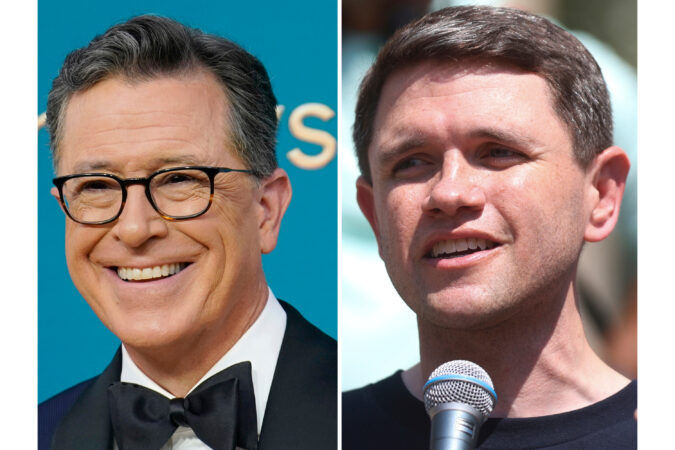
    Stephen Colbert isn’t backing down in an extraordinary public dispute with his bosses at CBS over what he can air on his late-night talk show.

    On The Late Show Tuesday, Colbert said he was surprised by a statement from CBS denying that its lawyers told him he couldn’t show an interview with Democratic Texas Senate candidate James Talarico — which the host said had happened the night before.

    He then took a copy of the network statement, wrapped it in a dog poop bag, and tossed it away.

    Colbert had instead shown his Talarico interview on YouTube, but told viewers why he couldn’t show it on CBS. The network was concerned about FCC Chairman Brendan Carr trying to enforce a rule that required broadcasters to give “equal time” to opposing candidates when an interview was broadcast with one of them.

    “We looked and we can’t find one example of this rule being enforced for any talk show interview, not only for my entire late-night career, but for anyone’s late-night career going back to the 1960s,” Colbert said.

    Although Carr said in January he was thinking about getting rid of the exemption for late-night talk shows, he hadn’t done it yet. “But CBS generously did it for him,” Colbert said.

    Not only had CBS been aware Monday night that Colbert was going to talk about this issue publicly, its lawyers had even approved it in his script, he said. That’s why he was surprised by the statement, which said that Colbert had been provided “legal guidance” that broadcasting the interview could trigger the equal time rule.

    “I don’t know what this is about,” Colbert said. “For the record, I’m not even mad. I really don’t want an adversarial relationship with the network. I’ve never had one.”

    He said he was “just so surprised that this giant global corporation would not stand up to these bullies.” CBS is owned by Paramount Global.

    Colbert is a short-timer now at CBS. The network announced last summer that Colbert’s show, where President Donald Trump is a frequent target of biting jokes, would end in May. The network said it was for economic reasons but others — including Colbert — have expressed skepticism that Trump’s repeated criticism of the show had nothing to do with it.

    This week’s dispute with Colbert also recalls last fall, when ABC took late-night host Jimmy Kimmel off the air for a remark made about the killing of conservative activist founder Charlie Kirk, only to reinstate him following a backlash by viewers.

    As of Wednesday morning, Colbert’s YouTube interview with Talarico had been viewed more than five million times, or roughly double what the comic’s CBS program draws each night. The Texas Democrat also reported that he had raised $2.5 million in campaign donations in the 24 hours after the interview.

  • Taylor Swift concert attack plot leads to terrorism charges against 21-year-old man

    Taylor Swift concert attack plot leads to terrorism charges against 21-year-old man

    VIENNA — Austrian public prosecutors filed terrorism-related charges Monday against a 21-year-old defendant who they say planned to carry out an attack on one of superstar singer Taylor Swift’s concerts in Vienna in August 2024.

    Vienna public prosecutors said in a statement that the unnamed defendant had declared allegiance to the Islamic State group by sharing propaganda material and videos via various messaging services.

    Vienna prosecutors also accuse the defendant of having “obtained instructions on the internet for the construction of a shrapnel bomb based on the explosive triacetone triperoxide” typically used by IS, and of having produced a small amount of the explosive.

    Prosecutors also say that the defendant had made “several attempts” to buy weapons illegally outside the country and to bring them to Austria.

    Vienna public prosecutors plan to proceed with a criminal case against the unnamed suspect in Wiener Neustadt, a town near the Austrian capital.

    The spokesperson for the Vienna public prosecutors office confirmed to the Associated Press that the defendant is in custody. Austrian media identified the suspect as Beran A. and said he was arrested in August 2024.

    Austrian authorities canceled three planned Taylor Swift shows in Vienna in August 2024 after they said they foiled an apparent plot to target the performances.

    The U.S. provided intelligence that fed into the decision to cancel the concerts.

    “The United States has an enduring focus on our counterterrorism mission. We work closely with partners all over the world to monitor and disrupt threats. And so as part of that work, the United States did share information with Austrian partners to enable the disruption of a threat to Taylor Swift’s concerts there in Vienna,” then-White House national security spokesperson John Kirby said in August 2024.