Category: Nation World News Wires

  • Demond Wilson, who played Lamont on ‘Sanford and Son,’ has died at 79

    Demond Wilson, who played Lamont on ‘Sanford and Son,’ has died at 79

    Demond Wilson, who found fame in the 1970s playing Lamont on Sanford and Son and went on to become a minister, has died. He was 79.

    Mark Goldman, a publicist for Mr. Wilson, confirmed to the Associated Press that he died following complications from cancer on Friday.

    “A devoted father, actor, author, and minister, Demond lived a life rooted in faith, service, and compassion. Through his work on screen, his writing, and his ministry, he sought to uplift others and leave a meaningful impact on the communities he served,” Goldman said in an emailed statement.

    Mr. Wilson was best known as the son of Redd Foxx’s comically cantankerous Fred Sanford character in a sitcom that was among the first to feature a mostly Black cast when it began airing in 1972.

    The thoughtful Lamont had to put up with his junkyard owner father’s schemes, bigotry, and insults — most famously, and repeatedly, “You big dummy!”

    The show was a hit for its six seasons on NBC but ended when ABC offered Foxx a variety show.

    Mr. Wilson was born in Valdosta, Ga., and grew up in the Harlem section of Manhattan, according to the biography on his website.

    He served in the U.S. Army in Vietnam and was wounded there, and he returned to New York and acted on stage before heading to Hollywood.

    A guest appearance on All in the Family in 1971 led to his best-known role. Norman Lear produced both shows.

    Mr. Wilson told AP in 2022 that he got the role over comedian Richard Pryor.

    “I said, ‘C’mon, you can’t put a comedian with a comedian. You’ve got to have a straight man,’” he said he told the producers.

    After Sanford and Son ended, Mr. Wilson starred in the shorter-lived comedies Baby I’m Back and The New Odd Couple. He later appeared in four episodes of the show Girlfriends in the 2000s, along with a handful of movie roles.

    Though he returned to the screen at times, he told the Los Angeles Times in 1986 that the acting life was not for him: “It wasn’t challenging. And it was emotionally exhausting because I had to make it appear that I was excited about what I was doing.”

    Mr. Wilson became a minister in the 1980s.

    He is survived by his wife, Cicely Wilson, and their six children.

  • Trump says U.S. is ‘starting to talk to Cuba’ as he moves to cut its oil supplies

    Trump says U.S. is ‘starting to talk to Cuba’ as he moves to cut its oil supplies

    ABOARD AIR FORCE ONE — President Donald Trump said the United States was beginning to talk with Cuban leaders as his administration puts greater pressure on the communist-run island and cuts off key oil supplies.

    He made the comment to reporters on Saturday night as he was flying to Florida. It comes in the wake of his moves in recent weeks to cut off supplies of oil from Venezuela and Mexico, which he suggested Saturday would force Cuba to the negotiating table.

    His goals with Cuba remain unclear, but Trump has turned more of his attention toward the island after his administration in early January captured Venezuela’s then-President Nicolás Maduro and has been more aggressive in confronting nations that are adversaries of the U.S.

    Trump has predicted that the Cuban government is ready to fall.

    The Republican president did not offer any details on Saturday about what level of outreach his administration has had with Cuba recently or when, but simply said, “We’re starting to talk to Cuba.”

    His recent moves to cut off its oil supplies have squeezed the island.

    Last week, Trump signed an executive order to impose a tariff on any goods from countries that sell or provide oil to Cuba. The move put pressure on Mexico, which Cuba became dependent on for oil after Trump halted oil shipments from Venezuela in the wake of Maduro’s ouster.

    Mexican President Claudia Sheinbaum warned that it could cause a humanitarian crisis. She said on Friday that she would seek alternatives to continue helping Cuba.

    “It doesn’t have to be a humanitarian crisis. I think they probably would come to us and want to make a deal,” Trump said Saturday. “So Cuba would be free again.”

    He predicted they would make some sort of deal with Cuba and said, “I think, you know, we’ll be kind.”

  • Venezuelan activist Javier Tarazona released from prison as US diplomat assumes post

    Venezuelan activist Javier Tarazona released from prison as US diplomat assumes post

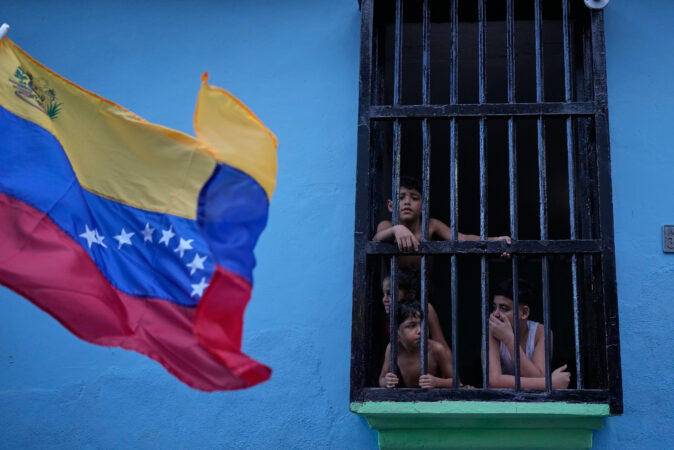
    CARACAS, Venezuela — Venezuelan human rights activist Javier Tarazona, an ally of opposition leader María Corina Machado, was released from prison after the government promised to free political prisoners in an amnesty bill, rights organizations and family members said on Sunday.

    Tarazona, the director of the Venezuelan nonprofit human rights group FundaRedes, was arrested in July 2021, after reporting to authorities that he had been harassed by national intelligence officials. Two other activists of the group were also detained at the time.

    According to Venezuela’s Foro Penal, a nonprofit that monitors the situation of political prisoners in the country, 310 who were jailed for political reasons had been released by Saturday and 700 others are still waiting to be freed.

    “After 1675 days, four years and seven months, this wishful day has arrived. My brother Javier Tarazona is free,” José Rafael Tarazona Sánchez wrote on X. “Freedom for one is hope for all.”

    Tarazona was released shortly after the arrival to Caracas of U.S. Charge d’Affaires Laura Dogu, who will reopen the American diplomatic mission after seven years of severed ties. It comes after U.S. President Donald Trump ordered a military action that removed the South American country’s former President Nicolás Maduro from office and brought him to the U.S. for trial.

    Dogu, who was previously ambassador in Nicaragua and Honduras, arrived in Venezuela one day after the country’s interim president, Delcy Rodríguez, announced an amnesty bill to release political prisoners. That move was one of the key demands of the Venezuelan opposition.

    Venezuela’s government had accused Tarazona of terrorism, a frequent accusation it makes against real or potential opposition members. Tarazona was vocal against illegal armed groups on the country’s border with Colombia and their alleged connection to high-ranked members of the Maduro administration.

    Nonprofit Amnesty International reported that Tarazona’s health had deteriorated due to lack of medical attention during his time in prison.

    “All of Venezuela admires you and respects your bravery and your commitment,” Machado said on X. “You, better than anyone, know that there will be justice in Venezuela. Freedom for all political prisoners.”

    Venezuela’s government denies it jails members of the opposition and accuses them of conspiring to bring it down.

  • Gaza’s crucial Rafah crossing prepares for limited travel to resume Monday

    Gaza’s crucial Rafah crossing prepares for limited travel to resume Monday

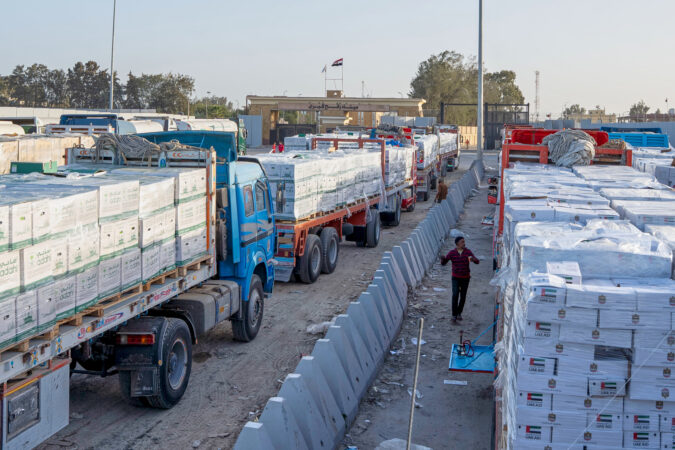
    CAIRO — Palestinians in Gaza watched with hope and impatience Sunday as workers laid the groundwork to reopen the territory’s Rafah border crossing with Egypt, its lifeline to the world. Israel says the crossing is scheduled to resume Monday as its ceasefire with Hamas moves ahead.

    “Opening the crossing is a good step, but they set a limit on the number of people allowed to cross, and this is a problem,” said Ghalia Abu Mustafa, a woman from Khan Younis.

    Israel said the crossing had opened in a test, and the Israeli military agency that controls aid to Gaza said residents could begin crossing Monday. But only a small number of people can cross at first.

    “We want a large number of people to leave, for it to be open so that sick people can go and return,” said Suhaila Al-Astal, a woman displaced from the city of Rafah who said her sick daughter needed help abroad. ”We want the crossing to be open permanently.”

    Israel’s announcement came a day after Israeli strikes killed at least 30 Palestinians including several children, according to hospital officials — one of the highest death tolls since the ceasefire began on Oct. 10. Israel had accused Hamas of new truce violations.

    Nicolay Mladenov, director-general of U.S. President Donald Trump’s new board of peace in Gaza, urged the parties to “exercise restraint” and said his office was working with the new Palestinian committee chosen to oversee Gaza to find ways that prevent future incidents.

    Dozens will enter and leave Gaza daily at first

    The Rafah crossing has been largely shut since Israel seized it in May 2024. About 20,000 Palestinian children and adults needing medical care are hoping to leave war-devastated Gaza via the crossing, and thousands of other Palestinians outside the territory hope to return home.

    Few people, and no cargo, will be allowed to cross at first. Prime Minister Benjamin Netanyahu has said Israel will allow 50 patients needing medical evacuation to leave daily. An official involved in the discussions, speaking on condition of anonymity to discuss diplomatic talks, said each patient can travel with two relatives, while 50 people who left Gaza during the war can return each day.

    Zaher al-Wahidi, head of the Gaza Health Ministry’s documentation department, told the Associated Press the ministry hadn’t been notified about the start of medical evacuations.

    Israel has said it and Egypt will vet people for exit and entry through the crossing, which will be supervised by European Union border patrol agents. The number of travelers is expected to increase over time if the system is successful.

    Israel will stop Doctors Without Borders’ work in Gaza

    Also Sunday, Israel’s Diaspora Ministry said it was “moving to terminate” the operations of Doctors Without Borders in Gaza by Feb. 28.

    Israel in December suspended the group’s operations there because it refused to comply with new registration requirements for organizations to submit lists of local employees. The medical charity said the regulations could endanger Palestinian staff.

    Doctors Without Borders had no immediate comment. It has said Israel’s decision will have a catastrophic impact on its work in Gaza, where it provides funding and international staff for six hospitals and runs two field hospitals and eight primary health centers, clinics, and medical points. It also runs two of Gaza’s five stabilization centers helping children with severe malnutrition.

    Israel has suspended over two dozen humanitarian organizations from operating in Gaza because of failure or refusal to comply with the new requirements.

    The Diaspora Ministry, which proposed them, says they are aimed at preventing Hamas and other militant groups from infiltrating aid groups. The organizations call the rules arbitrary and warn that the bans harm a civilian population desperately in need of aid.

    Gaza’s health sector has been devastated by two years of Israeli bombardment and restrictions on supplies.

    Rafah has been Gaza’s main crossing

    Palestinian security officers on Sunday passed through the Rafah crossing’s Egyptian gate and headed toward the Palestinian gate to join an EU mission that will supervise exit and entry, said an Egyptian official who spoke on condition of anonymity because he wasn’t authorized to speak to the media. Ambulances also crossed through the Egyptian gate, the official said.

    Before the war, Rafah was the main crossing for people moving in and out of Gaza. The territory has four other border crossings with Israel.

    Israel called its 2024 seizure of the Rafah crossing part of efforts to combat Hamas arms smuggling. The crossing briefly opened for the evacuation of medical patients during a ceasefire in early 2025. Israel had resisted reopening the Rafah crossing, but the recovery of the remains of the last hostage in Gaza last week cleared the way to move forward.

    Under the ceasefire terms, Israel’s military controls the area between the Rafah crossing and the zone where most Palestinians live.

    Fearing that Israel could use the crossing to push Palestinians out of the enclave, Egypt has repeatedly said it must be open for crossing in both directions. Historically, Israel and Egypt have vetted Palestinians applying to cross.

    The ceasefire halted more than two years of war between Israel and Hamas that began with a Hamas-led attack on southern Israel on Oct. 7, 2023, that killed some 1,200 people, mostly civilians, and took 251 hostages.

    Israel’s retaliatory offensive has killed 71,795 Palestinians, including 523 since this ceasefire started, according to Gaza’s Health Ministry. The ministry doesn’t distinguish between civilians and combatants in its figures. It maintains detailed casualty records that are seen as generally reliable by U.N. agencies and independent experts.

    The ceasefire’s first phase called for the exchange of all hostages held in Gaza for hundreds of Palestinians held by Israel, a surge in humanitarian aid, and a partial pullback of Israeli troops.

    The second phase is more complicated. It calls for installing a new Palestinian committee to govern Gaza, deploying an international security force, disarming Hamas, and taking steps to begin rebuilding.

  • Iran’s supreme leader warns any U.S. attack would spark ‘regional war’

    Iran’s supreme leader warns any U.S. attack would spark ‘regional war’

    DUBAI, United Arab Emirates — Iran’s supreme leader warned Sunday that any attack by the United States would spark a “regional war” in the Mideast, further escalating tensions as President Donald Trump has threatened to militarily strike the Islamic Republic over its crackdown on recent nationwide protests.

    The comments from the 86-year-old Ayatollah Ali Khamenei are the most direct threat he’s made so far as the aircraft carrier USS Abraham Lincoln and associated American warships take positions in the Arabian Sea, sent there by Trump after Tehran’s bloody crackdown on nationwide protests.

    It remains unclear whether Trump will use force. He’s repeatedly said Iran wants to negotiate and has brought up Tehran’s nuclear program as another issue he wants to see resolved.

    But Khamenei also referred to the nationwide protests as “a coup,” hardening the government’s position as tens of thousands of people reportedly have been detained since the start of the demonstrations. Sedition charges in Iran can carry the death penalty, which again renews concerns about Tehran carrying out mass executions for those arrested — a red line for Trump.

    Iran had also planned a live-fire military drill for Sunday and Monday in the strategic Strait of Hormuz, the narrow mouth of the Persian Gulf through which a fifth of all oil traded passes. The U.S. military’s Central Command had warned against threatening American warships or aircraft during the drill or disrupting commercial traffic.

    Khamenei warns U.S.

    Khamenei spoke to a crowd at his compound in Tehran as Iran marked the start of a dayslong commemoration of the country’s 1979 Islamic Revolution. He, at one point, described the U.S. as being interested in its oil, natural gas, and other mineral resources, saying that they wanted to “seize this country, just as they controlled it before.”

    “The Americans must be aware that if they wage a war this time, it will be a regional war,” he said.

    The supreme leader added, “We are not the instigators, we are not going to be unfair to anyone, we don’t plan to attack any country. But if anyone shows greed and wants to attack or harass, the Iranian nation will deal a heavy blow to them.”

    Asked about the warning, Trump on Sunday told reporters that the U.S. “has the biggest, most powerful ships in the world over there, very close, a couple of days, and hopefully we’ll make a deal. If we don’t make a deal, then we’ll find out whether or not he was right.”

    Khamenei also hardened his position on the demonstrations after earlier acknowledging some people had legitimate economic grievances that sparked their protests. The demonstrations began Dec. 28, initially over the collapse of Iran’s rial currency. It soon grew into a direct challenge to Khamenei’s rule.

    “The recent sedition was similar to a coup. Of course, the coup was suppressed,” he said. “Their goal was to destroy sensitive and effective centers involved in running the country, and for this reason they attacked the police, government centers, (Revolutionary Guard) facilities, banks and mosques — and burned copies of the Quran. They targeted centers that run the country.”

    The U.S.-based Human Rights Activists New Agency, which relies on a network inside Iran to verify its information, reports that over 49,500 people have been detained in the crackdown. It says the violence killed at least 6,713 people, the vast majority of them demonstrators. The Associated Press has been unable to independently assess the death toll and arrest figures, given authorities have cut Iran’s internet off from the rest of the world.

    As of Jan. 21, Iran’s government put the death toll at a far lower 3,117, saying 2,427 were civilians and security forces, labeling the rest “terrorists.” In the past, Iran’s theocracy has undercounted or not reported fatalities from unrest.

    That death toll exceeds that of any other round of protest or unrest in Iran in decades and recalls the chaos surrounding the 1979 revolution.

    Parliament speaker: EU militaries considered terrorist groups

    The speaker of Iran’s parliament, meanwhile, said that the Islamic Republic now considers all European Union militaries to be terrorist groups, lashing out after the bloc declared the country’s paramilitary Revolutionary Guard a terror group over taking part in the bloody crackdown.

    Mohammad Bagher Qalibaf, a former Guard commander, announced the terror designation, which will likely be mostly symbolic. Iran has used a 2019 law to reciprocally declare other nations’ militaries terror groups following the United States’ declaration of the Guard as a terror group that year.

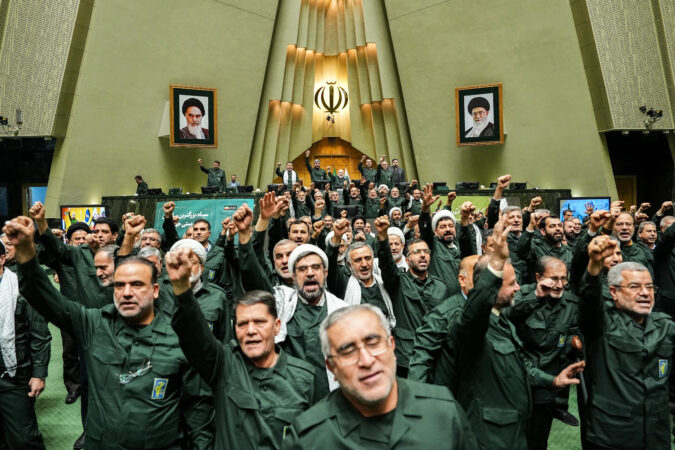
    Qalibaf made the announcement as he and others in parliament wore Guard uniforms in support of the force. The Guard, which also controls Iran’s ballistic missile arsenal and has vast economic interests in Iran, answers only to Khamenei.

    “By seeking to strike at the (Guard), which itself has been the greatest barrier to the spread of terrorism to Europe, Europeans have in fact shot themselves in the foot and, once again, through blind obedience to the Americans, decided against the interests of their own people,” Qalibaf said.

    Lawmakers at the session later chanted: “Death to America!” and “Death to Israel!”

    Trump says Iran is ‘seriously talking’ to U.S.

    Trump has laid out two red lines for military action: the killing of peaceful protesters or the possible mass execution of those detained in a major crackdown over the demonstrations. He’s increasingly begun discussing Iran’s nuclear program as well, which the U.S. negotiated over with Tehran in multiple sessions before Israel launched a 12-day war with Iran back in June.

    The U.S. bombed three Iranian nuclear sites during the war. Activity at two of the sites suggests Iran may be trying to obscure the view of satellites as it tries to salvage what remains there.

    Trump on Saturday night declined to say whether he’d made a decision on what he wanted to do regarding Iran.

    Speaking to reporters, Trump sidestepped a question about whether Tehran would be emboldened if the U.S. backed away from launching strikes on Iran, saying, “Some people think that. Some people don’t.”

    Trump said Iran should negotiate a “satisfactory” deal to prevent the Middle Eastern country from getting any nuclear weapons, but said, “I don’t know that they will. But they are talking to us. Seriously talking to us.”
  • Oscar-nominated screenwriter of Iranian drama ‘It Was Just an Accident’ arrested in Tehran

    Oscar-nominated screenwriter of Iranian drama ‘It Was Just an Accident’ arrested in Tehran

    One of the Oscar-nominated screenwriters of the Iranian drama It Was Just an Accident has been arrested in Tehran just weeks before the Academy Awards.

    Representatives for the film on Sunday said that Mehdi Mahmoudian was arrested Saturday. No details on the charges against Mahmoudian were available. But his arrest came just days after Mahmoudian and 16 others signed a statement condemning Islamic Republic leader Ayatollah Ali Khamenei and the regime’s violent crackdown on demonstrators.

    Two other signatories, Vida Rabbani and Abdullah Momeni, were also arrested.

    Jafar Panahi, the prize-winning director of It Was Just an Accident, issued a statement Sunday decrying his co-writer’s arrest.

    “Mehdi Mahmoudian is not just a human-rights activist and a prisoner of conscience; he is a witness, a listener, and a rare moral presence — a presence whose absence is immediately felt, both inside prison walls and beyond them,” Panahi said.

    Panahi was also a signatory on the Jan. 28 statement. It reads in part: “The mass and systematic killing of citizens who bravely took to the streets to bring an end to an illegitimate regime constitutes an organized state crime against humanity.”

    It Was Just an Accident is nominated for best screenplay and best international film at the March 15 Oscars. The film, made covertly in Iran, was France’s nominee for best international film.

    Panahi, one of the most acclaimed international filmmakers, has made films through various states of imprisonment, house arrest, and travel ban. It Was Just an Accident, a revenge drama and the Palme d’Or-winner at last year’s Cannes Film Festival, was inspired by Panahi’s most recent stint in prison. It was there that he met Mahmoudian. Panahi called him “a pillar” to other prisoners.

    It Was Just An Accident was written by Panahi, Mahmoudian, Nader Saeiver, and Shadhmer Rastin.

    Last fall, Panahi was again sentenced to a year in prison and given a two-year ban on leaving Iran after being convicted on charges of “propaganda activities against the system.” Panahi, who has been traveling internationally with the film, has said he will return to Iran despite the sentence.

    The U.S.-based Human Rights Activists New Agency, which relies on a network inside Iran to verify its information, says that more than 6,713 people have been killed and 49,500 people have been detained in the recent government crackdown. The Associated Press has been unable to independently assess the death toll and arrest figures, given that authorities have cut Iran’s internet off from the rest of the world.

    Panahi has repeatedly spoken out against the crackdown.

    “As we stand here, the state of Iran is gunning down protesters and a savage massacre continues blatantly on the streets of Iran,” Panahi said last month at the National Board of Review Awards in New York. “Today the real scene is not on screens but on the streets of Iran. The Islamic Republic has caused a bloodbath to delay its collapse.”

  • More winter weather leads to heavy snow, canceled flights and, in Florida, falling iguanas

    More winter weather leads to heavy snow, canceled flights and, in Florida, falling iguanas

    MEMPHIS, Tenn. — A huge swath of the U.S. from the Gulf Coast into New England was mired in extra-cold temperatures Sunday after a bomb cyclone brought heavy snow and hundreds of flight cancellations to North Carolina, flurries and falling iguanas in Florida, and more misery for thousands who are still without power from last weekend’s ice storm in the South.

    About 150 million people were under cold weather advisories and extreme cold warnings in the eastern portion of the U.S., with wind chills near zero to single digits in the South and the coldest air mass seen in South Florida since December 1989, said Peter Mullinax, a meteorologist with weather prediction center in College Park, Md.

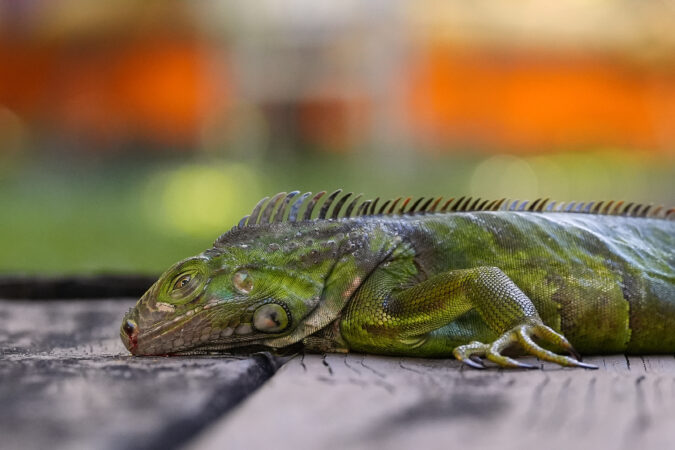
    The Tampa-St. Petersburg area in Florida saw snow flurries. and temperatures dropped into the 20s in the Panhandle and 30s in South Florida on Sunday morning, Mullinax said. That left cold-stunned iguanas lying motionless on the ground. Iguanas in South Florida go dormant in the cold and, though they usually wake when temperatures warm, the reptiles can die after more than a day of extreme cold.

    The cold also left ice on strawberries and oranges in the state. Farmers in Florida sometimes spray water on fruit trees and berry plants to protect them from the cold.

    Meanwhile, the bomb cyclone, known to meteorologists as an intense, rapidly strengthening weather system, contributed to nearly a foot of snow in and around Charlotte, North Carolina’s largest city. The snowfall represented a top-five snow event all time there, Mullinax said.

    Flight cancellations exceeded 2,800 in the U.S. on Saturday, with another 1,500 on Sunday, according to FlightAware, a flight tracking and data company. About 800 of those Sunday cancellations were for flights departing or arriving at Charlotte Douglas International Airport.

    The storm caused an hourslong mess on Interstate 85 northeast of the city, after a crash left dozens of semitractors and other vehicles backed up into the evening, according to the State Highway Patrol. More than 1,000 traffic collisions and two road deaths were reported, North Carolina Gov. Josh Stein said Sunday.

    “It’s an impressive cold shot, for sure, and there are daily records that are being seen down in the South,” Mullinax said.

    Snow blanketed the neighborhood of Lee Harrison, an insurance agent in a town outside of Greenville, N.C., and he planned to take his three daughters sledding in the backyard.

    “We’re not going to drive anywhere,” Harrison said. “It’s thick enough that I would not feel comfortable driving with our family.”

    More than 110 deaths connected to the wintry weather and storms have been reported around the U.S. since late January. In Tennessee and Mississippi, two states struck last weekend by a storm carrying snow and ice, more than 97,000 customers were still without electricity on Sunday, according to the outage tracking website poweroutage.us. Another 29,000 didn’t have power on Sunday in Florida.

    Nashville Electric Service said it expects 90% of its customers to have power restored Tuesday, with 99% getting electricity back by next Sunday, two weeks after the ice and snowstorm hit.

    Gov. Bill Lee said he shared “strong concerns” with leadership of the utility, which has defended its response and said the storm was unprecedented.

    Mississippi officials said it was the state’s worst winter storm since 1994. About 80 warming centers were opened and National Guard troops delivered supplies by truck and helicopter.

    Mullinax said parts of the Carolinas are going to be “digging out” for several days as they contend with gusty winds and bitterly cold wind chills. Heading into Tuesday and Wednesday, light snow could fall in the Ohio Valley and the mid-Atlantic, from Washington, D.C., and possibly into New York City, he said.

  • Trump says feds won’t intervene during protests in Democratic-led cities unless asked to do so

    Trump says feds won’t intervene during protests in Democratic-led cities unless asked to do so

    ABOARD AIR FORCE ONE — President Donald Trump said Saturday that he has instructed Homeland Security Secretary Kristi Noem not to intervene in protests occurring in cities led by Democrats unless local authorities ask for federal help amid mounting criticism of his administration’s immigration crackdown.

    On his social media site, Trump posted that “under no circumstances are we going to participate in various poorly run Democrat Cities with regard to their Protests and/or Riots unless, and until, they ask us for help.”

    He provided no further details on how his order would affect operations by U.S. Immigration and Customs Enforcement and DHS personnel, or other federal agencies, but added: “We will, however, guard, and very powerfully so, any and all Federal Buildings that are being attacked by these highly paid Lunatics, Agitators, and Insurrectionists.”

    Trump said that in addition to his instructions to Noem he had directed “ICE and/or Border Patrol to be very forceful in this protection of Federal Government Property.”

    Later Saturday night, Trump said to reporters as he flew to Florida for the weekend that he felt Democratic cities are “always complaining.”

    “If they want help, they have to ask for it. Because if we go in, all they do is complain,” Trump said.

    He predicted that those cities would need help, but said if the leaders of those cities seek it from the federal government, “They have to say, ‘Please.’”

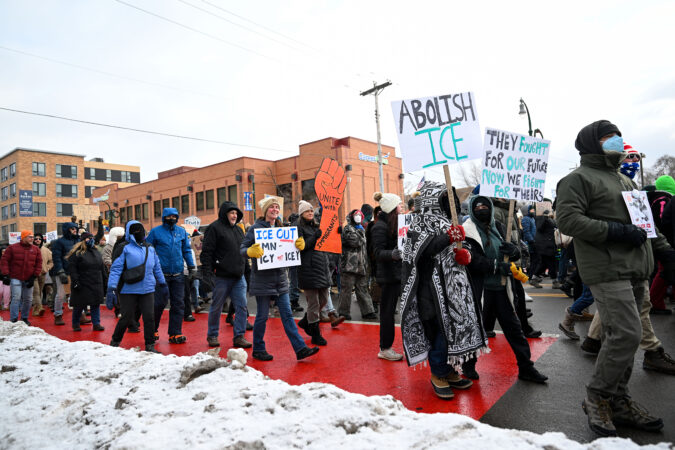
    The Trump administration has already deployed the National Guard, or federal law enforcement officials, in a number of Democratic areas, including Washington, Los Angeles, Chicago, and Portland, Ore. But Saturday’s order comes as opposition to such tactics has grown, particularly in Minnesota’s Twin Cities region.

    Trump said Saturday night that protesters who “do anything bad” to immigration officers and other federal law enforcement “will have to suffer” and “will get taken care of in at least an equal way.”

    “You see it, the way they treat our people. And I said, you’re allowed, if somebody does that, you can do something back. You’re not going to stand there and take it if somebody spits in your face,” Trump said.

    Minnesota Attorney General Keith Ellison and the mayors of Minneapolis and St. Paul have challenged a federal immigration enforcement surge in those cities, arguing that DHS is violating constitutional protections.

    A federal judge says she won’t halt enforcement operations as the lawsuit proceeds. State and local officials had sought a quick order to halt the enforcement action or limit its scope. Justice Department lawyers have called the lawsuit “legally frivolous.”

    The state, particularly Minneapolis, has been on edge after federal officers fatally shot two people in the city: Renee Good on Jan. 7 and Alex Pretti on Jan. 24. Thousands of people have taken to the streets to protest the federal action in Minnesota and across the country.

    Trump’s border czar, Tom Homan, has suggested the administration could reduce the number of immigration enforcement officers in Minnesota — but only if state and local officials cooperate. Trump sent Homan to Minneapolis following the killings of Good and Pretti, seeming to signal a willingness to ease tensions in Minnesota.

    The president on Saturday night said he intended to speak to Homan and Noem on Sunday and he seemed to endorse the idea of immigration agents wearing body cameras or having their interactions filmed.

    Trump was asked by a reporter if he thought it was a good thing having lots of cameras capturing incidents with law enforcement.

    “I think it would help law enforcement but I’d have to talk to them,” Trump said.

    He went on and added: “That works both ways. But overall, I think it’s 80% in favor of law enforcement.”

  • 5-year-old Liam Conejo Ramos and father return to Minnesota from Texas detention facility

    5-year-old Liam Conejo Ramos and father return to Minnesota from Texas detention facility

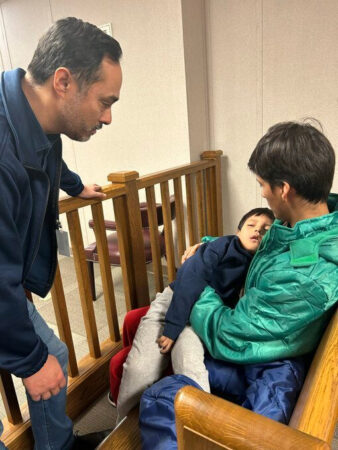
    A 5-year-old boy and his father detained by immigration officers in Minnesota and held in Texas have been released following a judge’s order. They have returned to Minnesota, according to the office of Texas Rep. Joaquin Castro.

    The two were detained in a Minneapolis suburb on Jan. 20. They were taken to a detention facility in Dilley, Texas.

    Katherine Schneider, a spokesperson for the Democratic congressman, confirmed Adrian Alexander Conejo Arias and his son had arrived home.

    Images of the young boy wearing a bunny hat and Spider-Man backpack and surrounded by immigration officers drew outrage about the Trump administration’s crackdown in Minneapolis.

    Neighbors and school officials say that federal immigration officers used the preschooler as “bait” by telling him to knock on the door to his house so that his mother would answer. The Department of Homeland Security has called that description of events an “abject lie.” It said the father fled on foot and left the boy in a running vehicle in their driveway.

  • Carlos Alcaraz beats Novak Djokovic for Australian Open title

    Carlos Alcaraz beats Novak Djokovic for Australian Open title

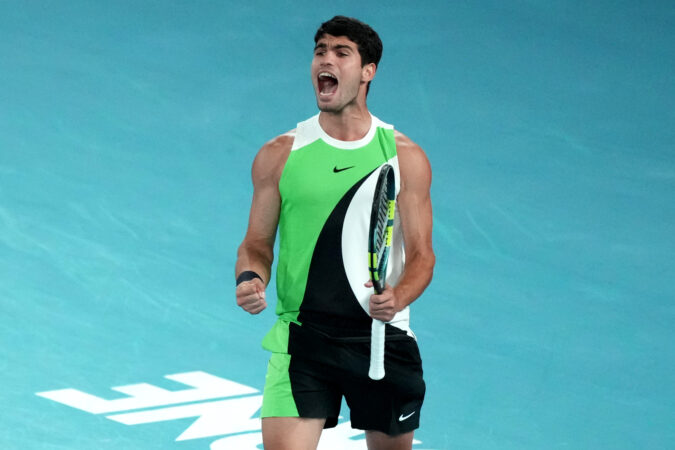
    MELBOURNE, Australia — Carlos Alcaraz is 22, he’s the youngest man ever to win all four of the major titles in tennis, and he had to achieve what no man previously has done to complete the career Grand Slam in Australia.

    The top-ranked Alcaraz dropped the first set of the Australian Open final in 33 minutes Sunday as Novak Djokovic went out hard in pursuit of an unprecedented 25th major title, but the young Spaniard dug deep to win 2-6, 6-2, 6-3, 7-5.

    “Means the world to me,” Alcaraz said. “It is a dream come true for me.”

    Djokovic had won all 10 of his previous finals at Melbourne Park and, despite being 38, gave himself every chance of extending that streak to 11 when he needed only two sets to win.

    Alcaraz rose to the challenge.

    “Tennis can change on just one point. One point, one feeling, one shot can change the whole match completely,” he said. “I played well the first set, but you know, in front of me I had a great and inspired Novak, who was playing great, great shots.”

    A couple of unforced errors from Djokovic early in the second set gave Alcaraz the confidence.

    He scrambled to retrieve shots that usually would be winners for Djokovic, and he kept up intense pressure on the most decorated player in men’s tennis history. There were extended rallies where each player hit enough brilliant shots to usually win a game.

    Djokovic has made an art form of rallying from precarious positions. Despite trailing two sets to one, he went within the width of a ball in the fourth set’s ninth game of turning this final around.

    After fending off six break points in the set, he exhorted the crowd when he got to 30-30. The crowd responded with chants of “Nole, Nole, Nole!”

    When Djokovic earned a breakpoint chance — his first since the second set — he whipped up his supporters again. But when Djokovic sent a forehand long on the next point, Alcaraz took it as a reprieve.

    A short forehand winner, a mis-hit from Alcaraz, clipped the net and landed inside the line to give him game point. Then Djokovic hit another forehand long.

    Alcaraz responded with a roar, and sealed victory by taking two of the next three games.

    As he was leaving the court, Alcaraz signed the lens of the TV camera with a recognition: “Job finished. 4/4 Complete.”

    Teamwork

    After paying tribute at the trophy ceremony to Djokovic for being an inspiration, Alcaraz turned to his support team. He parted ways with longtime coach Juan Carlos Ferrero at the end of last season and Samuel Lopez stepped up to head the team.

    “Nobody knows how hard I’ve been working to get this trophy. I just chased this moment so much,” Alcaraz said. “The pre-season was a bit of a roller coaster emotionally.

    “You were pushing me every day to do all the right things,” he added. “I’m just really grateful for everyone I have in my corner right now.”

    Djokovic’s praise

    Djokovic joked about this showdown setting up a rivalry over the next 10 years with Alcaraz, but then said it was only right to hand the floor over to the new, 16 years his junior, champion.

    “What you’ve been doing, the best word to describe is historic, legendary,” he said. “So congratulations.”

    Both players were coming off grueling five-set semifinal wins — Alcaraz held off No. 3 Alexander Zverev on Friday; Djokovic’s win over two-time defending Australian Open champion Jannik Sinner ended after 1:30 a.m. Saturday — yet showed phenomenal fitness, athleticism, and stamina for just over three hours in pursuit of their own historic achievements.

    Djokovic won the last of his 24 Grand Slam singles titles at the 2023 U.S. Open, his push for an unprecedented 25th has now been blocked by Alcaraz or Sinner for nine majors.

    Rafa in the house

    Djokovic and Rafael Nadal played some epic matches, including the longest match ever at the Australian Open that lasted almost six hours in 2012.

    Nadal was in the stands Sunday, and both players addressed the 22-time major winner.

    “He’s my idol, my role model,” Alcaraz said. To complete the career Slam “in front of him, it made even more special.”

    Djokovic, addressing Nadal directly as the “legendary Rafa,” joked that there were “too many Spanish legends” in Rod Laver.

    “It felt like it was two against one tonight,” he said.

    One for the ages

    At 22 years and 272 days, Alcaraz is the youngest man to complete a set of all four major singles titles. He broke the mark set by Don Budge in the 1938 French championships, when he was 22 years and 363 days.

    He’s the ninth man to achieve the career Grand Slam, a list that also includes Djokovic, Nadal and Roger Federer.

    Alcaraz now has seven major titles — his first in Australia along with two each at Wimbledon and the French and U.S. Opens.