Category: Nation World News Wires

  • 4 years into Russia’s full-scale invasion of Ukraine, a look at the war by the numbers

    4 years into Russia’s full-scale invasion of Ukraine, a look at the war by the numbers

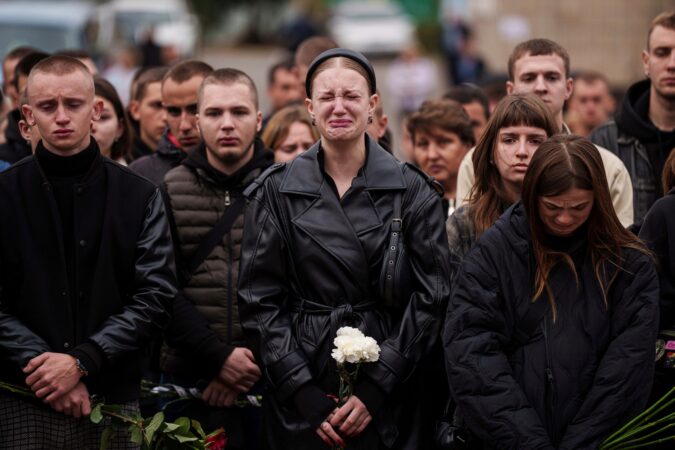
    Russia’s invasion of Ukraine four years ago launched Europe’s biggest conflict since World War II, causing immense suffering for civilians and harrowing ordeals for soldiers while rewriting the post-Cold War security order.

    The fighting entered its fifth year Tuesday, and it shows no signs of stopping anytime soon.

    The U.S. has brokered talks with delegations from Moscow and Kyiv as part of the Trump administration’s yearlong push for peace. But reconciling key differences, such as the future of Russian-occupied Ukrainian land and postwar security for Ukraine, has thwarted progress.

    Meanwhile, thousands of each countries’ troops have died on the battlefield, and Ukrainian civilians have been battered by Russian aerial strikes that have brought years of power outages and water cuts.

    Here’s a look at the conflict, by the numbers, since the full-scale invasion on Feb. 24, 2022.

    1.8 million

    The upper end of the estimated number of soldiers killed, wounded, or missing on both sides, according to a report last month by the Center for Strategic and International Studies, a think tank.

    It estimated that Russia has suffered 1.2 million casualties, including up to 325,000 troop deaths, between February 2022 and December 2025 — what it said was the largest number of troop deaths for any major power in any conflict since World War II.

    Russia has not released figures on battlefield deaths since January 2023, when it said more than 80 soldiers were killed in a Ukrainian strike, bringing the total military deaths Moscow has confirmed to just over 6,000.

    CSIS estimated that Ukraine has seen 500,000 to 600,000 military casualties, including up to 140,000 deaths.

    Ukrainian President Volodymyr Zelensky said earlier this month that 55,000 Ukrainian troops have died in the war. Many are missing, he said.

    Neither Moscow nor Kyiv gives timely data on military losses. Independent verification is not possible.

    14,999

    The U.N. Human Rights Monitoring Mission’s count for civilian deaths in Ukraine since Russia’s all-out invasion, though it says that is likely an underestimate. More than 40,600 civilians were injured over the same period, it said in a December report.

    The war has killed at least 763 children, according to the U.N.

    Last year was the deadliest for civilians in Ukraine since 2022. The conflict killed 2,514 civilians and injured 12,142 in the country in 2025 — a 31% increase in civilian casualties over 2024, it said.

    19.4%

    The percentage of Ukrainian land occupied by Russia, according to the Institute for the Study of War.

    Over the past year, Russia has gained just 0.79% of Ukraine’s territory in the grinding war of attrition, the Washington-based think tank said in calculations provided earlier this month to the Associated Press, underscoring the little progress Moscow’s forces have made despite huge costs in troops and armor.

    Before Russia’s all-out invasion, it controlled nearly 7% of Ukraine, including Crimea and parts of the Donetsk and Luhansk regions in the east, as Moscow-backed separatists fought the Ukrainian army, according to Ukrainian officials and Western analysts.

    13%

    The percentage drop in foreign military aid to Kyiv last year compared with the annual average between 2022 and 2024, according to Germany’s Kiel Institute, which tracks assistance to Kyiv.

    U.S. President Donald Trump stopped sending American weapons paid for by the U.S. to Ukraine after he took office just over a year ago. European countries, striving to make up the difference, increased their military aid last year by 67% compared with the 2022-2024 period, the institute said in a report this month.

    Foreign humanitarian and financial aid to Ukraine fell by 5% last year in comparison with the average in the previous three years, it said.

    5.9 million

    The number of Ukrainian civilians who have left their country.

    Some 5.3 million of those people have found refuge in Europe, according to a report this month from the U.N. office in Ukraine.

    Additionally, around 3.7 million Ukrainians forced out of their homes have moved elsewhere within the country, the U.N. said in December.

    Ukraine’s prewar population was more than 40 million.

    2,881

    The number of Russian attacks that affected the provision of medical care in Ukraine since the full-scale invasion, according to a report from the World Health Organization on Monday.

    There was a nearly 20% increase in such attacks last year compared with 2024, the U.N. agency said.

    A report earlier in the month from the WHO documented at least 2,347 strikes on healthcare facilities, in addition to others that damaged vehicles and the storage of medical supplies.
  • After Supreme Court rebuke, Democrats call for government to refund billions in Trump tariff money

    After Supreme Court rebuke, Democrats call for government to refund billions in Trump tariff money

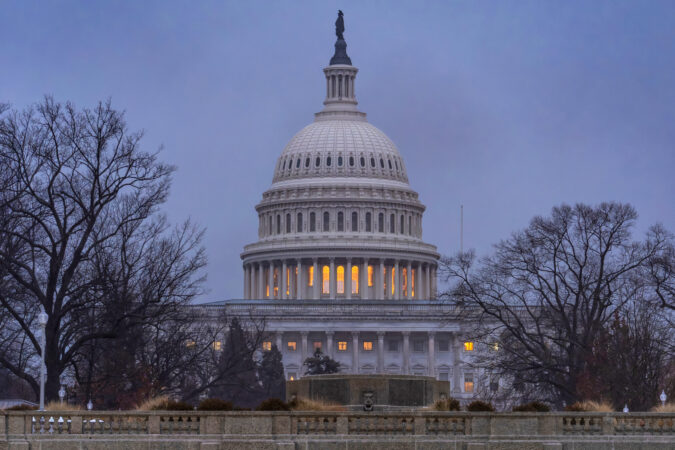
    WASHINGTON — A trio of Senate Democrats is calling for the government to start refunding roughly $175 billion in tariff revenues that the Supreme Court ruled were collected because of an illegal set of orders by President Donald Trump.

    Sens. Ron Wyden of Oregon, Ed Markey of Massachusetts, and Jeanne Shaheen of New Hampshire unveiled a bill on Monday that would require U.S. Customs and Border Protection to issue refunds over the course of 180 days and pay interest on the refunded amount.

    The measure would prioritize refunds to small businesses and encourages importers, wholesalers, and large companies to pass the refunds on to their customers.

    “Trump’s illegal tax scheme has already done lasting damage to American families, small businesses, and manufacturers who have been hammered by wave after wave of new Trump tariffs,” said Wyden, stressing that the “crucial first step” to fixing the problem begins with “putting money back in the pockets of small businesses and manufacturers as soon as possible.”

    The bill is unlikely to become law, but it reveals how Democrats are starting to apply public pressure on a Trump administration that has shown little interest in trying to return tariff revenues after the Supreme Court announced its 6-3 ruling on Friday.

    Because of the ruling, going into November’s midterm elections for control of Congress, Democrats have begun telling the public that Trump illegally raised taxes and now refuses to repay the money to the American people.

    Shaheen said that repairing any of the damage caused by the tariffs in the form of higher prices starts with “President Trump refunding the illegally collected tariff taxes that Americans were forced to pay.” Markey stressed that small business tend to have ”little to no resources” and a “refund process can be extremely difficult and time consuming” for companies.

    The Trump administration has asserted that its hands are tied, because any refunds should be the responsibility of further litigation in court.

    That message could put Republicans on the defensive as they try to explain why the government isn’t proactively seeking to return the money. GOP lawmakers had planned to try to preserve their House and Senate majorities by running on the income tax cuts that Trump signed into law last year, saying that tax refunds this year would help families.

    Treasury Secretary Scott Bessent told CNN on Sunday that it’s “bad framing” to raise the question of refunds because the Supreme Court ruling did not address the issue. The administration’s position is that any refunds will be decided by lawsuits winding their way through the legal system, rather than by a president who has repeatedly stressed to voters that he has the ability to act with speed and resolve.

    “It is not up to the administration — it is up to the lower court,” Bessent said, stressing that rather than offer any guidance he would “wait” for a court opinion on refunds.

    Trump has defended his use of the 1977 International Emergency Economic Powers Act to impose broad tariffs on almost every U.S. trading partner, saying that his ability to levy taxes on imports had helped to end military conflicts, bring in new federal revenues, and apply pressure for negotiating trade frameworks.

    The University of Pennsylvania’s Penn Wharton Budget Model released estimates that the refunds would total $175 billion. That’s the equivalent of an average of $1,300 per U.S. household. But determining how to structure reimbursements would be tricky, as the costs of the tariffs flowed through the economy in the form of customers paying the taxes directly as well as importers passing along the cost either indirectly or absorbing them.

    The president has previously claimed that refunds would drive up U.S. government debt and hurt the economy. On Friday, he told reporters at a briefing that the refund process could be finished after he leaves the White House.

    “I guess it has to get litigated for the next two years,” Trump said, later amending his timeline by saying: “We’ll end up being in court for the next five years.”

  • Rob Reiner’s son pleads not guilty to murder in the killing of his parents

    Rob Reiner’s son pleads not guilty to murder in the killing of his parents

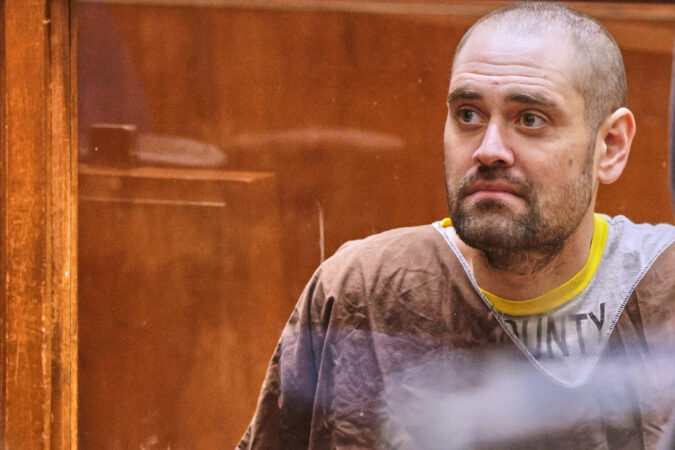
    LOS ANGELES — Nick Reiner, the 32-year-old son of Hollywood luminary Rob Reiner and Michele Singer Reiner, pleaded not guilty Monday to two counts of first-degree murder more than two months after their deaths, denying for the first time that he fatally stabbed his parents.

    Reiner’s attorney, Deputy Public Defender Kimberly Greene, entered the plea on his behalf as he stood behind glass in an enclosed custody area of the packed Los Angeles courtroom.

    The third of Rob Reiner’s four children, Nick Reiner has been held without bail since his arrest hours after beloved actor-director Reiner and photographer and producer Singer were found dead on Dec. 14 at their home in the upscale Brentwood section of Los Angeles.

    Reiner appeared in court with a shaved head and light facial hair, wearing brown jail clothes. He talked to his lawyer briefly through the glass before the judge began the hearing. At one point a low door in the enclosure was opened and they crouched down and spoke face-to-face. During the hearing, he spoke only to answer “yes” when the judge asked if he waived his right for next steps of the case to proceed speedily.

    Reiner was not wearing the suicide prevention smock he wore in his first court appearance in December days after his parent’s killings. It was the third time he had been set to enter a plea, but issues surrounding the high-stakes, closely watched case, including a surprising change in defense lawyers, kept it from happening until Monday.

    The judge told Reiner to return to court April 29 for the scheduling of a preliminary hearing where prosecutors will present evidence and a new judge will decide if it’s enough for Reiner to go to trial.

    The case will now be handled by longtime Los Angeles Superior Court Judge Sam Ohta. He has had many prominent murder, manslaughter, and public corruption cases in his courtroom in recent years, but none have drawn the national media attention this case has.

    District Attorney Nathan Hochman said outside court that his office still hasn’t decided whether it will seek the death penalty for Reiner. Hochman said the death penalty decision “goes through a very rigorous process. We will be looking at all aggravating and mitigating circumstances.”

    Reiner’s not guilty plea is common for criminal defendants at this stage of the case, whatever their longer-term plan might be.

    Reiner’s former attorney, the high-profile private lawyer Alan Jackson, had to quit the case at the previous hearing, citing reasons beyond his and his client’s control that ethics wouldn’t let him reveal. But in parting, he adamantly declared that “pursuant to the laws of California, Nick Reiner is not guilty of murder,” a stance made official by Reiner’s plea Monday.

    Authorities have said nothing about possible motives, and leaks in the case have been virtually nonexistent on both sides, leaving some of the most basic questions about the killing unanswered publicly.

    Rob Reiner, 78, and Michele Singer Reiner, 70, died from “multiple sharp force injuries,” the LA County Medical Examiner said in initial findings. Authorities said they were killed hours before the bodies were discovered. A court order has prevented the public release of more details.

    Deputy District Attorney Habib Balian said Monday that his office is still awaiting the full autopsy report from the medical examiner, but all other evidence has been turned over to the defense.

    Rob Reiner was a prolific director whose work included some of the most memorable and endlessly watchable movies of the 1980s and ’90s. His credits included This is Spinal Tap, Stand By Me, A Few Good Men, and When Harry Met Sally… , during whose production he met photographer Michele Singer and married her soon after.

  • 25 Mexican National Guard troops were left dead during an operation that killed cartel leader ‘El Mencho’

    25 Mexican National Guard troops were left dead during an operation that killed cartel leader ‘El Mencho’

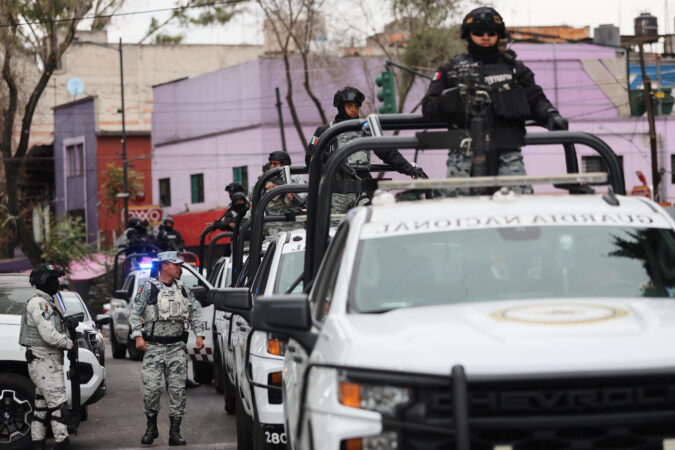
    GUADALAJARA, Mexico — Mexico Security Secretary Omar García Harfuch said Monday 25 members of the National Guard were left dead in Jalisco in six separate attacks after the killing of Jalisco New Generation Cartel leader Nemesio Oseguera Cervantes.

    Oseguera Cervantes, known as “El Mencho” was the boss of one of the fastest-growing criminal networks in Mexico, notorious for trafficking fentanyl, methamphetamine and cocaine to the United States and staging brazen attacks against government officials who challenged it.

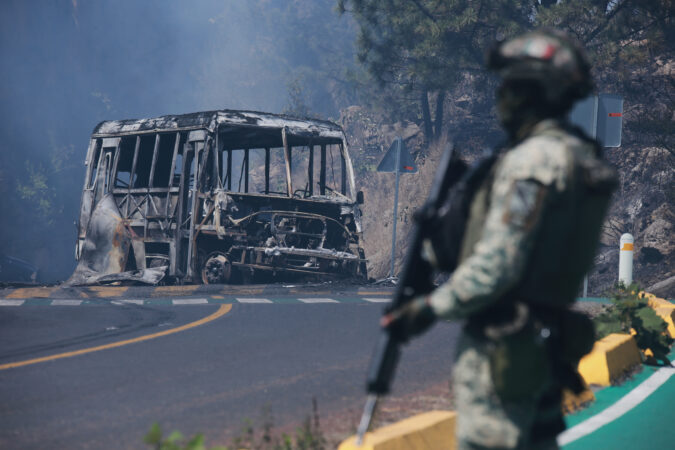
    He was killed during a shoot-out in his home state of Jalisco as the Mexican military attempted to capture him. Cartel members responded with violence across the country, blocking roads and setting fire to vehicles.

    Also killed were a prison guard, an agent from the state prosecutor’s office and a woman whom García Harfuch did not identify. He also said some 30 criminal suspects were killed in Jalisco and four others were killed in Michoacan.

    Several Mexican states canceled school on Monday, with local and foreign governments warning their citizens to stay inside after widespread violence erupted.

    President Claudia Sheinbaum urged calm Monday and authorities said all of the more than 250 cartel roadblocks across 20 states had been cleared. The president was expected to address the situation at her daily news briefing Monday morning.

    The White House confirmed that the U.S. provided intelligence support to the operation to capture the cartel leader and applauded Mexico’s army for taking down a man who was one of the most wanted criminals in both countries.

    Mexico hoped the death of the world’s biggest fentanyl traffickers would ease Trump administration pressure to do more against the cartels, but many remained hunkered down and on edge as they waited to see the powerful cartel’s reaction.

    Many fear more violence

    The U.S. Embassy said via X that its personnel in eight cities and the state of Michoacan would shelter in place and work remotely Monday and it warned U.S. citizens in many parts of Mexico to do the same.

    Cars began circulating in Guadalajara before sunrise Monday with the start of the work week, a notable change from Sunday when Jalisco’s state capital and Mexico’s second-largest city was almost completely shut down as fearful residents stayed home.

    More than 1,000 people were stuck in Guadalajara’s zoo overnight, sleeping in buses. On Monday morning. mothers wrapped up in blankets carried their toddlers out of the buses for a much-needed bathroom break as police trucks guarded the area.

    Luis Soto Rendón, the zoo’s director, said many had been trapped there since 9 a.m. the day before, when violence broke out in Jalisco and the surrounding states. Families were left stranded, trying to distract their children, as they decided they couldn’t return home in nearby states like Zacatecas and Michoacan.

    “We decided to let people stay inside the zoo for their safety,” Soto said. “There are small children and senior citizens.”

    Irma Hernández, a 43-year-old hotel security guard in Guadalajara, arrived at work early Monday morning.

    She normally takes public transportation to work, but buses were not running and she had no way to cross the city. Her bosses organized a private car to pick her up. Her family, she said, was staying at home, too scared to leave.

    “I am worried because I don’t know how to get home if something happens,” she said.

    Passengers arriving at the city’s international airport Sunday night were told it was operating with limited personnel because of the burst of violence.

    Authorities in Jalisco, Michoacan and Guanajuato reported at least 14 other people killed Sunday, including seven National Guard troops.

    Videos circulating on social media Sunday showed tourists in Puerto Vallarta walking on the beach with smoke rising in the distance.

    A blow against a cartel could be a diplomatic coup

    David Mora, Mexico analyst for International Crisis Group, said the capture and outburst of violence marks a point of inflection in Sheinbaum’s push to crack down on cartels and relieve U.S. pressures.

    U.S. President Donald Trump has demanded Mexico do more to fight the smuggling of the often-deadly drug fentanyl, threatening to impose more tariffs or take unilateral military action if the country does not show results.

    There were early signs that Mexico’s efforts were well received by the United States.

    U.S. Ambassador Ron Johnson recognized the success of the Mexican armed forces and their sacrifice in a statement late Sunday. He added that “under the leadership of President Trump and President Sheinbaum, bilateral cooperation has reached unprecedented levels.”

    But it may also pave the way for more violence as rival criminal groups take advantage of the blow dealt to the CJNG, Mora said.

    “This might be a moment in which those other groups see that the cartel is weakened and want to seize the opportunity for them to expand control and to gain control over Cartel Jalisco in those states,” he said.

    “Ever since President Sheinbaum has been in power, the army has been way more confrontational, combative against criminal groups in Mexico,” Mora said. “This is signaling to the U.S. that if we keep cooperating, sharing intelligence, Mexico can do it. We don’t need U.S. troops on Mexican soil.”

    ‘El Mencho’ was a major target

    Oseguera Cervantes, who was wounded in the operation to capture him Sunday in Tapalpa, Jalisco, about a two-hour drive southwest of Guadalajara, died while being flown to Mexico City, the Defense Department said in a statement.

    During the operation, troops came under fire and killed four people at the location. Three more people, including Oseguera Cervantes, were wounded and later died, the statement said.

    White House press secretary Karoline Leavitt said via X that the U.S. government provided intelligence support for the operation. “‘El Mencho’ was a top target for the Mexican and United States government as one of the top traffickers of fentanyl into our homeland,” she wrote. She commended Mexico’s military for its work.

    The U.S. State Department had offered a reward of up to $15 million for information leading to the arrest of El Mencho. The Jalisco New Generation Cartel is one of the most powerful and fastest-growing criminal organizations in Mexico and began operating around 2009.

    In February 2025, the Trump administration designated the cartel as a foreign terrorist organization.

    Sheinbaum has criticized the “kingpin” strategy of previous administrations that took out cartel leaders, only to trigger explosions of violence as cartels fractured. While she has remained popular in Mexico, security is a persistent concern and since U.S. President Donald Trump took office a year ago, she has been under tremendous pressure to show results against drug trafficking.

    The Jalisco cartel has been one of the most aggressive cartels in its attacks on the military — including on helicopters — and is a pioneer in launching explosives from drones and installing mines. In 2020, it carried out a spectacular assassination attempt with grenades and high-powered rifles in the heart of Mexico City against the then head of the capital’s police force and now federal security secretary.

  • Mexican army kills leader of Jalisco New Generation Cartel during operation to capture him

    Mexican army kills leader of Jalisco New Generation Cartel during operation to capture him

    MEXICO CITY — The Mexican army killed the leader of the Jalisco New Generation Cartel, Nemesio Rubén Oseguera Cervantes, known as “El Mencho,” on Sunday, decapitating what had become Mexico’s most powerful cartel and giving the government its biggest prize yet to show the Trump administration its efforts.

    Oseguera Cervantes was wounded in an operation to capture him Sunday in Tapalpa, Jalisco, about a two-hour drive southwest of Guadalajara, and he died while being flown to Mexico City, the Defense Department said in a statement. The state is the base of the cartel known for trafficking huge quantities of fentanyl and other drugs to the United States.

    During the operation, troops came under fire and killed four people at the location. Three more people, including Oseguera Cervantes, were wounded and later died, the statement said. Two others were arrested and armored vehicles, rocket launchers, and other arms were seized. Three members of the armed forces were wounded and receiving medical treatment.

    The U.S. Embassy in Mexico said on X that the operation was carried out by Mexican special forces “within the framework of bilateral cooperation, with U.S. authorities providing complementary intelligence.”

    Roadblocks and burning vehicles

    The killing of the powerful drug lord set off several hours of roadblocks with burning vehicles in Jalisco and other states. Such tactics are commonly used by the cartels to block military operations. Jalisco canceled school in the state for Monday.

    Videos circulating on social media showed plumes of smoke billowing over the tourist city of Puerto Vallarta in Jalisco, and people sprinting through the airport of the state’s capital in panic. On Sunday afternoon, Air Canada announced it was suspending flights to Puerto Vallarta “due to an ongoing security situation” and advised customers not to go to their airport.

    In Guadalajara, the state capital, burning vehicles blocked roads. Mexico’s second-largest city is scheduled to host matches during this summer’s soccer World Cup.

    The U.S. State Department warned U.S. citizens in Jalisco, Tamaulipas, Michoacan, Guerrero, and Nuevo Leon states to remain in safe places due to the ongoing security operations. Canada’s embassy in Mexico warned its citizens in Puerto Vallarta to shelter in place and generally to keep a low profile in Jalisco.

    Jalisco Gov. Pablo Lemus told residents to stay at home and suspended public transportation.

    U.S. had offered up to $15 million for his capture

    The U.S. State Department had offered a reward of up to $15 million for information leading to the arrest of El Mencho. The Jalisco New Generation Cartel, known as CJNG, is one of the most powerful and fastest growing criminal organizations in Mexico and was born in 2009.

    In February, the Trump administration designated the cartel as a foreign terrorist organization.

    Mexican President Claudia Sheinbaum, like her predecessor, has criticized the “kingpin” strategy of previous administrations that took out cartel leaders only to trigger explosions of violence as cartels fractured. While she has remained popular in Mexico, security is a persistent concern, and since U.S. President Donald Trump took office a year ago, she has been under tremendous pressure to show results against drug trafficking.

    On Sunday, Sheinbaum applauded Mexican security forces and called for calm in a post on X.

    A Jalisco state official who requested anonymity because they were not authorized to speak publicly said that a member of the National Guard died in Tapalpa during the operation, a jail guard was killed at a lockup in Puerto Vallarta when prisoners rioted, and an agent from the Jalisco state prosecutor’s office was killed in Guadalajara. Details were not immediately available.

    Known as an aggressive cartel

    The Jalisco cartel has been one of the most aggressive cartels in its attacks on the military — including on helicopters — and is a pioneer in launching explosives from drones and installing mines. In 2020, it carried out a spectacular assassination attempt with grenades and high-powered rifles in the heart of Mexico City against the then head of the capital’s police force, who is now federal security secretary.

    The DEA considers the cartel to be as powerful as the Sinaloa cartel, one of Mexico’s most infamous criminal groups, with a presence in all 50 U.S. states. It is one of the main suppliers of cocaine to the U.S. market and, like the Sinaloa cartel, earns billions from the production of fentanyl and methamphetamines. Sinaloa, however, has been weakened by infighting after the loss of its leaders Ismael “El Mayo” Zambada and Joaquín “El Chapo” Guzmán, both in U.S. custody.

    Oseguera Cervantes, 59, was originally from Aguililla in the neighboring state of Michoacan. He had been significantly involved in drug trafficking activities since the 1990s. When he was younger, he migrated to the U.S. where he was convicted of conspiracy to distribute heroin in the U.S. District Court for the Northern District of California in 1994 and served nearly three years in prison.

    Following his release from custody, Oseguera Cervantes returned to Mexico and reengaged in drug trafficking activity with drug lord Ignacio Coronel Villarreal, alias “Nacho Coronel.” After Villarreal’s death, Oseguera Cervantes and Erik Valencia Salazar, alias “El 85,” created the Jalisco New Generation Cartel around 2007.

    Initially, they worked for the Sinaloa Cartel, but eventually split and for years the two cartels have battled for territory across Mexico.

    Indicted several times in the U.S.

    Since 2017, Oseguera Cervantes has been indicted several times in the United States District Court for the District of Columbia.

    The most recent superseding indictment, filed on April 5, 2022, charges Oseguera Cervantes with conspiracy and distribution of controlled substances (methamphetamine, cocaine, and fentanyl) for the purpose of illegal importation into the United States and use of firearms during and in connection with drug trafficking offenses. Oseguera Cervantes is also charged under the Drug Kingpin Enforcement Act for directing a continuing criminal enterprise.

    Last year, people searching for missing relatives found piles of shoes and other clothing, as well as bone fragments, at what authorities later said was a Jalisco cartel recruitment and training site.

  • NASA will return its moon rocket to the hangar for more repairs before astronauts strap in

    NASA will return its moon rocket to the hangar for more repairs before astronauts strap in

    CAPE CANAVERAL, Fla. — Grounded until at least April, NASA’s giant moon rocket is headed back to the hangar this week for more repairs before astronauts climb aboard.

    The space agency said Sunday it’s targeting Tuesday for the slow, 4-mile trek across Kennedy Space Center, weather permitting.

    NASA had barely finished a repeat fueling test Thursday, to ensure dangerous hydrogen fuel leaks were plugged, when another problem cropped up.

    This time, the rocket’s helium system malfunctioned, further delaying astronauts’ first trip to the moon in more than half a century.

    Engineers had just tamed the hydrogen leaks and settled on a March 6 launch date — already a month late — when the helium issue arose. The helium flow to the rocket’s upper stage was disrupted; helium is needed to purge the engines and pressurize the fuel tanks.

    “Returning to the Vehicle Assembly Building at Kennedy is required to determine the cause of the issue and fix it,” NASA said in a statement.

    NASA said the quick rollback preps preserve an April launch attempt, but stressed that will depend on how the repairs go. The space agency has only a handful of days any given month to launch the crew of four around the moon and back.

    The three Americans and one Canadian assigned to the Artemis II mission remain on standby in Houston. They will become the first people to fly to the moon since NASA’s Apollo program that sent 24 astronauts there from 1968 through 1972.

  • EU says U.S. must honor a trade deal after court blocks Trump tariffs

    EU says U.S. must honor a trade deal after court blocks Trump tariffs

    BRUSSELS — The European Union’s executive arm requested “full clarity” from the United States and asked its trade partner to fulfill its commitments after the U.S. Supreme Court struck down some of President Donald Trump’s most sweeping tariffs.

    Trump has lashed out at the court decision and said Saturday that he wants a global tariff of 15%, up from the 10% he announced a day earlier.

    The European Commission said the current situation is not conducive to delivering “fair, balanced, and mutually beneficial” trans-Atlantic trade and investment, as agreed to by both sides and spelled out in the EU-U.S. Joint Statement of August 2025.

    American and EU officials sealed a trade deal last year that imposes a 15% import tax on 70% of European goods exported to the United States. The European Commission handles trade for the 27 EU member countries.

    A top EU lawmaker said on Sunday he will propose to the European Parliament negotiating team to put the ratifying process of the deal on pause.

    “Pure tariff chaos on the part of the U.S. administration,” Bernd Lange, the chair of Parliament’s international trade committee, wrote on social media. “No one can make sense of it anymore — only open questions and growing uncertainty for the EU and other U.S. trading partners.”

    The value of EU-U.S. trade in goods and services amounted to 1.7 trillion euros ($2 trillion) in 2024, or an average of 4.6 billion euros a day, according to EU statistics agency Eurostat.

    “A deal is a deal,” the European Commission said. “As the United States’ largest trading partner, the EU expects the U.S. to honor its commitments set out in the Joint Statement — just as the EU stands by its commitments. EU products must continue to benefit from the most competitive treatment, with no increases in tariffs beyond the clear and all-inclusive ceiling previously agreed.”

    Jamieson Greer, Trump’s top trade negotiator, said in a CBS News interview Sunday morning that the U.S. plans to stand by its trade deals and expects its partners to do the same.

    He said he talked to his European counterpart this weekend and hasn’t heard anyone tell him the deal is off.

    “The deals were not premised on whether or not the emergency tariff litigation would rise or fall,” Greer said. “I haven’t heard anyone yet come to me and say the deal’s off. They want to see how this plays out.”

    Europe’s biggest exports to the U.S. are pharmaceuticals, cars, aircraft, chemicals, medical instruments, and wine and spirits. Among the biggest U.S. exports to the bloc are professional and scientific services like payment systems and cloud infrastructure, oil and gas, pharmaceuticals, medical equipment, aerospace products, and cars.

    “When applied unpredictably, tariffs are inherently disruptive, undermining confidence and stability across global markets and creating further uncertainty across international supply chains,” the commission added.

    As primarily a trading bloc, the EU has a powerful tool at its disposal to retaliate — the bloc’s Anti-Coercion Instrument. It includes a raft of measures for blocking or restricting trade and investment from countries found to be putting undue pressure on EU member nations or corporations.

    The measures could include curtailing the export and import of goods and services, barring countries or companies from EU public tenders, or limiting foreign direct investment. In its most severe form, it would essentially close off access to the EU’s 450-million customer market and inflict billions of dollars of losses on U.S. companies and the American economy.

  • Oman says next U.S.-Iran talks will be Thursday in Geneva

    Oman says next U.S.-Iran talks will be Thursday in Geneva

    DUBAI, United Arab Emirates — Oman’s foreign minister says the next round of talks between the United States and Iran will be Thursday in Geneva.

    Badr al-Busaidi said on social media Sunday he was pleased to confirm the development, “with a positive push to go the extra mile towards finalizing the deal.”

    Oman previously hosted talks and facilitated the latest round in Geneva last week.

    Iran’s top diplomat says he will meet with U.S. envoy Steve Witkoff on Thursday, following two rounds of indirect talks on the Islamic Republic’s nuclear program.

    Foreign Minister Abbas Araghchi also told CBS in an interview aired Sunday that a “good chance” remained for a diplomatic solution on the nuclear issue, adding it was the only matter being discussed.

    There was no immediate comment from the White House.

    Araghchi’s remarks came as new anti-government protests began in Iran, according to witnesses, as university students in Tehran and another city demonstrated around memorials for thousands of people killed in a crackdown on previous nationwide demonstrations about six weeks ago.

    The Trump administration has been pushing for concessions from its longtime adversary and has built up the largest U.S. military presence in the Middle East in decades.

    President Donald Trump warned on Friday that limited strikes against Iran are possible, even as Araghchi at the time said Tehran expected to have a proposed deal ready in the next few days.

    Araghchi told CBS Iran was still working on the draft proposal. He added that Iran has the right to enrich uranium. On Friday, he said his U.S. counterparts had not asked for zero enrichment as part of the latest round of talks, which is not what U.S. officials have said publicly.

    Both Iran and the U.S. have signaled they are prepared for war if talks on Tehran’s nuclear program fail. The latest round of talks was last week in Geneva, with little apparent progress.

    The U.S. has said Iran cannot have nuclear weapons or the capacity to build them and that it cannot enrich uranium. Tehran has long insisted that any negotiations should only focus on its nuclear program and that it hasn’t been enriching uranium since U.S. and Israeli strikes on Iranian nuclear sites in June.

    Although Iran insists its nuclear program is peaceful, the U.S. and others suspect it is aimed at eventually developing weapons.

    Talks were deadlocked for years after Trump’s decision in 2018 to unilaterally withdraw the U.S. from Iran’s 2015 nuclear deal with world powers. Since then, Iran has refused to discuss wider U.S. and Israeli demands that it scale back its missile program and sever ties to armed groups.

    New protests in Iran

    Meanwhile, Iran’s state news agency said students protested at five universities in the capital, Tehran, and one in the city of Mashhad on Sunday. The scattered protests erupted Saturday at universities following 40-day memorials for people killed in January during anti-government rallies.

    Iran’s government has not commented on the latest protests.

    Many Iranians have held ceremonies marking the traditional 40-day mourning period in the past week. Most of the protesters are believed to have been killed around Jan. 8 and 9, according to activists tracking the situation.

    Iranians across the country are still reeling with shock, grief and fear after the earlier protests were crushed by the deadliest crackdown ever seen under the rule of 86-year-old Supreme Leader Ali Khamenei. Thousands of people were killed and tens of thousands are believed to have been arrested.

    Although the crackdown tamped down the largest protests, smaller ones are still occurring, according to protesters and to videos shared on social media.

    During the 1979 Islamic Revolution that toppled the shah and brought the Islamic Republic to power, 40-day memorials for slain protesters often turned into rallies that security forces tried to crush, causing new deaths. Those were then marked 40 days later, with new protests.

    Posts on social media Saturday and Sunday have alleged that security forces tried to restrict people from attending some 40-day ceremonies.

    The U.S.-based Human Rights Activists News Agency says at least 7,015 people were killed in the previous protests and crackdown, including 214 government forces. The group has been accurate in counting deaths during previous rounds of unrest in Iran and relies on a network of activists there to verify deaths.

    The death toll continues to rise as the group crosschecks information despite disrupted communication with those inside the Islamic Republic.

    Iran’s government offered its only death toll from the previous protests on Jan. 21, saying 3,117 people were killed. Iran’s theocracy in the past has undercounted or not reported fatalities from past unrest.

    The Associated Press has been unable to independently assess the death toll, given authorities have disrupted internet access and international calls in Iran.

  • Trump’s talk of sending hospital ship to Greenland puzzles leaders

    Trump’s talk of sending hospital ship to Greenland puzzles leaders

    President Donald Trump’s announcement over the weekend that he would be sending a “great hospital boat” to Greenland to care for the Arctic island’s neglected sick is — like many of the president’s remarks around Greenland — causing befuddlement on both sides of the Atlantic.

    Officials on the island, a semiautonomous territory of Denmark, did not ask for such a ship, and Greenland’s prime minister said it will not be welcoming it, as its citizens are guaranteed free healthcare.

    “It’s a no thank you from here,” Greenland’s prime minister, Jens-Frederik Nielsen, said in a statement Sunday.

    “President Trump’s idea of sending an American hospital ship here to Greenland has been noted. But we have a public healthcare system where treatment is free for citizens. That is a deliberate choice — and a fundamental part of our society. That is not how it works in the USA.”

    “Please talk to us instead of just making more or less random statements on social media,” Nielsen said later in the statement. “Dialogue and cooperation require respect for the fact that decisions about our country are made here at home.”

    Maritime tracking data further suggests there are no U.S. hospital ships currently positioned to sail to Greenland.

    Trump’s post Saturday on Truth Social followed months in which he unsettled European allies by threatening to take the Arctic territory from Denmark. The White House eventually backed down and said the U.S. will instead seek strategic agreements with Denmark. But the post signals Trump may remain focused on provoking Denmark.

    The president’s unexpected announcement came as Denmark revealed there was a case of medical distress near the island needing emergency attention. But it was the U.S. that needed the help. Denmark’s Arctic Command reported early Saturday that it had evacuated a crew member of a U.S. submarine in need of doctors.

    “The crew member required urgent medical treatment and has been transferred to the Greenlandic health authorities and the hospital in Nuuk,” the Arctic Command said a statement. “The evacuation took place within Greenlandic territorial waters, 7 nautical miles off Nuuk. It was carried out by the Danish Defence Seahawk helicopter. The helicopter was deployed from the inspection vessel Vædderen.”

    That event was followed later in the day by Trump’s post, which featured what appears to be an AI-generated illustration of the USNS Mercy steaming toward the Arctic territory. Trump made no mention of the emergency evacuation of the U.S. sailor. But he declared that he was “going to send a great hospital boat to Greenland to take care of the many people who are sick, and not being taken care of there.”

    “It’s on the way!!!” said the post, which also reported that Trump was executing the action together with his envoy to Greenland, Louisiana Gov. Jeff Landry.

    Denmark quickly dismissed Trump’s announcement, saying it was not aware of any medical emergency in Greenland.

    “The Greenlandic population receives the healthcare it needs,” Danish Defense Minister Troels Lund Poulsen told Denmark’s public broadcaster, DR. “Trump is constantly tweeting about Greenland. So this is undoubtedly an expression of the new normal that has taken hold in international politics.”

    Denmark’s prime minister, Mette Frederiksen, also appeared to rebuff Trump’s plan, without mentioning him by name. She wrote Sunday on Instagram that she is happy to live in a country where healthcare is free to everyone and that Greenland enjoys the same system.

    The U.S. Navy operates two hospital ships, the USNS Comfort and USNS Mercy. Neither appears ready to deploy any time soon, and both were at a maintenance facility, Alabama Shipyard in Mobile, on Sunday, according to ship-tracking data.

    Navy officials and officials with Defense Secretary Pete Hegseth’s team referred questions to the White House, which did not immediately respond.

    In December, the Pentagon said it had signed a $16.7 million contract with the shipyard to place the Comfort in an extended period of maintenance beginning Jan. 15 with expected completion by April 26.

    In June, the Pentagon signed a $18.7 million deal with the same shipyard to place the Mercy in extended maintenance. Navy officials later said the work would take about a year.

    According to gCaptain, a website that monitors ship movements, the Mercy “was firmly in dry dock” as of late January.

  • Willie Colón, 75, architect of urban salsa music, has died

    Willie Colón, 75, architect of urban salsa music, has died

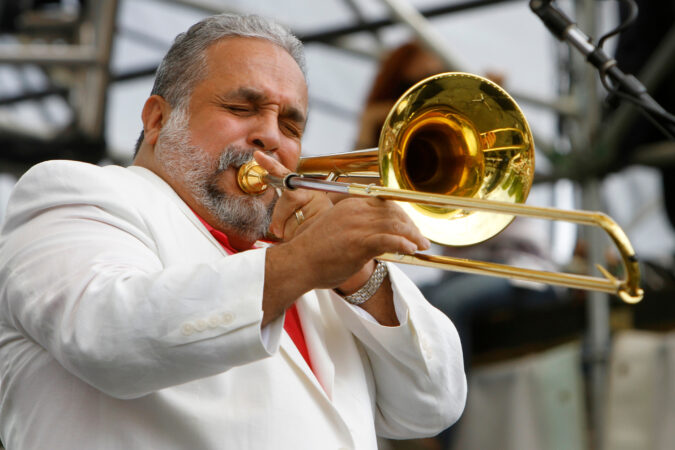
    Willie Colón, the Grammy-nominated architect of urban salsa music and social activist, died Saturday. He was 75.

    Over his decades-long career, the trombonist, composer, arranger, and singer produced more than 40 albums that sold more than 30 million copies worldwide. He collaborated with a wide range of artists, including the Fania All Stars, David Byrne, and Celia Cruz.

    His celebrated collaboration with Rubén Blades, Siembra, became one of the bestselling salsa albums of all time, and the pair were known for addressing social issues through the genre.

    Mr. Colón’s family and manager confirmed his death through social media posts.

    “Willie didn’t just change salsa; he expanded it, politicized it, clothed it in urban chronicles, and took it to stages where it hadn’t been heard before,” manager Pietro Carlos wrote. “His trombone was the voice of the people, an echo of the Caribbean in New York, a bridge between two cultures.”

    Mr. Colón, who was nominated for 10 Grammys and one Latin Grammy, made famous songs such as “El gran varón,” “Sin poderte hablar,” “Casanova,” “Amor verdad,” and “Oh, qué será.”

    Blades said on the social platform X that he confirmed “what I was reluctant to believe” and offered his condolences to Mr. Colón’s family.

    The path to the trombone — and fame

    Born in New York’s Bronx borough, Mr. Colón was raised by his grandmother and aunt, who from a young age nurtured him with traditional Puerto Rican music and the typical rhythms of the Latin American repertoire, including Cuban son and tango.

    At age 11 he ventured into the world of music, first with flute, then bugle, trumpet, and finally trombone, with which he stood out in the then-nascent genre of salsa.

    His interest in trombone arose after hearing Barry Rogers playing it on “Dolores,” Mon Rivera’s song with Joe Cotto.

    “It sounded like an elephant, a lion … an animal. Something so different that, as soon as I heard it, I said to myself: ‘I want to play that instrument,’” he recalled in an interview published in the Colombian newspaper El Tiempo in 2011.

    At 17 he joined the group of artists that formed the famous record label Fania Records, led and created by Jerry Masucci and Johnny Pacheco. Fania was largely responsible for the new sound that was produced in the Latin world of New York and would later be called “salsa.”

    Mr. Colón’s main characteristic as a musician was the fusion of rhythms, as he harmonized jazz, rock, funk, soul, and R&B with the old Latin school of Cuban son, cha-cha-cha, mambo, and guaracha, adding the nostalgia of the traditional Puerto Rican sound that encompasses jíbara, bomba, and plena music.

    In 2004 the Latin Recording Academy awarded Mr. Colón a special Grammy for his career and contributions to music.

    Community leader and activist

    As a community leader, Mr. Colón fought for civil rights, mostly in the United States. He was part of the Hispanic Arts Association, the Latino Commission on AIDS, the Arthur Schomburg Coalition for a Better New York, and the Congressional Hispanic Caucus Institute, among others.

    In 1991 he was honored with the Chubb fellowship from Yale University, a public service recognition also awarded to the likes of John F. Kennedy, Moshe Dayan, the Rev. Jesse Jackson, and Ronald Reagan, among others.

    In the political arena, he served as special assistant to David Dinkins, New York’s first Black mayor, and was later appointed special assistant and adviser to Mayor Michael Bloomberg.

    Mr. Colón had little luck running for public office himself, however. He failed in a challenge to then-U.S. Rep. Eliot Engel in the 1994 Democratic primary, and in 2001 came in third in the Democratic primary for New York’s public advocate.

    He backed Hillary Clinton’s presidential campaign in 2008, but he told the Observer that he voted for Donald Trump in 2016.

    Mr. Colón had public clashes with artists and politicians. His friendship with Blades ruptured after Mr. Colón sued for breach of contract over the 2003 concert “Siembra … 25 years later,” held in Puerto Rico. He also sparked a controversy when he called the then-president of Venezuela, Hugo Chávez, “rotten” on a social network.

    Mr. Colón acted in films such as Vigilante, The Last Fight, and It Could Happen to You, and on TV in Miami Vice and Demasiado Corazón. More recently he appeared in Bad Bunny’s music video for “NuevaYol.”

    He is survived by his wife and four sons.