Category: Nation World News Wires

  • Takeaways from Trump’s address: Sales mode on economy, heavy on patriotism, dark turn on Democrats

    Takeaways from Trump’s address: Sales mode on economy, heavy on patriotism, dark turn on Democrats

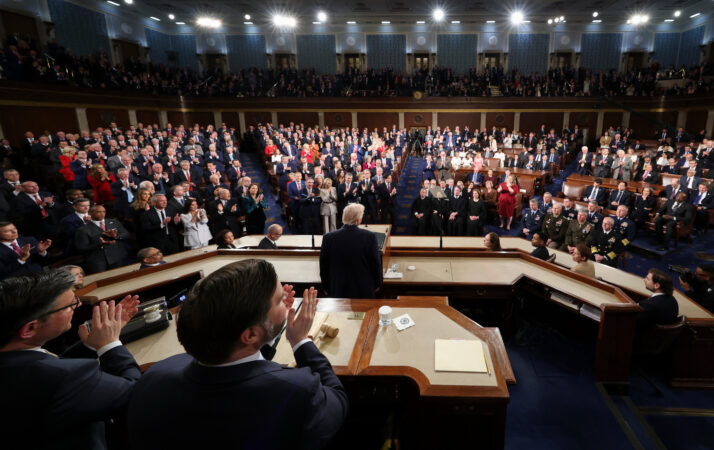
    WASHINGTON — President Donald Trump started in sales mode, using his State of the Union address to deliver an upbeat vision of the U.S. economy.

    But that portrayal collides with the sentiment of Americans who remain anxious about their finances and feel they haven’t benefited from Trump’s policies. He took the high road to honor the gold medal-winning U.S. men’s Olympic hockey team and a war hero before pivoting abruptly to a darker tone as he ridiculed Democrats.

    Here are takeaways from the speech.

    Trump’s ‘roaring’ economy is at odds with sour public sentiment

    Much of the nation is worried about the direction of the economy, but Trump says the good times are here, insisting repeatedly that rising costs are no longer a problem.

    “The roaring economy is roaring like never before,” he said. He cheered the lower cost of gasoline, mortgage rates, prescription drug prices, and the rising stock market: “Millions and millions of Americans are all gaining.”

    Such optimism, as so many Americans are feeling economic strains, risks painting Trump as out of touch. Just 39% of U.S. adults approved of Trump’s handling of the economy in February, according to AP-NORC polling.

    Still, the president focused much of the first hour of his speech on the economy, something Republicans had urged him to do as they head into the midterm elections.
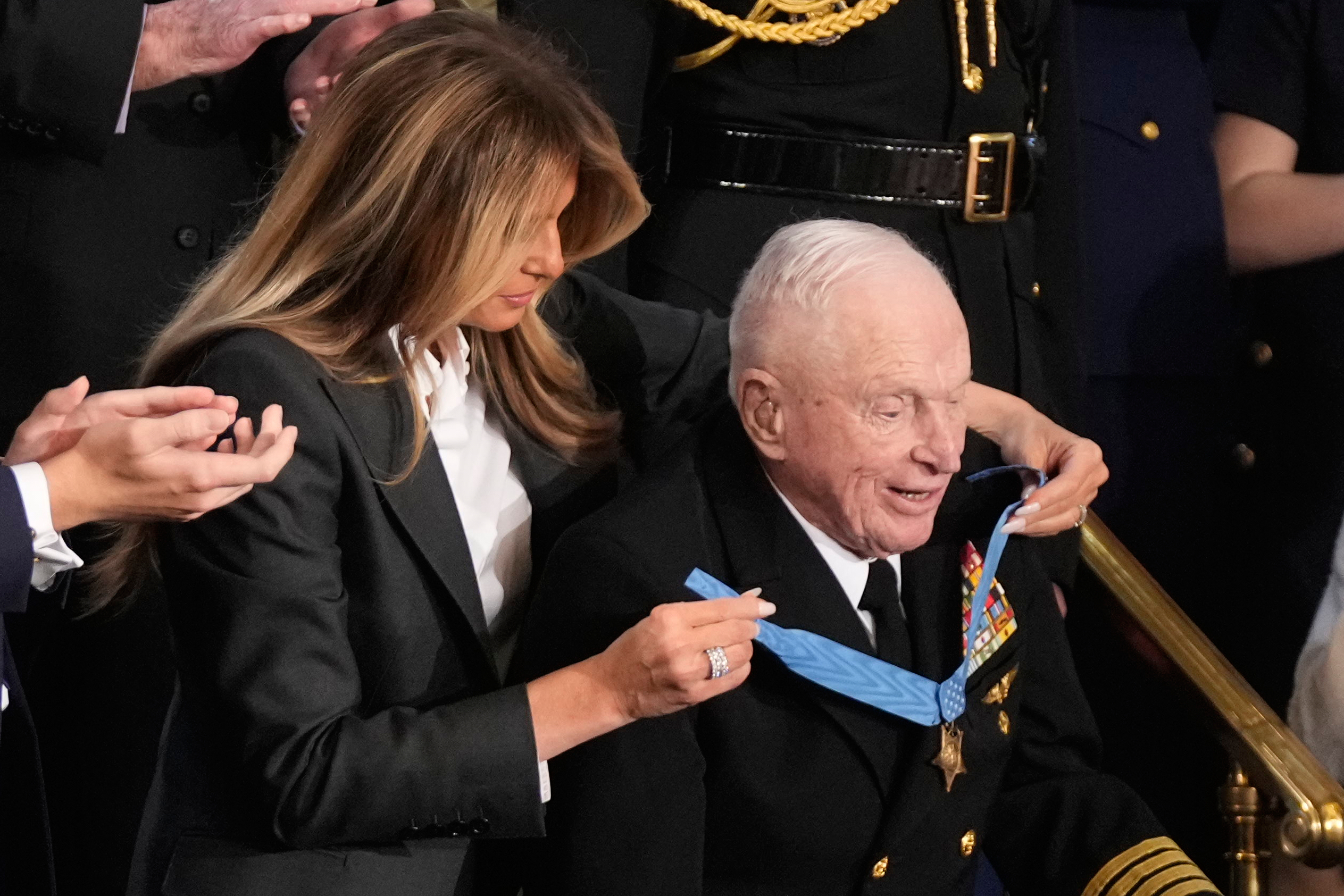
    First lady Melania Trump awards World War II Navy pilot Capt. Royce Williams the Congressional Medal of Honor as President Donald Trump delivers the State of the Union address to a joint session of Congress.

    Trump wraps himself in the flag

    For a president who always seems to be spoiling for a fight, Trump also tried to summon Americans’ innate patriotic impulses. In addition to the hockey team, he singled out war heroes and those who had taken brave stands in other countries, using the moment to bestow numerous presidential medals in an effort to give the address a more positive gloss.

    It underscored the president’s media savvy and understanding that even if a moment isn’t appreciated completely in real time, it can have an afterlife in the days following speech, especially on social media.

    Yet in one revealing moment, Trump lamented why he couldn’t give a congressional medal to himself.

    Taking aim at Democrats

    Tributes to the Olympic hockey team and a World War II veteran didn’t unify the room for long.

    The Republican president soon took aim at Democrats and blamed them for many of the nation’s ills.

    Trump said rising healthcare premiums are “caused by you,” suggested Democrats “are not protecting” Social Security and blamed them for the nation’s affordability crunch. “You caused that problem. You caused that problem,” Trump said as he glared at the Democratic side of the room.

    He seemed to get angrier as the speech progressed.

    “These people are crazy, I’m telling you, they’re crazy,” he said. “Democrats are destroying this country.”

    Trump’s MAGA base loves such aggression. It’s unclear, however, if the rest of the country feels the same.
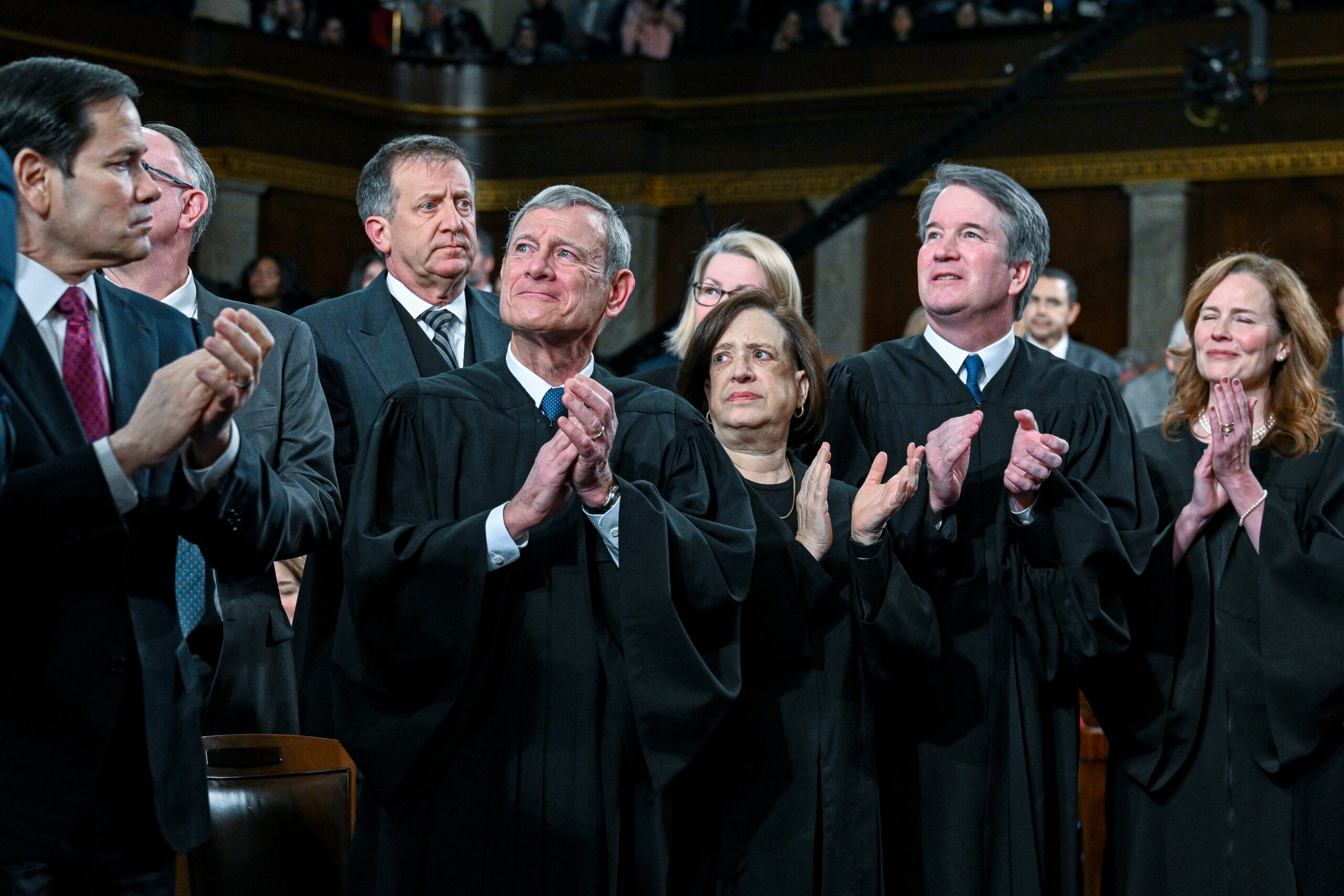
    Secretary of State Marco Rubio (from left), Chief Justice John Roberts, Justice Elena Kagan, Justice Brett Kavanaugh, and Justice Amy Coney Barrett applaud before President Donald Trump delivers the State of the Union address Tuesdy to a joint session of Congress in the House chamber at the U.S. Capitol.

    The Supreme Court’s ‘unfortunate’ decision

    By Trump’s standards, he held his tongue when it came to the Supreme Court.

    After the court struck down his tariff policy last week, Trump said the justices who voted against one of his signature issues were an “embarrassment to their families.” By Tuesday, he simply called the ruling “unfortunate.”

    Trump sought to treat the ruling with indifference, insisting that tariff revenues were “saving” the U.S., ignoring the fact that the levies haven’t made a significant dent in government debt. He said the tariffs were paid by foreign countries even as virtually every study concludes that costs have been paid by U.S. firms and consumers.

    At one point, he seemed to take the long view that history would ultimately vindicate him even if the Supreme Court would not.

    “As time goes by, I believe the tariffs paid by foreign countries will, like in the past, substantially replace the modern day system of income tax, taking a great burden off the people that I love,” he said.

    That is unlikely. The federal income tax is authorized by the 16th Amendment to the Constitution and the power to collect revenue is ultimately defined by Congress, not the president.

    Trump vows action on election ‘cheating’

    The president also used the speech to reprise his attack on the integrity of U.S. elections.

    “Cheating is rampant in our elections,” Trump said.

    Trump has made such claims for years, focused on his 2020 election loss, claims rejected by dozens of courts and his own attorney general at the time.

    But the timing of Tuesday’s prime-time claims, less than nine months before voters across America are scheduled to decide control of Congress, was noteworthy. So, too, was Trump’s suggestion that he would take action to address a problem that doesn’t appear to exist.

    “They want to cheat. They have cheated, and their policy is so bad that the only way they can get elected is to cheat,” Trump said of Democrats. “And we’re going to stop it. We have to stop it.”

    Trump is calling on Congress to pass a bill requiring voters to show a photo ID before casting ballots. But he also recently vowed to enact an executive order to address the issue, although the White House has not clarified what it might entail.

    No mention of Minneapolis

    Sometimes what’s not said is as notable as what is.

    Trump has highlighted immigration since the very first speech in which he announced his 2016 presidential campaign. And on Tuesday night, he revived much of the same language he’s used throughout the past decade, blasting “criminal aliens” and warning of “drug lords, murderers all over our country.”

    What he didn’t mention: the most aggressive immigration enforcement tactics that threatened to bring the U.S. to the brink earlier this year. He didn’t mention the deaths of two U.S. citizens in Minneapolis last month at the hands of federal agents.

    Indeed, it was Rep. Rashida Tlaib (D., Mich.), who shouted that “Alex wasn’t a criminal,” referring to Alex Pretti, one of the U.S. citizens killed in Minneapolis.

    During her Democratic rebuttal, Virginia Gov. Abigail Spanberger said law enforcement must work to build trust in communities and said Trump “every minute spent sowing fear is a minute not investigating murders.”

    Trump said nothing of his administration’s shift in tactics, including a drawdown of agents in the Twin Cities. And he made no acknowledgment of the broad concerns in the U.S. about Trump’s approach on immigration, as demonstrated by the 60% of U.S. adults who disapproved of his handling of the issue in February, according to AP-NORC polling.

    Drumbeat for war gets louder

    Trump has already built up the largest U.S. military presence in the Middle East in decades. And in his speech, he outlined a rationale for using those forces to launch a major military strike against Iran.

    The president said that Iran and its proxies have “spread nothing but terrorism, death and hate,” adding that its leaders killed at least 32,000 protesters in recent weeks, which is at the further end of estimates over the death toll. The U.S.-based Human Rights Activist News Agency has so far counted more than 7,000 dead and believes the death toll is far higher. Iran’s government offered its only death toll on Jan. 21, saying 3,117 people were killed.

    Trump also warned that the nation has developed missiles that can threaten Europe and is working on missiles “that will soon reach” the U.S.

    “My preference is to solve this problem through diplomacy. But one thing is certain, I will never allow the world’s number one sponsor of terror, which they are, by far to have a nuclear weapon. Can’t let that happen.”

    On brand, the speech was the longest SOTU ever

    The president, ever mindful of records that allow him to say he was the first, the best or had done the most, succeeded clearly on one thing: he beat his own record for the longest, clocking in at just under 1 hour, 48 minutes.

  • Trump used the longest-ever State of the Union to try to convince voters that the U.S. is ‘winning so much’

    Trump used the longest-ever State of the Union to try to convince voters that the U.S. is ‘winning so much’

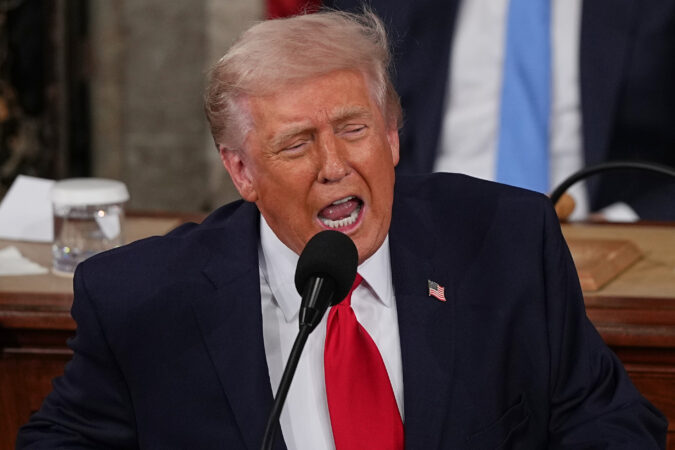
    WASHINGTON — President Donald Trump declared during a marathon State of the Union on Tuesday that “we’re winning so much” — insisting he’d sparked an economic boom at home and imposed a new world order abroad in hopes it can counter his sliding approval ratings.

    Trump’s main objective was convincing increasingly wary Americans that the economy is stronger than many believe, and that they should vote for more of the same by backing Republicans during November’s midterm elections. In all, Trump spoke for a record 108 minutes, breaking — by eight minutes — the previous time mark from his address before a joint session of Congress last year.

    The president largely avoided his usual bombast, only occasionally veering off-script — mostly to slam Democrats. As he did during such addresses in his first term, Trump relied on a series of surprise special guests to dramatically punctuate his message. They included U.S. military heroes and a former political prisoner released after U.S. forces toppled Venezuelan President Nicolás Maduro.

    Trump drew some of the loudest applause of the night when he invited the Olympic gold medal-winning U.S. men’s hockey team into the House chamber.

    “Our country is winning again. In fact, we’re winning so much that we really don’t know what to do about it. People are asking me, ‘Please, please, please, Mister President, we’re winning too much. We can’t take it anymore,’” Trump said before introducing the team.

    The hockey players, wearing their medals and “USA” sweaters, drew a bipartisan standing ovation. Trump pointed to the Democratic side of the chamber and quipped, “That’s the first time I ever I’ve ever seen them get up.”

    In a made-for-TV moment, the president announced he would be awarding the Presidential Medal of Freedom, America’s highest civilian honor, to the hockey team’s goaltender, Connor Hellebuyck. He also bestowed the Purple Heart on Andrew Wolfe — a National Guard member who was shot while deployed on the streets of the nation’s capital. Wolfe made his first public appearance since then during the speech.

    That scene recalled a similar surprise announcement in 2020, when Trump gave the Medal of Freedom to conservative radio host Rush Limbaugh during his State of the Union speech.

    Trump decries tariff decision as justices look on

    The president championed his immigration crackdowns and his push to preserve widespread tariffs that the Supreme Court just struck down. He drew applause only from Democrats while describing the high court’s decision, which he called “an unfortunate ruling.”

    Trump vowed to plow ahead, using “alternative” laws to impose the taxes on imports and telling lawmakers, “Congressional action will not be necessary.” Trump argued that the tariffs are paid by foreign countries, despite evidence that the costs are borne by American consumers and businesses. “It’s saving our country,” he said.

    The only Supreme Court justices attending were Chief Justice John Roberts, as well as Justices Brett Kavanaugh, Amy Coney Barrett and Elena Kagan. Trump greeted them personally before the speech, despite last week slamming Coney Barrett — who he appointed to the high court in his first term — for siding with the majority against his tariffs.

    Democrats also stood for Trump vowing to halt insider trading by members of Congress. But Rep. Mark Takano, a California Democrat, yelled, “How about you first!” Rep. Rashida Tlaib, a Michigan Democrat, called out, “You’re the most corrupt president!”

    When some heckling continued, Trump proclaimed, “You should be ashamed of yourselves.” Later, he pointed at Democrats and proclaimed, “These people are crazy.”

    Democratic Rep. Al Green was escorted from the chamber early in the speech, after he unfurled a sign of protest that read “Black People Aren’t Apes!” That was an apparent reference to a racist video the president posted that depicted former President Barack Obama and First Lady Michelle Obama as primates in a jungle. Green was also removed during Trump’s address last year.

    The president, meanwhile, was mostly optimistic and patriotic, but Trump struck a darker tone in large swaths of his speech to warn about the dangers posed by immigrants. He invited lawmakers from both parties to “protect American citizens, not illegal aliens” and championed proposals to limit mail-in ballots and tighten voter identification rules.

    Affordability gets relatively little time

    Trump didn’t dwell on efforts to lower the cost of living — despite polling showing that his handling of the economy and kitchen-table issues has increasingly become a liability. Such concerns about the high costs of living helped propel Democratic wins around the country on Election Day last November.

    There also are persistent fears that tariffs stoking higher prices could eventually hurt the economy and job creation. Economic growth slowed in the last three months of last year.

    It is potentially politically perilous ahead of November elections that could deliver congressional wins to Democrats, just as 2018’s blue wave created a strong check to his administration during his first term.

    On Tuesday, Trump blamed his predecessor, former President Joe Biden, along with Democratic lawmakers in the chamber, saying they were responsible for rising prices and health care costs, two issues his political opponents have repeatedly raised against him.

    “You caused that problem,” Trump said of affordability concerns. He added a moment later, “They knew their statements were a dirty, rotten lie.”

    Trump also said he’d press tech companies involved in artificial intelligence to pay higher electricity rates in areas where their data centers are located. Such data centers tend to use large volumes of electricity, potentially increasing the cost of power to other consumers in the area.

    Another notable off-script moment came as Trump was referencing prescription drug prices, saying, “So in my first year of the second term — should be my third term — but strange things happen,” prompting at least one chant in the chamber of “Four more years!”

    Virginia Gov. Abigail Spanberger, who delivered the Democratic response to Trump’s speech, slammed the president’s aggressive immigration policies, his widespread cuts to the federal government and his tariffs.

    “Even though the Supreme Court struck these tariffs down four days ago, the damage to us, the American people, has already been done. Meanwhile, the president is planning for new tariffs,” she said. “Another massive tax hike on you and your family.”

    A warning to Iran

    Trump’s address came as two U.S. aircraft carriers have been dispatched to the Middle East amid tensions with Iran. Trump said, “My preference is to solve this problem through diplomacy.”

    “But one thing is certain, I will never allow the world’s number one sponsor of terror — which they are, by far — to have a nuclear weapon,” he added.

    The president also recounted U.S. airstrikes last summer that pounded Tehran’s nuclear capabilities, and lauded the raid that ousted Maduro in Venezuela — as well as his administration’s brokering of a ceasefire in Israel’s war with Hamas in Gaza.

    “As president, I will make peace wherever I can,” Trump said. ”But I will never hesitate to confront threats to America, wherever we must.”

  • Hegseth warns Anthropic to let the military use the company’s AI tech as it sees fit, AP source says

    Hegseth warns Anthropic to let the military use the company’s AI tech as it sees fit, AP source says

    WASHINGTON — Defense Secretary Pete Hegseth gave Anthropic’s CEO a Friday deadline to open the company’s artificial intelligence technology for unrestricted military use or risk losing its government contract, according to a person familiar with their meeting Tuesday.

    Anthropic makes the chatbot Claude and is the last of its peers to not supply its technology to a new U.S. military internal network. CEO Dario Amodei repeatedly has made clear his ethical concerns about unchecked government use of AI, including the dangers of fully autonomous armed drones and of AI-assisted mass surveillance that could track dissent.

    Defense officials warned they could designate Anthropic a supply chain risk or use the Defense Production Act to essentially give the military more authority to use its products even if it doesn’t approve of how they are used, according to the person familiar with the meeting and a senior Pentagon official, who both were not authorized to comment publicly and spoke on condition of anonymity.

    The development, which was reported earlier by Axios, underscores the debate over AI’s role in national security and concerns about how the technology could be used in high-stakes situations involving lethal force, sensitive information, or government surveillance. It also comes as Hegseth has vowed to root out what he calls a “woke culture” in the armed forces.

    “A powerful AI looking across billions of conversations from millions of people could gauge public sentiment, detect pockets of disloyalty forming, and stamp them out before they grow,” Amodei wrote in an essay last month.

    The person familiar called the tone of the meeting cordial but said Amodei didn’t budge on two areas he has established as lines Anthropic won’t cross — fully autonomous military targeting operations and domestic surveillance of U.S. citizens.

    The Pentagon objects to Anthropic’s ethical restrictions because military operations need tools that don’t come with built-in limitations, the senior Pentagon official said. The official argued that the Pentagon has only issued lawful orders and stressed that using Anthropic’s tools legally would be the military’s responsibility.

    Anthropic will no longer be the only AI company approved for classified military networks

    The Pentagon announced last summer that it was awarding defense contracts to four AI companies — Anthropic, Google, OpenAI, and Elon Musk’s xAI. Each contract is worth up to $200 million.

    Anthropic was the first AI company to get approved for classified military networks, where it works with partners like Palantir. Musk’s xAI company, which operates the Grok chatbot, says Grok also is ready to be used in classified settings, according to the senior Pentagon official.

    The official noted that the other AI companies were “close” to that milestone. SpaceX, Musk’s space flight company that recently merged with xAI, didn’t immediately return a request for comment Tuesday.

    Hegseth said in a January speech at SpaceX in South Texas that he was shrugging off any AI models “that won’t allow you to fight wars.”

    Hegseth said his vision for military AI systems means that they operate “without ideological constraints that limit lawful military applications,” before adding that the Pentagon’s “AI will not be woke.”

    The defense secretary said that Grok would join the secure but unclassified Pentagon AI network, called GenAI.mil. The announcement came days after Grok — which is embedded into X, the social media network owned by Musk — drew global scrutiny for generating highly sexualized deepfake images of people without their consent.

    OpenAI announced in early February that it, too, would join GenAI.mil, enabling service members to use a custom version of ChatGPT for unclassified tasks.

    Anthropic calls itself more safety-minded

    Anthropic said in a statement after Tuesday’s meeting that it “continued good-faith conversations about our usage policy to ensure Anthropic can continue to support the government’s national security mission in line with what our models can reliably and responsibly do.”

    Anthropic has long pitched itself as the more responsible and safety-minded of the leading AI companies, ever since its founders quit OpenAI to form the startup in 2021.

    The uncertainty with the Pentagon is putting those intentions to the test, according to Owen Daniels, associate director of analysis and fellow at Georgetown University’s Center for Security and Emerging Technology.

    “Anthropic’s peers, including Meta, Google, and xAI, have been willing to comply with the department’s policy on using models for all lawful applications,” Daniels said. “So the company’s bargaining power here is limited, and it risks losing influence in the department’s push to adopt AI.”

    In the AI craze that followed the release of ChatGPT, Anthropic closely aligned with President Joe Biden’s Democratic administration in volunteering to subject its AI systems to third-party scrutiny to guard against national security risks.

    Amodei, the CEO, has warned of AI’s potentially catastrophic dangers while rejecting the label that he’s an AI “doomer.” He argued in the January essay that “we are considerably closer to real danger in 2026 than we were in 2023″ but that those risks should be managed in a “realistic, pragmatic manner.”

    Anthropic has been at odds with the Trump administration

    This would not be the first time Anthropic’s advocacy for stricter AI safeguards has put it at odds with President Donald Trump’s administration. Anthropic needled chipmaker Nvidia publicly, criticizing Trump’s proposals to loosen export controls to enable some AI computer chips to be sold in China. The AI company, however, remains a close partner with Nvidia.

    Trump’s Republican administration and Anthropic also have been on opposite sides of a lobbying push to regulate AI in U.S. states.

    Trump’s top AI adviser, David Sacks, accused Anthropic in October of “running a sophisticated regulatory capture strategy based on fear-mongering.”

    Sacks was responding on X to Anthropic cofounder Jack Clark, writing about his attempt to balance technological optimism with “appropriate fear” about the steady march toward more capable AI systems.

    Anthropic hired a number of ex-Biden officials soon after Trump’s return to the White House, but it’s also tried to signal a bipartisan approach. The company recently added Chris Liddell, a former White House official from Trump’s first term, to its board of directors.

    The Pentagon’s “breakneck” adoption of AI shows the need for greater AI oversight or regulation by Congress, particularly if AI is being used to surveil Americans, said Amos Toh, senior counsel at the Brennan Center’s Liberty and National Security Program at New York University.

    “The law is not keeping up with how quickly the technology is evolving,” Toh wrote in a post on Bluesky. “But that doesn’t mean DoD has a blank check.”

  • Zelensky says Putin has ‘not broken’ Ukrainians as he marks 4 years since Russia’s all-out invasion

    Zelensky says Putin has ‘not broken’ Ukrainians as he marks 4 years since Russia’s all-out invasion

    KYIV, Ukraine — Ukrainian President Volodymyr Zelensky declared Tuesday that Russia has not “broken Ukrainians” nor triumphed in its war, four years after an invasion that has severely tested the resolve of Kyiv and its allies and fueled European fears about the scale of Moscow’s ambitions.

    In a show of support, more than a dozen senior European officials headed to the Ukrainian capital to mark the grim anniversary of the conflict, which has killed tens of thousands of people, upended life for millions of Ukrainians, and created instability far beyond its borders.

    Zelensky said his country has withstood the onslaught by Russia’s bigger and better equipped army, which over the past year of fighting captured just 0.79% of Ukraine’s territory, according to the Institute for the Study of War, a Washington-based think tank. Russia now holds nearly 20% of Ukraine.

    “Looking back at the beginning of the invasion and reflecting on today, we have every right to say: We have defended our independence, we have not lost our statehood,” Zelensky said on social media, adding that Russian President Vladimir Putin has “not achieved his goals.”

    “He has not broken Ukrainians; he has not won this war,” Zelensky said.

    Despite the show of defiance, Ukraine has struggled to hold off Russia’s onslaught, and the war has brought widespread hardship for Ukrainian civilians. Russia’s aerial attacks have devastated families and denied civilians power and running water.

    Putin made no mention of the anniversary nor did he say how the war was going when he spoke at a meeting in Moscow of top officials of the Federal Security Service, or FSB, on Tuesday.

    However, he told them that the threat of Ukrainian attacks on Russian soil has grown. Ukraine has increasingly deployed long-range drones that it has developed to strike oil refineries, fuel depots and military logistics hubs more than 600 miles inside Russia.

    U.N. calls for an immediate ceasefire

    As the war of attrition enters its fifth year, a U.S.-led diplomatic push to end the largest conflict on the continent since World War II appears no closer to a peace deal.

    Negotiations are stuck on what happens to the Donbas, eastern Ukraine’s industrial heartland that Russian forces mostly occupy but have failed to seize completely, and the terms of a postwar security arrangement that Kyiv is demanding to deter any future Russian invasion.

    The U.N. General Assembly called Tuesday for an immediate ceasefire and a comprehensive peace in Ukraine, rejecting a U.S. attempt to eliminate language stressing the country’s sovereignty and territorial integrity.

    Washington supports an immediate ceasefire, U.S. Deputy Ambassador Tammy Bruce said before the vote, but opposed language stressing Ukraine’s territorial unity because it would “distract” from the peace talks.

    The 193-member General Assembly approved the original wording 107-12, with the United States among the 51 countries abstaining.

    Zelensky urges Trump to visit

    At a makeshift memorial in Kyiv’s central square, where thousands of small flags and portraits show photos of fallen soldiers, Zelensky said he would like President Donald Trump to visit and witness for himself Ukrainian suffering.

    “Only then can one truly understand what this war is really about,” Zelensky said. When later asked how four years of war had changed him, Zelensky said, “I don’t have time for friends or friendships.”

    Trump, who once vowed to end the war in a day, has repeatedly changed his tone toward Putin and Zelensky over the past year: sometimes criticizing the Ukrainian leader’s negotiating position while reaching out to the Russian leader and at others lashing out at Putin for heavy barrages and appearing more sympathetic to the Ukrainian predicament.

    Kremlin spokesperson Dmitry Peskov said that the invasion would continue in pursuit of Moscow’s goals. They include a demand that Ukraine renounce its bid to join NATO, sharply cut its army, and cede vast swaths of territory.

    Zelensky said he expected a fresh round of U.S.-brokered talks with Russia within the next 10 days.

    A ‘nightmare’ for Ukrainians

    The number of soldiers killed, injured or missing on both sides could reach 2 million by spring, with Russia sustaining the largest number of troop deaths for any major power in any conflict since World War II, a report last month from the Center for Strategic and International Studies estimated.

    European leaders see their countries’ own security at stake in Ukraine amid concerns that Putin may target them next.

    German Chancellor Friedrich Merz wrote on X that “for four years, every day and every night has been a nightmare for the Ukrainians — and not just for them, but for us all. Because war is back in Europe.”

    “We will only end it by being strong together, because the fate of Ukraine is our fate,” he added.

    Putin’s dangerous gamble

    Putin believes that time is on the side of his bigger army, Western officials and analysts say — and that Western support will trail off and that Ukraine’s military resistance will eventually crumble. Already Trump has ended new military aid to Ukraine — though other NATO countries now buy American weapons and give them to Kyiv.

    But French President Emmanuel Macron described the war as “a triple failure for Russia: military, economic, and strategic.” The war “has strengthened NATO — the very expansion Russia sought to prevent — galvanized Europeans it hoped to weaken, and laid bare the fragility of an imperialism from another age,” Macron said on X.

    The European Union has also sent financial aid, but has sometimes met with reluctance from members Hungary and Slovakia.

    While NATO countries have come to Ukraine’s aid, Russia has been helped by North Korea, which has sent thousands of troops and artillery shells; Iran, which has provided drone technology; and China, which the United States and analysts say has provided machine tools and chips.

    A defining conflict

    Among the European officials visiting Kyiv on Tuesday were President of the European Commission Ursula von der Leyen and Finnish President Alexander Stubb, as well as seven prime ministers and four foreign ministers.

    Zelensky later said von der Leyen assured him that Ukraine would receive the first tranche of a 90 billion euro loan by the spring despite Hungary’s attempts to block it.

    The only American listed among the official guests in Kyiv ceremonies was Lt. Gen. Curtis Buzzard, a U.S. officer who represents NATO in Ukraine.

    British Armed Forces Minister Al Carns said Russia’s war on Ukraine was “the most defining conflict” in decades, bringing a “revolution in military affairs,” especially through the rapid development of drone technology. Drones now cause the vast majority of battlefield casualties, he said.

    Both sides face challenges in finding enough troops and are increasingly turning to uncrewed aerial drones that can attack far from the front lines, the London-based International Institute for Strategic Studies said in its annual report on the global military situation.

    “Given both sides’ reliance on external support for materiel, decisions taken in foreign capitals will play an important role in shaping the war’s trajectory,” the think tank added.

    The United Kingdom on Tuesday announced a new package of military and humanitarian support for Ukraine, including sending teams of British military medics to instruct their Ukrainian counterparts.

    The cost of rebuilding war-battered Ukraine would amount to almost $588 billion over the next decade, according to World Bank, the European Commission, the United Nations, and the Ukrainian government. That is nearly three times the estimated nominal GDP of Ukraine for last year, they said in a report Monday.

  • Texas Rep. Gonzales resists calls to resign over allegations of an affair with an ex-staffer

    Texas Rep. Gonzales resists calls to resign over allegations of an affair with an ex-staffer

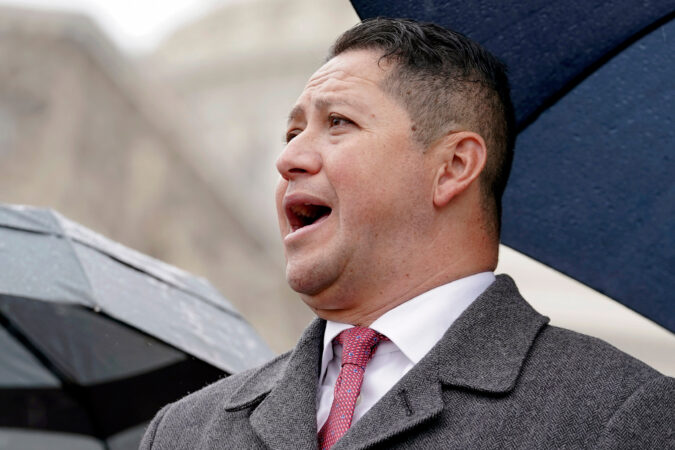
    HOUSTON — U.S. Rep. Tony Gonzales of Texas resisted growing calls Tuesday from fellow congressional Republicans to resign over a report of an alleged affair with a former staffer who later died after she set herself on fire.

    Rep. Thomas Massie of Kentucky joined Reps. Lauren Boebert of Colorado, Anna Paulina Luna of Florida, and Nancy Mace of South Carolina in demanding that Gonzales step down immediately. Gonzales is in a tough race in Texas’ Republican primary on March 3, facing a challenger he narrowly defeated in a 2024 GOP runoff.

    He told reporters he will not resign. A resignation would leave Republicans with a 217-214 majority until March, when the first of three special elections to fill vacancies is set in Georgia.

    “There will be opportunities for all of the details and facts to come out,” he said. “What you’ve seen is not all the facts.”

    House Speaker Mike Johnson said he would talk to Gonzales on Tuesday.

    Johnson said Monday that the accusations against Gonzales “must be taken seriously,” but he added, “in every case like this, you have to allow the investigation to play out and all the facts to come out.”

    “If the accusation of something is going to be the litmus for someone being able to continue to serve in the House, a lot of people would have to resign or be removed or expelled from Congress,” Johnson said.

    Meanwhile, Mace announced that she has introduced a resolution to force the House Ethics Commission to publicly release its reports and records of allegations of sexual harassment against members of Congress.

    Gonzales said in a social media post last week that he was being blackmailed and then suggested in another post Sunday that he is the target of “coordinated political attacks.”

    His main primary opponent is Brandon Herrera, a gun manufacturer and gun rights influencer who calls himself “the AK Guy” on YouTube, where his channel has nearly 4.2 million subscribers. Gonzales defeated Herrera by fewer than 400 votes in their 2024 runoff.

    President Donald Trump had endorsed Gonzales for reelection in December.

    The San Antonio Express-News reported last week that it had obtained text messages in which the former staffer, Regina Ann Santos-Aviles, wrote to a colleague that she had an affair with the lawmaker.

    The Associated Press has not independently obtained copies of the messages. An attorney for Adrian Aviles, Santos-Aviles’ husband, has said the husband found out about the affair before his wife’s death.

    Regina Ann Santos-Aviles, 35, died in September 2025. The Bexar County Medical Examiner’s Office later ruled her death was a suicide by self-immolation.

    “Where are the other men in the GOP?” Massie asked Tuesday in a post on X in calling for Gonzales to resign, adding that Trump should revoke his endorsement.

    Gonzales, whose district stretches from San Antonio to El Paso and runs along the U.S.-Mexico border, has six children with his wife.

    His allegation of blackmail is based on an email from the attorney for the staffer’s husband, Robert Barrera, discussing a possible lawsuit against the lawmaker and a potential settlement with a nondisclosure agreement. The email says that the maximum recoverable amount is $300,000.

    Barrera has said he was not trying to blackmail Gonzales and called the accusation an attempt by the congressman to look like a political victim.

  • Louvre museum’s director resigns in wake of jewels heist in Paris

    Louvre museum’s director resigns in wake of jewels heist in Paris

    PARIS — The Louvre museum’s director resigned Tuesday after months of pressure following the October theft of the French crown jewels, as the world’s most visited museum faced widening scrutiny over security failures, labor unrest, and a suspected ticket fraud scheme.

    Laurence des Cars quit after a punishing year for the former royal palace — the high-profile jewels heist from the Apollo Gallery, a mid-February burst pipe near the Mona Lisa, water leaks damaging priceless books, staff walkouts and a wildcat strike over overcrowding, and understaffing.

    The landmark has faced a widening narrative of an institution spiraling out of control.

    And that pressure deepened in recent weeks when French authorities revealed a suspected decadelong ticket fraud operation linked to the museum that investigators say may have cost the Louvre 10 million euros ($11.8 million).

    President Emmanuel Macron accepted des Cars’ resignation as “an act of responsibility” at a moment when the Louvre needs “calm” and new momentum for security upgrades, modernization, and other major projects, according to a statement from his office.

    Macron wants to give des Cars a new mission during France’s presidency of the Group of Seven leading industrialized nations, focused on cooperation among major museums, the statement said.

    For many in France’s cultural world, the resignation answers months of head-scratching over why no top official had fallen after the heist: a daylight robbery that many in the country saw as the most humiliating breach of French heritage security in living memory.

    It also came as lawmakers and cultural officials widened scrutiny of the museum’s leadership and security practices in the months since the breach.

    Brazen theft

    Thieves took less than eight minutes in October to steal crown jewels valued at 88 million euros ($102 million) from the Louvre, in a weekend operation that stunned visitors, exposed glaring vulnerabilities and left one of France’s most symbolically charged collections in criminal hands.

    Several suspects were later arrested, but the stolen pieces remain missing.

    Des Cars, one of the most prominent museum directors in Europe, had offered to resign on the day of the robbery, but it was initially refused by the culture minister.

    In remarks after the theft, she described the moment as a “tragic, brutal, violent reality” for the Louvre and said that, as the person in charge, it had felt right to offer her resignation.

    Lightning rod

    In an interview published on Tuesday by daily newspaper Le Figaro, des Cars said that she had tried to steer the Louvre through the fallout from the heist, but had concluded that she could no longer carry out the museum’s transformation in the current institutional climate.

    Staying on, she said, would have meant managing the status quo when the museum still needs deep reform.

    “I was there to take the lightning” as museum director, she said.

    Des Cars also said that the October break-in exposed problems that she had been warning about since taking office, including aging infrastructure, obsolete technical systems, and severe congestion.

    She had led the Louvre since 2021, taking over one of the museum world’s most prestigious jobs as the institution emerged from the coronavirus pandemic and mass tourism returned.

    Multifaceted crisis

    In June, a wildcat strike by front-of-house staff and security workers forced the Louvre to halt operations, stranding thousands of visitors outside the glass pyramid and underscoring the depth of anger among employees over overcrowding, understaffing, and what unions called untenable working conditions.

    Workers said that the pressure of daily visitor flows — particularly around the Mona Lisa — had become unmanageable and that promised reforms were arriving too slowly. There were growing complaints that the infrastructure and staffing of the crumbling medieval structure haven’t kept pace with the crowds pouring through its galleries.

    The resignation came at an especially punishing moment, less than two weeks after French authorities revealed the separate ticket fraud scheme.

    That case widened scrutiny beyond the jewels robbery and toward the museum’s day-to-day controls.

    Fraud scheme

    Prosecutors say tour guides are suspected of — up to 20 times a day — reusing the same tickets to bring in different visitor groups, at times allegedly with the help of Louvre employees, in a system investigators believe operated for a decade.

    In a rare interview just days ago with the Associated Press after the fraud case was made public, the Louvre’s No. 2, general administrator Kim Pham, said that fraud at an institution the size of the Louvre was “statistically inevitable.”

    He argued that the museum’s sheer scale — millions of visitors, multiple checkpoints, and a sprawling historic complex — makes it uniquely exposed.

    But he also acknowledged shortcomings, and said that the museum had tightened validation checks and increased controls.

    New Renaissance

    The succession of crises has put new political weight on a project Macron has heavily championed: the Louvre’s sweeping overhaul plan, branded the “Louvre New Renaissance.”

    Unveiled by Macron in January 2025, the renovation, which could take up to a decades, aims to modernize a museum widely seen as overstretched and physically worn down by mass tourism.

    The plan includes a new entrance near the Seine River to ease pressure on I.M. Pei’s pyramid, new underground spaces and a dedicated room for the Mona Lisa with timed access — all intended to improve crowd flow and reduce the daily crush that has become a symbol of the Louvre’s success and its dysfunction.

    The project is expected to cost roughly 700 million-800 million euros ($826 million-$944 million), with funding from ticket revenue, state support, donations, and Louvre Abu Dhabi-related income.

    The scale and cost of that plan now loom over the search for des Cars’ successor.

    Macron has framed the overhaul as a national priority, comparing its ambition to other landmark French restoration efforts and casting it as part of a broader defense of French cultural prestige.

  • Trump administration sues New Jersey over restrictions on immigration arrests

    Trump administration sues New Jersey over restrictions on immigration arrests

    TRENTON — The Trump administration is suing New Jersey over a state order that prohibits federal immigration agents from making arrests in nonpublic areas of state property, such as correctional facilities and courthouses.

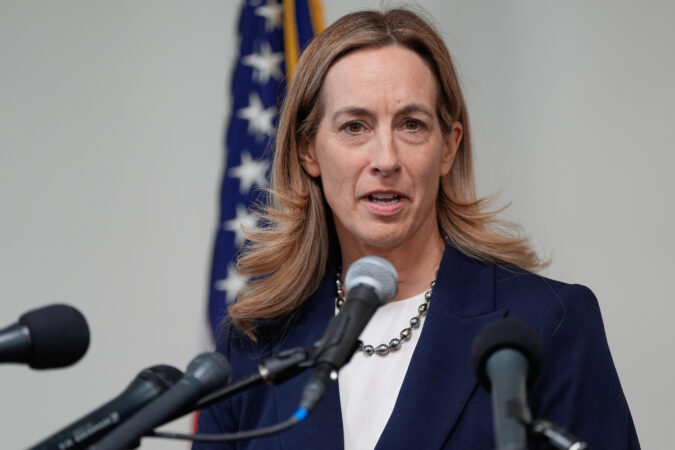
    The Justice Department lawsuit, filed Monday in federal court in Trenton, challenges Gov. Mikie Sherrill‘s Feb. 11 executive order, which also bars the use of state property as a staging or processing area for immigration enforcement.

    Sherrill, a Democrat who took office Jan. 20, “insists on harboring criminal offenders from federal law enforcement,” the lawsuit said, accusing her of attempting to obstruct federal law enforcement and thwart President Donald Trump’s immigration crackdown.

    Sherrill’s executive order “poses an intolerable obstacle” to immigration enforcement and “directly regulates and discriminates” against the federal government, said the lawsuit, which misspelled her name as “Sherill.”

    Asked about the lawsuit Tuesday, Sherrill said: “What I think the federal government needs to be focused on right now, instead of attacking states like New Jersey working to keep people safe, is actually training their ICE agents.”

    The state’s acting attorney general, Jennifer Davenport, said the Trump administration was “wasting its resources on a pointless legal challenge.” New Jersey will fight the lawsuit and “continue to ensure the safety of our state’s immigrant communities,” she said.

    The lawsuit is the latest in the Trump administration’s fight against state and local level restrictions on immigration enforcement.

    Last year, the Justice Department sued Minnesota and Colorado, as well as cities including New York, Chicago, Los Angeles, and Denver over so-called sanctuary laws, which are aimed at prohibiting police from cooperating with immigration agents.

    Last May, the Trump administration sued four New Jersey cities — Newark, Jersey City, Paterson, and Hoboken — over such policies. That case is pending.

  • New York City police investigating after officers were hit with snowballs during a snowball fight

    New York City police investigating after officers were hit with snowballs during a snowball fight

    NEW YORK — New York City police are investigating after officers were pelted with snowballs while responding to a massive snowball fight at Washington Square Park in Manhattan as a winter storm blanketed the Northeast.

    A video of the fracas shows two uniformed officers pacing a walkway in the park Monday as snowballs fly at them from all directions, hitting the officers and covering them in snow.

    The officers, growing visibly frustrated, shoved at least two people to the ground as snowballs continued to whizz by. At one point, a person runs up behind an officer and mushes some snow onto his head. One of the officers can be seen rubbing his eye toward the end of the video.

    In a statement Tuesday, the New York Police Department said multiple uniformed officers were struck in the face with snowballs and were “removed by EMS in stable condition” to a nearby hospital, but did not disclose additional information on their injuries. No arrests have been made.

    Jessica Tisch, the city’s police commissioner, called the behavior “disgraceful” and “criminal” and said the department is investigating.

    Several political figures in the city were quick to denounce the dustup, with many of New York Mayor Zohran Mamdani’s critics seizing on the incident as evidence that respect for law enforcement has declined under the new mayor, who faced attacks during his campaign over criticisms he made of the department in 2020. Mamdani has walked back those past remarks.

    Mamdani, in a post on X on Tuesday, wrote: “Officers, like all city workers, have been out in a historic blizzard, keeping New Yorkers safe and cars moving. Treat them with respect. If anyone’s catching a snowball, it’s me.”

    At a news conference later in the day, Mamdani was asked whether he thought anyone should be criminally charged over the snowballs and appeared to downplay the situation.

    “From the videos that I’ve seen, it looks like a snowball fight,” he said.

    The head of the city’s largest police union called Mamdani’s response a “complete failure of leadership.”

    “This was not just a ‘snowball fight.’ This was an assault,” Police Benevolent Association president Patrick Hendry said in a statement, adding: “By ignoring their injuries and dismissing the incident, the mayor has sent a disgraceful message to every police officer who serves this city.”

  • Supreme Court rules the Postal Service can’t be sued, even when mail is intentionally not delivered

    Supreme Court rules the Postal Service can’t be sued, even when mail is intentionally not delivered

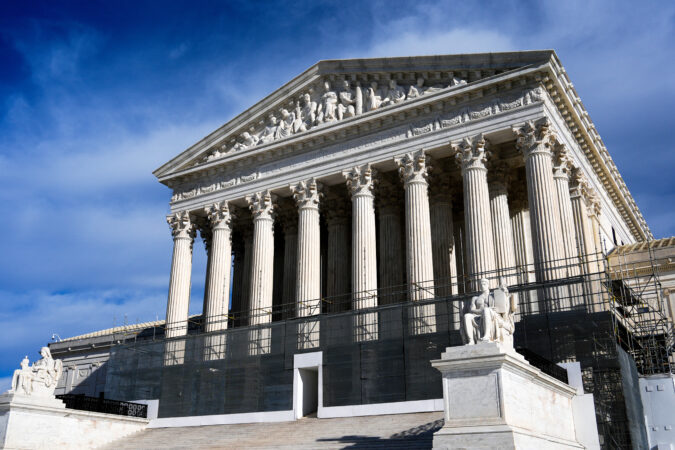
    WASHINGTON — A divided Supreme Court on Tuesday ruled that Americans can’t sue the U.S. Postal Service, even when employees deliberately refuse to deliver mail.

    By a 5-4 vote, the justices ruled against a Texas landlord, Lebene Konan, who alleges her mail was intentionally withheld for two years. Konan, who is Black, claims racial prejudice played a role in postal employees’ actions.

    Justice Clarence Thomas, writing for a majority of five conservative justices, said the federal law that generally shields the Postal Service from lawsuits over missing, lost, and undelivered mail includes “the intentional nondelivery of mail.”

    In dissent, Justice Sonia Sotomayor wrote that while the protection against lawsuits is broad, it does not extend to situations when the decision not to deliver mail “was driven by malicious reasons.” Justice Neil Gorsuch joined his three liberal colleagues in dissent.

    President Donald Trump’s Republican administration had warned that a ruling for Konan would have led to a flood of similar lawsuits against the cash-strapped Postal Service.

    Konan, who’s also a real estate agent and an insurance agent, claims two employees at a post office in Euless, Texas, part of the Dallas-Fort Worth metroplex, deliberately didn’t deliver mail belonging to her and her tenants because, she alleges, they didn’t like that she is Black and owns multiple properties.

    According to court documents, the dispute began when Konan discovered the mailbox key for one of her rental properties had been changed without her knowledge, preventing her from collecting and distributing tenants’ mail from the box. When she contacted the local post office, she was told she wouldn’t receive a new key or regular delivery until she proved she owned the property. She did so, the documents say, but the mail problems continued, despite the USPS inspector general instructing the mail to be delivered.

    Konan alleges the employees marked some of the mail as undeliverable or return to sender. Konan and her tenants failed to receive important mail such as bills, medications, and car titles, according to the lawsuit. Konan also claims she lost rental income because some tenants moved out due to the situation.

    After filing dozens of complaints with postal officials, Konan finally filed a lawsuit under the 1946 Federal Tort Claims Act, which allows some lawsuits against the government. The case focused on the reach of the special postal exemption to the law.

  • Savannah Guthrie says her family is offering a $1 million reward for her mother Nancy’s recovery

    Savannah Guthrie says her family is offering a $1 million reward for her mother Nancy’s recovery

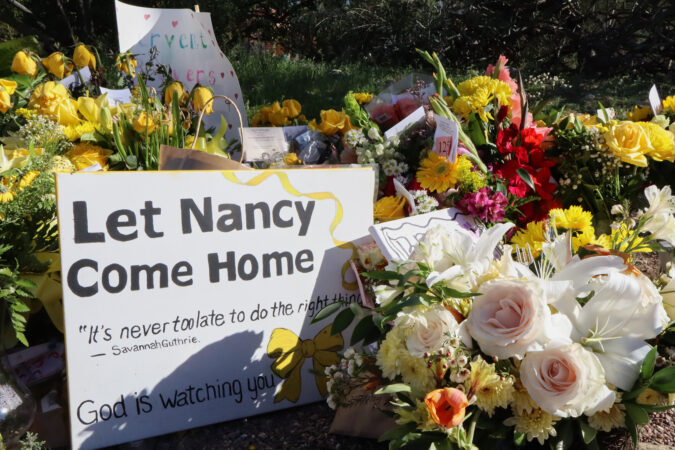
    Today show host Savannah Guthrie said her family is now offering a $1 million reward for information leading to the recovery of her mother, Nancy Guthrie, who went missing from her Arizona home more than three weeks ago.

    Savannah Guthrie said Tuesday that her family is still holding out for a miracle and hopes her mother will be found alive, but she also acknowledged that they realize it might be too late.

    “She may already be gone,” Savannah Guthrie said in an Instagram post. “She may already have gone home to the Lord that she loves and is dancing in heaven.”

    Nancy Guthrie, 84, was last seen at her home just outside Tucson, Ariz., on Jan. 31 and was reported missing the next day. Authorities believe she was kidnapped, and the FBI released surveillance videos of a masked man who was outside Guthrie’s front door on the night she vanished.

    Drops of her blood were found on the front porch, but authorities haven’t publicly revealed much evidence. Since the first days of her disappearance, authorities have expressed concern about Nancy Guthrie’s health because she needs vital daily medicine.

    Savannah Guthrie said her family needs to know where her mother is no matter what happened.

    “Someone out there knows something that can bring her home,” she said.

    Several hundred people are working the Guthrie investigation, and more than 20,000 tips have been received, the Pima County Sheriff’s Office has said. The FBI and other agencies are assisting.

    The porch camera footage released two weeks ago, which showed a man wearing a backpack and gloves outside Nancy Guthrie’s house, gave investigators their first major break. But it also has fueled intense speculation.

    The sheriff’s department said Monday that it’s aware of differences in the masked person’s clothing depicted in various images that were released, namely with and without a backpack.

    “There is no date or time stamp associated with these images,” the department said. “Therefore, any suggestion that the photographs were taken on different days is purely speculative.”

    Sheriff Chris Nanos said a week ago that members of Guthrie’s family, including siblings and spouses, are not suspects.

    Savannah Guthrie said Tuesday that her family also will donate $500,000 to the National Center for Missing and Exploited Children.

    “We are hoping that the attention that has been given to our mom and our family will extend to all the families like ours,” she said.