Category: Nation World News Wires

  • Ukraine says Russia launched a major aerial attack before Kyiv’s talks with U.S.

    Ukraine says Russia launched a major aerial attack before Kyiv’s talks with U.S.

    KYIV, Ukraine — A heavy Russian drone bombardment of Ukraine’s southern city of Odesa killed at least three people and wounded 23, including two children and a pregnant woman, officials said Tuesday, as Ukrainian President Volodymyr Zelensky called for speedier U.S. efforts to end Russia’s almost 4-year-old invasion of his country.

    The Odesa attack involved more than 50 drones, some of them models recently upgraded by Russia to improve their range and strike power, according to Ukrainian authorities.

    The drones targeted the power grid, which Russia has repeatedly bombarded during the coldest winter in years, and also hit five apartment blocks, officials said. Emergency crews retrieved the bodies of two men, aged 90 and 52, and a woman from the rubble, authorities said.

    “The rescue operation will continue until the fate of all people who may be under the rubble is clarified,” Zelensky said on the Telegram messaging app, adding that an informal Protestant place of worship was also damaged.

    “Each such Russian strike undermines diplomacy, which is still ongoing, and hits, in particular, the efforts of partners who are helping to end this war,” he said.

    In Ukraine’s northeast Kharkiv region, a passenger train carrying over 200 people was hit by three drones later Tuesday, in what the head of the regional administration Oleh Syniehubov labeled “terrorism.” Four people were killed and another four reported missing.

    A diplomatic push by the Trump administration to end the war has made progress, according to officials, but has delivered no breakthrough on the key issue of what happens to Russian-occupied Ukrainian land and other territory that Moscow is demanding.

    Analysts says that Russian President Vladimir Putin is in no rush to find a settlement, despite his army’s difficulties on the roughly 600-mile front line. He believes that time is on his side, that Western support for Kyiv will fade and that Ukraine’s resistance will eventually break under pressure, according to analysts.

    To replenish its forces and keep up the pressure on Kyiv, Moscow is offering cash bonuses, freeing convicts from prison and luring foreigners to its army.

    An Associated Press investigation found that unwitting Bangladeshi workers were enticed to Russia under the false promise of civilian work before being thrown into combat in Ukraine.

    Zelensky said late Monday the next round of talks with the United States and Russia is penciled in for Feb. 1. but that “it would be good if this meeting could be accelerated.”

    He also urged that, in the meantime, additional sanctions be imposed on Russia to compel the Kremlin to make compromises.

    Russia fired 165 drones at Ukraine overnight, with 24 of them that got through air defenses hitting targets in seven regions, according to Ukraine’s air force.

    In recent weeks, the relentless barrages have damaged some of Ukraine’s protected world heritage sites in Odesa, the western city of Lviv and the capital, Kyiv, UNESCO said Tuesday.

    They have also knocked out power to hundreds of thousands of civilians. More than 900 apartment blocks remained without heating Tuesday in several districts of Kyiv, Zelensky said. Kyiv, a city of about 3 million people, is dominated by tower blocks, many from the Soviet era.

    Russia has been improving its drone technology and tactics, striking Ukraine with increasing success.

    The Ukrainian Defense Ministry’s main intelligence directorate said earlier this month that Russia had deployed the new jet-powered “Geran-5” strike drone against Ukraine for the first time. The Geran is a Russian variant of the Iranian-designed Shahed.

    According to the directorate, the drone can carry a 200-pound warhead and has a range of nearly 600 miles.

    In response, Ukraine has significantly expanded production of interceptor drones, as well as developing its own long-range drones.

    The Russian Defense Ministry said Tuesday that its air defenses shot down 19 Ukrainian drones overnight over several Russian regions.

  • Penguin Press founder Ann Godoff, a powerhouse editor of bestsellers and prizewinners, dies at 76

    Penguin Press founder Ann Godoff, a powerhouse editor of bestsellers and prizewinners, dies at 76

    NEW YORK — Ann Godoff, a leading book publisher for more than 30 years with an eye for timely and timeless works from Alexander Hamilton and Midnight in the Garden of Good and Evil to current bestsellers by Gisèle Pelicot and California Gov. Gavin Newsom, has died. She was 76.

    Ms. Godoff died of cancer Tuesday in Albany, N.Y., according to a statement from Penguin Press, which she had founded in 2003.

    “Ann’s impact on American book culture over the past four decades is incalculable,” Penguin Press publisher Scott Moyers said in a statement. “An editor of immense range in fiction, nonfiction, and poetry, Ann shepherded into print innumerable New York Times bestsellers, multiple winners of every major award, and works that have appeared on all manner of best books lists — of the year, the decade, and the century.”

    A onetime NYU film student who studied under then-faculty member Martin Scorsese, sold cars and assisted on Dr. Joyce Brothers’ television show, Ms. Godoff was a late bloomer who didn’t begin her publishing career until her early 30s and soon revealed uncommon gifts for spotting and cultivating talent. As a rising editor at Random House in the 1990s, she published such debut phenomena as John Berendt’s Midnight in the Garden of Good and Evil and Caleb Carr’s The Alienist.

    She also worked with Salman Rushdie, E.L. Doctorow, and Arundhati Roy and had lasting relationships with Michael Pollan and Ron Chernow, whose books with Ms. Godoff have included a Pulitzer Prize-winning biography of George Washington and the Hamilton biography that was the basis for the prizewinning stage musical.

    “Ann supervised me with a rather light touch and never got lost in the details,” Chernow wrote in an email to the Associated Press.

    “She was no less gifted in fashioning a design for the book — everything from the cover art to the paper stock — with a look fully consistent with my portrait of the character,” he added. “Everything was of a piece and that was carried straight through to the marketing and publicity. I always felt myself in the most capable hands.”

    Ms. Godoff was eventually promoted to president and editor-in-chief of Random House, and her stature was so high that when she was forced out in 2003 amid corporate restructuring, her departure set off debates — evergreen in the industry — over the feared decline of literary publishing.

    But Penguin soon signed her up to lead the new Penguin Press imprint. Chernow, Pollan, and other authors moved there with her, and she continued to publish bestsellers and critical favorites, including such Pulitzer Prize winners as Steve Coll’s Ghost Wars and John Lewis Gaddis’ George F. Kennan.

    When Random House and Penguin merged into Penguin Random House in 2013, Ms. Godoff was under the same roof as her old company. Right up to the time of her death, she was shaping the public conversation. Pelicot’s A Hymn to Life recounts her horrifying marriage and how she came to be a leading voice against sexual violence, while Newsom’s Young Man in a Hurry is widely seen as a building block for a 2028 presidential run.

    Ms. Godoff was born in 1949 in New York City, grew up in New York and California, and graduated from Bennington College. She started out at Simon & Schuster in the early 1980s as an assistant to Alice Mayhew, the renowned editor of Bob Woodward and Doris Kearns Goodwin among others. After serving as editor-in-chief at Atlantic Monthly Press, Ms. Godoff joined Random House in 1991.

    Her marriage to Malcolm Drummond ended in divorce in 2012 after a long separation. The same year, Godoff married her partner, the writer-photographer Annik LaFarge. Besides LaFarge, her survivors include her brother, Peter Godoff.

    Ms. Godoff was never the outsized personality of such Random House predecessors as Bennett Cerf and Harold Evans. She was regarded by many as serious, hard-working and committed, known for saying “The book will abide.” But she was competitive, and she didn’t mind making news. She paid a reported $8 million for Cold Mountain author Charles Frazier’s next novel, a sum many found excessive at the time, and a comparable amount for a memoir by former Federal Reverse Chairman Alan Greenspan.

    Bestselling author Roger Lowenstein, whose seven books have all been published by Ms. Godoff, wrote in an email to the AP that she was an exacting but precise editor. He remembered a “blistering memo” from her while shaping the manuscript for Ways and Means: Lincoln and His Cabinet and the Financing of the Civil War, a prizewinning history published in 2022. His final draft was 90 pages shorter and he couldn’t think of a “single word” that he regretted being cut.

    “She generally reserved her praise, at least in my case, until the end of the process, often in letters that arrived unexpected in the mail,” he wrote. “Nothing was ever sweeter, because one worked so hard to get there, and because you knew that she meant it.”

  • FedEx joins other U.S. companies in seeking a refund after Trump tariffs are ruled illegal

    FedEx joins other U.S. companies in seeking a refund after Trump tariffs are ruled illegal

    FedEx is suing the U.S. government, the latest company to request a refund on what it paid for tariffs set by President Donald Trump last year after the Supreme Court ruled that the tariffs are illegal.

    More than 1,000 companies have filed suit in the U.S. Court of International Trade in efforts to recoup costs from the illegal tariffs, including large U.S. corporations such as Costco and Revlon. Most of the lawsuits were already in process ahead of the Supreme Court decision Friday.

    FedEx said in a filing with the U.S. Court of International Trade that they have “suffered injury” from having to pay the tariffs and that the relief they’re seeking from the court would redress those injuries.

    Tim Meyer, a law professor at Duke University, said each case is likely to have to be tried individually.

    “We’re going to have to wait and see how the government decides to handle the refund claims,” he said. “And then if the government chooses not to set up a process for the refunds, ultimately the Court of International Trade is going to have to adjudicate over a thousand cases.”

    The National Retail Federation said in a statement on Friday that the Supreme Court’s ruling provided certainty for U.S. businesses and manufacturers.

    “We urge the lower court to ensure a seamless process to refund the tariffs to U.S. importers,” it said. “The refunds will serve as an economic boost and allow companies to reinvest in their operations, their employees and their customers.”

    The Supreme Court struck down Trump’s far-reaching global tariffs on Friday. Trump said he was “absolutely ashamed” of some justices who ruled 6-3 against him, calling them “disloyal to our Constitution” and “lapdogs.” At one point he even raised the specter of foreign influence without citing any evidence.

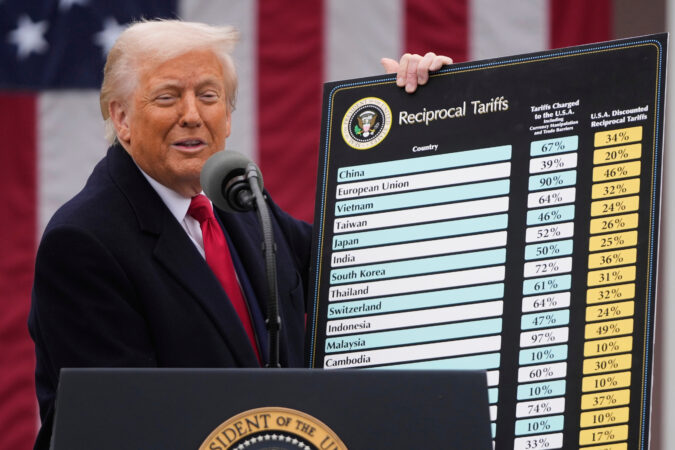
    The court’s ruling found tariffs that Trump imposed under an emergency powers law were unconstitutional, including the sweeping “reciprocal” tariffs he levied on nearly every other country.

    The Treasury had collected more than $133 billion from the import taxes the president has imposed under the emergency powers law as of December, federal data shows. The impact over the next decade has been estimated at some $3 trillion. A study by the Federal Reserve Bank of New York found U.S. businesses and consumers are paying nearly 90% of the tariffs that Trump has imposed.

    Trump has vowed to collect tariffs through other means. He reached for a stopgap option immediately after his defeat Friday at the Supreme Court: Section 122 of the Trade Act of 1974 allows the president to impose tariffs of up to 15% for up to 150 days. But any extension beyond 150 days must be approved by a Congress likely to balk at passing a tax increase as November’s midterm elections loom.

  • Justice Department says it’s reviewing whether any Epstein-related records were mistakenly withheld

    Justice Department says it’s reviewing whether any Epstein-related records were mistakenly withheld

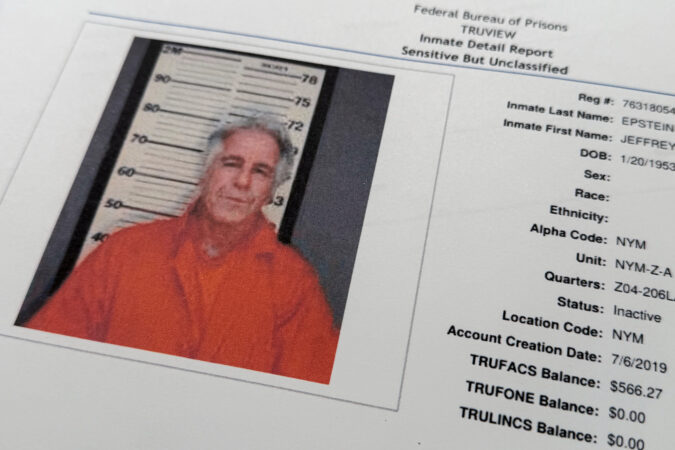
    WASHINGTON — The Justice Department said Wednesday that it was looking into whether it improperly withheld documents from the Jeffrey Epstein files after several news organizations reported that some records involving uncorroborated accusations made by a woman against President Donald Trump were not among those released to the public.

    The announcement followed news reports saying that a massive tranche of records released by the Justice Department did not include several summaries of interviews that the FBI conducted with an unidentified woman who came forward after Epstein’s 2019 arrest and claimed to have been sexually assaulted by both Trump and Epstein when she was a minor in the 1980s.

    “Several individuals and news outlets have recently flagged files related to documents produced to Ghislaine Maxwell in discovery of her criminal case that they claim appear to be missing,” the Justice Department said in a post on X. “As with all documents that have been flagged by the public, the Department is currently reviewing files within that category of the production.” Maxwell, Epstein’s longtime confidant, is serving a 20-year prison sentence on a sex trafficking conviction.

    It said that if any document is found to have been improperly withheld and is responsive to the federally enacted law mandating the files’ release, “the Department will of course publish it, consistent with the law.”

    At issue is a series of interviews said to have been conducted in 2019 with a woman who made an allegation against Trump, who has consistently denied any wrongdoing in connection with Epstein. News reports from recent days say the accuser was interviewed four times but a summary of only one of those interviews was included in the publicly released files.

    The missing records were earlier reported by the journalist Roger Sollenberger on Substack and NPR, and have since been documented by other news organizations, including the New York Times, MS Now, and CNN.

    Rep. Robert Garcia, the top Democrat on the House Oversight Committee, said in a statement that his panel would investigate the withheld records. He said he had reviewed unredacted evidence logs and “can confirm that the DOJ appears to have illegally withheld FBI interviews” with the accuser.

    The Justice Department last month said it was releasing more than 3 million pages of records related to Epstein, who took his own life in a New York jail cell in 2019 while awaiting trial on sex trafficking charges. The department said at the time that, though it was attempting to be transparent, it was also entitled to withhold records that exposed potential abuse victims, were duplicates or protected by legal privileges, or related to an ongoing criminal investigation.

    “Some of the documents contain untrue and sensationalist claims against President Trump that were submitted to the FBI right before the 2020 election. To be clear, the claims are unfounded and false, and if they have a shred of credibility, they certainly would have been weaponized against President Trump already,” the department said in a statement last month as it released the records.

    The redaction process was quickly revealed to have been flawed, with the department withdrawing some materials identified by victims or their lawyers, along with a “substantial number” of documents identified independently by the government.

    Lawyers for Epstein accusers told a New York judge last month that the lives of nearly 100 victims had been “turned upside down” by sloppy redactions in the government’s latest release of records. The exposed materials include nude photos showing the faces of potential victims as well as names, email addresses, and other identifying information that was either unredacted or not fully obscured.

    Other uncorroborated claims against Trump and other public figures were included in the publicly available files. The department did not say in its social media post Wednesday why records related to this specific accusation might have been withheld.

  • Vance says administration is pausing some Medicaid funding to Minnesota because of fraud concerns

    Vance says administration is pausing some Medicaid funding to Minnesota because of fraud concerns

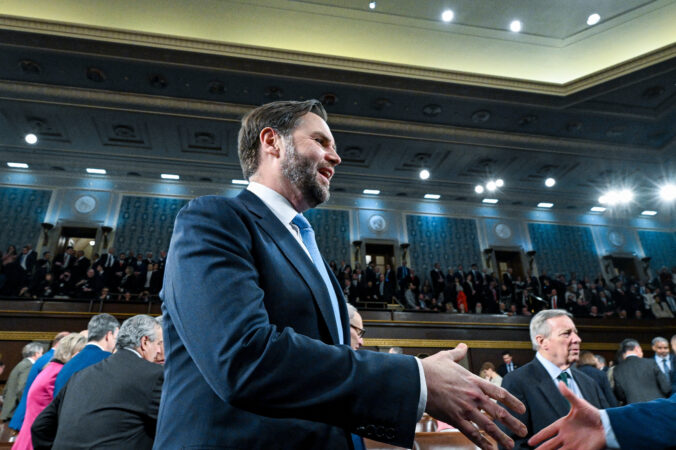
    WASHINGTON — Vice President JD Vance announced Wednesday that the Trump administration would “temporarily halt” some Medicaid funding to the state of Minnesota over fraud concerns, as part of what he described as an aggressive crackdown on misuse of public funds.

    Vance, who made the announcement with Mehmet Oz, the administrator for the Centers for Medicare and Medicaid Services, said the administration was taking the action “in order to ensure that the state of Minnesota takes its obligations seriously to be good stewards of the American people’s tax money.”

    Oz, who referred to people committing fraud as “self-serving scoundrels,” said the federal government would hold off on paying $259.5 million to Minnesota in funding for Medicaid, the healthcare safety net for low-income Americans.

    “This is not a problem with the people of Minnesota, it’s a problem with the leadership of Minnesota and other states who do not take Medicaid preservation seriously,” Oz said.

    Wednesday’s move is part of a larger Trump administration effort to spotlight fraud around the country. That effort comes after allegations of fraud involving daycare centers run by Somali residents in Minneapolis prompted a massive immigration crackdown in the Midwestern city, resulting in widespread protests. President Donald Trump, in his State of the Union address on Tuesday, announced Vance would spearhead a national “war on fraud.”

    Trump also recently nominated Colin McDonald to serve as the first assistant attorney general in charge of a Justice Department division dedicated to rooting out fraud.

    Oz said the administration was simultaneously notifying Minnesota’s Democratic Gov. Tim Walz as he was making the announcement publicly. Messages sent to spokespeople for Walz, former Vice President Kamala Harris’ 2024 running mate, were not immediately returned.

    “We will give them the money, but we’re going to hold it and only release it after they propose and act on a comprehensive corrective action plan to solve the problem,” Oz said.

    He said Walz would have 60 days to respond and advised healthcare providers and Medicaid beneficiaries who were concerned to contact Walz’s office.

    A spokesperson for Minnesota Attorney General Keith Ellison, whose office investigates Medicaid fraud, referred questions to the state Department of Human Services, which administers Medicaid in the state, A department spokesperson said the agency was preparing a statement.

    Earlier Wednesday, Ellison held a news conference to promote legislation that would give his office more staff and new legal tools to combat Medicaid fraud.

    Oz said the Centers for Medicare and Medicaid Services were also taking action to crack down on fraud in Medicare, the healthcare system relied upon by millions of older adults.

    He said CMS for six months would block any new Medicare enrollments for suppliers of durable medical equipment, prosthetics, orthotics or other supplies used to treat chronic conditions or assist in injury recovery.

    The Office of the Inspector General for the U.S. Department of Health and Human Services found last year that Medicare improperly paid suppliers nearly $23 million for durable medical equipment from 2018 through 2024. But it found that most of that was before January 2020, when changes to the system were implemented.

    Oz also announced a new crowdsourcing effort he said would help “crush fraud” by soliciting Americans’ tips and suggestions.

    “All of us are smarter than any one of us,” he said.

    In a news release accompanying the announcement, CMS said the funding being paused in Minnesota included some $244 million in unsupported or potentially fraudulent Medicaid claims and about $15 million in claims involving “individuals lacking a satisfactory immigration status.”

    Immigrants who are not living in the U.S. legally, as well as some lawfully present immigrants, are not allowed to enroll in the Medicaid program that provides nearly-free coverage for health services.

    CMS said in the release that if Minnesota fails to satisfy its requirements, it may defer up to $1 billion in federal funds to the state over the next year.

    A CMS spokesperson didn’t immediately respond to an inquiry about what the agency will require from Minnesota in order to restart the deferred funding.

    The administration has threatened to cut off funding for various programs for some Democratic-run states over fraud concerns over the last few months.

    One judge blocked those actions and required that payments flowing to Minnesota and four other states — California, Colorado, Illinois and New York — for a variety of social service programs. The government had said that there was “reason to believe” that those states were granting benefits to people in the country illegally. It did not initially explain where that information came from, but a government lawyer told the judge it was largely in reaction to news reports about possible fraud.

    Another judge said she would not let it cut off funding for administrative costs for 22 states that have refused to hand over information about applicants and recipients of food aid through the Supplemental Nutritional Assistance Program.

    The latest action was prompted in part by a series of fraud cases, including a nonprofit called Feeding Our Future accused of stealing pandemic aid meant for school meals. Prosecutors have put the losses from that case at $300 million.

    Since then, Trump has targeted the Somali diaspora in Minnesota with immigration enforcement actions and has made a series of disparaging comments about the community. During his State of the Union address on Tuesday, Trump said “pirates” have “ransacked Minnesota.”

    Federal agencies have also been enlisted to assist in targeting fraud in Minnesota.

    Last December, the U.S. Treasury Department issued an order requiring money wire services that people use to send money to Somalia to submit additional verification to the Treasury.

    The Center for Medicare and Medicaid Services told Minnesota in January that it intended to freeze parts of payments for some Medicaid programs that were deemed high-risk. The state said that those cuts would add up to more than $2 billion annually if they lasted and made an administrative appeal.

  • Larry Summers will resign from teaching at Harvard during review of Epstein ties, university says

    Larry Summers will resign from teaching at Harvard during review of Epstein ties, university says

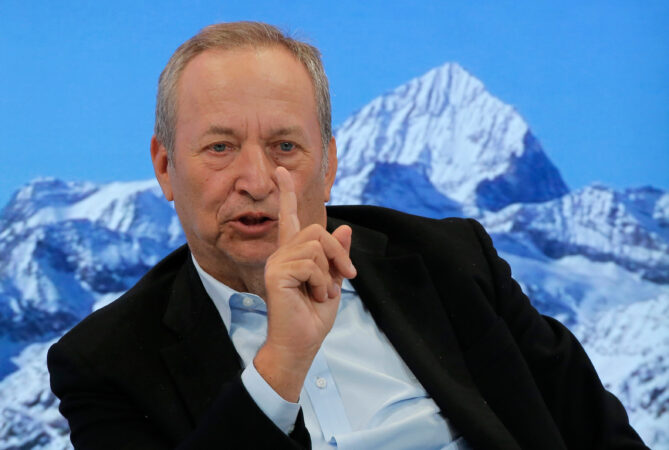
    Former U.S. Treasury Secretary Larry Summers will resign from teaching at Harvard University amid a campus review of his ties to the late convicted sex offender Jeffrey Epstein, the university announced Wednesday.

    Summers, who has been on leave since November and whose name appeared hundreds of times in newly released Epstein files, will step down at the end of the school year, according to a statement from Harvard spokesperson Jason Newton.

    “Professor Summers has announced that he will retire from his academic and faculty appointments at Harvard at the end of this academic year and will remain on leave until that time,” Newton said.

    In a statement, Summers said it was a difficult decision and expressed gratitude to the students and colleagues he worked with over 50 years.

    “Free of formal responsibility, as President Emeritus and a retired professor, I look forward in time to engaging in research, analysis, and commentary on a range of global economic issues,” Summers said.

    The Justice Department’s latest release has rippled through academia, uncovering Epstein’s ties to numerous researchers who sought his funding and his friendship even after he became a convicted sex offender. Summers’ resignation follows that of Richard Axel, a Nobel laureate, who on Tuesday announced he would step down as co-director of Columbia University’s Zuckerman Mind Brain Behavior Institute.

    Summers served as treasury secretary under former President Bill Clinton and went on to lead Harvard as president for five years starting in 2001. Summers also has Philly-area roots. He grew up in Penn Valley and attended Lower Merion schools, graduating from Harriton High School in the early 1970s.

    A trove of files released by the government cast new light on Summers’ relationship with Epstein, which spanned years and included visits to one another at their homes in Massachusetts and New York. The two traded emails on topics ranging from politics and the economy to women and romance.

    Summers, who has been married for 20 years, consulted Epstein on a separate relationship with a woman he was tutoring in economics, according to emails from 2018 and 2019. Epstein described himself as Summers’ “wing man” and encouraged persistence. In a 2018 email, Summers said the woman was never his student but he had “known her father for 20 plus years as Chinese economic official.”

    “I have a very good life w Lisa kids etc.,” Summers said in a 2018 email, referencing his wife. “Easy to put at risk for something that might not materialize at all or if it does might prove transient.”

    In a 2016 email, Summers appeared to use a slur for Asian people while discussing an upcoming meeting between Epstein and an official from a Chinese university.

    Responding to previous revelations, Summers last year said he had “great regrets in my life” and that his association with Epstein was a “major error in judgment.”

    Harvard officials have publicly said little about Summers’ relationship. When Summers went on leave last year, the university said it was reviewing “individuals at Harvard” who were in the Epstein documents “to evaluate what actions may be warranted.”

    Epstein’s ties to Harvard were the focus of a 2020 campus report finding that the financier gave more than $9 million to the Ivy League school, mostly for a center founded by math and biology professor Martin Nowak. The report did not mention Summers’ relationship with Epstein. Nowak was later disciplined by Harvard.

    In December, Summers was dealt a lifetime ban from the American Economic Association, a nonprofit scholarly association dedicated to economic research, over his Epstein ties.

    At Columbia, Axel said in a statement Tuesday that he regretted his association with Epstein, calling it a “serious error in judgment.” He said he is also giving up his position as an investigator at the Howard Hughes Medical Institute but will continue to research and teach in his laboratory at the Zuckerman Institute in Manhattan.

    Axel was one of the 2004 winners of the Nobel Prize in physiology or medicine for discoveries related to the human olfactory system. His name appears more than 600 times in Justice Department files reviewed by the Associated Press, including in emails he exchanged with Epstein and on schedules noting their meetings, dinners and lunches.

    In a news article published in 2007, while Epstein was initially under investigation in Florida, the scientist praised Epstein’s intellect, telling New York magazine: “He has the ability to make connections that other minds can’t make. He is extremely smart and probing.”

    The resignations are the latest fallout from the Justice Department’s recent release of millions of pages of records pertaining to Epstein and his longtime confidant and former girlfriend Ghislaine Maxwell. Resignations have rippled across the academic, legal and business communities.

    In Britain, former Prince Andrew and ex-diplomat Peter Mandelson were arrested because of their connections to Epstein and Maxwell.

  • Daniela Petroff, AP’s longtime fashion and Vatican reporter, has died at 80

    Daniela Petroff, AP’s longtime fashion and Vatican reporter, has died at 80

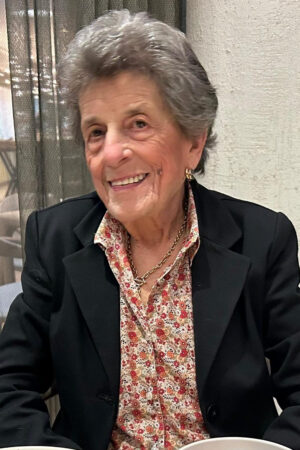
    ROME — Daniela Petroff, who helped shape the Associated Press’ fashion and Vatican coverage for nearly four decades with style, authority and wit, has died in Rome. She was 80.

    Ms. Petroff died Tuesday at home, where she was recovering from a fall, said her husband, Victor Simpson, the retired AP Rome bureau chief.

    Ms. Petroff worked for the Chicago Tribune and Time magazine in Rome before moving onto the AP as a Vatican reporter and Milan fashion correspondent. She launched what became a mainstay of the AP’s culture report, covering the four weeks of menswear and womenswear each year.

    In 1985, the Simpsons endured an unfathomable tragedy: Their 11-year-old daughter, Natasha, was killed during the Dec. 27, 1985, terrorist attack at Rome’s airport that also wounded their son, Michael. When their youngest daughter, Debbie, was born two years later, Pope John Paul II called to congratulate Ms. Petroff.

    In announcing Ms. Petroff’s death, Simpson wrote that she had gone to sleep after lunch and decided not to wake up, “to finally embrace again her beloved Natasha.”

    Led AP’s Milan fashion coverage

    Fluent in Italian, German, French and English, Ms. Petroff spearheaded AP’s Milan fashion coverage just as Giorgio Armani was becoming an international figure, setting the pace for other reporters with informative, succinct, fact-based dispatches that stayed away from opinion and reviews.

    “She had a gift for putting the facts into kind of a very artful context,” said Lisa Anderson, who covered Milan fashion for the Chicago Tribune for nearly a decade starting in the mid-1980s. “She looked at that industry, which often takes itself too seriously, with a lot of amusement as well as respect, which is probably the right combination of qualities to approach fashion reporting.”

    Ms. Petroff’s last AP byline appeared in September, when her authoritative profile of Armani was published following the designer’s death.

    “Starting with an unlined jacket, a simple pair of pants and an urban palette, Armani put Italian ready-to-wear style on the international fashion map in the late 1970s, creating an instantly recognizable relaxed silhouette that has propelled the fashion house for half a century,” Ms. Petroff wrote.

    She covered the rise of Gianni Versace, Gucci in the Tom Ford era, Karl Lagerfeld at Fendi, and the Missoni fashion dynasty, and often put her fashion knowledge and smart wordsmithing to work on the Vatican beat.

    In one 2014 story about Pope Francis’ new batch of cardinals, she mused: “But with the ‘slum pope’ now calling the sartorial shots, fashionistas and Vaticanistas are wondering how his new cardinals — who hail from some of the poorest places on Earth, including Haiti, Burkina Faso and Ivory Coast — will dress themselves for their new role.”

    In between those assignments, Ms. Petroff covered some of the biggest cultural events in Italy, including the 2003 reopening of Venice’s La Fenice opera house after a devastating fire. “True to its namesake the phoenix, La Fenice has risen up from the ashes,” she wrote at the reopening.

    Early life in Paris, New York

    Born in 1945 in Mecklenburg, Germany, Ms. Petroff grew up first in Paris and then New York, where she attended the all-girl Convent of the Sacred Heart Catholic school. An only child, her parents and she moved to Rome for Ms. Petroff’s final two years of high school, which she completed at Marymount International School.

    After attending Manhattanville College in New York, Ms. Petroff returned to Rome and graduated from La Sapienza University with a degree in modern languages. In Rome, she soon met the new AP news editor, Victor Simpson. They were married in 1973.

    A childhood friend from New York, Gail Willett Bejarano, recalled ice-skating in Central Park, afterschool ice cream at Schraftt’s, and pushing the rules with the nuns at Sacred Heart. While Ms. Petroff was a top student, she was also part of the posse of girls who would go to ogle the boys at nearby Loyola, “hike your uniform up and put lipstick on, all forbidden,” Bejarano recalled.

    After retiring from AP in 2017, Ms. Petroff dedicated herself to her alma mater, Marymount, where she served as chair of the board.

    A private funeral is scheduled Thursday. A memorial service is planned for Monday at Marymount.

    In addition to Simpson, Ms. Petroff is survived by her son, Michael, and daughter, Debbie.

  • Fact check: A look at Trump’s false and misleading claims in his State of the Union speech

    Fact check: A look at Trump’s false and misleading claims in his State of the Union speech

    WASHINGTON — On inflation, immigration, tariffs, and matters of war and peace, President Donald Trump presented a frequently distorted account of the state of the nation Tuesday as he claimed a “turnaround for the ages” and myriad achievements that don’t pass scrutiny.

    Trump has spent the last year boasting of his accomplishments while mocking the record of his predecessor, Joe Biden. But much of this bluster has been based on misinformation, which he again fell back on during his State of the Union address.

    Here’s a closer look at the facts:

    The economy

    Claim: “When I last spoke in this chamber 12 months ago, I had just inherited a nation in crisis, with a stagnant economy.”

    The facts: Not quite. Voters were unhappy with high inflation in the 2024 election, but the U.S. economy was far from stagnant. The U.S. gross domestic product rose 2.8% in 2024 after adjusting for inflation. That’s a stronger pace of growth than the 2.2% achieved last year during the start of Trump’s second term.

    Trump: “Incomes are rising fast, the roaring economy is roaring like never before.”

    The facts: Not so. After-tax incomes, adjusted for inflation, rose just 0.9% in 2025, down from 2.2% in 2024, Biden’s last year in office. The annual gain in Trump’s first year is the smallest since 2022, when inflation soared and caused Americans’ inflation-adjusted income to drop.

    Wages and salaries are the largest component of incomes, and their growth has slowed as companies have sharply slowed hiring. Workers typically command smaller wage gains in such an environment.

    Investment

    Claim: “I secured commitments for more than $18 trillion pouring in from all over the globe.”

    The facts: Trump has presented no evidence that he’s secured this much domestic or foreign investment in the U.S. Based on statements from various companies, foreign countries, and the White House’s own website, that figure appears to be exaggerated, highly speculative, and far higher than the actual sum. The White House website offers a far lower number, $9.6 trillion, and that figure appears to include some investment commitments made during the Biden administration.

    A study published in January raised doubts about whether more than $5 trillion in investment commitments made last year by many of America’s biggest trading partners will actually materialize and questions how it would be spent if it did.

    Jobs

    Claim: “More Americans are working today than at any time in the history of our country.”

    The facts: Yes, but the number of Americans with jobs always rises as the population grows. The relevant figure is the proportion of Americans with jobs, which has fallen significantly in the last quarter-century, partly because the workforce is aging and more people are retired. The proportion of Americans with jobs peaked at 64.7% in April 2000, and was 59.8% in January.

    The unemployment rate is a low 4.3%, but was lower when Biden left office in January 2025, at 4%. During Biden’s presidency, the rate fell to a 50-year low of 3.4%.

    Foreign wars

    Claim: “My first 10 months I ended eight wars.”

    The facts: This statistic, which Trump frequently cites, is highly exaggerated.

    Although he has helped mediate relations among many nations, his impact isn’t as clear-cut as he makes it seem. In at least two instances of peace he claims credit for achieving, there were no wars to end: no fighting between Serbia and Kosovo, and friction rather than fighting between Egypt and Ethiopia over the Grand Ethiopian Renaissance Dam.

    The other wars Trump counts as those that he has solved were between Israel and Hamas, Israel and Iran, India and Pakistan, Rwanda and Congo, Armenia, and Azerbaijan, and Cambodia and Thailand. His influence varied in those conflicts.

    Tariffs

    Claim: Tariff revenues are “saving our country, the kind of money we’re taking in.”

    The facts: Though Trump has imposed massive tax hikes on imports, they’re not sizable enough to make a dent in the government’s annual budget deficits. Nor have the tariffs corresponded with manufacturing job gains.

    Before the Supreme Court struck down Trump’s tariffs based on an emergency declaration, the Congressional Budget Office estimated that his new taxes would raise $3 trillion over 10 years, or $300 billion annually.

    That’s not enough to cover the cost of his $4.7 trillion in tax cuts, including additional interest cuts, that favored companies and the wealthy. Nor is it enough to pay down an annual budget deficit that last year was $1.78 trillion.

    Claim: “Tariffs paid for by foreign countries will, like in the past, substantially replace the modern day system of income tax.’’

    The facts: Not likely. Under Trump, tariff revenues have swelled — to $195 billion in the budget year that ended Sept. 30 from $77 billion the year before. But the import taxes accounted for less than 4% of federal revenue. Income taxes and payroll taxes that finance Social Security and Medicare account for 84%.

    Medicine

    Claim: “I took prescription drugs, a very big part of healthcare, from the highest price in the entire world to the lowest. That’s a big achievement. The result is price differences of 300, 400, 500, 600% and more.”

    The facts: This is impossible. Although the Trump administration has taken steps to lower drug prices, cutting them by more than 100% would theoretically mean that people are being paid to take medications.

    Geoffrey Joyce, director of health policy at the University of Southern California’s Schaeffer Center, said in August that this claim is “total fiction” by the president. He agreed that it would amount to drug companies paying customers, rather than the other way around.

    Crime

    Claim: “Last year, the murder rate saw its single largest decline in recorded history. This is the biggest decline. Think of it in recorded history, the lowest number in over 125 years.”

    The facts: Trump takes credit for a significant decrease in violent crime during 2025, claiming the murder rate in the U.S. dropped to its lowest in 125 years. But this is misleading. Crime had already been trending down in recent years.

    A study released in January by the independent Council on Criminal Justice, which collected data from 35 U.S. cities on homicides, showed a 21% decrease in the homicide rate from 2024 to 2025.

    The report noted that when nationwide data for jurisdictions of all sizes is reported by the FBI later this year, there is a strong possibility that homicides in 2025 will drop to about 4 per 100,000 residents. That would be the lowest rate ever recorded in law enforcement or public health data going back to 1900.

    FBI reports for 2023 and 2024 show significant reductions in violent crimes.

    Crime surged during the coronavirus pandemic, with homicides increasing nearly 30% in 2020 over the previous year, the largest one-year jump since the FBI began keeping records. But violent crime dropped to near pre-pandemic levels around 2022 when Biden was president.

    Immigration

    Claim: “We will always allow people to come in legally, people that will love our country and will work hard to maintain our country.”

    The facts: Trump has actually taken steps to restrict who can emigrate to the U.S., often in the name of protecting national security.

    He suspended the refugee program on his first day in office and in October resumed the program but only in limited numbers for white South Africans.

    Trump has also placed restrictions on who can travel or emigrate to the U.S. from nearly 40 countries around the world. Many of those countries are in Africa.

    Taxes

    Claim: “With the great big beautiful bill, we gave you no tax on tips, no tax on overtime and no tax on Social Security.”

    The facts: Though the president frequently says his big tax cut bill means no tax on Social Security, that’s not true for everyone. Not all Social Security beneficiaries will be able to claim the deduction, which lasts until 2029.

    Those who won’t be able to do so include the lowest-income seniors who already don’t pay taxes on Social Security, those who choose to claim their benefits before they reach age 65 and those above a defined income threshold. The deductions also phase out as income increases.

    Elections

    Claim: “I’m asking you to approve the Save America Act to stop illegal aliens and other who are unpermitted persons from voting in our sacred American elections. The cheating is rampant in our elections.”

    The facts: He and his allies have never produced evidence of rampant election cheating. Experts say voter fraud is extremely rare, and very few noncitizens ever slip through the cracks.

    For example, a recent review in Michigan identified 15 people who appear to be noncitizens who voted in the 2024 general election, out of more than 5.7 million ballots cast in the state. Of those, 13 were referred to the attorney general for potential criminal charges. One involved a voter who has since died, and the final case remains under investigation.

    1776

    Claim: “The revolution that began in 1776 has not ended. It still continues because the flame of liberty and independence still burns in the heart of every American patriot.”

    The facts: To be clear, the American Revolution started the previous year, on April 19, 1775. The colonies declared independence in 1776. It ended Sept. 3, 1783.


  • Trump administration hits Iran with new sanctions as nuclear talks near

    Trump administration hits Iran with new sanctions as nuclear talks near

    WASHINGTON — The Trump administration on Wednesday imposed another tranche of sanctions on people and companies accused of enabling Iran’s ballistic missile program, drone production, and illicit oil sales as the U.S. presses Tehran to make a deal ahead of nuclear talks this week.

    The sanctions against 30 people, companies, and ships come as President Donald Trump has massed the largest U.S. buildup of warships and aircraft in the region in decades and has threatened to use military action in a bid to get Iran to constrain its nuclear program.

    The latest round of talks between U.S. officials, including envoy Steve Witkoff, and Iranian negotiators via mediator Oman are scheduled for Thursday in Geneva.

    The new sanctions imposed by the Treasury Department’s Office of Foreign Assets Control include a list of ships accused of being part of Iran’s “shadow fleet,” which refers to rusting oil tankers that smuggle oil for countries facing stiff sanctions.

    Also targeted are drone manufacturing firms, including Qods Aviation Industries, which has supplied drones “to all branches of the Iranian military and buyers in Africa and Latin America,” the Treasury Department said.

    Among other things, sanctions deny the people and firms access to any property or financial assets held in the U.S. and prevent American companies and citizens from doing business with them. However, they are largely symbolic because many of them do not hold funds with U.S. institutions.

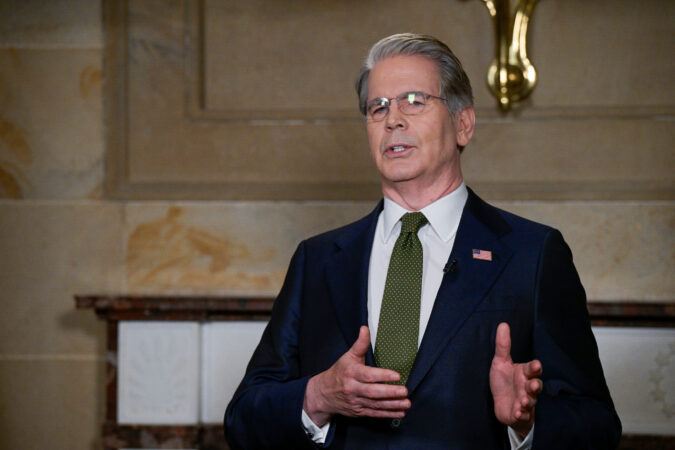
    “Treasury will continue to put maximum pressure on Iran to target the regime’s weapons capabilities and support for terrorism, which it has prioritized over the lives of the Iranian people,” Treasury Secretary Scott Bessent said in a statement.

    Trump and other top administration officials insist that Iran cannot be allowed to develop a nuclear weapon and ramped up pressure months after U.S. strikes in June on three Iranian nuclear sites.

    Iran long has maintained its nuclear program is peaceful. It had been enriching uranium up to 60% purity before the June attack — a short, technical step away from weapons-grade levels of 90%.

    “We wiped it out and they want to start all over again. And they’re at this moment again pursuing their sinister ambitions,” Trump said during his State of the Union speech Tuesday night. “We are in negotiations with them. They want to make a deal, but we haven’t heard those secret words: We will never have a nuclear weapon.”

  • States sue Trump administration over changes to childhood vaccine recommendations

    States sue Trump administration over changes to childhood vaccine recommendations

    SACRAMENTO, Calif. — More than a dozen states sued the Trump administration Tuesday over its rollback of vaccine recommendations for children, calling the move an illegal threat to public health.

    The states argue that the Centers for Disease Control and Prevention put children’s lives at risk when it announced last month that it would stop recommending all children get immunized against the flu, rotavirus, hepatitis A, hepatitis B, some forms of meningitis, and RSV. Under the new guidance, which was met with criticism from medical experts, protections against those diseases are recommended only for certain groups deemed high risk or when doctors recommend them in what’s called “shared decision-making.”

    The new vaccine recommendations ignore long-standing medical guidance and will make states have to spend more to protect against outbreaks, the states, including Arizona and California, said.

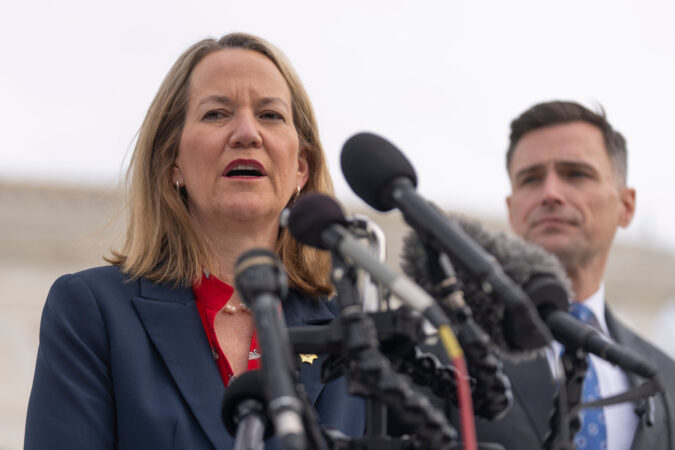
    “The health and safety of children across the country is not a political issue,” Arizona Attorney General Kris Mayes, a Democrat, said at a news conference. “It is not a culture war talking point.”

    Emily G. Hilliard, press secretary for the Department of Health and Human Services, blasted the complaint as a “publicity stunt dressed up as a lawsuit.”

    Pennsylvania, New Jersey, and Delaware all joined the Arizona-led lawsuit.

    “Every Pennsylvanian deserves accurate information to make their own healthcare decisions when consulting with their doctors — and science, not politics, will continue to guide our healthcare decisions here in the Commonwealth,” said Gov. Josh Shapiro, a Democrat who has repeatedly joined litigation against the Trump administration since last year.

    The lawsuit escalates an ongoing battle between Democratic-led states and Republican President Donald Trump’s administration over the federal government’s changes to public health policy under Health Secretary Robert F. Kennedy Jr. The Trump administration has laid off thousands of workers at federal public health agencies, cut funding for scientific research and altered government guidance on fluoride and other topics.

    Kennedy last year ousted every member of a vaccine advisory committee and replaced them with his own picks, which Tuesday’s complaint alleges was unlawful.

    The lawsuit comes months after the Democratic governors of California, Washington state, and Oregon launched an alliance to establish their own vaccine recommendations. The governors said the Trump administration was risking people’s health by politicizing the CDC.

    States, not the federal government, have the authority to require vaccinations for schoolchildren, though the CDC’s requirements typically influence state regulations.