Category: Nation World News Wires

  • War powers debate intensifies after Trump orders attack on Iran without approval by Congress

    War powers debate intensifies after Trump orders attack on Iran without approval by Congress

    WASHINGTON — Key members of Congress are demanding a swift vote on a war powers resolution that would restrain President Donald Trump’s military attack on Iran unless the administration wins their approval for what they warn is a potentially illegal campaign that risks pulling the United States into a deeper Middle East conflict.

    Both the House and Senate, where the president’s Republican Party has a slim majority, had already drafted such resolutions long before the strikes Saturday. Now they are ready to plunge into a rare war powers debate next week that will serve as a referendum on Trump’s decision to go it alone on military action without formal authorization from Congress.

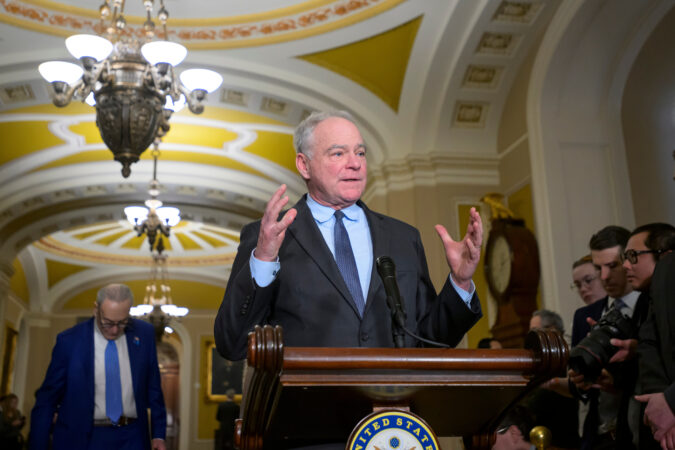
    “Has President Trump learned nothing from decades of U.S. meddling in Iran and forever wars in the Middle East?” said Sen. Tim Kaine (D., Va.), a leader in the bipartisan effort. He said the strikes on Iran were “a colossal mistake.”

    In the House, Reps. Ro Khanna (D., Calif.) and Thomas Massie (R., Ky.) are demanding Congress go on record with a public vote on their own bipartisan measure. “Congress must convene on Monday to vote,” Khanna said, “to stop this.”

    Massie blasted Trump’s own presidential campaign slogan and said: “This is not ‘America First.’”

    But most Republicans, particularly their leaders, welcomed Trump’s move against Iran. Many cited the longtime U.S. adversary’s nuclear programs and missile capabilities as requiring a military response.

    “Well done, Mr. President,” said Sen. Lindsey Graham (R., S.C.). “As I watch and monitor this historic operation, I’m in awe of President Trump’s determination to be a man of peace but at the end of the day, evil’s worst nightmare.”

    War powers debate tests Congress

    The administration’s decision to launch, with Israel, what appears to be an open-ended joint military operation aimed at changing the government in Tehran is testing the Constitution’s separation of powers in deep and dramatic ways. Nearly two months earlier, Trump ordered U.S. strikes that toppled Venezuelan leader Nicolás Maduro.

    While presidents have the authority as the commander in chief to conduct certain strategic military operations on their own, the Constitution vests Congress with the power to wage war. Before the Iraq War began in March 2003, Republican President George W. Bush made a monthslong push to secure congressional authorization. No such vote was attempted on Iran, and an earlier Senate effort to halt Trump’s actions after last summer’s strike on Iran failed.

    The congressional debate over war powers would mostly be symbolic. Even if a resolution were to pass the narrowly split Congress, Trump likely would veto it and Congress would not have the two-thirds majority needed to overturn that rejection. Congress has often failed to block other U.S. military actions, including in a Senate vote on Venezuela, but the roll calls stand as a public record.

    Republican leaders back Trump’s action

    The response by House Speaker Mike Johnson reflected the party’s long-standing views. Iran, he said, is facing “the severe consequences of its evil actions.”

    Johnson (R., La.) said the leaders of the House and Senate and the respective intelligence committees had been briefed in detail earlier in the week that military action “may become necessary” to protect U.S. troops and citizens in Iran. He said he received updates from Secretary of State Marco Rubio and will stay in “close contact” with Trump and the Defense Department “as this operation proceeds.”

    Senate Majority Leader John Thune (R., S.D.) commended Trump “for taking action to thwart these threats.”

    Thune said he looked forward to administration officials briefing all senators — a signal that lawmakers are seeking more answers to their questions about Trump’s plans ahead.

    Democrats warn strikes are illegal

    Many Democrats are calling the operation illegal, saying the Constitution gives Congress alone the power to declare war. To them, the administration has failed to lay out its rationale or plan for the military strikes, and the aftermath.

    Sen. Chris Van Hollen, who serves on the Senate Foreign Relations Committee, said the president has undertaken “illegal, regime-change war against Iran.”

    “This is not making us safer & only damages the US & our interests,” Van Hollen (D., Md.) said in a social media post. “The Senate must immediately vote on the War Powers Resolution to stop it.”

    House Democratic leader Hakeem Jeffries of New York said while Iran is a “bad actor and must be aggressively confronted” for its human rights abuses and the threat it poses to the U.S. and allies, the administration ”must seek authorization for the preemptive use of military force that constitutes an act of war.”

    New York Sen. Chuck Schumer, the Democratic leader, demanded that Congress be briefed immediately on the administration’s plans.

    “Iran must never be allowed to attain a nuclear weapon but the American people do not want another endless and costly war in the Middle East when there are so many problems at home,” he said.

  • Vatican removes salty white film coating Michelangelo’s ‘The Last Judgment’

    Vatican removes salty white film coating Michelangelo’s ‘The Last Judgment’

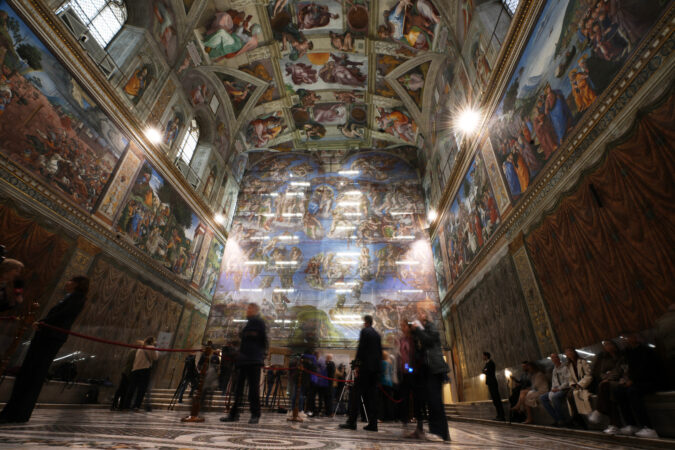
    VATICAN CITY — Michelangelo’s The Last Judgement is getting a facial, with restorers removing a chalky white film of salt that has accumulated over the Renaissance masterpiece since its last major renovation three decades ago.

    The Vatican on Saturday gave the media a sneak peak to the cleaning operation, which is taking place on a floor-to-ceiling scaffolding that has obscured the imposing fresco of heaven and hell that dominates the front of the Sistine Chapel.

    The cleaning operation is expected to be completed by Easter, in the first week of April. The public can continue to visit in the meantime, but will have to settle for a reproduction of The Last Judgment superimposed on a screen that covers the scaffolding.

    Vatican Museum officials on Saturday described a simple but important cleaning operation to remove the white film of salt that has accumulated on the fresco thanks to the nearly 25,000 people who pass through the Vatican Museums each day.

    “This salt is created because, above all, when we sweat, we emit lactic acid, and unfortunately lactic acid reacts with the calcium carbonate present on the wall,” said Fabio Moresi, in charge of the scientific research team at the Vatican Museums that is overseeing the cleaning.

    Climate change also has a role to play, since the visitors who do come tend to sweat more, creating even more humidity that reacts with the fresco, he said.

    Vatican Museums chief Barbara Jatta described the film as a “cataract” that is easy enough to remove: Restorers dip sheets of Japanese rice paper into distilled water and apply them to the fresco, and carefully wipe away the salt film.

    Viewed up close on Saturday on the scaffolding, the difference between before and after is remarkable: Sections of the fresco that haven’t been cleaned look as if they are coated in a chalky dust; the cleaned sections show the vibrant colors and detail of the original. On the figure of Jesus, for example, at the center of the fresco, a privileged visitor can see how Michelangelo painted his hair and the wounds of his crucifixion.

    The Sistine Chapel is named after Pope Sixtus IV, an art patron who oversaw the construction of the main papal chapel in the 15th century.

    But it was a later pontiff, Pope Julius II, who commissioned Michelangelo to paint the famous ceiling, the Creation of Adam showing God’s outstretched hand, between 1508 and 1512. A later pontiff, Pope Clement VII, commissioned Michelangelo in 1533 to return to paint The Last Judgment.

    The other frescos of the Sistine Chapel, where Pope Leo XIV was elected in May, undergo yearly cleaning with restorers working at night on cherry-pickers that can be removed each morning before the public arrives.

    But such machines can’t access all of The Last Judgement because the fresco is located behind the altar, which is itself raised up on marble steps. That logistical impediment required the mounting of a fixed scaffolding to access the full fresco to clean it.

    The Sistine Chapel underwent a complete restoration between 1979 and 1999, when centuries of smoke, grime, and wax buildup was removed. The Vatican has left small patches of the pre-restored fresco intact to show the difference, which are now visible on the upper floors of the scaffolding and show a nearly blackened wall.

    Rather than radically reduce the number of visitors who can access the Sistine Chapel, the Vatican is studying ways to address humidity levels, through filtration systems and other technologies, so that the salty film doesn’t form again.

  • Israeli officials say Iran’s Supreme Leader Khameini has been killed

    Israeli officials say Iran’s Supreme Leader Khameini has been killed

    DUBAI, United Arab Emirates — Iranian Supreme Leader Ayatollah Ali Khamenei died following a major attack by Israel and the United States, Iranian state media confirmed early Sunday, throwing the future of the Islamic Republic into doubt and raising the risk of regional instability.

    President Donald Trump announced the death hours earlier, saying it gave Iranians their “greatest chance” to “take back” their country.

    Iranian state television and the state-run IRNA news agency did not report a cause of death for the 86-year-old.

    The death occurred after a joint U.S. and Israeli aerial bombardment that targeted Iranian military and governmental sites.

    The president also said “heavy and pinpoint bombing” was to continue “uninterrupted” through the week or longer.

    Trump in his post called Khamenei “one of the most evil people in history.”

    Trump said that Khamenei “was unable to avoid our Intelligence and Highly Sophisticated Tracking Systems and, working closely with Israel, there was not a thing he, or the other leaders that have been killed along with him, could do.”

    In a nationally televised address, Israeli Prime Minister Benjamin Netanyahu said there were “growing signs” that Khamenei had been killed when Israel struck his compound early Saturday.

    Shortly after the address, two Israeli officials said Israel had confirmed his death. The officials both spoke to the Associated Press on condition of anonymity pending a formal announcement and gave no further details.

    Khamenei succeeded Ayatollah Ruhollah Khomeini, the leader of the 1979 Islamic Revolution. He had the final say on all major policies, leading Iran’s clerical establishment and its paramilitary Revolutionary Guard — the two main centers of power in the country’s theocracy.

    As the attack on Iran unfolded, Trump urged the Iranian public to “seize control of your destiny” by rising up against the Islamic leadership. In a video announcing the “major combat operations,” Trump told Iranians, “When we are finished, take over your government. It will be yours to take. This will be probably your only chance for generations.”

    Iranian state media, citing the Red Crescent, on Saturday evening said at least 201 people had been killed and more than 700 injured. Iran retaliated by firing missiles and drones toward Israel and U.S. military bases in the region, and exchanges of fire continued into the night.

    Some of the first strikes on Iran appeared to hit near the offices of the 86-year-old Khamenei. Before Israeli officials confirmed the death, Iranian Foreign Minister Abbas Araghchi told NBC News that Khamenei and President Masoud Pezeshkian were alive “as far as I know.” He called the attack “unprovoked, illegal, and absolutely illegitimate.”

    The strikes during the holy fasting month of Ramadan opened a stunning new chapter in U.S. intervention in Iran, marking the second time in eight months that the Trump administration has attacked the Islamic Republic during talks over its nuclear program.

    About 12 hours after the attacks began, the U.S. military reported no U.S. casualties and minimal damage at U.S. bases despite “hundreds of Iranian missile and drone attacks.” It said targets in Iran included Revolutionary Guard command facilities, air defense capabilities, missile and drone launch sites, and military airfields.

    Various members of Iran’s leadership were targeted in the attack. Israel said it killed the commander of the Iranian Revolutionary Guard Corps and the country’s defense minister. The Israeli military also said its strikes killed the secretary of the Iranian Security Council, a close adviser to Khamenei.

    Israel said the strikes had targeted three locations in Tehran where intelligence had indicated that top Iranian officials were gathered. Neither Iran nor the U.S. commented on or confirmed Israel’s claims about the Iranian leadership.

    Even if Iran’s top leaders have been killed, regime change is not guaranteed.

    Democrats decried that Trump had taken action without congressional authorization. White House spokesperson Karoline Leavitt said the administration had briefed several Republican and Democratic leaders in Congress in advance.

    The U.N.’s nuclear watchdog said on X it was closely monitoring developments and had seen “no evidence of radiological impact.”

    Iran was in a “near-total internet blackout,” advocacy group NetBlocks said.

    Months of rising tensions

    Tensions have soared in recent weeks as American warships moved into the region. Trump said he wanted a deal to constrain Iran’s nuclear program, as the country struggles with growing dissent following nationwide protests.

    The trigger for Saturday’s strikes appeared to be the unsuccessful latest round of nuclear talks on Thursday. They also reflected dramatic changes that have left Iran’s leadership in its weakest position since the Islamic Revolution nearly half a century ago.

    Israeli and American strikes last June greatly weakened Iran’s air defenses, military leadership, and nuclear program. A regionwide conflict sparked by Hamas’ Oct. 7, 2023, attack on Israel has left Iran’s network of proxies across the Middle East greatly weakened. U.S. sanctions and global isolation have decimated Iran’s economy.

    Iran responded to the latest strikes by launching missiles and drones targeting Israel and strikes targeting U.S. military installations in Bahrain, Kuwait, and Qatar. Israel’s military said Iran fired “dozens” of missiles at Israel, with many intercepted. Emergency responder Magen David Adom noted 89 “lightly injured” people.

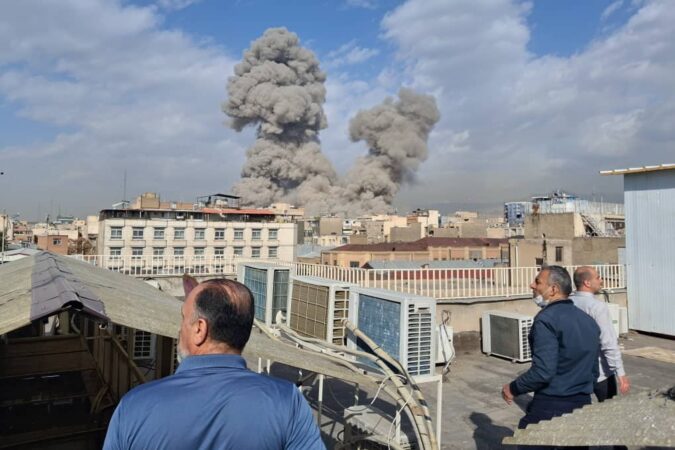
    At least three explosions were heard Saturday evening near the Intelligence Ministry building in northern Tehran, witnesses said, adding that air defense systems had begun operating there. Israel’s military said it had begun new strikes against missile launchers and aerial defense systems in central Iran.

    In southern Iran, at least 85 people were reported killed when a girls school was struck, and dozens more were wounded, the local governor told Iranian state TV.

    Capt. Tim Hawkins, a U.S. Central Command spokesperson, said he was “aware of reports” that a girls school was struck and they were looking into them.

    Iran’s state news agency IRNA said at least 15 people were killed in the southwest, quoting the governor of Lamerd, Ali Alizadeh, as saying a sports hall, two residential areas, and a hall near a school were hit.

    Flights across the Middle East were disrupted, and air defense fire thudded over Dubai, the United Arab Emirates’ commercial capital. Shrapnel from an Iranian missile attack on the UAE capital killed one person, state media said.

    Attack was coordinated between Israel and U.S.

    “Active and serious negotiations have yet again been undermined,” Oman’s Foreign Minister Badr al-Busaidi, a key mediator of the nuclear talks, said on X. “Neither the interests of the United States nor the cause of global peace are well served by this.”

    Israel said the operation has been planned for months with the United States. Air Force pilots were striking “hundreds of targets across Iran,” Israeli military chief of staff Lt. Gen. Eyal Zamir said in a statement.

    Targets in the Israeli campaign included Iran’s military, symbols of government, and intelligence targets, according to an official briefed on the operation, who spoke on condition of anonymity to discuss nonpublic information on the attack.

    Trump, in seeking to justify the military action, claimed Iran has continued to develop its nuclear program, despite his assertion last year the program had been “obliterated” by an earlier round of strikes.

    He acknowledged Saturday that there could be American casualties, saying “that often happens in war.” It was a notable statement from a U.S. leader who swept into office on an “America First” platform and vowed to keep out of “forever wars.”

    Trump also said he was aiming to “annihilate” the Iranian navy and destroy regional proxies supported by Tehran. He called on the paramilitary Iranian Revolutionary Guard to lay down arms, saying members would be given immunity or face “certain death” if they didn’t.

    Iran had said it hoped to avert a war, but maintained its right to enrich uranium. It did not want to discuss other issues such as its long-range missile program or support for armed groups like Hamas and Hezbollah.

    Iran has said it hasn’t enriched since June, but it has blocked international inspectors from visiting the sites the U.S. bombed. Satellite photos analyzed by the Associated Press have shown new activity at two of those sites, suggesting Iran is trying to assess and potentially recover material.

    Iran on Saturday requested an urgent session of the International Atomic Energy Agency’s Board of Governors about “these threats to safeguarded nuclear facilities,” according to a letter posted by the semiofficial Tasnim news agency.

    Trump had threatened military action but held off following Iran’s recent crackdown on protests spurred by economic grievances that evolved into a nationwide push against the ruling clerics.

    The Human Rights Activists News Agency says it confirmed more than 7,000 deaths in the crackdown and is investigating thousands more. The government has acknowledged more than 3,000 killed.

    Now, Iranians are likely to be wary about taking to the streets again because the Revolutionary Guard has demonstrated its ruthlessness, said Kamran Matin, an expert on Iran at the University of Sussex in southern England.

    Regional effects

    The strikes could rattle global markets, particularly if Iran makes the Strait of Hormuz unsafe for commercial traffic. A third of worldwide oil exports transported by sea passed through the strait in 2025.

    Saudi Arabia said Iran had targeted its capital and eastern region in an attack that was repelled. Bahrain said a missile attack targeted the U.S. Navy’s 5th Fleet headquarters in the island kingdom, and three buildings were damaged in the capital, Manama, and Muharraq city by drone strikes and debris from an intercepted missile.

    Kuwait’s civil aviation authority said a drone targeted the main international airport, injuring several employees. Kuwait’s state-run news agency said three troops were injured by shrapnel from strikes that hit Ali Al-Salem air base. Explosions could also be heard in Qatar. Jordan said it “dealt with” 49 drones and ballistic missiles.
  • European leaders call for resumption of U.S.-Iran negotiations

    European leaders call for resumption of U.S.-Iran negotiations

    BRUSSELS — How long will it last? Will it grow? What will it mean to us — and to global security overall? Those questions echoed across the Middle East and the planet Saturday as world leaders reacted warily to U.S. and Israeli strikes on Iran that sowed concerns of a broader conflict. The U.N. Security Council scheduled an emergency meeting.

    Perhaps cautious about upsetting already strained relations with U.S. President Donald Trump, many nations abstained from commenting directly or pointedly on the joint strikes but condemned Tehran’s retaliation. Similarly to Europeans, governments across the Middle East condemned Iran’s strikes on Arab neighbors while staying silent on the U.S. military action.

    Other countries were more explicit: Australia and Canada expressed open support for the U.S. strikes, while Russia and China responded with direct criticism.

    The U.S. and Israel launched a major attack on Iran on Saturday, and Trump called on the Iranian public to “seize control of your destiny” by rising up against the Islamic theocracy that has ruled the nation since 1979. Iran retaliated by firing missiles and drones toward Israel and U.S. military bases in the Middle East.

    Some leaders urge resumption of talks

    In a statement, British Prime Minister Keir Starmer, French President Emmanuel Macron, and German Chancellor Friedrich Merz called on the U.S. and Iran to resume talks and said they favored a negotiated settlement. They said their countries didn’t take part in the strikes on Iran but are in close contact with the U.S., Israel, and partners in the region.

    The three countries have led efforts to reach a negotiated solution over Iran’s nuclear program.

    “We condemn Iranian attacks on countries in the region in the strongest terms. Iran must refrain from indiscriminate military strikes. We call for a resumption of negotiations and urge the Iranian leadership to seek a negotiated solution. Ultimately, the Iranian people must be allowed to determine their future,” they said.

    Later, at an emergency security meeting, Macron said France was “neither warned nor involved” in the strikes. He called for intensified efforts for a negotiated solution, saying “no one can think that the questions of Iran’s nuclear program, ballistic activity, regional destabilization will be settled by strikes alone.”

    The 22-nation Arab League called the Iranian attacks “a blatant violation of the sovereignty of countries that advocate for peace and strive for stability.” That coalition of nations has historically condemned both Israel and Iran for actions it says risk destabilizing the region.

    Countries that maintain diplomatic ties with Israel — including Morocco, Jordan, and the United Arab Emirates — denounced Iranian strikes targeting U.S. military bases in the region including in Kuwait, Bahrain, Qatar, and the Emirates.

    Saudi Arabia said it “condemns and denounces in the strongest terms the treacherous Iranian aggression and the blatant violation of sovereignty.” Oman, which has been mediating the talks between Iran and the U.S., said in a statement that the U.S. action “constitutes a violation of the rules of international law and the principle of settling disputes through peaceful means, rather than through hostility and the shedding of blood.”

    Careful wording is (mostly) the order of the day

    Countries in Europe and the Middle East used careful wording, avoiding perceptions that they either support unilateral American action or are directly condemning the United States.

    Others were more blunt. Russia’s Foreign Ministry called the strikes “a pre-planned and unprovoked act of armed aggression against a sovereign and independent U.N. member state.” The ministry accused Washington and Tel Aviv of “hiding behind” concerns about Iran’s nuclear program while actually pursuing regime change.

    Similarly, China’s government said it was “highly concerned” about the U.S. and Israeli strikes on Iran and called for an immediate halt to the military action and a return to negotiations. “Iran’s sovereignty, security and territorial integrity should be respected,” a Chinese Foreign Ministry statement said.

    Meanwhile, Australian Prime Minister Anthony Albanese said his country supports the United States in its effort to stop Iran from obtaining an atomic bomb. He described Iran’s current leadership as a destabilizing force and noted two attacks on Australian soil that were blamed on Tehran. Last August, Australia cut off diplomatic relations with Iran and expelled its ambassador after accusing it of orchestrating two antisemitic attacks in the country.

    Despite recent tensions with the U.S., Canada too expressed its support for the military action. “The Islamic Republic of Iran is the principal source of instability and terror throughout the Middle East,” Prime Minister Mark Carney said.

    The United Nations chief condemned the U.S.-Israeli airstrikes on Iran and called for an immediate return to negotiations “to pull the region, and our world, back from the brink.”

    Secretary-General António Guterres told an emergency meeting of the U.N. Security Council on Saturday that everything must be done to prevent further escalation. “The alternative,” he warned, “is a potential wider conflict with grave consequences for civilians and regional stability.”

    Guterres also condemned Iran’s retaliatory attacks for violating the sovereignty and territorial integrity of Bahrain, Iraq, Jordan, Kuwait, Qatar, Saudi Arabia, and the United Arab Emirates.

    Israel’s U.N. Ambassador Danny Danon, speaking to reporters before the meeting, said it was “hypocrisy” to condemn the airstrikes. He said Iran is responsible for the actions of its proxies in the Middle East and for its nuclear and missile programs, and Israel and the U.S. acted “to prevent an irreversible and immediate threat.”

    Concerns expressed for ‘new, extensive’ war

    Palestinians in the occupied West Bank said they were largely unfazed as war erupted Saturday, barely pausing as booms echoed across the sky from Israel’s Iron Dome intercepting missiles overhead.

    Unlike Israel, Palestinian cities have no warning sirens or bomb shelters, despite the risk of falling debris or errant missiles. As people sheltered less than 10 miles away in Jerusalem, streets in Ramallah swarmed with shoppers browsing meat counters, vegetable stalls, and Ramadan sweets, some stopping to record the sounds of distant sirens and missile interceptions.

    But as Israel closed checkpoints to the movement of people and goods on Saturday, gas stations saw longer-than-usual lines as residents filled spare canisters in case of supply disruptions.

    Nervousness is perceptible across multiple countries as people fear a full-scale war engulfing the region. Norwegian Foreign Minister Espen Barth Eide told Norwegian broadcaster NRK that he was concerned the failure of negotiations between the U.S. and Iran meant a “new, extensive war in the Middle East.”

    The Nobel Peace Prize-winning International Campaign to Abolish Nuclear Weapons condemned the U.S. and Israeli strikes on Iran in harsher words. “These attacks are totally irresponsible and risk provoking further escalation as well as increasing the danger of nuclear proliferation and the use of nuclear weapons,” said its executive director, Melissa Parke.

    EU leaders issued a joint statement Saturday calling for restraint and engaging in regional diplomacy in hopes of “ensuring nuclear safety.”

    “We call on all parties to exercise maximum restraint, to protect civilians, and to fully respect international law,” the statement from European Commission President Ursula von der Leyen and European Council President António Costa said.

    The Arab League, too, appealed to all international parties “to work towards de-escalation as soon as possible, to spare the region the scourge of instability and violence, and to return to dialogue.”

  • Neil Sedaka, the singer-songwriter behind dozens of hits of the 1960s and ’70s, has died at 86

    Neil Sedaka, the singer-songwriter behind dozens of hits of the 1960s and ’70s, has died at 86

    NEW YORK — Neil Sedaka, the hitmaking singer-songwriter whose boyish soprano and bright melodies made him a top act in the early years of rock and roll and led to a second run of success in the 1970s, has died.

    Mr. Sedaka, whose hits included “Breaking Up Is Hard to Do” and “Laughter in the Rain,” died Friday at age 86.

    “Our family is devastated by the sudden passing of our beloved husband, father and grandfather, Neil Sedaka,” his family said in a statement. “A true rock and roll legend, an inspiration to millions, but most importantly, at least to those of us who were lucky enough to know him, an incredible human being who will be deeply missed.”

    No other details of his death were immediately available.

    A key member of the Brill Building songwriting factory, Mr. Sedaka teamed with lyricist and boyhood neighbor Howard Greenfield on songs that reflected the teen innocence of the post-Elvis, pre-Beatles era of the late 1950 and early 1960s, including “Happy Birthday Sweet Sixteen,” “Calendar Girl,” and “Oh! Carol,” a lament for his high school sweetheart, Carole King.

    After a long dry spell, he reemerged with such smashes as “Laughter in the Rain” and “Bad Blood.” The Captain & Tennille’s cover of his “Love Will Keep Us Together” was a chart-topper in 1975.

    Short and dark-haired, with a big smile and high-pitched voice, he was a Juilliard-trained, Brooklyn-born son of a Jewish taxi driver who began performing as a teen and kept at it for decades.

    Mr. Sedaka still played dozens of concerts a year well into his 80s. He retained the enthusiasm and broad vocal range of his youth and never tired of the standards he had sung hundreds of times.

    “Past 70, Pavarotti told me the vocal cords are not what they used to be. I’m very fortunate that my voice has held,” he told the Associated Press in 2012. “It’s nice to be a legend, but it’s better to be a working legend.”

    Mr. Sedaka’s songs sold millions worldwide and have been covered by a range of performers, from Elvis Presley and Frank Sinatra to The 5th Dimension and Nickelback. Mr. Sedaka helped propel the career of Connie Francis with “Stupid Cupid” and “Where the Boys Are,” the latter for the soundtrack of the movie with the same name. The Captain & Tennille received a best-album Grammy thanks largely to “Love Will Keep Us Together” and included a nod to Mr. Sedaka at the end of the song, when Toni Tennille exclaimed “Sedaka’s back!”

    Growing up in Brooklyn, loving performing

    Mr. Sedaka grew up in Brooklyn’s Brighton Beach neighborhood, pampered by his grandparents, aunts, and mother in a two-bedroom apartment he shared with 11 relatives. He has a street there named in his honor, Neil Sedaka Way.

    But his music compensated for his unpopularity as a kid, he once recalled. His talent was recognized by a second-grade teacher who urged his homemaker mother, Eleanor, to buy him a piano. She went to work in a department store to pay for a secondhand upright and managed his career for years, as did his wife, Leba.

    Mr. Sedaka loved songwriting and never quit, but he craved performing.

    “Once a performer, always a performer. It’s that adrenaline rush. It’s like a natural high when you’re in front of an audience, and if you get that standing ovation, it’s infectious,” he told the AP.

    At 16, Mr. Sedaka was chosen by Arthur Rubenstein in a contest as the city’s best high school piano student and performed on a classical radio station as a prize. It was the same year he discovered rock and roll, when he performed a song, “Mr. Moon,” he had written with Greenfield, his classmate at Abraham Lincoln High School.

    “I sang it in the auditorium for a ballyhoo show and I remember there was a bit of a riot. The kids were jumping and screaming,” Mr. Sedaka said. “After that I was able to go into the sweet shop with the tough kids with the leather jackets.”

    After high school, and then Juilliard, Mr. Sedaka and Greenfield were signed to Don Kirshner’s Aldon Music, where they scored their first hit with Francis, “Stupid Cupid.”

    Sedaka churns out hits, until the Beatles

    In 1958, at age 19, Mr. Sedaka signed with RCA Victor Records and his first single, “The Diary,” enjoyed modest success. He began touring and promoting his songs through regular TV appearances on Dick Clark’s American Bandstand and Shindig!

    At the Brill Building, Mr. Sedaka and Greenfield were joined by other up-and-coming writers and lyricists including King, Neil Diamond, and Paul Simon.

    “Neil Sedaka was so talented, and he inspired me to follow my dream of being a songwriter,” King said on her Facebook page Friday. “With love and gratitude and condolences to his family.”

    Micky Dolenz of the Monkees also paid tribute to Mr. Sedaka, saying on Instagram that he was “one of those rare songwriters who could do it all.”

    From 1959 to 1962, Mr. Sedaka had 10 records in the Top 10, including “Calendar Girl,” “Oh! Carol,” “Happy Birthday Sweet Sixteen,” and “Next Door to an Angel.” But in the mid-1960s, the Brill Building sound, influenced by the doo-wop groups of the New York City streets, was pushed off the charts by the Beatles -led British Invasion and the psychedelic and protest music that followed. Mr. Sedaka would endure 13 years “in the wilderness,” as he described it to the AP.

    Sedaka’s unlikely comeback, with help from Elton John

    Mr. Sedaka was among the lucky, however, enjoying a renaissance that began in the mid-’70s thanks to the patronage of Elton John, whom he met at a party after Mr. Sedaka moved his wife and two kids to England to take advantage of his lingering popularity there. John signed him to his fledgling, U.S.-based Rocket Records label, providing him a chance at more hits with the album Sedaka’s Back.

    At Rocket, Mr. Sedaka and a new writing partner, Philip Cody, topped charts with “Bad Blood” and the joyous “Laughter in the Rain.” He also achieved a rare feat with “Breaking Up Is Hard to Do.” His original up-tempo version went No. 1 in 1962. He rerecorded it as a slow ballad in 1975 and that, too, went No. 1.

    He recorded five albums from 1972 to 1976. They included hits “Standing on the Inside,” “That’s Where the Music Takes Me,” and “Our Last Song Together,” about his breakup with Greenfield, with whom he began writing songs when Mr. Sedaka was only 13 and Greenfield 16.

    He was inducted into the Songwriters Hall of Fame, but the Rock & Roll Hall of Fame eluded him despite a fan petition drive.

    Mr. Sedaka married wife Leba in 1962. They had two children. Daughter Dara recorded a duet with dad in 1980, “Should’ve Never Let You Go.” It was a hit, but she never joined him in the music business. Son Marc is a film and television writer.

  • Federal judge extends order protecting refugees in Minnesota from being arrested and deported

    Federal judge extends order protecting refugees in Minnesota from being arrested and deported

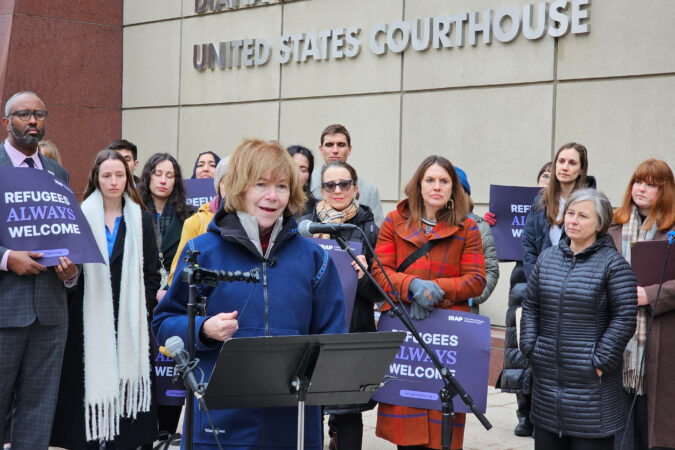
    MINNEAPOLIS — A federal judge on Friday extended an order protecting refugees in Minnesota who are lawfully in the U.S. from being arrested and deported, saying a Trump administration policy turns the “American Dream into a dystopian nightmare.”

    U.S. District Judge John Tunheim granted a motion by advocates for refugees to convert a temporary restraining order that he issued in January into a more permanent preliminary injunction while the case develops further.

    The order applies only in Minnesota. But the implications of a new national policy on refugees that the Department of Homeland Security announced Feb. 18 were a major part of the discussion at a hearing held by the judge the next day.

    “Minnesota refugees can now live their lives without fear that their own government will snatch them off the street and imprison them far from loved ones,” Kimberly Grano, an attorney with the International Refugee Assistance Project, told the Associated Press.

    The Trump administration asserts it has the right to arrest potentially tens of thousands of refugees across the U.S. who entered the country legally but don’t yet have green cards. A new Homeland Security memo interprets immigration law to say that refugees applying for green cards must return to federal custody one year after they were admitted to the U.S. so that their applications can be reviewed.

    The judge, however, expressed disbelief in a 66-page opinion.

    “This Court will not allow federal authorities to use a new and erroneous statutory interpretation to terrorize refugees who immigrated to this country under the promise that they would be welcomed and allowed to live in peace, far from the persecution they fled,” Tunheim said.

    He said the U.S. decades ago promised refugees fleeing persecution that they could build a new life after rigorous background checks.

    “We promised them the hope that one day they could achieve the American Dream,” Tunheim said. “The Government’s new policy breaks that promise — without congressional authorization — and raises serious constitutional concerns. The new policy turns the refugees’ American Dream into a dystopian nightmare.”

    Homeland Security and U.S. Citizenship and Immigration Services did not immediately return a request for comment Friday.

    Justice Department attorney Brantley Mayers said during a court hearing last week that the government should have the right to arrest refugees one year after entering the U.S., but he also indicated that would not always happen.

    The judge noted that one refugee in the case, identified as D. Doe, was arrested in January after being told that someone had struck his car.

    “He was immediately flown to Texas, where he was interrogated about his refugee status. He was kept in ‘shackles and handcuffs’ for sixteen hours. D. Doe was ultimately released on the streets of Texas, left to find his way back to Minnesota,” Tunheim said.

  • Trump orders all federal agencies to phase out use of Anthropic technology

    Trump orders all federal agencies to phase out use of Anthropic technology

    WASHINGTON — The Trump administration on Friday ordered all U.S. agencies to stop using Anthropic’s artificial intelligence technology and imposed other major penalties, culminating an unusually public clash between the government and the company over AI safety.

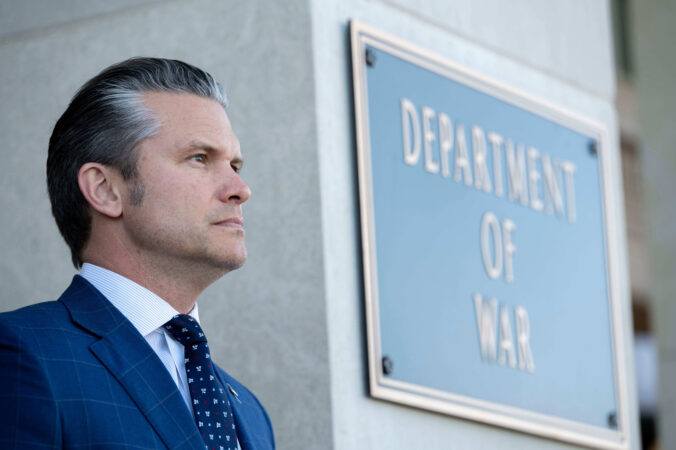
    President Donald Trump, Defense Secretary Pete Hegseth, and other officials took to social media to chastise Anthropic for failing to allow the military unrestricted use of its AI technology by a Friday deadline, accusing it of endangering national security after CEO Dario Amodei refused to back down over concerns the company’s products could be used in ways that would violate its safeguards.

    “We don’t need it, we don’t want it, and will not do business with them again!” Trump said on social media.

    Hegseth also deemed the company a “supply chain risk,” a designation typically stamped on foreign adversaries that could derail the company’s critical partnerships with other businesses.

    Anthropic had said it sought narrow assurances from the Pentagon that its AI chatbot Claude would not be used for mass surveillance of Americans or in fully autonomous weapons. The Pentagon said it was not interested in such uses and would only deploy the technology in legal ways, but it also insisted on access without any limitations.

    The government’s effort to assert dominance over the internal decision-making of the company comes amid a wider clash over AI’s role in national security and concerns about how increasingly capable machines could be used in high-stakes situations involving lethal force, sensitive information or government surveillance.

    Trump and others lash out at Anthropic

    Trump said Anthropic made a mistake trying to strong-arm the Pentagon. He wrote on Truth Social that most agencies must immediately stop using Anthropic’s AI but gave the Pentagon a six-month period to phase out the technology that is already embedded in military platforms.

    “The United States of America will never allow a radical left, woke company to dictate how our great military fights and wins wars!” he wrote in all caps.

    After months of private talks exploded into public debate this week, Anthropic said Thursday that the government’s new contract language would allow “safeguards to be disregarded at will.” Amodei said his company “cannot in good conscience accede” to the demands.

    Anthropic can afford to lose the contract. But the government’s actions posed broader risks at the peak of the company’s meteoric rise from a little-known computer science research lab in San Francisco to one of the world’s most valuable startups.

    The president’s decision was preceded by hours of top Trump appointees from the Pentagon and the State Department taking to social media to criticize Anthropic, but their complaints posed contradictions.

    Top Pentagon spokesman Sean Parnell said on social media Thursday that Anthropic’s unwillingness to go along with the military’s demands was “jeopardizing critical military operations and potentially putting our warfighters at risk.” Hegseth said Friday that the Pentagon “must have full, unrestricted access to Anthropic’s models for every LAWFUL purpose in defense of the Republic.”

    Trump’s social media post also mandated the company “better get their act together, and be helpful” during a six-month phase-out period or there would be “major civil and criminal consequences to follow.”

    However, Hegseth’s choice to designate Anthropic a supply chain risk uses an administrative tool that has been designed for companies owned by U.S. adversaries to prevent them from selling products that are harmful to American interests.

    Virginia Sen. Mark Warner, the top Democrat on the Senate Intelligence Committee, noted that this dynamic, “combined with inflammatory rhetoric attacking that company, raises serious concerns about whether national security decisions are being driven by careful analysis or political considerations.”

    Anthropic didn’t immediately reply to a request for comment on the Trump administration’s actions.

    Dispute shakes up Silicon Valley

    The dispute stunned AI developers in Silicon Valley, where venture capitalists, prominent AI scientists and a large number of workers from Anthropic’s top rivals — OpenAI and Google — voiced support for Amodei’s stand in open letters and other forums.

    The move is likely to benefit Elon Musk’s competing chatbot, Grok, which the Pentagon plans to give access to classified military networks, and could serve as a warning to two other competitors, Google and OpenAI, that have still-evolving contracts to supply their AI tools to the military.

    Musk sided with Trump’s administration, saying on his social media platform X that “Anthropic hates Western Civilization.”

    But one of Amodei’s fiercest rivals, OpenAI CEO Sam Altman, sided with Anthropic and questioned the Pentagon’s “threatening” move in a CNBC interview and a letter to employees that said OpenAI shared the same red lines. Amodei once worked for OpenAI before he and other OpenAI leaders quit to form Anthropic in 2021.

    “For all the differences I have with Anthropic, I mostly trust them as a company, and I think they really do care about safety,” Altman told CNBC, hours before he gathered employees for an all-hands meeting Friday.

    Retired Air Force Gen. Jack Shanahan, a former leader of the Pentagon’s AI initiatives, wrote on social media this week that “painting a bullseye on Anthropic garners spicy headlines, but everyone loses in the end.”

    Shanahan said Claude is already being widely used across the government, including in classified settings, and Anthropic’s red lines were “reasonable.” He said the AI large language models that power chatbots like Claude, Grok, and ChatGPT are also “not ready for prime time in national security settings,” particularly not for fully autonomous weapons.

    Anthropic is “not trying to play cute here,” he wrote Thursday on LinkedIn. “You won’t find a system with wider & deeper reach across the military.”

  • Bill Clinton says he ‘did nothing wrong’ with Epstein as he faces grilling over their relationship

    Bill Clinton says he ‘did nothing wrong’ with Epstein as he faces grilling over their relationship

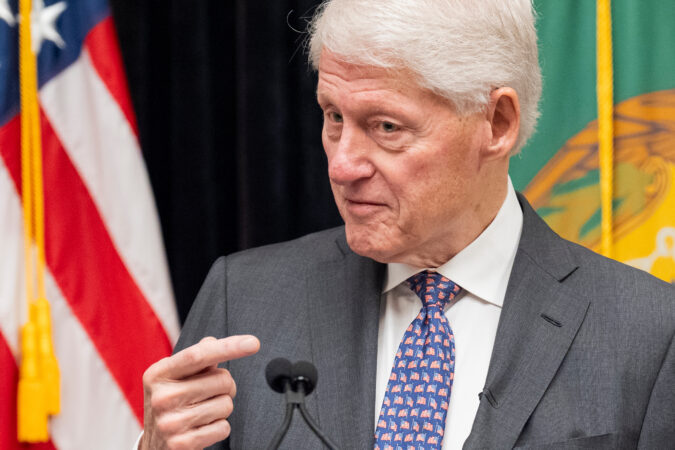
    WASHINGTON — Former President Bill Clinton told members of Congress on Friday that he “did nothing wrong” in his relationship with Jeffrey Epstein and saw no signs of Epstein’s sexual abuse as he faced hours of grilling from lawmakers over his connections to the disgraced financier from more than two decades ago.

    “I saw nothing, and I did nothing wrong,” the former Democratic president said in an opening statement he shared on social media at the outset of the deposition. The closed-door deposition ended after more than six hours of questioning from lawmakers who said he answered every question posed to him.

    The closed-door deposition in Chappaqua, N.Y., marks the first time a former president has been compelled to testify to Congress. It came a day after Clinton’s wife, former Secretary of State Hillary Clinton, sat with lawmakers for her own deposition.

    Bill Clinton has also not been accused of any wrongdoing. Yet lawmakers are grappling with what accountability in the United States looks like at a time when men around the world have been toppled from their high-powered posts for maintaining their connections with Epstein after he pleaded guilty in 2008 to state charges in Florida for soliciting prostitution from an underage girl.

    “Men — and women for that matter — of great power and great wealth from all across the world have been able to get away with a lot of heinous crimes and they haven’t been held accountable and they have not even had to answer questions,” said Republican Rep. James Comer, the chair of the House Oversight Committee, before the deposition began Friday.

    Hillary Clinton told lawmakers Thursday that she had no knowledge of how Epstein had sexually abused underage girls and had no recollection of even meeting him. But Bill Clinton will have to answer questions on a well-documented relationship with Epstein and his former girlfriend Ghislaine Maxwell, even if it was from the late 1990s and early 2000s.

    Bill Clinton in his opening statement said that he would likely often tell the committee that he did not recall the specifics of events from more than 20 years ago. But he also expressed certainty that he had not witnessed signs of Epstein’s abuse.

    Still, Republicans were relishing the opportunity to scrutinize the former Democratic president under oath.

    Still, Republicans were relishing the opportunity to scrutinize the former Democratic president under oath.

    “No one’s accusing anyone of any wrongdoing, but I think the American people have a lot of questions,” Comer said.

    Republicans finally get a chance to question Bill Clinton

    Republicans have wanted to question Bill Clinton about Epstein for years, especially as conspiracy theories arose following Epstein’s 2019 suicide in a New York jail cell while he faced sex trafficking charges.

    Those calls reached a fever pitch late last year when several photos of the former president surfaced in the Department of Justice’s first release of case files on Epstein and Maxwell, a British socialite who was convicted of sex trafficking in December 2021 but maintains she’s innocent. Bill Clinton was photographed on a plane seated alongside a woman, whose face is redacted, with his arm around her. Another photo showed Clinton and Maxwell in a pool with another person whose face was redacted.

    Epstein also visited the White House several times during Clinton’s presidency, and the pair later made several international trips together for their humanitarian work. Comer claimed the committee has collected evidence that Epstein visited the White House 17 times and that Bill Clinton flew on Epstein’s airplane 27 times.

    “We are only here because he hid it from everyone so well for so long,” Bill Clinton said in his opening statement. “And by the time it came to light with his 2008 guilty plea, I had long stopped associating with him.”

    Comer pledged extensive questioning of the former president. He claimed that Hillary Clinton had repeatedly deferred questions about Epstein to her husband.

    Bill Clinton went after Comer for calling his wife before the committee, telling him that “including her was simply not right.”

    The committee was working to quickly publish a transcript and video recording of her deposition.

    Has a precedent been set?

    Democrats, who have supported the push to get answers from Bill Clinton, are arguing that it sets a precedent that should also apply to President Donald Trump, a Republican who had his own relationship with Epstein.

    “I think that President Trump needs to man up, get in front of this committee and answer the questions and stop calling this investigation a hoax,” said Rep. Robert Garcia, the top Democrat on the committee, on Friday.

    Comer has pushed back on that idea, saying that Trump has answered questions on Epstein from the press.

    Trump on Friday expressed remorse at Bill Clinton being forced to testify. “I like Bill Clinton, and I don’t like seeing him deposed,” he told reporters as he departed the White House en route to Corpus Christi, Texas.

    Democrats are also calling for the resignation of Trump’s Commerce Secretary Howard Lutnick. Lutnick was a longtime neighbor of Epstein in New York City but said on a podcast that he severed ties with Epstein following a 2005 tour of Epstein’s home that disturbed Lutnick and his wife.

    The public release of case files showed that Lutnick actually had two engagements with Epstein years later. He attended a 2011 event at Epstein’s home, and in 2012 his family had lunch with Epstein on his private island.

    “He should be removed from office and at a minimum should come before the committee,” Garcia said of Lutnick.

    Republican Rep. Nancy Mace questioned Hillary Clinton about Lutnick’s relationship to Epstein during the deposition on Thursday. On Friday morning, Mace joined in calling for the commerce secretary to come before the committee.

    “I believe we will have the votes to subpoena him,” Democratic Rep. Ro Khanna said.

  • Pakistan is in ‘open war’ with Afghanistan after latest strikes, defense minister says

    Pakistan is in ‘open war’ with Afghanistan after latest strikes, defense minister says

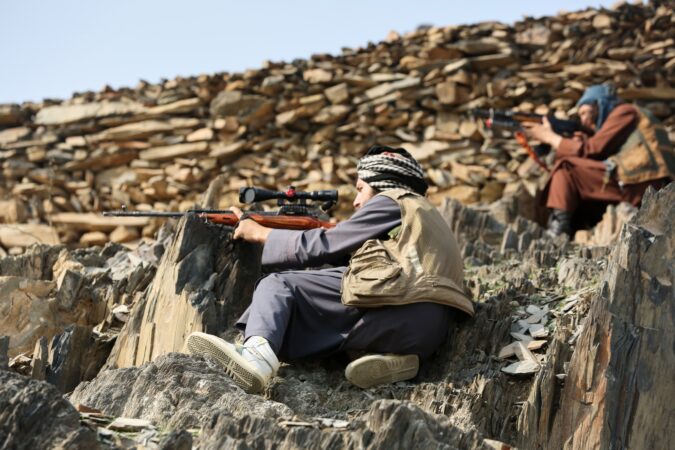
    ISLAMABAD — Pakistan and Afghanistan exchanged cross-border attacks overnight in a dramatic escalation of tensions that led Pakistan’s defense minister to say on Friday that the two countries are in a state of “open war.”

    Afghanistan launched an attack on Pakistan late Thursday, saying it was in retaliation for deadly Pakistani airstrikes on Afghan border areas Sunday. Pakistan then carried out airstrikes in Kabul and two other Afghan provinces early Friday, saying it targeted military installations.

    Tensions have been high for months. Border clashes in October killed dozens of soldiers, civilians and suspected militants. Pakistan accuses Afghanistan’s Taliban government of harboring militant groups that stage attacks against it and also of allying with its archrival India.

    A Qatari-mediated ceasefire ended the intense fighting in October, but several rounds of peace talks in Turkey in November failed to produce a lasting agreement. The two sides have occasionally traded fire since then.

    Qatar once again appears to be mediating. Its minister of state, Mohammed bin Abdulaziz al-Khulaifi, spoke Friday with the foreign ministers of Afghanistan and Pakistan in an effort to de-escalate tensions, Qatar’s Ministry of Foreign Affairs posted on X.

    Cross-border attack

    Afghanistan’s attacks against Pakistani military targets was meant as “a message that our hands can reach their throats and that we will respond to every evil act of Pakistan,” Afghan government spokesman Zabiullah Mujahid said. “Pakistan has never sought to resolve problems through dialogue,” he said.

    After the Afghan strikes, Pakistan’s Defense Minister Khawaja Mohammad Asif posted on X: “Our patience has now run out. Now it is open war between us.”

    Asif said Pakistan had hoped for peace in Afghanistan after the withdrawal of NATO forces in 2021 and expected the Taliban, which seized power in the country, to focus on the welfare of the Afghan people and regional stability.

    Instead, he said the Taliban had turned Afghanistan “into a colony of India” — a reference to recently improving ties between India and Afghanistan, including offers of enhanced bilateral trade. Pakistan and neighboring India, both nuclear armed powers, have periodically engaged in wars, clashes and skirmishes since gaining independence from British colonial rule in 1947.

    ‘Exporting terrorism’

    Asif also accused Afghanistan of “exporting terrorism,” an allegation Pakistan frequently levies at its neighbor as militant violence in the country surges. Specifically, Pakistan accuses Afghanistan of supporting the Pakistani Taliban, or TTP, as well as outlawed Baloch separatist groups.

    Pakistan accuses the TTP, which is separate from but closely allied with Afghanistan’s Taliban, of operating from inside Afghanistan. Both the group and Kabul deny that charge.

    “Pakistan’s internal conflict is a purely domestic issue and is not a new one,” Mujahid said Friday, noting the TTP had been active for nearly two decades.

    Pakistan has also frequently accused neighboring India of backing the outlawed Baloch Liberation Army and the Pakistani Taliban, allegations New Delhi denies.

    Retaliatory strikes

    Afghanistan said its attack Thursday was in retaliation for deadly Pakistani airstrikes on Afghan border areas Sunday.

    The governments have issued sharply differing casualty claims.

    Pakistan’s army spokesperson Lt. Gen. Ahmed Sharif Chaudhry said Pakistani air and ground operations killed at least 274 members of Afghan forces and affiliated militants and wounded more than 400, while 12 Pakistani soldiers were killed and 27 others were wounded. One Pakistani soldier was missing in action.

    Mujahid rejected the claims of the high number of Afghan casualties as “false.” He said that 55 Pakistani soldiers were killed with the bodies of 23 of them taken to Afghanistan. He also said “many” Pakistani soldiers were captured. Thirteen Afghan soldiers had been killed, he said, and another 22 wounded, while 13 civilians were also wounded.

    Later on Friday, the Afghan government said that 19 civilians were killed and 26 others injured when Pakistan struck the provinces of Khost and Paktika in southeastern Afghanistan. Deputy spokesman Hamdullah Fitrat accused Pakistan of having “deliberately targeted the residences of ordinary civilians” and said most of the dead and wounded were women and children.

    The Afghan government had reported earlier that a religious school in Paktika province was bombed without providing details of casualties.

    The claims of either side could not be independently verified.

    Pakistan’s air force carried out airstrikes Friday night targeting military installations in Afghanistan’s Laghman province, two senior Pakistani security officials said. They said an arms depot and two key military installations were destroyed. The officials spoke on condition of anonymity as they were not authorized to speak to the media on the record.

    Pakistan’s Information Minister Attaullah Tarar said Pakistan’s anti-drone systems shot down several small drones over the northwestern cities of Abbottabad, Swabi, and Nowshera Friday. He said they appeared to be part of a failed attack by the Pakistani Taliban, and there were no casualties. Tarar claimed the drone attacks “once again exposed direct linkages between the Afghan Taliban regime and terrorism in Pakistan.”

    International calls for restraint

    Turkey’s Foreign Minister Hakan Fidan held separate phone calls with his Pakistani, Afghan, Qatari, and Saudi counterparts on Friday to discuss the conflict, a Turkish official said, without providing details on the talks. The official spoke on condition of anonymity in line with government policy.

    In October, Turkey, Qatar, and Saudi Arabia had facilitated talks between the sides.

    On Friday, Mujahid said Afghanistan had “always emphasized a peaceful solution, and we still want to resolve the problem through dialogue.”

    In a statement, U.N. Secretary-General António Guterres urged both sides to try to resolve their differences through diplomacy, and to protect civilians.

    Russia called for an immediate halt to the fighting and for a diplomatic resolution to the conflict, Russian diplomat Zamir Kabulov told news agency RIA Novosti. Kabulov, who is President Vladimir Putin’s special envoy for Afghanistan, said that Moscow would consider mediating between the two countries if asked, according to RIA Novosti.

    Iranian Foreign Minister Abbas Araghchi urged Pakistan and Afghanistan to resolve their differences through dialogue during the holy month of Ramadan. He also said that Tehran was ready to assist in facilitating dialogue.

    Refugees at the border

    Pakistani authorities said that dozens of Afghan refugees in the Torkham border area had been relocated to safer places.

    Pakistan launched a sweeping crackdown in October 2023 to expel migrants without documents, urging those in the country to leave of their own accord to avoid arrest and forcibly expelling others. Iran also began a crackdown on migrants at around the same time.

    Since then, millions have crossed the border into Afghanistan, including people who were born in Pakistan decades ago and had built lives and created businesses there.

    In 2025, 2.9 million people returned to Afghanistan, the U.N. refugee agency has said, with nearly 80,000 having returned so far this year.

  • Attorney general announces indictments against 30 more people who protested at a Minnesota church

    Attorney general announces indictments against 30 more people who protested at a Minnesota church

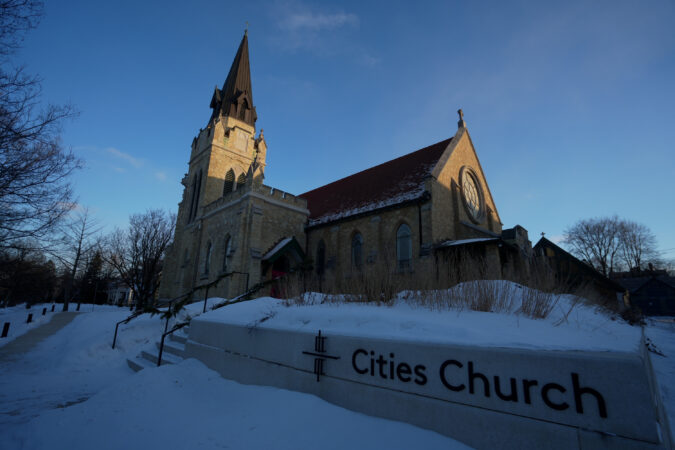
    Attorney General Pam Bondi announced charges Friday against 30 more people who are accused of civil rights violations in a January protest inside a Minnesota church where a pastor works for Immigration and Customs Enforcement.

    Bondi said on social media that 25 people were in custody and more arrests would follow. The new indictment comes a month after independent journalists Don Lemon and Georgia Fort and prominent local activist Nekima Levy Armstrong were charged for their alleged roles in the protest at Cities Church in St. Paul.

    Bondi accused the group of attacking a house of worship.

    “If you do so, you cannot hide from us — we will find you, arrest you, and prosecute you,” she wrote on social media.

    In total, 39 people now face charges of conspiracy against religious freedom and interfering with the right of religious freedom.

    A livestreamed video posted on Facebook shows people interrupting services at Cities Church on Jan. 18 by chanting “ICE out” and “Justice for Renee Good,” a reference to the woman who was fatally shot by an ICE officer in Minneapolis on Jan. 7.

    The new defendants will have an initial court appearance and a magistrate judge will set conditions for their likely release. Lemon and Fort said they were at the church as journalists covering news. Levy Armstrong was the subject of a doctored photo posted by the White House showing her crying during her arrest. The three have pleaded not guilty.

    Protesters descended on Cities Church after learning that one of the church’s pastors also serves as an ICE official. The protest drew swift condemnation from Trump administration officials and conservative leaders for disrupting a Sunday service.

    The indictment says the “agitators” entered the church in a “coordinated takeover-style attack” and engaged in acts of intimidation and obstruction.

    “Young children were left to wonder, as one child put it, if their parents were going to die,” the indictment says.

    A lawyer for the church praised the Justice Department for charging more people.

    “The First Amendment does not give anyone — regardless of profession, prominence, or politics — license to storm a church and intimidate, threaten, and terrorize families and children worshipping inside,” Doug Wardlow said in a statement.

    The revised indictment adds new allegations when compared to the original filed in January.

    It says two people “conducted reconnaissance” outside the church a day before the protest and recorded their visit on video, with one saying, “My thoughts are to be able to close up this whole alleyway right here.”

    The court filing quotes one protester as chanting in the church, “This ain’t God’s house. This is the house of the devil.”

    Levy Armstrong defended the protest shortly after it occurred. She said critics needed to “check their hearts” if they were more concerned about a disruption than the “atrocities that we are experiencing in our community.”

    The protest came at a tense time in Minnesota, where the Trump administration sent thousands of federal officers for Operation Metro Surge after a series of public fraud cases where the majority of defendants had Somali roots. Officers frequently deployed tear gas for crowd control in neighborhood clashes with residents, often detaining them along with immigrants.

    Good, 37, was shot in Minneapolis. In another fatal shooting a week after the church protest, a federal officer killed 37-year-old nurse Alex Pretti.

    Nationwide demonstrations erupted in response, followed by a change in Operation Metro Surge’s leadership and the eventual wind-down of the immigration enforcement operation. Roughly 400 ICE officers and Homeland Security agents were expected to remain in Minneapolis by early March, down from roughly 3,000 at the peak, according to a court filing.

    Since then, the Twin Cities have grappled with the impact to communities and the local economy. Minneapolis said it suffered an impact of $203 million due to the operation, with tens of thousands of residents in need of urgent relief assistance.

    Separately, a woman who was at the church service has filed a lawsuit against some people who were charged, alleging emotional trauma and an inability to exercise her religion that day.