Category: Nation World News Wires

  • Pakistan deploys troops and imposes curfew after deadly protests over US-Israeli strikes on Iran

    Pakistan deploys troops and imposes curfew after deadly protests over US-Israeli strikes on Iran

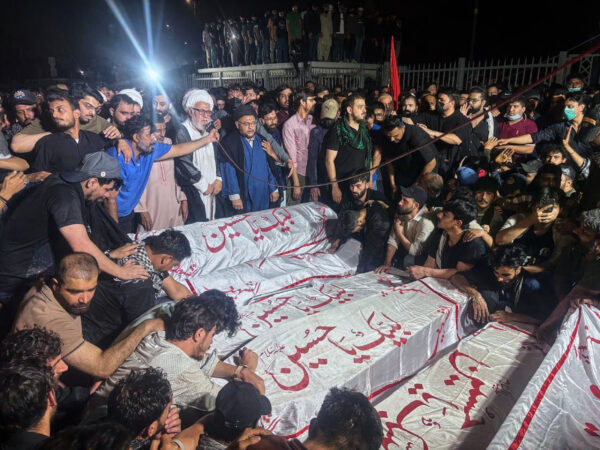
    ISLAMABAD — Pakistani authorities deployed troops and imposed a three-day curfew before dawn Monday in the northern cities of Gilgit and Skardu after several people died and tens were injured in violent protests following the killing of Iran’s Supreme Leader Ayatollah Ali Khamenei in U.S.-Israeli strikes, officials said.

    Thousands of Shiite demonstrators on Sunday attacked the offices of the U.N. Military Observer Group, which monitors the ceasefire along the disputed Himalayan region of Kashmir, and the U.N. Development Program in Skardu city. Protesters also burned a police station and damaged a school and the offices of a local charity in Gilgit, according to officials. At least 12 people were killed and 80 others injured, said police in the Gilgit-Baltistan region.

    U.N. spokesperson Stéphane Dujarric said Monday protesters became violent near the UNMOGIP Field Station, which was vandalized. “The safety and security of U.N. personnel and premises throughout the region remain our top priority, and we continue to closely monitor the situation,” Dujarric said.

    Meanwhile, Shabir Mir, a Gilgit-Baltistan government spokesperson, said Monday the situation was under control and that the curfew would remain in place until Wednesday. Police chief Akbar Nasir Khan urged residents to stay indoors, citing “deteriorating law and order conditions.”

    Demonstrators in Pakistan’s southern port city of Karachi stormed the U.S. Consulate on Sunday, smashing windows and attempting to burn the building. Police responded with batons, tear gas, and gunfire, leaving 10 people dead and more than 50 injured.

    One person was also killed in clashes in Islamabad during an attempted march by Pakistan’s minority Shiites toward the U.S. Embassy. They were protesting in support of Iran, which is majority Shiite.

    On Monday, the U.S. diplomatic mission in Pakistan said its consulate in northwestern Peshawar city would close temporarily, while the embassy in Islamabad would continue providing all routine and emergency consular services for U.S. citizens.

    In a post on X, the embassy said that due to continued disruptions and traffic diversions around the U.S. consulates in Karachi and Lahore, both offices have canceled all appointments for U.S. visas and American citizen services scheduled for Tuesday.

    It added that normal consular operations would resume in Islamabad on Tuesday.

    Pakistani authorities have beefed up security at U.S. diplomatic missions across the country, including around the U.S. consulate building in Peshawar, to avoid any further violence.

    Also Monday, the Pakistan Stock Exchange plunged, with the benchmark KSE-100 Index falling nearly 10% amid rising geopolitical tensions following attacks on Iran. Investors sold off shares across sectors, with analysts citing heightened uncertainty as the main driver behind the sharp decline.

    Anger has been rising in Pakistan, particularly among members of the Shiite minority, following U.S. and Israeli strikes on Iran that killed Khamenei and other senior officials. While Shiites are a minority nationwide, they form a majority in some northern districts and in the province of Khyber Pakhtunkhwa bordering Afghanistan.

    Sunday’s unrest came amid ongoing cross-border fighting between Pakistan and Afghanistan, which began Thursday after Afghanistan launched attacks in retaliation for Pakistani airstrikes the previous Sunday. Pakistan has since carried out repeated operations along the border.
  • Judge nixes latest policy requiring 7 days’ notice for Congress members to visit ICE facilities

    Judge nixes latest policy requiring 7 days’ notice for Congress members to visit ICE facilities

    WASHINGTON — A federal judge agreed on Monday to temporarily suspend the latest version of a Trump administration policy that requires members of Congress to provide a week’s notice before they can visit immigration detention facilities.

    U.S. District Judge Jia Cobb in Washington ruled that a group of Democratic lawmakers is likely to succeed in showing that the seven-day notice requirement is illegal and exceeds the government’s statutory authority.

    The judge said the Republican administration hasn’t cited any “concrete examples of safety issues posed by congressional visits without advanced notice.”

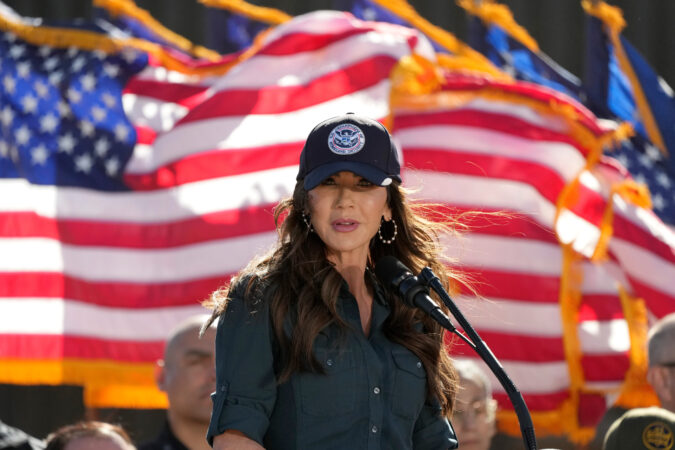
    Thirteen House members sued to challenge the Jan. 8 policy issued by Homeland Security Secretary Kristi Noem. Cobb had blocked a previous version of the policy in December. She ruled that it’s likely illegal for Immigration and Customs Enforcement to demand a week’s notice from members of Congress seeking to visit and observe conditions in ICE facilities.

    “Plaintiffs are undoubtedly frustrated with Defendants’ repeated attempts to impose a notice requirement,” Cobb wrote. ”But in taking further action, Defendants are required to abide by the terms of the Court’s order and act consistently with the legal principles announced in this opinion.”

    However, Noem secretly reinstated another notice requirement one day after an ICE officer shot and killed U.S. citizen Renee Good in Minneapolis. It was nearly identical to the version that Cobb blocked in December.

    Three days after the deadly shooting, three Democratic members of Congress from Minnesota were stopped from visiting an ICE facility near Minneapolis. The Department of Homeland Security didn’t disclose the new version of the policy until after U.S. Reps. Ilhan Omar, Kelly Morrison, and Angie Craig initially were turned away from the facility, according to plaintiffs’ attorneys.

    A law bars the government from using appropriated general funds to prevent members of Congress from entering DHS facilities for oversight purposes. Cobb found that it’s “highly likely” that President Donald Trump’s administration used restricted funds to promulgate and enforce the new policy.

    Cobb was nominated to the bench by President Joe Biden, a Democrat.

  • House panel releases videos of Bill and Hillary Clinton answering questions about Epstein

    House panel releases videos of Bill and Hillary Clinton answering questions about Epstein

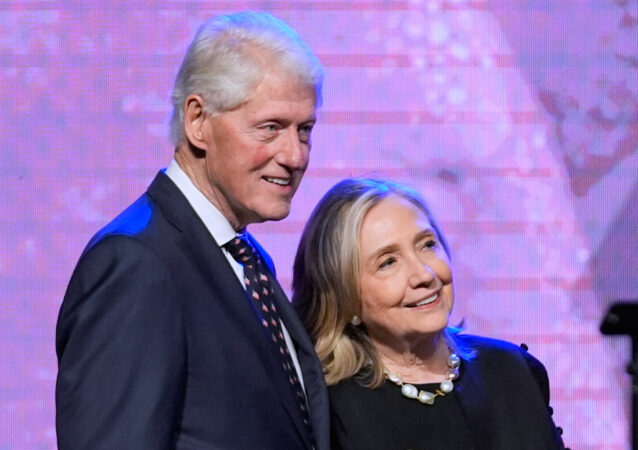
    WASHINGTON — Former President Bill Clinton distanced himself from convicted sex offender Jeffrey Epstein in closed-door depositions with lawmakers, according to videos that were released Monday by a House committee.

    The recordings of the depositions, which spanned hours over two days last week, show how Bill Clinton told the committee that he had ended his relationship with Epstein years before the financier entered a 2008 guilty plea to soliciting prostitution from an underage girl. Hillary Clinton told the committee she never even recalled meeting Epstein.

    The closed-door interviews before the House Oversight Committee were taken under oath Thursday and Friday.

    The Clintons’ testimony came as lawmakers are trying to meet demands for a reckoning over Epstein, who killed himself in 2019 in New York while facing charges for sex trafficking and abusing underage girls. High-status men around the world have been forced into resignations because of revelations about their relationships with Epstein, but so far there are few signs in the U.S. of serious legal consequences coming.

    The former Democratic president said he first remembered meeting Epstein when he flew aboard the financier’s private jet in 2002 for the Clintons’ humanitarian work, and they parted ways the year after.

    “There’s nothing that I saw when I was around him that made me realize he was trafficking women,” he told the committee.

    Epstein visited the White House numerous times during Clinton’s presidency and there are photos of them shaking hands. Clinton told lawmakers he did not recall those interactions.

    Democrats, Republicans question Bill Clinton

    Bill Clinton faced searching questions both from Republicans and Democrats about photos of the former president that have been released as part of the case files on Epstein. In response to a Democratic lawmaker’s questions about a photo that showed him in a pool with a woman whose face was redacted, the former president said he did not know the woman and did not engage in sexual activity with her.

    He said the photo was from a trip to Brunei for charitable work and a number of people in their travel party were swimming. He also said that he was not aware that one young woman who was ostensibly working as a masseuse and gave him a neck massage on one flight was in fact a victim of sexual abuse.

    Whether the subject was a note Clinton wrote for Epstein’s 50th birthday or their travel together for the Clinton Foundation, he described their relationship as little more than “cordial.” Bill Clinton described an arrangement with Epstein where the financier provided his private jet for humanitarian trips in exchange for Clinton discussing politics and economics with him.

    Larry Summers, who had worked as treasury secretary in Clinton’s administration, helped make that connection, Clinton said. But Clinton said they went separate ways after he sensed that Epstein was not deeply interested in the humanitarian work.

    “We were friendly, but I didn’t know him well enough to say we were friends,” he said.

    He said he had once visited Epstein’s townhouse in New York City, but said repeatedly he had never visited Epstein’s private island or other properties.

    Asked by Republicans whether they had talked about young women or girls together, Clinton responded emphatically: “No.”

    Clinton acknowledged he maintained a closer relationship with Ghislaine Maxwell, Epstein’s former girlfriend and confidant. But he maintained that was largely because of close mutual connections. He also said “she has to be punished” for her conviction on sex trafficking charges.

    What Bill Clinton said about Trump

    One line of questioning stirred up curiosity from lawmakers, and that was what Clinton had to say about President Donald Trump. He made clear he believed it was important for anyone, including presidents, to come forward and testify to their knowledge of Epstein.

    Clinton also shared how he and Trump had briefly discussed Epstein at a charity golf tournament more than 20 years ago. He said Trump had never “said anything to me to make me think he was involved in anything improper with regard to Epstein,” but also remarked that those two men had a falling-out over a real estate deal.

    Republican lawmakers left the deposition pointing to Clinton’s words and arguing that it showed there is no evidence that Trump ever did anything wrong in his own relationship with Epstein.

    Democrats, meanwhile, said Clinton’s testimony counters what Trump has said more recently about why he and Epstein had a falling-out. Trump has told reporters they had a disagreement because Epstein had hired people away from Trump’s Mar-a-Lago club in Florida.

  • Hegseth insists the Iran conflict is ‘not endless’ and declares, ‘We fight to win’

    Hegseth insists the Iran conflict is ‘not endless’ and declares, ‘We fight to win’

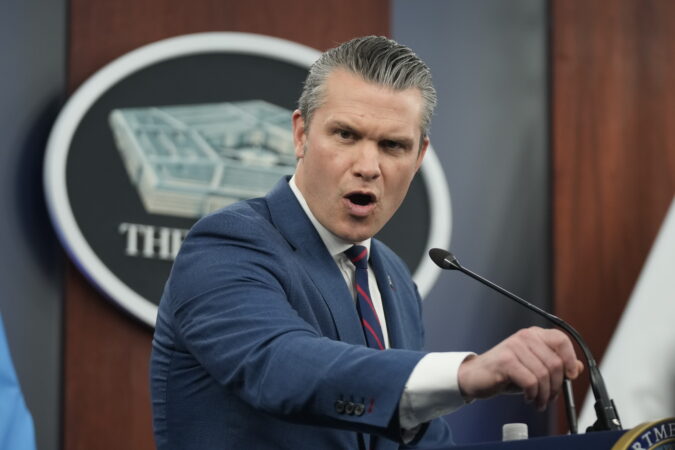
    WASHINGTON — Defense Secretary Pete Hegseth spoke Monday to widening concerns that the U.S.-Israeli strikes in Iran could spiral into a protracted regional conflict by declaring: “This is not Iraq. This is not endless,” even as he warned that more American casualties are likely in the weeks ahead.

    While the Trump administration has cited Iran’s nuclear ambitions as the chief concern to be addressed, officials increasingly are pointing to the threat from Iran’s ballistic missiles as a key reason to launch the attacks as well as an opportunity to take out the government’s leadership and the sense that negotiations around the nuclear program have stalled.

    Trump said Monday that Iran’s conventional missile program “was growing rapidly and dramatically, and this posed a very clear, colossal threat to America and our forces stationed overseas.”

    Hegseth said at a separate press conference with Gen. Dan Caine, chairman of the Joint Chiefs of Staff, that the operation had a “decisive mission” to eliminate the threat of Iranian ballistic missiles, destroy the country’s navy, and ensure “no nukes.”

    “No stupid rules of engagement, no nation building quagmire, no democracy building exercise, no politically correct wars. We fight to win, and we don’t waste time or lives,” Hegseth said.

    Trump, Hegseth, and Caine have not suggested any exit plan or offered signs that the conflict would end anytime soon as the killing of Iranian Supreme Leader Ayatollah Ali Khamenei cast doubt on the future of the Islamic Republic and hurtled the region into broader instability. Caine said the biggest U.S. military buildup in the Middle East in decades would only grow because the commander in the region “will receive additional forces even today.”

    “This is not a so-called regime-change war, but the regime sure did change, and the world is better off for it,” Hegseth said.

    Trump, however, in video statements released after the strikes began, urged the Iranian people “to take back your country.”

    More American troop casualties expected

    The conflict has spiraled into the wider region, with Iran and its allied armed groups launching missiles at Israel, Arab states, and U.S. military targets in the Middle East.

    Six American troops have been killed, with Trump, Hegseth and Caine predicting more casualties. All were Army soldiers and part of the same logistics unit in Kuwait, according to a U.S. official who was not authorized to comment publicly and spoke on condition of anonymity.

    When asked about the six deaths Monday, Hegseth said an Iranian weapon made it past allied air defenses “and, in that particular case, happened to hit a tactical operations center that was fortified.”

    Eighteen American service members also have been seriously wounded, said Capt. Tim Hawkins, a spokesman for U.S. Central Command.

    “We grieve with you, and we will never forget you,” Caine said of the troops killed and their family members.

    The latest sign of the escalating upheaval came when, the U.S. military said, ally Kuwait “mistakenly shot down” three American fighter jets during a combat mission as Iranian aircraft, ballistic missiles, and drones were attacking. U.S. Central Command said all six pilots ejected safely from the American F-15E Strike Eagles and were in stable condition.

    Asked if there are boots on the ground now in Iran, Hegseth said, “No, but we’re not going to go into the exercise of what we will or will not do.”

    He said it was “foolishness” to expect U.S. officials to say publicly “here’s exactly how far we’ll go.”

    Trump told the New York Post on Monday that he wasn’t ruling out U.S. forces in Iran if “they were necessary.” He noted, “I don’t have the yips with respect to boots on the ground.”

    At the White House, Trump said the mission was expected to take four to five weeks but “we have the capability to go far longer than that.”

    Secretary of State Marco Rubio told reporters at the Capitol that the U.S. “will do this as long as it takes to achieve” its objectives and warned that “the hardest hits are yet to come from the U.S. military.”

    Hegseth also dismissed questions about the time frame and said Trump had “latitude” to decide how long it would take. “Four weeks, two weeks, six weeks,” he said. “It could move up. It could move back.”

    Pentagon gives justification for strikes

    In laying out a case for the strikes, Hegseth did not point to any imminent nuclear threat from Iran and said again that strikes by the U.S. and Israel last June “obliterated their nuclear program to rubble.”

    Instead, Hegseth pointed to threats from other weaponry that justified the operation: “Iran was building powerful missiles and drones to create a conventional shield for their nuclear blackmail ambitions.”

    He added, “Our bases, our people, our allies, all in their crosshairs. Iran had a conventional gun to our head as they tried to lie their way to a nuclear bomb.”

    Hegseth said that during negotiations leading up to the attack, Iranian officials were “stalling” despite having “every chance to make a peaceful and sensible deal.”

    He also justified the operation by describing Iran’s government as having started the conflict from its inception, declaring that for 47 years it has “waged a savage, one-sided war against America.”

    In a private briefing Sunday, Trump administration officials told congressional staffers that U.S. intelligence did not suggest Iran was preparing to launch a preemptive strike against the U.S., three people familiar with the briefings said.

    Trump, a Republican, had said the objective of the mission was to eliminate “imminent threats from the Iranian regime.” And senior Trump administration officials, who were not authorized to comment publicly and spoke on the condition of anonymity, told reporters Saturday that there were indicators that the Iranians could launch a preemptive attack.

    Military doesn’t specify Iran’s nuclear sites as targets

    As with the attack that dropped massive bunker-buster bombs on Iranian nuclear facilities last year, Caine said the military used B-2 stealth bombers in the new operation with a 37-hour round trip.

    He said the penetrating bombs were dropped on Iranian underground facilities” but did not specify that they were nuclear facilities. Nuclear sites were not among the types of targets on a list released over the weekend by U.S. Central Command.

    The administration says Israel and the U.S. have bombed Iranian missile sites and targeted its navy, claiming to have destroyed its headquarters and multiple warships.

    Caine on Monday referenced the use of cyber technologies, saying the U.S. “effectively disrupted communications and sensor networks” that left “the adversary without the ability to coordinate or respond effectively.”

    Without giving specifics, Caine said the military “delivered synchronized and layered effects designed to disrupt, degrade, deny and destroy Iran’s ability to conduct and sustained combat operations on the U.S. side.”

    Caine said Trump gave the go-ahead order for the strikes at 3:38 p.m. EST on Friday. That meant the president gave the green light when he was aboard Air Force One heading to Texas with Republican Sens. Ted Cruz and John Cornyn and actor Dennis Quaid.

  • Trump awards the Medal of Honor to 3 U.S. Army service members in a White House ceremony

    Trump awards the Medal of Honor to 3 U.S. Army service members in a White House ceremony

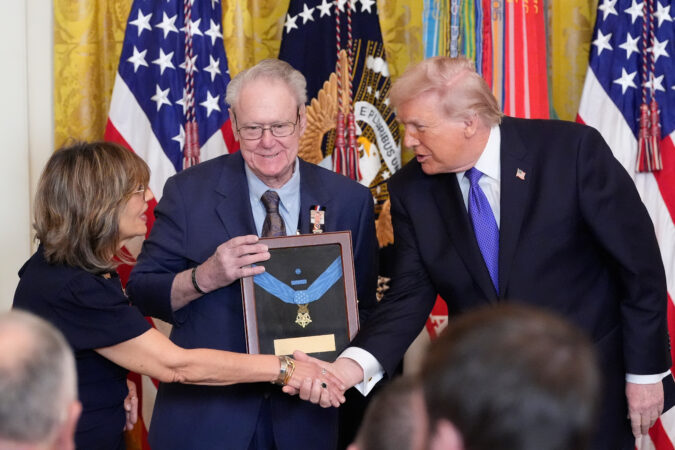
    WASHINGTON — President Donald Trump awarded the Medal of Honor to three U.S. Army soldiers at the White House on Monday, celebrating heroes of old wars as he defended his launch of a new one.

    Retired Command Sgt. Maj. Terry P. Richardson was recognized for actions during the Vietnam War that were credited with saving the lives of 85 other service members.

    Staff Sgt. Michael H. Ollis, who was killed in action in Afghanistan in 2013, was recognized for saving a Polish Army officer’s life.

    Master Sgt. Roderick W. Edmonds, who died in 1985, was recognized for his leadership and resistance as a prisoner of war in Germany during World War II.

    “There’s no ceremony that can be more important than this,” Trump said to begin the East Room ceremony that included the recipients’ family members and the man Ollis shielded from enemy fire.

    “Bravery is amazing,” Trump said. “You never really know who’s brave and who’s not until they’re tested.”

    Trump talks Iran, curtains, and Polish politics

    The Republican president also used the ceremony to talk about his fledgling war in Iran, his immigration crackdown, expansion of the White House, and curtains that he chose at the executive mansion.

    “I picked those drapes in my first term. I always liked gold,” he said.

    When noting Polish government officials there to recognize Ollis, Trump ventured into an aside on his endorsements in Poland’s elections.

    On Iran, Trump said preemptive action was necessary to block Tehran from rebuilding its nuclear program and becoming “an intolerable threat to the Middle East but also to the American people.”

    The Medal of Honor is awarded by U.S. presidents, in the name of Congress, for combat service that goes beyond the call of duty and risks one’s life.

    Richardson led a Vietnam reconnaissance mission

    On Sept. 14, 1968, Richardson was a staff sergeant on a reconnaissance mission as a platoon leader in the vicinity of Loc Ninh, part of the Republic of Vietnam.

    According to his citation, Richardson, a native of Cass City, Mich., came under fire from the North Vietnamese Army, including heavy machine-gun fire as he rescued three wounded soldiers. After the rescues, he led his unit to its intended destination, a hilltop identified as a place to direct airstrikes. He found the location to be part of an enemy camp but remained for at least seven hours, directing strikes even after being wounded by a sniper.

    Enemy forces eventually fled. Richardson, when found by other U.S. forces, declined medical evaluation so he could remain with his troops.

    “His gallant and selfless actions … spared the lives of 85 fellow soldiers,” the White House said.

    Trump praised Richardson, who attended with some members of his unit, as a “brave man” and described him as “central casting.”

    “You feel like fighting? I think we could take him today,” Trump said, joking with Defense Secretary Pete Hegseth.

    Ollis was killed shielding someone else in Afghanistan attack

    As a staff sergeant at Forward Operating Base Ghazni, Ollis was a skilled infantryman who led soldiers during an attack on the base by enemy combatants on Aug. 28, 2013.

    Ollis, 24 at the time, first directed soldiers to a bunker before returning to the building where they had been to check for any more endangered people, according to his citation. The New York City native came upon a Coalition Forces officer, Lt. Karol Cierpica of Poland. They moved toward combatants who breached the base perimeter and joined other coalition forces.

    During fighting, one enemy combatant confronted Ollis and Cierpica.

    “With complete disregard for his own safety, he positioned himself between the insurgent and the Coalition Forces Officer, who had been wounded and unable to walk,” his commendation reads. “Staff Sergeant Ollis fired on the insurgent and incapacitated him, but as he approached the insurgent, the latter’s suicide vest was detonated, mortally wounding him.”

    Called to the podium by Trump, Cierpica at times grew emotional as he paid tribute.

    “A soldier is not something you are from time to time. It is who you are forever,” Cierpica said, later adding, “I am deeply moved, happy, and grateful to God.”

    Cierpica named his son, Michael, after Ollis, and he addressed members of Ollis’ family by name, calling them “my second family from Staten Island” and the U.S. his “second homeland.”

    Edmonds led resistance in POW camp during WW II

    A master sergeant, Edmonds was the ranking non-commissioned officer among American prisoners of war at a German camp in early 1945.

    According to the commendation, the Germans announced on Jan. 26, 1945, that “only Jewish-American prisoners would fall out for roll call the following morning, at the threat of execution.”

    Edmonds, who enlisted from South Knoxville, Tenn., determined that allowing that segregation would result in the torture or death of 200 Jewish American POWs. He directed officers to have all 1,200 American troops present themselves for roll call.

    With a German commandant enraged, Edmonds stood his ground and invoked prisoners’ rights under international law.

    “We are all Jews here,” Edmonds said in a quote that Trump recounted Monday.

    The German officer relented and made no further efforts to identify the Jewish American soldiers.

    “Really amazing, right? It’s an amazing story,” Trump said.

    Weeks later, as Allied forces advanced toward the camp, the Germans ordered POWs to prepare for evacuation. Edmonds prepared the POWs to assemble in formation and resist. German forces eventually retreated from the camp.

    “Without regard for his own life Master Sergeant Edmonds gallantly led these prisoners in a relentless pursuit of opposition and resistance, forcing the Germans to abandon the camp leaving the 1,200 American prisoners behind,” the White House said.

    Edmonds’ son, Chris, first learned of the story when reading his father’s journals after his death, then interviewing surviving veterans who also were POWs. Chris Edmonds spent years pushing for the official recognition and on Monday accepted the medal from Trump on his father’s behalf.

  • Britain says it’s not at war after a drone strikes its Akrotiri base in Cyprus

    Britain says it’s not at war after a drone strikes its Akrotiri base in Cyprus

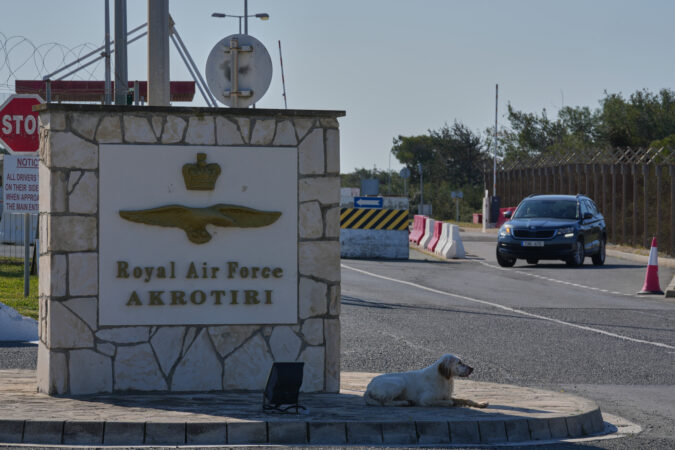
    AKROTIRI, Cyprus — Britain is not at war, the government said Monday, despite saying it would allow the U.S. to use British bases during its war with Iran and after a Royal Air Force base in Cyprus was struck by an Iranian-made drone.

    Sirens sounded again at RAF Akrotiri on Monday and British Typhoon and F-35 warplanes were scrambled. Cyprus government spokesperson Constantinos Letymbiotis posted on X that two drones heading toward the British base had been intercepted.

    More than two decades after Britain followed the United States into a devastating war in Iraq, it is trying to avoid being drawn into a new Middle East conflict with unpredictable consequences.

    Akrotiri attacked

    U.K. officials say an attack drone hit the runway at RAF Akrotiri, a British air force base in Cyprus, late Sunday. There were no injuries and “minimal” damage, but the strike brought the conflict onto European soil.

    Cyprus President Nikos Christodoulides identified it as a “Shahed-type” Iranian drone. It was not immediately clear whether it was launched from Iran or by a Tehran-backed militant group such as Hezbollah in Lebanon.

    Akrotiri is the U.K.’s main air base for operations in the Middle East and in recent years has been used by British warplanes on missions against the Islamic State group in Syria and Iraq and to strike Houthi targets in Yemen.

    As tensions between the U.S. and Iran mounted, Britain last month deployed extra F-35 fighter jets to Akrotiri, along with radar, counter-drone systems, and air defenses.

    Britain retained the base, and another on Cyprus, after the eastern Mediterranean island gained independence from British colonial rule in 1960.

    It was last attacked in 1986, when pro-Libya militants struck the base with mortars, rocket-propelled grenades and small arms, injuring three dependents of British personnel. The latest attack is believed to be the first attack on Cyprus from outside the country since Turkey’s invasion of the island in 1974.

    Britain’s defense ministry said families of U.K. personnel who live on the base were being moved to nearby accommodation as a precaution.

    Some residents of the nearby village of Akrotiri also opted to leave their homes and spend the night with relatives elsewhere.

    Villager Mikaella Malta said she heard “strange noises” just before the drone explosion.

    “We tried to figure out what was going on. We then picked up whatever we could from home. We were in a panic and we left,” she told the AP.

    U.K. ambivalence

    British officials have refused to say whether the U.K. supports the U.S.-Israeli war on Iran. They have said that Iran should not be able to have a nuclear weapon and called for an end to Iranian strikes and a diplomatic solution.

    Britain did not take part in the strikes on Iran that began Saturday, and did not allow the U.S. to use U.K. bases in England or on the island of Diego Garcia in the Indian Ocean.

    But on Sunday, Prime Minister Keir Starmer announced that he had agreed to let the U.S. use the bases for attacks on Iran’s missiles and their launch sites. He said the change came in response to Iranian attacks on U.K. interests and Britain’s allies in the Gulf, and is legal under international law.

    Britain says its bases can’t be used for attacks on political and economic targets in Iran, and Starmer said the U.K. is “not joining the U.S. and Israeli offensive strikes.”

    U.S. President Donald Trump told the Daily Telegraph on Monday he was “very disappointed in Keir,” saying the prime minister ”took far too long” to change his mind about the use of British bases.

    Unpredictable consequences

    Starmer said Britain would not be joining the U.S.-Israeli strikes, and Middle East Minister Hamish Falconer stressed that “the U.K. is not at war.”

    The memory of Iraq remains raw for many in Britain. The decision by then-Prime Minister Tony Blair to join the U.S.-led invasion in 2003 remains one of the most contentious in modern British history.

    The subsequent yearslong conflict killed 179 British troops, some 4,500 American personnel and many thousands of Iraqis.

    “We all remember the mistakes of Iraq and we have learned those lessons,” Starmer told lawmakers in the House of Commons on Monday. “Any U.K. actions must always have a lawful basis and a viable, thought-through plan.”

    Critics say attempts to set firm limits on Britain’s involvement in Iran could be swept away by a fast-moving conflict.

    “We are being drawn in, just as we were in Iraq, following the U.S. into an incredibly dangerous situation,” said John McDonnell, a lawmaker from the governing Labour Party.

    Patrick Bury, senior associate professor in security at the University of Bath, said Britain is in an “incredibly difficult” position.

    “We’ve had very little explanation for this war, really, from the U.S.,” he said. “The U.K. policy is always heavily on upholding international law. So they’re kind of looking at this going, ‘How does this fit with our own foreign policy?’ And I think that explains why they’ve held off as much as they could.

    “And nevertheless, they get a direct request. What are you going to do, say no?”

  • Melania Trump presides at U.N. Security Council meeting on children in conflict as U.S. attacks Iran

    Melania Trump presides at U.N. Security Council meeting on children in conflict as U.S. attacks Iran

    UNITED NATIONS — U.S. first lady Melania Trump presided over a U.N. Security Council meeting on Monday focusing on children in conflict, one of her signature issues, and acknowledged she was doing so at “challenging times” as the United States has joined Israel in attacking Iran.

    “The U.S. stands with all of the children throughout the world,” she said, speaking generally and not specifically about the new war in the Middle East. ”I hope soon peace will be yours.”

    Hanging over Monday’s meeting was what Iranian state media says was an airstrike that hit a girls’ school in southern Iran, killing at least 165 people and wounding dozens more. The Israeli military said it was not aware of strikes in the area. The U.S. military said it was looking into the reports.

    Shortly before Monday’s session began, Iran’s ambassador to the U.N., Amir Saeid Iravani, said it was “deeply shameful and hypocritical” for the U.S. to convene a meeting on protecting children during conflict while launching airstrikes on Iranian cities.

    “For the United States, ‘protecting children’ and ‘maintaining international peace and security’ clearly mean something very different from what the U.N. Charter provides,” he told reporters.

    U.N. political chief Rosemary DiCarlo said the world body was aware of the reports of the deaths at the girls’ school. She noted the impact the U.S.-Israeli strikes and the Iranian retaliatory strikes were having on children across the region.

    “We have been reminded of this truth over the last two days,” she told the Security Council. ”Schools in Israel, the United Arab Emirates, Qatar, Bahrain, and Oman have closed and moved to remote learning owing to the ongoing military operations in the region,” she said.

    Melania Trump was the first spouse of a world leader to take the president’s seat at the United Nations’ most powerful body, which is charged with ensuring global peace and security, according to the U.N.

    The wife of President Donald Trump was given the opportunity as the United States takes over the council presidency for the month of March. In the past, presidents, prime ministers, and foreign ministers have often wielded the gavel.

    In her address, Melania Trump said, “Peace does not have to be fragile.”

    “Enduring peace will be achieved when knowledge and understanding are fully valued within all our societies,” she said, urging members of the Security Council to “safeguard learning.”

    U.S. has cut funding to U.N. agencies that protect children

    While the first lady spoke of a need to protect children and their access to education and technology in conflict, her husband’s administration has cut funding for a number of U.N. agencies and other international organizations that address these issues.

    Among them is the U.N. Office of the Special Representative of the Secretary General for Children in Armed Conflict, which provides detailed reporting on the impact that conflicts have on children around the world. This information can help trigger action to prevent rape and violence against women and children. President Trump withdrew U.S. support in January.

    The U.S. has also dramatically cut funding for the U.N. children’s agency, UNICEF, and has withdrawn from the U.N. Educational, Scientific, and Cultural Organization, UNESCO.

    DiCarlo told the council the world is facing the highest number of armed conflicts since World War II. “The number of civilians killed in these conflicts is the highest in decades,” she said. ”Our reality is clear: When conflicts erupt, children are among those most severely affected.”

    The first lady arrived at U.N. headquarters in a motorcade and was greeted by U.N. Secretary-General António Guterres. She shook hands with each of the 15 Security Council members and posed for a group photo.

    The rotating president of the council gets to choose the subject and participants for some meetings. Monday’s meeting was scheduled before the war began.

    The council’s last meeting, on Saturday, was a contentious emergency session called in response to the start of the war. Guterres condemned the U.S. and Israeli airstrikes as violations of international law, including the U.N. Charter. He also condemned Iran’s retaliatory attacks for violating the sovereignty and territorial integrity of nations in the Mideast.

    Melania Trump’s support of Ukrainian children

    Melania Trump took the unusual step last summer of writing a letter to Russian President Vladimir Putin before his summit with her husband and later announced that the effort had led to a group of children displaced by the Russia-Ukraine war being reunited with their families.

    Putin’s invasion of Ukraine in 2022 resulted in Russia taking Ukrainian children out of their country so they could be raised as Russian. Ukrainian President Volodymyr Zelensky has lobbied world leaders for help reuniting families.

  • Cuba’s president pushes for ‘urgent’ changes to island’s economic and social model

    Cuba’s president pushes for ‘urgent’ changes to island’s economic and social model

    HAVANA — Cuban President Miguel Díaz-Canel said Monday that his government should “immediately” focus on implementing urgent transformations to the island’s economic and social model as oil reserves in the Caribbean country dwindle.

    The comments made during a meeting of the Council of Ministers come as Cuba feels the squeeze of a recent oil blockade coupled with a halt in oil shipments from Venezuela after the U.S. attacked the South American country in January.

    “We must focus, immediately, on implementing the urgent, most necessary transformations that must be made to the economic and social model,” he was quoted as saying by state-owned media.

    Díaz-Canel said the push to transform Cuba’s economic and social model is tied to business and municipal autonomy and the resizing of the state apparatus, government, and institutions, among other things, according to state-owned media.

    He called on municipalities to manage issues including foreign direct investment; economic partnerships between the state and nonstate sectors; and investments with Cubans residing abroad, according to state-owned media.

    Prime Minister Manuel Marrero Cruz said Cuba’s priorities are focused on food production and changes to the island’s power grid as severe outages and interruptions in fuel supply persist.

    The minister of energy and mines, Vicente de la O Levy, was quoted by state media as saying that progress in developing a transition strategy by municipalities is still slow despite the distribution of solar panels to doctors, teachers, and children. He said municipalities need to have a sustainability strategy that relies on their own resources.

    Last month, Cuba implemented austere fuel-saving measures, including halting some public transportation and moving classes online.

    Last week, the U.S. Treasury Department slightly eased restrictions on the sale of Venezuelan oil to Cuba, but the island’s energy and economic crisis is expected to persist.

    In addition to its energy woes, Cuba is struggling with a sharp increase in U.S. sanctions that have stripped the island of nearly $8 billion in revenue from March 2024 to February 2025, a loss that is nearly 50% higher compared with the previous period, according to government statistics.

  • Rev. Jesse Jackson returns home to South Carolina to lie in state

    Rev. Jesse Jackson returns home to South Carolina to lie in state

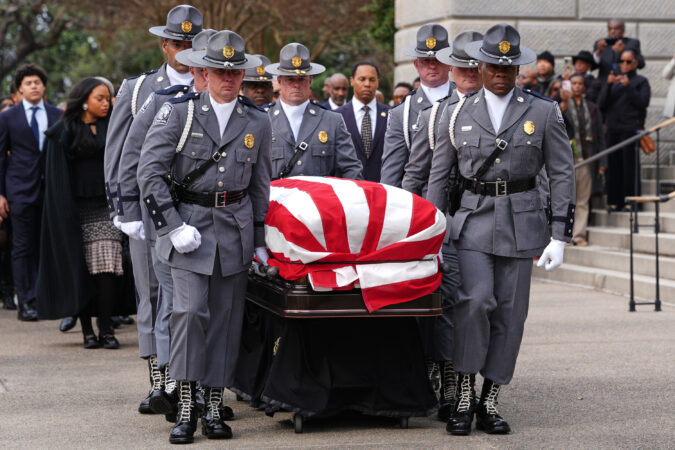
    COLUMBIA, S.C. — After a long career of fighting for civil rights, the Rev. Jesse Jackson Sr. is visiting his home for one last time to lie in state at the South Carolina Capitol on Monday.

    The final full honors from the state where he was born is a far cry from his childhood in segregated Greenville, where in 1960 he couldn’t go inside the local library’s much better funded whites-only branch to check out a book he needed.

    Jackson led seven Black high school students into that segregated branch, where they sat down and read books and magazines until they were arrested. The branches closed, then quietly reopened for all.

    With that action, Jackson launched his career — and crusade — fighting for equality for all. He would catch the attention of the Rev. Martin Luther King Jr. and join the voting rights march King led from Selma to Montgomery, Ala.

    Jackson died Feb. 17 at age 84 after battling a rare neurological disorder that affected his mobility and ability to speak in his later years.

    His casket, draped in an American flag, arrived at the South Carolina Statehouse on a horse-drawn caisson on a chilly, cloudy morning. A special white-gloved Highway Patrol honor guard brought Jackson inside the Statehouse and to the second floor, where well over 100 people packed under the rotunda for a ceremony before the public would be invited in to pay their respects.

    “Today we’re here to celebrate a life well lived, a job well done,” said Democratic state Rep. Jermaine Johnson, who led the ceremony.

    The service began with a rousing version of the civil rights anthem “Lift Every Voice and Sing” that reverberated through the Statehouse — a building that was partially destroyed in 1865 during the Civil War started by South Carolina to keep slavery.

    The South Carolina services are part of two weeks of events. They began with Jackson’s body lying in repose and the public invited last week to his Rainbow PUSH Coalition’s Chicago headquarters.

    After South Carolina, Jackson will be returned to Chicago for a large celebration of life gathering at a megachurch and the final homegoing services at the headquarters of Rainbow PUSH. Plans for a service in Washington, D.C., to honor him have been postponed until a later date.

    Nationally, Jackson advocated for the poor and underrepresented for voting rights, job opportunities, education, and healthcare. He scored diplomatic victories with world leaders.

    Through his Rainbow PUSH Coalition, he channeled cries for Black pride and self-determination into corporate boardrooms, pressuring executives to make America a more open and equitable society. He stepped forward as the Civil Rights Movement’s torchbearer after King’s assassination, and would run for the Democratic presidential nomination in 1984 and 1988.

    Jackson continued to be active in his home state, pushing in 2003 for Greenville County to honor King by matching the federal holiday in his honor and in 2015 by advocating for removing the Confederate flag from South Carolina Statehouse grounds after nine Black worshipers were killed in a racist shooting at a Charleston church.

    Jackson is just the second Black man to lie in state at the South Carolina Capitol. State Sen. Clementa Pinckney was honored in 2015 after he was killed in the Charleston church shooting.

  • Macron says France will allow temporary deployment of nuclear-armed jets to European allies

    Macron says France will allow temporary deployment of nuclear-armed jets to European allies

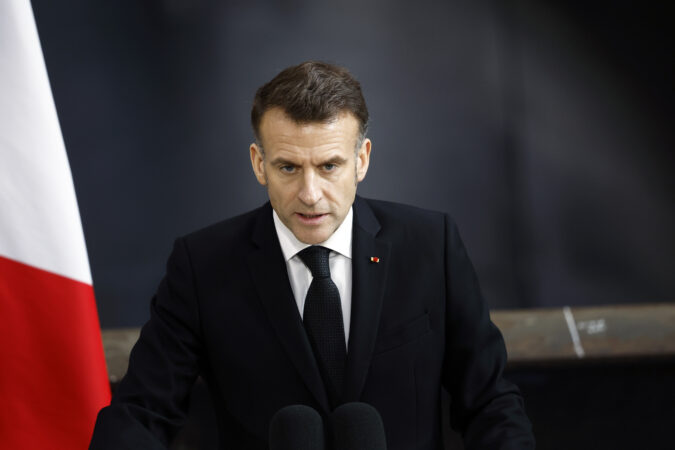
    L’ILE LONGUE, France — French President Emmanuel Macron announced Monday that France would for the first time allow the deployment of its nuclear-armed aircraft to allied countries in a new nuclear strategy aimed at strengthening Europe’s independence.

    Macron also announced the first increase in his country’s nuclear arsenal in decades during a speech outlining the strategy at a military base at L’Ile Longue in northwestern France that hosts the country’s ballistic missile submarines.

    “To be free, one needs to be feared,” Macron said.

    Macron said the new posture could “provide for the temporary deployment of elements of our strategic air forces to allied countries,” but said there would be no sharing of decision-making with any other nation regarding the use of the nuclear weapons.

    Talks about such arrangements have started with Britain, Germany, Poland, the Netherlands, Belgium, Greece, Sweden, and Denmark, Macron said.

    Macron’s long-planned speech, scheduled before the most recent outbreak of hostilities in Iran, was aimed at spelling out how French nuclear weapons fit into Europe’s security amid concerns raised on the continent by recurring tensions with U.S. President Donald Trump and Russia’s full-scale invasion of Ukraine.

    France also will allow partners to participate in deterrence exercises and allow allies’ non-nuclear forces to participate in France’s nuclear activities, said Macron, who is the commander-in-chief of the armed forces under the French constitution.

    European partners welcomed the new strategy of France, which has been the only nuclear power in the European Union since Britain’s exit from the bloc in 2020.

    In a joint statement, Macron and German Chancellor Friedrich Merz said the two countries would deepen integration in deterrence starting this year, “including German conventional participation in French nuclear exercises and joint visits to strategic sites.”

    In a letter to Dutch lawmakers, Defense Minister Dilan Yesilgöz-Zegerius and Foreign Minister Tom Berendsen said the Netherlands was in strategic talks with France on nuclear deterrence as “a supplement to, and not a replacement for, NATO’s collective defense and nuclear deterrence capabilities.”

    Polish Prime Minister Donald Tusk wrote on X that “we are arming up together with our friends so that our enemies will never dare to attack us.”

    Macron also announced that France will increase its number of nuclear warheads from the current level of below 300, but did not give a figure for the increase. It will be the first time France increases its nuclear arsenal since at least 1992.

    “I have decided to increase the numbers of warheads of our arsenal,” Macron said. “My responsibility is to ensure that our deterrence maintains — and will maintain in the future — its assured destructive power.”

    “If we had to use our arsenal, no state, however powerful, could shield itself from it, and no state, however vast, would recover from it,” Macron said.

    European leaders have voiced growing doubts about U.S. commitments to help defend Europe under the so-called nuclear umbrella, a policy long intended to ensure that allies — particularly NATO members — would be protected by American nuclear forces in the event of a threat.

    Macron said that recent changes in U.S. defense strategy amid the emergence of new threats have demonstrated a refocusing of American priorities and have encouraged Europe to take more direct responsibility for its own security. He said Europeans should take their destiny more firmly into their hands.

    Some European nations have already taken up an offer Macron made last year to discuss France’s nuclear deterrence and even associate European partners in nuclear exercises.

    Last month, Merz said he’d had “initial talks” with Macron on the issue and had publicly theorized about German Air Force planes possibly being used to carry French nuclear bombs. But Macron ruled out any such possibility in Monday’s speech.

    France and Britain also adopted a joint declaration in July that allows both nations’ nuclear forces, while independent, to be “coordinated.” The U.K., no longer an EU member but a NATO ally, is the only other country in Western Europe with a nuclear deterrent.

    Macron has consistently insisted any decision to use France’s nuclear weapons would remain only in the hands of the French president.

    Macron added that the evolution of France competitors’ defenses, the emergence of regional powers, the possibility of coordination among adversaries, and the risks linked to proliferation led him to the conclusion that it was essential for France to enhance its nuclear arsenal.