Category: Nation World News Wires

  • Claims of ‘rediscovered’ Michelangelos unsettle Renaissance experts

    Claims of ‘rediscovered’ Michelangelos unsettle Renaissance experts

    ROME — An independent researcher claims that a marble bust of Christ in a Roman church is by Michelangelo, the latest purported attribution to the Renaissance genius who is one of the most imitated artists in the world.

    The unverified claim by Valentina Salerno has unsettled Renaissance scholars, especially since a recent sketch of a foot that was attributed to Michelangelo — but disputed by some as a copy — recently fetched $27.2 million at a Christie’s auction.

    Given the stakes — and Salerno’s suggestion that several other works can now be attributed to Michelangelo based on her documentary research — leading experts have declined to comment.

    Salerno has published her theory on the commercial website academia.edu, a non-peer-reviewed social networking site academics use, and announced the first “rediscovery” at a news conference Wednesday.

    The claims have drawn perhaps more attention than they normally would, given the Vatican seemed at least initially interested. Friday marked the 550th anniversary of Michelangelo’s birth, and a number of exhibits, conferences, and commemorations are reviving attention about his genius and legacy.

    The culture ministry was invited to participate in Salerno’s news conference but did not, said the abate of the order that runs the church, the Rev. Franco Bergamin, while the Carabinieri’s art squad refused to weigh in on the authenticity of the statue but said it was being protected and a laminated sign now graces the sculpture: “Alarm armed,” it reads.

    “We hope that this asset, which belongs to our cultural heritage regardless of whether it can be attributed to Michelangelo Buonarroti or not, is part of the national heritage that we are responsible for defending,” said Lt. Col. Paolo Salvatori.

    ‘Documentary evidence on this’

    Michelangelo Buonarroti, who lived from 1475 to 1564, created some of the most spectacular works of the Renaissance: the imposing statues of David in Florence and Pieta in St. Peter’s Basilica, the Sistine Chapel ceiling, and The Last Judgment fresco behind the chapel’s altar. Salerno now says she has located another — a bust of Christ in the Basilica of Sant’Agnese fuori le mura, listed by Italy’s culture ministry as anonymous from the Roman school of the 16th century.

    She is not the first to make the claim. In 1996, Michelangelo expert William Wallace wrote an article in ArtNews about the well-documented history of wrongly attributing works to Michelangelo. It quoted the 19th-century French writer Stendhal as writing that at the Sant’Agnese church, “we noticed a head of the savior which I should swear is by Michelangelo.”

    “Stendhal’s vow notwithstanding, the head has never been taken seriously, and nowadays would not even appear in a catalog raisonné under ‘rejected attributions,’” Wallace wrote.

    Salerno suggests that several documents in the first few hundred years after Michelangelo’s death correctly attribute the work to the artist but that in 1984 a scholar debunked it, erroneously in her view, and it has remained wrongly attributed ever since.

    “I have provided and will continue to provide — I hope, because the research continues — a whole series of documentary evidence on this,” she said. “There will be experts in the field who will conduct their own investigations. To date, we can say that, according to the documents, the object is attributed to Michelangelo.”

    She suggested that the bust was modeled on Michelangelo’s intimate friend, Tomaso De’ Cavalieriis, and was part of the great artistic inheritance Michelangelo left to his friends and students when he died. Salerno said she came to the conclusion tracing wills, inventories, and notarized documents held in church and state archives and the archives of Roman confraternities to which Michelangelo and his students belonged.

    Salerno, an actor and a fiction author, has no college degree or expertise in art history. She has said she fell into the research “by chance” when she set out to write a novel about Michelangelo 10 years ago.

    According to her research published on academia.edu, Salerno uncovered evidence of a secret “pact of indissolubility” among some of Michelangelo’s students and their heirs to keep Michelangelo’s works after he died. The pact included the previously unknown existence of a chamber, whose locks could only be opened with three keys, held by three different students, she said.

    Vatican takes note

    Salerno’s research caught the eye of Cardinal Mauro Gambetti, who runs St. Peter’s Basilica. He named Salerno and her mentor to a scientific committee formed in 2025 to discuss a possible Vatican exhibition to commemorate the anniversary of Michelangelo’s birth.

    Nothing has yet come of the committee’s work. But its members have downplayed the significance of Salerno’s work or refused to discuss it.

    Some expressed surprise at her inclusion in a committee made up of some of the leading Renaissance and Michelangelo scholars in the world, including Barbara Jatta, director of the Vatican Museums; Hugo Chapman, curator of Italian and French drawings, from 1400 to 1800, at the British Museum; and Wallace, professor of art history at Washington University in St. Louis.

    Jatta has distanced herself from the Vatican committee when contacted by the Associated Press.

    The British Museum declined to make Chapman available for comment. Gambetti’s office did not respond to a request. Other committee members declined to comment.

    Wallace told the AP that Salerno’s methodology was sound and noted that there is a strong tradition in Europe of noncredentialed researchers doing solid work. He said he agreed with her thesis that Michelangelo did not destroy his works in a fire, a commonly held belief at the time that has been debunked for years by scholars. Rather, he concurred with Salerno that Michelangelo entrusted what remained of his works in his final years to his students to finish his projects.

    But he disputes Salerno’s conclusion that a huge treasure of Michelangelo’s was secreted away — and is therefore ripe for new discovery — saying Michelangelo simply was not producing that much in his final years. Michelangelo was overseeing six architectural projects in Rome at the time. What drawings he made were sketches to resolve technical problems on the worksite, and likely did not survive because they were merely “working drawings,” he said.

    Wallace concurred that existence of a secret chamber that can be opened only with three keys is new. But he said proper academic scholarship would call for Salerno to transcribe the documents and allow for a peer-review process to take place.

    Italy is no stranger to claims of new discoveries about old artists, with fakes, frauds, and new “discoveries” of Modiglianis and other artists a regular occurrence in art history circles.

    “I think I counted up 45 attributions to Michelangelo since 2000, and not one of which you can remember or mention, but every single one arrived with the headline, ‘The greatest discovery of the time,’ [or] ‘It will change everything we think about Michelangelo,’” Wallace said. “And then, five years later, we can’t even remember what it was.”


  • South Africa’s anti-apartheid veteran and ex-defense minister Mosiuoa ‘Terror’ Lekota dies at 77

    South Africa’s anti-apartheid veteran and ex-defense minister Mosiuoa ‘Terror’ Lekota dies at 77

    JOHANNESBURG, South Africa — Mosiuoa “Terror” Lekota, 77, a South African anti-apartheid veteran and former defense minister, has died after a long illness, his political party said Wednesday.

    Mr. Lekota was a prominent activist against white minority rule in South Africa and served eight years in prison on Robben Island alongside other jailed anti-apartheid figures, including Nelson Mandela, from 1974 to 1982.

    Mr. Lekota was a fiery member of various political youth organizations during apartheid and was jailed even after he was released from Robben Island for his continued anti-apartheid activism.

    He served as South Africa’s minister of defense from 1999 to 2008 and was also the national chairperson of the African National Congress, which governed the country after the first democratic election in 1994.

    However, Mr. Lekota’s relationship with the ANC soured after former President Thabo Mbeki was removed as the country’s president in 2008, having lost the presidency of the ANC to former President Jacob Zuma in 2007.

    Mr. Lekota formed a breakaway party, the Congress of the People (COPE), which contested the 2009 elections. It became the third-biggest opposition party, with just over 7% of the national vote and 30 seats in South Africa’s 400-member parliament.

    The breakaway led to a significant decline in the ANC’s electoral support in 2009, with many former ANC members and leaders leaving the party to join Mr. Lekota’s new political outfit.

    In 2024, the ANC lost its outright majority for the first time and is now the biggest party in a coalition government.

    In addition to his accolades as a political activist, Mr. Lekota was well respected as a long-serving lawmaker and political leader who strengthened the voice of opposition parties.

    However, factional struggles within COPE led to its gradual decline and its failure to win any parliamentary seats during the 2024 general elections, ending Mr. Lekota’s career as a lawmaker.

    In 2025 he stepped away from politics for health reasons, with his party appointing an acting leader after his departure.

    Tributes poured in from across South Africa’s political landscape.

    “He decided to leave the ANC and formed COPE with other South Africans; by doing so he literally strengthened the opposition parties,” said Bantu Holomisa, South Africa’s deputy minister of defense and leader of the opposition United Democratic Movement party.

    “His role was not doubted, because he and others from the ANC did understand the passage of the struggle. And they knew very well what was the original agenda, which seemed to have been hijacked,” Holomisa said.

  • Major historical documents start journey across U.S. as part of nation’s 250th anniversary celebration

    Major historical documents start journey across U.S. as part of nation’s 250th anniversary celebration

    Some of the United States’ most important historical documents are embarking on a first-of-its kind journey as part of the country’s 250th anniversary commemoration.

    Typically housed in highly controlled vaults under the watch of preservation experts at the National Archives, documents such as the 1783 Treaty of Paris that formally ended the Revolutionary War and the 1774 Articles of Association that urged colonists to boycott British goods are rarely moved.

    But those documents, signed by George Washington, John Adams, Benjamin Franklin, and other American revolutionary leaders, will be making their way across the country and put on display for free at local museums.

    “It’s tangible history, and tangible history inspires,” said Jim Byron, senior adviser to the acting archivist of the United States. “These documents have not traveled, and they’ve certainly not traveled collectively, ever. They are here in vaults.”

    The Boeing 737 “Freedom Plane” transporting the documents is just one of many events and activities planned across the country to mark America’s forthcoming 250th anniversary celebrating the signing of the Declaration of Independence on July 4, 1776, in Philadelphia. A congressionally chartered commission, America 250, and a separate White House-led initiative, called Freedom 250, are both coordinating events, an overlap that has faced some criticism in Washington.

    Among the planned activities are a fleet of mobile museums driving across the country, a story collection initiative, and a Great American State Fair on the National Mall in Washington. President Donald Trump has even announced plans for a “Patriot Games” sporting event featuring high school athletes and a UFC mixed-martial arts fight at the White House.

    The “Freedom Plane” departed Ronald Reagan Washington National Airport on Monday en route to its first stop in Kansas City, Mo., where the documents are being transferred to the National WWI Museum and Memorial. The records include a rare original engraving of the Declaration of Independence printed in 1823 from a copperplate of the original; the Oaths of Allegiance, signed in 1778 by George Washington, Alexander Hamilton, and other officers of the Continental Army; and a rare draft copy of the U.S. Constitution that includes handwritten notes by the delegates.

    Other planned stops will be in Atlanta, Los Angeles, Houston, Denver, Miami, the Detroit suburb of Dearborn, and Seattle.

    “The reality that these documents are leaving D.C. and coming to the heartland is fantastic,” said Matt Naylor, president and CEO of the National World War I Museum and Memorial, where they will be on display for a little over two weeks starting Friday. “There’s a lot of excitement about that and a lot of talk in and around the city about what that means.”

    Naylor said the early response has been overwhelming. Local schools have already booked visits for more than 5,000 schoolchildren.

    “That’s indicating that there’s a lot of enthusiasm for this,” he said.

    The “Freedom Plane” tour was inspired in part by the “American Freedom Train” that toured 48 states in 1975 and 1976 as part of the country’s Bicentennial celebration. It carried various pieces of American history, including the original Louisiana Purchase documents, Judy Garland’s dress from The Wizard of Oz, and Jesse Owens’ gold medals from the 1936 Olympic Games.

  • U.S. soldiers who died in the Iran war remembered for their service and devotion to their families

    U.S. soldiers who died in the Iran war remembered for their service and devotion to their families

    WEST DES MOINES, Iowa — Sgt. Declan Coady had been checking in with his family from Kuwait every hour or two after the U.S. and Israel launched their military campaign against Iran, even as Tehran launched retaliatory strikes against Israel and Persian Gulf Arab states that host U.S. armed forces.

    When he didn’t respond to messages Sunday, “most of us started to wonder,” Coady’s father, Andrew, told the Associated Press. “Your gut starts to get a feeling.”

    A drone strike at a command center in Kuwait killed Coady, 20, of West Des Moines, Iowa, and five other members of the U.S. Army Reserve who worked in logistics and kept troops supplied with food and equipment.

    The other soldiers identified Tuesday by the Pentagon were: Sgt. 1st Class Nicole Amor, 39, of White Bear Lake, Minn.; Capt. Cody Khork, 35, of Winter Haven, Fla.; and Sgt. 1st Class Noah Tietjens, 42, of Bellevue, Neb. U.S. Army base Fort Knox wrote on Facebook that the names of the other two will be released once next-of-kin notifications are complete.

    The soldiers were assigned to an Army Reserve unit headquartered in Des Moines, Iowa, which is temporarily operating under the 1st Theater Sustainment Command at Fort Knox in Kentucky.

    “Sadly, there will likely be more, before it ends. That’s the way it is,” President Donald Trump said of the deaths. Trump will attend the dignified transfers of the soldiers when they arrive in the U.S., the White House said Wednesday. The ritual honors service members killed in action.

    Defense Secretary Pete Hegseth said the military “ensured that the maximum possible defense and maximum possible force protection was set up before we went on offense.”

    “The terms of this war will be set by us at every step,” Hegseth said Wednesday.

    Nicole Amor and Joey Amor in an undated photo.

    A mother of two who loved gardening

    Amor, 39, was an avid gardener who enjoyed making salsa from the peppers and tomatoes in her garden with her son, a senior in high school. She also enjoyed roller-blading and bicycling with her fourth-grade daughter.

    A week before the drone attack, Amor was moved off-base to a shipping container-style building that had no defenses, Joey Amor said.

    “They were dispersing because they were in fear that the base they were on was going to get attacked and they felt it was safer in smaller groups in separate places,” he said.

    He last spoke to her about two hours before she was killed. He said she was working long shifts and they had been messaging about her tripping and falling the night before.

    “She just never responded in the morning,” he said.

    Childhood friend Natalie Caruso wrote on Facebook that she was “absolutely heartbroken” about Amor’s death.

    “Nicole was always up for an adventure and she had such a contagious laugh!” Caruso wrote Wednesday. ”Growing up next door to you was some of my fondest childhood memories!”

    ‘He loved being a soldier’

    Coady had just told his father last week that he had been recommended for a promotion from specialist to sergeant, a rank he received posthumously.

    He was among the youngest people in his class, trained to troubleshoot military computer systems, but he impressed his instructors, Andrew Coady said Tuesday.

    “He trained hard, he worked hard, his physical fitness was important to him. He loved being a soldier,” Coady said. “He was also one of the most kindest people you would ever meet, and he would do anything and everything for anyone.”

    Coady trained as an information technology specialist with the Army Reserves and was studying cybersecurity at Drake University in Des Moines. He was taking online classes while in Kuwait and wanted to become an officer.

    “I still don’t fully think it’s real,” his sister Keira Coady said. “I just remember all of our conversations about what he was going to do when he came back.”

    A calling to serve his country

    Khork was very patriotic and drawn from a young age to serving the U.S., his family said in a statement Tuesday.

    He enlisted in the Army Reserve and joined Florida Southern College’s ROTC program.

    “That commitment helped shape the course of his life and reflected the deep sense of duty that was always at the core of who he was,” said his mother, Donna Burhans, father, James Khork, and stepmother, Stacey Khork, in a statement.

    Khork also loved history and had a degree in political science.

    His family described him as “the life of the party, known for his infectious spirit, generous heart, and deep care for those who served alongside him and for everyone blessed to know him.”

    Abbas Jaffer posted Monday on Facebook about his friend of 16 years.

    “My best friend, best man, and brother gave his life defending our country overseas,” Jaffer said.

    A loving father and husband

    Tietjens lived with his family in the Washington Terrace mobile home park in the Omaha suburb of Bellevue, Neb. He was married with a son, according to a Facebook page.

    Tietjens earned a black belt in Philippine Combatives and Taekwondo and was “an instructor who gave his time, discipline, and leadership to others,” the Philippine Martial Arts Alliance said in a Facebook post.

    On the mat and as a soldier, “he carried the same values: honor, discipline, service, and commitment to others,” the organization said.

    Army Staff Sgt. Jeff Coleman said Tietjens was his mentor.

    “You could call him day or night,” Coleman told KETV. “He always took the time, you know, he made you feel important. And that’s hard to find sometimes in the military.”

    Nebraska Gov. Jim Pillen on Wednesday ordered U.S. and state flags flown at half-staff until the evening of Tietjens’ burial. State lawmakers held a moment of silence Wednesday to honor the fallen soldier.

    “Noah stepped up to serve and defend the American people from foreign enemies around the world — a sacrifice we must never forget,” Pillen wrote in a tribute Tuesday.

    “We are holding the Tietjens family close in our hearts during this unbelievably difficult time and will keep them in our prayers,” he said.

    Tietjens’ cousin Kaylyn Golike asked for prayers, especially for Tietjens’ 12-year-old son, wife, and parents, as they navigate “unimaginable loss.”

    “We lost a brave soldier this weekend and many hearts are broken,” Golike wrote on Facebook Tuesday.

  • High-tech snowplows and AI help cities clean up from big storms

    High-tech snowplows and AI help cities clean up from big storms

    Residents of Syracuse, N.Y. — America’s snowiest city — once barraged a service hotline with street neglect complaints during blizzards, even if plows had passed two hours earlier but the work was hidden by fresh snow.

    Now public trust seems to be rising as Syracuse and other cities across the U.S. integrate upgrades such as video monitoring, GPS mapping and artificial intelligence into snow operations that once relied almost entirely on manual planning.

    Syracuse was one of the first to revamp the way it deploys its snowplows, and complaint calls have dropped by 30% under the new system, said Conor Muldoon, the city’s chief innovation officer.

    “People will look out their window and say, ‘Hey, you guys are doing a terrible job,’” Muldoon said. “And we can point to a public map and say, ‘Here’s all the breadcrumbs for when that plow was there.’”

    Snowier than usual in the U.S. snow capital

    Each winter, Syracuse averages 126 inches (3.2 meters) of snow, more than any other U.S. city of at least 100,000 people. Even before the blizzard that pounded the Northeast last week, the city had already surpassed its typical average due to a record 2-foot (60-centimeter) accumulation on one day in late December.

    With a goal of clearing every street within 24 hours after a storm, Syracuse partnered in 2021 with San Francisco-based Samsara to put live GPS tracking and dashcams on city fleet vehicles including snowplows. Integrated with GIS mapping software, the system allows officials to monitor live video and plow locations in real time.

    While residents can’t access live feeds, they can view a public map that updates every 5 minutes to show which roads have been cleared.

    Samsara started incorporating AI into its products in 2019. This winter, for the first time, it has provided customers with footage from other cameras within its large network, helping officials better understand conditions on a street even when no worker is there.

    Kiren Sekar, the company’s chief product officer, cited an example of needing to dispatch the closest plow for a snow emergency in Plainwell, Michigan.

    “Rather than having to sift through a list of vehicles, it can actually figure this out: ‘We’ve got Trevor in vehicle 203, 15 minutes away,’” Sekar said.

    New York City’s approach

    Samsara partners with communities of various sizes to upgrade their snowplow systems, but the nation’s largest city — New York City — developed its own.

    Its tracking program known as BladeRunner monitors snow removal equipment (including garbage trucks with plows attached) while a human in a command center — not AI — analyzes the GPS data. The city is exploring AI in the future to process the thousands of 311 calls and online service requests it can get in a single day.

    The other way the big city’s approach differs from its upstate neighbor of Syracuse is that each plow runs a specific route during storms, ensuring main and side streets get essentially the same treatment.

    “So what it does is allow equity,” said Joshua Goodman, deputy commissioner at the city’s Department of Sanitation.

    Typically 99% of the city’s roads will be plowed within the first four hours after a moderate snowfall under ideal conditions, but Goodman said it didn’t quite meet that mark during last week’s historic storm.

    Cutting costs and insurance claims

    With U.S. cities and states spending upward of $4 billion each year on snow operations, the new technology also helps assure roads aren’t overplowed or oversalted, which can cause environmental damage.

    Fayetteville, Ark., launched a public-facing snow removal map for the first time this winter. It reported improvements in plowing time, labor costs and fuel savings, despite enduring about double the snow from a year ago.

    “This is the first year some roads have ever been treated or plowed, and that goes right back to being able to see where we need to go and if we’ve been there,” said Ross Jackson Jr., the city’s fleet operations manager.

    The township of Edison, N.J., reduced its spending on salt and brine by 35% and its insurance payouts by 60%, thanks to video that helped prove plow drivers usually weren’t at fault when the vehicles collided with another motorist’s car.

    Video installed on snowplows in Iowa helped demonstrate that all but one of 12 snowplow accidents in a single day were the other driver’s fault, said Craig Bargfrede, the state’s winter operations administrator.

    “How can you not see this big orange truck with flashing lights ahead of you?” he said. “Boom, they just drive right into us.”

    Kalamazoo County was the first county in Michigan to employ turn-by-turn navigation to dispatch snowplows during a storm. Rusty McClain, assistant general superintendent of its road commission, called it a huge improvement in efficiency.

    “The old-school way of doing it, that bird’s-eye view of where everyone needs to go to plow, was just in a large book with paper maps,” McClain said. “You’d have to pull over, find the page you’re looking for, call somebody on the phone and ask if they have plowed that area.”

  • Pentagon dispute bolsters Anthropic reputation but raises questions about AI readiness in military

    Pentagon dispute bolsters Anthropic reputation but raises questions about AI readiness in military

    Anthropic’s moral stand on U.S. military use of artificial intelligence is reshaping the competition between leading AI companies but also exposing a growing awareness that maybe chatbots just aren’t capable enough for acts of war.

    Anthropic’s chatbot Claude, for the first time, outpaced rival ChatGPT in phone app downloads in the United States this week, a signal of growing interest from consumers siding with Anthropic in its standoff with the Pentagon, according to market research firm Sensor Tower.

    The Trump administration on Friday ordered government agencies to stop using Claude and designated it a supply chain risk after Anthropic CEO Dario Amodei refused to bend his company’s ethical safeguards preventing the technology from being applied to autonomous weapons and domestic mass surveillance. Anthropic has said it will challenge the Pentagon in court once it receives formal notice of the penalties.

    And while many military and human rights experts have applauded Amodei for standing up for ethical principles, some are also frustrated by years of AI industry marketing that persuaded the government to apply the technology to high-stakes tasks.

    “He caused this mess,” said Missy Cummings, a former Navy fighter pilot who now directs the robotics and automation center at George Mason University. “They were the No. 1 company to push ridiculous hype over the capabilities of these technologies. And now, all of a sudden, they want to be for real. They want to tell people, ‘Oh, wait a minute. We really shouldn’t be using these technologies in weapons.’”

    Anthropic didn’t immediately respond to a request for comment. The Defense Department declined to comment on whether it is still using Claude, including in the Iran war, citing operational security.

    Cummings published a paper at a top AI conference in December arguing that government agencies should prohibit the use of generative AI “to control, direct, guide or govern any weapon.” Not because AI is so smart that it could go rogue, but because the large language models behind chatbots like Claude make too many mistakes — called hallucinations or confabulations — and are “inherently unreliable and not appropriate in environments that could result in the loss of life.”

    “You’re going to kill noncombatants,” Cummings said in an interview Tuesday with the Associated Press. “You’re going to kill your own troops. I’m not clear whether the military truly understands the limitations.”

    Amodei sought to emphasize those limitations in defending Anthropic’s ethical stance last week, arguing that “frontier AI systems are simply not reliable enough to power fully autonomous weapons. We will not knowingly provide a product that puts America’s warfighters and civilians at risk.”

    Anthropic, until recently, was the only one of its peers to have approval for use in classified military systems, where it has partnered with data analysis company Palantir and other defense contractors. President Donald Trump said Friday, around the same time he was approving Saturday’s military strikes on Iran, that the Pentagon would have six months to phase out Anthropic’s military applications.

    Cummings, a former Palantir adviser, said it’s possible that Claude has already been used in military strike planning.

    “I just fundamentally hope that there were humans in the loop,” she said. “A human has to babysit these technologies very closely. You can use them to do these things, but you need to verify, verify, verify.”

    She said that’s a contrast to the messaging from AI companies that have suggested that their technology is evolving to the point where it is “almost sentient.”

    “If there’s culpability here, I’d say half is Anthropic’s for driving the hype and half is the Department of War’s fault for firing all the people that would have otherwise advised them against stupid uses of technology,” Cummings said.

    One social media commentator this week described Anthropic’s government problems as a “Hype Tax” — a message that was reposted by President Donald Trump’s top AI adviser, David Sacks, a frequent critic of the company.

    And while it has caused legal hassles that could jeopardize Anthropic’s business partnerships with other military contractors, it has also bolstered its reputation as a safety-minded AI developer.

    “It’s applaudable that a company stood up to the government in order to maintain what it felt were its ethics and were its business choices, even in the face of these potentially crippling policy responses,” said Jennifer Huddleston, a senior fellow at the libertarian-leaning Cato Institute.

    Consumers have already spoken, leading to a surge of Claude downloads that made it the most popular iPhone app starting on Saturday and for all phone systems in the U.S. on Monday, according to Sensor Tower. That’s come at the expense of OpenAI’s ChatGPT, which saw its consumer reputation damaged when it announced a Friday deal with the Pentagon to effectively replace Anthropic with ChatGPT in classified environments.

    In the Apple store, the number of 1-star reviews — the worst rating — of ChatGPT grew by 775% on Saturday and continued to grow early this week, forcing OpenAI to do damage control.

    “We shouldn’t have rushed to get this out on Friday,” OpenAI CEO Sam Altman said in a social media post Monday. “The issues are super complex, and demand clear communication. We were genuinely trying to de-escalate things and avoid a much worse outcome, but I think it just looked opportunistic and sloppy.”

    Altman was planning to gather employees for an “all-hands” meeting on Tuesday to discuss next steps.

    “There are many things the technology just isn’t ready for, and many areas we don’t yet understand the tradeoffs required for safety,” Altman said. “We will work through these, slowly, with the [Pentagon], with technical safeguards and other methods.”

  • Noem blames ‘violent protesters’ for Minneapolis chaos under tough questioning in Senate hearing

    Noem blames ‘violent protesters’ for Minneapolis chaos under tough questioning in Senate hearing

    WASHINGTON — Homeland Security Secretary Kristi Noem defended her department’s immigration enforcement tactics in front of a Senate committee on Tuesday and pushed back against criticism from Democrats who say she wrongly disparaged two protesters killed by federal officers in Minneapolis earlier this year.

    It was Noem’s first congressional appearance since the shooting deaths of the two protesters galvanized widespread opposition to how the Trump administration is executing its mass deportation agenda, a centerpiece policy of President Donald Trump’s second term. At the time, Noem portrayed the protesters, two U.S. citizens, as agitators, although accounts from local officials and bystander video contradicted assertions from her and other administration officials.

    In one exchange, retiring Republican Sen. Thom Tillis of North Carolina called her leadership a “disaster” and skewered her handling of the immigration crackdown and her management of emergency response.

    In the hearing, which stretched nearly five hours, Noem defended her agency’s treatment of immigrants caught up in enforcement activities, and blamed activists and others for attacks against officers.

    “I want to address the dangerous environment that our ICE officers face on the streets today,” Noem said. “They are facing a serious and escalating threat as a result of deliberate mischaracterizations of their heroic work and rhetoric that demonizes our law enforcement.”

    Since the deaths in Minneapolis, the administration has taken steps meant to tone down tensions, including drawing down the operation there. But the administration has continued pressing restrictions against both legal and illegal immigration, has been buying up warehouses for immigration detention and persisting in federal enforcement in areas around the country. Noem said about 650 investigators remain in Minnesota as part of a broader fraud probe.

    The immigration tactics of Noem’s department have triggered a clash in Congress over its routine funding, which remains unresolved, although a spending bill passed last year granted it a significant infusion of cash for the Republican administration’s mass deportation policy. Noem called the partial shutdown “reckless” and blamed Democrats for a move she said put national security at risk.

    Her appearance in front of the Judiciary Committee also comes after a weekend shooting at a bar in Texas that is being investigated as a possible act of terrorism, leading to concerns that the escalating conflict in Iran could have repercussions for security in the U.S.

    Noem blames chaotic situation for her characterization of killed protesters

    In what was initially billed as an effort to root out fraud in Minnesota, Homeland Security sent hundreds of officers from Immigration and Customs Enforcement and Customs and Border Protection to the state. They were met by protesters who organized marches, patrolled neighborhoods for ICE activity with whistles and ferried food to immigrants too afraid to leave their homes.

    Renee Good, a 37-year-old mother of three, was shot and killed by an ICE officer on Jan. 7, setting off intense protests demanding an end to the operation. Then on Jan. 24, Customs and Border Protection officers opened fire on another Minnesota resident, Alex Pretti, who had been filming enforcement operations.

    Those deaths led to cries for accountability and transparency. Noem, whose initial comments portrayed both Good and Pretti as the aggressors, has come under withering criticism by Democrats and some Republicans, who have called for her to resign.

    Democrats repeatedly questioned Noem about her initial comments and called on her to apologize.

    “You and your agency rushed to brand these victims as, quote, domestic terrorists,” said Sen. Dick Durbin of Illinois, the top Democrat on the committee. “We have ample video evidence and eyewitness testimony proving you are wrong. Your statements caused immeasurable pain to these families.”

    Noem said she was relying on information from people on the scene and blamed “violent protesters” for contributing to the chaos officers encountered.

    “I was getting reports from the ground from agents at the scene, and I would say that it was a chaotic scene,” she said.

    After public outrage over the deaths, Trump sent border czar Tom Homan to Minneapolis to take control of operations. Homan has since announced a drawdown of the ICE and CBP officers who had been sent to Minnesota to carry out what had been dubbed Operation Metro Surge, although he’s been adamant that the president’s mass deportation agenda will continue.

    Noem also faced some Republican criticism

    Republicans largely kept the focus on the large numbers of migrants who came into the country under former President Joe Biden, portraying Noem as the leader of a cleanup effort of the former administration’s mess.

    But she did come under some harsh questioning by members of her own party. Tillis, who called on Noem to resign following the shootings in Minneapolis, criticized her for erroneously arresting American citizens, for failures in her disaster recovery agency and for how she shot her own dog.

    “What we’ve seen is a disaster under your leadership, Miss Noem, a disaster,” Tillis said. “What we’ve seen is innocent people getting detained that turn out are American citizens.”

    Tillis, who has already announced that he is not running for another term., added: “We’re beginning to get the American people to think that deporting people is wrong. It’s the exact opposite. The way you’re going about deporting them is wrong.”

    Another Republican, Sen. John Kennedy from Louisiana, also pushed her to explain why her department paid more than $200 million for an ad campaign she appeared in last year encouraging migrants to leave the country voluntarily and questioned whether Trump knew about the price tag ahead of time.

    Noem, who is set to appear Wednesday in front of a House committee, defended those ads, saying they were effective and went through the regular department bidding process.

    “Well, they were effective in your name recognition,” Kennedy said.

  • New York’s congestion toll into Manhattan upheld by a federal judge over Trump’s objections

    New York’s congestion toll into Manhattan upheld by a federal judge over Trump’s objections

    NEW YORK — A federal judge has blocked President Donald Trump’s administration’s efforts to halt New York’s first-in-the-nation congestion fee meant to reduce traffic and pump revenue into the region’s aging transit system.

    U.S. District Judge Lewis Liman on Tuesday ruled that the U.S. Department of Transportation lacked the authority to unilaterally rescind approval of the $9 toll, which former Democratic President Joe Biden initially green-lit.

    Instead, he sided with the Metropolitan Transportation Authority, which had argued that the department’s reversal was “unlawful” because the agency had not adequately explained its reasoning.

    “The Secretary’s actions were arbitrary and capricious, an abuse of discretion, and not in accordance with law,” Liman wrote in his 149-page ruling, referring to Trump’s Transportation Secretary Sean Duffy.

    The judge noted that New York’s legislature passed the toll, which its governor signed into law and received the necessary federal approvals before launching.

    “The democratic process worked,” Liman wrote, even as he left the door open for future attempts by Trump and other opponents to kill the program, which took effect on Jan. 5, 2025.

    Gov. Kathy Hochul said the decision vindicates a “once-in-a-lifetime success story” that’s “yielded huge benefits” in its first year of operation, including reducing gridlock and unlocking critical funding for mass transit.

    “The judge’s decision is clear: Donald Trump’s unlawful attempts to trample on the self-governance of his home state have failed spectacularly,” the Democrat said in a statement. “Congestion pricing is legal, it works, and it is here to stay.”

    The U.S. DOT said it’s reviewing its legal options, including appealing.

    “Once again, working-class Americans are being sidelined under Governor Kathy Hochul’s policies, which impose a massive tax on every New Yorker,” the agency said in a statement.

    New York’s congestion toll is imposed on most vehicles driving into Manhattan south of Central Park.

    The toll varies depending on vehicle type and time of day, and is added to tolls drivers already pay to cross bridges and tunnels into Manhattan, but generally costs about $9.

    Congestion pricing schemes aimed at reducing traffic pollution and encouraging public transit use have long existed in other global cities, including London, Stockholm, Milan, and Singapore, but not in the U.S.

    But Trump, whose namesake Trump Tower and other properties are within the congestion zone, has strongly opposed the idea. During his presidential campaign, he vowed to kill New York’s plan as soon as he took office.

    Then last February, Duffy rescinded the toll’s federal approval, calling the fee “a slap in the face to working-class Americans and small business owners.” He threatened to withhold federal funding for projects in New York if the toll weren’t discontinued.

    But Liman temporarily blocked the administration from following through on those threats until he issued a final decision. The Manhattan judge previously dismissed a series of lawsuits brought by local opponents, including New Jersey’s governor, unionized teachers in New York City, a trucking industry group, and local suburban leaders.

    Hochul had been a vocal supporter of the toll but paused its planned rollout in 2024, a move widely seen as an attempt to help suburban Democrats in congressional races where the toll was divisive. She then reinstated the fee after the election, but lowered it from $15 to $9.

    As the program marked its first anniversary in January, Hochul, who is up for reelection, joined the MTA in touting the toll’s benefits.

    According to a recent MTA report, the toll has led to some 27 million fewer vehicles coming into the heart of Manhattan, resulting in 22% less air pollution and 23% faster commute times for those opting to drive and pay the fee.

    The toll has also generated more than $550 million in revenue for the region’s creaky and cash-strapped transit system — exceeding projections, the MTA has said.

    Sales tax revenues, office leases and foot traffic in the congestion zone have all increased since the toll took effect, disproving concerns it would hurt the local economy, according to the agency.

    “Traffic is down, business is up, and we’re making crucial investments in a transit system that moves millions of people a day,” Janno Lieber, the MTA’s CEO, said Tuesday. “New York is winning.”

  • War with Iran strains the U.S.-U.K. relationship as Starmer and Trump disagree

    War with Iran strains the U.S.-U.K. relationship as Starmer and Trump disagree

    LONDON — Keir Starmer has never had a bad word to say in public about Donald Trump.

    That is not being reciprocated now as the American president lambasts the British prime minister over his reluctance to join the U.S.-Israeli strikes on Iran.

    “This is not Winston Churchill that we’re dealing with,” Trump said Tuesday at the White House, blasting Britain’s reluctance to let U.S. warplanes use its bases.

    The dispute is roiling a relationship that Starmer worked hard to forge, and further straining trans-Atlantic ties frayed by Trump’s “America first” foreign policy and transactional approach to international relations.

    Britain is in Trump’s bad books

    “This was the most solid relationship of all. And now we have very strong relationships with other countries in Europe,” Trump told British tabloid the Sun in an interview published Tuesday.

    “I mean, France has been great. They’ve all been great,” Trump said. “The U.K. has been much different from others.”

    “It’s very sad to see that the relationship is obviously not what it was,” he said.

    Starmer initially blocked American planes from using British bases for the attacks on Iran that started on Saturday. He later agreed to let the United States use bases in England and on Diego Garcia in the Indian Ocean to strike Iran’s ballistic missiles and their storage sites, but not to hit other targets.

    Even after the British base at Akrotiri in Cyprus was hit by an Iran-made drone over the weekend, Starmer said that the United Kingdom “will not join offensive action.” He said Tuesday that a Royal Navy destroyer, HMS Dragon, and Wildcat helicopters with counter-drone capabilities were being sent to the region as part of “defensive operations.” British forces have also shot down drones in Jordanian and Iraqi airspace, the government said.

    Starmer has offered a rare, though implicit, rebuke of the U.S. president, saying Monday that the U.K. government doesn’t believe in “regime change from the skies.”

    “Any U.K. actions must always have a lawful basis and a viable, thought-through plan,” Starmer told lawmakers in the House of Commons on Monday.

    “President Trump has expressed his disagreement with our decision not to get involved in the initial strikes, but it is my duty to judge what is in Britain’s national interest,” Starmer added.

    The Financial Times called it Starmer’s “Love Actually moment” — a reference to the 2003 movie scene in which a British prime minister played by Hugh Grant stands up to a bullying U.S. president played by Billy Bob Thornton.

    Friction has grown over Greenland and Diego Garcia

    Friction between the two leaders has been building for months. Trump’s threat to take over Greenland was denounced by Starmer and other European leaders earlier this year. Recently, Trump has condemned Britain’s agreement to hand over the Chagos Islands, home to the Diego Garcia base, to Mauritius, despite his administration earlier backing the deal.

    Peter Ricketts, a former head of the U.K. Foreign Office, told the Observer newspaper that under Trump, “the Americans have effectively given up on any effort to be consistent with international law.”

    That is a red line for the law-abiding Starmer, a barrister and former chief prosecutor for England and Wales.

    The spat is a setback for Starmer’s efforts to woo Trump since the president’s return to office in 2025. The British government rolled out the red carpet to the president for a state visit as the guest of King Charles III, and Starmer consistently has praised Trump’s efforts — so far unsuccessful — to broker an end to the Russia-Ukraine war.

    The Iran war has also divided European leaders, who fall along a spectrum from condemnation to support.

    NATO Secretary-General Mark Rutte said that he unreservedly approves of Trump’s decision to attack Iran and kill its supreme leader, and called the war crucial for Europe’s security.

    The U.K., France, and Germany jointly said that they weren’t involved in the strikes, but were prepared to enable “necessary and proportionate defensive action to destroy Iran’s capability to fire missiles and drones at their source.”

    Spanish Prime Minister Pedro Sánchez condemned the strikes as “unjustifiable” and “dangerous.”

    Polling suggests many Britons are skeptical of the U.S. justification for war. But politicians to the right of Starmer’s Labour Party slammed the prime minister for not joining the offensive. Conservative leader Kemi Badenoch said that her party “stands behind America taking this necessary action against state-sponsored terror.”

    Foreign Office Minister Stephen Doughty denied the U.S.-U.K. “special relationship” was on the ropes.

    “Our relationship with the United States is strong,” he said Tuesday in the House of Commons. “It has endured, it continues to endure, and it will endure into the future on both the economic and the security fronts.”

  • Father who gave gun to Georgia school shooting suspect for Christmas is guilty of 2nd-degree murder

    Father who gave gun to Georgia school shooting suspect for Christmas is guilty of 2nd-degree murder

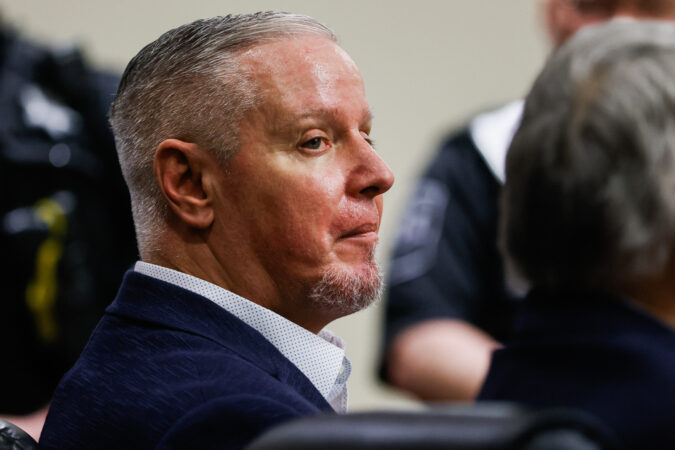
    WINDER, Ga. — A Georgia man who gave his teenage son the gun he’s accused of using to kill two students and two teachers at a high school was convicted Tuesday of second-degree murder and involuntary manslaughter.

    Jurors took less than two hours to find Colin Gray guilty of all charges in the September 2024 shooting at Apalachee High School in Winder, northeast of Atlanta. Gray now joins a growing number of parents being held responsible in court after their children were accused in shootings.

    Colin Gray was found guilty of second-degree murder in the deaths of two 14-year-old students, Mason Schermerhorn and Christian Angulo. Georgia law defines second-degree murder as causing the death of a child by committing the crime of cruelty to children. Gray was found guilty of involuntary manslaughter in the killings of teachers Richard Aspinwall, 39, and Cristina Irimie, 53.

    Another teacher and eight other students were wounded. Gray was also convicted of multiple counts of reckless conduct and cruelty to children.

    Reactions to the verdict

    Gray showed little emotion as the verdict was read and each juror was polled by the judge. Deputies then cuffed his hands behind his back as he stood at the defense table, speaking with his lawyer. He will be sentenced at a later date. Second-degree murder is punishable by at least 10 but no more than 30 years in prison, while involuntary manslaughter carries a penalty of one to 10 years in prison.

    Some relatives of victims wept as the verdicts were read. They declined to comment after court. Gray’s defense lawyers left without speaking to reporters.

    “We talk a lot about rights in our country,” Barrow County District Attorney Brad Smith said after the verdict. “But God gave us a duty to protect our children, and I hope that we remember that, as parents, as community members, to protect our children because that is our God-given duty.”

    The teen’s mother, Marcee Gray, wasn’t charged. She testified that she had urged her estranged husband to take any guns and lock them inside his truck so they would not be accessible to their son. She and Colin Gray were separated in the months leading up to the shooting, and Colt Gray lived mostly with his father during that time. She declined to comment when reached by phone after the verdict.

    The shooting

    Prosecutors said Gray gave his son the gun as a Christmas gift and allowed him access to it along with ammunition despite the boy’s deteriorating mental health. They said he had “sufficient warning that Colt Gray would harm and endanger” other people.

    Fourteen at the time of the shooting, Colt Gray has pleaded not guilty to a total of 55 counts, including murder. A judge has set a status hearing for mid-March.

    Investigators said Colt Gray carefully planned the Sept. 4, 2024, shooting at the school attended by 1,900 students.

    He boarded the school bus with a semiautomatic, assault-style rifle in his book bag, the barrel sticking out and wrapped in poster board, investigators said. He left his second-period class and emerged from a bathroom with the gun and shot people in a classroom and hallways, investigators said.

    Parents’ responsibility

    Colin Gray knew his son was obsessed with school shooters, even having a shrine in his bedroom to Nikolas Cruz, the shooter in the 2018 massacre at Florida’s Marjory Stoneman Douglas High School, prosecutors said.

    “It wasn’t like one parent missed one warning,” Smith told reporters. “This was multiple warnings over a lengthy period of time and, like we said, you just had to do one thing — take that rifle away and this would have been prevented.”

    Jennifer and James Crumbley, the first U.S. parents held criminally responsible for a mass school shooting committed by a child, are serving 10-year prison terms for involuntary manslaughter after their son Ethan killed four students and wounded others in Michigan in 2021.

    Colin Gray was the first such parent to be charged in Georgia. Smith said Marcee Gray had seen what happened in Michigan and asked her husband to remove the weapons as a result. “So Michigan was able to move the needle to the point that it almost stopped this tragedy,” he said. “We hope we’ve moved the needle a little further.”

    Legislative changes

    Georgia lawmakers last year passed a school safety bill in response to the shooting. It directs state officials to create an alert system, including the names of students who an investigation has found threatened violence or committed violence at schools.

    It also requires law enforcement to notify schools when officers learn a child has threatened death or injury to someone at a school, the implementation of mobile panic alert buttons at schools, quicker transfers of records when students switch schools and mental health coordinators in each of the state’s 180 school districts.

    Legislators also approved a request by Gov. Brian Kemp to spend an extra $50 million on school safety.