Category: Nation World News Wires

  • Iran-backed Houthis enter the month-old war and could further threaten shipping

    Iran-backed Houthis enter the month-old war and could further threaten shipping

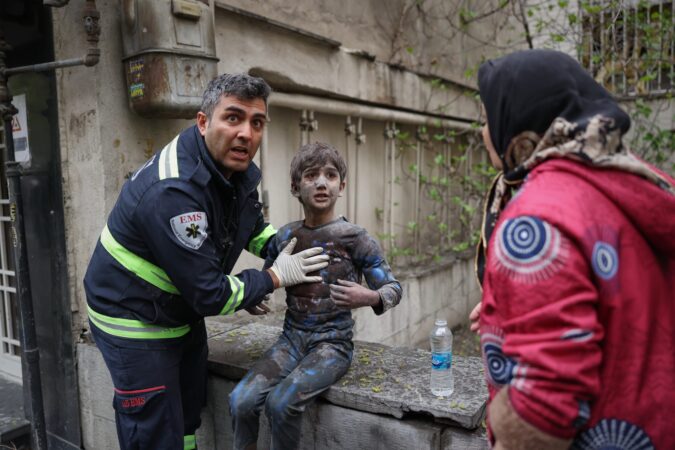
    DUBAI, United Arab Emirates — Iranian-backed Houthi rebels entered the month-old war in the Middle East on Saturday, claiming two missile launches at Israel. About 2,500 U.S. Marines arrived in the region. And Pakistan’s government said that regional powers plan to meet Sunday to discuss how to end the fighting.

    The war has threatened global supplies of oil and natural gas, sparked fertilizer shortages and disrupted air travel. Iran’s grip on the strategic Strait of Hormuz has shaken markets and prices. The United States and Israel continue to strike Iran, whose retaliatory attacks have targeted Israel and neighboring Gulf Arab states. More than 3,000 people have been killed.

    The Houthis’ entry could further hurt global shipping if they again target vessels in the Bab el-Mandeb Strait off the Red Sea, through which about 12% of the world’s trade typically passes.

    There could be limited relief after Iran on Friday agreed to allow humanitarian aid and agricultural shipments through the Strait of Hormuz following a U.N. request. President Donald Trump, meanwhile, has given Iran until April 6 to reopen the strait.

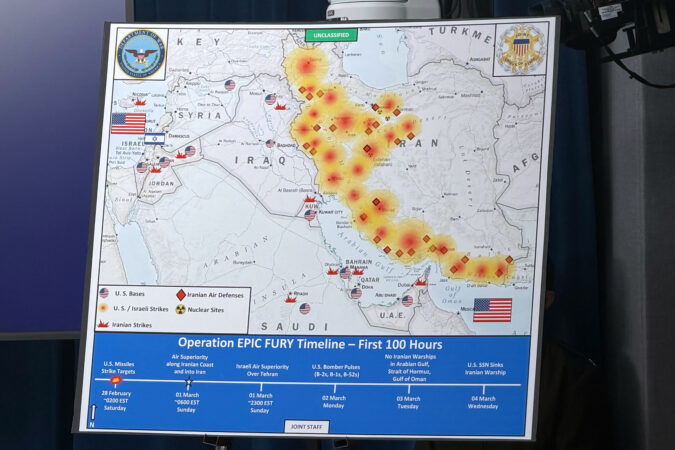
    Witnesses in Tehran reported heavy strikes late Saturday. Israel’s military earlier said that it targeted Iran’s naval weapons production facilities, and said that it would finish attacking essential weapons production sites within “a few days.” Iran fired missiles toward Israel. The U.S. said that it has struck more than 11,000 Iranian targets in the war.

    And Ukraine’s president visited Gulf nations as his country offers defense help with drones.

    Houthi involvement sparks concerns

    Houthi Brig. Gen. Yahya Saree said on the rebels’ Al-Masirah satellite television station that they launched missiles toward “sensitive Israeli military sites” in the south.

    If the Houthis increase attacks on commercial shipping, as they have in the past, it would further push up oil prices and destabilize “all of maritime security,” said Ahmed Nagi, a senior Yemen analyst at the International Crisis Group. “The impact would not be limited to the energy market.”

    The Bab el-Mandeb, at the southern tip of the Arabian Peninsula, is crucial for vessels heading to the Suez Canal through the Red Sea. Saudi Arabia has been sending millions of barrels of crude oil a day through it because the Strait of Hormuz is effectively closed.

    Houthi rebels attacked more than 100 merchant vessels with missiles and drones, sinking two vessels, between November 2023 and January 2025, saying that it was acting in solidarity with Palestinians in Gaza during the Israel-Hamas war.

    The Houthis’ latest involvement would complicate the deployment of the USS Gerald R. Ford, the aircraft carrier that arrived in Croatia on Saturday for maintenance. Sending it to the Red Sea could draw attacks similar to those on the USS Dwight D. Eisenhower in 2024 and the USS Harry S. Truman in 2025.

    The Houthis have held Yemen’s capital, Sanaa, since 2014. Saudi Arabia launched a war against the Houthis on behalf of Yemen’s exiled government in 2015, and they now have an uneasy ceasefire.

    Diplomacy attempts as U.S. beefs up troop numbers

    Pakistan said that Saudi Arabia, Turkey, and Egypt will send top diplomats to Islamabad for talks aimed at ending the war, arriving Sunday for a two-day visit. Pakistani Prime Minister Shehbaz Sharif said that he and Iranian President Masoud Pezeshkian held “extensive discussions” on regional hostilities.

    But Iranian Foreign Minister Abbas Araghchi told his Turkish counterpart by phone that Tehran was skeptical about recent diplomatic efforts. Iranian state-run media said that Araghchi accused the United States of making “unreasonable demands” and exhibiting “contradictory actions.”

    Pakistani Foreign Minister Ishaq Dar later spoke with Araghchi and urged “an end to all attacks and hostilities.”

    Trump envoy Steve Witkoff has said that Washington delivered a 15-point “action list” to Iran for a possible ceasefire, with a proposal to restrict Iran’s nuclear program — the issue at the heart of tensions with the U.S. and Israel — and reopen the Strait of Hormuz. Tehran rejected it and presented a five-point proposal that included reparations and recognition of its sovereignty over the waterway.

    Meanwhile, U.S. ships with around 2,500 Marines trained in amphibious landings have arrived, adding to the largest American force in the region in more than two decades. And at least 1,000 paratroopers from the 82nd Airborne Division, trained to land in hostile territory to secure key positions and airfields, have been ordered to the Middle East.

    Secretary of State Marco Rubio has said that Washington “can achieve all of our objectives without ground troops.”

    U.S. troops wounded at Saudi base

    More than two dozen U.S. troops have been wounded in Iranian attacks on Saudi Arabia’s Prince Sultan Air Base in the last week, according to two people briefed on the matter who spoke on condition of anonymity because they weren’t authorized to comment publicly.

    Iran fired six ballistic missiles and 29 drones at the base Friday, injuring at least 15 troops, five of them seriously, they said.

    The base, about 60 miles from the Saudi capital Riyadh, was attacked twice earlier in the week, including a strike that wounded 14 U.S. troops, according to the people briefed on the matter.

    More than 300 U.S. service members have been wounded in the war. At least 13 have been reported killed.

    Death toll climbs

    Iranian authorities say more than 1,900 people have been killed in the Islamic Republic, while 19 have been reported dead in Israel.

    In Lebanon, where Israel has started an invasion in the south while targeting the Hezbollah militant group, officials said that more than 1,100 people in the country have been killed since the start of the war.

    In Iraq, where Iranian-supported militia groups have entered the conflict, 80 members of the security forces have died.

    In Gulf states, 20 people have been killed. Four have been killed in the occupied West Bank.
  • No Kings rallies draw crowds across U.S. Springsteen headlines Minnesota demonstration

    No Kings rallies draw crowds across U.S. Springsteen headlines Minnesota demonstration

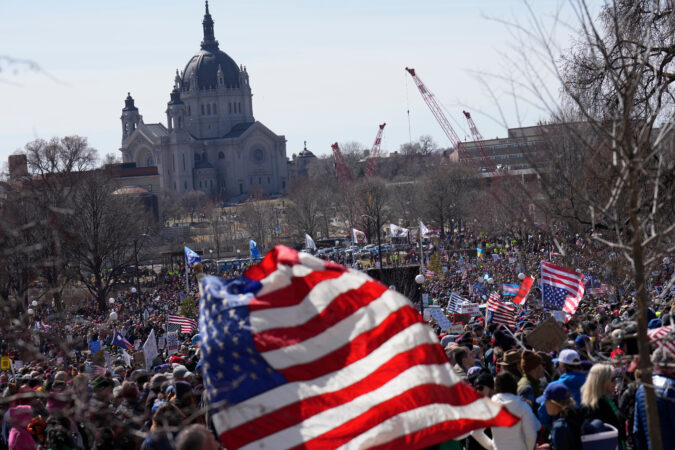
    ST. PAUL, Minn. — Crowds of people protested Saturday against the war in Iran and President Donald Trump’s actions, in No Kings rallies across the U.S. and in Europe. Minnesota took center stage, in what organizers expected to be mass demonstrations involving millions of people.

    Thousands of people stood shoulder-to-shoulder on the Minnesota Capitol lawn and surrounding streets in St. Paul. Some held upside down U.S. flags, historically a sign of distress.

    The event’s headliner was Bruce Springsteen, who performed “Streets of Minneapolis.” He wrote the song in response to the fatal shootings of Renee Good and Alex Pretti by federal agents and in tribute to the thousands of Minnesotans who took to the streets over the winter to protest the Trump administration’s aggressive immigration enforcement.

    Before he launched into the song, Springsteen lamented Good and Pretti’s deaths but said people’s continued pushback against U.S. Customs and Immigration Enforcement has given the rest of the country hope.

    Bruce Springsteen performs during the No Kings protest Saturday in St. Paul, Minn.

    “Your strength and your commitment told us that this was still America,” he said. “And this reactionary nightmare, and these invasions of American cities, will not stand.”

    People rallied from New York City, with almost 8.5 million residents in a solidly blue state, to Driggs, a town of fewer than 2,000 people in eastern Idaho, a state Trump carried with 66% of the vote in 2024.

    Biggest crowds yet expected

    U.S. organizers have estimated that the first two rounds of No Kings rallies drew more than 5 million people in June and 7 million in October. This week they told reporters they expected 9 million participants Saturday, though it was too early to tell whether those expectations were met.

    Organizers said more than 3,100 events — 500 more than in October — were registered, in all 50 states.

    In Topeka, Kansas, a rally outside the Statehouse had people impersonating a frog king and Trump as a baby. Wendy Wyatt drove with “Cats Against Trump” sign from Lawrence, 20 miles to the east, and planned to drive back to her hometown for a later rally there.

    Wyatt said “there are so many things” about the Trump administration that upset her, but “this is very hopeful to me.”

    GOP officials dismissive of protests

    White House spokesperson Abigail Jackson characterized them as the product of “leftist funding networks” with little real public support.

    The “only people who care about these Trump Derangement Therapy Sessions are the reporters who are paid to cover them,” Jackson said in a statement.

    The National Republican Congressional Committee was also sharply critical.

    “These Hate America Rallies are where the far-left’s most violent, deranged fantasies get a microphone,” NRCC spokesperson Maureen O’Toole said.

    Protesters have a long list of causes

    The Trump administration’s aggressive immigration enforcement, particularly in Minnesota, were just one item on a long list of protester grievances that also included the war in Iran and the rollback of transgender rights.

    In Washington, hundreds marched past the Lincoln Memorial and into the National Mall, holding signs that read “Put down the crown, clown” and “Regime change begins at home.” Demonstrators rang bells, played drums and chanted “No kings.”

    Bill Jarcho was there from Seattle, joined by six people dressed as insects wearing tactical vests that said, “LICE,” spoofing ICE as part of what he called a “mock and awe” tour.

    “What we provide is mockery to the king,” Jarcho said. “It’s about taking authoritarianism and making fun of it, which they hate.”

    About 40,000 people marched in a No Kings event in San Diego, police there said.

    In New York, Donna Lieberman, executive director of the New York Civil Liberties Union, said during a news conference that Trump and his supporters want people to be afraid to protest.

    “They want us to be afraid that there’s nothing we can do to stop them,” she said. ”But you know what? They are wrong — dead wrong.”

    But organizers said two-thirds of the RSVPs for the rallies came from outside of major urban centers. That included communities in conservative-leaning states like Idaho, Wyoming, Montana, Utah, South Dakota, and Louisiana, as well in competitive suburban areas of Pennsylvania, Georgia, and Arizona.

    Main event is at the Minnesota Capitol

    Organizers designated the rally there as the national flagship event, in recognition of how the state where federal agents fatally shot two people who were monitoring Trump’s immigration crackdown.

    Springsteen’s Land of Hope & Dreams American Tour has a No Kings theme and kicks off Tuesday in Minneapolis.

    Before the rocker known as “the Boss” took the stage, organizers played a video from Robert DeNiro. The actor said he wakes up every morning depressed because of Trump but was happier Saturday because millions of people were protesting. He also congratulated Minnesota residents for running ICE out.

    An event on the Minnesota Capitol grounds in June drew an estimated 80,000 people and Minnesota organizers expected 100,000 on Saturday.

    The bill also included singer Joan Baez, actor Jane Fonda, Sen. Bernie Sanders, and a long list of other activists, labor leaders, and elected officials.

    Protesters held up a massive sign on the Capitol steps that read, “We had whistles, they had guns. The revolution starts in Minneapolis.”

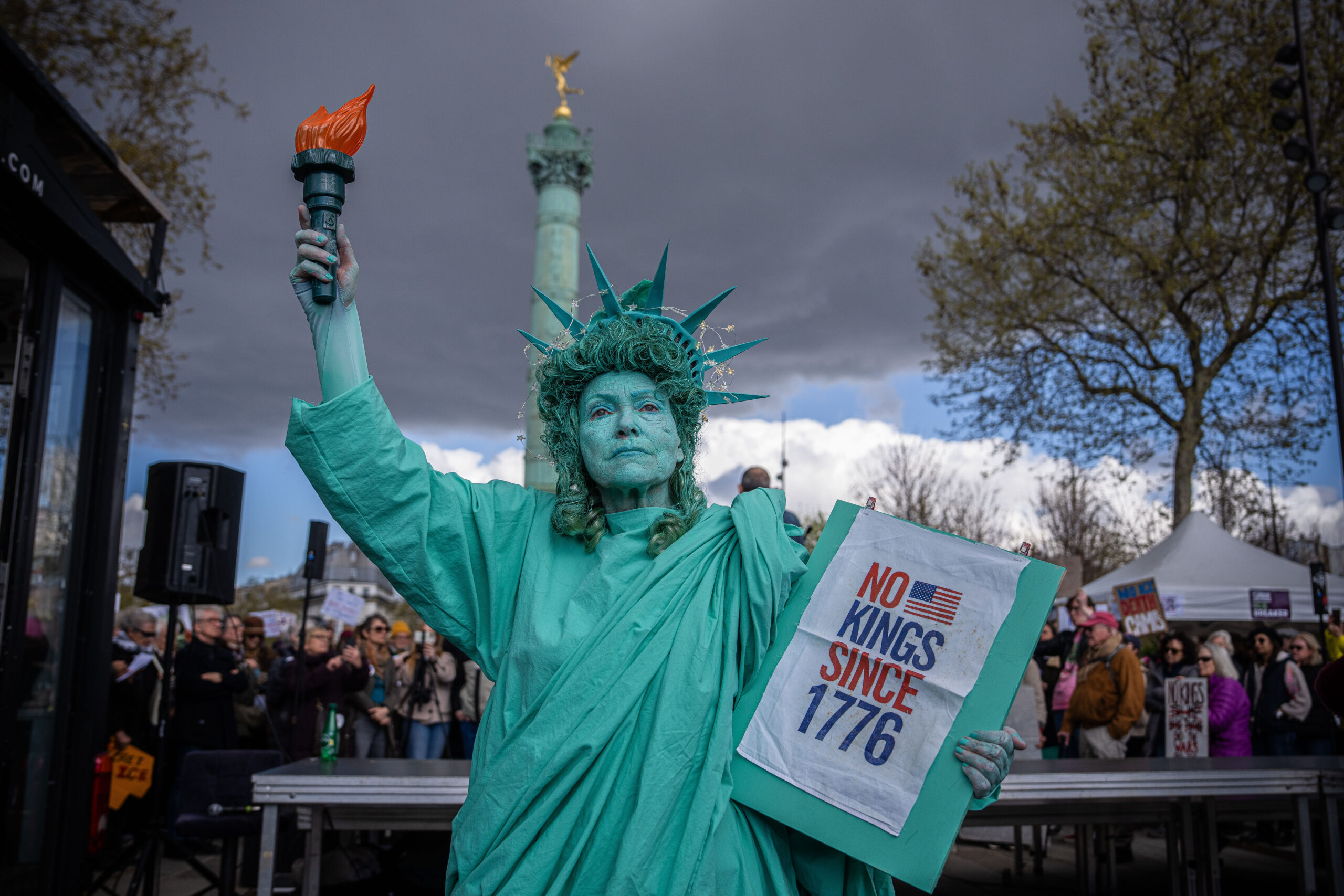
    A woman dressed as the Statue of Liberty takes part in the “No Kings” protest in Paris on Saturday.

    Rallies planned outside the U.S.

    Rallies are also planned in more than a dozen other countries, from Europe to Latin America to Australia, Ezra Levin, a co-executive director of Indivisible, a group spearheading the events, said in an interview. Countries with constitutional monarchies call the protests “No Tyrants,” he said.

    In Rome, thousands of people marched with defiant chants aimed at Premier Giorgia Meloni, whose conservative government saw its referendum for streamlining Italy’s judiciary badly fail earlier this week amid criticism that it was a threat to the courts’ independence. Protesters waved banners protesting the Israeli and U.S. attacks on Iran, calling for “A world free from wars.”

    In London, people protesting the war in Iran held banners that said, “Stop the far right” and “Stand up to Racism.”

    And on Saturday morning in Paris, several hundred people, mostly Americans living in France, along with French labor unions and human rights organizations, gathered at the Bastille.

    “I protest all of Trump’s illegal, immoral, reckless, and feckless, endless wars,” Ada Shen, the Paris No Kings organizer, said.

  • Thousands strike at one of the largest meatpacking plants in the U.S.

    Thousands strike at one of the largest meatpacking plants in the U.S.

    GREELEY, Colo. — About 3,800 workers for the world’s largest meatpacking company began striking Monday in Colorado, and if they don’t get a new contract soon, already costly beef could become even more expensive for U.S. consumers.

    As the sun rose, hundreds of strikers picketed outside the Swift Beef Co. plant in Greeley, owned by JBS USA and one of the largest slaughterhouses in the nation. Walking back and forth in the morning cold, bundled in blankets, some yelled “huelga!” — Spanish for strike. Others carried signs saying “please don’t patronize JBS.”

    The first walkout at a U.S. beef slaughterhouse in four decades follows accusations from union officials that the company retaliated against workers and committed other unfair labor practices. The union also said the company offered less than 2% more a year in wages, which is less than inflation in Colorado.

    A spokesperson at JBS USA denied any labor law violations and said its offer is fair. Each side blamed the other for an impasse before the contract ended Sunday night.

    “They don’t really value their workers and we’re the ones that help them get all their profit,” said Leticia Avalos, a 34-year-old union steward and Greeley native who has been working at the plant since 2020. She depends on the job to support her family including a 6-month-old baby, but said she’ll make sacrifices to get the company to listen.

    Union says workers pay to protect themselves

    The union says its workers perform some of the most difficult and dangerous jobs in the country, and deserve higher wages and better healthcare. It said JBS in many cases has charged workers $1,100 or more to offset the company’s expenses for personal protective equipment needed to ensure worker safety.

    Smoke rose from parts of the plant Monday but it was unclear if it was fully operating. JBS spokesperson Nikki Richardson said “many team members” reported to work, but did not provide a precise number.

    “Our team members want stability, they want to support their families, and they deserved the opportunity to vote on the company’s historic offer — an opportunity the union leadership has denied them,” Richardson wrote in an email.

    She said any employee who didn’t strike would have work and be paid. The company also has said it would move production as needed to other JBS facilities.

    A federal probe into soaring beef prices

    The strike comes at a 75-year low in U.S. cattle numbers, with a Jan. 1 inventory of 86.2 million animals — down 1% from the prior year. The decline has been driven in part by drought and low prices offered to ranchers. Meanwhile, beef prices have soared to record levels.

    President Donald Trump’s tariffs on Brazil, a major beef exporter, have also curbed imports. Pressed to act on “affordability” issues after Republican losses last November, Trump accused foreign-owned companies of driving up U.S. beef prices and asked the Department of Justice to investigate.

    The average price for 100% ground chuck beef more than doubled over the past two decades from $2.55 to $6.07 per pound, according to the Bureau of Labor Statistics. The increase has added to economic anxiety in the U.S. The Trump administration has promoted a trade deal with Argentina in efforts to lower prices for food, including beef.

    The Greeley plant has about 6% of the total U.S. beef slaughterhouse capacity, said Abby Greiman, a livestock market adviser for industry consultant Ever.Ag.

    Most ranchers can still get cattle to market because the national herd is smaller, and that could give JBS some leverage in negotiations, since other slaughterhouses can absorb the Greeley plant’s work, Greiman said.

    Feedlots hold clues to consumer costs

    Yet an extended strike at Greeley could disrupt the industry, particularly in Colorado and neighboring states, said Jennifer Martin at Colorado State University’s animal sciences department.

    “The feedlots, the people who have the cattle right now — the longer they sit kind of in a holding pattern, the more expensive they become to feed,” said Martin. “For consumers, it means that prices will likely go up.”

    The strike follows the January closure of a meatpacking plant in Lexington, Neb., which was expected to ripple through the local economy and community. Tyson Foods cited the smaller herd and millions of dollars in expected losses this year.

    JBS, the world’s largest meatpacker, has a market capitalization of $17 billion on the New York Stock Exchange after being approved for trading last May, despite environmental opposition and a federal probe that led to its guilty plea in October to bribing Brazilian officials for the financing it used for its U.S. expansion.

    JBS is a top local employer

    At the Greeley plant, the company tried to intimidate workers to quit the union in one-on-one meetings, union general counsel Matt Shechter said.

    Despite the pressure, 99% of workers voted to authorize the strike, said Kim Cordova, president of the United Food and Commercial Union Local 7.

    It’s the first strike at a U.S. slaughterhouse since workers walked out at a Hormel plant in Minnesota in 1985, according to Cordova and Martin. That strike lasted more than a year and included violent confrontations between police and protesters, according to the Minnesota Historical Society.

    JBS is the top employer in Greeley, a city 50 miles northeast of Denver with a population of about 114,000 people.

    “It’s a huge impact in the community for us to be striking,” said union steward Avalos. “I know a lot of us are worried, and hope that nothing goes even more south.”

  • A bipartisan group of 13 attorneys general sues OneMain over hidden loan add-ons

    A bipartisan group of 13 attorneys general sues OneMain over hidden loan add-ons

    NEW YORK — A bipartisan group of 13 attorneys general sued the financial company OneMain Financial on Monday, alleging the company placed unwanted additional products and other hidden costs on its loans that led to higher costs for its borrowers.

    The lawsuit, filed in New York on Monday, says OneMain employees steered borrowers into purchasing credit insurance and other loan-related products while making deceptive claims about whether the products were required and how they could be canceled. The attorneys general say the conduct affected tens of thousands of borrowers and violated state consumer protection laws.

    The products include credit insurance, which claims to pay the loan if a consumer dies or becomes unemployed, as well as products like home and auto memberships that are similar to AAA. These companies are, in turn, owned by OneMain through a related company.

    These products increase the cost of the loan. The lawsuit alleges that OneMain does not check whether the consumer may already have a home or auto membership service through AAA as well.

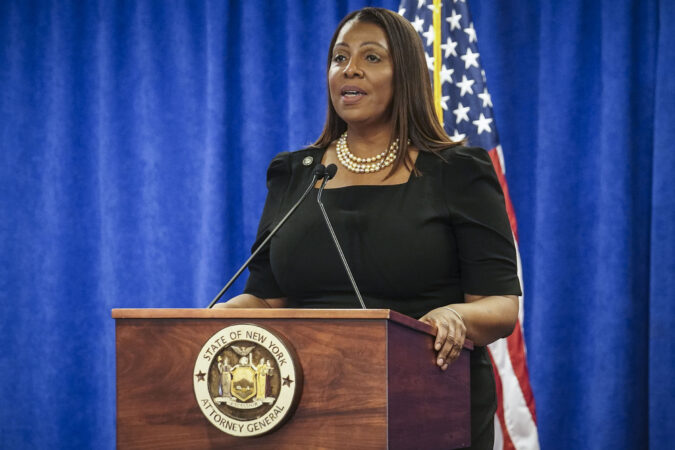
    “OneMain targets people who are already struggling financially, saddling them with hidden fees and misleading loans to trap them in even more debt,” New York State Attorney General Letitia James said in a statement.

    OneMain said the practices involved with the lawsuit were already reviewed with the Consumer Financial Protection Bureau in 2023. In that settlement, OneMain agreed to repay $10 million to consumers and pay $10 million in fines and penalties for allegedly selling add-on products to consumers.

    “The states’ allegations are simply untrue — their case is wrong on the facts and wrong on the law and attempts to re-litigate issues that were already reviewed by the Consumer Financial Protection Bureau and fully resolved. We will litigate this case vigorously and look forward to proving the truth in court.”

    OneMain, based in Evansville, Ind., is one of the largest U.S. non-bank installment lenders. It primarily offers loans to those with subprime credit scores, meaning much of its customers are already financially struggling when they come to OneMain.

    Along with New York, the other attorneys general joining the lawsuit include the states of Colorado, Nevada, Maryland, North Dakota, Oklahoma, Washington, Wisconsin, New Jersey, South Dakota, and New Hampshire, as well as the Commonwealths of Virginia and Pennsylvania.

  • Customs and Border Protection official says new process for tariff refunds could be ready in 45 days

    Customs and Border Protection official says new process for tariff refunds could be ready in 45 days

    NEW YORK — Government officials are getting closer to ironing out a refund process for the hundreds of thousands of companies that paid tariffs now deemed illegal.

    In a filing with the Court of International Trade on Friday, Brandon Lord, executive director of U.S. Customs and Border Protection’s trade policy and programs directorate, said the CBP is working on a new system that will simplify the process. He said it should be ready in 45 days and require “minimal submission from importers.”

    The filing comes after a judge on Wednesday ordered the government to start paying back all importers the illegal tariffs they paid — with interest. Judge Richard Eaton of the U.S. Court of International Trade wrote that “all importers of record’’ were “entitled to benefit” from the Supreme Court ruling that struck down sweeping double-digit import taxes President Donald Trump imposed last year under the 1977 International Emergency Economic Powers Act (IEEPA).

    Eaton would have to approve the process before it proceeds.

    In the filing, Lord said that as of March 4, over 330,000 importers have made a total of over 53 million entries with CBP and paid about $166 billion in tariffs that now have to be refunded.

    Lord estimated that under the current system, refunds would take more than 4.4 million man hours to complete, and it isn’t feasible to divert all employees to the refund process full time, because “CBP’s other functions and responsibilities would be severely disrupted and the agency would not be able to continue to adequately perform its mission, including its revenue protection mandate and its vital national security functions.”

    But he said the agency is confident they can develop and implement a new process that will streamline and consolidate refunds and interest payments. The system should be ready in 45 days, he said.

    “This new process will require minimal submission from importers,” he wrote. “It will also minimize errors by ensuring accurate IEEPA refund calculations through system validations and allowing for a review period for CBP to resolve any discrepancies with the importer and to confirm no other outstanding enforcement issues or no revenue is owed.”

    Lord also noted that as of Feb. 6 the CBP only issues refunds electronically, but most importers haven’t completed signing up for the electronic system. Of the 330,566 importers who paid tariffs, only 21,423 have completed the setup process to receive their refunds electronically.

    “Until importers complete the process to receive refunds electronically, the refunds will be rejected,” he said.

  • Former Democratic presidents remember the late Rev. Jesse Jackson during final public tribute

    Former Democratic presidents remember the late Rev. Jesse Jackson during final public tribute

    CHICAGO — From former presidents to an NBA Hall of Famer to prominent church pastors, stories of the Rev. Jesse Jackson Sr.’s influence on politics, corporate boardrooms, and picket lines loomed large Friday at a celebration honoring the late civil rights leader.

    Thousands of people gathered at a church on Chicago’s South Side to pay a final public tribute to Jackson.

    The celebration — with appearances by Grammy-winning gospel singers and Jennifer Hudson — felt at times like a church service and others like a political rally. Many, from former President Bill Clinton to the Rev. Al Sharpton, a civil rights leader and founder of the National Action Network, likened Jackson’s death to a call to action, from speaking out against justice to voting in the midterms.

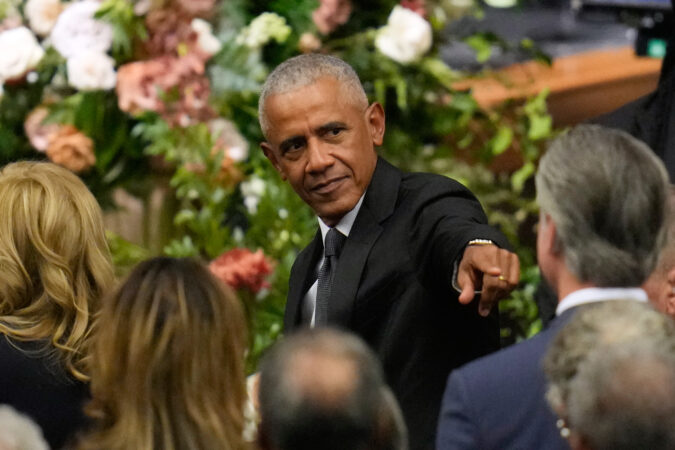
    Former President Barack Obama said Jackson’s presidential runs in the 1980s set the stage for other Black leaders, including his own successful 2009 presidency and re-election.

    “The message he sent to a 22-year-old child of a single mother with a funny name, an outsider, was that maybe there wasn’t any place or any room where we didn’t belong,” Obama said. “He paved the road for so many others to follow.”

    Obama, joined by Clinton and former Democratic president Joe Biden at a celebration of life for Jackson, received the loudest round of applause as the three entered the chamber.

    “We are living in a time when it can be hard to hope,” Obama said. “Each day we wake up to some new assault to our democratic institutions. Another setback to the idea of the rule of law, an offense to common decency. Every day you wake up to things you just didn’t think were possible.”

    “Each day we are told by folks in high office to fear each other,” said Obama, referring to the current Republican leadership in Washington.

    Clinton said Jackson made him a better president, while former Democratic Vice President Kamala Harris talked about Jackson’s inspiring 1980s presidential runs and showed off campaign memorabilia she had kept from them. Former President Joe Biden also spoke during the service.

    President Donald Trump, who praised Jackson on social media after he died and also shared photos of the two of them together, did not attend.

    Thousands attend Jackson memorial service

    The event honors the protégé of the Rev. Dr. Martin Luther King Jr. and two-time presidential candidate and follows memorial services that drew large crowds in Chicago and South Carolina, where Jackson was born. Friday’s celebration — at an influential Black church with a 10,000-seat arena — was expected to be the largest.

    Crowds of attendees waited in long lines outside the church as television screens played excerpts of some of Jackson’s most famous speeches. Inside, vendors sold pins with his 1984 presidential slogan and hoodies with his “I Am Somebody” mantra.

    Along with a slew of Illinois elected leaders, notable attendees included actor and producer Tyler Perry, California Gov. Gavin Newsom, and political activist and theologian Cornel West. Detroit Pistons great and Chicago native Isiah Thomas was one of the speakers.

    Marketing professional Chelsia Bryan said Friday that she decided to attend the memorial service because it was “a chance to be part of something historic.”

    “As a Black woman, knowing that someone pretty much gave their life, dedicated their life to make sure I can do the things that I can do now, he’s worth honoring,” Bryan said.

    Jackson Jr.: Everyone welcome

    Jackson died last month at age 84 after battling a rare neurological disorder that affected his mobility and ability to speak. Family members say he continued coming into the office until last year and communicated through hand signals. His final public appearances included the 2024 Democratic National Convention in Chicago.

    “Every single person in here has a Jesse Jackson story,” his eldest son, Jesse Jackson Jr., said Friday. “The time he shook your hand, the time he prayed for you, the time he held you up, the time he prayed the funeral for somebody you know … and he prayed you to a new course of existence.”

    Sitting in the crowd was 90-year-old Mary Lovett. She said Jackson’s advocacy inspired her many times, from when she moved from Mississippi to Chicago in the 1960s, taught elementary school and became a mom. She twice voted for Jackson during both of his presidential runs and appreciated how he always spoke up for underrepresented people. “He’s gone, but I hope his legacy lives,” she said. “I hope we can remember what he tried to teach us.”

    Jackson’s service was to the poor, underrepresented

    Jackson’s pursuits were countless, taking him to all corners of the globe: Advocating for the poor and underrepresented on issues including voting rights, healthcare, job opportunities, and education. He scored diplomatic victories with world leaders, and through Rainbow PUSH Coalition, he channeled cries for Black pride and self-determination into corporate boardrooms, pressuring executives to make America a more open and equitable society.

    Another son, Yusef Jackson, who runs the Rainbow PUSH Coalition, recalled how his father carried a well-worn Bible but also showed his faith by showing up to picket lines.

    “He lived a revolutionary Christian faith rooted in justice, nonviolence and the moral righteousness,” Yusef Jackson said Friday. “He was deeply involved in the political struggles of his time, but his gift was that he could rise above them. It’s not about the left wing or the right wing. It takes two wings to fly. For him, the goal was always the moral center.”

    Jackson’s services in Chicago and South Carolina drew civic leaders, school groups, and everyday people who said they were touched by Jackson’s work, from scholarship programs to advocating for inmates. Several states flew flags at half-staff in his honor.

    Services in Washington, D.C., were tabled after a request to allow Jackson to lie in honor in the United States Capitol rotunda was denied by House Speaker Mike Johnson, who said the space is typically reserved for select officials, including former presidents. Details on a future event have not been made public.

  • Trump administration’s embattled FDA vaccine chief is leaving for the second time

    Trump administration’s embattled FDA vaccine chief is leaving for the second time

    WASHINGTON — The Food and Drug Administration’s embattled vaccine chief, Vinay Prasad, is once again leaving the agency — the second time in less than a year that he’s departed after controversial decisions involving the review of vaccinations and specialty drugs for rare diseases.

    FDA Commissioner Marty Makary announced the news to FDA staff in an email late Friday, saying Prasad would depart at the end of April. Makary said Prasad would return to his academic job at the University of California, San Francisco.

    In July, Prasad was briefly forced from his job after running afoul of biotech executives, patient groups, and conservative allies of President Donald Trump. He was reinstated less than two weeks later with the backing of Health Secretary Robert F. Kennedy Jr. and Makary.

    Prasad’s latest ouster follows a string of high-profile controversies involving the FDA’s review of vaccines, gene therapies, and biotech drugs in which companies have criticized the agency for reversing itself, in some cases calling for new trials of products previously greenlighted by regulators.

    In the last month, Prasad has come under fire from pharmaceutical executives, investors, members of Congress, and other critics for multiple decisions at the agency.

    First, Prasad initially refused to allow the FDA to review a highly anticipated flu vaccine from drugmaker Moderna made with mRNA technology. The rejection of the application, highly unusual for the FDA, prompted Moderna to go public with Prasad’s decision and vow to formally challenge it.

    A week after the rejection became public, the FDA reversed course and said it would accept the shot for review after all, pending an additional study from Moderna.

    Then, in the past week, the FDA engaged in a highly unusual public fight with a small drug company developing an experimental treatment for Huntington’s disease, a fatal condition that affects about 40,000 people in the U.S.

    The company, UniQure, said Monday that the FDA was demanding a new trial of its gene therapy that would involve performing a sham surgery on some of the patients in the trial. The company’s gene therapy is injected directly into the brain during a surgical procedure.

    Company executives said the request for a sham-controlled trial contradicted previous FDA guidance and raised ethical concerns for patients.

    On Thursday, the FDA held a highly unusual news conference with reporters to criticize the company’s therapy and defend the agency’s request for an additional study.

    A senior FDA official, who requested anonymity to speak with reporters, called the company’s original study “stone cold negative.”

    “We have a failed product here,” he added.

    The FDA typically communicates in carefully vetted written statements when speaking about scientific disagreements, especially those involving experimental drugs that are still under the agency’s review.

    Prasad’s time as the FDA’s top vaccine and biotech regulator has been marked by a series of similar disputes with the companies the agency regulates.

    More than a half-dozen drugmakers studying therapies for rare or hard-to-treat diseases have received rejection letters or requests to run additional studies, adding years and potentially many millions of dollars to their development plans.

    A longtime academic and critic of the FDA’s standards for drug reviews, Prasad’s approach to regulation since arriving at the FDA last May has confounded many FDA observers and critics.

    On repeated occasions, Prasad joined Makary in announcing steps to make FDA drug reviews faster and easier for companies. But he also has imposed new warnings and study requirements for some biotech drugs and vaccines, particularly COVID shots that have long been a target for Kennedy, a longtime anti-vaccine activist before joining the Trump administration.

  • Evidence suggests the deadly blast at an Iranian school was likely a U.S. airstrike

    Evidence suggests the deadly blast at an Iranian school was likely a U.S. airstrike

    JERUSALEM — Satellite images, expert analysis, a U.S. official and public information released by the U.S. and Israeli militaries suggest an explosion that killed scores of Iranian students at a school was likely caused by U.S. airstrikes that also hit an adjacent compound associated with the regime’s Revolutionary Guard.

    The Feb. 28 strike, which had the highest reported civilian death toll since the war began, has come under staunch criticism from the United Nations and human rights monitors. More than 165 people were killed, most of them of children, in the blast during school hours at Shajareh Tayyebeh Elementary School, according to Iranian state media.

    Satellite images taken Wednesday and reviewed by the the Associated Press show most of the school in the city of Minab, about 680 miles southeast of Tehran, reduced to rubble, a crescent shape punched into its roof. Experts say the tight pattern of the damage visible on the satellite photos is consistent with a targeted airstrike.

    Iran has blamed Israel and the United States for the blast. Neither country has accepted responsibility. Asked about the strike at the school at a Pentagon press briefing Wednesday, Defense Secretary Pete Hegseth said, “All I can say is that we’re investigating that. We, of course, never target civilian targets. But we’re taking a look and investigating that.”

    Several factors point to a U.S. strike.

    One is the launching of an assessment of the incident by the U.S. military. According to the Pentagon’s instructions on processes for mitigating civilian harm, an assessment is launched after a group of investigators make an initial determination that the U.S. military may bear culpability. A U.S. official told the AP that the strike was likely U.S. The official spoke anonymously because they were not authorized to comment publicly on the sensitive matter.

    Another is the location of the school — next to a base of the Revolutionary Guard in Hormozgan Province and close to a barracks for its naval brigade. The U.S. military has focused on naval targets and acknowledged strikes in the province, including one in the vicinity of the school.

    Israel, which has denied conducting the strike, has focused on areas of Iran closer to Israel and hasn’t reported conducting any strikes south of Isfahan, 500 miles away. The U.S. is operating warships in the Arabian Sea, including the USS Abraham Lincoln aircraft carrier, within range of the school.

    When asked by the AP about its findings, U.S. military Central Command spokesperson Capt. Tim Hawkins said, “It would be inappropriate to comment given the incident is under investigation.”

    White House press secretary Karoline Leavitt told reporters Friday that she had no updates on the investigation and did not directly answer a question about whether Trump was satisfied with the pace of the probe.

    “My assumption is that probably there were some activities recently there and they detected and tracked them, but … they weren’t aware or didn’t have an up-to-date database that a girls school was there and they bombed it,” said Farzin Nadimi, a senior fellow at the Washington Institute for Near East Policy who studies Iran’s military.

    Satellite images show damage

    The school is adjacent to a walled compound labeled on maps as the Seyyed Al-Shohada Cultural Complex of the Guard, which included a pharmacy, gym, and sports field.

    In addition to the school, satellite photos show that blasts struck at least five buildings in the Guard compound, leaving the area pocked with craters, charred holes in roofs, and piles of rubble. Historical satellite imagery shows the school building was not separated from the Guard compound until about a decade ago when a wall was built between them.

    Iranian online map applications show a living quarters for the Assef Brigades about 165 yards from the school, inside the Revolutionary Guard compound. The 16th Assef Coastal Missile Group is part of the Guard’s navy, Nadimi said. The 1st Naval District, which the Assef Brigades belong to, is responsible for the Strait of Hormuz, the narrow mouth of the Persian Gulf through which a fifth of all oil and natural gas traded passes. The strait has been a particular point of conflict in the war.

    In the aftermath of the strike, video from Iran’s state broadcaster verified by the AP using satellite imagery showed dozens of fresh graves dug at a nearby cemetery. Nadimi said it is likely the school taught daughters of Guard personnel.

    The strike has drawn wide condemnation from the secretary-general of the United Nations and international human rights groups. The criticism comes amid reports that airstrikes have also hit other schools in Iran.

    The London-based conflict monitoring organization Airwars is reviewing three other school strikes that caused casualties. In addition to those, in the last 48 hours the U.S.-based Human Rights Activists News Agency reported at least two more schools were struck.

    Targeting schools would be a clear violation of international laws governing armed conflict, said Elise Baker, a senior staff lawyer at the Atlantic Council, a Washington-based nonprofit think tank.

    “Strikes can only legally target military objectives and combatants, but the school was a civilian object and the students and teachers were civilians,” Baker said. “The school’s proximity to [Guard] facilities and the attendance of children of [Guard] members at the school does not change that conclusion: It was a civilian object.”

    Pattern of damage suggests targeted strike

    Three experts told the AP the satellite imagery and videos from the scene strongly suggested multiple munitions hit the compound. Complicating any assessment is the lack of images of bomb fragments from the blast. No independent agency has reached the site during the war to investigate, either.

    There are no craters or evidence of bombs hitting in the surrounding neighborhood, suggesting a great degree of accuracy, said Corey Scher, a researcher who uses satellite imagery and radar data to study landscape changes in armed conflict zones.

    “All the strikes are clustered within the walled-off compound,” Scher said. ”That’s one level of precision at the block level. And then most of the strikes are basically leading to direct hits on buildings. That’s another level of precision.”

    Scher said the school and the other buildings struck in the compound showed damage consistent with the use of air-to-surface munitions.

    “They didn’t explode in the air above the building,” he said. “It looks like the explosion happened at the time they hit the surface, whether it was the building or the ground.”

    Sean Moorhouse, a former British Army officer and explosive ordnance disposal expert, said the available satellite imagery was insufficient to determine exactly what type of munitions were used in the strike, but he said the visible damage was consistent with what would be expected with impacts from multiple 2,000-pound high-explosive warheads. He said the multiple precise impacts would undercut any suggestion that a malfunctioning Iranian missile hit the school.

    N.R. Jenzen-Jones, the director of Armament Research Services, said the school and Guard compound were targeted with “multiple simultaneous or near-simultaneous strikes.” He said in videos of the school taken immediately after the strike, smoke can be seen rising from the Guard compound. There were also impacts on multiple buildings visible in satellite images and media reports citing witnesses who said they heard multiple explosions.

    “If indeed it is confirmed that an American or Israeli strike hit the school, there are several potential points of failure in the targeting cycle,” Jenzen-Jones said. “We might be seeing an intelligence failure, likely rather early in the process, which misidentified the target or failed to update a targeting list following the building’s change in use.”

  • Florida Bar walks back statement on investigation into Halligan, now says there is none

    Florida Bar walks back statement on investigation into Halligan, now says there is none

    FORT LAUDERDALE, Fla. — The Florida Bar on Friday walked back what it said was an erroneous earlier statement its representatives had made indicating that it had an open investigation into Lindsey Halligan, a former top federal prosecutor in Virginia.

    A letter from a bar association representative to an advocacy group that had requested an inquiry into Halligan said that there was an “investigation pending” in response to the group’s complaint.

    Jennifer Krell Davis, a spokeswoman for the Florida Bar, also said Thursday that there was an “open file” but declined to comment further “as active Florida discipline cases are confidential.”

    On Friday, however, Davis issued a new statement saying, “The Florida Bar wrote a letter to the complainant erroneously stating that there is a pending Bar investigation of member Lindsay Halligan. There is no such pending Bar investigation of Lindsay Halligan.”

    She said the Florida Bar had received a complaint and was monitoring the “ongoing legal proceedings” but did not explain the discrepancy.

    Halligan, a former White House aide for President Donald Trump, pursued cases against the president’s opponents but ultimately left the job after her appointment was deemed unlawful.

    The Campaign for Accountability, a nonprofit watchdog that had sought the bar inquiry, published a letter on its website in which a representative of the Florida Bar confirmed that the organization had an investigation pending.

    A spokesperson for the Florida Bar had told the Associated Press on Thursday that there was an open file on Halligan but declined to comment further because disciplinary cases are confidential.

    On Friday, Michelle Kuppersmith, the executive director of CfA, said the Florida Bar had not directly told them that the Feb. 4 letter contained an erroneous mention of a pending investigation. She said it’s “hard to reconcile” the Bar’s latest statement.

    “If there is no longer an investigation into Halligan, the question is why not, given that three judges indicated she engaged in conduct that appears to violate ethics rules,” Kuppersmith said in a statement.

    Halligan did not immediately respond to several email requests for comment about the investigation.

    The complaint centers on Halligan’s brief but turbulent time as the acting U.S. attorney for the Eastern District of Virginia, historically one of the Justice Department’s most elite and prestigious prosecution offices.

    Halligan, who had served as one of Trump’s attorneys but had no prior experience as a federal prosecutor, was installed in September after the Trump administration effectively forced out her predecessor, Erik Siebert, amid pressure to bring charges against a pair of Trump’s political opponents: former FBI Director James Comey and New York Attorney General Letitia James.

    Halligan secured both indictments but ran into difficulty right away as lawyers for Comey raised questions about a series of what they said were irregularities in the grand jury presentation of the case, including legal and factual errors that tainted the process. A judge in November scolded Halligan for “fundamental misstatements of the law,” including what he said was her suggestion to the grand jury that Comey did not have a Fifth Amendment right to not testify in the case.

    A different judge subsequently dismissed both the Comey and James prosecutions after concluding that Halligan’s appointment by the Justice Department had been unlawful. Halligan left the position in January.

    The complaint rehashes that chronology and also suggests that Halligan may have violated rules of professional conduct by continuing to hold herself out in court filings as acting U.S. attorney for the district after a judge had ruled that she was serving in the position illegally.

    “In this way, Ms. Halligan appears to have issued false or misleading communications regarding herself and her services,” the complaint said.

  • Gulf allies complain U.S. didn’t notify them of Iran attacks and ignored their warnings, sources say

    Gulf allies complain U.S. didn’t notify them of Iran attacks and ignored their warnings, sources say

    CAIRO — The Trump administration is confronting mounting discontent from allies in the Persian Gulf who have complained they were not given adequate time to prepare for the torrent of Iranian drones and missiles bombarding their countries in retaliation for strikes launched by the U.S. and Israel.

    Officials from two Gulf countries said their governments were disappointed in the way the U.S. has handled the war, particularly the initial attack on Iran on Feb. 28. They said their countries were not given advance notice of the U.S.-Israeli attack and complained the U.S. had ignored their warnings that the war would have devastating consequences for the entire region.

    One of the officials said that Gulf countries were frustrated and even angry that the U.S. military has not defended them enough. He said there is belief in the region that the operation has focused on defending Israel and American troops, while leaving Gulf countries to protect themselves, and said that his country’s stock of interceptors was “rapidly depleting.”

    Like others in this story, the Gulf officials spoke on the condition of anonymity because they were discussing a confidential diplomatic matter.

    The governments of Bahrain, Kuwait, Oman, Qatar, Saudi Arabia, and the United Arab Emirates did not respond to requests for comment.

    White House spokeswoman Anna Kelly said in response: “Iran’s retaliatory ballistic missile attacks have decreased by 90% because Operation Epic Fury is crushing their ability to shoot these weapons or produce more. President Trump is in close contact with all of our regional partners, and the terrorist Iranian regime’s attacks on its neighbors prove how imperative it was that President Trump eliminate this threat to our country and our allies.”

    The Pentagon did not respond.

    Official reactions by the Gulf Arab countries have been muted, but public figures with close ties to their governments have been openly critical of the U.S., suggesting that Israeli Prime Minister Benjamin Netanyahu dragged President Donald Trump into a needless war.

    “This is Netanyahu’s war,” Prince Turki al-Faisal, the former Saudi intelligence chief, told CNN on Wednesday. “He somehow convinced the president [Trump] to support his views.”

    Pentagon officials conceded this week in closed-door briefings with lawmakers they are struggling to stop waves of drones launched by Iran, leaving some U.S. targets in the Gulf region, including troops, vulnerable.

    The Gulf countries have emerged as valuable targets for Iran, well within the range of Iran’s short-range missiles and filled with targets, including American troops, high-profile business and tourist locations and energy facilities, disrupting the world’s flow of oil.

    Since the start of the war, Iran has fired at least 380 missiles and over 1,480 drones targeting the five Arab Gulf countries, according to an AP tally based on official statements. At least 13 people have been killed in those countries, according to local officials.

    In addition, six U.S. soldiers were killed in Kuwait on Sunday when an Iranian drone strike hit an operations center in a civilian port, more than 10 miles from the main Army base. The husband of one of the slain soldiers, who was part of a supply and logistics unit based in Iowa, said the operations center was a shipping container-style building and had no defenses.

    In briefings for members of Congress on Tuesday, U.S. Defense Secretary Pete Hegseth and Gen. Dan Caine, chairman of the Joint Chiefs of Staff, told lawmakers that the U.S. will not be able to intercept many of the incoming UAVs, especially the Shaheds, according to three people familiar with the briefings.

    In one of the briefings, Caine and Hegseth did not offer any details when pressed by lawmakers why the U.S. did not seem prepared for Iran to launch waves of drones at U.S. targets in the region, according to one of the people.

    That person, a U.S. official who is familiar with the U.S. security posture in Gulf region, said that the U.S. did not have widespread capabilities throughout the Gulf region to effectively counter waves of the one-way drones coming to places outside conventional targets or bases outside of Iraq and Syria.

    Drone attacks this week at the embassy in Saudi Arabia caused a limited fire at the embassy in Riyadh, and another drone attack the United Arab Emirates sparked a small fire outside the U.S. consulate in Dubai.

    The U.S. and its allies in the Middle East on Thursday even sought help from Ukraine, which has expertise in countering Iran’s Shahed drones, according to Ukrainian President Volodymyr Zelensky. When asked about Zelensky’s comments, Trump told Reuters on Thursday, “Certainly, I’ll take, you know, any assistance from any country.”

    Bader Mousa Al-Saif, a Kuwait-based analyst with Chatham House, said the U.S. appeared to have underestimated the risk to its Gulf Arab allies, believing American troops and Israel would be the primary targets of Iranian retaliation.

    “I don’t think they saw that there would be as much exposure to the Gulf,” he said, saying the lack of a plan to protect the Gulf countries “speaks to U.S. short-sightedness.”

    The frustration in some of the Gulf nations is driven in part by the relative success that Israel has had knocking down drones and missiles compared to some of their neighbors, according to a person familiar with the sensitive diplomatic matter who was not authorized to comment publicly.

    Their air defense systems are hardly as robust as Israel’s, but according to the person, U.S. officials have been somewhat perplexed that the Gulf countries are still not showing an appetite for delivering a counteroffensive by launching missiles at Iranian targets.

    Elliott Abrams, who served as a special representative for Iran and Venezuela at the end of Trump’s first term, said that U.S. national security officials and their Gulf allies were aware that Iran had the capability to carry out significant strikes.

    “And the neighbors knew it and were afraid of it. But it was never clear that Iran would actually do it, because they have a lot to lose,” Abrams said. “These attacks will leave long-term enmity, and if they keep up, the Gulf Arabs may start attacking Iran.”

    Michael Ratney, a former U.S. ambassador to Saudi Arabia, said that while the Gulf countries have an interest in seeing Iran weakened, they also have key concerns about the ongoing war — including the economic damage and instability it is causing and its open-ended nature.

    Ratney, who is now a senior adviser in the Middle East program of the Center for Strategic and International Studies, said: “What comes next? The countries of the Gulf will have to bear the brunt of whatever that is.”