Category: Nation World News Wires

  • FDA panel backs first-of-its-kind flu vaccine using mRNA technology

    FDA panel backs first-of-its-kind flu vaccine using mRNA technology

    WASHINGTON — A new kind of flu vaccine moved a step closer to the U.S. market Thursday as federal health advisers recommended approval of the first made with the same mRNA technology that was key to ending the COVID-19 pandemic.

    The Food and Drug Administration is evaluating Moderna’s new shot, dubbed mFlusiva, for older Americans ahead of the winter flu season. Moderna is seeking full approval for the vaccine’s use in people ages 50 to 64 — along with authorization for use in those 65 and older while it conducts additional testing.

    The FDA’s independent advisory committee evaluated Moderna’s studies of the vaccine and voted unanimously that its benefits appear to outweigh any risks for both age groups. The FDA will consider that recommendation in making a final decision by early August.

    Tens of thousands of Americans die from influenza every year, and older adults are among the most vulnerable. There are various types of flu vaccines already available in the U.S., including three specifically recommended for people 65 and older. But vaccines made with the Nobel Prize-winning mRNA technology are faster to manufacture than other types — something experts say might help if the shape-shifting flu virus mutates in a way that requires suddenly brewing new doses to match.

    “Having this technology available puts us in a better position to be prepared for emerging strains in the future,” said Flor Munoz-Rivas of Texas Children’s Hospital, one of FDA’s advisers.

    In a study of 40,000 people age 50 and older, Moderna’s mRNA vaccine reduced flu cases by about 27% compared with those given another routinely used vaccine brand. In a smaller study of people 65 and older, Moderna’s shot also generated a strong protective immune response compared with a high-dose flu vaccine already recommended for that age group.

    Data showing strong immune reactions “were very compelling,” said FDA adviser Anna Durbin of Johns Hopkins University, adding that “the vaccine looks very promising.”

    Moderna’s Rituparna Das told panelists that the company’s ability to quickly manufacture mRNA vaccines that closely match the latest flu strains could prevent thousands of hospitalizations in older Americans.

    Severe flu cases in the U.S. generally rise in years when the flu shot doesn’t closely match the circulating virus. Moderna officials noted that flu strains for each fall’s vaccines now are chosen several months earlier than the yearly recipe update for COVID-19 shots that mostly are mRNA-based — and there can be a mismatch if the flu virus mutates after the recipe is made.

    At the meeting, FDA vaccine reviewer Timothy Brennan suggested the agency was open to approving the vaccine for older adults ahead of the coming flu season, despite the need for more information about its use in frail seniors or people with weak immune systems.

    If it’s approved, Moderna is planning its required next-step study to include 400,000 people 65 and older, half given the mRNA vaccine and the rest given one of today’s special-for-seniors shots. It’s supposed to repeat that study for two flu seasons.

    Moderna’s data showed no major safety issues, although the shot did cause some temporary reactions including injection-site pain, fever, headache, tiredness, and aches. The latter reactions are common in a variety of vaccines, but occurred somewhat more often than with today’s flu shots. The FDA said that’s typical of mRNA vaccines.

    Those temporary reactions can be a signal that “your immune system is responding,” said Hayley Gans, a Stanford Medicine pediatrician and FDA adviser who stressed it will be important to explain that to vaccine recipients.

    Earlier this year, Moderna’s data was at the center of a highly unusual public dispute as a then-top FDA official blocked the company’s application for its first-of-its-kind shot.

    The embattled vaccine chief at the time, Vinay Prasad, said the company should have compared its shot to a high-dose flu vaccine recommended for seniors rather than a standard-dose brand. It was a sign of FDA’s heightened vaccine scrutiny under Health Secretary Robert F. Kennedy Jr.

    Moderna challenged that decision, noting that FDA staff had approved that main study’s design and citing a separate, smaller study comparing the mRNA shot with a high-dose vaccine for seniors. Days after the spat, the FDA accepted Moderna’s application.

    Moderna also is studying the vaccine in younger adults and plans a separate study in 9- to 17-year-olds this fall.
  • Meloni slams Trump’s claim she ‘begged’ for a photo with him as Italy’s top diplomat cancels U.S. trip

    Meloni slams Trump’s claim she ‘begged’ for a photo with him as Italy’s top diplomat cancels U.S. trip

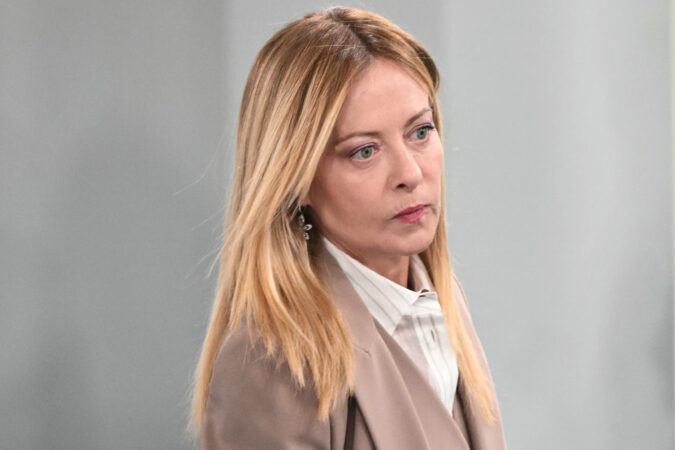
    ROME — The Italian government closed ranks on Friday to slam U.S. President Donald Trump over his claim that Premier Giorgia Meloni had “begged” for a photo with him during the recent G7 summit, a pushback that suggested America’s longtime European ally had had enough of Trump’s boasting and criticism.

    Italian Foreign Minister Antonio Tajani abruptly canceled a planned trip to the United States this weekend, calling Trump’s claims “serious and offensive” toward Meloni and all of Italy.

    Meloni for her part posted a video calling Trump’s claims “completely fabricated” and expressing astonishment that he would invent such things about an ally.

    “Italy and I do not beg,” she said pointedly.

    Trump had made the comments in an interview broadcast Friday on the La7 network. The La7 correspondent had asked Trump about Ukraine, but Trump raised Meloni and the conversation turned to their meeting during the just-concluded G7 meeting in Evian-les-Bains, France. Meloni and Trump were filmed speaking at several moments, including alone on a small sofa.

    According to La7, Trump said Meloni had “begged” him for a photo-op. Trump said he wasn’t obliged to do it but that he felt sorry for her and agreed, La7 said. The broadcaster put a dubbed version of the conversation online, not the original English audio.

    Meloni is astonished and defiant

    Trump’s posturing underscored how his alliance with Meloni — long seen as one of his closest friends in Europe — has frayed over his war in Iran, his tariffs against Europe, and his complaints when anyone disagrees with him.

    He turned on Meloni in April after she refused to support his war in Iran and stood up for Pope Leo XIV when Trump lashed out at the pontiff.

    But Meloni’s strong response on Friday suggested she no longer fears Trump’s verbal attacks — attacks that could actually play in her favor in a country where public opinion of the American president has chilled, said Lorenzo Castellani, a political scientist at Rome’s Luiss Guido Carli University.

    “In some ways this was a favor to Giorgia Meloni, in the sense that she was accused until a few months ago of being a sort of Trump’s vassal in Europe,” he said.

    In her video, Meloni said she was responding to Trump’s claims because “certain things deserve an immediate response.”

    “Donald Trump’s statements are completely fabricated. I am frankly stunned,” she said. “I don’t know why the president of the United States behaves this way toward his own allies. After all, this isn’t the first time this has happened.”

    It was an apparent reference to an interview Trump gave to Italian daily Corriere della Sera in April in which he criticized Meloni’s refusal to back the U.S.-Israel war in Iran. Meloni didn’t respond publicly at the time. By Friday, it appeared she had had enough of his boasts and broadsides.

    “I can only say that it’s a shame he doesn’t show the same resolve toward the enemies of the West, toward the enemies of the United States — toward leaders with whom he, on the other hand, is much more accommodating,” Meloni said Friday. “But there’s one thing he must remember: Italy and I do not beg.”

    The White House did not return an immediate request for comment on Meloni’s remarks.

    Meloni had initially sought to build on longstanding strong U.S.-Italian ties when Trump began his second term, and had positioned herself as a “bridge” between Washington and the European Union. She was the lone EU head of state to attend his inauguration.

    But relations have frayed over the U.S. war in Iran, which Meloni has said was illegal, and Trump’s position on Ukraine, which Italy strongly supports. Trump’s tariffs and strong U.S. support of Israel over its war in Gaza have been other points of contention.

    Italian officials close ranks around Meloni

    By Friday afternoon, solidarity for Meloni had poured in from across the government and political spectrum, and included a call from President Sergio Mattarella, Italy’s respected head of state.

    “Whoever attacks @GiorgiaMeloni attacks all of us,” posted Transport Minister Matteo Salvini.

    Justice Minister Carlo Nordio referenced the sacrifice of American troops in World War II in underlining the harm to U.S.-Italy relations caused by Trump.

    “The thousands of crosses marking the graves of American soldiers who died to free us from Nazi-Fascist dictatorship did not deserve such a painful blow to our fraternal ties,” Nordio said on X.

    Defense Minister Guido Crosetto said he didn’t believe Meloni would ever beg someone for a photo, “not even under threat.”

    Tajani had been due to travel to the U.S. on Sunday to take part in an Italy-U.S. business forum in Miami during which he was to have meet with U.S. Secretary of State Marco Rubio, according to a U.S. State Department announcement of the meeting.

    A ‘fantastic’ friendship frays

    Meloni and Trump had gotten off to a strong start, and the two leaders are ideologically aligned on many issues. As the head of a far-right party, Meloni backs curbing migration and promoting traditional values.

    Weeks before Trump’s 2025 inauguration, Meloni met Trump at his Mar-a-Lago retreat, a visit that she said went “beyond expectations.” It was, she said at the time, “an opportunity to confirm a relationship that promises to be very solid.’’

    In the months after, Trump had praised her repeatedly, as “fantastic,” “incredible,” beautiful, and a friend.

    But stark differences emerged over Ukraine. More recently, Meloni sharply warned against U.S. threats to take Greenland by force, saying she didn’t believe Washington would go so far and that regardless Italy would never support such a move.

    Meloni also received support from an unlikely ally in Europe: Spain’s Socialist Prime Minister Pedro Sánchez, who was on Friday asked about the back and forth on the sidelines of a European Council meeting.

    “About Meloni, first and foremost, all my solidarity,” he told reporters. “Secondly, I not only say this publicly in a response to your question, but also in private during the European Council meeting I offered her all my solidarity against this attack that is not political or personal … I really don´t know how to qualify it.”

  • U.S. push to get Iran talks started hits an early bump due to intense fighting in Lebanon

    U.S. push to get Iran talks started hits an early bump due to intense fighting in Lebanon

    ZURICH — The American push to quickly begin high-stakes talks with Iran hit a snag Friday, just days after the signing of an agreement that opens a two-month window for negotiations on Tehran’s nuclear program and returning oil traffic through the Strait of Hormuz to prewar levels.

    Iranian officials did not travel as planned to Switzerland, insisting that Israeli strikes on Iranian-backed Hezbollah militants in Lebanon must stop before the talks can take place, according to three regional officials and a person familiar with the matter. They were not authorized to publicly discuss the ongoing mediation to try to get the talks rescheduled and spoke on condition of anonymity.

    The situation was fluid as Israel and Hezbollah agreed on Friday to renew their ceasefire, according to a U.S. official and regional officials. It remains to be seen whether that could help put the U.S.-Iran talks back on track.

    In Washington, President Donald Trump lashed out once again in the midst of the intensified fighting in Lebanon and the stalled nuclear talks.

    “We didn’t meet out of desperation, Iran did,” Trump wrote in a social media post Friday. “They are FINISHED! We’ll play out the 60 days. They get no money, not ten cents!”

    Vance was ready for Swiss talks

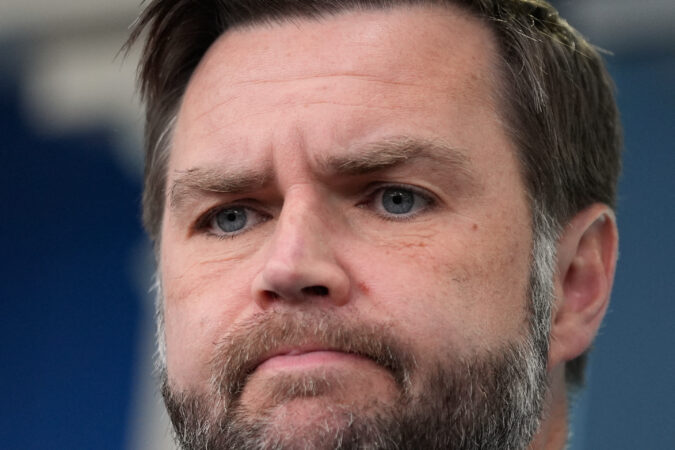
    Trump’s vice president, JD Vance, had been prepared to make an overnight flight to meet with his Iranian counterparts at a mountainside resort in the tiny Swiss village of Obbürgen and begin the technical talks.

    Vance’s staff and a small group of journalists had gathered at Joint Base Andrews outside Washington in anticipation of the trip. Dozens of White House officials, advance staffers, and more media were already in Switzerland.

    Then the trip was called off — abruptly and for the time being.

    A White House statement said Vance, tapped by Trump to lead the negotiations, decided to postpone his travel. It made no mention of the escalating violence in Lebanon.

    “The logistics of these negotiations have never been simple or predictable,” the statement said.

    But, according to officials, the Iranians made clear to the White House that they had balked at starting the talks with Vance because of the Israeli action in Lebanon.

    While Iranian officials and Vance did not make it to Switzerland Friday, a mediator from the Gulf country of Qatar found his way to the resort near Lucerne, Switzerland, where the U.S.-Iran talks are to be held. Qatar’s prime minister and foreign minister, Sheikh Mohammed bin Abdulrahman Al Thani, met with the Swiss foreign minister, Ignazio Cassis.

    Fighting in southern Lebanon intensifies

    The fighting had intensified with at least 18 killed by Israeli airstrikes, while four Israeli soldiers were killed in southern Lebanon, officials said.

    Israeli Prime Minister Benjamin Netanyahu said Thursday that Israel’s military would stay in a “security zone” of southern Lebanon as long as “Israel’s security needs require it.”

    Israel and Hezbollah are not parties to the U.S.-Iran agreement.

    Iran insists Israel must withdraw from the large swath of southern Lebanon it is occupying, but the wording of the interim deal does not explicitly require that and only ensures Lebanon’s “territorial integrity.”

    Hours before postponing his trip, Vance gave some indication of the state of flux when he told reporters at a White House briefing that he was uncertain if the talks were going to happen this weekend.

    “We think these technical negotiations start sometime this weekend,” Vance said. ”That’s still the plan. But that could change.”

    Soon after Vance spoke to reporters, Iran’s supreme leader, Ayatollah Mojtaba Khamenei, endorsed direct negotiations with the United States. His terse statement, read by state media, appeared to signal to the Islamic Republic’s leadership that it could move forward with a first round of talks.

    “It is obvious that the face-to-face negotiations that will be held in the future will not mean accepting the enemy’s opinion,” Khamenei said.

    The messaging seemed to give Khamenei, who was badly wounded in the U.S. strike on Feb. 28 that killed his father, some maneuverability. Hard-liners in the Iranian government, including Khamenei’s father, long opposed direct talks with the White House, especially after Trump, during his first term, pulled out of the 2015 nuclear deal negotiated by Democratic President Barack Obama’s administration.

    Meeting was initially supposed to be a signing ceremony

    Vance was initially expected to go to Switzerland to sign the agreement at a formal ceremony. Instead, Trump signed the document Wednesday during a glitzy dinner at the Palace of Versailles with French President Emmanuel Macron. Iran’s president, Masoud Pezeshkian, separately signed the agreement.

    It says Iran’s stockpile of highly enriched uranium, which is believed to be buried under rubble left by U.S. military strikes last year targeting Tehran’s key nuclear sites, must at minimum be diluted under international supervision.

    It also says Iran shall not procure or develop nuclear weapons — a commitment Tehran has made previously. Other commitments remain to be worked out.

    Iran believes it’s in a strong negotiating position

    Iranians would be going into the talks with a measure of confidence after effectively shutting down the strait, causing global economic reverberations, said Rosemary Kelanic, director of the Middle East Program at Defense Priorities in Washington.

    She said the U.S. is now “essentially trying to negotiate our way back to the prewar status quo.”

    Neil Quilliam, an associate fellow with the Middle East and North Africa Program at Chatham House think tank, said the “buoyant” Iranian leadership feels it has the upper hand. The endorsement of the talks by the Iranian supreme leader “sends a very strong signal domestically: ’We’re now on an equal footing with the U.S.’”

    ”‘Trump has gone from calling for regime change on Feb. 28 to this: Now they’re going to sit down with us directly and talk about these big issues,’” Quilliam said of the Iranians’ thinking. “So it’s intended more for the domestic audience, and telling them: ‘We are firmly in control of this. There can be no protests, no revolution: We are a new regime and we’re staying put.’”

    Vance has to negotiate through political division

    For Vance, a likely 2028 presidential contender, how the negotiations play out could have enormous ramifications for his political fortunes.

    Vance’s skepticism of foreign wars was a core part of his political identity during his political rise, which included election as a U.S. senator. Now he finds himself the chief defender of negotiating an endgame to Trump’s conflict that Democrats have largely derided as a foolish gambit. Some hawkish Republicans are aghast that Trump is getting behind a settlement that could put billions of dollars into Iran’s coffers.

    U.S. Sen. Roger Wicker, chairperson of the Senate Armed Services Committee, said aspects of the deal are “completely out of step” with Trump’s goals.

    Trump fiercely criticized Obama for the 2015 nuclear agreement, which Trump argued failed to stop Tehran from advancing toward a weapon and funneled billions of dollars to the Islamic Republic. The Republican president exited the U.S. from the deal in 2018.

    Trump has pushed back against comparisons to that earlier agreement, saying he had “negotiated from strength” after a major military campaign while asserting that Obama was paying the Iranians off and not receiving acquiescence.

    Wicker (R., Miss.) was particularly concerned about the $300 billion fund for the reconstruction and economic development of Iran mentioned in the 14-point agreement. Trump and Vance have said no U.S. taxpayer money would go to such a fund and it would not come without concessions and reforms by Tehran.

  • Brass bands in Beijing make way for sticker shock at home as Trump returns to escalating inflation

    WASHINGTON — President Donald Trump returned from the spectacle of a Chinese state visit to a less than welcoming U.S. economy — with the military band and garden tour in Beijing giving way to pressure over how to fix America’s escalating inflation rate.

    Consumer inflation in the United States increased to 3.8% annually in April, higher than what he inherited as the Iran war and the Republican president’s own tariffs have pushed up prices. Inflation is now outpacing wage gains and effectively making workers poorer. The Cleveland Federal Reserve estimates that annual inflation could reach 4.2% in May as the war has kept oil and gasoline prices high.

    Trump’s time with Chinese leader Xi Jinping appears unlikely to help the U.S. economy much, despite Trump’s claims of coming trade deals. The trip occurred as many people are voting in primaries leading into the November general election while having to absorb the rising costs of gasoline, groceries, utility bills, jewelry, women’s clothing, airplane tickets, and delivery services. Democrats see the moment as a political opportunity.

    “He’s returning to a dumpster fire,” said Lindsay Owens, executive director of Groundwork Collaborative, a liberal think tank focused on economic issues. “The president will not have the faith and confidence of the American people — the economy is their top issue and the president is saying, ‘You’re on your own.’”

    The president’s trip to Beijing and his recent comments that indicated a tone-deafness to voters’ concerns about rising prices have suggested his focus is not on the American public and have undermined Republicans who had intended to campaign on last year’s tax cuts as helping families.

    Trump described the trip as a victory, saying on social media that Xi “congratulated me on so many tremendous successes,” as the U.S. president has praised their relationship.

    Trump told reporters that Boeing would be selling 200 aircraft — and maybe even 750 “if they do a good job” — to the Chinese. He said American farmers would be “very happy” because China would be “buying billions of dollars of soybeans.”

    “We had an amazing time,” Trump said as he flew home on Air Force One, and he told Fox News’ Bret Baier in an interview that gasoline prices were just some “short-term pain” and would “drop like a rock” once the war ends.

    Inflationary pain not a factor in how Trump handles Iran

    Trump departed from the White House for China by saying the negotiations over the Iran war depended on stopping Tehran from developing nuclear weapons. “I don’t think about Americans’ financial situation. I don’t think about anybody. I think about one thing: We cannot let Iran have a nuclear weapon,” Trump said.

    That remark prompted blowback because it suggested to some that Trump cared more about challenging Iran than fighting inflation at home. Trump defended his words, telling Fox News: “That’s a perfect statement. I’d make it again.”

    The White House has since stressed that Trump is focused on inflation.

    Asked later about the president’s words, Vice President JD Vance said there had been a “misrepresentation” of the remarks. White House spokesperson Kush Desai said the “administration remains laser-focused on delivering growth and affordability on the homefront” while indicating actions would be taken on grocery prices.

    But as Trump appeared alongside Xi, new reports back home showed inflation rising for businesses and interest rates climbing on U.S. government debt.

    His comments that Boeing would sell 200 jets to China caused the company’s stock price to fall because investors had expected a larger number. There was little concrete information offered about any trade agreements reached during the summit, including Chinese purchases of U.S. exports such as liquefied natural gas and beef.

    “Foreign policy wins can matter politically, but only if voters feel stability and affordability in their daily lives,” said Brittany Martinez, a former Republican congressional aide who is the executive director of Principles First, a center-right advocacy group focused on democracy issues.

    “Midterms are almost always a referendum on cost of living and public frustration, and Republicans are not immune from the same inflation and affordability pressures that hurt Democrats in recent cycles,” she added.

    Democrats see Trump as vulnerable

    Democratic lawmakers are seizing on Trump’s comments before his trip as proof of his indifference to lowering costs. There is potential staying power of his remarks as Americans head into Memorial Day weekend facing rising prices for the hamburgers and hot dogs to be grilled.

    “What Americans do not see is any sympathy, any support, or any plan from Trump and congressional Republicans to lower costs — in fact, they see the opposite,” Senate Democratic leader Chuck Schumer of New York said Thursday.

    Vance faulted the Biden administration for the inflation problem even though the inflation rate is now higher than it was when Trump returned to the White House in January 2025 with a specific mandate to fix it.

    “The inflation number last month was not great,” Vance said Wednesday, but he then stressed, “We’re not seeing anything like what we saw under the Biden administration.”

    Inflation peaked at 9.1% in June 2022 under Biden, a Democrat. By the time Trump took the oath of office, it was a far more modest 3%.

    Trump’s inflation challenge could get harder

    The data tells a different story as higher inflation is spreading into the cost of servicing the national debt.

    Over the past week, the interest rate charged on 10-year U.S. government debt jumped from 4.36% to 4.6%, an increase that implies higher costs for auto loans and mortgages.

    “My fear is that the layers of supply shocks that are affecting the U.S. economy will only further feed into inflationary pressures,” said Gregory Daco, chief economist at EY-Parthenon.

    Daco noted that last year’s tariff increases were now translating into higher clothing prices. With the Supreme Court ruling against Trump’s ability to impose tariffs by declaring an economic emergency, his administration is preparing a new set of import taxes for this summer.

    Daco stressed that there have been a series of supply shocks. First, tariffs cut into the supply of imports. In addition, Trump’s immigration crackdown cut into the supply of foreign-born workers. Now, the effective closure of the Strait of Hormuz has cut off the vital waterway used to ship 20% of global oil supplies.

    “We’re seeing an erosion of growth,” Daco said.

  • Trump FDA chief is leaving after angering pharma CEOs, vaping lobbyists, and anti-abortion groups

    WASHINGTON — The head of the Food and Drug Administration, Marty Makary, is resigning after a rocky tenure that drew months of complaints from health industry executives, anti-abortion activists, vaping lobbyists, and other allies of President Donald Trump.

    News of Makary’s departure Tuesday came just 13 months after he was confirmed to lead the powerful regulatory agency.

    A surgeon and health researcher, Makary came to prominence among Republicans as an outspoken critic of COVID-19 health measures during the pandemic, when he frequently appeared on Fox News Channel. But he struggled to manage the FDA’s bureaucracy and failed to win the confidence of its staff after mass layoffs, leadership upheavals, and a series of controversies in which the agency’s scientific principles appeared to be overridden by political interests, including those of Health Secretary Robert F. Kennedy Jr.

    “He’s a great doctor, and he was having some difficulty,” Trump told reporters outside the White House. “But he’s going to go on and he’s going to do well.”

    Trump later confirmed in a social media post that Kyle Diamantas, the agency’s chief for foods, is expected to take over as acting commissioner. Diamantas is an attorney with personal ties to Donald Trump Jr.

    In that post, the president included what appeared to be a text message from Makary submitting his resignation. In it, he noted that “I announced 50 major FDA reforms. Joe Biden’s FDA had none,” and thanked Trump for the chance to serve.

    The FDA commissioner, as the leader of an agency that regulates billions of dollars in consumer goods and medicines, is often required to juggle competing priorities that straddle science and politics.

    Makary faced a unique challenge in balancing calls by Trump and other Republicans to cut red tape at the FDA, while also tending to Kennedy’s interest in scrutinizing the safety of vaccines, drugs, and food additives. The decision to get rid of Makary was made by Kennedy, and then the White House signed off on it, according to an administration official who was granted anonymity because they were not authorized to describe internal dynamics.

    Virtually all of the FDA’s senior career officials resigned, retired or were forced out in the first year of the second-term Trump administration, leading to a steady stream of leaks and negative stories in the media cataloging low morale, dysfunction and frustration among staff.

    Makary’s handpicked deputy, Vinay Prasad, was pushed out of the agency twice in less than a year for running afoul of specialty drugmakers and groups for patients with rare diseases. Makary appeared poised to weather the controversy, despite an ongoing pressure campaign calling on Trump to fire him.

    Recent weeks brought fresh criticisms from other interest groups that the White House considers key to Republican chances in November elections.

    Anti-abortion groups have accused Makary of slow-walking an internal review of the abortion pill mifepristone, which has been on the market for 25 years but remains a target for conservative activists. They are seeking to roll back FDA rules that currently allow the pill to be sent through the mail.

    “We look forward to a new FDA commissioner who will put an end to the mail-order abortion drug regime,” said Marjorie Dannenfelser, president of Susan B. Anthony Pro-Life America.

    Vaping executives told Trump that Makary was blocking approval of their products, including new flavored e-cigarettes seen as crucial to the industry’s survival.

    Last week, the agency abruptly changed course, authorizing the first fruit-flavored e-cigarettes and issuing guidelines that loosened marketing for major manufacturers. But it wasn’t enough to keep Makary in the job.

    A permanent replacement for the FDA job will need to be nominated by Trump and confirmed by the Senate.

    Faster drug reviews are overshadowed

    As a former regular on Fox News, Makary was aggressive about promoting his accomplishments on cable television and podcasts and in online opinion pieces.

    A string of initiatives from Makary aimed to speed up or streamline FDA drug reviews, including dropping certain study requirements, incorporating artificial intelligence into drug evaluations and offering expedited reviews to medicines that support “national interests.”

    But pharmaceutical executives rely on the predictability and consistency of FDA decisions, even more than speedy reviews. Makary’s efforts on drug reviews were overshadowed by internal conflicts and disputes that created headaches for drugmakers, investors and patients.

    More than a half-dozen drugmakers studying therapies for rare or hard-to-treat diseases said they received rejection letters or requests to run additional studies for drugs that had previously been given the go-ahead by FDA staff. Those drugs were primarily overseen by Prasad, who stepped down for a second time from his role as the FDA’s vaccine and biotech chief in April.

    Vaccine moves denounced

    Prasad repeatedly overruled vaccine staffers to restrict eligibility for new coronavirus shots. In February, Prasad initially refused to even consider Moderna’s mRNA shot for flu. The FDA was forced to reverse itself after Moderna pledged to formally challenge the decision and called for intervention by the White House.

    Some of Makary and Prasad’s most controversial vaccine proposals never came to fruition, despite stoking confusion and anxiety within the FDA and beyond.

    In an internal memo in November, Prasad claimed — without publishing evidence — that the FDA had linked COVID-19 shots to the deaths of 10 children. Prasad used that to justify a planned overhaul of the agency’s approach to approving vaccines.

    A dozen former FDA commissioners issued a scathing denunciation of the plan, warning it would “undermine the public interest” and decimate vaccine development. The FDA has not released its analysis of the deaths or its plan for the vaccine overhaul.

    FDA’s drug center had a revolving door

    In the FDA’s drug center, which is the agency’s largest division, Makary oversaw a revolving door of leadership changes. Six people served as director over the course of one year.

    Makary’s initial pick for the job, George Tidmarsh, was forced to resign after allegations that he used his FDA position to pursue a personal vendetta against a former business partner.

    His replacement, longtime FDA cancer specialist Rick Pazdur, announced he would retire after just three weeks on the job, after clashing with Makary on multiple issues surrounding drug reviews.

    With Makary’s departure, the fate of many of his fledgling initiatives is uncertain.

    Most of the programs Makary introduced have not gone through federal rulemaking required to enshrine them in U.S. law. Democrats in Congress have questioned the legality of some of those efforts, including a program that offers drugmakers expedited reviews for innovative medicines.

  • Denver airport security initially missed trespasser who was killed by plane on runway

    Denver airport security initially missed trespasser who was killed by plane on runway

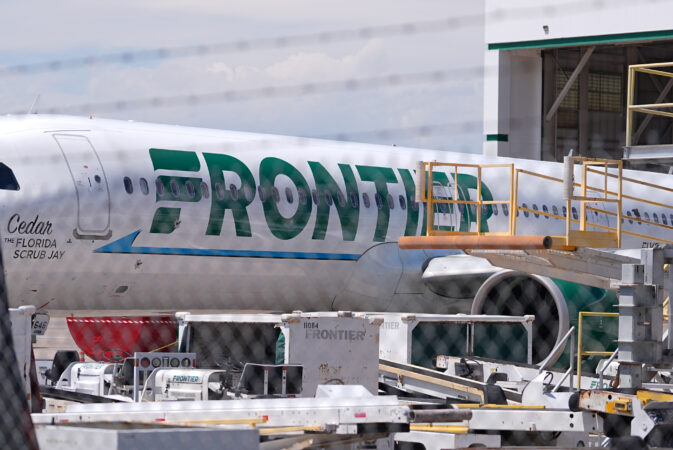
    FORT COLLINS, Colo. — Workers at Denver airport initially missed a security breach by man who scaled an 8-foot perimeter fence and crossed a runway where he was hit and killed in a fiery collision by a plane with 231 people on board, authorities said Tuesday.

    The runway fatality underscores the longstanding challenge of keeping intruders out of major airports. Denver International Airport sprawls across 53 square miles — twice the size of Manhattan — on open prairie northeast of the city center.

    The 41-year-old trespasser triggered an alarm as he crossed into the airport in a remote area about 2 miles from the terminal late Friday night. But security personnel mistakenly attributed that alarm to a herd of deer that was nearby.

    Authorities said the man died by suicide. However, no note from the victim was immediately recovered. The manner of death was determined based on the investigation at the scene, a records review, and a postmortem examination, said Sterling McLaren, chief medical examiner for the city and county of Denver.

    The collision involving the Frontier Airlines plane as it was taking off for Los Angeles sparked an engine fire that forced passengers to evacuate via slides. Twelve people sustained minor injuries and five were taken to hospitals. Four have since been released, said airport Chief Executive Officer Phillip Washington.

    A black-and-white video released by the airport shows, from a distance, a figure walking toward the runway with arms swaying. The person crosses onto the runway at a slight angle and seconds later the plane is seen speeding past. It strikes the person with its right engine, which bursts into flame.

    Federal officials notified the airport

    A few minutes before the man scaled the fence, a ground-based radar system activated in the area, triggering an alarm. An airport worker checked a surveillance camera and saw a herd of deer in the same area but did not initially see the trespasser, Washington said.

    “The camera view was alternating between the wildlife and the individual. There are some ditches in the area, so the person was out of view for a bit as well,” Washington said.

    He said federal officials notified the airport about the trespasser. Because of the remote location and short time period between the man scaling the fence and crossing the runway, Washington said airport personnel were not able to intervene.

    The man crossed about 650 feet from the fence to the runway before being struck and killed by the Frontier Airlines plane traveling at 150 mph on takeoff.

    The plane’s engine caused the man’s death, McLaren said. She described it as “a purposeful act with a foreseeable fatal outcome.”

    Denver Police Chief Ron Thomas said investigators were contacting the man’s family and those who knew him to seek more information about his motivations.

    Trespassers breaching airport perimeters is a regular problem, with perhaps dozens annually nationwide, said security expert Jeff Price, who was assistant director of security at the Denver airport in the 1990s. The airport is surrounded by about 36 miles of perimeter fence, which airport officials say is continuously inspected.

    The vast majority of airport trespassers are intoxicated or simply “messing around just to see if they could do it,” said Price, adding that they typically don’t pose a real threat. Denver also gets the rare individual who will jump the fence seeking to prove a long-running conspiracy theory about a UFO base being based at the airport, he said.

    The Transportation Security Administration oversees airport security programs, including perimeter security requirements.

    “It’s really not that difficult to jump an airport perimeter fence,” Price said. “They meet the standards for TSA, but the standards are not that robust.”

    The fences are typically 6 to 8 feet tall with barbed wire at the top, he said. They must be approved by federal inspectors, but there are no set rules on their construction. Major airports such as Denver typically also have intrusion detection systems that include cameras and motion sensors, he said. Some systems detect the seismic impact of people dropping to the ground, Price said.

    Evacuation under scrutiny

    The person was killed on the airport’s easternmost north-south runway and at least 1.25 miles from any airport buildings. Empty fields and croplands surround Denver International Airport in most directions. Distant trees and structures in the video showed that the person was headed toward the airport when they crossed the runway.

    The Transportation Security Administration has regulatory oversight of airport security programs, including perimeter security requirements.

    Separately, the National Transportation Safety Board on Sunday said it is gathering information about the evacuation.

    An agency spokesperson said an investigation would be launched if it’s determined the injuries meet the agency’s definition for “serious.” That can include a person requiring hospitalization for more than 48 hours, suffering a broken bone or second- or third-degree burns affecting more than 5% of their body.

    This story includes discussion of suicide. If you or someone you know needs help, the national suicide and crisis lifeline in the U.S. is available by calling or texting 988. There is also an online chat at 988lifeline.org

  • Trump plans to attend Wednesday’s Supreme Court hearing on his bid to limit birthright citizenship

    WASHINGTON — President Donald Trump plans to sit in on Wednesday’s Supreme Court hearing on birthright citizenship, making him the first sitting president to attend oral arguments at the nation’s highest court.

    The Republican president’s official schedule, sent out by the White House, included a stop at the Supreme Court, where justices will hear Trump’s appeal of a lower court ruling that struck down his executive order limiting birthright citizenship.

    The order, which Trump signed on the first day of his second term, declared that children born to parents who are in the United States illegally or temporarily are not American citizens. It’s an about-face from the long-standing view that the Constitution’s 14th Amendment and federal law since 1940 confer citizenship to everyone born on American soil, with narrow exceptions.

    It’s not the first time Trump has considered showing up for a high court hearing. Last year, Trump said that he badly wanted to attend a hearing on whether he overstepped federal law with his sweeping tariffs, but he decided against it, saying it would have been a distraction.

    On Tuesday, however, Trump seemed more sure he’d be in court for Wednesday’s hearing while he spoke with reporters in the Oval Office.

    “I’m going,” Trump said, when the upcoming arguments in the birthright citizenship case were mentioned. To a follow-up question clarifying that he planned to go in person, Trump said, “I think so, I do believe.”

    Trump went to the Supreme Court in his first term for the ceremonial swearing-in of the first justice he appointed, Neil Gorsuch. Two other justices he appointed — Brett Kavanaugh and Amy Coney Barrett — also sit on the court.

    Other presidents have dealt directly with the court, but don’t appear to have done so while in office. Richard Nixon argued a case between his time as vice president and president, and William Howard Taft served as chief justice after his presidency.

    Trump, asked to whom he would be listening most closely, went on a lengthy detour Tuesday describing a court he viewed as mostly partisan, between justices appointed by Republican and Democratic presidents.

    “I love a few of them,” he said. “I don’t like some others.”

    The citizenship restrictions are a part of Trump’s broader immigration crackdown, but they have not yet taken effect anywhere in the country after being blocked by several courts.

    A definitive ruling from the Supreme Court is expected by early summer.

  • Trump voices frustration with allies as Iran war and strait closure push fuel prices higher

    Trump voices frustration with allies as Iran war and strait closure push fuel prices higher

    DUBAI, United Arab Emirates — President Donald Trump lashed out Tuesday at allies who have been unwilling to do more to support the U.S. war effort against Iran, telling them to “go get your own oil” and saying it was not America’s job to secure the Strait of Hormuz.

    The president said the military could end its offensive in two to three weeks and that the U.S. “will not have anything to do with” what happens next in the strait that has been closed by the Islamic Republic. Instead, he told reporters, the responsibility for keeping the vital waterway open will rest with countries that rely on it.

    There’s “no reason for us to do this,” Trump said after signing an executive order that seeks to restrict mail-in voting. “That’s not for us. That’ll be for France. That’ll be for whoever’s using the strait.”

    The White House said Trump would deliver a prime-time address Wednesday evening to update the public on the war.

    In other developments, the closure of the strait sent average U.S. gas prices past $4 a gallon, and U.S. strikes hit the central city of Isfahan, sending a massive fireball into the sky. Tehran attacked a fully loaded Kuwaiti oil tanker in the Persian Gulf.

    The attacks showed the intensity of the war more than a month after the U.S. and Israel launched it. The conflict has left more than 3,000 dead and caused major disruptions to the world’s supply of oil and natural gas, roiling global markets and pushing up the cost of many basic goods.

    Trump, whose comments have vacillated between talk that diplomatic progress is being made with Iran and threats to widen the war, had earlier shared footage of the attack on Isfahan.

    Fuel prices rise, rattling global markets

    Iran’s stranglehold on the strait, the waterway leading out of the Persian Gulf through which a fifth of the world’s oil is transported during peacetime, has driven up global oil prices, as have Tehran’s attacks on regional energy infrastructure.

    Spot prices of Brent crude, the international standard, hovered around $107 a barrel Tuesday, up more than 45% since the war started Feb. 28.

    In a social media post, Trump directed blame at U.S. allies such as the United Kingdom and France that have refused to enter a war with no clear endgame that they were not consulted on.

    “You’ll have to start learning how to fight for yourself, the U.S.A. won’t be there to help you anymore, just like you weren’t there for us. Iran has been, essentially, decimated. The hard part is done. Go get your own oil!” Trump wrote.

    He singled out France for not letting planes fly over French territory while taking military supplies to Israel.

    France has allowed the U.S. Air Force to use the Istres base in southern France because it had guarantees that planes landing there would not be involved in carrying out strikes.

    Allies have refused to get involved

    Spain, which has emerged as Europe’s loudest critic of the war, said Monday that it had closed its airspace for U.S. planes involved in the conflict.

    Italy recently refused to allow U.S. military assets to use the Sigonella air base in Sicily for an operation linked to the offensive, an official with knowledge of the matter said, confirming a local press report. The official spoke on condition of anonymity because they were not authorized to speak publicly.

    Italian Defense Minister Guido Crosetto wrote on X that Italy is still allowing the U.S. to use its bases, adding that there has been no cooling of relations between the two countries.

    Journalist kidnapped in Iraq identified

    An American journalist was kidnapped Tuesday in Baghdad, and Iraqi security forces are pursuing her captors, Iraqi officials said. The journalist was identified as freelancer Shelly Kittleson by Al-Monitor, one of the news outlets she worked for.

    A U.S. official blamed the Iranian-backed Iraqi militia Kataib Hezbollah.

    Two cars were involved in the kidnapping, one of which crashed, and a person inside was apprehended. The journalist was then transferred to a second car that fled the scene, according to two Iraqi security officials who spoke on condition of anonymity because they were not authorized to speak publicly about the case.

    Dylan Johnson, U.S. assistant secretary of state for public affairs, said on X that the State Department had “fulfilled our duty to warn this individual of threats against them.”

    In a statement, Al-Monitor said it stands by her “vital reporting.” Kittleson has been a longtime freelancer in the region, reporting extensively from Syria and Iraq.

    Another aircraft carrier deploys to Middle East

    The aircraft carrier USS George H. W. Bush deployed Tuesday from Norfolk, Va., and is slated to head to the Middle East, two U.S. officials said. They spoke on condition of anonymity to discuss sensitive military plans.

    It would be the third carrier sent out to support the Iran war, along with the USS Gerald R. Ford, which is now undergoing repairs, and the USS Abraham Lincoln, which arrived in the region in January.

    Trump warned this week that if a ceasefire is not reached “shortly,” and if the strait is not reopened, the U.S. would broaden its offensive, including by attacking the Kharg Island oil export hub and possibly desalination plants.

    Speaking at the Pentagon, Defense Secretary Pete Hegseth would not say if U.S. ground forces would enter the war. “We don’t want to have to do more militarily than we have to,” he said.

    A ground invasion could alienate Iranians who despise the ruling theocracy and who rose up in mass protests that were crushed earlier this year. Some could see it as an attack on Iran itself and rally around the flag.

    Since the Iran war began, 13 U.S. service members have been killed and 348 wounded, six seriously, according to a formal count provided Tuesday by Capt. Tim Hawkins, spokesman for U.S. Central Command.

    Iran hits oil tanker as Israel strikes Iran and Lebanon

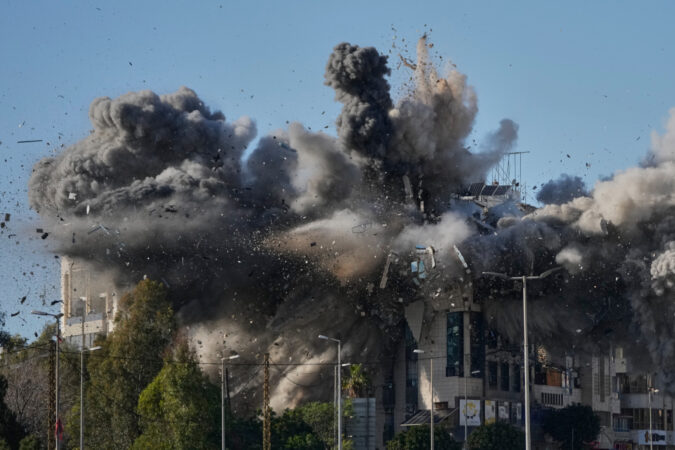
    The Israeli military said early Wednesday that it had killed a senior Hezbollah commander and another senior leader in two separate strikes in the Beirut area.

    Military officials said they launched strikes targeting what they described as Hezbollah infrastructure in the Lebanese capital. Defense Minister Israel Katz said Israel plans to control the area south of the Litani River — some 20 miles north of the border.

    Israel invaded southern Lebanon after Hezbollah began launching missiles into northern Israel days after the outbreak of the wider war. Many Lebanese fear another prolonged military occupation.

    In Iran, authorities say more than 1,900 people have been killed, while 19 have been reported dead in Israel.

    Two dozen people have died in Gulf states and the occupied West Bank. In Lebanon, officials said more than 1,200 people have been killed, and more than 1 million displaced.

    Ten Israeli soldiers have died in Lebanon, including four announced Tuesday.

  • Israeli police prevent Catholic leaders from celebrating Palm Sunday Mass at Jerusalem church

    TEL AVIV, Israel — The Israeli police prevented Catholic leaders from entering the Church of the Holy Sepulchre to celebrate Mass on the Christian holiday of Palm Sunday for the first time in centuries, the Latin Patriarchate said Sunday.

    Jerusalem’s major holy sites are closed because of the ongoing Iran war, including the church, as the city has come under frequent fire from Iranian missiles.

    The Catholic Church called the police decision “a manifestly unreasonable and grossly disproportionate measure.” It prevented two of the church’s top religious leaders, including Cardinal Pierbattista Pizzaballa and the head of the Custos in the Holy Land, from celebrating Palm Sunday at the place where Christians believe Jesus was crucified.

    Palm Sunday commemorates Jesus’ triumphant entry into Jerusalem and launches the Holy Week commemorations for Christians who follow the Latin calendar, which culminates in Easter next Sunday.

    The Israeli police said it had notified the Catholic Church on Saturday that no Mass could take place on Palm Sunday because of safety considerations, the lack of access for emergency vehicles in narrow alleys of the Old City, and lack of adequate shelter.

    However, the Latin Patriarchate said the Church of the Holy Sepulchre has been hosting Masses that aren’t open to the public since the Iran war began on Feb. 28, and it was unclear why Sunday’s Mass and access by the two priests was any different.

    “It’s a very, very sacred day for Christians and in our opinion there was no justification for such a decision or such an action,” said Farid Jubran, the spokesperson for the Latin Patriarchate of Jerusalem.

    Jubran said that the church had requested permission from the police for a few religious leaders to enter the church for a private Mass on Sunday — not one that was open to the public. The Patriarchate said that the decision impeded freedom of worship and the status quo in Jerusalem.

    The traditional Palm Sunday procession normally sees tens of thousands of Christians from around the world walk from the Mount of Olives down the narrow, hilly streets toward the Old City, waving palm fronds and singing.

    The Patriarchate canceled the traditional processional last week because of safety concerns, and has held Masses limited to fewer than 50 worshipers in compliance with the Israeli military’s guidelines for civilians.

    Pizzaballa celebrated Mass in the nearby St. Savior’s Monastery, a soaring marble church which is located next to an underground music school that the Israeli military has deemed a safe shelter space. Later on Sunday, Pizzaballa held a prayer for peace at the Dominus Flevit Shrine on the Mount of Olives, but kept his homily concentrated on Jesus and didn’t mention the morning’s incident.

    In Rome, Pope Leo XIV said Sunday that God doesn’t listen to the prayers of those who make war or cite God to justify their violence, as he prayed especially for Christians in the Middle East during a Palm Sunday Mass in St. Peter’s Square.

    With the U.S.-Israeli war on Iran entering its second month and Russia’s ongoing campaign in Ukraine, Leo dedicated his Palm Sunday homily to his insistence that God is the “king of peace” who rejects violence.

    “Brothers and sisters, this is our God: Jesus, King of Peace, who rejects war, whom no one can use to justify war,” Leo said. “He does not listen to the prayers of those who wage war, but rejects them, saying: ‘Even though you make many prayers, I will not listen: Your hands are full of blood.’”

    Leaders on all sides of the Iran war have used religion to justify their actions. U.S. officials, especially Defense Secretary Pete Hegseth, have invoked their Christian faith to cast the war as a Christian nation trying to vanquish its foes with military might.

    Russia’s Orthodox Church, too, has justified Russia’s invasion of Ukraine as a “holy war” against a Western world it considers has fallen into evil.

    In a special blessing at the end of Mass, Leo said he was praying especially for Christians in the Middle East who are “suffering the consequences of an atrocious conflict. In many cases, they cannot live fully the rites of these holy days.”

    The Vatican spokesperson didn’t immediately respond when asked to comment on the Jerusalem incident.

    Italy condemns decision

    Italy formally protested the incident in Jerusalem to Israeli authorities. Premier Giorgia Meloni said that the police action “constitutes an offense not only against believers but against every community that recognizes religious freedom.”

    “The Church of the Holy Sepulchre in Jerusalem is a sacred site of Christianity, and as such must be preserved and protected for the celebration of sacred rites,” Meloni said. “Preventing the Patriarch of Jerusalem and the Custos of the Holy Land from entering, especially on a solemnity central to the faith such as Palm Sunday, constitutes an offense not only against believers but against every community that recognizes religious freedom.”

    Meloni’s conservative government tried to keep a balanced position with Israel during the war in Gaza, supporting Israel’s right to defense but condemning the toll on Palestinians.

    The Italian leader has also said that Italy won’t participate in the Iran war, while affirming that the Islamic Republic can’t be allowed to possess nuclear weapons.

    Foreign Minister Antonio Tajani instructed Italy’s ambassador to Israel to convey the protest “and to reaffirm Italy’s commitment to protecting religious freedom at all times and under all circumstances.”

    In addition, Tajani summoned the Israeli ambassador to Italy for talks on Monday at the Italian Foreign Ministry to seek clarification about the decision.

    Israeli leader explains closure

    Israeli Prime Minister Benjamin Netanyahu said on Sunday evening that there was no “malicious intent” and that the cardinal was prevented from accessing the church because of safety concerns, but that Israel would try to partially open the Church of the Holy Sepulchre in the coming days.

    “Given the holiness of the week leading up to Easter for the world’s Christians, Israel’s security arms are putting together a plan to enable church leaders to worship at the holy site in the coming days,” Netanyahu wrote on X.

    The Western Wall, the holiest site where Jews can pray, is also mostly closed because of safety issues, but authorities are letting up to 50 people at a time pray in an enclosed area adjacent to the plaza.

    Smaller churches, synagogues, and mosques are open in Jerusalem’s Old City if they are located within a certain distance of a bomb shelter deemed acceptable by Israel’s military and if gatherings are kept under 50 people.

  • Actor James Tolkan of ‘Top Gun’ and ‘Back to the Future’ fame dies at 94

    Actor James Tolkan of ‘Top Gun’ and ‘Back to the Future’ fame dies at 94

    Actor James Tolkan, known for his roles as a cigar-chomping naval commander in Top Gun and a gruff high school administrator in Back to the Future, has died. He was 94.

    Mr. Tolkan died Thursday in Lake Placid, N.Y., where he lived, his booking agent, John Alcantar, said Saturday. A brief obituary published on the “Back to the Future” website said Mr. Tolkan died “peacefully,” but no cause of death was given.

    In Back to the Future, Mr. Tolkan portrayed the bow tie-wearing vice principal Gerald Strickland, who eyeballed students for trouble in the halls of the fictitious Hill Valley High School — in particular Marty McFly, played by Michael J. Fox.

    “You got a real attitude problem, McFly,” Mr. Tolkan’s character says in the 1985 film. “You’re a slacker. You remind me of your father when he went here. He was a slacker, too.”

    Mr. Tolkan also appeared in Top Gun as commanding officer Tom “Stinger” Jardian. Near the end of the film, when Jardian asks Tom Cruise’s character, Capt. Pete “Maverick” Mitchell, about his choice for future duty, Mitchell replies that he wants to be a Top Gun instructor.

    “God help us,” Mr. Tolkan’s character replies, laughing.

    Born in Calumet, Mich., Mr. Tolkan graduated from high school in Arizona and served in the Navy during the Korean War. He eventually made his way to New York, where he spent a quarter century acting in theater roles. He was a member of the original ensemble cast of Glengarry Glen Ross.

    Mr. Tolkan is survived by his wife of 54 years, Parmelee Welles, who said in a statement that her husband also was an avid art collector and adored animals.