Category: Nation World News Wires

  • Vance meets top Iranian officials as U.S. tries get negotiations back on track

    Vance meets top Iranian officials as U.S. tries get negotiations back on track

    OBBUERGEN, Switzerland — High-level U.S.-Iran talks on their interim deal to end the war had a tense start Sunday in Switzerland as Tehran took offense at comments by President Donald Trump, who threatened to attack and told Iran’s president to watch what he says.

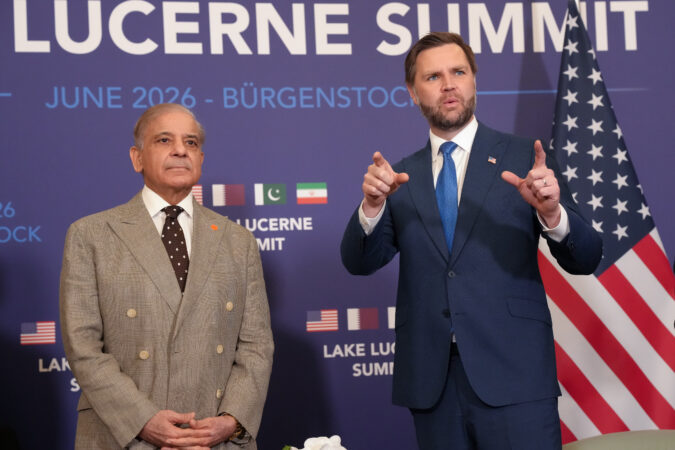
    The comments from afar — on social media and to news outlets — complicated efforts by Vice President JD Vance and mediators Pakistan and Qatar to keep Iran engaged in discussions meant to address thorny issues like Tehran’s nuclear program, the Strait of Hormuz, and the unfreezing of billions of dollars in Iranian assets.

    Before anything, however, Iran wants to discuss Lebanon, where Israel’s military has been fighting the Iranian-backed Hezbollah militant group, since the deal halts conflict on all fronts.

    “Iran must immediately stop their highly paid PROXIES in Lebanon from causing trouble,” Trump said on social media. “If they don’t, we’ll hit Iran very hard again, just like we did last week, only harder!!!”

    “They would do better to be careful about their statements,” Iran’s lead negotiator, Mohammad Bagher Qalibaf, said on X after Trump’s comments. “Our armed forces are prepared to respond to them in a different manner. They may keep talking, it is we who act.”

    Iranian state media said talks had entered a “difficult phase” and recessed after the “publication of an insulting message by the U.S. President.” The Iranian delegation then met with Qatari mediators and left the negotiating site, state media said.

    Vance and U.S. negotiators including Steve Witkoff and Jared Kushner, Trump’s son-in-law, had met with Qalibaf and Foreign Minister Abbas Araghchi for what Iranian state media said was about 80 minutes.

    An official with knowledge of the talks later told the AP the Iranian delegation remained engaged in the talks and has not indicated to mediators any intention to leave. The official requested anonymity due to the sensitivity of the talks.

    Iran’s focus on Israeli strikes in Lebanon

    Negotiators are in a 60-day sprint to reach an agreement on the technical details that hold massive implications for the world economy and global security.

    “The question before us now is how much more can we accomplish together? Can we turn over a new leaf?” Vance said as the talks began, and asked whether they could “change relations in the Middle East permanently.”

    The U.S. wants Iran locked into negotiations over its nuclear program amid concerns it may be used for military purposes, which Iran denies. Vance also wants Tehran to commit to keeping open the Strait of Hormuz, which Iran on Saturday claimed to close. The U.S. has disputed that, saying shipping traffic continued Sunday.

    But Iranian Foreign Ministry spokesperson Esmail Baghaei told the state news agency that Tehran first wants talks to focus on the conflict in Lebanon.

    A renewed ceasefire in Lebanon, brokered on Saturday, appeared to be holding, and Israel’s military said it would lift movement restrictions for residents near the border with Lebanon on Monday morning — another sign of calm.

    But neither Israel nor Hezbollah is a signatory to the U.S.-Iran deal, and Israeli Prime Minister Benjamin Netanyahu has vowed to keep his forces in southern Lebanon until any threat to Israel is eliminated. Hezbollah has refused to halt attacks unless Israel commits to withdrawing.

    Sharp words exchanged over Iran’s nuclear program

    The agreement signed by Trump and Iranian President Masoud Pezeshkian immediately allows Tehran to sell its oil freely and paves the way for Iran to tap into billions of dollars in assets that are currently frozen.

    It also calls for Iran to dilute its stockpile of highly enriched uranium, believed to be buried under nuclear sites that were targeted in U.S. strikes a year ago.

    Pezeshkian, however, declared Sunday that “we will never back down from the right to enrich uranium, and the other side is also forced to accept it,” according to Iran’s state media.

    Trump, in a telephone interview with Fox News, later warned that the Iranian president should watch what he says and threatened to take over Iran, in comments relayed by a Fox correspondent.

    Iran had cautiously approached the talks given its previous experience with U.S. negotiations on the nuclear issue, which twice in the past year were interrupted by military strikes.

    The deal has stirred much controversy

    Vance has said he planned to be in Switzerland for “a day or two,” leaving much of the detailed negotiations to be led by Witkoff and Kushner. His role in the talks has heightened scrutiny at a time when he’s considering a 2028 presidential campaign.

    Trump and Vance have come under searing criticism from parts of their own party for the deal, with Republican hard-liners unfavorably likening it to the nuclear agreement signed by the Obama administration that Trump and Republicans have insisted did nothing to terminate Iran’s nuclear program.

    The new agreement says commercial vessels can pass through the Strait of Hormuz for 60 days without charge, but does not preclude future fees imposed by Iran. Trump made his own threat Saturday to levy U.S. tolls if there is no deal with Iran in 60 days, insisting that the money would be for “services rendered as the Guardian Angel to the countries of the Middle East.”

    The Trump administration has been working to reassure global markets that the war has been merely a blip on oil prices, as Americans complain about high gasoline prices ahead of peak summer travel. After the deal was announced, oil futures dropped almost 8%.

    Markets were expected to closely track the progress of talks when they opened for trading Sunday evening.
  • Zelensky returns Poland’s highest honor after Polish leader revokes it in a spat over history

    Zelensky returns Poland’s highest honor after Polish leader revokes it in a spat over history

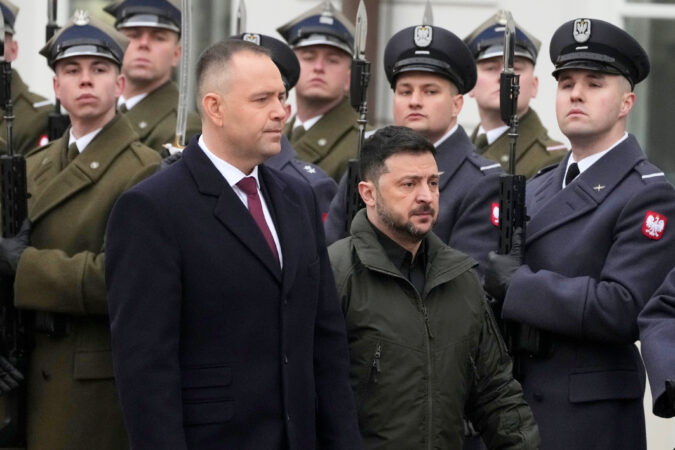
    WARSAW, Poland — Ukrainian leader Volodymyr Zelensky has returned Poland’s highest state honor, after the Polish president stripped him of the award as a politically charged dispute over World War II history resurfaced.

    Ukrainians believed the order “was meant for the Ukrainian People and our army,” Zelensky wrote in a social media post explaining the gesture. “Today, I sent the Order back to the President of Poland. I believe the future will confirm the respect Ukrainians deserve.”

    The message published on X is accompanied by photos of the Polish order and a postal receipt that it was about to be mailed to the Polish presidential office.

    President Karol Nawrocki decided to strip Zelensky of the Order of the White Eagle over the Ukrainian leader’s decision to name a military unit after a Ukrainian paramilitary organization accused of massacring Poles during WWII.

    Former Polish President Andrzej Duda bestowed the award on Zelensky in 2023 for services to security, resilience, and the defense of human rights.

    Zelensky issued a decree on May 26 naming a unit of Ukraine’s Special Operations Forces after the Ukrainian Insurgent Army, or UPA, which operated during the 1940s and 1950s and has been accused in Poland of mass killings.

    “For the majority of Polish society, the Ukrainian Insurgent Army remains above all a formation responsible for cruel crimes against the citizens of the Polish Republic during World War II,” Nawrocki said in a 13-minute address on social media.

    Zelensky’s move reopened old wounds in Poland

    The Ukrainian decree was met with widespread criticism in Poland, which has hosted millions of Ukrainian refugees and is a key supporter of Kyiv as it has battled Russia’s four-year invasion. However, Nawrocki is a nationalist politician who has exploited anti-Ukrainian sentiment for electoral gain. Ukrainians in Poland have been facing increasing prejudice despite their contributions to the economy.

    The decision to revoke the honor did not mean Poland’s support for Ukraine in its defense against Russia would decrease, Nawrocki said.

    Ukraine is grateful to Poland for its support, and would stay open to resolve historical differences with Poland, Zelensky wrote Saturday in his post. “I am proud of our people and of EVERY Ukrainian warrior.”

    Ukrainian Presidential Office chief Kyrylo Budanov wrote on Telegram that Nawrocki’s decision was “an unfriendly act toward our people” and “a gift to the Moscow aggressor, which will certainly use it against both of our countries.”

    Four Ukrainian officials including Budanov said they would return state honors that Poland had issued them.

    Some in Ukraine criticized the decision to return the Polish honors.

    Arseniy Yatsenyuk, Ukraine’s former prime minister, wrote on X that one “harmful and incorrect decision by the current president of Poland cannot be corrected by other incorrect decisions of ours.”

    Calls to resolve differences

    Poland is scheduled to host a major event on Ukraine’s postwar reconstruction next week, which Zelensky was expected to attend.

    Polish Prime Minister Donald Tusk, a political rival of Nawrocki, urged the two leaders to “tone down emotions, not stoke tensions.”

    “The front line runs elsewhere,” Tusk wrote on social media Friday night, adding that the row between Poland and Ukraine “delights Putin and shocks our allies.”

    Zelensky’s May decree said the designation was meant to restore military traditions and recognize the unit’s performance in defending Ukraine’s territorial integrity and independence.

    The UPA fought for Ukrainian independence against both Nazi Germany and Soviet forces. But it has been accused of killing tens of thousands of Poles, mostly in the Nazi-occupied regions of Volhynia and Eastern Galicia. In 2016, the Polish Parliament recognized the crimes committed by UPA as genocide.

    Ukrainians say armed formations on both sides, including the UPA and Polish underground forces, were involved in attacks and reprisals that led to large-scale civilian casualties among Poles and Ukrainians.

    Poland and Ukraine had recently made progress on the issue of exhumation of Polish victims. A December meeting between the two presidents in Warsaw had signaled progress on historical reconciliation.

  • Trump deepens the dustup with Italy’s Meloni, who says his ‘unprovoked attacks are senseless’

    Trump deepens the dustup with Italy’s Meloni, who says his ‘unprovoked attacks are senseless’

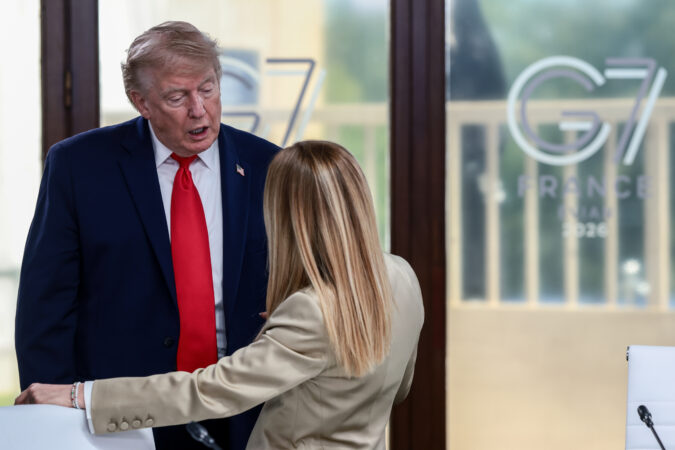
    WASHINGTON — President Donald Trump on Saturday lashed out at Italian Prime Minister Giorgia Meloni, insisting that she asked “over and over” for a photo with him at the recent Group of Seven summit and criticizing what he said was Italy’s lack of cooperation during the Iran war.

    The remarks deepen the spat that began this week with the Republican president’s interview with an Italian broadcaster, during which Trump claimed Meloni “begged” for the photo during the G7 meeting in France. Meloni has called that “completely fabricated.” The dustup led Italy’s foreign minister to cancel a planned trip to the United States as Meloni’s government lined up in her defense.

    “Italian Prime Minister Gigiorgia Meloni asked, over and over, for a picture with me during the G-7 meeting in France,” Trump wrote on his social media platform while spending the weekend at the Camp David presidential retreat. He misspelled her first name in the initial post, which he later corrected.

    He continued: “She is doing poorly in Italy with her level of popularity, possibly because she turned down the United States of America, a Country that truly loves and protects Italy, when it came to denying Iran from obtaining or developing a Nuclear Weapon (But so did NATO, for that matter!).”

    Meloni soon responded, saying in a statement to Trump that “these constant, unprovoked attacks are senseless.”

    “As for my popularity, being your friend certainly has not helped it, nor does it depend on my relationship with you. My popularity depends on my ability to defend Italy’s national interest, and that is exactly what I have always done,” Meloni said in a post on Instagram. She added that “in any case, my popularity is none of your concern. I suggest you focus on yours.”

    Trump’s initial comments were aired Friday on the La7 network. A correspondent had asked the president about Ukraine, but Trump raised Meloni and made the claim about the photo. Trump said he was not obliged to take the picture with her but that he felt sorry for her and agreed, La7 said. The broadcaster put a dubbed version of the conversation online, but not the original English audio.

    In his post, Trump also complained that Meloni would not allow the U.S. to use Italy’s landing strips or runways during the Iran war even though the U.S. is a leader in defense spending among NATO allies. That is a long-standing complaint about the military alliance and one that Trump raised before his White House meeting Wednesday with NATO Secretary-General Mark Rutte and the NATO summit in Turkey next month.

    Italy, a key logistics hub for the U.S., declined in March to allow American bombers headed for the Middle East to use a base in Sicily without parliamentary approval. It was a decision reflecting constitutional constraints and strong domestic opposition to the war. Meloni has insisted that any use of Italian bases for offensive operations would require parliamentary backing.

    Trump vented his frustration about Meloni and on Saturday claimed that she “wants to be friends again” in light of the initial deal between the U.S. and Iran to end the war.

  • Trump tries to blame Reflecting Poll woes on vandalism, announces ‘multiple arrests’

    Trump tries to blame Reflecting Poll woes on vandalism, announces ‘multiple arrests’

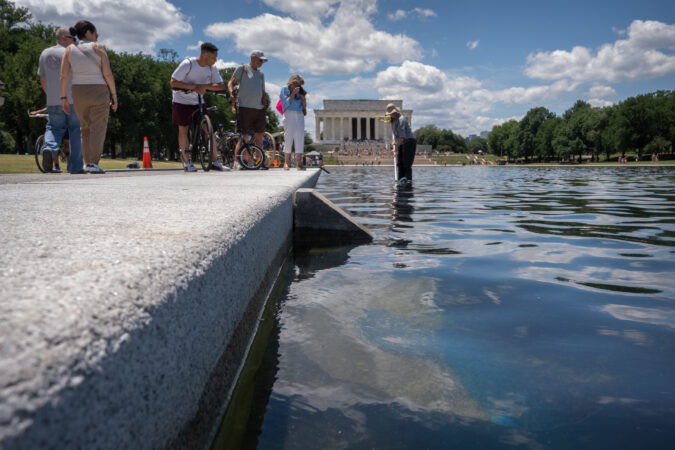
    WASHINGTON (AP) — President Donald Trump on Saturday announced that federal authorities had made “multiple arrests” of people he said were vandalizing the Reflecting Pool as he struggled to explain why the $14-million-plus rehabilitation project he launched for the nation’s 250th anniversary seemingly backfired.

    Trump said his predecessors had let the pool turn an algae-stained green and that he’d line it with “American flag blue” so it better reflected the Washington Monument. But after the new pool was unveiled, its blue tinge quickly became a familiar green. Workers treated it with chemicals to kill the algae, but then the painted blue lining on the bottom began to peel.

    On Friday night, Trump posted about the pool.

    “We’ve had some real problems with Vandalism at the beautiful Reflecting Pool,” he posted on his social media site Friday night. ”Just like three days ago, they destroyed the grass outside of the Pool, they’ve also done everything possible to hurt the inside surface that was just installed.”

    He offered no details to substantiate his claim.

    Agencies responsible for law enforcement and upkeep on the National Mall — the U.S. Park Police, National Park Service and Interior Department — did not respond to requests for comment. Trump on Saturday followed up by saying Park Police “have arrested multiple individuals for vandalizing our Nations magnificent Reflecting Poll,” meaning Pool.

    He went on: “Who would do such a thing? These are very serious crimes having to do with the destruction of National Monuments. Years in jail!”

    One man arrested was David Hearn, 67, of Bethesda, Md., who owned a company that made composite used to build watercraft. He said he stopped by the pool during his 64-mile bike ride Friday to see what was going on.

    Hearn, a former Olympic canoe racer, told the Associated Press that he reached into the pool because he wanted to examine the peeling new coating. He said he briefly touched a chunk that was still attached to the side of the pool, then let go shortly after a park worker told him to.

    But, Hearn said, he was then detained by National Guard troops and Park Police for five hours before being released Friday night.

    “I’m a curious citizen,” Hearn said in a telephone interview. “I reached down to see what it felt like. It was very rubbery.”

    The Washington Post first reported Hearn’s arrest, and he said he has a date to appear in court next month and is looking for legal help.

    Even if someone pulled ribbons of paint from the side of the pool, it would not explain the clouds of algae in green water and swaths of loose blue paint detached from the bottom.

    Trump insisted something nefarious has been going on at the scene. “No different than the chemicals that were used on the National Mall, they used something similar in the Reflecting Pool to try to destroy and demean our beautiful work,” he posted Friday evening.

    That was an apparent reference to the discovery of large numbers etched in discolored grass on the National Mall the week before: “86 47.” Authorities said the numbers could have been meant as a threat to Trump, the 47th president. The number 86 can be slang for “getting rid of.” They are investigating.

    Trump’s claims came after days of negative attention to the state of the pool, which has drawn television cameras and curious onlookers.

  • Trump threatens to charge U.S. tolls in Strait of Hormuz if final Iran deal not reached in 60 days

    Trump threatens to charge U.S. tolls in Strait of Hormuz if final Iran deal not reached in 60 days

    TYRE, Lebanon — Iran on Saturday said it closed the Strait of Hormuz because of Israel’s attacks in Lebanon and warned that while negotiators were going to Switzerland for talks with the United States on their interim agreement, not much is likely to happen if the fighting doesn’t stop.

    U.S. President Donald Trump, in response, threatened to impose American tolls in the crucial waterway if a final deal with Iran isn’t reached in 60 days, saying the money would be for “services rendered as the Guardian Angel to the countries of the Middle East.” His social media post underscored that the agreement calls for toll-free travel for 60 days.

    The announcements indicated a rough start to technical-level U.S.-Iran talks that key mediator Pakistan said will begin Sunday, with Qatari mediators also participating.

    U.S. Vice President JD Vance left for Switzerland on Saturday evening, just as Iranian state TV posted video showing Iran’s negotiators arriving there. They include parliamentary Speaker Mohammad Bagher Qalibaf, Foreign Minister Abbas Araghchi, and central bank and oil officials, among others. The deal calls for billions of dollars of Iran’s assets to be unfrozen.

    Talks were meant to start Friday, but the Iranians initially canceled their plans to attend because of escalating fighting in Lebanon. Negotiators for the U.S. and Qatar, with help from Iran, worked out an agreement between Israel and Hezbollah to tamp down hostilities, according to U.S. and regional officials who were not authorized to comment publicly and spoke on the condition of anonymity.

    Vance told reporters he would be in Switzerland “for a day or two” but was optimistic on making progress in the nuclear talks and on a ceasefire in southern Lebanon.

    Negotiations toward a final agreement will begin once key commitments are upheld, Iranian Foreign Ministry spokesperson Esmail Baghaei said. If they are not, “the memorandum of understanding as a whole will be jeopardized.”

    Strait once again becomes a challenge

    But the strait has emerged again as a focus. Iran’s joint military command said it was closed because of the U.S. “clear breach of its commitments” by failing to end the war. The interim deal is meant to stop fighting on all fronts.

    The U.S. disputed Iran’s announcement.

    “Iran does not control the Strait of Hormuz. Traffic continues to flow, and U.S. forces are monitoring the situation to ensure this remains the case,” said Capt. Tim Hawkins, a spokesperson for U.S. Central Command. The military said that 55 merchant ships transited Saturday with more than 17 million barrels of oil.

    The global economy braced for more uncertainty.

    Ships began transiting after the interim U.S.-Iran agreement was signed earlier in the week, a milestone that left plenty of questions unanswered. The U.S. lifted its blockade of Iran’s ports and now allows Tehran to sell its oil freely — terms that have left some in the U.S. Congress asking whether the war was worth it.

    Vance earlier confirmed that top negotiators Jared Kushner and Steve Witkoff were already in Switzerland and working through technical details of anticipated negotiations on Iran’s nuclear program. The interim deal gives negotiators 60 days to reach a nuclear agreement, but the issue is intricate and the time can be extended.

    Israeli attacks in Lebanon kill at least 16

    A Hezbollah official told the Associated Press that Iran informed the militant group that Tehran will not reopen the strait until Israel announces publicly that it will comply with a “comprehensive ceasefire” in Lebanon and an end to military operations there. The official spoke on condition of anonymity because he was not authorized to speak publicly.

    The official said Hezbollah will commit to a ceasefire if Israel does.

    An Israeli military official, speaking on condition of anonymity in line with regulations, later said the military had received “updated directives from the political echelon to cease fire.” The official said the military is operating in a defensive manner in Lebanon, which includes the right to respond to Hezbollah attacks.

    The official also said five Israeli soldiers had been killed in the past 48 hours in southern Lebanon.

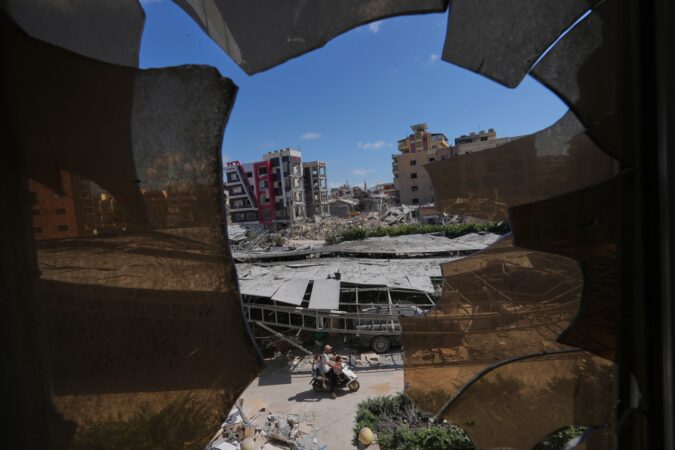
    Earlier Saturday, Israeli strikes on southern Lebanon killed at least 16 people, including two children, hours after reports emerged of a ceasefire agreement there. Seven people were trapped under rubble after strikes hit the southern city of Nabatiyeh and nearby villages, Lebanon’s National News Agency said.

    The death toll in the latest war between Israel and Hezbollah has surpassed 4,000, Lebanon’s health ministry later announced.

    An Israeli military official said Hezbollah fired more than 50 projectiles at Israeli forces in southern Lebanon overnight. Israel’s army said it struck dozens of Hezbollah targets and militants.

    On Friday, the Israeli ambassador to Washington, Yechiel Leiter, said Israel “remains firmly committed to an immediate ceasefire” if Hezbollah honors the agreement and ceases hostilities.

    Earlier Saturday, Hezbollah said it had committed to the ceasefire but blamed Israel for violating it Friday night and said it would repel attacks by Israeli troops.

    Conflict could sink the US-Iran deal

    Neither Israel nor Hezbollah are signatories to the deal between the U.S. and Iran.

    Hezbollah and Israel went to war two days after the U.S. and Israel launched strikes on Iran on Feb. 28, with Hezbollah firing rockets and drones at northern Israel and Israel seizing large swaths of southern Lebanon.

    A new round of U.S.-backed talks between the Lebanese government and Israel is expected in Washington next week.

    Israeli Prime Minister Benjamin Netanyahu has vowed to keep Israeli forces in southern Lebanon until any threat to Israel is eliminated. Hezbollah has refused to halt its attacks unless Israel commits to withdrawing from Lebanon.

    Fighting continues near the Israel-Lebanon border

    A strike on Lebanon’s Barish village killed four members of a family: parents and two children. In Arab Salim village, a body was pulled from a destroyed house, and in Doueir and Kfar Rumman villages, drone strikes killed a person on a motorcycle and a Lebanese soldier. Nine people were killed in strikes in Qannarit, Sohmor, and Shehour villages.

    Israeli jets flew low over the coastal city of Tyre. Residents told the Associated Press they were relieved that Tyre had been spared in recent days, but now they were reminded that the war is not over.

    “Our entire lives would change if there’s a ceasefire,” said one resident, Hussein Khoshman.

    Some residents of northern Israel doubted the fighting would stop. “I don’t believe in a ceasefire because it doesn’t exist,” said Miriam Hod in Metula.

  • President Donald Trump unveils the new Air Force One, a converted Qatari jet

    President Donald Trump unveils the new Air Force One, a converted Qatari jet

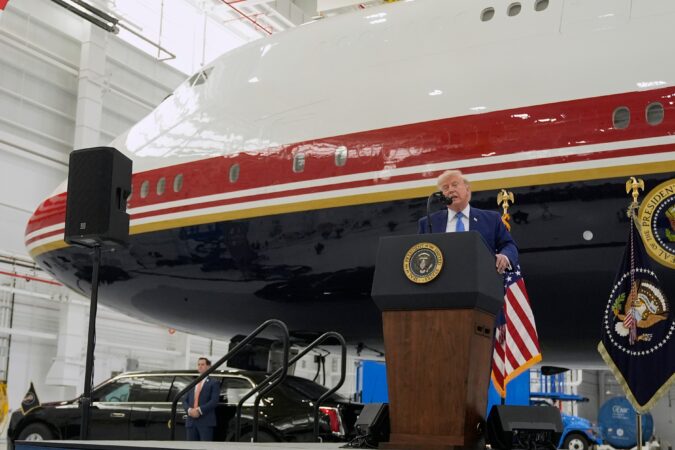
    ANDREWS AIR FORCE BASE, Md. — President Donald Trump on Friday showed off the new Air Force One, a formerly Qatari-owned jumbo jet that has been converted into the official U.S. presidential aircraft.

    The new aircraft eschews the Kennedy-era robin’s egg blue exterior of the old plane for a bolder look, with the underbelly of the plane painted navy blue with a red stripe above it. The plane’s left side, where the president boards, features the presidential seal, while the tail of the aircraft has a massive American flag on it.

    “This plane was transformed into a flying White House at a level of luxury that nobody has ever seen before,” Trump said from inside the massive Andrews Air Force Base hangar, as a couple of hundred assembled Air Force personnel looked on. He spoke after stepping off the new plane in a dramatic flourish, as his signature tune “God Bless the USA” played.

    He confirmed that he would be taking the new jet to the NATO summit in Ankara, Turkey, next month and indicated he would be returning to China “at some point,” presumably a reference to the Asia-Pacific Economic Cooperation summit that China is hosting in November. His return from the Group of Seven summit in France this week was the last planned trip aboard the old Air Force One, he said.

    “Now, when we land at airports in London and in Germany and different places, nobody tops this one, and that’s the way we have to have it for our country,” Trump said, noting that the colors and the design were to “my taste, I will say.”

    He added that the new Air Force One will do a flyover during the July 4 celebrations next month.

    The gift from Qatar is serving as a so-called “bridge” aircraft to carry the president until the new planes ordered directly from Boeing arrive. That delivery is currently slated for 2028.

    The administration formally accepted a luxury Boeing 747 jet from Qatar last year to be used as the presidential airplane, despite questions about the ethics and legality of accepting such an expensive gift from a foreign government. Trump has insisted in the past that he would not fly around in the Qatari jet once he leaves office and said it would instead be donated to a future presidential library.

    Trump on Friday said the U.S. was in a “little bit of a logjam” as they awaited the delivery of the new jets directly from Boeing, which had originally been scheduled for 2024 but have been delayed. He recalled asking the emir of Qatar for use of one of their planes.

    “See, a normal president wouldn’t do this. A normal president wants to stay away from aircraft,” Trump said Friday. “But our country has to be represented properly.”

    The Air Force said in a news release Friday that any plane deemed Air Force One “must meet rigorous security requirements” and that the Qatari plane “was modified under a disciplined engineering approach that prioritized these exact core capabilities above all else.” The Air Force also said “much of the previous head of state interior layout” of the plane was kept intact.

    The Air Force has said in the past that security modifications to the jet would cost less than $400 million.

    Trump’s efforts to reimagine the presidential airplane date back to his first administration, when he directed that an incoming fleet of new jets would adopt a color scheme that was nearly identical to that of his personal airplane. Then-President Joe Biden reversed the decision in March 2023 as an Air Force review suggested that the darker colors could increase costs and delay delivery of the new jets, but once Trump returned to office, he returned to his desired colors for the plane.

    Other government jets that carry other top administration officials will also use the similar red, white, and navy color scheme, the Air Force said earlier this year.

    An Air Force spokesperson, who spoke on condition of anonymity to discuss sensitive plans, told the Associated Press that the two current planes, known as VC-25As, will not be retiring. Instead, they will remain in the fleet until the new Boeing planes, referred to as VC-25Bs, come into service, the spokesperson said.

    It is unclear how the older jets will be used but the spokesperson said that both the Qatari jet as well as the VC-25As will be available for use and “the Presidential Airlift Group will select the appropriate aircraft for each mission based on operational requirements.”

  • EU leaders squabble over outreach to Moscow as Ukraine war rages on

    EU leaders squabble over outreach to Moscow as Ukraine war rages on

    BRUSSELS — European Union leaders have been unable to agree on setting up a back channel with Moscow to ensure that the bloc’s interests are protected should progress be made in negotiations to end Russia’s war on Ukraine, some of them said on Friday.

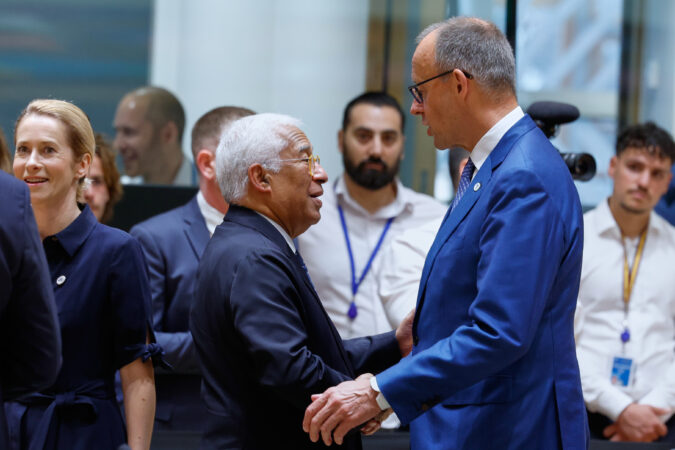
    European Council President António Costa, who chaired their two-day summit in Brussels this week, had directed his office to reach out to the Kremlin and proposed a senior official to make contact. Costa said his aim was not to mediate or set up a parallel negotiating track to the one led by the United States, which is making little progress.

    “We needed to immediately establish this direct contact,” Costa said, clarifying that Brussels would not seek to mediate in negotiations but rather open communications.

    “We cannot depend only on others to interpret Russian messages and we must be able to convey directly to Russia our own messages,” he added.

    European Commission President Ursula von der Leyen said she supported Costa’s approach because “our entire continent is at risk, and this is why Europe must be one of the architects of a just and lasting peace.”

    An unresolved disagreement over diplomacy

    Debate has been swirling around Europe in recent months about whether to appoint a mediator for talks with Russia to help get things moving again, but this has been largely rejected as many believe that Russian President Vladimir Putin would be unlikely to negotiate anyway.

    Instead, the 27 EU countries have focused on concessions that Russia should make to secure peace.

    German Chancellor Friedrich Merz stressed that peace negotiations must ultimately be conducted by Ukraine, Russia, Europe, and the U.S.

    “Who speaks for the European Union is something we don’t need to decide on today,” he said. “We will decide on that when talks come about.”

    He added that Costa has “an important to role to play” as president of the European Council, representing the EU, preparing and organizing summits, and “we don’t need to make decisions going beyond that at the moment.”

    Merz highlighted efforts to coordinate diplomacy by the so-called E3 group of countries — Germany, France, and Britain — a format that he said came about “at the explicit wish of Ukraine.”

    French President Emmanuel Macron said “Europeans are not mediators” in the negotiations but that “Costa, when the competencies are defined, will have a place.”

    Margus Tsahkna, foreign minister of Estonia — a nation on the EU’s eastern flank that has faced drone incursions and was once occupied by the Soviet Union — said that “Europe must not assume the role of a neutral mediator” but instead buttress Ukraine’s position to “force the Kremlin into serious negotiations.”

    Some nations support Costa’s backchannel proposal

    As European leaders left overnight after the summit wrapped up, Belgian Prime Minister Bart De Wever joked that Costa would be the envoy to Moscow.

    “I was just talking about you, António,” De Wever said while laughing and shaking Costa’s hand. “I was full of praise, saying you are the only one who can represent us and that we will send you to Moscow.”

    Irish Prime Minister Micheál Martin said that “opening up a channel is not a mistake in our view, and I trust António Costa.”

    “What was very clear last evening is that any negotiations would have to be first and foremost between Ukraine and Russia, but there are no indications that Russia is coming to the table at all,” he said.

    Speaking to reporters, Czech Prime Minister Andrej Babiš said the leaders had failed at the summit to resolve their differences over the approach overnight. “Europe is unable to agree even on whether there will be negotiations or who will lead them,” he said.

    Russia responds publicly to the overture

    Putin has tried to cut out Europe and Kyiv from negotiations with the U.S. over Ukraine’s future. But the Kremlin said on Friday it was “ready for contact” with Europe, on the condition it abandon its desire to talk to Moscow from the position of force.

    At the same time, Russian Foreign Minister Sergey Lavrov argued that the EU can not be an impartial peace broker. He again rejected Western claims that Moscow was harboring plants to attack Europe as “provocation” and “nonsense” while warning that Europe’s military buildup poses growing security threats.

    “A direct confrontation between NATO and Russia could rapidly escalate into an exchange of nuclear strikes, with catastrophic consequences,” Lavrov said in an essay released by the Russian Foreign Ministry.

  • Comedy trailblazer Tom Dreesen, Sinatra’s longtime opening act, dies at 86

    Comedy trailblazer Tom Dreesen, Sinatra’s longtime opening act, dies at 86

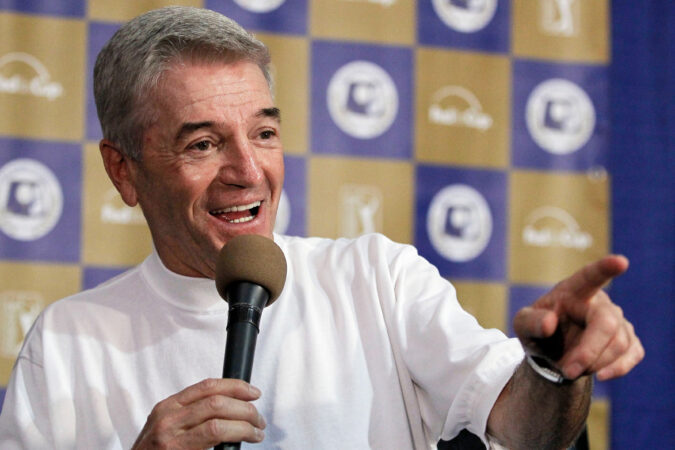
    LOS ANGELES — Tom Dreesen, who along with partner Tim Reid formed one of America’s first interracial stand-up comedy duos and later spent years as Frank Sinatra’s opening act, died Wednesday. He was 86.

    Dreesen died at his home in Los Angeles, according to publicist Lori De Waal. A cause of death was not provided.

    After meeting in Chicago, Dreesen and Reid, who was Black, formed “Tim and Tom” in 1969. Against a backdrop of simmering racial tension, they used humor to address social issues and promote understanding between audiences of different backgrounds. They worked together until the mid-1970s. Reid went on to solo success playing DJ Venus Flytrap on the popular TV sitcom WKRP in Cincinnati, where Dreesen was a guest star.

    “When I was a kid I found an album he and his comedy partner did called Tim and Tom and took it home and played it and it was one of the albums that changed the course of my life. So great,” comedian and filmmaker Mike Binder wrote on X.

    After splitting with Reid, Dreesen honed a solo comedy act, making over 500 national TV appearances, including 60 visits to The Tonight Show Starring Johnny Carson. He also was a frequent guest and sometime guest host on The Late Show with David Letterman. Their friendship dated to the early 1970s when both worked at the Comedy Store in West Hollywood, Calif.

    Dreesen’s final TV appearance came last week on Comics Unleashed with Byron Allen, which replaced Stephen Colbert’s canceled CBS late-night show.

    Dreesen was Sinatra’s opening act for 14 years and became close with the entertainer.

    “If he loved you, he worshipped the ground you walked on,” Dreesen told the Desert Sun newspaper in 2014. ”In a lot of ways, he was like a father to me. I didn’t have a father that really cared that much where I was and what I did. But Frank would give me advice and counsel, and then he was a buddy in a lot of ways. I thought the world of him.”

    Dressen also toured with Sinatra’s fellow Rat Pack member Sammy Davis Jr., as well as Liza Minnelli, Smokey Robinson, Gladys Knight, and Tony Orlando.

    “He was one of the most brilliant comedians of all time. Tonight, he’ll once again be opening for Dean, Frank and Sammy,” Deana Martin, a daughter of Dean Martin, posted on X.

    In 2008, Dreesen co-wrote the book Tim and Tom: An American Comedy Act in Black and White and in 2020 he authored his memoir.

    Dreesen acted in such TV shows as Columbo, Murder, She Wrote, and Touched by an Angel. His film roles included Spaceballs, Man on the Moon, and Trouble With the Curve, as well as the HBO movies The Rat Pack and Lansky.

    Dreesen was active in charitable work, motivational speaking, and veterans’ causes, including serving as ambassador for the Gary Sinise Foundation.

    “America lost one of our great comedians and patriots, and I lost a dear friend,” Sinise posted on X.

    He was born on Sept. 11, 1939, in Chicago and raised as one of eight children in suburban Harvey. He enlisted in the U.S. Navy at age 17 and after getting out in 1960 he returned home to work a series of jobs, including selling insurance.

    Dreesen is survived by daughters Amy and Jennifer from his marriage to Maryellen Subock, which ended in divorce in 1984, as well as seven grandchildren. He was preceded in death by his son Tommy.

  • Friction between Trump and Republican senators is growing before the pivotal midterm elections

    Friction between Trump and Republican senators is growing before the pivotal midterm elections

    WASHINGTON — The relationship between President Donald Trump and Senate Republicans neared a breaking point this week as he upended their efforts to speedily confirm one of his own nominees and said he would not sign the renewal of a key surveillance law unless they agree to new terms.

    Trump’s overnight social media post Wednesday that he was delaying Jay Clayton’s nomination to become national intelligence director, just hours before the U.S. attorney’s confirmation hearing, further strained relations between the Senate and White House that have been worsening for weeks. Later that day, some Republican senators who have been hesitant to challenge the president directly on the Iran war were blunt in their criticism of his deal to end it.

    “This is the worst foreign policy blunder in decades,” Sen. Bill Cassidy (R.,La.) said in a post on X.

    The open tensions are an almost complete reversal from a year ago when Senate Republicans worked closely with Trump on a complicated effort to push through his massive package of spending and tax cuts.

    At the time, criticism of the president was almost nonexistent among Republicans on Capitol Hill, and they planned to highlight passage of that bill in the midterms. But as the November election draws closer and Republicans are trying to defend their majorities, Trump is instead needling Congress with his demands and reversals, driving several Republican senators to disparage his actions publicly for the first time.

    “I think somebody’s not dialing the president into the complexities of what he’s done here,” Sen. Thom Tillis (R., N.C.) said Wednesday after Clayton’s confirmation was postponed. “I mean, my God.”

    The slow unraveling of what once seemed like an airtight alliance between the executive and legislative branches in a Republican-led Washington extends to their policy priorities.

    Trump appears to have lost interest in most of the GOP agenda and has become almost singularly focused on his voting legislation to require proof of citizenship, which has almost no chance of passing. At the same time, he has asked members of Congress to fund parts of his White House ballroom project, allow a temporary intelligence director that none of them like, and cede their powers on the Iran war.

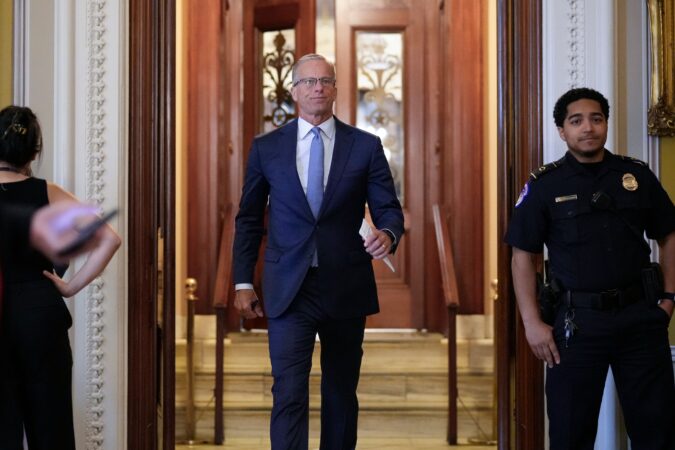
    The growing rift has brought much of the Senate’s business to a halt and put Republicans who are up for reelection this year on the defensive. It has also put pressure on Senate Majority Leader John Thune, who has been up-front with Trump about what he can and cannot do in the Senate.

    Trump pressures Thune on voting bill

    Trump has pressured Thune relentlessly to scrap the filibuster and pass the strict proof-of-citizenship legislation, called the SAVE America Act. Thune (R., S.D.) has told Trump publicly and privately that the votes are not there for either step. Still, Trump has kept up the push.

    In a social media post Thursday, Trump said he would be “the last Republican president” if the voting bill does not pass.

    “Senate Majority Leader John Thune, and the Republican Senate, must not let this ‘carnage’ happen,” Trump said. “They will go down on the wrong side of History, as will all Republicans who just stood by and watched.”

    Nonetheless, Trump has yet to go after the well-liked Republican leader on a personal basis, as he often did with Thune’s predecessor, Sen. Mitch McConnell (R., Ky.). Trump once called McConnell a ” dour, sullen, and unsmiling political hack.”

    Trump and Thune talk frequently, even as Thune is sometimes giving the president news he does not want to hear. As Trump pushed for the voting bill, Thune scheduled weeks of floor time to consider it, an effort to make clear that the Senate was supportive, even if the votes are lacking.

    Missouri Sen. Eric Schmitt, one of the president’s closest allies in the Senate, said he has never heard Trump say anything negative about Thune.

    “It’s a difficult position,” Schmitt said of Thune’s role in the Senate. “I think they have a good working relationship.”

    One of Thune’s closest allies, Republican Sen. Mike Rounds of South Dakota, said the even-keeled leader is the “right person at the right time.”

    “In the Capitol today, he is the stable force,” Rounds said. “In Washington, D.C., today, he is the stable force.”

    No signs of revolt among Senate GOP

    There were no signs of a revolt within the GOP conference for now, despite Trump’s pressure.

    Thune “has managed it better than anyone else could manage it,” said Cassidy, who has become a more frequent Trump critic since a primary loss to a Trump-backed challenger.

    Criticism of Trump has at times surfaced even among his closest Senate allies, especially with his proposed $1.776 billion settlement fund for his political allies and his pick for acting intelligence director, Bill Pulte, who has no known intelligence experience.

    But the rift with Trump has also stoked some new internal tensions.

    Several Republican senators criticized Sen. Mike Lee (R., Utah), who has waged an online campaign to eliminate the filibuster and pass the SAVE America Act, in a private conference lunch this week for stoking dissension within the party in an election year.

    Unbowed, Lee has kept up his social media campaign, including a post Friday on X in which he said that giving up because Republicans lack the votes is a “recipe for failure.”

    Texas Sen. John Cornyn, one of those who spoke out at the meeting, replied that it is Lee’s job to find the votes, “if you can.”

    “Can’t just complain about others,” Cornyn posted. “Prove us wrong.”

    Trump’s dwindling number of allies

    Some Senate Republicans have made clear they have no plans to separate themselves from Trump.

    As several of his colleagues criticized Trump’s agreement with Iran this week, first-term Sen. Bernie Moreno (R., Ohio) aggressively defended it on social media.

    “Let’s get the Nobel Peace Prize ready!” Moreno posted on X.

    But Trump has far fewer of those Senate allies than he did when they narrowly passed the tax and spending cuts legislation a year ago. That is in part because he has picked off some of the most loyal Republican votes himself.

    Both Cassidy and Cornyn lost in primaries last month after Trump endorsed their opponents. Tillis announced he was not running for reelection last year after Trump repeatedly criticized him on social media.

    Now all three have become frequent critics.

    Shortly after his election loss, Cornyn posted on social media a fable about a frog and a scorpion. The scorpion asks the frog to carry it across a river, according to the fable, and then stings the frog in the middle of the river, “dooming them both.”

    “The dying frog asks the scorpion why it stung despite knowing the consequence,” Cornyn’s post read. “To which the scorpion replies: ‘I am sorry, but I couldn’t help myself. It’s my character.’”

  • As Juneteenth is celebrated across the U.S., Obama’s presidential center opens in Chicago

    As Juneteenth is celebrated across the U.S., Obama’s presidential center opens in Chicago

    As people gathered across the U.S. to celebrate Juneteenth on Friday, former President Barack Obama and former first lady Michelle Obama welcomed the first visitors to his presidential center.

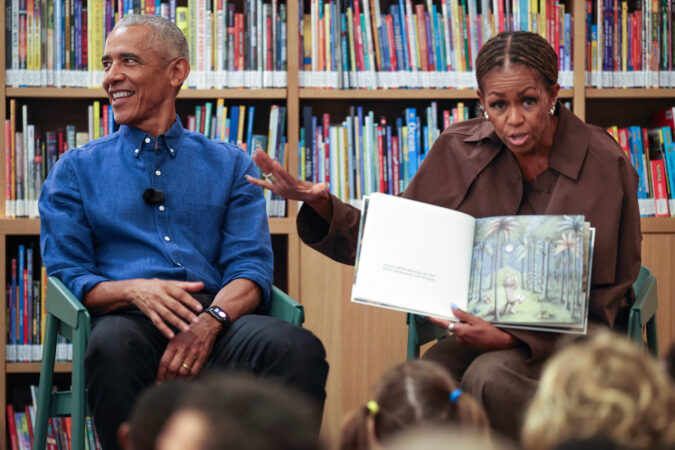
    The Obamas, joined by former Reading Rainbow host LeVar Burton, also read Where the Wild Things Are to 25 school children at the Chicago Public Library branch inside the center. When the former president read Maurice Sendak’s line about being “king of all the wild things,” Michelle Obama interjected with, “Although there were no kings,” to applause.

    Later, awed guests shook hands with the Obamas against the backdrop of a colorful, 38-foot-tall painting depicting a map of Chicago stretching to the ceiling, inspired by Carl Sandburg’s 1914 poem about the city: “stormy, husky, brawling, City of the Big Shoulders.”

    As the last of the first group of guests passed through, the Obamas quickly exited, and the museum opened its doors to the rest of the visitors.

    Located on a sprawling campus on Chicago’s South Side, the center honoring the nation’s first Black president has been designed to inspire people to make the change they want to see in their own communities. It’s the kind of contemplation that also comes as Americans gathered for Juneteenth, which celebrates the end of slavery in the U.S.

    The holiday marks June 19, 1865, when Union troops arrived in Galveston, Texas, at the end of the Civil War with an order declaring the state’s enslaved people to be free with “absolute equality.” By then, 2½ years had passed since the Emancipation Proclamation declared the freedom of enslaved people in the South.

    “Juneteenth represents not just a commemoration of the end of slavery but it’s also part of the ongoing struggle for absolute equality and that ideal in American life,” said W. Caleb McDaniel, a Rice University professor and author of the Pulitzer Prize-winning book Sweet Taste of Liberty.

    The center’s public opening arrives as a symbolic convergence of legacy and liberation. The nation is deeply divided politically and grappling with renewed questions about the arc of racial progress as the Supreme Court hollowed out the Voting Rights Act, endangering Black political representation in Congress.

    The history of Juneteenth

    This is the fifth year since Juneteenth was designated as a federal holiday by former President Joe Biden, who served as Obama’s vice president. But the celebrations, which began in Texas and then spread across the country, have a rich and long history in Black America, with the day often spent gathering for picnics and cookouts.

    The holiday — a combination of “June” and “nineteenth” — marks the day when U.S. Maj. Gen. Gordon Granger and his troops arrived in the Texas port city with the declaration of freedom in General Order No. 3.

    As the third year of the Civil War neared, President Abraham Lincoln had issued the Emancipation Proclamation declaring the freedom of “all persons held as slaves” in the still rebellious states of the Confederacy. For many, it did not mean immediate freedom but a promise of liberation, to be secured with a Union victory.

    “It really required the force of arms and the success of U.S. armies to enforce the Emancipation Proclamation,” McDaniel said.

    About six months after Granger’s arrival in Galveston, the 13th Amendment abolishing slavery nationwide was ratified.

    Celebrations across the nation this year

    Juneteenth’s birthplace celebrated with a daylong gathering at a Galveston park with music and fireworks, a parade, and a worship service in a historic Black church. Nearby Houston lined up musical artists and a domino tournament at Emancipation Park, established in 1872 by a group of formerly enslaved men.

    Hundreds of other cities across the U.S. announced events over the long weekend, including a parade in Atlanta, a bike ride in Los Angeles, and a festival on Martha’s Vineyard.

    Several cities across the U.S. hosted walks named for Opal Lee, the Texas woman who pushed for years to make Juneteenth a federal holiday. Participants walk 2½ miles to symbolize the 2½ years it took for the Emancipation Proclamation to be enforced in Texas. Lee, known as the “grandmother of Juneteenth,” turns 100 this year.

    Reflecting on a continuing struggle

    Black Texans embraced the date of Granger’s arrival as one to celebrate, even as the Ku Klux Klan was established in Texas by 1868. By the 1880s, “it was difficult to find a significant community in Texas where it wasn’t being marked by African Americans,” McDaniel said.

    “They made it a community celebration, they made it a celebration of not only freedom but also a demonstration of community empowerment and institution-building,” he added.

    Corey D.B. Walker, dean of Wake Forest University’s divinity school, said the holiday offers a way to recognize the nation’s “complex history” and what it means to be a U.S. citizen, especially amid efforts by President Donald Trump’s administration to undermine the retelling of Black history.

    “I think it really reminds people the importance of understanding a fuller, more robust portrait of our nation’s history and the many contributions of many individuals who have contributed to America’s experiment with democracy,” Walker said.