Category: Nation World News Wires

  • Federal judge bars Trump from implementing proof of citizenship requirement to vote

    Federal judge bars Trump from implementing proof of citizenship requirement to vote

    A federal judge on Wednesday permanently barred President Donald Trump’s administration from implementing most of his first executive order on elections, part of which sought to require people to show documentary proof of citizenship when they register to vote.

    The ruling by U.S. District Court Judge Denise Casper in Boston effectively converts a preliminary injunction she issued a year ago, in which she temporarily blocked many of Trump’s efforts to overhaul elections, into a permanent ban.

    Casper rejected the Republican administration’s argument that the lawsuit to block the changes brought by Democratic state attorneys general was premature because the rules had yet to be put in place. Instead, she agreed that the Constitution gives states and Congress the authority to regulate elections, and that Trump’s requirements violated the separation of powers.

    The Constitution “does not grant the President any specific powers over elections,” wrote Casper.

    Among other proposed changes, Trump’s order would have required people to provide documentary proof of citizenship when registering to vote, prevented mail ballots from being counted if they arrive after Election Day, even if they were postmarked by then, and punished states that failed to comply by withholding certain federal money.

    In a statement, New York Attorney General Letitia James said she was grateful the court had blocked Trump’s “unconstitutional attempt to seize control of our elections” and would continue to defend voting rights in this year’s midterm elections.

    “Generations of Americans fought tirelessly for the right to vote, and we honor their legacy by protecting that right against anyone who tries to undermine it,” said James, a Democrat.

    California Attorney General Rob Bonta, whose state was the lead plaintiff in the case, said the ruling reaffirmed the constitutional principle that it s up to the states and Congress to set election rules.

    “While we are proud of this result, we are clear-eyed that President Trump’s attacks on voting rights and our elections show no signs of slowing down,” Bonta, a Democrat, said in a statement. “So let me be clear: we will keep fighting back every step of the way.”

    Requests for comment sent to the White House and the U.S. Department of Justice were not immediately returned.

    The ruling was the latest in a series against the elections executive order Trump signed just months after taking office for his second term. The Republican president has since signed another executive order on elections that seeks to create a national voter list and limit mail balloting. That directive also faces multiple legal challenges.

    Last fall, a federal judge in Washington, D.C., overseeing a separate challenge to the first election executive order by civil rights and Democratic Party-aligned groups blocked the government from taking steps to include the proof-of-citizenship requirement on the federal voter registration form. That judge later barred Trump’s defense secretary from requiring documentary proof of citizenship when military personnel register to vote or request ballots.

    In an apparent nod to the difficulty of implementing a proof-of-citizen requirement by executive order, Trump is pushing legislation in the Republican-controlled Congress to create such a mandate. The SAVE America Act has passed the House but has stalled in the Senate, leading Trump to advocate for eliminating the filibuster that is blocking the legislation.

    On Wednesday, he abruptly canceled the expected signing of a bipartisan housing bill, saying he would not sign legislation until Congress passes his proof of citizenship requirement for voting.

    The president and many of his Republican allies have been promoting the narrative that voting by noncitizens is a major problem, when in fact it’s quite rare. The federal voter registration form already requires people to attest that they are U.S. citizens. Violating that is punishable as a felony that can lead to prison or deportation.

    In another major voting case, the U.S. Supreme Court is due to issue an opinion soon on whether mail ballots must arrive by Election Day. That could immediately change the rules in 14 states that allow grace periods ranging from days to weeks if the ballots are postmarked by Election Day.

    Casper, who was nominated by Democratic President Barack Obama, is the chief judge for the U.S. District Court for the District of Massachusetts.

  • Ukraine’s latest long-range strikes on Russia hit a major natural gas plant and satellite centers

    Ukraine’s latest long-range strikes on Russia hit a major natural gas plant and satellite centers

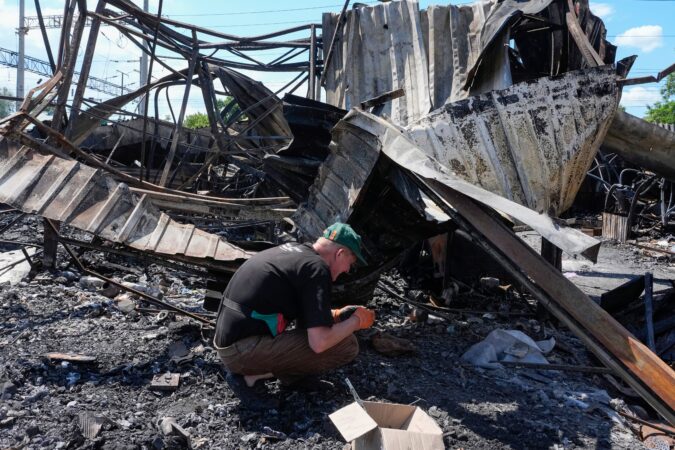
    KYIV, Ukraine — Ukrainian forces struck a major natural gas processing plant and two key satellite communications centers in their latest nighttime attacks on Russia, Ukraine’s General Staff said Wednesday.

    The operation was part of Ukraine’s aerial campaign targeting energy facilities and military industries that has intensified as Kyiv builds bigger and better long-range weapons to ward off Russia’s full-scale invasion, now in its fifth year.

    In response, Moscow has ordered the redeployment of some air defense systems from Russian regions to the capital and to Crimea’s Kerch Bridge, a crucial link for supplying Russian troops, Ukrainian President Volodymyr Zelensky said. The bridge connects the Crimean Peninsula with the Russian mainland.

    “It is important that as many Russians as possible come to understand that it is the Russian leadership’s rejection of diplomacy that is prolonging the war,” Zelensky said on X.

    Zelensky has accepted an unconditional ceasefire demanded by President Donald Trump but Russian President Vladimir Putin has refused.

    Ukraine says the stricken gas plant was among the world’s largest

    The overnight attack hit the Orenburg Gas Processing Plant, which is part of a complex that also houses the only helium plant in Russia, the General Staff said in a statement on the Telegram messaging app. The attack set the complex on fire, it said.

    Orenburg, in the southern Urals near Russia’s border with Kazakhstan, is more than 750 miles behind the front line in eastern and southern Ukraine.

    The plant is one of the largest gas complexes in the world, according to the General Staff. It produces helium, used in liquid-fuel rocket engines and guidance systems, and ethane, a key component in producing solid rocket fuel and gunpowder, it added.

    Overnight attacks also hit two satellite communication centers used by the Russian military, according to the General Staff.

    One was the Dubna Space Communications Center near Moscow, which it described as Russia’s largest ground-based satellite communications complex, and the other was in the Vladimir region east of the capital.

    It was not possible to independently verify the General Staff’s report, and Russian officials made no immediate comment.

    The General Staff’s statement did not say whether the military used drones or missiles in the assault, but drones have recently been used to strike Moscow and St. Petersburg.

    Ukraine keeps hammering Crimea

    Ukraine has recently focused its drone and missile attacks on Crimea, aiming to cut off the vital Russian-held peninsula, and overnight drone strikes knocked out power in Sevastopol, Mikhail Razvozhayev, the city’s Moscow-installed governor, said Wednesday.

    Crimea, which was illegally annexed by Russia in 2014, sits in a strategic location on the Black Sea. It has naval bases and also provides an important supply line to Moscow’s forces inside Ukraine.

    Ukraine recently destroyed more than 60,000 tons of Russian ammunition when it hit a Baltic Fleet arsenal near St. Petersburg, Zelensky said.

    Ukraine is trying to disrupt military supply lines in Crimea and strike the peninsula’s power grid at the height of the summer tourist season. Kyiv hopes the campaign will embarrass Putin and increase public pressure on him to end the war, according to Western analysts.

    Ukraine’s Security Service said Wednesday it struck two military airfields and destroyed missile systems in Crimea.

    Attacks kill at least 6 people

    Two staff members of Norwegian People’s Aid were killed during a Russian attack in Ukraine, the demining organization said Wednesday, although local officials said only one person was killed.

    Four other workers with the organization were injured, two of them critically, according to the head of the southern Kherson region’s military administration, Oleksandr Prokudin.

    Russian forces shot down 323 Ukrainian drones overnight, Russia’s Defense Ministry said.

    Two people were killed and two others wounded overnight in a Ukrainian drone strike on Russia’s Nizhny Novgorod region, east of Moscow, regional Gov. Gleb Nikitin said. Also, a Ukrainian drone strike killed one person overnight in Russia’s Belgorod border region bordering Ukraine, local officials said.

    Ukraine’s air force, meanwhile, said Russia launched 101 long-range attack drones overnight.

    Russian drones attacked the city of Balakliia in northeastern Ukraine, killing a 56-year-old woman, according to Oleh Syniehubov, head of the Kharkiv regional military administration. Also, a 57-year-old streetcar driver man died as a result of a Russian guided aerial bomb that hit the outskirts of Sumy, said Oleh Hryhorov, head of the regional military administration.

    In addition, the death toll rose to four from Tuesday’s ballistic missile strike using cluster munitions on Kryvyi Rih, Zelensky’s hometown, after a 62-year-old woman died from her injuries, said Oleksandr Vilkul, the head of the city administration, said.

    Both Moscow and Kyiv have deployed the controversial munitions during the war.

  • Camp Mystic in Texas files for bankruptcy after catastrophic floods killed 28 people

    Camp Mystic in Texas files for bankruptcy after catastrophic floods killed 28 people

    DALLAS — Camp Mystic filed for Chapter 11 bankruptcy reorganization on Wednesday, nearly a year after catastrophic floods killed 25 campers and two teenage counselors at the Christian camp for girls along the Guadalupe River in Texas.

    Camp Mystic has been under increasing pressure since the July 4 disaster. Owners had planned to reopen the Texas Hill Country camp this summer for its 100th anniversary but reversed course in April amid outrage from victims’ families and lawmakers. Victims’ families filed lawsuits accusing the camp of failing to protect the girls as the powerful floodwaters approached.

    Camp Mystic’s owner, Richard Eastland, also died in the flood.

    The camp listed its debt at more than $10 million, according to the filing made in federal bankruptcy court in Houston. An attorney for Camp Mystic has not responded to an email and a phone message seeking comment.

    “Bankruptcy will not stop all responsible parties from being held accountable,” Paul Yetter, a lawyer who represents multiple families of campers and counselors who died at Camp Mystic, said in a statement. “These innocent girls deserve justice.”

    For decades, Camp Mystic was a summer staple and an institution for generations of families, who dropped off their girls at the sleepaway camp to ride horses, canoe, fish and attend Bible studies. Other summer camps in Kerr County, west of Austin, did not take on such devastating flooding and in some cases have reopened.

    All told, the destructive flooding killed at least 136 people along a several-mile stretch of the river, raising questions about how things went so terribly wrong.

    In the aftermath of the tragedy, the Eastland family spent months determined to reopen the camp this summer, pointing to enhanced safety measures that included flood warning river monitors and putting two-way radios enabled with national weather alerts in every cabin.

    By the spring, Camp Mystic’s attorney said it was ready to reopen for business for nearly 900 campers.

    But assurances of safety did not convince victims’ families and some Texas lawmakers. State regulators found nearly two dozen deficiencies in the emergency operations plan submitted by the owners, including in proposals for flood warning evacuations and safety training.

    The decision not to reopen followed weeks of testimony in court hearings and legislative investigations that laid bare the camp’s lack of detailed planning for a flood emergency and its reliance on poorly trained staff.

    Families of the victims packed the hearings, some wearing “Heaven’s 27” pins with photographs of their daughters. They listened to the details of missed flood warning signs, the descriptions of the flood and the decision to leave the girls in their cabins until it was too late. Testimony included video of the raging floodwaters as a girl repeatedly screamed “help!” somewhere in the distance.

    Before halting the reopening plans, Camp Mystic invited journalists and lawmakers to review safety improvements at the camp and promised that no camp activities would take place in the low-lying area that was devastated by the flood. The Eastland family also stressed that hundreds of families wanted to return.

  • U.S. says chemical maker Chemours to pay $450M to settle ‘forever chemicals’ case

    U.S. says chemical maker Chemours to pay $450M to settle ‘forever chemicals’ case

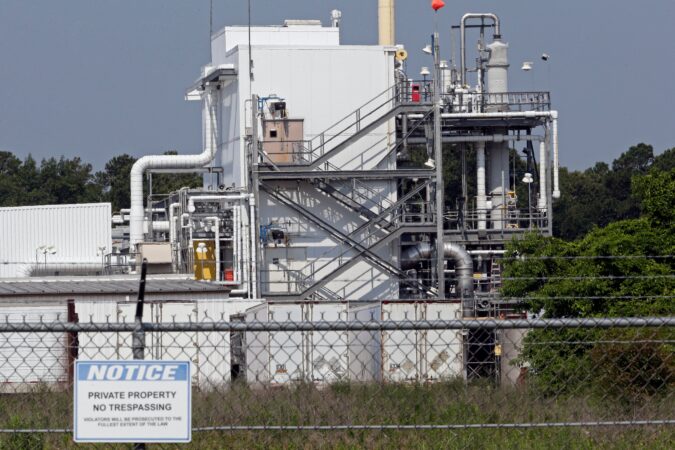
    WASHINGTON — The Trump administration on Wednesday reached a multistate settlement with chemical giant Chemours Co. over yearslong, illegal discharges of synthetic “forever chemicals” used to make products resistant to water, grease, and stains. The settlement is the first by the federal government to resolve enforcement claims against a manufacturer of harmful chemicals known as PFAS.

    Under the agreement, filed in federal court in West Virginia, Chemours will pay a civil penalty of $22.5 million for alleged violations and spend $90 million over 15 years to mitigate PFAS discharges in three states: West Virginia, North Carolina, and New Jersey.

    Wilmington-based Chemours, a spin-off of chemical maker DuPont, also agreed to install PFAS pollution controls for surface water discharges and air emissions at a West Virginia facility at an estimated cost of $60 million, supply clean drinking water to communities near its West Virginia and New Jersey sites at an estimated cost of $280 million, and implement controls to reduce releases of PFAS and other toxic chemicals from its facility in North Carolina.

    Combined, the penalties and relief programs are estimated to cost about $450 million, the Justice Department said.

    The settlement allows Chemours to continue manufacturing PFAS for commercial and military applications while preventing future contamination and protecting communities from existing pollution, said Adam Gustafson, principal deputy assistant attorney general for the Environment and Natural Resources Division.

    Justice Dept. says settlement protects public health

    “The Trump administration recognizes the important role of Chemours for its commercial and military obligations,” Gustafson said in an interview. “The settlement protects public health while preserving that important balance.”

    The settlement against a major PFAS manufacturer “delivers on the Trump administration’s promise to make polluters pay and stop PFAS contamination at the source,” said Jeffrey Hall, assistant EPA administrator for enforcement and compliance assurance.

    The agreement will greatly reduce PFAS contamination of water, land, and air and even begin to mitigate past harm, Hall said. “This settlement brings Chemours into compliance with the law and holds it fully accountable,” he said.

    In a statement Wednesday, Chemours said it has already begun planning and implementing operational improvements at its facilities and will take steps to mitigate future emissions and enhance existing programs.

    “This settlement provides Chemours with greater clarity on future compliance requirements and actions to support long-term responsible manufacturing,” spokesperson Jess Loizeaux said.

    The settlement comes as the Trump administration is expected to propose softening Biden-era limits on “forever chemicals” in drinking water, while delaying but keeping tough standards for two common types of the substance.

    The proposal will start the formal process of rolling back parts of the first-ever limits on PFAS in drinking water finalized during former President Joe Biden’s administration. Officials at the time found they increased the risk of cardiovascular disease, certain cancers, and babies being born with low birth weight.

    The agency is committed to addressing per- and polyfluoroalkyl substances (PFAS) in drinking water while following the law and ensuring that regulatory compliance is achievable for drinking water systems, EPA Administrator Lee Zeldin said.

    Chemours discharged PFAS into rivers in three states

    The settlement determined that facilities Chemours operates in the three states have discharged PFAS into the Ohio River, Cape Fear River, and Delaware River in violation of permits required by the Clean Water Act and state laws. Chemours also violated legal requirements under the federal Toxic Substances Control Act at all three facilities.

    As a result of the alleged violations, people living near the facilities were exposed to illegal PFAS, officials said. PFAS are widely used and found around the world, with scientific studies showing that exposure to some PFAS in the environment may be linked to harmful health effects in humans and animals.

    The violations continued for over a decade, the Justice Department said. The facilities were previously owned for many decades by DuPont. The settlement announced Wednesday does not resolve DuPont’s liability for past PFAS violations, officials said.

    A federal judge last year ordered Chemours to stop discharging unlawful levels of cancer-causing chemicals into the Ohio River from the company’s Washington Works plant in West Virginia. The pollutants endanger the environment, aquatic life, and human health, U.S. District Judge Joseph Goodwin wrote in the August 2025 order.

    The West Virginia Rivers Coalition had asked Goodwin to require the company to immediately comply with its permit limits after violating them for more than five years.

    DuPont, Chemours, and another company, Corteva, agreed to pay New Jersey up to $2 billion last year to settle environmental claims stemming from PFAS. The federal settlement does not affect the state case.

    N.C. AG blasts settlement

    North Carolina Attorney General Jeff Jackson called the settlement “an insult to the people of eastern North Carolina.”

    His state is “ground zero for GenX contamination, but this deal does practically nothing to clean up our water,” said Jackson, a Democrat. GenX is a trade name for a synthetic chemical developed by Chemours as an alternative to PFAS but which has raised significant health and environmental concerns in its own right.

    “Chemours made this mess, and Chemours should clean it up,” Jackson said in a statement.

    The federal consent decree calls for 14 specific treatment systems to reduce PFAS in wastewater, stormwater, and groundwater from the West Virginia plant. Chemours will test drinking water near the West Virginia and New Jersey sites and provide treated or alternative clean water.

    Editor’s note: This article has been updated to include statements from Chemours and the North Carolina attorney general.

  • Lebanese on the edge of Israel’s occupation live with fear and rising tensions

    Lebanese on the edge of Israel’s occupation live with fear and rising tensions

    JDEIDAT MARJAYOUN, Lebanon — Looking out from a friend’s balcony, Milia el-Cheikh struggled to find her own home in the ruins of her now-deserted village, its entrances strung with barbed wire.

    Her village of Dibbine is one of several Shiite-majority communities across southern Lebanon destroyed by Israeli forces battling the Iran-backed Shiite Hezbollah. Israel has occupied vast areas and fighting has raged through declared ceasefires. The latest truce — part of the interim peace deal between the United States and Iran — has largely held.

    El-Cheikh, one of the few Christians from Dibbine, found shelter in another village but regularly visits Jdeidat Marjayoun, a mostly Christian village next to her hometown, to have coffee with a friend from church. Before the war, it was a comforting ritual. Now it takes place against a backdrop of loss and fear.

    “I don’t know anything about my house,” she said. “Nothing is more agonizing than not being able to get to your home.”

    Jdeidat Marjayoun is one of a string of towns and villages visited by the Associated Press on the blurry edge of the Israeli-occupied zone of southern Lebanon. The military has pushed out the mostly Shiite population, believing they harbor Hezbollah, and many towns have been demolished.

    Residents of neighboring Christian, Sunni and Druze communities have been allowed to stay, but the conflict has transformed their lives. Their homes have been struck, road closures have isolated them from the rest of Lebanon, and nighttime raids by Israeli troops have terrified residents.

    Israeli warnings against hosting Hezbollah fighters have effectively barred them from taking in displaced Shiites, driving a wedge between longtime neighbors and stoking political and sectarian tensions.

    Lebanon is a linchpin for the Iran deal

    The latest conflict began when Hezbollah fired rockets into Israel days after Israel and the U.S. launched their war on Iran on Feb. 28. Israel invaded Lebanon and has expanded its zone of control up to seven miles deep in places.

    As troops advanced, Israel warned people to leave large areas of southern Lebanon, and in April published a list of 53 towns and villages — mostly Shiite — where residents are barred from returning. On Thursday, it added eight more predominantly Shiite villages.

    Israel says its troops will remain in southern Lebanon for self-defense. It says Hezbollah was deeply entrenched and has released videos purporting to show tunnels and other military infrastructure in residential areas.

    Iran says any wider truce must include Lebanon and that Israel must withdraw, while Hezbollah says it will resist occupation. Lebanon’s government has also called on Israel to withdraw.

    They live in the Israeli military’s shadow

    Mixed villages and towns on the edge of the security zone, spread over hills and valleys among orchards and olive groves, stand within sight of their devastated neighbors. Residents have vowed to stay.

    The Shiite town of Khiam — now an empty white swath of flattened buildings controlled by Israel — can be seen from the Christian village of Qlayaa.

    Qlayaa’s residents are effectively barred from reaching their olive groves in the valley between. “Now another season is lost,” said Hanna Daher, Qlayaa’s mayor.

    A priest in Qlayaa was killed by shelling as he inspected an earlier strike, and a father and his two children were killed in a drone strike while driving to Qlayaa. Israel says it only targets militants.

    In Jdeidat Marjayoun, a house was bombed on suspicion that militants were using it. Rockets — believed to be from Hezbollah — damaged a church’s dome. In other places, solar panels, power transmitters and water stations have been hit.

    El-Cheikh fled Dibbine with her neighbors in early March after Israel warned people to leave. In late May, following weeks of fighting, Israeli forces raided Dibbine before withdrawing in early June.

    As the fighting raged, el-Cheikh’s friend, Lolitta Costantine, huddled with her husband in their home in Jdeidat Marjayoun, and at one point stayed with neighbors. Cracks caused by explosions run down the walls of her home. Windows were shattered and doors knocked loose. She keeps shrapnel as a reminder of the ordeal.

    “We didn’t know where the danger was coming from,” Costantine said.

    Tensions rise as the displaced are turned away

    Shiites seeking shelter from the fighting have been turned away by those who fear Israeli strikes or eviction, aggravating tensions that have been mostly dormant since Lebanon’s 1975-1990 civil war.

    When a Qlayaa resident hosted a friend from a Shiite village in his orchard, his house was bombed, said Daher, the mayor. Other residents have asked Shiites seeking refuge to leave.

    “We told them, we don’t want problems for you or for us,” Daher said.

    Israel has warned Jdeidat Marjayoun’s municipality not to allow in people displaced from neighboring villages, saying it could put the town at risk or force it to be evacuated, the municipality said on social media.

    “We were forced to ask some to leave the town,” said the parish priest, Father Philip Habib Okla. “It caused many disagreements and tension,” he added. “We are counting on faith to remain united.”

    The Israeli military said it has warned people in parts of southern Lebanon not to allow Hezbollah to use their villages. It said Hezbollah operates in civilian areas, endangering residents.

    During Israel’s 1982-2000 occupation of southern Lebanon, the area was a bastion of the South Lebanon Army, a mostly Christian militia working with the Israeli military. When Israel withdrew, some of them fled to Israel while others faced trial in Lebanon, where they were widely seen as collaborators.

    Some residents worry they will be unfairly painted with that brush for staying in their homes. Few are willing to speak of the tensions openly, fearing retaliation by Israel or Hezbollah.

    At a church visited by AP, a man shouted in exasperation that everyone had become suspicious of each other, even among Christians. He blamed Hezbollah for dragging Lebanon into the war, saying it had made a serious mistake.

    ‘It is like the West Bank here’

    Late one night in March, Israeli forces surrounded a building in the mostly Sunni village of Halta. They burst in and arrested Chadi Abdel-Al, who screamed “my heart” as he was being beaten and dragged into a van, according to his mother, Ayesha al-Qaderi, who lives in the same building.

    In the commotion, a 15-year-old relative, Mohammad Abdel-Al, ran through the dark in his pajamas toward the house, his grandfather, Hatem, said. The Israeli soldiers shot him dead. A neighbor, who was out on his balcony, was wounded.

    The Israeli military said it had detained the commander of a local militant group and that its forces had opened fire at two individuals who it said had approached in a suspicious manner.

    In a separate incident, Israeli troops detained three farmers from Halta during a raid on a nearby village.

    They are among at least eight people detained by Israeli troops since March, according to Lebanese media. The Israeli military says they were suspected of involvement in militant activities and plots against its troops.

    “We still don’t know why they kidnapped them. Maybe to instill fear in the village and to send a message that they see everyone,” said Issa Abdel-Al, the community’s leader.

    “It has become like the West Bank here,” he added, referring to the occupied Palestinian territory.

    Al-Qaderi, who has heard nothing about her son since he was spirited away, said: “I just want to know his fate.”

  • Senate for first time approves a war powers resolution in a rebuke to Trump over Iran conflict

    Senate for first time approves a war powers resolution in a rebuke to Trump over Iran conflict

    WASHINGTON — The Senate for the first time approved a war powers resolution Tuesday seeking to block U.S. military action against Iran, as lawmakers warily watch President Donald Trump’s efforts to resolve a conflict that the administration launched on its own and now needs Congress to fund.

    It was the 10th time the Senate has tried to stop the war, and the outcome, on a vote of 50-48, was a stunning turnaround from past efforts. While the resolution is largely symbolic, and does not carry the full force of law, it reflects the growing concerns from a number of Republican lawmakers in both the House and Senate over both the war and the deal Trump struck with Iran to end it. The House approved the resolution earlier this month.

    Trump responded angrily Tuesday night on his Truth Social platform, calling the vote “poorly timed and meaningless” and saying it “provided aid and comfort” to Iran.

    Senate Democratic Leader Chuck Schumer of New York said, “Time after time, the vast majority of Senate Republicans sided with Trump and his war instead of the American people.”

    Schumer said Americans have paid the price for “Trump’s historic blunder in Iran. It’ll go down in the history books as one of the worst foreign policy forays America has ever made.”

    In the past, as many as four GOP senators have voted for the war powers resolutions, and they did so Tuesday — Republicans Lisa Murkowski of Alaska, Susan Collins of Maine, Rand Paul of Kentucky and Bill Cassidy of Louisiana. One Democrat, Sen. John Fetterman of Pennsylvania, voted against.

    Trump bashed the four Republicans as losers, saying, “These senators have made my job more difficult.”

    On this vote, the absence of two Republicans, including Sen. Mitch McConnell of Kentucky, who was admitted to the hospital recently for an undisclosed matter, left the GOP without a full majority to halt the effort. Sen. Dave McCormick, R-Pa., also missed the vote.

    The vote comes as the Pentagon is seeking $80 billion from Congress mostly for the Iran war as it backfills munitions and stockpiles.

    Trump to meet senators as Republicans balk at Iran deal

    Trump himself is headed to the Capitol on Wednesday to meet with GOP senators after Vice President JD Vance was overseas working to negotiate with Iran to end its nuclear ambitions — which had been among the stated rationales for the war.

    The president is not pleased with the Republicans who have been critical of the deal he struck with Iran, according to one GOP senator granted anonymity to discuss the private dynamics.

    The terms of the Iran deal are spelled out in a memorandum of understanding that Trump signed last week, starting a 60-day clock for the sides to reach a broader agreement over ending Iran’s nuclear program.

    But Republicans have particularly objected to the $300 billion fund to help Iran rebuild, which is far greater than the $1.7 billion then-President Barack Obama refunded the country under his administration’s 2015 Iran deal.

    “I believe President Trump is getting very poor advice on Iran,” Sen. Ted Cruz, R-Texas, said last week on his podcast after the deal was made public.

    Democrats have repeatedly forced Iran votes

    Over and again, Democrats have been forcing votes on the Iran war, almost since the U.S. and Israel launched missile strikes on Iran on Feb. 28.

    Nearly each week they’re in session, the Senate Democrats have put forward war powers resolutions, but they have failed to amass the majority needed for passage in the narrowly split chamber, where Trump’s Republican Party holds the majority. Trump would almost certainly veto any measure that passed.

    The House pushed its own version to passage earlier this month, with four Republicans joining all Democrats in approving the war powers resolution, over the objections of House Speaker Mike Johnson and the GOP leadership.

    While the House- and Senate-passed resolution does not go to the president for his signature, passage stands as a powerful, if symbolic, statement from Congress and a rebuke of the administration’s military actions.

    Sen. Tim Kaine, the Democrat from Virginia who has led his party’s efforts, said the pause in warfighting, as Trump’s team works to shore up a fragile ceasefire, provides the perfect time for Congress to step back and assess “what should the next chapter be.”

    Hegseth seeks $80 billion from Congress for the Iran war

    Defense Secretary Pete Hegseth is on Capitol Hill this week, seeking roughly $80 billion in supplemental funding to shore up defense supplies in the aftermath of the Iran war, which is drawing scrutiny when many Americans are reeling from high gas prices and costs of living.

    The Pentagon early on had estimated the war cost $11.3 billion during its first week, and senators said experts put the overall price tag of Operation Epic Fury higher, at some $100 billion.

    The Defense Department’s funding request is part of a broader beef-up of military money the White House wants as part of its budget request this year.

    House Democratic Leader Hakeem Jeffries said Tuesday, “We should not spend another dime of taxpayer dollars on Operation Epic Failure.”

    The Trump administration is seeking $1.5 trillion in defense funding this year — a nearly 50% increase — including $350 billion that it wants in a so-called budget reconciliation package. Johnson and GOP leaders are working to pass that package on their own, over the objections of Democrats, much the way they approved Trump’s big tax cuts bill last year.

    The 2025 tax cuts package also included a sizable increase for the military.

  • Top auto regulator opens special probe after a Tesla slams into a Texas home, killing a woman

    Top auto regulator opens special probe after a Tesla slams into a Texas home, killing a woman

    NEW YORK — The top U.S. auto regulator opened an investigation Monday after a Tesla using an automated driving feature slammed into a Texas home at high speed and killed a 76-year-old woman standing inside.

    The National Highway Traffic Safety Administration said it’s opening a special investigation into the Tesla Model 3 crash on Friday near Houston, a significant probe because the car was using technology that Elon Musk considers key to the company’s future.

    The Tesla CEO is rolling out robotaxis using automated software in several U.S. cities this year and plans to invite Tesla owners to put their cars into the fleet using the same system across the country.

    The driver told the Harris County Sheriff’s Office that he was using the technology, according to a police report on the crash, but it’s not clear what role, if any, it played in the incident.

    Tesla did not respond to a request for comment but the head of the company’s artificial intelligence efforts suggested on social media later Monday that the self-driving feature was not to blame.

    “In this case, the driver manually overrode self-driving by pressing the accelerator all the way to 100% of the accel pedal in this residential area,” wrote Ashok Elluswamy on X, the platform that is now part of Musk’s rocket company, SpaceX. “They reached a speed of 73 mph during the crash, and had the accelerator pressed even after the crash.”

    The police report noted that the driver was not drunk and is cooperating. It identified the woman killed as Martha Avila.

    Video obtained by KHOU-TV shows the car traveling at top speed over the front lawn of a brick home in Katy, then ramming into a front room. The next shot shows the car encased in the home amid piles of crumbling plaster, split beams, and bits of furniture.

    The auto safety regulator, known as NHTSA, has launched several investigations into Tesla, including one late last year into 58 incidents in which Teslas reportedly violated traffic safety laws while using self-driving technology, leading to more than a dozen crashes and fires and nearly two dozen injuries.

    A few months earlier, the NHTSA opened an investigation into why Tesla apparently had not been reporting crashes promptly as required.

    As for special crash investigations, the NHTSA has opened 46 involving Teslas using self-driving or driver-assistance technology over the past decade, according to the agency’s records. In more than a dozen of those crashes, at least one person — a driver, passenger, or pedestrian — was killed.

    Tesla stock fell sharply early last year as car sales plunged amid a boycott of Musk after he waded into politics, leading President Donald Trump’s budget-cutting Department of Government Efficiency initiative and embracing European extremist candidates.

    Musk has since shifted the Tesla story to one less about car sales and more about AI and robotaxis, and done so successfully. The stock is up 16% in the past year. It closed down 5.8% Tuesday.

  • Supreme Court sides with Trump administration on immigration case dealing with green card holders

    Supreme Court sides with Trump administration on immigration case dealing with green card holders

    WASHINGTON — The Supreme Court sided with the Trump administration Tuesday in an immigration case dealing with the government’s power over green card holders accused of crimes.

    The 6-3 decision centers around an immigration officer’s 2012 decision to put lawful permanent resident Muk Choi Lau on immigration parole when he returned from a short trip to China because he had been accused of a counterfeiting crime.

    Lau argued that the officer overstepped their authority, and the decision wrongly allowed the Department of Homeland Security under then-President Barack Obama to swiftly begin deportation proceedings after he pleaded guilty to selling counterfeit clothes in New Jersey.

    The high court disagreed. “Border officers did not have the burden to establish by clear and convincing evidence that Lau had committed a crime involving moral turpitude,” Justice Clarence Thomas wrote in the opinion.

    Justice Ketanji Brown Jackson disagreed, writing that the decision to put Lau on immigration parole effectively sentenced him to “immigration limbo” before he’d been convicted of any crime, she wrote.

    “I worry that the Court has now handed the Government a massive blank check,” she wrote in a dissent joined by her two liberal colleagues.

    The liberal group Alliance for Justice echoed that concern, saying it could provide an expanded path for revoking green cards.

    But Advancing American Freedom, a group founded by former Vice President Mike Pence, applauded the decision, calling it an important case to allow the removal of people who “abuse the privilege of being granted lawful permanent resident status.”

    The decision comes as the high court considers a series of immigration-related issues against the backdrop of President Donald Trump’s sweeping immigration crackdown, though this case started before Trump took office.

    His administration argued that suspicion of a crime is enough to put a lawful permanent resident, also known as a green-card holder, on immigration parole. Federal attorneys urged the court to take an expansive view of executive authority over immigration.

    The court is also considering cases over Trump’s push to end birthright citizenship, potentially revive a restrictive asylum policy, and end temporary legal protections for migrants fleeing war and natural disasters in their homelands.

  • Ukraine says it hit a railway bridge to Crimea, seeking to isolate the Russian-held peninsula

    Ukraine says it hit a railway bridge to Crimea, seeking to isolate the Russian-held peninsula

    KYIV, Ukraine — Ukraine said Tuesday its forces struck a railway bridge, a power plant, and other key infrastructure targets in Crimea as Kyiv’s military seeks to isolate the vital Russian-held peninsula in the latest stage of the 4-year-old war.

    The drone attacks added to the woes on the Black Sea peninsula, where Russian authorities have had to suspend gasoline sales to civilians as Ukraine has intensified its recent campaign to disrupt supply lines and the electrical grid at the height of the summer tourist season.

    The peninsula was seized by force and illegally annexed by Moscow in 2014. Ukraine’s increasing use of long-range strikes has highlighted its ability to inflict painful damage on Russia and put added pressure on the Kremlin while Moscow’s advances recently have ground to a near halt, Western analysts and officials say.

    Ukrainian Defense Minister Mykhailo Fedorov said last week that his forces are “isolating Crimea with drones.”

    “It looks like in the nearest time, Crimea will become an island. This could lead to some very unexpected consequences for Russians,” Fedorov said on a blogger’s YouTube channel.

    Russian President Vladimir Putin said Moscow had been warned that Ukraine aimed to disrupt energy supplies and Russia’s tourism industry. He didn’t say who gave the warning.

    Ukrainian drones “coming in a huge stream” seek to “destabilize” Russian society, Putin said.

    Russia’s ​Deputy Prime Minister ​Alexander Novak told Putin on Tuesday that officials were considering suspending diesel fuel exports to protect the country’s motorists, adding to ongoing bans on the export of jet fuel and gasoline, according to the Tass news agency. Novak also said scheduled maintenance at refineries had been postponed.

    Ukraine also has hit targets near to the Kremlin in Moscow and in St. Petersburg, Russia’s second-largest city, this month.

    Parts of Crimea are without power

    Ukraine’s Defense Ministry said drones struck an oil storage depot at the Kerch thermal power plant in eastern Crimea, an electrical substation in the west, and a liquefied natural gas distribution station in Simferopol, the peninsula’s second-biggest city.

    In addition, Ukraine’s Special Operations Forces said their units, working with what it said was the resistance movement in Crimea, destroyed a rail bridge over the North Crimean Canal near the village of Rozdolne.

    The military described the span as a key logistics route used to supply Russian forces in southern Ukraine and said drones began hitting the structure late Sunday to Monday, collapsing part of it. A second strike early Tuesday targeted railway repair equipment deployed at the bridge and its remaining sections, it said on Telegram.

    It was not possible to independently verify the Ukrainian claims, and Russian officials made no immediate comment.

    Parts of Crimea were without power Tuesday, the area’s energy supplier said. But it attributed the outages to “technical malfunctions” in local electrical grids and said it expected power to be restored within 24 hours.

    The diamond-shaped peninsula is important because of its naval bases and beaches, as well as its strategic location in the Black Sea. Russia has spent centuries fighting for it.

    Russian-appointed officials in Crimea have appeared reluctant to discuss attacks on the peninsula, but new security measures suggest deepening tension.

    Its Ministry of Sport on Tuesday canceled all sporting events, competitions, and training sessions for children through Sept. 1. It described the measures as “aimed solely at ensuring the safety of our children, athletes, and anyone who is involved with sport.”

    On Monday, Gov. Sergei Aksyonov said that for security reasons, all summer camps in the region had stopped accepting children and new bookings until Sept. 1.

    Successes against Russia boost Ukrainian morale

    On the front line in eastern Ukraine, where Russia’s war of attrition has made slow and costly advances since Moscow’s full-scale invasion in February 2022, Ukraine has deployed cutting-edge drone technology to keep the enemy pinned down.

    Meanwhile, its medium-range drones have also disrupted Russia’s supply lines to the front, and its long-range strikes have increasingly damaged Russian oil facilities that provide vital revenue for the Kremlin’s war effort.

    The Ukrainian Defense Ministry said Monday its forces have hit more than 800,000 enemy targets with drones since the beginning of the year and that 95% of drones used by the armed forces are domestically produced.

    The successes have boosted Ukrainian confidence, and President Volodymyr Zelensky says sustained foreign support is locked in to help stop Russia.

    Officials have shown renewed vigor in talking about the war.

    Ukraine’s U.N. Ambassador Andrii Melnyk said Monday that Kyiv remained ready for direct talks with Russia to achieve a “just and lasting peace” based on the U.N. Charter, but warned that Ukraine’s willingness to compromise was not open-ended.

    Melnyk said at a U.N. Security Council meeting that a ceasefire along the current front line already represented a major concession and urged Russia to withdraw from occupied Ukrainian territory.

    He also said recent Ukrainian strikes had altered the dynamics of the war, adding: “This is just the beginning.”

    Russia’s top diplomat says Moscow will defend Belarus

    Meanwhile, the Kremlin is ready to “ensure the security” of its neighbor and ally Belarus, Russian Foreign Minister Sergey Lavrov said Tuesday, days after Zelensky demanded that Belarus remove relay equipment on its territory that Kyiv said aided Russian drone attacks.

    The relay stations are used for signal transmissions to Russian drones attacking Ukraine, according to Zelensky.

    Lavrov told the Russian news agency Interfax that Kyiv was trying to drag Belarus into the conflict. Moscow, in fact, had used Belarus territory to launch its invasion of Ukraine.

  • 8 convicted in Texas immigration center shooting and protest are sentenced to decades in prison

    8 convicted in Texas immigration center shooting and protest are sentenced to decades in prison

    FORT WORTH, Texas — Eight protesters accused by the Justice Department of having ties to antifa were sentenced Tuesday to decades in federal prison over a shooting outside a Texas immigration detention center that wounded a police officer and that prosecutors called an act of terrorism.

    One of the defendants, a former U.S. Marine Corps reservist convicted of opening fire during the July 4 demonstration outside the Prairieland Detention Center near Dallas, was sentenced to 100 years in prison, the maximum punishment.

    The lengthy sentences were condemned by family members and supporters in a news conference outside the federal courthouse in Fort Worth. Hope Song, whose son Benjamin Song received the heftiest sentence, disputed prosecutors’ claims that her son shot the officer and said he didn’t intend to hurt anyone.

    U.S. District Judge Reed O’Connor, one of two judges overseeing the proceedings, said what happened wasn’t a protest but “an assault on democracy.”

    “The need to deter this type of conduct is high,” O’Connor said.

    The seven other protesters received prison terms ranging from 30 to 70 years.

    Prosecutors said the eight are members of antifa, a decentralized anti-fascist organization and a target of the Trump administration. Antifa is not a single organization but rather an umbrella term for far-left militant groups that confront or resist neo-Nazis and white supremacists at demonstrations.

    President Donald Trump last fall signed an executive order designating antifa a domestic terrorist organization, even though there is no domestic equivalent to the State Department’s list of foreign terror organizations.

    The defendants deny any affiliation with antifa and maintain they attended the demonstration in support of detained immigrants.

    Prosecutor Frank Gatto urged the judge to impose stiff penalties.

    “People with that kind of extremist beliefs need extra time in prison,” Gatto said. “They believe violence is justified.”

    Phillip Hayes, Song’s attorney, said outside the courthouse that he takes issue with the idea that the protesters are extremists.

    “This is a bunch of kids and young adults who really have a really big heart and really wanted their voice to be heard,” Hayes said. “It was never intended that anybody get hurt. It was never intended that any shots would be fired.”

    Prosecutors said in court that Song had yelled “get to the rifles” and opened fire, striking a police officer who had just pulled up to the center.

    Hayes argued that Song’s shots were “suppressive fire” and that a ricochet bullet hit the officer after he arrived on the scene and “aggressively” pulled out his firearm. He said his client will appeal the 100-year sentence.

    “Song, aside from this day, has had an impeccable life. A former Marine. A good student,” Hayes said. “He had a lot of good qualities that were just ignored. The judge went ahead and gave as much as he could.”

    Other defendants and their family members pleaded for leniency in court.

    Autumn Hill said the gathering “seemed more like a party to me than anything else” and that she and others who participated ”didn’t expect or want any violence or destruction of property to occur.”

    Amber Lowrey told the judge that her sister, Savanna Batten, is a compassionate person with dreams of opening a bakery. She said Batten’s activism started with animal rights and evolved into anti-war and human rights advocacy.

    “She’s the best person I know,” Lowrey said.

    Hill and Batten both received 50-year sentences.

    Other defendants previously pleaded guilty to providing material support to terrorists rather than take their case to trial.

    Critics warn the case could have wide-reaching impact on protests given that organizations operating within the U.S. are supposed to be protected by First Amendment free-speech rights.

    Last week, federal prosecutors charged 15 people with impeding the Trump administration’s immigration crackdown in Minnesota. They claimed the demonstrators were members of antifa who conspired against the federal government to block arrests and deportations by setting up blockades around government buildings and throwing chunks of ice at federal vehicles, among other actions.