Category: Nation World News Wires

  • Venezuela government accused of politicizing earthquake relief

    Venezuela government accused of politicizing earthquake relief

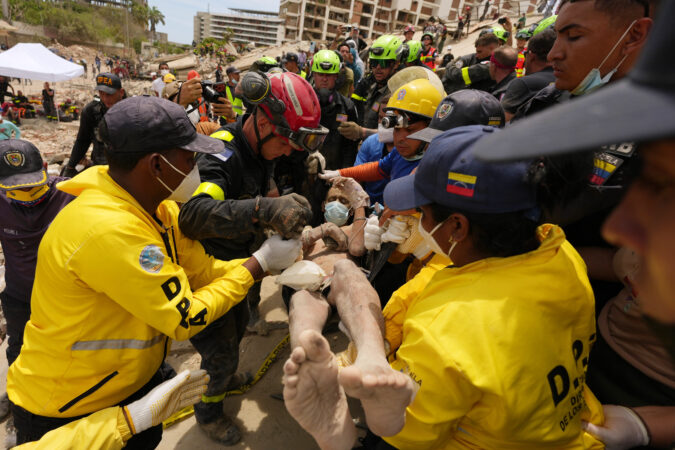
    The Venezuelan opposition party led by exiled former legislator and Nobel laureate María Corina Machado mobilized volunteers throughout the nation last week to collect donations for homeless earthquake survivors, but it encountered an unexpected obstacle: the National Police.

    On Thursday, Heidy Loicett, a leader of the opposition party, Vente, stood under a blue tarp on a sidewalk in Portuguesa, a state some 275 miles from the disaster zone, as people came by with a variety of items such as diapers, bottled water, and used clothing. The police came by, too, she said.

    Several Venezuelan National Police officers and officials from the federal Civil Protection agency tried to shut down the charity drive, she explained in a telephone interview after the encounter, adding that she was told that all donations had to be channeled through the federal government.

    “They said we couldn’t have a donation center, that the only authorized donation drop-off center was Civil Protection and the government,” Loicett said. “That was political persecution.”

    The clash over who gets to take credit for the humanitarian relief effort for the earthquake-shattered nation highlights a much larger, high-stakes battle for political survival in a fractured Venezuela.

    Last week Venezuela suffered two devastating earthquakes that killed more than 1,400 people, just six months after the U.S. military raided the country and seized the country’s former leader, Nicolás Maduro. Critics say they fear that Venezuela’s acting president, Delcy Rodríguez, will politicize the tragedy, using the disaster response to establish her legitimacy at a critical inflection point.

    Rodríguez’s government, which did not respond to requests for comment, has said the authorities are trying to impose order and keep areas and roads hit by the earthquakes clear so relief convoys and emergency responders can do their work unimpeded.

    It is also a general rule of politics that opposition figures are quick to highlight any failures of the governing party.

    Rodríguez had been vice president before the United States captured Maduro and said it was going to run the country, elevating her to the top job. Her tenure depends on the Trump administration’s approval, and her management of this crisis is also a key moment for President Donald Trump.

    White House officials have said the alliance with Rodríguez was meant to stabilize Venezuela and help revive its battered economy. The disaster is likely to put that relationship to a severe test.

    Experts say that tightening control over aid and stifling the opposition’s grassroots relief efforts is a page out of a decades-old authoritarian playbook. Rodríguez, they say, is gambling that international crisis management can mask the state’s internal decay and secure her hold on power.

    That strategy was on full display in a widely circulated video in which a police officer appears to tell volunteers where the United Socialist Party of Venezuela, the ruling government party, had authorized donation drop-offs. Donation centers set up by the opposition in other cities were told that they could not display signs reading “Donation Center,” because those words could be used only by the government’s authorized drop-off sites, political activists said.

    “They told us we could not use the words ‘donation center,’ like if they had trademarked those words,” said María Oropeza, a Vente party official. “It is inevitable that they will try to use this tragedy at their favor to stay in power.”

    Party officials said police backed off after crowds started gathering and taking videos. The volunteers took down the offending signs, and the drive continued.

    Volunteers from the opposition planned to try to make deliveries to the earthquake zone over the weekend, but the authorities announced that civilians without authorization would be prohibited from entering La Guaira, the hardest-hit coastal area.

    Government officials said the rush of volunteers in the disaster zone was blocking traffic, which was critical for the movement of heavy machinery.

    “Those who do not have rescue or security duties in La Guaira state should please refrain from traveling there, as you are obstructing the movement of personnel needed for our military, police, Civil Protection, firefighters, and rescue workers to reach the disaster zone,” Rodríguez said. “These are critical hours.”

    She called for unity in the time of crisis, and has welcomed a number of international search and rescue delegations, including from the right-wing governments of El Salvador and Argentina.

    Rodríguez’s decision to accept help from political adversaries underscored a delicate balance of projecting an image of effective disaster management while scoring political points before potential elections, said Pablo Quintero, a political consultant, who said he works mostly with the opposition in Venezuela.

    “In the face of catastrophes, governments act based on political interests,” he said. “In this case, the Chavista government is acting to gain greater prominence, to demonstrate its management capacity to the international community, and in some way to send a message to the population that they have managed to unify the country.”

    But Machado is acting in her own interests too, he said.

    “María Corina Machado has a political agenda,” he said. “And the objective reality is that her media operatives are running a campaign to demonstrate the government’s incompetence.”

    Machado was said to be trying to go back to Venezuela, which frustrated some U.S. officials, who considered a return in the wake of an emergency to be a “political stunt,” the New York Times reported Saturday.

    A spokesperson for Machado said she was not available for comment.

    Rodríguez, as Maduro’s vice president in charge of the economy, was part of a repressive government that stole a presidential election in 2024.

    After the U.S. raid in January that removed Maduro but allowed Rodríguez to stay on as interim leader, the Trump administration said Venezuela would eventually move toward elections and a restoration of democracy. The disaster engulfing Venezuela could delay such a transition, experts said.

    “It’s hard to imagine that Delcy won’t use the earthquakes to delay discussions of a democratic transition; some of that is certainly legitimate in the face of such an overwhelming humanitarian emergency,” said Cynthia Arnson, an adjunct professor at the Johns Hopkins University School of Advanced International Studies.

    But it may not work out as she hopes, Arnson said.

    “The political effects of natural disasters are often severe,” she said. “Weeks or a few short months after the immediate emergency, the quakes are likely to magnify the incapacity of the government to meet basic needs, let alone undertake any kind of reconstruction.”

    Widespread corruption of international aid sent after a 1972 earthquake in Nicaragua was among the events that led to the unraveling of a dictatorship led by Anastasio Somoza Debayle. An earthquake in Mexico City in 1985 helped lead to the end of one-party rule there more than a decade later.

    Benigno Alarcón, the former director of the Center of Government and Political Studies at Universidad Católica Andrés Bello, said there was “no doubt” that Rodríguez would try to capitalize on the catastrophe — and she would not be the first.

    He said many Venezuelans still recall the 1999 mudslides that occurred in the quake zone — including La Guaira — when the ruling party’s former leader, Hugo Chávez, refused to accept humanitarian assistance from the U.S. military.

    “Remember that these are not new people in power,” he said. “These people in the government have been in government for a long time.”

    Rodríguez and Machado would hardly be the first to politicize natural disaster recovery, said Brian Naranjo, a former top U.S. diplomat in Venezuela. He cited the words of the liberator, Simon Bolivar, amid the political machinations following a catastrophic earthquake in 1812 in Venezuela.

    “If nature opposes us,” Bolívar said, “we shall fight nature and make it obey.”
  • 3 firefighters killed, 2 injured while tackling wildfires on the Colorado-Utah border

    3 firefighters killed, 2 injured while tackling wildfires on the Colorado-Utah border

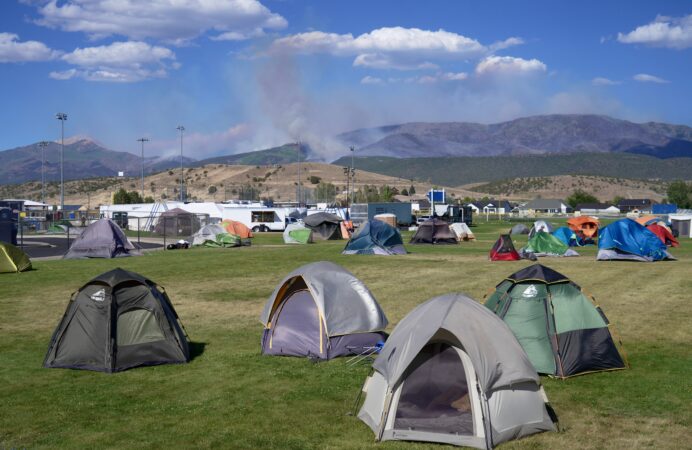
    BEAVER, Utah — Three firefighters were killed and two sustained burn injuries when they were overcome by flames from fast-moving wildfires in hot, windy conditions near the Colorado-Utah border.

    The firefighters deployed emergency shelters during the burnover incident on Saturday in Mesa County, Colo., the U.S. Interior Department said.

    They worked for the U.S. Wildland Fire Service and U.S. Forest Service and were part of an interagency response to the Knowles and Gore fires, which merged with other fires to form the Snyder Fire. So far, about 44 square miles have burned.

    Temperatures in Grand Junction hit a high of 93 degrees Fahrenheit, with winds gusting to 44 mph, according to the National Weather Service.

    The U.S. Wildland Fire Service, created earlier this year to streamline firefighting and fire reduction across public lands, said in a statement that it “stands united” with the Forest Service in grief and “in our unwavering support for the loved ones left behind.”

    “Their bravery, dedication, and sacrifice will never be forgotten,” the statement said.

    The names of the firefighters who perished were being withheld pending notifications to their loved ones, the Interior Department said.

    The Mesa County Sheriff’s Office was asking people to evacuate the potential path of the fire and to turn on irrigation water to saturate the land. The federal Bureau of Land Management closed public access to lands it manages nearby.

    “Firefighter and public safety are the highest priority,” the agency said in a statement. “The temporary closing of the lands is to reduce exposure to hazardous situations due to the rapid rates of spread and fire behavior that the fire has exhibited. The public is to remain clear of these closed lands.”

    Hot, dry, and windy conditions

    Wildfire activity has intensified across the western United States, as consecutive days of hot, dry, and windy weather have fueled flames in Utah, Arizona, and elsewhere as new fires popped up across the region.

    The largest blaze, the Cottonwood Fire, was burning in rugged terrain in southwest Utah. It ballooned Saturday to more than 144 square miles after marching through canyons and mountainsides, destroying part of a ski resort and other summer cabins along the way.

    Authorities in Beaver County began working with fire teams on Saturday to assess the extent of the damage, but no estimates were immediately available. Utah Gov. Spencer Cox in a post on social media called it bleak, but he thanked crews for what he called “several miraculous stops and saves.”

    The cliffs and steep slopes have made the job even harder, said Alyssa Mason, a spokesperson assigned to the fire.

    “It’s hard to get dozers and other heavy equipment into that. It’s hard to get engines into that,” she said. “It doesn’t make it impossible to firefight, but it does just kind of slow things down.”

    Hundreds of firefighters have been arriving in the arid state to battle new starts as well as those that have been growing because of what forecasters called critical fire weather — dangerously low humidity levels, warm temperatures, and gusty winds.

    The danger is even higher this year because of Utah’s record-low snowpack and its warmest winter on record. Much of the West is grappling with similar conditions, according to the National Interagency Fire Center.

    Nationally, nearly 3 million acres have burned since the start of the year. That is more than the 10-year average.

    Emergencies declared in Utah and Colorado

    The conditions in Utah were critical enough for Cox to declare an emergency earlier this week and clear the way for the state to ban fireworks ahead of the July Fourth holiday. The order comes as Utah is experiencing one of the most severe wildfire seasons in recent history, fueled by historic drought conditions.

    State officials said that over the past week, Utah has seen an increase in wildfire starts, with each fire showing unprecedented behavior. These starts have stretched the state’s wildland firefighting capabilities, State Forester Jamie Barnes said.

    Colorado Gov. Jared Polis also declared an emergency on Saturday, and authorized the use of the National Guard to tackle the fires.

    Forecasters with the National Weather Service over recent days have been issuing red flag warnings for a wide swath of the West, from California to Arizona and New Mexico.

    South of Grand Canyon National Park, authorities said the flames of a new wildfire were moving away from Grand Canyon Village and the nearby community of Tusayan on Saturday. But about 50 miles away, another fire prompted Coconino County officials to issue evacuation orders for those near Kendrick Mountain.

    Parts of northern Arizona were without power Saturday as the utility serving the area initiated a safety shut-off in hopes of lessening the wildfire risk.

    Power shutoffs have become more common in the West as wildfire risk has expanded. It is usually a last resort after utility forecasters weigh factors like sustained wind and gust speeds, available fuels, and topography.

    With extreme fire conditions persisting in Utah, Rocky Mountain Power also shut off power lines serving Beaver County and other areas.

  • France records around 1,000 additional deaths as extreme heat breaks European records

    France records around 1,000 additional deaths as extreme heat breaks European records

    BERLIN — France saw around 1,000 additional deaths last week at the height of its record-smashing heat wave, the country’s public health agency said Sunday, as the head of the World Health Organization warned that Europe is now the fastest-warming continent and needs to do more to protect its citizens.

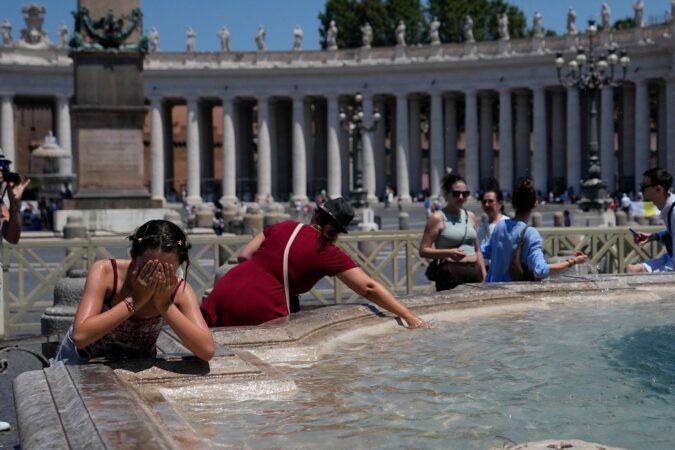
    Temperature records were toppled in several countries on the weekend, wildfires were sparked in Germany, and Berlin police used water cannons to cool down the crowds.

    Meanwhile, the heat wave slowly moved toward eastern parts of the continent.

    Germany marked a new record for the third day in a row with 107 degrees Fahrenheit in Neißemünde, near the border with Poland, which baked under its new all-time high of 104.9 F. The Czech Republic also experienced its hottest day ever with 106.4 F.

    A new study from the World Weather Attribution, a Europe-based collaboration of scientists, reported Friday that the record-breaking heat and humidity in Europe this past week would not have been possible without climate change.

    The rapid study found that the heat would have been virtually impossible just five decades ago, and is 200 times more likely today than it would have been 20 years ago.

    France records surge in deaths during heat wave

    France reported a surge in deaths last week, including a sharp increase at private homes, especially in the Paris region, the national public health agency said Sunday.

    There were more than 1,200 deaths on Wednesday, when France was sweltering under its hottest temperatures, increasing to more than 1,400 deaths on each of the two following days, Public Health France said. In April and May, before the heat wave, France’s rate of deaths was about 900 to 1,000 per day.

    The agency concluded that France experienced a total of at least 1,000 additional deaths during those three days alone, an estimate it cautioned is likely to increase as more data is collected, including for deaths at home.

    The increase was sharpest in areas under red warnings of extreme heat, it said. Those warnings blanketed about three-quarters of the country at the peak of the heat wave. The agency said that 85% of the deaths involved people aged 65 and above.

    Europe is fastest-warming continent, WHO warns

    “Europe is the fastest-warming continent on Earth, heating at twice the global average,” WHO Director-General Tedros Adhanom Ghebreyesus said Sunday on X. “Right now 150 million people are living under extreme heat, hundreds have died, schools are shut, grids are buckling.”

    Driven by climate change and global warming, the “once-in-a-generation” heat wave is now occurring nearly every year, Tedros said, adding that more than 1,300 excess deaths have been recorded since June 21 linked to high temperatures in Europe.

    “Heat stress is often called the ‘silent killer’ — and European homes, workplaces, and schools were not built for these temperatures,” Tedros warned as he called on European countries to implement action plans. He said they should focus on preparedness, prevention, and stronger health system responses.

    Lightning strikes Swedish theme park

    In Sweden, several people were injured when they were hit by lightning at an amusement park, the country’s TT news agency reported.

    Three adults were taken to the hospital, among them a woman with serious injuries, after the lightning struck the Tosselilla Sommarland park in Tomelilla in the south of the country.

    Across Europe, the extreme heat has been followed by severe thunderstorms.

    Denmark, which marked new temperature records on Saturday, recorded 1,156 lighting strikes by Sunday morning, according to public broadcaster DR.

    Wildfires burn forests contaminated with WWII ammunition

    In Gohrischheide, in eastern Germany, a fire broke out in a large forest that’s still contaminated with ammunition from World War II, which made the firefighters’ efforts even more complicated.

    Similarly, a major firefighting operation was underway in southwest Germany near the village of Traisen, where the heat sparked a forest fire in an area that also contained unexploded ordnance. Firefighters had to be temporarily stop after explosions took place and an ordnance disposal unit was brought in to continuously assess the situation, German news agency dpa reported. Some 650 people in Traisen had to leave their homes Sunday afternoon because the fire continued to spread.

    The big cities’ fire departments were busy sending out ambulances to people suffering from heat-related illnesses. In Berlin, an additional 500 ambulance dispatches were reported on Saturday, most of them heat-related.

    Berlin police use water cannons to cool down locals. tourists

    The German capital’s police found a way to help suffering Berliners and tourists alike. They put up two huge water cannons — usually used to disperse unruly protesters — in front of the city’s iconic Brandenburg Gate and sprayed the cool water across the cheering crowd.

    The heat also continued to damage the country’s infrastructure, with the concrete surface on countless highways breaking up, and a weekend warning by national rail operator Deutsche Bahn to avoid all unnecessary train travel.

    More than 600 passengers had to be evacuated from an overheated train in Brandenburg after a tree fell onto an overhead power line during a storm on Saturday evening. The train, which was on its way from Hamburg to Prague, lost power. The air conditioners stopped working and the doors were locked until emergency responders forced them open. Two people were hospitalized with heat-related problems, dpa reported.

    In the eastern city of Leipzig, no trams will be running until early Monday morning due to heat damage to tracks and switches. The Leipzig Public Transportation Authority said that the high temperatures had caused the joint sealant for asphalt and concrete in switches and tracks to run and clump together in many places throughout the city’s network.

  • Iran attacks Bahrain and Kuwait following U.S. strikes and threatens to halt talks

    Iran attacks Bahrain and Kuwait following U.S. strikes and threatens to halt talks

    DUBAI, United Arab Emirates — Iran again launched drone and missile attacks Sunday targeting Bahrain and Kuwait in response to new U.S. airstrikes against the Islamic Republic, and threatened a “complete halt” in negotiations to end the war if Washington continues its attacks.

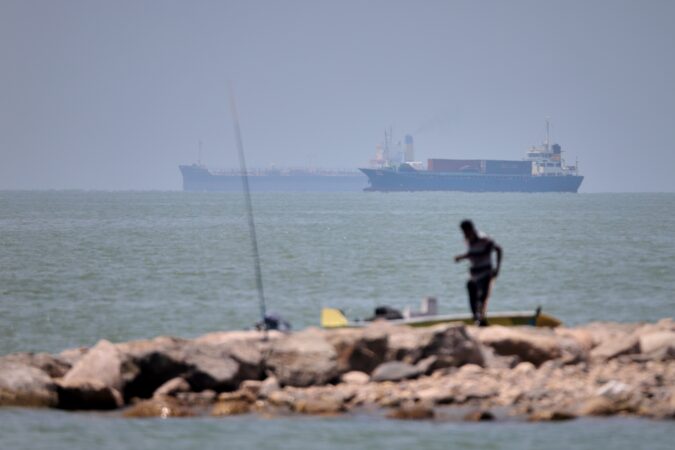
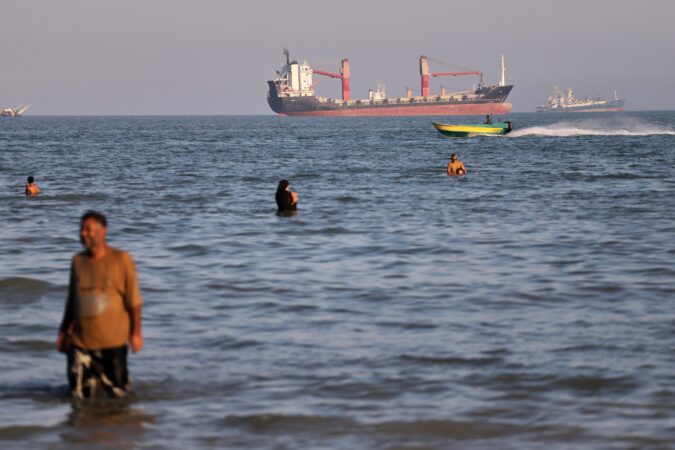
    Efforts to reopen the Strait of Hormuz without Iran’s direct oversight sparked the days of crossfire and have imperiled the talks for a lasting ceasefire. A multinational maritime body overseen by the U.S. Navy said Saturday it would expand a route near Oman for inbound and outbound traffic, setting up a new flashpoint with Tehran.

    The global community has long considered the strait an international passageway, despite its location in Iran and Oman’s territorial waters. In recent days, Iran has twice attacked vessels going through a route on the Omani side in an evacuation effort backed by a United Nations agency.

    Iran insists that it alone must govern the strait, the narrow mouth of the Persian Gulf that once carried a fifth of the world’s oil and natural gas. Iranian Foreign Minister Abbas Araghchi reiterated the claim on Sunday.

    “Any attempt to establish new or separate arrangements from those currently being carried out by the Islamic Republic of Iran will only lead to further complications, delay the reopening of the Strait of Hormuz and increase the level of tension,” Araghchi said.

    The United States and Iran have been debating the terms of an interim deal, including shipping arrangements on the strait, the removal of a U.S. blockade on Iranian ports and sanctions on Iran, and the future of Iran’s stockpile of highly enriched uranium. Under the memorandum of understanding signed this month, they have 60 days to iron out details.

    The interim deal is meant to end fighting on all fronts before certain key issues can be discussed. Continued fighting in Lebanon, where an Israeli soldier was killed by Hezbollah fire early Sunday, also threatens the agreement.

    Strikes target Gulf states hosting U.S. military

    Iran’s paramilitary Revolutionary Guard claimed responsibility for the attacks in Bahrain and Kuwait.

    Kuwait’s military said air defenses intercepted Iranian drones and missiles just after the U.S. strikes in Iran. Kuwait, which hosts a major U.S. military base, said it intercepted two ballistic missiles. There were no reports of injuries or damage.

    Bahrain’s Interior Ministry said the Iranian strikes damaged a residential building near the international airport but no one was killed. The ministry released photos of an eight-story building, its top floor destroyed and windows blown out.

    Bahrain is home to the U.S. Navy’s 5th Fleet, whose base came under repeated attack during the war. The damaged building was not near the fleet’s headquarters.

    Bahrain’s Foreign Ministry denounced what it called “a dangerous escalation that reveals that what Tehran is doing is not a passing act, nor an isolated incident, but rather a deliberate approach and a systematic pattern of repeated aggression.”

    Trump accuses Iran of violating ceasefire with ship attack

    The U.S. military’s Central Command said it struck Iranian military “surveillance infrastructure, communication systems, air defense sites, drone storage facilities, and minelayer capabilities” following an attack on a ship at sea Saturday. The Panamanian-flagged tanker Kiku carried crude oil for the state-run energy company of Qatar, a key mediator between Iran and the U.S.

    President Donald Trump on social media accused Iran of violating the ceasefire and warned of a point where the U.S. may no longer be reasonable “and will be forced to militarily complete the job.”

    “If that happens, the Islamic Republic of Iran will no longer exist!” Trump wrote.

    The exchanges of fire began when an Iranian drone struck a merchant vessel off Oman on Thursday and the U.S. military retaliated with strikes.

    Ship traffic on the strait had increased over the past 72 hours, off both Iran and Oman, the multinational maritime body overseen by the U.S. Navy said Sunday, adding that “U.S.-assisted commercial transits continued uninterrupted despite the elevated threat environment.”

    It said 89 such transits had been made, still below the historical average of 138 vessels a day.

    Iran calls for new “conflict control unit” in Lebanon

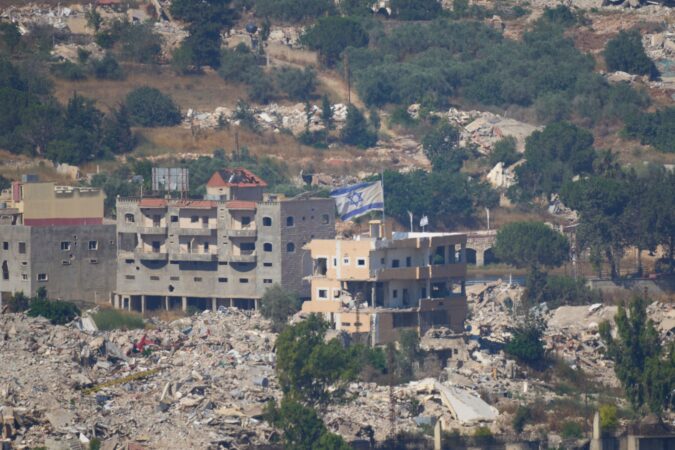
    Last week, Israel and the Lebanese government signed a framework agreement to end the latest fighting between Israel and the Iranian-backed Hezbollah militant group, which began two days after the Iran war began when Hezbollah fired at Israel. Israel responded with an invasion that has occupied large swaths of southern Lebanon, and it has said it will not withdraw until Hezbollah is disarmed.

    But last week’s deal did not include Iran or Hezbollah, which has criticized the deal and rejected calls to disarm.

    On Sunday, Araghchi again said the U.S. must force Israel to halt attacks and withdraw. Israel occupies around 231 square miles in southern Lebanon, which it says it needs as a security buffer.

    But sporadic clashes have continued, and Hezbollah’s leader said Saturday that the group would continue fighting until Israel withdraws from Lebanon.

    Key Iranian negotiator and parliament Speaker Mohammad Bagher Qalibaf said Sunday that a new “conflict control unit” formed among Iran, the United States, and Lebanon should meet as soon as possible, Iran’s state broadcaster reported.

    The frequency of Israeli strikes in Lebanon has decreased significantly since the Iran-U. S. deal was signed, but two separate strikes hit southern Lebanon on Sunday morning — one in Taybeh town and the other in the Nabatiyeh area, according to Lebanon’s National News Agency. There was no immediate word on casualties.

    Overnight, Hezbollah militants killed an Israeli soldier in Deir Siryan village in southern Lebanon, according to Israel’s military. Hezbollah did not comment.

    “We are prepared to rapidly resume offensive operations in both Lebanon and Iran if required,” said Israel’s military chief of staff, Lt. Gen. Eyal Zamir.

  • Desperation mounts in Venezuela as earthquake death toll rises to 1,430

    Desperation mounts in Venezuela as earthquake death toll rises to 1,430

    LA GUAIRA, Venezuela — Tensions flared Saturday as desperation grew among anguished residents of the Venezuelan state of La Guaira, where rescuers and civilians searched for earthquake survivors amid a sharply rising death toll.

    Venezuela’s government said the number of people killed rose to 1,430 Saturday morning and families reported at least 68,900 people missing, three days after the one-two punch of 7.2 and 7.5 magnitude earthquakes that devastated the South American nation.

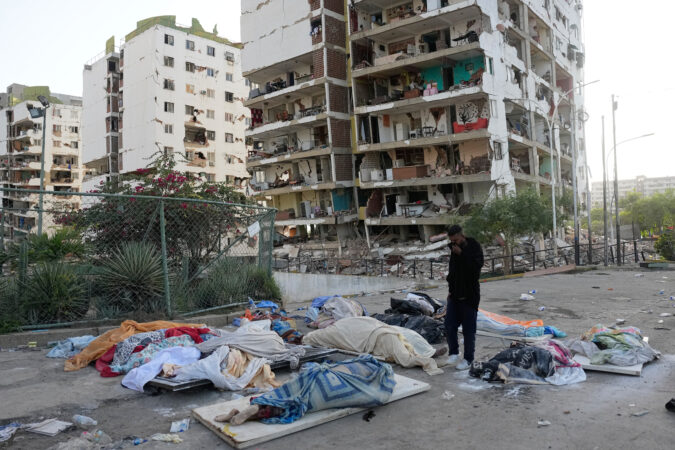
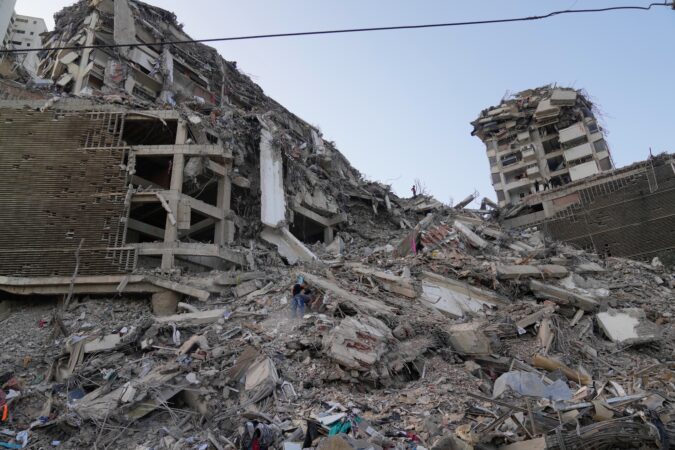
    Venezuelans looking for loved ones and neighbors used shovels, heavy equipment, ropes, and bare hands atop mounds of toppled concrete throughout La Guaira, one of the country’s hardest-hit states.

    Most of those digging were civilians who took search efforts into their own hands, and tensions peaked over inadequate response from the Venezuelan government, whose soldiers, firefighters, police, and military cadets were evidently underprepared to respond to the tragedy.

    Frustration was only amplified by state efforts to project the image of a robust state response.

    “There’s a pile of bodies over there from last night. Newborn babies. Look what time it is, and they still haven’t come to recover them. At 8 p.m. there were people alive down there, and they haven’t bothered to rescue them. We’ve located several bodies, and they haven’t helped us recover them either,” said Mileidy Romero, who was among those searching the rubble in the seaside town of Caraballeada. “What are they waiting for?”

    Aid agencies consider the first 48 to 72 hours as crucial for retrieving people alive, though that can be extended if they have access to food and water.

    However, a growing number of international rescue teams were joining the effort to save lives nearly 72 hours after the quake.

    Acting President Delcy Rodríguez said on state television Saturday that more than 14,000 members of the military and police are patrolling the area, where access is now blocked and special permits are required to enter. More rescue teams sent by governments across the world arrived in Venezuela on Saturday.

    Simón Bolívar International Airport, which serves Venezuela’s capital, Caracas, was badly damaged in the quake. One runway was operational on Saturday as U.S. teams worked to repair the crucial throughway, Jeremy Lewin, a senior State Department official in charge of foreign assistance, told reporters.

    Government forces distributed food and water to survivors in La Guaira, and Rodríguez said her government was mounting a full response during these “critical hours for rescuing people alive.”

    The disaster poses a huge challenge for Rodríguez, the former vice president who took office in January after the capture and removal of then-President Nicolás Maduro by the United States. Venezuela has been facing economic disarray for more than a decade, and many people reject the legitimacy of the political movement Rodríguez represents.

    Search teams and foreign aid from Mexico, the U.S., Brazil, El Salvador, France, El Salvador, and more continued to arrive in Venezuela Saturday morning to bolster recovery efforts.

    Lewin, the State Department official, said the U.S. military would help coordinate flights to bring in search and rescue workers, mobile hospitals, and supplies. He said two 80-person search teams were at work and a U.S. Navy transport ship was docked off the coast of Venezuela ready to receive airlifted survivors in need of medical attention. Lewin said it is a “race against the clock” to find people injured in the quakes.

    “People are trapped under rubble, and the priority is to get the search and rescue teams and the medical professionals and others to them as quickly as possible to save lives,” he said.

    The International Organization for Migration said up to 6.76 million people could be affected, some 2 million of them in Caracas alone. The destruction was amplified by the quick succession of shallow quakes, experts said.

    Loyce Pace, the International Red Cross’ regional director for the Americas, said “people are still terrified to reenter what were their homes.”

    Indeed, many continued to sleep on the street.

    In the city of Maiquetia, people lined up outside stores and pharmacies that served them one by one behind closed doors. At one point a woman in a crowd threw herself to the ground to protect a package of diapers with her body, desperate to keep it.

    Traffic and throngs of motorcyclists at times disrupted search efforts. Mexican soldiers and volunteers repeatedly asked for silence to try to hear signs of life under the rubble, but bikers — civilian and uniformed — continued to honk horns and rev engines, to the first responders’ frustration.

    Yuleidy Cadenas, 28, stood across the street from a collapsed public housing building, hoping her son, mother, and brother would be pulled out alive.

    She fled barefoot from another building as it collapsed Wednesday and found her mother’s 12-floor apartment tower had pancaked.

    “I got on top of the rubble and told them to yell back, and nobody did, not my brother, nor my son, or my mother,” Cadenas said.

  • U.S. says it struck multiple targets in Iran after drone attack on Bahrain, ship struck in strait

    U.S. says it struck multiple targets in Iran after drone attack on Bahrain, ship struck in strait

    DUBAI, United Arab Emirates — The U.S. military said Saturday it had struck multiple targets in Iran at President Donald Trump’s direction, continuing a string of attacks that have shaken the war’s uneasy ceasefire.

    The military said in a post on X that “Iran had a chance to honor the ceasefire agreement” but “elected not to” when its forces attacked a ship near the Strait of Hormuz earlier Saturday.

    Iran state TV reported explosions north of the Strait of Hormuz.

    Iran launched a drone assault targeting Bahrain while a ship in the Strait of Hormuz separately came under attack Saturday, in Tehran’s likely response to overnight airstrikes by the United States.

    The attacks in the Persian Gulf show the danger of the Iran war again spinning out of control, even after Iran and the U.S. reached an interim deal to try to agree on a final accord to end the conflict.

    The U.S. had launched airstrikes overnight in response to an Iranian drone attack on a container ship trying to leave the strait on Thursday, continuing a string of attacks that have shaken the war’s uneasy ceasefire.

    Meanwhile, a multinational maritime body overseen by the U.S. Navy said Saturday that it would expand a route near Oman in the strait to allow for both inbound and outbound traffic. That likely sets up a new flashpoint with Tehran, which sees the strait as a key source of leverage in ongoing talks with the U.S.

    Bahrain condemns Iran’s drone attack

    Bahrain has been one of the strongest critics of Iran and is home to the U.S. Navy’s 5th Fleet. It just hosted U.S. Secretary of State Marco Rubio for a meeting of the Gulf Cooperation Council’s foreign ministers, which ended with a call for an end to Iran’s attacks and for the strait to be completely open.

    A statement from Bahrain’s Foreign Ministry said a “number of Iranian drones” targeted the country. It called the attack “a flagrant threat to the security of citizens and residents.” There were no immediate reports of damage.

    Iran’s paramilitary Revolutionary Guard earlier on Saturday issued a statement carried by the state-run IRNA news agency saying it had targeted several locations “of the U.S. terrorist army in the region.” It did not name what areas were targeted.

    The U.S. military’s Central Command said the military struck Iranian missile and drone locations and coastal radar sites in the overnight strikes.

    U.S. Vice President JD Vance, who has led the negotiations with Iran, said on social media Friday night that Iran should “pick up the phone” if there are disagreements about the ceasefire agreement, “but violence will be met with violence.”

    The U.S. and Iran are negotiating terms of the deal including issues such as getting ships through the strait that are vital to global supplies of oil and natural gas and addressing the future of Iran’s nuclear program and stockpile of highly enriched uranium.

    Under the interim deal, the two sides have 60 days to work out the details. Ending the fighting in Lebanon between Israel and the Iranian-backed Hezbollah militant group is a key part of the deal.

    Ship comes under attack as strait route expands

    The British military’s United Kingdom Maritime Trade Operations center said that a tanker was attacked Saturday in the strait, with the crew safe and no environmental damage reported. No one immediately claimed the strike, but suspicion fell on Iran.

    Just after that report, the Joint Maritime Information Center, overseen by the U.S. Navy, said the route near Oman’s shore is expanding to allow for inbound and outbound traffic.

    Iran has insisted that ships must obey its orders and warned it will start charging fees for transit through the strait. However, ships have been increasingly trying to leave the Gulf in recent days.

    Ebrahim Azizi, who heads the Iranian parliament’s national security commission, wrote Friday that “the Strait of Hormuz is governed by Iran, so: Respect the rules.”

    The U.S. and Gulf Arab states have rejected Iran’s demands. The strait is considered an international waterway, despite being the territorial waters of Iran and Oman.

    The Joint Maritime Information Center warned that the threat to ships was “substantial,” adding that “mariners are advised of the existence of mines and should expect a naval presence as clearance operations continue.”

    The International Maritime Organization on Friday halted a new effort to evacuate ships and said it won’t resume until there are guarantees that other ships won’t be attacked. It said about 115 ships have been able to move out of the strait in recent days.

  • U.S. strikes Iran to respond to attack on ship that Trump says violated ceasefire

    U.S. strikes Iran to respond to attack on ship that Trump says violated ceasefire

    WASHINGTON — The U.S. struck Iran on Friday in response to a drone attack a day earlier on a cargo ship in the Strait of Hormuz. It’s the most significant test yet to an interim understanding reached a week ago by the two countries to begin working to end their monthslong war and reopen the pivotal waterway.

    U.S. President Donald Trump said the drone attack violated the ceasefire. The strikes came shortly after Trump told reporters, “You’ll find out” whether the U.S. would respond.

    U.S. Central Command said the military struck missile and drone locations and coastal radar sites in Iran.

    “I don’t like the fact that they took a shot yesterday, actually four of them,” Trump said at the White House shortly before the U.S. struck back. When asked why there would be strikes when Trump has insisted talks with Tehran are going well, Trump said of Iran: “They’re a little bit different.”

    He then abruptly cut off questions and reporters were ushered out of his office.

    Ebrahim Azizi, who heads the Iranian parliament’s national security commission, responded to Trump on social media earlier Friday, saying, “the Strait of Hormuz is governed by Iran, so: Respect the rules” and to “not mistake control for escalation.”

    “This is not a violation of the ceasefire; it is ceasefire management,” Azizi wrote.

    Friday evening, Vice President JD Vance said on social media that Iran should “pick up the phone” if there are disagreements about the ceasefire agreement.

    “But violence will be met with violence,” Vance said.

    Strikes conclude an hour later

    The U.S. strikes on Iran concluded about an hour after U.S. Central Command announced the military action on social media, a U.S. official with knowledge of the situation told the Associated Press. The official spoke on condition of anonymity to discuss an ongoing military operation.

    The British military said on Thursday that a container ship was hit a by projectile off the coast of Oman, coming hours after Iran threatened vessels to stop using the route. The United Kingdom Maritime Trade Operations center said no injuries were reported.

    The development came during a fragile time for the U.S. and Iran as they work to negotiate a permanent end to the war. Iran has increasingly challenged the region and the U.S. over its control of the Strait of Hormuz, even with the current interim deal it reached with the U.S. last week.

    The attack on the cargo ship happened while a United Nations maritime agency was beginning an operation to move stranded ships out of the strait this week, using an alternative route, hugging the shores of Oman rather than sailing through the central part of the strait.

    The International Maritime Organization halted the evacuations after the attack and said on Friday they won’t resume until there are guarantees that the other ships won’t be attacked.

    About 115 ships were able to move out of the strait in recent days, leaving about 500 still in the area, said Arsenio Dominguez, the agency’s secretary-general.

    The opening of the alternative passage through the strait was expected to relieve pressure on the world economy and remove Iran’s main source of leverage in ongoing peace talks with the U.S.

    The U.S. and Iran are still negotiating terms of the deal, including issues such as getting ships through the key strait and addressing the future of Iran’s stockpile of highly enriched uranium. Under the interim deal, the two sides have 60 days to work out the details.

    Shipping analysts said the drone strike cast a shadow over what had been a growing stream of trapped vessels finally leaving the Gulf and an increasing flow of tankers carrying crude oil.

    “A week of widening commercial confidence in the Strait of Hormuz has hit its first significant test,” said marine data company Windward on X. It said that while the strait remains operationally open with 43 transits recorded after the incident, “the pace of normalization has slowed.”

    On Wednesday before Thursday’s drone strike, 78 vessels transited the strait, the highest since the war began, although below the prewar averages of 130 or more per day.

    At least two tankers reversed course while attempting to transit the strait on the U.N.-backed route near Oman after Iran insisted vessels use only the Teheran-approved routes, according to marine data and analytic firm Lloyd’s List Intelligence.

    More than two dozen ships were still transiting the strait’s southern route after the attack, Lloyd’s said Friday.

  • Buttigieg was briefly separated from his children after police say he was target of false report

    Buttigieg was briefly separated from his children after police say he was target of false report

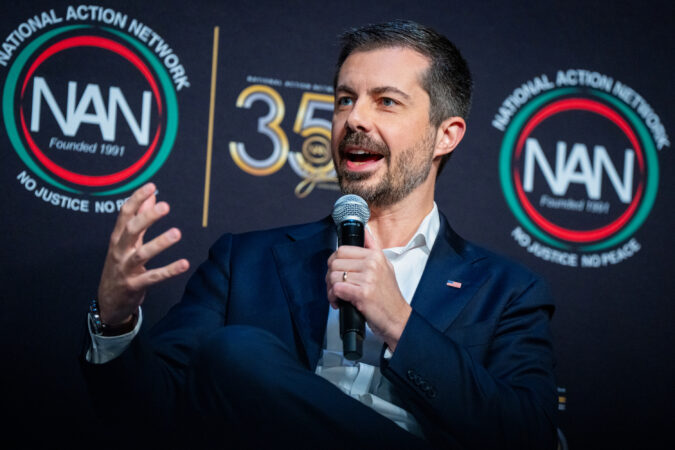
    WASHINGTON — Former Transportation Secretary Pete Buttigieg was the target of an anonymous report that police determined was false and that he says forced him to spend a night away from his 4-year-old twins.

    Buttigieg wrote in a Substack post that a Michigan State Police officer told him they found nothing to substantiate the anonymous allegation and believed it was politically motivated. He described the 24-hour ordeal as “among the darkest hours of my life.”

    In a statement, Michigan State Police said they received an “anonymous report” and that they and Child Protective Services “responded and determined the report was false.”

    According to Buttigieg, a Michigan State Police officer and a Child Protective Services worker came to his home after receiving an anonymous report alleging he posed a danger to his children. He said authorities arranged forensic interviews for his twins and instructed him not to be alone with them until the interviews were complete.

    The following day, Buttigieg said investigators told him the anonymous caller claimed he had confessed years earlier to violent crimes during a chance meeting in Alabama. Buttigieg said he had never been to the town where the meeting allegedly occurred. He said police told him the allegation would not be referred to prosecutors, while Child Protective Services found nothing to substantiate the report.

    “I cannot describe the mix of rage and sadness that I feel at the idea that someone brought our children into this,” writes Buttigieg. “They are four years old. Four. They do not know or care what a Democrat or a Republican is.”

    Buttigieg, who is widely viewed as a potential Democratic presidential candidate in 2028, has long been the target of anti-LGBTQ attacks.

    In recent years, conservative activists and some Republican officials have opposed efforts to portray same-sex parents as ordinary families in schools and public life. June — widely recognized as Pride Month — is Strong Families Month in Alabama, intended to coincide with Father’s Day. Gov. Kay Ivey’s proclamation says fathers are “the head of the household” and “homes led by a father and mother provide children with the structure and discipline necessary to succeed throughout life.”

    Buttigieg wrote that the incident occurred soon after he shared photos of his family online for Father’s Day.

    Buttigieg drew criticism from some Republicans for taking paternity leave after he and his husband, Chasten, adopted their twins while he was serving in the Biden administration. Buttigieg also wrote that he has faced death threats during his career.

    “But this is the ugliest thing that has happened to me since my career in service began,” he wrote.

    Public officials from across the political spectrum have increasingly been targeted by swatting, which is the act of making a false call to emergency services to prompt a response at a particular address. The goal is to get authorities, particularly a SWAT team, to show up. Law enforcement agencies have warned that the incidents divert resources from other pressing tasks and pose risks to both law enforcement and the victims.

    Buttigieg said the incident reflected a broader escalation in political attacks.

    “Everyone knows politics is ugly these days,” he wrote. “It’s always been ugly, but now it feels more and more like bloodsport.”

    “Even so, this is different.”

  • Venezuelans take search for the missing into their own hands as earthquake death toll climbs

    Venezuelans take search for the missing into their own hands as earthquake death toll climbs

    LA GUAIRA, Venezuela — Venezuelans took the search for missing loved ones into their own hands Friday in the aftermath of back-to-back earthquakes, citing the scarcity of government rescuers, as the human toll of the disaster climbed to at least 920 dead and more than 51,000 missing.

    Citizens digging through the rubble of their homes said they have seen few state rescue teams in the areas hit hardest by the devastating 7.2 and 7.5 magnitude quakes that struck late Wednesday, despite authorities projecting an image of a robust government response.

    The lack of help compounded families’ desperation as the pressure to find buried survivors increased with each passing hour. The South American nation on Friday marked nearly two days since the disaster. Aid agencies consider the first 48 to 72 hours to be a crucial time frame to retrieve people alive, though that period can be extended if they have access to food and water.

    Meanwhile, a broad international aid effort accelerated, with dozens of rescue teams from around the globe arriving in Venezuela or due to arrive there soon.

    “Each person saved is a miracle,” said Jorge Rodríguez, the president of the country’s National Assembly. “We are not going to hide absolutely anything about the magnitude of this tragedy.”

    Anxious families wait to see if their relatives survived

    Families across northern Venezuela searched in the ruins of buildings for relatives and whatever remained of their lives.

    Nazareth Jimenez sobbed into the shoulder of a loved one as she watched neighbors try to cut through slabs of concrete with hammers and power tools in a building reduced to a mountain of debris. “My god, how are we going to get them out of there?” she murmured.

    She was in the northern state of La Guaira, just north of the capital of Caracas, where some of the worst destruction unfolded. Jimenez was wracked with anxiety as she waited to see if her siblings, nephews, nieces, and friends would emerge from the debris alive.

    “We’re making a call for help to governments of countries across the world,” she said, pleading for machines that would be capable of moving collapsed structures. “There are still people alive in there.”

    Government forces distributed food and water to survivors in La Guaira as acting President Delcy Rodríguez said her government was “working tirelessly” to mount a full response. She welcomed the arrival of rescuers and humanitarian aid from all over the world. She said La Guaira had been militarized and that more help was on the way, even as residents said it was just a fraction of the aid they needed.

    The disaster poses a huge challenge for Rodríguez, the former vice president who took office in January after the capture and removal of then-President Nicolás Maduro by the United States. Venezuela has been facing economic disarray for more than a decade, and many people reject the legitimacy of the political movement Rodríguez represents.

    The number of dead was expected to climb, and civilians reported tens of thousands of people missing on independent digital databases. The number of missing likely includes those who have been incommunicado due to the lack of cell phone signals in disaster zones. Some reports may be duplicates created when multiple loved ones are searching for the same person.

    The number of injured climbed to more than 3,300 as of midday Friday, and authorities said they had rescued 243 people.

    Quakes leave millions of people reeling

    The International Organization for Migration said that up to 6.76 million people in Venezuela could be affected by the quakes, some 2 million of them in Caracas alone. Loyce Pace, the International Red Cross’ regional director for the Americas, said “people are still terrified to reenter what were their homes.”

    Desperation started to sink in Friday as many families still had not found their missing loved ones, had minimal equipment for rescue efforts, and continued to sleep on the street.

    In Catia La Mar, a community adjacent to the country’s main airport, throngs of people began to loot basic goods like toilet paper and food from stores. Others swarmed a civilian pickup truck that was giving out loaves of bread and water. A soldier intervened to allow the vehicle to leave. People turned the parking lot of a pharmacy into a makeshift shelter by setting up tarps, hammocks, and tents.

    Omar Reyes walked through the remains of what was once his home, calling out the names of his wife and children. He received no response.

    Around 20 family members have died. Two of his four children are buried in the debris.

    “I’ve been left alone in this life,” he said quietly.

    International aid is on the way

    Venezuela authorities said Friday that 861 international volunteers from Mexico, the U.S., El Salvador, Switzerland, Colombia, and beyond were working in Venezuela. Many more from other countries were expected in the coming hours and days. The U.N. said 1,000 emergency responders in 25 search-and-rescue teams from across the globe were on their way.

    On the country’s main highway, caravans of state forces, emergency personnel, dump trucks, and heavy machinery moved in the direction of the tragedy. A civilian pickup truck carrying thin mattresses had its windows marked with “Help from Trujillo.”

    Some survivors emerge from the dust and debris

    Media reports have shared notable moments of hope, including a young man brought out on a stretcher in the San Bernardino district of Caracas to the applause of onlookers as his tearful mother said, “Leandro, I love you.”

    Venezuelan TV broadcast video of a girl covered in dust and wrapped in a sweatshirt as she emerged from rubble with the help of rescuers. Caracas metropolitan rescue team head José Luis Núñez said she was found in a 10-story building in La Guaira that collapsed and flattened “like a pancake.”

    “We want to highlight this girl’s strength, determination, and will to live,” Núñez said.

    The U.S. Geological Survey said both earthquakes were centered near Moron on the Caribbean coast, about 105 miles west of Caracas. The one-two punch of the quakes, combined with the shallow seismic movements, amplified the destruction, said Marcos Ferreira, a geophysicist and researcher at the Geological Survey of Brazil.

  • Israel and Lebanon sign framework agreement with U.S. in ‘first step’ toward peace, Rubio says

    Israel and Lebanon sign framework agreement with U.S. in ‘first step’ toward peace, Rubio says

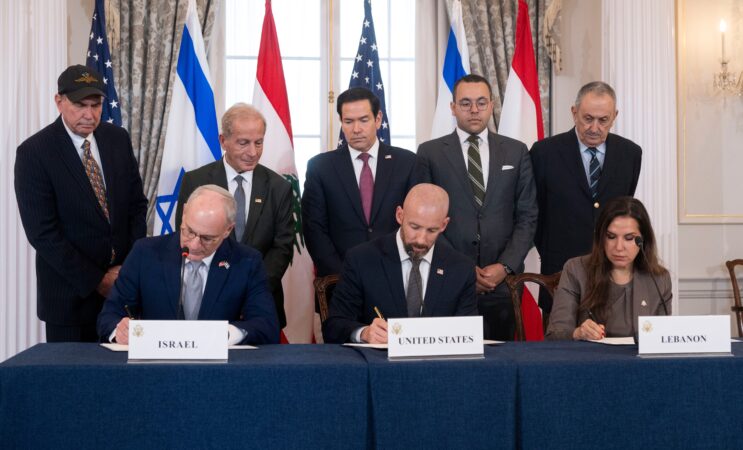
    WASHINGTON — Secretary of State Marco Rubio joined ambassadors from Israel and Lebanon to the U.S. Friday to announce a framework agreement that was described as a first step toward peace following months of conflict between Israel and the Lebanese militant group Hezbollah.

    The officials did not share details on the agreement, which does not include Hezbollah and prompted one of the group’s officials in Lebanon to warn of civil war. Israeli Prime Minister Benjamin Netanyahu later said that the framework would allow Lebanese forces to eventually take control of territory from Israel’s military.

    The agreement was signed in front of Rubio in Washington by Yechiel Leiter, the Israeli ambassador to the United States, and Nada Hamadeh, the Lebanese ambassador to the United States.

    Hamadeh said the framework “is a first step on the road to restoring Lebanese sovereignty and territorial integrity, securing a permanent and final cessation of hostilities, enabling our people to go back to their land and allowing all Lebanese to live in peace, security, and prosperity.”

    Leiter said the final destination of the framework is peace between the two countries.

    “Real peace, where both countries will live in security, where Israel’s and Lebanon’s sovereignty will be respected, honored, and protected,” Leiter said. “In this performance-based trilateral framework agreement, Iran is out. Hezbollah is out. And the road to peace between Israel and Lebanon is in.”

    The latest conflict began when Hezbollah fired rockets into Israel days after Israel and the U.S. launched their war on Iran on Feb. 28. Israel invaded Lebanon and has expanded its control.

    The talks between Israel and Lebanon were separate from the interim deal that was signed last week by the leaders of the U.S. and Iran to end the fighting in the Islamic Republic. That agreement set a 60-day period for negotiations on key issues, including the future of Tehran’s nuclear program amid concerns that Iran wants to use it for military purposes, a claim the country denies.

    The Lebanese government had been wary of having Iran negotiate on its behalf, and Lebanon launched its own direct negotiations with Israel after the outbreak of the latest Israel-Hezbollah war. Hezbollah was not part of the talks, which resulted in several ceasefire agreements that were never implemented on the ground. Iran, meanwhile, insisted that its own agreement with the U.S. explicitly include a ceasefire in Lebanon. The first halt in fighting in Lebanon since March coincided with the beginning of U.S.-Iran talks in Switzerland.

    Hassan Fadlallah, a member of Hezbollah’s parliamentary bloc, reiterated the group’s stance on Beirut-based pan-Arab Al-Mayadeen TV that it rejects Lebanon’s direct negotiations with Israel and that it will not give up its weapons.

    Fadlallah said Lebanese authorities “will not be able to enforce the agreement signed in Washington unless they go, with American support, to civil war.” He also called the agreement in Washington “an attempt to derail the Islamabad process,” referring to the U.S.-Iran negotiations.

    In a statement, Lebanese President Joseph Aoun thanked the Trump administration and the Lebanese negotiating team and said Friday’s agreement will be a “first step” toward allowing the Lebanese displaced by the war “to return to their fully liberated land and to their homes” and to live “with their heads held high, under the sovereignty of a Lebanese state that has no partner in its sovereignty over its land and people.”

    He did not share details of the pact.

    More than 4,000 people in Lebanon have been killed in Israeli strikes since March. At least 37 Israeli soldiers have been killed in Lebanon or northern Israel during the fighting.

    A lull earlier this week in firing between Israeli and Hezbollah forces began to show cracks after Israel said it targeted Hezbollah militants in several strikes across southern Lebanon.

    Lebanese officials have said that securing a withdrawal of Israeli forces from southern Lebanon is a top priority for them in the negotiations, while Israeli officials have prioritized the disarmament of the Iran-backed Hezbollah.

    Aoun had told a visiting British parliamentary delegation on Wednesday that a proposal for “pilot zones” where the Lebanese army is supposed to take exclusive control of the territory as Israeli troops will withdraw was “under discussion pending approval from the Israeli side.” He reiterated that the Israel-Lebanon negotiations in Washington are separate from what emerged from the Iran-U.S. talks in Switzerland.

    An Israeli official who spoke on the condition of anonymity because they were not authorized to speak to the media said Israel’s direct negotiations with Lebanon include discussions about the redeployment of Israeli forces after southern Lebanon is cleared of Hezbollah infrastructure and Hezbollah has disarmed.

    Hezbollah is unlikely to agree to any plan that would include its disarmament throughout the country. The group has maintained that it is only required by previous agreements and U.N. resolutions to disarm in the area south of the Litani River, near Lebanon’s border with Israel.

    Netanyahu, the Israeli leader, said in a video on Friday that the framework is a “great achievement” for Israel.

    “The most important thing, first and foremost, is that Israel will remain in the security zone in southern Lebanon,” he said. “This is a major achievement, and we will maintain it as long as Hezbollah has not been disarmed and as long as it continues to pose a threat to the State of Israel.”

    Netanyahu also said that Israel is allowing the Lebanese army to begin preparing to take control of territory.

    “We are establishing two pilot zones, both based on the recommendation of the IDF,” he said. “The first is entirely outside the security zone and south of the Litani River. The second is north of the Litani.”