Category: Nation World News Wires

  • Taylor Swift and Travis Kelce donate $26M to charities ahead of wedding

    Taylor Swift and Travis Kelce donate $26M to charities ahead of wedding

    Taylor Swift and Travis Kelce have donated $26 million to charities this week ahead of their Friday wedding at Madison Square Garden.

    The donations were spread out across 20 local and national charities, according to Swift’s publicist, with many located in areas where the couple has deep ties. The announcement did not include any mention of Swift and Kelce’s wedding, but a law enforcement official briefed on security plans has told AP that the wedding will be held today, after a smaller rehearsal dinner Thursday night.

    Nine of the selected organizations are based in New York, ranging from the Food Bank For NYC, City Harvest, to Musical Mentors, a nonprofit that connects music teachers with students in need.

    Just how much each charity received was not disclosed.

    Other charities reflected where Swift and Kelce have also called home, including the Rhode Island Community Food Bank — where Swift owns an estate in Watch Hill — and the Children’s Mercy Hospital in Kansas City, Mo. — where Kelce plays tight end for the Kansas City Chiefs.

    A handful of national groups also received money: Dolly Parton’s Imagination Library, a book giveaway program spearheaded by the music legend; the American Society for the Prevention of Cruelty to Animals; and Feeding America.

    The large donations ahead of Swift and Kelce’s wedding are reminiscent of charitable gifts the couple has given in the past. Swift, a billionaire, gave millions to food banks ahead of her Eras Tour stops, while Kelce has been recognized by the Chiefs for winning “charity challenges” and operating his own nonprofit.

    Swift and Kelce have been in a relationship since 2023, enthralling millions around the world. Their relationship have been documented in countless shots of Swift celebrating at Chiefs games and fan videos of Kelce dancing along at Swift’s Eras concert tour as it traveled the globe. In 2025, they announced their engagement with the caption “Your English teacher and your gym teacher are getting married” but have remained mum on wedding details.

    Yet buzz has remained high around New York’s MSG, with multiple trucks and crews going in and out delivering materials for what is expected to be an elaborate event.

  • Venezuelan security guard pulled alive from building basement 8 days after twin quakes

    Venezuelan security guard pulled alive from building basement 8 days after twin quakes

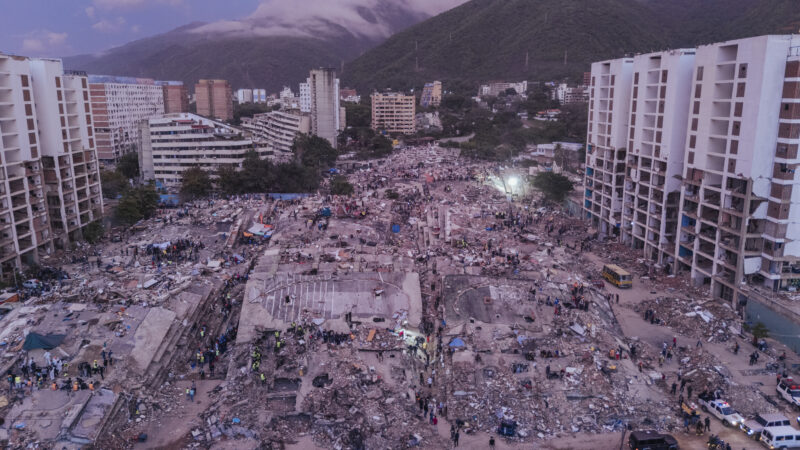
    CATIA LA MAR, Venezuela — Rescuers pulled a 43-year-old security guard alive from a collapsed basement early Thursday, ending a grueling dayslong operation that became a symbol of hope after the devastation of twin earthquakes that struck Venezuela eight days earlier.

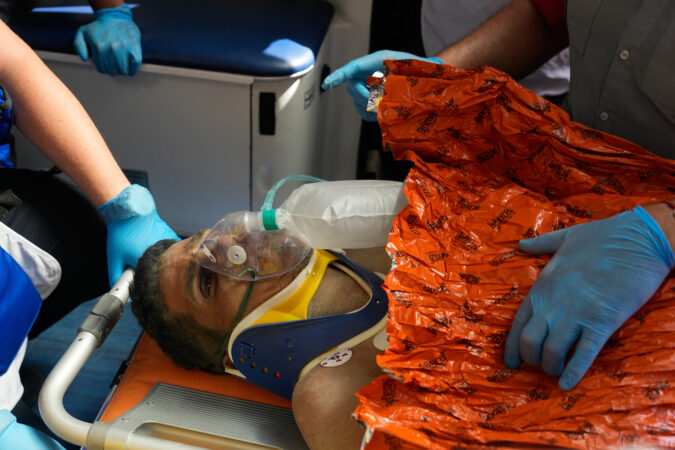
    Hernán Alberto Gil Flores emerged to safety atop a stretcher surrounded by helmet-clad rescue workers after being trapped since June 24 under rubble in the basement of the Galerías Playa Grande shopping center in the coastal town in La Guaira.

    Rescuers, who initially made contact with him over the weekend, worked for more than 100 hours to free him — navigating a highly unstable structure, torrential rain, and persistent aftershocks to tunnel down to the survivor.

    Teams carrying flags from around the world cheered as rescuers carried Gil Flores, wearing an oxygen mask and covered in an orange tarp, through throngs of people to an ambulance.

    One Chilean rescuer carrying his stretcher pumped his fist in joy. A group of men in red Costa Rican Red Cross uniforms embraced and laughed in relief. Others broke out into applause.

    “When we found him, he asked us not to tell his wife that he was alive, just in case he wouldn’t make it,” Costa Rican Red Cross rescuer Minyar Collado told the Associated Press, but she added “We were never going to leave him here.”

    The rescue was considered a small miracle cutting through a week of tragedy. By supplying Gil Flores with food and water while they excavated the concrete, rescue teams were able to keep him alive far longer than the 48- to 72-hour threshold most operations give to find survivors in disasters.

    Gil Flores, who worked as a night-shift security guard at the complex, was inside his small security cabin when the first violent tremor struck. While the surrounding concrete structure collapsed around him, his cabin held ground, shielding him from crushing debris and creating a vital pocket of air.

    A specialized team from the Costa Rican Red Cross first detected signs of life and established contact with him Sunday.

    His wife, Gusbimar González, told the AP that she grappled with despair for days before hearing that rescuers made contact.

    “When I learned he was alive, I saw a ray of light in the darkness,” she said. The couple has two children, ages 8 and 10.

    The operation was coordinated by an urban search and rescue team of Chilean firefighters, who worked around the clock with specialized teams from the United States, Portugal, Mexico, Costa Rica, El Salvador, and Venezuela.

    Acting Venezuelan President Delcy Rodríguez celebrated the rescue on social media at a time that her government has come under fire for what many Venezuelans say has been an inadequate crisis response.

    “We celebrate the greatness of humanity, when it is united for a single purpose: to save another. Thank you to our rescuers and to the support of the international rescuers,” she wrote on a post on X.

    Teams used a telescopic camera to help maintain constant contact with Gil Flores, passing water and liquid nutrients through a narrow shaft to keep him hydrated during the final three days of the rescue.

    María Paz Campos, a veteran firefighter from Chile, talked him through the entire operation and kept him calm during the final excruciating hours Thursday.

    In a video published by Chilean firefighters in the hours before the rescue, Gil Flores is seen drawing, seemingly to pass the time. Campos then gently tells him to look at the camera and to wear protective goggles.

    “I need you to keep the goggles on, for the small particles that are falling, to avoid them getting into your eye,” Campos told the Venezuelan survivor.

    The collapse of the building was triggered by two back-to-back earthquakes on June 24 that registered magnitudes of 7.2 and 7.5, respectively. The shallow, violent tremors damaged or destroyed tens of thousands of buildings across northern Venezuela, killing more than 2,200 people, injuring over 11,000 and leaving La Guaira state as the hardest-hit region in the country.

  • Venezuelan medics fear infections from quake injuries as search for untold dead continues

    Venezuelan medics fear infections from quake injuries as search for untold dead continues

    CARACAS, Venezuela — A week after Venezuela’s historic twin earthquakes, doctors on Wednesday said the biggest dangers now facing survivors were untreated wounds and infectious diseases.

    Thousands of displaced Venezuelans are sleeping in crowded shelters or outside without access to clean water amid dismal sanitary conditions following the June 24 earthquakes. Aid workers said the aftermath has become a major medical crisis that, unless quickly controlled, would take more lives in the days and weeks ahead.

    “The issue we foresee just around the corner are the infections that patients who have been exposed to the disaster for the longest time might bring,” said Eugenio Cova, the head of the trauma unit at Hospital del Oeste Dr. José Gregor Hernández in Caracas, the capital.

    The hospital has treated scores of severely injured people since the earthquakes, despite a shortage of crucial medical equipment. Cova said the public hospital, parts of which are now inaccessible because of possible earthquake damage, lacks screws and plates needed for orthopedic surgery and medicated gauze to prevent infections.

    According to the government, the earthquakes damaged or otherwise compromised 38 hospitals nationwide.

    “We’ve already gone through the period of complex trauma — which will continue to occur — but now it’s complicated by infections,” Cova added.

    Even as the window of opportunity narrowed in the search for survivors trapped under the rubble, expert teams from more than two dozen countries pressed on Wednesday with rescue operations. Against the odds — the window for survival when trapped under rubble is typically 48 to 72 hours — teams are continuing to find a small number of survivors, including a toddler on Tuesday who had been trapped for six days.

    The United States, which took control of Venezuela’s oil industry after seizing then-leader Nicolás Maduro in January, has scaled up its assistance in recent days, with 900 military personnel supporting relief and rescue efforts as of Wednesday, Steven McCloud, a U.S. Southern Command spokesman, told the Associated Press.

    An additional 100 people from the U.S. State Department were deployed to help aid work on the ground, he said.

    Venezuelan officials have counted over 1,900 deaths from the earthquakes as of Tuesday, a figure that continues to rise. Many more thousands remain missing, adding ambiguity to the temblors’ complete toll and leaving families in an agonizing limbo as they wait days by collapsed buildings, hoping for the bodies of their loved ones to surface.

    One non-governmental digital database where families can register missing loved ones showed more than 40,600 people unaccounted for as of Wednesday.

  • Belarus’ authoritarian leader pardons 28 political prisoners to ease ties with the West

    Belarus’ authoritarian leader pardons 28 political prisoners to ease ties with the West

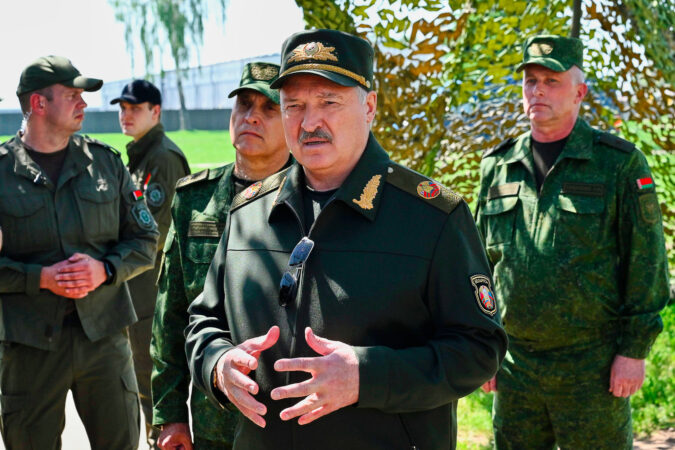
    TALLINN, Estonia — Belarus’ authoritarian President Alexander Lukashenko on Wednesday pardoned 28 political prisoners, the latest of his efforts to improve relations with the West.

    Lukashenko’s decree marking the country’s Independence Day celebrated Friday announced that 28 convicts serving prison terms for “extremist crimes,” a term used by the authorities’ in their sweeping crackdown on dissent, were pardoned on “humanitarian” grounds.

    More than 800 political prisoners remain jailed in the country, according to a rights organization in Belarus.

    Lukashenko has ruled the nation of 9.5 million with an iron fist for more than three decades, and the country has been sanctioned repeatedly by Western countries — both for its crackdown on human rights and for allowing Russia to use its territory in the full-scale invasion of Ukraine in 2022.

    Lukashenko’s rule was challenged after a 2020 presidential election, when hundreds of thousands of people took to the streets to protest a vote they viewed as rigged. In an ensuing crackdown, tens of thousands were detained, with many beaten by police. Prominent opposition figures fled the country or were imprisoned.

    Five years after the mass demonstrations, Lukashenko won a seventh term last year in an election that the opposition called a farce.

    Since U.S. President Donald Trump returned to the White House, Lukashenko has released hundreds of political prisoners in a series of U.S.-mediated deals that also lifted some U.S. sanctions.

    As part of a deal in March that Washington helped broker, Lukashenko ordered the release of 250 political prisoners, while the U.S. agreed to lift sanctions from two Belarusian state banks and the country’s Finance Ministry, and to remove the top Belarusian potash producers from a sanctions list.

    Another deal in April released prominent journalist Andrzej Poczobut in a swap with Poland that saw a total of 10 people freed.

    Belarus still has 864 political prisoners, including 21 journalists, according to the Viasna human rights center in Minsk, the capital of Belarus.

    In a report released earlier this week, the U.N. special rapporteur on the situation of human rights in Belarus, Nils Muižnieks, warned that despite the release of several hundred political prisoners over the past year, there has been no overall improvement in the human rights situation in the country.

    “Sustainable progress requires an end to politically motivated repression and accountability for past violations,” he said.

    Belarus opposition leader-in-exile Sviatlana Tsikhanouskaya told the Associated Press that although the release of 28 political prisoners will bring relief to their relatives, “we mustn’t forget that hundreds of political prisoners remain in Belarusian jails, and all of them must be released.”

  • Defying Pope Leo XIV, traditionalists go ahead with bishop consecrations in Switzerland

    Defying Pope Leo XIV, traditionalists go ahead with bishop consecrations in Switzerland

    ECONE, Switzerland — A group of traditionalist Catholics directly defied Pope Leo XIV on Wednesday by consecrating four bishops without his consent, dismissing the resulting excommunications and break with the Holy See by saying it was necessary to defend the Catholic faith.

    The Society of St. Pius X, which opposes modernizing reforms in the Catholic Church, conducted the five-hour ceremony at its seminary in Econe, Switzerland, despite an appeal by Leo to call it off.

    The American pope warned in a letter Tuesday that consecrating bishops without his approval amounted to a “sin of extreme gravity” that will actually harm their faithful.

    The consecrations amounted to a crisis for Leo, who has prioritized church unity and healing tensions with traditionalists that worsened during the Pope Francis pontificate.

    The SSPX, as the society is known, represents a parallel, ultra-Catholic faith to the Holy See. It now has six bishops, 751 priests, 264 seminarians training in five seminaries, 145 religious brothers, 88 oblates, and 250 religious sisters representing 50 nationalities, according to SSPX statistics.

    Bells tolled through the misty Alpine mountain valley as hundreds of priests walked two-by-two to the altar under a tent to start the service and then again at the end. An estimated 16,500 faithful who prefer the traditional Latin Mass over modern liturgies attended, sitting in a field through a downpour alongside their children who were too numerous for organizers to count.

    The Mass, rich in velvet and gold-trimmed vestments, chanting, and incense, was livestreamed on the society’s YouTube channel, with simultaneous explanations in several languages. The highly organized religious extravaganza underscored the society’s international reach, despite its schismatic outsider status, and its appeal to conservative, traditionalist Catholics wary of the modern, secular world.

    At the start of the Mass, a priest read aloud a statement justifying the consecrations as a necessary “sacred duty” and dismissing the resulting penalties. “We consider every punishment and censure brought to bear against this step will have no validity,” he said.

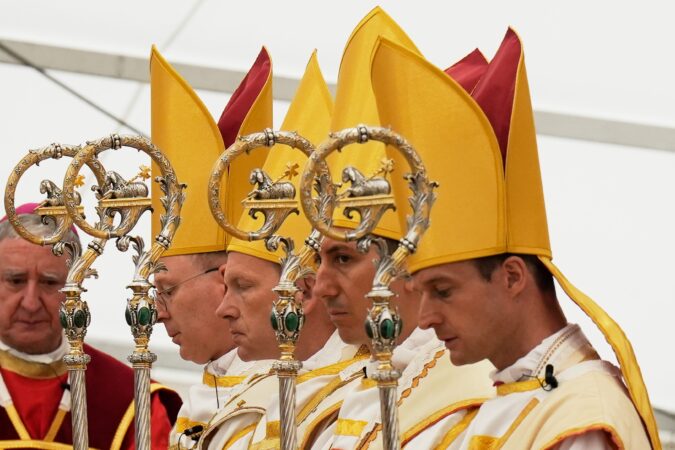
    In the consecration rite, Bishop Alfonso de Galarreta, who himself was excommunicated after being consecrated without papal consent in 1988, placed his hands on the head of each of the four new bishops. The ritual confers the Holy Spirit from one bishop to another and recalls Christ’s gesture to his apostles. After they received their miter hats, gloves, and pastoral staffs, the four made a procession through the crowd, blessing the faithful as bishops.

    According to church law, consecrating a bishop without a papal mandate incurs the harshest penalty in the Catholic Church: automatic excommunication for the four new bishops and the bishop administering the rite. It also amounts to a schismatic act, an intentional rupture of church unity.

    The society was founded in opposition to Vatican II

    French Archbishop Marcel Lefebvre founded the SSPX in opposition to the modernizing reforms of the Second Vatican Council. Among other things, the 1960s meetings known as Vatican II revolutionized the church’s relations with other Christians, Jews, and people of other faiths, and allowed Mass to be celebrated in the vernacular rather than Latin.

    In 1988, Lefebvre consecrated four bishops without papal consent. The Vatican promptly excommunicated him and the four bishops and declared the consecrations a “schismatic act.” Pope Benedict XVI in 2009 lifted the excommunications, but the SSPX today has no legal standing in the church.

    The SSPX has accused the church of being rife with heresies and errors and said that only it is upholding the true faith of Christ. It has justified the consecrations, citing a “state of necessity” to minister to its faithful.

    It identified the new bishops as Pascal Schreiber of Switzerland, Michael Goldade of the United States, Michel Poinsinet de Sivry of France, and Marc Hanappier, also of France.

    Catholic faithful don’t incur penalties for attending SSPX services, but they also can attend Latin Masses celebrated by priests in communion with the Vatican.

    The Vatican didn’t immediately comment on the consecrations and it wasn’t clear how or if it would declare the excommunications or any other penalties. The SSPX acknowledged in a statement late Wednesday that the consecrations did not have papal approval.

    The ritual had a joyous air

    Everything about Wednesday’s ceremony had the air of a joyous celebration. Participants received a baseball cap with the “Econe2026” seal on it.

    And in perhaps the most obvious sign of a celebration, registered participants could buy a souvenir set of wine to commemorate the “historic” event for 75 Swiss francs ($92.50). The “Cuvee des Sacres” gift box featured pinot noir, syrah, Petit Arvine, and Fendant, each bottle with a label depicting a bishop’s miter, his ring, a cross or crozier staff.

    The field, located under giant power lines, was awash in smiling nuns, priests posing for photos, youths handing out bottled water, black-clad security guards with earpieces, and orange-vested volunteers who occasionally cut short journalists’ interviews with the faithful. During the downpour, priests administered Communion under yellow and white umbrellas, the colors of the Holy See.

    Arlina Onglao, a 71-year-old travel agent from the Philippines, said she wanted to be on hand for the “historic event” and didn’t care about the prospect of excommunications of the bishops. She said the Vatican had “lost credibility.”

    “I don’t think it’s going to scare any of us. Me, I’m not scared,” she said. “I feel like I’m on a safer road to heaven.”

    Many Catholics not in Econe, including conservative and traditional ones, opposed the consecrations as an act of severe disobedience that hurts the church.

    “You can’t serve tradition while disobeying the church and her authority,” said the Rev. Robert Gahl, an ethics expert at the Catholic University of America.

  • Retrofitted Qatari jet takes flight as Air Force One for Trump’s trip to North Dakota

    Retrofitted Qatari jet takes flight as Air Force One for Trump’s trip to North Dakota

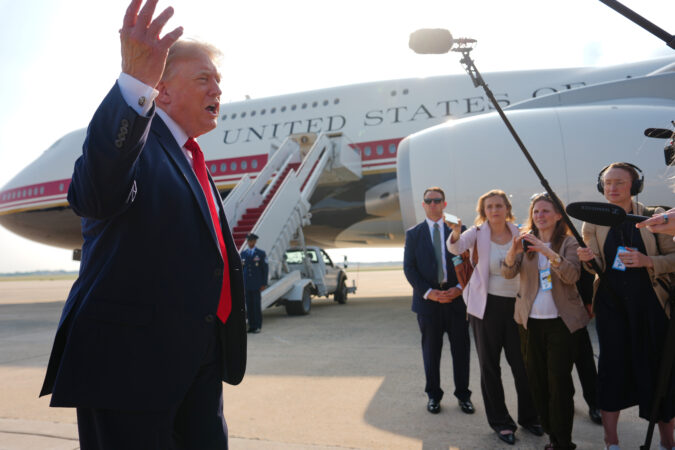
    WASHINGTON — President Donald Trump on Wednesday took his maiden voyage on a new Air Force One — a retrofitted Boeing 747 worth $400 million gifted by Qatar that embeds his personality more deeply into the institution of the American presidency.

    Gone is the trademark light blue hull that helped Air Force One blend into the sky. The refurbished jet is painted to Trump’s preferred color scheme of a navy blue belly and red and gold stripes.

    It has the luxury features that the president believes a commander-in-chief’s entourage should have — plush carpets, lie-flat seats, wood paneling, and a presidential seal on the seat belts, according to reported tours of the plane.

    Trump told reporters that he was proud of the luxurious plane. “You can do two things: You can low-key it, or you can show it,” he said.

    Reporters are generally not permitted to take photographs on the plane unless Trump is present. But on Wednesday, Trump administration staffers posted images of the plane’s interior on social media.

    White House communications director Steven Cheung posted a photo of aides gathered around a circular table that had off-white place mats and leather captain’s chairs. Monica Crowley, the chief of U.S. protocol, posted a picture of herself perched on a leather couch between a pair of Air Force One throw pillows. Mounted on the wall behind her was a framed photo of the Thomas Jefferson Memorial.

    The jet carried Trump to North Dakota to see the Theodore Roosevelt Presidential Library, the first official visitor ahead of its opening on the nation’s 250th anniversary.

    The jet, a gift from the Middle Eastern power, raised ethical concerns, but Trump saw the plane as a necessary replacement to the 35-year-old planes that had previously ferried him as president.

    “This is a gift from a country that has treated us very well,” Trump said.

    The new jet will only temporarily be in the nation’s service only temporarily, as Boeing is expected to deliver in 2028 long-delayed planes that will permanently serve as Air Force One. Trump, a Republican, has said in the past that the Qatar plane would end up in a presidential library.

    The Air Force has said that it did little to change the cabin layout of the plane and that it spent less than $400 million on security upgrades.

  • Pope promotes Italian nun to top migrant role in his first major appointment of a woman to Holy See

    Pope promotes Italian nun to top migrant role in his first major appointment of a woman to Holy See

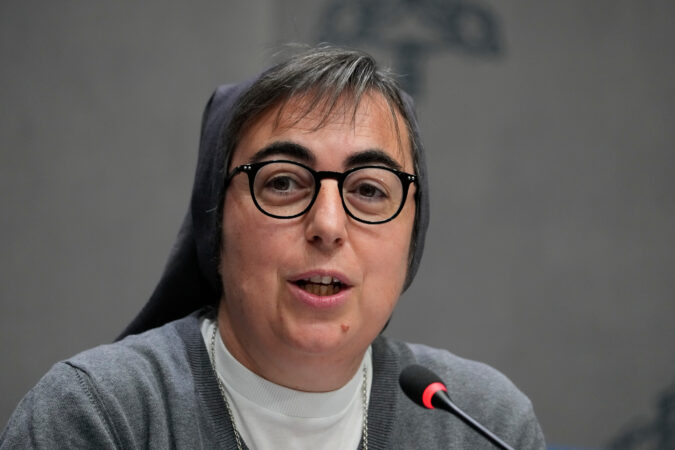
    ROME — Pope Leo XIV on Tuesday made his first major appointment of a woman to the Holy See hierarchy, promoting Italian Sister Alessandra Smerilli to head the Vatican office responsible for migrants, the environment, and development.

    Smerilli, an economist, is currently the No. 2 in the Dicastery for Promoting Integral Human Development. As prefect, she replaces the retiring Canadian Cardinal Michael Czerny, who turns 80 this month.

    With the appointment of Smerilli, Leo appears to be following suit of his predecessor, Pope Francis, who made a point of promoting women to top-level management positions within the Holy See as part of his response to calls by women for greater decision-making roles in the church.

    But Leo too is following Francis’ lead by simultaneously naming Cardinal Fabio Baggio as a “pro-prefect” of the office, where he is currently undersecretary.

    The dual nominations recognize that sometimes the role of a Vatican department head requires being an ordained priest and cardinal.

    Baggio was also given the mandate to head up the Vatican’s Borgo Laudato Si environmental educational center, at Castel Gandolfo, near Rome.

    The Catholic Church reserves the priesthood for men, and women have long complained of a second-class status despite carrying out the lion’s share of the church’s work running schools and hospitals and passing the faith on to younger generations.

  • Congo bans gatherings in areas far from Ebola outbreak. Some say it limits dissent

    Congo bans gatherings in areas far from Ebola outbreak. Some say it limits dissent

    KINSHASA, Congo — Opposition and civil society groups are protesting Congo’s new ban on public demonstrations and mass gatherings in the capital and other areas far from the country’s deadly Ebola outbreak, alleging that the decision aims to limit freedom of speech.

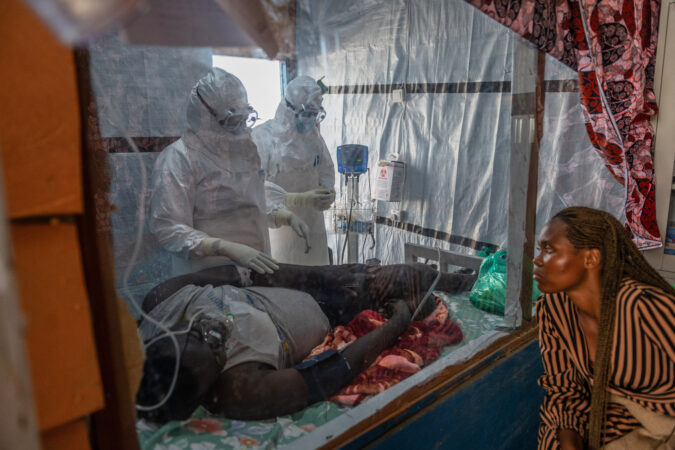
    The decision announced over the weekend came as the outbreak of a type of Ebola with no approved treatment or vaccine continues to grow, with 1,307 people infected and 377 dead across three provinces in eastern Congo. It could be the worst Ebola outbreak yet.

    Congo’s ministry of interior on Saturday said gatherings and demonstrations were forbidden in the provinces of Kinshasa, Tshopo, Haut-Uele, and Bas-Uele as fears grow about the outbreak spilling into new areas. None of the provinces have any confirmed cases.

    Separately, the mayor of ​Goma, eastern Congo’s largest city and now under the control of the Rwanda-backed M23 rebel group, also banned public gatherings and demonstrations, including celebrations linked to sports events, on Monday. Congo is in its first World Cup in over half a century.

    Congo’s political opposition has denounced the ban as unconstitutional. Prince Epenge, the spokesperson for the Lamuka coalition, has said the ban aims to prevent a planned demonstration in the capital, Kinshasa, early next month. The protest is against proposed constitutional changes that would allow Congo’s President Felix Tshisekedi to run for a third term.

    Civil society organizations also condemned the ban in a statement on Monday, citing freedom of speech and freedom of assembly.

    In a televised address on Monday evening, Tshisekedi announced a $319 million response plan to the Ebola outbreak, and called on people to respect health guidelines, report suspected cases, and not give in to misinformation. He did not directly address the bans.

    “Ebola is neither a rumor nor a source of shame,” Tshisekedi said. “It is a health emergency that demands responsibility, solidarity, and truth.”

    Health workers have reported some skepticism and attacks over Ebola from residents in the affected areas of Ituri, North Kivu, and South Kivu provinces.

    Cases also have been confirmed in neighboring Uganda, as well as one in France in a doctor who returned from Congo.

    The United Nations ​warned in a report on Tuesday that if the virus spreads into other neighboring countries, including Rwanda and Angola, it could cost Africa up to $3.6 billion and result in 328,000 job losses.

    More than a month into the outbreak, officials believe it continues to outpace response efforts and no one knows its true scale. They are yet to identify patient zero and struggle to trace contact cases.

    The World Health Organization has warned that violence from rebels in eastern Congo is complicating the response to the outbreak. In Ituri, attacks by the Islamic State group-backed Allied Democratic Force have cut off access to many villages and forced people to flee their homes, adding to already overcrowded camps of people displaced by years of conflict.

  • What the Supreme Court’s ruling in the Cook case means for Federal Reserve independence

    What the Supreme Court’s ruling in the Cook case means for Federal Reserve independence

    WASHINGTON — The Supreme Court on Monday said the Federal Reserve, unlike any other agency in Washington, has a measure of independence from the presidency and day-to-day politics. But the court didn’t define to what extent.

    The case is the latest round in an unprecedented fight between the Fed and President Donald Trump. More political interference at the Fed could upend financial markets around the world, which closely follow its interest rate moves.

    Trump has repeatedly demanded that the central bank cut its key interest rate to lower borrowing costs for homeowners, businesses, and even the government itself. Trump sought to fire a Fed governor, Lisa Cook, last August after accusing her of mortgage fraud — a charge she denies. Cook was appointed by former President Joe Biden and removing her would give Trump the opportunity to name a more amenable official in her place.

    In a 5-4 decision, the court ruled that the president cannot fire the seven members of the Fed’s board of governors without a clear cause. The decision endorses the Fed’s independent structure even as the court eliminated such protections for leaders of other agencies, including the Federal Trade Commission, whom the president can fire at-will.

    “That’s a big deal,” said Scott Alvarez, the central bank’s former top lawyer. “That’s one of the things that makes the Fed independent.”

    While the decision is a boost for the Fed, it does leave Cook vulnerable to further attempts by the Trump administration to fire her. Trump said on his social media site, Truth Social, that “we will take appropriate action immediately” to remove Cook. But for now, she will keep her job while the case is fought in lower courts.

    The court said the Fed’s independent structure is constitutional

    In a separate case Monday, the justices ruled 6-3 that the Constitution allows the president to fire the heads of federal agencies that had previously been considered independent. But in the Cook case, the court carved out a clear exemption for the Fed.

    The Fed has a “unique historical status and role,” Chief Justice John Roberts wrote, similar to the First and Second Banks of the United States that existed in the early 1800s and that operated “at a deliberate remove from the ordinary political process.”

    If the president could fire a Fed governor for any reason, it would undermine that official’s ability to make decisions independently, Roberts wrote.

    The ruling provides some additional protection for new chair Kevin Warsh, who was nominated by Trump but has said that getting inflation back to the Fed’s 2% target is his top priority. About half the Fed’s policymakers support a rate hike to achieve that goal, while Trump has spoken out against hikes.

    Still, Kathryn Judge, a law professor at Columbia University, said the justices’ decision to strike down the independence of other agencies erodes the Fed’s standing by leaving it as the only remaining such body in Washington. The principle of independent, non-political judgment has been undercut, she added.

    “Fed independence lives on for another day, but is not as robust as it was prior to these decisions,” she said.

    Cook and other governors are still vulnerable

    And the court did not fully close the door on Trump’s efforts to fire Cook. Trump’s lawyers accepted that Trump could only fire her “for cause,” but they argued that the White House could define the cause and it couldn’t be second-guessed by courts.

    The Supreme Court instead said that “for cause” likely involved serious misconduct that wasn’t related to their professional duties, but didn’t provide much detail. More importantly, they also threw out the higher standard that Cook’s lawyers had pushed, which would have allowed governors to only be fired for inefficiency, neglect of duty, or malfeasance on the job. Since the alleged mortgage fraud occurred before she joined the Fed, such a standard would have likely shut down the case.

    The court also said that Cook had to be given formal notice of her firing — the president only announced it last August on Truth Social — and an opportunity to formally respond, though the court did not specify what the process should look like. Indeed, Roberts included a footnote in his opinion noting that nothing forbids Trump from “trying again” to fire her, provided she is given proper notice and a chance to contest it.

    Why the Fed’s independence matters

    The court battle will likely further define the boundaries of Fed independence.

    The Fed wields extensive power over the U.S. economy. By cutting the short-term interest rate it controls — which it typically does when the economy falters — the Fed can make borrowing cheaper and encourage more spending, accelerating growth and hiring. When it raises the rate — which it does to cool the economy and combat inflation — it can weaken the economy and cause job losses.

    Economists have long preferred independent central banks because they can more easily take unpopular steps to fight inflation, such as raise interest rates, which makes borrowing to buy a home, car, or appliances more expensive.

    The importance of an independent Fed was cemented for most economists after the extended inflation spike of the 1970s and early 1980s. Former Fed Chair Arthur Burns has been widely blamed for allowing the painful inflation of that era to accelerate by succumbing to pressure from President Richard Nixon to keep rates low heading into the 1972 election. Nixon feared higher rates would cost him the election, which he won in a landslide.

    Paul Volcker was eventually appointed chair of the Fed in 1979 by President Jimmy Carter, and he pushed the Fed’s short-term rate to the stunningly high level of nearly 20%. (It is currently 3.6%.) The eye-popping rates triggered a sharp recession, pushed unemployment to nearly 11%, and spurred widespread protests.

    Yet Volcker didn’t flinch. By the mid-1980s, inflation had fallen back into the low single digits. Volcker’s willingness to inflict pain on the economy to throttle inflation is seen by most economists as a key example of the value of an independent Fed.

  • Democrats in half of states sue Trump administration over Medicaid work rules

    Democrats in half of states sue Trump administration over Medicaid work rules

    NEW YORK — Democrats in 25 states and the District of Columbia on Monday sued the Trump administration over its recent guidance on new Medicaid work requirements, arguing the strict rules will prevent eligible Americans from accessing the care they need.

    The attorneys general and governors who filed the lawsuit allege that an interim final rule released earlier this month by the Centers for Medicare and Medicaid Services oversteps the text of the law last summer that set in motion the changes to Medicaid.

    They claim the Republican administration’s narrow interpretation of parts of the statute, including new limits to a medical frailty exemption, will create harmful coverage barriers and chaos in states that have been rushing to implement new systems by the January deadline.

    “Added administrative burdens will cause individuals who are eligible for Medicaid to lose or be denied coverage,” the plaintiffs write. “People with disabilities, patients in the middle of cancer treatment, or those struggling with another serious or complex health condition, shouldn’t be at risk of losing the care that helps maintain their health.”

    Spokespeople for the U.S. Department of Health and Human Services and CMS, the agencies named in the lawsuit, didn’t immediately respond to a request for comment. The Trump administration has promoted the new rules as commonsense measures to eliminate government freeloading and preserve benefits for those who need them most.

    The new Medicaid restrictions, which Democrats have criticized, were part of Trump’s big tax and policy law in 2025. The change affects those covered through an expansion in most states that gave more lower-income people access to the government’s safety net healthcare program.

    Starting Jan. 1, expansion enrollees age 19 to 64 will have to show that they work or do community service at least 80 hours a month or are in school at least half the time. There are exceptions for those considered medically frail or in addiction treatment programs, among others.

    This month’s announcement from CMS caught states off guard with a new definition of medical frailty. The law had said medically frail people include those who have substance use disorders, disabilities, or serious medical conditions. But the CMS rule went further, saying someone’s condition must “significantly impair” their ability to work, volunteer, or attend school at the rates required in the law for them to be granted an exemption.

    In 2027 and once in 2028, the patient can attest that they meet this definition. But when they try to renew coverage in 2028, they’ll need to prove it. Health analysts and state Medicaid directors have said they aren’t clear on what existing documentation could prove that point.

    In the lawsuit, states allege that this change came “contrary to months of regular communications with CMS and preliminary guidance materials upon which Plaintiff States based their implementation plans.” They say CMS has still not provided states with enough clarity on how they can update their systems appropriately.

    Democratic Gov. Josh Shapiro joined the suit, continuing a trend since last year of committing Pennsylvania to these cases that the state’s Republican attorney general has sat out.

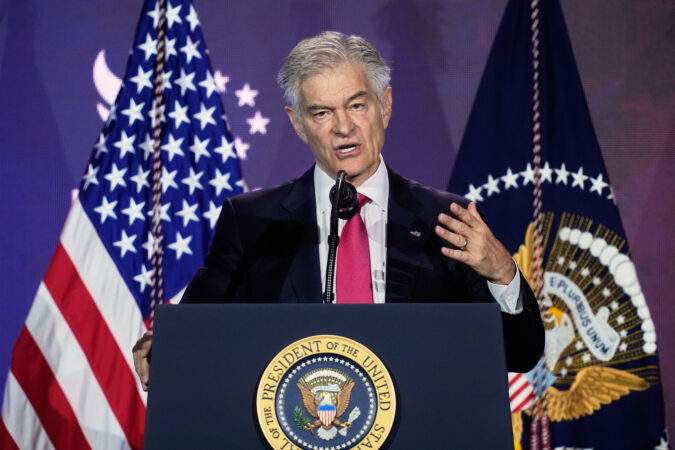
    “Donald Trump, Dr. Oz, and RFK Jr. are hellbent on trying to push aside people who rely on Medicaid to get the care they need,” Shapiro said on X. “But here in Pennsylvania, we’re going to keep standing up to protect our most vulnerable Pennsylvanians.”

    New York Attorney General Letitia James, one of the Democrats suing the administration, said the new rule puts thousands of her state’s residents at risk.

    “New Yorkers who are battling cancer, living with a disability, managing a serious mental health condition, or recovering from addiction should be able to get the healthcare they need without being buried in paperwork,” she said in a statement.