Category: Nation World News Wires

  • Team USA beats Canada in OT to win first men’s hockey Olympic gold since 1980

    Team USA beats Canada in OT to win first men’s hockey Olympic gold since 1980

    MILAN (AP) — No miracle needed. The United States is on top of the hockey world for the first time in nearly a half-century.

    Jack Hughes scored in overtime and the U.S. defeated Canada 2-1 in the gold medal final at the Milan Cortina Olympics on Sunday to earn the nation’s third men’s title at the Games and its first since the “Miracle on Ice” in 1980 — 46 years to the day of the famous upset over the Soviet Union, too.

    Unlike that ragtag group of college kids that pulled off one of the biggest shockers in sports history, the Americans in Milan were a machine that rode goaltender Connor Hellebuyck and a stacked roster full of NHL players through the tournament unbeaten.

    “This is all about our country right now,” Hughes said. “I love the USA. I love my teammates. It’s unbelievable. The USA Hockey brotherhood is so strong.”

    Hughes’ goal off the rush after a pass from Zach Werenski just 1 minute, 41 seconds into three-on-three overtime, sent players into a wild celebration as Canada’s entire team watched from the bench. Werenski and Matthew Tkachuk, former teammates of Johnny Gaudreau, carried a Gaudreau No. 13 around the ice as the latest tribute to the beloved player who was killed along with his brother in 2024 by an alleged drunk driver while riding his bicycle in South Jersey’s Salem County.

    Gaudreau’s parents, Guy and Jane, his widow, Meredith, and their oldest children were in attendance. It was John Jr.’s 2nd birthday.

    Hellebuyck was by far the best player on the ice, stopping 41 of the 42 shots he faced as Canada tilted the ice toward him. He made the save of the tournament by getting his stick on the puck on a shot from Devon Toews in the third period, then minutes later denied Macklin Celebrini on a breakaway — something he also did to Connor McDavid earlier.

    “Unbelievable game by Hellebuyck,” Hughes said. “He was our best player by a mile.”

    It was only fitting the Americans needed to go through Canada, their northern neighbor that beat them at the 4 Nations Face-Off a year ago and has won every international competition over the past 16 years that featured the world’s best players.

    Not anymore.

    Winning a fast-paced, riveting game that was full of big hits and plenty of post-whistle altercations, the U.S. got a goal from Matt Boldy 6 minutes in and led until Cale Makar tied it late in the second period. Hellebuyck and the penalty kill were a perfect 18 for 18 at the Olympics.

    “I can’t even believe this,” Hughes said. “I mean it’s such an unbelievable game, USA-Canada. Such a good game. There’s so many great players. We’re a great team. That’s exactly how we wanted it to go. We’re underdogs to Canada, [but we] beat them. It could have gone either way.”

    The U.S. finally came through after generations of churning out talent from the grassroots level like a production line. All but two of the 25 players on the team went through USA Hockey’s National Team Development Program.

    That group of 23 includes captain Auston Matthews, the top line of Brady and Matthew Tkachuk and Jack Eichel, and the second set of brothers, Jack and Quinn Hughes. Much of the team played together either at the program, under-18s, the World Junior Championship, or some combination of them.

    The U.S. winning silenced criticism of general manager Bill Guerin and his management group choosing a roster full of experienced veteran players to fill specific roles and leaving four of the top 10 American goal scorers in the NHL this season at home. Some decisions were no-doubters, like coach Mike Sullivan giving the net to Hellebuyck, who was the best goalie in the tournament.

    Canada, back-to-back Olympic champions in 2010 and ’14 and winners of three of the first five, fell short while playing without injured captain Sidney Crosby. The 38-year-old two-time gold medalist and three-time Stanley Cup champion left the quarterfinal game against Czechia and sat out the semifinal game against Finland.

    McDavid, the widely considered best player in the world who wore the “C” in Crosby’s absence, suffered another devastating defeat on the doorstep of a title. He and the Edmonton Oilers have lost to Matthew Tkachuk and the Florida Panthers in the Stanley Cup Final each of the past two years.

  • TSA says PreCheck still operational after previous announcement of suspension during funding fight

    TSA says PreCheck still operational after previous announcement of suspension during funding fight

    WASHINGTON — The Transportation Security Administration said Sunday that its PreCheck program would remain operational despite an earlier announcement from the U.S. Department of Homeland Security that the airport security service was being suspended during the partial government shutdown.

    As staffing constraints arise, TSA will evaluate on a case by case basis and adjust operations accordingly,” the agency said.

    The TSA also said Sunday that its Global Entry program would be suspended as long as the partial government shutdown remains in effect.

    The security disruptions come at a time when a major winter storm will hit the East Coast from Sunday into Monday. Nine out of 10 flights going out of John F. Kennedy International Airport, LaGuardia Airport and Boston Logan Airport have been canceled for Monday.

    Global Entry is a U.S. Customs and Border Protection program that allows pre-approved, low-risk travelers to use expedited kiosks when entering the United States from abroad.

    The turmoil is tied to a partial government shutdown that began Feb. 14 after Democrats and the White House were unable to reach a deal on legislation to fund the Department of Homeland Security. Democrats have been demanding changes to immigration operations that are core to President Donald Trump’s deportation campaign.

    Homeland Security previously said it was taking “emergency measures to preserve limited funds.” Among the steps listed were “ending Transportation Security Administration (TSA) PreCheck lanes and Customs and Border Protection (CBP) Global Entry service, to refocus Department personnel on the majority of travelers.”

    Secretary Kristi Noem said in a statement on Saturday night that “shutdowns have serious real world consequences.”

    One group of fliers will definitely be affected, according to TSA.

    “Courtesy escorts, such as those for Members of Congress, have been suspended to allow officers to focus on the mission of securing America’s skies,” the agency said.

    Airlines for America, a trade group representing major carriers, said Saturday night that “it’s past time for Congress to get to the table and get a deal done.” It also criticized the announcement by saying it was “issued with extremely short notice to travelers, giving them little time to plan accordingly.”

    Democrats on the House Committee on Homeland Security criticized Homeland Security handling of airport security after the initial announcement on Saturday night. They accused the administration of “kneecapping the programs that make travel smoother and secure.”

    Sen. Andy Kim, a New Jersey Democrat, said Noem’s actions are part of an administration strategy to distract from other issues and shift responsibility.

    “This administration is trying to weaponize our government, trying to make things intentionally more difficult for the American people as a political leverage,” he told CNN on Sunday. ”And the American people see that.”

  • Armed man shot and killed after entering secure perimeter of Mar-a-Lago, Secret Service says

    Armed man shot and killed after entering secure perimeter of Mar-a-Lago, Secret Service says

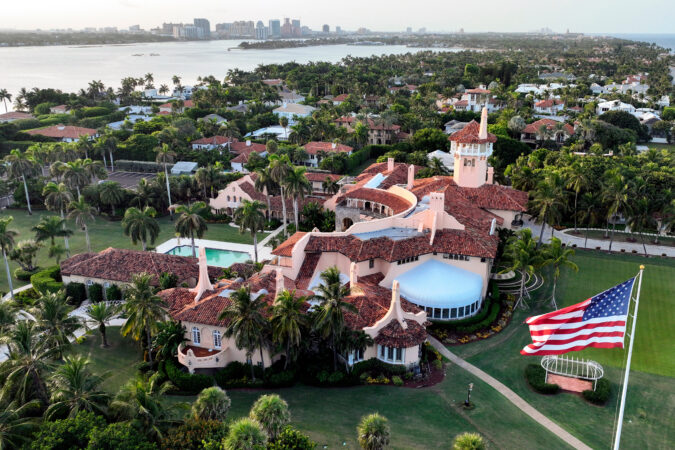
    WASHINGTON — An armed man drove into the secure perimeter of Mar-a-Lago, President Donald Trump’s resort in Palm Beach, Fla., before being shot and killed early Sunday morning, according to a spokesperson for the U.S. Secret Service. Trump was not there but was at the White House in Washington.

    The man, who was in his early 20s and from North Carolina, had a gas can and a shotgun, according to Anthony Guglielmi, the spokesperson. He had been reported missing by his family a few days ago, and investigators believe he headed south and picked up the shotgun along the way.

    Guglielmi said a box for the weapon was discovered in the man’s vehicle after the incident, which took place around 1:30 a.m.

    The man killed was identified by investigators as 21-year-old Austin Tucker Martin, according to a person familiar with the matter. The person spoke on the condition of anonymity because they were not authorized to publicly discuss details of the investigation.

    Trump has faced threats to his life before, including two assassination attempts during the 2024 campaign. Although the president often spends weekends at his resort, he and first lady Melania Trump were at the White House when the breach at Mar-a-Lago occurred.

    The man entered the north gate of the property as another vehicle was exiting and was confronted by two Secret Service agents and a Palm Beach County sheriff’s deputy, according to Palm Beach County Sheriff Ric Bradshaw.

    “He was ordered to drop those two pieces of equipment that he had with them. At which time he put down the gas can, raised the shotgun to a shooting position,” Bradshaw said at a brief news conference. The two agents and the deputy “fired their weapons to neutralize the threat.”

    The FBI asked residents who live near Mar-a-Lago to check any security cameras they may have for footage that could help investigators.

    In a post on X, FBI Director Kash Patel said that the bureau would be “dedicating all necessary resources” to the investigation.

    Investigators are working to compile a psychological profile and a motive is still under investigation. Asked whether the individual was known to law enforcement, Bradshaw said “not right now.”

    On Sunday afternoon, vehicles blocked the entrance to a property listed in public records as an address for Martin at the end of a private road in Cameron, N.C.

    Braeden Fields, Martin’s cousin, reacted with disbelief. He described Martin as quiet, afraid of guns, and from a family of avid Trump supporters.

    “He’s a good kid,” Fields, 19, said. He said they grew up together. “I wouldn’t believe he would do something like this. It’s mind-blowing,” Fields said.

    He said Martin worked at a local golf course and would send money from each paycheck to charity.

    “He wouldn’t even hurt an ant. He doesn’t even know how to use a gun,” Fields said.

    He said his cousin didn’t discuss politics.

    “We are big Trump supporters, all of us. Everybody,” Fields said, but his cousin was “real quiet, never really talked about anything.”

    The incident comes as the United States has been rocked by spasms political violence.

    The incursion at Mar-a-Lago took place a few miles from Trump’s West Palm Beach club, where a man tried to assassinate him while he played golf during the 2024 campaign.

    A Secret Service agent spotted that man, Ryan Routh, aiming a rifle through the shrubbery before Trump came into view. Officials said Routh aimed his rifle at the agent, who opened fire and caused Routh to drop his weapon.

    Routh was found guilty last year and sentenced this month to life in prison.

    Trump also survived an assassination attempt at a Butler, Pa., campaign rally. That gunman fired eight shots before being killed by a Secret Service counter sniper. One rally attendee was killed by the gunman.

    White House press secretary Karoline Leavitt said in a post on X that “the United States Secret Service acted quickly and decisively to neutralize a crazy person, armed with a gun and a gas canister, who intruded President Trump’s home.”

    Leavitt used her post to blame Democratic lawmakers in Congress for the partial government shutdown affecting the Homeland Security Department that began Feb. 14 after Democrats demanded changes to the president’s deportation campaign.

    The Secret Service is among the agencies where the vast majority of employees are continuing their work but missing paychecks.

    “Federal law enforcement are working 24/7 to keep our country safe and protect all Americans,” Leavitt said. “It’s shameful and reckless that Democrats have chosen to shut down their Department.”

    The White House referred all questions to the Secret Service and FBI. Both Trump and his wife posted statements on social media after the incident, but they were unrelated to the shooting.

    There have been other recent incidents of political violence as well.

    In the last year, there was the assassination of conservative activist Charlie Kirk; the assassination of the Democratic leader in the Minnesota state House and her husband and the shooting of another lawmaker and his wife; and an arson attack at the official residence of Pennsylvania Gov. Josh Shapiro.

    Five days ago, a Georgia man armed with a shotgun was arrested as he sprinted towards the west side of the U.S. Capitol.

  • ICE’s purchases for big detention centers are marked by secrecy, frustrating towns

    ICE’s purchases for big detention centers are marked by secrecy, frustrating towns

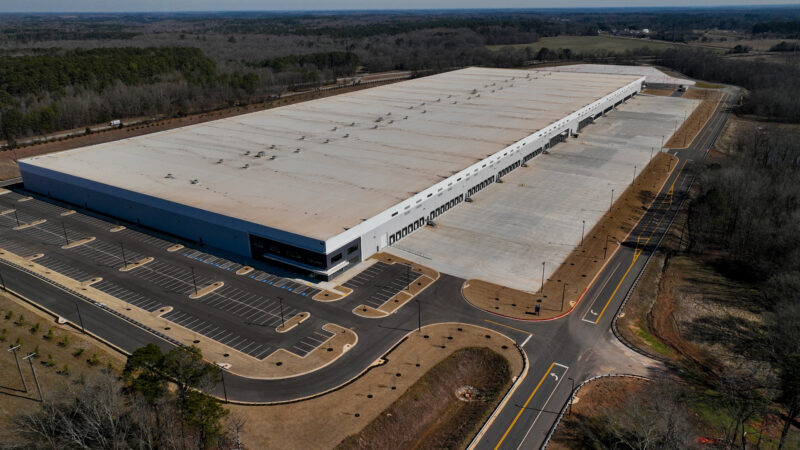
    SOCORRO, Texas — In a Texas town at the edge of the Rio Grande and a tall metal border wall, rumors swirled that federal immigration officials wanted to purchase three hulking warehouses to transform into a detention center.

    As local officials scrambled to find out what was happening, a deed was filed showing the Department of Homeland Security had already inked a $122.8 million deal for the 826,000-square-foot warehouses in Socorro, a bedroom community of 40,000 people outside El Paso.

    “Nobody from the federal government bothered to pick up the phone or even send us any type of correspondence letting us know what’s about to take place,” said Rudy Cruz Jr., the mayor of the predominantly Hispanic town of low-slung ranch homes and trailer parks, where orchards and irrigation ditches share the landscape with strip malls, truck stops, recycling plants, and distribution warehouses.

    Socorro is among at least 20 communities with large warehouses across the U.S. that have become stealth targets for Immigration and Customs Enforcement’s $45-billion expansion of detention centers.

    As public support for the agency and President Donald Trump’s immigration crackdown sags, communities are objecting to mass detentions and raising concerns that the facilities could strain water supplies and other services while reducing local tax revenue. In many cases, mayors, county commissioners, governors, and members of Congress learned about ICE’s ambitions only after the agency bought or leased space for detainees, leading to shock and frustration even in areas that have backed Trump.

    “I just feel,” said Cruz, whose wife was born in Mexico, “that they do these things in silence so that they don’t get opposition.”

    Communities scramble for information

    ICE, which is part of DHS, has purchased at least seven warehouses in Arizona, Georgia, Maryland, Pennsylvania, and Texas, signed deeds show. Other deals have been announced but not yet finalized, though buyers scuttled sales in eight locations.

    DHS objected to calling the sites warehouses, stressing in a statement that they would be “very well structured detention facilities meeting our regular detention standards.”

    The process has been chaotic at times. ICE this past week acknowledged it made a “mistake” when it announced warehouse purchases in Chester, N.Y., and Roxbury, N.J. Roxbury then announced Friday that the sale there had closed.

    DHS has confirmed it is looking for more detention space but hasn’t disclosed individual sites ahead of acquisitions. Some cities learned that ICE was scouting warehouses through reporters. Others were tipped off by a spreadsheet circulating online among activists whose source is unclear.

    It wasn’t until Feb. 13 that the scope of the warehouse project was confirmed, when the governor’s office in New Hampshire, where there is backlash to a planned 500-bed processing center, released a document from ICE showing the agency plans to spend $38.3 billion to boost detention capacity to 92,000 beds.

    Since Trump took office, the number of people detained by ICE has increased to 75,000 from 40,000, spread across more than 225 sites.

    ICE could use the warehouses to consolidate and to increase capacity. The document describes a project that includes eight large-scale detention centers, capable of housing 7,000 to 10,000 detainees each, and 16 smaller regional processing centers. The document also refers to the acquisition of 10 existing “turnkey” facilities.

    The project is funded through the big tax and spending cuts bill passed by Congress last year that nearly doubled DHS’ budget. To build the detention centers, the Trump administration is using military contracts.

    Those contracts allow a lot of secrecy and for DHS to move quickly without following the usual processes and safeguards, said Charles Tiefer, a professor emeritus of law at the University of Baltimore Law School.

    Socorro facility could be among the largest

    In Socorro, the ICE-owned warehouses are so large that 4½ Walmart Supercenters could fit inside, standing in contrast to the remnants of the austere Spanish colonial and mission architecture that defines the town.

    At a recent city council meeting, public comments stretched for hours. “I think a lot of innocent people are getting caught up in their dragnet,” said Jorge Mendoza, an El Paso County retiree whose grandparents immigrated from Mexico.

    Many speakers invoked concerns about three recent deaths at an ICE detention facility at the nearby Fort Bliss Army base.

    Communities fear a financial hit

    Even communities that backed Trump in 2024 have been caught off guard by ICE’s plans and have raised concerns.

    In rural Pennsylvania’s Berks County, commissioner Christian Leinbach called the district attorney, the sheriff, the jail warden, and the county’s head of emergency services when he first heard ICE might buy a warehouse in Upper Bern Township, 3 miles from his home.

    No one knew anything.

    A few days later, a local official in charge of land records informed him that ICE had bought the building — promoted by developers as a “state-of-the art logistics center” — for $87.4 million.

    “There was absolutely no warning,” Leinbach said during a meeting in which he raised concerns that turning the warehouse into a federal facility means a loss of more than $800,000 in local tax dollars.

    ICE has touted the income taxes its workers would pay, though the facilities themselves will be exempt from property taxes.

    Georgia center could house twice the population of town

    In Social Circle, Ga., which also strongly supported Trump in 2024, officials were stunned by ICE’s plans for a facility that could hold 7,500 to 10,000 people after first learning about it through a reporter.

    The city, which has a population of just 5,000 and worries about the infrastructure needs for such a detention center, only heard from DHS after the $128.6 million sale of a 1-million-square-foot warehouse was completed. Like Socorro and Berks County, Social Circle questioned whether the water and sewage system could keep up.

    ICE has said it did due diligence to ensure the sites don’t overwhelm city utilities. But Social Circle said the agency’s analysis relied on a yet-to-be built sewer treatment plant.

    “To be clear, the City has repeatedly communicated that it does not have the capacity or resources to accommodate this demand, and no proposal presented to date has demonstrated otherwise,” the city said in a statement.

    And in the Phoenix suburb of Surprise, Ariz., officials sent a scathing letter to Homeland Security Secretary Kristi Noem after ICE without warning bought a massive warehouse in a residential area about a mile from a high school. Arizona Attorney General Kris Mayes, a Democrat, raised the prospect of going to court to have the site declared a public nuisance.

    Crowds wait to speak in Socorro

    Back in Socorro, people waiting to speak against the ICE facility spilled out of the city council chambers, some standing beside murals paying tribute to the World War II-era Braceros Program that allowed Mexican farmworkers to be guest workers in the U.S. The program stoked Socorro’s economy and population before President Dwight D. Eisenhower’s administration in the 1950s began mass deportations aimed at people who had crossed the border illegally.

    Eduardo Castillo, formerly an attorney for the U.S. Department of Justice, told city officials it is intimidating but “not impossible” to challenge the federal government.

    “If you don’t at least try,” he said, “you will end up with another inhumane detention facility built in your jurisdiction and under your watch.”

  • U.S. ambassador causes uproar by claiming Israel has a right to much of the Middle East

    U.S. ambassador causes uproar by claiming Israel has a right to much of the Middle East

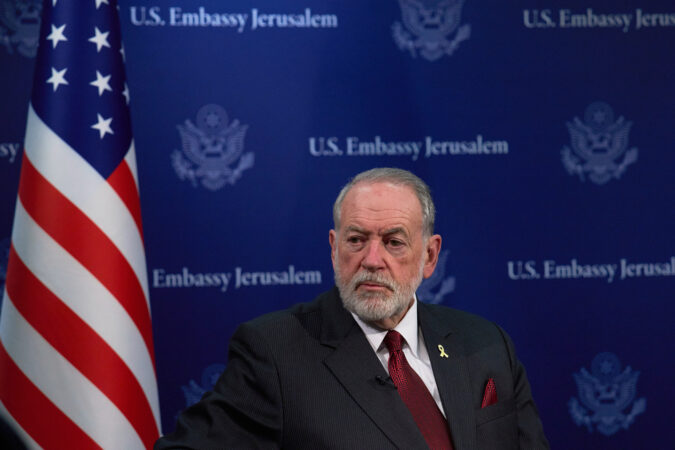
    TEL AVIV, Israel — Arab and Muslim nations on Saturday sharply condemned comments by the U.S. ambassador to Israel, Mike Huckabee, who said Israel has a right to much of the Middle East.

    Huckabee made the comments in an interview with conservative commentator Tucker Carlson that aired Friday. Carlson said that according to the Bible, the descendants of Abraham would receive land that today would include essentially the entire Middle East, and asked Huckabee if Israel had a right to that land.

    Huckabee responded: “It would be fine if they took it all.” Huckabee added, however, that Israel was not looking to expand its territory and has a right to security in the land it legitimately holds.

    His comments sparked immediate backlash from neighboring Egypt and Jordan, the Organization of Islamic Cooperation, and the League of Arab States, which in separate statements called them extremist, provocative, and not in line with the U.S. position.

    Egypt’s foreign ministry called Huckabee’s comments a “blatant violation” of international law, adding that “Israel has no sovereignty over the occupied Palestinian territory or other Arab lands.”

    “Statements of this nature — extremist and lacking any sound basis — serve only to inflame sentiments and stir religious and national emotions,” the League of Arab States said.

    There was no immediate comment from Israel or the United States.

    Since its establishment in 1948, Israel has not had fully recognized borders. Its frontiers with Arab neighbors have shifted as a result of wars, annexations, ceasefires, and peace agreements.

    During the six-day 1967 Mideast war, Israel captured the West Bank and east Jerusalem from Jordan, Gaza and the Sinai Peninsula from Egypt, and the Golan Heights from Syria. Israel withdrew from the Sinai Peninsula as part of a peace deal with Egypt following the 1973 Mideast war. It also unilaterally withdrew from Gaza in 2005.

    Israel has attempted to deepen control of the occupied West Bank in recent months. It has greatly expanded construction in Jewish settlements, legalized outposts, and made significant bureaucratic changes to its policies in the territory. U.S. President Donald Trump has said he will not allow Israel to annex the West Bank and has offered strong assurances that he’d block any move to do so.

    Palestinians have for decades called for an independent state in the West Bank and Gaza with east Jerusalem its capital, a claim backed by much of the international community.

    Huckabee has long opposed the idea of a two-state solution for Israel and the Palestinian people. In an interview last year, he said he does not believe in referring to the Arab descendants of people who had lived in British-controlled Palestine as “Palestinians.”

    In the latest interview, Carlson pressed Huckabee about his interpretation of Bible verses from the book of Genesis, where he said God promised Abraham and his descendants land from the Nile to the Euphrates.

    “That would be the Levant, so that would be Israel, Jordan, Syria, Lebanon. It would also be big parts of Saudi Arabia and Iraq,” Carlson said.

    Huckabee replied: “Not sure we’d go that far. I mean, it would be a big piece of land.”

    Israel has encroached on more land since the start of its war with Hamas in Gaza.

    Under the current ceasefire, Israel withdrew its troops to a buffer zone but still controls more than half the territory. Israeli forces are supposed to withdraw further, though the ceasefire deal doesn’t give a timeline.

    After Syrian President Bashar Assad was ousted at the end of 2024, Israel’s military seized control of a demilitarized buffer zone in Syria created as part of a 1974 ceasefire between the countries. Israel said the move was temporary and meant to secure its border.

    And Israel still occupies five hilltop posts on Lebanese territory following its brief war with Hezbollah in 2024.

  • Trump wants to impose 15% tariff, up from 10% he announced after Supreme Court decision

    Trump wants to impose 15% tariff, up from 10% he announced after Supreme Court decision

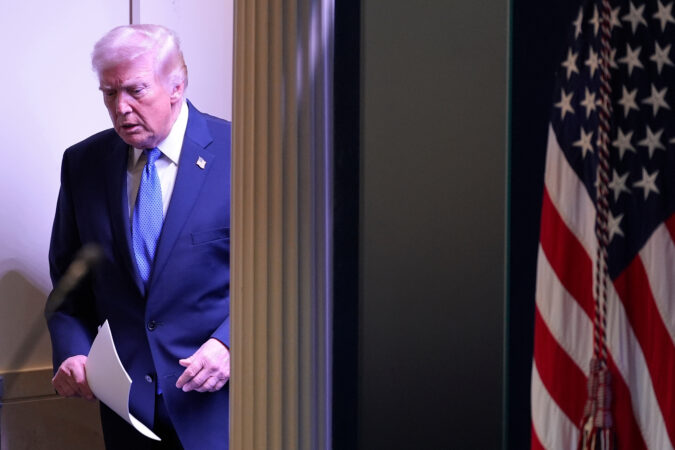
    WASHINGTON — President Donald Trump said Saturday that he was raising the global tariff he wants to impose to 15%, up from 10% he had announced a day earlier.

    Trump said in a social media post on that he was making the decision “Based on a thorough, detailed, and complete review of the ridiculous, poorly written, and extraordinarily anti-American decision on Tariffs issued yesterday,” by the U.S. Supreme Court.

    After the court ruled he didn’t have the emergency power to impose many sweeping tariffs, Trump signed an executive order on Friday night that enabled him to bypass Congress and impose a 10% tax on imports from around the world. The catch is that those tariffs would be limited to just 150 days, unless they are extended legislatively.

    Trump’s post significantly ratcheting up a global tax on imports to the U.S. yet again was the latest sign that despite the court’s check, the Republican president was intent on continuing to wield in an unpredictable manner his favorite tool to for the economy and to apply global pressure. Trump’s shifting announcements over the last year that he was raising and sometimes lowering tariffs with little notice jolted markets and rattled nations.

    Saturday’s announcement seemed to a be a sign that Trump intends to use the temporary global tariffs to continue to flex.

    “During the next short number of months, the Trump Administration will determine and issue the new and legally permissible Tariffs, which will continue our extraordinarily successful process of Making America Great Again,” Trump wrote on his Truth Social media network.

    Under the order Trump signed Friday night, the 10% tariff was scheduled to take effect starting Feb. 24. The White House did not immediately respond to a message inquiring when the president would sign an updated order.

    In addition to the temporary tariffs that Trump wants to set at 15%, the president said Friday that he was also pursuing tariffs through other sections of federal law which require an investigation by the Commerce Department.

    Trump made an unusually personal attack on the Supreme Court judges who ruled against him in a 6-3 vote, including two of those he appointed during his first term, Justices Neil Gorsuch and Amy Coney Barrett. Trump, at a news conference on Friday, said of the two justices: “I think it’s an embarrassment to their families.”

    He was still seething Friday night, posting on social media complaining about Gorsuch, Coney Barrett, and Chief Justice John Roberts, who ruled with the majority and wrote the majority opinion. On Saturday morning, Trump issued another post declaring that his “new hero” was Justice Brett Kavanaugh, who wrote a 63-page dissent. He also praised Justices Clarence Thomas and Samuel Alito, who were in the minority, and said of the three dissenting justices: “There is no doubt in anyone’s mind that they want to, MAKE AMERICA GREAT AGAIN!”

  • U.S. economic growth weaker than thought in fourth quarter with government shutdown, consumer pullback

    U.S. economic growth weaker than thought in fourth quarter with government shutdown, consumer pullback

    WASHINGTON — U.S. economic growth slowed in the final three months of last year, dragged down by the six-week shutdown of the federal government and a pullback in consumer spending.

    The nation’s gross domestic product — the total output of goods and services — increased at a 1.4% annual rate in the fourth quarter, the Commerce Department reported Friday, down from 4.4% in the July-September quarter and 3.8% in the quarter before that.

    The figures point to what could be a more modest pace of growth in the coming quarters, as consumers have taken on more debt and saved less to maintain their spending, a process that may be difficult to sustain. Business investment, other than data centers and equipment dedicated to artificial intelligence, grew at only a moderate pace.

    Still, a measure of underlying growth that focuses on consumer and business spending was mostly healthy at 2.4%, economists said. The sharp slowdown in government outlays because of the shutdown shaved a full percentage point from growth.

    Consumers and companies spent at a “reasonably solid” pace, said Martha Gimbel, executive director of the Budget Lab at Yale and former economist in the Biden White House. “This is not a disastrous report.”

    Also Friday, the Supreme Court struck down many of President Donald Trump’s tariffs, which have lifted inflation slightly and likely discouraged many companies from hiring by raising their costs. At a news conference, Trump quickly promised to reimpose the tariffs under different laws than the one the court invalidated.

    Consumer spending also rose 2.4% in the fourth quarter, a solid increase but notably below the third quarter’s healthy 3.5% gain. Federal government outlays plunged nearly 17% amid the shutdown. That decline should mostly reverse in the coming quarters, however.

    The outsize growth last summer and fall — when the economy expanded at about a 4% annual pace — partly reflected sharply lower imports. Companies ramped up imports in the first quarter of last year to get ahead of President Donald Trump’s tariffs. After boosting growth in the second and third quarters, trade had little impact at the end of last year.

    Diane Swonk, chief economist at KPMG, said the report reflected a “one-legged” economy boosted mostly by artificial intelligence, which is fueling business spending and has also lifted wealth for those households that own stocks and have benefited from rising share prices.

    Many households, however, have had to take on more debt to fuel their spending. The saving rate dropped to just 3.6% in the fourth quarter, the second-lowest figure since August 2008, when the economy was mired in the Great Recession.

    “The economy looks golden on paper, but beneath the surface is lead,” Swonk said.

    Early Friday, before the figures were released, Trump attacked congressional Democrats for shutting down the government last fall. He also reiterated his criticism of Federal Reserve Chair Jerome Powell for not cutting interest rates more quickly.

    “The Democrat Shutdown cost the U.S.A. at least two points in GDP,” Trump posted on his social media site. “That’s why they are doing it, in mini form, again. No Shutdowns! Also, LOWER INTEREST RATES. “Two Late” Powell is the WORST!!!”

    A separate report Friday showed that inflation, according to the Fed’s preferred measure, accelerated in December, as the cost of goods such as furniture, clothes, and groceries picked up. That makes it less likely the Fed will reduce its key interest rate in the coming months.

    Earlier this month, Trump predicted a blowout gain in GDP of more than 5% even if the government shutdown was factored into the figures. Trump has been trying to claim that the economy is at its strongest point in history, even though the new data shows that growth slowed, compared with 2024, following his return to the White House.

    The data arrives before Trump delivers the State of the Union address on Tuesday, where he is expected to say that the economy is booming.

    The report also underscores an odd aspect of the U.S. economy: It is growing steadily, but without creating many jobs. Growth was a solid 2.2% in 2025, yet a government report last week showed that employers added less than 200,000 jobs last year — the fewest since COVID struck in 2020.

    Economists point to several possible reasons for the gap: The Trump administration’s crackdown on immigration has sharply slowed population growth, reducing the number of people available to take jobs. It’s one reason that the unemployment rate rose only slightly — to 4.3% from 4% — last year, even with the nearly non-existent hiring.

    Some businesses may also be holding back on adding jobs out of uncertainty about whether artificial intelligence will enable them to produce more without finding new employees. And the cost of tariffs has reduced many companies’ profits, possibly leading them to cut back on hiring.

    The economy is also unusual right now because growth is solid, inflation has slowed a bit, and unemployment is low, but surveys show that Americans are generally gloomy about the economy. In January, a measure of consumer confidence fell to its lowest level since 2014, yet consumers have kept spending, propelling growth.

    Some of that spending may be disproportionately driven by upper-income consumers, in a phenomenon known as the “K-shaped” economy. Yet data from many large banks suggests lower-income consumers are still raising their spending, even if by not as much.

  • A World Cup FanFest that had been planned near the Statue of Liberty is canceled

    A World Cup FanFest that had been planned near the Statue of Liberty is canceled

    NEW YORK — The New York and New Jersey World Cup host committee has canceled its fan festival that had been planned to be held at Liberty State Park in Jersey City.

    The committee scrapped plans for the weekslong festival that would have been held about 15 miles (24 kilometers) from MetLife Stadium in East Rutherford, where the final will be played on July 19.

    The FanFest was announced in February 2025 by Tammy Murphy, wife of then-New Jersey Gov. Phil Murphy and chair of the New York/New Jersey host committee’s directors, who said it would be open for all 104 matches of the tournament, which starts June 11.

    The committee said in a statement Friday an “expanded network of fan zones and community celebrations across 21 counties in New Jersey will serve as a cornerstone of the region’s official fan engagement program.”

    Mikie Sherrill, Murphy’s successor as governor, announced a $5 million initiative Thursday to fund community World Cup initiatives.

    Tickets for the FanFest had been put on sale in December.

    Plans for a FanFest in New York City’s Corona Park in Queens did not move forward. One is now planed for the U.S. Tennis Association’s Billie Jean King National Tennis Center in Queens from June 17-28 and a fan village is scheduled for Manhattan’s Rockefeller Center from July 4-19.

    Fan fests with large video screens have been a part of each World Cup’s organization since 2006.

    FIFA is running the World Cup itself unlike in the past, when a local organizing committee was in charge of logistics. The host committees are limited to sponsorship agreements in categories not reserved by FIFA.

  • Supreme Court strikes down Trump’s sweeping tariffs, sparking fierce pushback and vow of new levies

    Supreme Court strikes down Trump’s sweeping tariffs, sparking fierce pushback and vow of new levies

    WASHINGTON — The Supreme Court struck down President Donald Trump’s far-reaching global tariffs on Friday, handing him a stinging loss that sparked a furious attack on the court he helped shape.

    Trump said he was “absolutely ashamed” of some justices who ruled 6-3 against him, calling them “disloyal to our Constitution” and “lapdogs.” At one point he even raised the specter of foreign influence without citing any evidence.

    The decision could have ripple effects on economies around the globe after Trump’s moves to remake post-World War II trading alliances by wielding tariffs as a weapon.

    But an unbowed Trump pledged to impose a new global 10% tariff under a law that’s restricted to 150 days and has never been used to apply tariffs before.

    “Their decision is incorrect,” he said. “But it doesn’t matter because we have very powerful alternatives.”

    The court’s ruling found tariffs that Trump imposed under an emergency powers law were unconstitutional, including the sweeping “reciprocal” tariffs he levied on nearly every other country.

    Trump appointed three of the justices on the nation’s highest court during his first term, and has scored a series of short-term wins that have allowed him to move ahead with key policies.

    Tariffs, though, were the first major piece of Trump’s broad agenda to come squarely before the Supreme Court for a final ruling, after lower courts had also sided against the president.

    The majority found that it is unconstitutional for the president to unilaterally set and change tariffs because taxation power clearly belongs to Congress. “The Framers did not vest any part of the taxing power in the Executive Branch,” Chief Justice John Roberts wrote.

    Justices Brett Kavanaugh, Samuel Alito, and Clarence Thomas dissented.

    “The tariffs at issue here may or may not be wise policy. But as a matter of text, history, and precedent, they are clearly lawful,” Kavanaugh wrote. Trump praised his 63-page dissent as “genius.”

    The court majority did not address whether businesses could get refunded for the billions they have collectively paid in tariffs. Many companies, including the big-box warehouse chain Costco, have already lined up in lower courts to demand refunds. Kavanaugh noted the process could be complicated.

    “The Court says nothing today about whether, and if so how, the Government should go about returning the billions of dollars that it has collected from importers. But that process is likely to be a ‘mess,’ as was acknowledged at oral argument,” he wrote.

    The Treasury had collected more than $133 billion from the import taxes the president has imposed under the emergency powers law as of December, federal data show. The impact over the next decade has been estimated at some $3 trillion.

    The tariffs decision doesn’t stop Trump from imposing duties under other laws. Those have more limitations on the speed and severity of Trump’s actions, but the president said they would still allow him to “charge much more” than he had before.

    Vice President JD Vance called the high court decision “lawlessness” in a post on X.

    Questions about what Trump can do next

    Still, the ruling is a “complete and total victory” for the challengers, said Neal Katyal, who argued the case on behalf of a group of small businesses.

    “It’s a reaffirmation of our deepest constitutional values and the idea that Congress, not any one man, controls the power to tax the American people,” he said.

    It wasn’t immediately clear how the decision restricting Trump’s power to unilaterally set and change tariffs might affect trade deals with other countries.

    “We remain in close contact with the U.S. Administration as we seek clarity on the steps they intend to take in response to this ruling,” European Commission spokesman Olof Gill said, adding that the body would keep pushing for lower tariffs.

    The Supreme Court ruling comes after victories on the court’s emergency docket have allowed Trump to push ahead with extraordinary flexes of executive power on issues ranging from immigration enforcement to major federal funding cuts.

    The Republican president had long been vocal about the tariffs case, calling it one of the most important in U.S. history and saying a ruling against him would be an economic body blow to the country. But legal opposition crossed the political spectrum, including libertarian and pro-business groups that are typically aligned with the GOP. Polling has found tariffs aren’t broadly popular with the public, amid wider voter concern about affordability.

    While the Constitution gives Congress the power to levy tariffs, the Trump administration argued that a 1977 law allowing the president to regulate importation during emergencies also allows him to set import duties. Other presidents have used the law dozens of times, often to impose sanctions, but Trump was the first president to invoke it for tariffs.

    “And the fact that no President has ever found such power in IEEPA is strong evidence that it does not exist,” Roberts wrote, using an acronym for the International Emergency Economic Powers Act.

    Trump set what he called “reciprocal” tariffs on most countries in April 2025 to address trade deficits that he declared a national emergency. Those came after he imposed duties on Canada, China, and Mexico, ostensibly to address a drug trafficking emergency.

    A series of lawsuits followed, including a case from a dozen largely Democratic-leaning states and others from small businesses selling everything from plumbing supplies to women’s cycling apparel.

    The challengers argued the emergency powers law doesn’t even mention tariffs and Trump’s use of it fails several legal tests, including one that doomed then-President Joe Biden’s $500 billion student loan forgiveness program.

    Justices reject use of emergency powers for tariffs

    The three conservative justices in the majority pointed to that principle, which is called the major questions doctrine. It holds that Congress must clearly authorize actions of major economic and political significance.

    “There is no exception to the major questions doctrine for emergency statutes,” Roberts wrote. The three liberal justices formed the rest of the majority, but didn’t join that part of the opinion.

    The Trump administration had argued that tariffs are different because they’re a major part of Trump’s approach to foreign affairs, an area where the courts should not be second-guessing the president.

    But Roberts, joined by Justices Neil Gorsuch and Amy Coney Barrett, brushed that aside, writing that the implications for international relations don’t change the legal principle.

    Small businesses celebrated the ruling, with the National Retail Federation saying it provides “much needed certainty.”

    Illinois toy company Learning Resources was among the businesses challenging the tariffs in court. CEO Rick Woldenberg said he expected Trump’s new tariffs but hoped there might be more constraint in the future, both legal and political. “Somebody’s got to pay this bill. Those people that pay the bill are voters,” he said.

    Ann Robinson, who owns Scottish Gourmet in Greensboro, N.C., said she was “doing a happy dance” when she heard the news.

    The 10% baseline tariff on U.K. goods put pressure on Robinson’s business, costing about $30,000 in the fall season. She’s unsure about the Trump administration’s next steps, but said she’s overjoyed for now. “Time to schedule my ‘Say Goodbye to Tariffs’ Sale!”

  • Cuba’s healthcare system pushed to the brink by U.S. fuel blockade, Cuban minister says

    Cuba’s healthcare system pushed to the brink by U.S. fuel blockade, Cuban minister says

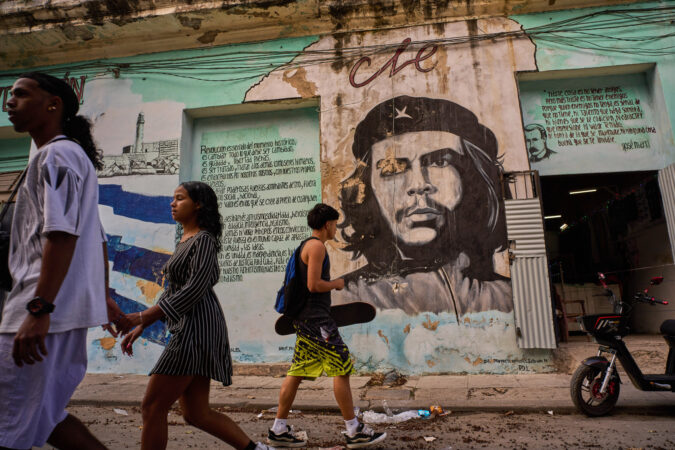
    HAVANA — Cuba’s debilitated healthcare system has been pushed to the brink of collapse by the U.S. blockading the country’s oil supply, a Cuban official said Friday.

    The country’s medical system was already perpetually crisis-stricken along with the island’s economy, with lack of supplies, staff, and medicine long being the norm. But the turmoil has reached a new extreme in recent weeks. Ambulances are struggling to find fuel to respond to emergencies. Persistent outages have plagued deteriorated hospitals. Flights bringing vital supplies have been suspended as Cuba’s government says it’s now unable to refuel airplanes in its airports.

    Experts and some leaders of other countries have warned that the island could be on the verge of a humanitarian crisis.

    In an interview with the Associated Press, Cuba’s Health Minister José Ángel Portal Miranda said that U.S. sanctions are no longer just crippling the island’s economy, they’re threatening “basic human safety.”

    “You cannot damage a state’s economy without affecting its inhabitants,” Portal said. “This situation could put lives at risk.”

    According to Portal, 5 million people in Cuba living with chronic illnesses will see their medications or treatments affected. This includes 16,000 cancer patients requiring radiotherapy and another 12,400 undergoing chemotherapy.

    Cardiovascular care, orthopedics, oncology, and treatment for critically ill patients who require electrical backup are among the most impacted areas, he said. Kidney disease treatments and emergency ambulance services have also been added to the list of impacted services.

    The energy crisis Cuba has been grappling with for years entered new extremes last month when President Donald Trump signed an executive order that would impose a tariff on any country that sells or provides oil to Cuba. It came just weeks after Trump deposed Venezuelan President Nicolás Maduro and announced no more Venezuelan oil would go to Cuba.

    Cuba, which produces only 40% of its own fuel and largely depends on oil to power the island, has long relied on allies like Venezuela, Mexico, and Russia to fill its energy deficit. But those shipments have now dried up.

    Trump has openly said that his larger hope is to push regime change in Cuba by intensifying economic pressure on the island, which has already struggled to cope with decades of U.S. sanctions.

    Cuban people — who the U.S. government has said it seeks to defend — are the ones feeling the harsh ripple effects of the U.S. fuel blockade as hardship mounts every day. Buses have slashed routes, gas has been put under strict rationing and is only being sold in foreign currency, and endemic blackouts have reached a new extreme.

    “There’s been a drastic change since January,” said Aniliet Rodríguez, a 25-year-old pregnant woman who was admitted that month to a maternal care center for an extreme case of anemia. “There’s no bread, no milk for nutrition … . There are no medicines.”

    Cuba’s healthcare system follows a universal and free model, providing local clinics on nearly every block and state subsidized medicine. But it’s also entered a state of crisis in recent years, especially since the COVID-19 pandemic. Thousands of doctors being paid state wages that can hardly afford them a carton of eggs have emigrated from the country and hospitals have rapidly deteriorated.

    Medicine shortages have forced many to buy them on the black market instead.

    Such problems are expected to worsen in the coming weeks even though Cuba’s government has struggled to adjust to the new reality, Portal said. Solar panels have been installed in clinics while authorities prioritize care to children and the elderly.

    But he also said they have placed restrictions on some more energy-reliant technologies like CT scans and laboratory tests, noting doctors will have to rely on more basic methods to treat patients, effectively cutting many off from high levels of care.

    “We are facing an energy siege with direct implications for the lives of Cubans, for the lives of Cuban families,” Portal said.