Category: Nation World News Wires

  • Ukraine, Russia, U.S. to discuss fraught issue of territorial concessions in Abu Dhabi

    Ukraine, Russia, U.S. to discuss fraught issue of territorial concessions in Abu Dhabi

    Ukrainian President Volodymyr Zelensky said the future of Ukraine’s eastern Donbas region will be a key focus as negotiators from Ukraine, Russia, and the United States meet in Abu Dhabi on Friday for talks to end Russia’s nearly four-year full-scale invasion.

    The UAE’s foreign ministry said the talks commenced on Friday and are scheduled to continue over two days “as part of ongoing efforts to promote dialogue and identify political solutions to the crisis.”

    The White House described the talks as productive and said conversations would continue on Saturday.

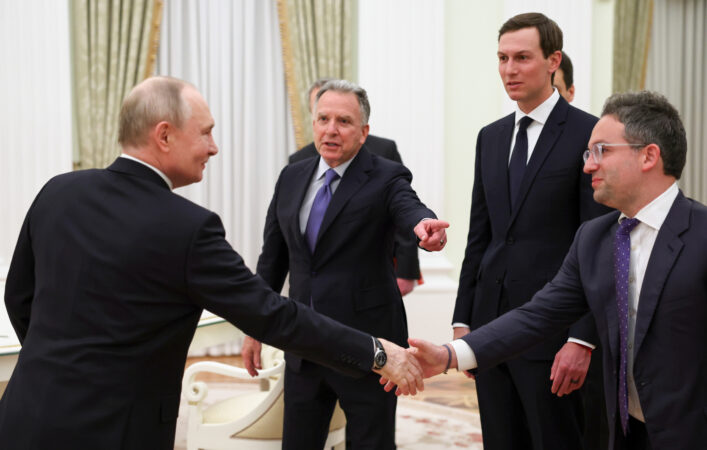
    The three-way talks come hours after Russian President Vladimir Putin discussed the settlement in Ukraine with President Donald Trump’s envoys Steve Witkoff and Jared Kushner during marathon overnight talks. The Kremlin insisted that to reach a peace deal, Kyiv must withdraw its troops from the areas in the east that Russia illegally annexed but never fully captured.

    Zelensky said after meeting with Trump that while the future status of land in eastern Ukraine currently occupied by Russia remains unresolved, the peace proposals are “nearly ready.”

    He also reiterated his openness to establishing a free trade zone under Ukraine’s control in the country’s east, adding that he discussed the proposal with Trump in Davos, Switzerland, on Thursday: “I think it will be positive for our business,” Zelensky told reporters.

    Friday is the first known time that officials from the Trump administration simultaneously meet with negotiators from both Ukraine and Russia. While it’s unclear how the talks will unfold and many obstacles to peace remain, some see it as a sign that the parties are making headway in closing a deal.

    Speaking in his evening address to the nation late Friday, Zelensky said the Ukrainian delegation attending the talks reported to him “almost every hour.”

    “They are discussing the parameters for ending the war,” Zelensky said. ”Now, they should at least get some answers from Russia, and the most important thing is that Russia should be ready to end this war, which it itself started.”

    He added that “it’s too early to draw conclusions about the content of today’s negotiations — we’ll see how the conversation goes tomorrow and what the results will be. It’s not just about Ukraine’s desire to end this war and achieve full security — it’s also about Russia somehow developing a similar desire,” Zelensky said.

    Kremlin insists on ‘solving territorial issue’

    “Today’s meeting will be in the format of Ukraine, Russia and the United States, and afterward the Europeans will certainly receive feedback from us,” Zelensky told journalists in a WhatsApp audio message.

    The Kremlin offered little detail beyond calling Friday’s meeting a “working group on security issues.”

    Kremlin spokesman Dmitry Peskov reaffirmed Friday that Russia’s demand for the Ukrainian troops’ withdrawal from the eastern Donbas region is an “important condition,” adding that there are also other “nuances” on the talks agenda that he wouldn’t specify.

    Kremlin foreign affairs adviser Yuri Ushakov, who participated in Putin’s meeting with Witkoff and Kushner, said “it was reaffirmed that reaching a long-term settlement can’t be expected without solving the territorial issue.” He described the talks with the U.S. as “frank, constructive,” and “fruitful.”

    Russia’s state Tass news agency reported that the discussions included possible buffer zones and control measures.

    Peskov told reporters that the Russian delegation, headed by Adm. Kostyukov, is comprised of military officials. Separately, Putin’s envoy Kirill Dmitriev will hold talks with Witkoff on economic issues, Peskov added.

    The U.S. has confirmed Witkoff and Kushner are attending the talks in Abu Dhabi along with Army Secretary Dan Driscoll and NATO’s top general, U.S. Air Force Gen. Alexus Grynkewich.

    The Ukrainian team includes Rustem Umerov, head of Ukraine’s national security and defense council; Andrii Hnatov, chief of the general staff; and Kyrylo Budanov, head of the presidential office.

    Trump’s meeting with Zelensky

    Hours before the Kremin talks, Zelensky met with Trump behind closed doors for about an hour at the World Economic Forum in Davos, describing the meeting as “productive and meaningful.”

    Speaking to reporters aboard Air Force One as he flew back to Washington from Davos, Trump said his meeting with Zelensky went well, adding that both Putin and Zelensky want to reach a deal and that “everyone’s making concessions” to try to end the war.

    He said the sticking points in talks remain the same as they’ve been during talks held during the past six or seven months, noting “boundaries” was a key issue. “The main hold-up is the same things that’s been holding it up for the last year,” he said.

    Russia’s bigger army has managed to capture about 20% of Ukraine since hostilities began in 2014 and its full-scale invasion of 2022. But the battlefield gains along the roughly 600-mile front line have been costly for Moscow, and the Russian economy is feeling the consequences of the war and international sanctions.

    Ukraine is short of money and, despite significantly boosting its own arms manufacturing, still needs Western weaponry. It is also short-handed on the front line. Its defense minister last week reported some 200,000 troop desertions, and draft-dodging by about 2 million Ukrainians.

    Zelensky blasts European allies

    Addressing the World Economic Forum on Thursday after meeting with Trump, Zelensky listed a litany of grievances and criticisms of Europe.

    He chided Europe for being slow to act on key decisions, spending too little on defense, failing to stop Russia’s ”shadow fleet” of oil tankers that are breaking international sanctions, and balking at using its frozen assets in Europe to finance Ukraine, among other things.

    “Europe looks lost,” Zelensky said in his speech, urging the continent to become a global force. He contrasted Europe’s response with Washington’s bold steps in Venezuela and Iran.

    The former comic actor referred to the movie “Groundhog Day,” in which the main character must relive the same day over and over again.

    “Just last year, here in Davos, I ended my speech with the words: Europe needs to know how to defend itself. A year has passed. And nothing has changed. We are still in a situation where I must say the same words again,” Zelensky said.

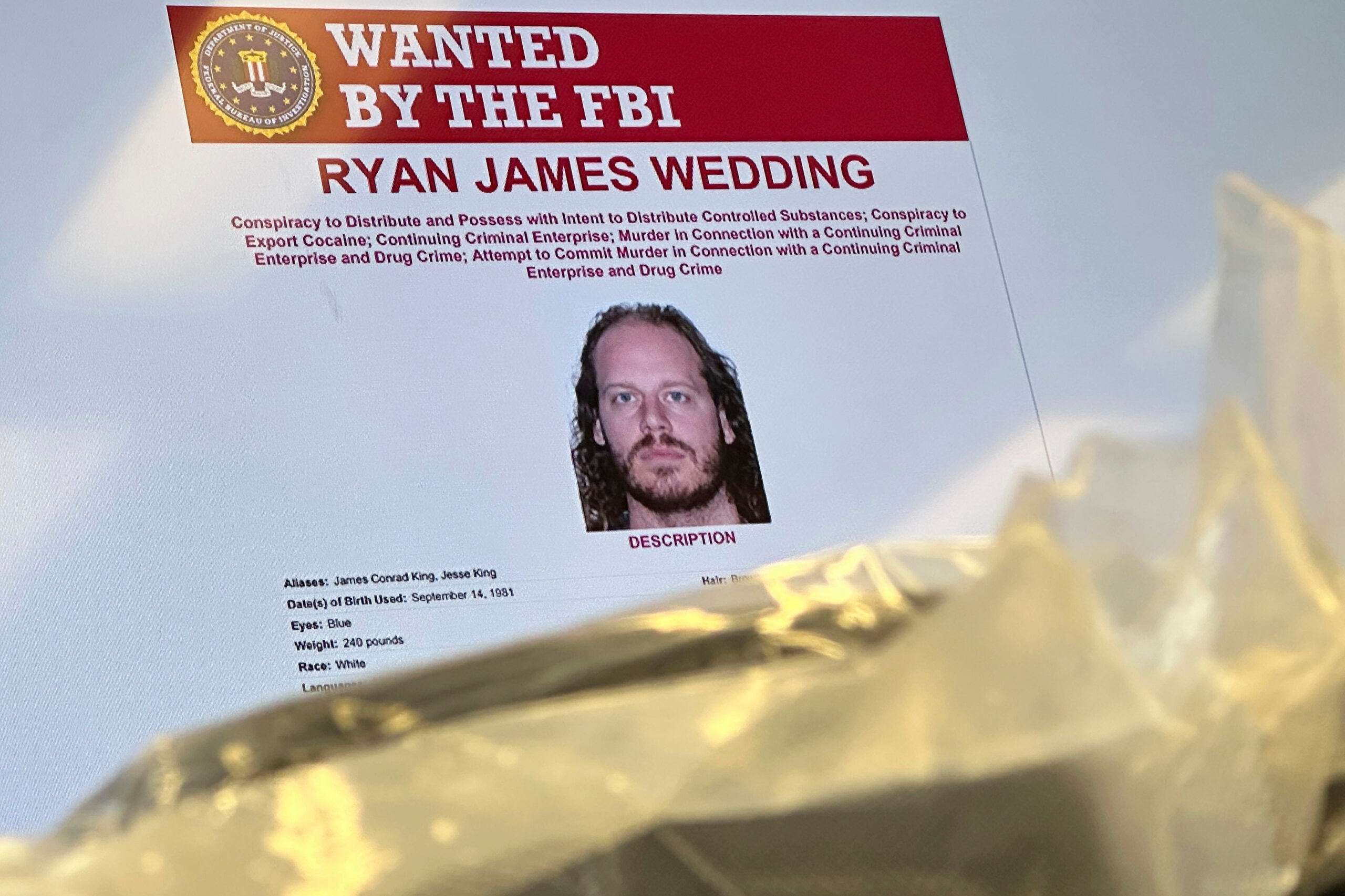
  • Ryan Wedding, a former Olympic snowboarder on the FBI’s ‘Most Wanted’ list, has been arrested

    Ryan Wedding, a former Olympic snowboarder on the FBI’s ‘Most Wanted’ list, has been arrested

    ONTARIO, Calif. — Former Canadian Olympic snowboarder Ryan Wedding, a top FBI fugitive accused of moving some 60 tons of cocaine from Latin America into the United States annually and orchestrating several killings, was arrested in Mexico and then flown to California, officials said Friday.

    Wedding, 44, turned himself in Thursday at the U.S. embassy in Mexico City. FBI Director Kash Patel said his arrest came after U.S. investigators worked with authorities in Mexico, Canada, Colombia, and the Dominican Republic for more than a year.

    Officials say Wedding used semitrucks to move cocaine between Colombia, Mexico, Canada, and Southern California, and they believe he was working under the protection of the Sinaloa Cartel, one of Mexico’s most powerful drug rings. Authorities said his aliases included “El Jefe,” “Public Enemy,” and “James Conrad Kin.”

    “He’s the modern-day El Chapo,” Patel told a news conference in California, comparing Wedding to the legendary former Sinaloa cartel kingpin Joaquín “El Chapo” Guzmán, who is imprisoned in the U.S. after pleading guilty to drug trafficking charges.

    An image of former Canadian Olympic snowboarder Ryan Wedding is displayed on a video monitor along with bricks of cocaine during a news conference at the FBI offices in Los Angeles on Oct. 17, 2024.

    Wedding was previously convicted in the U.S. of conspiracy to distribute cocaine and was sentenced to prison in 2010, federal records show. He now faces charges related to running a multinational drug trafficking ring as well as the killings of a federal witness and three other people.

    It was not immediately known if Wedding had an attorney who could comment on his behalf. He had no lawyers listed in federal court records for the cases pending against him.

    ‘It takes a united front’

    U.S. authorities believe the former Olympian, who competed in a single event for his home country in the 2002 Winter Olympics in Salt Lake City, had been hiding in Mexico for more than a decade before his apprehension.

    Wedding was added to the FBI’s Ten Most Wanted Fugitives list last March, and authorities had offered a $15 million reward for information leading to his arrest and conviction.

    “When you go after a guy like Ryan Wedding, it takes a united front, and that’s what you’re seeing here,” said Patel, who declined to give details about the arrest. He praised Mexico’s government and “global partnerships” for their roles in the operation.

    Mexico’s Security Secretary Omar García Harfuch wrote on X earlier Friday that a Canadian citizen had turned himself in at the U.S. embassy. A member of Mexico’s Security Cabinet later told the Associated Press that individual was Wedding. The person spoke on condition of anonymity because they were not authorized to speak publicly.

    Wedding is expected to appear in federal court Monday, said Akil Davis, assistant director in charge of the FBI field office in Los Angeles.

    Davis said 36 people have been arrested in connection with the drug ring Wedding is accused of running, and authorities seized large volumes of drugs, weapons, and cash, as well as millions of dollars worth of automobiles, motorcycles, artwork, and jewelry from Wedding and others charged in the case. Rewards of up to $2 million are available for information leading to additional arrests and convictions.

    Charges of ordering killings

    Wedding was indicted in 2024 in the U.S. on federal charges of running a criminal enterprise, murder, conspiring to distribute cocaine, and other crimes. Prosecutors said Wedding’s drug ring moved large shipments of cocaine from Colombia through Mexico and California to Canada and other U.S. locations.

    The murder charges accuse Wedding of directing the 2023 killings of two members of a Canadian family in retaliation for a stolen drug shipment, and for ordering a killing over a drug debt in 2024.

    Last November, U.S. Attorney General Pam Bondi announced that Wedding had also been indicted on charges of orchestrating the killing of a witness in Colombia to help him avoid extradition to the U.S.

    Authorities said Wedding and co-conspirators used a Canadian website called “The Dirty News” to post a photograph of the witness so he could be identified and killed. The witness was then followed to a restaurant in Medellín in January and shot in the head.

    Wedding faces separate drug trafficking charges in Canada that date back to 2015, according to the Royal Canadian Mounted Police.

    Second FBI fugitive also apprehended

    Patel identified a second apprehended fugitive as Alejandro Rosales Castillo, a 27-year-old U.S. citizen charged with murder in the 2016 killing of a North Carolina woman. He also faces a federal charge of unlawful flight to avoid prosecution. According to the FBI, Castillo was arrested a week ago in Mexico.

    Mexico has increasingly sent detained cartel members to the U.S. as the country attempts to offset mounting threats by President Donald Trump, who said last month U.S. forces “will now start hitting land” south of the border to target drug trafficking rings.

  • U.S. completes withdrawal from World Health Organization

    U.S. completes withdrawal from World Health Organization

    NEW YORK — The U.S. has finalized its withdrawal from the World Health Organization, one year after President Donald Trump announced America was ending its 78-year-old commitment, federal officials said Thursday.

    But it’s hardly a clean break.

    The U.S. owes about $280 million to the global health agency, according to WHO. And Trump administration officials acknowledge that they haven’t finished working out some issues, such as lost access to data from other countries that could give America an early warning of a new pandemic.

    The withdrawal will hurt the global response to new outbreaks and will hobble the ability of U.S. scientists and pharmaceutical companies to develop vaccines and medicines against new threats, said Lawrence Gostin, a public health law expert at Georgetown University.

    “In my opinion, it’s the most ruinous presidential decision in my lifetime,” he said.

    The WHO is the United Nations’ specialized health agency and is mandated to coordinate the response to global health threats, such as outbreaks of mpox, Ebola, and polio. It also provides technical assistance to poorer countries; helps distribute scarce vaccines, supplies, and treatments; and sets guidelines for hundreds of health conditions, including mental health and cancer.

    Nearly every country in the world is a member.

    Trump cited COVID-19 in pulling U.S. from WHO

    U.S. officials helped lead the WHO’s creation, and America has long been among the organization’s biggest donors, providing hundreds of millions of dollars and hundreds of staffers with specialized public health expertise.

    On average, the U.S. pays $111 million a year in member dues to the WHO and roughly $570 million more in annual voluntary contributions, according to the U.S. Department of Health and Human Services.

    In an executive order issued right after taking office, Trump said the U.S. was withdrawing from WHO due to the organization’s mishandling of the COVID-19 pandemic and other global health crises. He also cited the agency’s “failure to adopt urgently needed reforms” and its “inability to demonstrate independence from the inappropriate political influence of WHO member states.”

    WHO, like other public health organizations, made costly mistakes during the pandemic, including at one point advising people against wearing masks. It also asserted that COVID-19 wasn’t airborne, a stance it didn’t officially reverse until 2024.

    Another Trump administration complaint: None of WHO’s chief executives — there have been nine since the organization was created in 1948 — have been Americans. Administration officials view that as unfair given how much the WHO relies on U.S. financial contributions and on U.S. Centers for Disease Control and Prevention personnel.

    Public health experts say U.S. exit will hobble responses to threats

    Experts say the U.S. exit could cripple numerous global health initiatives, including the effort to eradicate polio, maternal and child health programs, and research to identify new viral threats.

    Ronald Nahass, president of the Infectious Diseases Society of America, called the U.S. withdrawal “shortsighted and misguided” and “scientifically reckless.”

    The U.S. has ceased official participation in WHO-sponsored committees, leadership bodies, governance structures and technical working groups. That would seem to include the WHO group that assesses what flu strains are circulating and makes critical decisions about updating flu shots.

    It also signals the U.S. is no longer participating in global flu information-sharing that guides vaccine decisions.

    Such disease intelligence has helped Americans be “at the front of the line” when new outbreaks occur and new vaccines and medicines are quickly needed to counteract them and save lives, Gostin said.

    Trump administration officials say they already have public health relationships with many countries and are working to ensure direct sharing of that kind of information, rather than having WHO serve as a middleman. But U.S. officials did not give specifics about how many such arrangements are in place.

    Gostin, an expert on international public health treaties and collaborations, said it’s unlikely the U.S. will reach agreements with more than a couple dozen countries.

    Many emerging viruses are first spotted in China, but “is China going to sign a contract with the United States?” Gostin said. “Are countries in Africa going to do it? Are the countries Trump has slapped with a huge tariff going to send us their data? The claim is almost laughable.”

    Gostin also believes Trump overstepped his authority in pulling out of WHO. The U.S. joined the organization through an act of Congress and it is supposed to take an act of Congress to withdraw, he argued.

    U.S. still owes money, WHO says

    The U.S. is legally required to give notice one year in advance of withdrawal — which it did — but also to pay any outstanding financial obligations.

    The U.S. has not paid any of its dues for 2024 and 2025, leaving a balance of about $280 million at current exchange rates, according to WHO.

    An administration official denied that requirement Thursday, saying the U.S. had no obligation to pay prior to withdrawing as a member.

  • U.K.’s Starmer slams Trump remarks on non-U.S. NATO troops in Afghanistan as ‘insulting’ and ‘appalling’

    U.K.’s Starmer slams Trump remarks on non-U.S. NATO troops in Afghanistan as ‘insulting’ and ‘appalling’

    LONDON — British Prime Minister Keir Starmer has signaled that President Donald Trump should apologize for his false assertion that troops from non-U.S. NATO countries avoided the front line during the Afghanistan war, describing Trump’s remarks as “insulting” and “appalling.”

    Trump said that he wasn’t sure NATO would be there to support the United States if and when requested, provoking outrage and distress across the United Kingdom on Friday, regardless of individuals’ political persuasion.

    “We’ve never needed them, we have never really asked anything of them,” Trump said of non-U.S. troops in an interview with Fox News in Davos, Switzerland, on Thursday. ”You know, they’ll say they sent some troops to Afghanistan, or this or that, and they did, they stayed a little back, a little off the front lines.”

    In October 2001, nearly a month after the Sept. 11 attacks, the U.S. led an international coalition in Afghanistan to destroy al-Qaeda, which had used the country as its base, and the group’s Taliban hosts. Alongside the U.S. were troops from dozens of countries, including from NATO, whose mutual-defense mandate had been triggered for the first time after the attacks on New York and Washington.

    U.K. sacrifice

    In the U.K., the reaction to Trump’s comments was raw.

    Starmer paid tribute to the 457 British personnel who died and to those have been left with profound life-long injuries.

    “I will never forget their courage, their bravery and the sacrifice they made for their country,” Starmer said. “I consider President Trump’s remarks to be insulting and frankly appalling and I am not surprised they have caused such hurt to the loved ones of those who were killed or injured and, in fact, across the country.”

    Prince Harry weighed in too, saying the “sacrifices” of British soldiers during the war “deserve to be spoken about truthfully and with respect.”

    “Thousands of lives were changed forever,” said Harry, who undertook two tours of duty in Afghanistan in the British Army. “Mothers and fathers buried sons and daughters. Children were left without a parent. Families are left carrying the cost.”

    After 9/11, then Prime Minister Tony Blair said that the U.K. would “stand shoulder to shoulder” with the U.S. in response to the al-Qaeda attacks. British troops took a key role in many operations during the Afghan war until their withdrawal in 2014, particularly in Helmand Province in the south of the country. American troops remained in Afghanistan until their chaotic withdrawal in 2021 when the Taliban returned to power.

    More than 150,000 British troops served in Afghanistan in the years after the invasion, the largest contingent after the American one.

    Ben Obese-Jecty, a lawmaker who served in Afghanistan as a captain in the Royal Yorkshire Regiment, said that it was “sad to see our nation’s sacrifice, and that of our NATO partners, held so cheaply by the president of the United States.”

    Trump and Vietnam

    Anger was further fueled by the fact that the comments came from someone who didn’t serve in the Vietnam War at a time when he was eligible.

    “It’s hugely ironic that someone who allegedly dodged the draft for the Vietnam War should make such a disgraceful statement,” said Stephen Stewart, author of The Accidental Soldier, an account of his time embedded with British troops in Afghanistan.

    Trump received a deferment that allowed him to not serve in Vietnam because of bone spurs, but he has been unable to remember in which foot, leading to accusations of draft dodging.

    Repeated NATO slights

    It wasn’t the first time that Trump downplayed the commitment of NATO countries over the past few days. It has been one of his pivotal lines of attack as he escalated his threats to seize Greenland, a semiautonomous territory belonging to Denmark.

    Trump’s allegation that NATO countries won’t be there when requested stands in stark contrast to reality.

    The only time Article 5 of NATO’s founding treaty has been used was in response to the 9/11 attacks on the U.S. The article is the key mutual defense clause, obliging all member countries to come to the aid of another member whose sovereignty or territorial integrity might be under threat.

    “When America needed us after 9/11 we were there,” former Danish platoon commander Martin Tamm Andersen said.

    Denmark has been a stalwart ally of the U.S. in Afghanistan, with 44 Danish soldiers killed there — the highest per capita death toll among coalition forces. Eight more died in Iraq.

    The latest controversy surrounding Trump comes at the end of a week when he has faced criticism — and pushback — for his threats to Greenland.

    Trump also threatened to slap tariffs on European nations opposed to his ambitions to annex Greenland, which raised questions over the future of NATO. And though Trump backed down after a meeting with NATO Secretary-General Mark Rutte in which he said they formed the “framework” for a deal over Arctic security, trans-Atlantic relations have taken a hit.

    His latest comments are unlikely to improve relations.

    Diane Dernie, whose son Ben Parkinson suffered horrific injuries when a British Army Land Rover hit a mine in Afghanistan in 2006, said that Trump’s latest comments were “the ultimate insult” and called on Starmer to stand up to Trump over them.

    “Call him out,” she said. “Make a stand for those who fought for this country and for our flag, because it’s just beyond belief.”

    Taking her up on that, Starmer said “what I say to Diane is, if I had misspoken in that way or said those words, I would certainly apologize and I’d apologize to her.”

  • An ancient forest in Ecuador is the last stand for a tiny hummingbird facing extinction

    An ancient forest in Ecuador is the last stand for a tiny hummingbird facing extinction

    YANACOCHA RESERVE, Ecuador — Deep in the Ecuadorian Andes, an ancient forest stands as a final sanctuary against the encroachment of human activity. This is the Yanacocha Reserve, the last refuge for the Black-breasted Puffleg (Eriocnemis nigrivestis), a tiny hummingbird teetering on the edge of extinction.

    Measuring just 3.5 inches, this emblematic bird of Quito is one of the most threatened species on the planet. According to the International Union for Conservation of Nature, its global population has dwindled to between 150 and 200 birds.

    Founded 25 years ago by the Jocotoco Foundation, the Yanacocha Reserve has become a centerpiece for Andean biodiversity.

    “We realized we were conserving an entire ecosystem, not just one species,” conservationist Paola Villalba told the Associated Press.

    The bird is easily identified by the striking white “trousers” of feathers around its legs, which contrast sharply with its deep, metallic black chest and bronze-green wings. Despite its beauty, its survival is at risk as high-altitude forests are cleared for grazing and agriculture.

    Shirley Farinango, of the Birds and Conservation Foundation, notes that the pressure is most intense because the puffleg occupies a narrow ecological niche between 9,800 and 11,400 feet above sea level. This specific elevation, she said, is “prime territory” to be converted to agricultural land.

    On the slopes of the Pichincha volcano, 27 miles northwest of Quito, conservationists are now racing to restore this cloud-shrouded forest.

    For the “smallest fairies” of the Andes, these dense trees are more than just a habitat — they are their last stand.

  • TikTok finalizes a deal to form a new American entity

    TikTok finalizes a deal to form a new American entity

    TikTok has finalized a deal to create a new American entity, avoiding the looming threat of a ban in the United States that has been in discussion for years on the platform now used by more than 200 million Americans.

    The social video platform company signed agreements with major investors including Oracle, Silver Lake, and the Emirati investment firm MGX to form the new TikTok U.S. joint venture. The new version will operate under “defined safeguards that protect national security through comprehensive data protections, algorithm security, content moderation and software assurances for U.S. users,” the company said in a statement Thursday. American TikTok users can continue using the same app.

    President Donald Trump praised the deal in a Truth Social post, thanking Chinese leader Xi Jinping specifically “for working with us and, ultimately, approving the Deal.” Trump add that he hopes “that long into the future I will be remembered by those who use and love TikTok.”

    Adam Presser, who previously worked as TikTok’s head of operations and trust and safety, will lead the new venture as its CEO. He will work alongside a seven-member, majority-American board of directors that includes TikTok’s CEO Shou Chew.

    The deal ends years of uncertainty about the fate of the popular video-sharing platform in the United States. After wide bipartisan majorities in Congress passed — and President Joe Biden signed — a law that would ban TikTok in the U.S. if it did not find a new owner in the place of China’s ByteDance, the platform was set to go dark on the law’s January 2025 deadline. For a several hours, it did. But on his first day in office, President Donald Trump signed an executive order to keep it running while his administration sought an agreement for the sale of the company.

    “China’s position on TikTok has been consistent and clear,” Guo Jiakun, a Chinese Foreign Ministry spokesperson in Beijing, said Friday about the TikTok deal and Trump’s Truth Social post, echoing an earlier statement from the Chinese embassy in Washington.

    Apart from an emphasis on data protection, with U.S. user data being stored locally in a system run by Oracle, the joint venture will also focus on TikTok’s algorithm. The content recommendation formula, which feeds users specific videos tailored to their preferences and interests, will be retrained, tested and updated on U.S. user data, the company said in its announcement.

    The algorithm has been a central issue in the security debate over TikTok. China previously maintained the algorithm must remain under Chinese control by law. But the U.S. regulation passed with bipartisan support said any divestment of TikTok must mean the platform cuts ties — specifically the algorithm — with ByteDance. Under the terms of this deal, ByteDance would license the algorithm to the U.S. entity for retraining.

    The law prohibits “any cooperation with respect to the operation of a content recommendation algorithm” between ByteDance and a new potential American ownership group, so it is unclear how ByteDance’s continued involvement in this arrangement will play out.

    “Who controls TikTok in the U.S. has a lot of sway over what Americans see on the app,” said Anupam Chander, a professor of law and technology at Georgetown University.

    Oracle, Silver Lake, and MGX are the three managing investors, each holding a 15% share. Other investors include the investment firm of Michael Dell, the billionaire founder of Dell Technologies. ByteDance retains 19.9% of the joint venture.

  • People in Gaza dig through garbage for things to burn to keep warm — a far cry from Trump’s vision

    People in Gaza dig through garbage for things to burn to keep warm — a far cry from Trump’s vision

    CAIRO — Desperate Palestinians at a garbage dump in a Gaza neighborhood dug with their bare hands for plastic items to burn to keep warm in the cold and damp winter in the enclave, battered by two years of the Israel-Hamas war.

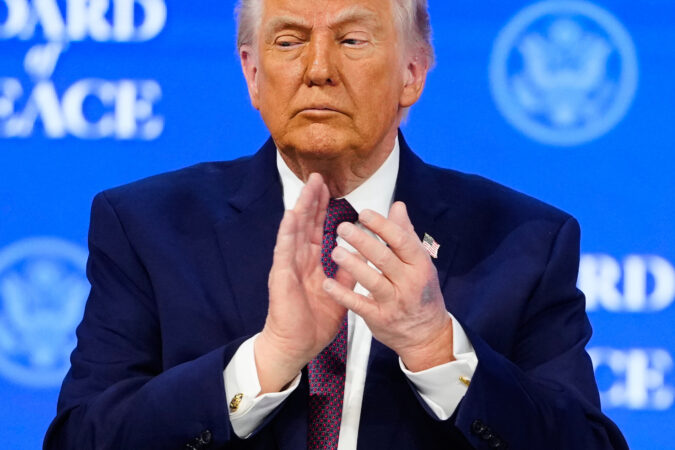
    The scene in the Muwasi area of the city of Khan Younis contrasted starkly with the vision of the territory projected by world leaders gathered in Davos, Switzerland, where they inaugurated President Donald Trump’s Board of Peace that will oversee Gaza.

    At the World Economic Forum in Davos, Trump claimed that “record levels” of humanitarian aid had entered Gaza since the October start of a U.S.-brokered ceasefire deal. His son-in law, Jared Kushner, and envoy Steve Witkoff triumphantly touted the devastated territory’s development potential.

    A starkly different reality

    In Gaza, months into the truce, hundreds of thousands of Palestinians still languish in displacement camps, sheltering in tents and war-ravaged buildings, unable to protect them from the temperatures dropping below 50 degrees Fahrenheit at night.

    Despite the ceasefire, there are still recurring deadly strikes in Gaza. Israeli tank shelling on Thursday killed four Palestinians east of Gaza City, according to Mohamed Abu Selmiya, director of the Shifa Hospital, where the bodies were taken. The Israeli military did not immediately comment.

    Some in Gaza expressed skepticism about Trump’s Board of Peace and whether it would change their grim lives.

    “This committee includes Israelis. I don’t understand, as citizens, how can we understand this situation?” Rami Ghalban, who was displaced from Khan Younis, said Thursday. “The Israelis that inflicted suffering upon us.”

    But grappling with what’s ahead seems futile for others.

    “We are in a position where there are no alternatives,” said Fathi Abu Sultan. “Our situation is miserable.”

    While aid flow into Gaza has significantly increased since the ceasefire, residents say fuel and firewood are in short supply. Prices are exorbitant and searching for firewood is dangerous. Two 13-year-old boys were shot and killed by Israeli forces on Wednesday as they tried to collect firewood, hospital officials said.

    At the Nasser hospital in southern Gaza, dozens of Palestinians gathered Thursday to mourn three Palestinian journalists — including a frequent contributor to Agence France-Presse — killed the day before when an Israeli strike hit their vehicle, according to Gaza health officials.

    The Israeli military said the strike came after it spotted suspects who were operating a drone that posed a threat to its troops.

    Survival means digging through garbage

    For Sanaa Salah, who lives in a tent with her husband and six kids, starting a fire is a critical daily chore so they can cook and keep warm. Her family has barely has enough clothes to keep them warm.

    She said the family cannot afford to buy firewood or gas, and that they are aware of the dangers of burning plastic but have no other choice.

    “Life is very hard,” she said as her family members threw plastic and paper into a fire to keep it burning. “We cannot even have a cup of tea.”

    “This is our life,” she said. “We do not sleep at night from the cold.”

    Firewood is just too expensive, said Aziz Akel. His family has no income and they can’t pay the 7 or 8 shekels (about $2.50) it would cost.

    “My house is gone and my kids were wounded,” he said.

    His daughter, Lina Akel, said he leaves the family’s tent early each morning to look for plastic in the garbage to burn — “the basics of life.”

    Mourners bid farewell to 3 Palestinian journalists

    The three journalists killed Wednesday were filming near a displacement camp in central Gaza, managed by an Egyptian government committee, said Mohammed Mansour, the committee’s spokesperson.

    One of them, Abdul Raouf Shaat, a regular contributor to AFP, was not on assignment for the news agency at the time, it said. A statement from AFP demanded a full investigation.

    Israel has barred international journalists from entering to cover the war, aside from rare guided tours. News organizations rely largely on Palestinian journalists and residents in Gaza to show what is happening on the ground.

    Mourners on Thursday wept over the journalists’ bodies, which were covered in body bags and had press vests placed on their chests.

    More than 470 people have been killed by Israeli fire in Gaza since the ceasefire began in October, according to Gaza’s health ministry. At least 77 have been killed by Israeli gunfire near a ceasefire line that splits the territory between Israeli-held areas and most of Gaza’s Palestinian population, the ministry says.

    The ministry, which is part of the Hamas-led government, maintains detailed casualty records that are seen as generally reliable by U.N. agencies and independent experts.

    What’s next in Gaza?

    While Trump tries to build support for his Board of Peace by mapping out a future for Gaza, more details about what’s ahead were emerging Thursday.

    Ali Shaath, the head of a new, future technocratic government in Gaza, said the Rafah border crossing will open in both directions next week on the Gaza-Egypt border. Israel said in early December it would open the Gaza side of the crossing but has yet to do so.

    Reopening the crossing would make it easier for Palestinians in Gaza to seek medical treatment or visit family in Egypt.

    Russian President Vladimir Putin wants to send $1 billion to the Board of Peace for humanitarian purposes in Gaza if the U.S. unblocks the money. He met with Palestinian President Mahmoud Abbas in Moscow.

    “We believe that only forming and proper functioning of the Palestinian state can lead to a final settlement of the Middle East conflict,” Putin said.

  • House Republicans barely defeat war powers resolution to check Trump’s military action in Venezuela

    House Republicans barely defeat war powers resolution to check Trump’s military action in Venezuela

    WASHINGTON — The House rejected a Democratic-backed resolution Thursday that would have prevented President Donald Trump from sending U.S. military forces to Venezuela after a tied vote on the legislation fell just short of the majority needed for passage.

    Democrats forced the vote on the war powers resolution to direct the president to remove U.S. troops from the South American nation, bringing up a debate in the Republican-controlled Congress on Trump’s aggressions in the Western Hemisphere.

    The Trump administration told senators last week that there are no U.S. troops on the ground in Venezuela and committed to getting congressional approval before launching major military operations there. But Democrats argued that the resolution is necessary after the U.S. raid to capture Venezuelan leader Nicolás Maduro and since Trump has stated plans to control the country’s oil industry for years to come.

    Thursday’s vote was the latest test in Congress of how much leeway Republicans will give a president who campaigned on removing the U.S. from foreign entanglements but has increasingly reached for military options to impose his will in the Western Hemisphere. So far, almost all Republicans have declined to put checks on Trump through the war powers votes.

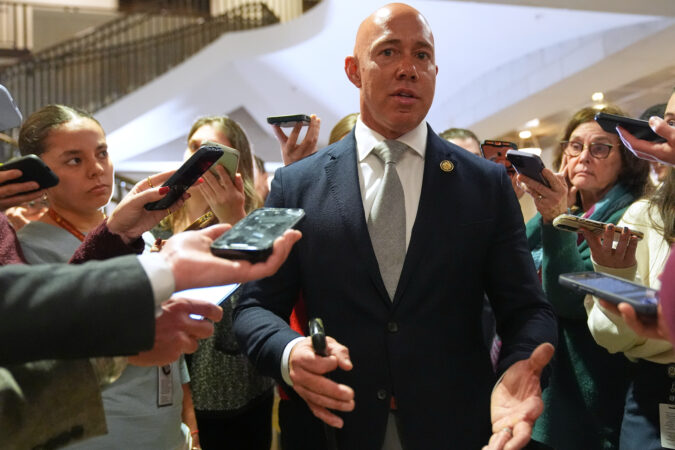
    Rep. Brian Mast, the Republican chair of the House Armed Services Committee, accused Democrats of bringing the war powers resolution to a vote out of “spite” for Trump.

    “It’s about the fact that you don’t want President Trump to arrest Maduro, and you will condemn him no matter what he does, even though he brought Maduro to justice with possibly the most successful law enforcement operation in history,” Mast added.

    Still, Democrats stridently argued that Congress needs to assert its role in determining when the president can use wartime powers. They have been able to force a series of votes in both the House and Senate as Trump in recent months ramped up his campaign against Maduro and set his sights on other conflicts overseas.

    “Donald Trump is reducing the United States to a regional bully with fewer allies and more enemies,” New York Rep. Gregory Meeks, the top Democrat on the House Foreign Affairs Committee, said during a floor debate. “This isn’t making America great again. It’s making us isolated and weak.”

    Last week, Senate Republicans were only able to narrowly dismiss a Venezuela war powers resolution after the Trump administration persuaded two Republicans to back away from their earlier support. As part of that effort, Secretary of State Marco Rubio committed to a briefing next week before the Senate Foreign Relations Committee.

    Response to Trump’s foreign policy

    When the House voted on a similar Venezuela war powers resolution last month, three Republican House members — Reps. Don Bacon of Nebraska, Thomas Massie of Kentucky, and Marjorie Taylor Greene of Georgia, who has since resigned from Congress — joined Democrats in voting for the legislation. Trump has since carried out the attack on Venezuela to seize Maduro, as well as turned his ambitions to possessing Greenland.

    Trump’s insistence that the U.S. will possess Greenland over the objections of Denmark, a NATO ally, has alarmed some Republicans on Capitol Hill. They have mounted some of the most outspoken objections to almost anything the president has done since taking office.

    Trump this week backed away from military and tariff threats against European allies as he announced that his administration was working with NATO on a “framework of a future deal” on Arctic security.

    But Bacon still expressed frustration with Trump’s aggressive foreign policy and planned to vote for the war powers resolution, even though it only applies to Venezuela.

    “I’m tired of all the threats,” he said.

    Trump’s recent military actions — and threats to do more — have reignited a decades-old debate in Congress over the War Powers Act, a law passed in the early 1970s by lawmakers looking to claw back their authority over military actions.

    The war powers debate

    The War Powers Resolution was passed in the Vietnam War era as the U.S. sent troops to conflicts throughout Asia. It attempted to force presidents to work with Congress to deploy troops if there hasn’t already been a formal declaration of war.

    Under the legislation, lawmakers can also force votes on legislation that directs the president to remove U.S. forces from hostilities.

    Presidents have long tested the limits of those parameters, and Democrats argue that Trump in his second term has pushed those limits farther than ever.

    The Trump administration left Congress in the dark ahead of the surprise raid to capture Maduro. It has also used an evolving set of legal justifications to blow up alleged drug boats and seize sanctioned oil tankers near Venezuela.

    Democrats question benefits from Venezuelan oil licenses

    As the Trump administration oversees the sale of Venezuela’s petroleum worldwide, Senate Democrats are questioning who is benefitting from the contracts.

    In one of the first transactions, the U.S. granted Vitol, the world’s largest independent oil broker, a license worth roughly $250 million. A senior partner at Vitol, John Addison, gave roughly $6 million to Trump-aligned political action committees during the presidential election, according to donation records compiled by OpenSecrets.

    “Congress and the American people deserve full transparency regarding any financial commitments, promises, deals, or other arrangements related to Venezuela that could favor donors to the President’s campaign and political operation,” 13 Democratic senators wrote to White House Chief of Staff Susie Wiles Thursday in a letter led by Democratic Sen. Adam Schiff of California.

    The White House has said it is safeguarding the South American country’s oil for the benefit of both the people of Venezuela and the U.S.

  • Trump appointees ask about White House ballroom’s design and scale — and want to see models

    Trump appointees ask about White House ballroom’s design and scale — and want to see models

    Some of Donald Trump’s handpicked appointees who have a say in his White House ballroom project asked questions Thursday about its “immense” design and scale, even as they broadly endorsed the president’s vision for a massive expansion.

    The Commission on Fine Arts discussion, which also included a brief review of mostly negative public comments on Trump’s plans, revealed no immediate threat to Trump’s overall idea, which historic preservationists are separately asking a federal court to slow down. But it demonstrated the sensitivity and political controversy involved since the president approved the demolition of the East Wing after unveiling designs that would more than double the square footage the White House as it was before.

    “This is an important thing to the president. It’s an important thing to the nation,” said the new Fine Arts chairman, Rodney Mims Cook Jr., in the panel’s first public hearing on Trump’s proposal.

    “You can’t have the United States of America entertaining people in tents,” Cook said, noting that administrations long before Trump complained about having to host State Dinners and major events in temporary structures. The question, the chairman added, is “if we can do this in a way that this building remains” true to its fundamental character and still “take care of what the president wants us to do.”

    3D scale models requested by Fine Arts commissioners

    After lead architect Shalom Baranes presented renderings during Thursday’s online meeting, commissioners asked him to return to a future, in-person session with 3D scale models of the White House complex with the proposed addition. Baranes said an in-person presentation, per commissioners’ request, also would include include scale models of the Treasury Department building to the east of the presidential mansion and the Eisenhower Executive Office Building to the west.

    Baranes and commissioners alike came into meeting aware of concerns about the project’s scale and whether it can be incorporated well enough into the White House, even as Trump remains undeterred.

    “President Trump is working 24/7 to Make America Great Again, including his historic beautification of the White House,” said West Wing spokesman Davis Ingle.

    The total addition would be almost 90,000 square feet, Baranes confirmed, with 22,000 of that the ballroom itself. The White House was about 55,000 square feet before the East Wing, first built in 1902 and expanded in the 1940s, was demolished.

    Thomas Luebke, the commission’s executive director, told the group that public comments received online ahead of the meeting were “almost all” negative “in some way,” criticizing the process, the design or both.

    Luebke read one comment that he described as “more positive” because it complimented the design and style shown in renderings. Yet even that commenter, Luebke said, wrote that “the scale appears oversized, making the main structure dominated.” Nodding to the criticism, Baranes emphasized that current plans call for the addition’s north boundary to be set back from the existing North Portico — essentially the front porch — and for the top of the new structure to be even with the primary facade of the White House and its residence.

    The view of the White House

    Baranes, whose firm has worked on other federal buildings, said this is to ensure the view of the White House from Pennsylvania Avenue would not change fundamentally. A new east side colonnade connecting the main structure to the ballroom addition also would be two stories, rather than the single story that was demolished. This would add to the continuity of the new design, Baranes said.

    He added that architects have contemplated a similar second story atop the West Wing to address concerns about symmetry. But he said during questioning that is merely a concept. There has been no structural analysis of the existing West Wing, he said, to determine if it could support another level.

    Some commissioners said they appreciated Baranes’ effort to address scale and symmetry on the north side of the White House, which front Pennsylvania Avenue. But they noted that still doesn’t address how much the design might change the view from the South Lawn. Renderings show a 10-column, multistory porch on the south side of the addition that looks more like the Treasury Department edifice than any part of the White House.

    “It’s immense,” Cook said to Baranes. “If the president just wants cover, do you think you might be able to tone down that element?”

    The architect answered: “We looked at ways of covering it at different scales with different numbers of columns, and there’s a president’s desire to proceed with this one.”

    The meeting Thursday was part of a series of meetings and public hearings with the Fine Arts panel and the National Capital Planning Commission, both of which have roles in assessing and approving federal construction projects in Washington.

    A judge could suspend the project

    Historic preservationists are seeking a court order for the Trump administration to suspend construction of its $400 million ballroom project. U.S. District Judge Richard Leon didn’t rule from the bench on Thursday after hearing arguments from attorneys for the government and the National Trust for Historic Preservation.

    Leon, who was nominated to the bench by Republican President George W. Bush, said he hopes to issue a decision sometime next month on the group’s request for a preliminary injunction. But he acknowledged that his decision likely will be appealed no matter how he rules.

    Plaintiff’s attorney Thad Heuer said the president — a temporary occupant of the White House — needed and didn’t have congressional approval before embarking on a project of this magnitude and cost.

    “He isn’t the landlord,” Heuer said. “He is a steward.”

    Government lawyer Jacob Roth argued that the president has the statutory authority and broad discretion to modify the White House. Stopping in the middle of the project would create problems, including security concerns for the president, Roth said.

    “I don’t think there’s any question that this modernization is in the public’s interest,” he told the judge.

  • House approves final spending bills as Democrats denounce ICE funding

    House approves final spending bills as Democrats denounce ICE funding

    WASHINGTON — The House passed this year’s final batch of spending bills on Thursday as lawmakers, still smarting from last fall’s record 43-day shutdown, worked to avoid another funding lapse for a broad swath of the federal government.

    The four bills total about $1.2 trillion in spending and now move to the Senate, with final passage needed next week before a Jan. 30 deadline to avoid a partial government shutdown.

    Three of the bills had broad, bipartisan support. They funded Defense and various other departments, including Education, Transportation and Health and Human Services. A fourth bill funding the Department of Homeland Security was hotly disputed as Democrats voiced concerns that it failed to restrain President Donald Trump’s mass deportation efforts.

    Republicans were able to overcome the Democratic objections and muscle the Homeland Security bill to passage in a 220-207 vote. The broader package, which funds a 3.8% pay raise for the military, passed in a 341-88 vote.

    Before the votes, House Democratic leaders announced their opposition to the Homeland Security bill as the party’s rank-and-file demanded a more forceful stand in response to the Republican president’s immigration crackdown. Trump’s efforts have recently centered in the Minneapolis area, where more than 2,000 officers are stationed and where a U.S. Immigration and Customs Enforcement officer fatally shot Renee Good, a mother of three.

    In a joint statement, the Democratic leaders said Trump promised the American people that his deportation policy would focus on violent felons in the country illegally, but instead, ICE has targeted American citizens and law-abiding immigrant families.

    “Taxpayer dollars are being misused to brutalize U.S. citizens, including the tragic killing of Renee Nicole Good. This extremism must end,” said the statement from Democratic leader Hakeem Jeffries, Democratic Whip Katherine Clark and Democratic Caucus Chair Pete Aguilar.

    Democrats had limited options

    Democrats had few good options to express their opposition to Homeland Security funding.

    Lawmakers, when confronting a funding impasse, generally turn to continuing resolutions to temporarily fund agencies at their current levels. But doing so in this case would simply cede more Homeland Security spending decisions to Trump, said Connecticut Rep. Rosa DeLauro, the top Democrat on the House Appropriations Committee.

    Also, there was concern that a failure to fund Homeland Security would hurt disaster assistance programs and agencies such as the Transportation Security Administration, while ICE and Customs and Border Protection would simply carry on. They could use funding from Trump’s big tax cut and immigration bill to continue their operations. ICE, which typically receives about $10 billion a year, was provided $30 billion for operations and $45 billion for detention facilities through Republicans’ “one big beautiful bill.”

    This year’s Homeland Security bill holds the annual spending that Congress provides ICE roughly flat from the prior year. It also restricts the ability of Homeland Security Secretary Kristi Noem to unilaterally shift funding and allocate federal dollars as she sees fit. The bill also allocates $20 million for the purchase and operations of body cameras for ICE and CBP officers interacting with the public during immigration enforcement operations. And it will require Homeland Security to provide monthly updates on how it plans to spend money from Trump’s bill.

    “It’s not everything we wanted. We wanted more oversight. But look, Democrats don’t control the House. We don’t control the Senate or the White House. But we were able to add some oversight over Homeland,” said Rep. Henry Cuellar (D., Texas), a member of the Appropriations panel.

    Republicans countered that the Homeland Security bill helps lawmakers accomplish their most important duty — keeping the American people safe.

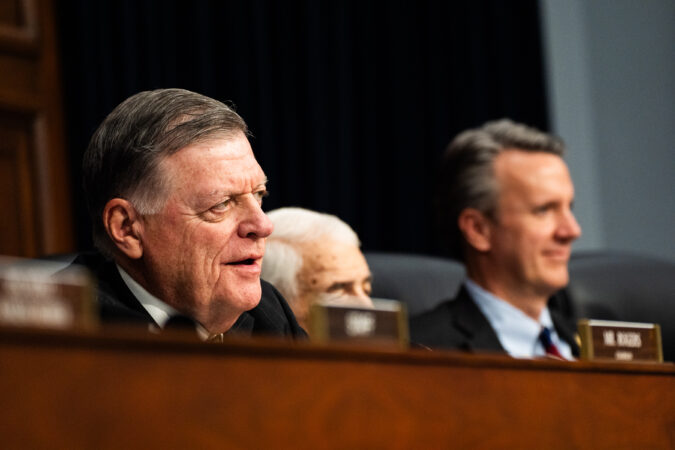
    “This legislation delivers just that and upholds the America first agenda,” said Rep. Tom Cole, the Republican chairman of the House Appropriations Committee.

    Republicans also celebrated the avoidance of a massive, catchall funding bill known as an omnibus as part of this year’s appropriations process. Such bills, often taken up before the holiday season with lawmakers anxious to return home, have contributed to greater federal spending, they say. This year’s effort, while a few months behind schedule, manages to keep non-defense spending just below current levels, they emphasized.

    “It sends a clear, powerful message back home — the House is back at work. We are back to governing,” said Rep. Mark Alford (R., Mo.).

    Anger on the House floor

    One by one, Democratic lawmakers lined up to voice their opposition to the Homeland Security bill with a particular focus on ICE, which has been rapidly hiring thousands of new deportation officers to carry out the president’s mass deportation agenda.

    Rep. Betty McCollum (D., Minn.) said residents of her state were being racially profiled on a mass scale and kidnapped from their communities.

    “Masked federal agents are seizing parents, yes, in front of terrified children,” McCollum said. “And many of these people we’re finding had no record and were here legally.”

    “I will not fund an agency that acts like an American gestapo,” said Rep. Jerrold Nadler (D., N.Y.).

    “This is about the political retribution of a vengeful president,” said Clark of Massachusetts. “I will not rubberstamp the federal government’s use of political violence against its own people and I ask every member to join me in voting no.”

    Cole decried some of the comments about ICE on the House floor.

    “It’s reckless, encouraging people to believe that we have masses of bad actors in a particular agency,” Cole said.

    In a last-minute add to the package, the House tacked on a provision that would repeal the ability of senators to sue the government over the collection of their cellphone data as part of special counsel Jack Smith’s investigation into the Jan. 6, 2021, attack on the Capitol.

    Senators had previously allowed suits claiming up to $500,000 in damages in an earlier funding bill, but the provision drew sharp criticism. The House unanimously agreed to block it.