Category: Nation World News Wires

  • A forgotten chapter: The stories of Allied POWs in Nagasaki during the atomic bombing

    A forgotten chapter: The stories of Allied POWs in Nagasaki during the atomic bombing

    NAGASAKI, Japan — Hundreds of prisoners of war from Allied countries were held at brutal Japanese camps in Nagasaki when the United States dropped an atomic bomb 80 years ago.

    Their presence during the Aug. 9, 1945, bombing is little known, and family and researchers have been collecting and publishing testimonies to tell the stories of these often unrecognized victims.

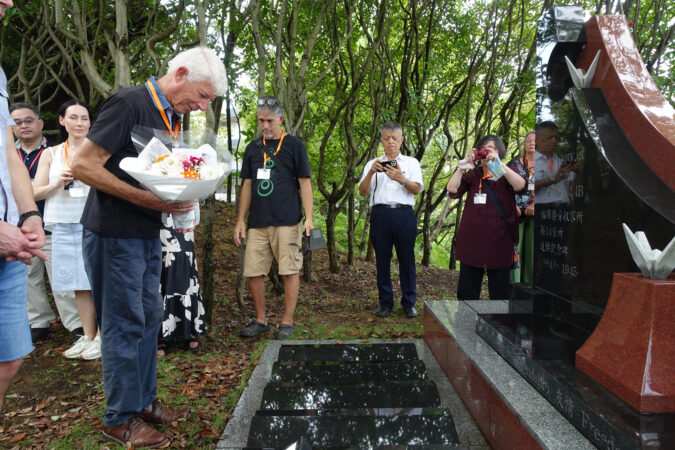
    In September, dozens of relatives of Dutch POWs and descendants of Japanese bombing survivors came together to commemorate both those who were abused at the camps and the tens of thousands of Japanese who were killed that day. The dead included at least eight captives at one of the Nagasaki camps.

    Descendants and survivors reckon with a painful past

    Andre Schram, who represented the Dutch families at the Nagasaki memorial, unveiled in 2015, is the son of a sailor who was among nearly 1,500 POWs held at the Fukuoka No. 2 Branch Camp for three years and forced to work at the Kawanami shipyard.

    Many of the prisoners were Dutch service members captured by the Japanese in Indonesia, transported to Nagasaki on so-called “hell ships,” kept at two major camps — No. 2 and No. 14 — and used as slave labor.

    About 150,000 Allied prisoners were held in dozens of camps across Asia during the war, including 36,000 sent to Japan to make up for labor shortage as Japanese men were drafted and deployed to battlefields across Asia, according to the POW Research Network Japan.

    There were also prisoners from the United States, Britain, and Australia in Nagasaki. None died from the atomic blast at the No. 2 Camp, but more than 70 earlier died of malnutrition, overwork, and illness.

    Andre Schram’s father, Johan Willem Schram, returned to the Netherlands four months after the war ended, but only near the end of his life did he tell his son about being treated like a slave. Japanese officials have apologized multiple times for wartime atrocities, “but Johan, like many other victims, had doubts about their sincerity,” his son said.

    “He felt Japan and the Netherlands treated him and other prisoners of war with disrespect. He never wanted anything to do with Japan again,” Andre Schram wrote in Johan’s Story, a booklet about the Netherlands’ colonial rule of the Dutch East Indies, the war with Japan and the aftermath, based on his research after his father died in 1993.

    Peter Klok said his father, Leendert Klok, also a Dutch POW at the camp, told him that Japanese civilians at the shipyard were friendly and helped him find parts to repair his watch. Military police later beat him for seeking help.

    Klok called the atomic bombings of Hiroshima and Nagasaki awful, but said Japan must reflect on its atrocities.

    A blinding flash, violent explosions, then the end of the war

    When the U.S. B-29 dropped the “Fat Man” plutonium bomb on Nagasaki, prisoners at the No. 2 Camp, about 6.2 miles from ground zero, saw a huge orange fireball, purple smoke, and a triple-layer mushroom cloud, British captive Tom Humphrey wrote in his diary, part of which is quoted on the Royal Air Force website.

    Windows at the camp were shattered, doors were blasted off, and the clinic ceiling collapsed, he wrote.

    The other camp, Fukuoka No. 14, was much closer to the blast. The brick buildings were destroyed, killing eight and injuring dozens.

    A former Dutch captive, Rene Schafer recalled that he and his fellow prisoners were digging a new shelter when Japanese soldiers warned of U.S. aircraft approaching. They jumped into a bunker, but his roommate suffered severe burns and died nine days later.

    Australian survivor Peter McGrath-Kerr was reading when everyone bolted to shelters. A fellow Australian captive dug him out from the debris, but he was unconscious for five days with broken ribs, cuts and bruises and radiation burns on his hand.

    Researchers examine a largely neglected history

    In the days that followed the atomic bombing, prisoners from the Fukuoka No. 2 Camp provided rice and other assistance to their comrades from the No. 14 Camp.

    Schram’s father and fellow POWs at the No. 2 Camp were officially notified of Japan’s surrender on Aug. 18, and a U.S. B-29 delivered its first food drop for the Allied POWs on Aug. 26.

    On Sept. 13, the prison camp survivors left Nagasaki, heading for the Philippines on a U.S. carrier.

    The ceremony in Nagasaki at a granite monument with three inscribed panels was the result of efforts by the families of Dutch POWs, who returned home with painful memories, and the descendants of atomic bombing survivors, said Kazuhiro Ihara, whose father lived through the bombing and was devoted to reconciliation with the POWs.

    In Hiroshima, Japanese survivor Shigeaki Mori’s decadeslong independent research led to U.S. confirmation of the deaths of 12 captured American service members in the Aug. 6 atomic bombing.

    Former President Barack Obama, who became the first U.S. leader to visit Hiroshima’s Peace Memorial Park in 2016, mentioned in his speech “a dozen Americans held prisoner” as part of the victims. He recognized Mori for seeking out the Americans’ families, believing their loss was equal to his own, and later gave him a hug.

    A 1957 Japanese law allowed medical support for certified atomic bombing survivors and has since gradually expanded its scope. The number of certificate holders is now 99,000, down from a peak of 372,000 in 1980.

    The Health and Welfare ministry says about 4,000 certificate holders were living outside Japan, many of them South Koreans and Japanese in the United States, Brazil and other countries.

    According to the POW Research Network, at least 11 former POWs who were in Nagasaki — seven Dutch, three Australian and one British — received survivors’ certificates.

    “The issue has been swept under the rug,” POW Research Network co-founder Taeko Sasamoto said.

    The research requires the time-consuming examination of historical documents that haven’t attracted much academic interest, Sasamoto said. “It’s an important issue that has long been neglected.”
  • Earthquake with 6.5 magnitude rattles southern and central Mexico, killing 2

    Earthquake with 6.5 magnitude rattles southern and central Mexico, killing 2

    MEXICO CITY — A strong earthquake rattled southern and central Mexico on Friday, interrupting President Claudia Sheinbaum‘s first press briefing of the new year as seismic alarms sounded and leaving at least two people dead.

    The earthquake had a magnitude of 6.5 and its epicenter was near the town of San Marcos in the southern state of Guerrero near the Pacific coast resort of Acapulco, according to Mexico‘s national seismological agency. There were more than 500 aftershocks.

    The state’s civil defense agency reported various landslides around Acapulco and on other highways in the state.

    Guerrero Gov. Evelyn Salgado said that a 50-year-old woman living in a small community near the epicenter died when her home collapsed. Authorities also said that a hospital in Chilpancingo, Guerrero’s capital, suffered major structural damage and various patients were evacuated.

    Residents and tourists in Mexico City and Acapulco rushed into the streets when the shaking began. Mexico City Mayor Clara Brugada said that one person died after suffering an apparent medical emergency followed by a fall while evacuating a building.

    The U.S. Geological Survey said the earthquake occurred at a depth of 21.7 miles, 2.5 miles north-northwest of Rancho Viejo, Guerrero, which is in the mountains about 57 miles northeast of Acapulco.

    Sheinbaum resumed her press briefing a short time after the quake.

    José Raymundo Díaz Taboada, a doctor and human rights defender who lives on one of the peaks ringing Acapulco, said he heard a strong rumble noise and all the neighborhood dogs began barking.

    “In that moment the seismic alert went off on my cellphone,” he said, ”and then the shaking began to feel strong with a lot of noise.”

    He said the shaking was lighter than in some previous quakes and he had prepared a backpack of essentials to be ready to leave as the aftershocks continued.

    He said he had been unable to reach some friends who live along the Costa Chica southeast of Acapulco because communications were cut.

  • A grandmother and her grandson burn to death in a Gaza tent; Angelina Jolie visits Rafah crossing

    A grandmother and her grandson burn to death in a Gaza tent; Angelina Jolie visits Rafah crossing

    DEIR AL BALAH, Gaza Strip — A grandmother and her 5-year-old grandson burned to death in Gaza when their tent caught fire while cooking, as thousands of Palestinians endure colder weather in makeshift housing.

    The nylon tent in Yarmouk caught fire Thursday night while a meal was being prepared, a neighbor said. A hospital official said that two Palestinian men were killed by Israeli gunfire on Friday in Gaza.

    The shaky 12-week-old ceasefire between Israel and the Hamas militant group has largely ended large-scale Israeli bombardment of Gaza. But Palestinians are still being killed by Israeli forces, especially along the so-called Yellow Line that delineates areas under Israeli control.

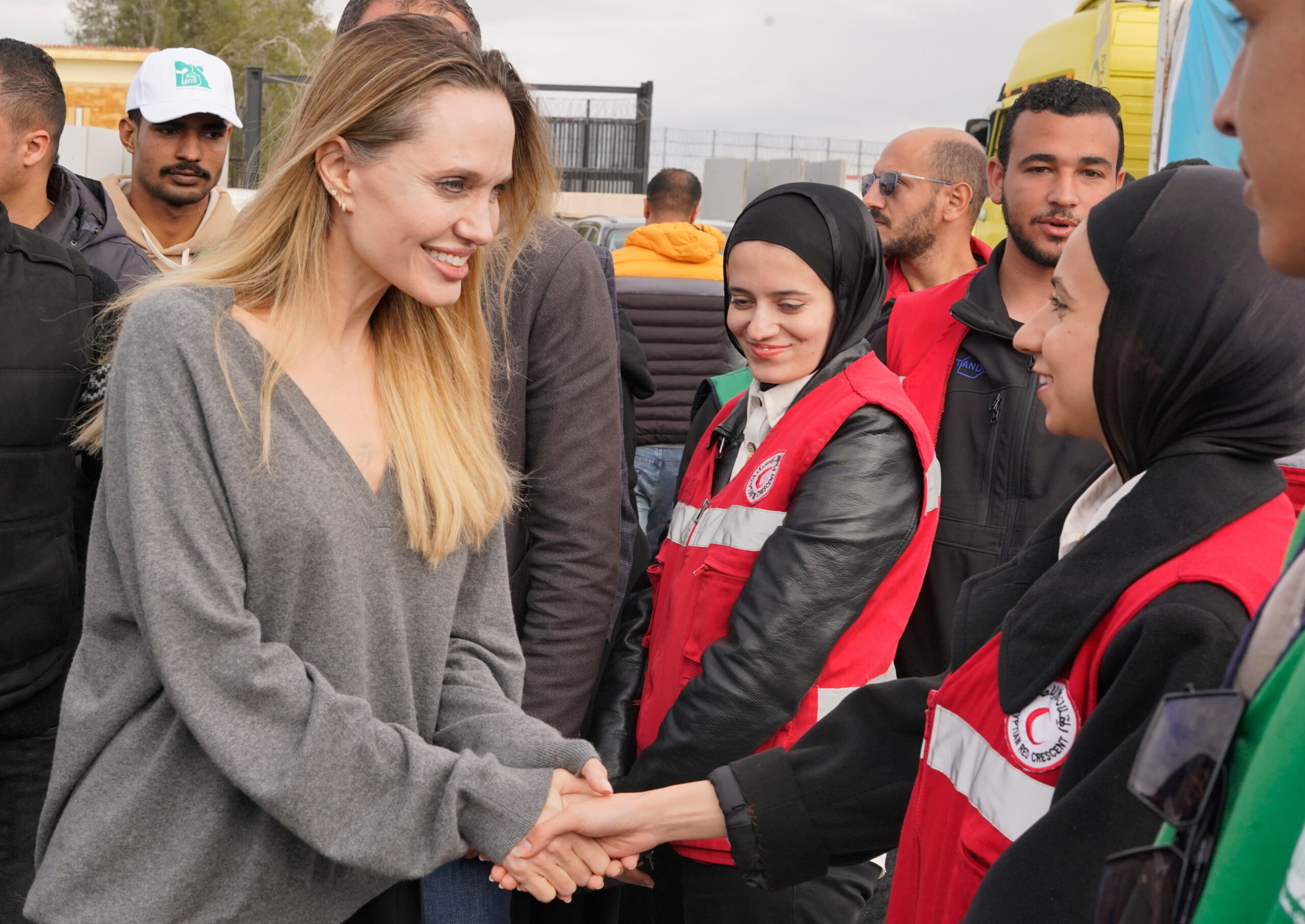
    On Friday, American actor and film producer Angelina Jolie visited the Rafah border crossing between Egypt and the Gaza Strip.

    Wintry weather hits tent cities

    Over the past few weeks, cold winter rains have repeatedly lashed the sprawling tent cities, causing flooding, turning Gaza’s dirt roads into mud and causing damaged buildings to collapse.

    Aid groups say not enough shelter materials are getting into Gaza during the truce. Figures recently released by Israel’s military suggest it hasn’t met the ceasefire stipulation of allowing 600 trucks of aid into Gaza a day, though Israel disputes that finding.

    Israel has said throughout the war that Hamas was siphoning off aid supplies, preventing the population in Gaza from receiving them. Last month, the World Food Program said that there have been “notable improvements” in food security in Gaza since the ceasefire.

    Palestinians have long called for mobile homes and caravans to be allowed in to protect them against living in impractical and worn out tents.

    Angelina Jolie greets Red Crecent workers during her visit Friday to the Rafah border crossing between Egypt and the Gaza Strip.

    Actor visits Rafah crossing

    Jolie met with members of the Red Crescent on the Egyptian side of the Rafah border crossing and then visited a hospital in the nearby city of Arish to speak with Palestinian patients on Friday, according to Egyptian officials.

    Her visit sought to raise support for the displaced and humanitarian workers in the crises in Gaza as well as in Sudan, Jolie’s team said in a statement.

    “What needs to happen is clear: the ceasefire must hold, and access must be sustained, safe and urgently scaled up so that aid, fuel and critical medical supplies can move quickly and consistently, at the volume required,” Jolie said about Gaza.

    Reopening the crossing, which would allow Palestinians to leave Gaza — especially the ill and wounded who could get specialized care unavailable in the territory — has been contentious. Israel has said that it will only allow Palestinians to exit Gaza, not enter, until militants in Gaza return all the hostages they took in the attack on Oct. 7, 2023, which triggered the war. The remains of one hostage are still in Gaza.

    Israel also says Palestinians wanting to leave Gaza will have to get Israeli and Egyptian security approval. Egypt, meanwhile, says it wants the crossing immediately opened in both directions, so Palestinians in Egypt can enter Gaza. That’s a position rooted in Egypt’s vehement opposition to Palestinian refugees permanently resettling in the country.

    For more than two decades until 2022, Jolie was a special envoy to the U.N. refugee agency.

    Gaza’s humanitarian situation

    On Friday, the foreign ministers of Arab and Muslim countries, including Egypt, Qatar, and Saudi Arabia, expressed concern about Gaza’s humanitarian situation.

    The situation has been “compounded by the continued lack of sufficient humanitarian access, acute shortages of essential life-saving supplies, and the slow pace of the entry of essential materials,” according to the joint statement.

    The Palestinian death toll from the war is at least 71,271, according to Gaza’s Health Ministry, which doesn’t distinguish between militants and civilians in its count. The Israel-Hamas war began with the Hamas-led Oct. 7 attack in southern Israel that killed about 1,200 people and saw 251 taken hostage.

    On Friday, two Palestinian men were killed in separate incidents by Israeli gunfire in the Khan Younis area of southern Gaza, a hospital official said. Israel’s military said troops operating in the southern Gaza Strip killed a person who “crossed the Yellow Line and approached the troops, posing an immediate threat to them.”

    West Bank raids

    Meanwhile, Israel continues operating in the occupied West Bank.

    On Friday, the Palestinian Prisoners media office said that Israel carried out numerous raids across the territory, including the major cities of Ramallah and Hebron. Nearly 50 people were detained, following the arrest of at least 50 other Palestinians on Thursday, most of those in the Ramallah area.

    Israel’s military said there were arrests made of people “involved in terrorist activity.” Last week, a Palestinian attacker rammed his car into a man and then stabbed a young woman in northern Israel, killing both of them, police said.

    The Palestinian Prisoner’s Society says that Israel has arrested 7,000 Palestinians in the West Bank and Jerusalem this year, and 21,000 since the war began. The number arrested from Gaza isn’t made public by Israel.

  • Runner fought off a mountain lion weeks before a suspected fatal Colorado attack

    Runner fought off a mountain lion weeks before a suspected fatal Colorado attack

    A solo hiker who authorities believe was killed by a mountain lion on a remote Colorado trail on New Year’s Day was not the first person to encounter one of the predators in the area in recent weeks.

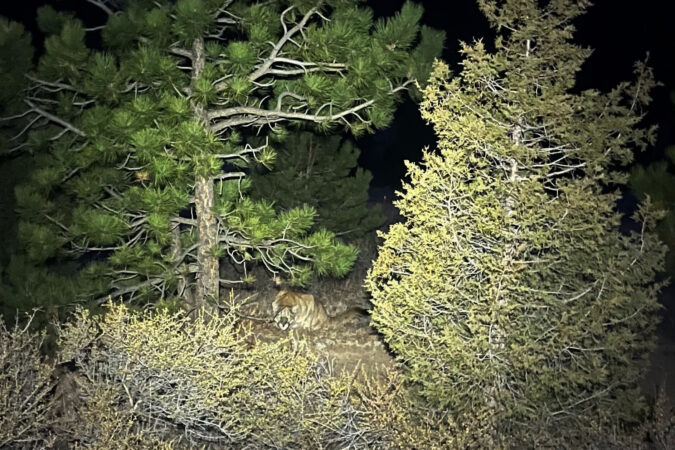
    Gary Messina said he was running along the same trail on a dark November morning when his headlamp caught the gleam of two eyes in the nearby brush. Messina used his phone to snap a quick photo before a mountain lion rushed him.

    Messina said he threw the phone at the animal, kicked dirt and yelled as the lion kept trying to circle behind him. After a couple of harrowing minutes he broke a bat-sized stick off a downed log, hit the lion in the head with it, and it ran off, he said.

    The woman whose body was found Thursday on the same Crosier Mountain trail had “wounds consistent with a mountain lion attack,” said Kara Van Hoose with Colorado Parks and Wildlife. An autopsy is scheduled for next week, said Rafael Moreno with the Larimer County Coroner’s Office.

    Prior warnings and the hunt for a culprit

    Wildlife officials late Thursday tracked down and killed two mountain lions in the area — one at the scene and another nearby. A necropsy will help determine if either or both of those animals attacked the woman and whether they had neurological diseases such as rabies or avian flu.

    A search for a third mountain lion reported in the area was ongoing Friday, Van Hoose said. Nearby trails remained closed while the hunt continued. Van Hoose said circumstances would dictate whether that lion is also killed.

    Based on the aggressiveness of the animal that attacked him on Nov. 11, Messina suspects it could be the same one that killed the woman on New Year’s Day.

    “I had to fight it off because it was basically trying to maul me,” Messina told the Associated Press. “I was scared for my life and I wasn’t able to escape. I tried backing up and it would try to lunge at me.”

    The 32-year-old man from nearby Glen Haven, Colorado, reported his encounter to wildlife officials days later who posted signs to warn people about the animal along trails in the Crosier Mountain area northeast of Estes Park, Van Hoose said. The signs were later removed, she said.

    Mountain lions don’t often attack humans

    Mountain lion sightings in that area east of Rocky Mountain National Park are common, Van Hoose said, because it offers good habitat for the animals: It’s remote with thick forests, rocky outcroppings and lots of elevation changes.

    Yet attacks on humans by the animals are rare, and the last suspected fatal encounter in Colorado was in 1999, when a 3-year-old boy disappeared in the wilderness and his tattered clothes were found more than three years later. In 1997, a 10-year-old boy was killed by a lion and dragged away while hiking with family members in Rocky Mountain National Park.

    Two hikers on Thursday saw the victim’s body on the trail at around noon from about 100 yards away, Van Hoose said. A mountain lion was nearby and they threw rocks to scare it away. One of the hikers, a physician, attended to the victim but did not find a pulse, Van Hoose said.

    The victim will be publicly identified following the autopsy by the coroner, who is also expected to provide a cause of death.

    Mountain lions — also known as cougars, pumas or catamounts — can weigh 130 pounds and grow to more than 6 feet long. They primarily eat deer.

    Colorado has an estimated 3,800 to 4,400 of the animals, which are classified as a big game species in the state and can be hunted.

    Back away slowly. Do not run

    Thursday’s killing would be the fourth fatal mountain lion attack in North America over the past decade, and the 30th since 1868, according to information from the California-based Mountain Lion Foundation. Not all of those deaths have been confirmed as mountain lion attacks.

    Most attacks occur during the day and when humans are active in lion territories, indicating the animals are not seeking out the victims, according to the advocacy group. About 15% of attacks are fatal.

    “As more people live, work, and recreate in areas that overlap wildlife habitat, interactions can increase, not because mountain lions are becoming more aggressive, but because overlap is growing,” said Byron Weckworth, chief conservation officer for the foundation.

    To reduce the risk travel in groups, keep children close and avoid dawn and dusk when lions are most active, Weckworth said. During an encounter, maintain eye contact with the lion, make yourself appear larger, and back away slowly; don’t run, he said.

    Last year in Northern California, two brothers were stalked and attacked by a lion that they tried to fight off. One of the brothers was killed.

  • Zelensky names Ukraine’s head of military intelligence as his new chief of staff

    Zelensky names Ukraine’s head of military intelligence as his new chief of staff

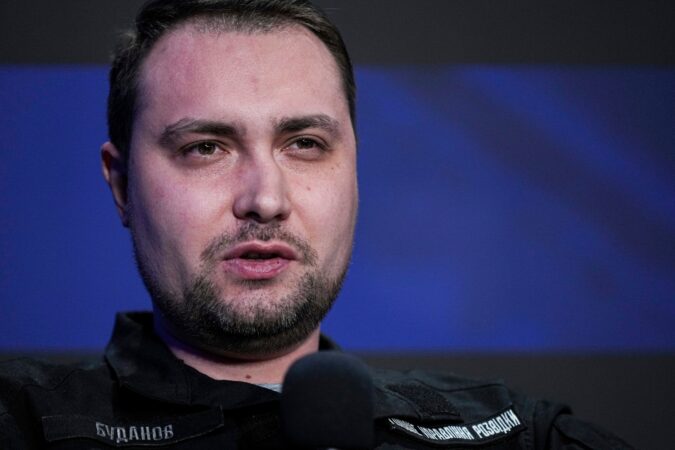
    KYIV, Ukraine — President Volodymyr Zelensky on Friday appointed the head of Ukraine’s military intelligence as his new chief of staff, a move that comes as the U.S. leads a diplomatic push to end Russia’s nearly 4-year-old invasion.

    Announcing the appointment of Gen. Kyrylo Budanov, Zelensky said Ukraine needs to focus on security issues, developing its defense and security forces, and peace talks — areas that are overseen by the office of the president.

    Zelensky had dismissed his previous chief of staff, Andrii Yermak, after anti-corruption officials began investigating alleged graft in the energy sector.

    The president framed Budanov’s appointment as part of a broader effort to sharpen the focus on security, defense development and diplomacy.

    “Kyrylo has specialized experience in these areas and sufficient strength to achieve results,” Zelensky said.

    Budanov, 39, said on Telegram his new position is “both an honor and a responsibility — at a historic time for Ukraine — to focus on the critically important issues of the state’s strategic security.”

    In his evening address, Zelensky announced further changes to his team, saying he had proposed Mykhailo Fedorov, the current minister for digital transformation, as the new minister of defense.

    Fedorov, 34, is credited with spearheading the introduction of drone technology in Ukraine’s army and introducing several successful e-government platforms in his current role.

    He replaces Denys Shmyhal who took up the post last July in a major government shake-up. Zelensky thanked Shmyhal and said he would be taking up another role in government. He also credited the ministry for reaching a target production of more than 1,000 interceptor drones per day in December.

    Earlier, Zelensky appointed Foreign Intelligence Service head Oleh Ivashchenko to replace Budanov as intelligence chief.

    ‘Prominent face of Kyiv’s intelligence effort’

    Budanov is one of the country’s most recognizable and popular wartime figures. He has led Ukraine’s military intelligence agency, known by its acronym GUR, since 2020.

    A career military intelligence officer, he rose through the defense establishment after Russia’s illegal annexation of Crimea in 2014. He also took part in special operations and intelligence missions linked to the fighting with Moscow-backed separatist forces in eastern Ukraine before the full-scale invasion of February 2022. He reportedly was wounded during one such operation.

    Since the full-scale invasion, Budanov has become a prominent face of Kyiv’s intelligence effort, regularly appearing in interviews and briefings that mix strategic signaling with psychological pressure on Moscow. He has frequently warned of Russia’s long-term intentions toward Ukraine and the region, while portraying the war as an existential struggle for the country’s statehood.

    Under Budanov, the GUR expanded its operational footprint, coordinating intelligence, sabotage and special operations aimed at degrading Russian military capabilities far beyond the front lines. Ukrainian officials have credited military intelligence with operations targeting Russian command structures, logistics hubs, energy infrastructure, and naval assets, including strikes deep inside Russian territory and occupied areas.

    His appointment to lead the office of the president marks an unusual shift, placing an intelligence chief at the center of Ukraine’s political and diplomatic coordination.

    Ihor Reiterovych, a Kyiv-based independent political expert, noted that Budanov had participated in the talks with the U.S. and “will fit much more naturally into the overall context” of the negotiations.

    “Unlike Yermak, he has both experience in this field and has worked in a relevant position,” Reiterovych said, adding that the GUR also has had certain contacts with Russia on issues such as prisoner exchanges.

    Russia reports a higher death toll from a strike

    Russian authorities said Friday the death toll from what they called a Ukrainian drone strike on a cafe and hotel in a Russian-occupied village in Ukraine’s Kherson region rose to 28. Kyiv strongly denied attacking civilian targets.

    Svetlana Petrenko, spokeswoman of Russia’s main criminal investigation agency, the Investigative Committee, said those killed in the village of Khorly, where at least 100 civilians were celebrating New Year’s Eve, included two minors, while 31 people were hospitalized.

    A spokesman for Ukraine’s General Staff, Dmytro Lykhovii, denied attacking civilians. He told Ukraine’s public broadcaster Suspilne on Thursday that Ukrainian forces “adhere to the norms of international humanitarian law” and “carry out strikes exclusively against Russian military targets, facilities of the Russian fuel and energy sector, and other lawful targets.”

    He noted that Russia has repeatedly used disinformation and false statements to disrupt the ongoing peace negotiations.

    The Associated Press could not independently verify claims made about the attack.

    Washington praises progress in negotiations

    President Donald Trump’s special envoy Steve Witkoff said Wednesday that he, Secretary of State Marco Rubio, and Trump’s son-in-law and adviser Jared Kushner had a “productive call” with the national security advisers of Britain, France, Germany, and Ukraine “to discuss advancing the next steps in the European peace process.”

    The U.S. efforts has faced a new obstacle earlier this week, when Moscow said it would toughen its negotiating stand after what it said was a long-range drone attack against a residence of Russian President Vladimir Putin in northwestern Russia early Monday.

    Kyiv has denied attacking Putin’s residence, saying the Russian claim was a ruse to derail the negotiations.

    In his New Year’s address, Zelensky said a peace deal was “90% ready” but warned that the remaining 10% — believed to include key sticking points such as territory — would “determine the fate of peace, the fate of Ukraine and Europe, how people will live.”

    Overnight attacks

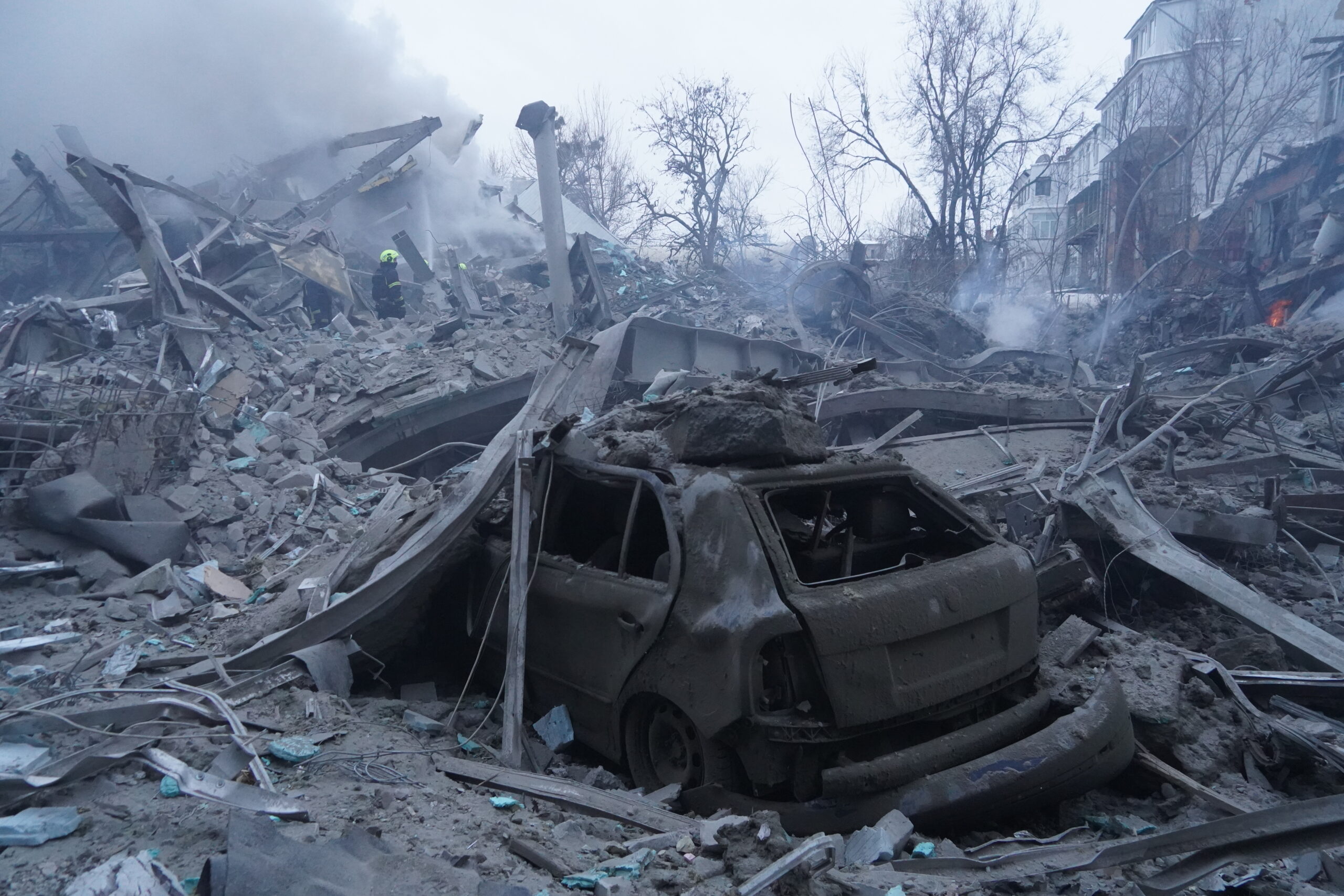
    Elsewhere in Ukraine, Russia struck a residential area of Kharkiv with two missiles Friday, Zelensky wrote on his Telegram page, adding that Moscow’s forces “continue the killings, despite all the efforts of the world, and above all the United States, in the diplomatic process.”

    At least 19 people in the eastern city were injured, including a 6-month-old, said regional administration head Oleh Syniehubov.

    The Russian Defense Ministry denied launching any strikes with missiles or other airborne weapons on Kharkiv on Friday and suggested, without offering evidence, that the damage could have been caused by the detonation of ammunition at a weapons depot.

    Earlier Friday, Russia conducted what local authorities called “one of the most massive” drone attacks at Zaporizhzhia. At least nine drones struck the city, damaging dozens of residential buildings and other civilian infrastructure but causing no casualties, according to Ivan Fedorov, head of the regional administration.

    Overall, Russia fired 116 long-range drones at Ukraine, according to Ukraine’s air force, with 86 intercepted and 27 striking their targets.

    The Russian ministry said its air defenses intercepted 64 Ukrainian drones overnight in multiple Russian regions.

    The Russian city of Belgorod was hit by a Ukrainian missile, according to regional Gov. Vyacheslav Gladkov. Two women were hospitalized after the strike, which shattered windows and damaged an unspecified commercial facility and a number of cars in the region that borders Ukraine, he said.

    Emergency services personnel work to extinguish a fire following a Russian missile attack in Kharkiv, Ukraine, on Friday.
  • Swiss investigators believe sparkling candles atop wine bottles ignited fatal bar fire

    Swiss investigators believe sparkling candles atop wine bottles ignited fatal bar fire

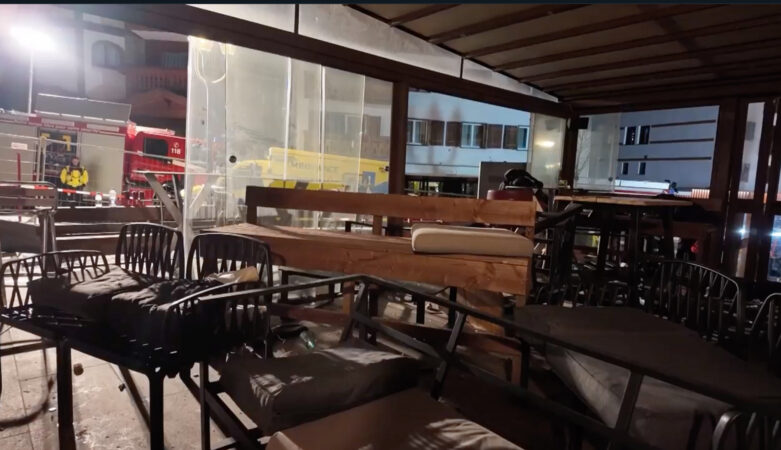
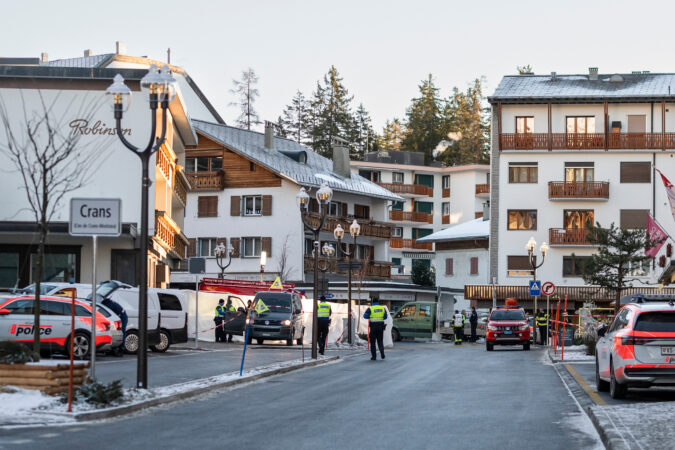
    CRANS-MONTANA, Switzerland — Investigators said Friday that they believe sparkling candles atop Champagne bottles ignited a fatal fire at a Swiss ski resort when they came too close to the ceiling of a bar crowded with New Year’s Eve revelers.

    Authorities planned to look into whether sound-dampening material on the ceiling conformed with regulations and whether the candles, which give off a stream of upward-shooting sparks, were permitted for use in the bar.

    Forty people were killed and 119 injured in the blaze early Thursday as it ripped through the busy Le Constellation bar at the ski resort of Crans-Montana, authorities said. It was one of the deadliest tragedies in Switzerland’s history.

    Officials said they would also look at other safety measures on the premises, including fire extinguishers and escape routes. The attorney general for the Valais region warned of possible prosecutions if any criminal liability is found.

    Arthur Brodard, 16, from the Swiss city of Lausanne, was among the missing. His mother, Laetitia, was in Crans-Montana on Friday and frantic to find him. She held out “a glimmer of hope” that he might be one of the six injured people who had yet to be identified.

    “I’m looking everywhere. The body of my son is somewhere,” she told reporters. “I want to know, where is my child, and be by his side, wherever that may be — be it in the intensive care unit or the morgue.”

    The injured included 71 Swiss nationals, 14 French, and 11 Italians, along with citizens of Serbia, Bosnia-Herzegovina, Luxembourg, Belgium, Portugal, and Poland, according to Frédéric Gisler, police commander of the Valais region. The nationalities of 14 people were unclear.

    An evening of celebration turns tragic

    Among the crowd was Axel Clavier, a 16-year-old from Paris, who said he felt as if he was suffocating inside the Swiss Alpine bar where moments before he had been ringing in the new year.

    The teenager escaped the inferno by forcing a window open with a table. The dead included one of Clavier’s friends, and he told the Associated Press that two or three other friends were still missing hours after the disaster.

    An impromptu memorial took shape near the bar, where mourners left candles and flowers. Hundreds of others prayed for the victims at the nearby Church of Montana-Station.

    A French teenager on Friday brought a bouquet of tulips to the regional hospital in Sion for her best friend, a fellow 17-year-old girl who was badly burned and in intensive care. The two attend school together in Lausanne, said the girl, who was in distress and did not give her full name to the AP.

    But when she arrived at the hospital, her friend had been heavily sedated for a dressing change and could not see visitors. It was the latest in hours of heartbreak for the teen, who had intended to join a dozen schoolmates at the bar but ultimately decided against it.

    She said she has since learned that two of the 12 are in a Zurich hospital. She did not know if the others survived.

    On Instagram, an account filled up with photos of people who were unaccounted for, and friends and relatives begged for tips about their whereabouts.

    Valais regional government head Mathias Reynard told RTS radio Friday that officials have “numerous accounts of heroic actions, one could say, of very strong solidarity in the moment.”

    He lauded the work of emergency officials on the day after the fire but added “in the first minutes it was citizens — and in large part young people — who saved lives with their courage.”

    Servers arrived with burning sparklers

    Clavier, the Parisian teenager, said he did not see the fire start, but saw servers arrive with Champagne bottles topped with the burning sparklers.

    Two women told French broadcaster BFMTV they were inside when they saw a male bartender lifting a female bartender on his shoulders as she held a lit candle in a bottle. The flames spread, collapsing the wooden ceiling, they told the broadcaster.

    One of the women described a crowd surge as people frantically tried to escape from the basement nightclub up a flight of stairs and through a narrow door.

    Another witness speaking to BFMTV described people smashing windows to escape the blaze, some gravely injured, and panicked parents rushing to the scene in cars to see whether their children were trapped inside.

    Gianni Campolo, a Swiss 19-year-old who was in Crans-Montana on vacation, raced to the bar to help first responders after receiving a call from a friend who escaped the inferno. He described people on the ground suffering from terrible burns.

    “I have seen horror, and I don’t know what else would be worse than this,” Campolo told French television network TF1.

    The severity of the burns made it difficult to identify bodies, requiring families to supply authorities with DNA samples. In some cases, wallets and any identification documents inside turned to ash in the flames.

    Emanuele Galeppini, a promising 17-year-old Italian golfer who competed internationally, was officially listed as missing. His uncle Sebastiano Galeppini told Italian news agency ANSA that their family is awaiting the DNA checks, though the Italian Golf Federation on its website announced that he had died.

    With high-altitude ski runs rising nearly 9,850 feet in the heart of the Valais region’s snowy peaks and pine forests, Crans-Montana is a major destination for international Alpine skiing competitions. It’s also home to the European Masters each August.

  • Israeli hostage released from 2 years of captivity in Gaza struggles to rebuild his life

    Israeli hostage released from 2 years of captivity in Gaza struggles to rebuild his life

    DIMONA, Israel — During the two years he was held captive in Gaza, Segev Kalfon had a recurring dream: slowly walking through a supermarket, browsing each aisle for his favorite foods, taking in the brightly colored packages and smells.

    Since being released on Oct. 13, his dreams have flipped: Most nights when he closes his eyes, he is back on a dirty piece of foam mattress in the 22-square-foot room in a Hamas tunnel where he was kept with five other hostages, counting each tile and crack in the cement to distract himself from severe hunger and near-daily physical torture.

    “I was in the lowest place a person can be before death, the lowest. I had no control over anything, when to eat, when to shower, how much I want to eat,” said Kalfon, 27. During the worst parts of captivity, he was so skinny he could count the individual vertebrae jutting from his spine.

    Now that he’s back home in Dimona in southern Israel, Kalfon is trying to piece together a post-captivity life. He spends much of his time juggling appointments with an array of doctors and psychologists.

    One of the strangest aspects of his release, Kalfon said, is that for two years, his entire life revolved around trying to please his captors, so they might share more food or spare a beating. Now that he’s out, “everyone is trying to please me,” he said.

    From a family bakery to a Hamas tunnel

    Before being taken hostage at the Nova music festival, Kalfon worked at his family’s bakery in the town of Arad and was studying finance and investments.

    When rockets started flying at the start of the Hamas attack on Oct. 7, 2023, Kalfon said he and his closest friend tried to help others at the festival escape. Kalfon remembers pleading with a group of people who had taken cover in a yellow dumpster, telling them to come with him, that they were in a death trap. For two years, Kalfon wondered what happened to them. After his release, he learned they were all killed.

    Hamas-led militants killed some 1,200 people and took about 250 hostages during their cross-border assault that day. Israel’s ensuing offensive has killed more than 71,000 Palestinians in Gaza, according to Gaza’s Health Ministry, which does not differentiate between civilians and combatants in its count. The ministry is part of the Hamas-run government and maintains detailed casualty records that are seen as generally reliable by U.N. agencies and independent experts.

    While in captivity, every moment “felt like an eternity,” Kalfon said. The only thing that broke up the monotony was a meager portion of food and water once a day.

    There were so many times he felt close to death: during frequent bombardment by the Israeli military, going through COVID and other illnesses with no medicine, enduring starvation and frequent physical torture. He said his captors used bicycle chains as whips and pummeled the hostages while wearing large rings to leave painful welts.

    “We didn’t even have energy to yell out, because no one hears you,” he said. “You’re in a tunnel 30 meters underground; no one knows what’s going on.”

    The worst part was the last three months of his captivity, Kalfon said, when he was kept in isolation and felt like he was losing his sanity.

    In the darkest places, faith brings a ray of light

    Both Kalfon and his family, advocating in Israel for his release, further turned to their Jewish faith to get through the dark times. Kalfon’s family filled their homes with additional Jewish books, ritual objects, and prayers from senior rabbis.

    Kalfon and the other five hostages made a tradition of marking the start of Jewish holidays or the Sabbath by saying prayers over a bit of water and moldy pita.

    The hostages used a square of precious toilet paper, where one roll had to last six people for two months, for the ritual skullcap that Jewish men traditionally wear during prayers.

    A radio the captors had given to the hostages in hopes of converting them to Islam through recordings of the Quran sometimes allowed them to capture signals from Israeli news.

    Once, when Kalfon was at his lowest and considering an escape attempt, which likely would have led to his death, he turned on the radio and heard his mother’s voice. He said it felt like a divine message to hold on for a little longer.

    “I was living in the body of a dead person, living in a grave,” Kalfon said. “To get out of this grave, it’s nothing else if not a miracle.”

    Kalfon was released along with 19 other living hostages as part of the U.S.-brokered ceasefire. He considers President Donald Trump a “messenger from God,” sure that no one else could have halted the fighting. His family has hung nearly a dozen American flags around the house in recognition of the U.S. contribution to his return.

    ‘War is starting with my soul’

    Since his return, Kalfon is getting used to a new life, one where he is famous after his name and face were broadcast across Israel during the fight to release the hostages.

    “Everyone wants to support me and say, ‘You’re such a hero,’” Kalfon said. “I don’t feel like a hero. Every person would want to survive.”

    Kalfon knows he has a long journey to recovery after his years in captivity and a post-traumatic stress disorder diagnosis from before he was taken hostage.

    “Although the war in Gaza is over, now my war is starting with my soul, to try to deal with thoughts that are very difficult,” he said.

    He tries to keep his schedule busy to distract himself.

    “But every night when I’m alone, it comes up,” Kalfon said. Even a small noise can startle him awake and thrust him into a terrifying flashback, so he barely sleeps.

    For the immediate future, he wants to share his story more widely. He said he has been shocked by the rise in global antisemitism and anti-Israel fervor since he was captured and wants to make sure people hear his story, especially those who tore down posters of the hostages or accuse Israel of lying.

    “I’m proof that it happened,” he said. “I felt it with my body. I saw it with my own eyes.”

  • Trump and top Iranian officials exchange threats over protests roiling Iran

    Trump and top Iranian officials exchange threats over protests roiling Iran

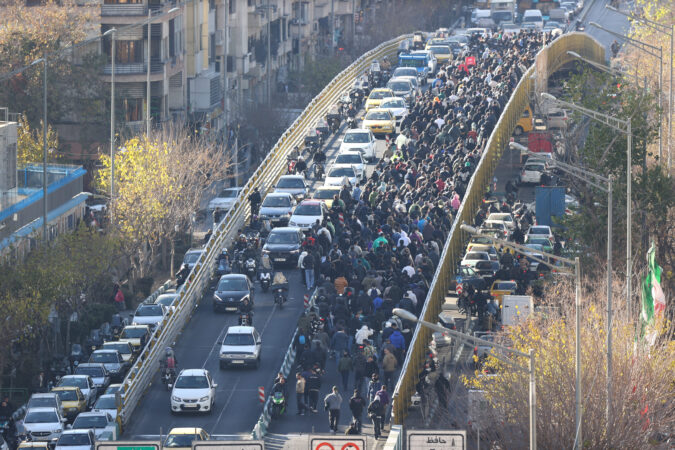
    DUBAI, United Arab Emirates — President Donald Trump and top Iranian officials exchanged dueling threats Friday as widening protests swept across parts of the Islamic Republic, further escalating tensions between the countries after America bombed Iranian nuclear sites in June.

    At least seven people have been killed so far in violence surrounding the demonstrations, which were sparked in part by the collapse of Iran’s rial currency but have increasingly seen crowds chanting anti-government slogans.

    The protests, now in their sixth day, have become the biggest in Iran since 2022, when the death of 22-year-old Mahsa Amini in police custody triggered nationwide demonstrations. However, the demonstrations have yet to be countrywide and have not been as intense as those surrounding the death of Amini, who was detained over not wearing her hijab, or headscarf, to the liking of authorities.

    Trump post sparks quick Iranian response

    Trump initially wrote on his Truth Social platform, warning Iran that if it “violently kills peaceful protesters,” the United States “will come to their rescue.”

    “We are locked and loaded and ready to go,” Trump wrote, without elaborating.

    Shortly after, Ali Larijani, a former parliament speaker who serves as the secretary of Iran’s Supreme National Security Council, alleged on the social platform X that Israel and the U.S. were stoking the demonstrations. He offered no evidence to support the allegation, which Iranian officials have repeatedly made during years of protests sweeping the country.

    “Trump should know that intervention by the U.S. in the domestic problem corresponds to chaos in the entire region and the destruction of the U.S. interests,” Larijani wrote on X, which the Iranian government blocks. “The people of the U.S. should know that Trump began the adventurism. They should take care of their own soldiers.”

    Larijani’s remarks likely referenced America’s wide military footprint in the region. Iran in June attacked Al Udeid Air Base in Qatar after the U.S. strikes on three nuclear sites during Israel’s 12-day war on the Islamic Republic. No one was injured, though a missile did hit a radome there.

    Iran’s Foreign Minister Abbas Araghchi wrote on X, formerly Twitter, that “the Great People of Iran will forcefully reject any interference in their internal affairs. Similarly, our Powerful Armed Forces are on standby and know exactly where to aim in the event of any infringement of Iranian sovereignty.”

    Araghchi also said that Trump’s message likely was influenced by those who fear diplomacy between the two nations without elaborating.

    Video circulated on social media late Friday showed protests continued in many cities across the country, including at least three points in the south and east of the capital Tehran. The Associated Press cannot independently verify the footage.

    No major changes have been made to U.S. troop levels in the Middle East or their preparations following Trump’s Iran post, said a U.S. official, who spoke on condition of anonymity to discuss sensitive military plans.

    Ali Shamkhani, an adviser to Supreme Leader Ayatollah Ali Khamenei who previously was the council’s secretary for years, separately warned that “any interventionist hand that gets too close to the security of Iran will be cut.”

    “The people of Iran properly know the experience of ‘being rescued’ by Americans: from Iraq and Afghanistan to Gaza,” he added on X.

    Iran’s hard-liner parliament speaker Mohammad Bagher Qalibaf also threatened that all American bases and forces would be “legitimate targets.”

    Iran’s Foreign Ministry spokesperson Esmail Baghaei also responded, citing a list of Tehran’s longtime grievances against the U.S., including a CIA-backed coup in 1953, the downing of a passenger jet in 1988 and taking part in the June war.

    The Iranian response came as the protests shake what has been a common refrain from officials in the theocracy — that the country broadly backed its government after the war.

    Trump’s online message marked a direct sign of support for the demonstrators, something that other American presidents have avoided out of concern that activists would be accused of working with the West. During Iran’s 2009 Green Movement demonstrations, President Barack Obama held back from publicly backing the protests — something he said in 2022 “was a mistake.”

    But such White House support still carries a risk.

    “Though the grievances that fuel these and past protests are due to the Iranian government’s own policies, they are likely to use President Trump’s statement as proof that the unrest is driven by external actors,” said Naysan Rafati, an analyst at the International Crisis Group.

    “But using that as a justification to crack down more violently risks inviting the very U.S. involvement Trump has hinted at,” he added.

    Protests continue Friday

    Demonstrators took to the streets Friday in Zahedan in Iran’s restive Sistan and Baluchestan province on the border with Pakistan. The burials of several demonstrators killed in the protests also took place, sparking marches.

    Online video purported to show mourners chasing off security force members who attended the funeral of 21-year-old Amirhessam Khodayari. He was killed Wednesday in Kouhdasht, over 250 miles southwest of Tehran in Iran’s Lorestan province.

    Video also showed Khodayari’s father denying his son served in the all-volunteer Basij force of Iran’s paramilitary Revolutionary Guard, as authorities claimed. The semiofficial Fars news agency later reported that there were now questions about the government’s claims that he served.

    Iran’s civilian government under reformist President Masoud Pezeshkian has been trying to signal it wants to negotiate with protesters. However, Pezeshkian has acknowledged there is not much he can do as Iran’s rial has rapidly depreciated, with $1 now costing some 1.4 million rials. That sparked the initial protests.

    The protests, taking root in economic issues, have heard demonstrators chant against Iran’s theocracy as well. Tehran has had little luck in propping up its economy in the months since the June war.

    Iran recently said it was no longer enriching uranium at any site in the country, trying to signal to the West that it remains open to potential negotiations over its atomic program to ease sanctions. However, those talks have yet to happen as Trump and Israeli Prime Minister Benjamin Netanyahu have warned Tehran against reconstituting its atomic program.

  • Here’s what to know about a deadly fire at a Swiss Alpine bar’s New Year celebration

    Here’s what to know about a deadly fire at a Swiss Alpine bar’s New Year celebration

    CRANS-MONTANA, Switzerland — Swiss investigators are probing what caused a fire in a bar at an Alpine ski resort that left around 40 people dead and another 115 injured during a New Year’s celebration.

    Most injuries, many of them serious, occurred when the blaze swept through the crowded bar less than two hours after midnight Thursday in southwestern Switzerland.

    The Crans-Montana resort is best known as an international ski and golf venue. Overnight, its crowded Le Constellation bar morphed from a scene of revelry into the site of one of Switzerland’s worst tragedies.

    While officials said Thursday it was too early to determine the fire’s cause, investigators have already ruled out the possibility of an attack.

    Crans-Montana is less than 5 kilometers (3 miles) from Sierre, Switzerland, where 28 people, including many children, were killed when a bus from Belgium crashed inside a Swiss tunnel in 2012.

    Here’s what we know about the deadly fire:

    A frantic attempt to escape

    The blaze broke out around 1:30 a.m. Thursday during a holiday celebration inside the Le Constellation bar.

    Two women told French broadcaster BFMTV they were inside when they saw a male bartender lifting a female bartender on his shoulders as she held a lit candle in a bottle. The flames spread, collapsing the wooden ceiling, they told the broadcaster.

    People frantically tried to escape from the basement nightclub up a narrow flight of stairs and through a narrow door, causing a crowd surge, one of the women said.

    A young man at the scene said people smashed windows to escape the fire, some gravely injured, reported BFMTV. He said he saw about 20 people scrambling to get out of the smoke and flames.

    Gianni Campolo, a Swiss 19-year-old who was in Crans-Montana on holiday, rushed to the bar to help first responders after receiving a call from a friend who escaped the inferno.

    “As we get closer, we see almost dismembered persons lying on the floor, in cardiac arrest. People were also inside trapped, laying on the ground. We saw their clothes melting onto their skin,” Campolo told TF1. “I have seen horror and I don’t know what else would be worse than this.”

    The blaze triggered a flashover or backdraft

    The Swiss officials called the blaze an “embrasement généralisé,” a French firefighting term describing how a blaze can trigger the release of combustible gases that can then ignite violently and cause what English-speaking firefighters would call a flashover or a backdraft.

    The injured suffered from serious burns and smoke inhalation. Some were flown to specialist hospitals across the country.

    Authorities urged people to show caution in the coming days to avoid any accidents that could require the already overwhelmed medical resources.

    Italian and French nationals are among the missing

    Italy’s Foreign Minister Antonio Tajani placed flowers at the memorial in Crans-Montana and said 13 Italian citizens were wounded and six remained missing by midday Friday.

    One of the missing was Giovanni Tamburi, whose mother Carla Masielli issued an appeal on Italian state television network RAI for any news about her son and asked the media to show his photo in hopes of identifying him.

    “We have called all the hospitals but they don’t give me any news. We don’t know if he’s among the dead. We don’t know if he’s among the missing,” she wailed. “They don’t tell us anything!”

    Three of Italy’s wounded were transported Thursday from Switzerland to a Milan hospital while a fourth is expected to be transferred Friday, Tajani said.

    France’s foreign ministry said eight French people are missing and another nine are among the injured. Top-flight French soccer team FC Metz said one of its trainee players, 19-year-old Tahirys Dos Santos, was badly burned and has been transferred by plane to Germany for treatment.

    A top venue for the world’s best athletes

    With high-altitude ski runs rising around 3,000 meters (nearly 9,850 feet) in the heart of the Valais region’s snowy peaks and pine forests, Crans-Montana is one of the top venues on the World Cup circuit.

    The resort will host the best men’s and women’s downhill racers, including Lindsey Vonn, for their final events before the Milan Cortina Olympics in February.

    The town’s Crans-sur-Sierre golf club, down the street from the bar, stages the European Masters each August on a picturesque course.

  • Deadly fire in bar in Swiss Alps kills dozens

    Deadly fire in bar in Swiss Alps kills dozens

    CRANS-MONTANA, Switzerland — About 40 people were killed and another 115 injured, most of them seriously, after a fire ripped through a bar’s New Year celebration in a Swiss Alpine resort less than two hours after midnight Thursday, police said.

    Authorities did not immediately have an exact count of the deceased.

    The Crans-Montana resort is best known as an international ski and golf venue, and overnight its crowded Le Constellation bar morphed from a scene of revelry into the site of one of Switzerland’s worst tragedies.

    Swiss President Guy Parmelin, speaking on his first day in office, said many emergency staff had been “confronted by scenes of indescribable violence and distress.”

    “This Thursday must be the time of prayer, unity and dignity,” he said. “Switzerland is a strong country not because it is sheltered from drama, but because it knows how to face them with courage and a spirit of mutual help.”

    The country will hold five days of mourning.

    Valais Canton police commander Frédéric Gisler said during a news conference that work is underway to identify the victims and inform their families, adding that the community is “devastated.”

    Thirteen of the wounded were Italian citizens, and another six Italians are unaccounted for, Italy’s ambassador to Switzerland, Gian Lorenzo Cornado, told state-run RAI television.

    Consular officials at the U.S. Embassy in Bern are ready to provide assistance to U.S. citizens who may have been affected by the fire, the embassy said in a statement Thursday.

    Beatrice Pilloud, Valais Canton attorney general, said it was too early to determine the cause of the fire. Experts have not yet been able to go inside the wreckage.

    “At no moment is there a question of any kind of attack,” Pilloud said.

    She later said the number of people who were in the bar is “currently totally unknown,” adding that its maximum capacity will be part of the investigation.

    Le Constellation has a capacity of 300 people with a terrace that holds 40, according to the resort’s tourism agency.

    It is not yet clear how many people were inside the bar when the fire broke out, said Beatrice Pilloud, attorney general of the Valais Canton.

    “For the time being, we don’t have any suspect,” she added, when asked if anyone had been arrested over the fire. “An investigation has been opened, not against anyone, but to illuminate the circumstances of this dramatic fire.”

    Gisler said that the priority until further notice would be identifying the victims and that “this work will have to take several days.”

    The Crans-Montana Mountain Resort offers views of the Matterhorn, one of the world’s most photographed mountains, and the Mont Blanc, the highest peak in Western Europe. It was acquired by the U.S.-based Vail Resorts in 2023.

    “We are deeply saddened by last night’s tragedy in Crans-Montana. Our thoughts are with the victims and their families,” Pete Petrovski, managing director of Crans-Montana Mountain Resort, said in an email.

    Vail Resorts does not own the bar, according to Swiss business records.

    An evening of celebration turns tragic

    Two women told French broadcaster BFMTV that they were inside when they saw a male bartender lifting a female bartender on his shoulders as she held a lit candle in a bottle. The flames spread, collapsing the wooden ceiling, they told the broadcaster.

    One of the women described a crowd surge as people frantically tried to escape from a basement nightclub up a narrow flight of stairs and through a narrow door.

    Another witness speaking to BFMTV described people smashing windows to escape the blaze, some gravely injured, and panicked parents rushing to the scene in cars to see whether their children were trapped inside.

    The young man said he saw about 20 people scrambling to get out of the smoke and flames and likened what he saw to a horror movie as he watched from across the street.

    Axel Clavier, a 16-year-old from Paris who survived the blaze, described “total chaos” inside the bar. One of his friends died and “two or three” were missing, he told the Associated Press.

    He said he hadn’t seen the fire start, but did see servers arrive with Champagne bottles with sparklers, he said.

    Clavier said he felt like he was suffocating and initially hid behind a table, then ran upstairs and tried to use a table to break a Plexiglas window. It fell out of its casing, allowing him to escape.

    He lost his jacket, shoes, phone, and bank card while fleeing, but said, “I am still alive and it’s just stuff. … I’m still in shock.“

    One of the people unaccounted for was an Italian, Giovanni Tamburi, whose mother Carla Masielli issued an appeal for any news about her son and asked the media to show his photo in hopes of identifying him, according to RAI.

    “We have called all the hospitals, but they don’t give me any news. We don’t know if he’s among the dead. We don’t know if he’s among the missing,” she wailed. “They don’t tell us anything!”

    The injured were so numerous that the intensive care unit and operating theater at the regional hospital quickly hit full capacity, said Mathias Reynard, head of the regional government of the Valais Canton.

    “This evening should have been a moment of celebration and coming together, but it turned into a nightmare,” said Reynard.

    Italian Foreign Minister Antonio Tajani was planning to go to the site on Friday given the significant number of Italians involved.

    Three of the wounded were being transported from the Sion hospital in Switzerland to Milan’s Niguarda, the Italian civil protection agency said.

    Resort town sits in the heart of the Alps

    In a region busy with tourists skiing on the slopes, the authorities have called on the local population to show caution in the coming days to avoid any accidents that could require medical resources that are already overwhelmed.

    With high-altitude ski runs rising nearly 9,850 feet in the heart of the Valais region’s snowy peaks and pine forests, Crans-Montana is one of the top venues on the World Cup circuit.

    The resort is scheduled to host the best men’s and women’s downhill racers for their final events before the Milan-Cortina Olympics in February. The town’s Crans-sur-Sierre golf club stages the European Masters each August on a picturesque course.

    The Swiss blaze on Thursday came 25 years after an inferno in the Dutch fishing town of Volendam on New Year’s Eve that killed 14 people and injured more than 200 as they celebrated in a cafe.

    This article includes information from the Washington Post.